Vote With Your Faith

Starting off a new administration on the right foot is the goal of many politicians. This was likely the case for Alabama’s new governor Robert Bentley. When he was sworn in on Monday he stated that anyone who was not a Christian was not his brother or sister. Likely the statesman was attempting to garner support among the predominantly Protestant population of this southern state. Instead he received a backlash from various groups complaining that his statement implied that some would be lesser citizens under his tenure. Yesterday he apologized for his remarks. The fact is, however, that the governor was not the origin of the sentiments expressed, but those of the “Bible believing” sects of the south were. This is the kind of language, Biblicalese, that they like to hear: either you’re with us or ag’in’ us.

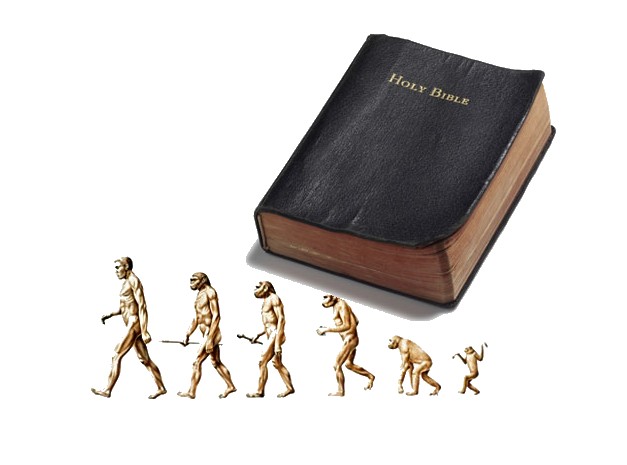
Religions have much to gain (and lose) by maintaining high standards of separation. Exclusivity, I was told in a class on early Christianity, was what ensured the survival of this sect of Judaism. If anybody could join, then who would want to? Make it exclusive, and there’ll be a line out the door. So it is with political religion. The Bible is not a great unifier – it tends to divide people more than unite them. The real question is: should the way forward be defined by division or unity?

We have ample evidence of how division breeds religious contempt. Since I believe the correct religion, anyone who disagrees with me must be wrong. If they are wrong, my deity does not approve of them the way (generally) he approves of me. And so the story goes. And so the body count climbs. The Bible can be a great unifier, if those who wield it so decide. Venerating a book with multiple points of view, Bible readers may choose which aspect of their Scriptures they want to emphasize. And that little black-covered icon continues to pack a wallop in western culture, so the perspective you choose is backed with immense fire-power. Problem is, sometimes it backfires. The new governor of Alabama is learning this in his first week in office. It would be a lesson well learned by any who attempt to bludgeon others with the Good Book.

'Nuff said.


Winter’s Music

An editorial in this morning’s paper once again raised the question of whether we need a politically correct version of Huckleberry Finn or not. The story led me to recall the origins of rock-and-roll – not that Mark Twain was a rocker, but because I’d recently viewed the first installment of Time-Life’s History of Rock ‘n’ Roll. Both Huckleberry Finn and rock-and-roll owe a vast debt of gratitude to African-American culture, and both bear the scars of prejudice. An unfortunate aspect of life is that few people willingly subject themselves to hard labor when they realize an easier lifestyle is available (thus, Brave New World). This has been true since civilization began. With the advent of the Sumerians we begin to read about the slavery of war-captives. Even today, dressed up in fancy clothes, slavery of various degrees continues to persist. The reprehensible treatment especially of Africans for slavery is a heritage that will not easily be overcome. And yet American culture owes much to its African components.

While already in the back of my head, this was once again brought to the front by the “Rock ‘n’ Roll Explodes” episode of the Time-Life series. Now, being a musically deficient individual, I claim nothing particularly insightful here – my wife and daughter are the musically accomplished ones in this household – rock clearly has its roots in the blues and gospel. In the documentary Little Richard explains how rock was often simply music of the black churches transposed to secular clubs. Xenophobic “white” culture of the 1950s felt threatened by this catchy music and sought to disarm it. Calling it “race music” producers had the more popular songs covered by white singers such as Pat Boone. (His cover of “Tutti-Frutti” always makes me smirk.) The real element at work here was the prejudice against the other.

As a youth I recall literally throwing my rock albums in the trash because of a Fundamentalist tract that declared in no uncertain terms that it was the “Devil’s music.” I’d bought those albums with my own hard-earned money, but sacrificed them to save my soul. Little did I know that “Devil” was a code word for “African” in this fundie literature. Otherwise, why was it alright when Pat Boone (of The Cross and the Switchblade fame) sang the same song? Mistrust runs very deeply in monotheistic religions. Even today many branches of Christianity inveigh against the horrors of rock without acknowledging that the music has its roots in the cry for liberation on the part of slaves, as expressed in Christian worship. Civilization will always insist on retaining its slaves. At the very least modern western culture should say “thank you” for the unrequited gift of the musical voice of the twentieth century.


Misjudging Dinosaurs

Two dinosaurs diverged in the middle of evolution, and I’m not at all sorry that they both flourished. One became an herbivore, harming no one but plants, while the other grew into a carnivore, eating its siblings. That’s the way of this evolutionary universe. The Eodromaeus and Eoraptor split took place near the very inception of the dinosaur form, with the most basic of existential options: eat or be eaten. Noted paleontologist Paul Sereno has been excavating these Argentinean Lilliputian dinosaurs and has detected that the species, while similar, had irreconcilable food preferences.

Dinosaurs are often relegated to the age of children. When we grow up, we’re supposed to take interest in more modern developments and leave the dinosaurs in the dust. Their value, however, is often underappreciated. We learn about our world by examining theirs. Identification is subtle and sometimes wrong. Little Eoraptor is now thought to have been the plant-connoisseur, despite the terrifying, Jurassic Park-sounding name. We call them what we think they might be. Further discovery often changes the complexion of the picture.

When forced into a choice of more adult occupations, perhaps I unwittingly rebelled, choosing to study ancient religions. Like dinosaurs, religions evolve. As a child it was far easier to tell the preferences of dinosaurs since their morphology often gave them away. Religions are much more subtle. We are told that some dinosaurs survived in the form of birds. Many, many millennia of evolutionary pressure reduced their size and morphed their scales into feathers. Sometimes it’s hard to recognize a carnivore even when it’s just outside your window. That’s the way it works. Some follow the herbivore track, others prefer the way of the carnivore.

It's not the Eoraptor you think you know (from WikiCommons)


From Palin to Phelps

People get shot every day, but that does not take the sting from the January 8 shootings in Tucson, Arizona. We live in a nation filled with angry, violent people. Most of them hold their rage in check, but others act out their frustrations aided by the obscene ease of firearm ownership. Into this volatile brew, mix in the warped rhetoric of a politics of fear and who knows what might happen. Sarah Palin and other outspoken conservative ideologues hold up their pristine hands to demonstrate they have nothing to do with the hate-mongering that haunts our streets. She calls the jabs at conservatives “blood libel.” I say if you propagate the politics of fear you’re liable to get blood on those hands. Often in the bookstore I see titles like How to Talk to Liberals: If You Have to. The liberals I hear talking are only asking for dialogue and coexistence. One side wants a chance for everyone to be heard, the other wants to throw stones at those who are different.

Students do presentations in my classes. The assignment is to choose a social issue where the Bible is brought to bear on the topic and present to the class what you learn about the subject. Two groups last night presented on the Westboro Baptist Church and its outspoken pastor and founder, Fred Phelps. Both presentation groups showed videos of members of the Westboro Baptist Church speaking out about various and sundry liberal groups/causes/nations they hate. Plucking verses from the Bible like a chicken pecking at the ground, they cite only those passages that justify hating those who are different. They seem to have overlooked the part that says, “by their fruits you shall know them.”

On today’s schedule? According to the Westboro website: “WBC to picket the funeral of Christina Greene, the 9-year-old girl cut off in her youth for the rebellion of the parents, preachers, and leaders of this nation.” They’ll have a hard time finding any place in the Bible that condemns children, shy of sly old Elisha calling out she-bears to kill 42 of them. Having read the Bible for practically my whole life, I have a very difficult time reconciling those who use the Bible for conservative causes with their own sourcebook. What will it take for them to realize that “what I want” is only part of the picture? Whether presidential hopefuls or crazed curmudgeons, we would all sleep better if we took to heart that inequality is very easily transformed into iniquity.


Hanny’s Voorwerp Factor 5

Staring at the mysterious green blob of Hanny’s Voorwerp, it’s hard not to imagine being Captain Kirk sitting cantilevered forward in that famous chair on the bridge of the Enterprise. Even for those of us who are not Trekkies, the giant space nebula looms between galaxies where no one expected stars to be born. Their own private intergalactic nursery. With my mind already on Star Trek, I think of the web-page sent to me by one of my winter term students at Rutgers: the Memory-Alpha Bible page. Since my loyalty to Star Trek only reaches as far as the occasional viewing of an episode for light relief – and only from the original series at that – I had no idea that the Memory-Alpha wiki had bloomed into existence like Hanny’s Voorwerp itself. This wiki dedicated to everything Star Trek has 32-and-a-half-thousand pages on every angle of creator Gene Roddenberry’s unintentional universe.

The Bible page’s first paragraph (accessed 1/12/11, sometime around 7 a.m. EDT) reads: “The Bible is a collection of ancient Earth writings usually bound together as a book. The Christian Bible is divided into the Old and New Testaments; however, other translations and versions exist and vary by faith groups. It is among these faith groups that the Bible is considered a sacred text, which is generally viewed as having been inspired by one of the Human gods.” Someone takes his/her future, wiki-writing persona very seriously. Nevertheless, it is a perspective that could be helpful in handling a Bible that has grown politically powerful without being understood here in the paltry twenty-first century.

The page also lists all of the episodes where the Bible is referenced or alluded to in Star Trek. As my student pointed out, almost all of these references (in the original series) are to the Hebrew Bible, with very few being from the Christian Scriptures. This makes sense, given the context of the 1960s when McCarthy’s aroma still hung heavily in the air and the war in Vietnam was daily in the newspapers. To offer up television fare that might have been considered “unchristian” in any way was a faux pas in such tortured times. The Hebrew Bible is great for providing allusions to paradise and apocalypse, but the words of Jesus were taken with a solemnity far too great to allow for fictional space explorers’ banter. So maybe it’s just an accident of astronomy that the amorphous, green cloud of Hanny’s Voorwerp appears to be wearing a galactic halo.

Hanny's Voorwerp on NASA-view


FIRST Things First

Being a religion specialist in a crowd of engineers is a surreal experience. Indeed, the clash of worldviews could hardly be more apparent, shy of crossing the border into Iran. I support the efforts of FIRST Robotics because they encourage children to excel in science, math, and engineering. My own childhood, however, was dominated by an overbearing religion that forever scarred me with a fear of Hell that I still can’t quite shake. Somewhere out there behind the stars there must be a horrid place engineered for the eternal torment for sinners like me, for the Bible tells me so. Speaking of stars, the live feed to kick off the FIRST Robotics Competition is sponsored by NASA. Yesterday was the international kickoff for this year’s competition, and as president of my daughter’s robotics team, I naturally sat among the well-paid engineers and professionals as we watched Dean Kamen unveil this year’s assignment.

The kind of guy who stands alone at parties

The FIRST kickoff video is available online for those who missed the event. The organization grants millions of dollars in scholarships to deserving students, funding college careers for the future of humanity. As I watched the live feed yesterday, a profound angst settled on me. Successful guys my age working for companies flush with money described how the latest medical and humanitarian breakthroughs were being made in the sciences. I have a part-time job with no medical coverage, and know, somewhere deep inside, that if something goes seriously wrong I will be permitted to go the way of all flesh, without benefit of these great technologies. And without the benefit of spiritual reward. A lost child of the cosmos. A life spent in the pursuit of truth, yet ending up with empty hands at the end of the day.

The eye in the sky is watching you

As a child I was a charter subscriber to Discover magazine. One of my earliest career ambitions was to be a scientist. One of my favorite classes in high school was physics. I was, however, haunted by the knowledge that the clergy had divined Hell behind all of this; only those who sought the keys to the kingdom would be spared. In college I majored in religion and took classes in astronomy, still flirting with my first crush. Now, an unemployed religion professor, I watch as day by day my specialization become more and more obsolete. No matter how far our telescopes peer into the universe, they just don’t spy God in an unguarded moment, captured by candid camera. Those with the money say truth lies in the progress of science, others in the unethical life of corporate America. The future lies anywhere but here in the world of religion. As I tell my students: be very careful in choosing a career. The best of intentions will lead to the worst of anxieties unless the way of the universe is truly comprehended.


Which Witch?

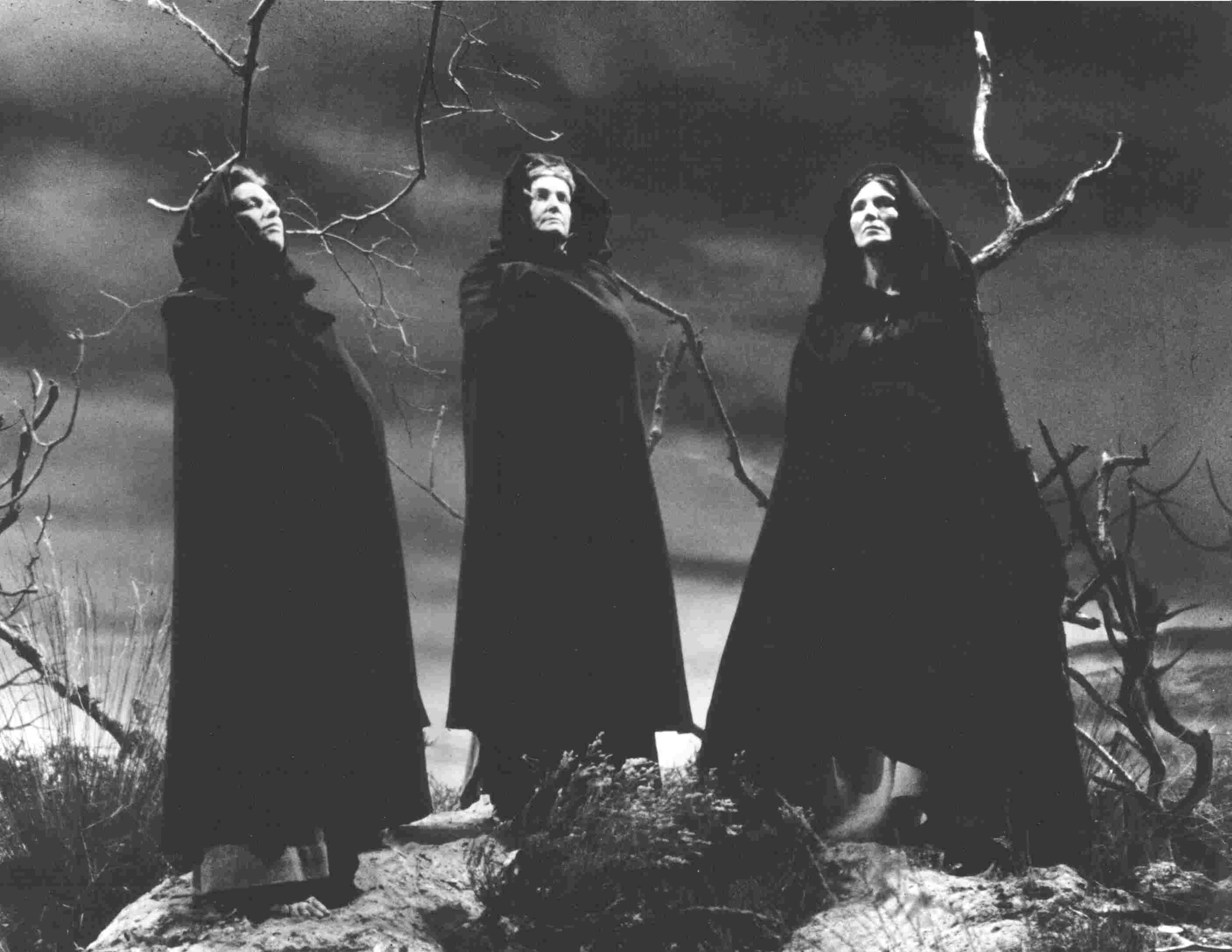
Witches have been flying all over the Internet the last few days. A story from AP Online, picked up by several websites, reports that witches in Romania are planning to cast spells on the government. Now, I have to admit to having been tempted to cast a few spells myself during the Bush years, but since I don’t believe in magic the desire simply fizzled. These witches, however, are serious. Cat excrement in hand, the carcass of a dog nearby, these witches are outraged. Perhaps even more surprising is that some government officials are taking it seriously too, according to the article. The reason for the hexes? Romania has just started charging witches income tax.

Romania is a nation that evokes the darkness of primal forests haunted by werewolves and terrorized by vampires. The one-time domicile of Vlad the Impaler, the region has retained this mystique into the twenty-first century while elsewhere rovers roll around the surface of Mars and instantaneous world-wide communications are available at the press of a button. I am nevertheless encouraged by this display of activism. These supernatural citizens are challenging what they perceive to be unfair government practices. Statesmen wear purple on auspicious days to mitigate the effects of enchanters who are in touch with the financial struggles of the vast majority of religious specialists. Most of us just sit back and take it.

Meanwhile, as thousands of blackbirds fall from the sky, members of our own government are posturing to take back the modest health care improvements President Obama has helped to institute. Emotional Republicans are getting ready to strike back at programs designed to help those less fortunate than they are (apparently so they’ll have someone to pray for at grace over meals). “Are not two sparrows sold for a farthing? and one of them shall not fall on the ground without your Father” (Mt 10.29). Never mind casting spells, the government will always find ways of making life less comfortable for those they see as threats. Which witch would you choose? I’d select the one with a moral compass, even if she has cat excrement in her hand.


In the Bleak Midwinter

Labels. They can be problematic. Given our human brain structures, we are predisposed to patterns and categorization. Is it edible or not? Predator or prey? Like me or different from me? We constantly scan our world, categorizing as we go, holding our people, experiences, and places in a temporary, floating mode of immediate recognition. I’ve had people who read my blog ask me, “What are you?” My guess is that they want a simple, pat answer: Christian or not, religious or not, dangerous or not. The more specific the better, since the more precise the label the better fit the box we stuff you into will be. Given the trajectory of my unorthodox career, it is common for me to be labeled as “theologian.” It is a categorization I deny, but since the study of ancient texts and myths generally falls under the rubric of “theology” it is not entirely inappropriate. I prefer to leave theology to those more intelligent than myself.

It is with great joy, therefore, that a new blog has emerged from a worthy theologian. Bleak Theology makes its premiere today. I have known the talented writer, Burke, for some time. And I know that some fantastic things will appear on this blog. In its own words: “Bleak theology is anxious, but not despairing. It is pessimistic, but not hopeless. It is materialistic, but not idolatrous. It doesn’t always have hope, but it certainly would like to have that hope… It’s a theology that gazes troublingly up at Mt. Moriah; that sits in sack and ashcloth and resists cursing God and dying; that cries out that everything is meaningless (meaningless!); that sits by the rivers of Babylon and cries; that staggers away from the crucifixion disillusioned; and, after seeing the stone rolled back and the dead vanished, leaves the tomb and tells no one.” We have great things to anticipate. Melancholy is its own variety of joy, as some of us are continually discovering.

Labels. Some people make a lot of the alphabet soup one is legitimately able to put after one’s name. A friend once told me that he’d heard a Ph.D. insist on being called “Doctor” by the attendant when he pulled into a gas station. I have a label for such people, and it fits better than the one they prefer. I have known and worked for Ph.D.-bearing individuals who just as dumb as the rest of us. Sometimes even more so. Theology is not a discipline where advanced degrees are required, for either those who have them or those who don’t. The fact is we’re all thrown into this same world together and, like it or not, no one has the answers. Some may don their papal tiaras or their fancy academic robes with striped sleeves, and claim hegemony, but the truth is we are all seekers. The best company one might hope to find is with the person who honestly struggles. Embrace bleak theology and eschew easy classification. There may be no hope for us yet.


The Selfish Meme

Although we may know deep down that one day is pretty much the same as another, people have always held profound reverence for the new year. Symbolic rather than empirical, hopes resonate around the concept that a good start presages better things ahead. That’s why tragedy early in the year sometimes possesses such solemnity; we had hoped that things might begin anew. The headlines today announce that a church bombing in Alexandria, Egypt, started a new year of violence in the southwest corner of the cradle of civilization. Muslim extremists are suspected as there has been some tension between the Coptic Christians of the city and their Islamic compatriots. Although details are not clear, one matter remains in focus: the violence is based on religion.

One of the more savage legacies of monotheism is the absolute truth claims that follow in its train. If truth be truth, there be only one. So the meme goes. Multiple mutually exclusive truths cannot coexist in a religious universe. Scientists might well claim that in this non-empirical universe, no testing may reveal the actual answer. Belief takes over where knowledge fails. And belief in a religion, like it or not, follows the dictates of survival of the fittest. Memes, like genes, can be quite selfish. If one is to stake eternal, unchanging consequences on a religion, the proposition is all-or-nothing. Even purgatory is not forever. The coin falls one way or the other. Religions fight for the memes of truth, and those with the highest survival rate win.

Lighthouse of Alexandria before the bushel

Alexandria has suffered its share of violence in the past. Its famed library, the center of learning in the ancient world, traditionally underwent four destructions, the final two religiously motivated. The books surviving antiquity fell under the Christian ban of paganism in 391. Arabic sources note the destruction of the institution after the Islamic conquest in 642. The end result is the same – the irreparable loss of centuries of knowledge. The lighthouse of Alexandria, one of the seven wonders of the ancient world, might well stand as a symbol for the influence of rationality. Tradition states the light could be seen 29 miles away, but earthquakes and the need for building material saw the extinguishing of the light so that by 1480 the darkness settled for good. A fort was built from its remains. Given a choice of light or fortification, it is clear which way the selfish meme will go.


The Politics of Dentistry

A story from the Associated Press on NPR this week announced the discovery of some teeth. No ordinary teeth, these perhaps belonged to Homo sapiens at 400,000 BP (“Before Present,” no apologies to gas-guzzlers). And they were found in Israel. Archaeologists from Tel Aviv University are quoted as stating this could rewrite the story of human evolution, suggesting that modern humans emerged some 200,000 years earlier than thought, and in Israel instead of in Africa. Now those are some ambitious choppers! Coincidentally, the discovery was announced the day I was discussing the earliest human occupation of the Levant in my Winter Term class. Of course. One of my students pointed the article out to me.

One of the endlessly fascinating aspects of archaeology and paleontology is the constant surprise of discovery. Often I have to remind myself that the past only exists in reconstruction. Once the moment is over it is lost forever, only to be rebuilt by specialists in documents and artifacts. Reconstruction, however, often comes with a political price tag. Anyone who follows the claims based on archaeological finds knows the folly of discovery. In disputed territories the work of archaeologists is used to stake claims to modern land ownership. Who in the world would not want to own the first location where modern humans emerged on the planet? What staggering claims could be made!

I have always sensed a comfort when thinking of human origins in Africa. Far from the (modern) industrialized mayhem of “civilization,” early hominids took their first tentative steps in Africa. Cut off from the rest of the post-Pangean continents except via the narrow passage of the Sinai, Africa harbored our pre-sapiens ancestors. Once they reached Asia and Europe, they interacted with Neanderthals, as genetics now demonstrate. Interaction led inevitably to extinction, so politics had to have been involved. To find the pre-political Garden of Eden, we need to cast our eyes on Africa. Anthropologists are even now disputing whether the teeth are of Homo sapiens or not. I find, when I’m in the dentist’s chair, it is best to leave politics out of the discussion.

From the Associated Press


Virtual Religion

Rabbi and author A. James Rudin, in an op-ed piece in Sunday’s New Jersey Star-Ledger, tolls the warning bells for traditional brick-and-mortar religion in the western world. We live in a virtual world where nearly any need may be met through the Internet. You may satisfy your hunger by ordering out online, and consult a virtual nurse online later when you don’t feel so good. Holiday shopping is a breeze without having to do anything more than tap out a wishlist on your keyboard and then click your mouse. Why should spirituality be any different? Rudin points out that many classics of western religion used to be confined in research libraries, but are now freely available online. Any number of self-appointed doyens of spirituality offer the truth in electronic form. What need have the faithful of starting the car on a cold morning, facing bitter winds and blowing snow, to march into a half-deserted house of worship when God is only a few keystrokes away?

There can be no doubt that the Internet has changed views of religion. Exposure to exotic or unfamiliar practices and beliefs is common. American religion has often been compared to a marketplace, and the best place for comparison shopping is online. This is not, however, cause for alarm. Ancient religions, including the early Judaism that will give birth to Christianity, accommodated other belief systems they encountered. There is no pristine form of religion that preserves the exact original recipe. The change took place more slowly in ancient times, but take place it did. Judaism, for example, moved from a basic, colorless Sheol to a fully populated Hell in Christianity, complete with lakes of burning sulfur and trident-wielding demons. These views were not indigenous to Judaism, but after rubbing shoulders with the Magi, such ideas eventually worked their way in.

All that the Internet has done is speed up the process. Without the web, people took longer to encounter and learn about different religions. Some of us took university degrees to figure out as much as we could. Now it requires little effort and minimal time. Like most e-commerce, if you don’t like what you’ve bought somebody else is offering something similar just a server away. What web-culture has done is to hold up a mirror to our bizarre shopping attitude towards religion. We can see in fast-forward what appeared smooth and organic in real-time. Religions change and the methods of selecting religions change as well. My observation is that clergy who take courses in web-casting will be at the front of the class until the next technological revolution comes along.


Understudy Angels

Since moving to New Jersey my family has attempted to sample as much of the vibrant arts scene as we can on our modest income. At times it feels like being a starving man locked in a fine restaurant. So we scrimp, save, and buy the cheap seats when we can. Thus it was on Christmas Eve we found ourselves in the audience for Tchaikovsky’s Nutcracker ballet. I’ve been on this planet for nearly five decades and I’ve never before seen a ballet. I knew the basic story of the Nutcracker: weird uncle gives niece an odd toy, jealous brothers soon break the toy, and the niece has a bizarre, if exceptionally graceful, dream where the toy becomes her escort. Beyond that I didn’t know what to expect. When I looked through the program, I was interested to see that there were angels, snowflakes, clowns, and mice. And there were understudy angels.

Students sometimes ask me what became of the ancient gods. In the cultures surrounding Israel, as well as in early Israel itself, polytheism reigned. Once the Exile had conceived monotheism what happened to the other gods? Did they all get absorbed, Borg-like, into Yahweh? It seems not. Many of these ancient gods continued to eek out their existence as supernatural, yet strictly sub-divinity, beings. We recognize such beings as angels today, and every holiday season they are ubiquitous in store windows and church lawns. It should come as no surprise that with so many angels a few understudies must be necessary.

In popular imagination – (dare I say it?) Christian mythology – angels derive from dead Christians. Many children are taught that if they are good, when they die they become angels wafting through the heavens. This popular doctrine does not match the official teachings of any major branch of Christianity. Angels are different in substance, essence, or whatever else a theologian might care to call it, from humans. You don’t evolve into an angel. Either you’re born one or you’re not. And so it seems we are earth-bound in our existence. No cause to mourn, however; even the gods had to learn how to be angels. We can only hope they had the benefit of many understudies to carry on the tradition.


Battling Billboards

CNN’s Belief Blog carries the beleaguered story of the Lincoln Tunnel billboard battles. Last month a billboard proclaiming that the Christmas story is a myth had been sponsored by American Atheists to try to raise awareness that not all commuters are Christian. In response, the billboard has now been rented by the Times Square Church and newly proclaims “God is” with a number of devotional qualifiers. ‘Tis the season of wearing one’s passions on one’s red sleeves with white trim. Since this is America, it must be writ large.

The recriminations fly like childhood accusations: “but s/he started it!” Can’t mature adults agree to disagree? In a world constantly filled with inequality and strife, religion is used as a cudgel to enforce uniformity. The holiday season is much more than various religions marking their territories. The symbolism of the return of light after a long descent into darkness is archetypical, no matter whether it is the finding of oil to light lamps, the birth of Jesus, or the triumph of Sol Invictus or any of a plethora of other celebrations. It should be something that all people are able to share.

It is the “other” that is feared: the groups who do not share our religious outlooks. “He who is not for us is against us.” It is much safer to slap the other with a billboard barrage than to have to look into the eyes of another human being and say, “I respectfully differ.” Instead of welcoming in the light, we dig further into darkness. The Manichean sensibilities are undiminished after all these centuries. Some would argue that all must be brought into conformity for peace to prevail. To them I say, “I respectfully differ.”


Dispelling Myths

According to the Los Angeles Times yesterday, Danish scientists have debunked the folk-wisdom that a person can become drunk by soaking his or her feet in alcohol. In the spirit of science, three scientists submerged their feet for three hours in a washtub of vodka (I am very curious what the university requisition form must have looked like). At the end of three hours, the stone-cold sober scientists with pickled feet had dispelled “the myth.” Myth remains one of those loosely defined concepts that can be good and evil, in turns. If a falsehood is being disproved, the myth is misguided and wrong. If a deity is being described and worshiped, the myth is the ultimate truth. Perhaps we need a larger vocabulary.

A semester chock-full of mythology is drawing to an end for me. I taught on ancient Near Eastern myths, classical Greek myths, and biblical myths. Placing these religious stories side-by-side brings things into a sharp focus. No matter how funny or strange their results may seem to us, mythographers were people attempting to make sense of their world. Seldom do they get the scientific facts right, but that is not what they seek. In modern minds where the fine-tuning between truth and factual statements has been effaced, a conflict is inevitable. Especially since some fields of inquiry make lots of money (so much that professors can have happy feet) while others scrape by with the dregs of university funding. Aren’t we all climbing the same mountain?

One of the more disturbing aspects of teaching mythology is seeing undergraduates continually confusing mythology and history. This is not fine-tuning, the dial has broken off completely. I am astonished to learn that Heracles and Theseus really rescued (and sometimes violated) damsels in distress. Yet, on the first day of class, before the roster has been read aloud I could smell the alcohol in the air. A semester of dispelling myths lay ahead. “Kristensen [the Danish scientist] said it was important that the myth undergo scientific scrutiny to prevent students wasting their time experimenting with this activity,” according to Thomas Maugh. I wonder if it might not be best to keep the “mythology” alive – undergrads might well benefit from pouring the alcohol into their shoes rather than into their mouths.

A book undergrads might actually read


Astronomical Chances

I am sure that I am not alone in the sense of relief that the solstice has finally arrived. Light will gradually begin to increase as the northern hemisphere slowly wobbles back toward the sun. And if I didn’t have another final exam to administer a little later this morning I would’ve stayed up to see the total lunar eclipse last night. Conditions were perfect, if cold, for viewing the event in New Jersey. NASA states that the last time a full lunar eclipse occurred on the winter solstice was in 1638. Those of us who survived to see last night’s events, whether with our eyes on the skies or on the Internet, have witnessed a rare astronomical coincidence. So rare, I’m sure, that some people have taken it as a sign.

This is the season for signs in the sky. The Gospel of Matthew narrates how Zoroastrian astrologers followed a star to Bethlehem. Over the years many astronomers have puzzled over what this anomaly might have been. (They might benefit from reading a little mythology now and again.) While still in Wisconsin my family went to see a University of Wisconsin planetarium show on the subject, and these family-fun science-and-religion public-relations events are anything but rare. It is in the spirit of the season.

Ancient civilizations bestowed upon us the gift of looking for signs in the sky. In antiquity’s three-tiered universe, the gods literally lived “up there,” so portentous occurrences above our heads were a bellwether of divine intention. Religious specialists had to be able to interpret the omens in the air. That fascination has remained with humanity ever since, no matter how rational we’ve become. While driving home in the relatively developed region of New Brunswick a few weeks ago, I saw a meteor. This was remarkable because the light pollution of multiple streetlights along with the volume of raging traffic headlights was intense. My eyes were glued to the taillights before me when it fell. It felt like an epiphany – it was the brightest meteor I’d ever seen, and over the years I suppose I’ve seen my fair share. It left me with the feeling that something momentous had occurred, an emotion that persisted for a few days. No wonder ancient astronomers found the night sky so impressive. The only negative aspect of the lengthening of the days is the corresponding shortening of the nights.