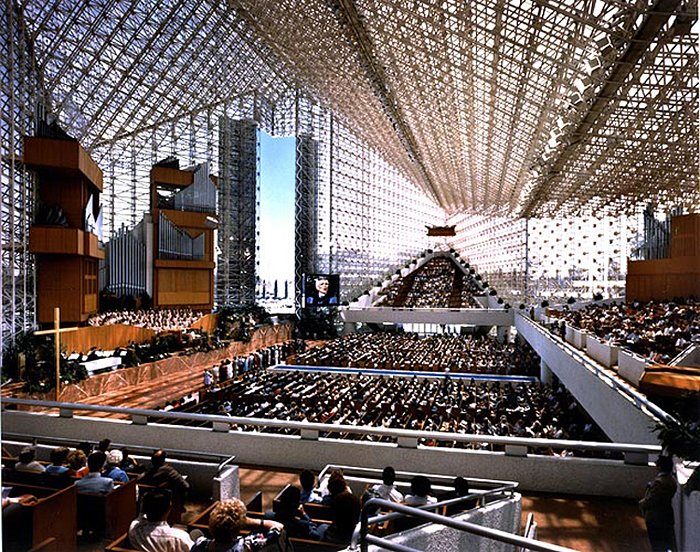
The Power of Hope

My wife pointed out at article on MSNBC yesterday that stated Robert H. Schuller’s Crystal Cathedral is filing for bankruptcy. Internet reaction has been predictably hostile, clawing at the craven, money-driven industry of television ministry. There is no question that many television ministries quickly grow corrupt under the lure of immense wealth. The average American citizen is glad to part with some money if it can buy favor with the man upstairs. When a minister is able to construct such edifices as the Crystal Cathedral with the good-will offerings of the faithful, well, s/he’s an entrepreneur, the kind of people God likes, according to the Tea Party. Schuller was famous for his positive thinking and insistence that God will do great things for you. When recession hits, however, not even God remains solvent.

According to the article, various corporate sponsors of the Cathedral are having difficulty holding up their end of the contract. Positive thinking extends only as far as the goodwill of the banks. Is there any question who the real god is here? Americans love the non-biblical concept that God helps those who help themselves. Making more money than a humble clergy-person ought to make may improve the sense of optimism, but it loses touch with where the average citizen lives. It is easy to be optimistic when you have a heavenly bankroll on your side.

Yes, but can it keep birds from flying over your head?

Over the weekend my family looked at slides from our years in Europe. The great cathedrals, even if in ruins, convey a sense of stoic strength, genuine commitment. Built with the hard-won resources, if not the actual physical labor of the local populace, these cathedrals were made of stone. I recall standing in the nave of Salisbury Cathedral while the tour guide pointed out that the very stone pillars supporting its huge steeple were bowed under the weight of all that stone above. Some day it may collapse under its own pressure, but it will have always survived longer than the Crystal Cathedral. Religion, if I may use a metaphor, is more authentic when it deals with stone rather than glass. The religion that struggles with the intractable realities of daily life will inevitably last longer than the feel-good, glass-plated, Tea Party serving “religion” of feel-good Christianity. It is too bad about the Crystal Cathedral, but maybe the entrepreneurs should be asking serious questions right now about which god they truly serve.


Gods and Demons

In ancient times people were sometimes possessed by gods. They were called “prophets” and they gained a breed of knowledge hidden from most other people. Demons were believed to exist, but they did not possess people. Instead, demons were used as explanations for misfortune, whether malevolently premeditated or not. Demons reflect, in today’s society, the concept of pure evil. Fr. Vincent Lampert, one of America’s 24 official exorcists, visited Montclair State last night to discuss evil, and according to the New Jersey Star-Ledger, he believes evil is a reflex of how people treat one another more often than a “figure with the hooves and horns.” No doubt there is a public fascination with demons, but few people understand their religious pedigree or what other explanations may be used to categorize them. According to the paper, Italy claims 300 exorcists – demonstrating that demons show culturally determined characteristics.

The 2005 movie The Exorcism of Emily Rose, lays out how science and religion differ on the issue of the demonic. Anneliese Michel, a young German woman, died in 1976 after being subjected to a prolonged treatment of exorcism. Her story was the “inspiration” for the film, and it raises the question of the reality of the demonic in the physical world. Fr. Lampert is more circumspect, noting that real life exorcisms are not as dramatic as those shown in the movies. He does, however, recall having seen a person levitate, but not during an exorcism. The human behavior he’s seen while on duty may all be readily explained by mundane physical and mental phenomena.

What does seem certain in all of this is that demons are not the behooved and behorned antagonists of films like Constantine or countless other graphic-novelesque portrayals of evil. Their Pan-based characteristics hearken back to the days when Christianity had to make plain its dismissal of foreign gods. In the ancient world hooves and horns were symbols of strength generally associated with powerful, if sometimes capricious, deities. In other words, what were one culture’s gods have become another culture’s demons. Movie makers understand the simultaneous revulsion and draw of the demonic character, but it seems that Fr. Lampert strives for a more balanced perspective. Evil has many faces, and most of them do not conform to Hollywood standards. Perhaps if all religions were respected demons would lose their power to torment and people would learn to get along with each other.


Where Would Jesus Park?

The walls of the Old City of Jerusalem may not go back to the time of King David, or even Jesus, but they have become one of the iconic symbols of a legitimate site of world culture. As a young man my first sight of those walls was almost enough to bring me to tears. I had read about Jerusalem since my earliest days after graduating from Dick and Jane, and to see the Holy City firsthand was the experience of a lifetime. Too bad it is some of the most hotly disputed real estate in the known universe. Sacred to the three major monotheistic faiths that seem dead set on destroying this or that portion of it, Jerusalem is unlike any other city on earth.

The problem, as any urbanite knows, is where to park. According to Matt Beynon Rees of the Global Post, Jerusalem’s city planning committee is considering literally undermining the sixteenth-century walls of the Old City to construct a parking lot. Just a few short years after U.S. troops drove heavy military machinery atop Nebuchadrezzar’s Babylon in order to satisfy Bush-family oil lust and personal revenge, once again one of the irreplaceable monuments of the past may come under the contractor’s gaze. I teach at Montclair State part-time, so, believe me, I know about parking headaches! There have been times when I thought I’d have to drive the fifty miles back home without stopping for class since every space on campus was full. Yet I wouldn’t suggest tugging down historic University Hall to make room for more cars.

The problem seems to be that in our disposable culture we’ve lost sight of what can never be replaced. Immediate urge takes precedence over what our ancestors left for us to ponder and marvel over. A great hue and cry went up when Yellowstone burned in 1988, a lament that the former beauty would never be restored in a lifetime. Damage to structures from centuries past may be repaired, but the wonder of their staying power will forever be lost. It cannot grow back like Yellowstone, no matter how long we wait. Yet, parking meters under the Wailing Wall might save locals from having to take a bus. Regardless of theological conviction or absence thereof, some sites are simply sacred to the human story. The human story, however, has become one of convenience. Where else might Jesus park his Holy Esprit without having to walk (not on water) to get to the temple?

Sure, it's a nice view, but where do we leave the car?


The Chosen Peoples

My thanks go to Simon & Schuster for sending me a review copy of Todd Gitlin and Liel Leibovitz’s new book, The Chosen Peoples: America, Israel, and the Ordeals of Divine Election (2010). Briefly, the book traces the origins of the concept of being a chosen people in both Israel and the United States. This concept is then shown in relief with those who are “unchosen.” The authors conclude by highlighting the national sense of mutual goodwill between Israel and the United States. The full text of this review is on the Full Essays page of this blog.

I read this book wearing multiple hats. Since the first chapter traces Israel’s sense of chosenness from Biblical times to the present, I began by wearing my Biblical Scholar hat. Many of the questions asked and raised about the Bible reveal a naivety about traditional claims of biblical authorship. Although certainty cannot be achieved, biblical scholars have applied textual and literary techniques to the text for well over a century now, and many of the claims simply accepted by Gitlin and Leibovitz simply do not stand up. This may seem a minor flaw, but since Abraham is foundational to this outlook, it is essential to at least consider his lack of historical attestation. Gitlin and Leibovitz assume that Genesis, with its stories of Abraham, predates the books that follow. This is not a safe assumption to make, and using this background as a foundation for further analysis might well lead to structural problems with the argument later on.

Wearing the hat of an historian, I noticed how much of the force of the argument of the book is interwoven with the idea that God has actually chosen Israel. I have told my students for many years now that historians do not make claims on God or God’s alleged activities. Texts that narrate God’s actions tend to be classified as myths rather than history. The concept of chosenness, which Gitlin and Leibovitz are reluctant to relinquish, is based on the premise that God has indeed done the choosing. An historian would be extremely reticent to make such a claim. Having noted this concern, the authors do a fine job of providing a brief, readable history of the founding of modern Israel without recourse to what God was doing in the twentieth century. When the authority of the Bible is needed, it is quoted here in King James English, hardly the most accurate translation available.

Gitlin and Leibovitz suggest that chosenness is more a curse, at times, than a blessing. The reasoning seems to be that the concept of chosenness leads inexorably to Zionism. The ideas interact on a much more subtle level than that, although certainly the Zionist movement has owed and continues to owe quite a heavy debt to the concept. The generalizations here are a bit broad – political motivations may not receive their full due. Toward the end of the chapter the ideology of messianism is engaged and brought into the discussion. It is not clear that messianism is the same as chosenness; the two ideas both emerge in Judaism, but do not always overlap. When the authors state that Zionism has always been messianic at heart (p. 57), that may be correct, but it does not necessarily reflect chosenness. Gitlin and Leibovitz are very good at pointing out the inconsistent application of the idea of messianism in the formative stages of the modern state of Israel.

Please see the Full Essays page for the remainder of this review.


Noah’s Newest Neighbor

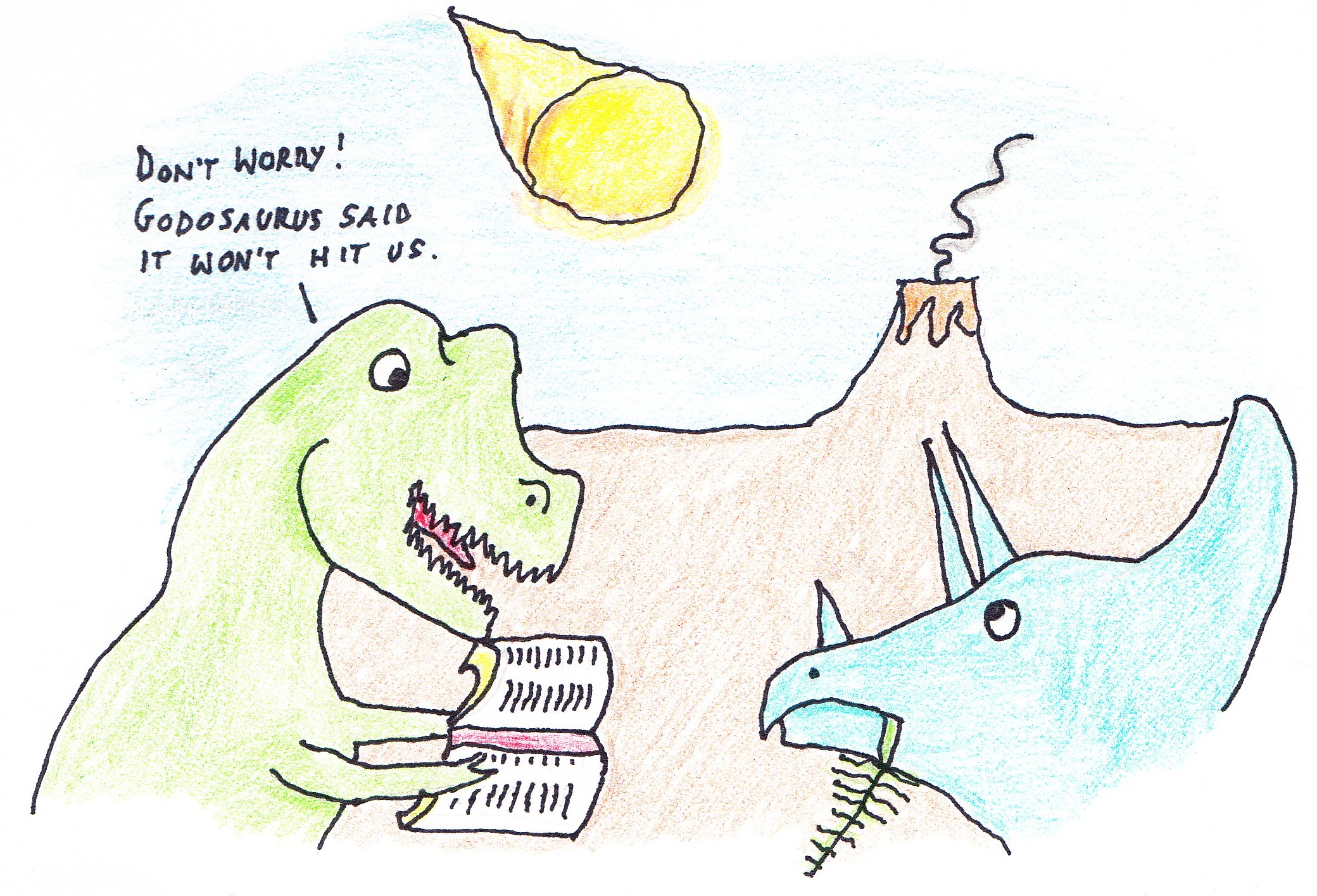
This week paleontologists announced the newest dinosaur discovery: Kosmoceratops, a plant-eating, three-ton beast with an improbable arrangement of fifteen horns on its head. Any beast arising from the sea would be jealous. As Kosmoceratops jostles its way onto the ark, scientists debate the utility of all those horns – placed incorrectly for defensive purposes, they seem to have functioned to attract mates. Isolated on a fairly compact land mass, these Cretaceous ceratopsids bloomed into a distinctive species as showy as any other so far discovered. As evolution continues to stir debate in this country, its evidence keeps marching along.

Every semester, four terms per year, I have students work on a project that includes (in part) evolution and the Hebrew Bible. Every semester as I overhear discussion, I realize just how deeply the anti-evolutionary front has its claws in the American psyche. Otherwise intelligent undergraduates studying a variety of subjects: science, business, engineering, psychology, express their doubts about evolution. The reason: the Bible doesn’t affirm it. Nor does the Bible affirm atomic theory, free market economics, or microchips. Evolution hits, perhaps, a little too close to home.

The dinosaurs stomp in the face of Creationism. As much as the fundies try to embrace them, dinosaurs are just too outlandish to fit in any world other than evolution. The God of the Bible doesn’t seem to have a surfeit of humor to have wasted so much creativity on dinosaurs that no human ever got to see. We reconstruct, with amazement, species after flamboyant species, and yet the foes of science keep a finger firmly tucked in Genesis. Serious Bible scholars seldom have difficulties with letting science do its job, including evolution. The agitation arises from another quarter. And with all those horns in front of us, that quarter might be the apocalyptic sea after all.


Blessing Nature

Today is the traditional Feast of St. Francis of Assisi. Yesterday the local Episcopal Church celebrated this feast with the somewhat Anglophile practice of the blessing of the animals. This is not generally an event to which my family pays particular attention – although we are animal lovers the only pets we have are hermit crabs and the spiders and bugs that naturally make their home along with us. Yesterday also happened to be a beautiful day for the local street fair and my brother and his family joined mine for the event. His family includes a dog and we noticed a sign advertising the local blessing of the animals. As my brother noted that his dog might better do with an exorcism, we decided to pick up a free blessing while the offer was good.

Normally animal services are held outdoors. This in itself is a commentary on the true equality of species. Many people feel it sacrilegious to bring animals into churches. Biologically speaking, however, that would exclude us all. Perhaps for allergies or the price of carpet cleaning it may be more expedient to bless the critters outside. After all, animals do fend for themselves out-of-doors, right? As we sat in an informal circle, the priest emerged from his office with his own dog at his side. A makeshift card-table altar had a simple wooden cross atop it to sanctify the area. As soon as they reached the center of our circle, the priest’s dog squatted to defecate on the lawn. It was a lighthearted moment, but it also spawned some reflection.

When it comes to religious settings and ceremonies, many normal behaviors and actions are considered inappropriate. This invisible divide reflects the time-honored division between the sacred and the profane. There is no tangible way to distinguish between the two; sacredness is a matter of cultural taste. Absolutes for sacred and profane simply do not exist. A priest’s dog following the dictates of nature is about as sacred an example of life as experienced by all creatures on this earth as any other. Expelling of waste is one of the characteristics of life as we know it. While some may find dog droppings offensive in sacred settings, I have a feeling St. Francis would simply have laughed.

Your dog did what?


Just Druid

Suggestively between the autumnal equinox and fall’s cross-quarter day, yesterday British authorities announced that Druidism is now an official religion. Such an announcement, naturally, does not endorse or censure the belief system but only affects its legal status. That status relates to taxes, the handmaid of the One True God, Money. Tax-exempt, Druids are now free to worship nature free of charge.

In the recent resurgence of interest in paganism, the Druids have attracted a considerable New Age following. There is, however, no doubt that Druidism is an ancient religion predating the Christian conquest of Europe. The origins of the Druids are lost in obscurity, but they are one of any number of ancient nature cults that have become fashionable in a post-Christian society. What does it matter if a society recognizes a belief structure as a religion or not? (Apart for tax liabilities, of course!) One of the issues at stake is the perennial question of who determines what is a religion and what is not. In a society where religion is defined purely by belief, the doors are cast wide, if not blown completely off their hinges, when a group declares itself a religion. Who is the final arbiter? Today the world resoundingly answers “Mammon.” When you pass that collection plate, or basket, or gourd, does the government take its cut or not?

Religions will always struggle to convince the many that they each possess the one, true faith. Some will do it through magic, others through nature, and others through divine revelation. All will be subject to the scrutiny of government fleshpots greedy for a share whenever money changes hands. Druids have lurked in the shadows for thousands of years. By publicly receiving the blessing of tax-exempt status, they are free once more to disappear into the mists and attract the envy of more imperially minded religions.

A Druid attempting tax evasion?


Sacred Geography

Pilgrimage. The concept that certain places are special is deep-rooted in the human psyche. So deeply rooted that we consider it a religious behavior. Even as scientists recognize the need of many animals to return to their birthplaces or areas that they sense beyond the range of human perception, as human beings they feel it too. Even scientists have the urge to revisit that special spot. Otherwise the travel industry would be in great trouble. Pilgrimage is considered a religious behavior, and the sacredness of place has been noticeably in the news this week. MSNBC reported on the find of a skeletal pilgrim to Stonehenge from 1550 BCE. Yesterday the New Jersey Star-Ledger ran a story about a temple/mosque dispute in Ayodhya, India. Both of these stories center on the sacred geography of the region.

Stonehenge has been a magnet not only for Druids and New Agers, but for anyone with a sense of connection to European prehistory. In the winter of 1990, under a chilly British sky and gusty winds across Salisbury Plain, my wife and I made our pilgrimage to Stonehenge. The low angle of the sun in the sky in a dusky British December only enhanced the experience of standing near a monument that has become an icon of the mysterious and the transcendent for modern domesticated citizens of a straightforward, technological world. The news story states that the skeleton unearthed was of a Mediterranean teenager, far from home, in the shadow of what was already a famous landmark. Even over two decades on, I can still feel the inarticulate sense of longing I felt at Stonehenge, so near the winter solstice, and I understand why that young boy went there to die.

Meanwhile in Ayodhya, the site of a mosque has been declared two-thirds under the ownership of Hindu plaintiffs who claim the site as the birthplace of Lord Ram, a Hindu god. Naturally objecting is the Muslim population that currently has a mosque on the site. Sacred sites raise emotions and tempers readily. Humans want access to their holy places – this is the power of sacred geography. It is certainly palpable in the Bible, and was obviously present the last time I was in Jerusalem. Whether it is hardwired in our biology or simply born of whimsy, sacred geography will never go away. Either we can learn to share it or fight to the bitter resolution, but no matter how much blood might be shed the site will only grow more and more significant because of that very blood.


Crimeless Victim?

Anyone who’s spent much time with the Dead Sea Scrolls knows the name of Norman Golb. Long-term Oriental Institute professor at the University of Chicago, Golb has been active in research on the Scrolls for decades. Tuesday the New Jersey Star-Ledger ran a confusing article about the trial of Golb’s son for identity theft. After reading the piece several times it is still not clear what Raphael Golb has done that is either newsworthy or illegal. It does involve the Dead Sea Scrolls, however, and that is always enough to draw the attention of the Associated Press.

Is the truth in there?

The Dead Sea Scrolls continue to fire the imagination of the general public in a way that is somewhat baffling. The scrolls themselves are largely obscure and fragmentary, the information they contain is often arcane, and the published pieces raise excitement mostly in scholars rather than a general readership. The fact that it is not too difficult to fill a class on Ancient Near Eastern religions at Rutgers University seems to indicate that people are still avidly interested in the past, particularly in that conflicted part of the world where civilization began. While the media report the more sensational finds, interest quickly peters out while new and more exciting stories hit the wires. It’s fun to imagine what the field of studies would be like if sustained media interest told the public what to find fascinating in the ancient world.

This article, however, represents the unfortunate reality that scandal is often the drawing point for ancient studies. People are attracted to scholars behaving badly, intellectuals receiving their timely comeuppance. It is disappointing that the subject matter itself doesn’t receive more attention. The Ancient Near East is, after all, the source of what we continue to recognize as culture. Reading the article over again, the most disturbing element is not that Raphael Gold has allegedly committed identity theft. The most disturbing element is that a professional journalist describes him, apparently without a hint of irony, as “a brainiac.”


Goldilocks Comes of Age

NASA's Goldilocks, image credit Lynette Cook

“Even a simple single-cell bacteria or the equivalent of shower mold would shake perceptions about the uniqueness of life on earth.” So writes Seth Borenstein of the Associated Press concerning GJ581g, a newly discovered “Goldilocks planet.” This extra-solar-system planet is just the right distance from its sun, which is neither too hot nor too cold, and just the right size, neither too big nor too small, to hold an atmosphere and liquid water. This is the necessary environment for life as we know it to evolve. Like the life in the grout in my shower. It is an exciting prospect. This discovery suggests that other planets contain the right stuff for primordial soup, and the implication is, once again, that the earth must relinquish its place at the center of the known universe.

It is a curious notion that we share, quaintly parochial, that the earth is somehow special. The idea is an inherently religious one. Ancient peoples, beginning at least with the Sumerians, understood their world as apparent reality. The sky moves around us, not vice versa. Human beings, the apex of primate evolution, see the universe through self-crafted lenses. Lenses that we keep close to our eyes at all times. If there is life out there, and they come here, they will be the outsiders. We were here first. The Bible helps to shore up this homocentrism; the crowning achievement of divinity, according to Genesis 1, is us. Even scientists have long been reluctant to release the idea that we might just be one among many, a single, relatively common occurrence of life in a vast, indeed endless, universe.

Our species evolved as a religious one, feeling that God somehow gave us opposable thumbs and flexible vocal cords for a reason. (Presumably because God has opposable thumbs and flexible vocal cords.) From the very earliest of times we have considered ourselves unique on this planet and unique in this universe. Although reason has long suggested otherwise, and although scientists would often be the last to admit that it is a religious idea, we have grasped tightly to human singularity and defied the universe to prove us wrong. Once we actually discover that life out there, what will we do? If our past track record is any indication, we’ll head to that planet with Clorox in our hands and a divine mandate in our heads.


Ask Your Local Agnostic

A study released by the Pew Foundation reveals something many may find surprising: the best informed citizens on religion tend to be those who do not believe. There are obviously exceptions to this trend, but for those of us who teach religion it certainly rings true. Over nearly the past two decades, I have repeatedly encountered students brimming with religious zeal, but who know very little about what they’re so excited about. The emotional charge is real enough, but few Americans know in any detail what their religion actually teaches. Some of us didn’t need the Pew report to tell us this – we have known this all along.

One of the flip assumptions that must fall by the wayside here is that non-believers don’t know what they’re missing. In fact, it seems, many of them consciously reject what they are brought up believing. This also fails to surprise those who spend much time with religious studies. Religions are developed in defined culturally and chronologically bound circumstances. The longer it takes the parousia to occur, the more human knowledge mitigates against it. In a pre-scientific first century many ideas held a currency that no longer bears weight in theological commerce. Those who study it closely realize this.

As political parties gear up for midterm elections and various contenders are sending out their feelers for the highest office (secular, in this country), they know something the electorate does not. Religion, poorly understood, is perhaps the greatest motivator known to the politically ambitious. People believe – and feel it strongly – but what exactly it is they believe, they are not sure. Anyone who has read the Bible soberly, on its own terms, without ecclesiastical lenses firmly in place, walks away with more questions than answers. Religious belief relies on answers, often at the expense of knowledge. So it is that the Pew Forum on Religion and Public Life has discovered something that those of us who daily live with religion had already surmised from the evidence right before our eyes.


From Bragg to Phelps

Religious freedom is proving to be a two-way street. The news is rife with stories of religious groups pushing the limits beyond their right to state an opinion into arguably unconstitutional behaviors. At Fort Bragg, the Army is sponsoring Rock the Fort, a Christian rock concert promoted by the Billy Graham Evangelical Association. Although Christian bands are spiritually minded, they do not perform for free, raising the question whether military (government) money is being spent to promote a particular religion, a particular strain of Evangelical Christianity. In offering this concert, is the government endorsing this one religion? Statements that other religions are free to send their rock groups to Army bases rings hollow when, with rare exceptions, such groups simply do not exist.

Meanwhile, Time magazine brings the curious Westboro Baptist Church of Topeka, Kansas back to the headlines now that Supreme Court has been called in to argue whether their outspoken condemnation of the military is constitutional. Fred Phelps, the founder of the church, has led divine hate campaigns across the country. It is his protests at the funerals of soldiers killed in action that has forced the question of whether his group has the right to condemn indiscriminately. The question of good taste need not even be asked.

What these Evangelical groups are pointing out is that God apparently suffers from schizophrenia. Simultaneously the great general upstairs loves soldiers and wishes to convert them and also hates them and condemns them to hell. The jury, it seems, should be the taxpayers. We are the ones footing the bill for Christian concerts and paying the not-insubstantial salaries for Supreme Court justices to argue about the legality of religious hatemongering. In these days when many feel that Islam is a threat (as Christian clergy threaten to burn the Quran), it might be worth asking where the real threat to religious freedom comes from. Religious zealots often make excellent soldiers, no matter what the religion.

These guys love God, but is the feeling mutual?


Higher Ethics

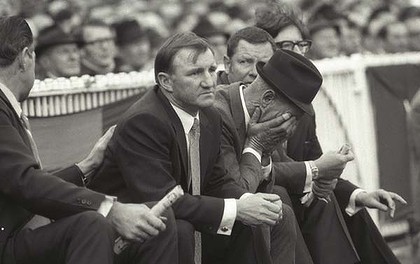
As a part-time public servant (I teach part-time at two state schools, Rutgers and Montclair State) I am required to sit myself in front of the computer for over an hour each year to watch a slide show on the ethics expected of public servants. Probably the first time this was a good thing since I had seriously been considering taking a tip-jar to class with me to help meet the costs of living in New Jersey. You see, part-timers do not get benefits. Some, like me, teach twice as many courses as their “full-time” colleagues and get paid less than half of what their betters do. I am a bargain-basement public servant. I figured a tip-jar might just help to cover mileage (not reimbursed). As I listen to the stern-voiced lady spilling out all the unethical practices (like tip-jars) that can lead to the dismissal of bad public servants, my mind can’t help but to wander to what Bruce Springsteen famously called “the mansion on the hill.”

Froma Harrop, a journalist in Providence, wrote an op-ed piece on higher education that appeared in yesterday’s New Jersey Star-Ledger. After surveying the situation at her local Brown University, Ms. Harrop laments the seemingly endlessly escalating costs of higher education. In the past four decades tuition has increased an average of 15 percent, whereas incomes (at least some) increased at an average of 6.5 percent. She notes, however, that the money is not going to professors or academic programs. The lion’s share of university money goes to sports teams. Students who often have trouble passing my admittedly easy introductory-level courses are pampered, petted, and preened by the university. The average undergrad has plenty of stories to tell of how they have been forbidden goods and services that the university reserves for its sports stars. Ms. Harrop also cites the fact that the number of administrators has nearly doubled in the last 30 years. For all that, the schools haven’t become more efficient, just top-heavy.

So as I waste an evening looking blankly at my computer screen, I realize that I am a public servant. Strictly part-time. I also realize that many public servants – those who hold high political office come to mind – earn far more than they strictly need. In fact, the benefits package alone of some of these “servants” would easily support a family of three mere mortals. And they don’t even have to make their own car payments. As an undergrad I took enough courses in ethics to officially declare it a minor. I have studied religion, a discipline akin to ethics, all my life. As the stern-voiced lady tells me all the bad things I cannot do with state money, I wonder what the top public servants are doing tonight.


Roman Women

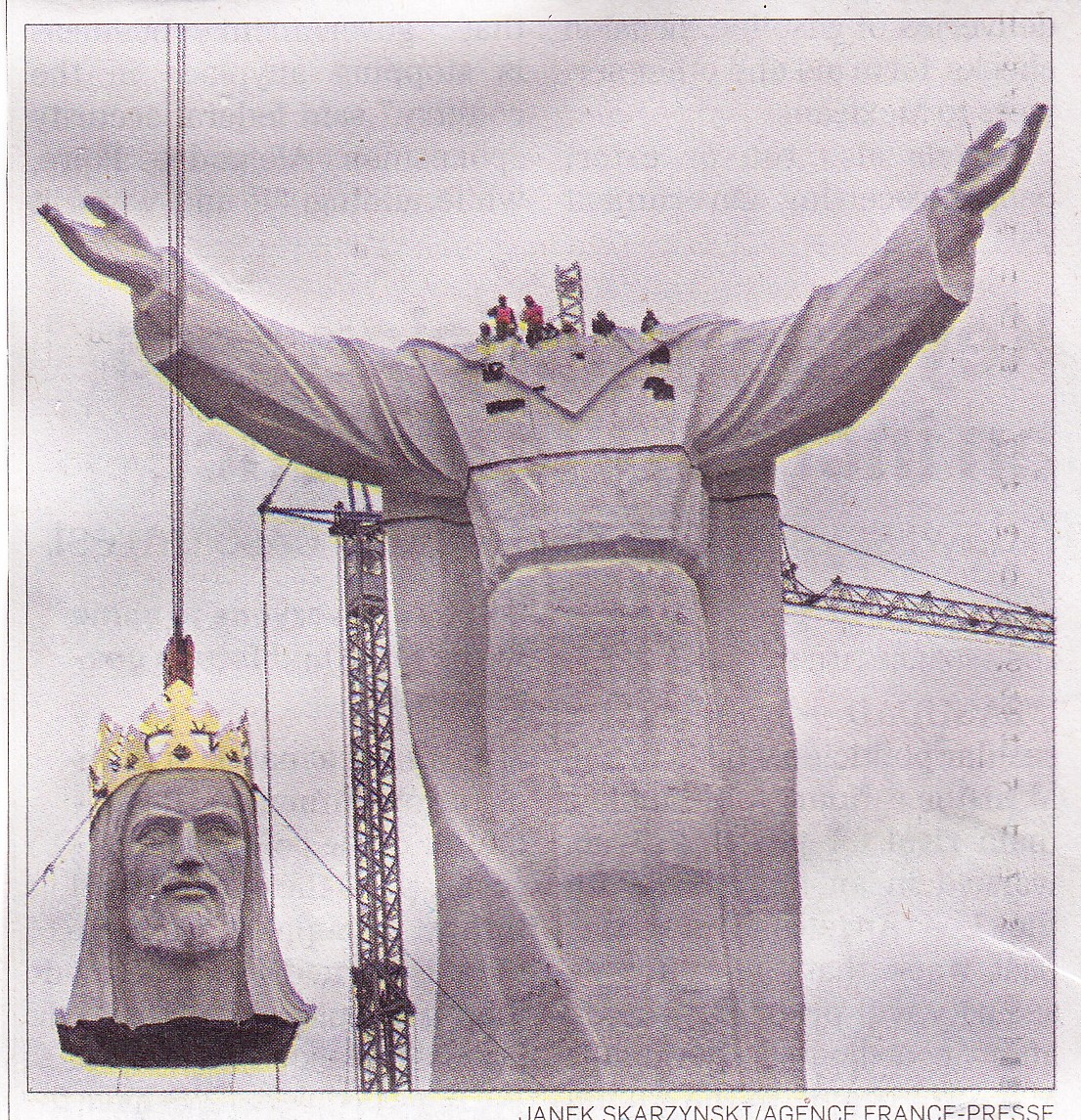
This week’s Life section of Time magazine features an issue that yet again raises the questions of definitions and who decides on correct religion. The feature by Tim Padgett entitled “Robes for Women” demonstrates the conflicted nature of religious authority. With the Vatican claiming women have never been priests, but historians questioning the assertion, the salient point is who has the right to decide. And what is lost, if such a change were to take place. Tradition is not threatened by change – it always stands sentinel over the past, but no religion remains unchanged for any length of time. It is not biblical authority that is lost either. Any religious body whose scriptures state, “call no man on earth your father,” yet which addresses its clergy by the title “Father” clearly possesses the casuistry to get around other biblical injunctions. What is lost is male power.

No matter how vociferous theologians may be concerning the genderlessness of God, the default male image seems deeply embedded in the human psyche. One of the most ancient and pervasive of mythological themes is the search for the father. The loving mother is the one who stays near and raises the child while the father leaves to make provision, or for reasons less wholesome. At some level we know that the deity portrayed by Scripture and tradition is male, a father who is difficult to find at times, particularly times of need. This archetypal image is not an excuse not to re-envision a genderless deity, but it underscores what generations of human experience has taught us. Referring to God as father and mother only complicates the matter by throwing into the mix all aspects of gender complications. Can humans even truly worship a god without gender?

If the Womenpriests movement succeeds, as no doubt it should, there will always remain a group who will not accept their authority. My experience at Nashotah House taught me that some prejudices are so deeply rooted that they are no longer even recognized by those who hold them. Wild examples of theological gymnastics were paraded before me as to why women should not hold priestly office. And like Nashotah House reveals, if women are finally accepted by Rome, others will split away and both sides will lay claim to the true faith. There will be no convincing either that the other is correct. The history of Christianity has taught us this sad truth. Current estimates suggest there are some 38,000 different Christian denominations. This is the common fate of all religions who claim to have exclusive access to the single, unambiguous truth.

The secret of the catacombs


Shopping for Truth

Friends often tell me that I should start a new religion. After all, modern day religious practice is generally a matter of “shopping around” until you find a brand you like. Lifetimes go into shaping religious sensibilities and outlooks, and when we see something we like, we choose that as our spiritual refuge. I was reminded of this once again by a story in Friday’s New Jersey Star-Ledger about a girl who’s been suspended from school for following her religion. Her North Carolina school has a dress code forbidding certain body piercings, but the girl belongs to the Church of Body Modification. The girl’s mother makes a valid point (in the words of the Associated Press article by Tom Breen): “school officials are setting themselves up as judges of what constitutes a ‘real’ religion.”

Religion may be defined in many different ways. Today many people consider religion a belief system that requires a strong faith commitment; belief is primary in such a definition. On the other hand, today’s world still includes many people who are born into a religion that is essentially a system of rituals or practices rather than a belief structure. It could be argued that such people do their rituals and practices precisely because they believe them, but often belief is not even discussed. It is simply a matter of who they are.

If religion entails solely a belief system, then any number of philosophies and outlooks might be defined as religious. Governments would need to be liberal with their tax-exempt status coupon books, since should I declare that my predilection for things Ugaritic to be a religion, who could reasonably protest? With a couple of like-minded adherents, we would have created a new religion (or a very old religion, depending on how you look at it).

Religious freedom defines the United States. For all its faults and foibles, this nation has allowed freedom of conscience to be the yardstick by which we are measured. If the girl’s religion insists on a nose-ring, who is local government to dispute this? If we could learn to define what a religion is, perhaps we would be much further along the path of ensuring true religious liberty.

Finding true religion in the shopping mall of life