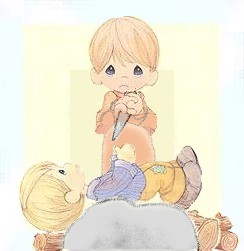
The Violence of the Lambs

Religious holidays are curious affairs. In many Christian contexts “the holidays” are often poignant scenes of tension and angst. Granted, much of this is generated by human family dynamics, but then, what of religion is not? An unfortunate shooting episode erupted yesterday in Baluchistan, Pakistan during the Muslim festival of Eid al-Adha. According to Star-Ledger wire services, the followers of two rival religious leaders pulled out guns in the mosque and began firing. The festival of Eid is the commemoration of Abraham’s near-sacrifice of his son. Islamic sources suggest the intended victim was Ishmael while the Bible claims it was Isaac. Whoever came under the knife, however, the implicit human sacrifice is disturbing.

Human sacrifice has been a part of human culture for a very long time. Never a common practice, it was generally reserved for times of severe crisis, when you really, really needed the gods to pay attention. The story of the Akedah, or “binding,” of Isaac demonstrates the reluctance in Judaism to speak of Abraham as an actual murderer of a child. After all, this was only a test. Many biblical scholars see this story as an etiology, a story of origins. The binding of Isaac explains why human sacrifice is not permitted in the religion of Abraham. When it does occur, for example in 2 Kings 3.27, it is effective. Nothing like a good, old-fashioned human blood-letting to satisfy the gods.

Soren Kierkegaard found the story of the sacrifice of Isaac so disturbing he wrote an entire book to deal with it. Even if we, the readers of Genesis, are given the advance knowledge that this is only a test, the image of a religiously devoted old man with the knife hovering over his bound son is the very definition of horror. And that frozen moment comes to life and acts itself out time and time again in acts of religious violence. One of the most recent was in Baluchistan, but as sure as the knife rises above the sacrifice, there have been other incidents of religious violence since that awful moment. Human sacrifice may be at the heart of religion after all.

Precious moments akedah, shamelessly borrowed from James McGrath's blog


Hallowed Be Thy Game

I don’t follow sports. At all. This may seem an unmanly confession, but I think of it as more a silent protest against a society that pays excessive bonuses to people who play for a living. It’s not that I have anything against physical fitness – I still jog regularly and have been known to rattle the free-weights around a time or two – it’s simply the recognition that the more difficult achievements, intellectual achievements, are undervalued. Not that I make any claims of being an intellectual – I have no time for those who tout Ph.D.s like intellectual currency – but I see things from a different angle. Usually when I reach the sports section, I simply flip over the whole wad of pages to get onto what’s next. Today, however, a front-page sporty headline caught my attention, “‘God Can Turn Mistakes Into Miracles’ is the message Michael Vick sent out…” I confess, I don’t know who Michael Vick is. But he knows what God can do in some sports venue.

I grew up with God. The information I was given was that those who devote the majority of their time and attention to God will receive their reward. Not always in money, despite what the Prosperity Gospelers bray, but at least in kind. Being the kind of person who likes to follow things through to their logical conclusions, I ended up with an appropriately named “terminal degree” in religious studies. The prosperity came in the satisfaction that I could teach others for a reasonable, if low-end, salary and continue my goal of deeper understanding. Then Prosperity Gospelers took over the seminary and those of us without material cache were kindly kicked out. I was jogging between seven and nine miles a day, looking for answers.

The headlines this year have included tragic college sports-related injuries, one of the more dramatic from my own part-time home of Rutgers. Immediately medics rush to the field and prompt, professional medical care is given. I am covered by no medical plan. Many athletes take my classes, and they can count on the good graces of God and university officials to take care of them. In my opinion they are just as capable of learning as any other students, but the incentives just aren’t there. Why earn a degree in a field that will plant you on your backside all day for minimum returns when you can perform miracles in the athletic world for more money than the average citizen can even imagine? If God can turn mistakes into miracles, perhaps this misspent life of religious studies can turn into a lucrative position after all.

Miracle or mistake?


Round Tables and Belligerent Gods

One of those bits of mail in my part-time lecturer mailbox at Rutgers informs me that the Oxford Round Table is hosting a discussion entitled “Civilization at Risk: Nationalism, Religion and Nuclear Weapons.” Given that the cost for attending is about what I make for teaching one of my adjunct classes, and the fact that they spelled “civilisation” the American way, my guess is that the target audience resides on this side of the Atlantic. Still, the topic is indeed vital. Nationalism is a relatively new plague to arise in the human menome. Cultural differences matter little in the face of nationalism; the real issue in this ideology is dominance. Nuclear weapons add a unique poignancy to the issue, but the heart of the matter is clearly behind door number two: religion.

Religion usually makes the list of the hallmarks of early civilization. Along with complex governance and the arts, it is considered one of the aspects that marked the break from merely subsistence living. Religion, however, in its monotheistic form has more divisive power than nearly any other aspect of civilization. Polytheistic religions hardly worried if people worshipped the “wrong god.” Monotheism bears a larger burden, and that burden is not dissimilar from that of nationalism: dominance. Let’s face it – what kind of respect can you expect for a god who can’t throw the brimstone behind all those threats? And if your god doesn’t readily ante up (no visible actions, depending on who you read, since the first or the seventh centuries) then the devout must take up the spear, cudgel, or atomic weapon to prove the honor of their all-powerful god.

Uranium in the hands of an angry God

Is there a solution to the “Middle East” crisis? I’m no politician, but I would make the following humble observations. The crisis as it exists today is as much about nationalism as it is about religion. Religion serves as a convenient excuse when one’s way of life feels threatened. (Push any Neo-Con into a corner and when all the cards are on the table it will amount to precisely this.) We all want things our way. If we can’t get it, we can take it by dropping the G-bomb. It may be apt that the region of the world that instituted civilization is destined to destroy it. A cosmic symmetry pervades the idea. It might be a lot less messy if we’d all admit what the arguing is really all about.


New York Sinning

Men’s Health, a magazine I’ve never read, is making a foray into spirituality. Or at least religiosity. According to an article in the Friday New Jersey Star-Ledger, the magazine noted for its washboard abs and iron biceps is poised to claim New York City among the least devout cities in the country. Even lower on the scale are New Jersey’s own Newark and Jersey City. Quite apart from wondering what a magazine whose cover frequently involves suggestions on how to improve your sex life has to do with religious devotion, the criteria for this assessment also give pause. According to the article, a city’s saintliness is measured by the per capita number of worship venues, the diversity of religious groups in the city, and the amount collected in donations. Interesting criteria.

I’ve spent enough time in New York to know it is hardly Heaven – still it is one of my favorite venues – but that it is hardly Gomorrah’s brute step-brother either. Per capita places of worship as a measure of spirituality overlooks size of venue and number of services. A Midwestern town with a dozen churches, each with a dozen members and with one service a week scores ahead on such a scale against a city with more than 2000 churches, 1000 synagogues and 100 mosques, many with multiple congregations. Diversity of religious groups? Surely New York and New Jersey must come out in front on that! I’ve been to Europe, and even Israel, and there are days when I’d swear New Jersey has a higher percentage of ethnic groups than any similar-sized region I’ve experienced.

My main concern, however, is with the amount of donations criteria. “Where your treasure is, there your heart will be also,” a famous guy once said. Was the treasure monetary? Precisely the opposite seems to have been the point. True, money today is often a measure of value, but it is not the only such measure. In fact, the same guy who made that statement once said a poor woman’s two cents were worth more than the lucrative eternal investment of the wealthy. I don’t doubt that New York, Newark, and Jersey City have their share of innovative sins. Their citizens, however, are just about as religious as people are anywhere. In my opinion the trouble is not in the souls of the masses, but in the design of the assessment. But with pecs like that, what does it really matter?

A God's eye view of Sin City


Physics of Religion

As an observer on life’s sidelines, I rarely participate in the action. The subject matter is more important than the critic, so I tend to respond in this blog rather than create. Once in a great while, however, someone I know shows up in the media. A number of years back Neal Stephenson introduced me to George Dyson. I instantly felt an affinity for him, and found his book Darwin Among the Machines a great triumph of intelligible science writing. It was no great surprise, then, when George was mentioned in an article in December’s Atlantic magazine, comparing his outlook to that of his father, physicist Freeman Dyson. I was intrigued by physics in high school, but my overwhelming supposition that religion explained life overruled this predilection and so I’ve ended up an unemployed religion professor than a scientist. In the article, however, author Kenneth Brower brings these things together.

Brower asks a pointed question: how can a physicist as brilliant as Freeman Dyson hold factually inaccurate and apparently misguided ideas about global warming? The story contrasts Freeman with his son George as exemplars of two different religions. George represents the environmentalist religion while Freeman represents the belief in humanity’s ability to solve any problem. The use of religion as a means of distinguishing these views again raises a question of definition. I don’t dispute the use of the word – it is entirely apt in this context – but the functional definition here is that religion equates to something deeply believed. I am a little troubled by this. Not because no gods or deities or supernatural forces enter into it, but because for years many evangelicals have boldly declared that science itself is a religion. That idea has been used as leverage to get Creationist ideas equal time with those of science because it comes down to purely a matter of one religion against another.

Belief is a phenomenon that is not well understood. Most people have no difficulty accepting the truthfulness of factual data. Seldom do even religious zealots doubt two plus two equals four. At a more theoretical level, however, facts become formulas incomprehensible to most of us and critics are quick to call this “religion.” Faith in human ability to solve the riddles of the universe. Where is the line with religion crossed? In the year 2000 Freeman Dyson received the Templeton Prize, an honor reserved for those who make significant contribution to the spiritual dimension of life, often with a scientific component. It is the dream of every religionist to be considered for this great honor. Once again, however, the further out we peer into our universe, the more the lines become blurred. That does not worry me. What concerns me is how such ambiguity will no doubt be used by Creationists and their Neo-Con supporters who are only too glad to have a scientist of Freeman Dyson on their side. When religion trumps science not even 2 + 2 = 4 is secure.

Hubble's ultra deep field has yet to detect any deities


What Would Noah Do?

Unfortunately, religion and politics do mix. A story on POLITICO.com announced on Wednesday that the House Energy and Commerce Committee chair hopeful, Rep. John Shimkus has declared Genesis on the side of conservatives. Stating that the Noah myth (not his exact words) promises God won’t flood the earth again, Shimkus claims we have nothing to fear from global warming. In a twist that makes some of his fellow conservatives squirm, Shimkus admits global warming is a reality but suggests that we really don’t need to worry about it because “the Bible tells me so.” Time for Shimkus to go back to Sunday School.

Part of the problem lies in the concept of Bible itself. The Hebrew Bible isn’t too much of a self-referential work, claiming to be pure words of divine gold. Paul, on the other hand, found the Hebrew Bible useful to cite against enemies, and his admirer who wrote letters to Timothy in his name took the idea even further. For all that, the Bible wasn’t finally settled on for a couple more centuries. Once the concept took hold, however, the world could never be the same. A book written by humans had become direct revelation from the word of God himself. The Bible makes few such lofty boasts about itself, but its less conscientious followers are not nearly so shy. As I demonstrate repeatedly in my classes, the Bible has become a magic book.

Politicians now feel comfortable claiming God as their ally because “he said so.” Without having ever critically engaged Scripture, or even having read it in its original languages, those in positions of public trust know enough to flaunt it. And it always scores points with Americans. Liberals fear the ramifications of using the Bible while Neo-Cons charge bravely ahead to places Noah himself would fear to go. Maybe it’s time to put the Bible back in the schools. Only this time it should be taught by people who realize that the Enlightenment has taken place and that we can’t rely on magic to save us from dangerous situations we ourselves have created.

The lesson from the Cretaceous Period


Foxhole Atheists

It’s Veterans Day and prayer makes the headlines. The old adage about no atheists in foxholes comes to mind as those who fought for the values we hold reminisce about the not-so-happy days before the 1950s when the last semblance of normalcy in American life apparently died. The New Jersey Star-Ledger quotes a World War II veteran who participated at the Battle of Normandy saying “I might have prayed more than I ever prayed before.” No atheists in foxholes. As a lifelong pacifist, I have always believed that war is a terrible waste. 3.5 billion years of evolution and the best we can come up with is to hurl supersonic lead slugs at each other over who gets what and who deserves more than who else. I don’t deny that veterans should be honored – my father was a veteran – but war should not.

A sad truth is that many wars, probably in the history of the modern world, most wars, have been fought for religious reasons. The idea that God demands certain things ultimately leads to fighting over what it is God wants. Both sides often claiming the silent deity is on their side. Millions of mere mortals have had to pay the price. Hey, can’t we just talk about this?

War may very well have evolutionary roots. Studies of chimpanzees suggest that homo sapiens are not the only overly aggressive primates. If we deny our cousins religion, however, only homo sapiens fight for mythological causes. One of the great ironies of life is that the most advanced technology trickles down to civilian life from military applications. If something is new, it must have a tactical use against the enemy. Once the enemy is subdued, we can share the wealth. I grew up hearing about “godless Communists.” I watched in dismay as Bush declared a new crusade. I shudder when I read that Iran is developing long-range missile facilities. God is the midst of all this. Veterans protected us from the human-level wars of a bygone era. In our own homemade Armageddon, however, our own technology will doubtless become the weapons in the hands of an angry God.

If God be for us...


Jesus Gets a Head

Sunday newspapers often contain stories calculated to appeal to the purveyor of the unusual in addition to the usual current events. When my wife pointed out an article in yesterday’s paper about the new (unverified) tallest statue of Jesus in the world, I was instantly intrigued. A Polish priest by the name of Sylwester Zawadzki created the statue which tips the yardstick at somewhere between 108 and 167 feet (a little triangulation might be helpful here). Noting that Rio de Janeiro’s Jesus is 125 feet tall, some are claiming this as the largest Jesus in the world. According to the article, some Poles feel the statue is tacky and in bad taste. Others rejoice that a very large likeness of what Jesus may have looked like now overlooks Swiebodzin.

Religions frequently display their colors. Knocking down crosses for crescent moons or stars of David for crosses is a religious activity as old as monotheism itself. Zawadzki claims that he was called by Jesus to do this task. According to the Gospels, Jesus seemed to focus more on his message than on himself, but the two have become so intricately knotted that the Jesus icon has come to stand for everything from preserving fetuses to longhair free-lovefests. What Jesus is depends on the eye of the beholder. As the gold-crowned head was lifted by crane onto the awaiting shoulders, a cross was lifted from the shoulders of Zawadzki who expressed thanks at having been able to fulfill God’s will.

Construction workers gathered at the base of the statue for photos, wearing safety helmets. Working on Jesus, like any construction zone, can be hazardous. If it is the will of Jesus to have enormous statues erected in this faithless world, are safety helmets really necessary? It is all a matter of perspective. Many people in the world are in need. Many do not have the resources they need to survive. Where is the triumph here? I understand the artistic urge, I sympathize with the need to stand out. But is the will of Jesus to be represented in larger and larger formats, or is it to help those who feel physical need day by day?


Lions, and Politicians, and Bears


A man was eaten by a lion in Zimbabwe yesterday. A boy on his way to school in Alaska was attacked but relatively unharmed by a brown bear. Predation. Much of the way humans act is based on our long history as both predators and prey. Evolution (may not apply in Kansas or Texas) has designed us to cope with these constant stresses of finding enough food and avoiding becoming food. A great deal of religious behavior can be traced back to avoidance of predation and success in the hunt. We like to think that we are somehow not animals, but animals are smart enough to disagree. Just ask that cheeky squirrel that finds ingenious ways to circumvent all the deterrents you put in place to assure that those seeds go to needy birds, not fat rodents. We are part of the mix. Our opposable thumbs help immensely; we build our own ecosystems to keep lions and bears out.

Yesterday was a day of predation. Even within the human sphere we find that killing others is permissible, as long as it is done slowly by those in fine clothes and fancy automobiles. Depriving the less deserving is a time-honored human behavior, after all, survival of the fittest only applies to animals, not us. Right? By backing policies that protect the wealthy in their lofty sanctuaries while others shiver in November’s Tuesday chill we show human nature. Humans are predators as well as prey.

Intriguingly, many politicians who support laissez faire economics deny evolution exists. Instituting policies that ensure survival of the wealthiest, they deny up and down that evolution has anything to do with the way that we are. It’s all in the nature of the evidence. And nature itself is evidence. We may be the smartest, most well adapted of the mammal class, and yet we can be eaten. What does the evidence suggest? From the point-of-view of a lifelong observer of religion, it suggests we are still the prey. When religion stealthily crawls into bed with politics, it is evident that even religion itself may be a deadly predator.


All You Zombies

Not being a cable subscriber bears a burden all its own. Not only would paying the extra monthly fees for television prove a hardship, but the constant temptation to watch it would rate as a deadly sin. So on this “All Saints Day” I find myself wondering if the world is still out there after last night’s much-touted “The Walking Dead” premiere. The new AMC series has been written up in local papers and this week’s Time magazine. The latter calls it “a zombie apocalypse.” The fascination with zombie goes beyond holiday-fueled monsters. As James Poniewozik states in his Time article, zombies symbolize society’s insecurities: pandemics, terrorism, economic instability. The unrelenting undead remind us that death is perhaps not the worst thing to fear.

The religious side of this trend is fascinating. Revenants have no place in traditional Christian, Jewish, or Muslim theologies. Perhaps the closest semi-sanctioned version is the golem, a soulless protector of persecuted medieval Jewish communities. Traditional zombies are inextricably connected with magic, a means of manipulating the physical world through supernatural means. Like modern vampires, modern zombies have shifted from supernatural to biological, or at least scientific-sounding, explanations. Even Night of the Living Dead had an errant satellite to blame. The zombie has been reborn in a secular context, making it safe for religious believers to add it to their repertoire of fictional ghouls. And yet, the religious aspect has not completely vanished. The “apocalypse” that accompanies “The Walking Dead,” whether it is Armageddon, 2012, or Ragnarok, is a religious concept. Humans simply can’t face the end of the world without religious implications.

Audiences feeling a little let down after October’s terminal scare-fest, however, might find some cheer that Halloween is an end, but also a beginning. It is the start of the darkest time of year. Very soon not only do we drive home in the dark, but light will not have dawned by the time we start the car for work. In northern reaches of the globe, people can’t help but feel a little stress at finding our accustomed visual assessment of our world a little bit impaired for months at a time. And when we see that shoddy-clothed stranger straggling along in the half-dark, it may be time to remind ourselves that despite the naturalized zombie, there are still those who prey on their fellow humans. They may not be the undead. They may dress well and drive expensive cars and live off what they can legally draw from that stranger on the street. They may be the true harbingers of the apocalypse. They are the ones we should really fear.
Whose apocalypse?


Origin of Halloween

Perhaps the most misunderstood of holidays, Halloween has grown into a major commercial holiday. Outsold only by Christmas in the United States, Halloween now supports its own seasonal stores that cash in on the massive public interest. A few years ago a wrote a book explaining the holidays for teens/tweens. The book was never published, and I’ve been putting excerpts on this blog on appropriate occasions. For the full story of Halloween, please check out the Full Essays page (link above).

Accusations of a demonic origin may fit in with the popular creatures of the holiday, but they are far from the truth of the matter. A cross-quarter day, Halloween comes in the opposite side of the year from May Day (remember Walpurgis Night) when spirits make their way back into the mortal world. It represents the passing of fall into winter and the shades of death that accompany it. How much more religious can you get?

From ancient times people have been aware of how weak our control over our lives really is. We depend on the sun and the weather to cooperate for our crops. We fear the darkness when our eyes can’t compete with those of our predators. As the year descends into longer and longer nights, we secretly fear that eventually night will not end. The dark time of the year belonged to the spirits.

Just as all ancient people celebrated the vernal equinox (if you missed it, check out the Passover-Easter Complex for more), they marked the autumnal equinox with festivals. Although Halloween is six weeks after the equinox, it seems to have inherited some of the ancient associations of that season. One of the ancient feasts of the equinox was for Pomona, the Roman goddess associated with fruits and seeds. There is more of Thanksgiving than Halloween in this festival, however.

Halloween, as we have come to know it, is usually traced to the same people who gave us St. Patrick’s Day – the Celts. The Irish calendar was divided into four quarters, marked between the solstices and equinoxes by the cross-quarter days. The fall cross-quarter day was Samhain (in case you don’t speak Gaelic, this is pronounced “sow-win”). Samhain can be understood as “summer’s end” and it was the traditional marking of the onset of winter; it actually comes just a month before meteorological winter.

The Celts, as well as other ancient peoples, believed that spirits of the dead were active as the trees lost their leaves, the grass began to dry and, and the world itself seemed to be dying. Huge bonfires were lit to ward off evil spirits, and perhaps bloody sacrifices were made to ensure the safety of the living.

No matter what modern Halloween critics may say, the Celts did not worship Satan and the origins of the holiday are not satanic. Pagan, maybe, but who isn’t somebody else’s pagan? The idea was to fend off evil, not worship it. The shamans, or “medicine men” of the Celts were a class of priests called Druids. Samhain would have been one of the festivals overseen by the Druids. These guys were priests of a religion that focused on nature, not the Devil. They did play a little rough though. They seem to have practiced human sacrifice once in a while, but Samhain was more often about killing off livestock before the winter. Either you can keep your animals alive and they will eat the little food you have, or you can butcher them and add to the little food you have. After all, not much grows in winter.

[See Full Essays for the rest]


La Puerta

A musician who has always deserved more acclaim than he has received in his solo career is John Cale. A founding member of the Velvet Underground, a band whose lyrics and insistent – if at times atonal – music capture their era far more effectively than most, Cale has gone on to produce some songs provocative enough to rival those of Lou Reed himself. On his Paris 1919 album, the song “Hanky Panky Nohow” contains these thoughtful lyrics: “nothing frightens me more than religion at my door.” These words are, ironically, prophetic. Religion at the door, in public office, behind major media corporations, has become an insidious threat to the founding principles of this nation. Right, Ms. O’Donnell?

Yesterday morning I went out to get the newspaper. Although I live in a relatively safe town, we are classified as the “Greater New York City” area, and I’m always suspicious of anything unexpectedly left on the doorstep. There was an unaddressed, blank, sealed white envelope there that jingled when I nudged it with my foot. At first I thought it might be a set of keys left at the wrong house, but when I did finally open it I discovered a bilingual set of aluminum faith coins. An accompanying letter assured me that God wants to save me and shared with me a dream of somebody in a white dress carrying a Bible. The letter, amazingly, misquotes John 3.16.

I am the frequent victim of Jehovah’s Witness visits. I have students handing me booklets that will save my soul. I receive offers of golden miracle crosses in the mail – I still carry mine around, but prosperity has continued to elude me – with the assurance that God wants only the very best for me. I open the paper and see the suffering of the people of Indonesia. I see a column about teen suicides resulting from bullying with victims as young as twelve hanging themselves. I see overweight politicians feathering their already overstuffed nests. I turn back to the anonymous letter. “Please hold this coin or pass it on to someone who needs it,” it instructs. I think I’m going to need a truckload of coins. Nothing frightens me more.


Zombie Walks

As October nears its creepy climax, signs of the macabre have become abundant. A trend that has reached new heights in recent years is the zombie walk. Various cities or regions host large groups of brainless, reanimated corpses in parade (rather like a Tea Party, I should imagine) to welcome in the darker half of the year. In a most unconventional display of cultural unity, groups of strangers meet for the purpose of sharing their fascination with the undead. Given the inherent potential for overly enthusiastic participation, these events are usually held during daylight hours and are becoming as accepted as trick-or-treating on Halloween.

Fear of death is sublimated in a conquest of the same with less definitiveness than traditional resurrection, but with a more gritty and graphic triumph of life. Organized religions have had difficulty maintaining numbers in much of the “developed world” while this new danse macabre has taken on a life of its own. Many find claims of divine authority in institutions that refuse to make clean breaks with sex scandals or threats of Quran burning somewhat disingenuous, while nobody questions the motives of zombies. They simply do what it takes to survive. An honest zombie stumbles toward eternal life.

Credibility is less easily commanded than it had been in former times. While many voices, such as Tea Partiers’, are claiming the need to erase the sixties and seventies and subsequent decades from the calendar so that the authoritarian Father can be returned to power, thinking people are asking what the plan might be. Is it time to break down that putative wall between church and state and declare America a plutocratic, evangelistic Republic? Never mind that inevitable conflicts will break out over who has the right to set doctrine and public policy – most citizens will be found out walking with their fellow zombies, welcoming in the darkening season.


The Colbert Confessions

Gnu WikiCommons image by David Shankbone

The New Jersey Star-Ledger ran a human interest story on Montclair resident Stephen Colbert yesterday, “outing” his Catholicism. Well, given the fact that his religious affiliation is available on Wikipedia, maybe this isn’t so much news as filler. Nevertheless, the story repeatedly makes the point – cited by Colbert’s colleagues – that the mere fact that he is a practicing Catholic makes Colbert an evangelist every time he mentions the church. This is a bizarre concept, and one that would likely surface only in the United States. Many famous people in a variety of media are practicing Catholics (and I even hear, some public officials) and many of them would be shocked to learn of such an avocation being applied to them. Is the mere fact of belonging an affidavit? Does the government know about this? Does Christine O’Donnell even care?

What was noticeably absent from the piece was humor. Yes, the columnist mentioned that Colbert is a comedian and has a show on Comedy Central. She even noted that Colbert makes jokes about religion. What I mean by humor here is that little allowance is given for the fact that religious humor crosses some invisible line in our society, as if God is deeply offended when people use the sense of humor he gave them against him. Colbert is not shy about making fun of religion when it is appropriate, and for the last few decades, it has frequently been appropriate.

One of the surest signs of health in an institution is its ability not to take itself too seriously. Academic institutions are just as guilty, if not more so than churches, at presenting themselves as above reproof. Nevertheless, churches, colleges, synagogues, universities, and mosques are human institutions. Run by humans, they are bound to lead to comedic errors. When these happen it is standard procedure quickly to draw attention elsewhere while damage control is done. What Colbert does is evangelize for laughter. It is all right to take one on the chin now and again, but religious institutions, always in stiff competition with their rivals, do not give themselves much time to laugh. I say we need more Steve Colberts who aren’t afraid of the well placed snicker. And can you imagine having him as your Sunday School teacher? Montclair looks better all the time.


Empty Pews

An insightful op-ed piece by Robert D. Putnam and David E. Campbell in yesterday’s paper asked the question “why youths are losing their religion.” The authors, professors at Harvard and Notre Dame, respectively, answer with the suggestion that religion and politics just don’t mix. The truism that religion and politics are taboo subjects of polite conversation was widely accepted in my younger years. During the Reagan campaigning era, however, it became clear that some unprincipled louts were drawing religion into the political mix to garner votes. Those who actually research Reagan’s religious convictions are often surprised to find that they are not as “George W. Bush” as everyone thought. It was a ploy, and a vastly successful one at that. A new avenue had been paved, however, for hotly contested elections: use the Bible. The fawning attitudes of many Americans toward the Bible they seldom read is a powerful political tool.

Putnam and Campbell note that adults coming of age in the 1990s and later have been alienated by this paring of religion and politics. The results have tended to be the rejection of organized religion that is seen as hypocritical and intolerant. The interesting factor is that it is the political agenda that is hypocritical and intolerant, but organized religion is paying the price for going along with the Ralph Reeds, Jerry Falwells, and Pat Robertsons of the early religious right. One guy from an old book once said something like “what you sow you also shall reap.” The political use (abuse) of religion has only and always been about power.

The authors are able to provide statistics to back up their models, but their reasoning is clear enough on its own. Some of us have experienced first hand the ugly, hideous agenda behind the angelically smiling evangelistic face. Those who hold to it may be naïve enough to believe that it is actually religion that they are serving, but the sad truth is their positions are cravings for power. There are those who actually relish the days of imperial Christianity when, despite its Roman Catholicism, the church made Europe tremble. They forget that pilgrims and colonists moved to this land to flee such tyranny. Americans, reluctant to elect Roman Catholics to the presidency because of the latent fear of a hierarchical religion — so close to kingship — now bow down before political rulers in religious garb. Decidedly Protestant. And the Tea Party continues to crank out candidates who do not even realize that the separation of church and state is a founding principle of this nation. If there is a backlash coming, it is a well deserved one indeed.