Latter-Day Scouts

Physically strong, mentally awake, and morally straight. And prepared. That’s what Boy Scouts are supposed to be. My attempts to become an Eagle Scout were about like my attempts to become a priest—fraught with peril from the beginning. As a child I wasn’t physically strong, for one thing. The runt of the litter, I was scrawny and often sick. Mentally awake remains a reasonable goal, as does morally straight. Such are the realities of life. Then why are the Mormons parting ways with the Scouts? In a recent Washington Post story by Samantha Schmidt, the Latter-Day Saints are formally separating from the organization now known as Scouts. Whether it’s because they now allow girls to join, or if it’s because they’ve openly permitted gays, the Scouts are no doubt becoming accommodationistic in the eyes of some. In a pluralistic world it’s the only way to survive.

Girl Scouts, on the other hand, have historically not raised the question of sexual orientation. When the social dynamics of a society disadvantage girls, it’s natural that an organization to help build confidence and positive self-attitudes should exclude boys. They have no official affiliation with any religious group. I didn’t realize until reading this article that Mormon boys were automatically part of the group formerly known as Boy Scouts. It fits the image, though. If you’ve ever been on a Boy Scout retreat, however, you know that image and reality aren’t the same thing. I dropped out of Troop 3 after frequent leadership changes frustrated me from getting beyond Tenderfoot. Besides, church was taking over more and more of my life at the time. I guess I was headed for morally straight. Our troop, after all, met in a church basement.

This is about symbolism, of course. To be a Boy Scout meant you were making an effort to be good. In fact, it was kind of hard to grow up thinking you could be good without that guidance. Boy Scouts, they used to say, helped the elderly across the street. Apparently what they do behind closed bedroom doors raises the specter of morality. When I was a kid the issue seemed to be more the mentally awake aspect. The Scouts I knew were like everybody else. There was no special purity there. I never knew anyone who made it all the way to Eagle. The Boy Scout law was like a twelve-step program: trustworthy, loyal, helpful, friendly, courteous, kind, obedient, cheerful, thrifty, brave, clean, and reverent. I wasn’t a Mormon, but the church had proved itself a rival. Especially for the reverent part.


Russian Passions

Dmitri didn’t do it; guilty anyway. That’s it in six words. I have to confess my tolerance for really long novels isn’t what it used to be. Blame it on being a child raised by television—every thirty minutes I’m ready for something new. I first read Fyodor Dostoyevsky’s classic The Brothers Karamazov when I was in seminary. Seminarians are an odd breed, and many of them relished the deep, ponderous novels with profound things to say about humankind. The Brothers Karamazov is such a novel. When you’re a student, reading’s part of the job description. As a writer Dostoyevsky gets away with things that’d lead to you failing composition class these days. Speeches that stretch on for chapters, characters taking 100 pages to die, and children talking like adults. It’s a heady mix.

I’ll have to admit that I remembered very little of the story from my last reading. I knew Fyodor Karamazov got killed. I couldn’t remember by whom. All the buzz in seminary was about the famous Grand Inquisitor scene. That’s the part where the Grand Inquisitor interrogates Christ and finds him wanting in the eyes of the church. So daring. So deep! And so early in the book. As I made my way through many heavy-lidded pages, with some dismay I realized that after I’d read the high point of the book I still had 457 pages to go, none of which I remembered from my reading three decades ago. I don’t mean to disparage the classic—I noted and underline several passages as I read. The blame is entirely on me. Still, the endless gloom of personal guilt that hangs on every character, even Alexei—whom Dostoyevsky states outright is his hero—become overbearing at times. This is a nation battened down by Christianity.

Often I’ve expressed the idea that we force children to read great novels before they’re ready to do so, ruining the classics for them for life. I first read Moby-Dick in seminary and I’ve read it several times since. It seems nobody’s really ready for Melville before their twenties. What is the age for Dostoyevsky? I think I comprehended more this time through. There were ideas here that, had I more time, I would likely have enjoyed lingering over. If life were so kind as to allow us the leisure to digest huge books I have no doubt that we would all be wiser, if not more satisfied. Fyodor Karamazov is dead. Alexei is cheered by the school boys. This long journey has itself been the goal.


For Mothers’ Sake

We try to be practical for Mother’s Day. I take my wife out to eat every year, but since we both work and Monday always comes earlier than we expect, we usually go on Saturday. It’s kind of a moveable feast for us. The patriarchalist nightmare of the past two years in this country makes it all the more important to celebrate our mothers. Our nation needs to be reminded that without women none of us would be here. When my wife chose an Afghan restaurant I didn’t shirk, although I had to admit I wouldn’t have considered cuisine from Afghanistan if the choice were mine. It would never have crossed my mind. The restaurant was nicely appointed, and busy. One the walls were posters with photos of the mountainous country and its people, stamped with the words “Free Afghanistan.” I realized Mother’s Day is about liberation.

New Jersey, apart from being the most densely populated state, is also the most diverse. Ethnic food here takes on a depth that leaves our days in Champaign-Urbana in the dust. I’d never even heard of an Ethiopian restaurant, let alone eaten in one, before moving here. And each of these diverse countries represented by their food has a story, often involving oppression. Mother’s children everywhere want to be free. The only reason they aren’t is that bullies exist in every language. You can’t go into the swamp any more without being overwhelmed by them. Such men—and they tend to be male—want to assert their control over others. They forget, it seems, that they have mothers.

I struggled to find a way to classify the food I was eating. Years of Euro-centric training led me to place it between the “Middle East” and “Far East,” which, skewed as it is, reflects that Afghanistan falls along the silk road from China to Turkey. Elements of West Asia blend with those of East Asia on my plate. There’s no war here—simply a harmony of tastes that should remind us that we’re all human. We all have the same need for sustenance and we all have mothers. If we thought of the fact that when we harm another we harm that person’s mother, we’d be appropriately ashamed of oppressing anyone. We would come to realize that the secret to being civilized human beings lies in honoring all our mothers.


Measuring Immeasurables

Are demons getting more active, or are people just believing in them more? Quite apart from what’s happening in the District of Columbia, there’s been a surge of requests for exorcisms. This is according to a WBUR story my wife sent me. I’ve been researching demons for a few years now. Initially my concern was avoiding Hell (something I’d still like to do), but as an adult trained in rationalism, I wondered why people still believed in them. Trying to keep an open mind, I read accounts. Yes, misperception is possible. Alternative interpretations. But still…

Fundamentalists say that demons have to exist because Jesus said so. Historically speaking, people have recognized demons from the earliest writing cultures and probably before. What they thought demons were differed pretty wildly from place to place. A good case has been made that demonic possession, as we recognize it today, became popular after The Exorcist. William Peter Blatty researched the topic, and most of what he uses for Regan MacNeil’s symptoms came from medieval accounts. Although some of the descriptions are somewhat extreme, the actions themselves aren’t new to either movie or novel. In other words, according to the eyewitness accounts we have, such things do happen. And when they do, who ya’ gonna call?

Exorcists were mostly extinct by the 1960s. A decade later, after the movie’s release, reports began to increase in number. Malachi Martin’s Hostage to the Devil, which I reviewed here some time ago, was a bestseller. It reinforced the idea planted by Blatty. And the number of exorcism requests hasn’t started going down yet. Are there more demons about, or are we all imagining things? It’s a question not easily answered.

The fact is science can’t measure phenomena that don’t consist of matter or energy. Occam’s razor shaves away the whiskers of the spiritual. Perhaps nature intended for us to be a bit hairier. Spirit is something that has always resisted science and its metrics. We know it when we see it in someone. Or perhaps when it impacts a person’s actions or motivations. It doesn’t impact a scale. It has no visible spectrum. Conventional wisdom says if you can’t see it, hear it, or otherwise sense it, it must not be there. We know this to be shortsighted thinking, however. “There are more things in heaven and earth,” Shakespeare wrote, and we would do well to pay the bard his due. Are there demons? I can’t say. I do know that people have been asking for the services of exorcists more and more. For that there is ample evidence.


Call It What You Will

I didn’t even know the House of Representatives had a chaplain. Then Paul Ryan fired him. I wondered once again if evangelicals were interested in religion at all. We all have labels we’d like to claim but lack of legitimacy prevents us from keeping them. My secret wannabe title is rock star, but given that I can’t sing and can’t play any instruments, I have trouble retaining it. Evangelicals, however, have no challengers. They are so flexible they’d make Proteus blush. Such theological promiscuity, traditional religion teaches, will have its comeuppance. If 45 has accomplished nothing else, he’s forced the religious right to show its true, secular colors. Of all the great ironies of the situation none is greater than the fact that “nones” of whatever description hold up the weightier matters of morality better than those most vocal about their faith. Evangelicals, however, control the narrative and claim to do so with God’s own authority. They have few challengers.

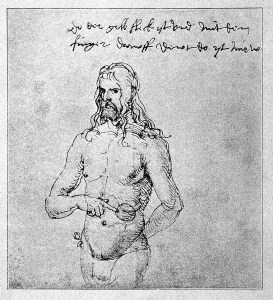
Source: Beinecke Rare Book & Manuscript Library, Yale University via Wikimedia Commons

Then, mere days latter, Rev. Patrick J. Conroy was reinstated by the whiplash GOP. Did somebody warn the religious right that “religious” was part of their name? “Hypocrisy” comes from a Greek root meaning to play a theatrical part. As my stepfather used to tell us, “do as I say, not as I do.” He was a secular man, so his hypocrisy could be overlooked. Noble, even, at times. When those who stake their entire identity on WWJD promote, vocally and enthusiastically, an unrepentant candidate for sinner of the year, you’ve got to wonder if even hypocrisy has lost its punch. How can you reason with people who refuse to reason? We used to lock them away in asylums. Now we throw them into the swamp.

Double standards are the new normal, I guess. Nobody really paid any heed when the fall of the towering televangelists showed, decades ago, that the idol they proclaimed as true religion was rotten to the core. Oh, they made the headlines for a while, but their tumble did nothing to dissuade their true followers. Evangelicals control their own narrative. For many decades now higher education and the media have pretty much ignored religion as a force for social change. Once upon a time Evangelicalism meant change based on ideals that more or less fit the recorded words of the carpenter from Nazareth. Now that its inspiration is the ninth circle below, those who have access to the funds of higher education prefer to put their money elsewhere. Why study something that threatens democracy on a daily basis? Why bother trying to understand Evangelicals? Call it what you will—there’s no way to object to anyone claiming whatever name they want. I should know; I’m a rock star, after all.


Lazing Around

I was a science nerd as a kid. Well, at least I had a real soft spot for charismatic megafauna, but who doesn’t? We had those cheap, plastic figurines of dinosaurs that we incongruously mixed with our mammoths and cavemen—wait, no. We weren’t allowed cavemen because people didn’t evolve. Nevertheless, we didn’t see any problem putting glyptotherium in combat with t-rex. Pleistocene or Triassic didn’t matter—they weren’t here now. Extinction is the great equalizer. One of the figurines that always intrigued me was the giant ground sloth. I mean, here was a creature bigger than it needed to be. Not hurting anybody, it just wanted to eat leaves and laze around. A lifestyle that sounds attractive to this day.

Photo credit: Postdlf, from Wikimedia Commons

Human beings, in a process that is still continuing, wiped out animals bigger than themselves. The story is poignantly told in footprints discovered in White Sands National Monument. A Washington Post piece by Ben Guarino tells how paleontologists discovered a human footprint embedded in that of a giant sloth. Reading the story I couldn’t help but wonder if this was the very last one in existence. What if we’d uncovered the story of extinction in real time? Sloths, apart from being named after a mortal sin, never harmed anybody unprovoked. Simple vegetarians—principally vegans, apart from the occasional accidental bug, actually—they were the ultimate victims of human greed. It is virtually certain that we drove them extinct just like we did the dodo and the fiscally conservative Republican. Not exactly fast food, sloths couldn’t really outrun us, and like good Trumpists, we took advantage of their weakness to our own gain.

Or loss. There are no giant sloths left. We’ll never thrill to the sight of a living eucladoceros, or wonder at chalicotheres roaming the savanna. We’ll never run for our lives from an African bear otter (the mind reels). Our world becomes poorer for our presence, it seems. We moved from huddling in fear in our caves out to take on the beasts with our technology. Once we cottoned onto the concept, we refined it until we could drop an elephant with the single pull of a trigger. Our destruction of megafauna continues at an alarming and accelerating rate. Evolution does have quite an imagination, after all. Like human beings, it can take sins and make them larger than life. And “thou shalt not kill,” we say, applies only to our species.


Christian Nationalism

Apparently we’ve forgotten the Second World War. In our touch-screen, never-have-to-get-off-the-couch culture of convenience, we’ve completely disregarded the millions that, yes, died in vain. You see, Christian Nationalism is on the rise, according to a story my wife sent me from the Huffington Post. About as much an aberration from literal “Christianity” as you can get, this movement believes America’s success is tied to its role as a Christian nation. Such believers, if they can even see that such rhetoric leads to war, don’t care. For the fact is that the economy of China is poised to pass, if it hasn’t already done so, the economy of what used to be United States. Call it Confucian Nationalism, but I have the feeling that when two giants try to get into the same compartment things tend to get unpleasant.

Serious thinking is a natural resource of which America has clearly run out. Easy answers, empty of content—junk food of the mind—are easily tweeted out from a personality that declares his own opinions truth. Everything else is fake news. Evangelicals, it’s sorely obvious, need to read The Analects. Don’t claim that its obscure; I’ve read the Bible. If you think you can figure Paul out, well, that’s what I’d call “fake news.” Oh, and by the way, Paul was anything but a nationalist. For all his faults, he knew that Christianity is nothing if it’s tied to nationhood.

Instead we puff out our chests and, ignoring the Bible on this very proverb, become the blind following the blind. If God has a plan he’d better reveal it to his 45th prophet soon because there are some enormous gulfs in the road and he insists on walking without a cane. American exceptionalism is built on the backs of the poor and helpless. They are also the ones most easily swayed by its perverse rhetoric. Nations must separate themselves from their religious beliefs. We’ve seen what happens when incompatible religions become the identifying factors of countries. As long ago as the 1970s I’d learned that nationalism was a powerful force for evil. I hadn’t been alive during the Second World War, but the world into which I’d been born was entangled in Vietnam. We were halfway around the world playing the bully, but it was because of capitalism, not Christianity. The end result, however, was the same. Unimaginable human suffering. Death, pain, and sorrow. And we’ve decided that the Prince of Peace wants us to head down that road again. “Vanity,” I hear Qohelet whisper.


Good Book Gone Bad

The Bible is a book of horror. This isn’t the main point in Holy Horror, but the fact is terror is never far from the surface in the Good Book. My days as a young scholar of the Bible were defined by the works of feminist scholars. One of the influential books of that generation was Texts of Terror by Phyllis Trible. Not hiding behind a masculine orthodoxy, she looked at how various biblical stories appeared from the eyes of female readers. There is indeed terror everywhere. The evils of slavery condemn that hideous loss of agency when one human being becomes considered the property of another. Women, before the feminist movement began, were taught that the Good Book demands this perverted social structure. They are indeed, in the eyes of its patriarchal world, property.

Important as this realization is, the terrors of Scripture go deeper. Even overlooking the genocides—the numbers make it difficult to take in the horrors of the individuals classed as faceless victims—there are multiple accounts of gruesome murders and violence in the Bible. Wars were an annual expectation. Diplomacy was often considered religious compromise. “Us verses them” mentality led to constant conflict. When it came to executing one another, the denizens of the Good Book could be quite inventive. No doubt women and foreigners were poorly treated on a daily basis, but when left to their own devices with divine voices in their heads, the men of Holy Writ knew how to terrorize one another quite effectively.

Even after the message of Jesus of Nazareth, which included love and care and compassion, the Bible goes on to close with the violent visions of Revelation. Perhaps it’s not appreciated so much in the present day, but the Apocalypse had a difficult time making it into the Good Book. Unfortunately the reasons weren’t that it was a book of horror, but the very fact that its status was debated should give us pause when hiding behind the rhetoric of a canon with its door slammed shut. The Bible contains some high, soaring words of noble thoughts and divine consolation. God can be an empathetic lover. With its status, in toto, as a book of divine revelation we have to pay serious attention to the fact of its participation in the genre of horror. Much of this is in the backstory of the films I discuss in Holy Horror. Others may have already explored this dynamic of Scripture, but it’s often a Good Book gone bad.


Defining Evangelicals

Like most Americans I have trouble getting over the button-down image of Evangelicals that has now become so distinctive. In reality Evangelicalism has nothing to do with Jesus, but it comes down to basically two things: a conservative haircut and belief in the superiority of males. The latter point is made by Rodney Hessinger and Kristen Toby in an opinion piece on Cleveland.com. Asking the question that’s on all logical minds—how can Evangelicals stand by a president who credibly cheated on his wife just after their child was born?—they come to the conclusion that patriarchy trumps all forms of righteousness. I know this from sad personal experience. The Bible, Evangelicals claim, gives men the headship of the household. They may sin, yes, but even with that their lordship must remain intact. That is the non-negotiable fact of Evangelicalism.

I was a teenage Evangelical. I grew up in a household where my mother refused to divorce her alcoholic husband because it was against Evangelical teaching. Sexual sins were well nigh unforgivable. In fact, adultery, of which 45 has credibly been accused, was a death-penalty offense according to the Good Book. About the only thing worse than sexual sins way lying. I can’t believe I’m getting old school on Evangelicalism, but I have to say Fundamentalism isn’t what it used to be. In college I knew people who believed we should reinstitute stoning for adultery. Instead we now use it as an excuse to elect unqualified presidents. And yes, we’d like to keep the brand, thank you. Commandments have now become negotiable.

Our society is very sick. Unlike the narrative Evangelicals weave, the illness is within them. Divorce rates are higher among Evangelicals than among atheists. Evangelicals are more likely to own guns than Unitarians. Evangelicals will lie more readily than any agnostic. Some of the more extreme want to reintroduce slavery. Through it all they claim to follow the Bible. Their support of Trump has given the lie to what they claim as a religious faith. Even Jesus, meek and mild, had harsh words to say about adultery. This is something you just don’t do. Promise your faith to one woman until a porn star comes to play at your resort—I don’t recall that being in Scripture anywhere. Evangelicalism hasn’t lost its soul, it’s lost its mind. Given what they’re doing in his name, Jesus must be rolling over in his grave.


Indie Bookstore Day

Although a year can seem like a long sentence, holidays are the punctuation marks that help us make sense of and organize it. Ordinary time, such as time at work, or commuting, can be endlessly tedious. Holidays, some personal, some local, others national or international, help us break up the time. Give us something to look forward to. My pity goes out to those religions that recognize no holidays and face time with a grim, Presbyterian determination to get to judgment day. The rest of us like to celebrate once in a while. So what’s today? It’s Independent Bookstore Day! Anyone who reads more than a post or two on this blog knows that I’m a lover of books. I first started taking solace in reading when things were difficult in my younger years, and reading has never let me down. In fact, I’ve often told myself that I could put up with just about any job as long as I could write.

It’s because of being in publishing that I learned about Independent Bookstore Day. Yes, it’s a promotional holiday, but it’s also a genuine celebration. As the outside world daily reminds us, those of us who read are a minority. The realistic author knows that the reading public is a small fraction of the whole. The number of people, percentage-wise, who spend their money on books is minuscule compared to those who fling their lucre elsewhere. But those of us who read appreciate the depth and reflection of each other. We may read different things, but we read. And that’s why I don’t mind going to an indie bookstore today and buying something.

One of the simple pleasures in life—call it a punctuation mark, a comma maybe—is being surrounded by unfamiliar books. Oh, I often worry what happens when we decide to move; we have lots of books at home. The last time the movers actually complained in our hearing that we had too many boxes of books. Talk about me at the bar afterwards, but don’t castigate my simple pleasures to my face, please. Books are the rare opportunity to commune with others on a deep level. How often have you put down a book and felt that you knew the author? Their soul was revealed in their writing and you had touched it. Just being in a bookstore is cause for celebration. If you have no plans for today, why not make your way to your local indie? Stand up and be counted as the literate resistance. It’s our silent Bastille Day, after all.


Movie v. Book

The debate is about as old as celluloid itself; which is better, the book or the movie? The response obviously depends on personal taste, and I suspect that many people base their answer on criteria that can’t exactly be quantified. Often it’s a matter of the specifics—which book? Which movie? In my own experience I’ve done it both ways, read the book first and watched the movie initially. I’ve even gone to movies not realizing there was a book and, of course, some movies aren’t based on books at all. You couldn’t grow up when I did, however, and not know that The Exorcist was a movie based on a book. I never saw the movie in a theater. There was a lot of buzz about it in my hometown, of course. I hadn’t been introduced to modern horror yet—still being a Fundamentalist at the time—and besides, it was rated “R” and I wasn’t.

I finally got around to reading the book. At this point in my life I’ve seen the movie several times, so I knew how the story was “supposed to go” beforehand. The fact that William Peter Blatty wrote the screenplay suggested it would be close to the novel, and indeed that’s the case. Novels, by their nature, tend to have more information about the storyline than is obvious from a film. The author can take time to explain things that don’t translate visually, including scenes where one character lectures another, like this blog. Since I’m writing a book about demons in movies, I paid careful attention to this. One of the themes from the novel that didn’t make it to the movie was witches.

That surprised me a bit. I had seen the movie first and it was plenty scary just as it was. I had to remind myself that my younger years coincided with the rebirth of the fear of witches. Literal ones. I’m not an astute enough sociologist to say whether the “witch hunts” of McCarthyism led to a hypostatized fear of real witches or not, but people were afraid in those days, as I recall. The Exorcist tapped into cultural fears in a way rare for a horror movie. It spoke to the fears of the era, but it didn’t mention witches. I couldn’t help but make the comparison with Rosemary’s Baby, which hit theaters shortly after The Exorcist. Rosemary believes the Satanists are witches. There’s a whole supernatural concoction of malevolent entities on the loose. Witches, ultimately in the novel, are simply one avenue the desperate Chris MacNeil explores to find out what’s wrong with Regan. The movie, wisely in my opinion, chose to leave it out. Demons are scary enough on their own, but of course even that’s debatable.


Kakistocracy

While in seminary I had the interesting job of teaching a visually impaired student Greek. This wasn’t an arbitrary choice on the part of my professors since, as an undergraduate I had exhausted the Greek curriculum at Grove City College and my fourth year the professor suggested I teach the course to the second years. This was, however, strictly koiné—I’ve always been from the lower class echelons. Trying to figure out how to explain a dead language to a student who couldn’t see required some creativity. At that point in my life ministry loomed as a career and it was still fairly easy to learn new languages. I was studying Hebrew at the time with the inimitable William Holladay at Andover Newton Theological Seminary, both of which are now gone.

I recently ran across a story in the Washington Post that utilized an unfamiliar word based on Greek: kakistocracy. It seems that the present administration has officials scrambling for new words to describe the depths to which our government is willing to sink. There’s an old saying: “the Greeks have a word for it”—I suspect the ancients would be shocked to see this particular word emerging again after centuries of progress. The translation of kakistocracy is quite logical for those with some Hellenistic training; it means “rule by the worst.” The sad thing is that democracy has come to this. Anyone with a fragment of a brain stem could see that 45 didn’t win the election in any sense but an electoral college one—giving us a new direction to sling the related word “kaka” around. It was the fact that those privileged to vote simply didn’t get around to it. As it was, the “incumbent” lost by three million votes. Nobody, however, is willing to do anything about it. It’s kaka.

If the swamp has been drained, it’s been to become a cesspool. With complete disregard for decency, decorum, and democracy, the directives issuing from the potty mouth on Pennsylvania Avenue demonstrate just how diabolical government can become. The sad thing is, the Greeks already had a word for it. One thing we know about our species is that we like to repeat our worst moments over and over again. Even worse, we seem to be proud of it. So as the kakistocracy grows to include porn stars, genital grabbing, and treasonous relations with foreign nations, the world looks in wonder and concludes people like George Washington and Thomas Jefferson had gotten it wrong after all. At least the student I was tutoring, although she couldn’t see, wanted to learn to read. And that made all the difference.


Candles vs Demons

Among scientists who write Carl Sagan has always struck me as one of the more open minded. Dedicated to the scientific method, he nonetheless admits that there are some things scientists don’t know. The last time I was in Ithaca, therefore, I picked up a copy of his tour de force, The Demon-Haunted World: Science as a Candle in the Dark. I wasn’t really sure what to expect—I’ve been researching demons and I supposed they would be addressed in his book, since they feature in the title. Although that is indeed the case, the book is a collection of essays vindicating in various ways the practice and teaching of science. It is quite a scary book. It was also Sagan’s final book published in his lifetime.

Reading this just after Gabriele Amorth’s An Exorcist Explains Demons, noteworthy for its credulousness, The Demon-Haunted World was like whiplash into reality. Back into the realm of observable facts and testable hypotheses, it was indeed like a candle in the dark. Sagan admits that science can’t speak definitively on the supernatural—something that sets him apart from other science writers—but that doesn’t mean we shouldn’t apply scientific thinking anywhere it’s appropriate. And that includes the universe of politics. Published some two decades before the rise of Trump, the book is surprisingly prophetic when it points to the possibility of the rise of fascism in a nation that distrusts science. Indeed, the book shows Sagan clearly worried that an authoritarian, totalitarian government was on the rise. It’s almost preternatural in its accuracy.

The tome is large enough to dissuade a full summary within the word-limits I set for myself on these daily posts, but I can say that this book is necessary now more than ever. Sagan was a celebrity in his lifetime, a “rock star” scientist. Even so he worried about the deplorable state of science understanding among political leaders he met. For many years America has been mired in conservative causes that distrust science implicitly. Another strain that runs throughout this book is the need for education. Not only has America catered to anti-science groups, it has fallen behind much of the rest of the world in science education. Those who claim to make America great again can’t see that their very tactics have made our nation fall behind the rest of the world when it comes to education, across the board. Surely Sagan was right that a good grounding in scientific thinking is the equivalent of lighting a candle. As for the rest of the country it has been getting darker and darker, and our “leaders” have no idea even how to strike a match.


Heavenly Questions

A lot can happen when you’re in a coma. Or nothing at all. I haven’t read Kevin and Alex Malarkey’s account of the latter’s trip to Heaven during a coma, and it looks like I never shall. A story by Kyle Swenson in The Washington Post explains how Alex Malarkey, now that he is no longer a minor, is suing Tyndale House over the publication of his Near Death Experience (NDE), penned by his father. The story, according to the Post, was a fabrication. Alex awoke from his coma recalling nothing, but Kevin knew a good thing when he saw it and wrote an account of the young boy going to Heaven. Alex says it never happened. The Boy Who Came Back from Heaven is now being pulled and pulped as a hoax.

NDEs are real (even if one didn’t happen in this case), but what they actually are is a matter of debate. The mainstream interpretation is that they are the last gasps of consciousness before a brain dies, temporarily. These often comforting thoughts can be quite similar in very different contexts and sometimes include the formerly deceased knowing details that they couldn’t possibly have witnessed in real life. Scientists willing to buck convention explore these episodes less with the intention of proving Heaven is true than with probing the idea that souls are real. That consciousness somehow continues. That life may, after all, be eternal. Since there are no scientific apparatus in the afterlife, there’s no way to measure or quantify such events. This leads most scientists to conclude that these are merely dying thoughts, or, as in the Malarkey case, hoaxes.

Ever since Raymond Moody’s Life after Life, confessional publishers—particularly of the evangelical brand—have promoted such stories. Religion and science, while not necessarily the cats and dogs they’re presented as being, don’t often coalesce around a common nucleus. Part of the problem is that spiritual events are beyond the reach of the scientific method since no laboratory conditions exist to test them. A number of scientists and medical doctors attest the reality of NDEs, but these occur in human consciousness—a realm of which we know little. Religious publishers know a good story when they see one since the doubts cast by science have to be regularly dispelled. The problem is the money such stories attracts also allures those seeking the fiduciary comforts of this material world. In this case, it seems, if you didn’t have the experience yourself you could capitalize on someone who did. Or didn’t. Those eager for proof are always willing to buy and sell the story.


A Parable

Once upon a time, in a land far, far away, there was a holiday known as Earth Day. Now, Earth Day was a poor holiday. She didn’t prostitute herself to commercialism, she wasn’t attached to any religion, and people didn’t even get the day off work. Still, she was an optimistic holiday. One of her prophets was a woman named Rachel Carson. A science writer who could see that our rampant greed and fatal shortsightedness were leading to environmental catastrophe, Carson wrote books of warning. People began to take heed. An ecology movement was born. New concepts like “sustainability” and “stewardship” and “moderation” became part of national consciousness. Other nations joined in. Earth Day was born. She was a happy child.

But there were demons in this land. Huddled in filthy holes in the ground, these demons cared only for owning as much of the earth as they could. They wanted to heat the planet so much that Earth Day couldn’t survive. They would drown her in the waters of her melted ice caps—her very tears. These demons couldn’t do it alone. They lived in the dark and since they cared for no one else, they had to find a Devil among them. A Devil who could quote Scripture. Such a Devil, they reasoned, would make the followers of the dead God join them. The followers of the dead God were like sheep without a shepherd. And the demons had all the money in the world. So they decided to kill Earth Day. Nobody would stop them.

With Earth Day gone, the weather went wild. Winds constantly blew. Hurricanes of new and intense savagery emerged year after year. The demons laughed, for when the people’s things were destroyed they would have to buy replacements. The demons would become even richer. The followers of the dead God clapped their hands in glee. But the demons and their Devil didn’t know that Earth Day couldn’t die. They did as they pleased, taking what they wanted from the what they supposed was her corpse. Then the weather, Earth Day’s dearest friend, began to do what it would in its rage. The demons awaited summer when they might feel hot again, but summer only comes after Earth Day. Oblivious, they lived their lives of plunder and greed until the followers of the dead God were all gone and they had no one left from whom to steal. Rejoicing in their acquisition of all the earth, they failed to notice the storm. Earth Day was returning and all their wealth could not save them.