Spectral Parable

1692. The Enlightenment is reaching toward full swing. In what will become blue Massachusetts, women are condemned for being witches. The proof to make such a conviction is difficult to obtain without resorting to “spectral evidence.” The Republicans of the era, who would otherwise reject such obvious speculation, greedily swallow the fake news by the mouthful. This is just the kind of smoking musket they’ve been seeking. Spectral evidence can’t be reproduced in court because it’s supernatural. Anything can be fake news if you bluster loudly enough. Even the judges, one can imagine, could put the accusations made against their own wives and selves into that category. The Devil, they say, is a shape-shifter.

Menelaus had Proteus pinned. The water god also known as “the Old Man of the Sea” could change shapes at will. Shifting from tree to snake to lion to water, Proteus couldn’t escape Menelaus’ grasp. At last the Old Man had to reveal the truth. Such is the nature of evidence. Speculative ideas are as easily built as walls to separate countries—easier, in fact. With a certain amount of braggadocio anything is believable. They say there are still mammoths roaming in the Russian steppe. Did Watergate really happen at all? Isn’t this evidence just spectral? Meanwhile we’ve got all these women here waiting to be hanged—shouldn’t we just get on with it?

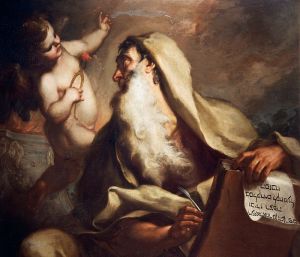
The rule of law, I heard in a discussion in Jeff Bezos’ boathouse one summer, is inevitable. Once the concept takes hold it won’t be undone. At the far end of the table I disagreed. Nobody liked what I said, and I took my solace with Cassandra. Who reads Greek mythology any more anyway? The greatest minds of Massachusetts Bay Colony, even those with Harvard educations, admitted that what was seen in adolescent visions of the night was just as real as what happened in the cold light of day. What do you think we are—gullible or something? Meanwhile the Old Man of the Sea gave his name to an adjective most useful for white men in authority. The rule of law, indeed the concept of Truth itself, is a most protean entity. Like water it can be a man or it can be a god. It all depends on your perspective. A fox can be as dangerous as a lion. Proteus even changed into a pig when the need became great. What say you, judges of Oyer and Terminer? Do you accept the evidence or not?


Parks and Wreck

It was a bit of a shock to see Bethel Park on the list. I make no bones about being a Democrat. I’ve supported progressive causes on an evolving journey since high school. When I saw the news that Conor Lamb is a worthy contender for the 39th district seat in my native western Pennsylvania, and that this area is “deep red,” I had to look it up. A special election’s coming up and the district is leaning a little blue. Historically, until 2010, it had been Democrat territory. But Bethel Park has other associations for me. My wife will pardon me, I hope, for saying it was the home of my first girlfriend.

As a naive and thoroughly Pauline Fundamentalist, I always believed marriage was against God’s will. The Bible says as much. Still, Paul magnanimously allows for marriage to those who “burn.” I’d felt the heat once or twice as a boy becoming a man, but I’d adequately stifled it with Scripture and the comparative fires of Hell. I was strong. I would never marry, I told myself. College up to that point had involved a cenobitic separation of the sexes in an all-male dorm on a campus where the rule was to sit with a Bible’s width between a guy and his girl. I met her at church summer camp where we were counselors together. She was from the city—Bethel Park is a suburb of Pittsburgh—and I was a kid from what she called “Roosterville” (the town of 900 souls was actually technically “Rouseville”). The ways of love, I was learning, were liberal.

To a point. That relationship limped along for a couple of years. I got on with my life, attended seminary and met my wife there. Bethel Park, I knew, had been named from the Bible. Bethel was the place of Jacob’s dream, the original stairway to Heaven. My first lady friend was impressed with my biblical knowledge—it was really about all I had to offer. Things improved after meeting the woman I would marry. Boston would remain a blue city while Bethel Park would degenerate from purple to red. When did this happen? The working class boy from Roosterville believes in equal rights for all. And now District 39 has a decision to make. Will the stairway to Heaven be limited to those who can afford those swank suburban houses? Or will the district remember its heritage that was blue from 1969 until we had our first African American president? “This,” Jacob muttered “is none other than the gate of Heaven.” Or, it could be, just another brick in the wall.


A Concept

Pardon me for being perplexed in public. You see, things aren’t as clear cut as they used to be. In the world in which I grew up Evangelicalism was good and Satanism was bad. Very bad. It still has the ability to scare people straight. A recent NBC story my wife sent me titled “Satanic Temple challenges Missouri’s abortion law on religious grounds,” by Corky Siemaszko, shows how the GOP has turned the tables on this equation. The Christian Right has utterly aligned itself with the pro-life camp. Most people would agree, I suspect, that abortion shouldn’t be the first choice of birth control options, but life comes with many unpredictable circumstances. There are times abortion is the most humane option and the burden falls almost entirely upon women. It’s not an issue on which men are competent to decide.

The evangelical posturing on the issue—which has, by the way, changed in recent years—has placed the weight fully on women. A rutting male, like a bull elephant in musth, can hardly be responsible, so the thinking goes. Or, to put it more politely, boys will be boys. Women suffer on the tusks of this tautology; it’s no wonder Satan has horns. Only women conceive, so men can make the laws and feel empowered by a male god who, you know, understands where they’re coming from. Missouri Satanists are striking back. The problem is the state requires women to be presented with indoctrination that says life begins at conception before electing for an abortion. Does life begin at conception? The Bible says “no.”

Biblical science was primitive. Ancients understood there was a connection between sex and pregnancy, but infant mortality rates ran very high. Life, in the biblical view, started at first breath. Spirit, breath—the very word for “soul” in the Bible—was the marker of life’s origin. The Bible may not advocate abortion, but in a world where few children made it past five, there was a shortage of surviving progeny. So it turns out that in Missouri Satanists are actually advocating the biblical view while the Evangelicals are violating the constitution by misreading it. Life begins at conception isn’t a scientific premise, it’s a theological one. A theological one on which Christians disagree. And Satanists. In their efforts to keep men on top of women, the Christian Right has no support from the Good Book on the matter of conception. Of course, why read the Bible when you can get what you want by quoting only your favorite verses? After all, God, they say, is a “he.”


Emulating Icarus

According to a story by Sarah Kaplan in the Washington Post, NASA is preparing to send a probe closer to the sun than any human-made object has been before. If you’re like me, this might conjure those childhood fascinations of being blasted by impossible heat—maybe in a science fiction story of a colony on Venus, or a crew hurtling out of control in a capsule being pulled inexorably toward the inferno of the heavens—on a hot summer’s day. The Post story makes an inevitable reference to Icarus, the character from Greek mythology who flew too close to the sun. The tale has long been a parable for human overreach, but this time it seems that scientists are taking it literally. The technology used to shield the craft from Old Sol is incredibly impenetrable, and it may have applications as we try to figure out how to escape this planet we seem bent on ruining completely.

Earth flies around its personal star in what’s become known as the Goldilocks Zone—that place where it’s neither too hot nor too cold for life. But don’t wander outside in the northern hemisphere in February without a coat. The weather down here can be fatal. We live on that teeter-totter of the extremes in which our frail bodies can survive. Temperatures range from -88 degrees at Oymyakon, Siberia (at this point whether Celsius or Fahrenheit hardly matters, but for the record, it’s -126 F) to 136 in the Libyan Desert. In this incredible range of 262 degrees people can be found at all shades between. Stepping out my front door one January in Nashotah, Wisconsin the thermometer read -42. That was without wind chill. It was the kind of cold you could feel immediately through all the layers. Humans can’t survive it without artificial means of heat. And yet we have a star overhead where temperatures reach 27 million degrees in its core. Out beyond Pluto our universe reaches near absolute zero, at -459 and change, on the Fahrenheit scale.

It’s a universe of extremes. That friendly sun in the sky was recognized as a deity from earliest times. Even the Bible retains hints of clandestine solar worship. Icarus, however, lost his fear of extremism. There was nothing too outrageous to try. As long as wings of wax can hold you aloft, why not attempt to reach all those zeroes? Millions sound great until they’re exceeded by billions. At that point even the sun isn’t hot enough for some.


Heal and Farewell

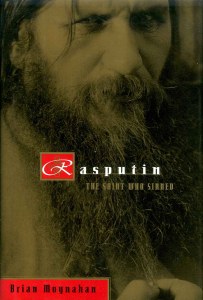
What could Aimee Semple McPherson have in common with the devious Russian monk Rasputin? Apart from being contemporaries for a couple decades, they were both faith healers. Well documented cases exist for both of them, and the medical profession has started to come around to the idea that belief can, and does, heal. The stories of Sister Aimee’s healings, witnessed by thousands, make me fear being thought gullible just for bringing it up. That doesn’t mean it didn’t happen. Cases exist even today where healing inexplicably takes place before scientific eyes. Often it occurs in response to religious stimulus. We may have proof that it happens, but we tend not to believe. This is a curious state of affairs. We trust in reason to the point that it may prevent us from being healed by faith.

Some object, of course, to the theological element. It’s pretty tricky to believe God has healed you if you don’t believe in God. The thing about faith healing, though, is that it seems to work no matter the religion of the person healed. This, it would seem, suggests we should be applying our rational minds to understanding belief. Instead we use it to find new ways to make money or to build smarter weapons to kill one another more efficiently. The more we come to understand the physical world around us, the less we know. As our research institutions take on the shape of the businesses that increasingly fund them, interest in this phenomenon shrinks. Medicine, in all its forms, is big money. Living in central New Jersey you can’t help but notice the palatial campuses of the pharmaceutical companies, nor ignore the mansions on the hill they have built. If only we could believe.

Faith healing was this aspect of her ministry that propelled Sister Aimee to fame. She constantly underplayed it, not wanting to be considered a healer of bodies so much as a healer of souls. Rasputin, of course, had political motives. Both lived—not so long ago—when faith was taken very seriously. Judging from the posturing around the least religious president in decades, whatever faith is left has been sorely effaced. Maybe it’s our minds that have the capacity to heal, but even that well seems to have been drained with the leaky bucket of rhetoric. History can teach us so much, if we’re willing to invest in it. How does faith healing work? I have no idea. Nor, it seems, does anybody else. So it will remain until it becomes commodified.


Christian Sister

Difficult to believe as it may be, some of the biggest superstars in America’s history have been clergy. The case has been firmly made that George Whitefield, the evangelist, was the first to hold “rock star” status in these United States. He drew stadium-sized crowds before there were stadiums and was, perhaps, the most famous man in the country. Fast forward a number of years and we find a name that may not ring so many bells today. Aimee Semple McPherson, however, was more famous than Hollywood actors and most political figures of her day. The founder of the Foursquare Gospel church was, in the roaring ‘20s, one of the most recognizable names in America. It may not count for much, but even in rural Pennsylvania we learned about her in American History class in high school four decades after her time.

I read quite a lot about American religion, and Aimee Semple McPherson frequently comes up. I knew little about her, however, until reading Daniel Mark Epstein’s Sister Aimee: The Life of Aimee Semple McPherson. While it has its faults as a biography, it does convey a fair image of who this fascinating woman was. An evangelist when few women preachers existed, she was creative, crowd pleasing, and remarkably broad-minded for a Fundamentalist. Her personal life was full of drama—three marriages and at least one kidnapping episode—wealth, and want. She trusted Jesus implicitly and often suffered alone in silence. Secretly she befriended Charlie Chaplin, a man drawn to her stage presence but not her religion. It’s difficult not to like this woman who insisted on doing things her own way, and who ended up alienating her family (apart from her son) by doing so.

There can be no doubt that Aimee Semple McPherson believed what she said she did. Although she didn’t approve of theater she brought theatrics into church via her famous “illustrated sermons.” She pioneered radio evangelism, which subsequently grew into a hackneyed soapbox for lesser thinkers. She was a faith healer, a world traveler, and a woman who genuinely cared for the poor. Epstein’s book tells the story with heart and a touch of hagiography, but it is an entryway into one of the lives that shaped Jazz Age America, even if it is now largely forgotten behind flappers and Fitzgerald. It’s hard to believe that some of the most famous people in American history were religious leaders of their time, especially when we see what’s on offer in that arena today.


Fool’s Paradise

What with all the Bible-trumping going on these days among the desiccated religions right, I thought it might be helpful to turn back to the Good Book itself. Since we have a self-proclaimed stable genius in house there should be nothing to be concerned about. What, me worry? Right, Alfred? One part of the Bible frequently cited by fundies and others who want to appear chic is the “Wisdom literature.” Although the category itself has come under scrutiny these days it’s still safe to say that Job, Proverbs, and Ecclesiastes have quite a bit in common with each other. Proverbs is a repository of pithy aphorisms. Indeed, it can sound downright modern in many respects (but hopelessly patriarchal and chauvinistic in others, unfortunately). One of the things Proverbs does is condemn fools. The sages of antiquity had no time for stupidity. Remember, we’ve got a stable genius—don’t worry.

Like Laplanders and their many words for “snow,” the book of Proverbs uses several terms for fools. There is, for instance, the innocent fool. This is the person who simply doesn’t know any better. Often it’s because of inexperience. This kind of fool can learn from failures and may go on to better things. Far more insidious is the willful fool. This is the person proud of his or her ignorance. Proverbs goes beyond calling such a thing unfortunate—this kind of foolishness is actually a sin. Not only is the arrogant fool culpable, they will be judged by God for their love of stupidity. As a nuclear super-power it’s a good thing we have a stable genius with the access codes. Otherwise those who thump the Bible for Trump might have a bona fide sin on their hands.

Image credit: Pamela Coleman Smith, Wikimedia Commons

The only kind of fool that’s tolerable in the world of Proverbs is the one that’s able and willing to learn. This means, in the first instance, being humble. Refusing to admit mistakes, forever posturing and preening, this is a certain recipe for incurring divine wrath in the biblical taxonomy of fools. According to biblical wisdom literature, such people get what they deserve. The modern evangelical often has little time for such books. Aside from a misogynistic slur or two, there’s nothing worth quoting from Proverbs that you can’t find in Benjamin Franklin or even in ancient Egyptian records. When you stop to think, however, that the Bible’s said to be inerrant, you’ve must take Proverbs and what it says about fools into account. But then again, what Fundamentalist ever really reads the Bible?


Augustine’s Secret Sin

I’m curious: what do you think of Augustine? Augustine of Hippo was an odd blend of saint and sinner. I don’t mean “saint” in the sense of being so designated by the Roman Catholic Church, but in the sense of having reputable and progressive ideas. For example, Augustine argued that science, such as it existed in his day, had to be taken into account when understanding Christianity. If the Bible’s account of creation didn’t match what we knew of the world, then literalism had to go—that kind of thing. This was quite liberal for someone in the fourth-to-fifth centuries. He believed in reason, to an extent. The sinner side of the equation goes beyond his Manichean days, however. The sins I’m referring to are his dangerous and long-lasting theological assumptions that’ve helped to hold back civilization throughout history.

It was Augustine, for example, who gave us the idea of original sin being involved in sexual reproduction. The church has always been cagey on why we should reproduce when the second coming is right around the corner, but Augustine declared that from our very conception (which he couldn’t understand scientifically) we were tainted with sin. But that’s not the particular sin to which I’m referring. Augustine also spread the persistent idea that curiosity itself was a sin. Christianity, in his view, was a “need to know” religion, and curiosity about the natural world could lead to uncomfortable answers. He held this in tension with his belief that we should accept what science teaches, but there were many questions, he decided, we simply shouldn’t ask.

Religions have often come to this crux. Science has a strong explanatory track record. Religion is frequently based on old texts, written in an age when science was but an infant. As the power of rationality grew, the role of miracles shrank. Over time the proof of theological structures began to crumble. And since life was all about correct theology, those edifices had to be shored up against the onslaughts of reason. If this sounds hopelessly outdated, I’ll have to confess that many of my students at Nashotah House believed reason was tainted by original sin. Augustine had the answers they believed; somehow rationality had stopped with him. Human curiosity, Augustine felt, was a sin. All questions should’ve ended with his arguments. It’s this kind of theological bravado that gets us into the mess we find ourselves in today. Voting blocs that never question what their religious leader tells them. Never curious enough to ask “Why?” Augustine was a brilliant man, in many respects. He was also a sinner of the highest degree.


Noah’s Phone

The world-wide flood is a great story. We find it in many cultures, so the idea obviously captured the attention of ancients as well as moderns. What’s strange is that, with the development of human knowledge so many people continue to accept it literally. The only science that can be bent enough to make it work is one where God breaks all the laws of physics and biology to kill everyone, just to make a point. Why bother to make it rain 40 or 150 days? Why not just create the requisite water instantaneously? It would be just as believable. Nevertheless, literalists look for explanations for how this might’ve happened. It’s not to convince God, of course. The goal is to convert unbelievers by showing that the myths of Genesis are literally true.

When I came across a story on Mysterious Universe by Paul Seaburn titled “Academic Claims Noah had Cell Phones, Drones and Nuclear Power,” I was hooked. The academic is a Turkish professor of marine sciences. Using modern technology—rather like the detritus seen scattered in the background of Darren Aronofsky’s recent movie version—he postulates that this could’ve happened. The real issue is why. Not why the flood; the Bible answers that. Why would a scientist feel the need to prove a myth scientifically? Biblical scholars call the flood story an etiology. An etiology is a story to explain the origins of things. That’s its purpose.

Noah’s flood explains why it rains. It also explains why this dome that covers our flat earth doesn’t fill all the way up anymore. It explains why animals are sacrificed and why rainbows occasionally appear to grace the sky after it rains. We also know that the story borrows from an even earlier Mesopotamian myth where the god who causes the flood isn’t even Yahweh. The people of Israel were conquered by the Assyrians and Babylonians and they told flood stories about their gods. The Bible counters with two stories (yes, just like the creation accounts) mixed together in this snow-globe universe of Genesis. Is it easier to believe this or to claim that Noah had access to Verizon, steel manufacturing, Einsteinian physics, remote-control flying machines, and artificial insemination (to help the animals recover)? It’s like when someone suggests natural explanations for the plagues of Egypt. Such special pleading doesn’t prove miracles, but rather it demonstrates that all this could happen without any gods involved. And you’re still going to have to mop up all that water when it’s over. I’m sure it will make for a great story some day.


March On

The day after the government shutdown, Women’s Marches were held across the country. Unlike the shutdown, these marches had been planned and anticipated in advance. They marked the anniversary of the Women’s March on Washington that spurred millions of people across the world into action just last year. I count it as a privilege to have been able to march with my sisters in DC last year, and yesterday again, in New York City. Religion gets a lot of bad press these days, but one of its truest aspects is that it invites you to participate in something greater than yourself. These marches are like that. They are all about social justice of the most basic kind. Not what divides us, but what brings us together. There may be historical reasons that women were kept from positions of leadership, but if we learn nothing from history’s mistakes we can call nothing we do progress.

It takes a lot to get me back to New York City when it’s not a work day. Nevertheless, the anticipation built along the way. Waiting for the train in Newark, we started to see pink hats at 8 a.m. on a Saturday. At Penn Station in New York they were everywhere. Strangers on the subway started conversations about the march, whether they were going or not. As usual, the program ran a little long and those who were near the stage grew impatient as they’d been on their feet for a couple of hours. Still, the messages were important to hear. Whoopi Goldberg was the star of the show this time, some might say, but all who stood up outside Central Park and gave voice to equality were stars.

The march itself lasted only a few blocks down Sixth Avenue, but the crowds were enormous. Although I held no clever sign, I knew that simply by being a body to march was significant. You see, the Women’s Movement isn’t about excluding anybody. It’s all about redressing institutionalized wrongs that insist “somebody else” is of less value than a white man who’s been able to exploit his way to the top. This system is corrupt and dehumanizing to all. Women see that. Woman say something about it. Women march. Yesterday thousands across the country marched for equal rights. Our government, controlled by one party—the white men’s party—couldn’t even figure out how to keep itself open. The differences between these two views of the world couldn’t be more obvious. I’m humbled and honored to be included on the women’s side.


The Maelstrom

Some monsters can’t be destroyed. Today is Edgar Allan Poe’s birthday. Poe had his demons, for sure, but the twentieth century took personal fear and made it universal. Atomic bombs and mutually assured destruction were concepts any of us born since World War II have lived under our whole lives. Kids in the 1950s were drilled in schools about what to do in case of nuclear attack. We didn’t have such drills in the ’60s, but the Fallout Shelter sign was still quite familiar and frightening in its frankness. There are people out there that want you dead, and we tend to elect them to positions of power. Duck and cover. It’s all in vain.

Then came peace. Ever so briefly. When I started seeing newspaper articles about what to do in the event of a nuclear attack—not in my childhood, but just this week—I shuddered. We’ve apparently made no progress at all. When we’re all decaying corpses glowing eerily in the night there’ll be no point in figuring out who’s to blame. A species as endlessly inventive as our own spends its time and resources on distrusting, hating the other. “They” might get what’s ours. The acquisitive mind trembles. You see, there’s no end to the things you can own. As long as anyone else owns anything you can always hope to get it for yourself. Say you read the Bible and evangelicals will forgive you daily for breaking the tenth commandment. Just don’t let those foreigners have it.

Poe imagined nightmare worlds. Most of his stories, however, were on the individual level. Our monsters, on the other hand, are international in scale. Radioactive fallout with its slow decay and devastating effects on frail flesh may be the stuff of good horror, but they make for decidedly poor governance. Perhaps it’s no wonder that this comes up under a president who ran on a platform of hatred. Last weekend the people of Hawaii lived through fearful moments that were all too believable with the incompetent pretender of Pennsylvania Avenue. A man who can’t keep his tweet shut and who gets away with offenses that would easily impeach a democrat. I grew up watching Godzilla, the famed radioactive dinosaur, rising from the oceans to remind us of the consequences of atomic sins. For the too brief era of Clinton we felt that the world might be safe at last from such monsters. Problem is, some monsters just can’t be destroyed.


Peter and the Red Giant

Now that my book has been sent off to the publisher, I’m working on the next project. This one has me delving back into the Greek of the New Testament. It may be, some would say, that I’m no longer an expert in such things. Coming to Koiné Greek, however, after lingering among languages like Ugaritic and Akkadian, feels like coming home. It’s Indo-European, after all. One of the books I’ve come back to is 2 Peter. This is a curiosity among the canonical books. All but the most conservatively predisposed of scholars note that this little letter didn’t actually come from the Peter. The idea of using someone famous as a literary pseudonym was a well known and widely accepted practice in ancient times. In fact, the prefix “Pseudo-“ on classical writers is so common that I feel just a little self-conscious. Nevertheless, 2 Peter contains fascinating ideas.

The Bible was influenced, of course, by many outside sources. One of those sources was Zoroastrianism, the religion of ancient Persia. This came to mind because 2 Peter is the only book in the Bible that describes the end of the world as burning and melting. These ideas are tied to the purifying fire of Zoroastrianism. In that religion an evil deity, Angra Mainyu, corrupted this world. Fire, in Zoroastrian thought, is holy. At the end of time, when the blessed ascend to a heavenly mountain, a river of fire will pour down, burning and purifying the polluted earth left behind. The idea is powerful and evocative, and obviously some early Christian writers cottoned onto it. Including 2 Peter.

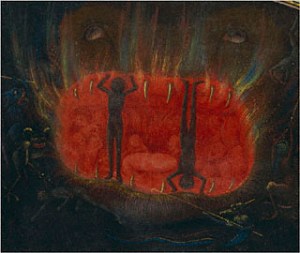
The idea, in the Bible, stands isolated in this one single book. The real concern of the epistle is false prophets, though. Still, the worldly should take note. The universe in biblical times consisted only of this relatively flat planet—which wasn’t even a planet then—with a starry dome overhead and a fiery Hell beneath. Ironically, 2 Peter’s end is similar to that predicted by modern astronomers. A star the size our sun will likely bloom out into a red giant, parboiling the earth in its death throes. Seems the Zoroastrians, and Peter, may have been correct after all. The thing is they both had an escape hatch that will only come with interplanetary migration, according to science. But then, all of this assumes there will be a world left after the Trump administration. And speaking of false prophets, I wonder what 2 Peter would’ve had to say about that?


Moon Base

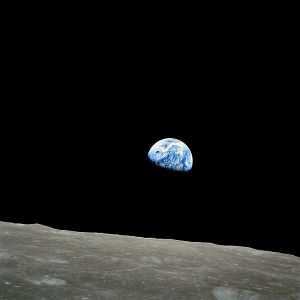
Late last year scientists announced that a tunnel they’d found on the moon (remotely, of course) would make an ideal location for a human colony. The moon, you see, is quite cold and, lacking an atmosphere, constantly exposed to naked solar radiation. It’s a tough sell, even for first-time buyers. Still, with a little hole to crawl into, and some homey touches, this might be the future of humanity. Of course, offshore relocation has been a staple of science fiction from the beginning. Technically encumbered by the whole speed of light thing, we’re left with neighboring planets and moons that are either too hot or too cold, our species having evolved on the Goldilocks of solar system real estate. Moving to the moon might sound like a good idea right about now, but it’s going to take more than Two Guys and a Truck to get us there.

Fantasies of moving abroad come in two varieties—those of optimism and those of pessimism. Either things are going so well that we want to spread the evangel of our soaring success to the universe or things are looking so terribly Republican that even the dark side of the moon seems enlightened. There’s no question which phase we’re in at the moment. The moon is relatively close after all. It has been a fairly quiet neighbor over the millennia. We’ll want some good insulation, however, and despite the Weir version of Martians, we’ll depend on those back earth-side to send us some grub every now and again.

In ancient times the moon was frequently a goddess. Some ancient cultures pegged our satellite as masculine, but many saw her gentle light as more befitting a powerful female. Heading outside in the predawn hours with a full moon overhead is a pleasant, if chilly, reminder of just how bright our constant companion can be. Light without heat. Ancient desert-dwellers found the moon more benevolent than the sun, for night was relief from the fierce heat of day. Still, moving to the moon would meaning making a new world in our own image. Nothing, I suspect, would defile a goddess quicker. Our costly detritus already litters the once untouched face of Luna, and our size-nine-and-a-half prints are permanently left behind there. Heaven has always been that undiscovered country somewhere over our heads. The discovery of tunnels on the moon where we might snuggle down and be free may sound great. But we need to get things settled out on the ground first, otherwise our one and only satellite will merely become our next victim to exploit.


Kings and Fiends

Martin Luther King Jr. was, and is, a symbol of hope. This day, as we’re encouraged to think of progress, we’re mired under leadership that less than a week ago used derogatory language to describe people that aren’t white enough for his liking. Those who, like King, have a dream, are under attack by a government that has pledged its allegiance to the dollar. The dollar in the hand of the white man. From the days of the prophets on the dream of a just and fair society has been the ideal. Instead we find ourselves under the ultimate party of privilege that likes to quote the Bible but which admires Pharaoh far more than Moses. They claim to see the promised land, and that land belongs only to them.

I was too young, as a seminary student, to appreciate I was walking the same halls as Dr. Martin Luther King. Sitting in the same classrooms. It had all been before my time. Because of the Bible I first took an interest in history—eager to learn how we’d come to this place. Ronald Reagan—who now amazingly seems rather benign—was making it difficult for the poor by promoting “trickle down economics.” We all saw how that worked. The modern-day Pharaohs may not wear the impressive headdress of antiquity, but they’re no less fond of owning slaves. King understood that non-violence comes with a cost. It takes time. Unlike the present administration, he understood the difference between right and wrong.

The Pharaoh in the White House makes it difficult to appreciate any progress at all. We have come to see what it means to be a nation that solely, utterly worships Mammon. The voice of the Bible is weak and shouted down by those who see no gain in it for themselves. There were surely those in Egypt who were poor but who appreciated the Pharaoh. At least he was enslaving those from somewhere else, according to Exodus. According to the Good Book it was God himself who opposed this system, but now, according to the evangelicals, God has blessed it. It is the will of God to rob the poor of their health care so that the rich can add even more to their too much. On this Martin Luther King day we struggle to find hope in such a world. The hope is there, but we have to be willing to dare to dream.


Street Clearing

Not driving to work definitely has its advantages. Although studies suggest commuting takes a great toll on hapless riders, the stress of driving in traffic—more often just sitting in traffic—also takes its pound of flesh, and more. A recent snowstorm had me reflecting on this. Once in a while I like to demonstrate that the male of the species is worth keeping around, so after the Bomb Cyclone that closed schools and offices in the trial-state area a couple weeks back, I went out to brush off and start the cars. It’s not that women can’t do this, but it’s more the fact that nobody wants to do it that motivated me. Besides, I have a secretly fond memory of the years of enforced, Dr. Zhivago-esque labor on our Lake Erie snow-belt blessed driveway. My stepfather’s shack sat atop a long, unpaved driveway. Ironically, although he drove the borough snow plow, he insisted that we boys do the shoveling at home. Maybe that’s where I get it. A poor family, our winter coats were substandard and aching fingers and toes, not to mention frozen faces, were pretty typical. I hated every minute of it. Or did I?

Bundled up against the arctic winds that had brushed a noticeable breeze past my face the night before (in the present-day) when I climbed into bed, I stepped out in first light. Immediately the cold found the small gap between my gloves and sleeves and began to work it’s chilling magic. Before the powdery snow was even off the car my fingers were numb and painful, reminding me of an unfortunate frostbite episode as a child. Unconsciously I found myself smiling. I’m no longer forced to do this. Kindness is a far better motivator than hate. At least as a renter I didn’t have to shovel the drive.

Afterwards, inside an apartment that we all habitually decry as too cold, I quickly warmed up. There’s a pleasure in doing something so that someone else doesn’t have to. I miss that, working in New York City. Focused on getting to work, it’s far too easy to step past those for whom even a glance is a blessing. Those who sleep in cardboard boxes on nights like that through which I felt an annoying draft, although secure inside. I see the police “evicting” tenants of paperboard towns even as I glimpse Trump Tower in the distance. The storm they called a Bomb Cyclone. We clear the streets quickly so that we might get back to work and make more money for the one percent. Studies show commuting is killing us. It seems the cold is doing so as well.