Need to Know

It’s particularly encouraging when the first book I finish in a year is an important one. I try my best to read books that won’t disappoint, but the thing about books is that you sometimes can’t tell until the end. In any case, I can highly recommend Stephen Prothero’s Religious Literacy: What Every American Needs to Know—And Doesn’t. It’s easy to acquire blinders, especially when you stick with a subject through childhood, three degrees, and a career of teaching and editing in that same field. You kind of think other people can see how important it is. Having grown up religious, I was well aware that other people didn’t share my family’s convictions, but it was pretty clear about the continuing uproar of prayer being deemed unconstitutional in public schools that many Americans were concerned about religion. Or so it seemed in my small town.

Prothero, a specialist in American religion, demonstrates in this book just how little we really know about religion—any religion. He traces this lack of knowledge to the Second Great Awakening and the conviction that belief required Christians not to study religion, but to feel it. This “ethic” of knowing little about what you believe, he suggests, became dominant and has reigned ever since. Clearly, watching the results of the presidential election, many people have no idea what Christianity has historically taught, or in official channels, continues to teach. They know that they feel it is right, but they can’t quite say what “it” is. Most Americans fare even worse when it comes to other religions. As a culture we remain very religious. It’s just that we don’t know what we say we believe. Belief has become politicized and it bears little resemblance to what its historic roots have been.

Critics will say that of course people like Prothero—he’s a religion professor after all—will say that we should know about his subject. The truth, however, goes much deeper than that. The world is a very religious place and we have effectively blocked our children’s way to learn about it. Religion motivates billions of lives, but most Americans know very little about it. Those of us who’ve spent our lives studying it are often condemned to stints of unemployment because what we know is deemed unimportant to Wall Street. Religious Literacy, although the statistics are a bit outdated after nearly a decade, remains more relevant than ever. The potential to learn about religion is widely available. The spirit may be willing, but the mind, it seems, is weak.


Possessed by Work

Now that I’m safely ensconced back in the daily work routine, I spend some time thinking of the scary movies I had time to watch during my “free time.” Well, I actually thought about them then, too, but I had so many other thoughts to write about that I kept putting it off. That, and the fact that some of the movies were about demonic possession and the juxtaposition of holidays and demons just didn’t seem to fit, kept me from expounding. Why watch such movies at all? It’s a fair question. I tend to think of it as part of a larger thought experiment—wondering what such movies might tell us about being human.

stanthony

A few weeks back I wrote about The Exorcism of Emily Rose, based on the true tragic story of a young woman who died after a prolonged exorcism. After that I watched The Last Exorcism, The Rite, and The Possession. (I’m such a cheerful guy, as you can see, and this may be why I inhabit an isolated cubicle at work.) This array of movies, held together by the common chord of the reality of demonic possession, also brought together the standard sociological division of Protestant, Catholic, and Jew. The Last Exorcism is a Protestant-based treatment of what is generally considered to be a Catholic subject. That connection is affirmed in The Rite. The Possession, however, gives us a Jewish demon and a rare representation of a Jewish exorcism (acted by Matisyahu, no less!). What emerges from watching all of these films together is that demons are an inter-denominational problem, even in a scientific world. Carl Sagan wrote about the demon-haunted world, and it continues to exist, it seems.

But these are movies we’re talking about. Not reality. Nevertheless, The Rite and The Possession are also said to be based on true stories. We do live in a mysterious world. Evolution has developed reasoning as a practical way of dealing with life in a complex ecosystem. It is a survival mechanism. So is emotion. We sometimes forget that both thought and feeling are necessary for survival in our corner of the universe. Neither one is an end in itself. We can’t quite figure out how these two features of the human brain work together. There are, in other words, some dark corners left in our psyches. I suspect that’s why I find such movies so interesting. They’re not my favorites, but they do serve to remind us of just how little we know. And that’s a scary thought, given how we’ve learned to possess this planet.


Political Games

the_imitation_game_poster

The enigma machine held an almost impossible complexity for generating codes. It gave the Nazis a great advantage during World War II since it was beyond the ability of cryptographers to decipher it. It was against this background that Alan Turing developed what would come to be recognized today as the computer. A brilliant mathematician, Turing himself was an enigma, in part because he was a homosexual—and in Britain at the time acting on this was a crime. Turing famously committed suicide just at the start of a brilliant career, probably because of his conviction of this “crime.” Those of you who’ve seen The Imitation Game will recognize the plot of the movie, and most people who read about technology will recognize that the story is largely factual. We like to think we’ve progressed since the days when one’s sexual orientation was considered a crime, but the enigma of the election has proven indecipherable once again.

As we begin to realize just what the price will be to have an avowed bigot in the highest office in the land, it may be helpful to decode things a bit. I, for one, have to admit that having a few days off from work and avoiding the news as much as possible, has been restorative. Watching movies, spending hours at a time writing, and actually seeing family when we’re all awake have been wonderful. Now it’s time to face the cold realities of 2017 with early morning bus rides and a looming intolerance on the horizon.

I have to admit that my mind doesn’t work like that of a code-breaker. Some of the ancient languages I studied were originally decoded by cryptographers who turned their attention to trying to understand people whose only means of communication were forms of writing long forgotten. For me, as a student, it was more a matter of trying to understand what it meant to think like someone else. This may be what is most distressing about the fascist outlook brewing in Washington—there is no desire to even attempt to look at things from the other point of view. It’s a raw celebration of power granted in a moment of weakness. We have tomes and tomes of history to demonstrate just what’s wrong with all of this, but the enigma is that those who have no interest in learning will ever read them. We continue to play a silly political game without counting what we have lost. This may be a zero-sum game after all.


Undiscovered Countries

My friend Marvin always amuses me with what he’s got in his refrigerator. He likes to buy products that he considers appropriate to the season. On a recent visit he pulled out a bottle of Arrogant Bastard Ale. He said it was prophetic, in the sense that later this month we’d all be faced with someone fitting of such a moniker. I appreciate his sense of humor—I think we’re going to find that laughter, incredulous and otherwise, is going to help get us through to 2020. Once we reach that mythical date when there will be cities under the sea (unless my childhood cartoon watching has steered me wrong yet again) crewing aquagum all the way, we will have to begin undoing the damage that our government is planning even now. Of course, we were supposed to have a moonbase in 1999, and that show wasn’t even animated. Television produces the biggest liars of all, I guess.

img_3122

January always makes me think of Janus, the two-faced god. Looking forward and looking back. Even Janus seems to have taken on new meaning this year. That’s the thing about symbols—you can’t pin them down to one thing. One of the benefits to studying religion is that you get to feel comfortable around symbols. There may be no real symbology department at Harvard or anywhere else, but scholars of religion inhabit that territory. We skulk around the dark places that human beliefs may go, even allowing people to believe things that are factually false. Instead of getting too dark, maybe we can think of a joke. Two Corinthians walk into a bar…

The future is the famously undiscovered country. Maybe by the time we get there we will have realized just how silly the very idea of countries are. Seems now that citizens of foreign nations can legally take over the US election process, so why bother with borders at all? Put in another way, who wouldn’t welcome the spy who came in from the cold? It’s January out there and all people need shelter from the chill. I keep telling myself there’s no mess that’s so bad that it can’t be cleaned up. Or maybe I’m just thinking of Bruce Almighty again. My friend Marvin refuses to let reality get him down. When the days are short, it is especially important to be the light. Maybe he’s right.


New Year’s Resistance

Now that 2016 is safely behind us, it’s time to start looking ahead to a year of peaceful protest and renewed social activism. When you reach a certain point in your life you’d like to think your country will represent your best interest but the crooked electoral college system with which we’re shackled has lived up to unthinking obedience to convention. Now we all will pay the price. Not all protest has to be highly visible, however. Education has a way of improving things even if done subtly. The key is not to let up. The moment we do, the evil Borg will assimilate us. I’m beginning my new year with a literary protest against ignorance. I mentioned Modern Mrs. Darcy’s reading challenge yesterday. It doesn’t have to be that one, but taking on a reading challenge—any educational imperative will do—is a way of saying that the darkness can’t last forever.

img_3022

2016 was a busy year, in spite of its many challenges. I wrote two books during the course of the year. Don’t go rushing to Amazon, because neither has been published. One likely never will be, although I have high hopes for my most recent effort. I write this not to draw attention to myself, but to suggest yet another form of social protest. Writing is a powerful tool. Long ago one of the most influential people in my life, a high school English teacher, told our creative writing club to write at least 15 minutes a day. There have been times when I’ve slipped, but by far the majority of my days since then have included spells of writing at least that long. This blog is only one outlet, in addition to the fiction and non-fiction I also write. Write your protest! Your thoughts can’t be known if you don’t share them!

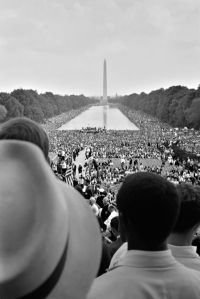
Most important of all, we can’t give up hope. The end of the story hasn’t been written yet. We know that Trump lost the popular vote by an historic landslide of almost 3 million. Many, many, many, many, many people are unhappy with the results of this election. The mistake is to think that so many citizens are powerless. We’re not. Even before last year ended I committed to the peaceful march on Washington the day after the “inauguration.” We need to stand up and be counted. We need to say we’re just as American as the bullies who’ve taken over the schoolyard. And we need to continue to educate this country, no matter how reluctant it may be to pre-post-truth.


We Are an Island

moana_teaser_posterApropos of both building your own deity and Disney, my family went to see Moana. Now, I have to admit up front to being a bit behind on my Polynesian mythology. Scholars of the history of religions feel terribly insecure if they don’t read the languages or haven’t spent time with the culture first-hand. I’ve seen the Pacific Ocean a few times, but never from the point-of-view of an islander. In fact, one of the areas of growing interest in biblical studies is the interpretation of Holy Writ by islanders. Their perspective, it seems clear, is different from others in more populated land masses. So Moana, which delves into Pacific islander mythology, was a brand new world for me. More than hearing about the demigod Maui, it was a chance to consider what destruction of our ecosystem looks like to those who have more limited resources at hand. Those who, when global warming really kicks in, will be the first to become homeless.

One of the strange things about living in the post-truth world (defined as the world after 11/9) is that many movies, novels, and other creative explorations I encounter seem to underscore the demon we’ve invited in. Moana is about a girl who saves her people, but she only does so by defying the man in power. Had she not journeyed beyond the reef, her people would’ve starved on their island. Meanwhile the big white man prepares to assault the White House and all that our founders held dear: an educated leadership. Progress. Fair treatment for all. Someone needs to remind these short-sighted individuals that every landmass is an island.

As we approach the end of 2016 it’s time to think of where we’ve been. At the theater, an ad by Google showed the newsworthy events of the year. There could not have been a better rendering of the high hopes with which we began and the sorrow with which we’ve come to an end. Our scorn of education has caught up with us and we’ve asked “the man” to please destroy our world and enslave our women and deport anyone who’s different. We need a lesson in how to build better deities. We need to be willing to admit that a girl might know more than her father. We need to learn the wisdom of the islanders.


Lions and Lambs

This brief break between Christmas and New Year’s Day, taking into account the vacation days expended to enjoy it, is a time filled with movies, reading, writing, and sufficient sleep. In short, it’s like a dream. I’ll get around to addressing the movies eventually, but right now one in particular is on my mind: Zootopia. Disney movies weren’t a big part of my childhood. We did watch the Wonderful World of Disney on Sunday nights, but movies were an expensive treat. I remember seeing The Jungle Book, Bedknobs and Broomsticks, and Herbie the Lovebug. When we could afford a movie, it was frequently at a drive-in where a carload was cheaper than individual seats. I missed several of the childhood western canon—I never saw Mary Poppins until I was in college. Becoming a parent in the 1990s meant becoming conversant with Disney.

zootopia

Oh, I’ve heard the conspiracy theories: Disney is “the evil empire,” part of the Bilderberg Group, the Illuminati, and any number of other collectives that want to run the world. They have access, we are told, to the young and a reach that excludes few before the age of ten. I know little of Disney’s business practices, but Zootopia suggests to me that they are telling our children the right message. The movie follows the ambitions of Judy Hopps, a bunny that want to be a police officer in Zootopia, the largest city in the animal world. Threatened and bullied because she’s a girl, and small—traditionally prey—she nevertheless overcomes the obstacles necessary to meet her dreams. Once she meets success, however, she finds herself engaging in prejudice against predators. Species profiling takes over and the white sheep (literally) take over.

The message of not assuming someone is a slave to their “biology” is a powerful one. Nick Wilde, the fox that assists Judy to her goal, becomes a victim. The only way forward for Zootopia is to recognize that profiling—gender or species—is wrong. Since the story isn’t preachy, it’s all the better. Watching unchecked prejudice surging through our political machinery today, it was difficult to believe that this movie was released all the way back in March. The prey animals are the majority, and they feel threatened and so follow the leadership that controls, deports the predators who’ve been law-abiding citizens all along. Only when we once again see shrews living peacefully next to elephants, rabbits, lions, and polar bears, do we get the sense that everything’s as it should be. I know nothing of Disney’s business practices, but with messages as important as this, I have but few worries.


Prejudicial Monsters

snowinaugustWitnessing injustice is traumatic. Especially when you’ve been conditioned to believe there is nothing you can do about it. That helpless feeling crushes you as you see the guilty, the powerful, the cruel getting away with whatever they want to do. This is the perspective of young Michael Devlin in Snow in August. Pete Hamill’s novel is full of observations about prejudice and ignorant blustering about those who are different in 1940’s New York City. Michael accidentally observes a robbery that may also be a murder. The perpetrator, an older boy who leads a gang in Brooklyn, hates Jews. Michael, however, has become the shabbos goy for a synagogue that has seen better days. Although a Catholic, he is curious about this strange rabbi he comes to know and what this other religion teaches. At the same time, Jackie Robinson is being called up to the Brooklyn Dodgers and prejudice about an African American playing in the major leagues sets up a parallel to the story of understanding the Jews.

It is an engrossing novel. I have to confess, however, that I read it because of the golem. A traditional Jewish monster, the golem is an animated being of mud that protects oppressed Jews. In the novel this begins as a legend Rabbi Hirsch tells the boy as they teach each other their native languages. Michael learns Yiddish as the rabbi learns English, and the story of the golem is part of the rabbi’s own sad history as a Jew during Nazi days. Then as Michael, his mother, and the rabbi are all beaten or molested by the gang, it is time for the golem to make his appearance.

Not exactly a monster story—as often in such cases the monster is someone recognized as fully human but without sympathy for those who are different—Snow in August is a thoughtful, almost nostalgic tale of “a simpler time.” What we learn, however, is that it wasn’t really simpler at all. Prejudice could be worn openly and proudly. What many of us may have forgotten, until recent elections forced us to remember, is that such hateful intolerance is still very common. We live in a world where hatred can be currency and bigotry has more power than we’d like to admit. Reading stories, such as Snow in August, will become increasingly important in days ahead. We will need to remind each other that even if only as metaphors golems do indeed exist. All we have to do is believe.


The Morning After

dickens_gurney_head

Quite apart from seeing a live performance of A Christmas Carol, Charles Dickens has been on my mind a bit this Christmas season. I suppose that’s not surprising since it has been suggested that Dickens “invented” the modern Christmas, but it is really, I think, because of how the wider world seems to be spinning backwards. The poor have always been a personal concern of mine. I grew up poor and I know how much suffering it entails. My case was a rather mild poverty—we were never out on the street, and we didn’t actually go hungry. We had nothing in the way of luxuries, though, and I could see the possibilities even as I could see the sky where the boards on the roof were pulling apart. It wouldn’t have taken much for us to have been cast out in a cold Pennsylvania winter. Others have it much worse.

On my daily walks to work, I see the homeless. Some sleep in cardboard boxes, some in tents. Others are out under the stars. One morning I walked by a particularly creepy and sad sight of a person sitting, shrouded in a blanket over his or her head, on a subway vent to catch some of the ambient heat. I know that I don’t have the means to buy each one a meal. Their number has been going up, not down. And I think of Bob Cratchit, threatened and bullied by Ebenezer Scrooge. He will lose his job if he’s not in early today, the day after Christmas. Because of his change of heart, Scrooge buys his clerk a pot of “smoking bishop.” And herein lies the only possible cheer.

My wife got me started on Dickens. She also sent me a story from NPR on smoking bishop. It seems, according to the story by Anne Bramley, that British Protestants delighted in making fun of church offices by naming their tipples after titles. Churchmen (and they were men) were largely exempt from being poor and, according to historians, often supported the Poor Laws that made the fate of the poverty-stricken even worse. In a kind of perverse revenge against privilege, drinks were named after various ecclesiastical offices. There’s little that the poor can do, except to try to find the scant humor in a situation where no one has the reach of a Charles Dickens anymore. Ebenezer, unlike Bob, is a biblical name. It means “stone of help.” In these chilly days dare we hope that help may come, even from a stone?


Capital Carol

The idea of exchanging presents on a holiday emerges from the impenetrable veil of time. We don’t know when the practice began—the idea of copying the Zoroastrian wise men in Matthew is a bit of a stretch and the date of Christmas wasn’t settled until much later in time. However and whenever it started, giving gifts at this time of year has become one of the defining features of late capitalism—it’s almost as if Jesus of Nazareth was born for this. An economy that measures self-worth in terms of money is just the place to have God-incarnate celebrated by giving lavish gifts. Those of us who make no money off the holidays can’t deny that it feels good to give someone something. People like, in general, to make each other happy.

This year my wife asked for a non-material gift. We made our way to the McCarter Theater in Princeton to see their acclaimed performance of Charles Dickens’ A Christmas Carol. A gift of a memorable family time and a truly spectacular play. Seeing this story in 2016 felt especially important. Dickens was a famous advocate for the poor and was well aware of how they suffered at the hands of the wealthy. Indeed, those with too much money lose their humanity almost completely. The story is focused around Christmas, but the message is needed for every day, especially in over-long years such as this. Capitalism is a form of social evil. Anything that lowers humans to mere ciphers on a page is the very definition of sin.

christmas-carol

We all know how the story goes, but to see accomplished actors undergoing conversion is nevertheless a strangely hopeful experience. As the story makes abundantly clear, it requires so very little to make others happy. The point of having money, after all, is to use it for the good of others. Seeing one man facing his own mortality only to realize that he has isolated himself from the care of others is a powerful experience. As we move forward into the long and dark days ahead, there is a reminder here that we need to keep close to our hearts. There may be fewer presents under the tree this year, but we are all the richer for it. This is the kind of gift that we need to share with the entire world.


Charlie Grinch

There were probably about half-a-dozen animated Christmas specials I recall watching as a child. The two that became fixtures, and remain part of my present holiday ritual, are It’s Christmas Charlie Brown and How the Grinch Stole Christmas. I remember watching them from early days—of course you had to wait until their respective channels announced their advent in TV Guide (just writing that makes me feel older than the Grinch). Commuting wasn’t an issue then, so watching television was as common as candy canes and hopeful stockings. As an adult, though, you see things you overlooked, or simply accepted, as a child. I guess that’s what “believing in Christmas” is all about. The willful suspension of disbelief.

I’ve commented on these Christmas specials before. Charlie Brown has so many inconsistencies that an old biblical scholar can’t help but think of J, E, D, and P. What does the signage on Lucy’s Psychiatric Help booth really say? How many branches are on Charlie Brown’s Christmas tree? How does Sally get to the school before her big brother? The animation is clearly a little off—Lucy appears to emerge from the center of her booth’s wooden top as she gives advice to the woeful Charlie Brown with his Trump’s-been-elected-type depression. Still, Linus’ rendition of Luke’s Christmas story brings it home every time. Compare that with the Grinch.

Those who see a war on Christmas (there’s not) seldom cite the Grinch. How the Grinch Stole Christmas is entirely secular. No mention of a special birth. No angels or shepherds. Just a mean old man and his dog. The Grinch shares with Charlie Brown its message of looking beyond the commercialization of Christmas. In the case of the much better animated Grinch (although I still can’t figure out why that one Who’s hat repeatedly flashes from white to blue and back) it would seem that religion matters less than spirit. The Who’s Christmas song with its strange, non-English words, is a celebration of difference. Diversity. Even that angry old man who would steal Christmas itself is welcome in the end. The only war on Christmas is one that has been spawned in the imagination of those who fit the Grinch’s description in Thurl Ravenscroft’s rendering of Dr. Seuss’s lyric. Those my age will understand, and unless you were born yesterday, I suspect that you’ll get my meaning.


Lap of Luxury

How terribly rude. I was right in the middle of a sentence when my word processor shut down. Then my computer. A system update. It’s 4:00 a.m., the time I usually upload my blog post. You have to understand that I get up at 3:30 so that I have time to write. My laptop assumes nobody is working “in the middle of the night.” I would’ve thought my fingers on its keys would’ve given it a clue. Now it tells me I’ll have access, new upgraded system installed, in 25 minutes. Doesn’t my laptop have all my personal details when it comes to shopping? You’d think it would know all my personal habits by now. I mean, this is the way I do it every day. Right now my concerns are secondary. This system update can’t wait. I wasn’t even given a choice. Power nap for Apple.

What disturbs me most is that my computer reads every word I type, yet it still thinks I’m just like everybody else. Who’s awake and writing at 4:00 a.m.? And I thought we had a rapport, my laptop and me. I was the Skipper to his Little Buddy. The Agent 86 to her 99. The Will Robinson to its Robot. I guess I had it backwards all the time. The brain on my lap doesn’t agree with the brain in my head. If I can’t get my writing done now, it won’t get done at all because at ten minutes to six I’ve got to be on that bus. New Jersey Transit doesn’t offer working overhead lights much of the time, let alone wifi. It’s now or never. My coffee’s already gone and the next thing on my daily agenda is the shower. I always come up with ideas in the shower—I need my Little Buddy waiting for me when I rush out to write them down.

newchair

Who’s sitting on whose lap? How could I have gotten something so very basic so terribly wrong? In ancient times the one sitting was superior to the one standing. When the computer’s sitting on the one sitting we know who’s really in charge. Let the one with eyes to read understand. I’m a busy man, but my Little Buddy—my Skipper—is busier. When’s the last time I read a paper map? Opened a phone book? Wrote an actual letter? I can hear those bus wheels rumbling. Excuse me, but my master is calling.


Evil That Men Do

the-demonicTheologians, for the most part, gave up studying demons a long while ago. With the advent of modern medical science, the descriptions of demonic possession in the New Testament seemed pretty clearly to be cases of epilepsy. Since people in antiquity had no means to study brains electro-chemically, there was no recourse for them to understand the sudden changes in behavior that often accompany seizures. They drew on what their culture knew—malevolent spirits—to explain this disturbing behavior. Ewan Fernie takes a different approach in The Demonic: Literature and Experience. As an English professor, he looks at both demons and the demonic in mostly English literature, often focusing on the adjective more than the noun. There is a great deal of insight in this study and characters the reader may or may not recognize seem to fit fairly easily into the category as described by the author. Indeed, God and the Devil appear much closer than many religious readers would feel comfortable seeing them.

Although I enjoy reading about literature, my favorite chapter in this book was the treatment of Martin Luther. Not having grown up Lutheran, I feel that I don’t know the great reformer well enough. The anniversary of his 95 Theses is coming up next year and there’s a lot of attention being paid to the former monk right now. Even despite this, he was a fascinating figure who firmly believed in diabolical activity in the world. Indeed, much of what science would eventually strip away he saw as evidence of the demonic. Other theologians who’ve followed him built on these same ideas. The Dark Ages were the high point of official demonology, after all.

Writers since Luther, many of them touting fiction, also latched onto the concept of the demonic as a great explanation for “the evil that men do.” Quite often Fernie traces them to Shakespeare, the anniversary of whose death is quickly drawing to a close. The Reformation would’ve been much closer to the Bard than it seems to us. Demons were still around and available for all varieties of nastiness against human beings. Fernie makes the point that the association of the demonic and sexuality became more pronounced over time. We see this even today in possession movies. The origins of the ideas, however, are more complex than they might seem. The Demonic will give the reader plenty to think about in this season of long nights and short days and the basic confusion running rampant over what is good and what is evil.


The Naked Truth

As my regular readers know, I’m struggling. The shock is palpable. Even over a month and a half later, I still keep going over in my head the many, many reasons why Trump can’t be elected and wake up in a cold sweat with anything but visions of sugarplums dancing in my head. I recently saw a video on YouTube that made the point: with the millions of smart, qualified Americans our system decided that only someone like Donald Trump was able to lead us? (That is, if Mr. Putin didn’t cast a few votes himself. It might be understandable if he was Putin’s choice.) I have trouble coping with the lack of transparency. It’s like opaque cellophane. Except when it comes to women. Then the motives are perfectly obvious.

It bothers me that we’ve lost our dignity. I never thought it’d be possible to find the first lady naked on the internet. Some might argue that this is progress, but government is, and always has been, about decorum. It’s pretty hard to maintain that your king is a god when you see him sitting on the toilet. We like to believe our rulers are somehow better than us. We’re in trouble when they start believing that. There are those that say “quit your whining, pull up your socks, and accept it.” The naked truth is that I bought into the illusion that America couldn’t sink so low. There are lots of qualified Republicans out there. To have a man that makes Ronald Reagan look smart in charge is too frightening to accept, however. Let me have my neuroses. They’re all I’ve got left.

eleanor-roosevelt-wh-portrait

The whiplash is the thing. Just three presidents ago the nation was up in arms about Bill Clinton’s peccadilloes. It was such an outrage that the same people who voted for a naked first lady wanted to impeach him. My neck hurts from my head swiveling so much. Ladybird Johnson this is not. Let alone Eleanor Roosevelt. I’m not whining, I just want a solid spot to place my feet. Never before has the fact that we’re spinning at 1,040.4 miles per hour felt more real. What do we want as a nation? It isn’t going back to the fifties—that much is clear. You couldn’t even show a toilet in the movies back then. No, we’ve gone beyond Psycho’s flushing scene and right into the shower with its curtain ripped back. And yes, like Janet Leigh, we’re struggling for our life.


My Stranger’s Keeper

img_3106

He was a bearded young man, maybe in his twenties. He kind of reminded me of my own youth, only cooler. I was at a stop sign on a snow-covered hill with tires honestly a little more worn than they should’ve been. Three times I tried to get some traction only to have to reverse and give it just a touch more gas. He walked by and called out “On the count of three, okay?” I shouted my thanks. It took him a couple of minutes to get me moving and as much as I wanted to stop and give him something for his efforts I knew that if I did I’d be right back where we’d started. Once I got moving, I had to keep going. I’ve driven in snow since I earned my Pennsylvania license in the snow belt of Lake Erie and I’ve helped drivers stuck in snow a time or two, but I was touched by this young man helping an older guy in a neighborhood he didn’t know get out of a jamb. That’s what I think of Americans as being like.

Seeing the utter selfishness of those “elected” officials posturing over the last few days I say to myself they didn’t grow up in the snow and cold. Nothing compels a young man with better things to do to help a frazzled older guy except for common human decency. Those who grow up with hardship know the value of their fellow human beings. We help each other because that’s what people do. Those born to wealth and power help themselves and only themselves. They need to learn the message of snow. Nature is our most natural teacher.

I don’t know his name. He didn’t have any idea that I had four hours to drive through snow, sleet, and freezing rain, but he helped me despite that. He didn’t ask for any money and I’m sure he expected nothing so coarse. I’m old enough to miss such kindheartedness and to cherish it deeply when I encounter it. Snow and hills and bald tires aren’t a winning combination, but the human capacity for goodness mixes well with any conditions. On a cold winter’s day I encountered the warmth of human concern for a guy in trouble. I need to listen to what the weather is saying more closely. More than that, I need to step out of my car more often and throw my shoulder against a stranger’s hatchback. It’s what makes us human.