Who the Devil?

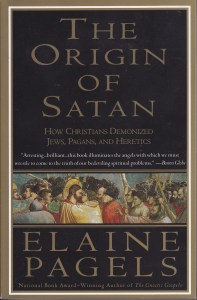
OriginSatanThose who’ve studied the history of ancient West Asian religions know that the concept of a devil, as a character, derives from Zoroastrian origins. In Zarathustra’s dualistic worldview, the forces of evil were concentrated in an “anti-God,” who, upon contact with the emerging monotheism of ancient Israel, became the satan. While scholars still argue about exactly what the role of the satan was, it is clear that it was a role, and not a name. The job of the satan was in some way to bring to accounting wicked deeds. By the time of the New Testament, “the Devil” had developed into an embodiment of evil more along classic Zoroastrian lines. What Elaine Pagels explores in The Origin of Satan is encapsulated in her subtitle: How Christians Demonized Jews, Pagans, and Heretics.

This is not a book about the historical development of the figure of Satan, but rather a study of how early Christians (and to an extent, Jews) viewed “the other.” Naturally she does discuss Satan, who developed along the lines suggested above, but more specifically she addresses how the accusation of being “of Satan” was used. Interestingly, it was generally utilized by those of ancient times to describe those of their own religion, but who held different viewpoints. Sects of Christianity and Judaism generally accused other sects in their own religious tradition of being “satanic.” Foreigners and pagans, well, what would you expect of them anyway? Those closest, ironically, are those most despised. Even early converts to Christianity from Roman polytheism tended to view their former religion as satanic. Satan, in other words, is “the other.” But not the far other. The near other.

While the book is full of Pagels’ usual erudition, it is also disappointing. Not as a book, but as a fact. Religions that claim God only wants us to love one another and treat each other well rely too readily on the figure of personified evil to castigate their enemies. As Pagels demonstrates, even as early as Augustine of Hippo there were those who realized Satan was not a “physical” being, but a symbol for evil. Yet on through the Middle Ages Satan would continue to be evoked to murder women and men thought to be witches or heretics. Satan, it seems, is simply a word for our darkest urges to harm those different from ourselves. We know that religions often have noble intentions. Perhaps the most noble could be to rid the world of Satan, and I don’t mean the mythological figure we all recognize without a hint.

R’lyeh Reality

It’s always a sign that I’ve been too busy when I lose track of Cthulhu. Few created deities receive the attention of the web like the terror dreamed up by H. P. Lovecraft. The internet has created an environment, like the bottom of the sea, where the old gods may lie dead but dreaming, ready to reawaken. It was with great pleasure that I was pointed to Cthulhu for America. At last, a presidential candidate who is willing to admit that he is merely a myth. His agenda of destruction and domination is not at all hidden. If only real politicians would be so honest!

In a world with millions of diversions, it amazes me that Lovecraft’s nihilistic creation has taken on such popular interest. Perhaps it’s because those of us who grew up with monsters have now reached a dubious sort of adulthood where we are bossed around like children and given only those limited freedoms that capitalism will allow. We can’t go into public places without seeing heavily armed guards in fatigues. We can’t get into work without electronic chips in cards to keep us safe from those of our own nation. We can’t fly without being scanned like a week-old loaf of bread. We can’t even store our own files on our own personal computers any more since some software company would rather charge us for the privilege. At least Cthulhu says what he wants. Orwell may have had his Big Brother, but Cthulhu is an obvious overlord who wants nothing but his own satisfaction.

IMG_1551

Watching the circus of candidates vying for position, I can’t help but think of Rome before the fall. Historians are still debating the causes—lead poisoning may be too easy a way out. Perhaps it is, as Lord Acton declared, the result of power itself. Those who taste it can’t stop eating it until every microscopic crumb is devoured. It’s shameful to watch. I’m embarrassed when Dumb and Dumber sounds intelligent next to the utterances from political talking heads. Cthulhu would have none of it. Although the website is a parody, it, like all myths, is truer than what we often call reality.


Still There?

We_Are_Still_Here_film_festival_poster_2015

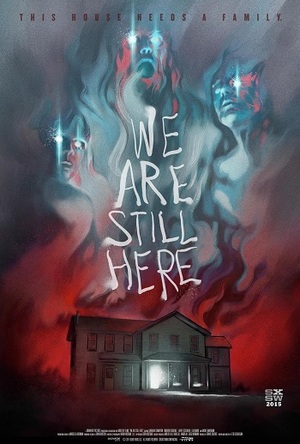
Keeping up with much of anything is hard to do, given work and commuting schedules. Often a horror movie will pass without even a notice until it’s on the sale shelf or free on Amazon Prime. On an October afternoon nothing feels more appropriate than a moody, ghost driven film. All these caveats are to introduce We Are Still Here, a movie that has received commendable ratings from the critics but which seemed pretty conventional to me. I’m not a fan of gore, and the finale has plenty to go around, still, the pacing is about right and the landscape is vacuously beautiful. I have to confess that I’m not sure of what was happening, although the newspaper shots during the credits were supposed to explain things. Haunted house, check. Townspeople acting badly, check. Spooky presence in the domicile, check. The menace is referred to in several different ways, but what is clear is that it wants a sacrifice.

To me this is what is at the heart of the connection between religion and horror. Sacrifice is wasteful by definition. Gods, who are demanding creatures, ask for people to give up something they could use to propitiate divine displeasure. We’re never really sure why gods have such anger issues, but it does seem like a universal trait. In We Are Still Here the “god” lives in the basement described as “hotter than Hell” and its choice of not slaying the intended victims is never really clearly explained. Perhaps that’s the point. Sacrifice is something that gods want. Reason has nothing to do with it. People in films like this seem to be minding their own business, doing what people do. Then the gods demand death. It is a religious trope older than the Bronze Age.

The film reminded me about the somewhat earlier and scarier Burnt Offerings. Ironically in the latter, there aren’t any burnings as there are in We Are Still Here, but there is a house that thrives on human sacrifice. Both houses demand a family and destroy it. Indeed, apart from sacrifice, such movies tend to be a critique of ownership. The house owns the people, not the other way around. And the house, in some sense, is a deity. We Are Still Here doesn’t give a full explanation. It puts the viewer through the usual paces for a horror movie with appropriate startles and grotesque deaths. Like most members of its genre, it reaches for religious backing to make it all hang together. It has the good grace not to be obvious about it as well.


Babylonian Boogle

220px-SinisterMoviePoster2012

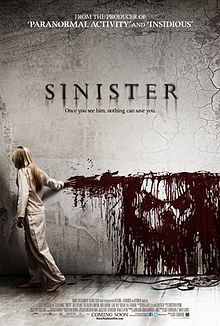
I confess. I’ve fallen behind on my horror movies. My work schedule doesn’t allow for much down time, and on weekends when I spend time with family, well, horror films aren’t their favorites. So on a weekend afternoon when I was alone, I finally saw Sinister. I remembered seeing ads for it a few years back, but far enough back that I didn’t know what to expect. As I’ve often asserted on this blog, horror frequently draws its spookiest material from the deep well of religion, and Sinister once again emphasizes this point. With clear connections to The Shining and Ringu, Sinister does keep you in its web. Of course, ritualized murders are by their nature scary, since those who perpetrate them have taken leave of reason. I don’t read true crime because I have to sleep, and I’d rather not know what some psychopath has eating his brain as he plans his sacrifices. So it comes out in fiction.

The protagonist, crime-writer Ellison Oswalt, consults with a Professor Jonas, whose name those acquainted with the Bible can’t separate from Jonah, to find out about ritual crimes. Jonas informs Oswalt that the occult symbols found at a couple of the murder sites are unconventional. He eventually traces them to Bughuul, a Babylonian deity that eats children. The religious element couldn’t be clearer. Bughuul, who is a god fabricated for the movie, is effectively frightening in the film. But for the ritual element to the murders, the story might have passed as just another gruesome offering to audiences who want a little fright in their October. Religion makes it scarier.

The second appearance of Professor Jonas reveals that, like Ringu, watching the films that tell the story is dangerous. He delves into iconography. Icons, according to orthodox tradition, take part in the reality they represent. Bughuul knows that, and merely by watching the films, or looking at pictures (icons) you open a portal between his world and that of the viewer. By the time Oswalt learns this it is, of course, too late. Again, the element of terror is introduced through religious thought. Bughuul (Mr. Boogle) is a morbid iconographer. The reality of the evil is represented in the “artwork” itself. Once you’ve seen an image, you can’t unsee it. So it is that Sinister draws on religion to plumb the depths of fear. It is surprisingly effective, even on a sunny afternoon when I’ve had too much time alone.


Spirit of Nature

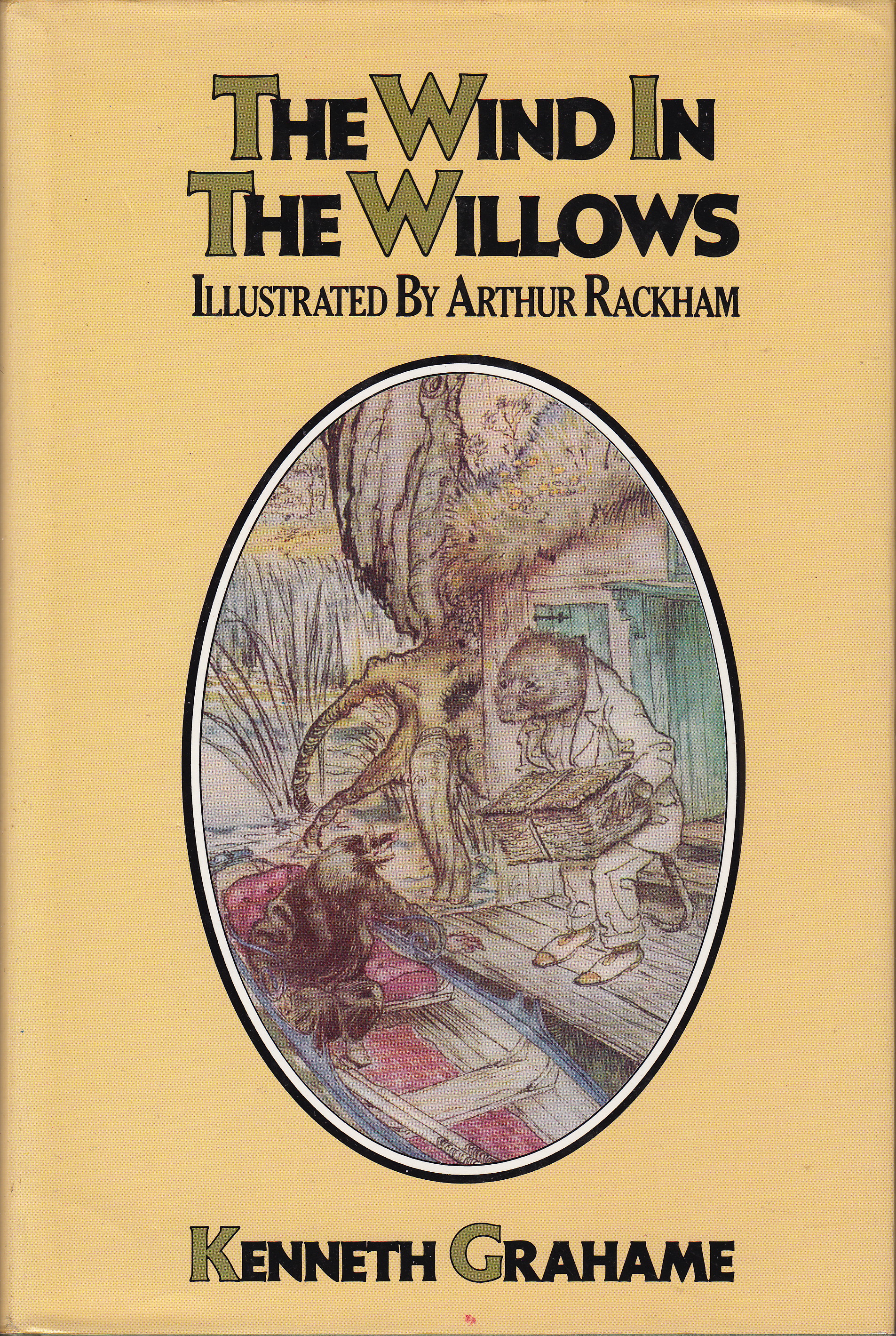
WindInWillowsThe Wind in the Willows, Kenneth Grahame’s children’s classic, was a book I first read during my doctoral studies. In the UK professors are likely to be able to cite A. A. Milne and the fictional bits of C. S. Lewis as well as the current academic stars. Of course I’m over-generalizing. In my experience, however, I met many wonderfully rounded professors and I tried, during my too-brief stint in academia, to emulate them. My wife recently read The Wind in the Willows to our college-aged daughter and me. As I’ve mentioned before, we’ve had an accord for all our married life that I will wash dishes if she will read to me, and we have read well over a hundred books this way, from children’s titles to scholarly tomes. From my perspective, listening to a book read adds a layer of meaning to the text. The cadences, the intonations, and the editorial remarks all lend texture to the experience. I had quite forgotten, as it has been years since I’ve read the book myself, about the mysterious theophany in chapter 7, “The Piper at the Gates of Dawn.”

In a passage that is almost overwritten for today’s youth, Rat and Mole, in search of Otter’s lost son, encounter Him out on the river. The language is reverent, and languid. The two animals come upon a horned deity who is not named, and fall in worship. The fact that he has pan-pipes makes Pan an obvious candidate, but the description also reminds me on this autumnal equinox of Cernunnos, the horned god. The spirit of nature. I feel myself trapped in a world of cubicles and drywall and money. Who wouldn’t fall at the feet of even a pagan deity offering release from such shackles? We have allowed ourselves to be trapped here. We have bought into the system that enslaves us. “There is nothing—absolutely nothing—half so much worth doing than simply messing about in boats.” Rat is my preacher; I am his acolyte.

Nature reminds us that we are evolved creatures and that civilization comes at a great cost. I never feel so alive as when I’m walking in the woods. I don’t pretend that I could survive alone, but having a position that requires growing heavier at a desk day-by-day feels out of sync with what I grew these feet to do and these eyes to see. Manhattan is a wonder, to be sure, but it too comes at great cost. Nashotah House was not a problem-free place, by any stretch, but it was in the woods. The trails on and near campus could restore a soul in the way chapel could never nearly approximate. So it seems appropriate to slip The Wind in the Willows onto my bookshelf next to my Bible, and to slip outdoors for one last untrammeled moment of summer before autumn begins.


Soaring Prophets

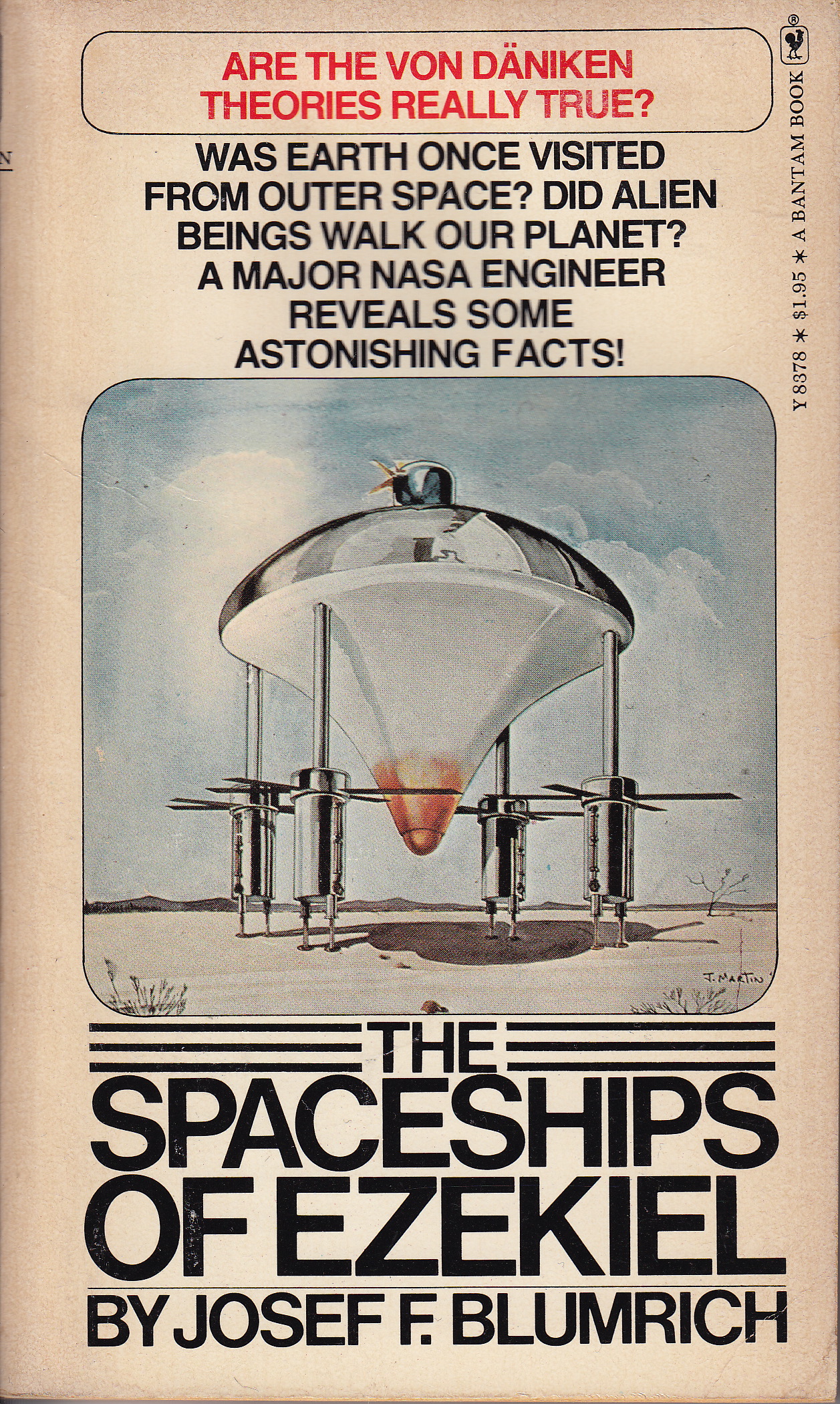
EzekielSpaceshipOkay, so I pulled the book off the shelf, and I feel now like I need to read it. Call it an occupational hazard. Josef F. Blumrich’s The Spaceships of Ezekiel, despite its von Däniken-like sales, has never been taken seriously by biblical scholars. Blumrich, no doubt a brilliant engineer, simply had no street cred among biblicists. His handling of biblical passages is awkward and he leaves out anything that really can’t be explained by his theories. Not exactly professional exegesis. He suggests, of course, that the “chariot” vision of Ezekiel was, in fact, a spaceship. The figure Ezekiel assumes is God is actually a commander of the ship and the message (which accounts for the vast majority of the book) really doesn’t matter in this context. In my earlier post, having not read the book then, I made the error of supposing that the helicopters were impractical in space. Reading it, I instantly saw my error. This was engineered as a landing craft from the mothership circling the earth above our heads. Boy, do I feel stupid now.

The overall mistake Blumrich makes is the “unforgivable sin” of eisegesis. Suspecting that he has a well-engineered spacecraft on his hands, he draws out the implications—such as the propellers—which would not be necessary, but must be there because of a “literal” interpretation of Ezekiel. Once the eisegesis is done, it can be used to explain further episodes throughout the prophetic book. The message of Jerusalem’s destruction and the hopeful prospect of a return from exile get lost in the space dust raised by these propellers. Blumrich was quite right, however, that technical people and humanities people need to be willing to learn from one another. Ezekiel may have seen something unexplained, but his function was that of a prophet, and prophets say the strangest things.

Even more odd, from my unprofessional reading, was the sense that Blumrich saw capitalism as the default economic system of the galaxy. Time and again he mentions how expensive such interplanetary travel must have been. How do we know, I wonder, that aliens like to exploit each other as capitalists do? If they are a more advanced species, surely they must have an imagination that reaches beyond one percent controlling 99 percent of the wealth to aggrandize themselves. I can imagine a society without money. A society with fair trade where everyone is cared for by medical individuals who don’t charge an arm and a leg to treat an arm and a leg. A world where doctors don’t worry about being sued by lawyers. A world where dreamers are free to dream and society values it. Ah, I’d better be careful since, it seems, I may be beginning to sound like a prophet.


The End of the Gods

RagnarokHovering somewhere between fiction and fact, A. S. Byatt’s Ragnarök: The End of the Gods is a compelling reimagining of Norse mythology. Starting in childhood, the stark and bleak icons of a world where even the gods die captured my fantasy in a way that the more real myths of my own faith did not. Like “Greek mythology” the tales of the Norse don’t come in an authoritative canon. Like the tales collected by the brothers Grimm they are bits and pieces that Byatt brings to life with honest description and the willingness to trust the outlook of a child. Mythology is too often castigated as puerile and of no inherent worth. We would not, however, be human without it.

I suspect we all secretly envy the gods, begrudging them their strength, but especially their immortality. Most myths admit that gods might die, but often they come back or become greater for their demise. Ragnarök is the final death of the gods. In fact, it isn’t so far from the “heat death of the universe” that some scientists warn us is surely coming. All good things come to an end. Even gods. The Christian God, who becomes omnipotent, omnipresent, and omniscient over time, loses something of his likableness for it. Vulnerability lends us a sense of sympathy. Who cannot help but weep for Balder? Odin, the God hung on a tree, dead and brought back to life is swallowed by a wolf. Even mighty Thor succumbs to the poison of the serpent. The world feels impoverished for their loss. Victorious gods have a way of making warriors of their worshippers. Maybe we have something to learn from the gods of the folk.

Mythology is out of fashion among academe. The only money it brings in is from the movies it inspires. Truth may be had for bargain basement prices, so why pay to learn what makes us believe in the impossible? Reading of the end of the gods instills a kind of inspiration that orthodoxy only smothers. No, these deities never really lived. These events never really happened. Still, humans have always found mythology to be uniquely satisfying. Ragnarök explains a chaotic world where our ideas of justice and fairness are often left disappointed. As Byatt points out, Loki is a compelling figure perhaps because he represents what we all know to be true—visions of control are only delusions. In a world with one, monolithic, monotheistic God, we find things hard to explain. Postulating a world where the gods know that they too face an end, even if only in fiction, may help us better understand a world where facts just don’t add up.


Time in a Museum

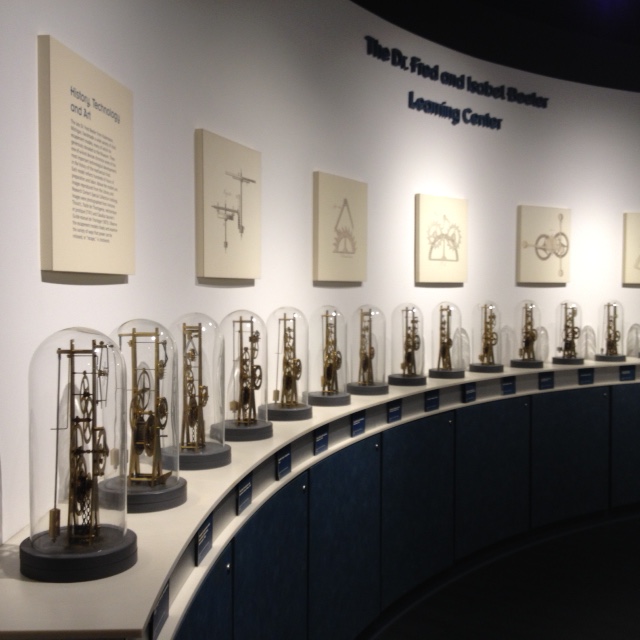
Over the weekend we visited the National Watch and Clock Museum in Columbia, Pennsylvania. I became aware of the museum during one of my steampunk phases, and since we were running out of summer, it seemed the ideal time to go. I didn’t know what to expect, but it certainly wasn’t anything quite so profound as what we actually found. Time, as we now know, is relative. In fact, up until just two centuries ago, nobody really knew what time it was. Well, maybe those people in Greenwich did, but the average person, even if s/he owned a watch, lived on approximate time. Try telling that to any boss today! The need for people to meet trains at various stations led to the standardization of time in the United States. Now the government declares official time, kept by atomic clocks. You could be a billionth of a second late for work and Uncle Sam would know. What happened to the days of looking for when the sun was directly overhead and guessing from there? Greenwich Mean Time indeed.

Time in inherently religious. For human beings, conscious of its passage, it is a limited commodity. Our concerns for our personal A.D. (“After Death” as the misnomer used to go) have led to religions suggesting that God, or gods, take a special interest in the passing of time. That became clear from the first display in the museum. Hardly a placard existed without some reference to the gods—people knew that time was somehow divine. Not only that, but the passage of time was punctuated by religious observances. Even such things as deciding when to harvest your crops could lead to religious revelations. Besides, time was set in motion by those ageless beings known as gods, and they mandated on-time performance. The ability to influence time was far beyond human capacity, thus deities informed us how to handle it. Into the Medieval period clocks maintained a regular array of religious imagery, reminding the user that this is the ultimate non-renewable resource.

IMG_2453

It was almost overwhelming, being surrounded by so many clocks. I remember being a young man—indeed a little boy—when time seemed to be in infinite supply. Religious observance was always a large part of that pool. Here I stood, a middle-aged man, spending my time pondering time. All the while, it was passing. Time is measured by regularity. Uniformitarianism is the geologic principle that informs us of the age of the earth itself. Beyond that, we’re told, the universe—so long ago—had its own beginning and anything that has a beginning will inevitably have an end. Such sobering thoughts amid the beautiful timepieces that so many spent their lives crafting. Now we only need glance in the corner of our computer monitors, or pull out our phones to glance the time. Taking a bit of it is wise, it seems to me, to explore our fascination with time itself. There is an air of eternity about the very enterprise itself. Well worth a summer’s day when forever is in your rear-view mirror on the way home.


Witnessing Angels

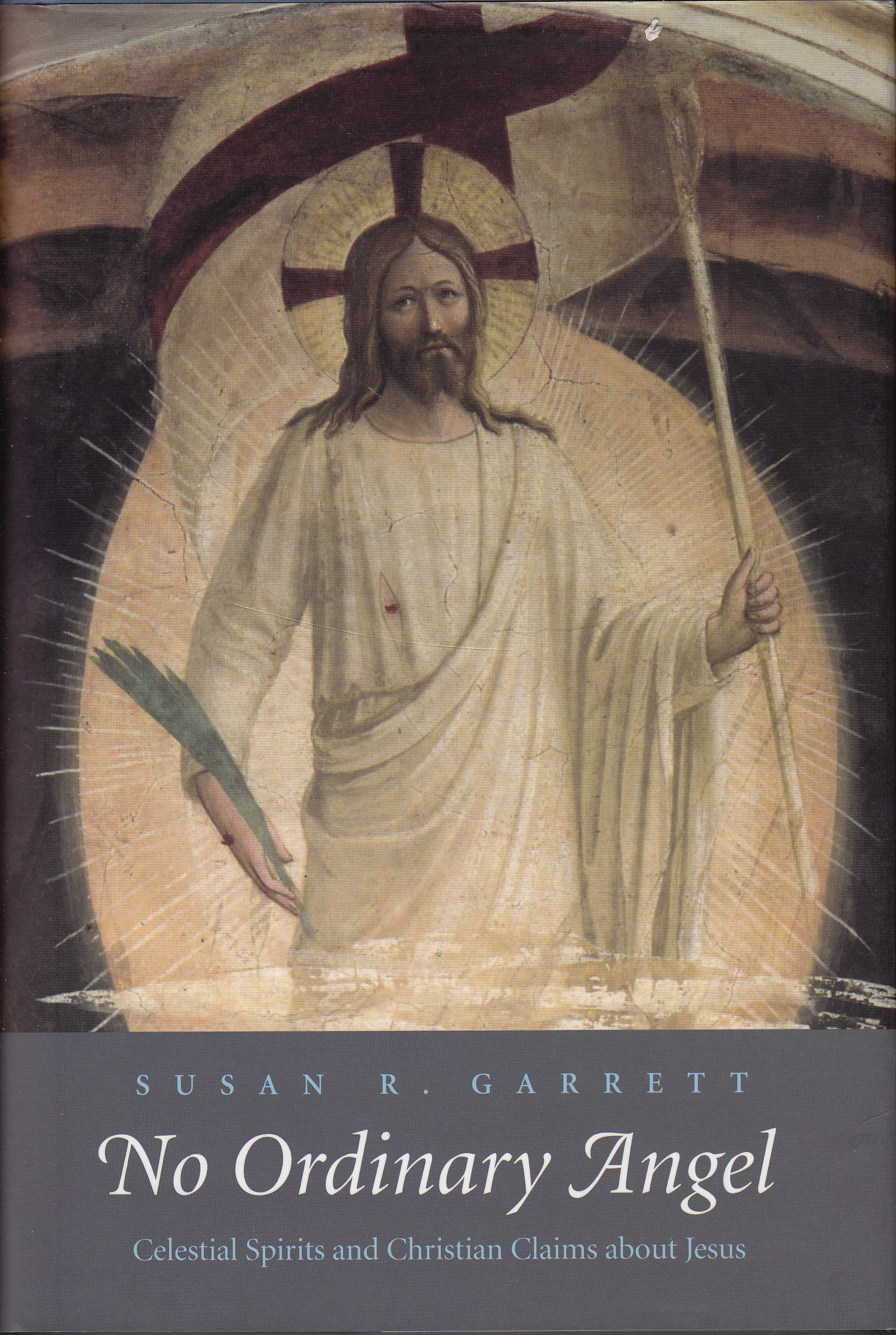
OrdinaryAngelBack in my undergraduate days, I wanted to learn more about angels. Surprisingly, there were no courses offered on the subject, even at evangelical Grove City College. When I finally took an independent study on angels, I found that few serious books had been written on the topic. I was immature as an academic, and I hadn’t learned that the subject of angels was a kind of scholarly embarrassment. Although many biblical scholars still clung to the idea of God, most had jettisoned angels along with other Medieval fabrications such as dragons and virgins. We inhabit a hardened, material world with no room for spiritual beings flitting about. As a student of ancient Near Eastern religions, I discovered angels possessed a hoary pedigree stretching back to Mesopotamia and perhaps beyond. Susan R. Garrett’s No Ordinary Angel opens the question again, and considers the many roles that angels have played and continue to play.

Subtitled Celestial Spirits and Christian Claims about Jesus, the book goes beyond the issue of angels per se, and addresses the distinctly Christian concern of how Jesus differs from them. What becomes clear in the reading of the study is that uniformity isn’t to be had. The earliest Christians already had divergent ideas on many concepts. As Roman Catholicism developed, angels attained a natural role in a world that still allowed mystery and shadows to exist. Protestants, the progenitors of much of science, cleared the closets of supernatural beings, leaving God and a table instead of the hosts of Heaven and an altar. I’m oversimplifying, of course, but there’s a sense in which the more liturgical traditions have more room for angels and demons. You don’t call a Protestant for a proper exorcism. Still, Garrett knows her stuff and shows how angels insinuate themselves into several aspects of sacred experiences of both Protestants and Catholics.

Angels come at births and deaths. They heal the sick, they protect people and they worship God. They rebel and fall, becoming Satan and his minions. Angels are, by their nature, liminal figures. They help to transition people between different states and worlds. As early back as written records, people believed in them. Outside of academia, people still do. God has become wrathful and distant in his old age and, well, you can talk to an angel without having to worry about vaporizing. In antiquity they were messengers. When God didn’t condescend to the earth, angels would come down. Now we get the sense that they’re more like us than we might have originally thought. Or maybe we’re more like them. Angels, even though they may have fallen out of academic fashion, are sure to endure longer than most weighty treatises, no matter how well footnoted they may be.


One Flew Over Cthulhu’s Nest

Pluto is a metaphor for the ultimate of outer limits. Just one of many largish objects in the Kuiper Belt, Pluto for a while held the status of the final planet in the solar system. With the photos from New Horizons coming in, we’re discovering a world more complex than most have imagined. It’s not just a snowball after all. With discovery, of course, comes naming. The planets are all named after Roman gods, just as our weekdays are named after Germanic deities. The features on our celestial neighbors often bear more prosaic names, such as those of astronomers or decidedly non-mythological human beings. As the rules of nomenclature go, the first to find claims the privilege to christen. What shall the new features of Pluto be called?

I was gratified when the New York Times photos displayed the informal names by the New Horizons’ team. There is a large area called “the Heart,” but lurking to the lower left there’s a feature being called “the Whale,” or, more appropriately, “Cthulhu.” The internet breathed new life into H. P. Lovecraft’s literary fame. Like most writers, he remained obscure for his entire life, finding really only one publisher who favored his work. Genre fiction has always been considered the bargain basement of literary artists, and Lovecraft wrote in the lowest part of that basement, horror. (Okay, well, romance might be further down, on purely literary grounds.) Only within the last few years has horror literature begun to be recognized by academics as worthy of serious exploration. Nevertheless, it was as the Monster Boomers grew up—or failed to—that Lovecraft reemerged. The world-wide web has become the lair of Cthulhu and of his minions.

Far out in the most remote reaches of our solar system, Cthulhu awaits. Lovecraft fans know Cthulhu is one of the Old Gods, but that he is also a being from the stars. His murky, dark presence has thrived on the underworld of the internet, and now has fired imagination on the darkest planet of an obscure solar system. What more could a writer dream? A fictional creation being suggested as the name of a planetary feature. H. P. Lovecraft lies decomposing under the loam of Providence, Rhode Island. His imagination, however, has reached as far as, at least to date, humanity can possibly go and find some kind of land beneath our feet. And that land, appropriately enough, is peopled with monsters. The Old Gods lie dead but dreaming, and they will rise again.

15-152


The Last First

Pluto_by_LORRI_and_Ralph,_13_July_2015

Pluto used to be a planet. Humans, in our unfaltering confidence, have downgraded it to a sub-planet, a dwarf planet, as if we know how big a planet ought to be. Even so, the arrival of New Horizons at the mysterious ice world has us all interested once again in the has-been wanderer. For ancients looking into the fixed stars of the night, the planets were all mysterious. They move against the backdrop of the stars that always maintain their places. When the planets came to be named, the gods suggested themselves. Our modern names, of course, reflect the Roman borrowings of Greek gods. Many of the Greek deities go back to ancient West Asia, where even Zeus has a strong counterpart in Hadad, or Baal, and Aphrodite is recognizable as an aspect of Ishtar.

Pluto, or Hades, was the ruler of the underworld. He was known to be decidedly rich since, well, if you can’t take it with you, someone has to inherit. Pluto, like the devourers of Ugaritic mythology, was forever hungry. Insatiable. This association of wealth and death gives us our word “plutocracy,” rule by the rich. As Bruce Springsteen sang, the poor want to be rich, and the rich want to be kings. “And a king ain’t satisfied til he rules everything.” Who says mythology isn’t true? As New Horizons flies by, we will learn more about the hellish world perpetually frozen so far from the sun. We wonder if perhaps we’ll learn more about ourselves by peering into the farthest rock from our star, Sol’s youngest child. Hades was the brother of Zeus, the king of the gods. Even Zeus had to dispose of the Titans to claim that title. In a scenario going back to ancient times, the younger generation—those we recognize as gods—struggled to make it to the top. As the paper describes it, Pluto is the last first—the last “planet” that is being closely examined the first time.

I grew up in a nine-planet solar system. I recall learning of Clyde Tombaugh’s discovery of Pluto, marveling at the math and patience required. Now that we’ve reached the outer fringes of our solar system, our little piece of the galaxy, we’re still uncertain how to occupy the earth. Many claim that science will vanquish religion completely, and that those who believe are hopelessly superstitious and uncritical in their thought. And yet, if we were to take a close look inside New Horizons, this technological wonder that has reached the farthest point of our sun’s gravitational influence, we would discover a small package of Clyde Tombaugh’s ashes inside. The man who discovered Pluto is the first to actually go there, although he’s been dead for nearly two decades. Even the most stoic of scientific minds must pause for a moment and appreciate the profound symbolism of this illogical gesture.


Forbidden Words

800px-Norsemen_Landing_in_Iceland

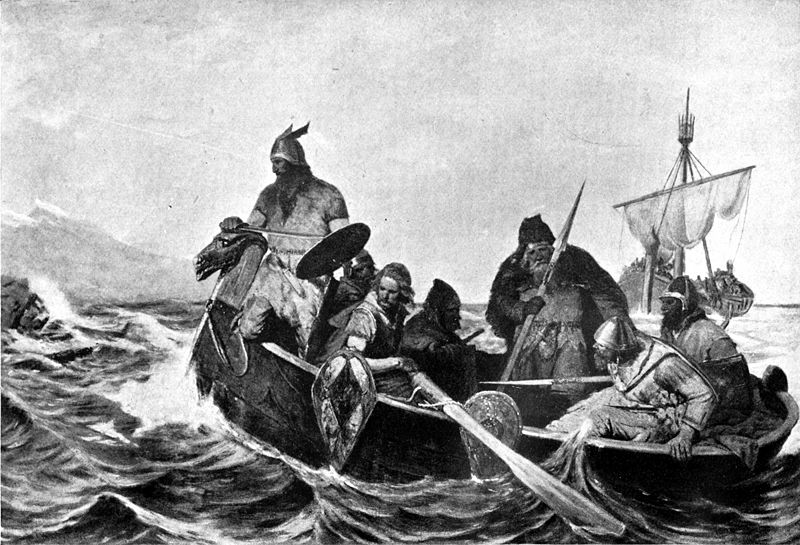
In keeping with the spirit of freedom, just before July 4 the BBC broke the story of Iceland’s blasphemy laws having been struck down. Although the state Church of Iceland (Lutheran by denomination) supported the move, other churches have been grumbling. It’s an odd notion, that blasphemy should be illegal. Part of the oddity revolves around disagreement of what blasphemy is. Even if taking the name of God in vain is used to define it, several questions remain. Which name of God? Certainly “God” is not a name, but a title. Is taking the title of God in vain blasphemy? What does it mean to take a name in vain? If you don’t mean it? I’ve surely heard many invoking the divine in curses that were most certainly sincere. Were they blaspheming? Does blasphemy really mean failing to believe in God? And, pertinent to Iceland, which god is protected under such laws?

Religious pluralism is the clearest threat to those supporting blasphemy laws. Underlying to very proposition is the idea that there is only one true God and that is the God of Christianity. Judaism might be tacked on there, as might a reluctant Islam, but the notion of blasphemy does not seem to bother the deities of other cultures as much. Honoring and respecting belief in deities is fine and good. In fact, it is the decorous way to behave. Still, privileging one deity as the “true god” protected by state statutes is to bring politics into theology. Since when have elected officials really ever understood what hoi polloi believe? In Iceland the old Norse gods have recently come back into favor. Should they be respected to? Why not as much as the Christian God?

It is perhaps ironic that the Pirate Party put forward the successful bid to strike down the law on blasphemy. According to the BBC, the Pirate Party began in Sweden and has now established itself in 60 countries. Since it’s fight for accountability and transparency in government, it’s sure to have a hard time in the United States where bullies can run for President unashamed. What is clear is that although governments make and enforce laws, the will of the people seldom makes itself heard. We may have won some victories in recent days, but there are many entrenched ideas that benefit those in power and not their underlings. Sounds like the Pirate Party may become the Democratic Party of tomorrow. If it does, however, when it loses sight of the ideals that launched it, we may need a new party to board the ship and ask for the people to be heard. Politely, and without swearing, of course.


Seeing the Trees

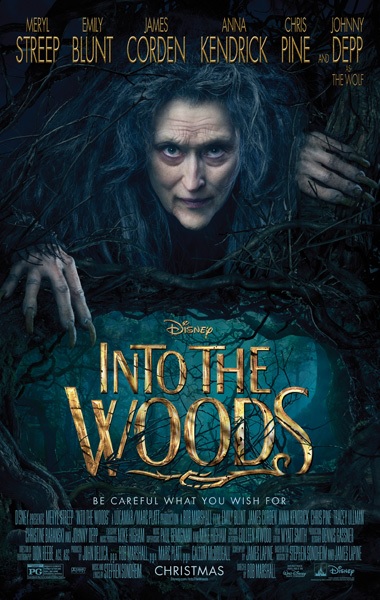
Into_the_Woods_film_posterI first learned of Stephen Sondheim’s musical Into the Woods while liking in the woods of Wisconsin. I was teaching a summer term course of mature students, one of whom used one of the songs to illustrate the point he was making during a presentation. Of course I don’t remember what the point was, but I did remember the movie. Then along came Shrek and fractured fairy tales were back in business. Enchanted brought Disney into the act, and a number of self-aware takeoffs from the brothers Grimm have followed. I’d seen the film of the stage show of Into the Woods before, but it had been a while. Over the weekend we decided to watch the new Disney offering of the story and as we did a couple of familiar, if obscure, ancient mythological motifs came to mind.

Cinderella, as we all know, was sorely abused by her evil step-mother and step-sisters. She seeks solace at her mother’s grave, in the woods, of course, in the movie version. While there, singing somewhere between a lament and a prayer, her mother appears to her in the tree that grew from a branch she’d planted there many years before. It’s a musical number, of course, but my mind couldn’t help going back to Asherah. Asherah is considered by many (without good reason, and I should know) to be the goddess of the trees. Yes, this was a mortal, a dead mortal at that, who spoke from the tree but the way she was presented in the movie was distinctly divine. Indeed, there is similar iconography from ancient Egypt. It was almost enough to make me go back on my own evidence that Asherah wasn’t a tree goddess.

The giant’s wife poses a real threat in this film. Jack’s beanstalk and the effects resembled those of Jack the Giant Slayer, a movie that I only vaguely remember as being one of many I watched with bleary eyes on a transatlantic flight a few years back. Nevertheless, Mrs. Giant is here stomping about the village when Jack and the baker decide to take her out at the tar pit, with the help of Little Red Riding Hood and Cinderella. The preferred weapon is a sling. As the giantess is pelted with stones, she grows annoyed until Jack, in the perfect image of David, strikes the giant between the eyes, slaying her. We all know the fairy tale version ends with the beanstalk chopped down. We’ve entered a new world, however. A world where Bible and fairy tale are harder to distinguish. And not only that, but even fairy tales no longer have the canonical status they once held.


Power of Gods

PowerOfGodsOnce a biblical scholar, always a biblical scholar. This stuff just can’t be unlearned. Suspension of belief, however, is a necessary component of enjoying fiction. I finally found time to slot in Nancy Madore’s Power of Gods, the second in her Legacy of the Watchers trilogy. In the novel she continues the tale of the djinn who infiltrate the world—well, actually, they have been here from the beginning—causing trouble for human plans. The interesting theme that shows up in this second volume is that people are ill-equipped to see the larger picture. With our limited imaginations and vocabularies, we can’t get beyond this world to see what’s really going on outside. Madore uses the literary conceit of djinn where many would probably use demons, but the result in similar. People are pawns in a cosmic game. Even less than pawns, really, but that’s as far as the analogy will go.

While empirical method is unrivaled in revealing the mechanisms of the physical world, life constantly reminds us that something more is going on. Biology doesn’t always play well with physics. And behind biology is the absolute drive to continue living. Life is addictive. Saying it’s biologically programmed doesn’t answer anything. Call them djinn or call them gods and angels, these beings represent the non-corporeal. At their best, religions also deal with that element of life that goes beyond, but also includes the body. Power of Gods adds, of course, speculative elements to all of this. HAARP is brought into it, and our own government is implicated in spiritual manipulation. Freedom of religion indeed.

To be human is to be subjected to forces we don’t understand. We label them, advertise them, and sell them, but we don’t comprehend them. Elements of life that should seem quite simple are among the most complex. When they get to a point that we are completely at a loss to name them, they become divine forces behind the mundane world that makes up far too much of existence. It’s clear that Madore has written her trilogy with people like biblical scholars in mind. We, after all, share the vocabulary and the concepts. And we understand the idea of an unseen world influencing us in unexpected ways.


God on the Brain

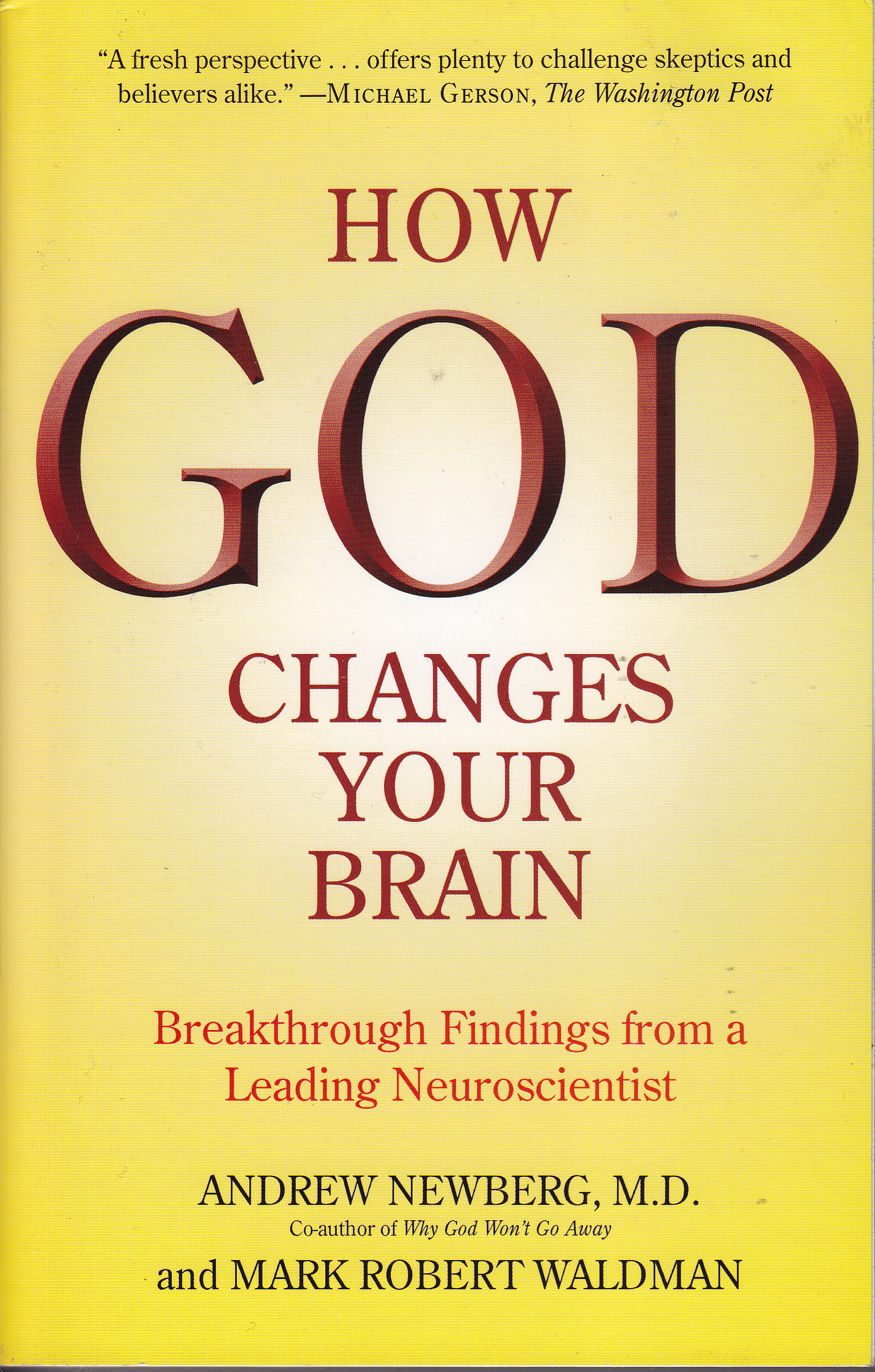
HowGodChangesBrainThose of us with scientifically oriented minds, but with affinity for the less quantifiable aspects of life, tend toward academic study of the humanities. It is not unusual for someone with a background in the hard sciences to dismiss such “softer” fields as less rigorous at best, or, at worst, a sheer waste of time. Many people in the humanities cower under this cloud of being considered somehow inferior for not being able to put numbers to everything. I suspect that’s why I find neuroscience so fascinating. While still teaching at Nashotah House, I would prompt students to think that whatever decisions they made about ancient texts, those decisions were mediated, in a very real way, by their brains. We don’t understand brains completely, but I’m amazed at what we have discovered so far. Years ago I read the book, Why God Won’t Go Away. It was an eye-opening study of what brain mapping reveals during states of religious inspiration, or at least, intense meditation or prayer. We can, to an extent, see inside someone’s head while they are communing with the other.

I recently became aware of the new book by Andrew Newberg (lead author on Why God Won’t Go Away) and Mark Robert Waldman, How God Changes Your Brain: Breakthrough Findings from a Leading Neuroscientist. I was a bit nervous at first, since I couldn’t recall how reductionistic Newberg was in his initial book on the subject. Neuroscientists sometimes perceive the world as being, in a sense, as all in our heads. I was pleased to see that Newberg and Waldman recognize that the “God question” is an open one. They address it right up front. I was drawn to the book because of one of their conclusions that had leaked into the footnote of something else I’d been reading: the brain changes as soon as it is introduced to the concept of God. Brain wiring is continually changing, but the takeaway here is that as soon as we introduce our children to the God concept, their brains will not unlearn it. It stays with us for life. Changing concepts about God is therefore quite difficult. Few even try.

This book, however, doesn’t see this as necessarily negative. In fact, the authors challenge the horsemen of atheism in that all studies seem to indicate that religion is actually good for you. Particularly meditation. In a world that is increasingly run on stress (just ask any business-person) this is an important reminder that prayer, or meditation, can actually heal some of the brain damage caused by life in a stressful environment. The nice thing about this is that the empirical evidence seems to be pretty strong. Our brains seem to be telling us to relax, step back, and not take all of this so seriously. Those are layman’s terms, of course, filtered through my brain. Even reading this book made me feel much more relaxed. It reminded me why, for much of my life, monastic living has seemed so very appealing. Instead, I live in the secular world with its many rewards and stresses. If I learned anything from this wonderful little book, I will be spending a bit more quiet time each day, and won’t be feeling guilty about it at all.