Asherah’s Ashes

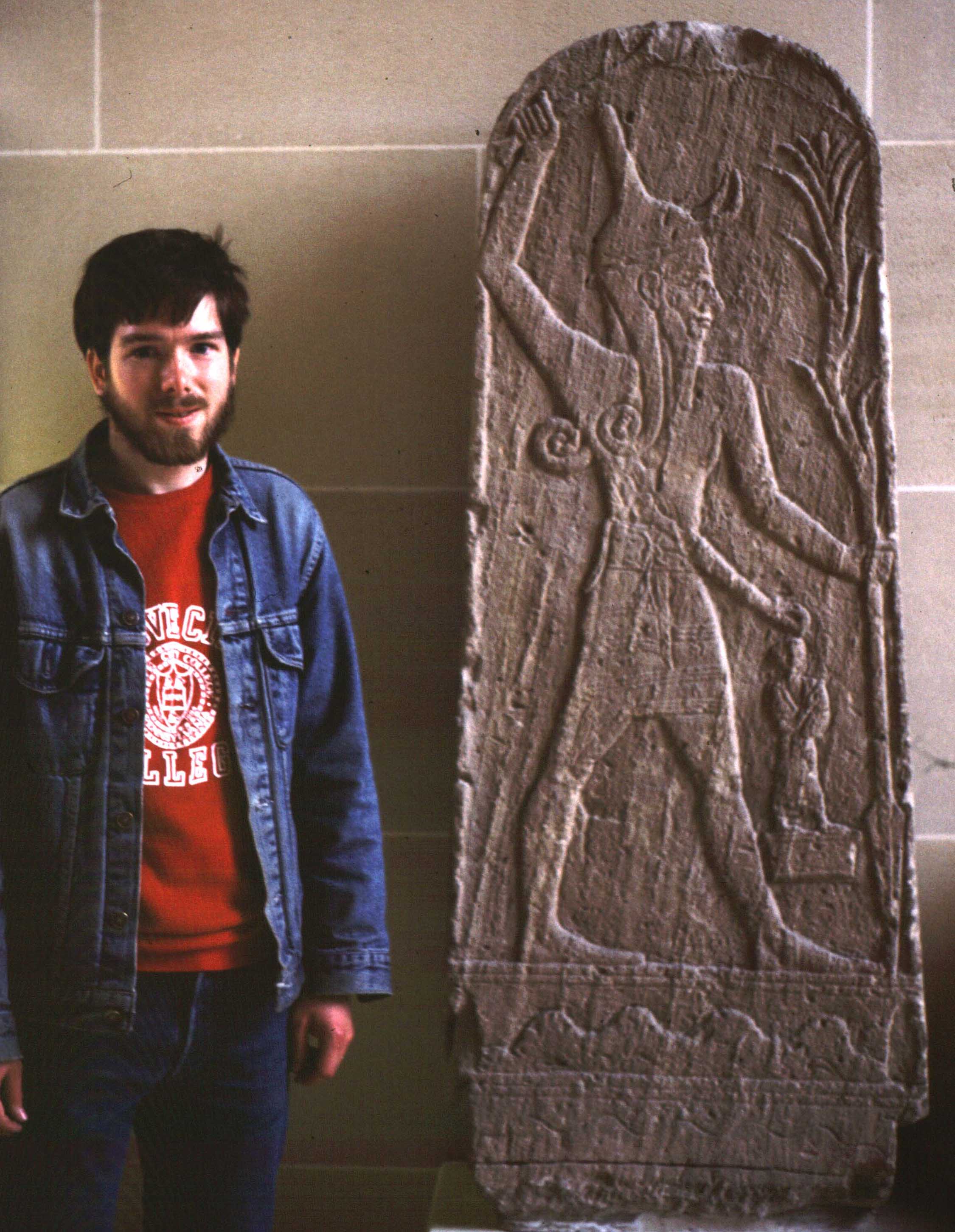
Academics are often poor communicators. The stunning irrelevance of most research should stand as a rather obvious clue to that. Of course, I’m old school in my approach to research. When afforded the opportunity to do so, I produced at least one scholarly article per year, and these were based on extensive research. One of the misconceptions about research is that it involves only that which supports your theory. My first article and first book, both on Asherah, demonstrated that rather clearly, I hope. A kind of scholarly orthodoxy had grown up around the goddess, originating largely in Frank Moore Cross’s work, but also in that of a few other scholars. Nobody challenged these results although they were clearly built on shaky ground. Before I finished my dissertation it had been decided that Yahweh was married to Asherah, and the two merrily danced together on a pathos graffito from Kuntillet Ajrud. After my work was published, I was surprised to see how completely it was ignored. I, like John Mellencamp, had challenged authority. And we know who always wins.

I recently read an article entitled “Iconism and Aniconism in the Period of the Monarchy: Was There an Image of the Deity in the Jerusalem Temple?” by Garth Gilmour, in a Routledge volume entitled Visualizing Jews Through the Ages. Gilmour uses a crudely incised sherd originally found in 1920 in Jerusalem, to build a turret on the house of cards of conjecture. The incised stick figures which, if you squint just right, may be a male and female, it is suggested, are none other than Yahweh and Asherah. Probably grooving together in the temple. Now don’t get me wrong—I’ve always found the idea of Yahweh having a consort conceptually satisfying. We know that other deities in the ancient world often paired off, and that Asherah was generally the main consort of the high god. The proof, however, was in the pithos. Seeing what you want to see is a constant danger to researchers. That’s why my bibliographies tended to be encyclopedic. Gilmour’s article does not mention any of my several works on Asherah, or even my articles on Baal. Apparently my work harshes the easy conclusions already drawn. Or is insignificant. Caution often is.

Consigned to while away my time in publishing, I’m aware that there’s far too much out there for anybody to be able to read it all. Indeed, when I have rare moments to engage in research during my busy, commuting lifestyle, I find myself increasing aware of obsolesce. New results are published before the proofs get to the author. Still, the number of books out there on Asherah are fairly small. Those supporting the unofficial scholarly consensus are many and top the rankings on Amazon. Nobody likes to be reminded that the dissenting view has logic firmly on its side. We see what we want to see. Research should, in the opinion of this disregarded scholar, involving searching again, even as its name implies. The foundations should be reexamined now and again to make sure the tower’s not about to topple. That’s old school. And old school is now, apparently, understood as merely old fashioned.


DSCN4422


Book Ideas

Call it sour grapes. When I was a young scholar, I used to wonder how to develop book ideas. You see, at a young age—twenties or thirties—even a doctorate means your understanding of the world is limited. I’d written a substantial dissertation on Asherah, and I was faced with developing several new courses from scratch at Nashotah House. My mind was focused on the immediate concerns. I did continue my research, however, into ancient Near Eastern deities, with an eye toward writing an account of celestial gods and goddesses. A substantial piece on Shapshu ended up being snatched up by a Festschrift, and colleagues began to tell me that to get hired away from Nashotah I had to write something biblical. Thus Weathering the Psalms was born. The research and writing took a few years because I never had a sabbatical, or reduced teaching load. In fact, administrative duties as registrar and academic dean were added to my remit. Still I scribbled away in the early hours and finished a draft. Then I was cast into the outer darkness.

Publishing was never my first choice of career. I’m more a writer than an editor. In publishing, however, you are not encouraged to write your own content. I can’t help myself. As I rounded the corner from my forties, I had finally read enough material—both relevant and extraneous—to have book ideas. In fact, too many. Held back by the lack of publication, I didn’t know how to channel this energy. One of the benefits of working for publishers is you learn how to come up with a viable book idea. I’ve got a backlog now. I’m currently working on a few books, but one is in the forefront of my mind and eclipses all other projects at the moment. Having watched what sells, I think this one has a real chance. Time to write, alas, barely exists. The writer, you must understand, has to build a platform. Get a fan base. Welcome to my platform.

Daily I receive the first books of young scholars. In this publish or perish—strike that—publish and perish atmosphere, even the mediocre is encouraged by dissertation advisors. Young scholars, maybe thirty, think they have something profound to say. Call it sour grapes, but I’m not getting any younger and I don’t have an institution to support me while I write what should be written. The face looking back at me in the morning has more gray hairs than I remember growing, and has wrinkles that my mind doesn’t recognize. It’s too full of books to write to pause long. The bus is coming soon and I have younger scholars’ careers to build with premiere branding. My own ideas ferment unseen in the basement. What some call sour grapes others call fine wine.

Photo credit: Dragonflyir, Wikimedia Commons

Photo credit: Dragonflyir, Wikimedia Commons


Chain Gang

When I first joined LinkedIn, the notes about adding connections you didn’t actually know were pretty dire.  People could trash you behind your back, ruining career opportunities.  It turns out that I don’t really need any help ruining career opportunities, so after a couple of years on the social network I started adding people if they had a legitimate reason for wanting to know me: they were academics, they were religion specialists, they were in the book business.  I still wonder why investment bankers and others who must have better things to do with their time bother to ask me to connect.  It’s not like I have anything to offer beyond adding a number to their 500+ connections.  It stokes my perpetually low self-esteem to think that maybe 500 people would like to be connected to me, at least electronically. Low risk friendship—I’m not going to bad-mouth anyone.
 
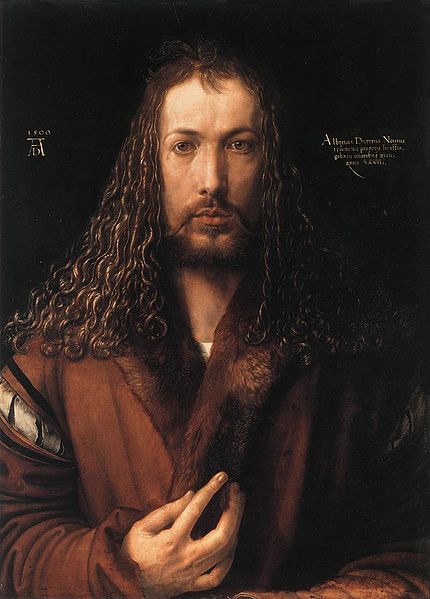
LinkedIn, like most social networks in this highly visual age, offers the opportunity to post a picture.  I don’t have many pictures of myself, and even fewer that I like.  Still, I picked a selfie I snapped in Herald Square after an overnight flight from Phoenix to New York.  I was meeting someone in town and I look a little worse for wear, I suppose, since I can’t sleep on planes.  Nevertheless, there’s enough of my character there to give people the idea of who they’re linking up with.  The other day I was scrolling through suggested people with whom I might want to link.  A surprising number of people blur their pictures, so they look like just about everything did after that flight from Phoenix.  Then there are those who select an image that is meant to be funny, or whimsical.  I was surprised when I saw Jesus’ face above the name of a priest.

430px-Durer_selfporitrait
 
Don’t get me wrong; I’ve got enough theological sophistication to know that many clergy wish people to “see Jesus” when they look at them.  To set Jesus as your personal image, however, seems a bit presumptuous.  Of course, I may be missing something.  Perhaps Jesus sent a connection request to this priest, with the offer to use his likeness.  Still, I find it ironic to suppose that anyone would consider themselves worthy to use the image of their deity as their own.  Growing up, I was taught that people shouldn’t name their kids “Jesus” (we knew no Hispanics in our small town), but then I learned that “Jesus” is just the Greek form of “Joshua” and I realized there were an awful lot of Angelos in trouble too.  Don’t mind my rambling.  It’s probably just sour grapes.  I haven’t received any invites from any deities on LinkedIn, so I’m feeling rather like any guy who has only 500+ connections.


Google Me This

Technology frequently flummoxes me. Although I use it daily, it changes more swiftly than I can hope to. Working for a British company, for example, my computer seems to be a loyalist. It supposes that it is in the United Kingdom even as it sits on my desk in New York. I’m told this has something to do with a mystical key called an “IP address.” When I search Amazon, prices come up in pounds. When I google something, I’m told that European laws restrict certain searches. And, interestingly, I discover that Google’s icons of the day have a British theme.

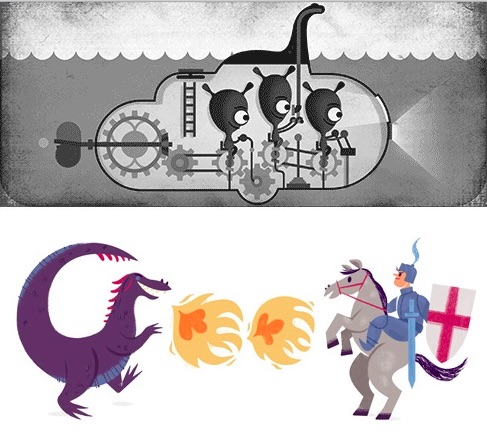
GoogleI’m assured Google is a fun place to work. One of those enlightened companies that believes reducing stress and increasing enjoyment of employees leads to good results. Were that all companies so enlightened. In any case, the famous Google logo is often decorated with a commemoration of the day. This past week, two such icons appeared on my UK searches. The first commemorated Nessie with something like the 81st year of her appearance. The icon puckishly showed Nessie to be a fake, a submarine actually piloted by aliens. Later that same week, on St. George’s Day, a dragon appeared on the icon. I began to wonder about this reptilian connection. If lake monsters are real, many make the claim that they must be plesiosaurs, their dinosaur cousins that most resemble them. St. George, clearly a character cut from the same cloth as Hadad, slays a dragon—an equally mysterious reptile.

We tend to associate dragons with evil, although in world mythology they appear equally as often as harbingers of good. Human interaction with reptiles has always been fraught. Somewhere along our evolutionary track we must’ve shared a common ancestor with them. Even today some responses, such as fight or flight, are referred to as those occurring in the “reptilian brain.” In Genesis 3 the serpent slithers in. According to Revelation, at the other end of the canon, the snake is still there at the end. It was only happenstance that Nessie and George’s unnamed monster appeared in the same week, I suppose. Nevertheless, there is a deep connection between them and us. We can’t seem to get away from them, even should we flee across the ocean.


Pacific Rim

Pacific_Rim_FilmPoster

Pacific Rim is a movie that once again brings monsters and religion together in the cinema. Since I’m generally late seeing movies, I won’t worry too much about spoilers here, but in case you’re even later than me here’s the gist of it: giant monsters from outer space (properly an interplanetary portal) are emerging from the Pacific Ocean to take over the earth. These radioactive, dinosaur-like aliens are called Kaiju. Although they can be taken down with conventional weapons, the most effective fighting tool is the Jaeger, a colossal robot piloted by two humans acting as the two hemispheres of the brain. These humans must “drift”—share their brains—in order to control these massive machines in unison. Lots of action and destruction, of course, ensue. We later find out that dinosaurs were an earlier invasion of these same aliens, but that our environmental degradation has made the atmosphere much better for them, and this time they’re back for good.

The resistance is led by a mysterious marshal named Stacker Pentecost. Pentecost, of course, is the festival celebrating either the giving of the Torah (Jewish) or the giving of the Holy Spirit (Christian). In either case, it is a holiday celebrating God’s plan for humanity. As Pentecost leads his beleaguered and shrinking army of jaegers against the Kaiju, scientists Geiszler and Gottlieb disagree about how to conquer the beasts. Gottlieb swears, “Numbers are as close as we get to the handwriting of God,” while advocating the predictive elements based on the statistics of the attacks. Science and religion have come to an uneasy truce here. As Geiszler seeks a Kaiju brain to drift, he observes some of the masses in Tokyo praying to the fallen beasts. A blackmarket dealer in Kaiju remains explains that they believe the Kaiju have been sent by God. Pentecost unwittingly concurs when he declares it is time to end the apocalypse.

Pacific Rim, like most Guillermo del Toro films, is a complex movie. There is also more than a sprinkling of H. P. Lovecraft here. The worship of the Kaiju keyed me in to the fact that these were the old gods, come to earth, under the sea, from space. As the first category 5 Kaiju swims past the camera, I couldn’t help but think of Cthulhu. Although Kaiju is Japanese for “monster,” it even sounds like his sacred name. We fear that which is larger, stronger, and unknown to us. When that fear becomes reverence we are on the brink of worship, and our monsters have become our deities.


Colorful Gods

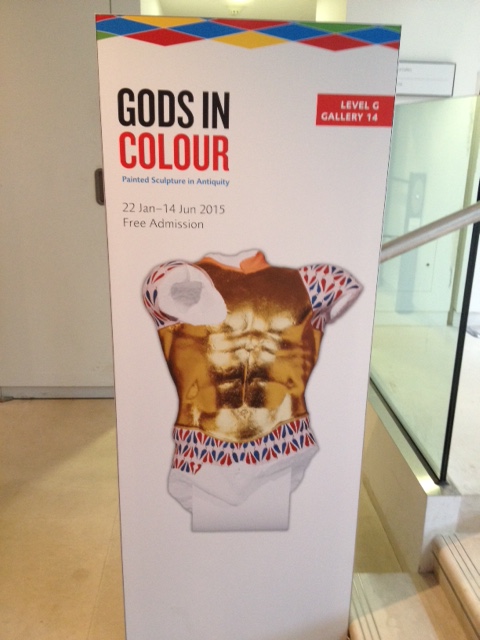
On my last day in Oxford I had enough free time to visit the Ashmolean Museum. The Ashmolean is the earliest public museum in the country, and, although it isn’t nearly the size of the British Museum, it has its share of very important artifacts. While there I came upon the exhibit called “Gods in Colour.” The display was inspired by the fact that ancient Roman statues—and likely those of other ancient cultures as well—were often painted. The elements have worn away much of the decoration, but traces of various chemicals have indicated what hues were likely used to paint these public icons of divinity. We tend to think of classical society as all white marble and stoic formality, but the reality was likely much more colorful. Many god and goddess statues from ancient West Asia also have traces of paint, although in general they were smaller in the various kingdoms of the Levant than the empires of Egypt and Mesopotamia (the latter of which is sadly falling victim to modern day iconoclasts). The Romans weren’t the only ones to see in color.

IMG_2082

Seeing these representations of gods in color reminded me of my first exposure to liturgical Christianity. Having been raised in a Fundamentalist tradition, we certainly didn’t have images about (although one of our churches had a pastoral fresco on one wall). The United Methodist Church, in which I spent my teens and early twenties, had adapted the liturgy of its Anglican parent church, but not the iconographic tradition. When I first saw churches with painted crucifixes and states of Mary, I was taken aback at how powerful they could be. Like most ancients, I realized that these weren’t the gods themselves, but they still conveyed much of what the liturgy was communicating through words and music. One priest explained them as crutches for those who needed help to imagine the divine.

Having seen what images can do, I object to the use of the word “idol.” People are visual animals. We rely heavily on our sense of sight, and our religious sensibilities tell us to look for the gods our minds tell us must be invisible. It is difficult to focus on that which we cannot see. Today we have images both in the natural color of their medium and resplendent with color. We spend hours before the computer screen with its endless array of pixels of all colors. We still think of our gods in full array of saturated hues. In ancient times they tended to be made of stone, but we tend to use another form of silicon, apparently, to get the same effect.


Middle Eastern Idol

As the Passover-Easter complex of holidays approaches, our stern, scientific face turns toward the more human sensibilities of religion and its impact on our lives. PBS recently aired the Nova special The Bible’s Buried Secrets (originally aired in 2008) and when a colleague began asking me about it I figured I’d better watch it. As an erstwhile biblical scholar there wasn’t much here that was new to me, but one aspect of the program bothered me. Well, to be honest several things bothered me, but I’ll focus on one. When referring to the gods of the Canaanites, among whom the program readily admitted the Israelites should be counted, they were invariably referred to as “idols.” The problem with this terminology goes back to an issue I frequently addressed with my students—the term “idol” is a way of demeaning the gods of a different religion. Implicit in the word is the assumption of the monotheistic worldview and its attendant problems.

The Bible’s Buried Secrets seemed to adopt an overly optimistic view of the monotheistic religions sharing the same god while everyone else worshipped idols. The view is as fraught as it is simplistic. Historically Judaism, Christianity, and Islam are certainly connected. Each recognizes in the others a glimmer of its own theology and outlook, but the concept of deity has shifted somewhat at each development. Judaism and Islam are rather aniconic, especially compared to many varieties of Christianity where images are allowed, or even encouraged. It is difficult to grab the attention of the magazine-reading public with an image of invisibility on the cover. It should come as no surprise that some Jews and Muslims believe Christian images to be, well, idols.

An idol moment?

An idol moment?

The word “idol” is by nature pejorative. Ancient people were sophisticated polytheists. That statue that represented a deity was not thought to be that deity in any absolute sense. Rituals assured the ancients that they were instilling some aspect of divinity into the statues they used, making them sacred in the same way a Christian consecrates a church building. What’s more, it is natural for people to seek a visual focus for its devotion. It is difficult to conceptualize the Almighty as a person without giving it (often him) a body. Islam, especially, has been adamant that this can’t be done, and looking back at Christian practice it is sure to see idols abounding. As the holy days begin for our vernal celebrations, we should perhaps use the opportunity to rethink such religious vocabulary since every orthodoxy is someone else’s paganism.


Three Thoughts

If it weren’t for friends sending me little nuggets they find on the internet, I might be uninformed about much of the weird and wonderful world unfolding around me. With hours not spent at work being laid out on spartan public transit, I don’t have much time for surfing. So it was that I watched this video of St. Patrick trying to explain the Trinity to a couple of normal Irish blokes. Of course it’s funny, but as I watched it, a thought occurred to me. I used to think what a waste it was for learned minds to sit around arguing the fine points of theology. The Trinity is a prime example—three is one but not really one. Form, substance, essence, accidents or effects? What is it that makes them distinct yet not? It is, of course, a logical impossibility. Yet hearing words like modalism and arianism made me realize that these were highly sophisticated concepts. They were developed in Late Antiquity in a world with quite a different frame than our own. Atheism probably existed then, but it was very rare. What we might call naturalism did not exist. Some kind of deity or force was obvious behind the natural world.

To be sure, some thinkers had already suggested that the earth was round and that laws of mathematical precision governed aspects of nature. The frame of the human mind, at the point when engineers can construct pyramids and ziggurats, had already reached the point of science. What do you do with science when gods can’t be dismissed from the picture? Naturally, you turn your science on the gods. Although many today would argue that if God exists, the deity is a being (or concept) outside the realm of science. Science deals with the material world, not with supernatural possibilities. Dividing a single deity into three persons without making yourself a polytheist is a real mental puzzle. The concept of the Trinity isn’t biblical, although the basic ideas are derived from the Bible. It is a purely theological construction to explain how Jesus could be God and yet die. Well, it’s more complicated than that.

One of the great joys of the angry atheists is to point out the obvious frippery of theological discourse. How many angels can dance on the head of a pin? Why would anyone waste their time on such nonsense? Yet, the thinking behind early theology was exquisitely rational and highly developed. One might almost say “scientific.” The people of antiquity were not stupid. Our mental picture of the Middle Ages is often of unwashed louts chasing witches and hiding from dragons. Their society, however, was advanced by the standards of hunter-gatherers. The technology of the day may not have reached down to the level of the everyday worker, but human thought, ever restless, was working its way toward a scientific revolution. And God tagged along. Even Sir Isaac Newton gave a nod in that direction. While theological arguments may have outlived their usefulness in a society such as ours, they did represent, in their day, the best of rational thought. And in their own way, likely contributed to the birth of what we know as science.

The fate of heretics

The fate of heretics


With My Luck

I wish I didn’t believe in luck. I guess I’m just not lucky that way. And I’m not alone. Of all the “superstitions” that haunt the human psyche, luck is among the most pervasive. We either have windfalls that make our lives easy, or, like many of us, a series of unfortunate events against which we constantly have to struggle. We call it luck. But is it real? William Ian Miller wrote an intriguing piece called “May You Have My Luck” for a recent Chronicle of Higher Education Review. There’s nothing as mysterious to me as the hapless professor. I mean, they have it all, right? Educated at fine schools, cushy jobs that pay reasonably well, interviews on documentaries, jobs that among the rarest on earth? Who wouldn’t want that kind of luck? (I am also a believer in myth, so that also must be taken into account.) The reason I raise luck here, however, is that Miller’s article again and again returns to religion. I don’t think it’s intentional. It’s just unavoidable. Luck, no matter how we define it, goes back in some way to the favor of the gods.

We all know people that we think of as lucky. Success seems to follow on success for them. They are at the right place just at the right moment, and their lives seem to be easy and not so full of stress as those of the rest of us. Most people, as Miller observes, have middling luck. Things go our way sometimes, and then they don’t go our way at others. My fascination, however, lies with those on the other end of the spectrum. There are those who seem to get very few breaks. They may do all the right things, follow all the wisest advice, work harder than anyone else, and still end up on the bad end of luck’s roulette. Ironically, they may be religious people to boot. Their deity, according to their sacred traditions, is the most powerful entity in the universe. And yet things don’t go their way. We call it luck. Is it more powerful than the divine?

This question, or more properly, conundrum, lies behind any concept of luck. Shifting to the paradigm with which I’m most familiar, does God direct luck or does luck exist independently of God? Does luck even exist at all? Is it just the name we give to a series of random happenings in retrospect and which have no inherent meaning? Ah, that seems to be the very point! Meaning. What do these things that happen to us mean? Whether or not we believe that life has any meaning, our minds are biologically programmed to seek it out. Very few of us are content to find only food, shelter, and air to breathe. We want something more out of life. We may not be able to name it, but whatever it is, we could conceivably call it meaning. We are looking for a purpose to our mere existence, even if we don’t believe in it. Gods or no gods, we are left trying to discern what they require of us. And whether we find it or not, it seems, is purely a matter of luck.

Photo credit: Joe Papp, Wikipedia Commons

Photo credit: Joe Papp, Wikipedia Commons


Our Gods, Ourselves

The near-death experience, made popular by Raymond Moody in the 1970s, has hit the cultural mainstream with movies like Heaven Is Real. The now-familiar scenario of going through the tunnel toward the light and meeting something like God is so widespread that mention of “staying away from the light” can be a metaphor for remaining alive. Although experts (one of which I’m decidedly not) disagree on interpretations, nobody doubts that the dying often report such things. Some say it is the impression left on an oxygen-starved brain about to implode, while others postulate a soul has made an actual bid for freedom only to be returned to sender. No matter what you believe, it’s hard not to be intrigued. Not all the experiences are identical, however. A friend recently sent me a story from World News Daily Report that headlines “Catholic Priest Who Died for 48 Minutes Claims that God Is a Woman.” The story by Barbara Johnson, which ran earlier this month, is an interesting variation on the standard. Often the “being of light” met at the end of the tunnel is kind of asexual. After all, there are no physical bodies there.

This story has me thinking. Traditional Christian, indeed, Judeo-Christian thought posits that God is neither male nor female. Of course, given human experience, many people find that difficult to conceive. It does occur in intersex persons, and it is actually pretty widespread in nature where some animals change gender over their lifespans. Still, when it comes to the Almighty, people want to know with whom they’re dealing. Think about it. When you walk into a doctor’s office and meet a physician for the first time, your response will differ depending on their gender. The same is true of going into a car dealership, or a daycare facility. We use gender to give us the first hint on how to respond. A genderless God, let’s admit, is somewhat disquieting. What is the message you want to send to a person without knowing their gender? Or maybe like me you’ve read a book and discovered halfway through that you had the gender of the author wrong. Doesn’t it impact how you read the rest? So, what if God is a woman?

Interestingly, the case of Father John O’neal comes from a Catholic context. Along with Evangelical Christians, Catholics are among the most likely to hold a residual maleness to God’s identity. Theology of the Trinity, always beginning with “the Father” makes it hard to escape. Perhaps what Fr. O’neal unexpectedly encountered was a God-concept without judgment. That would certainly be disorienting to a faith that has a multi-layered afterlife including limbo and purgatory as well as heaven and hell. A deity who decides the fate of souls must be a judge, and although Judge Judy rules daytime television, the church still has a traditional mensch on the bench. What if Fr. O’neal really did get to heaven? What if he found God really was female? Could human religions ever recover? I, for one, am intrigued. Still, I’m content to wait another few decades before finding out. And maybe for the time we have down here we should all start practicing by realizing that gender is always far less important than the personhood that we all share.

IMG_1858


Incitatus Redux

What more is there to say about God and politics? Far too much, I fear. In a Sunday Review in the New York Times, Frank Bruni lays out a catalogue of what, in a rational universe, would be considered violations of the United States constitution by politicians who insist their (conservative) Christianity is the faith of the nation. This is, however, one of the philosophical conundrums of religious freedom. Religious believers are free to use their faith to try to change the system from within. And the fact that the media is telling us that religion has become irrelevant doesn’t help. Who should be afraid of what’s irrelevant? Can irrelevant substances harm you? Can irrelevant bullets kill you? Why, yes, they can! And so being told repeatedly by the media that religion is something we can safely lock into a box marked “Medievalisms Outdated” we step out the door to see politicians using a religion poorly understood to gain power. A recipe for an apocalypse, it sounds like to me.

Academics too readily fall prey to the media hype. University presidents and deans suppose that religion really is dead and shouldn’t be studied. Who’s going to help us through the morass of the upcoming election if people who understand religion are made indigent and put out on the streets? Good luck to the rest of society! We must, if we are to survive, understand religion. Its death, following shortly on that of God, was proclaimed early last century. And yet it’s showing no signs of dying. In fact, it’s just waking up. Who are we going to ask? Scientists? Accountants? Economists? What will you really learn about our laws being God’s laws in the minds of the wealthy and powerful? Don’t ask me—I’ve only spent some thirty-five years studying religion. What do I know?

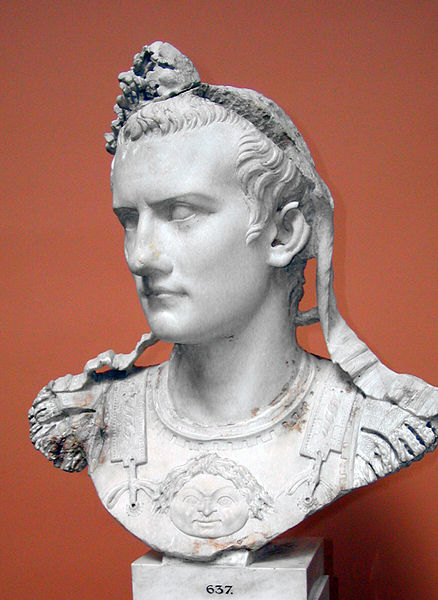
I sometimes wonder what it must’ve been like to live in Rome as Alaric was whetting his sword among his Visigothic horde. Insane—literally insane—emperors wielded unchallenged power and lived lives of opulence amid the slaves and poor. Religion was front and center on the agenda, of course, because emperors were gods. You don’t have to listen too deeply to hear the same message even today. Those who proclaim God as the justification for their political ambitions know that God is the ultimate malleable deity. In fact, God can even be in the Oval Office. Lead can line your aqueducts and your horse can be made a senator. Lord knows an ass can be. And all the while let’s shut down the voices of those who’ve looked at religion, beginning in the Stone Age and up to now. If we want to grab power it’s vital that we keep it from public view that self-deification is as old as kingship and in a post-religious world, we have only to pretend.

Photo credit: Louis le Grand, Wikimedia Commons

Photo credit: Louis le Grand, Wikimedia Commons


Under Who?

Who is God anyway? The question occurred to me as I read about the current Superior Court decision in New Jersey that “under God” in the Pledge of Allegiance remains constitutional. The American Humanist Association had sued to have the offending prepositional phrase removed, based on first amendment rights to religious freedom. I’ve always found the whole indoctrination of swearing to a flag somewhat provincial and perhaps even damaging to the unity of humankind. Nations, after all, are about keeping things for ourselves, something that the God of the Bible seems to find naughty. During the Cold War, waged against the “godless Communists,” the questionable phrase was added in 1954, only after we’d secured nuclear weapons. Does any nation that has the bomb have the right to declare divine sanction? I guess so, on second thought.

IMG_0962In his decision Judge David Bauman said that God, in this context, is not about religion, but about the state’s history. Granted, one of the New Jersey delegates to sign the constitution was a clergyman, and president of Princeton College. The same Princeton that became the home of the man who would open physics enough to let us begin a nuclear reaction. But I’m getting ahead of my story. This concept of God being an arcane aspect of history as opposed to a present and active force motivating people’s lives is a curious one. In order to keep the deity, he (and the historical God is male) must be demoted to an historical relic. If that is true of divinity, what does it say about the concept of nationhood itself? Have we come to admit that it is all a fiction to keep status quo ante?

Humanist and atheist groups have argued for years that public school (which no government takes that seriously) should not be a forum for religious indoctrination. Some religious groups (such as Creationists) clearly see such schools as a mission field ripe for proselytizing young minds. Such was clearly the case in 1954. Today we see the Russian Orthodox Church becoming a supporter of the government in Russia, where godlessness might be more a factor on the ground than on paper. In the United States we have a culture that provides lip-service to the almighty while the true god is secreted away in the shrines of bank vaults and expense accounts. It is really about a way of life, after all. Should we keep or remove “under God” from a pledge to personal gain? It is all a matter of how you define “God.”


Thor’s Return

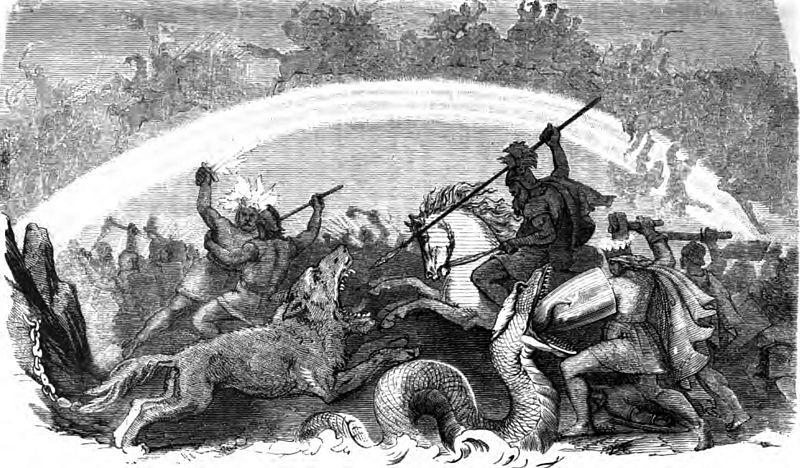
Once as I sat in the office of an Ivy League professor of Greek religion, I asked about the myths of the Classical gods. The professor (who knew that I had taught religion as well, but at more like a Noxious Weed League school) appeared genuinely insulted and told me in no uncertain terms that scholars of religion didn’t take that nonsense seriously. The study of “myths” was left to Classicists, not actual scholars of religion. Is it any wonder, then, that we don’t really have a grasp on what the average person believes? Being a blue-collar scholar, I always took seriously what students told me about their beliefs. It wasn’t really a great surprise, then, when my wife pointed me to a story in The Guardian about a temple to the Nordic gods being built in Iceland. According to the story, the modern adherents of Ásatrúarfélagið (thank you unicode) don’t really believe in a literal Odin or Thor or Frigg, but see them as metaphors to help them face the way life is. A millennium after becoming Christian, some Icelanders are apparently getting back to their roots.

There has always been, to me, a fascination with the Nordic gods. These rough-and-tumble deities inhabited the harsh and snowy regions where daily life was often a struggle to survive against the elements. Frost giants were enemies and nobody really emerges as the winner after Ragnarok. In the Bible Yahweh does sometimes come out swinging, but for the most part he seems a deity content to sit on his throne and issue commands. The Scandinavian gods were characters of action. In some sense they seemed to struggle just like the rest of us do. They are, of course, more powerful and as the movie makes clear, Thor has a charisma that more self-righteous deities appear to lack. Lest anyone be ready to run to their priest at this point, please be aware that this too is a metaphor.

On the other side of the equation there are sure to be critics who argue that building a temple to fake gods in this day and age is obviously a waste of human talent and resources. Such are people with no imagination. Religious belief, metaphor or not, has been part of the human psyche from the very beginning. Elsewhere I have suggested that animals show the same behaviors as what we Homo sapiens would declare rudimentary religion. Rationalism has not provided a reasonable alternative to religious expression. Even a Stoic knows to appreciate art, although beauty provides no essential element to simple survival. Simply put, humans enjoy the finer things of life. Perhaps unappreciated since long sublimated, among those finer things are the old Nordic gods. And their return is a kind of resurrection.

The Battle of the Doomed Gods

The Battle of the Doomed Gods


Mother’s Night

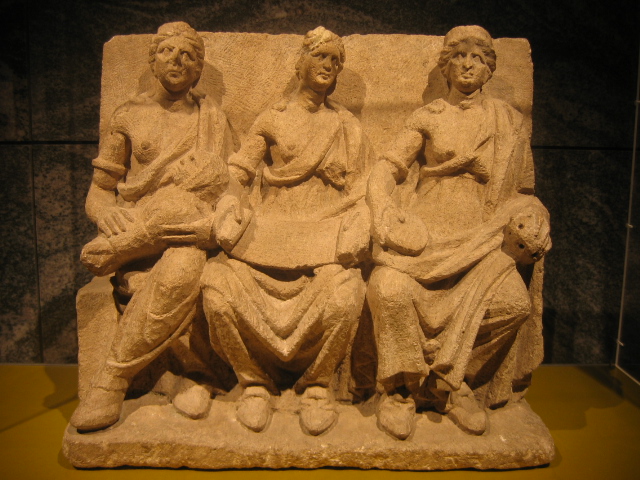
It wouldn’t be Christmas, in the Christian tradition, without Mary. Still, apart from her later enhanced role in Roman Catholicism, Mary’s part beyond Christmas is minor in the church. She seldom features in biblical accounts of Jesus’ life. It is easy to forget the female role that was so much a part of winter solstice celebrations that coalesced into our modern twelve days (really only one, for work purposes). That’s why I was glad that a friend sent me a link to a site about Mödraniht, or Mother’s Night. Honestly, I had never heard of this holiday before. Given the Germanic penchant for dramatic festivities, it comes as no surprise that Yule involved a night celebrating the feminine aspects of the season. Apart from the occasional references to Mary, we tend to think of this as the time a male son of a male God came to save mankind. What of the women without whom none of this would have been possible?

As Carolyn Emerick notes on her page, we know little about this sacred day because Christianity managed to wipe out most of the pagan traditions of northern Europe. Some, of course, survived and worked their way into Christmas. Modern holidays, being primarily days off work rather than deeply felt celebration (for we live in a world with no need for religion), have gravitated toward what had once been the male preserve of earning a living. Watching movies of Dickensian times, it is clear the women continued to work—likely even more than usual—to bring off a holiday celebration. It was the male prerogative to be the recipient of largess.

Photo credit: "Urban" WikiMedia Commons

Photo credit: “Urban” WikiMedia Commons

My concern is that gender equality may sometimes be confused with gender stereotyping, or even with patronization. How is it possibly to build equality into a system put into place by generations of men? Is civilization truly civilizing when half of the race and only a very small portion of the planet benefits? The Christmas season, even now rapidly slipping away, is a time for considering equality. Every year modern non-believers and humanists ask for equality—a dream always held at arm’s length, since the holiday earns record profits as it is, and the financial year revolves around it like a Pole Star. It is the time of year when we see if we’ve turned a healthy profit. The rules in the system were set long ago. Even with Mary in the manger, she blends into the background while shepherds, wise men, and other interested males plan to make a holiday of it.


Are You Fey?

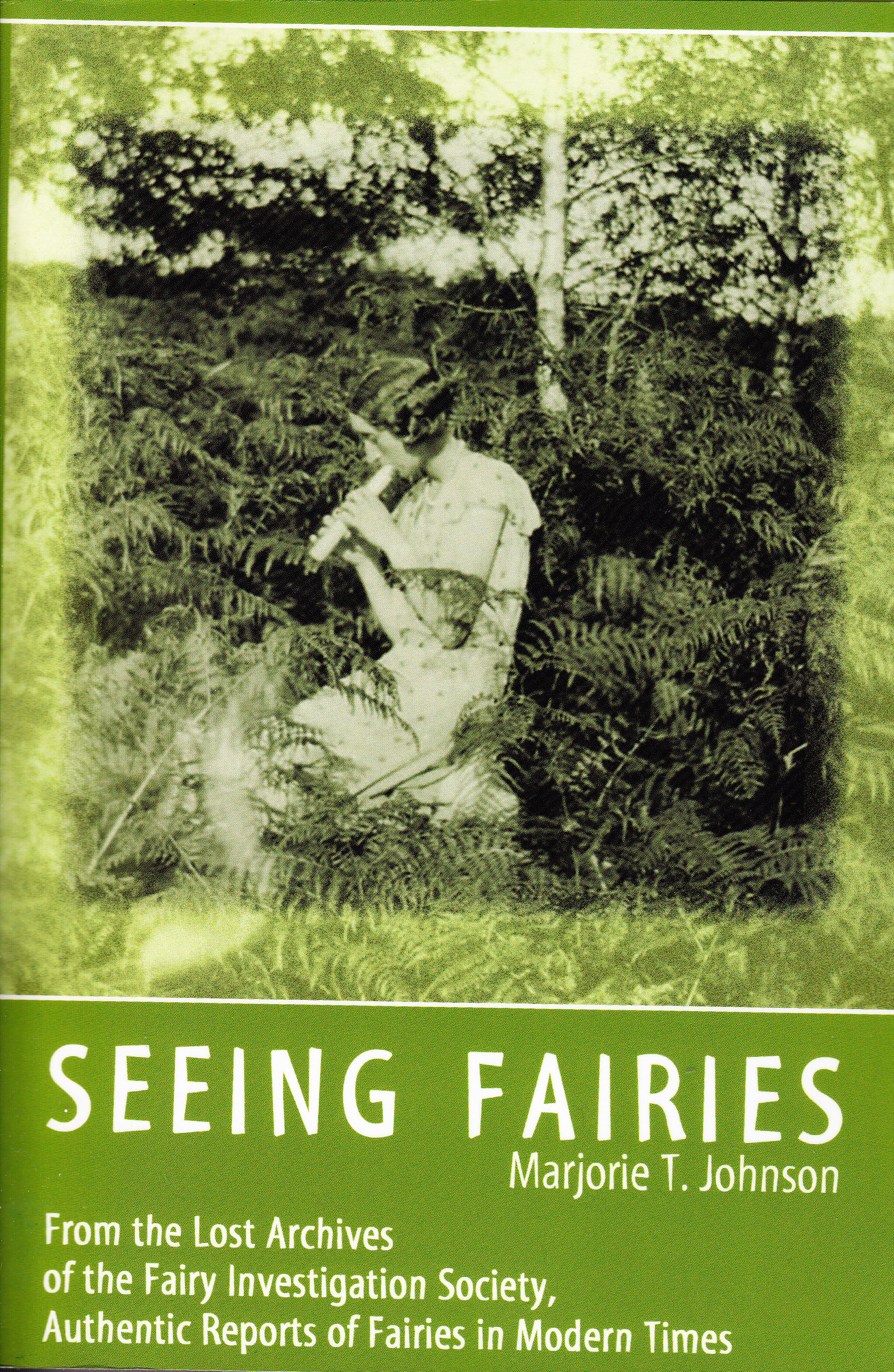
SeeingFairies‘Tis is the time of year that one might make inquiry into elves and the wee folk without being thought too strange. Santa has his cadre of mythic diminutive helpers and even the shepherds have their angels. The two, it seems, are not unrelated. Marjorie T. Johnson’s Seeing Fairies is, in many respects, a charming book. Compiled by the author during a lifetime of corresponding with people who claim to have seen fairies, elves, pixies, sprites, brownies, gnomes, and even angels, the stories—as parsimonious as any sermon—do create an aura of mystery. It is clear that Johnson believed (the book is posthumous) sincerely in the unseen world. As the preface makes clear, she was influenced by Theosophy, and the majority of the material dates from the 1950s and earlier. There is an almost childlike credulousness to the accounts, with Johnson not questioning psychic dreams or astral projection, placing them side-by-side with eyewitness accounts. This is a good example of what an editor might have done for the book.

Many people assume a doctorate in the humanities is a soft thing—pliable in a way that the hard sciences are not. The point of advanced study, however, is to ingrain habits of critical thinking. Nothing is taken at face value. For those of us who study folklore’s first cousin, religion, the task is often to set aside belief in the light of evidence. What can we know about the unknowable? Of course, psychologists and sociologists and anthropologists are now supposed to be better equipped to answer religious questions. Religion, after all, is something people think and do, and what can we really learn from studying it per se? We need an interpretative device—an hermeneutic filter (or pneumatic hammer)—to guide us toward the reality of the thing. And yet science itself is based on observation. Accounting for what our senses reveal about the world around us.

Some people, it is clear, find the world around them filled with wee people. Recently a major road construction was halted in Iceland out of fear of disturbing the elfin habitat. And Icelanders are some of the most literate people on the planet. Johnson’s accounts (some clearly hard to swallow) range across the earth, but center in the British Isles and Celtic lands. Perhaps the light is somewhat different there. Perhaps nearing the North Pole things really do change. What becomes clear from Seeing Fairies is that some highly credible and educated people see, from time to time, what they allow their eyes to see. Believing is, after all, seeing. Johnson ends her book with a chapter on angels, beings she clearly views in continuity with fairies. The difference is that the monotheistic religions allow for, and perhaps even demand, angels. When they become travel-sized, however, the only evidence is that of those with very keen eyesight.