Climb Every Mountain

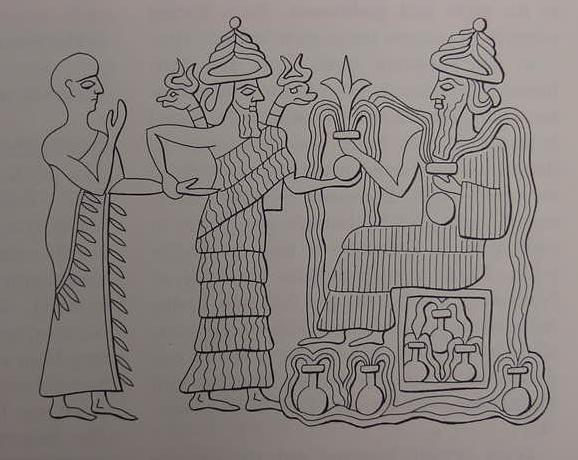
In Ancient Near Eastern religions class, we’ve been discussing where the gods live. At least beginning with the Sumerians (perhaps earlier, but since writing hadn’t been invented, we can’t know) the gods typically dwelt on a high mountain. Older writings on Sumerian religion call this the mountain of “Heaven-Earth,” a name that conveys the point, but also misleads. The concept of “Heaven” is much later than the Sumerians, and in western religions, later than the Hebrew Bible. “Heaven” in this sense is nothing more than sanctified sky. The gods live up there, beyond all the trouble we encounter down here. The idea proved remarkably resilient, stretching through the concepts of Mount Sinai, and Mount Zion in the Bible, and Mount Zaphon among the Ugaritians. Even the Greeks found their gods on Mount Olympus.

The logic of the day was simple: no one has been up the mountain to prove otherwise, so the assertion has never been falsified. Mountain climbing is a leisure activity – in ancient times leisure was not a general expectation. Mountains were obstacles, not opportunities. In their remote and rugged heights, where humans could not reach, the gods dwelled. And, perchance someone did climb a mountain and find the wrong gods? There were plenty of extra deities to go around, so no worries there.

An element of the divine on the mountains still exists. Various tourist companies offer Noah’s Ark climbs of Mount Ararat in Turkey. Even without such support, misguided but determined groups still head to this mountain to prove the veracity of the Bible. In their own way they too are seeking god on the mountain. The problem is that we’ve climbed every mountain and not found the gods. In our cosmology the divine has been shoved out further into space. When space becomes infinite, God moves beyond infinity, always one step ahead of our ability to find him. The ancients bequeathed an undying, if evolving concept upon us when they fabricated the mountain of Heaven-Earth.

Andrew Behesnilian's photo of Ararat from Wikipedia Commons


Birth of Religion

Since “religion” is a relatively modern concept, I always begin my Ancient Near Eastern Religions class with an exploration of what “religion” is. We all have a concept of “religion” (I’ve reached my quotation quota, so I’ll assume it is safe to write “religion” without them from now on). The idea, however, is an offshoot of the development of monotheism. Prior to the recognition of a single deity, in a world where no laws of physics existed, just about everything was the result of the conflicting interests of the gods. Why call it anything special beyond the facts of daily life? Keep the gods happy, live long and prosper.

With monotheism arrives the component of belief. If there are hundreds or thousands of gods, belief in the right one simply doesn’t enter the equation. Ancient gods aren’t overly concerned with humans. People were created to serve them, but salvation, fulfillment, apotheosis, and belief weren’t part of the picture. Look at the world around you: this is proof of the gods and their power. Religion in such a world is more a matter of what you do – placating the gods – than it is a matter of what you believe. It is difficult for modern people to project their minds back to a world without the explanatory value of science, a world where all could be explained by the gods. Such was the world of antiquity.

Once monotheism emerges with its views of belief in the correct god, and the corollary of that god’s personal concern for you, religion experiences a sea change. Yes, that god still may require placation, and yes, that god may still intervene regularly in the world, but this is the only god now. One of the surest ways to anger him (for he is male, like human rulers) is to disbelieve. A jealous deity, he detests belief in other gods, although they do not exist. At this juncture, we have found religion. When the world itself operates at the behest on one god, keeping that one god satisfied becomes a specialized part of life and religion is born. The world will never be the same again.

The usual suspects


Kupalle or Ivan Kupala

The mysteries of newspaper layout are opaque to the laity, but the basic premises are clear; important news in the front, less pressing matter behind. The human eye, while expert at pattern detection, craves breaks in a series of repetitive columns of identically sized words. Newspapers and textbooks therefore punctuate the strictly “factual” information with images that lighten the ocular burden. So it was that yesterday’s New Jersey Star-Ledger graced the World and Nation section on page 10 with a photo of Kupalle.

Photo credit: Nikolay Yastrebov, European Pressphoto Agency

The caption notes that these young ladies are celebrating the pagan summer solstice holiday of Kupalle in Minsk. The summer solstice was almost two weeks ago, so why the photo made its premiere yesterday is one of those newspaper-specialist mysteries. Nevertheless, my curiosity about Kupalle was piqued. The photo looked like a more family-friendly version of a ceremony portrayed in The Wicker Man where young ladies leap over a fire. Some research revealed that Kupala is an ancient Russian water goddess, connected in some way with Neman, a Celtic goddess (thus the Wicker Man tie-in). The festival dedicated to Kupala involves leaping over a bonfire to ensure fertility. Kupala may have been lunar in origin but her name translates as “she who bathes.”

Christianity has a long history of subsuming “pagan” celebrations, often “baptizing” them into Christian form. In Belarus, Kupalle became the festival of Ivan Kupala, “John the Bather.” Kupalle was literally baptized. June 24, as the fictive date of John the Baptist’s birth, is a saint’s day in Roman Catholicism. The timing of the holiday intentionally coincides with Midsummer, one of the most sacred times of many nature religions. Ironically, in the Baptist’s name a holiday was reborn into Christian form. In the post-communist days of Eastern Europe, not only does Orthodox Christianity appear publicly, but its precursors once again engage public interest. Even if it is two weeks late.


Patriarchalism or Party?

Father’s Day is a “holiday” I treat with great ambivalence. Having barely known my own father, I applaud those dads who devote enough time and energy to their kids to earn a day of recognition. On the other hand, in a society that continues to foster privileges for men in the market and labor worlds, I wonder if men need their own holiday. I suppose one must separate “father” from “men,” since the day is the celebration of an ideal rather than a gender.

“A good man is hard to find,” so the old saying goes. Maybe that’s why there was never a father’s day in the ancient world. Anyone reading the ancient myths, the way that many fathers behaved, well, it’s no wonder they weren’t celebrated! Cronos, in some traditions Cybele’s husband, actually ate his own children. Not much of a motivation for celebration there. Were the gods made in the image of the metaphorical fathers?

In the United States the first Father’s Day was observed in Fairmont, West Virginia in July 1908. It has been suggested that a mine disaster that had killed over 350 men nearby was the inspiration for the day. About two years later in Creston, Washington, Sonora Smatt Dodd celebrated her father who’d raised six kids mostly by himself. President Woodrow Wilson was famously celebrated by his own family, and President Calvin Coolidge proposed the holiday in 1924. An early supporter of Father’s Day was the politician William Jennings Bryan, famous for his stand on what he understood as family values. President Lyndon Johnson set the day as the third Sunday in June. Father’s Day only became official in 1972, under President Richard Nixon. Still, it seems to be a day established by men for men, smacking a little too much of the self-congratulatory.

Back before cell phones were invented, Father’s Day was the biggest day of the year for collect phone calls. Perhaps that phenomenon is the essence of the holiday. From those to whom more is given, more should be expected.


On the Origins of Goddesses

In what is fast approaching two decades ago, I was facing the prospect of meeting a thesis approval committee at the University of Edinburgh without a solid proposal. I’d meant to focus on Dagon, but the committee felt there was too little information on that deity to fill the requirements for a doctorate. I’d long been fascinated by the role of goddesses in ancient religion and their rather sudden disappearance – more properly sublimation – in what was becoming a male-controlled official religion. (Private religion could have been quite different, as it still is, from official theologies.) It was then that my attention was drawn to the, at that time, relatively understudied Asherah. Apart from having avoided excessive attention, Asherah was also the chief goddess of Ugarit, and possibly other cities.

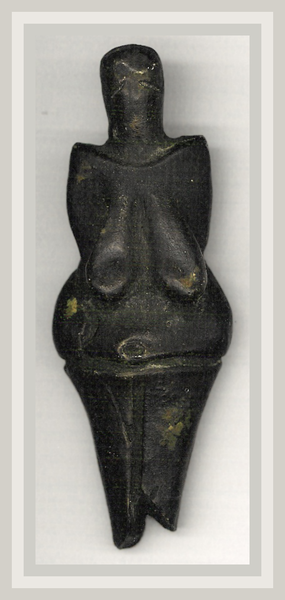
Turning the hands even further back, into prehistory, we find that goddesses seem to have been a natural part of human psyches of antiquity. Few things are as fundamental to human experience as the complementarity of the sexes; why would there be gods without goddesses, and vice versa? Prehistory is excessively difficult to read, existing as it does without written records to interpret artifacts. The discovery of Paleolithic female figurines, however, would seem to suggest that the female divine was a powerful force. The “Venuses” of Willendorf, Hohle Fels, Dolni Vestonice, Tan-Tan, Brassempouy, Galgenberg, Lespugue, Laussel and others demonstrate the acknowledgement of feminine mystery, if not divinity. With the advent of monotheism, one sex would have to accept subordinate status. A sexless divinity is simply too difficult to imagine.

Western religions thus began their descent into the omnipotent masculine. Even the Classical Greeks with their gender-mixed pantheon had to acknowledge the superiority of Zeus. In a monotheistic world, worship of the female divinity became heterodox, heresy, and “pagan.” There it has stayed for millennia, only to reappear in the cults of Mary and other chaste saintesses, clearly beneath the authority of Him. The origins of goddesses? They have been with us from the beginning. The real mystery is not where they came from, but whither have they gone.

Wiki-commons' Venus of Dolni Vestonice


Nebuchadrezzar’s Dream

One of history’s great ironies is that, despite being visually oriented creatures, we often do not know what famous people looked like. The further back in time we go the more difficult the reconstruction is. Ancient people practiced portraiture, although their efforts may have been hampered by stylistic conventions. Egyptian artwork is recognizable at a glance, and Mesopotamian art, with its weightier, angst-laden form is easily distinguished. Their stylized images generally do not allow for direct correlations to Renaissance portraits. When searching for specific individuals, even famous ones, however, the likeness may be completely absent.

Among the most notorious (from a biblical viewpoint) ancient emperors was Nebuchadrezzar. Demonized for his role in the destruction of the sacred temple in Jerusalem, Nebuchadrezzar becomes the hypostasis of Antiochus IV Epiphanes in Daniel and even worse in Christian apocalypticism. For all that, Nebuchadrezzar seems to have been a jolly good fellow. An able emperor, he was noted for his building an empire and the loveliest gardens in Iraq. Yet no images of him survive. They may be out there, buried, waiting to be found, but we do not know what this emperor looked like.

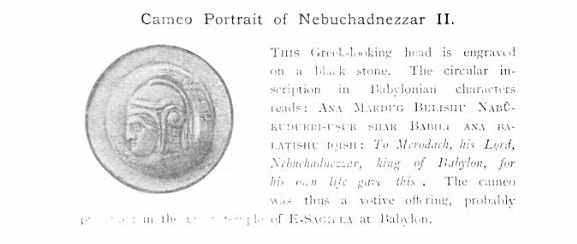
A recent web search nevertheless turned up the clearly Greek version of that famous, if forgotten, face on an onyx cameo. It even appears on Wikipedia’s page for Nebuchadnezzar II as an actual image of the man, the legend; this despite the fact that William Hayes Ward, in the American Journal of Archaeology in 1887, explained how the cameo was an early forgery. Originally an “eye of Nabu,” the proto-cameo was the eye of a statue, the pupil of which was carved by a reconstructionist Greek artisan into what he supposed Nebuchadrezzar looked like – a Greek warrior – centuries after the fact.

From Ball's Light from the East

This might be a simple historical curiosity were it not for the fact that evangelical websites and wikis are quick to claim that this clean-shaven, Olympian-profiled vision of masculinity is an actual image of Nebuchadnezzar. Why? He occurs in the Bible and therefore must be “proved” to have been historical. Not only for the real Chaldean Empire, but also for the fictional one concocted by Daniel. Seeing is believing. While history did not see fit to leave a lasting image of Nebuchadrezzar, evangelical websites will use the tried and true god-of-the-gaps methodology to show us what he actually looked like (not).


Long, Dark Tea Party of the Soul

I remember a time when it was considered bad taste for politicians to utilize their religion to garner votes. Crass and vulgar, it was considered an impropriety not unlike bribery – offering power in exchange for support. Two for tea, and tea for two. Elect me and I’ll make America a Christian nation again, i.e., in my own image. What perhaps bothers me the most about this culture is its deep-rooted arrogance in co-opting history, decorum, even the very imago dei itself. The lie in the service of the truth is a very powerful weapon. When a case is erected on a house of cards, architects must be careful indeed.

A very ancient image for the king was that of the shepherd. This is not surprising since the early kings were not afraid to confess to being gods, and characters like Dumuzi, originally a man, later became divine. And Dumuzi was a shepherd. Sheep are seldom classed among the most intelligent of mammals, being natural followers rather than leaders. When a sheep with the right stuff led the flock, he reserved the right to claim divinity.

The same dynamic is at work in Tea Party mentality. Although the leaders would be swift to deny – the truth is in the denials – that they are anything but humble servants, old ideas die hard. Civilization was built around the idea that leaders got their mojo from on high. Kings were only gods in disguise. Modern politicians are Joe the Plumber in aspect, but Belial under the skin.

Dumuzi leading a follower to a Tea Party?


Go Fish

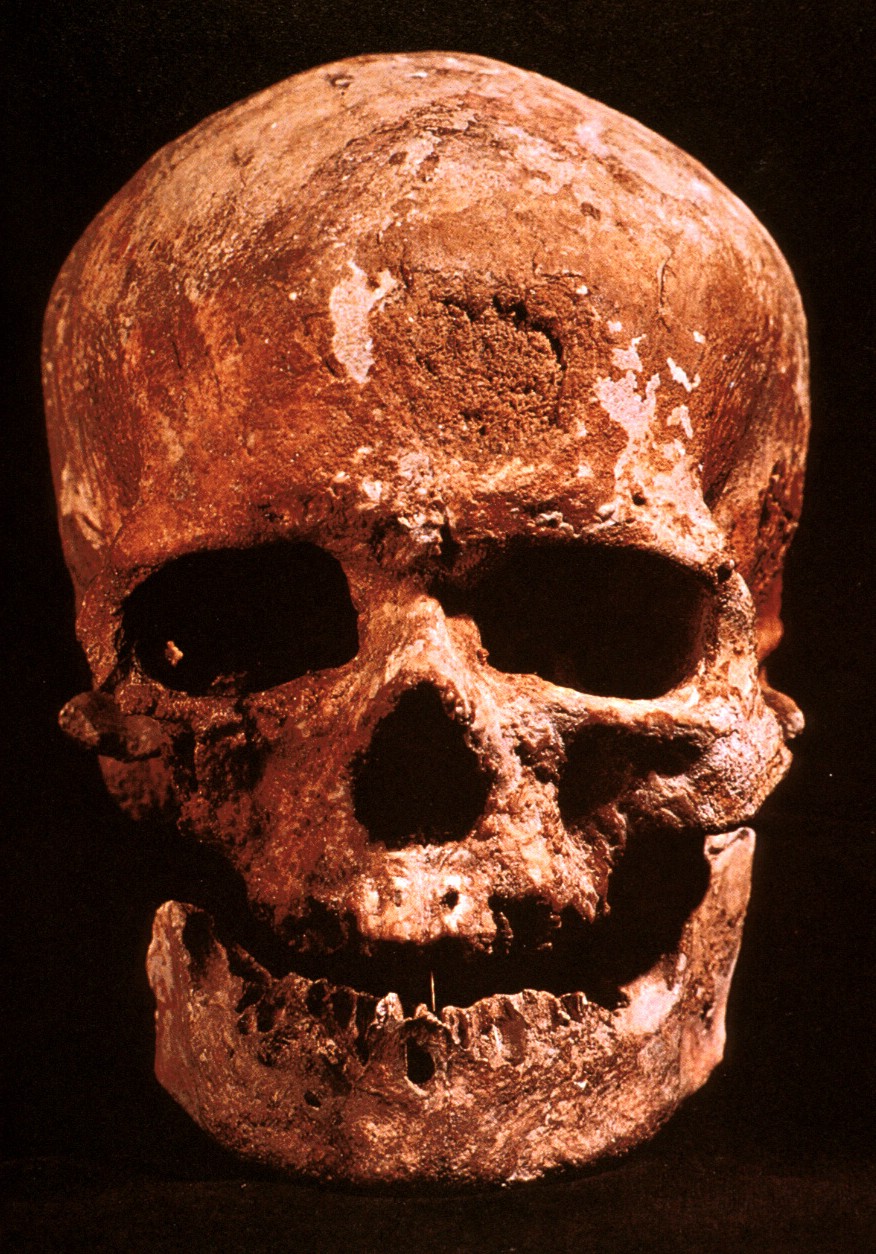
You are what you eat. That trite truism has been kicking around for a few decades now, and although it has been an aphorism to encourage healthy eating it does convey a deeper truth. Scientists working in Africa have determined that the hominid diet of roughly two million years ago led to rapid brain expansion (rapid on an evolutionary scale, of course), according the New Jersey Star-Ledger. Remains found in Kenya, featuring a Rutgers University archaeologist, have indicated a widely varied diet of fish, turtles, and crocodiles among ancient hominids. Apparently these animals provide valuable nutrients for brain development, a somewhat disturbing piece of information for us vegetarians.

The more I have pondered this information, the more it has become evident that the concept of God has undergone considerable evolution. As I have noted several times in the past, religious behavior emerges at the very least in the Paleolithic Era of human development. What those non-literate ancestors thought or believed about “God” is long lost, but it seems to have persisted into modern conceptions of divinity. Belief in supernatural beings is attested world-wide, and therefore is a true human universal. (There are, of course, non-theistic religions and individuals, but all cultures show some measure of belief in the supernatural.)

In those moments when I am free to ponder what this might mean, I wonder about the earliest conceptions of the divine. It seems likely that this being was like a hominid, able to respond in kind to placating gestures on the part of early humans. An abstraction simply doesn’t fit easily into minds focused on the practical aspects of survival without the guidance of professional theologians. That early God was able to, but not obligated to assist our fearful ancestors with the struggles of daily life. That aspect of the divine being has not changed in many millennia. Even today many religious individuals still consume fish, a food approved even for meat-free days, by God himself.

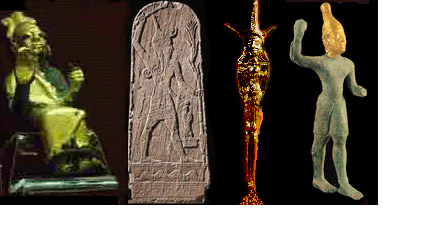
Early images of God?


Seaport Mystic

While at Mystic Seaport yesterday epiphanies of America’s religious life lined up to be encountered. The museum owns the Charles W. Morgan, the last surviving American whaler from the nineteenth century. The connection between whaling and religion is, as I’ve posted about before, Herman Melville’s Moby Dick. Whaling was a barbaric, inhumane business – particularly for the whale – but it had all the justification that BP or Exxon still utilize in the destruction of our oceans: the product is in demand and pockets are very nicely lined indeed. Moby Dick is, however, the story of an inaccessible, at times angry god, who leads to death as easily as enlightenment. The Morgan is dry-docked undergoing extensive restoration, yet is still open to the public. Stooped over in the blubber room, imagining the horrors of the place, Melville was my only comfort that something akin to nobility might have come from whaling.

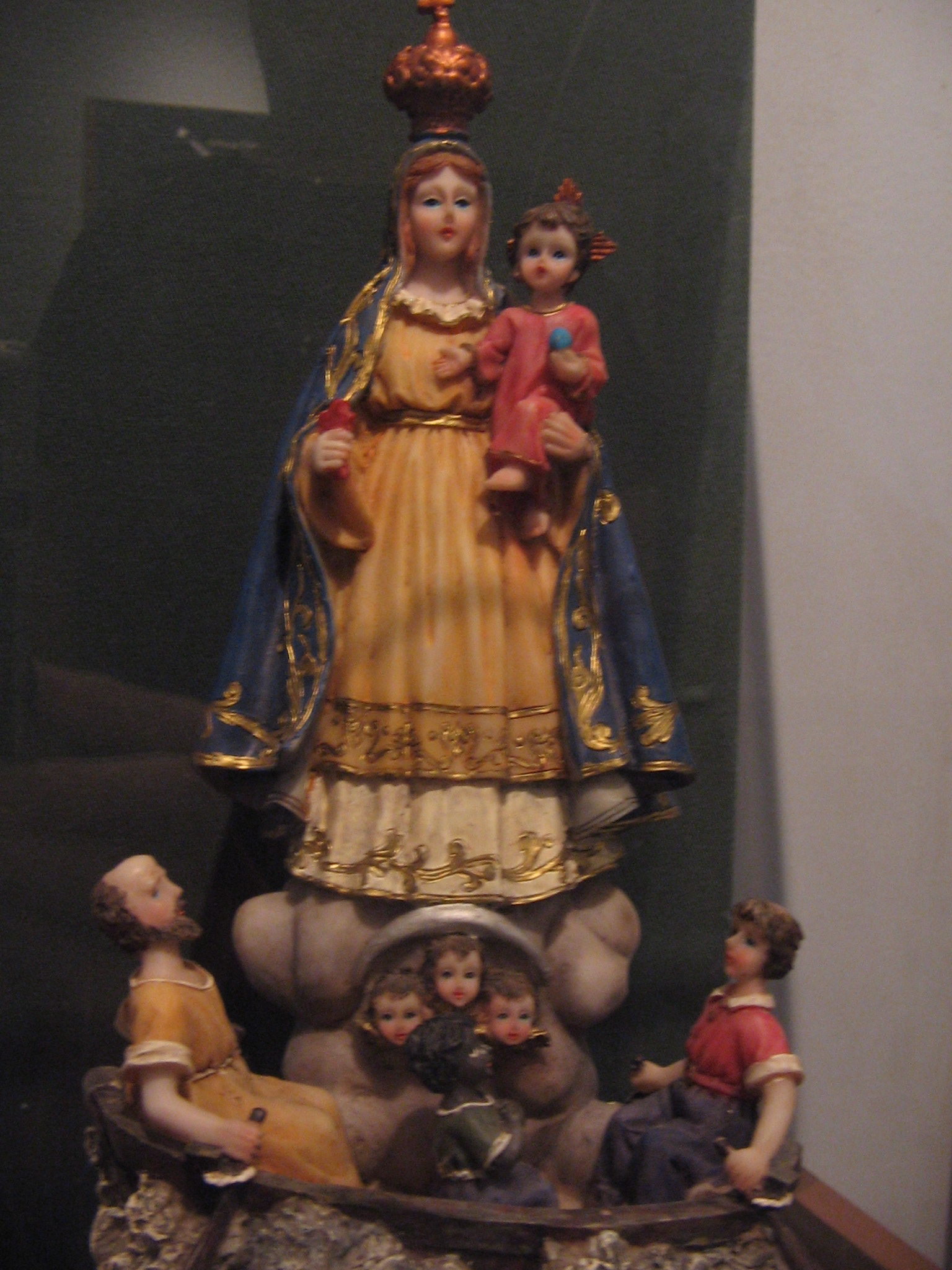
The Seaport also offers an exhibition called “Voyages” – a look at the way the sea has played and continues to play a role in the life of an America that most people associate with a large swath of dry land. The first display tells the story of a family of Cuban immigrants rescued from a tiny fishing boat while trying to get to the United States. A nearby display features Neustra Senora de la Caridad del Cobre. This mythological character is a goddess emerging from the conflation of the Virgin Mary and the African goddess (through the mediation of Santeria) Oshun. The story of the Cuban family associates the origin of this goddess’s concern with seafarers through the chance find of a statue of the Virgin floating at sea near Cuba in 1606. Our Lady of Charity, the Catholic version, is the patron saint of Cuba, and the syncretism of these goddesses has led to a new mythological character on view in Mystic.
Neustra Senora de la Caridad del Cobre

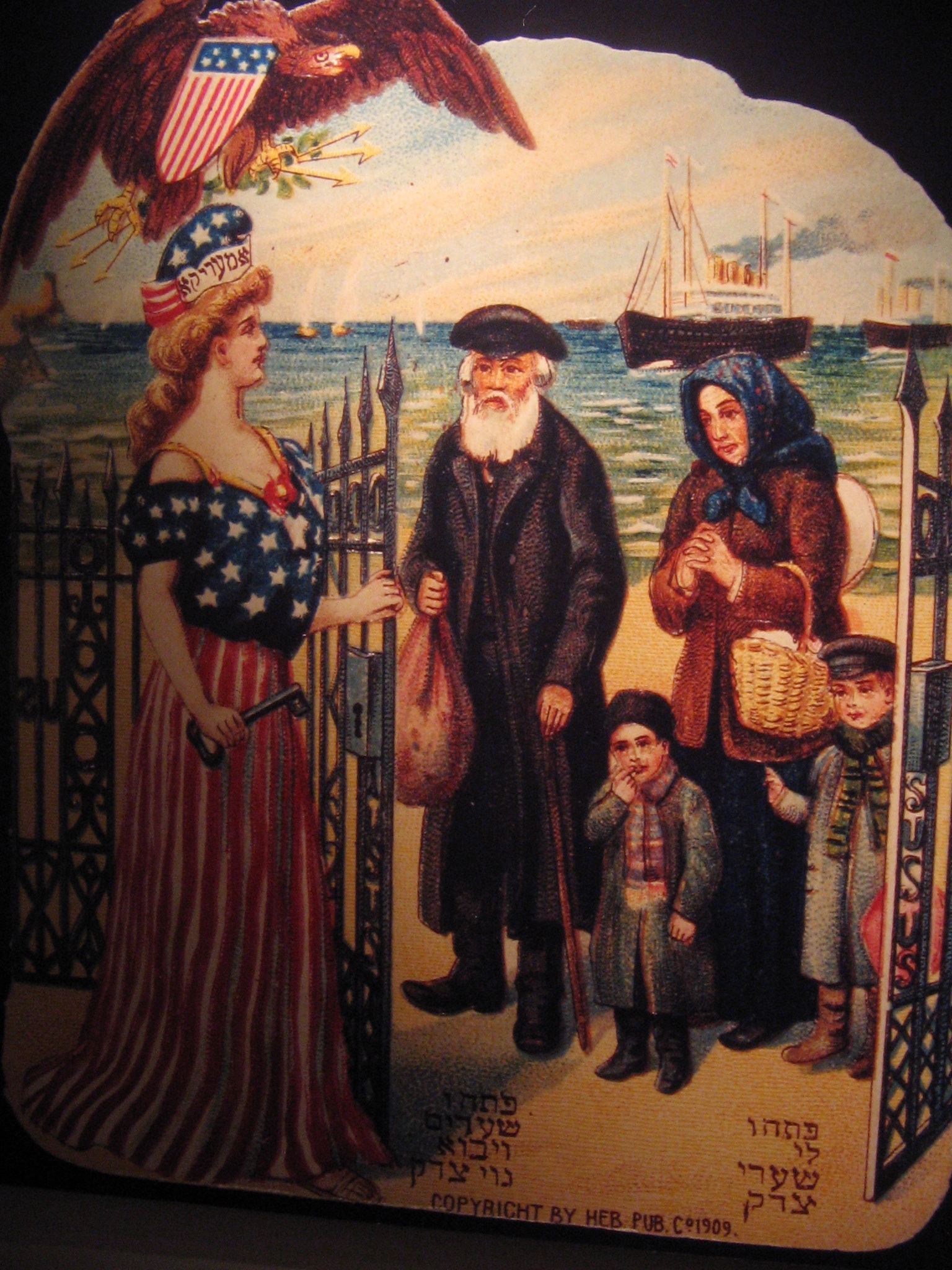
Further along in the same building, in the story of immigration, is the painting shown below. A Jewish family is shown disembarking before a Lady Liberty with “America” written on her crown in Hebrew. The inscription on the sand asks whether the new world has room for the righteous. It is a poignant reminder that acceptance in the United States religious world is often a difficult one. Even today non-Christian religions are viewed with suspicion by many in America. The sea has brought us all together, however, since historically immigration has meant crossing the great waters somehow. One of the gifts of the sea that we are still struggling to grasp is what it means truly to offer freedom of religion to those from far distant outlooks in a world that daily requires less of the gods.


Medusa’s Legacy

Having just finished my Mythology course at Montclair, I’ve picked up a few books to delve once again into a sublimated childhood interest. I was first introduced to Greek mythology back in Mrs. MacAlevy’s fifth-grade class in Rouseville Elementary. The story of Perseus, in particular, has stayed with me ever since. Of course, being taught in serious religion classes that this was all silly nonsense, what with the multiplicity of overly amorous deities whimsically whipping thunderbolts at humanity (everyone knew there was really only a single celibate deity whimsically spreading pestilence among humanity), I drifted away. Mythology continued to be an interest, but the Greek variety went the way of the dodo. The occasional Pauline reference to Artemis fanned the old flames, but just a little. I had more serious religion to comprehend.

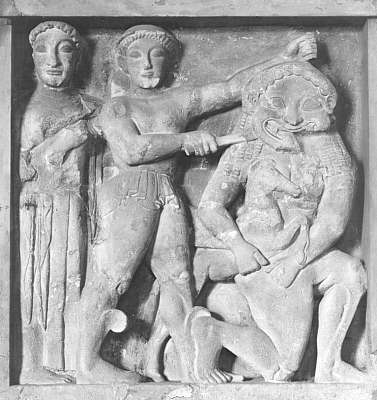
So now, decades later, I find myself needing to catch up on the classics. To rejuvenate my interests, I once again turned to Perseus. My brother and I forked out the extra cash for 3-D to see the remade Clash of the Titans this spring, and I found myself even watching the 1981 version in a Harryhausen-induced haze to refresh my memory. The original movie realized the deficiencies of the classic story on the big screen and embellished shamelessly to wow the critics. One of the most memorable scenes was Perseus in the lair of Medusa. So I found myself reading Stephen Wilk’s Medusa: Solving the Mystery of the Gorgon.

Wilk is a physicist and a member of a prominent optical society. He brings the fresh insights of a non-classics specialist to the story of Medusa (I should know, since I too am a non-classics specialist). This study raised my limited level of awareness in several respects, particularly in the repeated emphasis on eyes in the book. What really struck me the most, however, was how it became clear that Medusa was yet again an embodiment of female power ruthlessly struck down by a virile young man with nothing better to do than slay her. Medusa is the victim in the story, cut down for simply being what she is – a strong female figure. I could not agree with all of Wilk’s assessments, but this provocative book brought many interesting concepts to light.

Medusa, like Lilith, is the symbol of fear for a threatened manhood; women who are true femmes fatale – preying on male pretensions for sport. Until society willingly accords true equality, such figures will remain necessary to remind us that gender should never be the factor by which an individual’s contribution is to be judged. I suspect Mrs. MacAlevy knew something that the Greeks had also realized: repression only increases the ferocity of the repressed.

Perseus asserting the male prerogative


Giving Lilith Her Due

Lilith Fair has announced its 2010 tour dates and excited fans are already purchasing tickets. Lilith Fair is a collection of women artists who share a stage to showcase the female contribution to contemporary music and donate a considerable share to charity. The event name, of course, is taken from the mythological character of Lilith. Popularized as a rare example of “Hebrew myth,” Lilith is a character who likely derives from ancient Mesopotamia, although her origins are obscure. Best known as “Adam’s first wife,” her somewhat sexy story in Judaic tradition evolved into Lilith being the original woman. Unlike Eve she was created simultaneously with Adam. Things were fine until she wanted to be on top during intercourse – males were not made to be dominated, according to patriarchal old Adam, and Lilith ships out to shack up with Satan. She is demonized (literally and figuratively) and becomes the “night hag” that snatches babies and claims the first right of intercourse with every male (an etiology for nocturnal emissions). She becomes the mother of demons.

This story shows all the traits of a late development, but the idea of a strong female figure in Eden is an appealing one. Lilith has come to represent the empowered female, and the modern trend towards accepting her as an icon of feminine independence is apt. Long ago I was intrigued by the female side of the story. Perhaps because I was raised primarily in a single-parent family for my formative years, I have always wondered about the disparity in our “advanced” culture that still considers the male as the “default” model with the female as kind of an adjunct after-thought. This fascination led me to the study of goddesses in the first place, culminating in a doctorate on Asherah. In the Bible men have Adam, Noah, Moses, David, and countless other role-models – even God himself according to standard interpretation. Why not admit the goddess?

It is telling that when Lilith becomes too powerful she is presented as evil. Anthropological explanations have little to offer by way of adequate explanations for such a development. Not to blame biology (or to lay claim to an excuse), but Frans de Waal’s Inner Ape demonstrates that males are hopelessly paranoid about showing weakness. Female primates tend to express their power by group cohesiveness while males try to blunder their way to the top with brute individualism. Adam had nothing to fear from Lilith. To those who perform in Lilith Fair, I only have to say, “Rock on!”


And With Perfect Teeth

This week drug stores across the country will begin offering a testing product that will help assess genetic predispositions to various diseases and weaknesses. Potential parents might learn what debilitating illnesses could plague their children. Who wouldn’t want to eliminate needless suffering and create a world involving less pain and wasting away? Who wouldn’t want to know in advance? Ethicists are up in arms for such knowledge is surely a dangerous thing, just like an overcrowded lifeboat.

Ancient peoples had their own way of dealing with such dilemmas – blame the gods. Disease was not the result of genetic predisposition or even microbes. Illness, plague, pestilence and degeneration were the punishing weapons in the arsenal of ill-tempered deities who didn’t really understand what it was to be mortal. In Ugarit the archer-god Resheph was the divinity who brought pestilence. Shooting from afar with his fiery arrows he could topple cities and nations. Yet few prayers to him are recorded. Better to appeal to a higher power, an outranking deity who might overturn random suffering.

With the loss of many gods comes the loss of the right of appeal. Should the one God be the one who sends disease, to whom can prayers be offered? For many prayers to Jesus or even to Mary are made to circumvent the sad lot poured out upon a destitute humanity by an implacable father. People now recognize genetics and microbes, but still talk to the spirit world about woes and fears. Starting on Friday, however, there will be a product locally available that might provide relief in advance. Who’s willing to take on the gods and give Pathway Genomics a try?


What’s in a Name?

Two of my readers sent me an article yesterday about Lord Jesus Christ, the Massachusetts man who was hit by a car. Lord Jesus survived the brush with death this time. Clearly the angle on this story is the human interest aspect instead of the courtroom precedent or the political scope of its ramifications. In our minds, if we’re honest, we’ll admit that we’ve already come up with a profile for a man named “Lord Jesus Christ.” We’ve already judged him and determined his motives in legally taking such a name. This is a book to be judged by its cover.

From a purely semantic point of view, the victim’s name would probably have more impact with the definite article: The Lord Jesus Christ. As it is, the name differs only in degree from the thousands of Chrises out there, of either gender, or the many Hispanic men named Jesus, or those Anglos with the surname Lord. Not to mention all those Joshuas. Our names are the labels that others immediately use to prejudge us, although mostly our names come from our parents, or sometimes spouses. We are known through life by tags branded on us by parents who have no idea who we will become. As the non-adopted step-son of a second father I changed my name and I know the baggage that goes with such a change. The burden became so great that I reverted to my birth-name after college. I felt like I had been living a lie for much of my youth. What’s in a name?

Our injured man with the newsworthy name has not yet become the savior of the world. Some religious folk are offended by his appellation, yet most of us would be flattered by someone naming their child after us. Why not aim high when it comes to names? If we are to be judged by our verbal moniker, why not select one that states our point of view? With religiously motivated terrorism on the ascendant, however, it gives me pause to think about Lord Jesus Christ being run down. A man was injured here, while crossing the street. It could have been anyone. If it hadn’t been for his epithet, the story would not be national news. More than anything else, this may reveal the significance of the name.

A message from on high?


Thus Spake Zarathustra

Preparing for another round of my annual course on Ancient Near Eastern Religions, I have been brushing up on Zoroastrianism. For this I generally first turn to Mary Boyce’s standard introduction, Zoroastrians: Their Religious Beliefs and Practices. The book was written in the 1980s and is showing its age a bit, but it remains a seminal introduction to a religion whose humble position among world belief systems belies its overwhelming impact. A strange fact about the religion is that many of its main tenets have been summarily dismissed by the more politically influential religions of antiquity while its secondary features have been dramatically embraced. The classic example is dualism.

Zoroastrianism was founded on a dualistic principle: Ahura Mazda was the entirely beneficent, good creator, while Angra Mainyu was the powerful principle of evil. This cosmic struggle tapped deeply into all aspects of life, leading to the beliefs in two afterlife realms (which evolve into Heaven and Hell), two very powerful entities (that become the God versus Satan paradigm), and two dispensations (present age as opposed to future age, the ultimate source of the apocalypse). Indeed, it would be difficult to recognize Christianity without Heaven and Hell, the Devil, or the final judgment. Boyce carefully traces the earliest evidence for Zoroastrianism back to its formative period and offers detailed explanations for each aspect. Beyond this, however, Zoroastrianism became a forgotten faith, an abandoned parent.

It is a fact that religions evolve. Many believers like to trust that they have the straight information directly from the founder’s mouth and that their brand is the authentic brand of faith. All religions, however, if they survive long enough, change to meet the needs of present-day adherents. Again, Zoroastrianism is instructive. Believing in the sacred nature of fire, during the industrial revolution the use of fire for profane work, such as running a steam engine, was considered inappropriate. How were Zoroastrians then to keep up with society without softening their stance on the secular use of fire? The struggle was real and has never been fully resolved. The same exercise could easily be applied to other religions as well. Until the Zoroastrian-inspired apocalypse arrives, religions will have to adjust to continual societal change and accept that quantity of belief does not affect quality.


Holy May Days

The first few weeks of May are peppered with holidays, some religious, some secular. As my regular readers know, I’ve been working on a book about holidays for kids, so I showcase a few pieces on this blog, on occasion. Instead of providing several posts on May’s holidays, I’m combining the first three special days into a holiday compendium for early May.

May Day (May 1) is, in origin, a religious holiday. It is an ancient, pre-Christian Celtic holiday called Beltane, it celebrates fertility, and it is a day that workers throughout the world fight for fair treatment. Sometimes it is associated with Communism. So, where do we begin to unpack all that? To start with, May Day is a cross-quarter day (Groundhog Day and Halloween are two others). Cross-quarter days fall halfway between the solstices and equinoxes – the days that mark the change of seasons. Ancient Europeans believed that cross-quarter days allowed spirits of the dead and other supernatural beings into the human world, as can be seen in the Germanic Walpurgis Night (April 30-May 1). Although named after a saint (Walburga, d. Feb. 25, 779) Walpurgis Night has deep pre-Christian roots in northern Europe. It celebrates the coming of May, or summer, with huge bonfires lit at night. It Germany it was also called Witches’ Night (Hexennacht) because it was believed that witches gathered on Brocken mountain to await the coming of May. The Celtic May 1 is Beltane. For the Celts Beltane marked the start of summer and it was one of their two major holidays (the other comes around Halloween). Like the Germanic tribes, the Celts lit bonfires on Beltane. Druids would light two fires to purify those who would pass between them. In Ireland people would dress their windows and doors with May Boughs and would set up May Bushes. These were signs of the returning fertility of the earth. This tradition survives in parts of the United States in the form of the May Basket. May Baskets are filled with treats and are left at someone’s door. The tradition is to knock and run, but if you get caught, the gift recipient gets to kiss you! These days, however, an unexpected basket at the door is more likely to result in a call to the bomb squad, so let your sweetie know ahead of time if you plan to give a May Basket!

Today is Cinco de Mayo, and like most things Hispanic, it is misunderstood by many Angelos. Frequently Cinco de Mayo is represented as Mexico’s day of independence. What it actually commemorates, however, is a historic battle. Napoleon III’s French Army was in Mexico in 1862. These guys were in the state of Puebla where an outnumbered Mexican force under 33 year-old General Ignacio Zargoza actually beat them on May 5. In the States, Cinco de Mayo is becoming a day to showcase Mexican culture, kind of like St. Patrick’s Day is for Irish culture. The Battle of Puebla is not Mexico’s independence day – that falls on September 16 and often escapes notice in the United States.

And, of course, Sunday is Mother’s Day. People around the world celebrate their mothers at various times of the year, but many don’t realize that this holiday goes back to the ancient Near East. Cybele was an ancient goddess associated with all things motherly. Originally from the Levant, the Greeks and Romans believed her to have been from Turkey (Phrygia). She had a festival day at the vernal equinox. Although there is no direct connection with the date or form of our Mother’s Day, it is possible that this annual recognition of an exceptional mother gave people the idea for Mother’s Day. Whatever it ancient origins may have been, Mother’s Day as we know it started in the United States as a protest against the Civil War. Many women believed war to be wrong. During the Civil War Anna Jarvis organized Mothers’ Work Days (as if they didn’t already have enough to do!) to improve sanitation for both armies. Julia Ward Howe wrote the Mother’s Day Proclamation, which was a document calling for the end of the war. The idea was to unite women in protest and bring the conflict to a close. After the war ended Anna Jarvis’ daughter (who had the same name as her mother) campaigned for a memorial day for women. Because of her efforts, a Mother’s Day was celebrated in Grafton, West Virginia in 1908. After that various states began to observe Mother’s Day, and President Woodrow Wilson made it a national holiday in 1914, ironically the year the First World War began. It is celebrated on the second Sunday in May.

For whatever spirits, political ideals, or goddesses you admire, May is the appropriate time to celebrate.