Books of 2015

Screen Shot 2015-12-28 at 3.38.16 PM

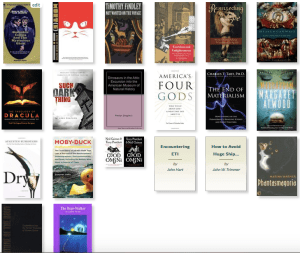
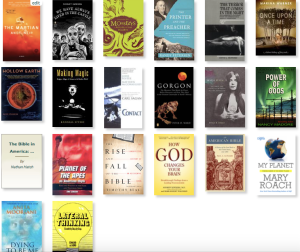
It’s the end of 2015 and looking at my records on Goodreads it looks like I read 100 books this year. That tends to be my goal mark, but after twelve months of reading I like to think back over which were the books that have made the biggest impact on me over the year. Joe Bageant’s Deer Hunting with Jesus remains on the most important list. It is joined by Andrew Newberg’s How God Changes Your Brain, Spencer Wells’ Pandora’s Seed, Alice Dreger’s Galileo’s Middle Finger, and Paul Levy’s Dispelling Wetiko. Bageant, Dreger, and Levy especially address some of the root causes of social ills and even make suggestions about how to address them. Newberg offers advice on how to improve brain functioning and Wells taps into the ever-important issue of care for our planet. I read some good academic titles as well: Diana Walsh Pasulka’s Heaven Can Wait, Darren J. N. Middleton’s Rastifari and the Arts, and Ronald Hutton’s The Triumph of the Moon.

Screen Shot 2015-12-28 at 3.37.33 PM

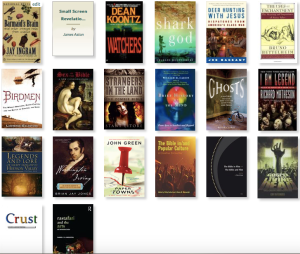
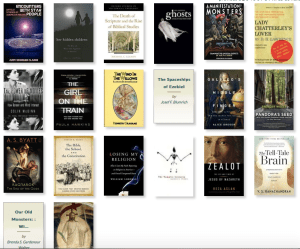
Being a religionist, books with supernatural themes are always of interest. Among these I found intriguing Michael Murphy’s The Future of the Body, David J. Hufford’s The Terror that Comes in the Night, Ardy Sixkiller Clarke’s Encounters with Star People, and Jeannie Banks Thomas’s Putting the Supernatural in Its Place. It seems important to have reasonable people address unconventional issues. These are related to books on monsters, noteworthy among which were: M. Jess Peacock’s Such a Dark Thing, Kim Paffenroth’s Gospel of the Living Dead, Brenda S. Gardenour Walter’s Our Old Monsters, and Lisa Morton’s Ghosts. Long ago I realized that I no longer needed to justify including monsters or the supernatural categorically with religion. They share too many roots to be separated out artificially.

Screen Shot 2015-12-28 at 3.36.54 PM

Finally, it was also a year of novels. Pride of place here goes to Robert Repino’s debut, Mort(e). I am compelled to mention Margaret Atwood’s MaddAddam, John Green’s Paper Towns, Shirley Jackson’s We Have Always Lived in the Castle, and Valerie Martin’s The Ghost of the Mary Celeste. Although I’m not much of a fantasy reader, Tod Davies’ The Lizard Princess has stayed with me since reading it. For any of these books you’ll find an individual blog post from this year. That’s not to say that other books I read weren’t good. Nearly every book I post on Goodreads has a write-up here. I tend to like most books I read, although I’m occasionally disappointed when a book does’t reach its full potential. 2015 was a rich year of reading and I’m looking forward to a very literate 2016.

Screen Shot 2015-12-28 at 3.35.38 PM


Imagine the World

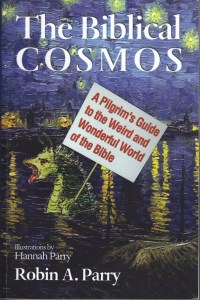
Biblical CosmosRobin A. Parry’s, The Biblical Cosmos: A Pilgrim’s Guide to the Weird and Wonderful World of the Bible is a fun trip through territory already familiar. Familiar, that is, to anyone who has studied the biblical world on its own terms. Fundamentalists, I think, would benefit from taking this guided tour seriously. The fact is, most people have no real sense of how mythology might inform a scientifically inclined world. Not that Parry will convince everyone, but the dangers of literalism are best disarmed by a believer. This little book endeavors to demonstrate just how odd a world produced the Bible we still use today.

Although the point of the book may not be what I took away from it, I would suggest that the most important aspect is that times change.  A biblical worldview, unless one is mentally able to hold two realities simultaneously in mind, is simply not possible today.  I told generations of students that the world described by the Bible does not exist.  It is a flat world, held up by pillars and with a solid bowl inverted over it for a sky.  At the same time, those who lived in the biblical world were not simpletons.  The basics of science were well understood and their engineering capacity easily bypassed that of the current writer.  It was a world based on different assumptions than ours.  The problem occurs when people who know better (i.e., anyone born since about the time of Copernicus) try to pretend that the Bible can be taken literally.  It is disingenuous to say so.  The Bible, regardless of divine status, is a document of its time.  No dinosaurs had been discovered.  The processes of geology were understood only in the most rudimentary of ways.  Stars were not millions of light years away.
 
So what are we supposed to do with this information?  Parry concludes his book by describing ways in which the biblical view of the cosmos might fit, conceptually, into a modern theology.  For many of those starting out in the academic study of the Bible such a demonstration can be quite valuable.  Those who’ve been at it a while will surely have come up with their own systems.  When books become sacred, in the minds of the believing community, the “truth” attributed to the book is the truth of that era.  As any scientist or historian will attest, truth is contingent.  We haven’t learned everything yet.  Given the limitations of the human mind, we likely never will.  We should accept our universe with a little mystery.  Humility can be a good thing, and it is more effective not having to make excuses for what will surely become outdated information sooner than we think.


Think Bigger

PlanetRagesI’ve spent a lot of time with academics. Having been one myself, I know something of their habits. Getting through a doctoral program involves, at least in some fields, becoming the specialist on a very tiny piece of information. Since people have been thinking about things for millennia, finding something new to say can be a challenge. Often, by the time they’re done, newly minted doctors know an incredible amount about a very specialized topic. This is, in many ways, simply an intensification of the human experience. We think small. Part of the problem is that our brains haven’t evolved to think big. Having learned an awful lot about the weather in the book on Psalms, I have instinctively taken an interest in natural disasters. Charles Officer and Jake Page share this interest, as is evident in When the Planet Rages: Natural Disasters, Global Warming, and the Future of the Earth. This, however, is a big idea book. Globally big.

Throughout the first two sections of the book, which deal with humans in the face of nature, God often comes up. As scientist and science writer (respectively) Officer and Page simply reflect common beliefs. Nowhere do they advocate invoking God, but they note that throughout history, in the face of just about any species of natural disaster, people have. Many people still do. Disasters and God. What a team! We worship what we fear. Once Officer and Page reach the third section of human impacts on nature, however, God drops out of the picture and the fingers are pointing solely at us.

When I read about what we’ve already done to this planet, I, as a colleague once said, start seeking another species to join. We have destablized the atmosphere so throughly that it will take at least ten-thousand years to return to it’s pre-Industrial Revolution state. Ten-thousand years. At the same time, the largest industrial pollutor (the United States) has jury-rigged politics so that only the wealthy can attain high office. Votes can be bought and we simply won’t sign the Kyoto Protocol. Those who knowingly doom their children are the smallest thinkers of all. We have changed the course of the biosphere well beyond our share of time, and even those scientist who deny global warming know that it is true. You don’t bite the hand that signs the pay check. After all, specialists have a tendency to be very small thinkers.


Inventing Concepts

A neologism is an invented word. Of course, it is impossible to be certain about the origins of many words, and even the many neologisms attributed to William Shakespeare may have been overheard by the bard at the local pub. Still, one of the things I sometimes dream of is inventing a word that will come into wide circulation. I think it must be easier to do in fiction than in non-fiction writing. When I first wrote my book, Weathering the Psalms, I chose what was, at the time, a neologism for the subtitle. “Meteorotheology” was a word I’d never read or heard before and, quite frankly, I’m not sure how to pronounce. Although the world-wide web existed when the book was written, scholarly resources were still few, and tentative. Amazingly, that has changed very rapidly. Now I’d be at a loss to find most basic information if I were isolated from a wifi hotspot. In any case, the web has revealed that others beat me to it when it comes to meteorotheology.

I suppose that some day, when I have free time, I might go back and see if I can trace the web history of the word. It is used commonly now to refer to God taking out wrath on people through the weather. For example, when the Supreme Court decision on the legality of gay marriage was handed down this summer, there were various websites—more popular than mine!—asking a “meteorotheological” question: when was God going to send a hurricane to punish the United States for its sin? These were, as far as I can tell, all tongue-in-cheek, but there can be no question that some people treat meteorotheology that way. It is a sign of divine wrath. My own use of the word had a wider connotation. When I was invited to present at talk at Rutgers Presbyterian Church in Manhattan a few weekends ago, I was reminded of my line in the book: “To understand the weather is somehow to glimpse the divine.”

That’s an idea I still stand by, but it is difficult to move beyond. What exactly does the weather say about beliefs in the divine? There’s plenty of room for exploring that. I know that when I walk outside to fetch the paper on a clear fall morning when the moon and stars are still out, I know that I’m experiencing a kind of minor theophany. The brilliant blue of a cloudless October sky can transport me to places unlike any other. What exactly it is, I can’t lay a finger on. That’s why I came up with the word meteorotheology. I many not have been the first person to use it. I may even be using it incorrectly. But the weather, in my experience, has many more moods than just anger. Any autumn day is enough to convince me of that.

DSCN6011


Nature of Religion

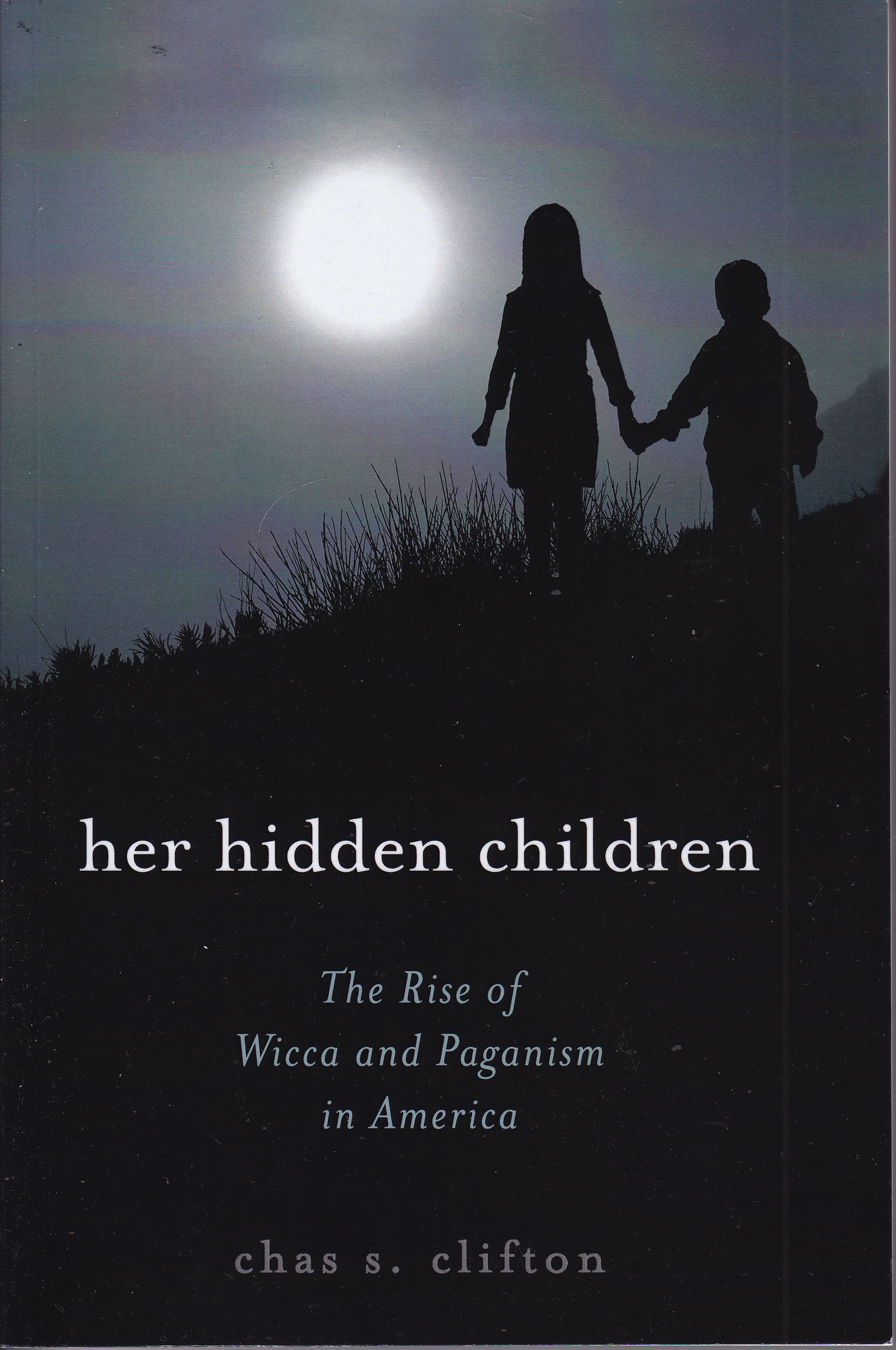
HerHiddenChAutumn is a moody time of year. Dolorous gray skies hang low one day, and the next a sky of such incredible blue stretches unbroken out into space itself. Nights are definitely longer now; I climb onto the bus in the dark in the morning and get off in the dark in the evening. And thinking about nature’s cycles leads me to thinking about nature religions. Wicca has often been presented as a nature religion, but it is somewhat more complex than that. Her Hidden Children: The Rise of Wicca and Paganism in America, by Chas S. Clifton provides a rare academic look at various pagan religions from the inside. Analysts of New Religious Movements have long classified religious witchcraft as a modern religion. Although Gerald Gardener made claims of being initiated into an ancient British coven when he began what was to become Wicca, it is recognized that this claim was unsubstantiated and that Gardener, in true prophetic form, was inventing a new religion.

I’ve read quite a bit about witches over the years, but I’ve always found contemporary paganism somewhat confusing. As Clifton points out, there are many branches of this relatively small religion, and there is no single leader or head of the movement. In fact, various groups, just like Christian groups, seem to splinter fairly easily. Many revival religions exist, also claiming the name pagan. You can join those who worship Egyptian gods or Norse deities. Or those who find nature itself divine. Pantheism, panetheism, or just plain paganism. Religions come in endless varieties. In a world committed to allowing individuals to follow their own religious conscience, there are bound to be varieties of religious experiences.

Clifton offers a brief history of these fairly recent groups. Paganism began to reassert itself only last century. There had been a social stigma with lying outside the territory claimed by church, synagogue or mosque. Many Americans only learned that religions such as Hinduism and Buddhism existed at the very end of the nineteenth century. What most people don’t realize even today is that a large, and increasingly expanding, variety of religious options exist for the seeker. Not all Wiccans see themselves as believers in a nature religion. Not all pagans call themselves Wiccans. Although Clifton makes no claims to an exhaustive tome, which would have to be far larger, he is a helpful guide through many of the groups that have existed over the past decades and some of which continue to this day. By learning about them we learn some basic truths about the very human urge to connect with something larger than ourselves.


Rutgers Presbyterian

It is indeed an honor to be invited to address a church group on topics that matter. While I didn’t directly address global warming in my book, it was in my mind as I wrote it. Early in my teaching career, I wasn’t sure how to cinch up the gap between the lexicography I was attempting and the real world issue that it should address. The seminar portion of yesterday’s program focused on topics associated with the weather, and I was gratified to hear that many of those present felt that a profound weather event had made an emotional impact upon them. Weather has a way of reminding us that we’re small and that forces beyond our control still exist. I’d forgotten how nice it is to while away a few hours with intelligent people who think about the world we all inhabit. I only wish I could have recorded all the wisdom I heard. We tend to think if someone’s not speaking to us from a major media outlet they’re not worth listening to. I am glad to be reminded that this is not so.

IMG_2515

During our discussion of global warming, the question arose as to what we could call “climate change” to make it appropriately terrifying. Various suggestions were made such as poisoning the sky, suffocating the earth, and old-fashioned, and to-the-point air pollution. We are a species that seems bent on its own destruction. The atmosphere is so incredibly large, but, as our host reminded us, so very thin. Life is supported only in what might be considered, in his words, a thousand-story tower. Beyond that, life runs out. We need to take the limited nature of this small envelope of gas surrounding us seriously.

I’ve come to realize that my fascination with the weather largely derives from looking at the sky. Such an activity is so basically human and so profound, that we simply overlook it most of the time. The sky is superior to us. It was, for most of human history, far out of reach. We have stretched our hands up to the realm of the gods and smeared it with our industrial filth. Many of those present, although not Catholic, applauded the Pope’s insistence that the world must be view holistically and that we must stop polluting our home. Pollution used to be an ugly word, but we have been taught to change our language to add ambiguity. “Climate change” is so neutral, with no one to blame. But it’s not at all accurate when it comes to the real costs. We’ve already impacted the weather for a millennium into the future at least. And I, for one, left our session optimistic that intelligent people cared enough to spend a beautiful Saturday afternoon discussing it.


Pontificating

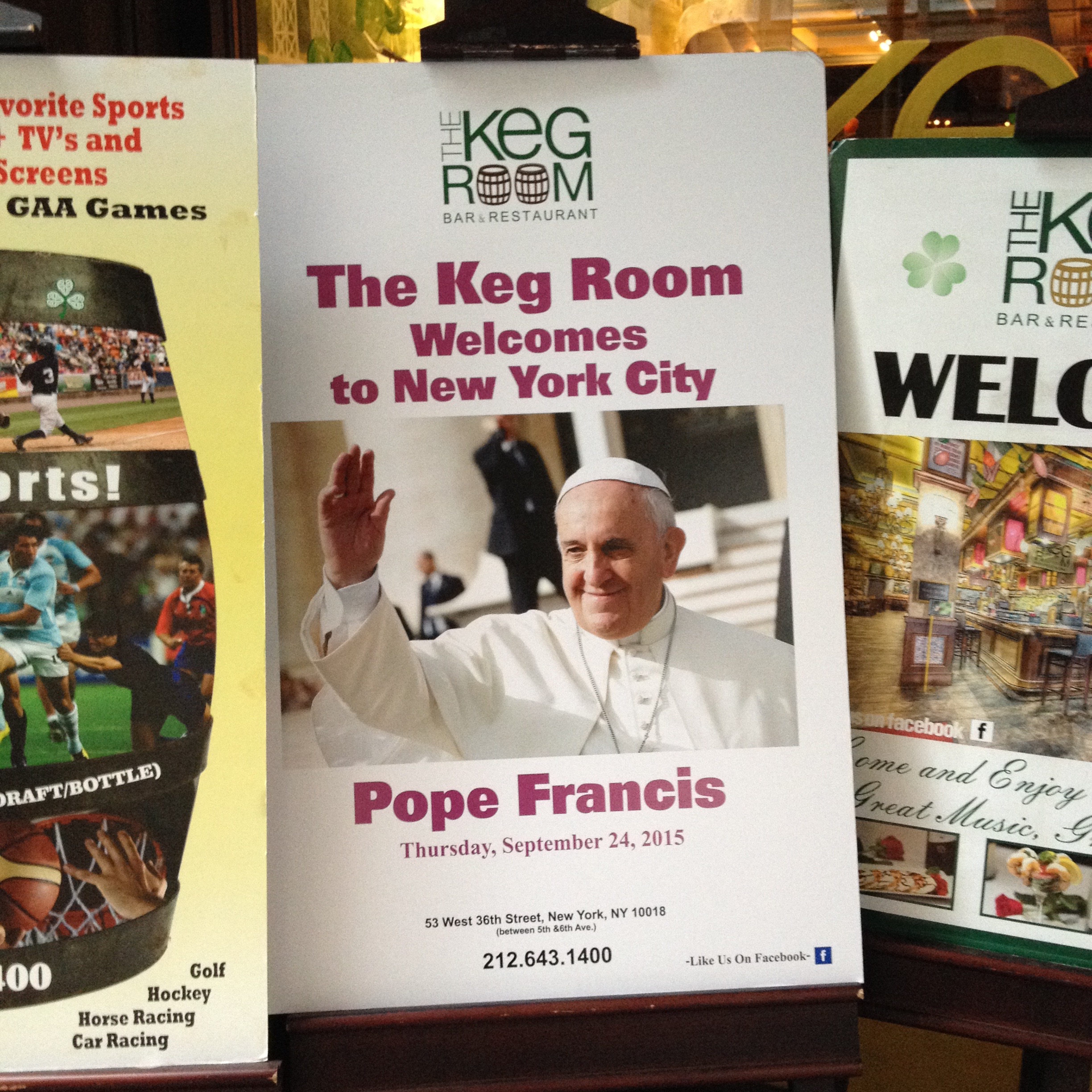
I’ve been in a few New York crowds, but this one seemed on its best behavior. I was in the city later than usual since I’m giving a talk today at a friend’s church in the Upper West Side. My wife came to meet me and, knowing the Pope was going to be saying mass at Madison Square Garden shortly after her train arrived at Penn Station (for out-of-towners, Madison Square Garden sits atop Penn Station) we decided to meet at Herald Square and avoid the other kinds of masses. I walked to the square from work and realized my mistake—34th Street was barricaded and there were crowds already beginning to form. The Pope had a procession through Central Park, but I neglected to check on the remainder of his route. My wife arrived and, taken in by the rush of the moment, decided to stay and see what we could see. We were literally one person back from the road. The police kept saying that they couldn’t confirm he was going to come this way, but the helicopters hovering overhead seemed to tell a different story.

The crowd was so well behaved. No pushing or shoving, and even loud talking was mostly absent. It was, believe it or not, kind of reverent. Sure there were people with placards suggesting that one should get right with Jesus, and the occasional pedestrian saying, and I quote, “Why is there so much people here? The Pope? You’ve got to be kidding—can’t we cross the street?” By and large, however, there was good will. One of my coworkers had emailed during the day saying she’d gone by Saint Patrick’s the night before, but couldn’t see him. The crowd, she commented, was kind spirited. Perhaps that’s what having a kind-spirited Pope will do. After we’d stood for nearly an hour, I was beginning to wonder if the motorcade had taken another route—7th Avenue was closed as well. Then the cheering began.

Pope Francis rode by, the window down, waving at the crowd. My glimpse was only a fragment of a second, but it was clearly him. I’d met an Archbishop of Canterbury or two in my time, but here I was, no more than thirty feet from the Pontiff, if only for a second to two. And it was all pretty much by accident. Life surprises us that way sometimes. Reading his words about climate change to the leaders of the world, I can’t help but think we’ve needed a leader like this man for a long time. He’s as human as the rest of us, and he knows that we have only one world and in that one world are millions of people in need. And global warming will hit them first and hardest. And the God of the evangelicals who say the planet is ours to destroy is not the God he recognizes. He’s just one man, but he is able to bring the largest city in the country to a halt, even if just for a second or two. This could be saying something important for those who have ears.

IMG_2488


Spirit of Nature

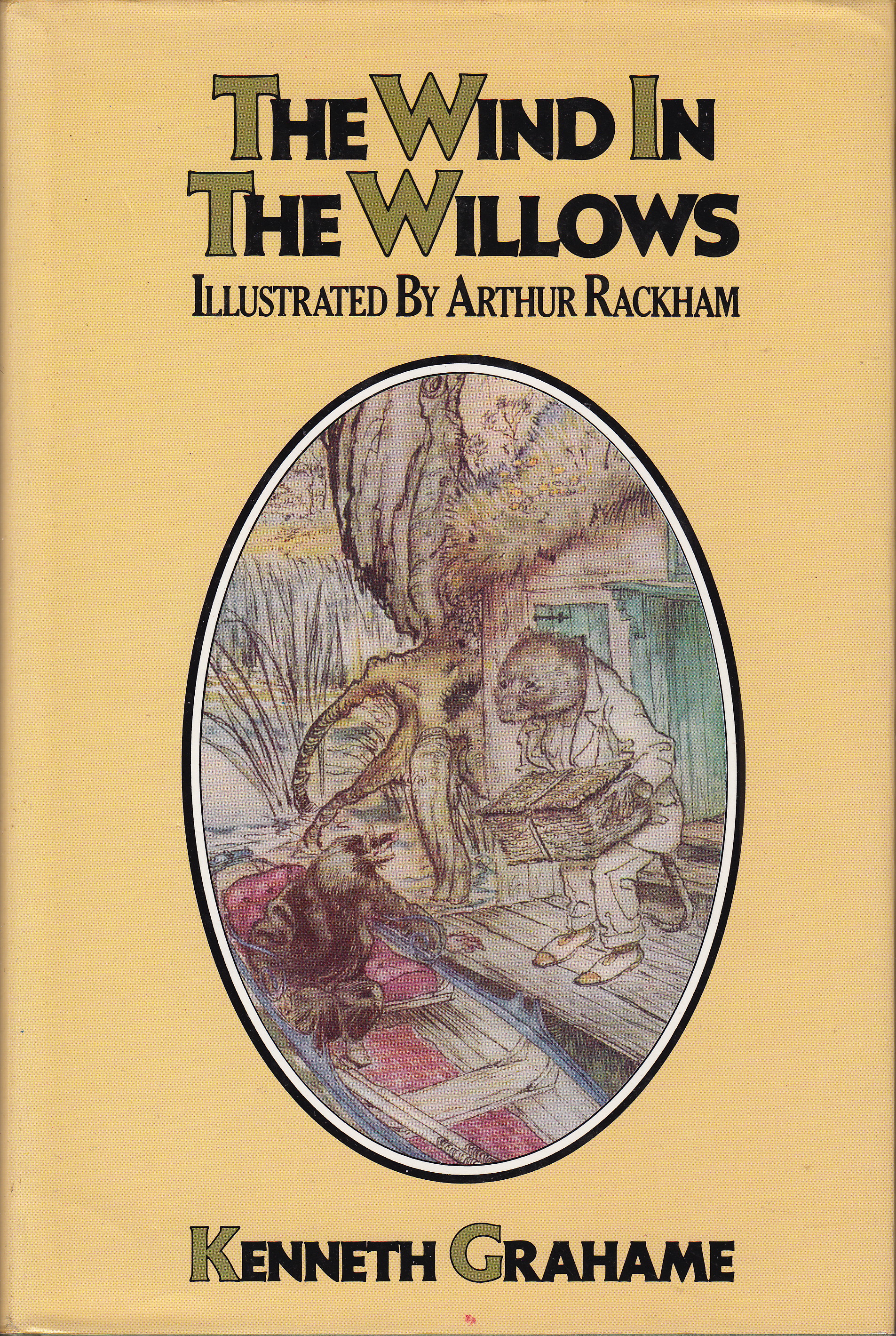
WindInWillowsThe Wind in the Willows, Kenneth Grahame’s children’s classic, was a book I first read during my doctoral studies. In the UK professors are likely to be able to cite A. A. Milne and the fictional bits of C. S. Lewis as well as the current academic stars. Of course I’m over-generalizing. In my experience, however, I met many wonderfully rounded professors and I tried, during my too-brief stint in academia, to emulate them. My wife recently read The Wind in the Willows to our college-aged daughter and me. As I’ve mentioned before, we’ve had an accord for all our married life that I will wash dishes if she will read to me, and we have read well over a hundred books this way, from children’s titles to scholarly tomes. From my perspective, listening to a book read adds a layer of meaning to the text. The cadences, the intonations, and the editorial remarks all lend texture to the experience. I had quite forgotten, as it has been years since I’ve read the book myself, about the mysterious theophany in chapter 7, “The Piper at the Gates of Dawn.”

In a passage that is almost overwritten for today’s youth, Rat and Mole, in search of Otter’s lost son, encounter Him out on the river. The language is reverent, and languid. The two animals come upon a horned deity who is not named, and fall in worship. The fact that he has pan-pipes makes Pan an obvious candidate, but the description also reminds me on this autumnal equinox of Cernunnos, the horned god. The spirit of nature. I feel myself trapped in a world of cubicles and drywall and money. Who wouldn’t fall at the feet of even a pagan deity offering release from such shackles? We have allowed ourselves to be trapped here. We have bought into the system that enslaves us. “There is nothing—absolutely nothing—half so much worth doing than simply messing about in boats.” Rat is my preacher; I am his acolyte.

Nature reminds us that we are evolved creatures and that civilization comes at a great cost. I never feel so alive as when I’m walking in the woods. I don’t pretend that I could survive alone, but having a position that requires growing heavier at a desk day-by-day feels out of sync with what I grew these feet to do and these eyes to see. Manhattan is a wonder, to be sure, but it too comes at great cost. Nashotah House was not a problem-free place, by any stretch, but it was in the woods. The trails on and near campus could restore a soul in the way chapel could never nearly approximate. So it seems appropriate to slip The Wind in the Willows onto my bookshelf next to my Bible, and to slip outdoors for one last untrammeled moment of summer before autumn begins.


Hunter-Gatherers

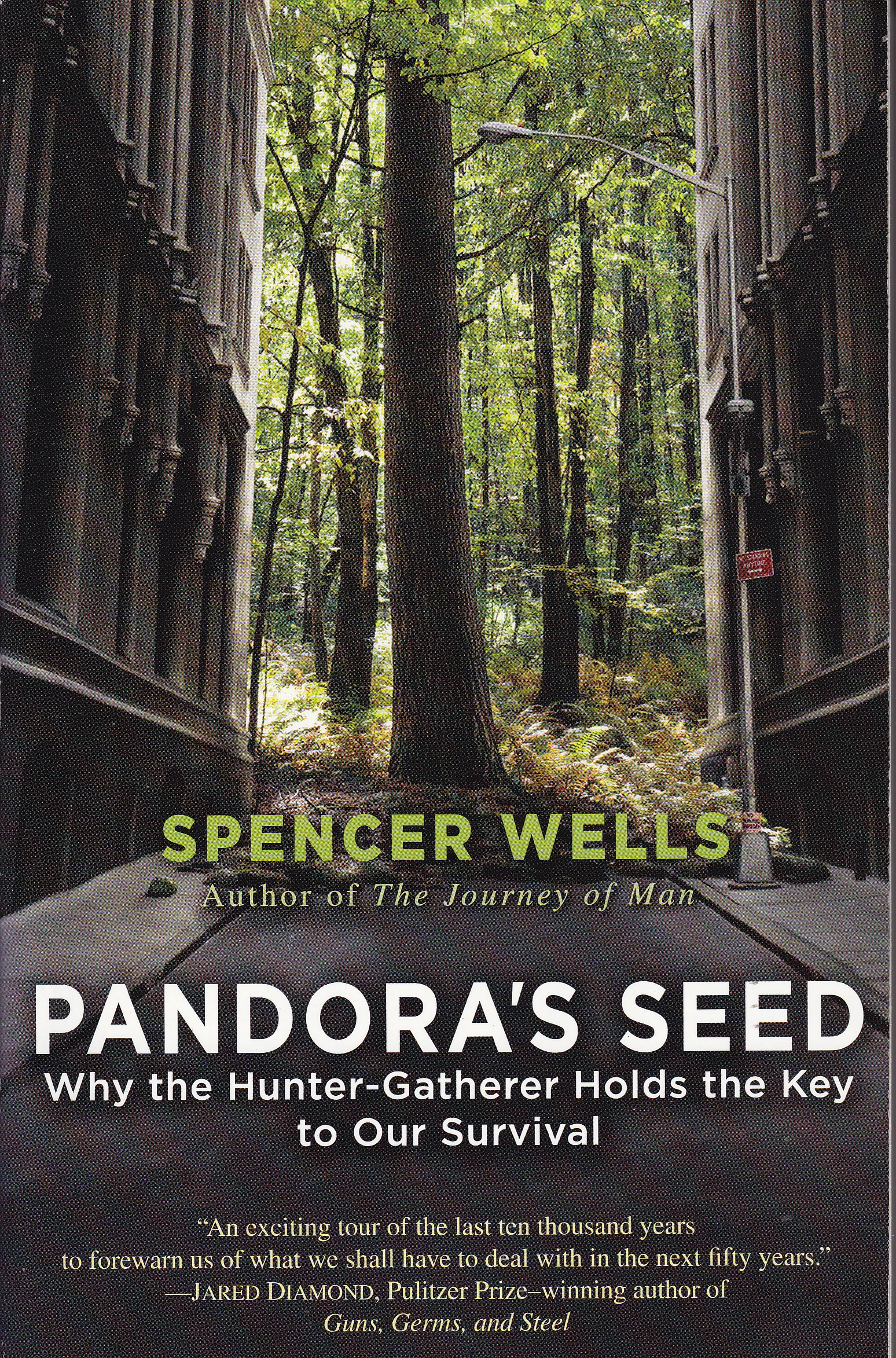
PandorasSeedEvery once in a while I put down my work long enough to look at where we are. It’s often a frightening experience. Not many of us would be equipped to survive the collapse of civilization, despite the many television shows that depict such future anarchy. I suppose that’s why Spencer Wells’ Pandora’s Seed: Why the Hunter-Gatherer Holds the Key to Our Survival was such a compelling book. The more anthropological studies I read, the more clear it becomes that “civilization” has changed us about as much as evolution has. If not more. We have turned into something else, a creature of our own making. Wells demonstrates throughout the pages of this book how, with the first development of agriculture, we began on a track that has made us less healthy, less happy, and more dependent on technology than we have ever been. True, life as hunter-gatherers was never easy. Still, it is telling that they have much more free time than agriculturalists. And, as far as we can tell, they are better-adjusted. They are doing what we evolved to do.

Addressing issues as diverse as from how our diet has changed to genetic engineering, Pandora’s Seed is a wide-ranging and fascinating book. It does show that technology far outraces ethics and our ability to figure out the proper response to complicated questions. We often lack the time to reason things out. And yet, we live in a world where mental illness is set to become the number two natural cause of death within this century. We are profoundly unhappy. We deny climate change although it’s evident all around us. We’ve put into place a global warming that will take a millennium to dissipate even if we stopped using fossil fuels today. We deny that it’s true, we go to dehumanizing jobs, and we eat food that’s not nutritious because it’s the kind we can afford. We lack time and motivation for exercise and disease takes hold. Such a lifestyle even affects our religion.

Tellingly, Wells’ last chapter deals with Fundamentalism. Noting that humans use both logos (logical) and mythos (mystical) thinking for a balanced view of things, fundamentalisms utilize a logos system to try to explain mythos. Violence often ensues. In order to be fully human we have to admit that rationality alone does not solve all our problems, or meet all of our needs. Some of what we require is simply not material. While Wells does not suggest reverting to hunter-gatherer lifestyles, he does suggest that the only solutions to a world of limited material goods (food, fossil fuels, fresh water) that the only way to make civilization sustainable is to learn to want less. Evolution predisposes us to gather more than we need, and certainly, to hear college career counselors talk, we have to want jobs that will bring in more, more, more. The world is becoming smaller, and people are demanding that the greed come to an end. Until that day perhaps the best solution for us all would be to take a walk in the woods and to remind ourselves how we came to be where we are.


Weathering Academia

Come the end of September, I’m scheduled to give a talk at Rutgers Presbyterian Church in New York City. I’m personally very flattered by this because, as it has become clear to me, an academic without a post is mute. I’ve seen colleagues who teach at schools I’ve never heard of consulted by the media—and there is obviously more to it than this—because they have teaching positions. Those of us who used to be professors apparently forgot everything when we take jobs out of necessity. That’s why I’m so flattered. My talk will be on the larger issues behind my book, Weathering the Psalms. I never expected this book to be a bestseller. I knew that it was, in some sense, incomplete. Academic books are the kinds of things you write when you have an academic post. When your day is not programmed with “enter this data, follow up on that book, and when you have time, get other people to write books.” People, of course, with university posts. The rest of us know not whereof we speak.

It’s funny. Back when I was teaching, even if it was only at Nashotah House, I used to be asked to give little talks all the time. It was rare for a year to pass without someone asking me to lead a seminar or share what I’d learned with some august body. That tapered off once I became an adjunct, although a Presbyterian Church in Princeton once invited me to speak because I was teaching at Rutgers (the university). And as I prepare my talk in my free time, I wonder about a society so tied up with name prestige that someone who has something interesting to say is just a crackpot unless a college or university or seminary or think-tank hires them. There are many of us—hundreds, if not thousands—who know as much as our university colleagues about a topic. An individual doesn’t have a name big enough to flash around, so we don’t get asked to share. Keep your hand down and your head down on the desk, please.

IMG_2416

In any case, it has been good for me to come back to the weather and think through some of the larger implications. I’d just had the book declined by a big name academic press when Nashotah House terminated my position. For many years I couldn’t look at the manuscript since it seemed a symbol of my failure. No, the book isn’t everything that it could be, but there is some good information there. The larger implications are actually of some importance here. The weather is studied both by science and by religion. Both understand aspects of it that the other misses. I’m looking forward to exploring this with the good folks of Rutgers Presbyterian who were kind enough to invite a guy with nothing more than a book and an obscure name to come and talk about something that most academic colleagues just don’t notice.


To Whom It May Concern

Everything we do is an investment in the future. Some times it’s intentional, and other times it’s purely accidental. My wife sent me a CNN story about what might be the oldest message in a bottle ever found. It’s difficult to conceive an idea more romantic than the lonely castaway throwing a message in a bottle into the sea, hoping for rescue. The size of the oceans make any such chance qualitatively smaller than the smallest possible needle in the largest possible haystack. The sheer volume of the oceans is among the most mind-boggling quantities on earth. The chances of finding a single bottle in the blue is practically nil. Still, the message in the bottle is an investment in the future. We hope it will be found, despite the odds.

This particular bottle, although of some scientific value, is the least of the romantic kind. George Parker Bidder III, a third-generation scientist, dropped about a thousand bottles into the sea to study deep ocean currents. This was more than a century ago. Those finding the bottles were instructed to send the message back to Bidder, now long dead, so that he might enter the data in his notes. Bidder died in 1954, and one of his bottles was just recently found in Germany. Here is a case of a man writing to himself beyond the grave. Could he ever have imagined that six decades after his death a sample of his work would be found? For those who’ve labored only to be forgotten in their own lifetimes, this is like finding a genie in a bottle. We want to believe our lives have made a difference. For most of us, we go through our daily chores never really sure that any more than a handful of people care, and most of them only care if it is earning something for the company. Others stand on the shore and throw bottles into the sea.

The Bible has positive words to say about casting your bread upon the waters. Indeed, it will come back to you, we’re told, in a time of need. This is a metaphor, of course. It is all about investing in the future. When it comes to money, this doesn’t often work. Some people are fortunate in their investments, but many are not. Bidder wanted to know about deep water currents. This bottle would have told him something about them, but he isn’t here to receive the news. Instead he is being heralded as someone who deserves to be in the Guinness Book of World Records. Maybe not a scientist’s first choice of memorials, but an investment is an investment. More people will read about world records than will ever find a message in a bottle, no matter how metaphorical.

Casting bread on the water, New York style

Casting bread on the water, New York style


Eternal Huckleberries

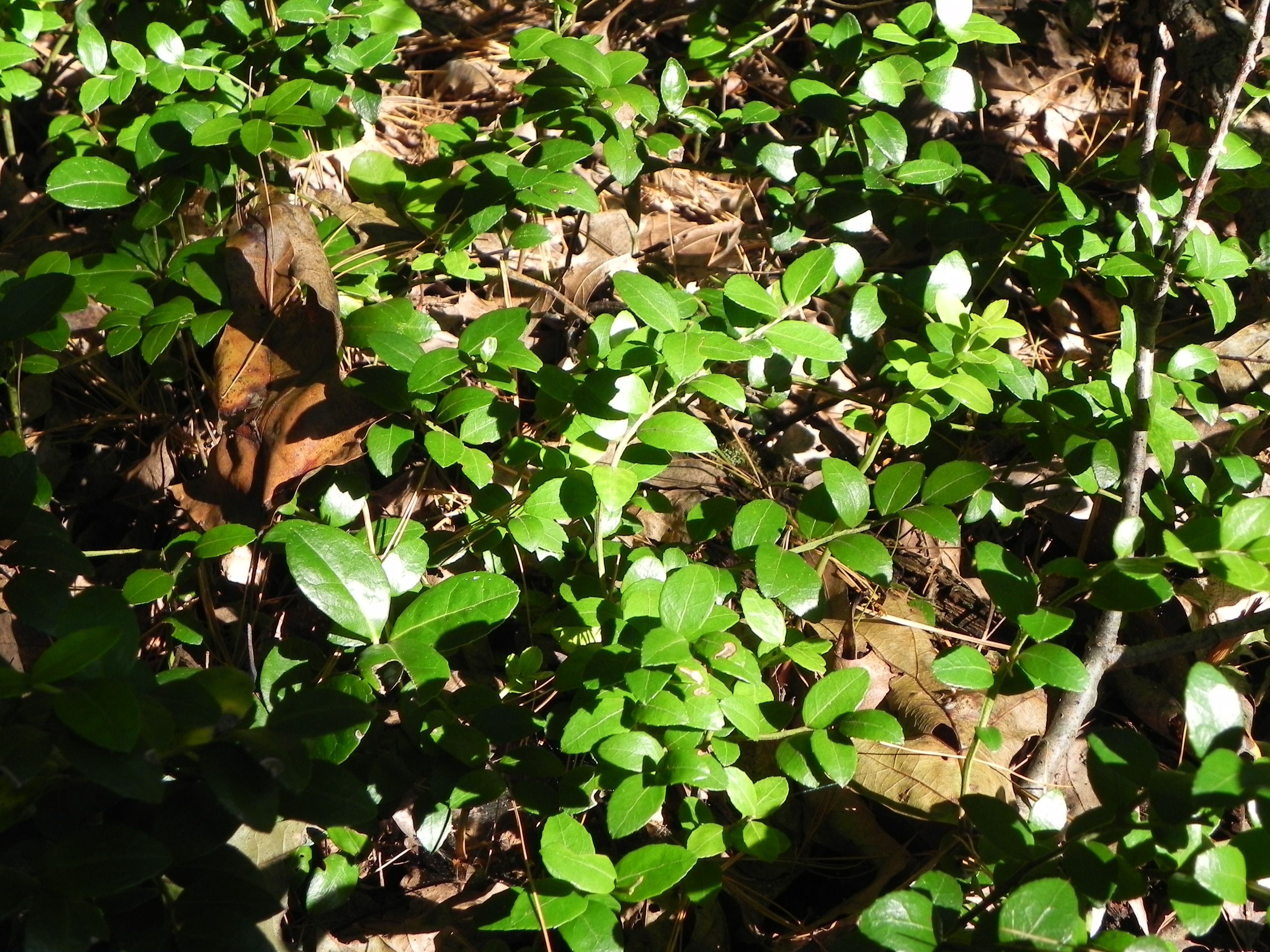
It began as a quest for immortality. Sometimes, however, you don’t recognize something even when it’s all around you. As an historian of religion, the quest for immortality is a familiar one. Certainly the ancient Egyptians believed they had found the keys, at least for royalty, and most religions haven’t given up trying since then. Some clonal plants have achieved extreme longevity. Since they grow by extending their roots, rather than by sexual reproduction, a single plant can remain alive as long at, at least 8,000 years. The specific plant to which I’m referring is the box huckleberry. I first learned to pick huckleberries for food in the Pacific Northwest. In that part of the country, I’ve learned to identify the plant from a distance and have spent many contented hours picking berries. Time, however, is something always endangered for those of us aware of its passing.

The box huckleberry colony in the Hoverter and Sholl Box Huckleberry Natural Area in Pennsylvania is about 1,300 years old. Summer is waning and my family wanted to see it. Indeed, for this particular colony, development probably destroyed parts of the system and so it has to be preserved. With that strange east-coast worldview, “just over there in Pennsylvania” comes to mean things are closer together in the imagination than they really are. Driving three hours just to see a huckleberry colony became more appealing when we combined it with the idea of visiting the National Watch and Clock Museum in Columbia, Pennsylvania. Both concepts were obviously related to the theme of time. They aren’t quite as close together as they look on a map. Map, after all, we are told, is not territory. The museum exists in a fixed location marked by a street address, so we went there first. There will be plenty to write about that later. As, ironically, we didn’t allow as much time as we should have for the museum, we had to head out further west and north to find the elusive huckleberry. All we had were the GSP coordinates and the name of a local town.

From the length of the line of cars behind me, the locals preferred to travel faster. Knowing only the relative direction and an approximate mile count, we stumbled upon Huckleberry Road and knew we must be close. Off into the woods we drove. As onetime manic geocachers, we had learned to both trust and distrust a GPS, but there was a trail head out here and a single parking spot. No one else was around. The signed indicated we were in the right place, but where were these ancient huckleberries? The ones we generally harvest grow knee-to-waste high with distinctive leaves. We walked the entire nature trail in frustration. How could a 1,300 year-old plant hide so well? Frustrated, we went back to the start. Fortunately, there were brochures. We found the box huckleberries. Indeed, they had been all along the trail, but we didn’t know what we were seeking. Just a few inches high, they cover the ground like a carpet. A few ripe berries poked through. We were in the presence of an entity that was older than Beowulf. Indeed, in the Middle Ages, this plant had been alive. Without the guide we’d never have realized we were standing in the midst of a kind of immortality.

DSCN5969


All’s Fair

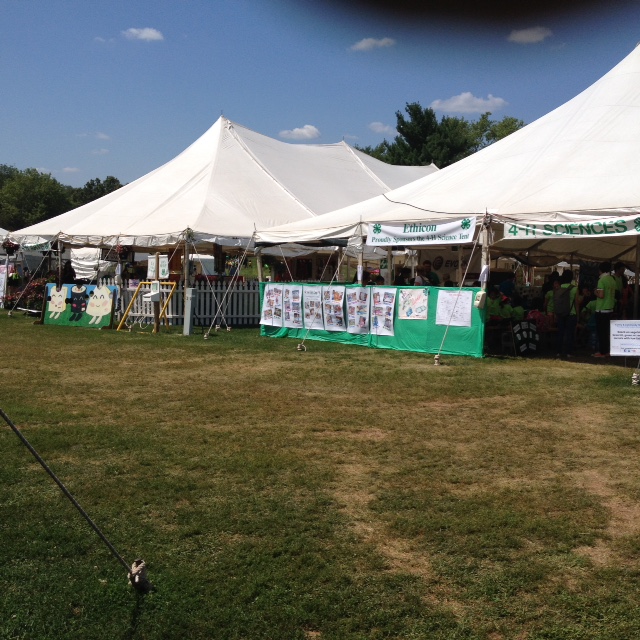
The county fair is an institution that tastes like a real slice of Americana. My family’s been involved with our 4-H Fair for several years now. Long days sitting under tents in the August heat, showcasing to young people that a good time can be had without the usual kinds of diversions that lead to regrets and tattered dreams. For many kids the fair will be as close as they ever get to a cow, goat, or chicken. For the less rurally inclined, there are pets like cats, dogs, and small animals. For others there are model trains, rockets, and airplanes. Increasingly robots and more current forms of art such as steampunk and film-making are appearing. In short, there’s pretty much something for everybody there. I know that my entire family has benefited from the experience. I didn’t know about 4-H as a child, so this has been a pleasant awakening for me.

IMG_2408 copy

As I wondered the fairgrounds, something that I suppose I’ve noticed before hit me with a new clarity. The Arts and Sciences tents are right next to one another, and these represent the classic forms of liberal arts education. Yes, the Gideons and Right-to-Lifers are here, but they’re over in the commercial tent. They’re selling something. Education—true education—is free. Those who grow up on farms can learn an awful lot about science by watching animals. The more formal schooling, however, asks for deeper engagement. Creative writing helps to explore ideas that simply don’t flow in conversation. Photography forces you to look at something from someone else’s point of view. Science teaches close observation and practical extrapolation. This is like a little university set up in a grassy field with a very affordable tuition.

The old hiker’s mantra goes “take nothing but pictures, leave nothing but footprints.” This year there was a real emphasis on footprints. The kinds of footprints that many clubs chose, however, were carbon. Many adults have grown up in a culture of consumption and disposal. Our young are now trying to demonstrate for us the errors of our ways. Sure, there are resources to last for centuries yet, but they will not last forever. Who are we to suppose it is our right to take what we please and leave the mess for our young to clean up? A day at the fair always renews my sense of hope. These are all volunteers here, giving up the latter part of their summer to try to make the world a better place. Perhaps the ethics should come up from the young, rather than descending from generations that have put their own wants ahead of those who might truly make a difference.


Last Chance to Sea

I wasn’t brave enough to don swimming trunks in front of academic colleagues and climb into the Dead Sea. Instead, I dipped a finger in an touched it to my tongue. I’m not sure if it was the bromides or some other toxic minerals, but I immediately wretched and knew that I wouldn’t be putting any Dead Sea salt on my chips. Years later, for comparison, I tried a bit of the Great Salt Lake. Disappointing, to say the least. Already by the time I’d visited the Dead Sea it was dying further. In a recent article on NBC entitled “Thousands of Sinkholes Threaten Dead Sea’s Tourism Industry,” the fate of a sea already dead grows even worse. Water is always an issue in dry climates, and the only real source for renewing Dead Sea water is the Jordan River, which is being dammed and used for human purposes, robbing the Dead Sea of its renewal. The sinkholes are a result of underground salt deposits being dissolved by fresh water as the salty matrix gets siphoned away for industrial chemical farming. Dead Sea levels have dropped 100 feet since 1980.

The Dead Sea is one of the most striking regions on the planet. It is as far as you can go below sea level and still be on dry ground (at least on the shore, that is). The air smells like sulphur and the thickness of the atmosphere at that depth protects you from the sun’s rays, despite the heat. The water is so saline that only bacteria can live there. (The article, ironically, states, “it is very difficult for animals and plants to thrive there.”) By comparison the Great Salt Lake is practically drinking water. Famously, people are unable to sink in the Dead Sea, as its salt enhances buoyancy, so that you can read a newspaper while floating on your back. Like most natural wonders, humans are destroying it. The sinkholes are prophetic, I fear.

363px-Dead_Sea_Galilee

Great evaporating beds line parts of the Dead Sea shore where minerals can be obtained without having to dig into the earth. You can buy some as cosmetics at the local mall. These mineral salts are what make the Dead Sea what it is. And it is shrinking. Satellite imagery of the Sea can bring salty tears to my eye. We’ve slowed the flow of Niagara Falls, and we’ve begun melting our polar caps. Even so, we can’t get enough water to sustain our lifestyle. It has been said that the next major war will not be over oil, but water. Even a glance at California can make me thirsty. In a rare show of cooperation, Israel, Jordan, and the Palestinian Authority are building a pipeline to bring Red Sea water into the shrinking Dead Sea. I hope that this might bode well for the future in the region. Although there is no love lost between these neighbors, they all realize that something unique lies on their border, and when it’s gone it will be a loss to the entire world. That is the real Sodom and Gomorrah.


The Reign of Rain

I’m on vacation for a week. My job is such that taking vacation is becoming a rare commodity, what with precious few allotted days and move-in, move-out schedules of a collegiate child, and so on. And also company policy about keeping employees in the office between Christmas and New Year. Anyway, now that I’m here I should be kicking back and enjoying the beautiful lake and getting out to do the things inmates of the city seldom do. It has, however, rained every day that I’ve been here. Not all-day rains, of course, but just enough that plans have to be interrupted or changed at the last minute. I end up sitting in the cabin playing Solitaire when I should be out getting some fresh air. So it goes.
Ironically, I am staying in the drought-stricken west. The western United States, I learned when researching for Weathering the Psalms, has been ensconced in a decades’ long drought. In fact, prior to my family trip here it hadn’t rained in quite a while. Our arrival with the clouds was, after all, mere coincidence. Still, it’s hard not to take the weather personally. I know that the weather is larger than any one person’s needs or desires. I also know that water is a commodity even rarer than vacation days, largely because of our misuse of the limited supply that we have. California’s plight has been in the news. We have large cities in water-challenged environments and people treat water like there’s no end to its abundance while the opposite is the case. Just thinking about it makes me thirsty.
There are many things a person can go without, some of which feel absolutely essential at the time. Many vacations, I know, are extravagant. Fancy hotels, high-priced entertainment, exotic locations. Work can feel so crushing that vacation my become the one island of sanity in the midst of a hostile ocean of obligation. For me, vacation is time with family in a stripped-down, natural setting. Of course, we do indulge in some of the comforts of home, but having nothing in view outside the window beyond that which nature dictates is a transcendent experience. From where I sit, I can see nothing of human artifice. I do see clouds, however. I know that more rain is on the way. And I know that it is a gift, complain as we might, of the highest magnitude.