Summer of Frankenstein

Two centuries can make an enormous difference. Just two-hundred years ago Napoleon’s defeat at Waterloo was merely one year in the past. North America and parts of Europe were experiencing “the year without a summer.” Perhaps due to that cool and rainy summer, when Mary Godwin and Percy Bysshe Shelley called on their friend Lord Byron, their thoughts turned to ghosts. According to the legend, together with Byron’s personal physician John Polidori, the friends spent a night writing scary stories. Polidori, although not widely remembered today, invented the vampire that would, in Bram Stoker’s hands, become the aristocratic Dracula, and eventually, with Anne Rice’s influence, Lestat, Louis, and Armand. Mary Godwin, soon to be Shelley, gave birth to perhaps the most successful of new monsters ever created—that of Victor Frankenstein’s construction. Many have claimed the monster’s pedigree to have been that of the golem, but Shelley’s creativity went beyond this forebear into the sympathetic misfit who, like all of us, never asked to be born. The two centuries since that summer have been haunted.

477px-Frankenstein's_monster_(Boris_Karloff)

Quite apart from the monster tale, Frankenstein is also about building that which we, in our hubris, can’t understand. Progress without forethought, as Epimetheus could never learn, housed immediate and very real dangers. The two centuries since Frankenstein have proven Mary Shelley a prophet. An early supporter of women’s equality, she profited from her novel, but never managed to thrive. Just six years later her famous future husband would die tragically in the Romantic genre of a shipwreck. Even with important friends, Mary found it difficult to capitalize on her success. The monster was real enough.

We’ve become accustomed to making things we can’t control. When’s the last time you were able to fix a car broken down by the road, apart from the occasional flat tire? Can you really stop your job from becoming completely different from what you signed up to do? What about when that bully wanders from the playground into the political field? Once you’ve figured out how to split an atom, you never forget. It may have been Napoleon still recently in the news, or the fact that 1816 failed to warm up like it was expected after the solstice. Perhaps it was the fact that Mary Godwin was a liberated woman in a world still utterly determined by men. We can’t know her intimate and ultimate reasons for creating a monster, but we do know that once the monster is unleashed we can never bind it again.


Insane Deities

GodsMustBeCrazyIt was 1987. I was in Israel for a good part of the summer excavating at Tel Dor. Between degrees and trying what to do with my life, like many people, I sought out a holy place. One evening while I was there, the locals (I can’t recall if it was the dig coordinators or the local community) sponsored a public showing of The Gods Must Be Crazy. The movie was fairly recent then, and it was the first and only time I’ve seen a movie captioned in Hebrew. I had a seminary friend who often showed me movies at his place, but this was one I had somehow missed, even though it came out when I was in high school. I’ve seen the movie several times since then, but not in the past seven years or so (this blog is a pretty good record of my movie viewing as well as book reading). This weekend we dusted it off and popped it into the DVD player and I noticed a few things for the first time.

Spoiler alert: not for the movie, but for reality. The portrayal of the bushmen in the movie is pure verisimilitude. While living much more in harmony with nature than modern, industrial late capitalists, they are not a completely peaceful people with no violence. We can overlook the “noble savage” viewpoint for the sake of entertainment, but anyone who researches human cultures closely finds that the perfect society doesn’t actually exist. Still, what I noticed in the movie diegesis was the bushmen had no need of theodicy. Theirs was a world where the gods gave them only good. The Coke bottle becomes their “tree of knowledge,” to put a Judeo-Christian spin on it, and they even use it for curing snake skins. The movie doesn’t work, of course, without this fictional view, but in reality all believing people require a theodicy.

Our particular disc of this movie has a less-than-dynamic special feature of someone who never identifies himself following up on the movie. This rambling, twenty-minute featurette shows “current” (for it must be a decade old by now itself) developments among the bushmen. Two hundred miles from the nearest electrical grid, schools are being equipped with solar panels so that the children can learn about computers. A laptop in the middle of the Kalahari. As I reflected on the loss of innocence theme, this struck me as surely as an angry serpent. The world in which we live allows for only one way of existing. It is a world of money where even the self-sufficient must be wired into the matrix. If ever there was a need for theodicy, this was surely it.


Human, Nature

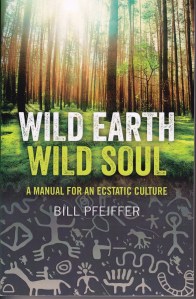
Wild EarthSomeone recently told me that a city blocks a certain vibration that people draw from contact with the earth. I know that vibration often sets off “new age” alarms, but this person was rational, scientific, and had grown up in New York City. I grew up in a town on the edge of the woods. We didn’t live on concrete. In fact, the floor of our shack was so thin in some places that you could see the actual soil underneath. Even our driveway was gravel. Although it was a dysfunctional family, I felt more connected to my planet back then. Wild Earth, Wild Soul: A Manual for Ecstatic Culture, by Bill Pfeiffer, is just what it says. It’s a manual for how to get back in touch with nature. Basing his ideas on those of indigenous cultures world-wide, with a healthy dose of shamanism, he explores the vibrations of the earth. I had, at times, to force myself to listen. He’s right about so much that I stayed with the narrative to the end.

Civilization comes with a price tag. A very high price tag. The rates have been set by a small group of “progressives” who operate with the idea—mistaken—that all nature is a machine. Physics, they claim, and chemistry, show that all of life is mathematical. Nothing in the universe doesn’t add up. But biology, as Pfeiffer repeatedly shows, often doesn’t. The mistake is as fundamental as it is reductionistic. Life isn’t quantifiable. Biology messes up the nice, neat system we’ve invented. Indigenous peoples, while not idealized, lived in much better harmony with the land, not over-exploiting. It was a sustainable existence. What “civilized” people wanted was more. More of everything. A surplus, in fact. Without that surplus there is no business, right? Capitalize on that!

We’ve lost touch with nature. Our “leaders” want to exploit it. Mine it, refine it, and make it “useful.” When’s the last time I looked at a tree just to appreciate it as nature? Civilization can’t envision a tree without an axe. If it grew it can be improved. Even our food has to be genetically modified because obviously nature can’t make a profit on its own. No, Wild Earth, Wild Soul hasn’t made the impact on the world it might have. I’d never have found it if it weren’t for a used book sale. That doesn’t mean, however, that it isn’t right. We need to dismantle. We are not electronic devices, as much as the internet tells you otherwise. I knew that as a child. And as my feet ache from walking over acres of concrete on my way to “work” I know it’s true. There are indeed good vibrations out there, but here they’re too deep under my feet to feel.


Moving Mountains

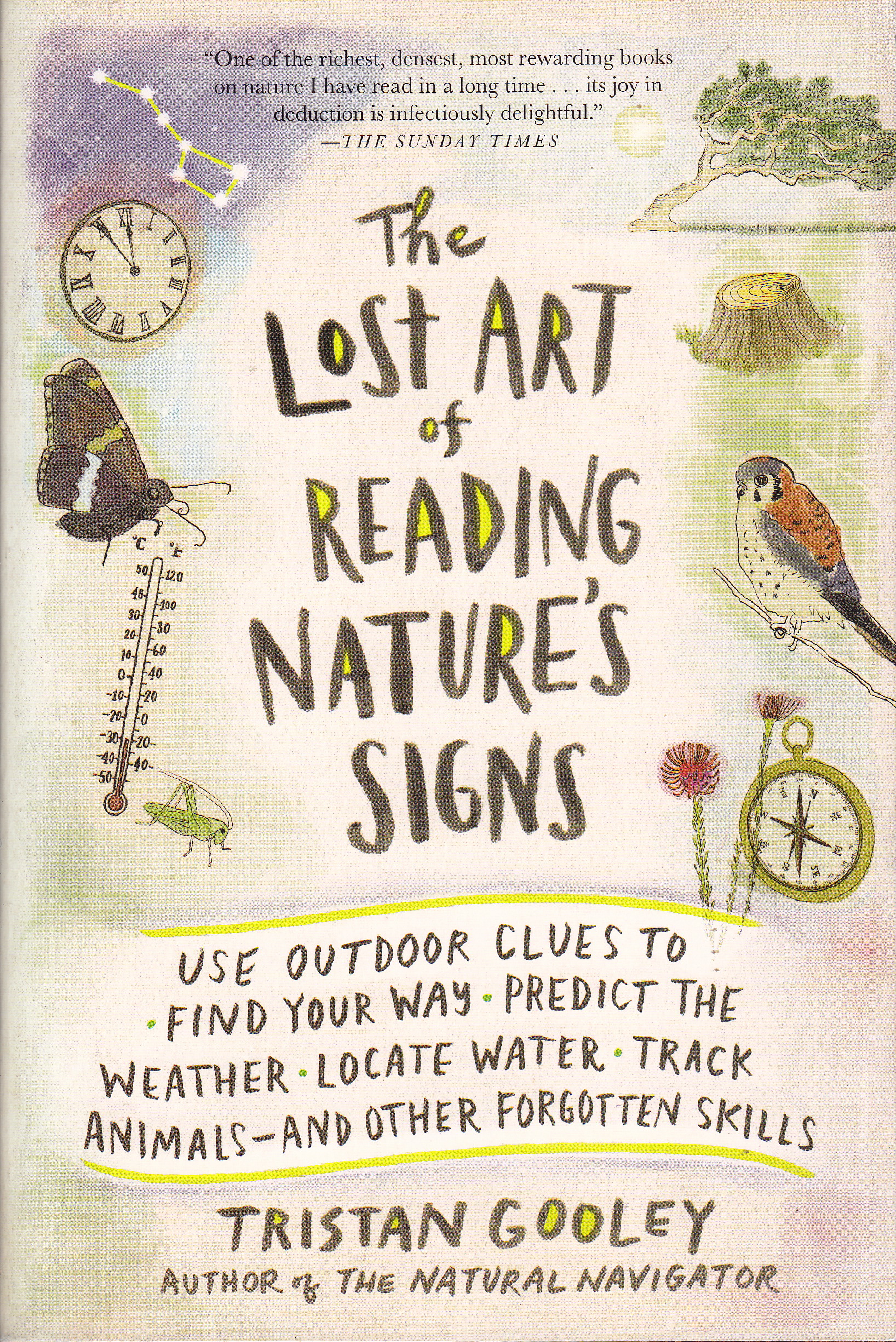
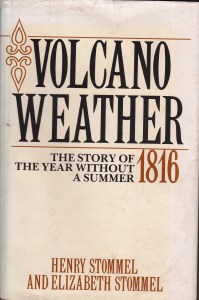
VolcanoWeatherJust 200 years ago, there was a “year without a summer.”  Well, that’s an exaggeration, but the name has stuck and is familiar to those of us with an undue interest in weather.  Although the coldness of that summer was far from universal, frosts came in New England in June, July, and August, killing off the staple corn crop for much of the region.  Snow fell even later than it usually does in the northeast, including a measurable fall in July.  My interest in this particular cooling episode was spurned by reading about the eruption of Krakatoa in 1883.  The connection?  Mount Tambora, a relative neighbor of Krakatoa, erupted in 1815 with an ejected debris volume of about ten times that of its later colleague.  The dust cloud from Tambora has long been a culprit for the dismal summer the following year.  Henry and Elizabeth Stommel researched and wrote a little book on this event entitled, Volcano Weather: The Story of 1816, the Year Without a Summer.  Although the book shows its age (it was written in the early 1980s), it remains a fascinating exploration of the many things that weather can do.  And has done.  Two of my favorites from this book were Napoleon’s adventures and the writing of Frankenstein by Mary Shelley during a rainy summer in Switzerland.
 
I should note, however, that the Stommels do not declare that Tambora was the reason for the year without a summer.  They tend to think the volcano had something to do with it, but the weather, that most protean of phenomena, can be impacted by the very small as well as the very large.  In fact, their description of the eruption includes the recognition that locals felt volcanic eruptions to be normal acts of the gods.  Many island cultures recognize the divine power of the molten earth.  The weather getting out of whack, we can be sure, leads to much prayer even today, thousands of miles from any eruption.  Something that hasn’t changed since the 1980s is that natural phenomena—especially powerful ones—evoke the divine.  Huge, impressive volcanoes, or even the very immensity and complexity of the atmosphere, suggest something we can’t comprehend.  Global warming will soon, however, bring this point home.
 

One of my takeaways from this book is the fact that the weather’s lack of uniformity emphasizes just how little we know.  The year without a summer mainly affected the northern hemisphere, and that only piecemeal.  Parts of northern Europe and North America felt it more intensely than other places.  It was not “the coldest year ever” and anyhow, is it even possible to know whether the coldest year would feel unnecessarily chilly where you are?  I’m pretty sure it’s snowing in some part of the world right now.  Human arrogance when it comes to global warming can be put into perspective by such acts of nature as Tambora.  From a human perspective, we live on a time bomb.  Volcanoes care not a whit for our bidding and wishes and dreams.  They can impact climate more instantly than our trite human efforts and thinking we alone are gods. To prepare for the future sometimes we need to look two centuries back.


Nature’s Voice

SpellSensuousCivilization isn’t all it’s cracked up to be. Sure, it’s got its moments—modern medicine, indoor plumbing, Honey Boo Boo—but often it’s artificial. It’s like somebody made up a set of silly rules and those who dare violate them are treasonous barbarians. Over the past few years I’ve been reading books that consider our biological development and what nature seems to indicate about how people might exist more holistically in the world. I don’t mean New Age outlooks, although, surprisingly, such treatments often aren’t far off base. I’d never heard of David Abram or his book The Spell of the Sensuous. (For those who think sensuous means only one thing, the subtitle is Perception and Language in a More-Then-Human World.) Although somewhat dated, this is an insightful book. The basic premise is that we are, by nature, part of a much larger world but we have, like spoiled children, decided to take it all for ourselves and isolate our species from all others, claiming a superiority that none dare challenge. In the process we’ve lost much of what it benefits us being animals, and have separated ourselves from the wonders of the world all around us. Working in Manhattan, I have to agree.

Basing his observations on having lived among aboriginal peoples, Abram notes that although anthropologists have denied the tenets of Christian missionaries on the religious front, they have continued in that teaching concerning biases against nature-based belief systems. Peoples who live close to the land observe things which seem superstitious to the “civilized,” but which are, in reality, simply astute realizations based on watching how the world works. Like Thomas Nagel, he notes that consciousness pervades the natural world. Animals, plants, even the earth itself displays forms of awareness that we ignore in our rush to exploit and gain “wealth.” In reality, we suffer for having made ourselves something we’re not.

There’s a lot in this book, far more than a single blog post can say. I don’t agree with all the points Abram makes—that writing may be responsible for our dilemma is a bit of a stretch—but there is great wisdom in this tome. At several points I had to stop and ponder the implications of what he was saying. Yes, nature speaks. Creating a world where “success” is measured in removing yourself as far from nature as possible requires elaborate rules. As far as I can tell, obeying the rules means that if you’re one percent of the one percent you’ll have nothing to complain about. If you have enough money—itself an artificial construct—you can run for president with no other qualifications. Meanwhile, nature suffers at our hands and may only recover once the world is forced from our hands and the sensuous once again takes over, doing what it has always done.


Do the Twist

TwisterA used book sale is like a box of chocolates, if I may abscond with a simile that fits many scenarios. After all, you are there to buy books that others have discarded. Some of them show their age rather blatantly. Keay Davidson’s Twister: The Science of Tornadoes and the Making of an Adventure Movie is one such title. Those who know me well know of my fascination with weather—I wrote a little book on the subject based on that obsession. Although the weather informed and formed me long before I was ever near a tornado, these particular terrors were so exquisite that I couldn’t help but look. Although I grew up in Pennsylvania—not exactly tornado alley—one night when I was away from home a tornado swept by less than ten miles from where my family was. It toppled trees down one side of a hill and up another. It was eerie and uncanny and in many ways shook me out of the feeling that I never had to worry about them. Then when I went to Ann Arbor for a weekend with my fiancee the sky turned bronze. Rain was whipping past horizontally. Later we learned that a tornado had passed maybe four miles from where we were. Living in Illinois and Wisconsin, we experienced many tornado warnings. I never saw a tornado, but somehow thought I should.

It goes without saying that if I see a book on tornadoes that is reputable and cheap, I can’t pass it up. Davidson is a journalist whose work appears (as of the two decades ago when the book came out) in National Geographic. Some of you may not have been living in tornado alley twenty years ago, and therefore may not have felt the excitement that Twister, the movie, promised. By the time it came out I had already been thinking about Weathering the Psalms, at some level. I was a bit disappointed in the film itself, but it does mention that an F5 tornado is “the finger of God.” Davidson’s book picks up on this as well. At several points witnesses, and even scientists, lapse into divine language to describe tornadoes. One person even says that a tornado is an image of God, or that the storm is God. That’s a very natural way for people to think. The power of a Midwest storm has to be experienced to be believed.

The divine represents the highest echelon of language. The tornado fits because it is the most powerful wind on the planet. Concentrated, raging, and fickle. One can’t help but think: I was raised Protestant, what if the Catholics are right? Substitute any religion in either half of the equation. The weather simply does not do what we want it to do. It reminds us that humans can’t comprehend our own atmosphere that we so blithely pollute. The book may look dated—who remembers Twister anymore?—but it is a forceful reminder. When you need a metaphor for the most intense experience the weather will always be waiting.


Mother Earth

Son, behold thy mother.

Behold thy mother.

As a planet-locked earthling, I’m thinking about Earth today. Such a quotidian planet. While I’ve been to others in my mind, this is the only one on which I’ve ever been or am likely to be. And yet there are no laws protecting it from my own species. Corporations are treated as individuals, legally. Only they’re much, much bigger and have lots more money. They can drill and dig and spew and slew all they wish. I can mutter a feeble, “Hey!” but they legally have to pay no attention. It’s like that guy with a loud device on a quiet bus. Or someone smoking too close to the door. They invade the little space you occupy and there’s nothing you can do about it. We look to our politicians to learn how to be better bullies. Our corporations look past us to the bottom line. When the planet dies, that will indeed be the bottom line.

We tend to make fun of those who believe there’s other life out there. Whether sci-fi nerds or gullible believers in conspiracy theories, we tell them all intelligent life is located right here. In your bank account. Your net worth. The contribution you make to the GNP. It all comes down to numbers. As if there weren’t something magical about walking in the woods. As if all of this is just dress rehearsal for the play of getting rich. The beasts we had to fear used to lurk in the jungle. Now they brazenly drive through our cities in expensive cars with tinted windows. They build towers to defy the spacemen to come down. “Don’t worry,” they seem to say, “our money is great enough that we can come to you.” And yet, we are still left with only one planet. And it seems to be getting quite stuffy down here.

I worry about our throwaway culture, because there’s nowhere else to go. You can’t prevent me from fracking the very ground beneath your feet. Or like Martin Luther, prevent me from flying over your head. You don’t like my loud music? You don’t like my noxious fumes? I can blow my vape into the shared, public airspace if I want. Ownership is a funny concept. Our species has been on this planet for a geologic sneeze and yet we plant our flags and bray our allegiances. It takes treaties and accords for us to act like civilized people. We won’t call it “global warming” because that offends those big people called corporations. If it feels a little warm in here to you, turn on the air conditioner. If we use up this planet, we can always buy another one.


Meaningful Fear

BeVeryAfraidReading about the things that wrong, like terrorist attacks, may not be the best way to occupy your time on a bus heading to New York City. Robert Wuthnow’s Be Very Afraid is appropriately titled, in any case. I had been warned. Discussing sociological reactions to nuclear war, terrorism, pandemics, and global warming, Wuthnow suggests, sensibly, that action is the best response. He also points out that, statistically, people tend not to panic. What I’d like to focus on is his repeated assertion that humans need to find meaning. Disasters only bring this into clearer view.

We live in an age when religion and philosophy have been relegated to the children’s table of academic pursuits. They are, however, the traditional intellectual ways of finding meaning . Economists may be paid much more, and scientists receive more respect, but when the bombs fall or avian flu really strikes, even they sometimes turn to their beleaguered colleagues for answers. Money is notoriously poverty-ridden when it comes to purchasing meaning. Reductionistic materialism may allow a final shrug as the curtain falls, but plenty of scientists hope for a little something more. Not everyone, of course, finds meaning in religion or deep reflection, but we are all human and we want to know what it’s all about. We need to have somewhere to look.

Even as a child I was preoccupied with meaning. I wanted to be the usual things when I grew up—scientist, firefighter, G.I. Joe—but when it came time to make actual choices I moved in the direction of careers that would allow me to find meaning. I swiftly learned they didn’t pay well. Money is not meaning, however. I was teaching in a seminary when 9/11—a major topic of Wuthnow’s study—occurred. I saw people desperately seeking meaning, but not knowing where to look. This was just my fear, growing up; what does it profit someone to gain the whole world if s/he is groping about in the dark for meaning? We’ve created a world where even greater causes of fear are likely to arise. In our emergency kits, it seems, we should leave a little room for meaning.


What Vampires Abhor

IMG_2731

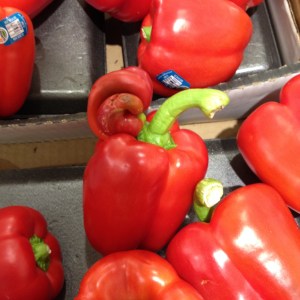
It began as an innocent trip to the grocery store. I was in the produce section seeking the various vegetarian foodstuffs I need to make it through the week when I came across a monster. Well, more precisely, the mention of a monster. Brad’s Crunchy Kale. Vampire Killer variety. Now, I’m not the world’s expert on vampires; I’m a dilettante at best. Still, I’ve never heard of kale as a vampire bane. (The store didn’t have wolfbane on offer, that I could see.) But this advertising ploy made me wonder about the use of vampires, and other monsters, as means of selling food. The Count Chocula family of breakfast cereals is perhaps the most famous example. Kids love their monsters. Especially with milk. Perhaps Brad is trying to get kids hooked on kale? Start them early on the right path and they’ll not soon depart from it.

Walking through the aisles I didn’t see much else that related to monsters. More the daily bread than the undead. After all, this was just post-Easter and people won’t be thinking about ghosts and ghouls until the other equinox rolls around. The brighter half of the year is a time for sunnier prospects. Monsters go into hibernation. Long, light-filled days are ahead. Why are we putting Vampire Killer on the shelves now? I looked at the ingredients. Garlic didn’t seem to feature prominently among them. I had to admit to confusion. And a desire for garlic bread.

Food, so scarce in many parts of the world, is something we need to decorate to get the attention of the modern consumer. Who’d buy a bunch of generic green, leafy stuff that requires some preparation—you at least have to wash it. And even then it might not protect you from vampires. Try a little packaging. All you have to do is open and eat. Rather like a vampire, actually.

We used to shop in one of those stores where they eschew fancy packaging and you pay for grains and dry goods by the wholesome, unwrapped pound. There seemed to be little ambiguity about what you were getting then. But we wish to be entertained by our food. This could be part of Buffy’s buffet, could it not? I find myself having to hold up a crucifix to stop from dropping it into the cart. There are vampires out there, I’m just sure of it.


Resurrecting Color

ColorOfDistanceIf you’re one of those people who’s attached to books, you know the frustration of someone who borrows a book and never gives it back. Many years ago I stopped lending out books for that very reason. I do, however, sometimes give them away. A friend recently reciprocated the gift of a book, giving me Amy Thomson’s novel, The Color of Distance. It is a profound story involving, as is common on this blog, themes of resurrection and transformation. A science fiction tale, it is set on another planet where something has gone wrong with an Earth survey team. The humans are dying on this alien world when one of them, Juna, is transformed by the alien into something like one of them. She comes back to life transformed. It wasn’t until I finished the book that I read the cover blurb that reads “Reborn in her savior’s image, trapped in her savior’s world.” Not a bad summary, capturing as it does the deep religious elements in the story.

The religious aspect, however, comes through most clearly in the environmental elements of the novel. Humans, somewhat optimistically, had set in place protocols not to interfere with alien life. So much we know from Star Trek’s prime directive. What makes this so interesting in the case of The Color of Distance is that Thomson knows that any contact is contamination. Two worlds cannot meet. They must collide. There is a gentleness, however, in her narrative. Juna, marooned (long before The Martian) on a foreign planet, has to learn to see things through alien eyes. And every little thing that humans have done has left a footprint on the planet. Protecting our own planet is a profoundly religious undertaking.

It is clear that Thomson has influenced later writers and stories. Not only does The Martian pick up on the stranded aspect, but Avatar clearly presents a world similar in many respects to the planet of the Tendu. The Color of Distance is a book not easily forgotten. The world into which the reader is drawn is indeed one of transformation and resurrection. I suppose spoilers aren’t an issue with a book two decades old, but I will satisfy myself merely with noting that another resurrection takes place as the story winds to its close. Deeply hopeful, and almost prophetic, this novel should be more widely read, for the sake of the world on which it arose.


The Philosophical Neanderthal

HumansExtinctExtinction. It’s a depression concept, but one that nevertheless constitutes a reality in evolution’s world. When applied to members of our own species we term it genocide and declare it an evil. Our perspective—not to dispute the value judgment—is hopelessly foreshortened. Our brains have evolved to promote individual survival, not to see the longue durée. How often do we worry about the extinction of Homo erectus? Or the australopithecines? Without them we wouldn’t be here, and yet, they’re gone. The case of the Neanderthals is perhaps closer to home. We now know that Homo sapiens overlapped with Neanderthals. Some of the questions raised by Neanderthal extinction are given serious consideration by Clive Finlayson in his study, The Humans Who Went Extinct: Why Neanderthals Died out and We Survived. To get a sense of how this works out, and how it applies with our current contribution to global warming, we must be prepared to view the extreme longue durée. Duration beyond comprehension.

One thing that becomes clear from the very beginning here is that climate has driven evolution perhaps more than we often think. Species, which tend not to live through the relatively long reach of climate change timescales, adapt to the circumstances of their environment. They either do, or they go extinct. Climate, however, is a balancing act teetering toward equilibrium. Hot and cold, evening each other out. Over an even longer duration, our sun will run out of metaphorical steam and things will get quite a bit chillier out there. For the meantime, however, shifts between ice ages and periods of warming will continue to seesaw across time and our race, among many, will need to adjust to survive. Perhaps acknowledging our own role in the current global warming might be a way to start. Our species tends to be short-sighted.

There is an irony here. History and prehistory have shown that, as Finlayson points out, that those best equipped to survive radical changes are the poor. Extinctions—some of them quite dramatic—have occurred before. They will surely come again. When times get tough, it seems, the comfortable get going. Going extinct, that is. Those who climb the corporate ladder the highest have the longest distance to fall when things go bad. The poor, who have to struggle every day to survive, are the ones who know how to get along in circumstances that turn sour. I have called this an irony for what might seem obvious reasons. There is another as well; here we have science pointing again in the direction of the Bible. There it was noted long ago that the meek would inherit the earth. And that’s a bit, it seems, that should be taken literally.


Monster Epistemologies

A friend ensures that I see internet stories of hidden monsters. Not hidden in that you can’t find them, but hidden in that my freedom to explore the web entails only weekends and even some of those are very busy. In any case, a bestiary from Mental Floss landed on my virtual desk recently and I couldn’t wait until the weekend to check it out. A bestiary is a list of strange creatures, what we might today call monsters, some of which reflect a world not well explored and others which reflect religious, or—admit it—superstitious ideas. In the days when travel was limited and news was slow and unreliable, garbled accounts of strange beasts were compiled in bestiaries. The tradition continues today, as is evidenced by this article by Paul Anthony Jones.

Whenever I see monster stories like this I ask the question: did they really believe such things “back then”? Some of these monsters clearly have analogues in the natural world, but part of my brain reminds me that we are destroying species faster than we can count them in the rainforest, and who knows what we have yet to uncover? Is it really a matter of belief or is it actually a matter of knowing how we know? The fancy word for the latter is “epistemology.” As I used to ask students: how do you know that you know? Has that changed since the days of the bestiary? Knowing about medieval monsters seems to have been the acceptance of the reports of those who, if they hadn’t actually seen the beast, had at least talked to someone who knew someone who had. It is the authority of the senses. Or of reliable reporting. Seeing is believing.

Martigora_engraving

Fast forward to a day of popular cryptozoology. We have monster hunters of many sorts on television. Some claim evidence for what they have seen. Lighthearted laughter is the common response. Monsters just don’t fit into our worldview anymore. Our epistemology has become more circumspect. If it doesn’t come from a lab, like a genetically modified organism, we have no reason to believe it exists. We’d like to create our own monsters, thank you. It’s at times like these that I like to reflect that a bestiary doesn’t sound so different from a breviary. Both are medieval sources of knowledge. Our modern epistemology seems to have grown a little too narrow to see a world that is full of wonder. Unless, of course, it’s on the television. Seeing is believing.


Palms and Psalms

At Nashotah House, where I spent many years of my career, it was often felt that the weather during Holy Week was, in the best of circumstances, appropriate. With spring just around the corner, however—the date of Easter is based on the Vernal Equinox, after all—a number of surprises came. Particularly in Wisconsin. The ideal scenario would look something like this: sunny then partly cloudy on Palm Sunday; it was a a joyful day for a parade, but clouds make for nice foreshadowing. Nobody really commented on the weather for Monday through Wednesday, and Thursday—Maundy Thursday—was largely spent inside the chapel. Good Friday, however, should be rainy. Saturday gloomy. And, of course, Easter Sunday should be a perfect, sunny spring day. It seldom, if ever, worked out that way. The weather is not beholden to liturgical celebrations. The same holds true for New Jersey. At least the snow has been removed from the forecast today, only to come in the night.

It was at Nashotah House that I wrote Weathering the Psalms. Being a lexically driven book, it was never intended to be a commentary on global warming. It should have been, in retrospect. Already by then we were nearing the point at which, even if greenhouse gas emissions were stopped, runaway melting of the polar ice would continue apace and the weather would grow more and more unpredictable because of human action. Human action of everyone except the industrialists, of course, since they don’t believe in global warming. We cling to our palms and shout “Hallelujah” while the sea level’s rising and our weather grows increasingly erratic. We have a theology with which the weather disagrees.

IMG_2721

The liturgical year is, like its Jewish predecessor, cyclical. Some have suggested that holidays were invented to remind the laity of when it was safe to plant again. Of course, the climate in the “Middle East” is quite different than that of northern Europe and the United States where the Bible seems to have its proper setting. As I was walking yesterday, I enjoyed the daffodils that I always associate with Easter. When I returned home I saw snow in the forecast. Leap year, Daylight Saving Time, and my general level of sleepiness conspired to cause me to overlook that today is the Vernal Equinox. I look for the snow, grasp my palm, and think of spring.


Ethology Theology

MindingAnimalsProminent public intellectuals, we’re used to hearing, often lament the survival of religion into a rationalist age. As an obscure private intellectual—if I may be so bold—I am always pleased to see when a credentialed scientist asks if we are being too hasty. No, but actually says we’re misguided to dismiss the evidence of our own observations. Marc Bekoff’s Minding Animals: Awareness, Emotions, and Heart is an encouraging study by a balanced individual. Bekoff, unlike many scientists, realizes that emotion does play into observation and reasoning. More than that, materialistic reductionism does not account for human or other animals’ experience of life. Historically motivated by religions to separate ourselves from animals, we have only come to know slowly—painfully slowly—that the distinctive markers of humanity are shared in degree by other animals. Bekoff is bold enough to give the lie to the belief that animals have no emotional life. Traditionally science has said that we cannot know what goes on in animal brains so it is best to take animal emotions off the table. Then scientists go home and love their dogs, who love them in return. When’s the last time I read a scientist writing about love?

Minding Animals is a manifesto. We have, in our arrogance, made unwarranted assumptions about both animals and our unique status on the earth. We drive other species of animals to extinction at a rate that required an asteroid collision or some other catastrophic event in the past. And we use animals as if they had no interests of their own, even such basic interests as avoiding pain and suffering. “They’re just animals,” we’re told. Bekoff is an ethologist—someone who studies non-human animal behavior. As common sense, both the sine qua non and bête noire of science, reveals, animals experience and express happiness, anger, and love. They can be depressed. They can be overjoyed. And we treat them as if they were objects to do with as we please.

Bekoff admits some of his fellow scientists treat him as if he’s gone soft. Like Diogenes, however, I search for an honest man and I think I have found him. Instead of castigating religion, Bekoff ends his book with a chapter on theology. Not to make fun of it, but to show that even scientists must integrate different kinds of knowledge. Not only is the science that Bekoff describes appealing to the emotions, it also makes sense. No scientist is completely objective. Even Mr. Spock breaks down once in a while. We all have perspectives. And that includes our fellow earthling animals. We evolved from the same ancestors and yet treat them as if we own them. Minding Animals will—or at least should—make us feel guilty about that. Being human and being humane, after all, are only a silent e apart.


Apes’ Asherah?

As a part of my class on Ancient Near Eastern Religions, since we were dealing with the earliest textually recorded religions, I explored origins. Specifically, the origins of religion. For years I told my students that biologists had observed behavior among chimpanzees that was proto-religious. Imagine my delight in seeing an article on New Scientist headlined “What do chimp ‘temples’ tell us about the evolution of religion?” The article, by Rowan Hooper, describes chimpanzees banging rocks before a “sacred tree” and storing the rocks in the tree in a ritualized fashion. That’s a long way from Episcopalians putting on their Sunday finery, but it is a fascinating piece of a larger puzzle. As the article points out, other symbolic action among chimps has been observed—some of it the basis for what I discussed with my students. The impulse to acknowledge the power of the Other runs deeply within animals, particularly mammals and birds.

This may seem an odd thing to suggest. We do know, however, that among the earliest attested behavior or Homo sapiens, along with hunting and seeking shelter, is religious behavior. It is part of who we are. Primatologists, such as Frans de Waal, have noted that the great apes engage in altruistic behavior. It is only when they become billionaires, apparently, that the urge dies. Again, other mammal species and some birds also show altruistic behavior. We are part of the natural world. Our religion, rather than being a collective insanity, is part of a continuity with that natural world. It is much a part of who we are as is seeking food or putting on clothing.

DSCN6152

The more rakish side of my imagination goes to the fact that this article begins with a sacred tree. Tree worship is part of early religions. Some scholars suggest it is part of Asherah’s cult in the ancient world. (I discussed this in technical terms in an article some years back; take a look at my Academia page if you can’t sleep without reading it.) Goddess or not, trees are essential for our survival—call them a godsend. Would it not make sense for religion to include reverence for trees? It seems that some great apes, at least, agree. Are these primates religious? We can’t say. One thing, however, is certain. Our fellow animals show more moderation in their use of the environment than our species does, and that in itself is both logical and religious.