Saving Face

Although it has been commented upon in Rate My Professor, my beard is not intended to be impressive. In fact, it’s not really. Since I was quite young I dreamed of being a bearded man. I don’t know why. My father and my step-father were clean-shaven. The pictures of Jesus with which I grew up, however, seemed to suggest that a kindly man must be a bearded one. Nature deemed, however, that my facial hair would be less impressive than that of many boys I knew in high school who were already contending with five o’clock shadow. I never liked shaving. To me, nature dictated that men should be bearded, and who was I to combat nature? Except for a brief stint when I had to make a living in retail, I’ve worn a beard since I’ve been able to do so. I don’t fuss with it, trying to make it something it’s not. It is simply who I am.

339px-Epicteti_Enchiridion_Latinis_versibus_adumbratum_(Oxford_1715)_frontispiece

So when my wife sent me an infographic from the Washington Post about religious beards, my curiosity was piqued. It actually makes me a little self-conscious, I have to admit. I vehemently dislike anyone commenting on my appearance. There’s also something vaguely sexual about facial hair, coming as it does with the onset of puberty (a few years later in my case). Looking at the ways various religious groups condone facial sculpting, I couldn’t help but think that traditionally religions have said, to borrow a phrase from Frozen, “let it go.” Or let it grow. God and nature are one here. Genetics may determine what kind of beard may grow, but it takes religions to say it is God’s plan. For me, standing before a mirror before dawn, scraping my face with a very sharp piece of metal while I’m still yawning hardly seems civilized. Wash and go seems much more natural to me.

In the biblical world, the beard was a symbol of experience. Lifespans in those days were precarious. Guys surviving to my level of whiteness were revered. Today we are considered scruffy and lazy and unwilling to play by the rules society has set. I suppose it’s no accident that I was always a fan of John the Baptist with his unkempt appearance. Like Elijah before him he was a man of the wilderness. As nature made him. I last shaved in 1988. Were I to do so again, I fear what I might find underneath. Harrell Beck, before he died, once said to me, “you’ll never shave it off.” Although once I did, he has proved himself among the prophets. Just don’t say anything about it to me since, like religion, to me it is a very private thing.

States Right

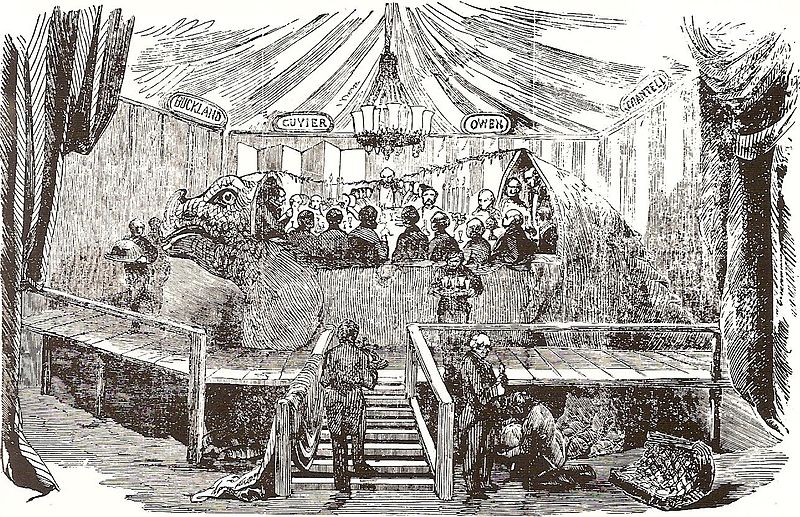
Can you name your state insect? State bird? State dinosaur? The concept of united states, perhaps more obvious in Europe where languages differ, is a complex one. In the United States of America we’ve got our culture wars that generally divide along predictable state lines, but each state has a mix of progressives and conservatives, and caricatures may be funny but are hardly accurate. In this jambalaya of divergent ingredients, each state develops its own image in keeping with a couple centuries (for some) of tradition. We even have quarters that show our distinctive features on the reverse side! As one of those whose profession (whatever that is) has moved me across state borders periodically, I know that choice of domicile often depends on what it might offer by way of employment. Although one of my parents was born in New Jersey, I moved here not out of family loyalty but out of desperation to find work. Nearly every day I cross a state border to get to a job, but it feels pretty much the same to me.

Although I’ve lived in these states for nearly half a century (some of my years were spent abroad) I didn’t know that states had a choice of books. I don’t know if every state has a book. It saddened me to hear that New Jersey rejected “Born to Run” as state song since it was about trying to get out, but I don’t know if we have a state book. The Godfather, perhaps? Moby Dick? When NBC announced that Tennessee had its proposal to name the Bible as its state book shot down, I was a bit shocked. What is a state book? Tennessee, which (as a caricature) still takes pride in the Bryan side of the Scopes Monkey Trial, often leads the way, like Davy Crockett, against the untrusted, heathen other. The undiscovered country of modern thought. The Bible can be a comfortable book in that way.

The Bible justifies our prejudices. Written mostly by white men who believed they were specially chosen by God, well, is it any wonder that it bestows a sense of entitlement? Radical in its time, the Bible now stands for status quo ante, ante meaning before women and non-whites won the right to be considered equal. It is a kind of Paleolithic justice. A caveman ethic. What better way to demonstrate that your state, like Indiana, is a special haven of the Almighty? Only here can the truth be found. If you’re looking anywhere this side of 1611 you’ll miss it. We don’t need to know what came before. Protestants, now partnering with conservative Catholics when it fits the political agenda, have always recognized book over state. We the people and all that. I really do wonder, can you name your state dinosaur?

800px-Crystal_palace_iguanodon


Scientific Belief

AtlanticThe human brain is a marvelous thing. Neuroscientists find all kinds of surprises as they probe the gray matter in our heads. One of those findings is that we don’t always believe what we say we do. Some time ago I read Matthew Hutson’s Seven Laws of Magical Thinking. Scientists didn’t like the book too much since it caught them with their empirical pants down. Really, there’s no shame in that. We are at the mercy of our own minds. In this month’s Atlantic magazine, Hutson has a brief piece entitled “The Science of Superstition.” In the space of just over two columns he runs down the evidence that even those who claim materialism is the answer to all life’s mysteries, even those scientists can’t escape superstition. Friday the thirteenth, a couple of weeks back, I walked under a ladder on my way to work. What happened? I had to go to work. Is that bad luck? I suspect it’s a matter of opinion. I’m the first to admit, however, that I did have fleeting reservations.

Study after study, as cited by Hutson, shows that physiological measures indicate anxiety when those who don’t believe in God say bad things about him/her. We all attribute cause to natural events, even those steeped in the hard sciences. Thinking about death reveals subconscious beliefs about God. It’s the way we’re hardwired. Hutson himself, if I recall correctly, doesn’t really attribute much credence to the supernatural. This is all a matter of what our material brains believe. Interestingly, we are evolved to be open to religious ideas. Many choose to believe, despite our brains, that we are evolutionarily deceived. Screwed by natural selection, as it were.

Far more interesting, in my deluded opinion, is that we don’t really choose what to believe. At least not at first blush. Our brains tell us to believe in the invisible causation that just doesn’t fit in a material world. To get beyond that takes some effort. It does give one pause, however, to consider that blind evolution has puckishly kept all this in the mix. Does evolution have a sense of humor? Perhaps we are all taking all of this far too seriously. Or maybe, just maybe, our brains are smarter than we think.


Life Everlasting

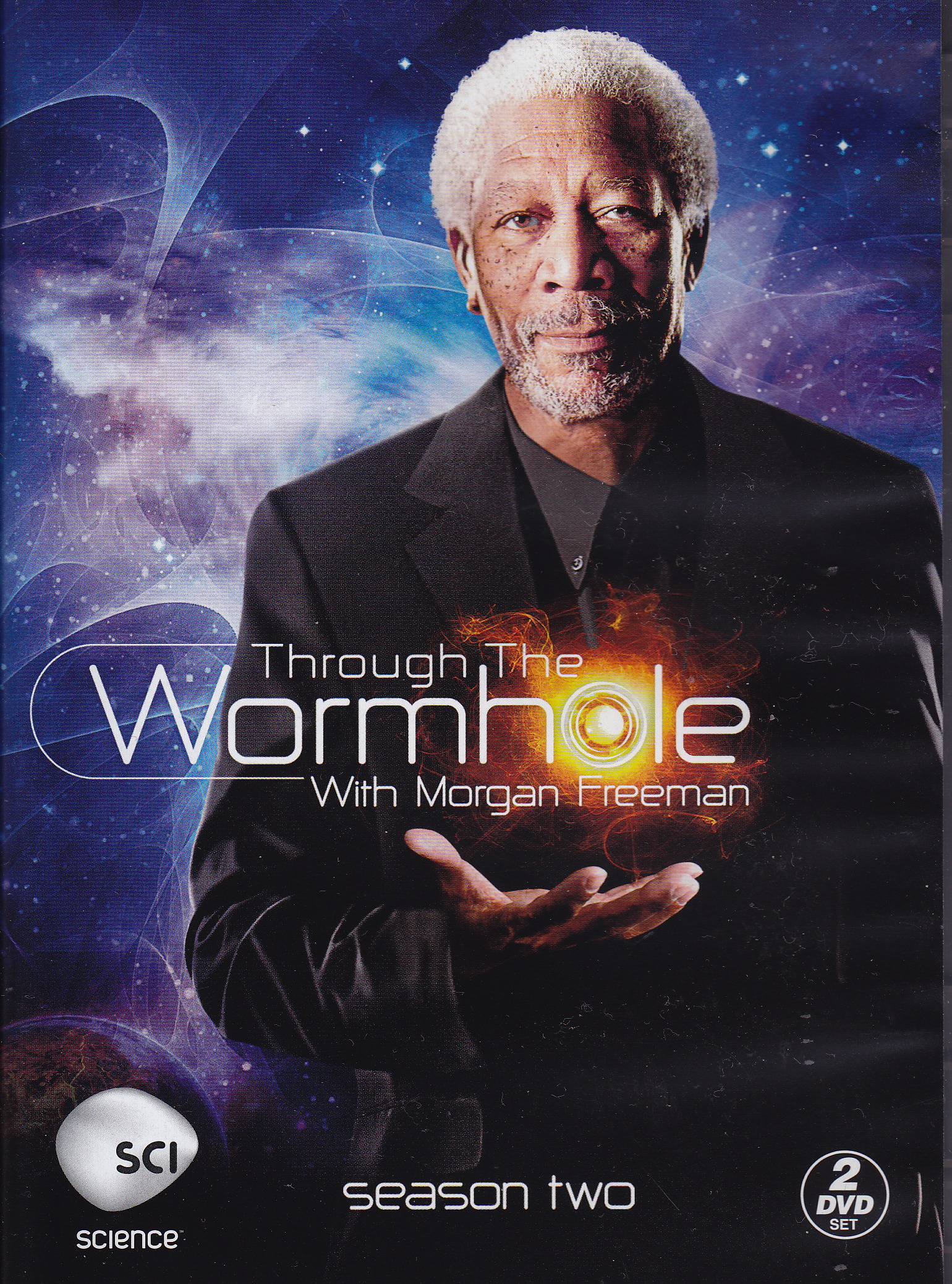
ThruTheWormholeThrough the Wormhole is one of those series that keeps me coming back. I’m currently working my way through the second season because it is a show that I take in small doses. The episodes require thought (and often, more importantly, time—something of which I have too little). Watching the installment “Can We Live Forever?” I was astonished by the optimism of the writers and interviewees. Among a cross-section of scientists, at least, there is the belief that we can, and will, dramatically expand human life. To biblical proportions. And that life won’t be a decrepit, declining feebleness. Instead, we can be, to quote one of the scientists, quoting Bob Dylan, “forever young.” Well, maybe not forever, but you get the picture. Of course, God came up quite a bit in this episode. Immortality is the stuff of divinity. The life-force, which much of science denies exists, is strong. No matter how weak or old, we don’t really want to give it up.

Of course, death is the price of life. We live on a finite planet with dwindling resources. If we don’t die, we run out of space for the next generation. Some have postulated that we need to colonize other worlds—just the thing that got Europeans in trouble in the first place—in order to make room. Room for us. The dominant species. No doubt, we are “programmed” to age and die. As far as we know, all animals are. Even plants. That is to say, life as we know it ends in death. If it doesn’t, can it truly be called life? I would be fascinated to live for a long while and see what we can make of this world. Not the greatest fan of technology, still, I’m impressed how far we’ve come in the brief time I’ve spent on this planet. And I do wonder where we’ll end up. In my mind, however, there always is an end. Even to this infinite universe, about the heat-death of which I’ve often read. What gives us the right to live longer than nature dictates?

It is, surely, a matter of degree. These glasses perched on my nose certainly have prolonged my life beyond what nature would dictate. The vitamin pills I swallow, the fabrics that keep me warm while wicking away perspiration, the things physicians can stop in their germy tracks. We already prolong life. Nevertheless, the century mark has always been symbolically our final goal and sign post that it’s time to hand things over. Thus it was in the beginning. The Bible makes clear that, although the antediluvians lived centuries rather than decades, this was never intended as the lot of the majority. No, we were born to die. We live through our children. The thought of eternity is scary. Especially when we think of how humans are. Those who can afford to live the longest are likely those who least deserve to do so. Do we want to live forever with the plutocrats in charge? Perhaps there’s a reason that we all take that final bow. Still, I can never listen to “Forever Young” without getting misty eyed and imagining the possibilities.


Seeing I

One of my few Twitter followers (stawiggins) suggested that I watch Dr. Ken Hayworth on YouTube. Specifically, Part 3: If we can build a brain, what is the future of I?, hosted by Galactic Public Archives. It is well worth 9 minutes of your time. Trying to figure out consciousness has been a major preoccupation of mine for some years. I don’t have the tools of neuroscience, but I do have over half a century of coming to know this “I” that constantly seems to wake up in this same body and experience all its woes and occasional joys. Hayworth suggests that the self is a model projected by our brains to help us make decisions and to plan for the future. In a fascinating thought experiment, he notes that if a duplicate self were made, we (or I) should not object to being executed since there is an exact copy now. Hayworth notes, however, that any individual will object because we are “designed” to think this way about ourselves. Designed, I wonder, by whom? I suspect Hayworth means evolution designed us that way, but evolution is non-teleological, and, I suspect, not really reificatory. Evolution is merely a process.

Perhaps the horns here are only those of a semantic dilemma, but I feel not. Hayworth goes on to discuss how instinct works to continue this illusion of self. I’ve never found instinct a very believable concept. We use it when we want to deny consciousness to animals and very young children. Since they can’t have a concept of “I” they have to have “instinct” to preserve themselves. Logically, to me, this seems to be fudging. What is instinct? Is it really any different than admitting at some micro-level, animals have consciousness? To me it seems that consciousness is one of those “turtles all the way down” kinds of propositions. To be alive is to be conscious at some level. Be careful how far down you dig here.

DSCN2021

Hayworth then goes on to what sounds like an almost biblical conclusion. Ethics insists that humans are part of a whole. (A very diseased whole, as the imbalance in society forces us to conclude, but a whole nevertheless.) To kill one is to violate the consciousness of the whole. This concept seems sound, and I would suggest that it might benefit from expansion. Why stop at the human level? We are animals. Animals are conscious. Here we are back at the turtles again. Perhaps we have expended too much energy trying to parse self from soul from mind from consciousness. Perhaps we are all part of a large collective consciousness. If so, we got some very sick units near the top. Any organic being that insists only one percent needs to be kept in perpetual plutocratic indigence while billions of others wonder how long they will survive at this payscale in this economy, or, more realistically, act as slaves to that one percent, is a sick beast indeed. If consciousness is collective, we could all use a massive shrink.


Creating Diversity

Informed opinion is a chimera. I write that as someone who has time to read only the news stories my wife or my friends pass on to me. Once in a while one of those stories makes me feel less bad about being uninformed. A recent piece by Slate author William Saletan looks at polls regarding Creationism. The piece, picked up in the New Jersey Star-Ledger on a recent Sunday, demonstrates that although the United States is a nation of Creationists, we don’t agree about what that means. What becomes clear to me when I read such stories is that people who believe in the Bible seldom read it. Or at least understand it. Creationism “is not a thing” in the Bible. Many accounts about how the world began are represented, and the main point seems to be that it’s important that it was the God of Israel who did it rather than the competition. The first couple of creation accounts are compelling with their insistence that people are special, and that we are in charge while the owner is away. In fact, however, creation is a minor point in the story. It just has to start somewhere.

Those who set out to read the Bible, I suspect, begin to stumble in parts of Exodus and generally give up once they reach Leviticus. Although the main point of the books of Moses is the rules, the modern Christian finds the story more engaging. And the creation accounts of early Genesis are among the stories people actually read. They do make for a great, if contradictory, tale. They have, however, little impact on what people are supposed to do. Ironically, those accounts have become failsafe political devices. We vote according to how old we think the earth might be. We are special, after all.

Saletan’s point in the article is that the finer we parse the questions, the more divergent opinion becomes. The Bible doesn’t say how old the earth is—it’s really not a point of any significance to the story—but if you’re going to take it literally, you can do the math. Few literalists truly take the Bible literally. Logic very quickly breaks down as Genesis 2 follows Genesis 1. Americans are told that the Bible is literally true, but such a view literally makes no sense. We are committed to it, however, as we somehow equate believing in stories to be more important than understanding what those tales are trying to say. The polls, according to the article, make the point abundantly clear. When it comes to understanding the Bible Americans are very committed, if very confused.

Just one Creationist museum.  Photo credit: Creashin, Wikimedia Commons

Just one Creationist museum. Photo credit: Creashin, Wikimedia Commons


Bodily Futures

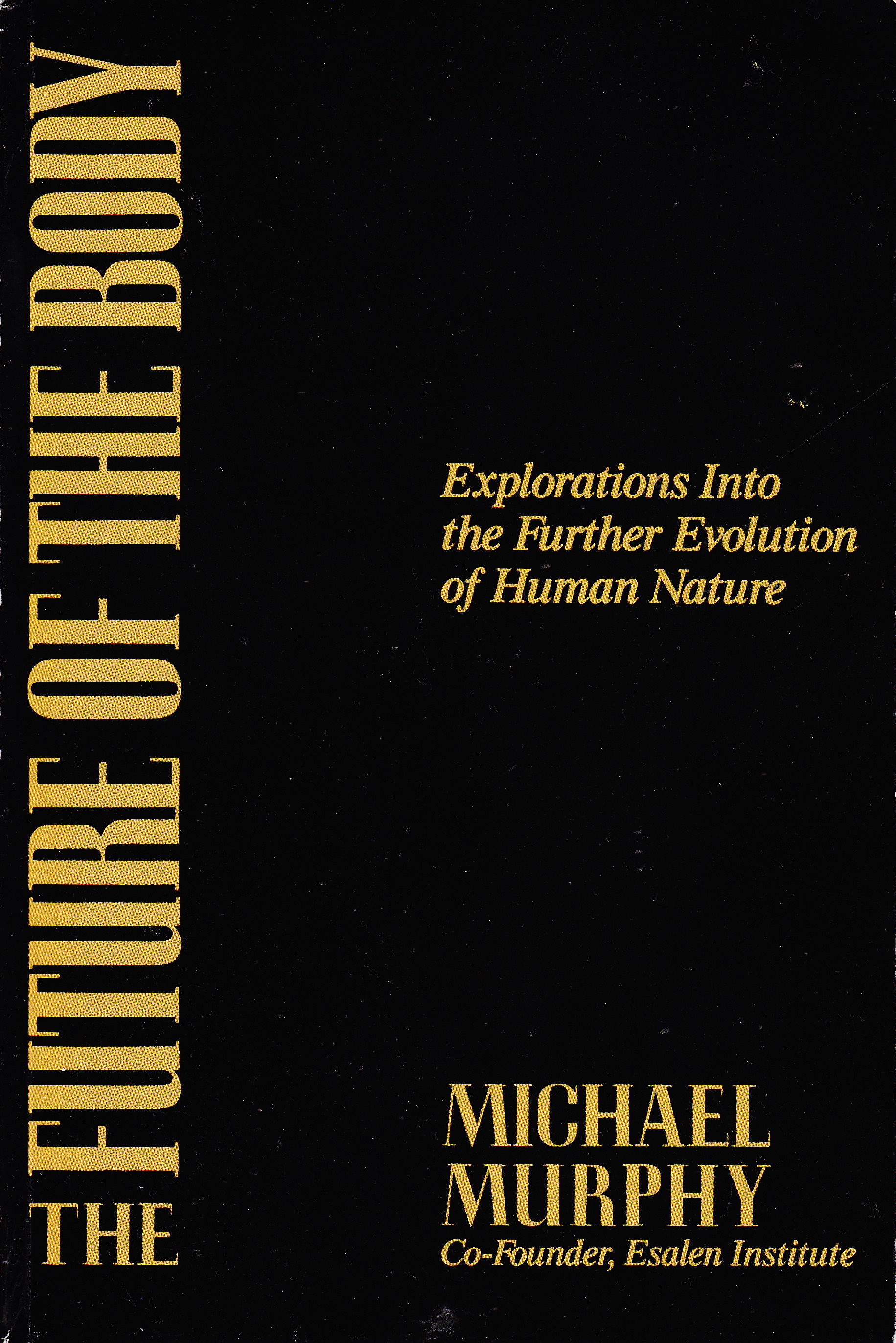
FutureOfTheBodyJust about everyone I know has their own method of curing the hiccups (or, in their more evocative spelling, hiccoughs). Most of these involve holding one’s breath or elaborate ways of drinking a glass of water. Since hiccups are involuntary spasms that can be quite annoying, they can’t be predicted or easily foreseen. Some years ago I realized that the methods I’d been using to rid myself of this unpleasantness were really just ways of getting my attention off of the hiccups—in other words, it was a matter of concentration. I started to respond by thinking the hiccups away whenever they struk me. Cut out the middleman, as it were. And it works. All of this is preamble to the remarkable material to be found in Michael Murphy’s The Future of the Body: Explorations Into the Further Evolution of Human Nature. Murphy is one of the co-founders of the Esalen Institute, about which I’ve posted before. Promoting exploration of human transformative potential, Esalen was a landmark in 1960s culture that I was a little too young to appreciate. Besides, I lived far from California and in a strictly religious mindset. Those who founded Esalen knew, however, that people are capable of more than we appear to be.

Human transformative potential involves matters with which materialistic science is often uncomfortable. Religious practices such as meditation, sports, and martial arts training, all, however, can produce results that shouldn’t be on the books. Whether it is the basketball player who can stay in the air a little too long, or a religious adept who can survive being buried alive for protracted periods of time only to be revived later, or even the remote viewer hired as a spy by the government, people are capable of more than we’re told we are. Murphy suggests that perhaps it is because we are socialized to think this way. Our young minds are open to a realm of possibilities that adult minds have been conditioned to discount. If it’s impossible, it’s impossible. Or is it?

The Future of the Body will take some readers where they do not wish to go. The fact is, however, that faith healers and stigmatics exist without fraud. Just because some frauds imitate reality, it doesn’t follow that the genuine article can’t exist. The usual reductionistic answer is that such things can’t possibly be real—let’s teach our children this fact—we are only robots made of meat. But this view still hasn’t accounted for consciousness, and consciousness is, at least for most of us, inescapably real. We know that because these bodies with whom we are associated do all kinds of things that bring it to mind. We get sick, we experience pain and emotion. We get up and go to work when we don’t feel like it. Most of the time we’re conscious of where we are, and what he have to do. Or do we? It very well may be that matters much larger than the hiccups might just be negotiable.


Angels We Have Seen on High

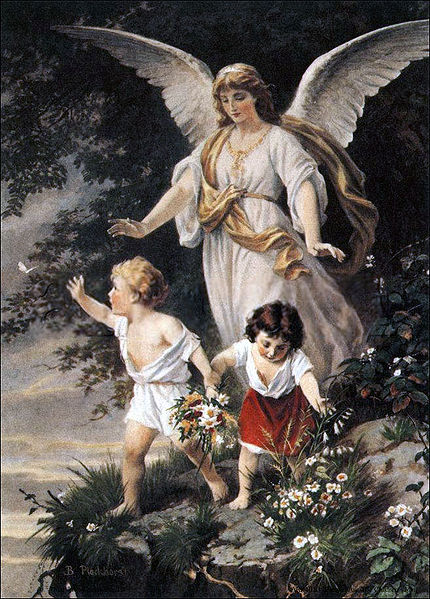
Humans have always ascribed significance to what they see in the sky. Evolution, I suspect, has a great deal to do with it, but so does religion. As I suggest in Weathering the Psalms, the sky is the barometer where we seek the temperament of the divine. The weather is an indication of what God might be feeling, in the pious mind. Of course, as a child I used to lay back and look at the clouds to see what messages I might find there. Pareidolia makes the process good fun, and lots of random “noise” can be interpreted as “signal.” It’s all done in a light spirit. Still, if the internet is to be believed, many people take images in the clouds much more seriously. Apropos of the holiday season, a story in The Telegraph tells of a woman from Lincolnshire who, on her way to a Christmas gathering, saw an angel in the clouds. Or more properly, an angel of clouds. Being the anniversary of her father’s death, she saw this as a sign from above that left her in tears. Others would call it matrixing.

The photo the woman’s daughter took as they were driving is impressive (click the link above to take a look; I’ll wait). I understand how it could be interpreted as an angel. Or even a bird. The feathering on the left wing, along with the wing structure itself, is stunning. And of course, given the time of year, angels are much on the minds of many. What would any manger scene be without them? Although pareidolia is not a religious phenomenon by nature, it nevertheless is frequently interpreted that way. We certainly don’t take much personal comfort in a mechanistic universe. When a loved one is gone, we would rather consider the more human (and perhaps supernatural) aspects.

430px-Bernhard_Plockhorst_-_Schutzengel

Interpretation of information is a constant activity of sentient beings. We don’t want to miss anything that will be of survival value. In the case of the angel in the clouds, the survival is beyond that of every day. We are constantly reminded that death is the final word, and yet we can’t quite bring ourselves to believe it. Whether it is shepherds on a Palestinian hill in the first century or a woman motoring along A17, the sight of an angel is something that stops the viewer and inspires an openness that we otherwise have been taught to deny. It may be that all she saw was a pattern of water vapor in a December sky. But even water vapor can mean much more than two hydrogen atoms binding to one of oxygen. It can be part of the breath of life itself.


Moral Animals

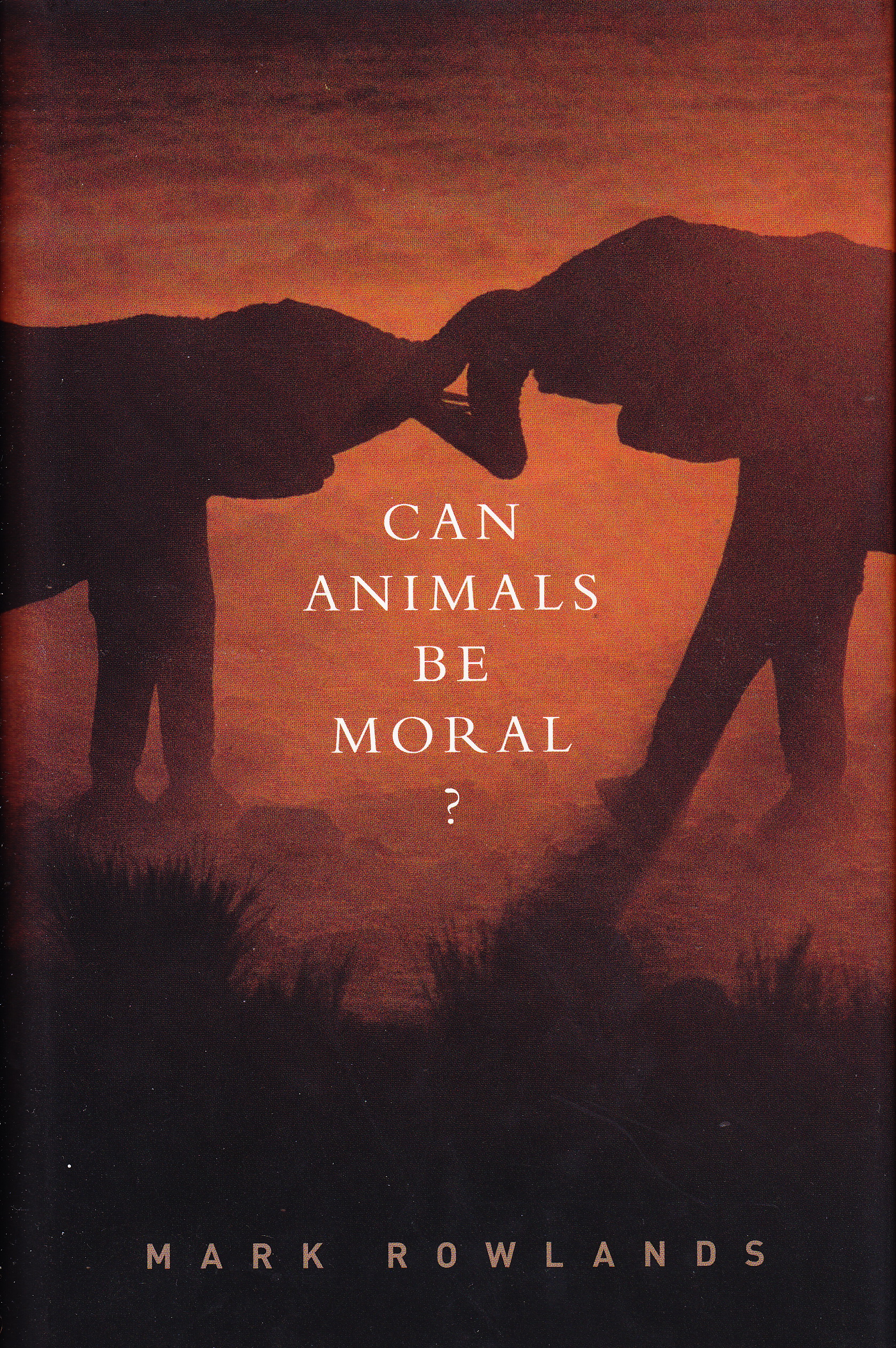
CanAnimalsBeMoralFor all of my life that I can remember, I have felt an affinity with animals. Even when I was relentlessly taught that evolution was wrong—Satanic even—I still held onto the idea that animals are more like us than they are different. I know this is partially the great sin of anthropomorphism (although I secretly doubt it is a mortal sin), but when I’ve interacted with animals, or watched them interact with each other, they’ve convinced me that they’re thinking. Since, however, we are the very top of the food-chain, we can’t allow such things. That’s why I turn to philosophy. Perhaps public transit isn’t the best place to appreciate fully a book of philosophy, but it’s the only time I have. Those who think categorically and with such rigid logic surely must have something to say on the issue of our fellow creatures. Mark Rowlands’s Can Animals Be Moral? is one of those books that might not be best read on a bus. I found myself constantly wanting to draw diagrams to visualize the course of his thought as we hit another pothole, or an angry bird killed a green pig in the next seat over.

While the animal stories that make such an engaging case are not a major part of Rowlands’s book, they nevertheless, for many of us lesser thinkers, seal the deal. When an animal acts in a way that shows its own lack of self-interest (how un-human!) we should sit up and pay attention. The question of morality, however, is thorny. Philosophers of ethics and religious analysts of the same seldom come near one another in their conclusions. We don’t know why we think morally, but it is clear we often do. It is obvious that it isn’t solely because of religion, although religion sometimes has a hand in it. It is, at the end of the day, a matter of feeling what is right. I feel that it is right to treat animals as thinking, feeling creatures. But are they moral?

Rowlands shows that some of the implications of animal morality can be serious. It was not that long ago that some animals were put on trial for the harm they’d putatively caused. Some were executed. (I wonder if they were eaten afterward?) If we attribute morality to animals, can they be blamed for their actions? Here is where the brilliance of Rowlands’s carefully argued book comes out—animals can be moral subjects without being moral agents. That is to say, they can act morally, but they can’t reason it out. I’m sure that I’m not saying this right, but the basic idea still appeals to me. Reading his final chapter on how moral Martians might view the naked apes of this planet gave me the chills. When we take ourselves off the top of the food-chain, the view becomes very sobering indeed. Would we want to be treated by Martians the way we treat animals on our own planet? Morality lies at the answer to that hypothetical question.


Exobiology

Are we alone in the universe? The answer is every day growing more and more certain that we are not. Humanity may experience shortages of many things, however, pride is not among them. For millennia we’ve been convinced of our own superiority and, of late, we’ve become convinced that we must be as good as it gets. We’ve mastered logic and our material world. We’ve sent probes to land on Venus and Mars, and flying by just about every other planetary body close enough to reach. We sure are smart. So it stands to reason that we are the brightest beings in a universe that we tell ourselves is infinite. A recent article on Exobiology that my wife pointed out to me on The Conversation, traces the history of the idea of life outside the earth. Not surprisingly, the idea has its origins in religious thought.

Giordano Bruno was an early modern Dominican who was burned at the stake for his heresies. Like his near contemporary Galileo, he was fascinated by the sky and postulated that the world up there could be full of life. A church increasingly under pressure from the pesky Protestant movement had no time for flights of fancy among the faithful. No, religion at the time wanted its feet planted on solid ground. The only life up there was angels and God. Still, the idea had been broached. Since the world’s major religions have been geocentric, as a rule, they’ve had a bit of difficulty adjusting to the idea of the other other. God as other is one thing, other creatures as other is quite another. How do earth-bound religions account for the possibility of life in space? This is not merely academic fancy at play. We will almost certainly discover life elsewhere—whether it comes to us (or already may have), or we go to it (which might take a little longer), we will discover that a universe that is infinite has infinite possibilities. Will religion keep us grounded?

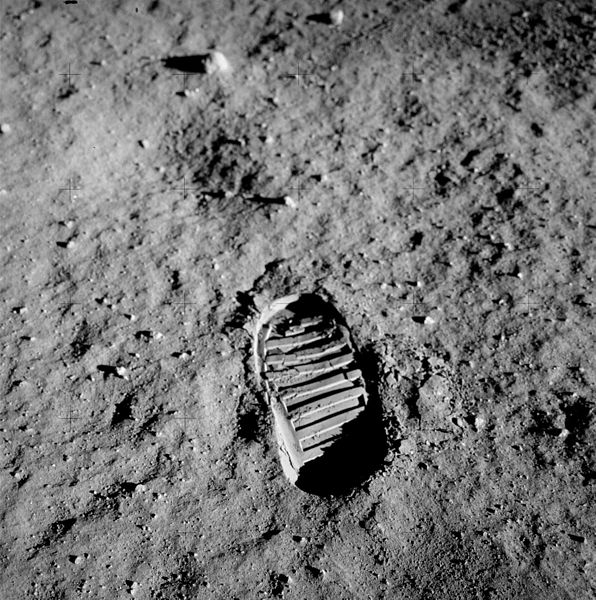
596px-Apollo_11_bootprint

Ironically, one of the areas where science and religion have broadly agreed is in the superiority of humankind. Both remain staunchly geocentric. Religions and tend to say we’re sinful, but other than that, pretty much the best the earth has to offer. Although biologists say evolution is non-teleological, they still have a hard time imagining something more advanced than us. We are pretty self-absorbed. Meanwhile, we are discovering water is likely not unique to earth. Rocky planets seem to be the rule rather than the exception. And there are billions and billions of stars in our own galaxy alone, among billions of others. What are the chances we’re alone? Virtually none. Here is one place that both religion and science might learn a lesson based on early spiritual teachings. In the face of the unknown, humility is the most logical response. I’m impressed in how far we’ve come in the last several millennia of civilization. I think, however, that we’d better be prepared to meet exobiology with a realization that Genesis 1 was only the beginning.


Trial and Error

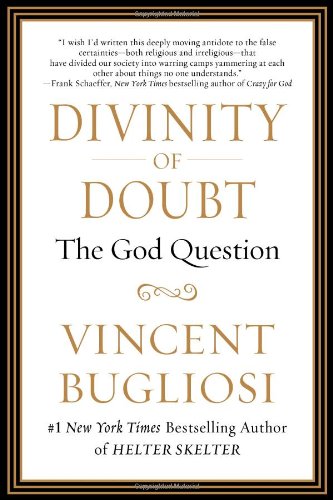
DivinityOfDoubtI’m not a fan of true crime. It seems that daily life has enough drama for me without reading about the truly dark aspects of human behavior. Nevertheless, I appreciate those who spend their life taking on perpetrators of evil. I haven’t read any of Vincent Buliosi’s true crime books, but I was curious about how a famous trial lawyer would treat the question of God. Bulgiosi’s recent book, Divinity of Doubt: The God Question, is a glimpse into an active, agile mind that is innately curious about the issue of the divine. Neither believer nor atheist, Bugliosi makes a strong case for agnosticism. He has no time for the nonsense of many religious beliefs, and like a lawyer, won’t let shoddy excuses such as “it’s a mystery” justify unacceptable answers. Many Christians (especially) would find his unrelenting logic a little distressing. If we accept reason, he fairly demonstrates, the God of traditional Christian design is not possible. Still, he acknowledges that religion has very positive aspects.

Before the angry atheists can begin laughing, however, Bugliosi turns his sharp mind to the arguments of Dawkins, Hitchens, and Harris to show how none of them really make a strong case for atheism either. He notes, as Dawkins does at one point, that proving the absence of God (or anything, for that matter) is not logically possible. There’s always the possibility that, beyond the edge of what you’re arguing, the object in question may lurk. Nevertheless, a strong case might conceivably be built, but Bugliosi declares that it hasn’t. Many atheists attack religion and think they’ve destroyed God. Not that Bugliosi is a friend of God. Indeed, to borrow a title from one of his nemeses, C. S. Lewis, he might have called his book God in the Dock.

Divinity of Doubt is one of those books that throws many questions open. Being an agnostic, of course, Bugliosi is fine with that. Although the book is enjoyable and thought-provoking, there are a few uneven parts. It is difficult to keep logical rigor at fever pitch continuously. Some, no doubt, will find his doubts about evolution puzzling. Others (or the same) may find his understanding of death a little under-developed. Nevertheless, it is refreshing to read a clearly thought-out account of how the proof and disproof of God are equally problematic. Some things you just can’t know. Don’t say that it’s a matter of faith, however; Bugliosi won’t let you get away with that. At times funny, written with verve and wit, this account keeps the reader moving along, even though most people will find something to seethe at along the way. Don’t let it lead you to crime, though, because you wouldn’t want Bugliosi on the prosecution against you.


Darwin Down the Road

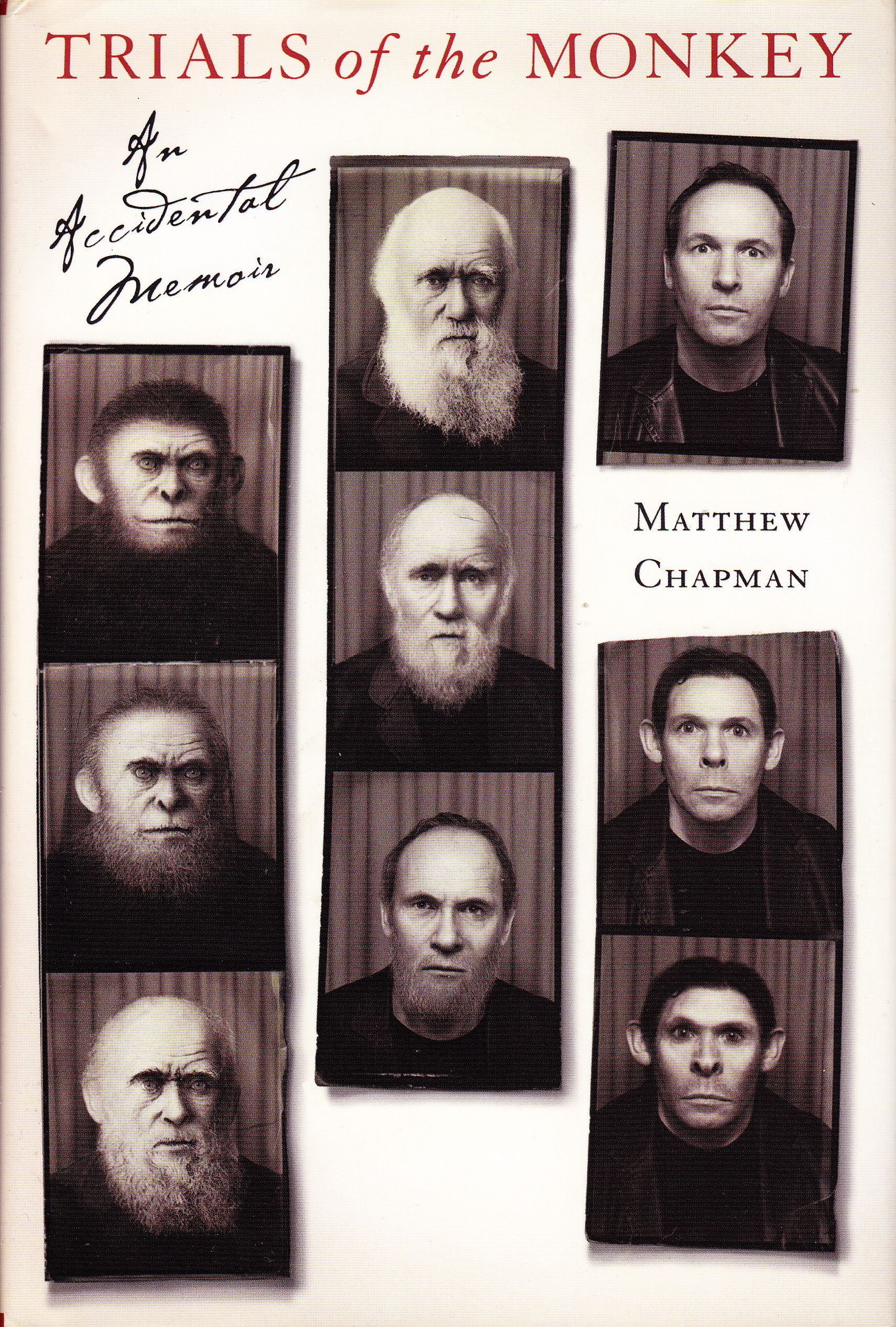
Chapman TrialsThe accidents of birth are the stuff of evolution. When I first heard of Matthew Chapman, direct descendent of Charles Darwin, over a decade ago, I was determined to read his book (then new). Like the accidents of birth, the finding of books at used bookstores is also a kind of evolution, so I picked up Trials of the Monkey: An Accidental Memoir recently and finally read it. Mission accomplished. It had been long enough that I couldn’t recall what the reviews said that made me so eager to read it—I had been developing a course on science and religion at Nashotah House and had been reading about evolution—but I’m glad I got around to it. The book was neither what Chapman nor I had expected. Maybe I’d better explain.

The year 2000, apart from its millennial aspirations, was also the 75th anniversary of the Scopes Monkey Trial. Chapman, a screenwriter from England, decided to go to Dayton, Tennessee to report on the reenactment of the Scopes Trial that was caused, accidentally, by his great-great-grandfather. With acerbic and self-deprecating wit, he narrates how he missed the performance by arriving for the wrong weekend and yet how he’d already begun the book based on it. Instead of reviewing the reenactment, he wove his own life story into those of the people he met on his two trips to Dayton, and left us with an engrossing memoir. Most Europeans, we know, consider American reaction against evolution with some puzzlement. As an Englishman, Chapman shares that curiosity and also, he admits, kind of wanted to make fun of southerners. His encounters, however, forced him to realize just how human all people are.

There’s a healthy dose of exposure to some of the weird ideas of fundamentalism here, but Chapman pulls no punches. The people he met treated him kindly. Some fundamentalists were even likable, even though they could not agree on much. At turns very funny and very sad, this autobiography represents, in its own way, the tensions of any life. The sensual confessions would have made famously squeamish Darwin blush, no doubt, but demonstrate to the reader that a man who can make a lot of money writing movie scripts can be very human as well. And so can the religious. The denizens of Dayton didn’t convince Chapman that their exclusive faith was true. They did, however, open him to the realization that such faith is not as simple as it may seem. A fortnight may have passed since the millennium, but creationism has continued to gain ground. Until more people take Chapman’s cue and actually try to understand those who believe, the trial of the century will continue to go on and on, ever evolving.


Small Town Heroes

When World War Three starts I hope someone will let me know. You see, I barely have time to satisfy the needs of employers and tax collectors to get everything done in a day, let alone read newspapers. Or Facebook. I check my page, very briefly, twice a day and get on with the business that I’m assigned in life. But yesterday I had a notice from a high school friend that one of my teachers had died. Since I don’t name people I know here without their permission, suffice it to say I took a current events course with this teacher in either my junior or senior year. Then, as now, I didn’t read newspapers. Given the small town rags available in rustic regions, there was often not much mentioned beyond deer season and local tragedy anyway. Originally enrolled in the regular curriculum, several friends told me, “You’ve got to take Current Events! The teacher is great!” Those who’ve influenced my life for the good were great teachers, and despite my reservations, I took the class. When it came time to sign up for projects, I was a bit flummoxed. What did I know of current events?

Our teacher kindly allowed me to offer evolution as a topic. It was occasionally in the news then. Six of us decided to debate the issue, three for, three against. My religion having held me in a headlock, I was the lead debater against evolution. The day for the debate came and we ran over the bell. Our teacher, with his usual calm wisdom, suggested we continue the next day. And the next. Three days of sometimes acrimonious debate and it looked, from my point of view, as if creationism had demolished evolution. How terribly naive I was. Ironically, I had just posted a piece on evolution yesterday when I saw the notice about my teacher’s demise. The position in my post was a sharp 180 from high school. It was a tribute to the love of education.

Source: Wellcome Images, Wikimedia Commons

Source: Wellcome Images, Wikimedia Commons

I was an outsider in high school. I literally lived outside of town and after school activities were not really feasible. We were poor and couldn’t afford extra-curriculars anyway. I wore a large cross on my chest and although I was shy, I felt that it said all I had to say. My teachers, to their eternal credit, let me explore. In college I learned about Fundamentalism. I had never heard the term although I grew up in it. Gently my teachers nudged me to think more deeply about things. Through three degrees delving more profoundly into the origins of religion, as well as humankind, I came to see the errors of my ways. Had I been forced in high school I would’ve fought back. Instead, a persistent, patient wisdom guided many of my teachers. I don’t know how they recognized that I might be worth salvaging, but they apparently did. They let me speak, they let me trip. Just as I was about to fall they caught me. And I hope, in my own small way, to repay this favor in kind.


Literally Biology

In a New York Times opinion piece on a recent Sunday (ironically, always on a Sunday), college biology professor David P. Barash submitted an article entitled “God, Darwin and My College Biology Class.” Barash notes that increasingly students come to his class thinking evolution is more or less optional. I found the same thing teaching religion classes. When student presentations at state universities addressed Genesis it was fairly common to have a large number of undergraduates suggesting that evolution is “just a theory” and “intelligent” design was a viable option. I tried to show them in class that the Bible does not support the shenanigans that creationists impose upon it, but the message rolled off like rain from an evolved waterfowl. Still, I do have to take exception to some of Barash’s broad strokes. He feels that religion and science cannot coexist. I wonder, however, what he means by religion.

Religion is an ill-defined word. One of the most pragmatic usages I’ve heard is that religion is what people use to give meaning to their lives. Religions may be theistic or a. Religions may be anti-science or pro. Religion, per se, is no threat to science. Fundamentalism is not religion. Fundamentalists use religion to further their ends, which are often political. Since many religions grew up around sacred writings the urge was there from the beginning to take these holy words literally. They gave meaning in a pre-scientific era. Newton, Galileo, Darwin—and even before them Plato and Aristotle—simply shifted the angle of illumination. The problem is that many religious believers feel they have the answers already. New facts only confuse the issue. Left to their own devices such beliefs quietly go extinct.

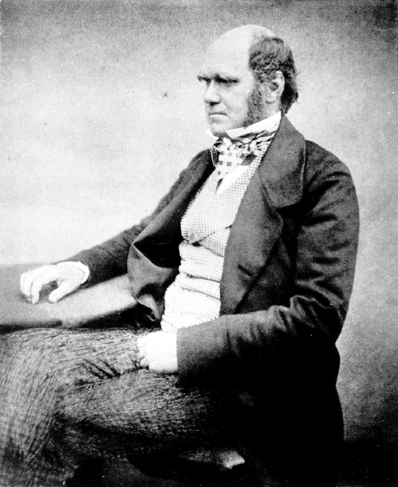
Charles_Darwin_aged_51

It is only when a conscious decision is made to champion archaic writ against empirical evidence that science and religion join combat. Most religious people in scientifically advanced societies have no problems with evolution or particle physics. They simply show the way the world is. The vastness of the universe should give us all pause, but it does make you wonder which way to point your telescope to spy the almighty. I sympathize with Barash. It is not easy to find many of your students, in either science or religion classes, with their minds already made up. Still, it might help to realize that religion is not the culprit here. Literalism is a kind of mental problem. Until it is rightfully separated from religion we will all be left wasting valuable class time trying to convince students of the facts of life.


Waking Up in Galilee

One voice can’t be heard. Unless, of course, it has a publicist. For years, it seems, I have been suggesting in my obscure corner of the internet that we’re not quite ready for the death of religion yet. I’ve never really doubted science, but I have noticed that science frequently draws the same conclusions as religion. Evolutionary biologists and neuroscientists exclaim, with some surprise, that religion has a survival advantage. Of course, big men with white beards sitting on thrones in the sky just won’t do, but the underlying concept has utility. So we’re told. Now Sam Harris, author of The End of Faith, one of the four horsemen of the new atheists, tells us that it’s okay to experience what has been known as, conventionally, a religious experience. Call it transcendent (I always do), but no matter what the chemical mix you concoct in the brain, it will feel good. Perhaps better than anything merely biological ever will. You’ll sell a million books. If you’ve got a publicist.

To me it seems that the religion question is a no-brainer. It wouldn’t persist if we had no need of it. Unlike the appendix, which seems not to have taken the hint that it is entirely vestigial, religion helps people (and perhaps some animals) survive. It doesn’t have to be sitting on an uncomfortable pew on a Sunday morning. It might be in the giddy heights of the Rocky Mountains where you can see to eternity and beyond and the rarity of the oxygen makes you lightheaded with a hologram of immortality. It might be the piercing peace that comes with light refracted through a glass so blue that superlatives fail you. It might be in imaginary vistas of an ice-bound Arctic where, you’re just certain, Nordic gods linger just out of sight. Transcendence can even come from traditional religious experiences, or so the stories of the saints proclaim. Anyone can participate. Those who have never forget.

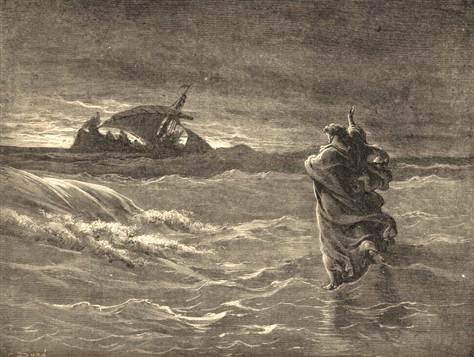
The New York Times, in the Sunday Review piece by Frank Brunl (Between Godliness and Godlessness) introduces Sam Harris’s new book, Waking Up. I know I’ll read it. According to the article, Harris discusses his own experience of transcendence. When Harris has such a revelation, it is a best seller. Or it will be. For those of us who quietly suggest moderation between bombastic religion and bombastic science, it is merely another day in the life of the quiet ones who observe without being heard. True, it takes courage in this culture to dole religion a knock on the head. It is not, however, going to send faith to a premature grave. We still need our religion. We might not call it that any more. Name it spirituality, or transcendence, or mystic mumbo-jumbo, but when it hits you it’s like an atheist in Galilee. Some call it a electrochemical reaction in the brain. Others call it walking on water.

Dore Walk on Water