Literally Biology

In a New York Times opinion piece on a recent Sunday (ironically, always on a Sunday), college biology professor David P. Barash submitted an article entitled “God, Darwin and My College Biology Class.” Barash notes that increasingly students come to his class thinking evolution is more or less optional. I found the same thing teaching religion classes. When student presentations at state universities addressed Genesis it was fairly common to have a large number of undergraduates suggesting that evolution is “just a theory” and “intelligent” design was a viable option. I tried to show them in class that the Bible does not support the shenanigans that creationists impose upon it, but the message rolled off like rain from an evolved waterfowl. Still, I do have to take exception to some of Barash’s broad strokes. He feels that religion and science cannot coexist. I wonder, however, what he means by religion.

Religion is an ill-defined word. One of the most pragmatic usages I’ve heard is that religion is what people use to give meaning to their lives. Religions may be theistic or a. Religions may be anti-science or pro. Religion, per se, is no threat to science. Fundamentalism is not religion. Fundamentalists use religion to further their ends, which are often political. Since many religions grew up around sacred writings the urge was there from the beginning to take these holy words literally. They gave meaning in a pre-scientific era. Newton, Galileo, Darwin—and even before them Plato and Aristotle—simply shifted the angle of illumination. The problem is that many religious believers feel they have the answers already. New facts only confuse the issue. Left to their own devices such beliefs quietly go extinct.
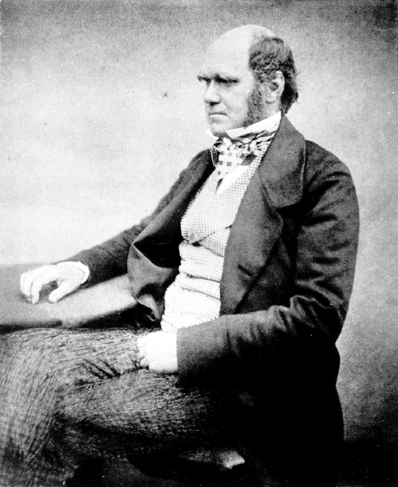
Charles_Darwin_aged_51

It is only when a conscious decision is made to champion archaic writ against empirical evidence that science and religion join combat. Most religious people in scientifically advanced societies have no problems with evolution or particle physics. They simply show the way the world is. The vastness of the universe should give us all pause, but it does make you wonder which way to point your telescope to spy the almighty. I sympathize with Barash. It is not easy to find many of your students, in either science or religion classes, with their minds already made up. Still, it might help to realize that religion is not the culprit here. Literalism is a kind of mental problem. Until it is rightfully separated from religion we will all be left wasting valuable class time trying to convince students of the facts of life.
Waking Up in Galilee

One voice can’t be heard. Unless, of course, it has a publicist. For years, it seems, I have been suggesting in my obscure corner of the internet that we’re not quite ready for the death of religion yet. I’ve never really doubted science, but I have noticed that science frequently draws the same conclusions as religion. Evolutionary biologists and neuroscientists exclaim, with some surprise, that religion has a survival advantage. Of course, big men with white beards sitting on thrones in the sky just won’t do, but the underlying concept has utility. So we’re told. Now Sam Harris, author of The End of Faith, one of the four horsemen of the new atheists, tells us that it’s okay to experience what has been known as, conventionally, a religious experience. Call it transcendent (I always do), but no matter what the chemical mix you concoct in the brain, it will feel good. Perhaps better than anything merely biological ever will. You’ll sell a million books. If you’ve got a publicist.

To me it seems that the religion question is a no-brainer. It wouldn’t persist if we had no need of it. Unlike the appendix, which seems not to have taken the hint that it is entirely vestigial, religion helps people (and perhaps some animals) survive. It doesn’t have to be sitting on an uncomfortable pew on a Sunday morning. It might be in the giddy heights of the Rocky Mountains where you can see to eternity and beyond and the rarity of the oxygen makes you lightheaded with a hologram of immortality. It might be the piercing peace that comes with light refracted through a glass so blue that superlatives fail you. It might be in imaginary vistas of an ice-bound Arctic where, you’re just certain, Nordic gods linger just out of sight. Transcendence can even come from traditional religious experiences, or so the stories of the saints proclaim. Anyone can participate. Those who have never forget.

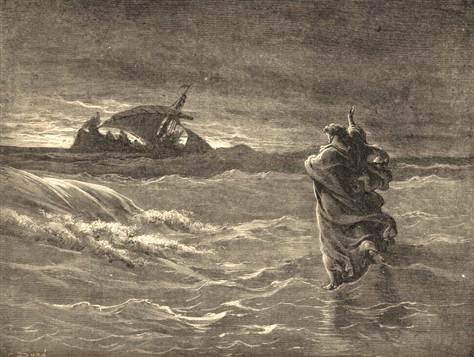
The New York Times, in the Sunday Review piece by Frank Brunl (Between Godliness and Godlessness) introduces Sam Harris’s new book, Waking Up. I know I’ll read it. According to the article, Harris discusses his own experience of transcendence. When Harris has such a revelation, it is a best seller. Or it will be. For those of us who quietly suggest moderation between bombastic religion and bombastic science, it is merely another day in the life of the quiet ones who observe without being heard. True, it takes courage in this culture to dole religion a knock on the head. It is not, however, going to send faith to a premature grave. We still need our religion. We might not call it that any more. Name it spirituality, or transcendence, or mystic mumbo-jumbo, but when it hits you it’s like an atheist in Galilee. Some call it a electrochemical reaction in the brain. Others call it walking on water.

Dore Walk on Water


Religion, Technically

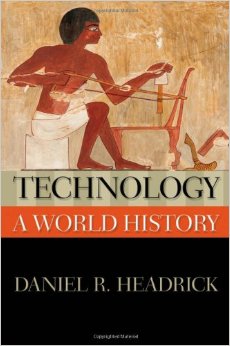
Technology World HistoryOne of the truths of history is that technology has always been with us. Reading Steampunk stories always boosts my historical sense of the interaction of technology and civilization. Civilization, to the best of our knowledge, coalesced around the idea of religion. Kings rule at the behest of gods because, if it came down to just a matter of swords and games of thrones, there’s always somebody who’s willing to die for the sake of challenging authority, or taking it over. Unless the gods give it to someone. With this in mind I read Daniel R. Headrick’s Technology: A World History, a brief exploration into how we progressed to a hive mind (not his word) through smartphones from an initial band of scared apes two-footing it across the savanna with pointy rocks. The whole trip may have taken millennia, but once we reached a couple of flash points (the “Big Bang” of about 70,000 years ago when abstract artifacts began to appear, and then the birth of civilization about the time Sumer was organized) things sped up at a dizzying pace. Despite the anti-science rhetoric of the Religious Right, there’s no denying that we’re not in Eden any more.

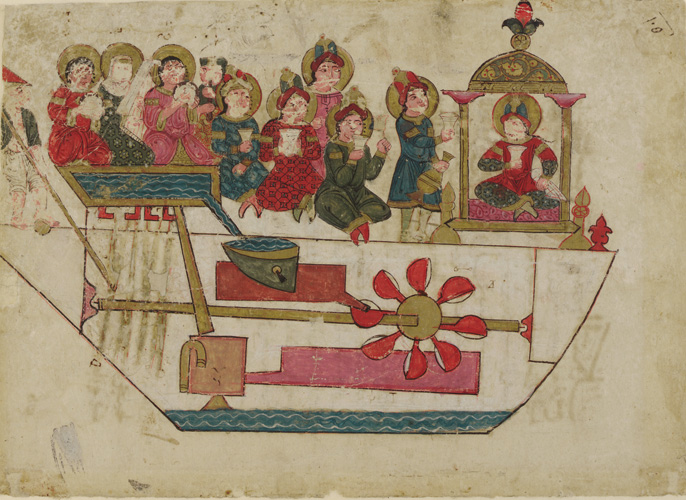
We are accustomed to think of technological development as being cold and rational. Trial and error, based on brute mental power willing to bully through the dark forest of superstition, leading us to new heights. But from the early technology that led to Stonehenge and the pyramids to the coded message “What hath God wrought?” religious wonder has stood behind technological development. Indeed, in reading Technology it became clear that up until very recent times scientists got along with god, and sometimes even shared the credit for the devices they created. Reading about the Antikythera mechanism had me thinking along these lines: if someone had invented a kind of computer millennia ago, why didn’t it transform society in the first century before the Common Era? The answer can’t be that it sank beneath the Mediterranean, because other such devices likely existed. Why no Roman Empire Industrial Revolution?

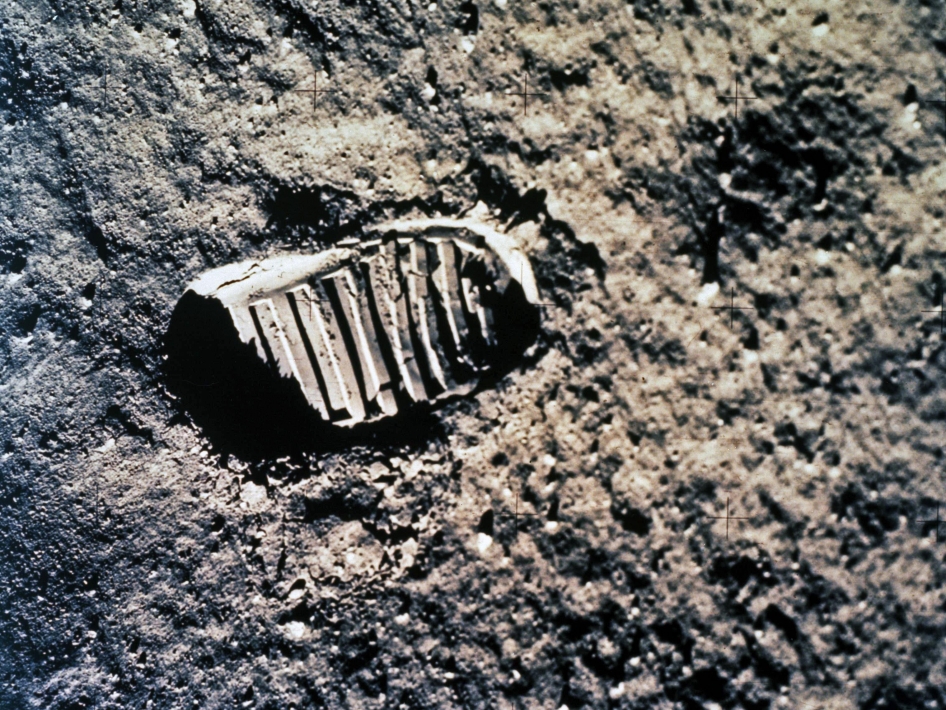
Headrick makes it clear that early societies sometimes did not promote technologies. Technology was not just a matter of what we could do, but it was a means of social control. Those who charted the flow of wealth and power would have interest only in technologies that enabled the continued growth of that system. All the rest was just icing. People knew the basics of electricity long before a practical use was found for it. Petroleum products were known even to the Sumerians. The wheels of industry, however, are greased by more than just oil. We construct worlds, and gods used to direct our efforts. Now we let our technocrats call the shots. We write blogs wondering how religion fits into a nano-tech world. There may be some logic in it, but once we’ve left our footprints on the moon—who used to be a god—we’ve replaced the deities in the celestial sphere with those in our own heads. And there’s no going back.


Religion Fiction

Children brought up in a religious environment, according to a recent BBC story, are more prone to believe in fictional characters. The story, based on research from my alma mater, Boston University, suggests that if children are taught to believe miraculous stories at a young age, they will more likely believe that fictional figures are based in reality too. Undoubtedly this will be seen as yet another brick in Montresor’s wall by those who can find no good in religion. The reasoning will go something like this: believing in no religion is the “neutral” position. If we raise children in a religious context, we are inclining them toward a fictional belief system and making them less likely to reason their way out of it. Therefore, we should raise children secular.

Even in the BBC story there are dissenting voices. Perhaps children who learn about Jesus find Thor a more compelling character. Perhaps they are open to possibilities that logic shuts out. Our brains have two hemispheres for a reason. I often wonder whether it is possible to be fully human while ignoring about half of what evolution gave us to work with. Logic tells me that religious belief serves a survival function. And my creative side still appreciates the possibilities that my Manhattan brain is forced to shut down every day when I punch the clock. If there’s nothing more than work, perhaps believing in fiction serves a valuable function after all. But I suspect this is playing right into the rationalists’ hand. Pass me another brick, will you, Fortunato?

The jury, however, is still out on the nature of reality. Even for materialists. Gods of the gaps tend not to survive very well. The question is actually much larger than that. We don’t know the nature of ultimate reality. We’re not even sure what reality is yet. Can a parent who believes in God, after the experience of growing to maturity in a heartless universe, be blamed for teaching their children the same? No humane parent raises their child purposefully teaching them falsehoods. Yes, some children are damaged by religious upbringings. Some are damaged by materialist upbringings as well. What seems to have shifted, in my humble opinion, is the popular perceptions of religion. What used to be understood as the foundation of a civil society is now challenged as a harmful fantasy that encourages children to grow up into terrorists or non-functioning adults. The belief that we can raise children with no biases, however, is clearly fiction. Until we have the full truth, there should be room for both Gilligan and the Professor on this island. But then again, I was raised to believe in the divine world, so what do I know?

Fact or fiction?

Fact or fiction?


Evolution’s Snapshots

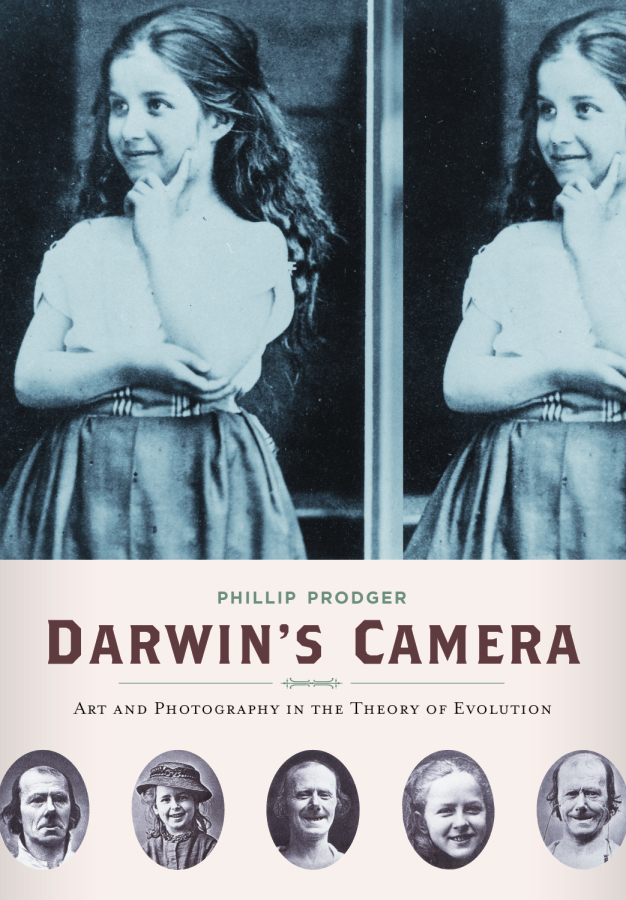
DarwinsCameraIn America’s political climate any book about Darwin takes on a religious cast. As strange as it may seem, an odd equation exists between Darwin, evolution, creation, and the Bible. We forget that Darwin was a retiring man with many interests and a very keen intellect. Erstwhile groomed for the clergy, he lived at a time when much of the world was known really only to the local inhabitants, and observations were still mostly made by the human eye in person. So it was that as photography developed, a new avenue into science opened up. Darwin’s Camera, by Phillip Prodger, is a rare look into, as the subtitle says, Art and Photography in the Theory of Evolution. Darwin wrote several books. Among them was The Expression of the Emotions in Man and Animals. This book was among the first scientific tomes published with photographic evidence to illustrate, if not prove, the points being made. Prodger takes us through the process by which Darwin procured and commissioned his photographs for the book and reveals some deeper truths about his life.

Interestingly, one of the sources of early photos was asylums. There was a belief, apparently, that photographs might be used diagnostically. One of the emotions that was presented to Darwin for his consideration was religious rapture. (Not that I can make any great claims here, but having experienced at least mild versions of such states—whatever their physiological cause—I know that they are powerful.) The observation comes through that religious rapture is difficult to distinguish from insanity, on the face of it. This may sound like an anti-religious slur, but it’s not. Ask around the mystics and you’ll see what I mean. Sanity has its uses, to be sure, but mysticism is all about letting go.

The only real religion in this book comes in the confrontations to Darwin’s evolutionary theory. Prodger does, however, briefly delve into Darwin’s late (and brief) concern about spirit photography. Shortly after cameras were developed, photographic tricks evolved. The Victorians, as we all know, had a very palpable sense of death’s nearness. It is no accident that Spiritualism developed during this time period when a reasonable lifespan was anything but assured. Spirit photographers claimed to capture ghosts of the dead revisiting the living. Darwin, who’d lost a beloved daughter prematurely, knew what grief was. He did not, however, allow it to interfere with his critical thinking. Photographs could be used to prove a point, but they could also be used to make a false claim. Darwin’s success in his book on emotions falls somewhere in the middle. He did have to have some staged shots to illustrate his point. Ever the gentleman, however, Darwin’s decisions were made to enlighten, not to deceive. One wonders whether creationism can even remotely make that same claim.


Flying Sorcery

In a post on the Huffington Post recently Michael Zimmerman, founder of the Clergy Letter Project, wrote about the strange antipathy of Ken Ham to the search for extraterrestrial life. Ham, founder of a creationist museum and self-appointed spokesman against evolution, has gone on the record saying that aliens cause problems for a creationist worldview. Therefore they can’t exist. Indeed, creationists should reject aliens because of the flat earth the Bible presents. Zimmerman, with his usual unfailing reason and wry humor, demonstrates the multiple difficulties both with Ham’s understanding of science and of the whole alien agenda. The Bible doesn’t address the modern world on many fronts, which is why literalists so often find themselves out of step with the issues of the day. When the final period (an anachronism, I know) was placed at the end of Revelation, it was expected that the world wouldn’t be around much longer, tottering as it was on the underground pillars that held it up. Somehow the Roman Empire came and went without any kind of cataclysm ending it all, and literalists have been backing and filling ever since.

Ham’s angst about extraterrestrials, however, is not shared by all Fundamentalists. I recall going to a session way out at a country church as a child where the guest speaker, a firm believer in aliens, talked about the “sheep in other folds” referred to by Jesus as aliens. I recall the eerie feeling as we drove home under a dark sky with fliers depicting flying saucers and assurances that we were not alone. In college, when I discovered Larry Norman’s music, I was struck by his lyric “If there’s life on other planets, then I’m sure He must know, and He’s been there once already, and has died to save their souls.” Literalists, like Catholics, take multiple views on the question. It seems a terrible waste of space if, in this infinite universe we’re the only sparks of consciousness around. I’ll leave “intelligence” for time to decide.

What would Genesis do?

What would Genesis do?

Ironically, Ken Ham doesn’t seem to have considered the up side of aliens, at least for his point of view. If the extraterrestrials end up looking like us, that does raise some serious questions about evolution. How did it work identically on two different planets to produce such similar results? You’d think maybe Fundamentalists might welcome aliens with open appendages. Of course, some have gone far off the other end and declared that angels and aliens are the same thing. The problem of the literalist world view is that it is severely limited. The Bible never foresaw the internet or the airplane or even the true nature of our own solar system, let alone the infinite sea of space beyond. In charting a course for belief, accurate maps are necessary. As Zimmerman points out, those maps, of necessity must contain the stars. And as we continue to evolve infinite worlds of possibilities await.


As a Child

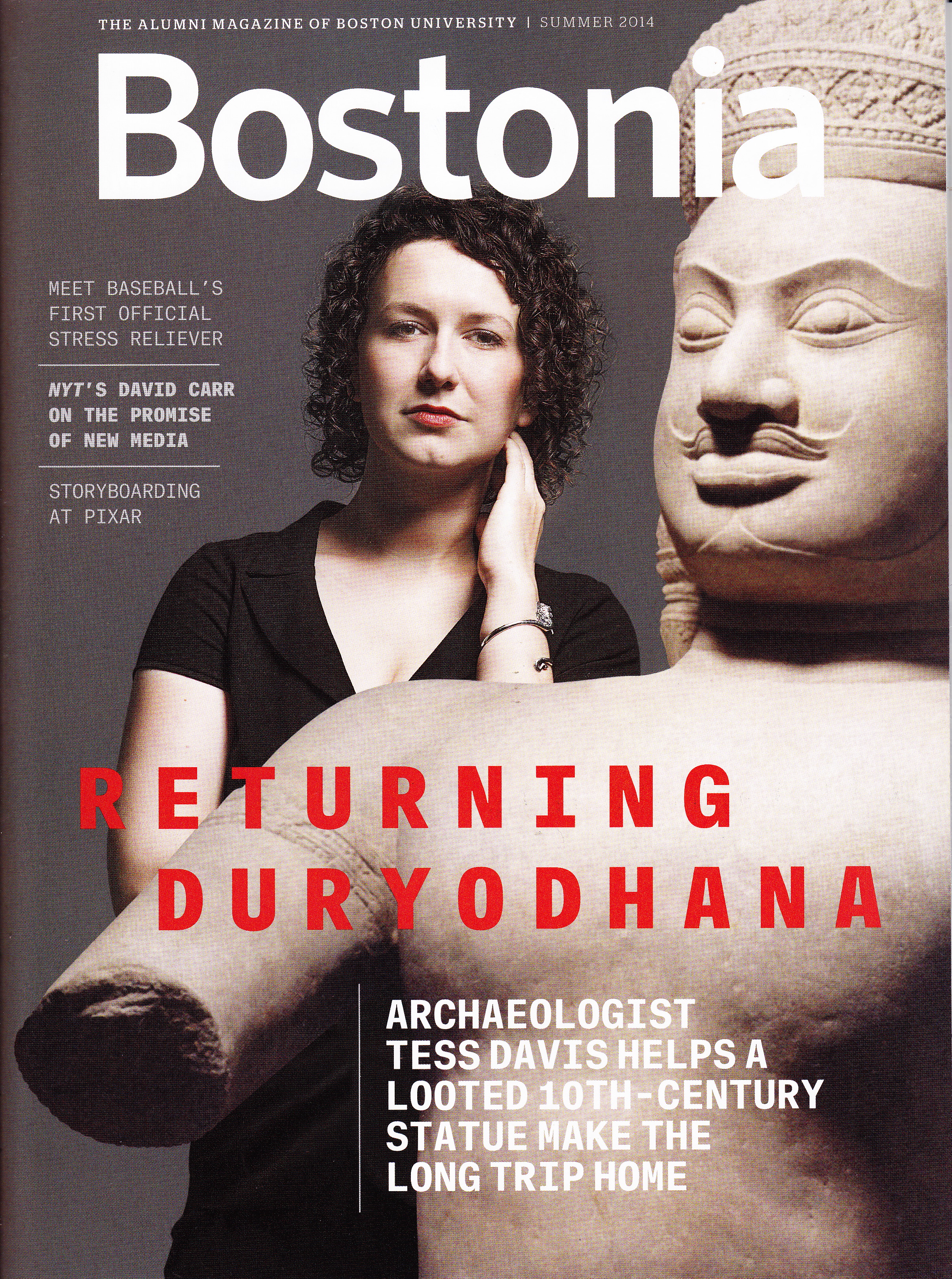
At a certain age, when alumni magazines arrive (and they will), one starts first by opening to the necrology. Who didn’t make it as far as me, after all? There’s a poignancy to it—knowing that at any age we’re vulnerable—but many of us felt a kind of immortality in our younger years that is only belied and effaced with the passing of time. The articles in the alumni magazines feature those who made it better than you, fellow students and faculty who made a genuine breakthrough. You should be proud of having the privilege, they seem to say, of having attended in her or his shadow. But once in a while, those self-serving articles do touch on the issues of the necrology where I always start. Boston University’s most recent edition boasts an article “You Are What You Feel” by Barbara Moran.

Bost

Intellectuals, in what I like to call the Spock Fallacy, frequently suggest that rationality is the whole story. Or at least the better part of it. If the left brain could only just subdue the right, and all decisions could be logical, wouldn’t this world be a better place? Better, maybe perhaps, but not human. We require our emotions for more than just feeling good. Studies suggest that thinking would be difficult, if not impossible, without them. So Bostonia profiles the work of Natalie Emmons, suggesting that ideas of immortality are more than just cultural relics. Perhaps our brains reason eternity for ourselves from some deep well we’ve not yet discovered. Emmons, and co-author Deborah Kelemen, are psychologists who study children’s idea of prelife—where we were before this. It is pretty difficult to imagine the world getting along without us. But the research suggests that intuition, rather than culture, gives us religious concepts such as immortality.

Substituting intuition for an actual essence, however, puts us in that odd place of using a word we can’t define. Scientists frequently fall back on intuition as an explanation for animal behavior that, in most instances, seems to suggest thinking that couldn’t have been acquired the usual way. How do salmon, fish that hardly seem like doctoral material, know to return home and swim upstream? How do newly hatched sea turtles know to crawl toward the water? Birds and butterflies to migrate? Instinct is a handy fallback, for sure. The research of Emmons and Kelemen suggest that children reason (note) prelife based on observations of actual life. The mind is the product of the brain. In my department at Boston University, another set of variables applied, focused mainly on surviving through the other end of the journey. It is with those in mind that I thumb through the necrology and hope, irrational as it may be to do so, that maybe the children are right.


Forbidden Zones

Dawn_of_the_Planet_of_the_Apes

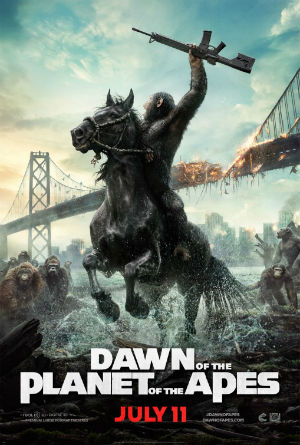
I grew up with talking apes. Well, I was actually about six when Planet of the Apes was released, but it quickly became one of my favorite movies. With a screenplay co-written by Rod Serling, and that very unorthodox conceit of evolution playing visibly on the surface, it was the forbidden fruit. Since, according to our fundamentalist doctrine 1) animals can’t speak, 2) evolution never occurred, and 3) the world was going to end long before 3978, we were not prevented from watching what was obviously fiction. And watch I did. There were spin-off cartoons, not to mention the following movie and television series. An unsuccessful reboot by Tim Burton was followed by Rupert Wyatt’s intelligent, if somewhat sentimental version. And I’ve seen them all. Finances being what they are, and, since my family does not share my enthusiasm for the apes, I’ll probably have to wait for the home-viewing release of Dawn of the Planet of the Apes to enjoy the latest offering.

In the meanwhile in a nearly glowing review in this week’s Time magazine, Richard Corliss has indeed whetted my appetite. The original series of Planet of the Apes movies had, like many films of the late sixties and early seventies, a strong, underlying social critique. Yes, one can see only so much of Charlton Heston’s bare chest, but there was something more going on here—something to which we needed to pay attention. The Burton version went for a parsimonious special effects extravaganza, but the storyline was devoid of much underlying reflection. Good ape, bad ape, all the way. Now, as we are moving into the third major incarnation of Pierre Boulle’s dark vision of our distant future, we see that the apes are maybe the real humans here. Maybe they were from the very beginning.

Perhaps because of its ability to slip beneath the Moral Majority radar in the guise of science fiction, the talking apes have been part of American culture for almost my entire life. The original movie introduced the idea of the Forbidden Zone, that region where the truth lay buried, waiting to be discovered. There was a not-so-subtle jab here at a world where politics was continually being revealed as just another human bid for power, and a Cold War was threatening our very existence. We survived and continued to evolve. Still, we find a kind of social catharsis in the apes, and I worry just a little bit at Corliss’s use of the word apocalypse. The apes have always been remarkably prescient. For some of us, they were more than mere entertainment. And so I’ll patiently wait until I can watch the apes alone in the privacy of my home, to learn what the future might hold.


Fish Fridays

There’s an old myth among Protestants that on Fridays Catholics eat fish because fish are sinless animals. As far as I’ve been able to determine, this is pure fabrication on the part of curious outsiders. Still, it has grown a mythology of its own. Some say that the non-pecuniary piscines are that way because they, naturally, survived the flood. I’ve often wondered how that impacted the fresh-water varieties of fish, or if they evolved after the fact. In any case, the story, it seems, has grown with the telling. Fish on Fridays has nothing to do with the fish and everything to do with the people. And so does standing in line.

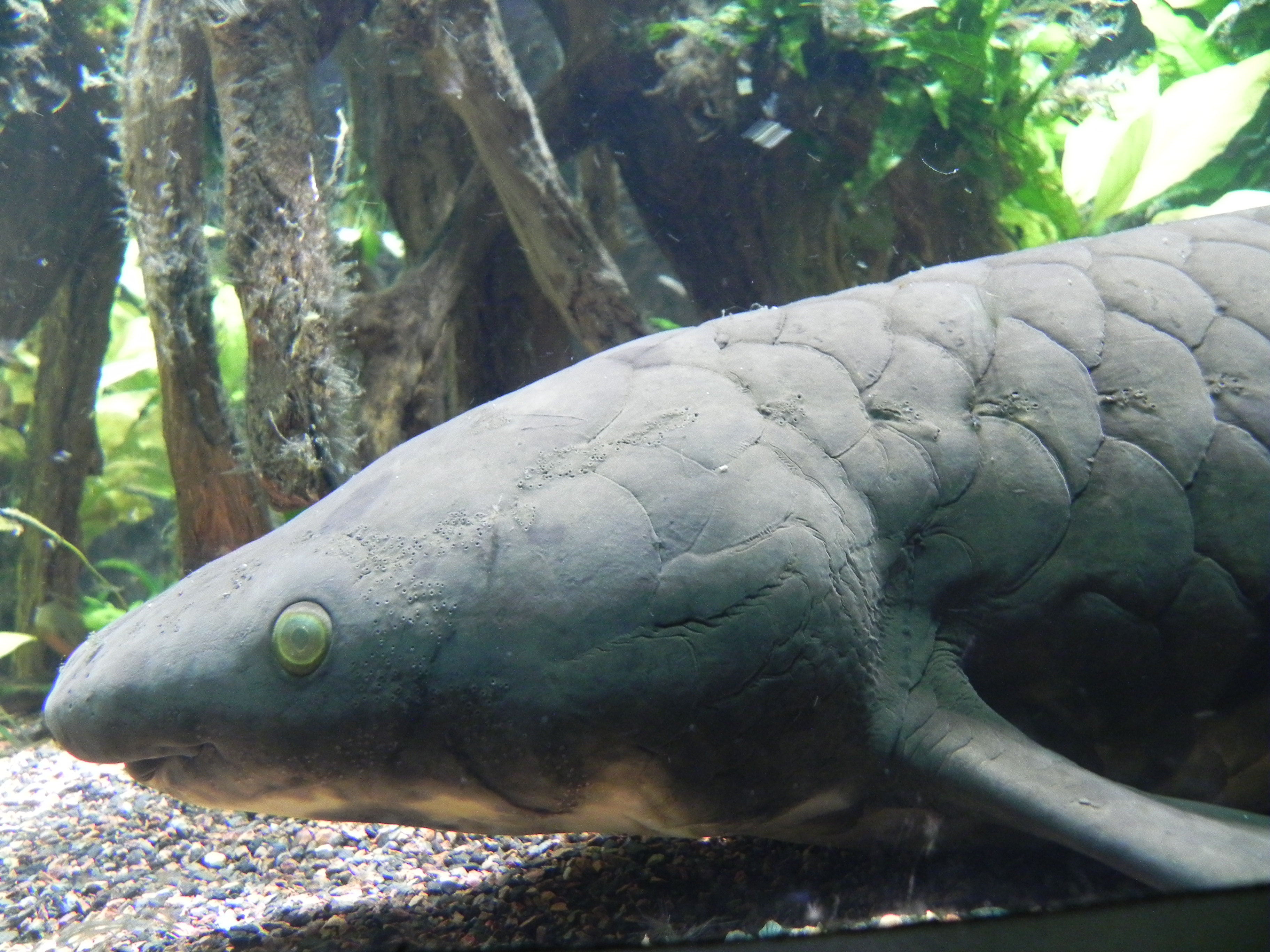
DSCN4792The New England Aquarium is, ironically, one of the big draws on a rainy day in Boston. I’ve stood in longer lines before, but after a late night of truncated fireworks and waiting an hour for a T train home after being thoroughly soaked, it is a test of endurance to stand for over an hour-and-a-half in rain encouraged by Hurricane Arthur. To see fish. To find sinlessness. The ocean, it always seems to me, is one of the places where human greed has not yet been fully realized (not that we haven’t tried) but in which we’ve dipped our polluting fingers time and again. Still, fish are fascinating. Watching them make lazy circles around the 200,000-gallon giant ocean tank, the many ways that creatures have evolved to swim enchants me like a kid. Of course, the real draw, for many, is the penguins. Psychologists have explored the human fascination with anthropomorphized animals. Penguins in their “formal attire,” clumsily totter about on two legs and occasionally display very human behavior. At feeding time some are polite, waiting their turn, while others are aggressive and pushy. If someone is too greedy, the bird next in line will push him or her off the rock into the water, where the offender has to come back to the group, having lost his or her place. Where does sin enter this picture?

Seeing fish on Friday has me wondering why we declare some animal behavior sinful and other animal behavior saintly. Wandering the four stories of this aquarium crowded with others seeking to avoid the rain is often like looking into a mirror. Do these animals realize they are trapped? Although the sea lions and seals seem happy and enthusiastic, and the penguins just bored, it is difficult to read the face of a fish. So after a long day standing, my family heads back into the rain, hoping to make it to some restaurant before this rain beats our weary umbrellas into utter submission. There’s almost no traffic today, but one driver speeds through the puddles down the great coastal highway 1, completely soaking those waiting to cross to drier climes. The wall of water coming at us would’ve made Cecil B. DeMille envious. It’s a holiday and I can’t figure what the hurry is as my second and last pair of shoes grows waterlogged from this selfish gesture only to get through the light. I’m pretty certain I’ve discovered where sin is, however, and it is definitely just outside the aquarium.


Born Identity

Richard Dawkins, most famously in The God Delusion, made the claim that children are born without religion. Faith is something we’re taught in the growing up process, and we generally learn it from our parents or guardians. A recent piece in The Guardian (the newspaper, not ersatz parent) by Andrew Brown, stakes a bold, and surely correct, counterclaim: children are not born atheists. This isn’t just wishful thinking. As Brown points out, study after study has shown that people, especially children, are prone to belief. Where Dawkins does have a claim to verisimilitude, however, is that religious branding is not a product of nature. We have to learn what flavor of religion tastes good. As Brown points out in his opinion piece, we also have to learn to be the nationality that everything from our passports to our job applications requires of us. I can’t decide to be Scottish or Canadian. I’ve tried both, and here I am, an American mutt, just as I was assigned at birth.

What should  I believe?

What should I believe?

Like nationality, religion is frequently a matter of where you are born. Take a look at a world map of religions and see. India is the most statistically likely country to be born Hindu. It can happen elsewhere, but it would be unlikely where no Indians live. Life sometimes offers the opportunity to change belief, generally through education or through proselytization, but it is fairly uncommon. Most people don’t think too deeply about their religion. You accept what your parents tell you about what’s poisonous and what’s not, and how to drive a car. Would they steer you wrong on religion? Not willfully, surely.

The tabula rasa myth has been one of the most difficult to eradicate. We’re born with all kinds of things going on inside already. Specific religious belief is not one of them, but the tendency to believe is. We believe because it is human nature to do so. We can learn not to believe, and we can even become wealthy by sharing that outlook vociferously. You can also get a good deal of money by being religious and selling alternatives to science. The Institute for Creation Research is well funded, from what I hear. The one place where there is no money, and where you’re not likely to be noticed, is in the middle. Some of us are born as middle children. We had no choice in the situation, and no matter what we decide to believe, we’re no less Episcopalian than we are atheist, or vice versa.


Programming God

Robots have been part of my world far longer than I ever recognized. Still, growing up in a small town in the 1960s, their impact was fairly minimal—they may have had a part in the manufacture of the car we drove, and perhaps helped prepare some of the products we bought—but those robots were far away. Far more present were those on television who, for the most part, were funny and helpful. This month’s Wired magazine runs a story entitled “Trusting Our Robots,” by Emily Anthes. The point of her short article is that people feel more comfortable with robots that are programmed to appear uncertain. We don’t trust robots to drive our cars, as she points out, but we give them more, old-fashioned primate sympathy when we make them look like they’re having a hard time. Just a couple weeks back Time magazine had a blurb on how we’re now at the point of programming drones to kill without human input. Add a dose of uncertainty and we get a glimpse of what it must be like to be gods.

Underneath our exteriors, we all know that robots do what they are programmed to do. In many respects—physically, especially—they are superior to us. Nevertheless, human knowledge is not perfect. We, too, are prone to uncertainty. Our robots aren’t better than we are, only more efficient. Doubt is a human quality. Perhaps our most endearing. As Ms. Anthes notes, “even when confronted with evidence of our own inferiority, we resist a robot’s help.” We have evolved over millions of years to interact with other creatures. Those non-biological entities we’ve created and endowed with artificial intelligence (sound familiar?) somehow can’t equal the right we’ve earned from struggling against, and along with, nature for these many eons. Would God really trust us with the keys to the universe?

An early plan for a robot.

An early plan for a robot.

Robots, we are told, are our inevitable future. Some visionaries look forward to uploading human consciousness (even though we have no idea what it is) into a machine and, with replaceable parts, living forever. Before the dead and resurrected Jesus, according to the gospel of John, stood Thomas—the man some traditions said was Jesus’ very twin—and yet he doubted. As much as we claim otherwise, we adore Thomas for it. Evolving even in a world full of religion—itself a product of our evolution—we are so unsure. Our robots, however, programmed by us, have no doubts. Even when they act confused, it’s only because we tell them too. Our minds, as Wired tells us, resist letting robots drive the car for us. We let them pull the trigger, however, and pray our programmers got it right.


Back to School

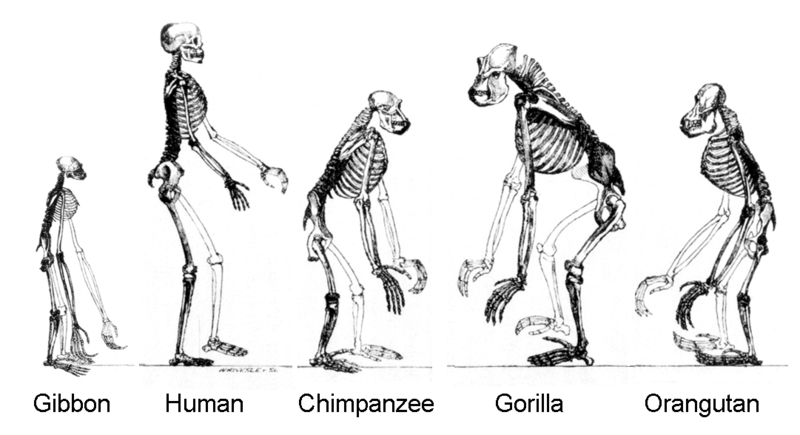
“We want to make certain that we view culture through the eyes of faith, that we don’t view our faith through the eyes of culture.” The words are those of Stephen Livesay, president of Bryan College, according to a recent New York Times article. Bryan College in Dayton, Tennessee, already famous as the school that evolved out of the Scopes Monkey Trial, has been toying with adding a more specifically fundamentalist statement to its panoply of faith. Instead of stating simply that humans (more precisely, “man”) were (was) created by God, Livesay wants to clarify that this means by special creation, no evolution involved. Hey, we’re all thinking it. Why not just say it?

800px-Ape_skeletons

With the characteristic, journalistic eye-rolling that inevitably accompanies stories about creationism, I frequently wonder why there aren’t more calls to try to understand this viewpoint. It’s easier to condemn and say that narrow minds can’t widen out, but some of us who had believed in Bryan’s hypothesis at one time have managed by dint of reading and reason to climb our way out of the slime. If we understood what made literalism so appealing, we might be able to figure out why only America lags behind the developed world in accepting what is otherwise universally regarded as a fact. Instead, faculty members nationwide willing to call this into question are summarily fired and nobody bothers to do a thing to support them. Collateral damage of the culture wars. Perhaps we should add a statement about not letting the door hit you on your way out.

Evolution through natural selection stabs very deeply into the heart of human self-worth. We still refer to other animals as “lower” than us, and we exploit them in any way we see fit. Then we don’t wonder why being told you’re just like them isn’t disturbing. This is trench warfare. Lines in the sand dug deeper and deeper. Those who believe in creationism aren’t simple. Even with all our space telescopes and Mars rovers, we’re told the most complex thing known to humanity is still its own brain. And that brain makes people with Ph.D.s think that they’re special—either a separate creation by an invisible god, or because they can recognize how irrational our own brains make us. No intelligent being would want to understand why this is so by studying it rationally. That would make far too much sense.


Akedah

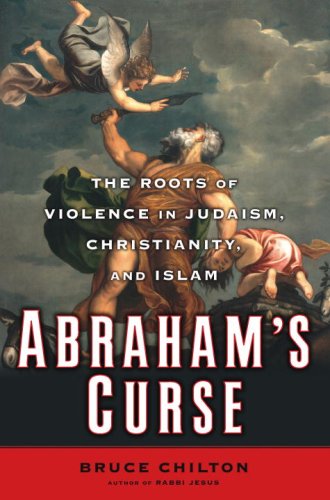
AbrahamsCurseViolence, in its most basic form, is to be blamed on evolution. Not the theory of evolution, but the fact of it. More precisely, violence is a reflex of the struggle for existence. To live animals have to eat and to eat, many have evolved to kill. While violence is endemic in the world, it isn’t so rampant that species overkill their own kind. That’s rather rare, actually. Human beings have engaged in violence against one another for our entire history, and it is only within the last century or so that we’ve made any concerted efforts to stop violence against those who are different than ourselves. Among the impulses both advocating and quelling violence is religion. Bruce Chilton’s important study, Abraham’s Curse, scours the monotheistic family tree for information on why all three major Abrahamic faiths advocate martyrdom. Or more disturbingly, why they insist on sacrifice, even of our own species.

Chilton begins with the story of Abraham and Isaac. The Akedah—the binding—or near-sacrifice of the beloved son. Since Judaism, Christianity, and Islam all share this story, and since it sets the tone of a God who seemingly demands human sacrifice, Chilton explores its implications and possible origins in sacred violence. Sacrifice predates any written records, although, as Abraham’s Curse points out, it became an established fixture in urban culture when temples began to play an important role in ancient society. No one knows why we sacrifice. By the time writing came along, it was already an established part of the picture. When the book of Genesis was penned, the story of the binding of Isaac became sacred scripture. Even in the earliest days of biblical interpretation scholars puzzled over what was going on here and its chilling implications. God, after all, comes up with the idea that Abraham should be tested with the cruelest of tests. Although the Bible isn’t explicit on the point, Abraham and Isaac never appear together again after the incident until Abraham is safely dead.

Building on this common story, Chilton takes the reader through the stories of the Maccabees where Judaism develops the concept of martyrdom, through Christianity where some actually begged for it early on, and into Islam, which still practices animal sacrifice. The idea that it is noble to lay down your life, and worse, the lives of others, points to a guilty Abraham who is a paradigm of faith. An Anglican priest, Chilton is no angry atheist. He does not, however, pull any punches. If monotheistic traditions gave us a violent heritage, they can also work to dismantle it. Ironically, it is when religions are in the ascendent that they exercise their power to perpetrate violence. All three major monotheistic religions officially advocate peace and justice. But somewhere in our deepest human experience, we know what it is to feel hunger and what an opportunistic animal does about it. Abraham’s Curse does offer solutions, however, if only we could get human beings to put down their spears and read.


Fire Bearer

Prometheusposterfixed

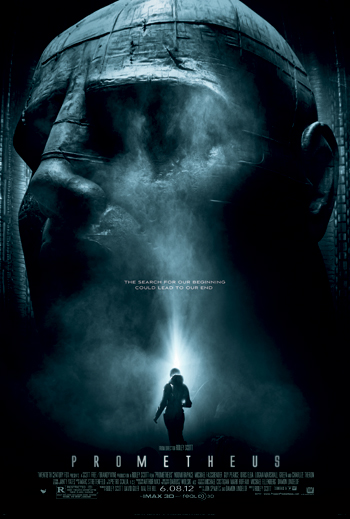
Part prequel and part religious odyssey, Prometheus both treads familiar ground and explores new territory. In keeping with my invariable sense of timing (I saw none of the Alien trilogy in theaters), I waited until well after the fact to see the movie. I had heard Prometheus called a prequel, but even if I hadn’t some of the Ridley Scottish touches might’ve given it away: a large ship bound for a distant planet, evidence of unexpected inhabitants—yes, they knew about the “engineers” (we could call them “watchers”) but not the proto-Aliens they were breeding. We even have the android that understands science’s need to be greater than that of human need. Déjà vu. Still, there’s something very different here—direct discussion of religion and how faith plays into the work of scientists. Elizabeth Shaw, the sole survivor, wears a cross as she tries to work out what her father’s teaching about religion might mean. The cross isn’t hidden in the background—it is brought out into the open and discussed.

If you haven’t seen the movie, the premise is that ancient artifacts (including the ubiquitous Sumerian, Egyptian, and Mayan templates) added to a new discovery in Scotland, demonstrate that a race of giants have been inviting us to their planet for thousands of years. In fact, they had engineered us. (Ironically, the biologist who espouses Darwin is among the first to die.) Peter Wayland, industrialist billionaire who doesn’t want to die, funds a trip to meet these engineers. The engineers, save one, died long ago. Apparently of some plague (cue the aliens!) that were created to destroy humans. They were about ready to send the nasty beasties to earth when they were overcome, with only a single survivor. No coincidence that this planet was reached on Christmas day. It becomes clear to Dr. Shaw that these engineers were intent on destroying the human race they created. And still, she slips her cross back on before facing the engineers of life and death. This was Noah without all the water (and much better writers).

Of course we think we know the rest of the story. Sigourney Weaver bravely led us through three alien attacks before sacrificing herself in a New Testament kind of ending. But what about Elizabeth Shaw? She who bore and aborted the mother of aliens in a very maculate conception? She is off to a prequel’s prequel to find out why these engineers wanted to destroy us. Rumor tells of Prometheus 2, and I wonder if we will get to meet our maker’s makers. Although Scott is an atheist, he brings us Moses later this year, and has already given us Mary and Jesus wrapped up into one with Ripley and her spiritual mother, a sci-fi St Anne, in Elizabeth Shaw. After all Elizabeth was cousin to Mary, and now that the question of faith has been openly discussed, it will have to be more fully addressed. Among the unanswered questions is whether I be able to make it to the theater on time to see this one, or will two years vanish before I find the time to address the eternal questions that Ridley Scott always seems to pose.


Science Fiction Double Feature

Two news stories last week—one from the Associated Press and one from the Chronicle of Higher Education—hit upon a common theme: scientific illiteracy. Both articles presented scientists who felt that if they could just reach the (mostly) American public with easily digested facts, then belief in the Big Bang, evolution, and global warming would suddenly make sense to everyone. It may not be my place to say, as I’m not a scientist, but I believe they’re wrong. Don’t misunderstand. I do believe in the Big Bang, evolution, and global warming. In fact, I spent part of last week flagellating myself (metaphorically) for not posting something appropriate on Earth Day. I worry a lot about global warming and what we do to our only planet. What I mean is, these scientists don’t understand religion. People don’t willfully reject the facts. That takes religion.

One of the reasons that I continue my daily efforts on this blog is that our educated elite constantly refuse to acknowledge the blue whale in the room. People are naturally religious. Some grow out of it, some are educated out of it. For most, however, the price to do so is far too high. Science offers little to take the place of faith. For all of its innuendo, the Big Bang tends to leave most of us cold. I don’t support religions spreading ignorance, but even the Bible recognized that it is useless to say to a poor person, “stay warm and well fed” if you don’t offer a blanket and some food as well. It’s chilly in an infinite, yet expanding universe. Why don’t scientist understand that if you give a jacket, maybe people might actually warm up and listen?

hs-2010-13-a-large_web

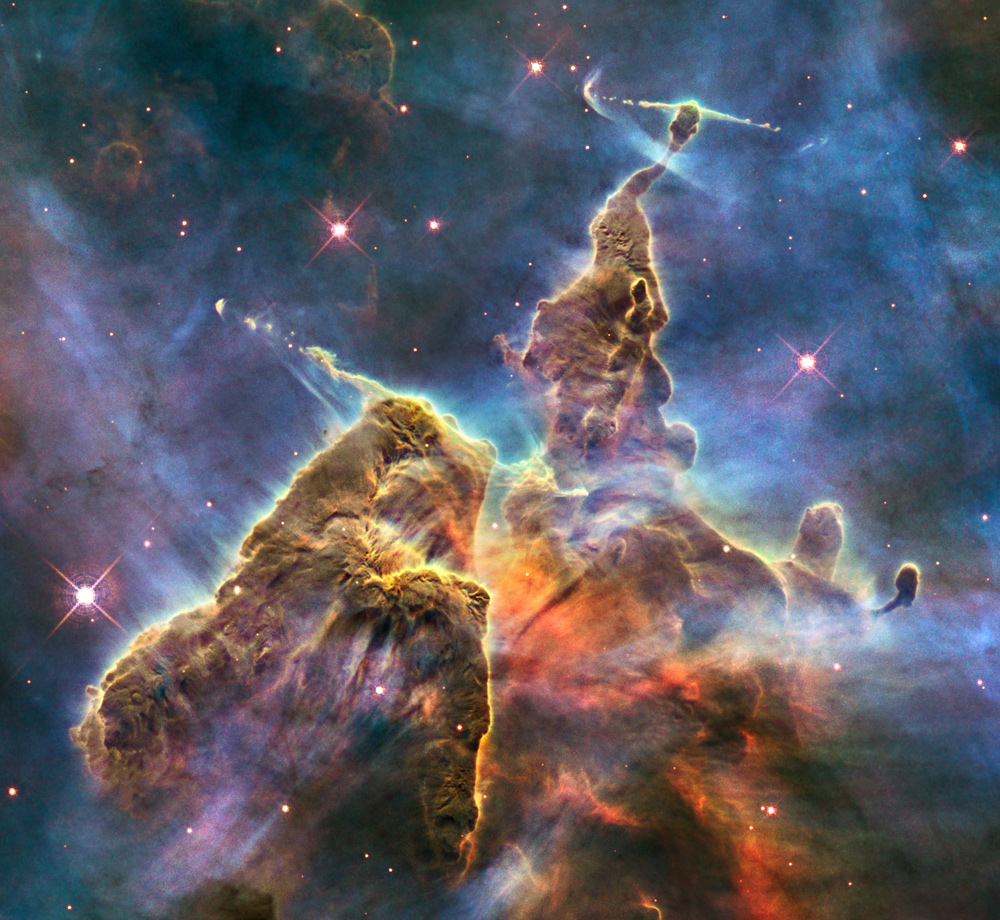
Religion, however we define it, is a coping mechanism. Even many atheist biologists admit that it has an evolutionary utility, embarrassing as that may be. Evolutionary scientists also tell us that we don’t evolve according to plan. Nature (de-personified, of course) opportunistically uses what’s at hand to help creatures survive. Instead of trying to understand religion, many in the hard sciences think that speaking loudly in single-syllable words will convince those who’ve found meaning in evolution’s solution of religion that somehow evolution was wrong. The worst thing we can do is to waste more money trying to understand religion! I hear it’s very cold in outer space. Still, things seem to be warming up down here. For those who can’t evolve gills, it’s time to learn to swim.