The Edge

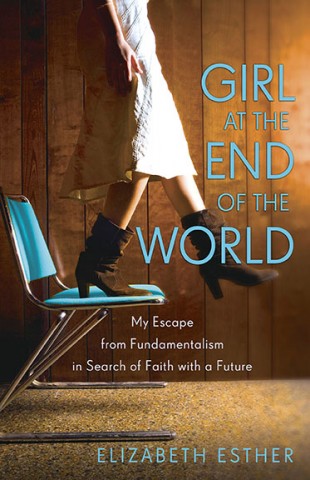
GirlattheEndoftheWorldElizabeth Esther’s Girl at the End of the World is finally out. I can’t remember the last time I read a book within two weeks of its release date. Of course, I have a soft spot for the religious memoirs of women, particularly when they manage to make their escape (I guess otherwise they wouldn’t be writing their experiences) from an unforgiving faith. Reading of the trials they have to go through to get there is far from enjoyable. But necessary. Often Bible-wielding males make the rules with a macho God behind them, and girls are abused in various ways so that the wrathful guy upstairs will be, well, a little less wrathful. I’ve read many of these accounts, and I worry deeply about the state of religion’s soul. Elizabeth Esther was raised in what she calls a cult, begun by her grandfather. This brand of fundamentalist Christianity taught the virtues of daily spankings of children, often beginning at about six months of age. The descriptions of how they used candy to tempt their children so that they could spank them to break their wills made me cringe. Evil wears many disguises, but none so effective as piety.

Religions are able to get away with quite a lot in a land of religious liberty. Elizabeth Esther proves that she’s made of some pretty stern stuff to have come through all of this, although she admits to still having panic attacks all these years later. She calls it Religious PTSD. She is right to do so. Although I grew up in a fundamentalism that scarred me for life, it wasn’t with the physical beatings that members of her grandfather’s religion doled out. When Elizabeth Esther describes the tendencies she has, the hyper-awareness of threat, I know that I am nevertheless still reacting the same way in my own life. After my fundie upbringing, I had the misfortune to be employed by a different kind of literalist religious institution. Faculty whispered about the new malady coming out of the Gulf when we started to develop nervous ticks and odd quirks after being kept under constant threat. When I contact many of my former colleagues I can still tell we were badly damaged there. Some religions, as Nietzsche long ago recognized, are life-denying to the point where a soul death would be more merciful. And yet we carry on.

Elizabeth Esther ends her book with a reluctant escape to Catholicism. She notes that even it doesn’t exist without its problems. We are, however, religiously evolved beings. It is in our constitution to seek the solace of communal worship, or at least a kind of spiritual solidarity. And there are those who will take advantage of people who simply seek their sense of self-worth from authority figures who claim to have it all worked out. Disproportionately those who are made to suffer are women. The Bible, although it cannot be blamed on the abuses heaped upon it in the name of the Judeo-Christian tradition, conveniently emerged from a patriarchal society. In the hands of some men it becomes an implement of torture. And many are left far poorer in life for having encountered this particular form of demon disguised as an angel.


Frozen Few

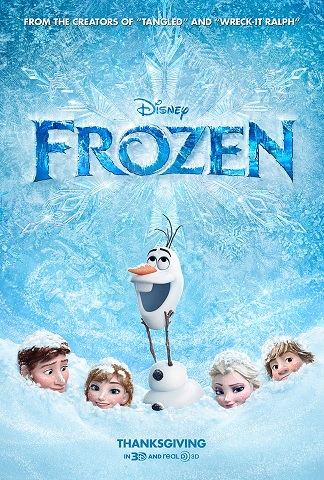
It’s that time of year, neither winter nor spring, when ambivalence is in the air. Gray skies with just the first damp aromas of a change in the season, followed by another snow storm and icy winds custom-made in the arctic. So we turn to movies. Frozen is continuing to make headlines and break records. And although the critics voice strong opinions, ambivalence about a powerful message still rocks a society that can’t decide if a woman director having success is an anomaly or an idea far past its time. Stories about the animated feature crop up on the internet on a daily basis, five months after its theatrical release. Some claim it is the most Christian movie in years while others claim it has homosexual marriage at its core. The queen doesn’t need a man and the world’s most conservative, progressive society is in a muddle.

Perhaps I’m just showing my age, but I noticed what I thought was an older child in the sauna when Anna first meets Kristoff. The movie didn’t give me any clues as to his being a gay partner to the shopkeeper, although it’s none of my business if he is. Disney movies have had subtle clues to a kind of radical equality that I’ve noticed over the years, from Edgar’s license plate that reads RU-1 in The Aristocats to two masculine creatures sharing a pad in Monsters Inc. I even remember some people staring suspiciously at Ernie and Bert while the insanely ambiguous Teletubbies were faulted for carrying purses and dressing in primary colors. (Even Judas Iscariot kept a purse, according to the Bible.) A good, empowering story is suspect if we think something more is going on when the lights go out in cartoon-land. Our culture can seem to think of little else beyond mores and how to enforce them.

Globalization has repeatedly demonstrated that there are many different ways of being in the world. And yet, when worlds collide the more conservative culture inevitably makes claims on its more “progressive” neighbor. We see this happening as the church in Africa, now larger than the church in America, drives social policy through denominations that somehow feel guilt at promoting equality. Perhaps proselytization is, at the core, of our fear of difference. What if the other guy is right and we are wrong? Read that back into all our misguided ancestors and we feel chilled indeed. How far do we really trust objective truth? My guess is that ice ages have come and gone that have forged the truth of the moment. Only when the cold faces us do we really admit just how slippery truth might be.

The beauty of ice.

The beauty of ice.


Witch Way

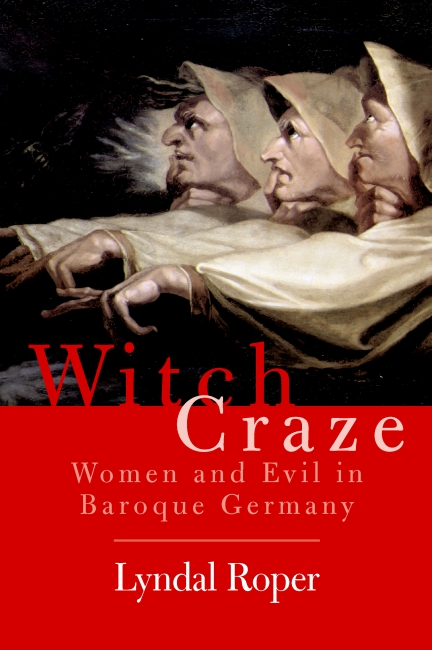
WitchCraze2Women generally bear the brunt of religious intolerance. This is an evil that has proven tenacious and insidious, and which has played out in history far too many times. Lyndal Roper’s Witch Craze: Terror and Fantasy in Baroque Germany brought this home to me once again. Books on witch hunts are deeply disturbing, but we need to engage with the brutality of the past if we want to prevent its reappearance. Roper points out that although many nations persecuted “witches” in the Middle Ages, even into the early modern period, Germany by far had the highest numbers. There were probably many reasons—no simplistic answer meets all the clues. One is clearly related to politics. Germany lacked the central cohesion of other European nations in this period. Feuding princedoms from a fragmented Holy Roman Empire had no strong central authority. When it is everyone for themselves, scapegoats are never far off. Roper doesn’t leave it at that. She points out that the central characteristic of the witch is the intent to harm Christians. Indeed, the witch is a monster born of religion, and which murdered thousands of women in the name of Christianity.

Compounding this unrealistic fear that Christians have always seem to have had, was the emerging Reformation. Distrust erupted in Germany. Was one’s neighbor a Lutheran or a Catholic? In either case, the other was heretical, from someone’s point of view. Distrust ran at premium prices. And women picked up the bill. Yes, there were male witches, most of them associated with women who’d been accused, as Roper points out. Even as the Enlightenment was burgeoning, renewed hunts for witches broke out, leaving innocent women dead in a land that valued fertility perhaps above all else. Women’s bodies, as Roper notes, were to focus of suspicion and fear on the part of a male power structure that dealt with its phobias by the use of violence. Even the Enlightenment couldn’t wipe this slate clean.

Today in the western world, secular thought has replaced superstition for many people. Women are not longer accused of witchcraft. Besides, witchcraft is a chic new religion in many places. But the longed-for equality is still not here. In many parts of the world religious violence is still directed at females by male power structures that should’ve died out with the fading of medieval Teutonic anxieties. Those who perpetrate such violence hide behind scriptures—even the Hebrew Bible acknowledges the reality of witches. Religion creates its own cadre of monsters, and those with stout conviction look for women to blame. The flames of the pyres did not lead to a universal enlightenment and the Tea Party tells us Christianity is still endangered in a world where it may spread largely unhindered. One truth, however, remains. The truly endangered are women, and men who don’t fight against the real monsters do not deserve to be called defenders of the faith.


Flash Freeze

Frozen_(2013_film)_poster

One industry has, in this era of leisure, proven itself powerfully recession-proof. Entertainment, conceived broadly enough to include the sellers of strong drink, always seems to do well when the bread-and-butter parts of the economy tank. Among the entertainment giants is Disney, making it an easy target for curmudgeons like yours truly. Every once in a while, however, the cynicism has to melt. Frozen induced one of those experiences. I left the theater feeling that this may have been the best Disney movie of all time. You see, I grew up largely without Disney. We didn’t vacation in fantasy-lands like Disney World (when we could afford to vacation at all), and watching a movie was a rare treat. We did see some of the old style animations that came to our small town, such as Bambi and Dumbo, and we did watch the television program, I want to say on Sunday night. My real experience of Disney, however, came with parenthood where VHS and then CD then online versions of the movies made them accessible any time, in nearly any place. In the past decade or so, I’ve noticed, Disney has been putting considerable money behind the crafting of story, something many movie moguls fail to attempt. Frozen, however, stunned me.

The visual beauty of the Scandinavian world is no doubt part of it. I don’t often mention C. S. Lewis on this blog—he has been so thoroughly appropriated by the evangelical crowd that it is often difficult to admit how influential his work was to my college-age self. Lewis was unashamed of his Christianity, but in his fiction it isn’t always in your face. When I read Surprised by Joy, his autobiography, a scene—just a sentence really—lodged in my head. Joy, he noted, could be brought on by visions of the grandeur of the frozen far north. Lewis noted that not everyone has that perception, but I certainly share it with him. Elsa’s icy world impales with its beauty. Although I’m sensitive to cold, a deep desire stirred in the construction of that isolated ice castle. Elsa could, as an appropriately messianic figure, walk on water and ascend to heaven.

Of course, as I’ve observed before, the central trope of cinema is resurrection. Anna takes on the self-sacrificial role for her sister, marking Disney’s move away from the magic of the heterosexual kiss as the cure to all female ills. No, here are women who thrive not only without, but in spite of strong male characters. This is a world where not one, but two female protagonists are needed to carry the plot to fulfillment. Self-sacrifice, in fantasy worlds, often leads to resurrection. With Anna’s act of love for her sister, the cinematic world has reached an important pinnacle in its lesson to children: love comes in many forms, and if it is really love it is never bad. Elsa ends up satisfied without a king to guide her, a woman who reigns as she is, not as society says she should be. If only the ice of our patriarchal world could be melted so easily.


Loving Haiti

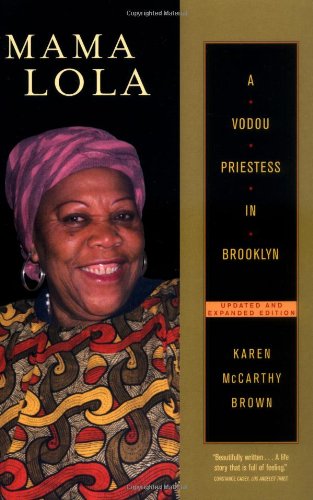
MomaLola Few religions are as routinely maligned as Vodou. I have to admit that my own interest was originally spurred in an uncouth manner—a combination of Live and Let Die and a sleepless night after watching The Believers. (I know, I know, The Believers was about Santeria, and not Vodou proper.) These sensationalist treatments nevertheless incubated a curiosity that broke the surface when I started to notice a book entitled, Moma Lola, a Vodou Priestess in Brooklyn in university bookstores. The author, Karen McCarthy Brown, took Moma Lola on as an anthropology research project and ultimately became friends with her subject. I was immediately chagrined to learn that much of the distaste towards Vodou (this is my own observation, not Brown’s) seems laced with, if not based upon, overt racism. Vodou is the faith of the descendants of African slaves living in the poorest nation in the western hemisphere. Those who adhere to it often live an existence that few would accept in a world awash in riches. The people in Moma Lola’s story are poor and deprived, and their nation is kept that way by complications of a past tied too intimately with slavery.

Although Brown is not a scholar of religion, her account is a very accessible introduction to the belief system of Vodou. Most adherents, it becomes clear, think of themselves as Catholic. They see no contradiction between the teachings of Rome and the activities of spirits (the “gods” of Vodou are in reality spirits that operate in a world where God is too busy to pay attention to everyone) who must be propitiated. The rituals associated with Vodou are common among peoples who believe in connections between things as they seem and things as they are. In fact, reading the accounts of possession that Brown provides, I was reminded very much of charismatic Protestant experiences of being “slain in the spirit.” Ironically, both traditions believe in the same god. Why anyone should fear Vodou, unless it is because they secretly harbor a deep-seated fear in the efficacy of magic, is baffling. Like most religions, it is moral and concerned with upholding good over evil.

Haiti has a unique history that has put it at the creative epicenter of religions forced into collision while being economically exploited by nations that putatively support democracy. Religion, as Karl Marx noted, is for the poor. Brown takes her readers through her own experiences with a religion few outsiders really know, introducing the “gods” of this intricate religion along the way. Moma Lola, a healer, tries to survive in New York City after a difficult life in Haiti, and rather than make her escape, she returns on occasion to help others. Even in the spiritual circus that the Big Apple represents, people are suspicious of Vodou (and Santeria), despite their common cause with other religions of the developed world. You can read the 400 pages of Brown’s Moma Lola with nary a mention of “voodoo dolls” or zombies. Instead you’ll find people—often women—working to survive in a hostile world. Untested attitudes toward other religions often bear their own dark secrets, and Vodou, as lived by Moma Lola, belies and exposes many hidden prejudices on the part of the affluent world.


Vive la différence

Scientists, those to whom society has passed the responsibility for knowing, have an increasingly difficult time defining humans as opposed to other animals. Still, we know a person when we see one. That’s when the crucial ethical issues arise: how should we treat others? Two unrelated articles about human rights recently came across my virtual desk: one about Disney’s Beauty and the Beast and another about how religious rights sometimes/often hamper human rights. There’s so much to sort out here, and I’m not even one of those that society deems fit to do such sorting. Well, I am human, so perhaps I can give it a shot anyway. In an article in Friday’s The Guardian, Deborah Orr points out that for progress in human rights to move forward, rights for the freedom of religion have to take second place. Clearly she’s onto something because, historically, one of the greatest enemies of human rights has been religion. Labeling suffering as virtue, it’s relatively simple for religions to suggest that the lot of the oppressed is to bear suffering so that the faith can continue untainted. After all, those religions with an afterlife, in any case, declare that it all gets sorted in the hereafter.

Orr makes a very good point: we are all human, but we may not all share religion. Isn’t the need of the whole greater than even the need of the many? Utilitarianism would declare it so. So would common sense. (Science warns us not to trust common sense, however.) Some of the harshest violators of human rights continue to be religious traditions. Others are heathens, pagans, infidels, heretics, beasts—take your choice—and therefore displeasing to some divine being, generally male and either hetero- or asexual. Oh, and he’s from the Middle East, ethnically. Over on PhotoBlip.com, a piece about Beauty and the Beast makes the point that Gaston, the strapping, über-masculine antagonist of Belle’s provincial town, is frightening because the people so easily follow him. He whips the crowd into a frenzy because, as a thoughtless but handsome (and ripped) figure, people naturally do what he tells them to. He is a dangerous, selfish bully, and many politicians have learned their tactics from him. Belle, a bookish girl, is considered odd and in need of domesticating. The beast is deformed and in need of killing.

We could learn a lot.  (Photo credit: Brian Forbes, WikiCommons)

We could learn a lot. (Photo credit: Brian Forbes, WikiCommons)

These two stories, from very different sources, point in the same direction: tolerance is the only humane response to a complex world where lots of different types of people live. Still, the problem isn’t wholly a religious one. Human rights insist that all people have access to the basic necessities of life, and, ideally, the possibility of flourishing into what they desire to be. Some, however, desire to dominate. With or without religious backing, this Gaston-esque drive to bully is all too real since might does seem to make right, and even some political darlings get their way by being bullies. One of the most poignant points that religion has ever made is that you can identify the divine by its willingness to lay down power and identify with the weak. We are seldom presented with that side of the gospel truth, for there is a paradox at the heart of it, and people want clear answers, not puzzles. Even science, however, when pushed far enough must answer with a paradox. Is light a wave or a particle? Some religions would say that light is a gift of the divine.


Shaky Ground

HigherGroundFor the past few years I have been drawn to the spiritual memoirs of women. I suspect a deep disconnect prompts this interest. Religions—in this case primarily the monotheistic traditions—put a premium on fairness and justice, yet treat women as somehow outside these mandates. Women nevertheless respond to the human religious impulse somewhat more seriously than most men. This leads to a dissonance that surfaces in women’s memoirs. Carolyn S. Briggs’ Higher Ground: A Memoir of Salvation Found and Lost proved somewhat of an epiphany for me. In this story of an Iowa girl’s encounter and seduction into a Fundamentalist faith that never quite managed to smother her rationality, I recognized many aspects of her adopted religion from my own tenure in literalism. The real strength of Briggs’ account is her vivid recollections of how her own Fundamentalist mind worked. For many of us who’ve gone through that spiritual wasteland, dredging up those memories can be a harrowing experience. What shone through in Higher Ground, however, is how the fantasy-prone literalist imagination loses its tenuous hold on reality while promising deliverables that are always pushed off into the future. It is not a faith for the here and now.

The non-denominational, yet Calvinistic, Briggs’ church home convinced the author, for some years, that she was inferior to her husband. There can be no doubt that this is “Bible-based” teaching, for the Bible is the product of a patriarchal age. Literalism grows more oppressive with the passage of time, for despite neo-con posturing, society is better for many than it was in the “good old days.” Fundamentalist traditions seek to reestablish the mores of the first century two millennia later, as if a simple transfer were possible. Society has offered progress for women while literalism is rife with regress. This double standard led to the loss of one of their own because over two thousand years much water flows under the bridge and brig.

Higher Ground is not an easy memoir to read—the accounts of those who experience repression seldom are. Religion is generally a conservative force in society, even if based on radical principles. The sayings of Jesus, for example, remain revolutionary even today, but they are often hidden behind the (male constructed) facades of organized religious movements. In school we teach our children that the sexes are equal, in Sunday school the opposite. Fundamentalism is not, however, in any danger of dying out. As Briggs demonstrates eloquently, the very thought process of a rational person is altered by it. Briggs leaves us guessing at what happened after the story ends but she has nevertheless contributed yet more evidence that demands a verdict. Until the judgment of fair and just can be rendered, religions will repeatedly be called to the witness stand.


Almost Human?

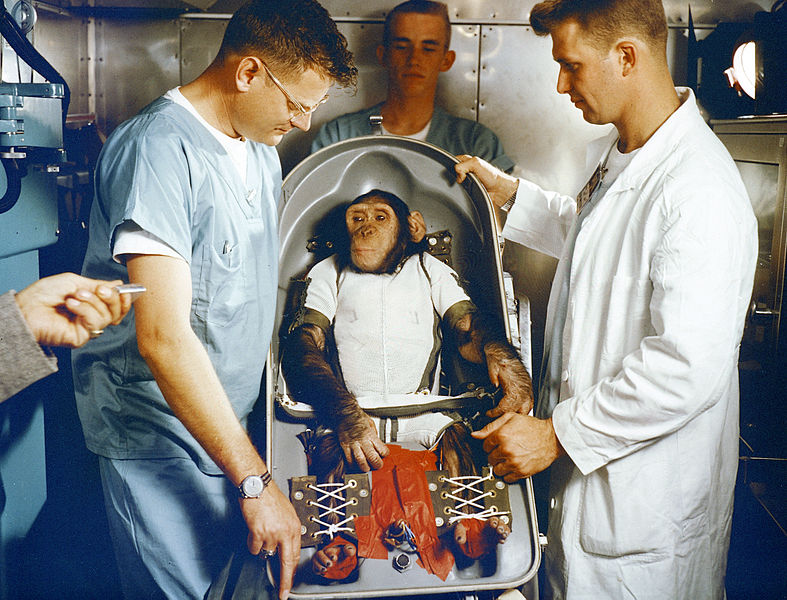
Last week the New York Times ran a story on the efforts of the Nonhuman Rights Project to have chimpanzees declared “legal persons.” Naturally this has set many legal persons at arms, given the unstated, biblical origin of the concept of human superiority. Without the biblical mandate we simply have to admit that we rule over animals on the basis of “might makes right,” a philosophical concept that never makes it far either in the classroom or the courtroom. We hold animals captive and experiment on them because we can. They can’t speak, can’t register protest, so we assume their silence as complicity and carry on. Research over the past several years, however, has pushed the human-separatists harder and harder. Animals are more like us than we are willing to admit. We acknowledge that we’ve evolved from them, but we suppose that at some point—probably the vocal cords—we surpassed them and therefore if they can’t speak they can’t think and they can’t feel. Even today many people still hold to the biblical orthodoxy that animals are merely here for our enjoyment and exploitation.

Considering how we treat other human beings, this is probably, sadly, no great surprise. In a world where many nations still allow women to be treated as property, putting a chimp in a cage and labeling it “mine” doesn’t appear so odd. Only the most crass of chauvinists would dare say that women are not human, but far too many, based mostly on religious biases, have no problem stating that women are inferior humans. Again, “the Bible tells me so.” This kind of thinking, prevalent even up until the 1950s in “civilized” countries like the United States, has yet to die out fully. What is it about the male psyche that insists on its own superiority? The Bible, it seems, has much for which to answer when found in the hands of men.

What makes us think that we are all evolving toward the “high point” of white males? Some of us in that class know that it is long past time that this glass “ceiling” should have been irreparably shattered. Nonsense, however, has staying power. Some of us even feel inferior just knowing such distinctions were ever made. Not that long ago Africans were said, by some, to be closer to apes than Caucasians. Women were said to be closer to snakes than men. What has been lacking is a sense of balance. Common sense. Genders and races equal but variable. Until that minimum bar is reached, how can it be hoped that fair treatment of nonhuman persons can ever be achieved? Some animals have been taught to read, at least in basic, symbolic ways. They understand that certain symbols stand in for defined rewards. Given time it might even be that this most human of inventions could be shared among nonhuman persons. If they do not learn to read the Bible with more sense than some human persons, however, we face a future of many other layers of distressing oppression.

787px-Chimpanzee_Ham_in_Biopack_Couch_for_MR-2_flight_MSFC-6100114


Unusual Thanksgiving

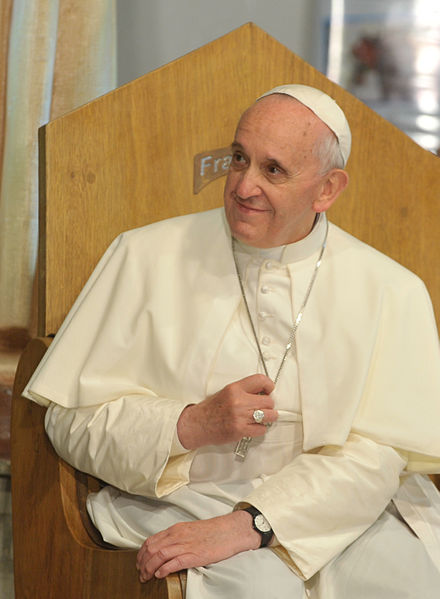
Believe it or not, preaching was once part of my job description. At Nashotah House all faculty were called to the pulpit, ordained or not. Falling into the latter camp, my obligations were generally held down to once a semester. My first homily, focused on the lectionary readings for the day, was about the problems of social inequality. Afterward the senior faculty member came to me in the vestry and said, “It has been a long time since I’ve heard the social gospel preached from that pulpit.” This little incident came to mind as I was reading a CNN Belief Blog story my wife pointed out to me. The article highlights some of the provocative comments by Pope Francis in his recent document Evangelii Gaudium. Francis, in a startlingly refreshing vein, suggests that the church must get back to basics. Human basics. I agree with those who say the church has not gone far enough on gender equality, but the idea that the cut of your surplice demands more divine attention than the homeless and starving has got to go.

At Nashotah House many students who wanted to be Catholic priests but also wanted to be married (the flesh is willing, but the spirit is weak) had Pope cards, rather like baseball cards, in their chapel stalls. This was in the era of the great conservative John Paul II, affectionally known as J2P2 in the theological ‘hood, when men ruled and a congregation might split over the use of a maniple. The gnat-strainers were clogged in those years. Camels fled for their lives. I wonder what these priests now make of the very head of their favorite chauvinistic church stating that even the papacy itself must change. I keep wondering when Pope Francis will have his accident, or unexpected heart attack or stroke. As the Belief Blog makes clear, not all appreciate the challenge to the status quo. There is too much power at stake.

This Thanksgiving, this old Protestant finds himself unaccountably thankful for a Pope that is willing to start turning things in the right direction. It will take decades, if not centuries, before the church can possibly catch up with the realities faced by the vast majority of the powerless, disenfranchised, and the needy. These are uncomfortable realities. When I saw a picture of Pope Francis laying his hands on a badly deformed man during a service in Rome a few weeks back, I could almost believe that someone was taking the message of Jesus to heart. That message was, and is, a radical one. We only have all-male disciples because we can only count to twelve. And we tend to forget that just about all of those guys were working-class slobs. Maybe if we could really be thankful for the gift of people all of this might just come to mean something significant after all.

Photo credit: Tomaz Silva/ABr

Photo credit: Tomaz Silva/ABr


Atomic Girls

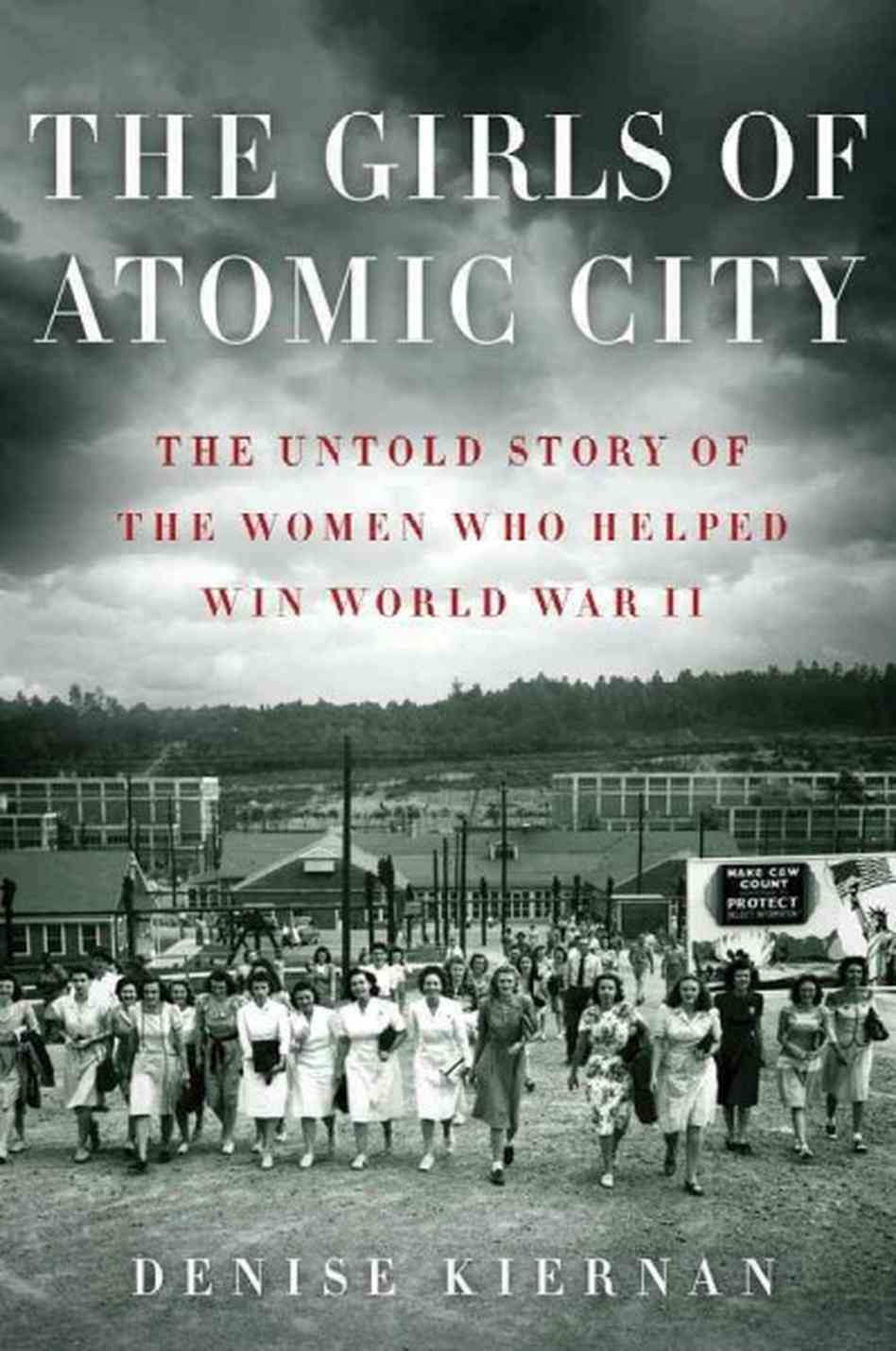
GirlsofAtomicCityRay Bradbury. Ray Harryhausen. Radioactive dinosaur loose in Manhattan. What’s not to like? I was inspired to watch The Beast from 20,000 Fathoms again for a single line, where Dr. Nesbitt informs the marksman his grenade has “the only isotope of its kind this side of Oak Ridge.” You see, I had just finished reading Denise Kiernan’s The Girls of Atomic City: The Untold Story of the Women Who Helped Win World War II. Atomic City, in this context, is Oak Ridge, Tennessee, a city built almost overnight with one objective: to produce uranium for the atomic bomb, then under development. The employees, many of them women, were not told the nature of their work and were not allowed to speak about the little they knew, putting many strains on marriages and human relationships. It is a captivating story, especially since Kiernan doesn’t pull any punches—the facility was in a segregated south, women scientists were belittled to their faces, and the end result was thousands of people incinerated in Japan. It is like the end of Eden, the loss of humanity’s innocence.

Growing up in the 1960s, I had heard of Oak Ridge. I knew it had something to do with nuclear stuff, but my understanding only went as far as the planetary model of the nucleus of an atom. I feared nuclear war. The height of that fear in the 1950s may have passed, but I was born just a month before the Cuban Missile Crisis began and all through the Reagan era that veiled threat of total, mutual annihilation hung heavily in the air. The religious had claimed God had created all this, but human hubris threatened to erase it all. On the eve of a friend’s wedding I sat across the Susquehanna River, eyeing Three Mile Island for the first time. Just six years earlier even those of us hundreds of miles to the northwest wondered if we would succumb to its radioactive glow. The power of the atom, as Kiernan demonstrates, was considered to be the basic power of the universe. And it was not divine.

When the war was over, a symbol of peace was erected at Oak Ridge. The International Friendship Bell was challenged as recently as 1998 by a local claiming that ringing the bell endorsed Buddhism, and it was therefore a religious symbol that had no business in a public place. For those who believe, ringing the bell is a form of Buddhist prayer. For others, it is a sign of goodwill between nations that have put their differences to rest. It is easy, sixty years after the release of The Beast from 20,000 Fathoms, to laugh smugly at Harryhausen’s famed stop-motion animation and the incessant worry about atomic fallout. But near the beginning of the movie, George Ritchie says of the atomic blast they’ve been monitoring, “You know, every time one of those things goes off, I feel as if I was helping to write the first chapter of a new Genesis.” Indeed, at least as far as chapter three. With the dawn of the atomic age, we had outgrown our need for the final chapters of Revelation as well.


When (Nearly) Everything Changed

WhenEverythingChangedMy wife and I just finished reading When Everything Changed: The Amazing Journey of American Women from 1960 to the Present, by Gail Collins. (In the spirit of the book, I wash the dishes while my wife reads to me.) Although Collins does not dwell on the religious motivations in “traditional” women’s roles, I couldn’t help pondering how religions, rather than encouraging equal rights, have often acquiesced to the unfair treatment of women as a matter of principle. That principle is often abstract and theological. More often than not it is also mythical. As society changed to allow a greater measure of equality in social roles for the sexes, religious leaders held back, concerned more about doctrine than people. This is perhaps the most disheartening aspect of religious belief—as a human phenomenon it too easily loses sight of humanity.

Historically, of course, the roles of the sexes were tied to reproductive necessities. Women with nursing children (and startling low mortality rates) could not do the heavy work required in the agricultural societies of antiquity. I am aware that this is over-simplifying—it seems clear, however, from the materials left to us from the earliest literate cultures that a basic biological divide determined appropriate roles. Not only were women victims of high mortality rates due to difficult childbirth, but infant mortality was also high. In such circumstances it was important to guard those who survived from the potentially dangerous work of protecting flocks and tilling fields. And this was the time when the ancestors of our religions emerged. Technology improved survival rates and quality of life, but religious dogma is very slow to evolve. Some dogmas still don’t even accept the idea of evolution.

Back to When Everything Changed. Yes, bottles and birth control gave a new freedom to women. Day-care and daddy involvement also helped. And yet, not everything changed. Seeing the progress, religions tended to cry “foul!” and insist that, for women anyway, nothing had really changed. No doubt Collins is correct about a large swath of life in the secular sector. Most jobs are open to both sexes, and issues of fairness, although still lagging, are starting to be addressed. Many major religious bodies, however, still hold women in a subordinate role. Basing their reasoning on theologies long outdated, they insist than nothing has really changed at all. If only the wisdom of women and their experience were taken seriously many religions would have changed for the better as well. Only when that happens will we be able to consider that, in Collins’ hopeful words, everything will have changed.


Monsters are Due on Main Street

MedievalMonstrosityNow that the slow descent into darkness has begun, my mind naturally turns to monsters. In the early days of this blog I felt as though I had to justify writing about monsters when I was limiting myself (mostly) to religion, but it is now clear that many scholars have recognized the connection. Monsters cross over boundaries, and, given religions’ focus on proper borders, declaring monstrosity is often a sacred task. That comes through clearly in Sarah Alison Miller’s Medieval Monstrosity and the Female Body. Utilizing mainly three medieval texts, Miller draws out how they present various aspects of the female body as monstrous. Predictably, the source of their conviction is frequently the viewpoint of the church, the dominant institution of the Middle Ages. Biology was a touch more advanced than it had been in the biblical period, but despite the figures, many writers assumed the male to be the default model of humanity and the female somewhat suspect. Given the multiple pluralities of the natural world around them, this idea is passing strange.

This book is not for the squeamish. Miller plumbs the depths of bodily fluids and the beliefs surrounding them in a pre-scientific era. Male writers wondering at the changes the female body undergoes, however, may have been a necessary stage in the growth of knowledge. It is easy for us today to suppose that equality should have been always on their minds, but Scripture, a large source of authority for medieval mentality, had cast the sexes into an uneasy opposition. The only figure in the Bible who seems sensitive to the unfairness of it all is Jesus. And even his viewpoint couldn’t change the conservative conviction that somehow God was truly the über-male and that all the females of nature were somehow subordinate. Dare we say it? Monstrous.

Miller closes her brief consideration by delving into the writings of Julian of Norwich. Julian was a most remarkable mystic who wrote of God in strikingly feminine terms. Turning those boundary-violating bodies into the sacred, here was one medieval writer who saw the female as normative, salvific, even. Julian never commanded the kind of authority that a male cleric could, but as Miller shows, even men in this period were considering the feminine aspects of a wounded deity. Reformation, however, snapped a masculine, Protestant lid on any such speculation. Today, ironically, many Protestant traditions have, at first reluctantly, admitted female clergy. The religious body of the Middle Ages, the Roman Catholic church, still keeps women in a separate, somehow subordinate role. Monsters come in many forms and they break down boundaries. Some borders, however, may be meant to be breached.


The Goddess

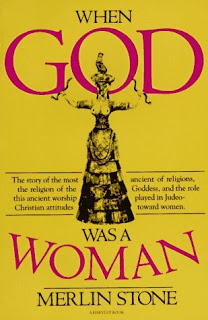
WhenGodWasAWomanMerlin Stone was a sculptor and an artist. I met her only once, a few years back when I was still recognized as an “authority” on ancient goddesses. At one of the many Society of Biblical Literature annual meetings I attended, she came and introduced herself to me, thanking me for my work. Of course I knew who she was—the author of When God Was a Woman, one of the books that was most influential in the revived goddess movement of the 1980s. I have always appreciated those women who have dared to take on the often amorphous patriarchal power structures of society to raise the necessary questions of fairness and justice. Stone was one of those women. Her book, while based on sometimes questionable historiography, nevertheless highlights some of the issues that many male scholars have chosen simply to ignore.

One of the biggest problems faced by authors like Merlin Stone and Marija Gimbutas has been the shifting sands of history. I recently had a deep conversation with a couple of feminist friends of mine where the issue of truth emerged. Truth, as I came to realize, may be a temporary phenomenon. What is true today (the earth is the center of the universe) may not be true tomorrow. It is always contingent. Historians reconstruct a past to which they do not have direct access, and further discoveries will often detail the errors made along the way. When God Was a Woman was originally published in 1978. Some of the historical constructs that Stone uses have since crumbled, but the main point of the book remains firm—women have as real a claim on the divine as do men. (I can’t help but wonder if there is some connection between this and the recent trend towards prominent male thinkers declaring themselves atheists.)

Although I can’t agree with everything Stone wrote, one of her ideas dropped a hook in my brain. In describing the sexuality that apparently attended worship of “the goddess,” she notes how male scholars came to refer, always derisively, to the such religions as “fertility cults.” Turning this phrase about, Stone wonders whether far distant future analysts will look at monotheistic religions that decry sexuality as “sterility cults.” Not that the goddess is all about sex. Religions, however, always weigh in when such spiritually significant activities as sex take place. Men, who are often eager participants, are the ones to construct religions condemning what should be a most obviously sacred human activity.

Merlin Stone may have died just over two years ago, but her book will stand as a yad vashem to half of the human race who have been religiously subjected to the other half. And perhaps there is a goddess out there yet who will bring about liberty and justice for all.


Super Women

DivasDamesDaredevilsDivas, Dames and Daredevils: Lost Heroines of Gold Age Comics, by Mike Madrid, is a stroll down a memory lane that many of us never previously walked. My imagination is such that I no longer read comic books, but as a child they provided a cheap escape from a reality that didn’t feel so different from the crime-infested world that superheroes inhabited. For young boys reading these stories the absence of women was normal—there were some things of which Mom didn’t approve, and that was because she just didn’t understand. Boys will be boys. Still, Mike Madrid has ably demonstrated a secret knowledge that the 1950s would deem arcane—female characters once held a position nearly equal to that of men in the world of comics. Prior to Comics Code Authority in 1954, the women who helped win the Second World War were portrayed as tough, independent, and in charge (to an extent) of their own destinies. In the conservative backlash of the ‘50s, however, women were diminished, relegated to the home and domestic life. Comic books presented them as secondary to men. That myth has proven pernicious, even now, six decades later.

One of the perks of blogging is having someone you’ve written about contact you. Mike Madrid has been the subject of a previous post for his book The Supergirls: Fashion, Feminism, Fantasy, and the History of Comic Book Heriones. Madrid’s agent kindly sent me an advance proof of Divas, Dames and Daredevils, and I was once again struck by the historical scope of knowledge that these books present. Academics are—let me correct that—some academics are becoming aware of the fact that popular culture defines reality for many people. We find our troth in those who live on the big screen or on the pulp paper, those who rise above the constant threats of an uncaring world. We’ve seen that business can be its own evil empire, and superheroes, and everyday people, do have it within their power to act. Madrid shows that we were well on our way to equality of the sexes when the haircut and horn-rim crowd of the clean-cut 1950s insisted a return to Stone Age ethics in the treatment of women was appropriate.

In keeping with the general theme of this blog, the book has a chapter on the goddesses who became heroes. We all know Thor, but what of the forgotten Fantomah, Amazona, Marga the Panther Woman, Wildfire, Diana the Huntress, or Maureen Marine? Madrid’s book presents a story from several of the animated heroines of the days before censorship tamed the feminine mystique. More than that, he clearly shows how women—even ordinary women—were once deemed incredible and awe-inspiring. Then the titanium gate of male inferiority complexes and the vaunted “old ways” crashed down, trapping us all in a world fit to be ruled by men alone. I congratulate Madrid for resurrecting so many forgotten figures who never had a chance to become cultural icons. All women are heroes, and I know there is a hero that I miss very much, although even Mike Madrid didn’t mention her in his wonderful book.


Slippery Logic

Last week NBC reported on a baby in Tennessee. Babies in Tennessee, one might suppose, are pretty common. This one, however, was given a name stricken down by the courts. Child Support Magistrate Lu Ann Ballew declared that the baby could not be named “Messiah.” Apart from the statement that this is a title and not a name (don’t tell Judge Reinhold, please), the judge (not Reinhold) demonstrated her biblical illiteracy by stating that the title messiah has, “only been earned by one person and that one person is Jesus Christ.” Oh well, this is the Bible Belt, after all. Nevertheless, I would expect someone so deep in the Bible Belt to know the actual Bible a little better.

“Messiah” derives from a Hebrew word meaning “anointed one.” Its meaning is somewhat more literally along the lines of “smeared with oil,” for that is what anointing is. The title is used for several people in the Bible, not just one. Aaron, for one, was anointed. David was anointed as king, as were several other characters, including ill-fated Saul. And let’s not forget where Isaiah says clearly of Cyrus II, king of Persia, that he is “his anointed,” i.e., Yahweh’s anointed, in Hebrew, “his messiah.” Not Jewish, not Christian, Cyrus was a good old Zoroastrian. And he was just one in a long line of messiahs.

Where's your Messiah now? Oh, there he is.  (Photo by Persian Light.)

Where’s your Messiah now? Oh, there he is. (Photo by Persian Light.)

I’m not doubting Judge Ballew’s reasoning that it might be in the best interest of the child not to have such a controversial name. I do doubt, however, that it would be in the best interest of that child that he be raised being taught that evolution is a myth and special creation six thousand years ago is science. I do doubt that it is in his best interest to be taught that homosexuality is a sin and that it is something that only people have ever done because of their “fallen nature.” I do doubt that it is in the child’s best interest to be raised believing that if a woman is pregnant that a male-dominated government has the right to decide whether she carries the baby to term, no matter what. And once that baby is born, I do not believe it is the government’s right to decide on what his or her name shall be. And I expect that all the people named “Jesus” out there would agree. And Judge Reinhold.