Watchers and (Un)holy Ones

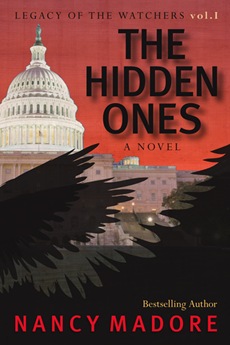
HiddenOnes Angels, demons, djinn, watchers, giants, and a healthy dose of fantasy pervade Nancy Madore’s novel, The Hidden Ones. In this present world where, I’m told, the supernatural is irrelevant, it is pleasant to come across a work of fiction that delves so deeply into the pagan roots of Judaism, Christianity, and Islam. Monotheism does have its own skeletons in its capacious closets. Madore is a novelist who insists on prying open those doors long shut, and spinning a tale that involves first responders, shady military officers, and a band of rather hapless archaeologists. And Lilith. Throughout the story Madore comes up with clever etiologies for stories that will appear in canonical form much later, and at one point I couldn’t help wondering if the screen writers of Noah had read her book. Well, actually, The Hidden Ones is the first of a trilogy, Legacy of the Watchers. I’m sure the next two books will contain many surprises as well.

The Hidden Ones put me in mind of Michael Heiser’s novel, The Facade. Both take on the mythology of the Nephilim, the fallen ones about which the Bible tells us enough only to leave us hungry. The early chapters of Genesis are like that. There’s so much going on that those of us reading it many centuries after it was written are left wondering what the full story was. The writers of the Bible had no compunction to disbelieve in monsters and beings beyond the human ken. Nor does the Bible attempt to systematize them in any sustained way. These creatures just are. As the old saying goes, however, fiction has to make sense—those who write with gods and angels have to make them fit into a system.

No doubt, the uncanny occasionally intrudes upon our rational world. The Hidden Ones presents one such intrusion that, ironically, takes some of the fact of the Bible while leaving the theology suspect. We know that even before the Hebrew Bible was complete ancient scribes were attempting similar things. The book Jubilees, for example, tries to fill in some of the unanswered questions of Genesis, including the watchers and details of the flood. Jubilees, however, never made it into the Bible thus depriving canonical status to the backstory that demonstrates how religion often chooses for ambiguity, leaving it to theologians to bring it all into a system. And novelists. And among those novels that tread where even J, E, P, and D quail, is The Hidden Ones.
Flying Sorcery

In a post on the Huffington Post recently Michael Zimmerman, founder of the Clergy Letter Project, wrote about the strange antipathy of Ken Ham to the search for extraterrestrial life. Ham, founder of a creationist museum and self-appointed spokesman against evolution, has gone on the record saying that aliens cause problems for a creationist worldview. Therefore they can’t exist. Indeed, creationists should reject aliens because of the flat earth the Bible presents. Zimmerman, with his usual unfailing reason and wry humor, demonstrates the multiple difficulties both with Ham’s understanding of science and of the whole alien agenda. The Bible doesn’t address the modern world on many fronts, which is why literalists so often find themselves out of step with the issues of the day. When the final period (an anachronism, I know) was placed at the end of Revelation, it was expected that the world wouldn’t be around much longer, tottering as it was on the underground pillars that held it up. Somehow the Roman Empire came and went without any kind of cataclysm ending it all, and literalists have been backing and filling ever since.

Ham’s angst about extraterrestrials, however, is not shared by all Fundamentalists. I recall going to a session way out at a country church as a child where the guest speaker, a firm believer in aliens, talked about the “sheep in other folds” referred to by Jesus as aliens. I recall the eerie feeling as we drove home under a dark sky with fliers depicting flying saucers and assurances that we were not alone. In college, when I discovered Larry Norman’s music, I was struck by his lyric “If there’s life on other planets, then I’m sure He must know, and He’s been there once already, and has died to save their souls.” Literalists, like Catholics, take multiple views on the question. It seems a terrible waste of space if, in this infinite universe we’re the only sparks of consciousness around. I’ll leave “intelligence” for time to decide.

What would Genesis do?

What would Genesis do?

Ironically, Ken Ham doesn’t seem to have considered the up side of aliens, at least for his point of view. If the extraterrestrials end up looking like us, that does raise some serious questions about evolution. How did it work identically on two different planets to produce such similar results? You’d think maybe Fundamentalists might welcome aliens with open appendages. Of course, some have gone far off the other end and declared that angels and aliens are the same thing. The problem of the literalist world view is that it is severely limited. The Bible never foresaw the internet or the airplane or even the true nature of our own solar system, let alone the infinite sea of space beyond. In charting a course for belief, accurate maps are necessary. As Zimmerman points out, those maps, of necessity must contain the stars. And as we continue to evolve infinite worlds of possibilities await.


Akedah

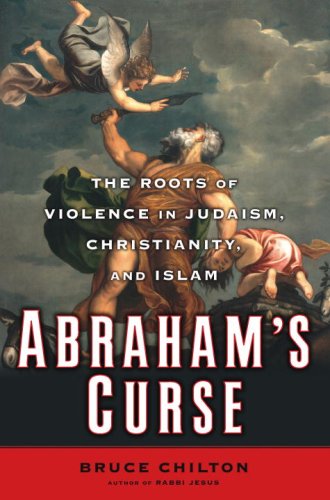
AbrahamsCurseViolence, in its most basic form, is to be blamed on evolution. Not the theory of evolution, but the fact of it. More precisely, violence is a reflex of the struggle for existence. To live animals have to eat and to eat, many have evolved to kill. While violence is endemic in the world, it isn’t so rampant that species overkill their own kind. That’s rather rare, actually. Human beings have engaged in violence against one another for our entire history, and it is only within the last century or so that we’ve made any concerted efforts to stop violence against those who are different than ourselves. Among the impulses both advocating and quelling violence is religion. Bruce Chilton’s important study, Abraham’s Curse, scours the monotheistic family tree for information on why all three major Abrahamic faiths advocate martyrdom. Or more disturbingly, why they insist on sacrifice, even of our own species.

Chilton begins with the story of Abraham and Isaac. The Akedah—the binding—or near-sacrifice of the beloved son. Since Judaism, Christianity, and Islam all share this story, and since it sets the tone of a God who seemingly demands human sacrifice, Chilton explores its implications and possible origins in sacred violence. Sacrifice predates any written records, although, as Abraham’s Curse points out, it became an established fixture in urban culture when temples began to play an important role in ancient society. No one knows why we sacrifice. By the time writing came along, it was already an established part of the picture. When the book of Genesis was penned, the story of the binding of Isaac became sacred scripture. Even in the earliest days of biblical interpretation scholars puzzled over what was going on here and its chilling implications. God, after all, comes up with the idea that Abraham should be tested with the cruelest of tests. Although the Bible isn’t explicit on the point, Abraham and Isaac never appear together again after the incident until Abraham is safely dead.

Building on this common story, Chilton takes the reader through the stories of the Maccabees where Judaism develops the concept of martyrdom, through Christianity where some actually begged for it early on, and into Islam, which still practices animal sacrifice. The idea that it is noble to lay down your life, and worse, the lives of others, points to a guilty Abraham who is a paradigm of faith. An Anglican priest, Chilton is no angry atheist. He does not, however, pull any punches. If monotheistic traditions gave us a violent heritage, they can also work to dismantle it. Ironically, it is when religions are in the ascendent that they exercise their power to perpetrate violence. All three major monotheistic religions officially advocate peace and justice. But somewhere in our deepest human experience, we know what it is to feel hunger and what an opportunistic animal does about it. Abraham’s Curse does offer solutions, however, if only we could get human beings to put down their spears and read.


Underwater Zombies

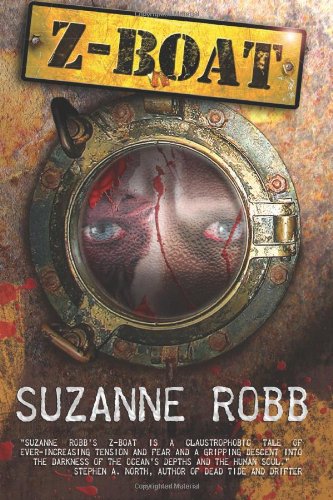
Z-BoatOne of the (many) benefits of blogging about zombies from time to time, is being sent books to read on the subject. Just as I cracked open The Zombie Bible volume What Our Eyes Have Witnessed, Permuted Press sent me an ebook of Suzanne Robb’s Z-Boat for comment. Z-Boat is an action novel with a strong female protagonist, that sets two naturally phobia-ridden subjects together: submarines and zombies. Since zombies, whether they acquire their undead status by vodou or by infection, are inherently a religious creation, they find their way onto this blog often. Unlike Stant Litore’s zombie universe, Robb’s is solidly secular, no mention of deities or demons anywhere. Set in a post-apocalyptic future (aren’t they all post-apocalyptic these days? We have difficulty envisioning anything much better), the crew of the submarine Betty Loo has to fight off a host of zombies intent on eating, and yes, converting, the living.

Zombies, whether conjured by spells and concoctions or by a contagious organism, while unthinking, always appreciate converts. The age-old human fear of being overwhelmed by swarms pertains just as well to the undead. We tend to avoid cemeteries at night, but death has a way of seeking us out in any case. I knew when my wife received a rather unsubtle flier in the mail advertising a local mausoleum that I too was likely on the list. Isn’t being a zombie all about the desire to survive, no matter what the cost? Still, it’s nice to know your custom is valued, right down to the end.

As I’ve mentioned before, zombie stories are difficult to take seriously in any rational world. Why a corpse with no stomach and no tongue would want to eat baffles the quasi-scientific mind I’ve installed. The Zombie Bible suggests that it’s hunger, and a metaphor is always appreciated in a room full of zombies. In Z-Boat the drive is more along the lines of the plot. You wouldn’t have a story without the undead. A potboiler, this is a page-turner, or, if you’re reading an ebook, a page-swiper. And although the function of a submarine is inherently like an ark—the preservation of breathing animals when overwhelmed by water—when the zombie organism eats its way into the crew, the only safety is found in escaping that ark. Robb’s tale is rollicking and rough, but her female Noah gives us all ground for hope.


East of Nowhere

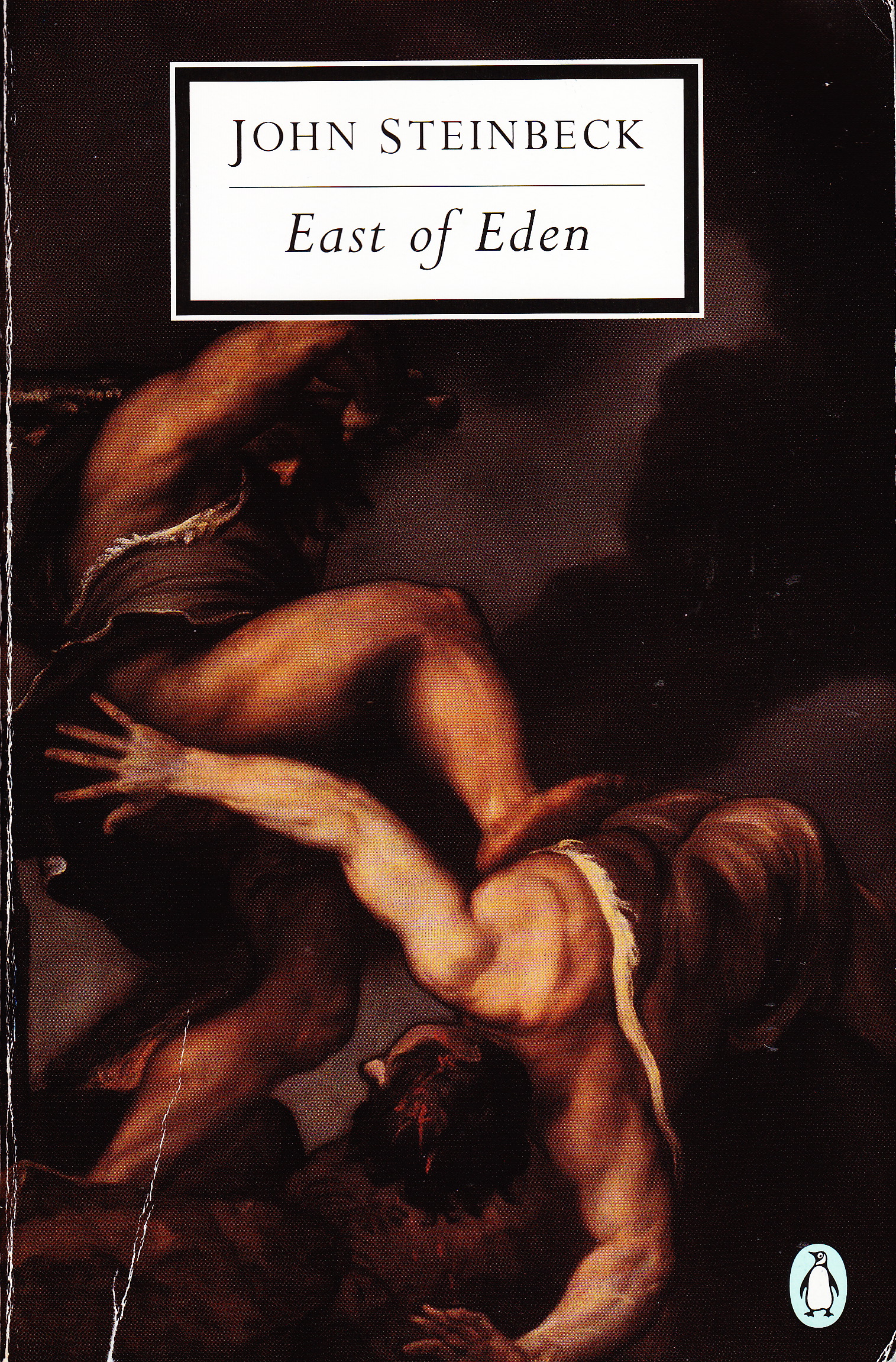
EastOfEdenThere was a time when you could assume a lot about your readers. Although it was only a little more than a half century ago, John Steinbeck could assume a biblically literate readership. East of Eden is so thoroughly pervaded with, one might say interlarded with, the Bible that the key scene could have three men sitting up half the night discussing 16 verses of Genesis, and not one of them being a priest or preacher. The earnestness of their conversation is haunting in its intensity. You know the boys will be named Cain and Abel and that only one of them will come out of this alive. Okay, so they decide on Caleb and Aron, but you get the picture. Of course their father is Adam. Even the title of the book is drawn from the last words of the 16th verse.

Ironically, this biblically literate author is one of the most frequently banned from high schools. Some censors can’t get beyond thinking that being good is the same thing as being a realist. In East of Eden, characters are flawed, and they tramp out the course laid in the Bible with an unwitting solemnity. The entire book hinges on the ability to change one’s fate, and yet, the characters dutifully enact their parts. Those who watch over the morals of youth are bothered by an occasional word with four letters, which, I must say, Steinbeck uses with moderation. They mistake the packaging for the message.

But why should we care? Hasn’t the world moved on inexorably these past sixty years? It is the wisdom of Lee, the Chinese servant, who answers this. “Any writing that has influenced the thinking and the lives of innumerable people is important.” This does not refer to the Bible alone—although at this juncture in the story it does—but it is a message that many who simply dismiss the Bible as just silly myths would do well to remember. Lee is a literate character who turns to Marcus Aurelius for comfort as well as other classics. Sometimes the Bible is regarded as so holy that we forget it too is a classic. Classics become what they are through the impact they have on innumerable people. East of Eden is considered a classic although the author walked this earth just half a century ago. And those who reject Steinbeck for their children would do well to read the Bible they would put back into schools in his place, if only to consider the irony.


Ham Awry

Ham, in the movie Noah, is a conflicted figure. I felt a slight chill, I’ll have to admit, when the carnivore Tubal-Cain asked him his name, reminiscent as it is of pork. Of the sons of Noah he alone bears the impossibly stylish short hair his father seems to favor, and yet, he is one of four men alive and the only one without a mate. Japheth is young enough to wait for his twin nieces to grow up, and the ancestor of the Semites, Shem, has already begun his fruitful multiplication, just when humanity seemed at an evolutionary bottle-neck. Ham found a wife but couldn’t keep her. Noah leaves her to be trampled to death as he takes his son to the gentlemen’s club known as The Ark. The rain has already begun to fall.

In the Bible Ham gets short-shrift as well. Having seen Noah naked after he discovers alcoholism, Ham bears the brunt of his father’s wrath. Noah, perhaps still hungover, curses Ham’s son (not appearing in the movie), Canaan. From the biblical point of view, the reason is perfectly clear: when Israel arrived in the promised land, the Canaanites already lived there. Given that the promise was to Shem’s descendants, a genocide was ordered and probably the more liberal among the marauding Israelites felt a bit of guilt about that. No worries—like ethnic minorities in horror movies, the Canaanites were created to be killed. Ham, however, isn’t cursed for his voyeurism. Still, according to later interpretation, he is the ancestor of the Africans as well, and the “curse of Ham” was used for a biblically literate society as a justification of slavery. After all, Ham had had an eyeful, and it was only fitting, they reasoned, that his n-teenth-hundredth generation should suffer cruelly for it. How’s that for air-tight reasoning?

According to the movie, Ham decided to leave in voluntary exile. Perhaps he hoped that like Cain he might find an unlikely spouse in an unpopulated world. He had grown apart from the new Adam, welcoming Tubal-Cain aboard the ark, and keeping him hidden until Noah threatened to kill the future of all humankind. Strangely, it seems that Ham is the proximate cause of the salvation of all humanity, and he become a self-sacrificial scapegoat in the Icelandic scenery. He declares that his deceased chosen mate was good, and Noah had cursed her as well. In the Bible cursing is freely dispensed, and it is considered adequate to its task. Somehow that curse transmuted to a nobility in the film, for Ham is the most like Noah of all his children. And even today that self-same Bible is used to justify a genocide in a world where myth is taken for reality.

Noah doesn't like Ham

Noah doesn’t like Ham


Better Watch Out

Among the more intriguing mythologies of Noah, the movie, is the presence of the “Transformer-like” Watchers. The more biblically literate of the film’s viewers will know that Watchers are mentioned in the Bible, but in the book of Daniel—chronologically the latest book in the Hebrew Bible—and not in Genesis. Daniel does not tell us what Watchers are, but it uses the term in parallel with Holy Ones, implying that they are angels. In the apocryphal book of Enoch, there is quite a bit of mythology concerning Watchers, and they are tied back to the flood story by the strange first four verses of Genesis 6 that note the sons of God saw human women were beautiful and took them, populating the earth with giants as a result. The Bible, as typical, is very cryptic about all of this, leaving imagination to fill in the gaps. Watchers were later associated with fallen angels, and they are sometimes referred to as Grigori, the Slavic form of the name. Biblically we know practically nothing of them.

Watchers have long had a home in the paranormal speculation crowd. Associated with ancient astronauts, a modern mythology has grown up around who the Watchers supposedly really were. This is an outgrowth of the Judaic myth that came from the non-biblical texts that themselves grew out of such esoteric references as those to Enoch, nephilim (fallen ones), and giants, in Genesis. That antediluvian world was a fascinating period in which just about anything goes, but nothing is explained. Even the ark itself is described in terms so vague that it really can’t be reconstructed precisely. The Watchers, according to Genesis in any case, weren’t there. One gets the sense that ancient readers, anxious for a logical roadmap of the divine world, were quick to fill in the gaps that the Bible leaves.

Although Christian theology would eventually declare God omniscient, this does not characterize the deity of the Hebrew Bible. Even before the discovery of Oceania or the New World, the ancient Mediterranean and West Asia were too large for any one God to know it all. Watchers were, most likely, members of the divine council whose purview was to view. Keep an eye on what people were up to. Fallen angels, later equated with demons, were a convenient way to explain evil in a world made by a deity who is only good. And who doesn’t know that feeling of being watched, especially when being naughty? According to Genesis 6 not even the children of God are exempt from such behavior. The Bible gives us plenty to work with, if we’re only willing to use our imaginations.

Somebody's eye is watching...

Somebody’s eye is watching…


Floaters and Swimmers

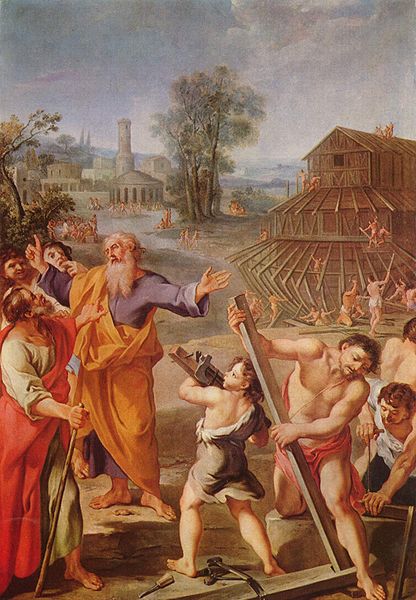
Noah seems to have found a renewed audience these days. Nothing like a major motion picture to make even one of the most famous biblical characters even more notable. And the spin-off stories are now considered news as well. One of the many impossible stories of the Bible, the ark, as scholars have long known, would not have been a physical possibility. Quite apart from the building in days before metal smelting was invented, there was the problem of volume. Since evolution is ruled out de rigueur, each separate species had to have been represented, since no changes are allowed from that time to this. The sheer number of them, especially since new ones are being discovered even now, was deemed impossible to fit on an ark of even biblical dimensions. Add in the food necessary for 150 days, especially considering the carnivores, and the human-power required to care for all those beasts (only eight are permitted by Genesis, and Noah was 600 years old at the time) and you get the picture. Then Mesopotamian flood stories even older were discovered. It was quickly recognized that this was a myth with a larger message to tell.

Now, according to geobeats, and to the relief, I’m sure, of Russell Crowe, physics students at the University of Leicester have calculated that the ark could have floated. The story, in a one-minute sound bite, is a little shy on details. The students used the biblical cubit, and figured there were 35,000 distinct species at the time. I’m not sure where that number originates, but it doesn’t take into account how Noah got the koala’s to swim from Australia. According to present evidence, the earth is home to about eight-million-seven-hundred-thousand different species. And since they can’t evolve, that’s an awful lot of swimmers.

According to the university website, this was not intended as an exercise in biblical literalism. “The aim of the module is for the students to learn about peer review and scientific publishing. The students are encouraged to be imaginative with their topics, and find ways to apply basic physics to the weird, the wonderful and the everyday,” according to Dr. Mervyn Roy, the instructor. The students, working the math angle, didn’t expect the results to work. That they did surprised everyone. Except Noah, one presumes. The story makes clear that the number of animals was used to calculate mass, not dimensions, so squeezing all the beasts in might have been quite another chore altogether. Miraculous, one might say. As for me, I am waiting to see that pair of koalas swim from Darwin to the Persian Gulf, and then back again once the waters finally recede.

Don't forget to see the movie!

Don’t forget to see the movie!


Clash of the Watchers

NoahMovie

I don’t know about you, but I think I got gypped with my Bible. I have just come out of Noah where I saw amazing sights and a seriously troubled Noah to whom God refuses to say a single word. Controversy still swirls around the web concerning the movie, but I honestly have to say that it was more like Clash of the Titans (2010) than anything else. Except a thin part of the plot—and a few character names—that were borrowed from the Bible, this could have been Herodotus rather than Moses. I don’t recall finding any exploding lava angels in Genesis 1-11, and magic rocks that seem to fit better into a Mormon worldview than a biblical one. Gopher-wood trees grow incredibly fast, and Noah sure fights very well for being a six-hundred year-old man. So why all the fuss? This is a movie folks, not scripture. For the price of the ticket you can buy yourself a new Bible and read the entire story in fifteen minutes (it’s just over two chapters long). If it’s an action movie you’re looking for, I thought The Avengers was better.

What struck me most about the movie, apart from the watchers, which were admittedly an improvement on Holy Writ, was the subtext of evangelicalism. Noah, when he decides to build the ark appears suddenly with an evangelically approved haircut. He also had grown decided misanthropic, insisting that the ark is only for the animals’ sake, and that he only allows Shem to have a wife because he thinks she is barren. When he considers finding wives for Ham and Japheth, there is a huge meat for sex kind of deal going on in Tubal-Cain’s city that disgusts Noah so much that his vegetarian righteousness declares that all people will die off once the ark runs aground. And, of course, he will have to kill his granddaughters. This is a dark and tormented Noah who drinks to forget his problems in a world where God only speaks in cryptic dreams and one gets the sense that Noah is very Republican in his lack of compassion. Take out the whole human race while you’ve got the chance.

The movie is filled with mixed messages. Noah certainly doesn’t appear to live up to his name (“comfort,” by simple translation), and although the supernatural is everywhere, a compassionate deity is utterly lacking. Species die off when Tubal-Cain gets hungry. And the very sign of blessing is the skin shed by the serpent that led to the fall. What are we supposed to learn from this? A vague, Avatar-esque “the planet is good” message does give me a little hope, but seeing Noah poising a knife above an infant’s head only because she’s female makes me a bit squeamish. Noah obeys simply for obedience’s sake and people are mere stains on an otherwise ideal world. Before the fall Adam and Eve veritably glowed. Adam stoops to pick up the serpent’s skin while Eve engineers the fall of all. The special effects are good, but the story, it seems to me, is all wet. That’s the gospel truth.


Inhabit Eden

InhabitingEdenNashotah House, although now a name recognized by only a handful of mostly disgruntled Episcopalians, used to have a name in higher education. Real intellectuals found their way there—scholars who saw that spiritual life did not equal brain-death. Of course, for some that may be the case. While I was on the faculty there, one of the student wives (it is a fully residential campus) was castigated by others for going through the garbage and pulling out discarded recyclables. “How extreme can you get?” they’d say in disbelief. Not extreme enough, I’d say. I just finished reading Patricia K. Tull’s Inhabiting Eden: Christians, the Bible, and the Ecological Crisis. Tull, a retired seminary professor from Louisville Presbyterian, offers a much-needed perspective on the real apocalypse we’re bringing upon ourselves, often justified by the Bible. Many Fundamentalist sects declare the world to be short-lived and for our “domination” because of Genesis. Tull, a biblical scholar, challenges that myopic view of Genesis and suggests that the Bible commends care for our planet. Christians, she indicates, should lead the way in caring for our ailing planet.

Although it is written for the average educated reader, this is not an easy book. It is distressing to read about the many ways that we have blindly (and that’s only putting it in the least culpable language imaginable) set about destroying our environment. Misreading “have dominion over” as “dominate,” Christians have often seen their prerogative as mastery, frequently cruel, over all others. Pollution? The world’s going to end soon, so let’s get the rapture out of here—and throw your waste on those left behind. Economic inequality? You’ll always have the poor, so exploit them. Agri-business? People cannot live by bread alone, so let’s make a huge, exploitative business out of growing crops and processing them to death. Ironically, and not in the good sense, much of this thinking comes from “Christian” entrepreneurs, people who see nothing wrong with making a few extra bucks on the way off the planet. We fry ourselves with our greenhouse gasses and poison ourselves with our drinking water. It’s all gonna burn.

Tull gives the lie to all these misplaced concepts that some claim are biblical. Sure, the Bible is no environmentalist handbook, but then, things weren’t so extreme a couple of millennia ago. We hadn’t yet developed the technology truly to dominate, radiate, and eradicate this planet. Besides, the early Christians figured they’d be long gone a couple hundred centuries ago. It should’ve been clear, even as the Enlightenment lit up, that we were in this for the long haul. And we’ve got only one home. The ethical implications fall thick and fast—those who destroy the environment are worse than war criminals, for it is the entire planet that pays the price for such thoughtless greed. Many turn their noses up at the humble street person collecting bottles and cans for a few pennies. It may not be their motivation to clean up the planet, but then, saints who are willing to dig through the garbage are seldom recognized for what they are.


No Noah

Noah2014Poster

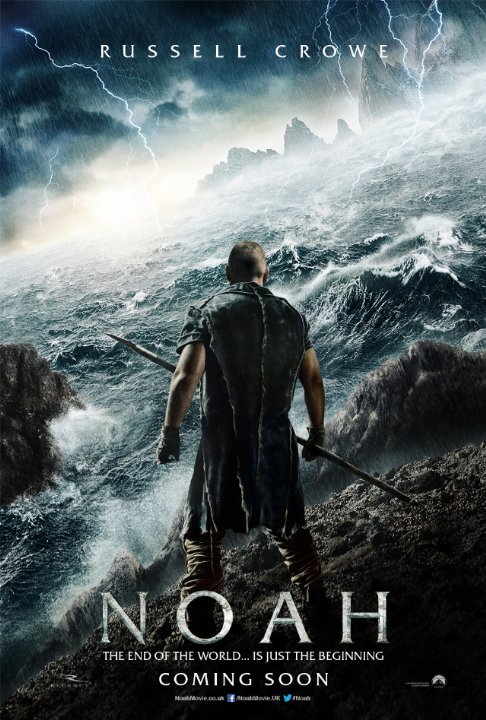
I haven’t seen Noah yet; the timing didn’t work out this past weekend. Besides, you don’t always get to see what you want. Nevertheless, the critics are already having a go at it, and the movie is gathering such attention because it is of biblical proportions. Or more properly, of biblical origins. One commentary in The Guardian suggests that, since knowledge hasn’t moved since Aristotle, that gods really have no place in movies. I have to wonder about that. Sure, the wealthy and powerful seldom have a need for gods, being the captains of their own destinies. Until it comes time to face the flood that all mortals face, and even the rich have to acknowledge that no ark is big enough to take it with them. Who wouldn’t want to have a little divine intervention then? Indeed, God strikes me as the almost perfect antagonist. Before you begin to hurl your stones this direction, think of the book of Job, underrepresented at the box office, but about as honest as they come. We, like Noah, are not in control of this vessel.

To quote Tom Shone, in his review, “[God] has no desire, no needs, no social life, no private life, no self-exploratory intellectual life to speak of.” Of course, the biblical view is quite different. God in the Hebrew Bible is not omnipotent. In fact, he (and he is generally male) comes across as quite lonely. He has anger issues, to be sure, but he is a troubled character rather like a Disney Hercules who doesn’t know how to control his power. Add him to the mix with willful, self-satisfied human beings and it sounds like an afternoon at the movies to me. Perhaps film makers don’t present God with weaknesses—that would be the worst of heresies—but it is also perhaps the most biblical of heresies.

Going back to Aristotle, perhaps it is not that gods should be left out of drama, but that human ideas of God are what writers call a Mary Sue. A Mary Sue is a perfect character with no flaws, the kind of person we first learn to write, since we believe people—and gods—are only good or evil. Then we begin to discover shades of gray. More than just fifty. Characters are complex and experience conflicting wants and wishes. Thus, as Shone notes, God wants people to procreate, but then wants to destroy them. Afterwards he is upset at what he has done. What could be more human than that? The perfect god who knows no struggles, and who never has to fight for what he wants, would be a boring deity indeed. That’s not the divinity skulking around Genesis, however. I’ll have to reserve judgment on Noah’s god until I get to the theater. It seems to me, at this point, that a wee touch of evil makes for deities that are closer to those we experience in our own workaday lives.


The Search for Khan

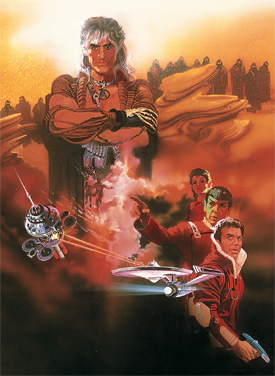
Star_Trek_II_The_Wrath_of_Khan

Continuing with the series, I watched Star Trek II: The Wrath of Khan last night. Since weekends are the only time I have for the media, I also threw in Star Trek III: The Search for Spock. Now, I haven’t seen either of these movies since their theatrical release longer ago than I care to admit, but many of the details, particularly from II, had stayed with me. Clearly The Wrath of Khan is superior in every way, but I hadn’t realized how literate it was until I saw it again. From Tale of Two Cities to Moby Dick to the Bible, the viewer in 1982 was given a sci-fi movie with classics sprinkled through it. I hadn’t read Ahab’s famous words on the dying lips of Khan when I first saw it, but I still realized that they were powerful words nevertheless. The premise of both movies, however, is biblical—the Genesis project, which even gets Spock quoting the Bible, is creatio ex nihilo, well, not exactly ex nihilo, as we do have a Big Bang to start the thing. Throughout the language of creating in six days is juxtaposed to morality, for in order to create, you must destroy.

We all know that Spock dies, citing a utilitarianism that would’ve made John Stuart Mill proud, but in what is really a biblical trope: self-sacrifice. And this leads to speculations of resurrection, always lurking in the background of the biblically minded. But theology (and the acting) turn bad in III. We’re all glad to see Spock alive again, but it turns out that Genesis destroys itself after just a short time, and that “Genesis is a failure.” Where do we turn back from the first page of the Bible? There is no preface here. There is, nevertheless, a temporary garden of Eden on the Genesis planet, and it is a federation-level secret. You just can’t keep anything from the Klingons, however. So the Bible implodes and Kirk’s son sacrifices himself so that Spock might live. Can I get a concordance here?

I’m not a trekkie, but I had noticed from the original series through the original cast movies, the assumption was for a biblically literate audience. That assumption can no longer be presumed, although, if pressed, many people could guess that Genesis is in the Bible. Meanwhile, the flood of Noah is also upon us. Exodus comes next. Movies featuring Leviticus are rare. Even as the cast ages visibly from the young, brash Kirk of the 1960’s to the bespectacled, patrician father with regrets in The Search for Spock, society itself has also aged. Some would say, matured. But we need directors telling us now that the flood story is found in Genesis. The Bible has been on self-defense mode for some time as religion has become equated with fanaticism. And yet, even as resurrection looms, we can’t help but to wonder if better things lie ahead.


Flood of Fancy

Years ago I was approached to write a book about Noah. There was still some hope at that time that I might find a university job and that my words would have more credibility than just any old internet hack. At the time I’d read just about every book about Noah that had been written—and there weren’t that many. Biblical scholars, beyond tying the story to its obvious Mesopotamian sources, have long relegated the tale to the nursery school of biblical drama. Sure, it’s a great story, but what serious scholar takes an interest in a great story? Well, I outlived my academic job and it looks like Noah is going to have the last laugh. We’re told that the Pope has been tweeted about the movie by Russell Crowe and that several Islamic nations have already banned it. According to Today Darren Aronofsky, the director, is more interested in getting non-believers into the theater than trying to please the faithful. Well, let’s face it. A movie based strictly on the Bible would have to be pretty preachy.

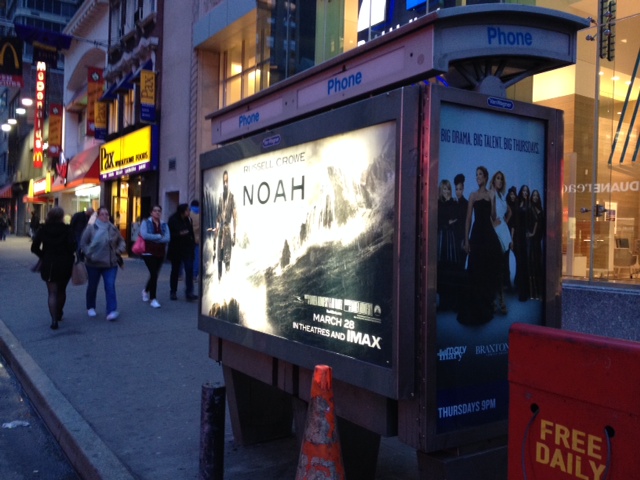
The bigger draw seems to be this: our society is simultaneously deemed secular and religious. Americans go to church. They also respond to surveys that they believe in God, the Devil, Heaven, and Hell. They also act as if none of this were true. Business practices tend to be anything but caring, and we show no concerted effort to make sure basic healthcare is offered to all our citizens, let alone the millions who are daily suffering and dying elsewhere in the world. We don’t want to reduce our emissions as a real flood—a literal flood—is on the rise on a global scale. Maybe we’re waiting for a biblical-scale miracle to save us. Noah’s face stares out at you all across Midtown. Judgment is upon us.

NoahMovie

Action films draw male viewers. Religious movies draw females. Aronofsky and Crowe have the winning combination. No gender-bias for a secular-religious nation that has enough loose change to spend a weekend at the movies. The biggest complaint is that it isn’t the Bible. I have to admit I’m kind of enjoying the hype, despite the fact that I never received the chance to write that Noah book that was next on my agenda. If I had, now it might have enjoyed the sales that Irving Finkel’s The Ark Before Noah—scheduled for release three days before the movie—surely will. Timing has never been my strong suit. Of course, money can be its own sort of flood, and many more drown in it than in the literal waters of a secular-religious society. According to Genesis a raven was released to fly about looking for land. The Crowe might have been a better choice since movies, as we all know, improve upon the book.


No, Uh

Noah2014Poster

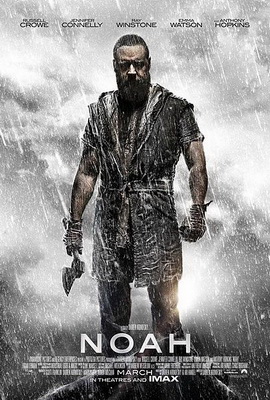
“Give me any two pages of the Bible and I’ll give you a picture.” The words belong to Cecil B. DeMille, according to Stephen Whitty’s weekend write-up about Bible movies in the New Jersey Star-Ledger. The story was inspired by a trio of big-budget Bible films—Son of God, Noah, and Exodus—set to be released this year. While Mel Gibson put me off of Jesus movies, perhaps forever, I’ve been planning to see Noah ever since my wife first pointed the poster out to me in a local theater lobby last month. The flood story has always spoken to me, lasting well beyond the nursery years with all the fluffy animals aboard the ark. One of the points that Whitty is making, however, is that Hollywood knows something the New Atheists do not—there’s big money in religion. People will pay to see it on the big screen. The Bible still speaks to a secular nation.

Noah’s story has been dramatized many times over in the entertainment media. It is often a theme in popular fiction, although well hidden, and reemerges in the occasional search for the lost ark documentaries or Veggie Tales shorts. There’s something timeless about the world-wide flood. For me it seems to go back to the thrill of the impossible. Those first eleven chapters of Genesis teem with the surreal world of lifespans centuries long, primordial gardens full of good food, gods intermarrying with humans, and waters that cover any number of sins. There’s a robust, adventurous air to such stories—they push on the boundaries of human experience and burst beyond them. It doesn’t matter whether Noah’s ark is round, boxy, or extraterrestrial—the flood’s the thing. It appeals to imagination like less mundane disasters simply can’t.

I don’t go to the movies to learn about the Bible. I can do that right at home with a single outlay for a relatively cheap book that can be read over and over again. No, it is these early days of the Bible that give rise to the prepositional phrase “of biblical proportions,” that the movies show so well. I’m not sure that I’ll be able to make the transition from Batman to Moses when Exodus comes out later this year, but next month I do plan to let the waters of the largest event in earth’s fictive history wash over me with all its CGI glory. Seeing is not always believing, but the flood is one of the most powerful stories ever told. Who can resist the calling of deep unto deep? Be warned, the entire theater will be in the splash zone.


Ham on Nye

Bill Nye, the Science Guy, comprised a good part of my thirties. My daughter was young and we were living in a religious environment sometimes openly hostile to science. Nye is funny and fastidious, and completely devoted to the empirical worldview. His videos (yes, it was that long ago) were fairly inexpensive in VHS format, and even as parents we learned a thing or two. When Bill Nye came to the New Jersey Green initiative conference (I don’t recall what it was called) we were in the audience to see him live. It was rather like an epiphany. Despite his wit and charm, many of his colleagues are now advising him that he’s made a wrong turn. According to NBC, he is set to debate Ken Ham of Answers in Genesis in a no-win debate, that of creation versus evolution. Some of the top lights of science have been bloodied by lower profile conflicts because—and this is the crucial point—religion and science do not agree on basic ground rules. It’s a schoolyard scrap, and those who try to adhere to laws of reason are often ill equipped.

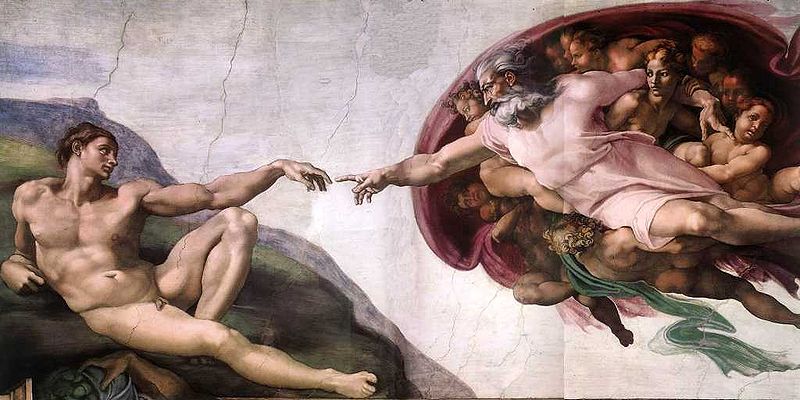
800px-The_Creation_of_Adam

The debate isn’t really over the question of how we got here. The real prize is power. Creationists cannot win on purely scientific grounds; anyone who’s tried to read Henry Morris’s books knows that you can’t get very far without a curious hand raking your head. The science is flawed but the conviction is solid. Truth, the creationists know, is not open for debate. His scientific colleagues fear for the intrepid science guy, noting that this is just another instance to give creationism faux credibility in what is really a public relations scam. Ham’s creationist museum has dinosaurs on the ark, which, in an unrelated story on NBC, is drawing righteous ire from the self-same Ham. (I’ve posted on the round ark before, and likely will again.)

If I understand the first article correctly, the debate will be taking place tonight. If I understand science at all, the world will continue to evolve tomorrow. Creationism has a curious relationship to the world, viewing it through a Bible-shaped lens. A close look at the Bible reveals that it does not support the creationist viewpoint in any literal way. Too many dragons and contradictions make implausible any but a heavily harmonized version of Genesis 1. Biblical scholars, however, are among the worst of sinners, according to the creationist camp. We might be the very ones exposing their children to Bill Nye and other questionable truths such as television and electricity that don’t even exist in the Bible. I’ve got my fingers crossed for Bill Nye, but then, superstition has nothing to do with it.