Simple Gifts

Thing Explainer, a whimsical gift for my daughter at Christmas, is perhaps the trendiest present found here this year. Randall Munroe, who makes a living as a web comic artist (who knew this was even possible?) wrote/illustrated the book to explain complicated things in simple words. Indeed, he limits himself, with some license, to the thousand most common words in English. Due to the almost viral success of the book, websites now exist so that even those of us with advanced degrees can explain things with common words. It reminds me of the Common English Bible in that it attempts to make something complicated easy to understand by using a level of writing accessible to the majority of readers. Thing Explainer is, naturally, for fun. There is, however, an underlying question.

Have we reached a point where reading itself has to be enhanced by making it simple? Some things are, by their very nature, complex. At a time when more and more kids are being encouraged to attend college, the traditional basis of higher education (the classics, classical languages, the humanities) has eroded so far that higher education is not what it once was. My daughter’s engineering program is highly technical and doesn’t naturally promote the things I recall as “college.” Maybe I need someone to explain it to me in simple words. What’s wrong with being literate? With finding challenging books worth the effort to get through? Some things are complex.

A young couple's anniversary in Wales.

A young couple’s anniversary in Wales.

I wonder how a society survives when complexity disappears. Today my wife and I celebrate our twenty-seventh anniversary. Marriage can be a complex thing, but it is something that can be explained in simple words. When we decided to marry the idea was lifelong commitment, not knowing the twists and turns that life would take. If the Internet existed in those days I didn’t know about it. (Certainly, being a web comic artist wasn’t a job that yet existed.) Doctorates still led to teaching careers. 9/11 hadn’t happened so that living in a modified police state wasn’t yet part of daily reality. There weren’t really words to explain it. It was one of those most basic human things. Turning to Thing Explainer I find that love is one of the thousand most-used words. It does perhaps show, after all, that complex things can be stated in a word we all understand.
Credit Is Due

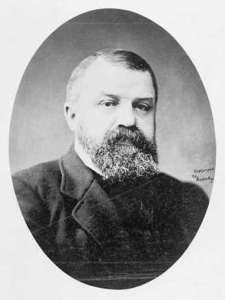
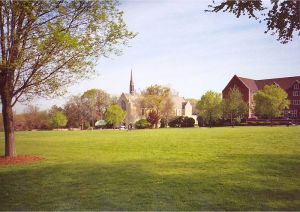
In an article on Nomad by Brandan Robertson, the issue of Larycia Hawkins at Wheaton College is discussed. Hawkins was suspended for stating that Christians and Muslims worship the same God. Robertson’s analysis, in my experience, is right on target. He suggests that when he was a student at Moody Bible Institute he was told that the school was a “discipleship institution” rather than an academic one. This leads Robertson to conclude that the school practices indoctrination rather than education. Although I’ve been saying similar things for years, there is a particular point that stands out here. Institutions like Wheaton and Moody, and others I could easily name, receive the benefits of academic accreditation for non-academic programs. These schools do educate; however, the education is not an academic one. Any faith group that has already declared that it has the final answers has no motivation to promote free inquiry. New information is dangerous, and indeed, is often treated as heretical. Accrediting bodies shrug their shoulders and say, “whatever.”

The purpose of academic accreditation is to ensure that a degree is worth the paper it is (computer) printed on. I could establish myself as an institution of higher education but the reason no one would take me seriously is that I’m not accredited as one. At the same time, schools like Bob Jones and Oral Roberts universities are given the seal of approval while teaching that the standards of higher education as recognized by any non-biased board are wrong. Revelation, not research, has already revealed the truth. And these schools grant degrees that have accreditor’s approval. Some of it is doubtlessly political. Other aspects are more difficult to fathom.

Dwight_Lyman_Moody_c.1900

I’ve known accrediting bodies to visit a campus where faculty and students give intentional and obvious warning signs that the school is not offering what it claims because of some point of doctrine. I have yet to see even a notation to come on a record because of this. And they call it education. Open minds, willing to accept what the evidence indicates, are classified together with those closed to new ideas. Just learn by rote what our favorite spokespersons have said and you’ll get your degree. The nation’s accrediting bodies won’t interfere. If I could only get them to visit my house, I’d start handing out degrees as well. Only to those who pay four year’s tuition, of course.


Sorry about That, Chief

What’s worth $20,000? An apology. That figure may require some adjustment for inflation, but back in the days when I was taking conflict management training it was right. Our teachers informed us that court decision costs were lowered by $20,000 when a client apologized. I’m sorry, but I don’t see that money should be necessary for an apology. Nevertheless, in a world motivated by money, this is a factor to keep in mind. With some of the very late apologies that have come out in recent years (the church apologizing to Galileo, and to the “witches” executed in the Middle Ages) comes the realization that too late is, perhaps, better than never. Often in cases such as these, a religious bravado just can’t back down. Doctrine is doctrine and you can’t change it without losing face. This doesn’t just impact large bodies like the Vatican, either. Lots of religious groups have apologies that they could, and should, make.

Grove City College is a small school. It has, from reports I see, become more conservative than it was when I was a student there. One suspects there may have been some apologies due over the years. I was surprised, however, to find GCC mentioned in the Christian Century. A former professor at my alma mater was fired for refusing to register for the draft in World War II, according to the story. Howard Pew, chair of Sun Oil (and the board at Grove City) accused him of being a communist. Now, over half a century later, the former president of the college delivered an apology to his door. That’s a nice gesture. Former faculty are generally, in my experience, shoved far from mind. We don’t like to treat those who educate too well, some times.

Photo by "the Enlightenment"

Photo by “the Enlightenment”

For the unapologetic professor, the greatest sense of satisfaction comes not from humbled administrators, but from grateful students. On very great occasions I still hear from some of mine. It makes up for some of the pitfalls along the way of an academic life. Teaching religion, naturally, puts you in some company that you might not expect. Of all anathema topics, teaching about being decent to other people earns you the most rancor. So it is, unfortunately frequently the case among our educational institutions. Pew, whose shadow still loomed large over campus in my undergraduate days, never personally apologized. Those with plenty of money to spare seldom do. $20,000 is not too much to pay to feel completely justified in taking another person’s livelihood away. We can only hope for a better educated future.


Who’s God?

There shall be wars, and rumors of wars. The Bible says nothing about being able to declare what future people might have to say about God. According to a story on the Washington Post website, Larycia Hawkins, a political science professor, was suspended from Wheaton College for claiming that the God of Islam is the same as the Christian God. Administrators felt this was one of those cases where the famous statement of faith required of Wheaton faculty was violated. Seems to me the administration might want to sit in on a class in history of religions. Everyone knows that Wheaton takes great pride in its Evangelical heritage, bordering on a kind of extreme conservatism. Even so, this seems extreme.

There is much we don’t know about the early history of most religions. Probably one of the resons for this is that, apart from the founder, we’re never sure if a new religion will take off. Many religions have started and then quietly (or not so quietly) died away. At the earliest stages nobody really knows which way it might go. We do know that by about the time of the Exile, the early Jewish faith was fast becoming monotheistic. Christianity, although disputed by some, also followed in that mold, accepting the God of Jesus of Nazareth (himself a Jew) as the one God. Here many Evangelical histories grow a little weak when focus is shifted to Arabia. The cultural context that led to Islam involved a world of pantheistic worship, but Mohammad was well aware of, and appreciative of, Judaism and Christianity. Recognizing that his faith shared the same books as the other two, his understanding of Allah was clearly the same God as the one worshipped by the Jews and that Jesus had called “Father.” The three monotheistic religions of that region, historically, have always shared the same God.

IMG_2472

Disowning a deity, I suspect, comes with some anxiety. As Islam expanded and Christianity itself became an imperial religion, clashes were bound to happen. Invective included calling the enemies “pagan” or “infidel” (technically two separate things), and as so often happens, rhetoric became mistaken for fact. Since Islam and Christianity were different religions, so the thinking went, they must recognize different gods. Triumphalism is seldom subtle. Fact checking wasn’t so easy back in those days. Suspending a professor for stating the truth is, I fear, nothing new. Some schools require statements of faith so that they may ensure academic freedom is a myth. Ironically, they seldom have trouble with accreditation. The ideology of a war between religions offers a doleful prognosis for a world where religions really need to try to understand each other and where obvious historical facts should count for something.


Book Deaf?

It’s Tuesday morning and I have been listening to authors pitching their books for three solid days now. Truth be told, I am a bit jealous. I’ve got a few more books in me yet, but research time simply does not exist in the world of capitalism and its discontents. Not that I envy being on the author’s side of the table—I remember how it felt to pitch Weathering the Psalms to several editors and to receive an icy “no” in response. I think now I begin to understand. Yesterday one of my appointments asked if I was “book deaf” yet. It was a term I’d never heard, but I immediately knew what he meant. Editors hear pitch after pitch. I pull out my phone and look at my calendar and see a new project every half-hour throughout the day, but no, I’m not book deaf. In fact, I have to constrain myself to keep my credit card firmly inside my wallet. Being surrounded by books is like being in a jungle teeming with deadly animals.

IMG_2614

From the exhibitor’s booth, Tuesday is a day of relief and worry. Most of the papers are over at AAR/SBL, and most of the participants have already left. As at any conference, fair, or exhibit, we are strictly forbidden from taking down the booth before closing time. We stand about, straining our ears to hear that first transgressive ripping of strapping tape from its roll, indicating that someone in another booth is being naughty. We’re tired, weary even, but not book deaf. Never book deaf.

IMG_2615

In my unguarded moments I sometimes think that maybe some day I’ll have a book here that others will clamber to find. Maybe someone like me will prowl to a pre-selected booth with a specific title firmly in mind, and that title will bear my name. I suppose it could happen, although it isn’t likely at this point. I hear each pitch and more. I hear the dreams and deep desires of every author. We want to be heard. We want others to think us respectable, honorable even. There are publishers out there who will publish anything. They will accept books to fill catalogues and websites and you’ll never hear from them again. Still, you’ll find some interesting things if you wander by their table. And if someone sees that you’re an editor while you’re browsing you’ll never turn a deaf ear. This is what religion scholars live for. Books are our reality.

IMG_2617


Go to, Let Us Make Brick

Next year marks a quarter century. It’s a sobering thought. A quarter century of attending the Society of Biblical Literature annual meeting. A lot has changed over the years. Much of the loss, I fear, has been of innocence. When I first flew into Kansas City, naive at 29, and still believing the world offered opportunities for those who would work hard enough, the academic job market was tight. I had no interviews whatsoever, and spent many hours in the employees’ hopeless lounge, dreaming that someone might call my name. Although no jobs came of it, I could hardly blame the academy for “market conditions” outside their control. An economy based on unadulterated greed and emulating the worst practices of the business world was eating higher education alive, from within. I had no way of knowing. For a couple of decades I attended more often than not, optimistic that the lies I’d been told might yet turn out to be false. That those who had the gifts and abilities would be recognized for what they were. I was so terribly young then.

Through a variety of roles I have continued to attend this conference for all these years. I have not seen so much hopelessness until this. Colleagues come to me, barely holding back tears. Conditions in our universities are bad and are getting worse. We have no students, but clients. The hours of preparation for the classroom are now being measured in metrics like “return on investment.” The basic vocabulary of higher education has evolved to the point that it is a new Tower of Babel. It sits on Wall Street and considers what is offered to our young as commodities. Nobody worries if they learn anything or not. The exchange of goods at personal advantage is the only way that one can exist in a market economy.

IMG_2610

The only hope any culture may dare to claim for its future lies in education. Those economies that have not suffered as much as our own are those where education is still revered. Where you don’t have to hold a MBA to speak with authority. Where truth might just be an abstract and where not all things can be measured in shekels. I have been attending this conference for a quarter century and never I have I seen despair such as this. I have to wonder about a nation that takes those highest achievers and those with the most initiative and slaughters their hopes on the altar of the angry deity of vain baubles of self-aggrandizement. We bet on futures that are no futures at all. My beard is whiter now, and my glasses stronger. I am still able to see, however, the folly of launching into the North Atlantic in early April before any kind of radar has been invented with lifeboats made only of money. I only hope I’m wrong.


Atlanta Bound

IMG_2600

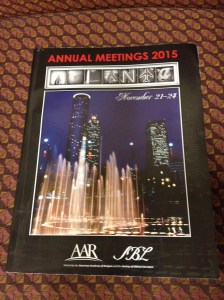
Every year as the latter half of November rolls around, the mind of religion scholars goes toward the American Academy of Religion and Society of Biblical Literature Annual Meeting. This morning I’m off to Atlanta to join a myriad of others who still think the academic study of religion is a good and noble thing. For those who read this blog regularly, it will be no surprise that I’m giving a paper this year. Honestly, I’m a little nervous. I haven’t delivered a paper in years—it is nearly impossible to do research when you are cut off from academic libraries and, more importantly, the time it takes to do the work. Having only weekends to pull ideas together is not conducive to pushing the frontiers of knowledge forward. Sleepy Hollow came to my rescue this time around. That, and reception history.

Reception history is the hermeneutic that looks at the Bible from the point of view of later interpreters. For the Hebrew Bible that reception might be that of the New Testament, or even later books within the Tanak itself. Of course, the Bible has been studied and interpreted for nearly two millennia now, and not all those reading the Good Book have official training. Increasingly, with religious extremists making headlines from decrying the color of Starbucks cups to an all-out attack on Paris, understanding the reception of religious texts is important. The Fox network hit Sleepy Hollow is an excellent example. The show begins with the Bible and although the end has yet to be determined, Scriptures have played a role throughout. And a viewership of pitiful biblical literacy drinks it all in. It is important to understand how the Bible has been, and is being, perceived.

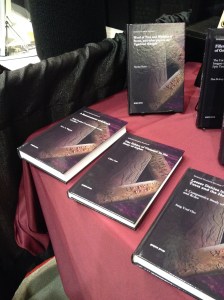
It may be, over the next few days, that my posts will be disrupted from their usual schedule. It is always a little hard to predict how things might play out when you’re away from home. I’m not sure what wonders Atlanta might bring. My own book should be on display in the book stalls for the first, and likely only, time. I will be meeting with people from dawn to dusk, discussing their book ideas. And I will, of course, be listening. Listening for the gallop of horse hooves in the background. Yes, the meeting is always a stimulating event, and with apocalypses in the news, I think I have selected a very timely topic this year indeed. If the frogs croak my name, I will know it is only my imagination.


As Others Think

As analysts step in where angels fear to tread, we have been given expert opinion on why ISIS’s terror in France was counterproductive to its goals. A few voices have chimed in stating that the result of escalation is just what an apocalyptic group hopes for. Rational people, having no idea how a fundamentalist thinks, are scratching their heads. Long I have wondered why universities and other bastians of higher education haven’t sought the advice of experts. No one can understand fundamentalism who hasn’t experienced it personally. Problem is, most people who have experienced it are experiencing it still. Those of us who thought our way out of fundamentalism are passed over repeatedly for university posts, while those better connected (surely not of fundamentalist stock) are handed influential positions from which to scratch their heads. You want to understand fundamentalists? Ask someone who’s been there.

There is nothing rational, in the common parlance, about fundamentalism. It has, however, its own internal logic. If you believe with every mitochondria in your body that the Bible (or any holy book or doctrine) that you were taught is true, and truly believe it, no amount of reason can convince you otherwise. This is (partially) because the ultimate cause of all events is open to question. Science does not address ultimate causes—it can’t. The endlessly creative human mind, however, can rather simply conjure them. If God is the ultimate ultimate cause, and if God said, x, y, or z, then other interpretations are simply wrong. If God has decided an apocalypse is necessary, what use is reason in the face of the impending certainty? Is there no way out?

There is. Some of us have made it. We, no matter our credentials, are not generally well-connected drones of the middle class. Fundamentalism is prized by the poor. Those who have no future on this earth look for another, better world. This is a perspective I understand very well. Our increase in ease of communication and exploding technology with ease of access have only given new tools to those who think in terms of ultimate causes only. You can’t talk a suicide bomber out of action with reason. You need to know the language of belief. We glory in our lack of belief and rationalism. We, however, close our eyes to the fact that the vast majority of people in the world are believers. And we won’t talk to them because they make us uncomfortable. We have written our own recipe for apocalypse.

From NASA's photo library

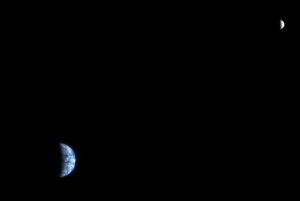
From NASA’s photo library


Apocalypse When?

We want to understand what worms through the mind of terrorists, and yet we don’t want to be bothered with religion. For decades universities have been shutting down departments of religion because they don’t make money. Religions aren’t materialistic in that way. In the light of the attacks on Paris over the weekend, many have been turning to the media to learn more about ISIS. A piece in the Atlantic by Graeme Wood, published back in March, pointed out how we have tended to see the movement as political, not religious. Wood, however, demonstrates the apocalyptic intentions of the leaders of ISIS. They are religious. Just because you carry guns and high explosives doesn’t mean you don’t believe.

Apocalyptic thought and politics are a deadly combination. The United States is not immune. Knowing the bent of George W. Bush’s distortion of Christianity, his terms in office were very frightening for many of us. Some Christianities, as well as some Islams, not only anticipate the end of the world but earnestly long for it. Pray for it. In the case of some Fundamentalist Christian sects, world leaders should orchestrate events to force God’s hand in bringing about end times. The fact that we had a president sympathetic to those beliefs should send shudders down anyone’s spine. The idea of an apocalypse is a religious one—there is nothing secular about it. We know the history of the concept, although universities eschew those who look that far back. Zarathustra, also known as Zoroaster, devised a new religion that reflected the basic dualism we all feel: good versus evil. The only way that good could ultimately win in such a worldview was through the complete destruction of evil. And evil wasn’t going down without a fight. This idea influenced Judaism during the Exile, and thus Christianities adopted it. And Islams. No moral relativism here.

The horsemen close in

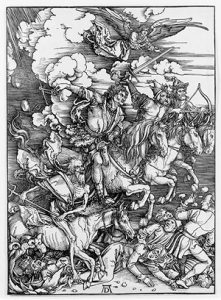
The horsemen close in

Religion is not evil. Historically it has attempted to be a moral compass to guide believers toward right over wrong. The fact that any religion faces opposition shoves those weak of mind into an apocalyptic state. Gather the horsemen and try to prod God into action. We don’t see divine activity on any kind of scale that we would recognize. The religious events of the past—the Islamic expansion, the Crusades, the Jewish revolt against Rome—these events are merely political. Those who’ve been conditioned to see God behind human activities, however, view such things very differently. Apocalypses are religious events. No amount of reason will convince a convicted believer to look elsewhere for consolation. Yet we press on with guns and bombs and ignorance of what makes religions tick. And tick they will. No matter how secular we might wish the world to be.


Monsters, in Theory

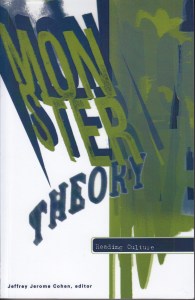
MonsterTheoryI want to understand monsters. I suppose that’s pretty common among Monster Boomers, but the thing is academics have been slow to give credence to our creatures. Yes, monsters are a throw back to the Medieval Period or worse, and reflect superstition, the supernatural, and things that go bump in the night. Our scientific worldview has no place for them, but they continually come back to peek in our windows and stomp on our cities. Horror movies, for example, consistently rate high in box-office grosses. And even adults, if caught in unguarded moments, might confess to enjoying the uncanny. So it was that I read Jeffrey Jerome Cohen’s Monster Theory: Reading Culture. Yes, it’s dated, but by humanities’ standards, it’s not too bad. Jurassic Park, one gets the feeling, was the rage when the book was being written.

As with most collections of essays, this is a Forest Gump of papers. Some of them were quite good and others were that kind filled with po-mo nougat. The one thing that was missing, sadly, is, well, monster theory. I’ve read just about every academic book available on monsters. I have yet to find a serviceable theory to help make sense of them. Yes, there are plenty of theories of origins—where monsters come from—but how to we handle them? Everyone knows that a stake is useful for vampires and a headshot is necessary for a zombie, but what are these revenants telling us really? Why do we still, when we can carry the internet in our pockets and call for help in the middle of nowhere, fear monsters? How do we construct, rather than deconstruct them?

Psychologists, of course, have a couch day with monsters. They represent parents, or phobias, or penises, or any number of things that make us uncomfortable. But how do we know a monster when we see it? Monster Theory, for example, has two chapters on conjoined twins. Now, at the time “monster” was a term used occasionally, but it is highly insensitive, let alone politically incorrect, to refer to humans that way. Then there were chapters on vampires and ghosts. Well, I suppose the dead can’t help their state either, but if they come back they could at least behave. Monstrosity is a concept, like religion, that we just can’t live without. We need our monsters in the dark just as we need dreams and desires. The question is what to do about them, and even after reading this weighty tome, I still don’t know.


Imagining Things

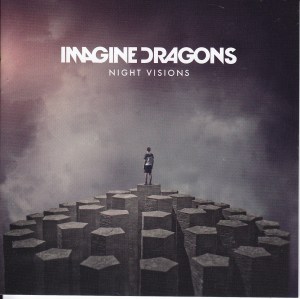
Having a child in college is one way for me to stay attuned to popular culture. You can absorb quite a lot by simply paying attention while on campus. For example, on the last several visits I’ve heard the song “Demons,” by Imagine Dragons, being piped into various venues. Given the biblical language of the song, I wondered about its origins, but, like many a distracted parent, had too much on my mind to pursue it. Well, on a recent visit, the song got stuck in my head. Partially this was because during an a cappella concert the Christian group did a cover of the song. This sent me to the internet—the only place where information on contemporary culture is instantly at your fingertips—to do a bit of poking around. Secular groups, after all, frequently use biblical references unnoticed.

When I learned that two members of Imagine Dragons were from Brigham Young University, I just had to know if they were Mormons. From what I’d seen of concert photos, white shirts and ties were rather conspicuous by their absence. Indeed, it turns out, according to the web, that the group does have some LDS in its bloodstream. I’m not so naive as to think that being of a particular religious background makes rockers religious. The debates raged in college over whether U2 was a Christian group because some of them were Catholics. I don’t recall seeing any crucifixes on the album art. This is all especially intriguing because Christianity and rock-n-roll are considered by many to be natural enemies. The origins of rock in the sexually suggestive blues had many 1950’s parents quite worried.

Religion changes, however, once you get away from the parents. I’ve known Mormons that I couldn’t identify as such until they told me. I’ve known Catholics about which I still harbor doubts. Religious affiliation is sometimes purely cultural. That won’t prevent you from being excluded from consideration for a teaching position at any of their schools, however. Scholars of religion can be the greatest believers of fiction to be found. Still, I have to admit to myself that the song “Demons” does keep me coming back. I wonder if the Christian group performing the song was aware of its Mormon tinge, or if they even cared. Sometimes theology can be had for a song.

ImagineDragons


Think Bigger

PlanetRagesI’ve spent a lot of time with academics. Having been one myself, I know something of their habits. Getting through a doctoral program involves, at least in some fields, becoming the specialist on a very tiny piece of information. Since people have been thinking about things for millennia, finding something new to say can be a challenge. Often, by the time they’re done, newly minted doctors know an incredible amount about a very specialized topic. This is, in many ways, simply an intensification of the human experience. We think small. Part of the problem is that our brains haven’t evolved to think big. Having learned an awful lot about the weather in the book on Psalms, I have instinctively taken an interest in natural disasters. Charles Officer and Jake Page share this interest, as is evident in When the Planet Rages: Natural Disasters, Global Warming, and the Future of the Earth. This, however, is a big idea book. Globally big.

Throughout the first two sections of the book, which deal with humans in the face of nature, God often comes up. As scientist and science writer (respectively) Officer and Page simply reflect common beliefs. Nowhere do they advocate invoking God, but they note that throughout history, in the face of just about any species of natural disaster, people have. Many people still do. Disasters and God. What a team! We worship what we fear. Once Officer and Page reach the third section of human impacts on nature, however, God drops out of the picture and the fingers are pointing solely at us.

When I read about what we’ve already done to this planet, I, as a colleague once said, start seeking another species to join. We have destablized the atmosphere so throughly that it will take at least ten-thousand years to return to it’s pre-Industrial Revolution state. Ten-thousand years. At the same time, the largest industrial pollutor (the United States) has jury-rigged politics so that only the wealthy can attain high office. Votes can be bought and we simply won’t sign the Kyoto Protocol. Those who knowingly doom their children are the smallest thinkers of all. We have changed the course of the biosphere well beyond our share of time, and even those scientist who deny global warming know that it is true. You don’t bite the hand that signs the pay check. After all, specialists have a tendency to be very small thinkers.


Yes, Virginia, There Are Ghosts

Universities find themselves in a strange position vis-à-vis the supernatural. I suspect that many institutions of higher education are slightly embarrassed at the fact that universities began primarily as training grounds for clergy. We’ve moved away from all that superstition and now believe that only science leads to knowledge. That’s why I find the University of Virginia’s magazine article on ghosts so refreshing. We all know better than to expect a straight answer from academics faced with the awkward question of belief, but the campus magazine invited six department representatives to a discourse on ghosts. The article, which can be accessed online, asked Art History, Anthropology, Religious Studies, Literature, Neurology, and Archaeology faculty about ghosts. At least they were willing to talk about the subject.

Edgar Allan Poe's room at the University of Virginia

Edgar Allan Poe’s room at the University of Virginia

Even in this world where skeptical ridicule is an accepted part of academic practice, we can’t quite let go of the idea of ghosts. They are among the most ancient of beliefs, and even despite the proliferation of apps that let you add specters for any occasion of selfie or digital shot, people still see them often enough to make academics wonder what is going on. Since science only studies that which can be measured, we suppose ghosts lie outside that realm. Those who’ve popularized “scientific” approaches to ghost hunting on television don’t bring their scientific credentials to the discussion. Anyone can be taught to use technology. (Well, not anyone—I sometimes still find my computer at complete odds with me. Technically, however, it is just an inert piece of matter.) From time to time serious scientists have turned their attention to ghosts. Results have been inconclusive.

As the leaves are beginning to fall, and the temperature follows suit, we know that many months of long nights lie ahead. Trees without leaves and air without warmth tempt our minds to believe that perhaps the microscope can’t reveal all that exists in this world. Halloween, after all, has become a major spending holiday and that assures its veracity. Driving through town, it is clear that it is quite an investment for some. Down in Charlottesville they are hunched over their desks, writing lecture notes and grading papers. As the wind blows that empty branch against your window on a overcast evening, however, it won’t matter what department you call home. There will be ghosts about tonight.


Playing God

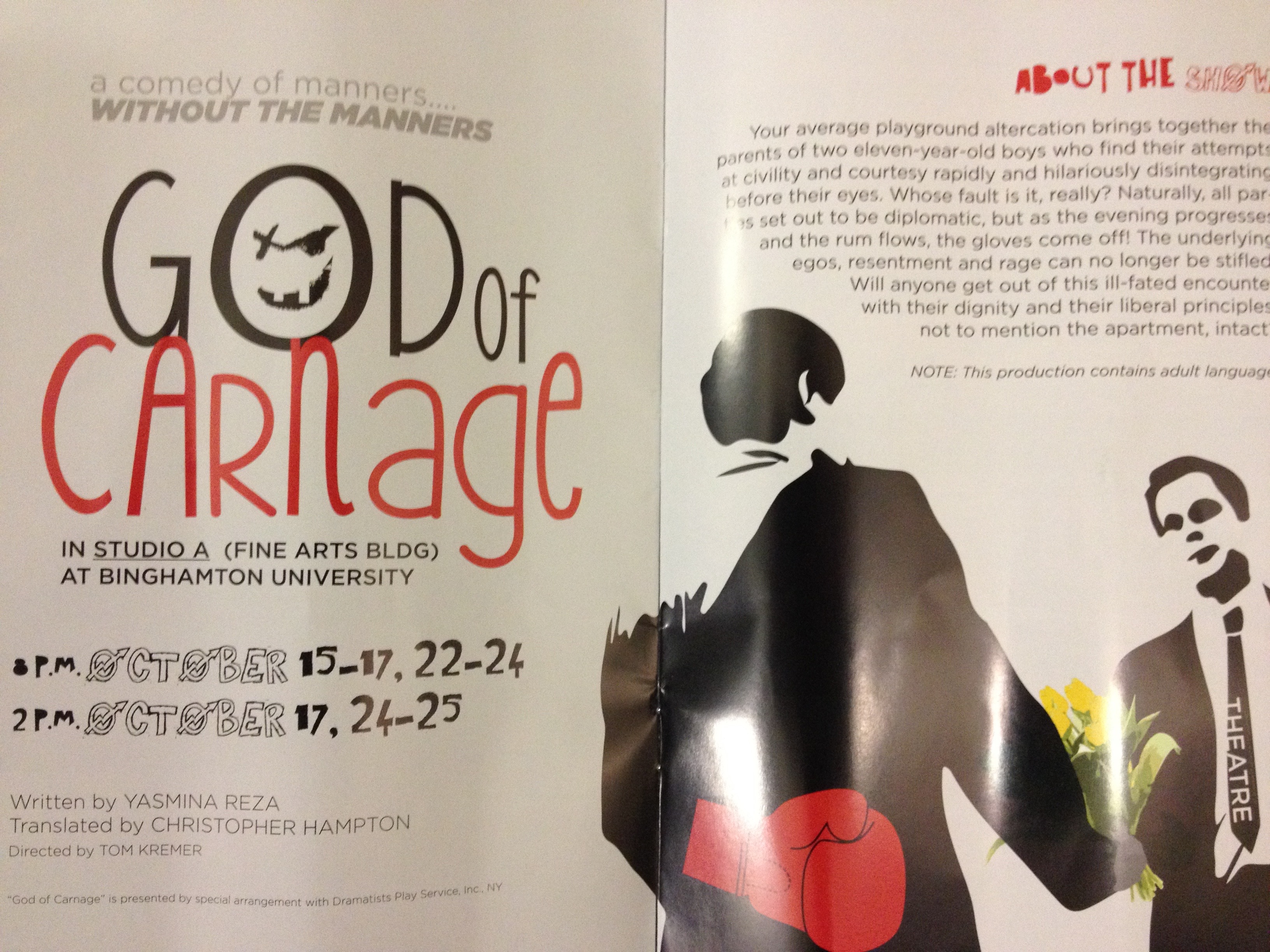
College is a rare time in life. Unlike any time after you find yourself with a diversity of intelligent and talented people open to possibilities that life tends to close shortly thereafter. At Parents Weekend at Binghamton University we took advantage of this wondrous juxtaposition to enjoy student talent. One of those offerings was the play “God of Carnage” by Yasmina Reza. It isn’t literally about God, but rather about two couples whose children had a playground fight. Parents try to solve the crisis, only to end up showing that they are really the ones who need to grow up. One of the vexed parents claims he believes in a God of carnage—that all people will seek their own good first and will eliminate those who get in the way. Perhaps might is right.

IMG_2587

The play is quite funny as the negativity grows and hidden assumptions come to the surface. There are no heroes here. In fact, any factor that might divide people does: gender, socio-economic status, race, sense of importance in the work one does. Each is turned into a weapon to make oneself appear more acceptable than others. Ironically, acceptance is just what’s missing here. Each of the four characters is alone and only finds company in teaming up with another to point out someone else’s foibles. As in most plays, the circumstances are exaggerated, and as in real life, peace is harder to attain than it should be. The god of carnage here is the individual desire to exceed at the expense of others.

The play reminded me, in a rather literal way of the verse stating that a child shall lead us. Not that children are entirely innocent, for they are people too. They can’t be held accountable in the same way adults are. We do our best, but our intentions seldom rise to our ideals. Our own needs and desires get in the way. In my experience of over half a century, most of us never really grow up. Selfish behaviors are magnified in a setting like New York City where so many agenda are crowded in together. If we believe in a god of carnage—that our own desires are more important than those of others—our differences will only emphasize that. Apart from high school and college performances, I have been to few plays in my life. Each time I attend one, however, I learn a bit more about how art reflects reality. And if we could only learn to consider others to be just as important as ourselves, the god of carnage would be the one who ends up unemployed.


True Natives

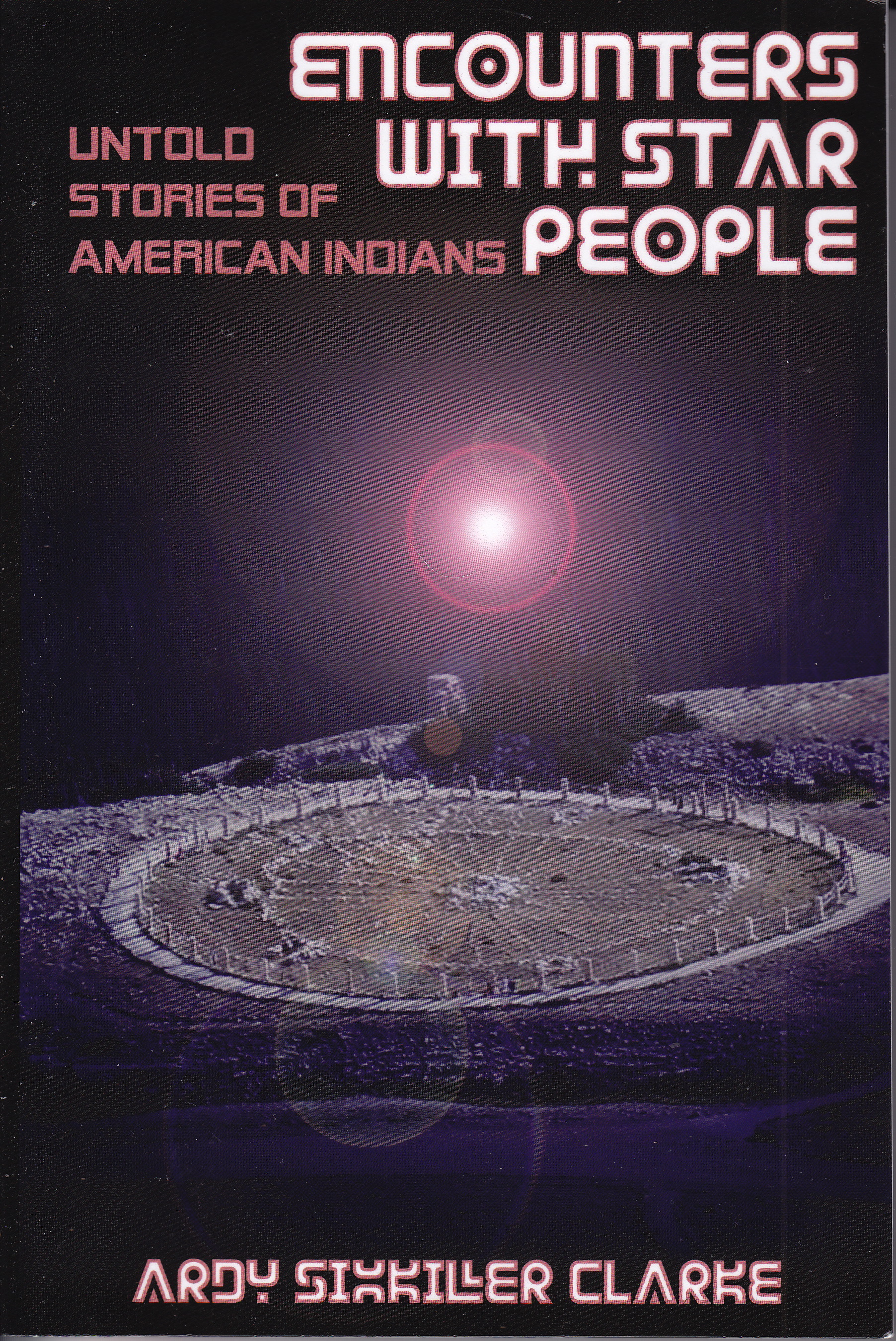
StarPeopleI have long been fascinated by American Indian folklore. In fact, the first book I read this year was a set of Indian tales. Just this week I finished a most unusual book by Ardy Sixkiller Clarke entitled Encounters with Star People: Untold Stories of American Indians. Clarke, who is herself Indian, taught at Montana State University and collected stories from various tribes concerning Star People. Mainstream western science has already made up its mind that Homo sapiens are the most advanced species ever to grace this universe, and so any discussion of visiting non-terrestrials is off the table. What Clarke shows us, however, is that just because there’s no such thing doesn’t mean that all worldviews agree on that point. In many interviews with indigenous peoples of the Americas, belief in Star People emerges as perfectly normal. As does not talking about it because white people will ridicule and belittle anything that doesn’t fit into their limited cosmos of technology and money.

Reading these stories felt like absorbing wisdom from those who observe nature more carefully than those of us of European stock are inclined to do. With eyes pressed to microscopes and telescopes, it is sometimes possible to miss the big picture. We crowd into cities and have no idea how to live under the stars. We can’t even see the stars most of the time. Have we lost our ability to wonder?

Purely from an academic point of view, I wonder why aliens can’t be taken seriously. I try to think of other topics that are simply laughed out of discussion before examining the evidence. To me it seems that human pride is at stake in this case. We are a very proud species, enamored of our own accomplishments. If we can’t reach the stars, nobody else can. This to me is troubling. Aliens, after all, don’t fall into the category of “supernatural” unless we mythologize them into yesteryear’s angels. If they are real, they are as natural as we are. They would have a technology that we haven’t replicated yet, and anyone who doubts interstellar flight should consider the impossibility of carrying a computer around in your pocket or on your wrist only thirty years ago. No, if there are Star People, they are natural. Whether or not they might exist is simply a matter of belief.