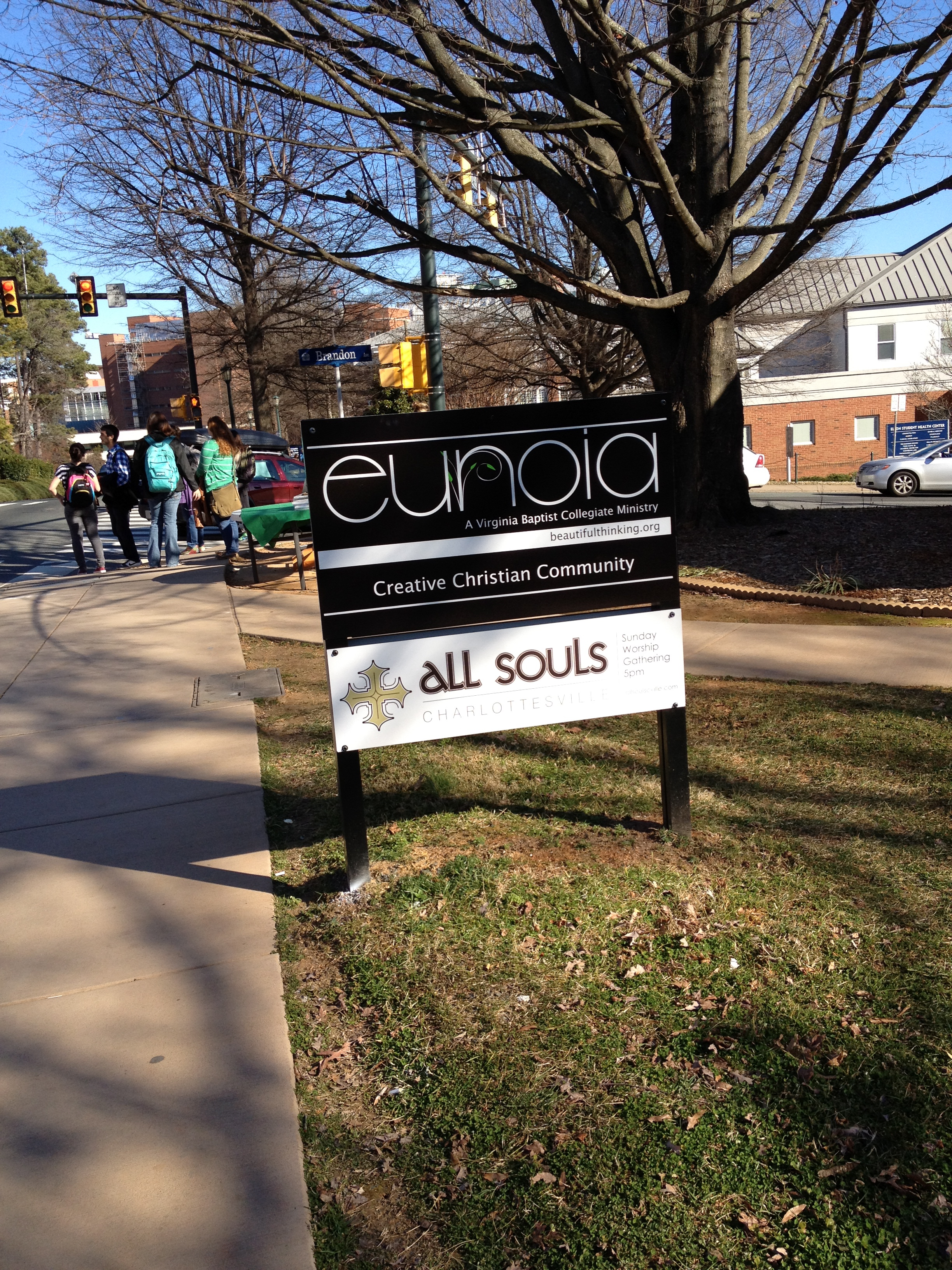
Scientific Seminary

Old Testament. New Testament. Church History. Pastoral Theology. Systematic Theology. Homiletics/Liturgics. This was a typical kind of seminary curriculum about a quarter-century ago. Obviously there were variations, but the basic topics were Bible and its application. When I attended seminary science was already in the ascendent (seriously, it wasn’t that long ago!). Nobody much worried about how it might impact religion. People in the United States still attended church in large numbers but no one I knew really considered science a threat to belief. They were essentially different realms of inquiry and although some on each side asserted the superiority of their enterprise, the debate seemed to be good-spirited and without excessive rancor.
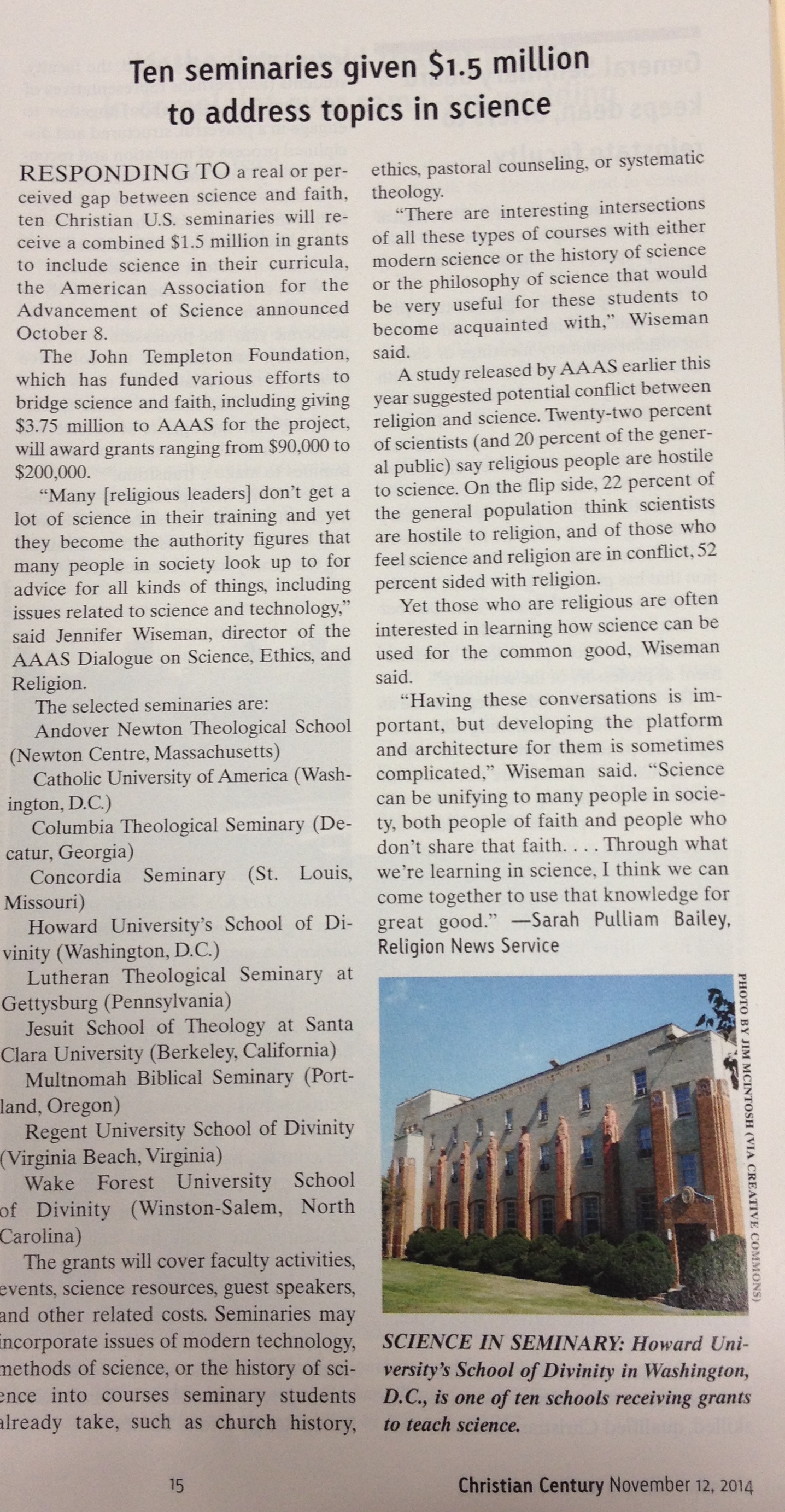
IMG_1656The situation has, of course, shifted radically since then. We’ve become a society guided by business principles and technology, and religion has all the appearances of being quaint at best, likely just useless, and, at worst, dangerous and deadly. Civilization, however, was built on the premises of a religion that permeated every aspect of life. That influence has been slowly replaced by that of a materialistic reductionism that suggests all things, this blog included, are but the random results of dry atoms bumping about a cold universe. Naturally there has been a reaction. The most vocal of believers, the Fundamentalists of all stripes, have directly challenged science in the arena of veracity. As we all know, however, Fundamentalists aren’t really equipped to convince the masses. The Bible, the underlying strength of the literalist, has come under scrutiny and has been demonstrated to be more inclined to myth than history. What more does a scientific worldview need to weld shut its superior outlook? And yet, reasoning, non-reactive religion still exists. Still has a place in this mechanistic universe where miracles are disallowed.

I recently read about a Templeton Foundation initiative that is funding programs on religion and science at seminaries. Some scientists excoriate the Templeton Foundation for trying to keep religion in the picture, but my humble opinion is that Templeton and its money have nothing to do with it. Religion is a very human response to a universe it can’t fully understand. Empirical method seems to work, and the results are so complex that few can even hope to comprehend. All but the most hopeless, on the other hand, can understand “love thy neighbor.” Religion continues to guide countless lives—most of them for the good, and not for the incendiary responses of a challenged literalism. The time has come for seminary curricula to adjust to the world as we know it. That world is run by inhuman forces that may help or harm humanity in equal measure. Religion, however, need not battle with science. It must, however, add it to the curriculum.

Spirit Works

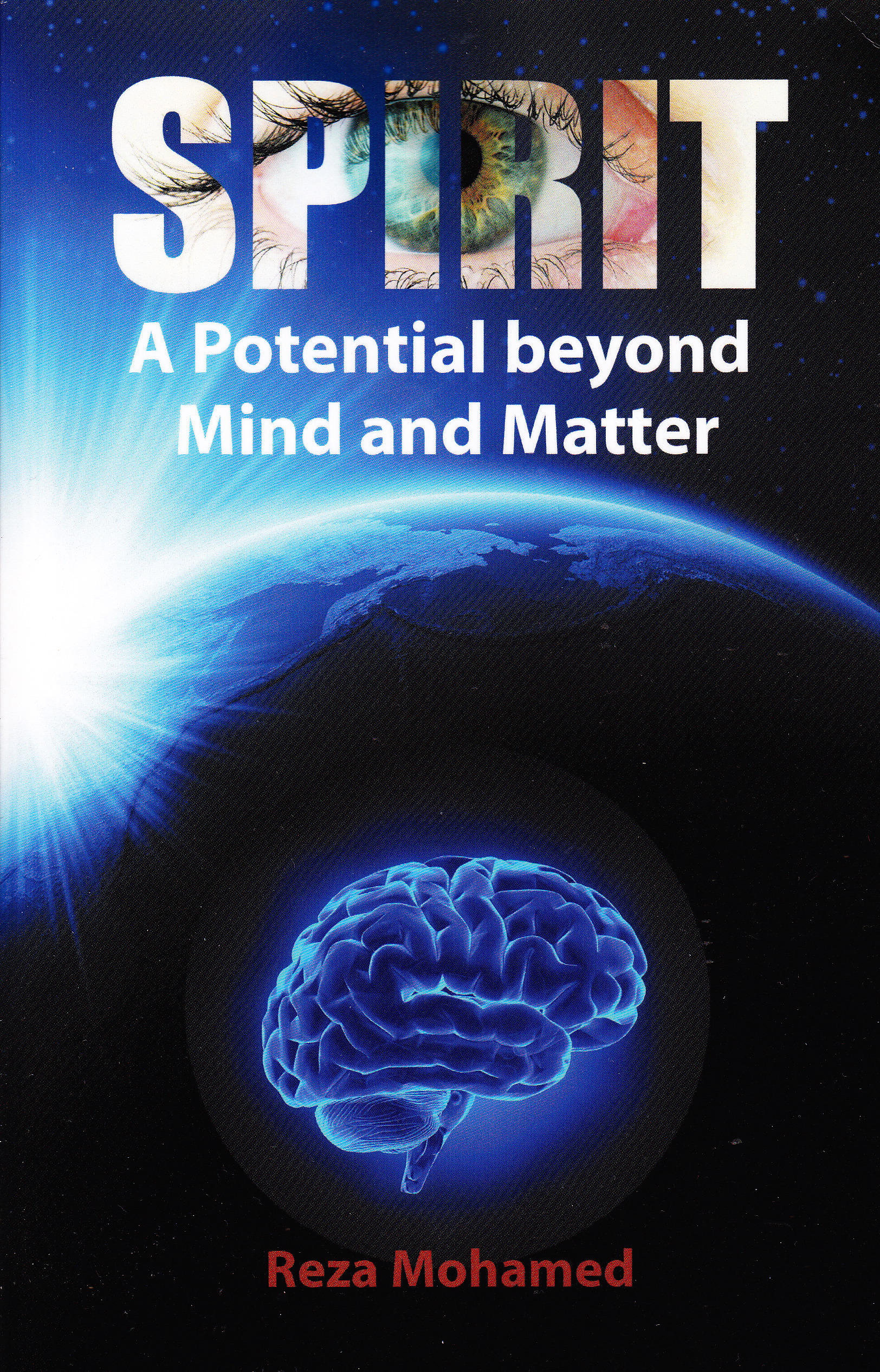
SpiritOne of the unexpected (for me) perks of the academic life was book reviews. Some journal editor would send you expensive academic books you get to keep, just for reading them and giving your opinion in writing! Most academics, truth be told—at least old school ones—would work for books. But don’t—wait. I was going to say “don’t tell the dean,” but it is clear that administration is way ahead of me on this one. In any case, I miss not having a viable academic opinion any more. Not having an institution means journals no longer care what I think about books. Also, working in publishing, there may be a conflict of interest involved. That’s why I was so happy to learn that blogging also leads to free books, on occasion. Most of them aren’t university press books, but you don’t have to be a professor to have something profound or useful to say. So it is that I came to read Spirit: A Potential beyond Mind and Matter, by Reza Mohamed.

There were several points that stopped to give me pause in this book, but about half-way through an idea caught me and has stayed with me since. It revolves around the idea of consciousness, something that Mohamed writes quite a bit about. A number of sources lately have suggested that consciousness is not unique to humans. Clearly, to my mind, animals are also conscious, and I think evidence points to consciousness, on some level, for plants as well. Perhaps even what we call inanimate, or inorganic material. Indeed, perhaps the universe itself is conscious. What occurred to me in reading Spirit, is that perhaps consciousness is the primal element. Maybe it has always existed. Could it be possible that we, like riders on a train, borrow a bit of consciousness while our bodies last, and then when we expire we simply climb off that train and consciousness continues on down the track, waiting for the next passenger?

It is nearly impossible to determine whence consciousness arises. Believing that it always existed is more plausible to me than the odd suggestion that it is just what happens when neurons get all mushy from being too close together. All creatures, as Mohamed notes, have will. Plants that follow the sun—slowly, and over years—seem to have a purpose as well. Who’s to say that it stops there? What have we lost if consciousness is endemic to the universe? Of course I don’t have any answers. Just possibilities. Ideas can spring unexpectedly from books, and as a sometime writer, I can say they even surprise an author from time to time. Then, of course, my opinion is merely that of an independent scholar. But I still find myself working for books.


Catholic Nones

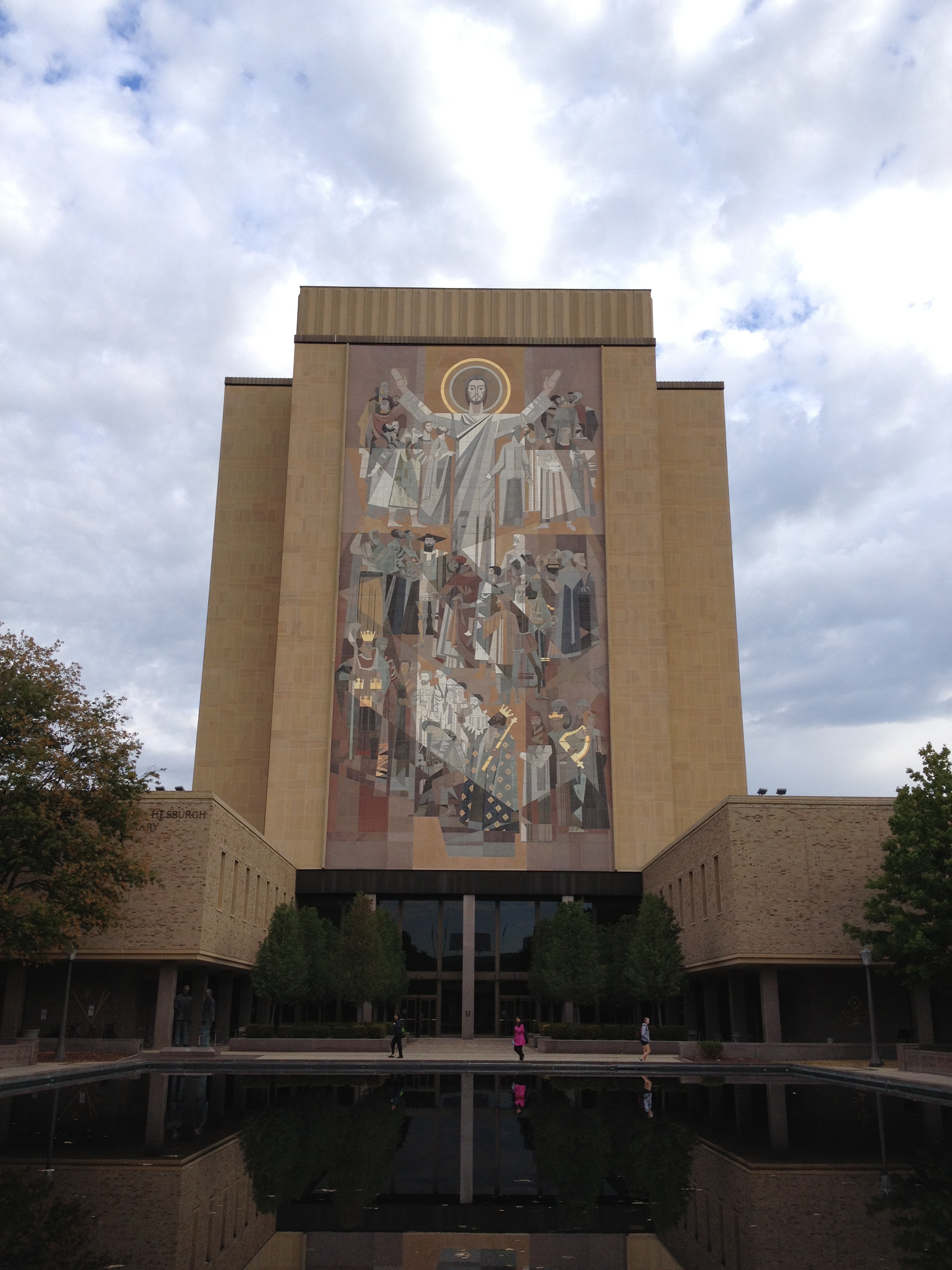
In a recent issue of the Chronicle of Higher Education, an article pondered the future of Catholic universites in an age of nones—those who don’t affiliate with any religious tradition. As with so much in life, the evidence countermands expectations. Enrollment is stable and even non-Catholics are attending. Part of this, no doubt, is because a greater number of high school students are being channeled into college, but there seems to be more to it than that. Those interviewed suggest that it is often that students, nones included, favor an education with a moral grounding. Materialism doesn’t give one much to go on besides human convention. Even if students don’t accept Catholicism, there’s no doubt that the Catholic Church presents itself in a way that admits little doubt over what’s right or wrong. Even if you choose not to observe the strictures, there’s a comfort in know they’re there.

One of the schools foregrounded in the article is Marquette University in Milwaukee. While at Nashotah House I came to know some members of the Theology Department there, and I visited the campus numerous times. One of the interlocutors in the article is a physics professor who, admitting concerns at first, has found Marquette—a Jesuit university—remarkably open to science. The days of Galileo are over. Even Catholics know science is science. Indeed, the Vatican itself employs scientists and a Catholic priest was the first person to formally postulate the Big Bang. As someone who has applied to many Catholic universities over the years, and who has had a fair number of interviews, my sense is that the close-mindedness comes with theology, not science.

IMG_0990

Especially in the days of retrenchment under John Paul II, control over hiring for religion (“theology”) faculty at Catholic schools underwent renewed scrutiny. I was informed that I was not selected for positions because I was not Catholic. You could, however, be a none physicist and land a job. This discrepancy of knowledge has led me to fine tune the Chronicle’s question a bit. The Catholic Church is well funded. Its universities would only be in danger from radical drops in student numbers. This favors the hiring of mainstream professors in every discipline. Except religion. It is as if this small presence on a large campus, such as Notre Dame, could hold out against the humanist knowledge emanating from every other department. A candle, as it were, in the hurricane. And that candle, amid all the nones, must accept official doctrine. At least on paper. And all will be well.


Flight of Fantasy

Today marks the end of the AAR/SBL Annual Meeting. As the last attendees who have stayed through to the final half-day make their way through the dreaded Tuesday-slots for papers and wander the exhibit halls in search of last-minute bargains, I wonder what impact we will have made in San Diego. Many of my conversations this year included lamenting over the state of higher education, particularly in the study of religion. Religion, which led to the very concept of higher education, is now perceived mostly as little more than a somewhat unsophisticated intrusion into the cold, hard reality of business. And educating future entrepreneurs is, make no mistake about it, business. Wither the institutions go, publishers will follow. The life of the mind is a perk that we no longer can afford. And yet, as colleague after colleague attests, this is what students really find fascinating. Perhaps even important.

As we get ready to head back to the airport, I reflect how it is so much like being a passenger on a plane. We’ve purchased tickets to get us near where we want to be, but we aren’t directing this jet. The pilot, isolated from us by an unsurpassable barrier, will, we trust, get us to the designated airport. That, however, is not really where we want to go. We won’t happily loiter there. Impatiently we’ll await our baggage at the carousel so that we can wend our way back to our homes. Where is the business end in that? Isn’t it, however, what we live for? And what of the San Diego we’ve left behind? How many people will say that their lives will have been improved by having the lion’s share of religion scholars in their neighborhood for a long weekend? Will the number of homeless have decreased? Will they have found jobs?

While those of us “not from around here” ride elevators more nicely appointed that some people’s houses, the televisions meant to prevent us from growing bored from the twentieth floor to the first, show how the other half lives. It’s sunny and nearing eighty today and Buffalo has snow higher than our heads. Reporters flock to the snow-locked city and wonder at nature’s extremes. It doesn’t seem to play along with our business plans. There must be some way to make some money out of this. But I have an unconventional theory. Maybe I’ve watched Bruce Almighty too many times, but I wonder if all those prayers made by children for a snow day may have been stored up in, what scripture assures us, is a great divine warehouse awaiting release. Perhaps the doors of that storehouse have been thrown open to remind us that sometimes the business of living is simply the wonder of watching it snow. No matter how inconvenient it might be. And lives will have changed for the better.

IMG_1825


The Presence of Ideas

Attending the American Academy of Religion and Society of Biblical Literature Annual Meeting is a bittersweet experience. There is nothing as awe-inspiring as being in the presence of ideas. Whether it is meeting friends who have grown old with me over the years, or younger scholars who promise a fascinating future, or those newly discovered that feel like old friends, they all have ideas. Of course, it is not the editor’s job to produce content, no matter how long or deeply one has been trained to do so. Here is where the bitter of the flavorful metaphor comes in: the suppression of ideas is painful. Throughout my career I have had the benefit of being trained by maverick thinkers who, although I hadn’t realized it at the time, were showing me the way to a kind of enlightenment. Enlightenment, whether it be the absence of thought or the plenitude of it, will lead to places we can’t possibly expect.

When talking about ideas with others I realize how artificial our trite divisions are. For many years I was labeled as a “Hebrew Bible scholar.” “A seminary professor.” Or any number of other simplified categories. My interest, however, was always the finding of the truth. No other goal, it seems to me, is really worth all the energy we put into academic discourse. Sure, I may have studied obscure dead languages—the kind of work that is required to read what many call the word of God in the original (and even earlier than original) language(s). There I found deities battling monsters and chaos perpetually lurking in the background. Ideas in conflict. I somehow knew truth would always win. In fact, I more or less took it personally when AAR initiated its temporary separation from SBL. The two need each other, no matter how much they might argue in the night.

What's the idea?

What’s the idea?

After my first full day of the conference, my head was so swimming with ideas that I had a night full of frightful intellectual dreams. Although I may have trouble convincing the great institutions of this land, I do know that I have something to offer. Ideas crowd around me like a newly exorcized man, seeking entrance to a receptive mind. The more we claim we know, the more we have to learn. I face another day of greeting ideas and seeking their company. Of course, I’m a company man, and I should know what I’m here for. The bittersweet truth of the matter is, however, somewhat more complex than that. I can think of no better place to explore it in the company of friends I’ve known for years, or even only for the past few minutes. As long as they bring their ideas.


Dry Nation

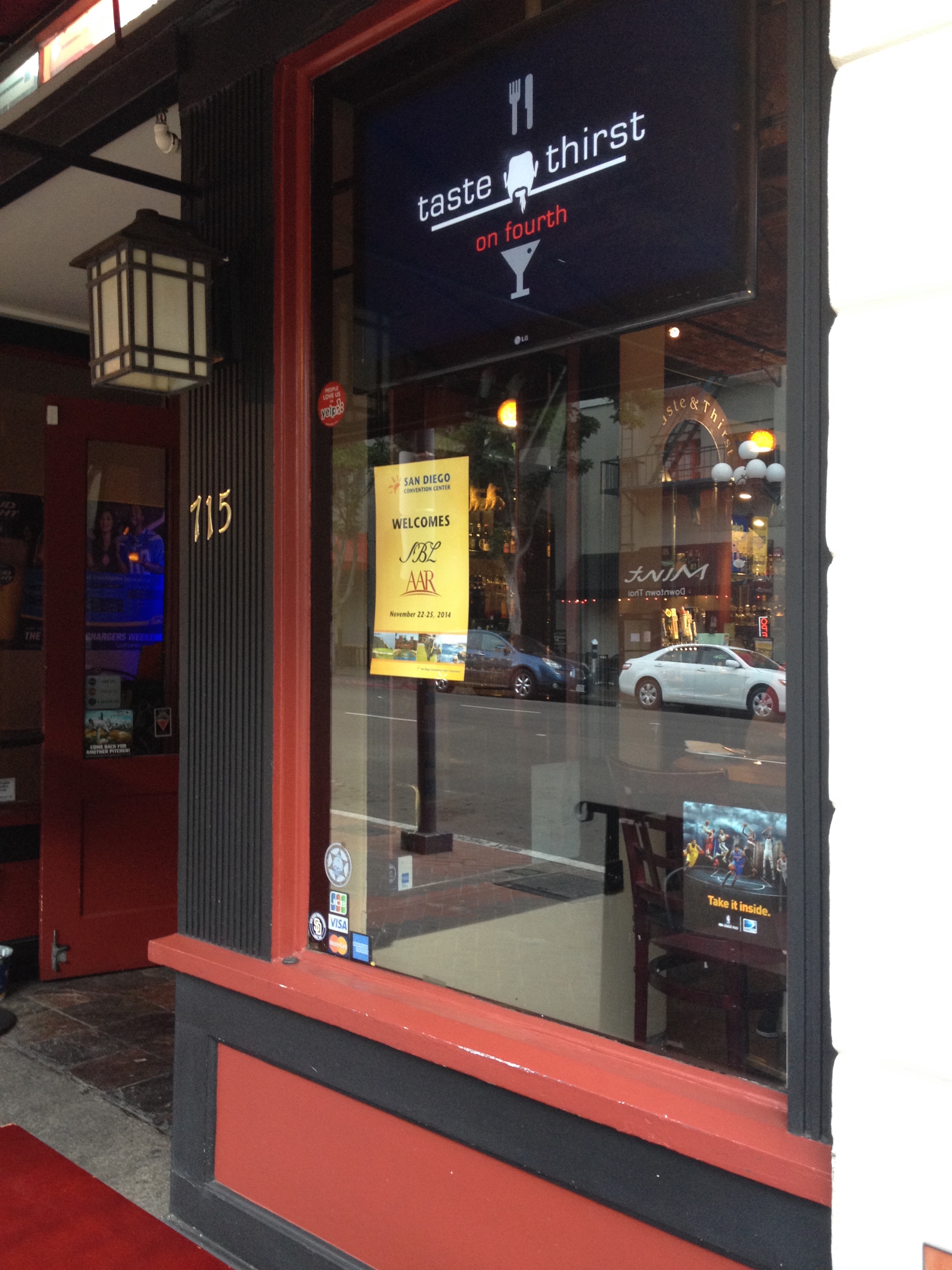
The American Academy of Religion and Society of Biblical Literature annual meeting is a big thing. It draws a myriad (literally) of scholars together every year and invades a fair sized city that may or may not be a religious haven. San Diego feels like a pretty Catholic city to me. My cab driver from the airport was a Muslim, but many of the churches and place names around here reveal a natural comfort with Catholicism. My first night in town, on my own and somewhat weary from awaking at 3:30 on the other coast to get ready to catch my flight, I wandered through the Gaslamp District looking for some authentic Mexican food. It is surprisingly tricky to find, although I’m only twenty miles from Tijuana. Along the way I passed a bar that had a welcome AAR/SBL poster in its window. Now here was a vender that recognized their client!

IMG_1814

Many of those outside the profession assume such conferences as this are like higher education Sunday schools. Undoubtedly, there are those who wish they were. For some, perhaps, the annual meeting allows for the indulgence of personal peccadillos far from watching administrative eyes. Others are more sanguine about it all. Religion scholars are just as human as the next guy. As I looked at this bar window, I reflected on how Christianity (in particular) came to regard alcohol as an evil. Wine and beer were known from ancient times, and even the New Testament has Jesus presented as an imbiber. Temperance, however, grew out of American Fundamentalism that seemed to have forgotten its scriptural roots. I remember learning, as a child, that the wine Jesus drank was really only grape juice with a little kick. Who wants an inebriated God running around the Middle East?

Still, I realize that drinking has its consequences. As the child of an alcoholic, I know the damage that this can do. On the other hand, I know many religions view “controlled substances” as gateways to alternate realities. Other planes of existence. There are even cases where Native Americans have been arrested for using their traditional ceremonial substances in a nation not quite Christian, not quite not Christian. Even on my way to the Gaslamp District, I was saddened to see so many homeless about the city. I knew that as evening fell and the scholars arrived, the bar would come alive. And I knew that when the rain came, some would get wet while others stayed nice and dry.


Harboring Hopes

I am not what you’d call a fashion-conscious man. I literally still wear clothes I had in college. Most of them are petty much for around-the-house, given the condition they’re in, and although I wear jeans less, I have never really tried to “change my look.” I wear my hair (now grayer) the same way I did in high school, and most of my clothes, realistically, come from my teaching days. As I walked along the Seaport Village walk here in San Diego, a group of red-shirted workers, on break from unloading a truck, called out to me. Now, I know better than to talk with strangers, but working class types are my people. I am from a deeply blue collar background, and I feel that I have much more in common with them than with the priest who’s handing me a pink slip. Or the average professor. So I stopped. “Are you a professor?” one of them asked. In honesty I answered, “I used to be.” The fellow turned to his companions and said, “I knew he was a professor.” Turning back to me he said, “of what?” This is the part where crickets start to chirp and a tumbleweed blows by. “Religion,” I confessed.

This led to a spirited debate between two of the men. The one who called out told me that he’s now a Christian. He was raised Catholic but after having been out on an “effing ship like that” (the USS Midway) he found Jesus. One of his companions began arguing that religion was a terrible thing—causing people to insist that they are right and others are wrong. He argued that faith was fine, but as soon as you start calling it a religion, problems arose. I put my hand up to shade myself from the late afternoon sun. I was far from home, and I had no idea what these men wanted from me. Was I supposed to give them the answer to which was the true religion? Maybe they just wanted to be heard. I demurred and encouraged them to continue seeking. As I walked away, one of them said, “that’s a smart man.” The first said, “I told you he was a professor.”

What does a professor profess? While waiting for my plane in Newark, I heard two religion professors (actual, and ancient) discussing the fact that they’d retired. “But I want to keep on teaching,” one said. Without, I thought, considering that you’re keeping younger scholars from finding gainful employment. Yes, teaching is enjoyable—I know nothing like it—but there can be other outlets for sharing your wisdom. My wife has recently taken to MOOCs (Massive Open Online Courses). There are community events where you might not get paid, but your wisdom would be providing a service. And you’d be opening the door for others. Sounds like a religious thing to do, instead of being selfish or self-important. Or then, you could just walk along Seaport Village. Rather than turning away from the common worker, answer him or her when he or she calls out to you. It is the way of true teachers.

IMG_1809


The Past of Education

Meanwhile on earth, I have been checking up on my colleagues at General Seminary. While I’m limited in what I’m allowed to say, an article last week on Inside Higher Ed indicated that a provisional readmission of seven of eight of General’s faculty is now in place. There will be mediation. People are especially good at recognizing patterns. Some years ago, a naive and overly trusting individual, I also participated in mediation. The faculty at a certain seminary had been turned over to Conflict Management Incorporated to learn that you need to make the pie larger before slicing it up. Everyone can get enough to be satisfied. Of course, that doesn’t mean you’ll still have a job after the dessert course. Power structures being what they are, no one willingly lets go. And we’ll do just about anything to get the media off our backs.

Seminaries are probably more important to higher education than anyone would like to admit or acknowledge. The impetus to gather and educate individuals began as a religious enterprise. The earliest universities were often founded for that very purpose, and even the great intellectual powerhouses of Harvard, Yale, and Princeton were originally established to train clergy. Religion and education have been inextricably tied together since the Middle Ages and even before. Ironically, these days clergy are often cast as backward and superstitious. When’s the last time a seminary faculty landed a robot on a comet? If you ever venture to a church door, however, often the denizen of the pulpit is seminary bred. And there is power here. The collective collections can support such splendor as the Vatican. The faithful, we know, are willing to give. With a little pressure.

The Protestant traditions, despite their power structures, never officially developed a doctrine of ex cathedra truth. It is actually a difficult concept to pull off when there are over 40,000 different denominations of Christianity, and many other religions besides. But we can insist that our clergy attend special schooling. We can pay close attention to those we hire to teach them. Not everyone can read a dead language. Anyone, however, can quote scripture (or at least look it up on the internet). Seminary professors must have advanced degrees and faithful hearts. A combination that may be rarer than a comet. And we will put those individuals into a power structure that dates from the Middle Ages and wonder why it no longer works. Somewhere out past Jupiter a human device sits on a comet. Meanwhile in New York City we’re just not sure we can trust these people with our future priests. People are, however, especially good at recognizing patterns.

IMG_1275


Christian Computing

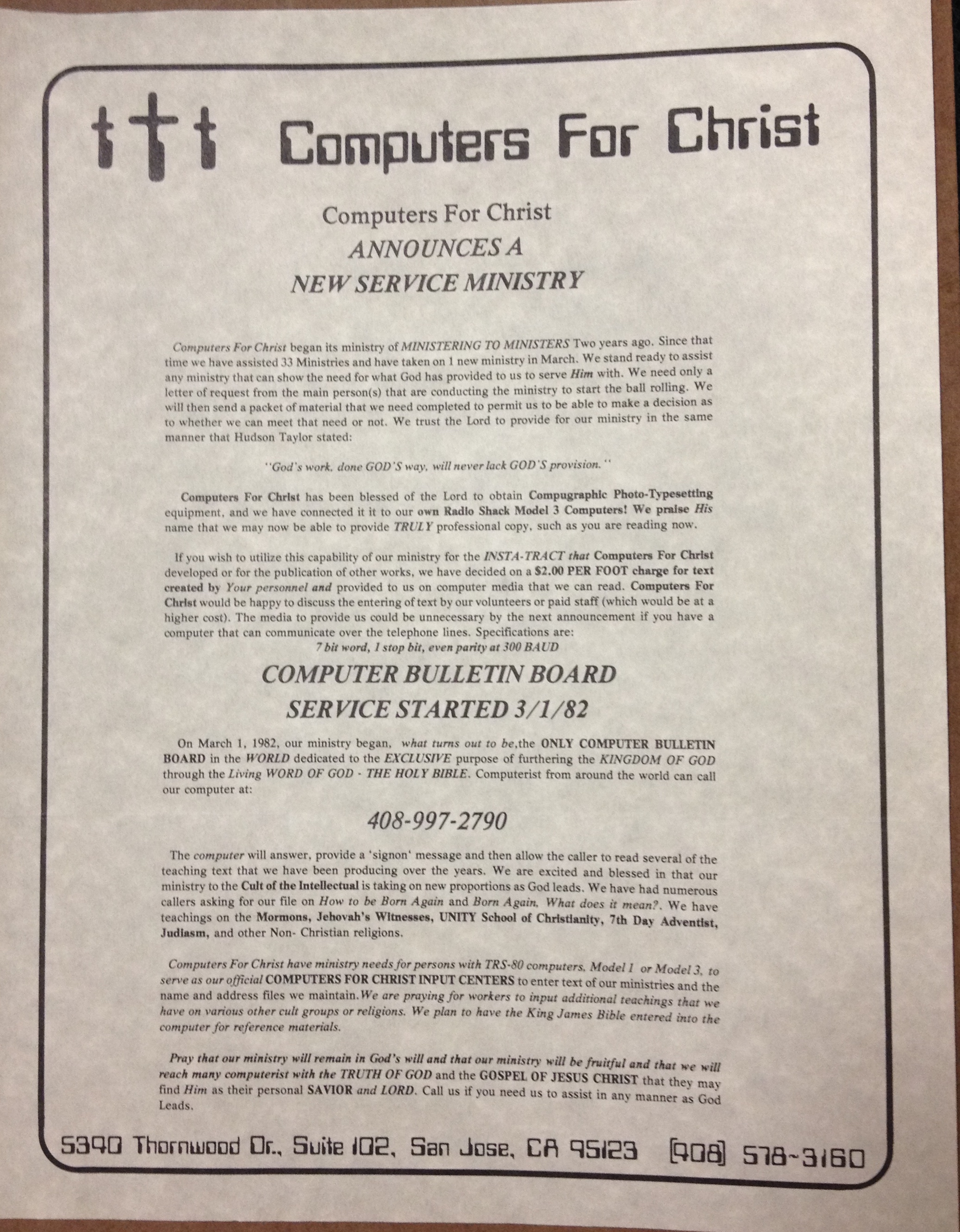
Science and religion are often portrayed as fighting like dogs and cats. Both claim superiority and a comprehensive worldview that should make sense of everything. With reality television probing deep into the lives of rural folk who still hold to the old ways, it is easy to think that religion is awkward and backward and an embarrassment to the technologically sophisticated. In electrons we trust. As with most simplistic views, however, this dichotomy is overly dramatized. I recently found a flier for Computers for Christ. I didn’t have time to read it carefully, but the space-age font immediately told me that this was vintage 70s or 80s, back when computers were still so new that most of us had never seen an actual exemplar and we had to guess what the future might hold. Would these things catch on or not? A little closer reading revealed the date of 1982, back when I was a college freshman. I had, by that point in my life, never knowingly glimpsed a computer.

IMG_1644

Sitting here with a computer on my lap, and another in my pocket, I wondered what ever happened to Computers for Christ with its space-age crosses and early embracement of technology. I didn’t find anything that really matches it with a half-hearted web search, but it did make me realize that some enterprising Evangelicals had latched onto computers long before I ever did. I recall making a pact with a couple of friends my senior year in college that we’d never give in and use computers. Since I can’t find them online, my guess is that they kept their end of the deal. As usual, I caved. By 1985 computers had found their way even to Grove City College. A strange thing called a “server” allowed people to access it via multiple “terminals.” The computer science professor wore a large cross around his neck. I would go on to seminary and graduate with a second degree not ever having used such a device.

Dogs and cats are both mammals, and neither regularly preys upon the other for food. Although Computers for Christ may no longer exist, the internet has been fully exploited by some of the religious. Jesus was an early meme. I remember when “the winking Jesus” was all the rage since an image on screen was actually animated! The savior virtually moved an eyelid! Now we can find Jesus doing everything from walking on water to riding on dinosaurs. The son of God has adapted to life on the web quite well, and often with a sense of humor. There are those who would argue that this is a travesty of true faith. There are others who would argue that it is a silly use of serious technology. I grew up with both dogs and cats and learned that when domesticated together they seldom fight. As I file away this aging paper, I wonder how the world might change if people behaved so sensibly.


Fear and Dissembling

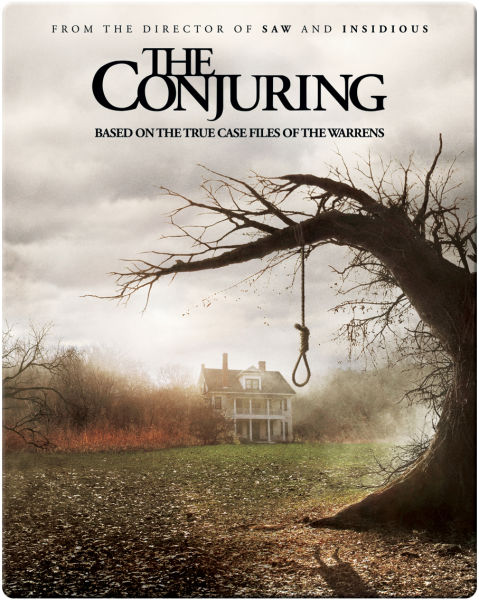
The ConjuringLast year, when The Conjuring was released, it quickly became one of the (if not the) top earning horror films of all time at the box office. Based on a “true case” of Ed and Lorraine Warren—real life paranormal investigators—the film is a demonic possession movie that ties in the Warren’s most notorious case of a haunted (or possessed) doll, with a haunting of the Perron family of Rhode Island. (The Warrens were also known as the investigators behind the Lutz family in the case of the “Amityville Horror,” showing their pedigree in the field.) Given that Halloween has been in the air, I decided to give it a viewing. As with most horror movies, the events have to be dramatized in order to fit cinematographic expectations. Apparently the Warrens did believe the Perron house was possessed by a witch. In the film this became somewhat personal as the dialogue tied her in with Mary Eastey, who was hanged as a witch at Salem (and who was a great-great (and a few more greats) aunt of my wife). Bringing this cheap shot into the film immediately made the remainder of it seem like fiction of a baser sort.

Witches may be standard Halloween fare, but when innocent women executed for the religious imagination are brought into it, justice demands separating fact from fiction. Writers of all sorts have toyed with the idea of real witches in Salem—it was a trope H. P. Lovecraft explored freely—but there is no pretense of misappropriation here. Lovecraft did not believe in witchcraft and made no attempt to present those tragically murdered as what the religious imagination made them out to be. The Conjuring could have done better here. It reminds me of Mr. Ullman having to drop the line about the Overlook Hotel being built on an Indian burial ground. Was that really necessary? (Well, Room 237 has those who suggest it is, in all fairness.) The actual past of oppressed peoples is scary enough without putting it behind horror entertainment.

A doctoral student in sociology interviewed me while I was at Boston University. She’d put an ad in the paper (there was no public internet those days) for students who watched horror movies. I was a bit surprised when I realized that I did. I had avoided the demonic ones, but I had been in the theatre the opening week of A Nightmare on Elm Street (on a date, no less) and things had grown from there. I recall my answer to her question of why I thought I did it: it is better to feel scared than to feel nothing at all. Thinking over the oppressed groups that have lived in fear, in reality, I have been reassessing that statement. What do you really know when you’re a student? As I’ve watched horror movies over the years, I have come to realize that the fantasy world they represent is an escape from a reality which, if viewed directly, may be far more scary than conjured ghosts.


Viking Trail

History is a powerful elixir, capable of transforming sinners to saints with the mere passage of time. Well, calling Vikings saints may be a bit of a stretch, but still, they have become some of the sexy bad boys of the Middle Ages, and with the finding of a Viking horde in Scotland last month, they are in the news once again. Vikings and monks were kind of like medieval dogs and cats. Monasteries, located in lonely regions, often amassed wealth and Vikings, looking for loot and less scrupulous about bloodshed, were eager to take it. The give and take (literally) of this violent lifestyle involving seafaring, battles, and churches, makes for good ancient drama and much of it took place along the coasts of Scotland. Our Scandinavian scourge, however, didn’t stop there. It is well established that the Vikings made it to North America well before Columbus. Those who don’t dismiss the Kensington Rune Stone also claim that the Vikings reached Minnesota long before football ever did. Whatever the reason, we are fascinated with Vikings.

Wikinger

Perhaps they are the ultimate autonomous self-promoters. We all would secretly, at least, enjoy being able to set our own standards so that they favored us and our loved ones. The Vikings represent the flaunting of the rule of law, traveling far to take what they want by force. And, perchance, leaving a bit of treasure behind as well. The Vikings became Christianized and the slave trade (long before the New World caught hold of the idea) was effaced to the point of becoming uneconomical to them. Nobody is certain why, but the Vikings, probably for a variety of causes, ceased to be the terror of the seas. Now the Scandinavians are considered among some of the most literate peoples of the world.

Along with the decline of the Vikings, however, also came the fading of the monastic cultural hegemony. To be sure, there are monks and nuns still today, but the force with which they gripped the medieval imagination began to decline with the Protestant Reformation and the recognition that vast wealth, even if cloaked in poverty, is still vast wealth. Now the finds from both monasteries and Viking sites constitute historical treasure. Information about a world long gone. The underlying idea, however, is never very far from the surface. We may lay claim to post-colonialism, but powerful economies have a way of getting what they want in the way of trade treaties and tariffs in any case. When a Scot finds a Viking these days, it is a cause for celebration as we let bygones be bygones and cut the humanities curricula nevertheless. The Vikings never really disappeared.


Know It All

Perhaps it’s the fact that I had a career malfunction in the middle of my chosen vocation, or perhaps it’s a natural consequence of earning an advanced degree. Whatever the cause, I am convinced that I know less than I used to know. That’s not the same as not having learned—indeed, it is a consequence of precisely that. You see, my education has led me to believe that things I thought I knew were not, in fact what I knew them to be. We all live with false assumptions—the sun rises and sets, the earth holds still, and that we aren’t made up of particles so tiny as to be invisible and that are mostly empty space. There was a time when I believed that science gave “the truth,” but we now think of science as ever provisional—the best theory to account for the facts at this time. It is open to change. And in fact, we know very little.

A deep irony lurks in the fact that many people treat their religion as the locus of certain knowledge. This is a known fact; Jesus resurrected, Muhammad was a prophet, Maroni spoke to Joseph Smith. When confronted with contrary data, such thinking withdraws into itself claiming all the more loudly that it knows the truth already. Learning should, I think, may one more humble. More circumspect. Of course I think I’m right about things. If I thought I was wrong, I would change to the correct way of thinking. What I know, however, is a different matter. As I set out to learn a new career, I find I know less than I thought I did. I know little and I know less all the time.

As an academic I can’t help but to spend my life trying to gain knowledge. I read voraciously, I try to engage in intellectual exchange with others. If I’m lucky, I learn something. And know that much less. That which I learn teaches me that I know less than I did before. The world is vast. The universe infinite, according to our best understanding at the moment. We travel through it all, picking up information and treating it humbly as we go along. I’m moving toward knowing nothing at all. Perhaps that is the true goal of all of this—to get to the point of knowing nothing. Then we shall be truly educated. Except, of course, for the true believers who already know everything there is to know. Of course we are all mostly empty space. I think.

DSCN4907


Campus Crusade

The Chronicle of Higher Education also chronicles the trials and travails of religion in academia. A recent edition of CHE reported on how California State University withdrew official recognition of InterVarsity Christian Fellowship because its leadership is, by definition and constitution, Christian. The organization contested the decision, and, in this thorny situation, I think, rightly. The disestablishment clause cuts both ways. Government can’t establish a religion, but it can’t prevent one either. InterVarsity, although not exactly to my taste, has been a fixture on campuses for decades. It offers alternatives to pong and related forms of diversion without being pushy about faith. Indeed, it does not insist that participants be Christian, and, in my experience, doesn’t try to convert them. It offers a service that is useful for undergrads and has every right to be on campus, as much as the young republicans do. Can an organization be banned for having Christian leadership? How much can we disestablish before we become oppressors?

I recently had a conversation with a college humanist chaplain. There aren’t many of these, but they are beginning to appear on campuses, offering the services traditionally given by religious organizations. Many people don’t know what to make of this. Not all rationalists, humanists, agnostics, and atheists are enemies of spirituality. We can be both spiritual and human. Some would argue that we have no choice in the matter but to be. Some express it as Christianity. Others as a non-doctrinal recognition that being human means wanting to affirm unions and weep at funerals. Maybe it is more than just chemico-electrical signals across gray matter after all. Colleges and universities should be places to explore. Like it or not, without the influence of the church, and before that the synagogue, the concept of higher education likely would never have developed at all.

How much of the baby do we throw out with the bathwater? Evangelicals cost me my first real job. I had, however, grown up among them. Although not in InterVarsity, I did participate in Christian groups in college. I don’t think it damaged my education. How can a person learn to compare when one of the options is displaced? Will Newman House be permitted to stay? Even government officials can’t agree on exactly what it means to have a religion-free government in a religious, if post-Christian, nation. Why antagonize an organization that is only trying to offer a service? Every time I pull up to a gas pump chances are pretty good that I disagree at a pretty visceral level with the ideology behind the company supplying me my fuel. And yet, here I am, running on empty. Ideologies and services, it seems to me, are very different things. Those that don’t cause harm should be the least of our concerns.

IMG_0066


Autumn Music

It is an experience as old as humanity itself. At least humanity that started to realize that age, as remote as it may seem, will always eventually catch up with you. This past weekend was Family Weekend at my daughter’s college. Since her school does things up right, there were a variety of events on offer, one of which was an a cappella group concert. A cappella has come a long way since my college days, with students able to use their voices to sound like a band, professionally mixed, and full of energy. Somehow, I don’t recall that much energy from when I was a student. In any case, the inevitable group doing “oldies” took the stage an opened with a song from 1987. Wait. What? Since when was a song of which I remember the first release an oldie? The kids did a great cover, and I suspect in their minds it was really an old song. I was only 25 when it was given to the world. Can I really be an oldie? Outside the leaves on the trees were brilliant, as if on cue for the tuition payers to have their heartstrings wrung. Trees become their most alluring as they are about to die.

Songs, however, have a way of becoming part of you. Back when we were young(er) and idealistic, my wife had thought to study music therapy. Nashotah House, however, decided to change the career trajectories of an entire family in the name of orthodoxy. One of the things she learned in her classwork, prior to being sent back to the work-a-day world, was that patients suffering from dementia can often sing a song from their youth, even if they can’t speak a word. Music gets into our brains in a way that language learning doesn’t, and when we hear that song we are, to borrow a phrase from Bob Dylan (which another of the groups sang), forever young. It is a beautiful wish, endlessly covered and recovered. Watching those kids on stage, I recalled being on the cusp of adulthood myself. Everything seemed possible then. Then a world that others constructed imposed its constraints on me. My hair began to grow gray even as the leaves lit up yellow and scarlet and fire orange.

DSCN4928

Religion is the business of those who are old. Even as a religion major in college I was classed among those old before my time. We think of the hereafter on our deathbeds, not when we’re twenty. For those who teach their children to ponder eternity at a young age, however, that portal is never far from view. My fellow students were looking ahead to careers in all kinds of fields that would make their fortunes and reputations. My modest attempt to bring a younger generation to a more mature outlook faltered at the hands of Fundamentalists, and it was music that helped me through that terrible shock. Little do we think that that song we like so much is marking us indelibly as a child of our age. Time will not relent. We will be the ones, like the trees, showing our signs of age as our children show us where the future lies. And the attitude of that song from 1987 will be, for any who truly listen, forever young.


Small Town Heroes

When World War Three starts I hope someone will let me know. You see, I barely have time to satisfy the needs of employers and tax collectors to get everything done in a day, let alone read newspapers. Or Facebook. I check my page, very briefly, twice a day and get on with the business that I’m assigned in life. But yesterday I had a notice from a high school friend that one of my teachers had died. Since I don’t name people I know here without their permission, suffice it to say I took a current events course with this teacher in either my junior or senior year. Then, as now, I didn’t read newspapers. Given the small town rags available in rustic regions, there was often not much mentioned beyond deer season and local tragedy anyway. Originally enrolled in the regular curriculum, several friends told me, “You’ve got to take Current Events! The teacher is great!” Those who’ve influenced my life for the good were great teachers, and despite my reservations, I took the class. When it came time to sign up for projects, I was a bit flummoxed. What did I know of current events?

Our teacher kindly allowed me to offer evolution as a topic. It was occasionally in the news then. Six of us decided to debate the issue, three for, three against. My religion having held me in a headlock, I was the lead debater against evolution. The day for the debate came and we ran over the bell. Our teacher, with his usual calm wisdom, suggested we continue the next day. And the next. Three days of sometimes acrimonious debate and it looked, from my point of view, as if creationism had demolished evolution. How terribly naive I was. Ironically, I had just posted a piece on evolution yesterday when I saw the notice about my teacher’s demise. The position in my post was a sharp 180 from high school. It was a tribute to the love of education.

Source: Wellcome Images, Wikimedia Commons

Source: Wellcome Images, Wikimedia Commons

I was an outsider in high school. I literally lived outside of town and after school activities were not really feasible. We were poor and couldn’t afford extra-curriculars anyway. I wore a large cross on my chest and although I was shy, I felt that it said all I had to say. My teachers, to their eternal credit, let me explore. In college I learned about Fundamentalism. I had never heard the term although I grew up in it. Gently my teachers nudged me to think more deeply about things. Through three degrees delving more profoundly into the origins of religion, as well as humankind, I came to see the errors of my ways. Had I been forced in high school I would’ve fought back. Instead, a persistent, patient wisdom guided many of my teachers. I don’t know how they recognized that I might be worth salvaging, but they apparently did. They let me speak, they let me trip. Just as I was about to fall they caught me. And I hope, in my own small way, to repay this favor in kind.