Geneva Conventions

As an alumnus of Grove City College, I generally don’t have the chance to consider other colleges as unreasonably conservative. College taught me, after all, that education involves thinking things through, and that, of all things, doctrine is one of the many human constructs that wilts under close examination. Both religious and political doctrine fall under this rubric. So when an article in the Chronicle of Higher Education fingered Grove City’s near neighbor, Geneva College, I was both relieved and not really surprised. Grove City was strict, but Geneva, located down the road in Beaver Falls, was even more Reformed. Tales at the Grove said that even off-campus dancing was an infringement of the student code there, and that even a legal sip of beer with dinner, off campus, could get you expelled. You know how students talk. In any case, both cut from Presbyterian fabric, Grove City and Geneva Colleges hold out against the world and its multiple evils. So why did humble Geneva merit notice in the exalted Chronicle?

Geneva College recently sued for exemption of the contraception-coverage mandate of the Affordable Care Act. You see, in many conservative religious traditions pre-marital sex is not only from the Devil, it practically never happens among true Christians. If it doesn’t happen, why should you be forced to pay for its treatment? Denial runs profoundly through these conservative colleges. While at Grove City, in a first-floor dorm room, my roomie and I were awakened one night by a group of pretty obviously drunken frat boys from the third floor. Cursing loudly, one of them rammed his fist through our window, showering the floor with glass before stomping loudly up the stairs. When I went to the housing office the next morning, they wondered about my story. Students at Grove City, drunk? It simply did not happen. In all likelihood, I’d broken the window and made up the story so I wouldn’t have to pay. I pointed out that campus security had noted the glass was inside the room and my roommate and I were both there at the time. Reluctantly, while still withholding judgment about the drunken part, I was believed.

Conservative Christian colleges often face the specter of reality. College kids were killed driving drunk. Girls, gasp!, did get pregnant and did not always decide to keep the baby. Real world issues declared anathema by a magisterium with its hands firmly over its eyes. No matter one’s view of morality, singling women out for punishment of sexual sins is just plain unfair. The issue here is health care, not the consequences of a decision made in the heat of passion. How often the anonymous male gets to scamper off, his health fully covered. The co-ed, however, is treated like Eve holding a newly bitten apple. Students attend Christian colleges for a wide variety of reasons, and the education, apart from the theology, can actually be excellent. It is the ethical obligation of the schools to cover all the human needs of emerging adults, not just those based on a morality still mired in the Middle Ages.

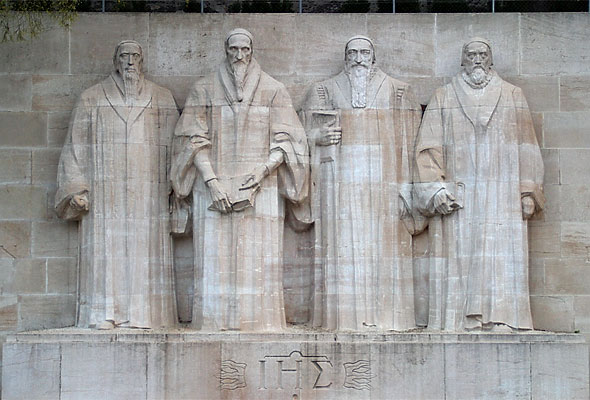
Time for a Reformation?  Photo credit: Roland Zumbühl, Wikimedia Commons

Time for a Reformation? Photo credit: Roland Zumbühl, Wikimedia Commons


With My Luck

I wish I didn’t believe in luck. I guess I’m just not lucky that way. And I’m not alone. Of all the “superstitions” that haunt the human psyche, luck is among the most pervasive. We either have windfalls that make our lives easy, or, like many of us, a series of unfortunate events against which we constantly have to struggle. We call it luck. But is it real? William Ian Miller wrote an intriguing piece called “May You Have My Luck” for a recent Chronicle of Higher Education Review. There’s nothing as mysterious to me as the hapless professor. I mean, they have it all, right? Educated at fine schools, cushy jobs that pay reasonably well, interviews on documentaries, jobs that among the rarest on earth? Who wouldn’t want that kind of luck? (I am also a believer in myth, so that also must be taken into account.) The reason I raise luck here, however, is that Miller’s article again and again returns to religion. I don’t think it’s intentional. It’s just unavoidable. Luck, no matter how we define it, goes back in some way to the favor of the gods.

We all know people that we think of as lucky. Success seems to follow on success for them. They are at the right place just at the right moment, and their lives seem to be easy and not so full of stress as those of the rest of us. Most people, as Miller observes, have middling luck. Things go our way sometimes, and then they don’t go our way at others. My fascination, however, lies with those on the other end of the spectrum. There are those who seem to get very few breaks. They may do all the right things, follow all the wisest advice, work harder than anyone else, and still end up on the bad end of luck’s roulette. Ironically, they may be religious people to boot. Their deity, according to their sacred traditions, is the most powerful entity in the universe. And yet things don’t go their way. We call it luck. Is it more powerful than the divine?

This question, or more properly, conundrum, lies behind any concept of luck. Shifting to the paradigm with which I’m most familiar, does God direct luck or does luck exist independently of God? Does luck even exist at all? Is it just the name we give to a series of random happenings in retrospect and which have no inherent meaning? Ah, that seems to be the very point! Meaning. What do these things that happen to us mean? Whether or not we believe that life has any meaning, our minds are biologically programmed to seek it out. Very few of us are content to find only food, shelter, and air to breathe. We want something more out of life. We may not be able to name it, but whatever it is, we could conceivably call it meaning. We are looking for a purpose to our mere existence, even if we don’t believe in it. Gods or no gods, we are left trying to discern what they require of us. And whether we find it or not, it seems, is purely a matter of luck.

Photo credit: Joe Papp, Wikipedia Commons

Photo credit: Joe Papp, Wikipedia Commons


Whack-A-Prof

My Ph.D. was conferred in 1992. Not by design, I’ve held several jobs since then. One thing I’ve noticed over and over is that supervisors enjoy knocking down the egghead. If you don’t know me you’ll have to take my word for the fact that I’m quiet, not self-promoting, and actually uncertain about many things most people seem to take for granted. Even in the classroom I never used my education to appear superior to students—education is about all of us learning together. At least ideally. I do know some people flaunt their doctorates. A friend told me of customers pulling into the gas station and insisting on being addressed as doctor. (It might help to know that in New Jersey you are not allowed to pump your own gas.) My friend wryly noted, then they don’t even fill the tank. I had my own similar experience working in a camera shop in a Boston suburb. A patron had “Ph.D.” printed on her checks after her name. Company policy was that the signature had to match the printed name exactly, including title. This particular customer, proud to have Ph.D. flashed before your eyes refused to sign it after her name. When the police had to be called, as per company policy, many of us stared sheepishly at our feet as she signed the cursed three initials and declared she would from then on take her custom elsewhere.

Some of us pursue advanced degrees because we have no talent for anything else. I’m a born teacher, and I have always found the classroom the most congenial environment in which to be. I have had several bosses, however, who seem to think that knocking the Ph.D. down shows just how clever they are. I don’t claim to be smart. I never have. I am a hard worker, I read a lot, and I try to make sense of what I read. Some of the smartest people I know have the least formal education. It’s rare that I don’t assume the janitor knows more than I do about any given topic. (Well, maybe Asherah is a place where I can claim some specialist knowledge.) Otherwise, I take your word for it.

Our culture, however, enjoys putting those in higher education in their place. I hear the conversations behind closed doors. While I don’t claim to know very much—in fact, the longer I’m alive the less I claim to know—I do know that America doesn’t value its educators. It’s not just the professorate. Teachers, those to whom we entrust the very future, have been perennial scapegoats for society’s ills. We don’t pay them well, and many of them have to take second jobs in the summer to make ends meet. I guess we showed them! Who’s the smart one now? I can’t claim to know much, but it seems to me that education is one of the pure goods in society. We can’t make progress without learning. Gifted teachers should be esteemed—not pampered, but appreciated. Of course, I can feel better about myself if I show that I know more than you do. The only cure for that, I suggest, is more education.

Photo credit: Anna Frodesiak

Photo credit: Anna Frodesiak


Parallelism?

An article in Mother Nature Network that a friend sent me suggests that “Parallel worlds exist and interact with our world, say physicists.” The article, by Bryan Nelson, discusses quantum mechanics and the many-worlds interpretation that suggest that these worlds interact. Perhaps they explain the anomalous happenings so often reported in this world. I find the “many interacting worlds” idea compelling. We all know, whether or not we’ll admit it, that strange things sometimes happen. It may be that interacting multiverses can explain some (although I somehow doubt, all) of this. Everything I read about quantum physics suggests that it is weird and we just can’t understand how it’s possible. That’s the kind of universe I’m glad to live in. Still, I wonder.

The many interacting worlds hypothesis suggests that at every juncture, every decision, in some universe we went a different way. Should I go right or left? And as I made that left turn, some me somewhere else went right. The problem is perhaps the sheer number of variables. The many decisions I’ve made, and I’m just one person, have multiple possibilities. Each of these possibilities links and intertwines with even more possibilities. It’s not hard to believe that this universe revolves around me and my petty problems. Add to this the variables of the billions of others who share the planet and soon I start to grow dizzy. Does each and every one of these take place somewhere, somewhen? And who are we to think that we even know what two possibilities might be? What if I type an e instead of an i? What will my post say in an alternate universe? At what level of insignificance do I finally admit utter ennui and say that life in this universe I know is just too full to admit of any others? Of course, anyone looking at my bank account knows I have no experience with large numbers.

Parallel worlds have always fascinated me. I suspect that deep down I know this can’t be all that there is. In some universe my Ph.D. led to a real teaching post. I wrote all those books that are rattling around inside my head. I attained tenure and showed the world that a kid from a blue-collar family with no connections can actually make something of himself. In another world I’m the one laying in the cold on the streets of Manhattan begging quarters from the other me, looking worried as he races to and from work every day. Or maybe this whole thing is just a dream I’m solopsistically having. Of course, if you’re reading this you’re welcome to my dream. Or any other universe that you might choose. I only ask that if you allow me into yours, may I please have tenure? I’d really like that universe best of all.

IMG_1577


Incitatus Redux

What more is there to say about God and politics? Far too much, I fear. In a Sunday Review in the New York Times, Frank Bruni lays out a catalogue of what, in a rational universe, would be considered violations of the United States constitution by politicians who insist their (conservative) Christianity is the faith of the nation. This is, however, one of the philosophical conundrums of religious freedom. Religious believers are free to use their faith to try to change the system from within. And the fact that the media is telling us that religion has become irrelevant doesn’t help. Who should be afraid of what’s irrelevant? Can irrelevant substances harm you? Can irrelevant bullets kill you? Why, yes, they can! And so being told repeatedly by the media that religion is something we can safely lock into a box marked “Medievalisms Outdated” we step out the door to see politicians using a religion poorly understood to gain power. A recipe for an apocalypse, it sounds like to me.

Academics too readily fall prey to the media hype. University presidents and deans suppose that religion really is dead and shouldn’t be studied. Who’s going to help us through the morass of the upcoming election if people who understand religion are made indigent and put out on the streets? Good luck to the rest of society! We must, if we are to survive, understand religion. Its death, following shortly on that of God, was proclaimed early last century. And yet it’s showing no signs of dying. In fact, it’s just waking up. Who are we going to ask? Scientists? Accountants? Economists? What will you really learn about our laws being God’s laws in the minds of the wealthy and powerful? Don’t ask me—I’ve only spent some thirty-five years studying religion. What do I know?

I sometimes wonder what it must’ve been like to live in Rome as Alaric was whetting his sword among his Visigothic horde. Insane—literally insane—emperors wielded unchallenged power and lived lives of opulence amid the slaves and poor. Religion was front and center on the agenda, of course, because emperors were gods. You don’t have to listen too deeply to hear the same message even today. Those who proclaim God as the justification for their political ambitions know that God is the ultimate malleable deity. In fact, God can even be in the Oval Office. Lead can line your aqueducts and your horse can be made a senator. Lord knows an ass can be. And all the while let’s shut down the voices of those who’ve looked at religion, beginning in the Stone Age and up to now. If we want to grab power it’s vital that we keep it from public view that self-deification is as old as kingship and in a post-religious world, we have only to pretend.

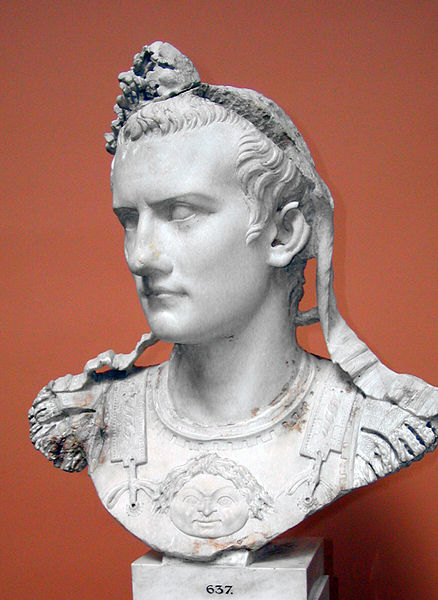
Photo credit: Louis le Grand, Wikimedia Commons

Photo credit: Louis le Grand, Wikimedia Commons


Biblical Script

The popular perception of the Bible generally does not match the actual contents very well. Like most books, the Bible has its highlights: Creation, Flood, David and Goliath, Jonah, Daniel and the lion’s den, Jesus, the Apocalypse. Between all the fascinating narrative, however, come the instructions. More instructions, in point of fact, than most people would care for. Nevertheless, over the centuries the Bible has acquired an aura in western civilization. It has become what some colleagues call an “iconic book.” It is this aspect of the Bible that stands out most clearly in the Fox series Sleepy Hollow. I wrote a post about Sleepy Hollow as I began to watch the first season on DVD. The headless horseman is an agent of the Apocalypse, and clergy and witches play a prominent role in the story. I wondered if the role of the Bible would diminish once the audience was drawn into the conceit of the four horsemen thundering out of Revelation into Sleepy Hollow. Just the opposite, in fact, occurred.

Sleepy_Hollow_-_Title_Card

As the series unfolds, the Bible is drawn more and more into the story. Demons and detectives both want to get their hands on it. Not to read the Ten Commandments or the Sermon on the Mount, but because the Bible contains esoteric information. Those “in the know” can unlock its secrets and thereby save society. Ironically, this is a subtextual version of the biblical metanarrative. It is all about (from the Christian perspective) salvation. The means, however, are quite different. Jesus is not really part of the Sleepy Hollow story. The Bible belongs to George Washington, cryptically bringing politics into the story. The text is not secure; there are extra verses in Washington’s Bible, just as there are many excised bits in Thomas Jefferson’s. Washington leaves instructions for saving his fledgling nation from the evils that roamed its shores during the Revolution. Or is that Revelation?

Right up to the cliff-hanger ending of season one, the Bible comes back time and again, focusing the viewer on its magical qualities. It is a book of secrets and mysteries. Meanwhile in the real world, biblical studies positions are being slashed from universities as if the horseman’s axe were anything but fictional. We don’t want to know about the real Bible. Politicians, real ones, use it as their own sword to force their personal faith agendas onto the electorate, but we generally do not even understand what the Bible really is. We’ll fund economics, that dismal science, and business, and maybe even actual science. The humanities, however, the stuff that makes us human, we will gladly call luxuries and deny them fiscal security. So the Bible grows in stature even as it diminishes in stature. Those who don’t know the factual Bible can easily be swayed by the fictional one. Are those hoofbeats I hear in the distance?


Public Knowledge

Sometimes the media gets it wrong. If one were to believe in the tales of industry prognosticators, our libraries would be closing, we’d all own Kindles, MOOCs would have replaced expensive college courses, and New York City should still be shoveling out from the worst blizzard since the Ice Age. We thrive on extremism. Although I don’t regularly read the newspaper (who has time?), the internet makes news memes available just as they happen and I feel somehow cheated if I have to wait more than an hour for trenchant analysis of an event I’ve just witnessed. Still, the publishers haven’t all shut their doors yet, colleges are managing to stay afloat, and libraries can be happening places. This became clear to me when I recently attended an event in the quaintly named Old Bridge Public Library. It was a Saturday, the time of the week when the gripping fingers of employers feel their weakest. Although I saw no evidence of an old bridge anywhere, I made my way through the traffic to the library where I met with a surprise—the place was crowded!

IMG_1901

For those of you not fortunate enough to live in New Jersey, Old Bridge is probably best considered a satellite of New Brunswick, home of Rutger’s University stadium. (I think there may be a university associated with it too.) That is to say, it is an urban area, and any antique structures to convey one across the water have long devolved to only nomenclature. Like anything in north-central New Jersey, it’s not far from New York City. When I arrived for my event, the parking lot was already full. It was not because of the event, either. Less than 20 showed up for that. When I went inside I found the library a veritable hive of activity. And it wasn’t just lonely, homeless people trying to get out of the cold. Families with kids, people with their grandparents, even other middle-aged adults like myself, all found their way to this island in the sea of a municipal complex not walkable from anywhere. I left encouraged.

Yes, the world of books and education is changing. Publishers feel stress, but that stress mostly has to do with predicting the best form to provide for content. Self-publishing has become a phenomenon, but many know that the self-published book has a difficult life in front of it. Libraries, however, are not the graveyards we’ve been told that they are. We need repositories of information that isn’t on the internet. And more importantly, we need places where, although the librarian shushing us may be iconic, we can get together with like-minded individuals and truly educate ourselves. I do sometimes tremble when I think of the future. The values I acquired as a young person seem, at times, on the verge of extinction. I learned that when this seems to weigh too heavily on my mind, I need to head to the nearest public library and support the old bridge to knowledge.


High and Dry

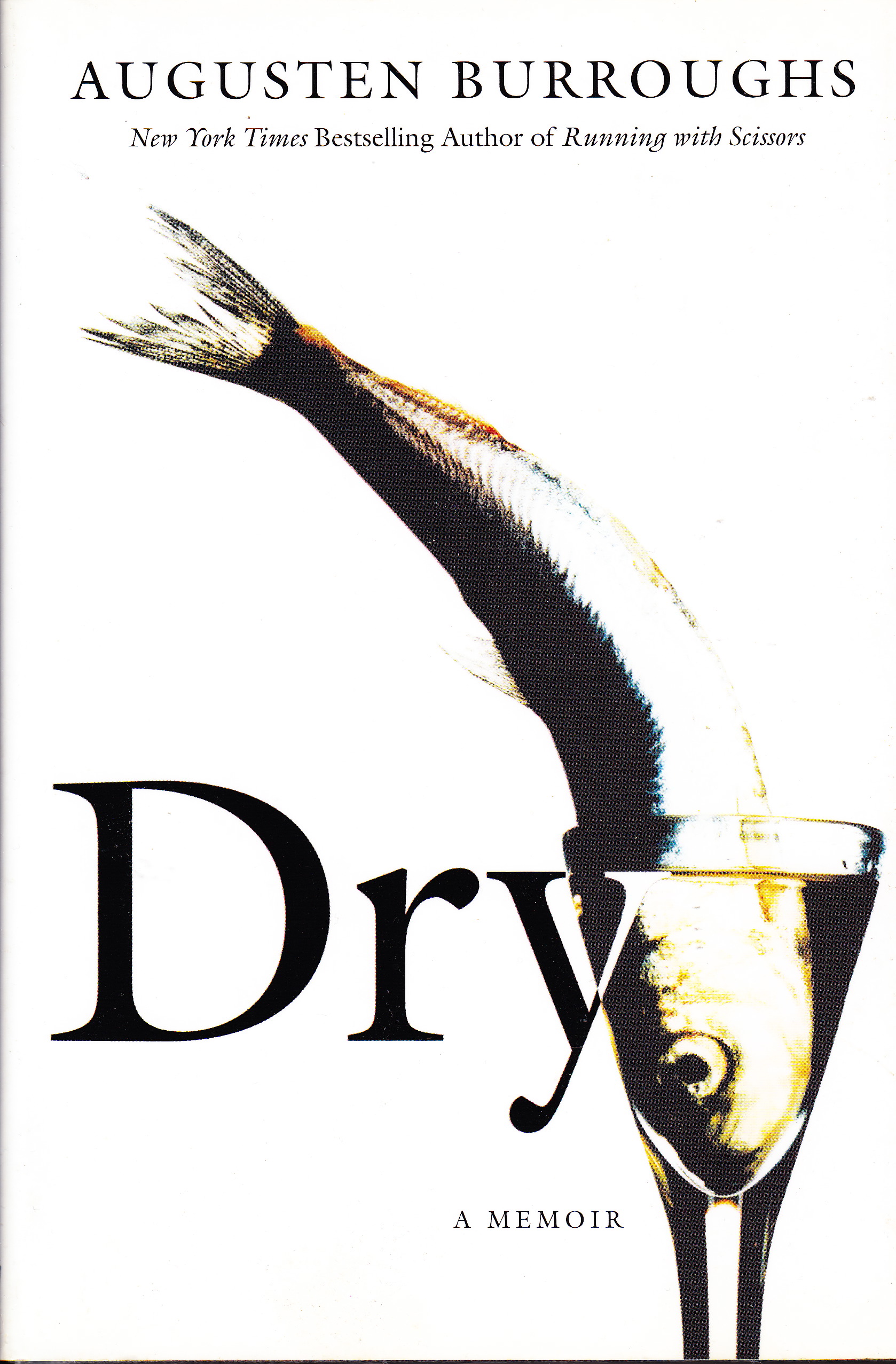
DryAlthough I frequently, and unapologetically, express my opinions on this blog, I try not to reveal too much about myself.  The books we read, however, are formative for who we are.  Anyone looking over the hundreds of books on which I’ve posted over the last few years will have a reasonable idea about my inner life.  One aspect I don’t often discuss is the fact that I grew up in an alcoholic household.  It is difficult for me to discuss and I tend not to read about such things because it is too much like therapy and I end up feeling pretty lousy afterwards.  Nevertheless, a friend who is a recovering alcoholic gave me a copy of Augusten Burroughs’s memoir Dry a few years back.  Guilt at not having ever read it caught up with me and so I decided to make an honest friend of myself.  Despite the very clever language and some laugh-out-loud moments, it was hard for me to read.  Time flew by as I had the book open, but too much turmoil attended it.
 
Once I attended an Al-Anon session.  This was a seminary assignment; we were to observe and take notes and write up a report for a sociology of religion class.  Instead, I found myself participating.  I know recovering alcoholics who dislike Al-Anon—it is an organization for families of alcoholics—because it can be judgmental.  The fact is, however, that those who are part of an alcoholic family do suffer.  I didn’t go back to Al-Anon, and I religiously avoid self-help books.  I do know, nevertheless, that my outlook was profoundly shaped by my youngest years and the insecurity that dogs me every day of my life has its origins then.  I also thought about how memoirs of alcoholics can become bestsellers.  The jacket blurbs say how funny they are. I don’t hear so much about memoirs of those who were collateral victims.  Don’t get me wrong—I’m not blaming alcoholics.  Alcoholism is a disease. It may be treatable, but it is tragic for those afflicted with it. That doesn’t diminish the impact of having to live with it when you’re too young to have a choice.
 
When I was in college an erstwhile friend took me to see Arthur.  Dudley Moore was rocking the critics with his performance.  I smiled through my horror.  There was nothing here to laugh at.  So a book like Dry makes me feel…? Conflicted.  What do I understand now that I haven’t before?  I read about how even prestigious colleges are increasingly renowned for their parties, lurching about under their laurels.  Some will experience it as a temporary fling and will move on. Some will never graduate.  What can be done?  We can listen.  I suppose that’s why my friend gave me the book in the first place.  I need to put aside my pain and fear. I need to listen.


Psalms of Lament

Fate can be decidedly cruel sometimes.  Accidental discoveries can be the most painful of all.  As my regular readers know, I wrote a book on the Psalms (Weathering the Psalms, Wipf & Stock—on sale now!) while teaching at Nashotah House seminary.  I sent the manuscript to Oxford University Press, and it was declined on the basis of one review.  Subsequently, I met the reviewer at a conference reception and he is now working on a book proposal for me.  Such are the ironies of life.  I can let that go with a chuckle of existentialist bonhomie.  The twist of fate comes in through helping a colleague with a question about the Psalms.  I grabbed the nearest book at work that would help, the newly published Oxford Handbook of the Psalms.  I’d glanced through it before, but this time it fell open to the contributor’s page and the words “Nashotah House” fell upon my eye.

IMG_1898
 
During my years at the seminary, I published at least one academic article a year, as well as a book, and I attended and delivered papers at the major professional conference every year.  No one ever approached me about contributing to a Handbook, apart from my advisor and friend Nick Wyatt.  I labored at building an academic career for 14 years in obscurity.  Now, the newly hired replacement (not the faculty member hired to replace me) gets invited to contribute to a major reference work.  I do not know the man.  He may be a perfectly personable chap.  Some of us, however, can work our hardest and never get noticed.  It seems as if the world of scholarship is really just a house of cards. 
 
Perhaps in times of schlock and flaw, such as these, I should turn to Ecclesiastes for comfort, rather than Psalms.  Yes, the Psalms say some pretty challenging things to God—not as challenging as Job or Jeremiah, but still.  Ecclesiastes, however, is the one to calm the intellectual’s soul.  There are those who claim that the Bible no longer has any utility in a post-Christian society.  Wise Qohelet, I’m sure, might just agree, even as he disagrees.  I tried, without benefit of sabbatical, and with additional administrative duties, to make an academic life for myself.  I was, in reality, just shuffling the deck with old Solomon.  We took turns building layer upon layer, he and I, both knowing that our house, like any built on sand, could never stand.  It must be some of that sand in my eyes; otherwise I can’t explain why they are watering so.


Thor’s Return

Once as I sat in the office of an Ivy League professor of Greek religion, I asked about the myths of the Classical gods. The professor (who knew that I had taught religion as well, but at more like a Noxious Weed League school) appeared genuinely insulted and told me in no uncertain terms that scholars of religion didn’t take that nonsense seriously. The study of “myths” was left to Classicists, not actual scholars of religion. Is it any wonder, then, that we don’t really have a grasp on what the average person believes? Being a blue-collar scholar, I always took seriously what students told me about their beliefs. It wasn’t really a great surprise, then, when my wife pointed me to a story in The Guardian about a temple to the Nordic gods being built in Iceland. According to the story, the modern adherents of Ásatrúarfélagið (thank you unicode) don’t really believe in a literal Odin or Thor or Frigg, but see them as metaphors to help them face the way life is. A millennium after becoming Christian, some Icelanders are apparently getting back to their roots.

There has always been, to me, a fascination with the Nordic gods. These rough-and-tumble deities inhabited the harsh and snowy regions where daily life was often a struggle to survive against the elements. Frost giants were enemies and nobody really emerges as the winner after Ragnarok. In the Bible Yahweh does sometimes come out swinging, but for the most part he seems a deity content to sit on his throne and issue commands. The Scandinavian gods were characters of action. In some sense they seemed to struggle just like the rest of us do. They are, of course, more powerful and as the movie makes clear, Thor has a charisma that more self-righteous deities appear to lack. Lest anyone be ready to run to their priest at this point, please be aware that this too is a metaphor.

On the other side of the equation there are sure to be critics who argue that building a temple to fake gods in this day and age is obviously a waste of human talent and resources. Such are people with no imagination. Religious belief, metaphor or not, has been part of the human psyche from the very beginning. Elsewhere I have suggested that animals show the same behaviors as what we Homo sapiens would declare rudimentary religion. Rationalism has not provided a reasonable alternative to religious expression. Even a Stoic knows to appreciate art, although beauty provides no essential element to simple survival. Simply put, humans enjoy the finer things of life. Perhaps unappreciated since long sublimated, among those finer things are the old Nordic gods. And their return is a kind of resurrection.

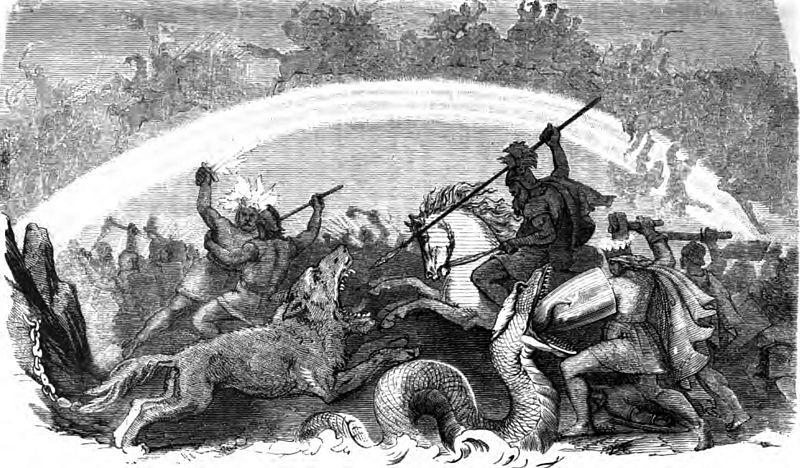
The Battle of the Doomed Gods

The Battle of the Doomed Gods


Dr._Strangelove_poster

In honor of the fifty-year anniversary of the release of Dr. Strangelove this past week, my wife and I sat down to rewatch the movie this weekend. Psychologically, as Kubrick found out, dark humor was the only way to deal with the sense of doom that pervaded the world into which those of my generation were born. Nuclear weapons had been developed and the Cold War was in full swing. Somehow, even in small-town America, I didn’t find Communism to seem so awful. After all, I grew up reading the Bible and it sounded quite a bit—at least in theory—like the arrangement the apostles had made in the book of Acts. The idea of private property, the very spine and muscular system of capitalism, was considered a sure way to lead to God’s kingdom not being established on earth. Nevertheless, that is the way, as the phrase goes, that the money went. And Communism threatened the right of one percent to horde all the money, so we were ready to annihilate all human life for it. Talk about taking your marbles and going home! No child should grow up knowing the meaning of the phrase “mutually assured destruction.”

Dr. Strangelove has held up well for the half-century since its release. Despite the thawing of the Cold War, the big chill isn’t over yet. And humor still seems the only way to keep sanity and deal with the state of the world. There are still many General Turgidsons out there (some of whom have held very high government offices, and this is no joke). There are at least, as far as we know, fewer General Rippers. So we hope. As the bomber crew nears its target, Major Kong goes over the contents of the government issued survival kit, among which is a comically small Russian Phrase Book and Bible combined. Kubrick, a master of satire, has the godlessness of Communism thrown time and again across the lips of the hawks. It is better to kill everyone than to allow the godless to rule. Even the Bible, however, shares space with the Russian phrasebook, making us wonder whether it is a tool of conversion or an admission of inevitability. Still the bomber, piloted by a Texan, flies on.

Perhaps the biggest moral dilemma we face is our ability to destroy hope. Capitalism promises opportunity to all. Like many who grew up poor, however, I have found lies hidden in plain sight. It is not easy to move ahead if you choose to mire yourself in debt to get an education. In fact, if you lose a job in higher education you can easily find yourself adrift for a decade or more, not earning any retirement money and being frequenly sought out by your local universities as an adjunct instructor. In fact, at many points your career might look like the end of the world. So it is that I take great comfort in settling down to watch Dr. Strangelove again. At least it is an honest movie, and that hasn’t changed in the past half-century. And I think I may have been wrong about how few General Rippers there really are.


Holy Trilogy

AtwoodAlumni magazines, thinly disguised appeals for money that they are, seldom merit much time. This doesn’t stop me, in any case, from sending notices of my new publications or blog, since I, like most fellow alumni, have never been cited as notable. One of the thousands who graduated and amounted to nothing. Once in a great while, however, I feel a slight twinge of pride when one of my three mothers does something of which I’m particularly proud. Most often this is Edinburgh University, although once in a while Boston University also catches my attention. A recent copy of Edit—an alumni mag that began some time after I graduated, American-style—has a familiar face on the cover. Well, not familiar in that I know her, but familiar in that I’ve read several of her books and feel like I know her. Margaret Atwood was given an honorary degree by my old school, and I am pleased to be a, albeit lesser, co-alum.

Over the holidays I picked up a copy of MaddAddam, the third and long-awaited conclusion of the trilogy of the same name. As my regular readers know, I have a soft spot for dystopias. In spite of attempts by many writers to paint a brighter future, it seems that given how far we’ve let things go, collapse before reform feels inevitable. The apathy I find when we read about the vastly disproportionate disparity between haves and have-nots, and the surging of deep, animalistic, primate, rage at injustice doesn’t seem to me a healthy mix. Atwood, although I can’t yet speak for MaddAddam, envisions collapse before florescence. The same may be declared about A Handmaid’s Tale. Complacency, it seems to me, is the real enemy.

And universities continue to send me alumni magazines that instead of inspiring me, rub my face in my own mediocrity. I spent thousands of dollars and thousands of hours on my education and I am paid less than most janitors at most colleges. Not that I was ever in it for the money. I did, however, envision a hopeful future where I’d be teaching, perhaps at a small college somewhere, writing my thoughts in books rather than blogs, and having a modest impact on the world for good. Instead, I have found myself living in a dystopia. As I roll over and see that 3 in first position on my bedside clock on a table with the legs broken off, I know it is time to face the cold of a drafty apartment so I can await the bus to pay for another day’s privilege. My comfort is that Margaret Atwood made an impression on Edinburgh University, and will soon be making another impression on me.


Soulful Phantoms

PhantasmagoriaPhantasmagoria is a most appropriate title for the book by Marina Warner that bears that single-word name. The back cover bears none of those helpful tags that give the reader a handle by which to categorize the book. The subtitle helps somewhat: Spirit Visions, Metaphors, and Media into the Twenty-first Century. The book is about ensoulment. The popular rage among many academics is the exploration of embodiment—the times and trials and wisdom of having a physical body. (We all know it, but it is the scholar’s job to think about it.) Warner asks what soul stuff is and pursues this through many media: wax, air, clouds, light, shadow, mirror, ghost, ether, ectoplasm, and film. She’s not suggesting that souls are made of these things, but rather that people have used these media to explore what a soul might be. Apart from being a fine historical resource on these different avenues of exploration, individual chapters in the book focus on various artists, psychologists, parapsychologists, writers, and Scriptures. This makes for a fascinating, if challenging, exploration to undergo.

One of the topics that emerges in the discussion is how soul distinguishes itself from other unquantifiable aspects of being human: what is mind, for example. We can’t really define soul, but it is frequently differentiated from mind or personality, neither of which is particularly well understood. In an era when we’ve not so much ceased to ask these questions as sublimated them into various fictional realms, a book like Phantasmagoria is especially important. The reaction against materialistic reductionism is strong, if not empirically provable. We still flock to theaters to watch zombies on the screen, precisely because we too have become soulless. Romanticism had a place for Gothic sensibilities as well.

Along the way Warner makes a particularly apt observation that politics and entertainment have become difficult to distinguish. Thinking over the number of entertainers who’ve become policy makers, this is a particularly disturbing thought. We trust the media and it gives us entertainment. Most college professors make so little money as to be jokes when it comes to running a political campaign. Where your treasure is, as the saying goes. Media, in all the forms explored, has failed to capture the soul. The chapter on Revelation (the book) is truly spectacular, coming, as it does, in the section on film. It is the embracing of the chimera of the end of the world pieced together from various myths and nightmares that our political leaders find, in many cases, far too compelling. Someone like Warner might be a much better leader to trust, even if she is a scholar.


Just Justice

494px-Martin_Luther_King_Jr_NYWTS

It was not intentionally because it was Martin Luther King Junior’s alma mater that I chose to attend Boston University School of Theology. King’s legacy there was certainly a perk, but I had found the seminary engaging because it had a rare combination, at least in my limited experience, of academic rigor and a strong sense of social justice. Too often, it seems, academic enterprises become dispassionate and social justice becomes one of those squishy human element sorts of things that really can’t be quantified. We pursue knowledge without really thinking if its impact will be positive or not. At least fair or not. Fairness is a concept rooted in belief, and, as studies of primates show us, it is very deeply embedded in us. What has it to do with academic achievement?

This Martin Luther King day, I’m concerned about how difficult social justice is to find, even in those places where we expect it to reside. Taking second place to doctrine in many churches, social justice is more of an uncomfortable requirement than a true passion. This winter I’ve noticed more and more homeless on the streets. Our “economy” seems to dictate that many have to be losers so that few can be big winners. Instead of helping them out, I see authority figures come along to shoo them out of the way before those who have jobs have to come that way. We don’t want to be reminded that we might lose everything as well. Affluent society requires victims, and we can be very academic about it.

I have to admit to relegating holidays to that mere Monday off work. The relentless wheels of capitalism ever turn, and only with reluctance do our companies grudgingly give us ten days spread throughout the year to recuperate. The next slated holiday comes in May. Will there be social justice by then? With the eventual warming of the air by that season, will we simply blend those without homes into the less well-dressed and pretend that we have achieved a fair society after all? What do we really celebrate today? Is it just another morning to sleep in, or is there something more to it? A dream that won’t be extinguished until fairness is established? Seems like a worthy idea, at least in theory. But until then you’ll find us at our desks, working to keep the system strong. And hopefully, we won’t forget to dream.


News Work

Bible_0001I’m confused. (Well, no surprises there.) I just read the cover story in last week’s Newsweek, “The Bible: So Misunderstood it’s a Sin,” by Kurt Eichenwald. No, the story didn’t confuse me. Nor did the fact that the Bible appeared on the cover of a major news weekly. What confused me is that the article says nothing new. Well, no doubt it will be new to many readers. The fact is, however, that anyone with a serious degree in biblical studies (and believe it or not, there are so many of them that jobs can’t be found for them all) knows all of this stuff already. What’s more, they have known it for decades. Scholars tend to write for other scholars. Some see the best-selling trade titles by publishers like Harper Collins making the New York Times bestseller list and imagine that their monograph on the obscure meaning of an obscure word in an obscure verse of a book that most people don’t even know is in the Bible will do the same. It won’t. Most academic monographs sell in the hundreds (not thousands or millions) and at the low end of the centuries mark at that. They are bought by libraries and read by peers only. In them we argue (for yes, I have written such books) important points that can only be understood by those with specialist training, and think we’ve changed the world. Newsweek gives the lie to that.

Long ago it became clear that scholars were failing to connect with the average person. That is the person who turns on the television and hears and sees the people Eichenwald shows to be impostors, and believes them. They are, after all, on television. The biblical scholars who know that these obvious fallacies are simple-minded are too busy trying to get tenure in a market—yes, a market—that finds education an annoying necessity. We won’t hire anyone without a college degree any more, and so we need universities. Universities, however, won’t hire without signs of erudition, including books that most people on the search committee can’t understand because they specialize in something different. Oh, and those studies must be published. Whether they are read or not is merely, well, academic.

Meanwhile the public doesn’t know that biblical scholars have long ceased debating the age of the world, the flood, the resurrection, or the end of the world. Scholars have bigger concerns on their minds: how am I going to teach more courses and still produce those learned disquisitions that a dozen of my closest colleagues will read and rebut? And serve on all those committees? And participate in the branding of the university, because, we all know that people will buy a trusted brand? Meanwhile on center stage are politicians who know nothing about the Bible beyond the fact that it brings down votes, big time, and they are telling us what they think it should say. Chances are most scholars of the Bible won’t read Newsweek to find the answers. I didn’t even know about it until a friend mentioned it on Facebook. Like most people I’m just too busy to notice. And a little confused.