Playing Civil

In a piece written for the Los Angeles Times, Joseph Margulies warns of the potential dangers of civil religion. I first learned about civil religion in college in the early 1980s, when the concept was still relatively young. The idea is as deceptively simple as it is accurate: when nationalism reaches its natural limits, the divine is invoked. Civic ceremonies become religious ceremonies—presidents lay hands on Bibles, whether or not they believe. Civil religion dictates that all presidents be portrayed as believers, but that is something we have to take on faith. Civil religion leads to sculptures of the Ten Commandments on courthouse lawns and the flying of United States flags in churches. The danger with this innocent-looking triumphalism is that some people take it too seriously. It is not limited to Christianity, either. Civil religion is a disguised, albeit thinly, form of nationalism.

The vast majority of people in the world hold religious beliefs without deep reflection. That is not to suggest that they don’t believe deeply, but simply that they don’t lift the edges to peer under the surface much. We are taught what to believe by religious specialists. To question them is to question the deity they represent. Since fear is easily ingrained in the human psyche, the angry god is among the most effective of weapons ever devised. We fear for our eternal peril, and it is easier to believe the clergy have the answers than to divine the truth for ourselves. Those who think profoundly about religion, outside the confines of the professional clergy, are always a suspect lot. What business do we have, poking around the beliefs of others?

Civil religion shocked me when I first learned of it. Like the majority of my peers, I had assumed that public displays of piety were to be taken literally. As I began to hang out with clergy and to see how they often transformed outside the church with a fellow “insider” beside them, I started to understand. The cynical asides whispered outside the hearing of the faithful, the double lifestyles, the on-stage personae. This may not have been civil religion, but it was not always what it seemed. Teaching in an Anglo-Catholic seminary, I saw high mass as carefully choreographed as an off-Broadway production of A Chorus Line. Civil religion relies on its partnership with the unquestioned belief of the Saturday-night and Sunday-morning crowd. It all fits easily together and runs as smoothly as a pink Cadillac. Just don’t look under the hood.

IMG_0088


Ivory Doghouse

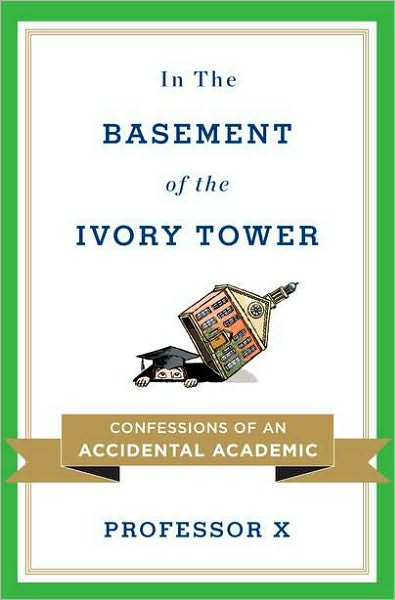
inthebasementoftheivorytowerSome months ago I wrote a post about a book I had not yet read. In the Basement of the Ivory Tower: The Truth about College, by Professor X both entertains and informs. And depresses. Written by an anonymous adjunct English instructor, the book presents much of adjunct life in gritty realism. No one sane can possibly dispute that there are problems with higher education, however, X’s experience and mine of the same phenomenon, while eerily similar, are strikingly different. X became a Professor because of the need for extra income to help pay a mortgage. Good for him—I am glad for him. Having been an adjunct myself, however, in much more trying circumstances (fear of being turned out of a rented apartment for insolvency) makes me wonder if X delved deeply enough. X was not a Ph.D. turned away from full-time teaching after having proven himself to have “the right stuff” in the collegiate classroom. He could afford, albeit barely, house payments. He had a full-time day job.

It could be the differences in our specializations that paints the contrast so starkly. I studied religion from my undergraduate days and demonstrated competence at each step of the way. Even now colleagues encourage me that a full-time teaching job might come up. Some even lament the loss of my contribution to scholarship (not many, mind you! Far more have forgotten they ever knew me). Unlike Professor X I was fired for religiously motivated reasons. Once thrown off that lifeboat, there’s no getting back on. The religious are persnickety in that way. Being fired from a seminary is a sure sign of faulty merchandise. I spent six years, in some fashion, as an adjunct instructor with the constant specter of very real loss of everything a daily threat. Everything, of course, in my case meant mostly books. That made the threatened loss even worse.

Although my experience differed considerably, Professor X is absolutely right in his portrayal of how tenured, regular faculty often treat adjuncts dismissively. At times with disdain. As if we somehow didn’t graduate from world class universities. As if we didn’t have nearly two decades of stellar teaching evaluations. As if we’d stepped in something on the way to class. If I ran the world (and heave a sigh of relief that I never will) full-time faculty would be required to recite a prayer of thanksgiving every day that they were favored with a genuine taste of the promise that crumbles into sawdust in the mouths of the adjuncts. I was a full-time associate professor with a future. Since then I’ve become, no matter how full-time my workaday job, an adjunct with an uncertain future. And if you are lucky enough to have a full-time professorship, close your eyes, bow your head, and thank whatever it is you believe in. Ivory towers, it seems, come in many colors.


Hire Education

Physicians are trained to notice symptoms before a condition becomes fatal. That’s their job and our society pays them well for it. Who wants to die? “Where your treasure is, there will your heart be also,” a very wise person once said. If we had a physician to look over the health of the nation, I would tremble at the diagnosis. A colleague just reminded me of this by pointing out Un-Hired Ed, an infographic that reveals the chart the doctors don’t want the patient to see. My daughter is starting college. Long ago, however, we gave her that talk that parents give their kids—you know the one—the beware of the lure of higher education talk. As Un-Hired Ed points out, our society has been putting on weight: universities consume far more doctoral candidates than there will ever be jobs. I speak from first-hand experience with an earned doctorate from a world-class research university and a list of solid publications, in saying that the prognosis is distressing, likely fatal. I spent nearly a decade of my “best earning years” functionally unemployed because I was “overqualified” for job after job after job. How many people don’t even rate an interview to become a meter reader for the electric company? Well, with the unending awarding of doctorates, that, like the national cholesterol level, is sure to rise.

Universities have turned greedy eyes towards the profit margins of businesses since about the 1980s—those years of “me first” that have plunged us into an economic dark age. Salaries and privileges skyrocketed and so did college enrollments. I worked at a university that was seriously considering a “Marina Management” major. To cover all the additional courses that universities must offer to “educate” the vast numbers of students, they face a financial brick wall. College presidents expect to earn a certain (unrealistic) salary, and football coaches deserve even more. Stadiums don’t come cheap, you know! So they hire adjuncts; Ph.D.s who are functionally unemployable, and pay them less than the janitors. Woo-hoo! We’ve beat the system of fair compensation and it has only cost us the livelihood of those whose professors encouraged off to grad school because they were the best and brightest in the class!

“Like lambs led to the slaughter,” as the saying goes.

Can higher education be redeemed? I have to believe so. You see, back in the Dark Ages some of the theologically literate began to congeal into clumps of readers and writers that eventually became universities. They valued learning and passing that learning on so that, like the physician, society might heal itself. And it did. Bologna, Oxford, Paris, Cambridge, St Andrews, Edinburgh—lights began to shine in the darkness. Then business models assured our great institutions that more is better, and doctorates spread like an unstoppable disease. Society’s interests had moved on. Who needs higher education when there’s something really entertaining on YouTube? Prognosis: chronic obesity. Don’t you agree, doctor?

Un-Hired Ed: The Growing Adjunct Crisis
Source: Online-PhD-Programs.org


Thar She Blows

Any survey of “armpits of America” will laughingly include New Jersey. Having lived here for nearly seven years now, I know the apocrine insults are undeserved—I actually knew that before moving here. New Jersey has the highest per capita Ph.D. concentration in the nation. It also has the highest number of college graduates, and, for what it’s worth, the highest per capita income. These first two points come especially to the fore regarding New Jersey governor Chris Christie’s recent speech, made in Boston—a city with some small higher education affiliations itself. Propping up his creds for a presidential run, Christie said, “I think that we have some folks that believe that our job is to be college professors. Now college professors are fine, I guess. You know, college professors basically spout out ideas that nobody ever does anything about. [Rim shot!] For our ideas to matter, we have to win because, if we don’t win, we don’t govern.” (This according to the New Jersey Star-Ledger.)

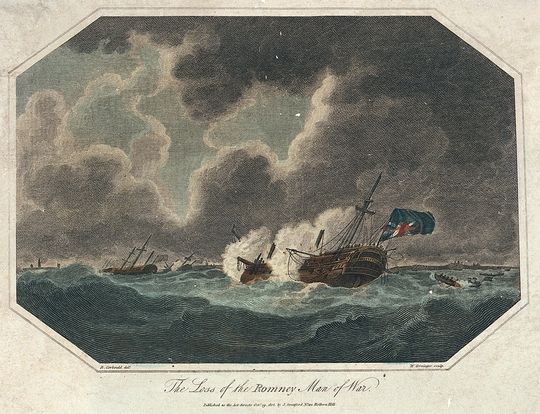
The United States, for many years now, has been falling behind in education because we won’t fund it adequately. I’m no jingoist, but I do believe that the principles upon which this country were founded were inspired. To thrive, we must be smart. Education has been the key to our improvement over the decades, and as the focus has shifted from education to capital, the hull has begun to leak. I know that I have felt it. With dismay I’ve watched as colleges and universities have hoisted the November Charlie and no vessel has come to their aid. Departments are jettisoned and we are still taking on water. And the governor of “the education state” guesses that “college professors are fine” but completely irrelevant. This man for president in 2016?

Meanwhile, yesterday, the unexpectedly happy news was announced that President Obama will be visiting my daughter’s university next week. Binghamton University is frequently overlooked by the monied special interests paid to the Harvards and Princetons of the green-lined ivies. It is, however, frequently cited as a “public ivy” for its quality education at state-school prices. Obama’s visit is for precisely that reason: good education can be affordable. Chris Christie went on to say, “For our ideas to matter we have to win because, if we don’t win, we don’t govern. And if we don’t govern, all we do is shout into the wind.” And if we don’t win we gather up our marbles and go home. Yes, I was a child once, too. And I grew up. Higher education does matter—far more than some politicians’ bluster would indicate. Do you agree, Dr. Einstein? I’m sorry, governor, I can’t hear you over the wind flapping the sails.

The_Loss_of_the_Romney_Man_of_War


Great Caesar’s Cost

College has been on my mind quite a bit lately. Thinking back to my own experience, I chose a school, as a first-generation college student, based on what I knew at the time. It wasn’t much. I chose a school close to home, and safe. A place friendly to, in what I believed to be a world in open hostility to, “Christianity,” by which I meant the conservative, Evangelical variety. The school I settled on, Grove City College, was at the time a selective school. This was the early 1980s and the “Religious Right” was just beginning to appear on the political horizon. Grove City was a Presbyterian college, and the Reformed, although sometimes theologically conservative, have generally been a bit more socially progressive. I recall the admissions numbers being trotted out to the incoming class, about how elite we were (something I’ve always denied and find personally objectionable) at having been admitted to a selective, private enclave such as GCC (“God’s Country Club” as it was locally known). Many of the kids did come from monied families, but I was there on the basis of government subsidized (and unsubsidized, as if I knew the difference) loans.

When my daughter was considering colleges she had been warned about Grove City. One of her friends was contemplating it, but soon wisely cast her thoughts elsewhere. Nevertheless curious, I picked up the Princeton Review’s The Best 376 Colleges, a kind of Bible for the collegiate-bound, to see if my old alma mater rated a mention. Sure enough, Grove City was present. For those wishing to make it in the heartless world of business, it can be a good training ground. What caught my attention, however, was the acceptance rate. According to the 2012 edition, 74% of applicants were admitted. So much for selective! This figure swirled around my gray matter for some months as I started to sort out the implications.

Over the past few decades, Grove City College—which was always conservative—has allied itself closely with the posturing of Tea Party types. Herein lies a true dilemma for the educated bourgeois: how to be intellectually progressive and socially repressed at the same time. To accomplish this difficult trick, a non-negotiable bedrock is required, and since even the earth is spinning crazily on its axis the only true solidity in the universe is religion. Claiming that, despite the 14.5 billion years of this universe’s elapsed lifespan, only one thing never changes and that is a particular interpretation of Scripture, you can go ahead with your science and your arts. But most of all, with your business. Although black holes may exist, and textual criticism may indicate Scripture has its own gray areas after all, nothing counts much at the end of the day if you don’t have capital to back you up. Open admission policies can be interpreted in more than one way, depending on your point of view.

Photo by "the Enlightenment"

Photo by “the Enlightenment”


Misplaced Zealotry

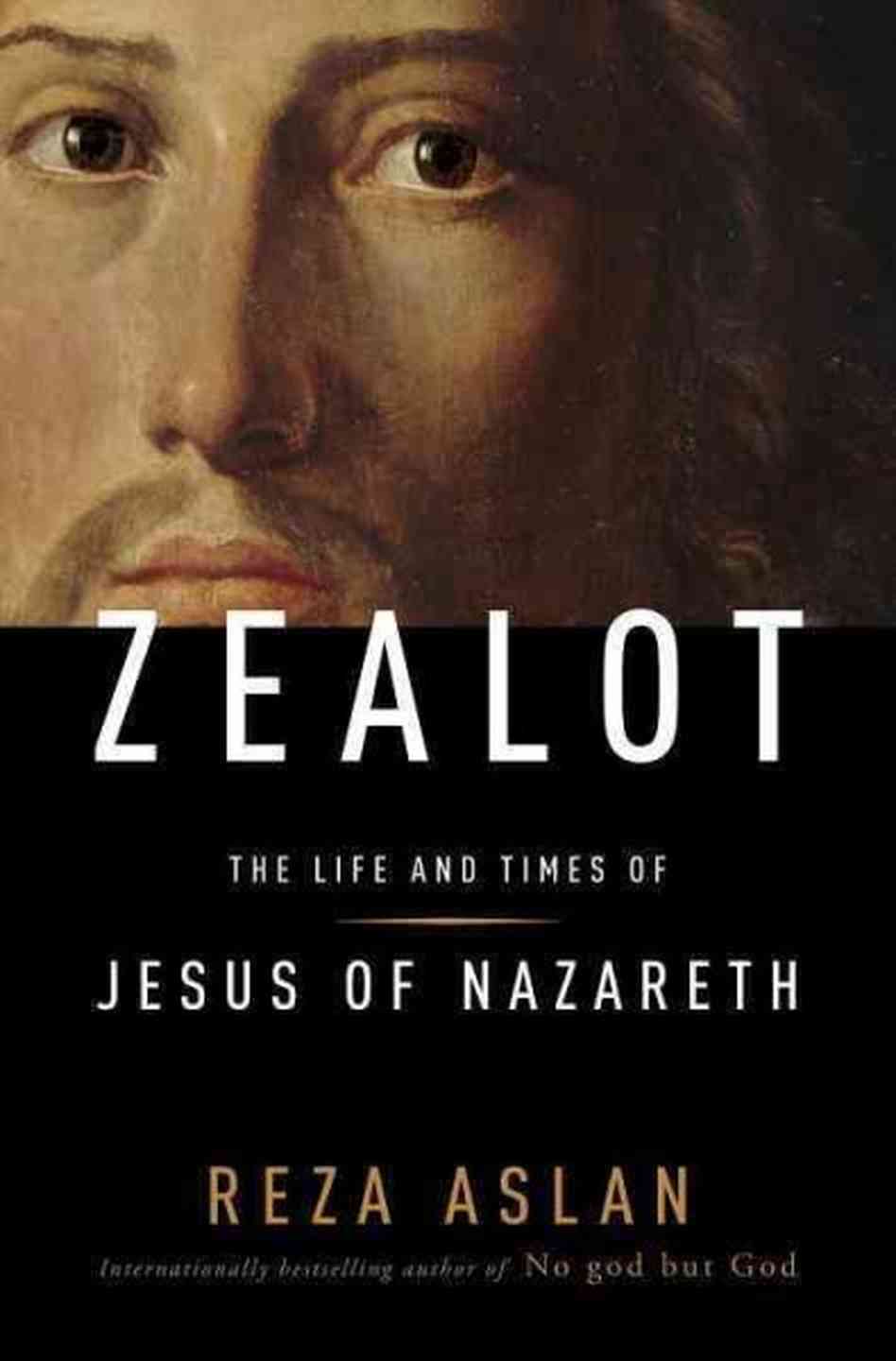
zealotReza Aslan’s book Zealot: The Life and Times of Jesus of Nazareth has brought public interest back to the only begotten, and it’s not even Easter time. A confession: I’ve not read Aslan’s book, so my thoughts here are purely academic. (In a time-honored tradition, I will comment without benefit, or liability, of having actually read.) My interest is, to be frank, less on what Aslan has to say than with how people are reacting to him. Within days of publication, the internet began to swell with news stories about public reaction to Aslan’s treatment. My interest was raised by the Chronicle of Higher Education, where an article by Peter Monaghan quotes Lauren Green of Fox challenging Aslan, “You’re a Muslim, so why did you write a book about the founder of Christianity?” I know this is Fox, and that it is poor form to abuse the idiot, but I couldn’t help but to wonder at such a misguided question.

I would ask, honestly, how many Christians have read a book on Moses or David, or any Hebrew Bible figure, that was written by a Christian. Far fewer hands would be in the air if the same question were framed with the caveat, “written by a Jew.” Every supersessionist religion reserves the right to analyze what has gone before in the light of its own theology. We all know the Moses of Cecil B. DeMille, but how many know the Jeremiah of Abraham Heschel? Do we bother to read what the believer writes about his or her own hero? Would we need to? We already know what the conclusion is going to be. I, for one, am very curious how some Muslims perceive Jesus. That’s always a fascinating question, since Islam, in many parts of the world, superseded Christianity, and has, until recent times, often peacefully coexisted.

Is it not because the author is Muslim that the challenge was issued? How quickly we forget that western civilization (which began in the “Middle East”) owes much to Islam. While Christianity plunged Europe into the Dark Ages, Islamic scholars were rediscovering Aristotle and making genuine progress in science. And yet, we are suspicious of what is discovered by those of “alternative” cultural heritages. I would be more surprised should Muslims show no interest in Jesus. During the past presidential election, many non-Mormons flocked to bookstores (okay, that’s an exaggeration; nobody flocks to bookstores any more, now that Harry Potter is done), eager for books about Latter-Day Saints. Most of them written by non-Mormons. I don’t know what Aslan has to say about Jesus. I suspect some are disconcerted because he bears C. S. Lewis’ code-name for Jesus in the Narnia chronicles, but Aslan may well have something to teach us about ourselves. I, for one, welcome it. How can we ever learn tolerance if we’re unwilling to hear how we appear to others?


Five Man Electrical Band

I grew up looking for signs. If you sincerely believe the Fundamentalist worldview, then we are all part of a great, divine dramaturgy in which we have expected roles to fulfill. The script (Holy Scripture) is a little vague on the individual details, but if you know where to look you can find signs. They may be obvious and literal or subtle and ambiguous. The faithful, however, know they must seek them out and take their chances. I grew up in a decidedly blue-collar world. In my head, though, it felt like I was meant for something more. My career ambition was to be a janitor, but my reading and the counsel I received from those who knew more than I did suggested I might have a higher calling. The concept was unfamiliar at first, but compelling. I had to be able to read the signs. I remember hearing about seminary for the first time. If I was going to be a preacher, I had to go to seminary. The summer before starting college, I sat on the dilapidated front porch of my step-father’s house and taught myself to draw the Greek alphabet. Signs were rare, but when spotted, definitive.

Seminary came to define my existence in a way that I couldn’t foresee. I started college with the idea that, all things being equal, I’d end up at seminary. Still, I was drawn to the life of a faculty member in a liberal arts setting. Eventually, I recognized it as my calling. Getting to seminary proved more difficult than I’d imagined. It wasn’t the grades—it was the expenses. I was in debt and I knew that bank barons did not forgive us ours as we forgave others theirs. In seminary, signs came to take on differing interpretations. Maybe I was correct about ministry or maybe not. Looking closely, I could see that the script had marginal notes, and that it wasn’t even the original manuscript after all. I’d learned original languages only to become more confused about the signs. When I left seminary I knew one thing for certain—I didn’t ever want to teach in one.

My first professional job, of course, was teaching in a seminary. It was not a matter of free choice as much as free economy in free-fall. In the early ’90’s recession, jobs were few and signs completely distorted. When impolitely asked to leave my seminary position after a decade and a half, I was type-cast as a bit-player. The washed-up seminary teacher. I began to see signs along the highway for seminaries trying to recruit potential clergy. This was no longer a calling, but a job option. Don’t enjoy the rat race? Why not try opting out? The pay won’t be as good, and society will come to despise the very doctrines you’ll be taught, but at least it’s a living. I still see such signs. And I’m still not sure if I’m reading correctly. And even today, I notice with appreciation when a floor is expertly stripped, cleaned, and waxed.

IMG_0723


Check Mace

In the medical sciences building of the University of St Andrews stands a glass display case cradling a mace. The mace, a symbol of smiting authority that goes all the way back to Old Kingdom pharaohs, has a long tradition in academia as well. In all the pomp and glitter of an academic processional, a dean, provost, or chancellor carries a symbolic mace, as if to keep an unruly faculty in order. (I am sure that most of them have wanted to use that mace a time or two in reality, but have been constrained by both convention and the rule of law.) Medical science is among the fields of research quickly moving away from the spiritual mumbo-jumbo of medieval superstition. We are, after all, simply soft machines, doing as nature has programmed us. What more could there be to it?

IMG_0778

Looking more closely at the mace, I see on its ornate base, a flanking ring of winged oxen. Perhaps obscure to medical students, the winged ox is the symbol of the putative Gospel writer, Luke. Each of the Gospels emphasizes different aspects of Jesus, and the symbol assigned to Luke has been the ox. If the wings didn’t give it away, the explanatory placard on the wall nearby confirms my analysis. Eyes traveling up the silver shaft, the crown of the mace houses yet another saint, this one an apostle. St Andrew (of course) tops the mace, holding his X-winged cross. Underneath is an amorphous structure for which I need to turn to the placard to have explained. The fountain of healing waters, it tells me.

IMG_0779

From tip to tale, then, the mace of medical science is inherently religious. My reading of late has been from scientists claiming that, in the words of the old commercial, “parts is parts.” There is no underlying life-force or animating principle. Life is biological robotics, so I’m told. So as I stood in St Andrews last week, considering this metallic mace, I was poised on the edge of science and symbol. There is no biological need for such symbols—indeed, the mace was originally a weapon to inflict grievous bodily harm. Now, chased with silver, intricately ornate, it begins and ends with religious implications. I can’t help wonder what the robots make of that.


Whose Reality?

It was a groggy, foggy morning when I stepped off the bus in St Andrews. I’d been here before, but it had been over two decades ago, and with my wife, who is my navigator. I knew the International Society of Biblical Literature meeting was here, but I didn’t know where. Instinctively, I headed toward the medieval part of town. A religion conference, I reasoned, would best fit there. Seeing no signs of the inimitable professorate that I associate with the Society, I finally stopped into a university office where a dubious-looking receptionist peered at the conference letter and shook her head. The she spied a familiar address on the letterhead. “Ach, that’ll be doon this way, past the second roond-aboot.” Having lived in Scotland for over three years, I understood. I suppose if I’d just read the materials sent ahead more closely, I would’ve known that we were meeting in the newest part of Scotland’s oldest university.

A religion and science reunion came in the form of the physics and maths building where the meetings were being held. Science grad students, somewhat bewildered by so many biblical scholars, pushed open their lab doors with a sense of wonder—and perhaps disbelief. Could so many educated people seriously spend their time on the Bible? Science, after all, now has cornered the market on truth, hasn’t it? What hath Jerusalem to do with St Andrews? Ancient universities were generally founded to study theology. In 1413, when St Andrews opened its academic doors, God was the undisputed arbiter of truth. Now high-tech fighter jets scream overhead in nearby Leuchars, and we are secure in the ability of science to save us. And still biblical scholars, like the horseshoe crabs, come together in huge numbers on the beachhead of the human psyche every year.

To the student trained in the sciences, I have no doubt that we appear superfluous. Nevertheless, without religious belief, or the Bible, our society would not be where it is today. Although now it seems that science and religion bear deep hostility to one another, they actually grew from the same root and have a similar goal—to discover the truth. Science finds no evidence beyond the material, but religion declares the material as the perennial under-achiever. Scholars of the Bible from around the world, many of them not religious believers, expend their limited resources to come to one of the more inaccessible tourist destinations of Scotland and meet in a clean, modern, comfortable sciences building. Across town, in the heart of the old, medieval district, stand the remains of a once grand cathedral. Still majestic in its glorious decay, the church towers over a town once ruled by religion where now science and golf define the new reality.

DSCN3582


Burning Faith

1528. February 29. St Andrews, Scotland. 24 year old Patrick Hamilton was burned to death for espousing the teachings of Martin Luther. St Andrews University is the oldest of Scotland’s four ancient centers of higher education. Heterodox religious teaching was considered a very dangerous thing in those days, especially in the halls of academe. Once infected with Lutheranism, like a zombie, you had to be burned so that the rest of the world could be safe, the virus contained. Only the problem in this case was an all too human one—difference of opinion regarding religion. The Thundering Scot, John Knox, would’ve been all of about 14 at the time, and reformation for the Catholic Scotland was still years in the future. Now, one of the largest European cathedrals, in St Andrews, lies in ruins because of that very reformation.

Religious bickering has a tendency to move beyond the ridiculous to the insane. Burning young men, after decades of burning hundreds of young and old women alike throughout Europe, was one of the most heinous symptoms of a horrid madness that had grown from religious fervor and fear. Religion itself is not to blame as much as the human tendency to use it as a weapon against those who are perceived as different. Some five centuries later and the physical stakes are gone but the fervor and fear are as strong as ever. As we hear politicians and televangelists lash out against those of whom God disapproves, the smoke still rises from the spot where Patrick Hamilton, late of the University of St Andrews, was sacrificed for his faith.

IMG_0729

Ironically, as I sat on the quiet morning train from Edinburgh to Leuchars, from the headphones on the young man behind me wafted AC/DC’s “Highway to Hell.” Was Patrick Hamilton aware that he was on a literal highway to hell as he returned home to Scotland? Did he have an inkling that his own people would torture him to death because he taught such dangerous ideas as salvation by faith alone and Scripture as the instruction for that salvation? Could anyone have guessed that the then teenaged John Knox would introduce what was to become an even less forgiving form of Christianity to Scotland by the time young Hamilton should’ve reached his dotage? Religion is funny that way. Even those who give their all to defend it easily become its victims. And a few yards down the road the Society of Biblical Literature meets in a university building dedicated to the sciences. History’s ironies never end.


Bonnie the Brave

As a preemptive warning to my regular readers (am I’m sure you both know who you are), I am off today for a stint in my old haunt of Scotland. Before you get out your congratulations, be advised that this trip is for work. The Society of Biblical Literature, in addition to the big meeting about which I sometimes post, holds an international meeting every year. Since my employers frequently want me out of the office, I am being sent to the fair city of St Andrews in the kingdom of Fife for a week. Although I studied across the Firth of Forth in the wondrous town of Edinburgh, I ventured to St Andrews a time or two during my postgraduate days. By that time anyone in tune with popular culture had seen Chariots of Fire, and it was almost a requirement of credibility to visit the famous beach on the North Sea where the actors iconically ran as the movie began. And as in Chariots of Fire, I’m not sure that wifi access will be readily available. Should I find access, I shall gladly update my blog with my customary observations. If I fall silent, you’ll know why.

Scotland had a tremendous draw for me as I was contemplating where to complete my studies of religion (as if one ever can). Not that I was Presbyterian, and not that I have Scottish ancestry (although Celtic is represented in the Irish stowaway on my father’s side a few generations back)—it was the antiquity that drew me. One of the mysteries, to me, of new religious movements, is how people can believe in a religion that recently began. Should there be a supernatural, I’ve always supposed, and should that supernatural be concerned that humans have the truth, why wait so late in the story to start? It was such thinking that drew me from Methodism to its estranged parent, the Episcopal Church. Among the Episcopalians are many who argue for a continuity with the Catholic tradition, separated, literally, only by a matter of divorce. And Catholics go back to Jesus himself, a member of a religion so old that even the Romans grudgingly respected it (Judaism). I guess I’m guilty of old-school bias.

Kim Traynor's Edinburgh, from Wikicommons

Kim Traynor’s Edinburgh, from Wikicommons

So it was that I came to spend some years among the Presbyterians at Edinburgh University. The Ph.D. that I earned there translated to an unfortunately brief career doing what I’m best at—teaching. My tenure at Nashotah House never offered the opportunity to travel back to Scotland, or even England with its Anglicans. And as I prepare to board a plane across the Atlantic, although strictly for work, I can’t help but to reflect on those years of intensive learning, hoping to do my Scottish alma mater proud. And returning to the States to have my career shipwrecked on the rocks of unforgiving religious dogma. It may be that once I’m back among the heather and thistles, I may cast my laptop aside and try to claim religious asylum in a past that I can only see through rose-coloured glasses.


Unspoken Reality

In that impressive cultural marvel known as Facebook, a few gems amid the overburden occasionally appear. The post of a friend brought to my awareness a site known as everyday feminism, where, last year a post about religious privilege appeared. The brief piece entitled “30+ Examples of Christian Privilege” highlights one of the persistently overlooked aspects of religious liberty. No matter how much the founders of the United States valued freedom of religion, the colonials were, at least on the part of the non-slave side of the equation, Christians. Whether Jamestown, Plymouth Rock, or Guanahani, those Europeans who first set foot ashore did so under the banner of one variety of Christianity or another. (Such a case might be made for Vineland as well.) Religious liberty meant fleeing the oppressive practice of state religion—always Christianity—that kept shifting according to the whims of frequently unstable monarchs. For all its wide variety, Christianity is cut from a bolt of the same cloth. At least in the lining.

The Christian Privilege cited on everyday feminism is the most insipid kind brushed with the widest strokes. Still, it does reveal just how thoroughly Christian even the secular can be. Christianity, as I often told my students, pervades our culture. We live it, breathe it, ingest it. Often subconsciously. America was and wasn’t founded as a Christian nation. Intentionally, according to the wishes of the founders, no. Unintentionally, according to the dictates of privileged classes, yes. The problem here is not Christianity—it is privilege. Depending on whence you read the words of Jesus, his message seems to have been one of a general equality, or at least fairness. Those same words, however, can be distorted to support the monolith of the privileges granted those who follow the “one true faith.” The privilege to own slaves, for example. Or to oppress others born into less fortunate circumstances.

Ironically, among academics, I’m told, there is a push to hire those who are authentically unprivileged. Although I must, by my accidental Caucasianness, maleness, and inherited Christianity, be classified as privileged oppressor, I did grow up in economic privation. So much so that my wife feared to take our infant daughter to the unsafe house in which I was reared (which was, fortunately, condemned and demolished before that became an issue). It still shows in my natural, placating obsequiousness to supervisors and bosses—I was raised knowing my place. Yes, sir. As a first generation college student, I still find myself confused by why I was rejected by a higher education into which I poured all my youthful energy. Yes, in such circumstances, it is difficult at times to see the privileges. They are there, however, as anyone willing to walk across town with their eyes open may see.

IMG_0714


Just Plain Bible

BibleWithoutTheologyBack when I was teaching Hebrew Bible in a seminary for a living, I purchased a book entitled The Bible Without Theology by Robert A. Oden Jr. I had intended to read it as a sanity break from the over-compensatory theological glosses that even the slightest reading of the Bible had in that setting. As the years passed and the book remained unread, I came to think of it as a systematic deconstructing of theological readings of the Bible, which it is not. Instead, Oden has gathered in this useful little book several essays centered on the topic of how the theological reading of the Bible has all but drowned out any other interpretations and has secured the privileged position of the Bible not only in society, but also in academia. Naturally, many people see such privilege as a witness of undisputed truth, even though how that truth is interpreted remains an open question.

Scholars, however, have the obligation not to favor their worldview over the evidence. Oden begins by discussing how history itself is perceived differently among those of various mindsets. History is an important part of the Bible’s theological reading since many Judeo-Christian interpretations revolve around a sense of historical veracity. After illustrating how history and mythology both lay claim to the text, Oden points out that even obviously mythological episodes have been blockaded by a theological reading of the scriptures. With examples from socio-anthropological studies, he demonstrates that parts of Genesis are best understood by investigating how kinship structures work, as well as how clothing serves as a status marker rather than a hidden justification for sacrifice, or chilly nights outside Eden.

Although The Bible Without Theology wasn’t exactly what I’d come to suppose it was, it remains a proper prologue to the issue. When Oden’s book appeared in the 1980s, the Religious Right was just finding its feet, fueled by a hyper-theological reading of the Bible. Since that time, the Bible has been used as theological justification to repress everyone from women to those biologically inclined toward their own gender. Bible scholars have, in general, known this is wrong. However, theologically inclined institutions won’t pay instructors for honestly engaging the text. Bible scholars are expected to throw their expertise behind the theological outlook of their institution in a way that Oden rightly points out, no other academic discipline would accept. In reaction to the biblical abuses of the Neo-Con crowd, many Americans are wondering why this one holy book is so privileged. While it may not have all the answers, Oden’s riposte will help to explain why the Bible deserves better.


Z War to End

World_War_Z_posterWorld War Z is playing in theaters and I haven’t even had time to stock up on water and canned goods. Zombies are everywhere. And we can’t say that we didn’t see them coming. As movie critic Stephen Whitty points out, there are over 900 movies featuring zombies and the vast majority of them are recent productions. Major news corporations have been analyzing this undead interest for a few years now. No doubt the zombie is a populist monster, but why does it have such a potent effect on the modern imagination? Stepping back from the screen a minute, I think perhaps an answer is very obvious.

We live in an essentially programmed society. Philosophically we believe in free will, but economically much of our lives are predetermined. Among the happiest years—speaking strictly from the point of view of what I have been required to do for work—of my life were those of adjunct teaching. I had finally broken into the realm of the major university, and I had class after class of students who wanted to learn. Many disparage undergraduates. I never did. They come to college with what they have been taught, and that teaching comes at the behest of a society that informs them college is all about money. Who needs to really learn to not split infinitives? Or reason out that even if you know that Genesis 1-3 is a myth that evolution is not about religion at all? Who needs to learn to think when your boss will not want criticism? Do what you’re told. Be a good citizen. Be a zombie.

Our children are not stupid. I had many intelligent conversations with many bright young people at our state universities. I learned from them, and I hope they learned from me. The voice of the adjunct instructor, however, is nowhere near the decibel level of higher earnings. Is not the price of being a zombie worth having an adequate home, crippling debt, and access to wifi? The zombie, after all, is the antipode to the life of the mind. Zombies are, by definition, mindless. They carry around a carcass that does only what, in the classical sense, it is told to do. And so, if I loved that bohemian life so much, why did I hypocritically leave it? I have a family that requires healthcare. I have a child to support through college. I have a retirement fund that will not support a modest lifestyle for more than a single year. Yes, I too am a zombie. World War Z is indeed already here.


Sleepy Jean

Last week in the Chronicle of Higher Education, an article by Cristina Richie entitled “The Scandal of the (Female) Evangelical Mind” appeared. Richie points out that despite great strides being made in employing women in religious studies positions, Evangelical institutions still fall behind. This dynamic is not unexpected, however. Those of us who grew up evangelical know that no matter how much it may talk the talk of equality, evangelicalism walks the masculine walk of deeply seated patriarchalism. For those who literally “believe the Bible” there is simply no way around a male Jesus. Even if you go that dangerously risqué step and suggest that the Holy Spirit is somehow feminine, when the divine couple gets together (and Father is always in charge), the offspring must be either male or female. In any literal reading, women cannot possibly claim equality. For their very salvation they are dependent on a male. A god with testosterone. As in heaven, so on earth.

Evangelical institutions have a difficult time with women leading men. They’re not alone. As early as the first century of the Common Era, Paul had the same issues. Literal religion in a biologically dimorphic world will always be problematic. Either there is one god, or there are three. In either scenario the males outnumber the females. Should we posit a divine couple (as some in ancient Israel appear to have done—please wave “hi” to Asherah for me) we still have a culture that is dominated by men. The divine couple will always have the goddess deferring to the will of the god. And you can be sure that he will never pull over and ask for directions. We already know which way this chariot is going.

Every once in a while, the Chronicle likes to sit back and take stock of the religious landscape. Religious studies is, despite the bad press, a thriving area of academic interest. Surely to those in more quantifiable fields, our little squabbles over whether god is a man or a woman must seem pedantic and a little pathetic. And yet, the evangelical institution has an instruction book. That book, if followed word-for-word, leads to eternal rewards for those who are willing to foot the hardships. And for at least half of those (and likely much more than half) that will mean living on an earth that mirrors that realm beyond the sky. Although you can’t see it with any telescope, if you believe hard enough, it is there. And in that ideal place, the god in charge is a man’s god.

540px-Paradiso_Canto_31