Lower Education

Many people have asked me, as a former professor, why universities are so expensive. Ironically, many of these people are in flourishing businesses where the story ought to be as tired as the excuse that’s usually trotted out: faculty are paid too much, mismanagement, etc., etc. The truth is much more insidious and it begins with governments and corporate executives who can’t handle the sharp sting of criticism. I have experienced this firsthand, and unlike many academics, I have an authentic blue-collar background so that my perspective is unclouded by generations of privilege. I recently found this post on The Homeless Adjunct, and I was glad that someone is actually willing to write the truth. The high cost of higher education is because a subtle series of changes—often deliberate—that have been instituted since the 1970s to change colleges and universities into engines to power capitalistic ventures rather than to educate potential critics. Those who have a hard time accepting conspiracy theories may be disturbed by how well documented this development is.

I realize that I am a mere proverbial voice crying out in an even more proverbial wilderness. The fact is, this change in higher education, implemented since the era of protest that was the 1960s, goes on without the knowledge of by far the majority of university faculty. They still tell their promising students to continue on to graduate school, that the bottleneck that has been holding up new, or even replacement, jobs is bound to burst. Things will get better. Not. As the Homeless Adjunct points out, corporate interests now run the universities, sucking up their prestige like bloated vampires, while endorsing their own manipulative interests. How can “educated” people believe global warming is a myth? Get corporations who “oppose” global warming to fund science programs and see what happens. The truth becomes quite malleable when lucre is involved.

Even more chilling, as our brave adjunct reveals, this model has begun to filter into high school, and down to Kindergarten. The way that educational decisions are made is based only, always, and ever on the bottom line. Not for our children, but for corporations that decide what our children can, and more importantly, can’t do. Their future is being undermined.

catalog

As a former adjunct who went blindly through the system, ending up with a doctorate from a major European research institution only to fall afoul of a thickly entrepreneurial administration, the clouds were wiped clean out of my eyes. I believe in higher education. And I believe that those of us with any moral sense are obligated to take it back. We will likely be destroyed in the process, since money is the only value our society recognizes, but if we want a world where our children can thrive, education must be true education.


Religion, Generally

Attempting to keep this blog focused on religion, has, of course, relegated it to the hopelessly outmoded pile for many people. I run into this all the time, professional, sophisticated individuals who have moved beyond the need for religion don’t see why we should waste our time with it. It’s about as useful as a room full of year-old newspapers. Like most people who end up studying religion, for me it began as an outgrowth of a religious upbringing. When you get to college they ask what you’re interested in. When your response is “Not going to Hell,” they’re likely to send you over to the Religion Department (if there happens to be one). One of the early lessons you learn as a religion major is (or at least should be) tolerance. Sure, the beliefs of other religions, when encountered for the first time, may seem weird. If you step outside your own tradition, however, chances are a great deal of what you believe could be considered odd as well. In such circumstances tolerance is perhaps the only way to avoid violence.

The few readers who leave comments on my posts give me pause to think. I largely study religion in isolation now, without the give-and-take of academic colleagues. It is not unusual for someone to point out the bizarre, or even unethical behavior of someone else’s religion (New Atheists do this all the time). When trying to understand religion, however, we have to be honest about the fact that all religions, and non-religions share instances of bad behavior. As my grade-school teachers said, “one bad one ruins it for everyone.” Religions are just as subject to human perversions as any other activity. People do bad things occasionally. Sometimes in the name of religion (or non-religion). Rationally it is obvious that we shouldn’t blame the religion for the poor behavior of some adherents. Yet we often do.

Religion-bashing is a popular sport. Those who engage in it, however, frequently fail to take into account just how widespread religion is. By far the vast majority of people in the world, educated or not, believe in a religion. This is complicated by the fact that an agreed definition of religion is still lacking. We don’t know what religion is, but we know it when we see it. Our universities and public intellectuals often ridicule it as unsophisticated and naive. As someone who has spent a lifetime thinking about religion, I suppose I’m obligated to say it, but there is a deep truth here: religions do motivate for good as well as for evil. Both non-religious and very religious people can be bad or good. What we require to get along in such a world is tolerance. And a willingness to listen to others. Otherwise both religion and non may not survive to criticize each other.

Jacob-angel


California Weeping

Once again, we as a nation are left to mourn. Gun violence against the young seems, according to the posturing of the NRA, to be a legitimate diversion. I remember watching Gilligan’s Island growing up. The episode “The Hunter”—where if Gilligan survives being stalked by big game hunter Jonathan Kincaid, the castaways will be rescued—now seems strangely prescient. The location changes every few months, however. Yesterday it was in Santa Monica, California. College kids studying for finals being shot at by a man with a semi-automatic rifle. And even after Sandy Hook, and Columbine, and Virginia Tech, we still do not have the will, as a nation, to safeguard our young. Such a perversion of evolution the natural world has never seen.

The logic of allowing widespread ownership of firearms doesn’t make me feel any safer. Judging from the number of young victims of various gunmen—most of whom end up dead so no questions may be asked—we are willing to allow our children to be collateral damage in the war to keep personal weapons. As city after city after city is scarred by the anonymous guy who’s got anger issues taking it out on the helpless, we still insist that guns are our friends. I’d rather be friendless.

My fingers grow fatigued scrolling through the increasing list of multiple shootings. It takes one of sterner constitution than this writer even to make it through the Wikipedia page listing school shootings. Those who die give us ample cause for tears. Those who survive will spend lives dealing with horrible memories. Schools are where we place our hopes for the future. The lessons learned there should give our young the knowledge they require for a lifetime in this complex society we’ve created. Unfortunately that society also includes facile access to deadly weapons that kill with ease. Our hearts raced as Gilligan outsmarted Mr. Kincaid, although we knew he would have to survive. The star always does. But television is a poor guide to reality, unless it’s the NRA telling us why the only reasonable response is to increase the number of guns and let civilization do its work.

IMG_0149


Mr. Hubbard’s Legacy

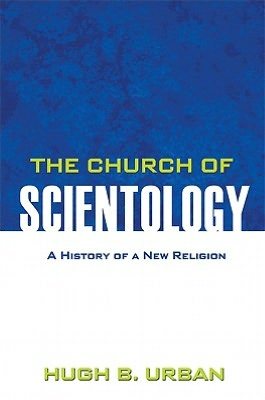
churchofscientology As a child just discovering the joys of reading in the early 1970s, I found science fiction captivating. We were poor, and our town had no library, so I’d buy my books on Saturday trips to Goodwill. In other words, you take what you can get. I recall buying a book by a guy named L. Ron Hubbard. I don’t remember the title or the story, but I recall my surprise when, as a religion major some years later, I learned that this same sci-fi author had started a new religion. Scientology was not something you’d likely encounter in a poverty-stricken, sub-Appalachian town in rural Pennsylvania, and with no Internet it wasn’t so easy to learn about such things even if you had. We did have TV, though, and we watched Welcome Back Kotter (Risky Business was a little too risky). When I discovered that John Travolta (“Vinnie” as we thought of him) was a Scientologist, I was curious. But only to a degree. When I first taught World Religions and spent a few years researching the Scopes Trial for a book I never had the chance to write, I became very interested in American religions. They don’t come much more American than Scientology (and Latter-Day Saints).

As soon as Hugh B. Urban’s book The Church of Scientology: A History of a New Religion appeared, it immediately went onto my reading list. Like most interested laity, I’d found it difficult to trust much of what I’d read on the Church of Scientology from media sources. Now I had a reliable guide! Even better, Urban frames his study around a question that pervades this blog: who gets to decide what is a religion? As Urban deftly points out, it is odd that government agencies are often those tasked with a job more fitting for those of us who’ve studied religion with the rigor that a physicist devotes to quarks and neutrinos. Some of us have parsed religious texts to bare bones and then dug up the skeletons beneath and examined their ossified remains as well. The world doesn’t take religion studies too seriously, however.

Urban’s book, well written and solidly researched, maintains that rarest of academic feats: objectivity. When approaching a religion, particularly a controversial one, emotions are easily engaged and objectivity is challenged. While confessing that he isn’t a Scientologist, Urban lets the historical facts speak for themselves. He doesn’t try to belittle those he studies, but he doesn’t coddle either. Reading his fascinating account, many questions are raised about the rights of religions and the role that secrecy plays. And we know that Urban is only skating across the surface of a deep and mysterious pond here. Sitting in my room with a yellowed, used copy of some L. Ron Hubbard pulp fiction story in my hands, I would’ve never guessed, as a child, what I was really holding.


Playing Nicaea

Some professors are more creative than mine ever were. Not that there’s anything wrong with that. Even today “old school” means getting it done the arduous, nose-to-the-grindstone way. A friend of mine, however, is in Turkey where a class on social, political and religious relations has her involved in a role playing game (RPG in internet-speak) where the students take on the roles of the participants at the Council of Nicaea and argue the perspectives of those parties. What a great way to learn what minutiae set ablaze entire worlds! For those of you who don’t follow ecumenical councils, Nicaea was the big one. Depending on whom you trust, there were seven ecumenical councils that early Christians accepted, although others had gone their own direction before the first council (Nicaea) even began. Historians are now aware that Christianity was never a unified religion, just a varying number of winners and losers vying for who had the right to call themselves the true followers of Christ.

Constant Constantine keeps the halo.

Constant Constantine keeps the halo.

Nevertheless, the Council of Nicaea was one of the pivot-points on which all of history in the western world turns. Seem like a sweeping generalization? It is. But an honest one. Nicaea was the opportunity for the first Christian emperor, Constantine, to set in motion the swirling whirlpool of politics and religion that has never truly left the world ever since. Already before 325 C.E. there had been endless bickering about who Jesus really was, when Easter should be celebrated, which books belonged in the Bible (that most political of books), and who had authority over whom. The big question was really the relationship of Jesus to the Father, or, the first instance of “who’s your daddy?” Over questions like these, given history’s long view, thousands of people have died.

It’s not unusual to hear that the Council of Nicaea was the last time all Christians agreed on the major points. Many churches still recite the Nicaean Creed on a regular basis as a symbol of that unity. It is clear, however, already from the period of Paul’s letters (the earliest Christian literature) that differences of opinions had arisen among the first generation of disciples. Those we quaintly call Gnostics were among the earliest believers and they managed to survive, transmogrified, past all of the authoritative councils of the church. The very idea of ecclesiastical authority is one of power. Who has the might to make right? And it was a chance to be seen among the ecclesiastical elite. Nicaea left out, most famously, the Arians. And if the media is anything by which to judge contemporary Christianity, the majority of the Religious Right would fall into that camp as well. Recite with me now, “I believe in…”


Scholar Universe

One of the resources that editors use to find scholars of obscure fields of study is a website called Scholar Universe. Now, before you all rush to the site and crash the system, I should warn you that you’ll need to purchase an account and get a password to use it. Frankly, for our society it really isn’t worth the effort or expense for most people. The information on Scholar Universe is often outdated, and not always accurate. Once, when searching for who’s who in classical mythology, I was surprised to find my own name. I did teach classical mythology at Montclair State University for three semesters, but my longer and more complete career of teaching biblical studies was nowhere to be found. How quickly our contributions, meager though they be, disappear. In any case, when a contact breaks down, the website lists the position of a scholar as “Last Known.” More than once I’ve searched for a more updated record to find “Last Known” as a circumlocution for “deceased.” There are a few things I think I’d like to ask some dead religion professors.

I recently came across a couple of academics who had, in separate instances, been murdered. One, rather gruesomely, attacked with a hammer as he walked home from the train. We tend to think that education will somehow protect us from the vicissitudes of a world caught up in its own madness. Some of us came to this profession grasping for some sort of immortality. Higher education, while based on great ideals, is nevertheless just as susceptible to taint as any human enterprise. I have been watching as higher education has followed after the role model of business for the past few decades. There was a time when learning was thought to be worth the investment, no matter what the cost. Now a pleasant deception will do, thank you, as long as there’s cash in it.

The history of higher education has been, from the beginning, tied up with religion. The earliest universities coalesced around theological faculties, while others studied law. The two are never far apart. Even in the “New World” our early universities were formed, initially, in the service of the church. Harvard, Yale, Princeton, William and Mary, and many other colleges and universities were founded with the ideal of theological education firmly in mind. Concerns for the affairs of the world, however, inevitably came to preoccupy higher education. Secular schools have little time to study real world phenomena such as religion and spirituality. Unfortunately, those are the areas, our news sources often inform us, that would benefit the most from a bit of sensible learning. But not as long as there is money to be made elsewhere.

IMG_0684


Is Golden

quiet When I grew up I sometimes thought I’d join a monastery. It’s a funny idea since I’m not Catholic and I am happily married. I think what appealed to me most about the idea was the quiet. We don’t choose jobs any more than we choose our own names. My first “real job” was teaching at Nashotah House, a seminary founded on the principles of a monastery—once all male, meals eaten together, and lots and lots of quiet. Many parts of life on campus drove me crazy, but I liked the silence. Yes, I am an introvert. Anyone who knows me knows that. Until I read Susan Cain’s book Quiet: The Power of Introverts in a World That Can’t Stop Talking, I had figured there was just something wrong with me. I put the book down feeling strangely ebullient, as if I’d just read my own biography and it turned out happy. Here was someone finally speaking up for the quiet among us. The world wasn’t quite so lonely any more.

My only fear about Quiet is that not enough people will read it. Here I learned that a large part of the population, although still a minority by a considerable margin, is introverted. The label is often used like a swear word. How many times have I been told at work that I must assert myself more, make more noise? How many times have I been made to feel shame at being what I am? I lost count years ago. Ironically, I have no fear of public speaking. Teaching (and once upon a time, preaching) came as naturally to me as breathing. But don’t expect me to get in somebody else’s face. I don’t do cold calls. I like to think things through. I can’t praise the insights of Cain’s book enough.

In addition to my natural disposition, I also grew up believing the world owed me nothing. We lived in humble circumstances, and I tried hard not to make more noise than necessary. Sure, as a young child I “rared” with my brothers, but I preferred the quiet play even more. Religion taught me that silence is a special kind of gift. Most days I arise at 3:30 a.m. to spend the first two hours of the day in quiet contemplation. I write, I think. I live. For me the day has already begun to slip into chaos as soon as I climb onto the roaring bus. I silently read my book, but conversation picks up around me as more and more people stomp on. By the time we reach Manhattan, the peace is gone for another day. I felt strangely empowered holding Quiet before my face on the bus. For once, it seemed, someone approved of a silent man and welcomed him to the human race.


Down Will Come Baby

Princeton Theological Seminary is a school with a history. Unofficially allied with my alma mater, Edinburgh University, PTS is one of the powerhouses for supplying educated clergy to the Presbyterian tradition. And others as well, of course. And not a few PhDs into the ranks of the perpetually unemployed. Seminaries do offer all these services. Despite failing to be considered worthy of even an interview in what I count as five separate applications to the school, I still sympathize with its need to update its technology. I suspect that is what is behind its application for a half-million-plus-dollar New Jersey Higher Education Technology Infrastructure Fund grant. Education and technology surely go together as much as old-school loyalty and fairness, do they not? A front-page story in Tuesday’s New Jersey Star-Ledger proclaims the gnat that remains in the camel juice: state funds are being requested by a fully religious organization. The application for these state pork-bellies is also shared by Beth Medrash Govoha, a male-only Jewish seminary in Lakewood. Desperate times in higher education. What would Christie do?

PTS

Turning the clock back twenty-four hours, another front page newspaper story places religion squarely in the public face. “Three more step down in wake of priest scandal” hit my bleary eyes on a Monday morning. This is the saga of Fr. Fugee, banned from interactions with children after a molestation case some time back. As seems to be par for this unholy course, such clergy are shifted around rather than defrocked—being seminary fodder myself I can honestly ask, what else would they do? Society has little enough use for those of us who worked our way through seminary for honest means and toward what seemed at the time noble ends. How much more so for those who mask deeply rooted neuroses under the sanctity of ordination?

Fugee_0001

Seeing religious news on the front page of the paper is nearly always cause to shudder. We will occasionally see a new Pope or maybe a genuine act of Christian (or any other religious) charity, but mostly we are served the seedy and sad and downright tawdry. Religion, although in the ascendent, is seeking hard to justify its existence. Or is it just the vaunted liberal media bias showing through? As primates we all like to watch the haughty topple. It’s even in the Bible—Isaiah got a thrill out of tall ships tipping over. Perhaps it is because religion presents itself as the unadulterated good that we like to see it stumble. I always felt a tad uncomfortable reading Goofus and Gallant while waiting for a doctor’s shot or the dentist’s chair. Yes, Goofus screwed up big time once in a while, but that confident little eagle-scout-in-waiting Gallant could do no wrong. I knew who I was supposed to emulate, but life’s just not that simple. Maybe that’s why religion makes the front page. Maybe Gallant is a myth after all.


The Four “R”s

Last week the Chronicle of Higher Education feted Eboo Patel. As someone who has been on the receiving end of subtle religious violence, I appreciate what Patel is trying to do. He is a Muslim activist, the kind of which the world needs more. His last two books have been advocating for religious understanding to be considered a keystone of a college education. He’s right; religious understanding should stand right up there with the other three “r”s of education. The problem Patel faces is one I have personally faced, however; there is no money in religious studies.

Chronicle

That seems odd, even as I write it. We see lavish treasures owned by the Vatican. We see televangelists living in mansions that make Graceland seem tawdry. No huckster is more able than a skilled preacher at wheedling money out of people. Religious terrorist groups, our society conveniently ignores, are often well funded. We just don’t want to pay those professors of religion! We glory in our enlightened status and wonder why America consistently ranks among the most religious nations of the world. What department is first to receive the chop when the budget tightens? Well, it begins with an R.

What Eboo Patel is saying is what I’ve been preaching for all my adult life. We all think we know what religion is, but we actually have no idea. Universities, with rare exceptions, will do what they can to hide the study of religion like a zip on prom night. Patel is a Muslim and has good cause for wanting people to understand that his religion is not evil. He has written a couple of books advocating teaching our young about religious tolerance. It is a message America, especially, should be eager to embrace. Paradoxically, we don’t give a damn. We will cast caskets full of money into business and law departments. We will fund the research of medical and science students. Don’t ask for permission to hire a religion specialist of any description, however. Don’t you know that religion is dying out?

No doubt the electronic revolution has forever changed the way our young think about reading, writing, and yes, even arithmetic. If we had it the way our universities suggest, they would know as little as possible about the fourth, forgotten “r” that leads to much misery and meaning in our little world.


Bing Spring

Binghamton University is, like most institutions of higher education, home to many rituals. Back around a century ago, anthropologists were convinced that religions began as a set of inchoate rituals that coalesced into primitive belief systems. Although most anthropologists today see this as an overly simplistic analysis, I found a recent story on Binghamton’s website an example of a nascent religion. It has to do with placating, or perhaps defying, the weather gods.

Like most good rituals, Stepping on the Coat has a practical pedigree. According to Bing’s own archives, the ritual began the year that I was born. An undergrad that year, overwhelmed by an April snowstorm, removed his coat and stomped on it. The snow stopped. As befits a scientifically inclined institution, this was initially chalked up as coincidence, but the same result occurred again the next year. Stepping on the Coat seemed to be a cure for late season snowstorms. In this year of lazy, lingering winter, many people—some of them not even students—must be seeking a cure for unseasonable weather. Perhaps Binghamton University students a half-century ago stumbled (stamped?) upon the solution. In the whimsical tributes given on the BU magazine webpage, the sacred and the profane are never very far apart.

Binghamton in spring

Binghamton in spring

I have done considerable research on the weather and its sacral implications. Most of my research has never been published, but the overarching idea, I believe, is sound. Our human perceptions of the divine are focused on the sky. Nietzsche declared that God is dead, but that death only really occurred when we penetrated our atmosphere and landed on the moon. Even then, looking up, we saw only blackness beyond. Infinity hangs, like Damocles’ sword, above our heads. We may pollute our skies, we may shut them out with artificial walls and ceilings. We may even punch through them with rockets. But our gods are up there, somewhere. And they are the ones who dictate our weather. The human response is up to us. Do we sit inside and complain, or do we stomp the coat in defiance of an uncaring deity? Binghamton is a green university, so that even amid the burgeoning religion of coat-stepping, there is a real awareness that when the weather goes awry in this industrial era, we know where the blame truly lies. As humans, however, our religious inclinations will insist that we continue to step upon the coat and claim the whole earth as our prize.


Paging Dr. Asimov

Who remembers Rock ’em Sock ’em Robots? Plastic “robots” in the boxing ring trying to knock each other’s block’s off was a form of entertainment for kids of the ‘60s before such things as humanoid robots actually existed. So when Boston University’s alumni magazine had an article about dancing robots, I had to see what was up. As regular readers will know, I’ve been exploring some of the problems with reductionism lately. This idea, that humans and animals are just fleshy machines, breaks down when we try to design robots that can do some of the most basic of human activities. Sometimes we dance and we don’t know why. Apart from Wall-e’s dance with Eve, robots have trouble getting the concept. Graduate student John Baillieul notes that this isn’t about “some high school guy who had trouble getting a date, so you get a robot. The ultimate goal is to understand human reaction to gestures and how machines may react to gestures.” Having actually been a high school guy who never even got to the prom, I’m wondering how depressed our robots get when the fem-bots all look the other way.

Rockem Sockem

The reductionistic outlook suggests that we can eventually program robots to respond as humans would, responding fluidly to situations, allowing them to over-ride their “instinct,” which, the article implies, equals programming. We have no idea what instinct is. It is something all biological creatures have, from the heliotrope following the sun to the human dancing her heart out. Do we want machines to replicate our most intimate emotions? Even our most reliable chip-driven devices sometimes freeze up or rebel. My car has recently got the idea in its mechanistic brain that the right-hand side rearview mirror should be rotated as far to the right as possible. We bicker about this all the time when I get in to drive. Well, machines know best. They, after all, are the shape of the future.

So programming robots so that they can react in real time to non-verbal cues, like all sentient beings do, is a desideratum of our mechanistic Weltanschauung. Notes Rich Barlow, the article’s author, “bats, for example, camouflage their motions so that they can sneak up on insect prey, a fake-out familiar to anyone who’s tried to swat a pesky fly.” My question is who is the pesky fly in this robot-human scenario? Who acts irrationally and unpredictably? Isn’t our instinct to smash the fly a result of our annoyance at it landing, yet again, on our sandwich with its dirty feet? And what is that stupid dance that it does when it’s all over our food? Reductionism must, by definition, reduce instinct to the level of a kind of genetic programming. Even this aging blogger, however, knows what it is to dance without knowing why. He also knows what it feels like when your date goes home with somebody else, something to which he’s not convinced that we want robots calculating an “instinctual” response.


Just Books

It’s very difficult to make your voice heard in this world. I’ve been talking for nearly half a century, and most of the time it’s like nobody’s listening. For those who follow the Chronicle of Higher Education, the fact that Herbert Richardson, the founder of Edwin Mellen Press, is threatening to sue some librarians for comments made on various blogs, is not really news. When the Chronicle ran a story this week on Herbert Richardson’s career, I gained a renewed appreciation for what he’s doing. I say “renewed” because I remember the days when I was very poor. My first year of teaching, with my wife in a university program and my own student loans due, I was paid a measly ten grand for a salary (this was in 1992). Despite these privations, my wife and I attended the Society of Biblical Literature annual meeting on a very tight budget. For those of you who’ve not been, SBL offers a book orgy for scholars. Publishers of all descriptions offer books at a discount, but even so, many titles are out of reach. My wife was researching Methodist hymnody for her thesis, and Edwin Mellen Press had a resource that she needed. We simply couldn’t afford it. Herbert Richardson saw our earnest discussion at his book stall, walked over, picked up the book, handed to my wife and said, “Take it.”

Although Herbert Richardson would not recognize me, he has on other occasions, shown me unsolicited kindness. Reading the Chronicle account, I learned that he is a Presbyterian minister and that he had taught at Harvard Divinity School. He is unconventional in some respects, but he also enjoys bucking the trends. Edwin Mellen Press publishes good research that mainstream publishers pass up because their eyes are always on the prize. The bottom line. I never published with Mellen, but I have had snooty presses turn down very careful scholarship of my own. My sympathies are with the underdog, and with the guy who tries to help the underdog. Academia is a cruel world. Some of us have received nothing but backhanded salutes from “established institutions” for all of our adult lives. It’s hard to feel sorry for them. What are the needs of one man in a machine so vast? Not much, apparently.

I’m not the litigious sort. Lawyers have generally caused mostly grief, in my experience. But I don’t castigate the important work Herbert Richardson is trying to do. It might be easy for those lucky enough to be welcomed by academia to forget just how lucky they are and noses are easily looked down towards those of us who never received a chance to shine. No, I wouldn’t sue those who bad-mouth me, and I’m sure there are plenty, but I think Herbert Richardson’s heart is in the right place. As a guy who would happily work for books if food, shelter, and healthcare could somehow be had, I know what it is to covet a book and not be able to afford it. I know what it is like to feel want. Herbert Richardson, based on my encounters with the man—we continue to cross paths from time to time—understands those who love books. That is a principle I can live by.

IMG_0506


Rorschach Test

Rutgers University, College Avenue Campus. I recall coming out on a sweltering night once in a while during a summer term, only to find a street evangelist inveighing against undergraduate evils. He, and it was invariably a he, may have delved into the darker sins of graduate students, but I didn’t stay around to find out. Colleges attempt to educate while street preachers try to halt the process. Shall we go forward or retreat? I occasionally run into off-campus preachers on my university visits. I still look like a professor, I suppose, so I am treated to their version of salvation along with the people less than half my age, facing all the temptations of adulthood. The last evangelists I saw were handing out tracts about the evils of tattoos. I know tattoos are very popular, although I’ve personally never seen the draw. With one eye cast warily ahead, I think of what happens when that firm bit of skin starts to sag and the bold decoration begins to shrivel to make us look less like rebels and more like crepe paper left too long in the rain. Besides, I could never think of a picture that I’d want attached to me for the rest of my life. Too many changes come along, best leaving tattoos for those who appreciate a strong dose of irony.

Tattoo

Our evangelist friends, of course, object because tattoos are expressly forbidden in the Hebrew Bible. “Ye shall not make any cuttings in your flesh for the dead, nor print any marks upon you. I am the Lord,” so the Lord declares in Leviticus 19. I resisted the urge to ask my ersatz savior if his clothing contained any blends of materials, forbidden earlier in the same chapter. Or if he trimmed the hair on the sides of his head. Or rotated his crops. The problem, according to the tract, is that tattooing was considered a heathen or pagan activity as Christianity spread to new lands. Presumably the very popular cross or crucifix tattoo design had not yet evolved. The tattoo is a tribal mark, indicating loyalty to a (presumably unChristian) group. My tract sets itself out on a history of tattooing, and suggests that it became popular as a form of entertainment, suggestively knocking on the door of that devil, idleness. They even cite Rick Warren as making church too entertaining. This isn’t supposed to be fun, people!

The real problem is that tattooing is getting society prepared to receive the mark of the beast. With echoes of Hal Lindsey’s Late, Great Planet Earth (now severely dated), the tract tells us that the mark is a tattoo and that among the most popular designs is the dragon. China, which venerates the dragon, is hostile to Christians—coincidence?! And, it should be noted, “Studies have shown that WOMEN who get DRAGON tattoos become more SELF CONFIDENT and ASSERTIVE” (emphasis in the original). And that, they want us to believe, is a bad thing. At least with Fundamentalists, agendas are rarely hidden. Too many assertive women and scheming foreigners are trying to lead us to the very tattoo parlor of the beast. Who knew that so much could be unpacked from half a verse in Leviticus? The name Levi, by the way, some suggest, comes from the same root as leviathan, the dragon.


Parochial Education

I’m sitting in King David’s Restaurant in Syracuse, New York. I’ve spent two days speaking with a wide diversity of religion scholars, and I’m realizing religion is not yet dead. A few days ago I wrote about the Burnt Over District and the Second Great Awakening. It occurs to me as I climbed the hill to the Religion Department in the rain, that I am on the trail of that Great Awakening. Syracuse University began as a Methodist school. Today, although affiliated with the United Methodist Church, it considers itself non-sectarian. Yet without those abstemious Methodists, they wouldn’t be here. The Methodists, now primarily represented by the United Methodist Church, owe their explosive growth to the Second Great Awakening. Out on the frontiers—for America was a rural nation—the revivals became showcases of the social, the supernatural, and the salacious. The Methodists and Baptists, in terms of numbers, benefited immensely.

With their enviable population base, the Methodists invested in higher education. Syracuse University, just up the hill, Adrian College, Boston, Central Methodist, Drew, Duke, Emory Universities, Florida Southern College—you could go nearly through the alphabet and not exhaust their schools—all owe their beginnings or present stature in part to those thrifty Methodists. Believers in an educated clergy, they reached out to embrace an educated laity as well. Although many of these institutions grew up and left their religion behind, the Methodists have impressed their stamp on American higher education unlike nearly any other denomination. Even when numbers in the pews decline, the Methodists will have left a legacy on the wider culture through their belief in education. About the only other Christian group invested so heavily in higher education has been the Catholic Church. Even so, the Methodist academic reputation climbs a bit higher.

I spent many happy years among the Methodists. Their way of looking at life, officially, anyway, isn’t extremist. Some aver that John Wesley was an extreme evangelist. Today he’d be snowboarding down the Alps to seek the unsaved, a Red Bull or two in his belly to stoke that restless fire. His followers, via media Methodists, eased into the mainstream—in some ways defined the mainstream. Methodism was good for a kid who needed to fit in. So as I sit in King David’s Restaurant, reflecting over my past that has landed me in this most unusual place, I am thinking about my Methodist roots. I’ve failed to impress those Methodist institutions where I was once courted for a circuit riding future. Now I watch as they educate other people’s kids. It is a safe guess that King David wouldn’t even be here if it hadn’t been for John Wesley and his personal need for assurance. If only more churches took education so seriously.

Climb that hill

Climb that hill


Adjunct Values

Well, the internet seems to have discovered adjunct Hell. Naturally, I’m too late to be part of the statistics, but I never rule that out as a future fate. This week I’ve seen several stories, some of them on major news network sites, shocked and indignant about the conditions under which adjunct instructors live. There’s quite a lot of hand-wringing and finger-pointing, but journalists and academics alike are tip-toeing around the blue whale in the room. Our society does not value education. Yes, we insist on educating children to the point of basic competency, but do we really, as a society, value that education? Ask just about any teacher. These people pour out their talent and efforts to give other people’s children the boost they need to get along in life. And many of them have to work second jobs just to make ends meet. Do we expect any less of higher education? We want it cheap and dirty with guaranteed jobs when it’s done. Universities want star faculty who publish all the time. You can’t do that when you’re busy teaching all the time. And we’ve got a glut.

The glut is PhDs. We’re cheap. More accurately, we’re broke. One of the things they don’t tell you when you apply for doctoral programs is that you are signing up to be ungainfully employed for your best earning years. Universities won’t tell you that because they need the money that graduate students bring with them, mostly in the form of student loans. News flash, America: education is not cheap! Another news flash: we are fast falling behind other cultures where teachers are respected, well paid, and even venerated. Gasp! Do such fantasy lands exist? Yes, they do.

Try a little experiment: think where you would be without your teachers. You certainly wouldn’t be reading this blog, and probably not reading at all. Your employment would likely be manual labor. Your math skills would be such that you’d be easily cheated of your wages. You would probably believe in a myth about the earth being created in six days and think that was science. When I read about the societies advancing the swiftest, America does not top the the list any more. When I learn more about those societies where the cutting edge is measured by Singapore or Beijing, I find out they highly value their teachers. They are paid well. They are respected. Here, in the US, chances are that the person teaching your kids in college makes a poverty-level salary and may be surviving by food stamps. Three quarters of our higher education teaching force consists of adjuncts. Three quarters. And these people are no slouches. They’re simply the victims of a society that doesn’t want to pay for education. Listening to administrators attempting to justify their decisions makes me squirm. How much did you say that Greg Schiano, Brady Hoke, or Bo Pelini “earn(ed)” in a year? Where your treasure is, there will your heart be also.

Any old school will do

Any old school will do