Which Lethbridge Witch?

witcheslethbridge Thomas Charles Lethbridge was a twentieth-century explorer. I knew his name only from book covers, and since books published before the cynical 1980s have a feel of the parsimoniousness to them, I tend to be trusting. As a former academic, my choice of reading is, in an odd way, sequential. You see, academic research is often a matter of following leads, rather like Sherlock Holmes with his clues. One thing leads to another. I’ve been learning about paganism at work, and so when I noticed T. C. Lethbridge’s book, Witches: Investigating an Ancient Religion, I figured that I might learn something about belief in witches in the Middle Ages. The book was published by the Routledge Kegan Paul phase of my employer in 1962. I quickly learned that Lethbridge was far from conventional, even in the twenty-first century.

Lethbridge’s book on witches turned out to be a romp through mostly Celtic mythology, with a bit of Norse and ancient Near Eastern myth thrown in for good measure. It turns out that Lethbridge literally did believe in the power of magic and was no slouch when it came to dowsing. In the great Frazerian tradition, Lethbridge brings together some elements that are probably best left separate, but the result is undeniably interesting and entertaining. I’m not sure he would be considered a balanced source for research purposes today, yet his book does contain unexpected insights. But no witches. Witches, according to Lethbridge, were adherents of the old gods. Their worldview collapsed with geocentrism and there was little left for magic to do in an empirical world.

Lethbridge’s constellation has dimmed from the scholarly zodiac. In recent days he has found a new set of disciples, however, who see his work as profoundly prophetic, in a manner of speaking. Lethbridge was an occult investigator before such pursuits became big business. Among mainstream academics these ideas still fall into the category of bogus, naive, or superstitious, but that is beginning to change in some quarters. Lethbridge, as it quickly becomes apparent, reserved a kind of scorn for establishment academics. It is true that stepping out of line has its consequences even in the rarified halls of higher education, but the results of the research are often of high quality. Even witches can be studied with an academic eye. The difference seems to be that T. C. Lethbridge believed what the witches said. That makes him a real explorer.


Fearful Christianity

So some North Carolina Republicans want to declare themselves a state religion. I wonder which one it will be? Hmmm, let me think… Whatever that religion will be it will be one that is afraid. Only religions that are uncomfortable with challenges have to back themselves with militaristic force. Seems to me some North Carolina politicians have never read a book on Medieval history. Ironically, the religion they wish to select was probably itself the result of the Reformation, the original challenge to state religion in the history of Christianity. It is also clear that these misguided lawmakers have not fully acquainted themselves with the vast diversity of forms of Christianity. The Christianity they want is televangelist, conservative, Protestant Christianity. Even that, however, is no longer a uniform religion. Why would there be more than one channel?

Those who spend long hours gazing at religion, both from inside and outside, realize that religious belief is not, cannot be, a static entity. Should a genuine apostle walk into an evangelistic Christian service today, chances are great that said apostle would leave wondering what religion this was. According to the Bible itself (ironically, taken only partially seriously by those who promote it) the first Christians were communists. Those who refused to sell everything and give it to the common good were struck dead, or so the book of Acts tells us. My guess is that free market economics has trumped the Holy Spirit here. What legislators really, really want is a religion to back up their secular plans.

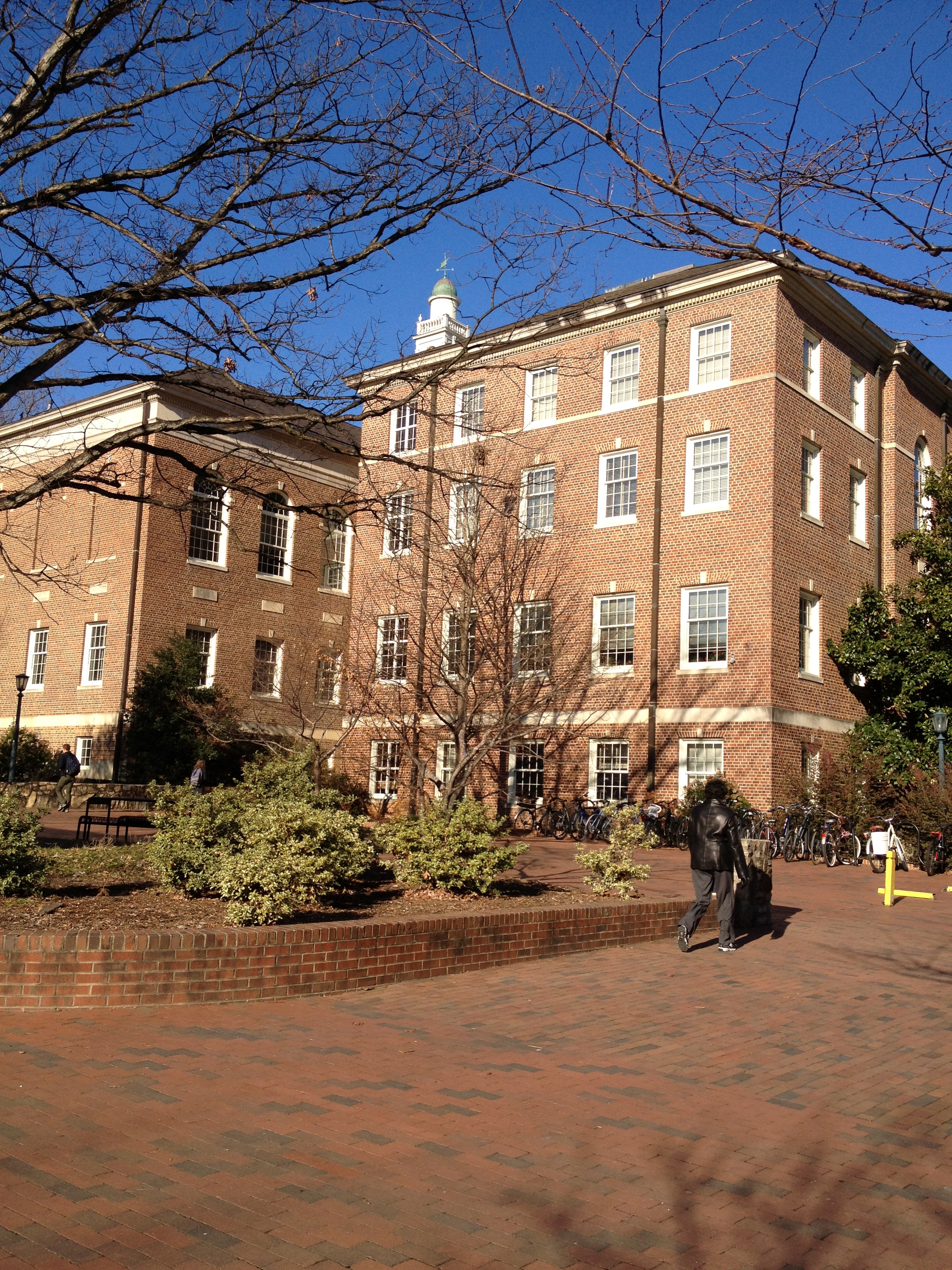
Which Christianity would they choose? Who would be welcome in New North Carolina? Mormons? Mennonites? Methodists? Catholics? Well, at least Catholics vote the right way on key issues. Or some of them do. What we are talking about is actual state support of religious ideology. In a country where some of the finest state universities do not even have departments of religious studies, the University of North Carolina, Chapel Hill, has one of the finest in the country. And not all the faculty fill North Carolina’s preferred demographic.

IMG_0019

Religions do not take such rear-guard actions unless they are afraid. What does Christianity fear? It depends on which Christianity you mean. Studies have shown that over 41,000 Christian denominations exist. Think about that a minute. If one flavor-of-the-month Christianity becomes official state religion, what becomes of the other 40,999? I’m no math whiz, but it just doesn’t add up. Seems to me that before states start declaring their religions publicly funded, legislators should go back to school. They should be required to take Religion 101. Might I suggest they enroll at UNC Chapel Hill?


They, Robots

Somehow I knew robots would continue to be part of my life. After all, they are a staple of science fiction and they are indeed also a staple of science fact. As my association with FIRST Robotics taught me, robots are everywhere. (And they can play frisbee better than I can.) So when I saw an article in the Chronicle of Higher Education entitled “Robots Aren’t the Problem: It’s Us,” I knew I was in for a scolding. It’s not so much the robots that worry me, it’s what they say about us. People thrive in environments of complexity. Even a simple robot has me standing next to a bunch of teenagers scratching my head. I don’t know what half the parts are and have no idea what the other half do. Even the components can be complex. A good case can be made that the natural world is equally, if not more, complex. I can imagine how, for instance, being confronted by a tiger in the wild would offer a bewildering variety of complex implications. And yet, robots are the world we’ve constructed for our selves.

Not every job is immediately threatened by mechanical replacement, but we know that in the industrialized world some jobs have disappeared. Our choices of how to find meaningful vocation are being conscripted by the machines we make. Like God we make them in our own image. Unlike God, we make them more powerful than ourselves. Richard Florida, in his Chronicle article, notes that some claim the robots will free us to become more human. Only if the economic barons will allow it. Even today, at the very beginnings of the robotics revolution, it is awfully hard to find a satisfying job. Even with very extensive education. I know this from experience. At the end of the day you end up working to make money for somebody else. Robots didn’t steal my vocation, business did.

Al-jazari_robots

I appreciate Florida’s point, but I wonder if we can’t point a finer point on it. All people are greedy, to a point. In most of us a human, all too human, conscience starts to bother us when we realize that we are unfairly advantaged. Some people even actually do something about it. Those who run the business, however, didn’t get to the top by obeying the dictates of conscience. The apotheosizing of money demands that humans be treated like, well, robots. We are all servants to those who aren’t shackled with quibbles and moral qualms. Robots, on one end, are reducing the number of jobs. On the other end entrepreneurs are seeking whom they may devour. The mass of humanity is caught in the middle. When it is time to beg for mercy, from what I’ve seen, the far safer bet is with the robots.


Good, Friday

Riding public transit sometimes turns into a religious experience. Various bus drivers will wish passengers a “blessed day” as they pull into the Port Authority Bus Terminal—not that I can blame them, after the traffic they face daily, for taking a spiritual breather. Lately, though, I have been wished a happy Easter by the driver. Ironically, I must note, because people of many faith traditions ride the bus. Not all are Easter riders. Just yesterday a Rastafari stood before me in line. I’m regularly joined by Hindus, Jews, and maybe even a Mormon or two (who can tell?). Holy Week in New York is a surreal experience. I chatted with some co-workers where the topic changed effortlessly from their experiences of Passover to others’ experiences of Easter. Religion is alive and well in the Big Apple, but it is mostly an afterthought to the real business of making money. That’s what we’re all here for, after all.

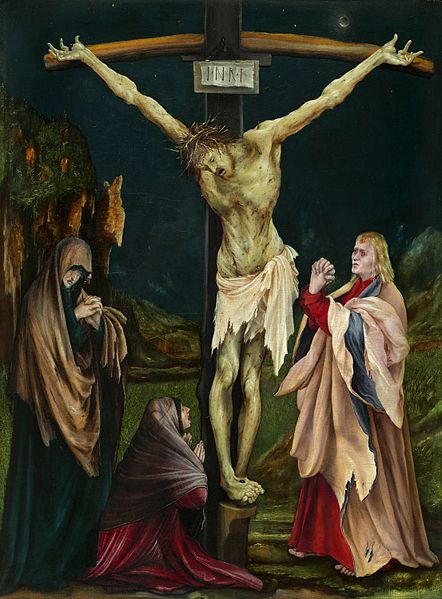
Money, according to the good book, is inimical to the lifestyle of faith. I must have a little too much faith, I guess, since I have so precious little money. Nothing throws that into such sharp relief as looming tuition bills. You see, I tried “to fight the good fight” only to learn that there’s no way to win it without playing by the entrepreneur’s rules. Filling out the FAFSA over the smoldering ruins of my “earning years” was a distinctly sobering experience. I went into higher education because I believed in it—there’s that pesky faith again. The things you believe in, however, have a way of turning on you. I suppose that’s an appropriate reflection for Good Friday.

It’s hard to be an idealist in a world where people say, “you just need someone to give you a chance,” and then turn their backs on you. So as I’m walking across town, thinking about my blessed day, I notice that we’re all in this together. Except some of us. In the idealist world, those who want it the most sometimes win it. Those who play by the rules. I had no Harvard aspirations, just a reasonable job in a little college would suit me fine. A place to think that doesn’t have wheels and aluminum sides and seat forty-nine other lost souls. But for those who have less, even the little they have will be taken from them. That’s biblical too. Higher education is one of the greatest gifts we can give our children, but it easily joins hands with Judas Iscariot. It is Good Friday, according to some. Others just call it a blessed day.

Mathis_Gothart_Grünewald_007


Gods in Spandex

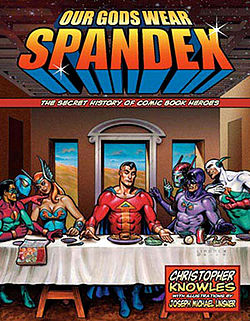
OurGodsWearSpandexOne thing leads to another. Reading Jeffrey Kripal’s Mutants and Mystics stirred an interest in comic books that I hadn’t felt since before my college days. Often excoriated as puerile, escapist doggerel for pre-pubescent boys, comics have grown to be respected members of adult society. I often wonder what the draw might be. Hollywood has certainly cashed in on it with any number of blockbuster flicks each year coming from the brains of the comic book writers and artists. So I picked up the quirky book by Christopher Knowles and Joseph Michael Linsner entitled Our Gods Wear Spandex: The Secret History of Comic Book Heroes. Reading it was kind of like looking in a mirror that has been buried in dust for a few decades. I hadn’t realized that my tastes in childhood comics was a reflection of a longing for the divine world with healthy doses of science fiction, and even H. P. Lovecraft, thrown in along the way. Knowles ties in a remarkable breadth of material to demonstrate that our superheroes are, in the final analysis, gods. That point may be taken in any number of ways.

The academic world suffers from a fear of respectability. That may seem a strange assertion, but I’ve spent a great deal of my life among academics and I know that many of them are insecure and tentative. Does all this reading, writing, and analysis ever get read by anybody? Does anybody take me seriously? Academics are haunted types. So when a subject as vulgar as comic books arises, scholars are reluctant to touch it. It might look like we actually enjoy reading the funnies. Still, popular culture has demonstrated an unexpected depth to much that we read in the strip world. As Knowles points out, a deep undercurrent of the occult and esotericism runs through many hero story lines. Several heroes began their lives as classical gods, only to assume the spandex and become incarnate humans with special powers we long to have ourselves. We would fly, if we were given the chance.

Our Gods Wear Spandex may never be viewed as an academic book by most. It has too much visual interest and not enough recondite footnotes. All the same, it is a profound look at what people really desire. We worship gods because of their special powers. If God were one of us with our humiliating weaknesses and limitations, would we ever worship him or her? Of course not. We only seek to appease those who are stronger than we are. Entire governments and ecclesiastical bodies are built on that very principle. Heroes are like us. Mortal, and yet, with something more. They die. But like the gods, they can come back. Reading Knowles it becomes clear just how much religious thought pulses through the veins of the comic book world. We may be grown up and sophisticated. We may have left behind childish things. But when our backs are to the wall, who doesn’t secretly wish they were Wonder Woman or Superman? And maybe that wish is a prayer.


Free Think Ing

It is not exactly pride that I feel when I see my undergraduate college featured in a Chronicle article entitled “Group Aims to Help Conservative Parents Counter ‘PC Indoctrination’ at Colleges.” I almost feared to scroll down the page. Yes, good old Grove City College has to thrust its manly credentials into the face of reason once again. The problem is that what such conservative groups decry as “indoctrination” is, in reality, critical thinking. It took me a long time to learn this distinction. I grew up in a conservative family, but I didn’t choose Grove City because of its flaming commitment to sixteenth-century values. I chose Grove City because it was a selective, intellectually honest school close to home. Being a first generation college student, I had no family tradition on which to draw. Guidance counselors didn’t know what to do with a religious kid who seemed to have some smarts. Other colleges seemed so far away. I didn’t even know what I wanted to study. You see, being raised in humble circumstances you learn to react to the many unpleasantries that life throws at you and there really isn’t time to plan out a future. It never works out that way in any case. I felt driven, but I didn’t know where I was going. Some day I hope to find out.

In the meanwhile, Grove City College has grown even more reactionary than when I was there in the 1980s. The Chronicle article states that “Conservatives have long complained about a perceived liberal bias in higher education,” and that Jim Van Eerden, an “entrepreneur in residence,” (shudder!) at Grove City has started the ironically named “FreeThinkU” to counter the liberalities students receive in school. Talk about your mixed messages! I wonder if Van Eerden has ever considered that Free Thinking has a long association with the very progress he abhors. Free thinkers gave us the gifts of evolution, rational thought, and for a while anyway, free love. Free thought gave us Kate Chopin, J. D. Salinger, and Margaret Atwood. They literally gave us the moon and have landed our probes on Mars. Somewhere lost in space a metal plaque is spinning in infinity with a naked couple and directions to planet Earth. I think the mis-named FreeThinkU might be better rechristened as Don’tUThink.

Higher education has a long, long history with religious thinking. Early universities were often outgrowths of theological colleges. Over the centuries, as our thinking matured, the ways of the past were recognized for what they were—outdated, short-sighted, unchanging for the sake of being unchanging. The reality that meets our eyes through the lenses of logic sometimes claims beehive hairdos and horn-rimmed glasses and greased back business haircuts as its victims. The earth is warming up. We did share a common ancestor with the apes. Our universe is even larger than we ever thought. And yet “FreeThinkU” suggests that we need to set the clock back a little. Maybe just a couple of centuries, but enough to hold our kids in the twilight of misperception. Progress has to be more than raping the earth and getting rich. Free thinking has to be a willingness to use the minds we have. I wonder what the aliens will say when they land here, our Pioneer 10 plaque in hand. If they land in Grove City, I suspect, they might feel they were sold a false bill of goods.

From the alumni mag; think about it...

From the alumni mag; think about it…


Real Life Zombies

In recent months Binghamton University has been on my mind. Binghamton has a number of videos available on YouTube which I find to be entertaining and even, sometimes, very funny. I like Bing’s style. Even though I catch myself laughing once in a while, I know that Binghamton takes higher education seriously. I watched a recent, 17 minute talk on a vital topic. It is located here, and I would recommend that you watch it too. Don’t worry, I’ll wait.

Back? Okay. The situation raised here is one that makes me shudder. Few things are as debilitating and vulnerable as an uneducated populace. Both religious and political forces have made great efforts to prevent certain orthodoxies from being challenged by what they term, as an obvious swear-word, “higher education.” The fact is, folks, higher education is nothing more than an attempt to get people—often young people—to learn how to think critically. That last word is a stumbling block sometimes. Any number of people will suppose that critical thinking is the same as criticism. It isn’t. Critical thought is the ability to approach a problem—any problem—rationally. To respond with the best that our minds have taught us to do, rather than with knee-jerk reactions. Yes, emotion and jerking knees have important places in the world, but they only work well if they are accompanied by the ability to think critically.

The video makes it pretty clear that the ability to think is rapidly eroding in our culture. Perhaps not quite zombie apocalypse, but not comfortably far from it. The death of Borders was blamed on its inability to get into the electronics markets by various pundits. I disagree. Borders fell victim to a culture that has lost the joy of challenging reading. We like spoon-feeding (otherwise much of the internet is difficult to explain). In order to exercise our brains, we have to use them to read hard things. Like my high school coach used to say, if you don’t use your muscles they’ll atrophy. Looking at my mid-section, I can see that his words were true. What Coach didn’t warn us about, though, is that the same holds true for the mind. The unchallenged intellect is a dull one. This is a threat far more insidious than any Communism, or liberalism ever was. It is the dummification of America. We are a nation that loves zombies. We are also a nation in danger of becoming them as well. Fight the zombie apocalypse—read a book. And like that baseball bat you use to swing at the undead, the harder it is, the better.

They don't write them like that anymore

They don’t write them like that anymore


Esalen

Esalen Every great once in a while, you read an academic book that really makes you think. Not that many books aren’t erudite or thought-provoking, but the ones that cause a reader to question reality are relatively few. I suppose that’s why I’ve been reading Jeffrey Kripal’s books like candy. I’ve posted on his Authors of the Impossible and Mutants and Mystics. Now that I’ve read Esalen: America and the Religion of No Religion, I somehow feel like I missed out on something important that had never entered my awareness. Growing up in the eastern part of the country and not reaching my teenage years until the program at Esalen was already under way and famous on the west coast, I’d never even heard of the institute until I’d started reading Kripal’s books. Esalen, for those who are like I was, is hard to define. Indeed, Kripal studiously avoids doing just that as he narrates its history and impact on the nation, and indeed, the world.

The human potential movement has seldom found institutional support. Since our worldviews determine what we are capable of seeing, and since our reality has largely been defined by a rationalistic monism, an entire universe remains for us to discover, if we were only to open our eyes. Reading about Esalen was like finding a long lost twin—much of what the institution has stood for has found its way into my own psyche in some form or other. I suppose I’ve never really read too much on eastern religions, but I do appreciate what meditation can do. Reading the names of those associated with Esalen over the decades, it would be difficult to disagree.

Our society has come to trust materialism assiduously. How easy it is to forget that even the material world consists of so much more than our limited senses reveal. We know that animals sense the world differently, so we call them non-conscious beings and get on with pretending that if we can’t see it, it doesn’t exist. As the Esalen devotees know, even scientists have come to consider the implications of quantum mechanics. If we are to take the results of physics seriously, the impossible does happen. Right here in our own corner (or arc) of the universe. We lose so much by refusing to believe the impossible. Lewis Carroll knew that and we’ve been talking about going down the rabbit hole ever since. There are rare places in the world where the spiritual, the scientific, the sensuous, and the artistic come together to explore what the human experience truly is. One such place is Esalen, where, I’m told, the religion is no religion.


Beg Your Martyr

Despite the extreme antipathy shown toward religion by the educational establishment, the Chronicle of Higher Education doesn’t shy away from the topic. In the March 1 edition of The Chronicle Review, a piece by Candida Moss presents one of the uncomfortable facts of religious history to the academic world. Many of us who are “specialists” have known for quite some time that the record for mass persecution among early Christians is sketchy at best. In “The Myths Behind the Age of Martyrs,” Moss reveals that historical documents don’t present the first few centuries of Christendom as quite the blood-bath that early hagiographies do. It is true that perceptions vary depending on one’s point of view. If your auntie were thrown to the lions, it might look like everyone you knew was being persecuted. If you were a Roman historian, the numbers might seem small in comparison with, say, those pesky Carthaginians, heathens the lot of them. Still, it was this persecuted self-image that left a lasting imprint on Christianity. Until Constantine, anyway. When Christianity became imperial, it didn’t hesitate to get medieval on a few posteriors.

As Moss points out, early Christians (as well as Jews and those of other bookish traditions) rewrote their stories over time. Even altering the Bible—not yet the Holy Bible—was fair game. The whole discipline of textual criticism grew up to answer the question of what the original Bible likely said. As soon as believers take their writings as factual, however, the story will change. Were early Christians persecuted? Almost certainly. By the tens of thousands that tradition asserts? Less likely. The Romans were practical. Like most domineering classes, lording it over someone isn’t nearly as satisfying when your subjects are dead. You want that superior feeling? Keep the masses in servitude. But alive. That’s not to say that it didn’t feel like everyone you knew was being murdered for trying to do the right thing.

When I was little, I was taught that it is more important to put others’ needs and wants in front of your own. It is a basic Christian teaching. Somewhat naively, I approached the academic empire with that simple basis deeply embedded in my mind. I didn’t realize just how often others would use this trait to their own advantage. Other Christians as well as the non-religious are happy to take from the willing giver. This didn’t prepare me well for life in the business world where, I am learning, the delight in taking from the giver has only grown stronger over the centuries. So I end each day spent and weary and feeling like I’ve been thrown to the lions. Not literally. Still, I believe in the plain idea that if we all treated others’ needs before our own the world would be a much better place. I’ve never outgrown my idealism. Until others join in, however, I’m sitting in the stands trying hard not to watch what the lions are doing down below.

800px-Jean-Léon_Gérôme_-_The_Christian_Martyrs'_Last_Prayer_-_Walters_37113


Religion and Its Discontents

IMG_0575

Travel broadens the mind. I’ve always felt that travel, for those who pay attention when they do it, is one of the best forms of education available. When I do campus visits for work, my time is spent talking to faculty, but on my walks between appointments I keep an eye out for my own education. This past week at the University of Texas in Austin, I couldn’t help but notice how much religion still plays into the lives of many people—even undergraduates. One of the first things I noticed as I approached campus was the sign outside a Methodist Church announcing a sermon series entitled “When Christians Disagree.” Anyone with experience within, let alone between, denominations knows that disagreement is endemic. It would be difficult to find a single point of Christian teaching that is universally held among Christians without at least one group of dissenters. In my own experience, disagreements run deeply within Christian denominations, and the hatred experienced is often more fierce than that between Christians and “heathens.”

IMG_0574

Well, maybe not between some Christians and Islam. So on a campus kiosk I found posters for a seminar entitled “Muhammad: Messenger of Peace.” In a largely Christian context, Muslim students have a difficult time with their religion being castigated in the media and in popular thought. Almost all religions are capable of violence (I was going to write “All religions” but I couldn’t think of any instances where Jains have incited violence), but most highly value and promote peace as the ideal. Few religions are actually founded on violence. I’ve heard many Christians make the claim that Islam is about conquest, pointing to the rapid expansion of Islam following the time of Muhammad. They often overlook the Crusades, one of the most violent Christian reactions to another religion in history. Is Christianity all about violence? Who is “the prince of peace” anyway?

IMG_0579

On a bulletin board I saw a notice for Asatru, the Pagan Student Alliance. If any religious group is misunderstood, surely it is Pagans. Christian missionaries liberally used “pagan” to denigrate the old religions they encountered throughout the world. Often attempts were made to eradicate such beliefs completely. With some success. Many forms of paganism today are revivals of the old religions, and a few are actual survivals. The Pagans I know are moral, peace-loving people as well. Claims of human sacrifice (often fabricated) aside, paganism was, and is, an attempt to make peace with the planet upon which we find ourselves. Peace, it seems, is a desideratum of many religions. If we studied college campuses, where such beliefs are encouraged to coexist, we might find a model that would work for people in the “real world.” And perhaps peace really would have a chance.


Persistent Idealism

Few spans of human life are so idealistic as our college years. There we meet many people from beyond our hometown, and we learn the treasures of diversity and different ways of doing things. Ideas mix and blend, and with professors who’ve learned so much telling us all the places we can go, the possibilities seem endless. I find the idealism of college kids refreshing. That’s one reason, I suppose, that I enjoyed teaching them so much. At work you’re far more often told why things won’t work and how they can’t be done. And I find myself thinking back to college and wondering when people lost their sense of vision. When did idealism die?

Yesterday I spent on the campus of the University of Texas at Austin. Between appointments I was crossing a quad area and noticed a bunch of blue and white balloons. We’re all still kids inside when we see balloons. I stopped to look. Then I noticed, across the street (in which sat a very obvious police car) a small group of students waving a Palestinian flag. Several police, frankly looking bored, stood between the two peaceful groups.

IMG_0581IMG_0580

Looking back to the balloons, there were a series of tents set up and a sign read “Israel Block Party.” Obviously this had been a carefully planned event, and we all know the heinous story of the constant persecution of the Jews throughout much of “civilized” history. The simple table across the street bore the sign “Free Palestine.” Less than ten students stood around, handing out literature, peaceful, yet literally flying their flag. Yes, the Palestinians have also been oppressed for much of their history. If only adults could live so peacefully as these students. My heart went out to them.

The issue of Israel and Palestine is one of the deepest scars in our collective human psyche. Indirectly, that conflict is responsible for many tragic terrorist acts, including the attacks of 9/11. And it is so frustrating because both sides (and there are actually more than two) are victims. We like our good guys in white and our bad guys in black. I’m still an idealist, after all. Yet in Israel/Palestine we have two historically oppressed groups vying for the very same land. And in the middle of this maelstrom, the Bible. The very book that can be read as an eternal promise by God that the people of Israel should own this land. By 1947, however, we’d stopped relying on God and began relying on guns. And atomic bombs. And life has never been the same since.

Images of the wall going up between Israelis and Palestinians just after the wall went down in Berlin reminded me of Bush’s proposed wall between Texas and Mexico. Here in Texas just about everyone in the lower paying jobs I’ve met is hispanic. And friendly. Grateful in a way that many of us wouldn’t emulate in such low stations. We are all people. We all experience the same feelings, needs, and desires. Why not tear down the walls and let us look at one another? Take a good, long look. And my idealistic self says, if we face another human being with love everything will be all right.


Continental Drift

So this is the way epiphany works. (I know it’s Lent, but I’ve got bigger fish to fry.) I sat down to check my personal email after a horrid day at work, and since I have a Verizon account, I can’t help but see the news headline that’s on the page when I open it. When the headline said something about a new continent discovered by scientists under the ocean, I’ll have to admit that Atlantis sounded better than anything I’d heard in the office. So it was worth a click.

Athanasius_Kircher's_Atlantis

Turns out that this isn’t Atlantis at all—I have this habit of making naive assumptions—but a continent just north of Madagascar that sunk some nine million years ago. No happy lemurs or Homo sapiens around then. So when this Atlantis sank, there was nobody around to see it. At least not Plato.

The story was broadcast by Newsy and it made mention of Science World Report. Here’s where the epiphany piphed. I’d never heard of Science World Report. When I went to their site, the wonders of the universe spread out before me. “Dying Stars Reveal the Clue to Extraterrestrial Life: Earth-like Planets Unmasked” read one headline. “How Dinosaurs Evolved the World’s Longest Necks While Giraffes Fell Short.” These are the things I need to brighten me after a rotten day. A world with wonder in it. A world where money is not the sole, or even the highest good. A world where an intellect need not go to waste.

“Human Language May Have Evolved from Birdsong: New Meaning for Communication.” This website is like my eternal monologue in headline format. I’m not naive enough to suppose this website will be the nepenthe for all my workaday woes. But it does serve to remind me that science and religion are not always foes. A religion only becomes belligerent when it takes its truisms too seriously. We evolved in a world of wonder, but we’ve taken great care to remove the wonder from it. As if joy and delight were puerile phantasms with no place in the serious adult world of finance and industry.

I became an educator because I’ve always been in love with ideas. I lost my job in education because I was an idealist. Yes, continents do indeed sink. And while it may not be Atlantis down there, a simple click led me to a world of wonder. And that is, if anything can be, cause for hope.


Wolves and Sheep

A state of the university address might not be a bad exercise.  If I might be so bold, as an inveterate outsider who nonetheless has tried to play by the rules, I have been cast in a supporting role—I think a few of my observations might be valid.  Some of my more pastoral colleagues try to reassure me that editors influence more people than professors, but in fact, the professors are the ones with the luxury to write books.  I get to sit on the bus and read them.  I do read many proposals before they become full-fledged books, and, interestingly, I get to discern how someone becomes an “expert.”  I worry a little about this latter point.  When it comes to religion, there are a few too many experts and dreadfully too few places for them to find gainful employment.  This is a volatile mix. I often run across religion experts who have professorships because they are of the right brand.  In a way that is almost inconceivable in any other profession, schools where religion is taught are actually allowed to discriminate.  This fact may even stretch out, in the case of some religions, to more objective fields.  Some religions teach that illness is spiritual rather than physical.  Some of them have medical schools, staffed by believers.

This comes back to the privileging of belief.  We all believe things, and most of us (if not all of us, when the lights are out) include some irrational things in that realm.  Beliefs can change, but not easily.  In the case of religions, most often we are taught our beliefs.  Sitting back and thinking about those truisms is the ultimate of academic enterprises, and yet few matters have a greater impact on society as a whole than the belief structures of people.  If you want to start a university for your brand of religion, after all, the law protects you if you keep your biases on your sleeve.  These people get to write books with the credibility that pathetic posers, like the current blogger, are doomed to lack.  You see, if someone is an expert, they have to have an institution to prove it.  That’s the way higher education works.

I read lots of stuff.  I sometimes think maybe I read a little too much because the ideas begin to affect my beliefs.  Nevertheless, it is a risk I’m willing to take.  It seems to me that if a religion is really as secure as they all pretend to be, you’d be willing to invite a few interlopers in your doors—a few wolves in wolves’ pelts.  If the sheep have to run, think of it as a chance to test their belief systems.  If the sheep overcome the wolves, then they will have earned the stars in their crowns.  Sometimes I am criticized for my liberal approach to things.  One thing my training has taught me, however, is that systems carefully reasoned through don’t shy away from challenges.  That’s a major difference on many belief-based structures.  Beliefs do not appreciate being challenged.  They want to be right.  But then, don’t we all?  It seems to me that the time for allowing prejudice against other religious views has outlived its usefulness.  If the truth is the truth, after all, it will be able to stand any fright that the wolves might bring.

Dore_ridinghood


Rise of Religions

mansdominion Imagine my surprise when, as a boy raised in a fundamentalist family, I arrived at a liberal seminary to find myself accused of sexism. Like most kids I had been taught not to question religious dictates. Majoring in Religious Studies, even in as conservative a college as Grove City in the 1980s, even there I learned that to be educated meant learning to question. I’d thrown off fundamentalism by the time I reached seminary—I supposed I was making great strides. I’d always been in favor of equal rights for all, just because it seemed right. I supported gender and racial equity, but I was obviously still guilty of something. It has taken me decades to realize it, but being male is sufficient grounds to be despised. Perhaps it’s not as bad as all that. Maybe it’s worse.

Sheila Jeffreys’ Man’s Dominion: The Rise of Religion and the Eclipse of Women’s Rights was nevertheless a sobering read. I supposed that it might be a historical introduction to the problem, but instead it is a bold declaration of some uncomfortable facts. All ancient religions, at least those that survive, had subordinated (and continue to subordinate) women. That’s not path down which a liberated religionist wants to stroll. I found myself resisting these assertions at first, but as Jeffreys keeps the examples coming, they are difficult to deny. Yes, religions have been founded by men and they favor men. Not that belief necessitates that, but history seems to. Even in religions where women’s leadership is allowed, it is because some men have decided it is okay. There’s no changing the historical trajectory to the past. Religions were invented by men. Given their druthers, they will, at best, treat women as somehow less important than men. The missing element here, however, is sincerity of belief.

I doubt that Jeffreys would claim that religions were devised by males in order to subordinate females. It’s hard to say whether that first inventor of religion really believed all the stories he told, but soon people came to do exactly that. And those stories grew into something more than myths, and became the basis by which lives were lived. They became literal. And women, who played only supporting or villainous roles, soon became the victims. I know that’s too simplistic. I also know there’s some truth in it. I went to seminary to learn more about religion. What I discovered was often an unwelcome reality. Although I never personally tried to oppress women, I participated actively in a club that did—the club of masculinity. It may be that religion itself will always lead to oppression of the other, for religions don’t form in perfect worlds. If you have any doubts about that all you have to do is ask half the human race.


Soul University

ExcellenceWithoutSoul Cambridge, Massachusetts is a likable town. As students at Boston University my friends and I would occasionally take the red line to Harvard Square and shuffle through the leaves of that venerable institution that gives the square its name. One of the treats was stopping in The Coop, the Harvard bookstore that made us all feel smart. While at Harvard last year, The Coop was part of my professional, editorial remit. I spied a book entitled Excellence Without a Soul: Does Liberal Education Have a Future?, by Harry R. Lewis. I have often thought about how higher education has slipped its moorings these past few decades, and wondered what an erstwhile Harvard dean had to say about the matter. The leaves on campus weren’t so abundant last October, but I felt that same inferiority complex that being on the Harvard campus always gives me. Of course, I had received an acceptance letter from Harvard Divinity School when I considered transferring there, but it was easier to stay at BU and complain.

Lewis’s book is a somewhat nostalgic consideration of how Harvard has evolved from a seminary to a powerhouse university—the powerhouse university—in the new world. There is no doubt that Harvard is our oldest institution of higher education, and there is no doubt that it has the money to be “the best.” But by what measure? This is one of the questions Lewis asks, repeatedly. Still, the assumption is always lurking in the background that Harvard is the best, but as Lewis notes in the book, there is no one best doctor just like there is no one best book. Harvard is good, but so are many other schools. They all suffer from the same indifference in a society that takes education for granted. The real problem is that we like simple solutions. Take a look around you—you’ll see what I mean.

It is difficult to feel sorry for Harvard. The elite of the elite, it has that time-honored patina that antique specialists love so much. What it doesn’t have it can afford to buy. There is no doubt, however, that as Harvard leans, so tilt the other universities of this country. In my professional field I’ve seldom met an unemployed Harvard Ph.D. Those of us who attended even older universities (yes, the Europeans came up with the idea first) with even more recognizable alumni—has anyone heard of Charles Darwin or David Hume? Adam Smith?—are used to being passed over for positions while Harvard writes its own checks. Elitism may be at the heart of the problem. It’s not that I wish hard times on Harvard, it’s just that I wish we’d be honest about the academic enterprise. Has higher education lost its soul? To find the answer we’re going to have to look beyond Cambridge, Massachusetts. But the leaves in autumn are certainly pretty, if not so abundant as they were before.