Remembering Cautiously

Memorial Day has a special poignancy when thousands of people are needlessly dying from a disease.  As the unofficial kick-off to summer, the holiday also marks the loosening of restrictions (most likely prematurely) and we can only wonder how many more will die when our usual carelessness resumes.  I’m not alone, I suspect, in hoping that this crisis will have brought some permanent changes, such as thinking about others.  It’s almost impossible to hope that such consciousness will rise to the level of government, of course, but if we the roots of the grass care for one another won’t that care naturally grow to a national level?  Americans have long loved the myth of rugged individualism.  There may have been a day when that was plausible, but we are now so interconnected that anyone considered successful has become so only because of considerable support of others.
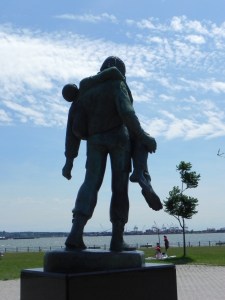
This holiday is all about remembering.  Unfortunately remembering our war dead hasn’t done much to prevent wars.  If they’re not the acting out of our fears (as every belligerence since World War II seems to have been) then what are they?  Phobias of communists, terrorists, and assorted “others” lead us into mass killing, often for economic gain.  What if we were to put those vast military resources toward fighting a deadly disease?  What if we had a national will to take care of our people rather than to enrich ourselves?  Wouldn’t we be all the richer for it?  Instead we face more needless deaths, more people to remember on the next Memorial Day.  Maybe the sun will be shining then.

Those of us non-essential workers who’ve nevertheless been working remotely these past two-and-a-half months have a day off today.  Many will want to gather, but we know it’s not really a good idea.  We know the way infection works.  We have no battle plan against COVID-19.  We’re chomping at the bit for economic vitality, forgetting that those who are on the front lines are continuing to get sick.  It’s strange to have a holiday under such circumstances.  The warmer weather invites us outdoors while the plague drives us inside.  There’s a place for bravery, but when bravado masks itself with foolishness there will be a price to pay.  It’s Memorial Day and we can honor our dead by not rushing to join them with unreflective premature relaxing of safety measures.  Let’s stay safe this holiday by remembering what we’ve learned.


Really Celebrate

It’s a dilemma.  How do we celebrate Mother’s Day during a lockdown?  The COVID-19 pandemic has changed a lot of things.  Given that it was snowing around here yesterday (not to be blamed on the virus), even May doesn’t seem very cooperative this year.  On Friday night I made an emergency trip to Target for essentials.  One of my ulterior motives was to purchase a Mother’s Day card for my wife.  Given the lack of social distancing at the card rack, I wasn’t the only one who had this in mind.  The remainder of the store had shelves of daily necessities picked clean.  How to celebrate moms during a pandemic?  I guess by trying to stay alive.

Those of us far from childhood homes can’t visit our mothers.  Even if we could we couldn’t take them out for dinner.  If we send flowers we can’t send gloves to protect their fingers—the stores are out of those.  If we send flowers to plant we have to send plastic to cover them too, having had four nights with freeze warnings in a row.  Talking to my Mom yesterday she recollected the year that it snowed on Memorial Day.  I shouldn’t complain.  Mom would rather I didn’t.

Perhaps the best we can do for Mother’s Day is to start treating all women better.  One commemorative day a year doesn’t make up for a lifetime of second-class citizenship.  Our mothers are the reason all of us are here.  Isn’t that reason enough to see we’re all part of a single family?  Women put up with a lot to take care of us.  Even so we deny them an amendment granting them equal rights.  Politicians are saying “Happy Mother’s Day” even as they continue to withhold basic human rights from women.  We could celebrate Mother’s Day by putting our sentiments into action, transforming daily life into equal pay and equal protections.

There’s a pandemic outside.  There’s some snow out there too.  But there’s a warmth inside and for that we have our mothers to thank.  If we really mean it when we send our mothers cards and flowers, if we really mean it when we call, if we really mean it when we give her a hug, we’ll show it by our actions every other day of the year.  We need to be sincere when we say it, or don’t say it at all.  Happy Mother’s Day!


Cross Quarters

Happy Beltane!  We could use a holiday right about now.  For those of us who are under the spell of intelligent horror, May Day brings The Wicker Man to mind.  Not the remake, please!  I first saw it about a decade ago—my career history has made watching horror an obvious coping mechanism—and I was struck by the comments that the film was a cautionary tale.  One of the problems with being raised as a Fundamentalist is that you tend to take things literally and I supposed that the cautionary tale was against Celtic paganism.  The Wicker Man is about the celebration of Beltane on a remote Hebridean island, and it was only as I watched it a few more times and reflected on it that I came to realize the caution was about those who took their religion too seriously, pagan or not.

Photo credit: Stub Mandrel, via Wikimedia Commons

Lord Summerisle, after all, admits that his religion was more or less an invention of his grandfather.  More of a revival than an invention, actually.  In other words, he knows where the religion came from, and he has a scientific understanding of the soil and how and why crops fail.  That doesn’t prevent him from presiding over May Day celebrations to bring fertility back to the land.  The people, as often is the case with religions, simply follow the leader.  Of course, Beltane is a cross-quarter day welcoming spring.  It is celebrated in Celtic countries with bon fires and obviously those fires are to encourage the returning of the sun after a long winter.  The days are lengthening now.  I can go jogging before work.  The light is returning.

Capitalism, which is showing its weak side now, doesn’t approve of too many holidays.  Like Scrooge they think days off with pay are picking the pockets of the rich.  The government stimulus packages show just how deeply that is believed in this country.  Celts we are not.  So as I watch the wheel of the year slowly turning, and see politicians aching to remove restrictions so that money can flow along with the virus, I think that cautionary tales are not misplaced.  The love of money can be a religion just as surely as the devotion to a fictional deity.  Herein is the beauty of The Wicker Man.  Beltane is upon us.  As we broadcast our May Day it could be wise to think of the lessons we might learn, if only we’d consider classic cautionary tales.


Thoroughly Earth Day

It’s difficult to say, since I don’t get outside much, but reports have come in that the earth is healing itself while we’ve been sequestered.  Rivers usually polluted have begun to run clean.  Smoke-smuggered skies have turned blue.  Animals have begun to explore human-made environments abandoned while we all shelter in place.  Could there be a more poignant statement about the reason for Earth Day?  If our worst behaviors are ceased even for a little while, the damage we do to our home planet begins to come undone.  To me that has been the most profound hope brought to light by this crisis.  Living more simply might be a virtue after all.

From NASA’s photo library

Going without can be difficult.  Every time the fleeting thought comes that I need to run to the store for this or that—and I’ve been taught that shopping is normal and natural and good for everyone—I have to stop and weigh the options.  Do I really need whatever it is?  Can I do without it?  Even bank accounts, for those fortunate enough to be able to keep working, have started to recover.  The frenzy we normally live under—earning money to keep buying things we don’t really need—is suddenly cast into perspective.  Times like this Earth Day I think of Henry David Thoreau.  Sometimes we like to laugh about our American saints, but his desire to live more simply does have appeal.  

Like many students who find themselves in Boston, I once made pilgrimage to Walden Pond.  The day I went there with some friends I believe we were the only car in the lot.  We lived simply in the way that grad students do, being under the sword of educational debts and loans, but we had come to see the place where nature had called one harried philosopher to solitude.  I knew, even as I stood by the marker of the cabin site that we couldn’t all live like this and still enjoy the benefits of medical science and technology (such as it was in the 1980s).  Perhaps it is possible, however, to reflect on better ways of living now that we’ve all been placed in a kind of enforced solitude.  I’ve begun reading more poetry.  I’ve started painting again.  Life has, in the midst of a pandemic, begun to feel more healthy.  It’s Earth Day.  Normally I’d be looking for an opportunity to join a community cleaning event, or even to go out and pick up trash on my own.  Since these are ill-advised, I stand before my bookshelf and reach for Walden instead.


Peaceful Lessons

We are all, I think, looking for hope.  Probably due to the way I was raised, I often seek signs.  There’s no way to know if said signs are mere coincidences or the more intense variety known as synchronicities, yet we have a hopeful sign here at home.  On our front porch we have some plant hangers.  Spring crept up on us this year and we haven’t got around to putting any pansies in them yet.  The other day when I was stepping out to get the mail, I noticed feathers in one of them and feared there’d been a bird-related accident there.  As I took a step toward the planter, the head of a mourning dove popped up.  She blinked at me curiously, but didn’t fly away.  I knew then that she had built a nest in the as-yet unused planter and she was sitting on her eggs.

Monday was fiercely windy around here.  And rainy.  I wondered how any birds could fly in such weather.  A mourning dove flew up—perhaps one of the pair on our porch—and landed on the electric wire leading to our house.  The wire was swaying and bucking so furiously that the dove constantly had to shift and fluff and flutter just to stay in place.  The poor bird was in constant motion.  Then it showed a sign of animal intelligence.  There’s a much larger wire that runs down our street, from which other houses are supplied.  It’s more stable in the wind due to its girth.  The dove flew up to that wire instead.  There it was able to perch without having to constantly adjust itself to the gusts.  Peaceful and intelligent.  That’s what the world needs.  I have hope.

The dove has long been a sign of peace.  It’s understood that way in the Bible.  It was the dove that brought an olive twig to Noah, indicating that although all he could see was water there was, somewhere, dry land.  These days we need to be reminded that although it seems that the storm will last forever, even hurricanes eventually exhaust themselves.  The dove, clearly not happy about the horrendous wind buffeting it on that wire, nevertheless persisted in a kind of stoic optimism that things are as they should be.  There is great wisdom in the natural world.  If we can get to a window we can see it playing out before our very eyes.  Now when I step out the door, I glance at the dove, and she looks back at me.  We wink at each other.  She doesn’t fly away, for she understands.  She has a wisdom to which we all should aspire.


Cancelled Easter

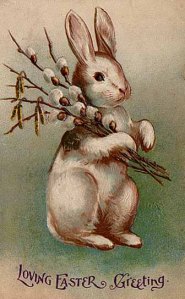
The year they cancelled Easter.  Well, not exactly.  Perhaps I’m merely a product of the commercialization of my time, but my thoughts go back to the Grinch.  “It came without boxes,” he said, “it came without bags” (and any more might be copyright infringement).  You get the point—holidays aren’t reliant upon their trappings.  Can Easter come without colorful eggs?  Without baskets and bonnets?  Without Peeps and chocolates?  Yes, it can.  We’ve taken another holiday with religious origins and associated it with what you can buy.  I know it’s more than that for some people.  It’s singing stirring hymns (all of which can be found on YouTube), and dressing nice (which can still be  done at home), but mainly I think it’s the sense of togetherness that’s missing.  The freedom of bursting from our personal tombs in which we’ve been stuck for three weeks.

Around here snow was falling on Good Friday.  A friend told me her company decided since everyone was working remotely they would give them an extra holiday that day.  Others of us slogged on as usual, for unlike Christmas, the Easter/Passover complex is not about getting days off work.  These are, I guess, working class holidays.  Our capitalistic outlook wants us to spend money, though, on holidays.  Halloween (on which I foresee a plethora of plague doctor costumes) has become almost as lucrative as Christmas.  The spring holidays—St. Valentine’s, St. Patrick’s, and Easter—encourage spending as well.  Can we not get to the heart of a holiday without pulling out our wallets?  Spring holidays are all about the return of life after winter.  It was snowing, but I could hear lawnmowers in the distance.

With capitalism growing old and sluggish, the next spending holiday isn’t until Mother’s Day, yet another spring celebration associated with flowers and life.  My wife has been saying that what she misses is being out to see things coming back to life in spring.  Some of the trees are putting on quite a show already.  Magnolias and dogwoods have started to scatter their petals with the snowflakes.  Our daffodils have been blooming since March.  The forsythias are already going green.  Life is returning.  That’s what Easter, and in its own way Passover, is all about.  Life after imprisonment—freedom.  Liberation.  We have to put them off this year, but they’re all movable feasts.  We keep quietly apart in the hopes that life really will return after disease and death.  And it will come regardless.  It always does.


Bunny or No?

Since we’re in the midst of a smaller holiday season (capitalistic societies can only get away with one major holiday season because the workers must work) many people are wondering whether they should go to church for Easter tomorrow.  I’ll confess I woke up from a nightmare this morning where I accidentally forgot about COVID-19 and went to church.  I stepped inside and the building was full.  I tried to find an empty pew to socially distance myself from all but the Divine, and there was no room.  I felt infected as others started to cough around me.  In real life I’d just read from the World Health Organization’s situation report (number 80, located here, in case you want to see) that we’ve just reached day 100 since WHO received its first notification of this new disease.  The report has guidance for those who feel compelled to gather for religious services.  It makes for very interesting reading.

WHO, like certain political parties, knows that people will listen to their religious leaders rather than reason.  (And still our universities cut positions in their religion departments since, apparently, it is best not to know about such things.)  Recognizing that a secular, science-based organization simply can’t compete, WHO urges religious leaders to spread the word about evidence-based responses to the outbreak.  Don’t gather large Easter-day crowds (they also mention Passover and Ramadan), but, interestingly, do keep the services going.  WHO recognizes the psychological (you can’t say “spiritual”) value of religious belief.  It gives people hope and comfort.  It keeps them going in difficult times.  Call it mental health, but the World Health Organization has wellbeing right there in its title.

Photo credit: ItsLassieTime, via Wikimedia Commons

Ironically, the same day I saw an email from the other acronym in my life, SBL (the Society of Biblical Literature).  They were releasing their annual report showing the dismal job market figures for the discipline over the last year.  These jobs are fading and although WHO recognizes billions of people are motivated by religion our smartest institutions are shifting their money away from understanding it.  The COVID-19 outbreak puts us in this strange place where disjunctures become focal points.  If you look at a field of uniform gray long enough you’ll stop seeing anything at all.  You need contrast for vision to work.  WHO recognizes that religious observance constitutes a major challenge for the effort to keep people isolated.  Universities now in isolation, continue to see no reason to study this.  I’m waiting to awake from this nightmare.


Holiday Complex

Now that we’re in the midst of a complex of Judeo-Christian holidays (Passover, Maundy Thursday, Good Friday, Easter, as well as other spring rites), I’ve been thinking of obligations.  I’ve had people introduce themselves to me as “Chri-easters.”  This isn’t a new form of religion, but rather a way of indicating that they attend services on Christmas and Easter only.  For others of us it’s never been so easy.  I was raised with the stern belief that Sundays in church were a matter of absolute obligation.  Serious illness was the only reason to miss.  If you were traveling (which was rare for us, being not terribly affluent), you found a local church to attend.  Never mind that you’ll look like strangers and won’t know how it’s done (unless you’re in one of the “liturgical” denominations, where variations are minimal).  Every Sunday was an obligation.

The minister at our church has been offering virtual holy week services.  The idea haunts me.  You see, back in Nashotah House days the sternness of days of obligation was palpable.  Yes, you had to attend chapel twice daily, but there were still days of obligation.  At this time of year we’d have had long rehearsals already for “the Great Three Days.”  Forsaking family and fellowship, we’d be forced to be together for long hours while the dreary events of two millennia ago were replayed.  Of course they were reinterpreted as well.  Made more Episcopalian—even a crucifixion should be done properly and in good order.  Knowing they had to get to their own churches on Sunday, students were kept up until about two a.m. for the Great Vigil and First Mass of Easter.  Obligation, not love, drove all this.

Coronavirus has us separated, of course.  Some of us are daily seeking coping techniques to help us get through a crisis that throws off schedules and sets new priorities.  To have someone suggest in the midst of all this that we could “come to church” (virtually) transports me to those fearful days of obligation.  As a teen I sought them out.  I’d ask to be driven to a different town on Good Friday so that I could spend it in church, hoping to be in connection with the tragic events.  I’d curse the sunshine when I stepped back out after three p.m., if it was shining.  This was supposed to be a dark and dreary day.  Nature, however, had its own ideas.  Spring was in full swing.  It was time to be thinking about life, not death.


Green Dilemma

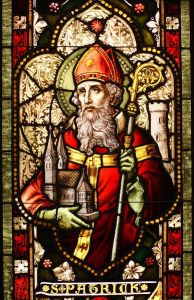
It’s a dilemma.  I face it every year.  I don’t have green to wear and it’s St. Patrick’s Day.  For your average run-of-the-mill citizen, this might not be an issue—but I do have an Irish heritage (in part), and so it’s a heartfelt concern.  The reason I don’t have green has less to do with fashion (consider the source!) than with my clothing purchasing practices.  First of all, I like to make my clothes last.  Fabrics can be quite durable.  They aren’t mechanical and therefore don’t break down often.  I don’t live a rough-and-tumble life, so tears aren’t really a problem.  The end result is that I keep my clothes as long as they’re functional.  When they begin to wear out I go to the store and examine the clearance racks until I find something in my size.  That means color selection is often a matter of very limited options.

Once in a great while I have landed something green.  I still remember a green shirt I had in college.  It served me well for more than four St. Patrick’s Days.  It long ago succumbed to overuse, however, because I wore it on other days as well.  And let’s face it, when I make one of those infrequent trips to the clothiers’ shops, this particular holiday’s not on my mind.  Unless, of course, I go shopping in March.  Back when I lived in Boston it was easy to get your Irish on.  I bought a bright green silky (I don’t know if it was real silk) tie with white shamrocks on it.  It was probably down at Faneuil Hall.  It had been a bit outlandish to wear to work in New York City, though.  Indeed, at work staid dress was by far the most common code.  Consequently it hung unused in my closet for years.

When we moved a couple summers back, I noticed my green tie had faded to bronze.  I thought it went the other way around.  In any case, my last truly green clothing article was no longer green.  Yes, it still has shamrocks, but I’d feel even more ridiculous trying to rock a bronze tie and pass myself off as Irish.  It won’t even pass for gold.  Of course, I work from home.  I’ve practiced social distancing long before it was a trend or a government mandate, whichever it is.  The only people to see my lack of green would be my wife and daughter, and perhaps a Jehovah’s Witnesses that might stop by.  But still, even minor celebrations are anticipated at times such as this.  Although I won’t be going out today I’ll probably be spending some time in my closet and reflecting on the true heritage of my Irish forebears.

Perhaps St. Pat shops like I do?


Half of Us

Today is International Women’s Day.  We need to pause a moment and think.  We can’t change the past, but we can improve on it.  I think it’s fair to say that historically—before the Enlightenment anyway—domestic arrangements were the product of evolution rather than intention.  Like religion, however, domestic arrangements have a difficult time keeping up with change in real time.  By the time healthcare improved and women’s chances of surviving childbearing grew, men had become set in their ways.  Even now we still have trouble getting a female on a presidential ballot in “the most advanced” country in the world.  The week before International Women’s Day Elizabeth Warren stepped out of the race.  The rational world is so desperate to get the anomaly out of the White House that it hasn’t really dawned what a lost opportunity this was.

Although for most of history their roles have been hidden, half the advances of the human race belong fairly to women.  Males often have difficulty admitting that they require help, or had any assistance getting to where they are.  In fact, though, we know they had mothers and those mothers helped make them who they were.  Many of them had spouses who kept the situation stable enough that they could go on and follow their preoccupations.  History, unfortunately, would record only the names of the men.  In the western world this was often reflected in the changing of names during marriage.  Domesticity comes with a price, but it can be balanced out.

Capitalism, it seems to me, rewards the greedy.  Instead of evening things out so that those who don’t have the same opportunities can be cared for, our economic system rewards selfishness.  I often wonder if women would’ve been so suppressed had a more humane measure of human worth been adopted.  When I think of billionaires whose names I’ve never heard of before, I always mentally add, “they wouldn’t be billionaires if the rest of us refused to play the game.”  It’s only because we agree to an arbitrary and artificial valuing system that we allow the obscure to “own” far more than the rest of us.  Women, it seems to me, would know the realities of this way better than most men do.  What if the value system we shared measured worth in having had a mother?  It’s something we all share.  Yet in this nation we still haven’t passed the Equal Rights Amendment.  The time has come to ask ourselves what’s really important.  Today should be the answer.


Leaping Years

Maybe it’s just me, but February seems long this year.  Wait, it’s leap year!  But that doesn’t explain it all.  Today may be a gimme—another day in what has already been a long year—but the calendrical weirdness began with the dates of our moveable feasts last year.  Thanksgiving fell as late as it possibly could—November 28.  Since it is the fourth Thursday of the month, and the latest fourth of any day is the 28th, there can never be less time between Thanksgiving and Christmas than there was in 2019.  For those of us who measure time by the days off work we’re allotted, the holiday season felt rushed.  And since New Year’s Day fell on a Wednesday, HR departments all over were scrambling to figure out how to make it a long weekend.  Wednesday is the Easter Island of holiday dates—too far from land to reach any second day.

By the time we could kick up our heels for a weekend it was already two work days into the new decade and business really began in earnest only on January 6.  Epiphany, according to those who follow circumcision-style New Year.  January ended on a Friday, and had this not been a leap year, so would’ve February.  A month with 28 days, after all, is a proper lunar-based one.  The other months were lengthened to stoke the egos of emperors and others who thought they were lords of time as well as space.  But this year we’ve ended up with an extra day of February.  I want to use it well, and as I look at my list of things to get done on a weekend (generally far longer than my list of things that I accomplish in a work week), I begin to think maybe this should be a holiday (and I don’t mean that sexist Sadie Hawkins tradition).  But it’s already a weekend, so HR’s off the hook.  This time.

We could use a few more holidays.  Every January I look at the sparse allocations of days off for the coming year.  There are normally ten of them, spread unevenly across twelve months.  There are long spells when, if you need a mental break from work you have to cash in precious vacation days.  Leap years make the total number of days even longer.  You get an extra work day but not an extra holiday.  Our lives revolve around our special occasions.  Yes, there’s not really a “holy day” to correspond to the necessary intercalary day to help us keep up with the sun.  Still, it feels like a missed opportunity to me.


Caesar Salary

Juxtapositions interest me.  Washington’s Birthday and taxes have become connected in my mind.  Until the present administration I had no serious concerns about taxes; if people are going to live together they need to pool their resources.  If I had a choice now no Republican would be able to lay a dirty finger on my hard-earned contributions, but I know we all use the roads and bridges.  Some of the money actually goes to useful things.  I wonder what George would’ve thought of it all, though.  His birthday is a holiday, but employers have sent out their tax forms and so it’s become a kind of day of reckoning for me.  I used to be able to calculate roughly the right amount to be withheld so that I’d get a small return each year.  Tax laws being what they are, however, that has changed rather drastically.  I leave February feeling poor and cold.  And I don’t approve of how they spend most of our money.  Still, a day off work is a fine time to visit my accountant.

The mind of the Human Resources denizen is an odd place of rules devised by no god.  I never know from year to year whether “Presidents’ Day” will be a day off or not.  I remember standing on a wintery street corner waiting for the 114X into New York because the 117 didn’t run on federal holidays.  HR had decided that year that we wouldn’t have this day off.  Like the government, Human Resources has the ability to implement laws that make no sense.  I do appreciate the fact, however, that someone understands how medical insurance works.  For that you need a specialist.  Another strange juxtaposition.  In any case I’ll visit my accountant today and it may be the only time I’ll be sweating in February.

Adulting, some of the young say, isn’t much fun.  It has certainly become a lot harder to understand.  Our government complicates things to the point that you daren’t do your own taxes.  A visit to the doctor may or may not cost you.  And don’t even bother to try and find out where all that money you send to Washington’s going.  I just hope that when I get on the interstate that it’s maintained.  And that they keep an eye on the bridges.  If they don’t I won’t be able to get to the accountant’s office to be able to pay more taxes.  On Washington’s Birthday it’s in the best interest of the powers that be to keep the roads open so that we can send them our unholy tithes.  Strange juxtaposition, it is, between Washington and Lincoln.

Render unto Caesar


The Tube

I’m sitting in a medical facility waiting room.  I’m not afraid of dying, but medical stuff terrifies me.  To calm me down, inane daytime television is on.  I may be one of the very few who brings a book to such places, but I can’t read with the insipid chatter going on.  This time, since I’m waiting for someone else, I brought my laptop.  Nevertheless, I can’t help but think of Ray Bradbury at times like this.  Many people think Fahrenheit 451 is about burning books.  Bradbury did write about burning books in his short stories, and it does happen in Fahrenheit 451, but that’s not what the book is about.  In interviews he said that he intended, as is pretty obvious from a straightforward reading of the text, to warn about the invasive nature of television.  It was, metaphorically, burning books.

Waiting rooms always bring that to mind.  Not only that, but it’s Valentine’s Day and all the talk shows are going on about how it’s “the day of love” (every day should be).  It’s not a day off work; I had to cash in a sick day to be here.  The word “holiday” keeps cropping up on the television, to which I have my back. Ever since leaving Nashotah House I haven’t watched television.  On our recent move to Pennsylvania our cable company didn’t offer a non-television option.  It was unthinkable.  We pay for something we don’t use.  Burning books.  I don’t have time for television.  I see shows that have proven their worth via DVD well after they’re off the air.  And that only when I can read or write no more in a day.  I guess I’m a Bradbury disciple.

Like any disciple, I have changed certain teachings of my leader.  Bradburyism is a religion objecting to ubiquitous television.  At the same time, I grew up watching the tube, and to this day I’ll stop just about anything to watch DVDs of The Twilight Zone.  Rod Serling, however, selected stories and teleplays that were well written.  This was a literate show.  Besides, my daily life often feels like the Twilight Zone.  Like Valentine’s Day in a waiting room.  The book beside me remains unopened.  It’s the same when I take the car to the garage, or go in for an oil change.  You can’t escape it, even though everyone else is paying attention to their phones.  How long until we learn to switch off?  Of course, medical waiting rooms are the places where I may need brainless distraction the most.

Photo credit: Smithsonian Institution


Stickiness

As a concept, it’s what web designers call “sticky.”  Valentine’s Day, I mean.  And “sticky” has nothing to do with the expected chocolates or anything physical at all.  Stickiness, as I hear it used in these antiseptic clean-room days, refers to text, or an object, that stays in the same place as you change web pages.  Now, I’m no techie, in fact I’m probably a neo-Luddite, but this kind of stickiness is useful in thinking about St. Valentine’s Day.  We hardly need a reminder that humans are sexual beings.  Biology does quite well in that department, thank you.  Every year around this time, however, when the weather has been bleak for weeks on end, Valentine’s Day rolls in to give us hope.  I’ve noticed this as I’ve been out jogging.  The past couple of weeks the birds have been singing.  Me, I’ve mostly been shivering indoors as yet more cold rain falls.

Every year, I suspect (I haven’t stopped to look) I write about St. Valentine’s Day.  Valentine was an obscure saint associated, in the popular mind, with something saints shunned.  Such an embarrassment is this sexy saint that he was never mentioned in the liturgy of February 14th at Nashotah House in the days I was there.  (Given that most of the student body was male, there may have been a wisdom in that, but that’s a story for another time.)  Religions, as I used to tell my students in later settings, all have something to say about sex.  The two ideas, like monsters and religion, are tied closely together.  Scholars tend to blush rather than explore this.

There are so many things going on in the world that I could write about.  There are new scholarly developments every day.  Still, I keep coming back to this minor holiday.  Well, it’s not actually minor in the realm of economics.  Anything to get people to spend money in the middle of February!  Valentine’s Day is the embarrassing child of the celibate church.  Without somebody named Valentine, who may or may not have been martyred,  we wouldn’t have this uneasy reminder of winter’s impending end.  Instead of embracing him, however, many branches of Christianity second him to punch-out cards sold to school kids as teachers remind them that everyone gets a valentine.  What a sticky concept!  I’d been intending to write something about the state of the world.  I guess that can wait for another day.  Right now, as the sun begins to awake, I’ll sit hear and listen for the birds to start their sticky springtime song.


Symmetry Synergy

Symmetry.  It’s pleasing to the eye.  And significant dates are often the basis for holidays.  Today is one of those extremely rare palindrome days.  As my wife pointed out to me 02-02-2020 is a configuration that hasn’t occurred since 01-01-1010, or over a millennium ago.  The next one will be after we’re all long gone, on 03-03-3030.  Not only that, but today is part of a holiday cluster.  It’s Groundhog Day.  Yesterday was Imbolc, the Celtic cross-quarter day initiating spring.  Imbolc is also known as St. Brigid’s Day.  Today is called Candlemas, by liturgical Christian tradition.  We are living through a truly unique day.  Every day, I suppose, is unique, but the spirits are afoot today.

I’ve written about Groundhog Day before.  With its prognosticating rodent, it tells us if spring is on the way or if it’s going to be delayed.  Imbolc falls about halfway between the winter solstice and the vernal equinox.  In Celtic cultures this was a cross-quarter day, a time of uncanniness.  Spirits cross between worlds on days such as this.  In days of yore, it was also the feast of the goddess Brigid.  Christianity has always been an opportunistic religion.  When missionaries to places like Scotland and Ireland couldn’t convince the locals to give up their deities, they made saints of them.  St. Brigid is a fabrication of a Celtic goddess, not an actual saint.  For similar reasons in the quarter-year counterpart to Imbolic, Samhain, the church moved All Saints Day to November 1 and All Souls to November 2.  The Celts continued using the trappings of their cross-quarter day and eventually gave us Halloween.  Imbolc never caught on in quite the same way.

The early Christians didn’t know when Jesus was born.  Christmas was established on December 25 because of all of the solstice celebrations at that time of year.  All that pagan jubilation had to be subsumed under a more solemn occasion.  Building on that mythical date, New Year’s Day was January 1 because that’s when Jesus would have been circumcised, eight days later.  Thirty-three days after a male child’s circumcision, a woman was to make an offering for purification in the temple.  According to Luke, Mary did this, and 33 days after January 1, in keeping with our fictional date-keeping, is February 2.  A tradition grew that Christians would bring their candles to church to be blessed that day (Jesus being the light of the world).  This blessing of candles was named Candlemas.  I first encountered it at Nashotah House, where it was still celebrated even as a sleepy woodchuck in Punxsutawney was rubbing his eyes.  Not exactly a palindrome, but there’s a remarkable symmetry to it, no?