Winter Rebirth

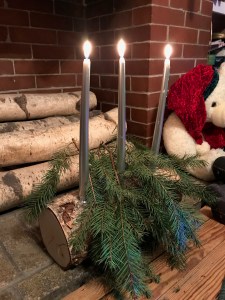
It seems like 2020 has already had many longest nights.  The Trump administration has hurt so many people so badly (many of them his own supporters) that this feels like four years of night finally beginning to experience dawn.  It is finally the solstice!  This ancient seasonal holiday, coopted by Christianity for its own purposes, retains great symbolic value.  The story of Jesus’ birth is about light coming into the world.  So are the myths behind Saturnalia and Yule and even Hanukkah.  We tend to want to view things literally when the true meaning comes in the form of symbols that strike at the very heart of what it means to be human.  We fear the dark, and we’ve been living in it for so long now that perhaps the light hurts our eyes.

A friend pointed out the Winter Solstice Fest, put on by Shift.  It streamed (I almost wrote “aired”) over the past weekend.  Involving many indigenous, and even some new age practitioners, it was a celebration of light’s return.  Although I couldn’t watch all of it—weekends are so necessary when work becomes the only reality of five days per week—but what I did see inspired me.  The chauvinism of one religion asserting its superiority over other explorations of spirituality can contribute to the darkness.  When we take symbols literally we’re capable of great damage.  Being inclusive forces us to recognize that we are all seeking light while learning to walk in the dark.

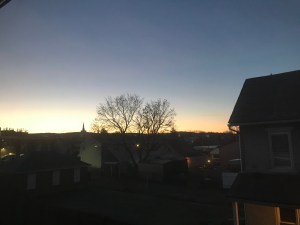
One of the reasons I watch horror is because, on the balance, it is dark half the time.  Perhaps because I can’t seem to sleep until sunrise any more, I spend quite a lot of even summertime in the dark.  Since there’s much that can only be done in the light of day, I explore how darkness might contribute to our spiritual growth.  Although horror often receives a naughty reputation, it too is about exploring the dark for meaning.  Today, at this latitude, we’ll have only nine hours and sixteen minutes of light.  It’s easy to believe illumination might never return.  Humans have created rituals to assure ourselves, to encourage the courses of nature to continue as they have for countless eons before we ever evolved.  While we’re in the darkness, perhaps we should consider making friends with it.  It’s quiet.  And shy.  And if we don’t learn to live with it, half of our time may never blossom.


Bethlehem’s Grinch

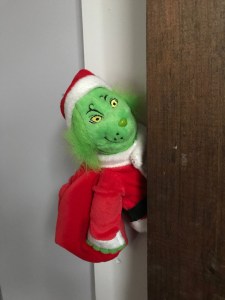
We’ve got a Grinch around Bethlehem, according to Nextdoor.com.  A guy driving around stealing boxes from porches, in broad daylight.  According to home security cams, he wears a mask (which is more than many Republicans do).  The understandable outrage in the comments is at least partially justified.  A Covid-ridden populace is reluctant to go into shops, and shipping is easy.  You pay for a gift for someone you love and a stranger steals it with impunity.  There is anger there.  It’s also troubling to me, however, how people react.

One commenter claimed this guy was stealing from working people instead of getting a job.  Anger often speaks rashly, I know, but I had to exegete this a bit.  Without knowing this masked man, how are we to judge his employment status?  I mean people like Donald Trump have made entire careers of cheating other people for their own personal gain.  Isn’t this the way of capitalism?  And perhaps this man has a job and thieving is simply moonlighting.  Or, more seriously, perhaps he had a job that was taken away when the Republican-controlled White House and Senate refused to do anything about the pandemic and can’t even agree on a deal to help working people out?  Who’s the real Grinch here?  Theft can take many forms, some of them perfectly legal.

This holiday news, of course, makes people paranoid.  With many vendors trying to compete with Amazon’s (generally) first-class delivery system, packages are left on porches past bedtime.  Even without a Grinch about, that makes me nervous.  Just last night an Amazon package listed as “delivered” didn’t show up.  I found myself on the customer service chat pouring out my soul to a stranger halfway across the world.  Knowing my carefully chosen gift might be stolen to be resold by a faceless thief made for an anxious evening.  Amazon assured me it would be replaced if it really wasn’t delivered after all.

So I’d be upset too, if my orders were actually stolen.  Some people have medications or other necessities shipped, regardless of holiday seasons.  Stealing boxes is wrong.  It may not be the only thing wrong, however.  Isn’t a system that forces people to desperation inherently wrong?  A system that makes getting ahead almost impossible for most people so that a very few can control nearly all the wealth is hardly one that doesn’t involve theft.  Those stolen from are rightfully upset.  But who is really doing the stealing in the first place?


Turning Point

As the “Keep Christ in Christmas” crowd gears up for another Yuletide season, its capitalistic brother wonders about how good Christians will shop during a pandemic.  We’re not great materialists in my house, and our holiday spending tends to be modest.  Even so, the stocking stuffer is the kind of thing you find while browsing in stores.  I don’t feel comfortable indoors with strangers now.  Apart from groceries and hardware I haven’t been in any kind of store for at least a month now.  How to get ideas for those little, often inconsequential gifts that are demanded by homage to Saint Nicholas?  The holiday season is a wonderful amalgamation of differing traditions that should, in a perfect world, suggest openness to all and inclusivity.  At least this year we have that to look forward to.

Inclusivity is a gift worth giving.  Many of us are weary of the privileged “angry white man” who has held control of just about everything for the past several centuries but is still never satisfied.  The holidays around the winter solstice—itself the marker of days finally beginning to lengthen again—should be a symbol of the many traditions that make Christmas what it is.  There is no one “pure” idea of what this season represents (beyond shopping) because people all over have traditionally welcomed the return of light after many days of darkness.  Sometimes that darkness of exclusivity can last for years.  Now that we are beginning to spy a sliver a light on a distant horizon perhaps we can see enough to correct the error of our ways.  Perhaps.

That still doesn’t solve the dilemma of pestilence-filled stores where people want to huddle inside because it’s cold out there.  I can’t seem to recall where they hung the stockings in the manger, but surely they must’ve been there.  It’s how to fill them that’s the issue.  Our world has become so virtual.  How do you put streaming into a sock?  How do you stuff that cuddly subscription service into hosiery?  In a pandemic we’re reaping the fruits planted by a technologically-based society.  The art of browsing hasn’t been electronically replicated.  It’s the moment of inspiration in that curiosity shop that seems to be missing this year.  Most of us, I suppose, would be pleased to find a vaccine in our carefully hung stocking.  At least a government that takes the threat seriously will be something to anticipate.  Just a little longer, and the light will be coming.


Bethlehem

Now that the holiday season is upon us, I guess it’s okay to post about the upcoming.  It’s actually pretty hard to avoid, living so near Bethlehem.  While Easton claims the first Christmas tree in America, Bethlehem was settled on Christmas Eve and named accordingly by the Moravians.  It’s a tourist destination for Christmas aficionados everywhere, and, as my wife quotes about 2020, “we could use a little Christmas.”  So we headed to the Christkindlmarkt over the weekend.  Apart from an abundance of consonants, Christkindlmarkt is a chance for vendors to bring their wares to where tightly shut pandemic wallets are willing to open up a bit.  This year, however, the “markt” was completely outdoors rather than under the usual four large tents with heaters running.

It was an enjoyable morning out, with temperatures near sixty—certainly not something you can count on for late November.  There were fewer vendors here for a variety of reasons.  You get a boost, for example, by getting people gathered together.  Our herd instincts kick in.  Seeing others spending, we decide to take our chances.  Outside the great rusting behemoth of Bethlehem Steel’s famed stacks stands sentinel.  This year, however, socially distanced tents and booths meant having to walk and stay back while others browsed, all while wearing masks so that smiles could not be seen.  Gathering without gathering.  With no interest in leading a charge against the disease on a national level, we’re all left to muddle through.

Several of the vendors had novelties portraying the year 2020 as the disaster that it’s been.  Instead of ending it with wishes for national peace, the incumbent is trying useless lawsuits to prevent the voices of voters from being heard.  Stirring up his followers to protest against frauds that never happened, while having hundreds of lawsuits awaiting outside his own door as his actual deeds have been examined seriously for the first time.  Bethlehem reminds us that peace and hope ought to be in the air at this time of year.  Thinking of others rather than ourselves.  Do we see that being modeled by 45 and his ilk?  Instead I’m standing here outside where there used to be a warm gathering tent.  A place where we each donate our body heat to help keep everyone warm.  Giving, even as the Republican-controlled senate withholds any stimulus package they think is too generous.  Yes, we could use a little Christmas right about now.


Money Days

Those of us who live in caves (figuratively) have trouble filling all this in.  Not a great fan of capitalism, I find “Black Friday” a troubling add-on to the holiday schedule.  Now I’ve lost track of all the expanding special days: Small Business Saturday, Cyber Monday, Giving Tuesday.  Must we celebrate capitalism so much?  I have no problem with non-Christian holidays, but when money becomes the sole basis for special days I have to wonder.  Mammon is a deity of which we’d been warned a couple of millennia ago.  The real irony is that it’s the very religion that posted that warning that now seems most closely related to the capitalistic system that perpetuates its worship.  It wouldn’t be such an issue except that the religion that has bought into the system so readily is the one that is putatively based on its condemnation.

Irony is something for which historians are always on the lookout.  Perhaps this is especially so among historians of religion.  Religion has come to denote a codification of our highest ideals and aspirations.  When did money attained such spiritual status?  It seems that Christianity was the vehicle.  Although it’s most obvious in American politics, the relationship goes back to the whole colonial enterprise.  Once Christianity became an imperial religion under Constantine, its focus began to shift.  Even those splinter groups that started off with higher ideals soon came under the overarching umbrella of the capitalistic system sprung from the teachings of a poor carpenter from Nazareth.  And so we find ourselves amid a creeping array of money-based holidays that provide the secular answer to Advent.

Of course, Advent itself became a season of anticipating the commercialized holiday of Christmas.  And here as the calendar year winds down the financial year hopes for a shot in the arm because economy is the doctrine of this new religious thinking.  And the irony is that the system is set up so those who already have too much get more while those who don’t have enough end up with even less.  Sounds biblical, no?  Ever since my ouster from academia, I’ve had to cash in vacation days to make myself a little semester break.  A body gets used to a certain schedule, and those rhythms are difficult to shake.  As we work our way through pandemic-laced spending holidays I’ve got my eyes on a bit of time off from my small part in supporting this all-consuming machine.  


Rest and Be Thankful

Many years on Thanksgiving I find myself distressed.  Don’t get me wrong, I’m thankful for all the good things in my life—and they are more than I regularly stop to count—but life has a way of tossing reality bombs into the mix.  This year, though, there is much for which I’m feeling particularly grateful.  Family and friends foremost.  Fairly good health and a day or two off work.  These are all wonderful.  This year gave us a couple more great gifts: the rejection of a leader who always and only thought of himself and convinced millions that he cared for their interests and beliefs.  A “leader” who refused to acknowledge defeat but just this week began a transition that should’ve begun nearly three weeks ago.  Many are inexpressibly thankful for this.

Although on a much smaller scale, I’m thankful for Nightmares.  Nightmares with the Bible, that is.  Although it’s expensive (I’ll thankfully give a discount code to all askers), it is with a publisher that will promote it better than Holy Horror.  It was a very pleasant surprise to receive the book before Thanksgiving, even with its Halloweenish theme.  Anyone who puts years of their life into a project knows the gratitude in seeing it come to fruition.  Nightmares was a labor of love and I hope all who venture to read it will be thankful that they did.  I know I”m grateful for having lots of other book ideas.  That’s one area where there’s a substantial surplus.

Like many people I’m becoming aware of the dark under-narrative to the American Thanksgiving myth.  What we were presented in state-sanctioned school curricula was a story of grateful pilgrims wanting to share abundance with the American Indians.  History shows that their motivations in colonizing were actually subjugation and making slaves of the indigenous people, something we now recognize as a form of evil.  Such lessons are difficult to learn as an adult when the holiday has so many happy, cozy memories associated with it.  We have just been through four years of national chaos in which “othering” became a wedge intended to fracture the fragile unity of this country.  Yes, the guilt is real.  We cannot, or at least should not, deny what history reveals about our motives.  Instead we should widen our tables.  Invite others to join us.  (Virtually this year.)    And be truly thankful for the many good things—some very large, and others very small—which we have.


Is It Really Saving?

Daylight Saving Time has begun.  Or ended, I can never keep track of which.  All I know is that when I’m supposed to being enjoying another hour abed my mind wakes up at the usual time on a weekend only to find it’s even earlier than I’m accustomed to.  I ceased being able to sleep in when the commuting life began.  From where we lived in New Jersey I had to catch a bus well before 6 a.m. daily to get to New York.  Doing this for seven years set a pattern that I still find impossible to break and so I keep apologizing to my associates that no, I can’t attend evening meetings.  The morning after I can’t sleep in.  And then we change the clocks.

Many of us are creatures of habit.  Twice a year we needlessly disrupt our routines so we can “save daylight.”  What difference does it make when you’re staring at a screen all the time anyway?  Now it gets dark even earlier in the evening.  Well, that part I don’t mind so much.  I feel less abnormal when it’s dark as I get ready for bed.  An hour isn’t enough, however, to make it light when I awake.  The daylight will now last about as long as work does.  We’ve entered the darker half of the year.  Of course, yesterday was Halloween and we’re now facing All Saints and All Souls and el Día de los Muertos.  These are not all the same thing, for religion is very good at parsing things.  Still, who can help but suppress a yawn?

We’re supposed to be well rested but in reality we’re disoriented.  I’ve read that congress has been trying for years to make Daylight Saving Time permanent.  This has bipartisan support, but politicians, being what they are, keep on inserting riders that the other side doesn’t like so we continue the pointless ritual.  I know writers who stay up late to dedicate time to their craft.  Since I’m awake early I guess I’m simply picking up where they’re leaving off.  There are few interruptions at 2:00 a.m.  Soon, I know, I’ll get back into the swing of things and I’ll eventually be able to sleep in to three.  Then when March rolls around the gatekeeper will demand toll.  We’ll lose that hour we were so freely given last night.  But some of us will be tired all the time anyway.


The Halloween

Halloween seems especially portentous this year.  Some of us thrive in this introduction to what was a major set of Christian holidays that encompassed many pagan traditions.  The lynchpin was All Saints Day (All Hallows), which in good Christian fashion upheld its favorite sons (and a few daughters) to remind the rest of us what a sorry lot of humanity we are.  Followed by the more democratic All Souls Day where the vestments went from white to black, it was preceded by Halloween.  Through mostly Celtic additions from Samhain, the first of the three days became decidedly spooky and came to be a commercial holiday.  There’s more to it than that, of course, but we all know Halloween.

This year a number of other phenomena are converging on today.  Not only is it a full moon, but a famed blue moon—the second full moon this month.  It feel like something could happen.  And if that weren’t exciting enough the powers that be have decided to end Daylight Saving Time tonight (well, technically tomorrow morning).  And Tuesday is the most importation election day in the history of our nation, when we decide whether to retain democracy or become a monarchy.  Seems like a strange confluence of phenomena.  Meanwhile, outdoors a pandemic rages and some locations have had early snowfalls.  The last of what had been Hurricane Zeta blew through here yesterday.  Who needs Halloween to be scared?

For some years I’ve been contemplating the spirituality of Halloween.  We live in a death-denying culture while knowing full well we all die.  Halloween has become a holiday when we can think about it openly.  Pretend we’re someone/something we’re not.  Perhaps, if we’re lucky, we might learn something from it.  It has become a boon for horror films, but they’ve been successfully spread through the rest of the year as well.  There’s plenty to be frightened of in July and January too.  Still, there’s something about Halloween.  Some of my earliest memories are of this particular holiday.  Poor as we were, we always had costumes for the day.  I remember sitting on the school bus, wearing a mask, thinking that nobody knew who I was, and I could really be the hero or villain that my costume suggested that year.  Now we wear masks all the time and we’re frightened every day.  Halloween is coming along with a blue moon this year.  There must be some significance to that.


The End of Snow Days

It’s a chilling thought.  An article in the New York Times said it, but we were all thinking it.  Snow days may well have become another victim of Covid-19.  No, it’s not snowing yet (but give climate change a chance!), but New York City schools have figured out that if students can learn from home then one of the truly treasured memories of our youth may no longer be necessary.  In fact, snow days ended for me when I began working remotely.  My supervisor had suggested, even before that, that I take my company laptop home daily, in case of inclement weather.  The idea of awaking, wonder-eyed, at the world covered in white—that cozy feeling of knowing you had no obligations for the day but to enjoy the pristine world out your window—is a thing of the past.

Technology has changed our lives, and some of it is even for the better.  It hasn’t made work easier for some of us, but has made it longer.  We used to talk about kids and their continuous partial attention, but now work is always at home with you and that time signature on your email says something about your work habits.  As the days are now shorter than the nights, as they will be for six more months, finding the time to do what you must outdoors (it may be cooler, but lawns still insist on growing) is always a bit more of a challenge.  And when the snow does fall you’ll still have to shovel the walk.  All time has become company time for a truly linked-in world.

The real victim here, it seems to me, is childhood.  Snow days were a reminder that no matter how strict, how Calvinistic our administrators wanted to be, the weather could still give us a smile now and then.  A legitimate excuse not to have to go to school and, if parents couldn’t get you to daycare, a day off for everyone.  The strict number of limited holidays allotted by HR had limited power in those days.  Although we all know that well-rested, happy workers tend to do better jobs than those who are constantly stressed out and who have trouble sleeping, we’ve now got the means to make the sameness of pandemic life the ennui of everyday life, in saecula saeculorum.  Thanks, internet.  At least now we work where we have a window and can look out on nature and can see what we’re missing.


BBW

It’s a measure of how busy I am when Banned Book Week has started before I realize it.  Most years I make it a point to read a banned book at this time, but my reading schedule is so crowded that I seem to have missed the opportunity this year—I didn’t see it coming.   I’ve read a great number of the top 100 banned books over the years, and I’m sure I’ll read more.  I’ve recently been reading about America’s troubled history with free expression.  Probably due to a strong dose of Calvinism combined with Catholicism, many of the books challenged and banned, as well as prevented from ever seeing the light of day, have to do with bodily functions.  Sex, especially.  In American society, as freely as this is discussed, we still have a real problem when someone writes about it.

Why might that be so?  Many religions recognize the privacy aspect of sexuality without condemning the phenomenon itself.  The Bible (which is on the list of Banned Books) talks of the subject pretty openly and fairly often.  Our hangups about it must be post-biblical, then.  Much of it, I suspect, goes to Augustine of Hippo.  Although he had a wild youth, Augustine decided that nobody else should be able to do so guilt free, and gave us the doctrine of original sin.  Add to that the legalistic interpretation of Paul and his school, and soon the topic itself becomes difficult to address.  Victorian values, obviously, played into this as well.  Literature, which explores every aspect of being human, is naturally drawn to what is a universal human drive.

Banned Books also treat race—another topic that haunts America—or use coarse language.  Some challenge religious holy grails, such as special creation or Christian superiority.  It seems we fear our children being exposed to ideas.  The wisdom of such banning is suspect.  The publishing industry has many safeguards in place to create age-appropriate literature.  Banning tends only to increase interest by casting the “forbidden” pall over something that is, in all likelihood, not news to our children.  American self-righteousness tends to show itself in many ways, making much of the rest of the world wonder at us.  We seem so advanced, but we fear a great number of rather innocuous books.  The reasons are similar to those behind why we can support tax-cheating, womanizing, narcissists as leaders: our faith blinds us.  I may be late in getting to my banned book this year, so I guess I’ll just have to read two next time.


Being Equal

With all that’s been happening lately—as 2020 shudders along—we find ourselves at the equinox.  For some of us the weather has already been unseasonably cool, feeling like mid-October rather than September.  It stands as a reminder that the wheel of nature continues to turn, despite human foibles and plans.  Some trees have begun to sense the change and have started their winter fast while others keep their green to suck the last possible sugar from the sun.  Days have been getting shorter since late June, of course, but now the drama will increase until the winter solstice has us in the dark for much of the time.  It all depends on where you live, but for me the temperate zones have always been home.

I suspect our various predilections toward the oughtness of the world depend in large measure on what we experienced in childhood.  I knew winter before I ever experienced summer and the transitional seasons have always been my favorites.  The idea that we can take more time and reflect, it seems to me, mirrors what happens in autumn.  It’s cooler, so we spend time indoors a bit more.  Some years that doesn’t kick in until later, when the heat is on and there’s a coziness to a house that’s been left to nature’s fever all summer.  Windows are shut and locked.  Artificial warmth reminds us that we can find some solace inside.  Meanwhile the trees show us the proper way to face harsh conditions, and yet half a year from now we’ll be eagerly watching for buds.  The Celts, temperate zone dwellers, thought of this change as the wheel of the year, slowly turning.

From where I sit in my study, with south and west-facing windows, I watch the path of the sun.  Having worked in a cubicle with no outside windows for years, I was always disoriented at the end of the day.  Now I can watch and begin to understand.  The difference is really striking if you have a single place from which to watch it unfold.  The sun is so much higher in the sky in July that it’s evident we’ve entered a new phase now.  Instead of being overhead at noon, the shining orb rolls more to the south, sending blinding rays directly through my window.  When it reaches the west (where it will, before long, sink before touching that window) I know the work day is over.  It’s no wonder our ancient ancestors kept this transition with holidays we’ve long sacrificed to capitalism.  I can still, however, see the changes and appreciate them for what they are.


Preorder Alert

Although you can buy most anything from Amazon, the book industry is particularly under its hegemony.  I have to admit that I enjoy browsing there, and often dream of the books on my wishlist.  I suppose that’s why I was pleased to see that Nightmares with the Bible is now available for preorder on Amazon.  I like to give updates for those interested, and the proofs have just arrived.  There’s kind of an inevitability to seeing your book on Amazon, a prophecy almost.  It now exists out there somewhere on the internet.  I do hope that it might stir some interest in Holy Horror, but like that book it will miss its sweet spot of a release before Halloween.  That means it also misses the fall catalogue.  The next one comes in spring, and who’s thinking of horror then?  Something all publishers of horror-themed books know is that minds turn toward these topics in September and October.  Just look at the seasonal sections of stores.

Horror films come out all year long, of course.  Halloween, however, serves as an economic lynch pin.  People spend money on being afraid in the early fall.  By mid-November thoughts have moved on to the holiday season and the bright cheer of Christmas.  Holy Horror arrived days after Christmas two years ago, and although I was delighted to see it, I knew we’d missed the boat for promotion and by the time it was nearing the backlist at the next Halloween it was old news.  That doesn’t dampen my enthusiasm for the books, of course.  It just means they won’t get the attention they might have had.

Nightmares with the Bible is about demons.  Primarily demons in movies, but also a bit of a history of how they develop.  There’s a lot of academic interest in the topic at this point in time, so hopefully it will get checked out of academic libraries that will make up its primary home.  According to Amazon you get five dollars off the exorbitant price if you order it there.  Although it’s standard practice in the industry, I’ve always disagreed with “library pricing.”  It comes from presses publishing too many books, I suspect.  Since few of them are pay dirt they have to recoup their costs by overcharging for the rest.  Nightmares with the Bible is reader friendly.  It’s non-technical and, I hope, fun to read.  Amazon seems excited about it (it’s an illusion, I know, but one for which those of us who do this kind of thing live), and is happy to take preorders.  Have your library order one, and if you do, be sure to check it out.


Laboring

I can remember when Labor Day was about honoring workers.  I suppose it still is, in some circles.  At the top, however, the strategy is to give all the breaks to the wealthy and convince those they exploit that it’s for their own good.  In as far as Trump has a playbook, this is on page 1.  All around the community I see poor, exploited people with Trump signs on their houses.  And they’re big.  Great.  Never been bigger signs.  The policies he’s enacted, however, have taken money from their pockets and lined those of the wealthy.  Why do you think he refuses to share his tax records?  Tax fraud is a crime.  If you’re a laborer, anyway.

I grew up working class and I still think that way.  I’m skeptical, though.  I don’t take anyone’s word for it.  That’s what happens when you become a professional researcher.  Looking at actions instead of words is most instructive.  As my step-father used to tell us, “Do as I say, not as I do.”  Pay no attention to the man behind the curtain.  Just let him pick your pocket and tell you he’s been on your side all along.  Can Labor Day be anything other than a lie under such circumstances?  The American aristocracy has both a firm grip and tax incentives not to improve the lot of those who are barely getting by.  And yet we take a day off and pretend that everything’s fine.

Polls repeatedly show that those in power have no idea of the realities of the lives of the working class.  They can’t name the price of a loaf of bread and, especially in the present day, don’t care to.  Many people in the United States fear socialism.  Ironically, many of them are “Christians” who completely ignore the socialism of the book of Acts.  Early believers, the Good Book says, pooled their resources and shared everything out equally.  It’s a pity it didn’t last.  Nations with socialized medicine—the only humane way to live—have handled the pandemic better than those that rely on health insurance at the same time its own government is trying to dismantle the only plan that would cover everyone.  Why do we find it so hard to care for the workers?  Maybe this Labor Day we can stop and think for a little while where we’d be without those who actually keep things going.  And maybe in November we’ll vote to help them out.

What Labor Day used to be; courtesy Wikimedia Commons


Summer of Horror

Summer vacation—or at least what used to be known as summer vacation—is winding down.  Unlike most years when the season is marked by a carefree sense of time off and travel, many of us spent it locked down while the Republicans have used revisionist history on the pandemic, claiming against all facts that America handled it best.  Is it any wonder some of us turned to horror to cope?  My latest piece in Horror Homeroom has just appeared (you can read it here).  It’s on the movie Burnt Offerings.  The movie is set in summer with its denouement coming just as vacation time ends.  I’ve written about it here before, so what I’d like to mull over just now is transitions.  The end of summer is traditionally when minds turn to hauntings.

Doing the various household repairs that summer affords the time and weather for, I was recently masked up and in Lowe’s.  Although it was only mid-August at the time, Halloween decorations were prominent.  Since this pandemic—which the GOP claims isn’t really happening—has tanked the economy, many are hoping that Halloween spending (which has been growing for years) will help.  My own guess is that plague doctor costumes will be popular this year.  Unlike the Christmas decorations that we’ll see beginning to appear in October (for we go from spending holiday to spending holiday) I don’t mind seeing Halloween baubles early.  There is a melancholy feel about the coming harvest and the months of chill and darkness that come with it.  Burnt Offerings isn’t the greatest horror film, but it captures transitions well.  (That’s not the focus of the Horror Homeroom piece.)

Many of us are wondering how it will all unfold.  Some schools have already opened only to close a week or two later.  Those in Republican districts are sacrificing their children (this is the point of the Burnt Offerings piece) in order to pretend that 45’s fantasy land is the reality.  The wheels of the capitalist economy have always been greased with the blood of workers.  (Is it any wonder I watch horror?)  As I step outside for my morning jog I catch a whiff of September in the air, for each season has its own distinct scent.  I also know that until the situation improves it will likely be the last I’ll be outdoors for the day.  It has been a summer of being cooped up and, thankfully, we’ve had movies like Midsommar and Burnt Offerings to help us get through.


Missing Markers

Something truly remarkable happened this week.  The Society of Biblical Literature, which, along with the American Academy of Religion, meets annually in November, has canceled its in-person meeting.  I’ve been attending this conference since 1991 (with a few years off for good behavior).  It always meets the weekend before Thanksgiving, stretching to the Tuesday prior.  Some academics use the meeting to have an exotic Thanksgiving break with their families, particularly when it congregates someplace warm.  (It was scheduled for Boston this year.)  So I’m ruminating what this will mean for a year of missing markers.  Some of you may recall I missed two years ago, electing to stay in Newark Airport instead, but this is different.  We’re all being changed by this virus.

Missing markers.  That’s what my wife calls it.  March 12 was the day that Covid-19 became a crisis.  In my extended family that’s in the middle of birthday season.  Travel plans had to be altered.  Trips to see loved ones had to be delayed.  Then cancelled.  Memorial Day came and went.  It was a long weekend, but for most of us it was a long weekend at home.  Our usual summer trip to the lake was also a victim.  A remote lake may be the safest place to be, but you have to get there.  Flying doesn’t seem safe and we don’t have enough vacation days to drive all the way out and back.  Here we are halfway through the summer and each day feels pretty much like the one before, even if it’s a day off work.  Time seems out of whack.  Back in April it was hard to believe it was still 2020, now it’s difficult to comprehend that the year’s more than half over and there will be no AAR/SBL in November.

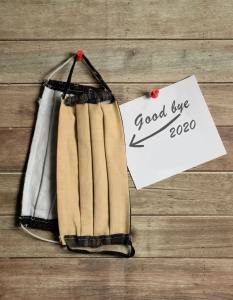
Growing tired of the phrase “unprecedented times,” I prefer “missing markers.”  Yes, the weather’s still doing its time-keeping job.  This summer has been quite hot around here, for the most part.  I remember shivering in my study sometime not so long ago, bundled up in layers and thinking that when summer rolled around this coronavirus would be a bad memory.  If only there were something governments could do to keep people safe.  If only there were people in the White House who cared.  I had visions of professors, hundreds and hundreds of them, wearing masks with their tweed.  It was a vision of wonder.  They’d walk up to you, extending an elbow to bump, but you’d back off.  That’s actually too close.  And lecturing spreads germs very effectively.  Over time 2020 itself will become a marker.  I’m not sure anyone will miss it, however.