Ship Shop

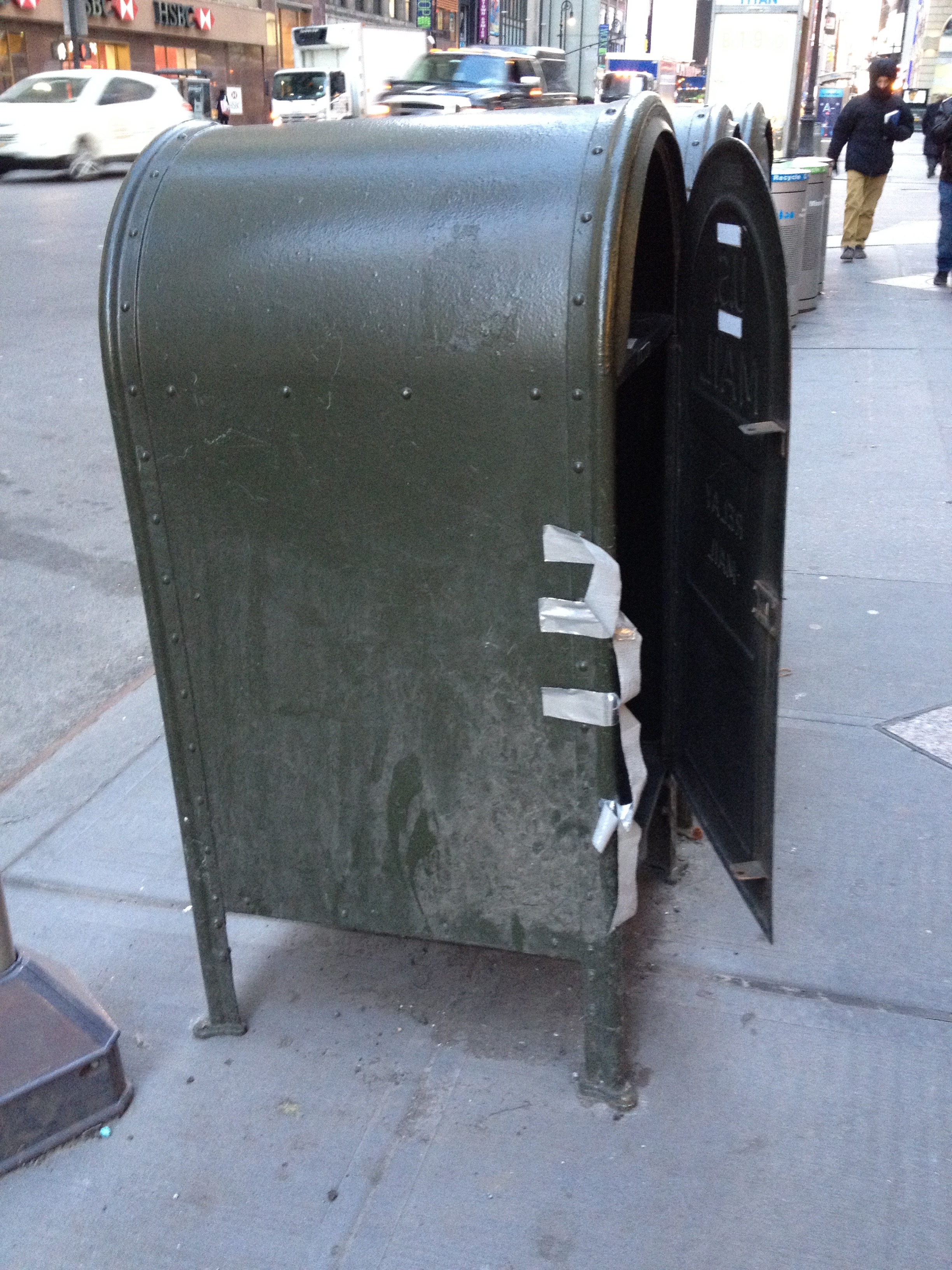
I support the US Post Office.  As someone who still prefers print to electronic, having something actually delivered remains a thrill.  I have to confess, however, that electronic bills are much more convenient.  In any case, with Trump’s war on the mail (he seemed to hate everything), and lack of interest in the Covid-19 pandemic, shipping has been slowed down considerably.  People stayed at home and had Christmas shipped this past year, and, combined with the idiotic cuts to the Post Office budget, things were (and continue to be) delayed.  In this extended season of shipping I’ve had two packages that tracking services have told me had been delivered but, in reality, weren’t.  At least they weren’t delivered to me when the tracking indicated they were.  Of course, package thieves do exist.  I suspect that, if stolen, my items raised an eyebrow or two.

Most recently I had a notice of a Saturday afternoon delivery.  Said item wasn’t there when I checked my mailbox about half-an-hour later.  Someone could’ve idled on by and taken it in that time, I suppose, because the USPS said it was “in or near the mailbox.”  Now, my mailbox is down at sidewalk level.  The porch is a short distance away.  When I went out on Saturday it was in neither location.  Back before Christmas Amazon did the same thing, telling me that a package (small enough to fit easily in my mailbox) had been left in “a secure location.”  So secure that I couldn’t find it.  I even went outside in the dark with a flashlight after watching a horror movie to search for it.  That one, it turned out, had been delivered to an honest neighbor who brought it over after daylight returned.

The tracking notice that says “delivered” means nothing if the package isn’t actually there.  Hide-n-seek instructions simply aren’t helpful.  The way our mailbox is situated the only “near” is on the open ground.  Pandemic life is difficult.  If 45 had had any compassion for the average person needing a lifeline (rather than his self need to be in the spotlight) he would’ve strengthened the Post Office rather than gutting it.  Many people rely on it for the delivery of their medications.  For some of us it’s more a matter of awaiting some token of our preserved sanity.  As it is the tracking notice claimed I had items never received.  This may be a parable for the Trump Nightmare Administration after all.  Then, about two weeks after it had been officially delivered, my package arrived one day unannounced.  Parable indeed.


Welcome Home

It feels like we’ve got our country back.  I’m not talking about just Democrats, but all Americans.  The last wicked four years felt like a nightmare to millions.  May such evil never happen again.  Many thoughts are vying for attention in my head with the end of the Trump era.  We now have only our second Catholic president, following a heathen one (I fear this may insult heathens, my apologies if it does).  We have finally, after far too many years, have a female vice-president, having been robbed of our first female president by the electoral college four years ago.  Like many Americans, I came away from the inauguration yesterday with the feeling of relief that a person with human sympathies, who doesn’t pathologically rely on lies, is in the White House again.  Listening to the oath of office I wonder how 45’s hand didn’t burn off on the Bible four years ago.

The inauguration is, of course, a ceremony of civil religion.  The family Bible upon which President Biden (how right that feels!) placed his hand is an American institution.  Quite often families have had a particular Bible in which to keep family records and important data (in the days before the internet collected all that).  Not only that, but Biden was actually able to quote the Bible, and not from one of those verses everyone knows from overuse.  What a difference from the cynical, lackadaisical holding up of an unread Bible after teargassing non-violent protestors for a photo-op.  No matter what his detractors may say, Joe Biden actually is a Christian, something that cannot be said of the former incumbent by any meaningful use of the word.

On the night of January 19, Biden began the new administration with a moving candlelight vigil for the 400,000+ Americans who’ve died from Covid-19.  Until that moment, the White House did not care about them at all.  The program included a rendition of Leonard Cohen’s iconic “Hallelujah.”  Interestingly Cohen’s ambiguous line was altered to “I know there’s a God above,” for Americans of a certain stripe need that kind of reassurance.  Compassion.  This is one of the central messages the Bible offers.  We should care for and love one another.  It has been four years since Americans have heard that message.  The evil times through which we’ve suffered are not gone for good, but never has an inauguration been so sorely needed by a country that likes to think itself chosen.  At least we have our country back, no matter party or creed, and that is worth celebrating.


BLM, MLK, and Justice

Martin Luther King Jr. was a martyr.  The word martyr means “witness.”  Given what we’ve all seen done by the Republican Party over the past two weeks, let’s hope they at least know the meaning of the word repentance.  King died trying to set people free.  Half a century later we’ve had to witness a sitting US president praising an armed mob, some of whom were carrying confederate flags, storm the Capitol.  Then, that very night, we watched Republicans still attempt to repress legitimate votes in order to keep white supremacy in power.  The set-backs of the Trump administration will take years to overcome.  King stood for equality.  He called for fair treatment.  He knew his Bible.  Now those who cynically hold the Good Book up for the camera can’t quote it but can tear down everything it stands for.

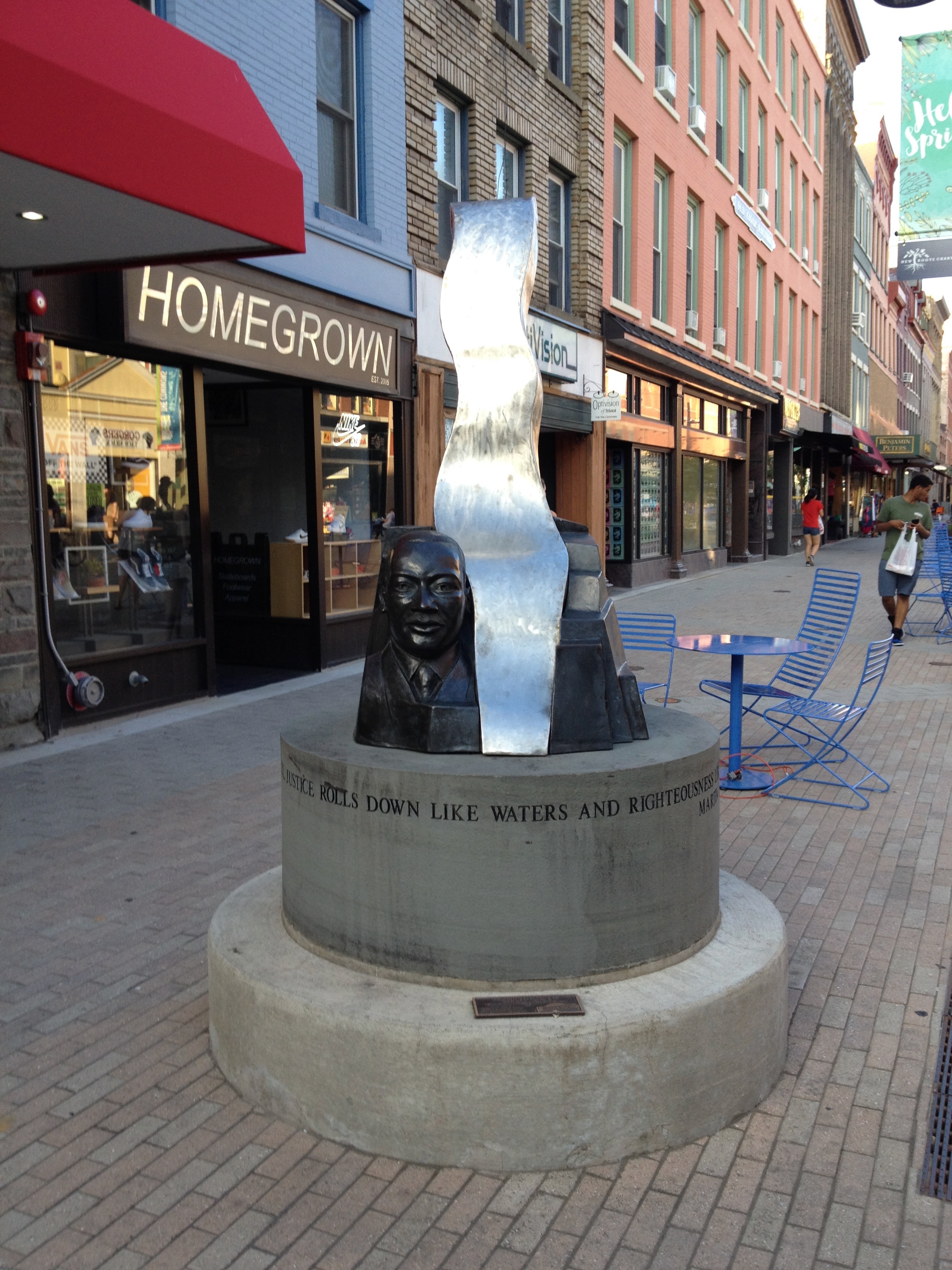
We need Martin Luther King Day.  This year especially.  We need to be reminded that all people deserve fair treatment.  Justice isn’t a meaningless word.  The color of one’s skin is no indicator of inherent worth—that belongs to everybody.  Throughout the country there are heartfelt memorials to King.  The various Trump towers—often segregated and reserved for the wealthy—are monuments of a different sort.  There is power in symbols.  Those who praise and crave money above human need will ultimately be remembered for how evil seeped into their bones.  How hatred of others and narcissism defined their rotten moral core.  Today we try to focus on a good example, but present reality keeps getting in the way.

Four years ago I joined about 1.3 million marchers in Washington, DC.  The Women’s March, as estimated by government officials on the ground, was more than twice as large as the media estimates still tout.  I’ve puzzled over this for four years—why when an oppressed group makes a stand officials and pundits feel the need to downplay it.  King made a stand and he had a dream that one day we wouldn’t have to make marches on Washington just so that everyone could have the equal treatment they deserve.  Human rights are the only rights we have.  Even as some haters are planning further acts of violence to object to a humanitarian president, we are given a necessary reminder that all people deserve fair treatment.  Black lives do matter.  Why has half a century not been enough to assimilate that simple message?  We need to sober up from the drunkenness of irresponsible power.  We need to learn the simple fact that nobody should be killed for being black.  That whiteness is toxic.  That we need to call out those who would use privilege to claim otherwise.


Year Book

I have to confess that I’ve had trouble letting go of the holidays this year.  Actually, that’s kind of normal.  The let down from “sacred time” (however that may be understood) to “ordinary time” is often a rough transition.  Anthony Aveni discusses this, among other things, in his short study, The Book of the Year: A Brief History of Our Seasonal Holidays.  Not a deep history, but a thoughtful consideration of the seasons of our celebrations, the book informs and entertains.  There are surprisingly few books that cover the holidays, despite their centrality to modern life.  What person in business doesn’t look forward to the third quarter?  Who doesn’t anticipate a little time off work, punctuated throughout the year?  Aveni is one of the few general purpose books that you can go to for background on several seasonal holidays.

Aveni is somewhat of a polymath, being both an astronomer and an anthropologist.  He clearly has a special interest in first nations studies as well, as The Book of the Year occasionally dips into the rituals of Latin America.  A number of holiday traditions are explored here, leaving the reader wanting more.  I find the question of why we celebrate the way that we do a fascinating one.  Many of our customs have unexpected roots and many of them were transformed along the way by the church.  An unusually high number boast recent developments that we tend to think of as foundational to their essence.  The holidays as we grew up with them likely stay in our minds as the default way they should be.  Interestingly, bringing them into continuity with ancient customs reveals a steady evolution, mostly from sacred to commercial.

Since I wrote a book (unpublished) about the holidays several years ago (and have read a number of the same), I’ve always dug into books like this whenever I can find them.  Holidays are the heartbeat of the year.  Many of us look for something to help pace us in the reckless spinning vortex that we call capitalism.  Our lives are all interconnected, and the holidays also have subtle intricacies as well.  As they wind down, they tend to point both back to the previous red-letter day and forward to the next one.  Aveni doesn’t cover political holidays very much.  He does mention Martin Luther King Day, the next federally recognized day of rest.  As Aveni points out, the end of the Christmas season can stretch as far as Candlemas, so I guess we still have a few weeks to go before it’s all officially over, in sacred time.


It Happened on Epiphany

Photo credit: Martin Falbisoner, via Wikimedia Commons

Can you spell treason?  It does begin with the letters “T-R-.”  The events of yesterday made it difficult to sleep securely in “the land of the free” as thugs took over the capitol building in Washington, and even after that Republicans still contested the electoral votes from Pennsylvania, preferring a treasonous president to a democratically elected Joe Biden.  As all of this was playing out, Georgia gave control of the senate to the Democratic Party.  Like many Americans born in a democracy, I stared at the news aghast yesterday as Republicans, fully in the public eye, tried to dismantle the very system by which they themselves were elected and even went so far as to claim they were patriots for doing so.  They draw the evil courage to do this from their “Christian” faith.

Yesterday was Epiphany, a Christian holiday.  To see Republicans—claiming the name Christian—attempting to overturn democracy on that very day was sickening.  To my mind it will live on like 9/11 as one of the most dangerous days in US history.  When asked to get the crowds that he personally incited to disperse, Trump released a video on Twitter telling his followers that the election was stolen and fraudulent but they should go home.  Pouring gasoline on a fire he himself lit, sending both houses of congress into hiding, his snakes-in-the-grass continued to support the myth that Trump hadn’t been defeated.  When the smoke clears this American thinks it’s time to dust off laws about treason and start applying them again.

Congressional leaders, and the president, swear to uphold the Constitution—hand on the Bible.  In the most closely watched election in history, with no evidence of fraud, when the loser wouldn’t concede his party backed him.  The Republican party has been infected with evil, I fear.  Even after seeing the turmoil that their posturing caused, they tried to discount the votes from my state just to keep a very dangerous man in power.  Our democracy didn’t die yesterday.  It died four years ago.  Claiming the name “Christian” without ever reading the Bible or attending church or caring about their fellow human beings, the Republican party has gone down in infamy on the feast of Epiphany.  The electoral vote count by congress is a mere formality, and I, a native and resident of Pennsylvania, am outraged that anyone claiming the power of a democratically elected office—disputing the very process that gave them any influence at all—questions my right to vote.  Why hasn’t treason been invoked?  Four years under the influence of the Evil One has shown its effects, and it happened on Epiphany.


Manifest Duty

As slaves to Mammon our celebrations are frequently curtailed.  In agricultural culture, winter was a time when fields couldn’t be cultivated (at least in northern climes) and thus the twelve days of Christmas could be relaxed without much consequence.  The history of this holiday complex is fascinating, and while many of us have been back to work for a few days already, today, Epiphany, is the “official” end of the season.  Twelfth Night, in some traditions yesterday and in others today, was a day of celebration, the twelfth day of Christmas.  Ancient pre-Christmas holidays such as Saturnalia lasted several days.  Today’s business world frequently gives a Scrooge-like single day off and many of us spend our hard-earned vacation days to fill out the week that is inevitably slow at work otherwise.

In Christianity, until recent times, Epiphany was a bigger holiday than Christmas.  Of the two it was the original day for gift-giving,  That makes sense in the commemoration of the visit of the magi that Epiphany represents.  They were the first givers of Christmas gifts.  Since Jesus was Jewish the idea of a manifestation, or epiphany, to the gentiles became an important marker.  Magi are styled as Zoroastrians from Persia.  The story occurs only in the gospel of Matthew and clearly wasn’t intended to coincide with the arrival of shepherds and angels.  As the Epiphany story grew to include Christmas it also encompassed many of the shadowy events of Jesus’ early years.  His questioning of the teachers in the temple was a kind of epiphany, as was his baptism.  All these things came together during a fallow time and were sufficient reason to take it easy for twelve days between the end of December and the beginning of January.

Some of our employers have expressed surprise that things continue to run fairly smoothly with workers reporting remotely.  These same people also seem surprised that people come back from several days off refreshed.  I suspect that they are also astonished at how well their computers work after being rebooted.  Time off is sacred time.  Whether we dress it up with elaborate stories of kings, wise men, sages, or magicians traveling great distances to see a baby in a foreign nation or whether we make it the day when one cousin baptized another, Epiphany grew into a major feast in medieval times.  Today it’s just another work day.  And with it the end of another holiday season will need to last us until near the end of yet another year.


Comedic Horror

Spoofs can be a great way of preventing us from taking ourselves too seriously.  Extra Ordinary is a film I’d completely missed until my wife made a gift of it.  We weren’t quite sure if it was a horror film or a comedy, and genres aren’t always helpful here.  I would call it a spoof on possession movies, something of particular interest after writing Nightmares with the Bible.  Apart from being a bit of much-needed silliness after a terribly serious year, it’s also a demonstration of how genre can be helpful in knowing how to interpret what we see.  Not knowing anything about the film, it begins with the statement that it’s based on a true story.  There’s an interesting history behind that phrase, but when it comes with a spoof it only adds to the fun.

Extra Ordinary follows the adventures of Rose Dooley, a driving instructor who was raised by a ghost-hunting father.  Blaming herself for her father’s death, she’s taken on an anodyne career that she feels is safer.  A particularly desperate widower whose daughter is targeted by a hapless Satanist, brings her back to her true calling.  Although there are some horror-comedy scenes (that’s an entire sub-genre often eschewed by horror fans who don’t like to laugh at themselves) the witty dialogue and crude jokes make it fun rather than anything to be worried about.  Possession occurs in a specific way to move the plot along—Rose has to have a partner (the widower Martin Martin) accept possession by the ghost in order to send it to the beyond.  Although there are clever takeoffs from The Exorcist, the idea of possession is much different.

What is evil?  The film asks the question directly (if comedically).  Although washed-up rock star Christian Winter has become a Satanist, the demon in the film is Astaroth, a later development from the pre-biblical goddess Astarte.  As discussed in Nightmares with the Bible (for which this film could’ve been profitably discussed), there’s a confusion among demons.  (Beelzebub is also mentioned by name.)  The element that ties them together with the human condition is clearly sex.  The frantic search for a virgin, and the communal shaming of unwed mothers makes that obvious.  Although deliberately campy, Extra Ordinary answers the question of evil by noting that it is a person using their powers (magical, in this case) for their own benefit rather than for the good of others.  There is a moral to it, after all.  And if we can’t laugh about the human condition once in a while, we deserve to be spoofed.


Non-sacred Time

It’s difficult to say goodbye to the holiday season (although, according to its origins it’s not over yet!).  While the church still recognizes a couple more days until Epiphany—which until recent times was more important than Christmas—the secular “work world” is back to usual after New Year’s Day.  2021 started with a bonus, giving us a long weekend as well.  In any case, getting back to normal time is always a difficult transition.  For those of us who spent many years in academia, the holidays began about mid-December, and in my case, stretched fairly well into January.  Now, using a combination of vacation days and floating holidays, I’m able to set up a mini semester break of a couple of weeks.  Although I have trouble sleeping in, I was still able to spend the days with family and not worrying about business.

There is a difference in the quality of time off.  Some, I suspect, are eager to get back to work.  For me this first Monday back is difficult to face.  Some would argue that the difference in time quality is merely a subjective projection.  There is nothing scientifically changed from the last two weeks to the reality of the first Monday back.  This is one of those places where religion steps in as the more understanding boss (such instances are rare, so appreciate them while you can!).  Sacred time is taken very seriously by any number of religious traditions.  Even our beloved weekends have a basis in religious observance.  Holidays, even in a secular setting, are opportunities to recharge.  For me the spring semester was something I never dreaded.  We’ve allowed capitalism to take precedence over sacred time.

The problem with ordinary time is its mundanity.  Looking back, I’d been anticipating the holiday season with its time off for well over a month.  A full twelfth of the year.  To help with the transition, with my family I spent some weekend time cobbling together a personalized Modern Mrs. Darcy reading challenge.  Knowing I have good books in the future helps immensely, although I have much less time to read when work takes up much of my waking time.  Even that new start can’t be scientifically measured.  It’s something unique to human minds.  January begins with endings.  No matter how difficult 2020 may have been, at least it ended with a relaxing couple of weeks with family and no pressures to sit in front of a computer screen for over nine hours a day.  There will be more holidays ahead, and each one of them will be sacred time.


Impatience

It’s only human nature, I suppose.  We see our own circumstances and fail to appreciate how others have equally (or perhaps more) complexity to juggle.  I’m thinking ahead to work on Monday.  The week before the holiday break the most popular question posed to me in my work emails was, “Why haven’t I received my copies of X yet?”  It’s a fair question.  What it betrays, however, is a lack of comprehension of just how complicated a business publishing is.  I should be flattered that we make it look so easy!  To begin with, publishing, and printing, are nonessential businesses.  Most of them may be up and running at, at least partial capacity, but the flow of materials to printers didn’t stop just because a pandemic hit.  It simply did what backlogs always do—it piled up.

Publishers have very intricate and, for the most part, efficient operations.  If a blockage occurs at any point—even the end point—other things back up.  Have you ever seen a toilet overflow?  I have, and it’s not a pretty sight.  Add to that the fact that many academics, unable to travel or do their other privileged activities, decided to finish up their books and send them in early.  Everybody should be happy, right?  Have you ever overeaten?  The happiness lasts only until your brain catches up with what your body has done.  I can’t speak for all publishers, but this combination of more input of material than expected and the inability to *ahem* process it has stressed the system.  Schedules exist for a reason.

Covid-19 has affected everything.  And continues to do so.  As we live through this pandemic we find our coping mechanisms.  Once we reach a level of uneasy symbiosis with our situation we stop thinking about how others might be dealing with it.  I think of those who’ve been out of work for months now and who’ve been evicted from homes because of what the wealthy can call force majeure and hire lawyers to argue.  Indeed, the coronavirus outbreak is the very definition of force majeure and the response we all ought to have is compassion and kindness to one another.  It’s not easy to think of other people before meeting our own needs—it’s not human nature.  Species that learn cooperative, altruistic behavior, however, are those that thrive.  As we say goodbye to a year of willful government inaction—the Trump administration knew of the danger well before it hit, but doesn’t believe in science—let’s vow to do what our leaders won’t.  Show compassion.  Recovery will occur and let’s hope we come out of it better than we went in.  This seems a good mantra for the beginning of a new year.


Seeking Renewal

Now that many are breathing a sigh of relief that 2020 is finally over, I stop to ponder time.  Measuring time, although most forms of life do it in some way, is a human organizing principle.  Calendars were originally religio-agricultural devices.  In order to keep the crops on their seasonal cycles, the gods were invoked—there was nothing secular about their world.  It’s not known who invented holidays or even the concept of a new year, but it is clear that it was a fairly early idea.  Different cultures today still celebrate New Year’s Day at differing times of the year.  Having it a week after Christmas helps to make this a holiday season, but it is no guarantee that a sharp break in continuity will come after a bad year.

Lots of bad stuff happened in 2020, but clearly the circumstance that made it a “bad year” was the Covid-19 pandemic.  Here in the United States it became a full-blown crisis because of the cause of four years of ethical famine, Donald Trump.  Those who can see beyond their religio-politics know that he is a man who spent his entire career looking out for nobody but himself.  Such people do not work as public servants and are downright terrible in a crisis.  The pandemic quickly grew into a crisis and we spent nearly ten full months out of twelve isolating ourselves.  The other crises of the year (generally pointing fingers at Washington), such as the important resurgence of Black Lives Matter and the California wildfires, were exacerbated by the pandemic about which our government did nothing.  Lack of interest has led to death numbers that have become a Stalinistic statistic.

As much as we like to think nature bends to human plans—our calendars—we have no idea what 2021 might hold.  We’re left with a country that has been neglected for four years.  Our Republican-controlled senate can’t even agree to provide any kind of relief to average people without adding riders and conditions to make our situation even worse.  Still, I’m optimistic.  New Year’s, whenever it is, marks change.  I’ve been noticing for over a week now that the sun is rising earlier than it had been as we descended into December.  The light is beginning to return.  While we can expect nothing good from the White House for twenty more days, we can look beyond that and know that change is on the way.  The division of time may be an artificial construct, but it can, if we allow it, become a sign of hope.


2020 in Books

As has become traditional on this blog, I like to revisit my reading for the year before the next one begins.  No matter what else goes wrong, we have books.  As I noted yesterday, I’ll be devising my own reading challenge for the coming year and if nothing else, it’ll be diverse.  For 2020, according to Goodreads, I finished 78 books.  Since I was in the final stages of getting Nightmares with the Bible to the publisher, several books early on were about demons, and many of them were quite good.  The nonfiction that really stick out in my mind, however, includes D. W. Pasulka’s American Cosmic, Richard King’s Ahab’s Rolling Sea, Gary D. Rhodes’ The Birth of the American Horror Film, Jeffrey J. Kripal’s Secret Body, Barbara Ehrenreich’s Living with a Wild God, and Ernestine Hayes’ The Tao of Raven.  If anything ties these books together it is likely their honesty when it comes to the spiritual quest.  It can legitimately take many directions.

Fiction has, at least for much of the year, been driven by a few factors: books I have on hand during a pandemic, The Modern Mrs. Darcy’s reading challenge, and books on my reading wishlist.  That list is constantly growing and the books that stand out particularly are again diverse.  Especially memorable were Ralph Ellison’s Invisible Man, Hank Green’s An Absolutely Remarkable Thing, Han Kang’s The Vegetarian, Scott Shibuya Brown’s The Traders, Andrew Michael Hurley’s The Loney, and Silvia Moreno-Garcia’s Mexican Gothic.  Apart from their diversity these books have little in common.  I suppose that’s a testament to the importance of reading widely.  On that list there are only two “white” men but a lot of great books.

Another couple of categories might apply: big books and short story collections.  Big books intimidate me, but I read five of over 500 pages: Ellison’s Invisible Man again, Herman Melville’s Moby-Dick, Mark Twain’s The Innocents Abroad, George Eliot’s Middlemarch (my longest book for the year), and Ann Radcliffe’s The Mysteries of Udolpho.  These books are all in the “classics” category, I see.  Short story collections are more edible, and I read nine of them, including four “by” Rod Serling.  The first was an edited collection of his works, and the other three were his own Twilight Zone adaptations.  I read a few plague books because of the pandemic, but they weren’t really among my favorites.  Perhaps they were a little too close to reality.  Nevertheless 2020 was a good year of reading, overall.  I’m looking ahead to what gems 2021 might hold.


Stay Curious

Needle felting.  I’d never heard of it.  I’d got along some five-plus decades without knowing a thing about it.  My daughter received a needle felting kit as a Christmas gift and, being the kind of person I am, I had to research the history of felt.  I always knew felt was different from other fabrics, but I couldn’t say precisely how.  I came to learn it is perhaps the oldest textile in the world, known by the Sumerians.  Felting is a process for making non-woven cloth.  The natural fibers of some wools are scaled, like human hair is, and when compressed and worked with moisture (wet felting), becomes cloth.  Finding out how things work is one of the great joys of life.  It also made me think again of how anyone could possibly be arrogant.

The longer I’m alive the more I’m learning what I don’t know.  Granted, felt has appeared in my life at numerous junctures—how many crafts do kids make of felt?  And I have a felt hat—but I had never thought much about it.  My wife likes to read about pioneer women who had to make pretty much everything by hand.  We call such people “rusticated” these days, but they know far more than most urbanites, simply by dint of having to do things for themselves.  Modern conveniences are great, but I often wonder how many of us might survive if we had to make it on our own.  Just the last couple of weeks we worried about losing power with the storms that blew through.  What do you do when the thermostat no longer works in winter?  Something as simple as that vexed me for days (I had to work rather than worry, so it couldn’t properly use my brain power).

I’ve known many people impressed with their own knowledge.  I can’t imagine how actually learning new things doesn’t make someone humble.  The universe is a vast and mostly uncharted space.  Down here on our somewhat small planet we have so much yet to learn.  I’ve studied the beginnings of agriculture, metallurgy, writing, and religion.  There’s still so much I don’t know.  I wouldn’t do well on Jeopardy—I second-guess myself too much.  Staying curious about the world is a good way, it seems, to keep humble.  I entered into this holiday season thinking I knew a fair bit about various crafting options.  As a family we cover the creative spectrum fairly well.  Then a small, soft thing such as felt made me realize just how little I really understand.  Any invitation to learn is one that should be accepted.


Good Will

Social media can seem overwhelming.  There are so many sites and there’s so much to keep track of.  And that’s in addition to all these “super storms” we have dumping inordinate amounts of snow and rain on a house neglected by previous owners.  Given the circumstance, I joined Next Door.  I don’t have time to follow it, but each day I get notices of new posts.  On Christmas morning one from the previous day caught my eye.  A local mother could neither afford to decorate her tree nor buy her teenage sons presents.  She turned to Next Door and the comments and offers of help posted shortly thereafter revived my faith in the inherent goodness of people.  Holidays bring out the best in us, I believe.  We want others to be cared for.  It’s just too bad we have trouble enacting it in any political setting.

Next Door is about grassroots connections.  We are fairly new to our town.  Although it’s distinctly purple, the people are friendly to one another.  It saddens me that we’ve allowed the politics of hate to define us for four years.  Those unable to see through Trump’s self-serving tenure think it’s been business as usual as one man has torn the country apart to make himself feel good.  Out here among hoi polloi, people are reaching out to strangers, offering Christmas ornaments, gifts, and food.  I think that must be rain on my face.  Why else would my cheeks be damp?  Left to their own devices most people would behave well toward others.  Fear makes us act in destructive ways.  What if we all reached out helping hands when anyone was in need, and accepted handouts without shame when we needed them?

Christmas was rainy around here.  Just a week after receiving an early snow dump of over a foot, the rain gauge is overflowing.  Caring for our environment, it seems, would be the most obvious way of ensuring the greatest good for the greatest number.  I know that sounds utilitarian, but it certainly feels more moral than personal enrichment at the expense of others.  Too much water here while the west suffers drought and wildfires.  We know our actions contribute to the instability in our atmosphere.  No actual scientist denies it.  As these twelve days of Christmas play out, I see no sign of compassion from the swamp, yet there is a light shining through the gloom.  It’s a sign of human kindness.  And it is as close as next door.


Thoughts of Christmas

Christmas, in merry old England, used to be the day when bills were due.  There are vestiges of that still.  Just this past week, when my mind was on upcoming celebrations and family time, companies continue to email me their bills, reminding me that all celebrations are but temporary.  Money’s the real thing, and it takes no holidays.  While the holiday season may be subdued for some due to lack of travel, for me any day that I don’t need to leave the house is a good one.  We had a pretty nasty patch of weather on Christmas Eve, and one might be tempted to say that the atmospheric conditions outside are frightful.  There’s a coziness about staying indoors around the holidays.  Besides, there’s a pandemic out there too.

We’ve got a quiet day planned at home with our usual traditions.  We added a Yule log to our celebrations this year—much of what we now recognize as Christmas derived from the teutonic Yule.  Otherwise, we are quiet people with rather simple tastes.  Even if we can’t afford much, the holidays mean time off work.  Time for those close to us without constantly having to auto-correct back to earning money at work.  I frequently reflect on how distorted capitalism has made us.  Our European colleagues have far more time off work than Americans do.  They don’t seem to suffer for it.  There’s not much light outside anyway, so why not hunker down a while?  Reflect on what’s really important?

First thing this morning, after watering the tree, I fired up the computer to write a few words before the festivities began.  The first two emails in my inbox were, as if on cue, bills.  Computers have no idea this is a holiday, and our neighbor’s early morning car announcing its lock secured tells me that he’s just getting home from work.  The fiction that we all have today off, as time home with family, plays out every year.  Holidays are often the privilege of the affluent, which is why, I suppose, Saturnalia was marked by a reversal of roles for several days.  Rome wasn’t exactly a friendly empire, but it wasn’t a capitalist one either.  This Christmas I’m hoping that those who have to work today—healthcare workers, those who keep stores open for last-minute supplies, emergency workers of all kinds—will have adequate time for peace coming to them.  Even non-essential work can be wearying.  Let’s celebrate, thankful that we’ve survived these last few years at all.  The bills will wait until tomorrow.


Ghost Stories

Those of us who confess to watching horror are fond of noting that the Christmas season has long been associated with ghost stories.  Charles Dickens wasn’t the first to make use of the trope and certainly won’t be the last.  After reading about elevated horror movies, I decided to watch A Ghost Story (David Lowery, 2017).  Many wouldn’t classify the film as horror at all.  It is quiet, slow paced, and has no gore.  It is nevertheless a haunting film.  I suspect its poignancy comes from a situation we can all imagine and which many people face in life—being left alone after the death of a loved one.  The idea that the dead never really leave us can be both comforting and unnerving at the same time.  The film plays to those strengths.

The premise of the film is simple: the ghost of one of a couple finds his way home and tries to reconnect with his widow.  He ends up staying there until, many owners later, the house is demolished and a high-rise is built in its place.  It’s essentially a story from the point-of-view of the ghost.  There isn’t too much dialogue included, but one significant monologue comes when a party is being held.  One of the party goers, or perhaps the current owner of the house, explains that because of what we know of physics everything on our planet will eventually be destroyed.  His beer-fueled lament is that whatever we do is therefore in vain.  He brings God into the discussion.  The ghost listens intently, but seems to disagree with his conclusions.  For someone like me the introduction of religion into the story is a Venus fly-trap, since religion and horror can’t seem to keep away from each other.

Death is a dilemma, a point that I made in a recent Horror Homeroom article on Pet Sematary.  Horror, like religion demands that we confront it.  Science can only offer cold comfort regarding the cessation of life.  Religion (and horror) open the dialog into the unknown, the realm into which mere human instruments cannot reach.  Sad and reflective, A Ghost Story hits on an essential question in the nexus of religion and science.  If a spiritual world exists, there may be some survival even of the earth’s eventual heat death.  As time passes, the titular ghost continues to learn.  Life is a learning experience, and although many modern forms of religion join in the cultural denial of death, horror is always ready to remind us that confronting it may be the wisest course of action.  Ask the ghost.  He knows.