Ocean Day

Yesterday was World Oceans Day.  It’s probably a measure of how busy I’ve been that I missed it until well into the work day.  Environmental care is one of my major concerns—something that the majority of Americans share but which Republicans block at every chance they get.  The oceans are the largest part of our planet .  Viewed from certain angles, the globe has barely any land on it at all.  And yet, since we live on the dry part, we use the wet part as our dumping ground.  There is an entire island in the Pacific made of plastic refuse.  Big petroleum doesn’t want any alternatives offered even though plastic is one of the most toxic products we produce for other life on this planet.  Shouldn’t governments share the values of their people?

Born in the landlocked western part of Pennsylvania, I first saw the ocean when I moved to Boston.  It was almost so distracting that I couldn’t study.  Here was this seemingly endless expanse of water that we so poorly understand, the symbol of eternity and life itself, right before me.  It was while living on the coast that I came to read Moby-Dick.  I could spend hours on the rocky shoreline, gazing out toward the seas in wonder.  I’m not a sea-farer myself.  I have inner-ear problems and being on a ship for any length of time would likely lead to extreme discomfort.  I can imagine, however.  Eventually I would read Coleridge and Hemingway and understand that I was not the only one who felt this way about the seemingly endless water.

Some of my earliest literary memories involve Rachel Carson’s The Sea Around Us.  It’s another book that opened young, landlocked eyes to what our world really is.  The image of water eternally crashing onto the shore is a comforting one.  As Carson knew, we came from the water and we yearn for it still.  Life as we know it isn’t possible without our oceans.  Yet, having petty human needs for extreme wealth and a sense of power over others, we pollute these seas with oil and plastics and chemicals and figure it’ll be somebody else’s problem.  In reality, the problem belongs to all of us.  Plastic Island, as it’s now being called, is nearly three times the size of France.  It’s composed of 100 percent pollution.  The Great Pacific Garbage Patch is being considered by some the eighth continent.  World Oceans Day should never slip away unnoticed.


The Heart of Memorial Day

The Memorial Day will be a somber one for the many people who’ve lost someone due to Covid-19.  Even as those who know that science can help to bring a pandemic under control have been vaccinated,  it is too late for millions who didn’t make it.  Memorial Day weekend, for many of us in northern climes, has been unseasonably cold.  Around here it’s been rainy too.  The official kick-off to summer seems to be a memorial to the long winter of 2020 and ’21.  It’s also hopeful, because things are starting to get better.  Having an organized national response helps, even as the Fascist Party is gaining strength.  “Memorial” means looking back.  Remembering the past.  I’m saddened, shocked, and distraught that one political party has refused to look at how insidious fascism is, and how it always starts under the guise of righteousness.  Remember this.

We tend to think of Memorial Day as a play day.  Indeed, the number of boats being towed as I’ve been out driving attests to the plans of many.  We’re ready for life to return to normal, but even that involves memory.  Remembering what was normal.  We have never been a fascist nation.  That’s not a memory but a sick future dream.  Those who attempt insurrection and then block any investigation into it can’t have the good of the nation at heart.  It should be a play day.  It should be frolicking in the sun.  Instead I’m wondering how we’ll ever stop this apparently inevitable evil that has taken over a country formed as a democracy.  Has it stopped raining yet?

Although I wasn’t close to him, my father was a veteran.  He fought for the cause of liberty, at least as it was understood before Trump’s America.  He was, according to his family, never the same after seeing war.  Bureaucrats, fat from the monies they pocket from special interest groups and lobbies, seem to have forgotten.  They’ve forgotten the frighteningly large national cemetery at Arlington.  They’ve forgotten that we fought to stop the very thing they are now promoting in their own country.  I’m sorry, Mr. Lincoln, these dead may have died in vain after all.  I had hopes of warm days and leisurely outdoor activities as the end of May rolled along.  Either that, or at least being able to get out and take care of all the yard work that’s been piling up over the past several weeks.  I wonder, will it stop raining today?


Women and Mothers

This is our first Mother’s Day with a female Vice President.  After four years of a female-groping administration, it feels like we’ve made a turn in the right direction.  Ironically, it’s often religions that keep women oppressed, even while women are often more faithful to them.  Religions like to claim to have the answers, and for the monotheistic traditions an origin myth with Eve—the first mother—as the first picker of forbidden fruit, has suggested one answer that has held women down for centuries.  Taking origin stories too literally can cause so much suffering in the world that we’re confronted with the question of their morality.  Religions are for people.  If they exclude half the human race we need to pause to ask if we got something wrong.  It’s Mother’s Day, always on a Sunday.  It’s a chance to think about such things.

Many churches will have sermons honoring mothers today.  Will they work for the wellbeing of women for the remaining 364 days of the year?  Our society, purely on the basis of biology, routinely puts women at risk and underplays the need to help them when that happens.  I’ve seen this firsthand.  We’re finally starting to get some female representation in Congress, yet less than a quarter of the seats are held by women.  Isn’t government supposed to represent its constituents?  Why has half of humanity had to struggle for so long to be treated as equal?  Mother’s Day cannot be a salve to ease our consciences about mistreating women for the rest of the year.  Equity should not be a goal, it should be reality.

We’ll be thinking about our mothers today.  Still under a pandemic, we’ll be Zooming them or calling them.  Those fortunate enough to live close may even get to see them in person.  These mothers sacrificed a lot to take on that role.  Our society could not continue without them.  We’re starting to come to the realization, I hope, that it is male-devised forms of government and business that are the problem.  They protect the wealth and power of a few.  They jealously guard against letting men offer the true justice of equity.  Some religions have begun to address the obvious injustice they have largely originated.  The story of the Garden of Eden was meant to teach a lesson.  That lesson has been abused for centuries as a way of making women seem somehow less than men.  It’s Mother’s Day.  Let’s see if we can’t learn to read more deeply and apply what we have learned.


As Nature Directs

The news about the “stampede” in Israel last week is tragic.  People like to gather in large crowds once in a while.  Religious events are sometimes such occasions (although not so much the case among mainstream religions anymore).  In this case the celebration, largely among the Ultra-Orthodox, was Lag BaOmer, a festival with unknown origins.  It has to do with counting the omer, a measure, in a biblically based instruction regarding grain offerings.  Since it’s based on the lunar Jewish calendar, it doesn’t fall on the same date of the solar year every time.  To be honest, I’d not heard of this celebration before the tragedy that occurred last week.  Having been confined for over a year, many religious groups are anxious to be back together in numbers.  Nothing reinforces belief better than having the size to be taken seriously.

A few years back, if I recall correctly, it was Muslim faithful at Mecca who experienced a tragic uncontrolled panic.  Religious ideas bring people together, but they can’t always control the results.  I’m reminded of what a Protestant clergyman told me many years ago: after a Billy Graham crusade came to town, the regular ministers were ill-equipped to handle the large numbers of emotionally charged members who normally sat still in the pews.  Religion stirs people, but its psychological nature shows when it leads to tragedy.  No particular group is immune since we are all emotional animals.  One slip on the stairs, one panicked individual, and those nearby can be infected.  Already emotional from the event itself, nature takes its course.

Stampedes are an evolved flight response.  Herd animals, when perceiving a threat, begin to run.  Others, not even directly aware of the threat, join in.  Other animals, not aware of their “herd mentality,” seem to handle this more naturally than do people.  Indeed, our religions often instruct us not to think of ourselves as animals at all.  Our religious events are often removed from our familiar surroundings.  I suspect that may be one reason people don’t find “Zoom church” very satisfying.  The emotion of religion is more easily spread in person.  In a place specifically designed as being outside the norm.  You take your hat off in church.  You sit quietly, reverently, in church.  You do not use coarse language in church.  In a pandemic you try to join in while physically in the environment where the rest of everyday life occurs.  When we gather again, we must do it while being aware of our nature.  Being part of nature itself can often be, if well thought out, cause for celebration.  We mourn those who fall victim to it.


Joyous Beltane

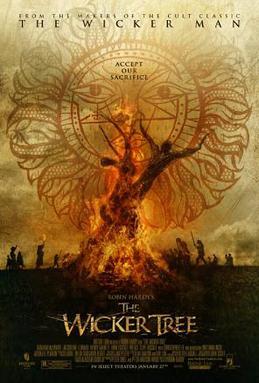
Every year around Beltane, I think of The Wicker Man.  Of course, the holiday itself, aka May Day, is no cause for alarm.  What makes the movie so effective—and I mean the original film, of course—is the fear of others’ religions.  My last two books have explored the nexus of horror and religion and The Wicker Man always stands out as an example of how naturally the two go together.  May Day, or Beltane, represents one of the cross-quarter days.  It falls roughly halfway between the vernal equinox and the summer solstice.  Days are noticeable longer now than they were back before the equinox, and Beltane, like many cross-quarter days, uses the symbolism of light to remind us of the seasonality of life.  While the light is here we should make use of it.

Photo by Ameen Fahmy on Unsplash

Agricultural festivals—and many ancient holidays began as such—acknowledge the importance of the lives of animals pastoralists depended upon.  Imbolc, the start of spring, was marked by sheep beginning their lambing.  Beltane was the point at which cattle could be driven to pasture.  It stands opposite Samhain, the origin of our Halloween, with Lughnasadh falling between.  These holidays were often celebrated with bonfires (thus The Wicker Man), but fire was understood as protective rather than destructive.  Although the Celts seem to have originated in east-central Europe, they were pushed to the northern fringes of the British Isles by other invading peoples.  Their location in chillier climes suggests that fire may have also held a practical purpose.

May Day is celebrated throughout much of Europe as a day associated with fertility.  This, it seems, was a major cause of concern among Christian missionaries.  Fertility is, of course, a natural hope.  Agrarian peoples rely on it to survive.  Fire served to bless the animals and to keep away the mischief of the little people, or nature spirits.  Much of what we know of Beltane, as with other Celtic holidays, has to be reconstructed since the Celts didn’t leave a scholarly archive that could be farmed for information.  Indeed, prior to widespread literacy what would’ve been the point of writing down what the folk already knew?  It was obvious that summer was on the way.  Even in years when the temperatures struggle to warm consistently, there are hints that “the light-soaked days are coming.”  The bonfires of Beltane represent the warmth and light that are on their way.  And what religion could object to that?


Well Grounded

Earth Day feels like it’s actually Earth Day for the first time in four years.  Many of those with more common sense than gullibility know that we have only one planet.  Even as we have achieved flight on Mars, any hope of going elsewhere (and some of us would rather not) is many years away.  Earth is our home and we can live on our planet without destroying it.  Other animals also change the environment, of course.  The problem arises when one species becomes unchecked and begins changing things for their benefit only.  Or what they perceive as their benefit only.  Life evolved on this planet deeply integrated.  The more we study nature the more we see how interconnected it is.  Thinking ourselves special, we’ve placed a wall between humankind and everything else.  It’s an artificial wall.

If you read about nature you’ll be amazed.  Trees, perhaps the true heroes of this planet, make our life possible.  They couldn’t exist without the fungi that partner with their roots in a symbiotic relationship.  If there had been no trees our ancestors would’ve been easy prey to larger predators and would likely not have survived.  Large industrial corporations destroy trees as if they’re a nuisance.  They are our life.  Even as governments with “strong men” leaders destroy the forests in “their” countries, we are losing the very biodiversity that makes life possible on this planet.  There’s room for humans to get along here without destroying the environment that supports our very life.

One of the hidden motives in this scenario is a strange development within Christianity.  A literalism that would’ve shocked even old Augustine developed around the turn of the last century.  That literalism was used by corporations that saw the earth as a resource to be exploited and claimed that we, unlike animals, owned the planet.  If you own a home would you destroy it just because you could?  What good would it do?  No, this Earth Day let’s take the time to consider our religion and its implications sensibly.  The Bible does not advocate destroying what God created.  It may have been written too early to comprehend evolution, but that was never a problem for early theologians.  When fused with capitalism, however, this religion provided everything greedy businesses needed to exploit the planet for its own purposes—the god Mammon.  Just this week we flew our first flight on an inhospitable planet far away.  Today let’s think of how we might protect the only home we have under our feet. 


Naming Easter

Today, for some, it’s Easter.  Others call the day Pascha, after the Hebrew word pasach, or “Passover.”  At its deepest roots it is a spring celebration timed around the vernal equinox.  The name “Easter,” however, has an interesting story.  All the more so for having missing parts.  There was apparently an Anglo-Saxon goddess named Eostre.  Since these Teutonic peoples didn’t have their own archives we only learn about the April festival dedicated to this dawn goddess from the Venerable Bede.  Being venerable, we tend to trust him.  He tells us that what is called Pascha used to be called Easter because of the goddess and her celebrations.  We’re often left, however, with not enough information about the deities of old Europe because, ironically, literacy had not come to them.

As we move into what publishers are calling post-literary culture, I have to wonder at the losses that will mean for the future.  We all know, deep down, that electronic media are ephemeral.  We just hope our bank accounts stay viable until we die so we don’t run out of money.  In any case, Easter is a good illustration of what historians and those interested in the development of ideas have to do when few written records exist.  We look at artifacts and images and make our best guess.  This is clearly evident in the field of studies of another goddess—Asherah—upon whom I lavished my dissertation.  We do have some written records, but for many scholars they aren’t enough.  We guess that this or that image might be of her, although they’re not labelled.  A similar problem applies to Eostre.

There is little doubt that a goddess named Eostre existed.  It makes perfect sense that she would be celebrated in April.  Before Daylight Saving Time was invented, it was light around 5 a.m. this time of year.  For early birds (historically we were in the majority) it would’ve been obvious.  The goddess of the dawn is coming back to us.  Shining in our eyes as we try to pry a little more slumber from a shortening night.  Early Christians tended to adapt rather than to reject  non-Christian celebrations.  The name of Easter is yet another of those conveniences.  Although it snowed a little around here on what some call Maundy Thursday, today Easter is here to remind us of resurrection.  Life does return and our daffodils, although they may be shivering, have bravely broken through the sod to greet the dawn.


Whose Holiday?

I write a lot about holidays.  One of the reasons is that even long before capitalism, societies took breaks right in the middle of things.  One of the major seasons of celebration was the vernal equinox.  Easter is tied to Passover, of course, but since nobody knows the year of Jesus’ crucifixion the actual date can’t be determined.  Passover is a moveable feast and since the lunar calendar is essential in setting Passover’s date, Easter is calculated as being the first Sunday after the first full moon after the vernal equinox.  There has been talk of the three major branches of Christianity—Catholic, Orthodox, and Protestant—agreeing on a set date for Easter but even if that happened there would be splinter groups who liked it the old way and the confusion would only grow.

Since astronomical observation has grown so mathematical, the date of Easter can be calculated far into the future.  We know just when the vernal equinox will occur, and we know when the full moon will come around.  All that’s needed is some calendars and a whole lot of patience (and maybe a calculator).  Despite society’s obvious preference for Christmas, Easter has its own array of attendant holidays for some Christians.  (Not all Christians celebrate Easter.)  For instance, for some today is Maundy Thursday.  Tomorrow most will recognize as Good Friday.  Nobody’s quite sure what to call Saturday, and many Christians will begin to celebrate Easter at midnight even before Sunday wakes up.  Easter does last more than a single day, in some traditions, but it’s not quite as developed as the twelve days of Christmas.

Lately I’ve been considering that how these holy days are sacred for some and secular for others.  One of the realizations that globalization has wrought is that not everybody shares the same concepts of how universal events—such as the vernal equinox—should be commemorated.  Although on the equator every day’s not quite an equinox due to the earth’s tilt, it isn’t as dramatic as the changes that occur in temperate zones.  Christianity was custom-built for European holidays, which is what it tends to keep.  The history of the holidays is more complex than it might seem at first.  Add to that widespread disagreement around the world as to both religion and to when certain events should be calculated and you’ll need more than a slide-rule to figure it out.  So as we begin the Catholic and Protestant Easter season (Orthodox Easter is about a month away yet), it may be helpful to remind ourselves that what day it is might just be a matter of perspective.

Stiftung Gertrud Schnürle 1975, Fritz von Uhde, The Last Supper, via Wikimedia Commons


Holy or un?

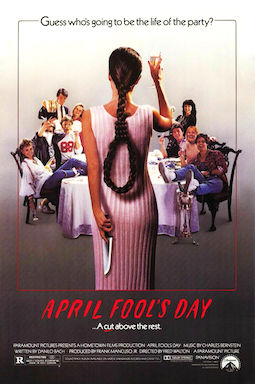
It’s either brave or stupid.  Maybe both.  Writing about a movie you haven’t watched, I mean.  Multiple people (do I have a reputation, or what?) have pointed out to me that Good Friday (for some) is the release date for The Unholy.  Since Good Friday’s a week away I guess we’re getting an early start this year.  The Unholy is a new horror movie and although I try not to watch trailers before seeing a movie—too many of them show too much in advance—I already have a sense of what it’s about.  This post isn’t really about the movie, however.  It’s about the bigger issue.  The concern many have is that it’s being released on Good Friday.  One thing I’ve learned is that to get attention you have to shock people, no, Donald?  Getting noticed is difficult and outrage generally works.

Friday, for many, is movie night.  Good Friday is, for some Christians, a day for church.  I’ve yet to have an employer (other than Nashotah House) that recognized it as a special day at all.  Easter always falls on Sunday so there’s no need to give time off work, at least in this capitalist, Christian culture.  But if you try to release a horror movie that day, people notice.  Mel Gibson knew that crucifixion could make the basis of a horror film, and people noticed.  Sitting over here in the backwaters just outside academe, I took to horror as a means of keeping my book writing active.  One reason was that horror gets people’s attention.  (It also helps if your books are reasonably priced.)

As a young man I used to spend a good deal of Good Friday in church.  Since I was serious about school I’m thinking we probably had the day off in my district.  Attending a Christian college, followed by seminary, I suspect these also paid attention to the liturgical year.  Then in the real world I learned the truth—it’s just another day.  A day for going to work and increasing the profits for whatever company may have hired you.  When the day’s over you’ll be inclined to relax, and perhaps watch a movie.  Right now going to a theater opens the possibility for horror itself so I won’t be there on opening night for The Unholy, but I think there was some savvy thinking going on, in any case.  And it may just be that the movie was titled specifically to fit the occasion.


Being Equal Again

Things creep up on you.  Like the equinox.  It really should be a holiday, but then again today’s already Saturday.  And from today, for the next six months, there will be more light than darkness.  It was an occasion ancient cultures marked and celebrated.  For us, unless it happens to fall near Easter (it’s still a couple weeks away this year), it’s an item in the news feed and nothing more.  It is, however, an opportunity to celebrate our place in nature.  The temperatures are beginning to warm just a bit around here, despite the flecks of snow in the air just three days ago.  The more tenacious of the spring perennials have already begun to shine green.  Things have begun to come back to life.  That’s why Easter is always in the spring.

Today it will be light as much as it is dark.  Balance.  Our old wobbly earth strikes this metaphorical fulcrum twice a year, giving us a glimpse of what lies ahead.  Birds, those great prognosticators, have been showing up to let us know things are about to change.  Finches, robins, starlings, and mourning doves have been conspicuous the last few days.  Even as the dirty, icy snow piles continue to hold on in their private mountains, they too seem to know time has come to be moving on.  Change is the way of nature.  This just happens to be the half of the year when we can see what we’re doing.  At this great balancing point of the year we should take the opportunity to ask if we like where we’re heading.  Do we welcome the light?

Soon enough we’ll begin to take it for granted.  Life will continue its busy ways even as we tell ourselves summer is the time for vacations.  Perhaps so.  But let’s linger in this moment.  Take a few minutes to ponder what it means to be in balance.  Equality.  It feels like something worth celebrating.  Corporate American parsimoniously counts days that might be considered grudging respites from trying to cop a profit.  Although we’re given Christmas off it can’t abide that moving target called Easter, which always comes on a Sunday anyway.  Here in that calendrical holiday barren zone between Presidents’ and Memorial days, we’ll always find spring, if we look for it.  It’s evident in the changing of the light, even if there’s still a chill in the air.  Even as our bosses ignore it, the red buds begin to appear on the trees.


International Women’s Day 2021

Changing one’s way of thinking is difficult.  So difficult that we generally don’t try it unless we’re compelled to do so.  One such compulsion is education.  Cultures that have embraced education are those that have led to great advances.  In this context it’s more than a little surprising that women’s rights are still held to be less important than those of men.  More education is required, it seems.  Today is International Women’s Day.  Of course it’s not a day off work because capitalism is all about men’s need for endless acquisition.  At least we can pause and consider for a few moments that life itself wouldn’t be possible without women, and justice, nearly worldwide, is represented in feminine form.  What can we do to make the world open its eyes to the obvious?

I read a lot about religion.  While I post here about the books I read, they are really only the tip of an iceberg.  My job largely consists of reading.  One of the themes that constantly runs through my own personal continuing education is that religion has indelibly changed our ways of thinking.  Even strident atheists today announce their stridency from a context formed by religion.  I’ve pointed out on this blog numerous times where even scientific thinking is mired in a wider context that has been constructed by religious thought.  One of those larger contexts is the subordinate role of women.  It is likely no coincidence that matriarchal cultures developed where there wasn’t a religion devised by men to impose a patriarchal governance on the world.  It’s so obvious once you learn to see it.  We need to be educated.

Women, it is obvious from an unbiased point of view, are equal to men.  As we educate ourselves further about gender and how religion has informed its perception, we come to realize that even binary assumptions—either male or female—are premature.  Underlying it all is humanity.  Human lives.  Those of men are no more important than those of women, or of those between.  Religions often like to make sharp distinctions.  Those distinctions are more abstract than reality.  The world is made up of real people and roughly half of them are female.  Today is set aside to recognize and celebrate that fact.  To recognize the contributions women have always made to society and civilization.  Let’s take the opportunity to educate ourselves, and  let’s be conscious of the fact that women are just as valuable as men and their foibles.  More than that, let’s put this truth into practice.


One Day or Another

Although normally a time for celebration, Mardi Gras, I’m told, was subdued this year.  Today is Ash Wednesday but many of us feel like we’ve been living a year of Lent already.  I once told a fellow office worker on Ash Wednesday, “I think about death every day, I don’t need a yearly reminder.”  Looking out at the old snow, melting, freezing, refreshed with occasional flurries, I’m reminded of the cycles of nature.  I’ve been watching the turn of the year’s wheel.  Over the solstice I looked into Yule, and just a few days ago considered Imbolc.  The wheel of the year is a symbol for modern earth-based religions seeking to be kept in sync with nature.  It is a cycle, slowly turning.  Death, in this way of thinking, is part of a larger system.  It seems appropriate to consider it this Ash Wednesday.

I say it’s Ash Wednesday but it would be more correct to say “for many Christians it’s Ash Wednesday.”  Cultural imperialism is difficult to shake.  With the pandemic still embracing us tight we haven’t had much reprieve from thoughts of death these many months.  Thinking of the wheel of the year, however, may bring hope.  A wheel in motion spins around to a new beginning that, in the nature of circles, is equally at every point.  New beginnings are offered every day.  While we’ve never been in a year of isolation before, there is nothing that hasn’t been before.  Self-aggrandizing dictators, world-wide pandemics, calls for social justice and fairness, have all come around before this.  They may come around again.  The main thing is to keep it moving.

It moves, in fact, without us.  One of our human foibles is being species-centric.  When we discuss, in a pique of teenage angst, of “destroying life on earth” we really mean destroying humankind and perhaps many other species as well.  Not all.  With a kind of collective insanity we go about warring against our own kind, exploiting all other species we deem valuable, and talk as if that’s all that matters.  Today, for some, it is Ash Wednesday.  For others it is World Human Spirit Day.  For many of us it’s just another workday among many very similar, cut from the fabric of a year that has no even spokes to keep it rolling.  Beneath our feet this orb spins on, regardless.  The cycles continue, with or without us.  How wonderful it would be if we could actively contribute to their progress.

Photo by Ameen Fahmy on Unsplash


Leadership

After four years it finally feels safe again.  We can celebrate Presidents’ Day, although now and forever with some trepidation.  Even as Republicans still protect the insurrectionist Trump, democracy has survived his tenure of horror.  Many Americans don’t realize just how close to Nazi Germany we came.  There are many who hold party above the good of the nation, something our founders, one of whom we celebrate today, feared.  The outdated safeguards of democracy, such as the electoral college, have been used more than once to “elect” presidents the American people did not want.  One guess as to which party this has only favored.  Democracy, we’re now being told, is fragile.  It shouldn’t be.  Only the designs of a party scheming for personal enrichment makes it so.

Today we can at least take a breather and be glad that we no longer have a bigoted, sexist, classist, racist incumbent.  We have a female Vice President of color.  We are on the long, slow road to recovery.  The senate, clearly recognizing Trump’s danger to the nation, voted to acquit him because Republicans fear not being reelected if they stand up to him.  Our democracy’s not out of the woods, even this Presidents’ Day.  Until the GOP learns to grow a backbone we’ll be in constant danger of collapsing.  Anyone with back trouble knows how it can stop you in your tracks.  Of course, once you’ve made a deal with the Devil, there’s no getting out of it.  Most Republicans could benefit from just a touch of folk wisdom.

When one party sides with armed thugs who’d have happily killed them if they’d been found just a little over a month ago, our grounds for celebrating today remain on thin ice.  The GOP, which has no moral compass left, has decided that bullies and armed bandits are the way of the future they’d like to see.  Although Trump lost both popular elections they’d still vote for him a third time and support him again if he incited another insurrection.  It’s Presidents’ Day but we’re still on the edge of a precipice.  When a political party refuses to learn from its mistakes, and indeed, tries to build upon them, our celebration of democracy must, by definition, be subdued.  We do have grounds for hope.  Efforts to get the coronavirus under control are starting to take effect.  We have a sane human being in the Oval Office.  Until the GOP disavows evil, however, we’ll continue to live in fear.


Love or Saints?

One of the many oddities of life at Nashotah House was that we never celebrated St. Valentine.  I wouldn’t expect a mostly male and neurotically homophobic community to mark Valentine’s Day as for lovers (most of the faculty and many students were married, however), but the saint’s name wasn’t uttered in my years there.  Of course, commercialization of holidays does taint them somewhat.  It’s difficult to take a day seriously when you’re being told that how much you spend will be the sign of how special it will be.  With St. Valentine’s Day, however, I believe the topic was much too close to something the church had long feared—sexuality.  I’ve often pondered how this strange obsession evolved.  Judaism, from which Christianity sprung, isn’t the origin of this antipathy to being fully human.

The trouble likely starts in the Bible.  The New Testament, in particular.  No mention is made of Jesus having been married.  Paul, in his usual way, made it an issue but fell short of outright condemning it.  His words would help convince the Roman Catholic Church that mandated celibacy was a good idea.  Clearly, however, Augustine of Hippo, who lived after Valentine (depending on which one you elect to follow) saw the whole enterprise as flawed.  Making up the concept of original sin and tying it in with sexuality was a certain means of creating a problem.  Not that Christianity is the only religion that promotes celibacy, of course.  But when it came to Nashotah House there was really no concern about what other religions taught.  Even on February 14 no collects were recited mentioning the saint who must not be named.

The history of saints’ days is a fascinating one.  A few of them made it into pop culture—after Presidents’ Day there’s no national holiday until Memorial Day in May, so who can blame people for looking for reasons to celebrate while still waiting for spring?  Saint Patrick wasn’t similarly given the cold shoulder at Nashotah in my years there.  And although it moved around quite a bit, you could usually count on April for delivering Easter.  We didn’t celebrate Presidents’ Day.  Nor Martin Luther King Day—not being Catholic his canonization process was a non-starter.  The long, cold stretch between Epiphany (now Insurrection Day) and Lent was one devoid of popular holidays.  I suspect that despite the number of saints (and there are lots of them) the singling out of Valentine was considered to be asking for trouble.  That was many years ago.  Oddities, however, have a way of remaining in long-term memory.


February Festivities

One of the more commonly overlooked holiday complexes comes around Groundhog Day.  It may seem strange to be thinking about spring right now, but it’s on everyone’s mind.  (In this hemisphere anyway.)  When seasons actually begin is a matter of perspective, and that’s not just a north-south hemisphere divide.  With our scientific outlook, we take the path of equinoxes and solstices.  If you look closely, however, there is a set of seasonal holidays that falls midway between them, dividing the year into eight spokes.  These cross-quarter days were recognized in some cultures as the early inklings of a new season beginning.  If Halloween (Samhain) marks the start of winter, this holiday, Imbolc, is the beginning of spring.  The day had many associations, one of which was watching a groundhog (or other animal) to see if the weather would begin changing sooner or later.  Spring itself is inevitable.

The popularity of Groundhog Day owes quite a bit to the movie of that name.  The film is more complex than its classification as a comedy might suggest.  Although the day itself does deal with the cyclical nature of, well, nature, repetition isn’t an inherent theme in the holiday.  Neither is it part of the related Christian celebration of Candlemas.  Indeed, I tend to think Groundhog Day has the makings of a horror story.  Being stuck in time could represent a terrible fate for many.  Interestingly, Phil Conners (Bill Murray), after having been stuck in this same day for a considerable amount of time, suggests to Rita Hanson (Andie MacDowell) that he might be a god.  He is immortal and he knows everything that is to be known in Punxsutawney.  He can predict things before they happen (of course, he has become Punxsutawney Phil, in a manner of speaking).

A philosophically rich movie, the story has appealed to adherents of several religions.  That, in itself, is amazing.  The endless repetition could represent samsara to those of south and east Asian religious inclination.  The learning to be kind, and even forgiveness aspects, appeal to those who want to find a Christian message in it.  Not bad for a holiday nobody gets off of work, and which frequently falls in the middle of the week.  The holiday complex of Imbolc, Candlemas, and Groundhog Day represents what had once been a more prominent season than we currently recognize.  Revivals of the more ancient celebrations have begun to appear, but the endless repetition so valued by capitalistic systems has nearly captured us all.