Flight Path

It’s been some time since I was on a plane.  Or in a hotel.  These things seem strange and foreign to me now.  Covid-19 is now a fixture in life and we, as humans typically do, have adjusted.  Of course I was flying for Thanksgiving on the busiest travel day of the year.  Seeing all those people standing in line at 4:30 a.m. at the airport made my lifestyle seem a little less weird.  I’m used to being up at this time.  They did have to de-ice the plane at Lehigh Valley International Airport.  I’ve never been on a plane that was taking a shower before.  I also didn’t touch anything but my book.  And it seemed that those who “don’t believe in” masking weren’t making a fuss because you can’t win an argument with the FAA. I’m thankful for that.

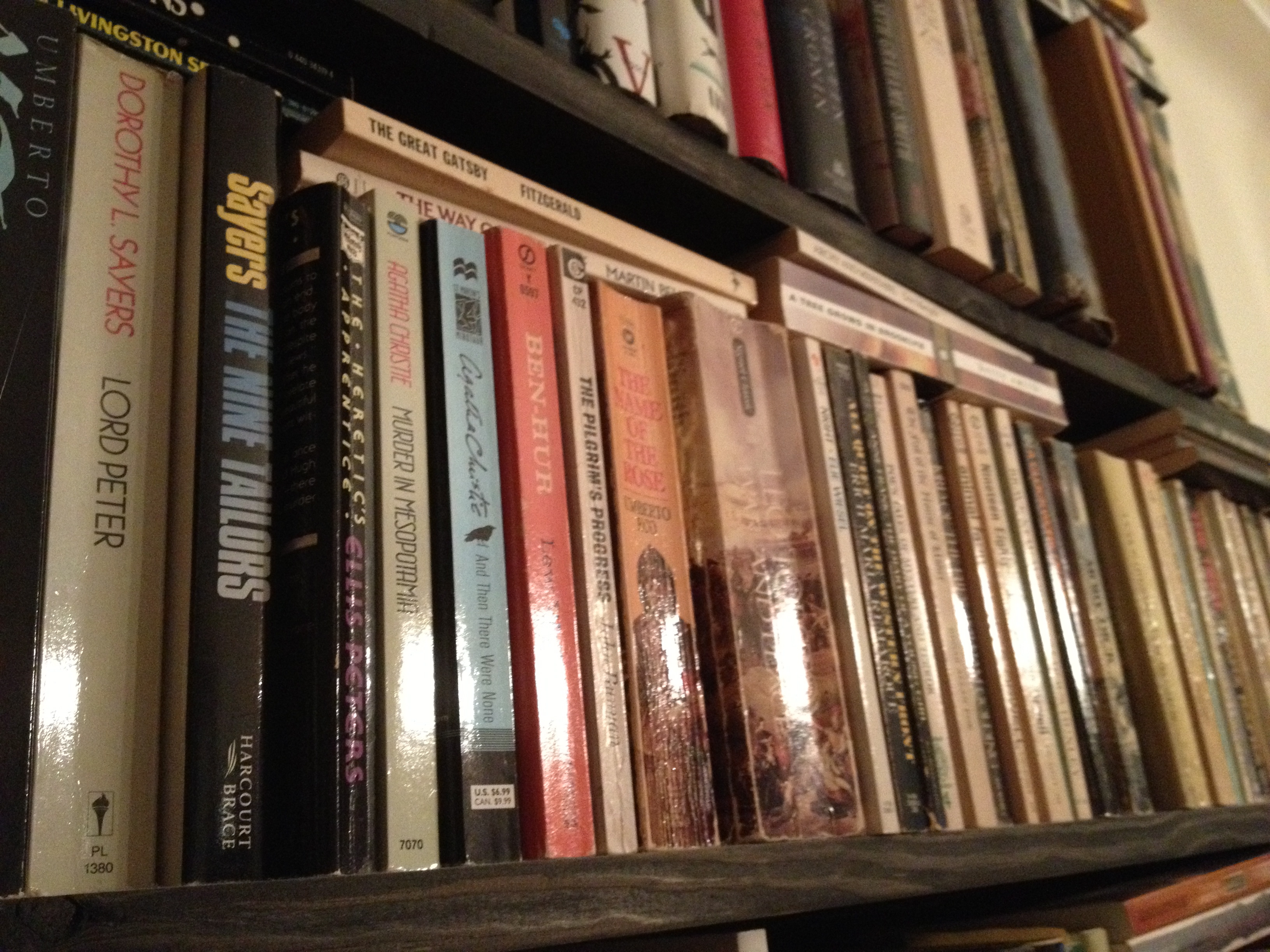
I’d almost forgotten how to fly.  On the first leg of the journey I was the only one whose “hand-held device” was made of paper.  Connecting out of O’Hare, however, quite a few more books made an appearance.  I sit in front of a device all day at work, so on a rare day off I don’t really want to have to stare at a screen.  Although the total air time was under four hours I brought seven books in my personal item.  I finished one of them (the longest) on the trip.  I still have plenty of choices for the flight home on the weekend.  Thanksgiving, even more than Christmas, is the time for family gatherings.  We’re all vaccinated on this side, so it feels mostly safe.

This Thanksgiving I’m thankful that no turkeys were harmed on my account.  If you knew how “thanksgiving turkeys” are raised it’d put you off your feed, as the saying goes.  I’m also thankful that travel is possible, even if with added restrictions.  Frankly, I’m glad for them.  Anti-vaxxers don’t seem to realize that it’s not just themselves they’d be protecting, but others as well.  Vaccines and masks aren’t just about selfish desires.  Last year we couldn’t even consider traveling.  Covid-19 has changed the way we do things, perhaps permanently.  We can be thankful that we learn to adjust.  I’m no fan of crowds, but there was something a bit exhilarating about being among other goal-oriented individuals all focused on being with loved ones.  It gives me renewed faith in humanity, and that is something for which to be thankful.


Horror Week

“Remember, remember, the fifth of November,” the old rhyme goes.  Earlier this week I advocated for Halloween being the start of the holiday season.  There’s been a lot going on this week and I’m now reflecting on how Halloween also took some of its identity from Guy Fawkes Day (or more properly Guy Fawkes Night), here on November fifth.  Halloween, as we know it, incorporates traditions from Samhain (actually November 1), All Souls Day (November 2), as well as Guy Fawkes (November 5).  All the while the Hispanic world is observing Dia de los Muertos, a multi-day holiday whose origins are somewhat uncertain but which shares similarities with Halloween.  In other words, it’s a veritable week of spookiness to get our November started off right.

Ironically, at least in corporate America, none of these are work-free holidays.  For the Celts Samhain was the most important day of the year.  A day when the dead might wander into our realm or we might stumble into theirs.  For the modern person it’s a day of checking email, making deals, trading and evaluating how well we did at it.  Pretty mundane stuff.  The message of all of these holidays is that there are matters of deeper import going on.  We should perhaps look up from our monitors and see.  Just as that veil between the living and dead thins at this time of year, so does that line between work and personal life, when our laptops are as omnipresent as a haunting deity set to keep our minds on the sin of not working.  

Guy Fawkes is about rebellion.  More specifically, putting down rebellion.  Keeping the status quo.  Halloween and its siblings are all about challenging the way things are usually done.  I often wonder what it would be like if people took it seriously.  The costumes are fun, yes, and the trick-or-treating, but there’s something more serious underneath.  Perhaps symbolically we pretty much ignore All Saints to Guy Fawkes, or Dia de los Muertos as pleasant diversions.  There’s some spiritual heavy lifting going on behind the scenes, however.  It’s not all about fun and games, because fear is always with us.  We know there are problems but it’s more comfortable keeping things as they are.  Guy Fawkes, perhaps for a cause we see as obsolete—restoring a Catholic monarchy—was trying to change things for the better.  What’s more, his motivation was religious.  There are spooky parallels here, even today.  It might be good to take a day off work to ponder the implications.


Holiday Season

Halloween, in some ways, is the unofficial kick-off of the holiday season.  This was made clear to me when someone recently played the song “Soul Cake” in the context of Halloween.  I’d only ever heard the song in a Christmas context before, and a little research led to the discovery that asking for soul cakes originated as a Halloween custom (before it was called Halloween, even) but was considered appropriate anywhere from All Hallows through the twelve days of Christmas.  The common thread here is, of course, gift giving.  We tend to keep our holidays discrete for commercial reasons but there is a natural continuity from All Hallows Eve through what used to be known as Epiphany (now Insurrection Day).

Holidays help us prepare for things that we know are coming.  For the Celts, Samhain—which led to our Halloween—was the start of winter.  With no Daylight Saving Time to oppress them with the changing of their clocks and throwing everything off for weeks at a time, this was the dark part of the year.  Holidays are helpful in getting through times when natural light is lacking.  From Halloween you can almost see Thanksgiving.  At Thanksgiving we anticipate Christmas.  The winter solstice holidays see us through the shortest, darkest days of the year.  I’m no fan of capitalism, but as long as we’re stuck with it I wonder why we don’t advocate for Halloween as an official holiday.  The start of the holiday season.  In my local town the Christmas lights went up on November 1.

East and south Asian religions spend considerable energy teaching that change is the only permanent aspect of life.  Western cultures, on the other hand, focus on the status quo, the assumption that once something is established, it will, or should, remain as it is.  Time reminds us that change is constant.  We can allow entropy to win by sitting by and letting things fall apart, or we can try to build something useful to prevent a collapse.  Holidays change over time and over religions.  Halloween was a pre-Christian new year celebration.  From there it changed into a solemn holy day to remember saints and then the dead.  Incorporating aspects of Samhain and some customs such as soul cake begging and guising, it grew to a more fun celebration.  Now it’s a commercial occasion to rival Christmas.  The year is constantly changing.  Just when I start looking for my sweaters I see my light summer clothes haven’t yet been put away.  I look forward to Halloween as the start of the holiday season until we get past the longest night just before Yule.


Spirit of Halloween

So it’s Halloween.  It’s also Sunday.  I’ve been thinking quite a lot about the spirituality of this particular day.  Now it’s often treated as a trick, a consumerist holiday with too much candy and befitting spooky decorations.  Like all holidays Halloween has evolved from its origins to how we celebrate it today.  Other than Wiccans and Neo-pagans, however, not too many take it seriously.  At Nashotah House, and therefore likely at some parishes scattered around the world, All Saints Day—which is tomorrow—was a day of obligation.  What we call Halloween was the day before this major festival of praising the faithful.  There is some evidence that All Saints was moved to November 1 to counter the lively celebration of Samhain, or the Celtic fire festival marking the onset of winter.

The Celts included an intellectual class known as Druids.  Druids seem to have been the “theologians” (oh, that word!) of the Celts and they mandated that their teachings not be written down.  A great deal of information was passed on by intensive memorization and only became known to us outsiders because after Christianization it began to be written down.  Their idea of the afterlife seems to have been that it was being born into the other world.  In the otherworld life was different and apparently in some respects better.  When our time there drew to a close, our death led to our birth into this world.  The cycle continued on and on.  Samhain was the time when crossing between worlds could occur.  Death wasn’t a cause for sorrow since the otherworld awaited.  Birth into this world was more problematic.

Fear of death seems natural enough to us.  Even though it’s inevitable and this world’s graveyards are full, somehow we seem to think we can avoid it ourselves.  Our evolved survival instinct runs out of control since we’ve eliminated many of the causes of death that have plagued our species (and many other species) for millennia.  Eons.  As we’ve done so we’ve distanced ourselves from death—dying in hospitals, our corpses prepared in funeral homes, buried and eventually forgotten.  To me, the Celtic idea, from a world where death was likely much more close to hand, seems a more healthy outlook.  Instead of fear, why not consider it a day of wonder and celebration?  To many, I know, that is a spooky thought indeed.  It’s more than a day of masks and candy, however.  And we might learn from it if we stop and ponder.


Interview Two

October turns the northern hemisphere mind toward Halloween.  It must be strange to receive northern media while living in the global south—Halloween occurs just as spring is getting underway.  I guess that’s what May Day’s for.  In any case, in the United States Halloween thinking is in nearly full swing.  My last two books, while not Halloween themed, look at horror films which, in keeping with October, are on everyone’s mind this season.  And it’s been quite a week for interviews.  The second half of my podcast interview on The Incarcerated Christian was posted yesterday.  If you want to hear more fun Q & A with Robin and Debra, click here.  I’ll post more about this Friday, but tomorrow my interview with Eric Ziolkowski of Lafayette College will air as part of the Easton Book Festival.  The festival’s going on right now, so be sure to check out the offerings online.

One bit of advice that I give as an editor: if you want to make it as an author you need to promote your own work.  Some of us were reared to believe that it’s in poor taste to do this, but in the internetted world it’s pretty much a requirement.  Something I learned from political activism is that every election is local.  Getting noticed also has to start in your own backyard.  I love doing interviews.  It’s always flattering to know that someone’s read your book and wants to know more about it.  I’ve started to explore the newish area of religion and horror.  From what we see in the news, it seems like it’s an area that’s likely to take off.  But only if those who work in it get their stuff out there where it can be seen.  (Or heard.)

Neither Holy Horror nor Nightmares with the Bible have sold very well.  They’re expensive, and academics, who will spend money on books, are still trying to decide if this area’s worth exploring.  I admit that there’s a puerile kind of naughtiness to taking monsters and “low brow” entertainment as a subject of study.  Horror, however, has lots of fans.  Perhaps not in the academy, but in the real world.  I like to think such marginal areas bring people together.  Horror, like demons, isn’t going away any time soon.  Instead of running away from what you fear, why not try embracing it?  If not even that, please consider the free content available on The Incarcerated Christian and the Easton Book Festival.  After all, Halloween’s just about here…


B Film

October brings horror films to mind.  As soon as the calendar clicks over, discussions of favorite scary movies begins.  As I’ve mentioned many times before, it is the one time of year when those of us who watch horror don’t feel so odd.  It is a little strange, however, to be watching movies related to The Wicker Man at this time of year.  As holiday horror that particular movie is set at the other end of the year, in May.  So I had to see The Wicker Tree, something I’ve avoided doing all these years.  Neither properly a sequel nor a remake, The Wicker Tree is Robin Hardy’s re-envisioning of the story with a larger budget.  There’s no way to prove it, but it seems likely that it was released in response to the unfortunate remake of The Wicker Man in 2006.

There are any number of things that could be said about The Wicker Tree, not least of which is that it’s clear Anthony Shaffer was a far better screenwriter than Robin Hardy.  (Shaffer had written a sequel, more properly conceived, which has not been filmed.)  Robin Hardy was, of course, the director of the original movie.  Plagued by low budget, rushed filming, and lack of production company support, The Wicker Man nevertheless soared.  The Wicker Tree is what is termed a “spiritual successor”—it doesn’t directly carry on the story of the original, but draws its inspiration from it.  It was based on a novel written by Hardy titled Cowboys for Christ.  Two evangelical missionaries are sent to Scotland to convert as many lapsed Christians as they can.  Of course, their invitation to Tressock is a trap so they can be sacrificed on May Day.

Despite the many unanswered questions the film leaves, to someone raised evangelical it seems that Robin Hardy really doesn’t understand what evangelicals are.  Beth and Steve, on their tour through the lowlands, do things evangelicals just wouldn’t do.  They drink, they dance, they swear, they play cards.  The only thing he seemed to get about evangelicals is they like to sing and talk about Jesus and hand out pamphlets.  This is something I often see is movies—those who try to portray evangelicals haven’t actually been evangelical themselves and don’t understand them.  I also find this in my interactions with British colleagues all the time—they don’t really comprehend what evangelicalism is.  That could be a topic for its own post.  In any case, The Wicker Tree has its moments, but it’s convoluted, cynical, and off-the-mark.  It may’ve been intended as a spiritual successor, but its prototype required no re-envisioning.


Discount Nightmares

Now that we’re past the equinox it’s officially okay to obsess with monsters, right?  (Any excuse will do.)  Nightmares with the Bible was officially a pandemic book.  Academic publishers (especially) found out that books released in 2020 tended to flop.  People weren’t thinking about much other than the pandemic (or crying about losing an election fair and square).  Books, of course, take a long time to write and a long time to produce—it’s not as simple as it looks.  And if your production schedule falls during a pandemic, well, be prepared.  In the case of Nightmares there was the added burden of price point.  When all you’re thinking about is survival, cashing out a Franklin to read about demons seems hardly wise.

Just yesterday I received a flyer, that I’m passing along to you, for the book.  It has a discount code on it (look at part 2 below) so that the book is merely expensive rather than very expensive. Nightmares is part of a series titled Horror and Scripture.  The series, published by Fortress Academic and Lexington Books, is now coming out with its third volume.  The publisher, starting to recover from the pandemic, is promoting all the books in the series.  You see, Nightmares was not only a pandemic book, it also missed that highly sought-after pre-Halloween release.  Books that deal with horror get a boost during the holiday season.  Ironically the same thing happened with Holy Horror.  Both books came out in December when nobody but Charles Dickens is thinking about scary things.

Academic book pricing is based on a model that’s beginning to crumble.  It’s that capitalistic trope of what the market will bear.  The market is academic libraries, and it has been demonstrating lately that even they aren’t made of money.  I don’t know if libraries get to use discount codes or not—it can’t hurt to ask your librarian.  Fully employed academics, however, will sometimes pay a hefty price for a book they really want or need.  My shelves upstairs are filled with books that were overpriced but were required for the books and articles I wrote when it was an expectation of my job.  My next book, which is now in the negotiation stage with the publisher, will be more reasonably priced.  It will likely have a smaller appeal, but you’ve got to start somewhere.  I sincerely hope I’m through writing hundred-dollar books.  Please pass the flyer along to all your rich friends—it’s just in time for the haunting month of October.


Mabon

Given the immense popularity of Halloween, and the attention lavished on the solstices, it’s a little odd that Mabon is so infrequently observed.  Unlike its twin, the Vernal Equinox, the Autumnal Equinox has really only recently been added to the natural calendar observed by Wicca.  The ancient Celts, from whom many Wiccan traditions are drawn, celebrated Samhain, which became our Halloween.  Their other holidays divided the year into seasons, but perhaps the Autumnal Equinox was a little too subtle to merit much attention.  Or it simply fell between their own four-fold divisions of the year.  Starting today, however night will be longer than day, a situation that will last until the Vernal Equinox.  In other words, we’ve entered the dark half of the year.

As someone who enjoys horror, I often ponder the benefits of living in the dark.  Theologically the dark is often cast as evil compared to the light.  We have taken that metaphor and made it literal.  This makes sense, I suppose, given our natural fear of the dark.  The only real predators in the night, however, are now of our own kind.  The dark can also be peaceful, a time for contemplation.  One of the things adulthood has on offer is disrupted sleep.  Many of us find ourselves awake at some point in the night.  We need to become comfortable with it.  I’m not a Wiccan, but I appreciate the naturalness with which Mabon acknowledges the fact that half the year is darker than the other half.  It’s also a harvest-themed holiday, one of the many that stretch to Thanksgiving and on to living off the stored supplies through the winter.

No doubt there is some melancholy associated with Mabon.  The lessening of the light brings a chill with it.  Summer’s ease is at an end and we will need to start layering our clothes and adding blankets back on our beds.  Already it is dark when I begin work, which means the brightest part of the balanced day and night is spent indoors at the computer.  I will need to leave the harvest, so obvious in the fast-approaching October, to others.  Mabon and Halloween aren’t company holidays, but that fact won’t stop the encroaching dark.  There’s a wisdom associated with acceptance and even melancholy can been sweet.  The leaves, while still mostly green, have begun to turn.  The bright songbirds of summer have given away to ravens and crows.  We need to learn to walk in the dark again.  Perhaps it’s time to consider what Mabon can mean.


Screaming Season

The signs are all around.  The orange and black Spirit Halloween signs are appearing where vacant storefronts stand.  Advertisements for autumnal activities are cropping up.  Brochures broadcasting local haunted festivities now adorn store counters, free for the taking.  I picked up a leaflet for the local Field of Screams the other day although I really don’t like to be in scary situations.  I do appreciate the spooky sense that they generate, however.  This local event runs from early September through early November—the two months enterprising farmers can draw urbanites to their land, cash in hand.  Halloween has been a major money-maker for many years now.  The less doleful minded wonder why, but I think that lots of us are really afraid.  Halloween says it’s okay to be so.

Perhaps it’s the realization that it’s all in good fun and nobody will really hurt you.  I’ve attended a few of these haunted events over the years, but it was more fun to participate in them.  Perhaps it goes back to Nashotah House.  I’m guessing that most of you’ve never been.  Nashotah is a gothic campus, at one time pretty isolated, out in the woods.  Halloween was, once upon a time, a real celebration there.  Our maintenance crew would offer a hayride through farm fields owned by the school, then through the cemetery on campus.  I used to dress in a grim reaper costume and carry a kerosene lamp through the graveyard, awaiting the tractor.  Nobody instructed me to do it, but we all knew it was in good fun.  And I wasn’t the only volunteer who’d pop out from behind headstones.  Students got into the spirit of it too.

These days remembering such shenanigans is more appealing than actually going out at night to have other people scare me.  The last time I went to a haunted maze it was really too unnerving for me to enjoy.  I volunteered instead for a local haunted house in New Jersey.  The run up to Halloween was usually an intensely creative time of designing and fabricating homemade costumes, and thinking of ways to make pumpkins look scary.  Now it’s become a season in its own right.  An important segment of the economy.  I won’t be going to our local Field of Screams, but I will understand those who do.  Changes are in the air.  It’s dark quite a bit earlier these days.  The air is chilly in the morning.  And the local fear fields open this weekend.


Belated Lughnasadh

We’re accustomed to think of summer as a “non-holiday” season beyond the bookends of Memorial and Labor Days, and the midsummer Independence Day.  Still, ancient people felt the turning of the year at the start of August with the festival of Lughnasadh.  I often forget it myself, although I’ve been feeling a tinge of autumn in the air this past week.  You can smell it at the very tip of your nose if you’re sensitive enough.  The cool of the pre-dawn air presages changes to come.  The wheel turns constantly.  Lughnasadh was actually Sunday (August 1).  Along with Samhain (Halloween), Imbolc, and Beltane (May Day), it divides the year into quarters (now called cross-quarter days since they fall roughly midway between the solstices and equinoxes).  It reminds us that summer is getting on; Lughnasadh was the festival of early harvest.

Lughnasadh was originally said to have been initiated by Lugh, one of the most prominent of Celtic deities.  Several European cities, such as Lyon, have names that likely derive from Lugh.  A warrior god renowned for his ability with crafts, he was also a savior god.  Although I’m no expert in Celtic mythology, it’s difficult to live in a Gaelic country for three years and not absorb some of the fascination for it.  Unlike Greek mythology, there aren’t large numbers of ancient literary pieces that tell the full story.  There are tales enough to know that Lugh was a major god of pre-Christian Europe and that as Christianity spread he was challenged by another savior god.

Although now rather obscure in much of the world, the Christian holiday of Lammas, or “Loaf Mass” was settled on August 1, likely to draw attention from Lughnasadh.  It too was a celebration of first fruits, for as reluctant as we are to let the light and warmth of summer go, plants are beginning to feel the onset of fall.  Lammas is a festival of communion—thus the loaf—and continues to be celebrated with local customs.  It includes the blessing of bakeries or of bringing bread to church to be blessed.  Lost in the modern rendition of summer, Lughnasadh or Lammas is barely recognized by most of us.  I’d never heard of it until I began researching holidays for a book I wrote that was never published.  Festivals that celebrate the changing seasons have an appeal to those of us isolated indoors behind screens all the time.  Perhaps it’s time to bring some summer holidays back. Lugh says yes.

Perhaps Lugh, via Wikimedia Commons

April Really Fools

What’s the best kind of April Fools’ Day prank?  What about one that occurs nowhere near April first?  Actually, I’m no fan of practical jokes.  They usually come at the expense of someone and really aren’t that funny.  And where does that apostrophe really go anyway?  Still, because of a project I’m working on, and because it was available on a streaming service I use, I watched April Fool’s Day in July.  An example of holiday horror from the 1980s.  Although moderately successful at the box office, the movie never took off to become a cultural icon like, say, Halloween did.  In fact, I only recently heard of it.  Part of the reason, I suppose, is the ensemble cast is pretty large (nine friends together for a weekend) and none of them played by big names.  In case you don’t like pranks, there will be spoilers below.

The trope of a number of young people—often college students—isolated in some inaccessible location is common enough in horror.  The optimal number seems to be five, otherwise an hour and a half isn’t really time to get to know everyone’s character well enough.  Of course, one by one they get killed off.  Since it’s set on April Fools’ Day you’re led to think some kind of serial killer is loose on the island, but in the end the entire thing turns out to have been an elaborate prank.  Nobody has really been killed and the audience is on the receiving end of an extended practical joke.

As I try to catch up on horror movies I missed I quite often have to rely on those that come with one of the few streaming services I use.  When I was myself a college student I couldn’t afford to go to the movies often.  Home video hadn’t really become affordable yet to people of my economic bracket, and besides, I spent a lot of time studying.  As the only one in my family that watches horror, finding the time to do so remains a challenge.  And there is quite a backlog.  I’ve been trying to watch horror set on specific holidays as a way of keeping myself honest.  Even that can prove a challenge, however.  I can justify the time, however, and the somewhat modest cost, as research. Hey, somebody has to do it.  And that’s as good an excuse as any for watching April Fool’s Day in July.


Independently

I’m feeling independent today, even if it’s only just temporary.  For the first time in four years it feels like I’m living in the United States again on our national holiday.  I’m actually spending this holiday weekend moving a family member.  That means drama—almost by definition.  It began two days before.  U-Haul sent us a text telling us our truck would be in the wrong city, over an hour away.  We called to correct the mistake and were told the truck would only be available five hours later than scheduled in the city where we actually were.  We had no choice but to accept.  The next day the saga continued.  We’d hired a local company to help us find a home for furniture no longer needed.  They arrived late, but there was a reason—the owner of the company had had a family tragedy that day and had to scramble to find help for the job.  They did a good job, though.  I’d use them again.

The day of the move our hired help called.  They were going to be late.  We went to U-Haul only to discover that their automated check-in software wasn’t working.  We had to stand in line for over an hour total before someone figured out they had to override the instructions so we could pick up the truck.  In the middle of this, the movers called again to tell us they still weren’t even in the state.  They were pre-paid a very pretty penny to help move the big items (we are small people, and I have a bad back; we need burly friends), but they would be several hours late.  We couldn’t put the smaller items on the truck when the big stuff was the unknown quantity, space-wise.  Hire-a-Helper, the company we’d used, sent a text saying our two hours were up and they were going to be billing a significant fee for extra hours.  The help had not yet arrived.

They turned up seven hours late.  We had arranged for help to unload on the other end, supposing that we wouldn’t have suddenly grown stronger or bigger in the intervening day.  Today, however, is our travel day—the one day we weren’t relying on others to do their job.  Our independence day, as it were.  We don’t need any fireworks.  Indeed, we hope for none.  All the careful planning collapsed under unforeseen circumstances.  But today we have the truck with the cool Colorado NASA image on the side and the open road. It’s quite cheering, actually. I’m always in the market for burley friends, but today it feels good to be independent.


All Day Long

The summer solstice is always a bittersweet day.  The longest day of the year.  From now on the days will begin, almost imperceptibly at first, to get shorter.  The wheel begins its six-month roll toward the cold, dark days of winter.  Although the year whiplashes through these extremes in the temperate zones, I wouldn’t have it any other way.  The changes are slow right now.  In fact, the celebration of Midsummer doesn’t usually come until about the 24th.  These long, languorous days can be like that.  

I’ve been studying holidays for well over a decade by now.  Some have origins that are obvious, such as the solstices and equinoxes.  Although ancient peoples were quite capable of observing and marking these days, it seems their perceptions of the seasons were somewhat different than ours.  Midsummer, to us, is the official beginning of summer.  We all know, however, that we’ve had days that’ve felt like summer already.  They start to come, often in May.  “Meteorological summer” is actually June through August while “astronomical summer” begins today.  Our calendars are a matter of convention.  Not only that, but the motivation to mark special days began as a religious impulse.  Otherwise we’d have no particular reason to tell one day from another.

But think of the ancients again.  People were generally illiterate, and although the elites could mark and know the actual solstice, Midsummer marks what the weather feels like on the ground.  Seasons, in antiquity, were understood by what was happening on the ground.  For example, in Ireland February 1, the festival of Imbolc, was considered the start of spring.  Ewes were lambing and that was a sure sign winter was beginning to end.  With such and outlook, folk wisdom reckoned that summer began on May Day, or Beltane.  In such a perspective, the longest day marks midsummer.  Yes, the heat and humidity have really yet to set in, but the climate in Ireland and the British Isles is tempered by the Gulf Stream and doesn’t reach, say, Midwestern extremes.

Those of us raised in scientific worldviews have been taught from youth that summer begins today.  People haven’t always seen it that way.  Not everyone experiences the extremes of weather that temperate regions of the United States do.    In the northern hemisphere—for the global south experiences its shortest day of the year today—the days get no longer than this.  Wheels by their very nature spin.  Our round planet now gives us shorter days until the other extreme is reached.


Celebrate Freedom

Perspective.  The most valuable thing I learned growing up was to try to see things from the perspective of others.  It’s the basis of sharing and empathy and kindness.  It’s what makes us human.  Juneteenth celebrates a Black holiday, but it applies to us all.  Today (actually tomorrow) commemorates the day when slavery was ended in Texas.  As much as southern states sometimes like to posture, all but the most frightfully unenlightened know that slavery is wrong.  The exploitation of others because we have the power to do so is the very embodiment of evil.  There’s no need for a devil if human beings can do this all by themselves.  Black lives do matter.  We need to stop countering this with “all lives matter” because until we acknowledge systemic racism such responses only serve to perpetuate the problem.

The history of the Christian (and yes, religion fueled and still fuels it) European domination of the world is a long, sad, and unethical one.  Blacks, because they’re often so easily visually identified, have borne the brunt of this domination.  In many ways this continues to be the case even today.  Red lining still exists.  Discrimination still exists.  Blacks are more likely to be imprisoned than others.  Poorly trained police are more likely to shoot and kill them.  This must change if society is to improve at all.  Congress has just passed a bill making Juneteenth a national holiday.  This gives the lie to the posturing of many of our elected officials.  This shows how deep Trump’s lies went.

More socially conscious employers made today a paid holiday in support of Juneteenth, even before the senate passed the bill.  We need to admit that we’ve been wrong.  We need to admit that special interests have kept us from seeing what should’ve been as obvious as the color of our own skin.  We’ve tried to keep slavery going.  We’ve made life hard for those easily identified as not “white.”  I have to wonder if this situation would’ve ever developed had we grown the more accurate habit of calling some people pink and others brown.  “White” was chosen for its theological implications.  Make no mistake, this was a carefully constructed divide.  Those who initiated the terminology—pink men, all of them—used their Christianity to demean, debase, and degrade other human beings.  Juneteenth celebrates one small step in what is necessarily a long journey.  We need to undo systemic racism.  We need to learn to say Black Lives Matter and we need to live it.

Photo by Leslie Cross on Unsplash

Ocean Day

Yesterday was World Oceans Day.  It’s probably a measure of how busy I’ve been that I missed it until well into the work day.  Environmental care is one of my major concerns—something that the majority of Americans share but which Republicans block at every chance they get.  The oceans are the largest part of our planet .  Viewed from certain angles, the globe has barely any land on it at all.  And yet, since we live on the dry part, we use the wet part as our dumping ground.  There is an entire island in the Pacific made of plastic refuse.  Big petroleum doesn’t want any alternatives offered even though plastic is one of the most toxic products we produce for other life on this planet.  Shouldn’t governments share the values of their people?

Born in the landlocked western part of Pennsylvania, I first saw the ocean when I moved to Boston.  It was almost so distracting that I couldn’t study.  Here was this seemingly endless expanse of water that we so poorly understand, the symbol of eternity and life itself, right before me.  It was while living on the coast that I came to read Moby-Dick.  I could spend hours on the rocky shoreline, gazing out toward the seas in wonder.  I’m not a sea-farer myself.  I have inner-ear problems and being on a ship for any length of time would likely lead to extreme discomfort.  I can imagine, however.  Eventually I would read Coleridge and Hemingway and understand that I was not the only one who felt this way about the seemingly endless water.

Some of my earliest literary memories involve Rachel Carson’s The Sea Around Us.  It’s another book that opened young, landlocked eyes to what our world really is.  The image of water eternally crashing onto the shore is a comforting one.  As Carson knew, we came from the water and we yearn for it still.  Life as we know it isn’t possible without our oceans.  Yet, having petty human needs for extreme wealth and a sense of power over others, we pollute these seas with oil and plastics and chemicals and figure it’ll be somebody else’s problem.  In reality, the problem belongs to all of us.  Plastic Island, as it’s now being called, is nearly three times the size of France.  It’s composed of 100 percent pollution.  The Great Pacific Garbage Patch is being considered by some the eighth continent.  World Oceans Day should never slip away unnoticed.