The Nature of Epiphany

Last year on January 6 we had an epiphany.  Many of us thought, I suspect, that since the angry mob wanted to kill Republicans and Democrats both that their actions would be condemned unilaterally.  Instead we learned that the Republican Party said, “Boys will be boys.”  And of course boys like to kill things.  A year later the GOP has stalwartly refused to condemn the attempt of a violent takeover of the government by a legitimately defeated candidate.  If the other party tried this they’d be calling “treason.”  We had an epiphany of a double-standard masquerading as evangelical Christianity.  Now, instead of thinking of today as the Christian epiphany, well, wait a minute.  Maybe that’s the epiphany we had—understanding what Christianity can become.

One of the tenets of democracy includes the freedom of religion.  Studying ancient religion can be quite revealing.  For one thing, we get a better idea of what religion was.  Few ancient authorities were concerned about what individuals actually believed.  Religion was largely what the powerful and influential did to placate gods who were easily bribed by sacrifice and praise.  The role of the average person was to be taxed to support this, and the monarchy.  I’ve been watching how, since the 1970s, the United States has been going that route.  We’ve always been a religious nation (“Christian” is much more debatable), but Richard Nixon’s ploy to swing evangelicals to the Republican Party worked.  Those not blinded by ideology will know that evangelicals tended to be staunchly Democrat.  Through the ensuing decades we watched Republican presidents giving our tax money to religious organizations they supported.  Why not throw another lamb on the altar while you’re at it?

The sacrificial system, you see, supported the temple staff.  Somebody had to eat all that meat!  Even in the Bible it was recognized that God didn’t exactly consume it the way a human being would.  Then last year on Epiphany, the party that’s supported just this kind of thing tried to throw all but Trump—yes, even Pence—onto their sacrificial pyre.  A year later we see those very senators saying, “well, it might be useful to have such people in reserve, just in case.”  Early Christians believed that you could tell another believer by their actions.  In that they weren’t wrong.  And those who are able and eager to kill in order to get their way have revealed, by their actions, their true beliefs.  It was, and still is, an epiphany indeed.


What’s New?

Now that 2021’s behind us, what will we make of the year ahead?  New Year has generally been a time of reflection.  I don’t put a lot of stock into it because years are just random markers pointing out when we’ve been around the sun once again.  They’re good for organizing things, but does a year have any particular significance?  Many people talk as if 2020 and 2021 were cursed.  I tend to think of the Black Death and the influenza of a century ago and realize that if you’re reading this, we made it through.  Not personally perhaps, but our ancestors did.  The Covid-19 pandemic wrenched us unwillingly from our comfort zones, but isn’t that part of life?  Were things good before?  Was it kind or humane to have Trump in the White House?  Was (is) the death-grip of capitalism on the western world cause for celebration?

Yes, we had to travel less.  Our ancestors—for some of us that may be as recent as our grandparents—would likely have considered our travel excessive.  Why do we always want to be somewhere that we’re not?  What makes a home a home?  What can we do, moving forward, to make that more appealing?  The past two years have changed a number of things, some decidedly for the worse, but some for the better.  I keep reminding myself that our outlook is terribly short.  The planet has hosted life for billions of years.  Some plants live for millennia.  We see only our lifetimes and use them to decide what’s normal.  I’m never quite sure what normal is.

I do know that it’s considered a new year now, for those who celebrate the new start on January 1.  Other cultures have other dates to mark this time.  We call it 2022 based on likely incorrect information about when Jesus of Nazareth was born.  Our Muslim friends mark the years via Muhammad.  Others find yet other markers important to their cultures.  Is any of this normal?  It is normal to be so terribly polarized as a nation, with supporters of one candidate hating those who support another?  Is it normal to complain because we’re surviving through a pandemic, because our conveniences have changed?  I suppose it’s normal to want things back the way they were.  Some of us are ambivalent about this whole internet thing.  There was value in knowing how to fold a paper map.  There will, however, be value in the time allotted before us.  2022 may be just a number, but as we reflect perhaps we should think of how to improve where we find ourselves.

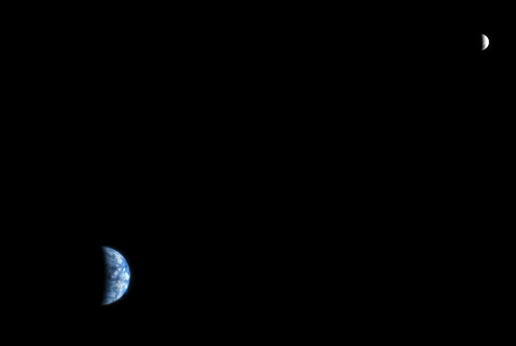
From NASA’s photo library

2021 in Books

It’s become my habit, on the last post of the year, to think back over the year in reading.  This gives me a chance to give a separate boost to the books I found particularly valuable, for a variety of reasons.  My Goodreads total for 2021 will end up being 70 (two haven’t yet shown up on my page).  It’s easiest to do this by category, so I’ll begin with fiction.  My favorite novels of this past year were Haruki Murakami’s Kafka on the Shore, Stephen Graham Jones’ Night of the Mannequins, Lisa Tuttle’s Familiar Spirit, Hank Green’s A Beautifully Foolish Endeavor, and Christina Henry’s The Girl in Red.  I really enjoyed Joseph Bruchac’s Bearwalk as well, but it’s for younger readers.

For what might be called spiritual memoirs I found Ernestine Hayes’ Blonde Indian remarkable and Heather and Gary Botting’s The Orwellian World of Jehovah’s Witnesses revealing.  Vine Deloria’s God Is Red was stunning.  (It should be clear by now that I read quite a lot from indigenous writers.)  If you count love of books as spiritual I would include Andy Laties’ Rebel Bookseller as well.  As long as we’re on spiritual, books by religion professors might count, so I would add Intimate Alien by David Halperin.  If you count just memoirs, I would also add Follow the Rabbit-Proof Fence by Doris Pilkington.  And if reflective essays count, John Green’s The Anthropocene Reviewed.  And Thich Nhat Hanh’s Love Letter to the Earth.  I learn so much from reading about how others deal with their lives.

Books in the nonfiction category tended toward horror movie analyses (ahem), but some stood out even among the weirdness.  Daniel Ogden’s The Werewolf in the Ancient World inspired me.  Kendall R. Phillips’ A Place of Darkness was a well-written account of early horror movies.  Tanya Krzywinska’s A Skin for Dancing in was insightful and helpful to my research, if difficult to locate.  Likewise Hammer and Beyond by the late Peter Hutchings.  Mathias Clasen’s A Very Nervous Person’s Guide to Horror Movies was fun and informative.  For importance I’d rate Dag Øistein Endsjø’s Sex and Religion at the top.  So much of the world’s conflict is based on these two factors.  It’s difficult to believe that we don’t talk about them and end up fighting and killing over them.  If we can’t talk about it, at least we can read about it.  There are many other books I enjoyed over the year.  Enough that even a brief mention of each would put me over my usual word limit.  (They’re easily found, in any case, by using the “Books” category to the right.) 2021 may have been a challenging year, but books helped me make it through it.


Next Year’s Reading

One of my year-end rituals, apart from looking back at the past year’s books, is to look ahead for the next year’s reading.  This is such a pleasant exercise because Christmas often comes with gift cards from Bookshop.org or Amazon.  Until this year I’ve used the Modern Mrs. Darcy’s reading challenge to push me into some areas I might not read, but that challenge has now been discontinued.  I participated (this is strictly self-monitored, of course) in six of the seven years that challenge ran, starting in 2016.  Part of each late December was spent in visiting book stores, planning new reading projects, and thinking about the year ahead.  Of course, you can’t predict anything with too much accuracy, but I start the year with a stack of books and a head full of literary dreams.

Also in 2016 I began doing the Goodreads book challenge.  This is merely numerical—you pledge a certain number of books to read in the year.  According to my Goodreads stats (there are some books I don’t publicly admit reading, of course), I’ve read 517 books in the past six years.  Numbers were higher in the commuting days, of course, but I try to read more than a book a week and that practice gets me through some difficult times.  It always looks sunny when planning ahead for a year’s reading, but you never know where the other parts of life will actually take you.  Anyway, this year I’m planning my reading without Mrs. Darcy, mostly culled from my Amazon wishlist, which is unwieldy and constantly growing.  I try to buy the books from Bookshop, however, as it benefits independent bookstores.

This year I may set a slightly lower Goodreads goal.  The main reason for this is that books seem to keep on getting longer.  Novels grow to multiple hundreds of pages but time doesn’t increase in proportion to that number, unless it’s an inverse proportion.  Even with a lower goal I won’t plan on slowing my reading down.  In my commuting days it was fairly easy to read a hundred books per year.  I still tend to get over sixty without those hours on the bus, and hopefully all that reading is doing something useful to the world as a whole.  I write to give back for all the good I’ve been given.  If this in any small measure offsets the headlines that meet us daily, it will have been time well spent.


Twilight on Christmas

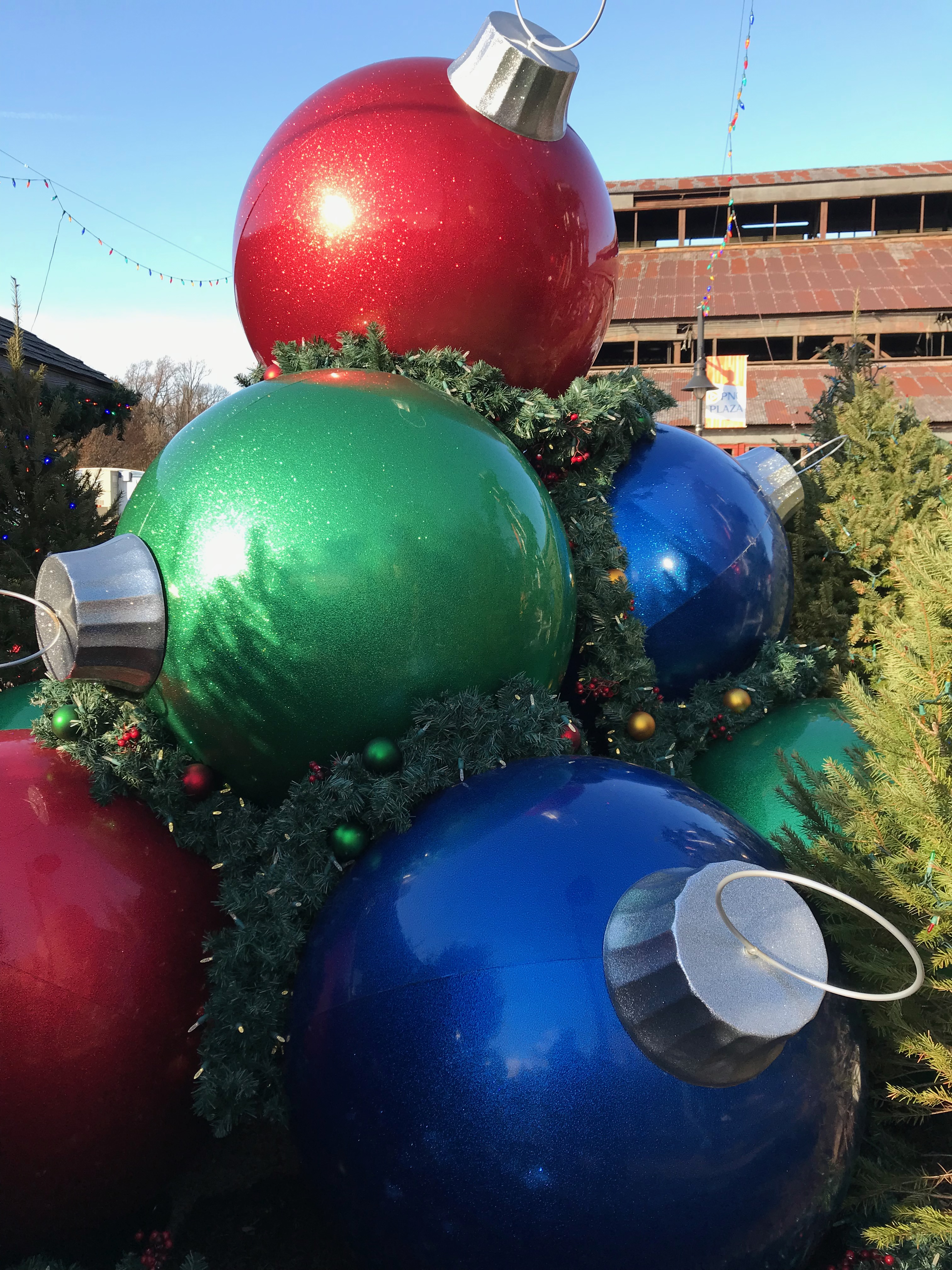
We have too many ornaments for the single Christmas tree we can afford.  There are few reasons for this.  One is that I married into a family with Christmas ornaments.  While on my own I never set up a tree and I owned very little beyond books and some LPs.  Besides, I went home for Christmas.  Another reason is that although I seldom think of Christmas before December, we tend to buy ornaments as souvenirs.  Not for everywhere we go, but we did start a ship sub-collection when visiting coastal locations.  We also have a moose sub-collection.  I spent quite a bit of my early adulthood out in the woods looking for moose, generally in Maine.  Then there’s the “other sub-collection.”  The one that’s be relegated to it’s own mini-tree.

To understand this, let me begin by noting that Christmas is the birthday of Rod Serling (shoutout to my friend John Morehead for pointing this out).  Rod Serling is one of the reasons—he can’t take all the blame, of course—that I’m interested in strange things.  The Twilight Zone affected me profoundly as a child, and probably had more impact on my life trajectory than I might’ve realized.  The “other sub-collection” consists of the weird ornaments.  It began with a Cthulhu ornament I found online a few years back.  Then, at a fair trade shop in Ithaca, I found a yeti ornament.  How could I not support fair trade?  This year at Christkindlmarkt I found an alien head made from a recycled Christmas tree trunk round.  It seems my strange Christmas ideas aren’t unique.

Bethlehem styles itself “Christmas City.”  The celebration in the Lehigh Valley is palpable.  My family generally spends a December Saturday strolling up and down Main Street, visiting the quaint shops.  Last year one of them had ornaments of sasquatch skiing.  I didn’t buy it, thinking someone might pick up on my pointing it out.  This year I went back to the store but they didn’t have it any longer.  A quick online search, however, revealed many options for a cryptid Christmas.  What can I say?  These things make me happy!  This year I’ve been thinking quite a bit about ghosts and the holidays.  It’s an ancient connection that has been lost to the commercialization of Yule and Saturnalia and other December celebrations.  So, Rod Serling was actually born on Christmas day.  I hope that however you celebrate this day it will bring you joy, no matter how weird.


Salvation by the Book

I’ve never been to Iceland.  Part of me says that if I ever get to go I’d want it to be on Christmas Eve.  Ah, the light would be in short supply, no doubt, and it would be cold.  But the draw of Jolabokaflod is strong.  Jolabokaflod isn’t a difficult word to figure out, if you’re familiar with Indo-European languages. “Jol” (maybe the “a” is included) looks a lot like Yule.  “Bok” is English book missing an “o” (again, maybe the “a” is part of it).  And “flod,” likewise with another “o” becomes “flood.”  The Yule Book Flood.  The tradition is to give books on Christmas Eve and spend the long hours of darkness reading.  Iceland has the reputation for being a very literate culture.  I’ve read a number of books (in translation) by Icelandic authors.  If there’s ever to be peace on earth and goodwill to all, it will be through books.

If you observe Christmas, today is that great time of anticipation, Christmas Eve.  Churches, whether virtual or in person, will be humming places this day.  Last-minute shoppers will be out and frantic.  Some will be insisting we keep Christ in Christmas while others will be dreaming of sugarplums and fairies.  Some will be tracking Santa on NORAD.  In Iceland they’ll be exchanging books.  Politicians will continue their calculated plotting but I dearly wish they’d spend the day reading instead.  Perhaps there would be fewer tanks at the Ukraine border if those in Moscow would curl up with a good book.  Check the progress of their Goodreads challenge.  Open up the flood-gates and let the books pour in.

There are those who believe this world should be consumed by God’s awful fire, and that right soon.  But God, as I understand it, is a writer of books.  Perhaps the divine plan is different than so many suppose.  Even the angels sang about peace on earth in one of those books.  You never know what’s going to be under the tree, but in our house books are always a certainty.  The words that describe this season—joy, peace, goodwill—can come in a few ounces of paper, ink, and glue.  And if God’s own book tells us to love one another, who are we to argue on Christmas Eve?  And if it’s true today won’t it be true also tomorrow and every other day beyond that?  Iceland has grown out of its warlike past.  And today they’re exchanging books.  Perhaps there’s a lesson there for all of us.


At Last, Yule

It all depends on how you look at it.  Today is either the longest night or the beginning of the return of the light.  It’s the winter solstice, that time that has been considered haunted for centuries, when the spirit world is once again close to the “material world.”  Slowly, incrementally the light will increase from this point on.  It will take a couple months for the effect to be really noticeable, and the weather here in the northern hemisphere will trail a bit behind and grow colder as the sky starts to lighten up a little.  This juxtaposition likely led to the germanic festival of Yule, which has become conflated with Christmas.  Carols tell us of Yule logs at Christmas and some cultures call Christmas itself Yule.

If you consider this day there are again two ways to ponder—appreciating the dark for its own benefits or looking for the return of light.  No doubt, lights are everywhere.  My town has the central part lit with holiday lights and just this weekend Bethlehem had hundreds of luminaria lining the sidewalks, encouraging the return of light.  Yule, it seems to me, catches people at their best.  Christmas isn’t quite here yet and people are still kindly disposed to others, coming out to see the lights and feeling carefree, assured that light will return but making the most of life before it becomes humdrum again.  We put out our lights, perhaps a little afraid of all this darkness, but at the same time trying to appreciate the restfulness of long nights.  Darkness isn’t evil, even if it works that way as a metaphor.

Learning from the dark is under appreciated.  As a species we rely heavily on the benefits of sight.  It’s natural to be a little afraid when we can’t see.  Still, the dark has its own regenerative value.  Our bodies actually benefit from being in the dark a few hours each day.  Our minds can benefit from the rest.  I always think back to the days before electricity allowed us to chase away the night.  How much more intensely the night would’ve been felt.  Even with our artificial lights nothing can compare with the light scatter of our own skies as the sun’s powerful lumens flood our hemisphere.  Yule seems the appropriate time to think about the contrast, but not conflict between light and dark.  The idea that opposites must fight doesn’t really help us in this world of many contrasts.  Isn’t it better to ponder how we might learn from the dark?


Ghosts and Puritans

One of the victims of capitalism is the tradition of telling ghost stories at Christmas time.  We tend to relegate such downers to Halloween.  Christmas is a cozy time of getting new things, right?  Who wants to think of ghosts?  I recently read Charles Dickens’ A Christmas Carol.  An article in the Smithsonian  a few years back makes the point that Dickens was cashing in on a venerable tradition.  Instead of sending children to bed expecting Santa Claus, it used to be the custom to tell ghost stories on Christmas Eve.  That makes sense in context.  Christmas was established near the date of the Roman festival Saturnalia and the germanic Yule.  These festivities celebrated the passing of the equinox and the slow, but steady increase in light.  A liminal period.  It seems a natural time to tell ghost tales, no?

Image credit: Arthur Rackham, public domain via Wikimedia Commons

The article by Colin Dickey (who has a history of writing about ghosts), calls for bringing back the tradition.  Do we want our cozy capitalism interrupted by revenants?  Why not?  For me the Christmas season is largely about time off of work.  I spend the time working on fiction writing that I tend to put off when I have a book under contract.  Most of those stories I write are some species of horror, often ghosts.  The real haunting factor is I don’t have time during the rest of the year to do the amount of writing that recharges my batteries.  Work seems to take more and more time and the Scrooge-like results are, I think, pretty obvious.  It’s time to bring back the Christmas ghosts.

Dickey points out that one reason Christmas ghost stories never caught on in America was that Puritans had little taste for them.  The more I look at society the more amazed I am at how Puritan we still are, but without their religious ideals (apart from various prohibitions of human behavior).  The fact that this article appeared in the respectable Smithsonian makes me feel a little more accepted for my disposition.  I know there are many horror fans out there.  Poll after poll indicates that people like horror, but, it seems, most don’t like to admit it.  At least among those I know in the neighborhood.  There are a slew of Christmas monsters.  For those who keep track of holiday horror as a sub-genre the most common holiday represented is Christmas.  In fact, I just had a Christmas horror story published (under a pseudonym, of course).  Maybe ghosts will be able to frighten off the specter of capitalism and bring us back the holiday spirit.


Christmas Classic

While it’s a story I know well, I’d never read the book.  I suppose I tend to think of Christmas when it’s already hard upon me, or perhaps I’m just making excuses.  After all these decades I’ve finally read Charles Dickens’ A Christmas Carol.  The story is so well known there’s no point in laying out the action here.  A filmic version of this has been part of our family tradition for many years now and sometimes it’s difficult not to think the cinematic version has somehow got it right while the book might’ve somehow missed something.  I’m generally disposed to read the book before watching the movie, but I believe I saw this as a young person and we had no Dickens in the house.  Besides, who could miss the endless parodies?

It’s a ghost story, yes, but it’s primarily about redemption.  It’s difficult for me to watch (or read) without getting a bit misty about the eyes.  Our world, especially during the Trump years, seemed a hard and heartless place.  Winter all the time while somehow being Hell also.  It will take many years—perhaps I won’t live to see it—before people unlearn the bad habits they saw being modeled each and every day of those four long, long years.  Every year as I watched the movie I thought, “I wonder if 45 has ever seen this?”  Always the answer came back in a resounding “Humbug.”  A miser who cares only for himself doesn’t change as easily as Scrooge.  So the world had to suffer, and so it will suffer yet a good long time.

The thing about redemption is that it can’t be privatized.  It’s on free offer to anyone who desires it.  While A Christmas Carol may not be Dickens’ best work, it nevertheless bears a message well worth the repetition.  Perhaps there aren’t ghosts enough in the world.  We need to learn to listen.  Were it not for the haunting Scrooge never would have changed.  The sad part is that there are people actually of his ilk.  I hold out hope for redemption to all of them.  I’ve known too many people who seem to care only for themselves.  I need to remind myself that they may not have the reinforcement of this tale every year.  The world could perhaps be better if that were the case.  Dickens clearly had fun as a writer.  Sometimes it seems to get in the way.  But if it makes one’s heart light in December, what can the harm be in that?


Old and New

Annual holiday traditions show just how deeply ritual is established in our behavior.  As the holiday season rolls around we find our familiar customs to be fun and comforting.  I’m not much of a commercialist; for me the end-of-year celebrations are mostly about rest and peace, still a family tradition since settling in the Lehigh Valley is the Christkindlmarkt.  Bethlehem, founded on Christmas Eve by Moravians, has attempted to live up to its namesake and celebrate the season well.  It’s become an established family tradition to visit the Christkindlmarkt and we wander the tents with artisanal goods, some Christmas-themed, and others more just gift-ideas.  We seldom buy much.  It’s the spirit of the holidays that seems to come through and we need something to help us get through winter.

Each year things are a little different.  Many of the mainstays are similar, however, with the same vendors with the same merchandise.  What has changed in the past year is really us.  We’re not the only ones who make an annual tradition of this and we’re not the only ones who see the same scarves, sweaters, pillows, and pottery.  And ornaments—lots of ornaments.  We see new things because we’re different from our selves who’ve wandered through here before.  Hopefully we’re better selves.  Each time I do this I find myself growing more and more reflective.  A celebration of peace and love to all seems to hold, for the most part.  There are lots of people—too many for my comfort at this stage of the pandemic, but we’re wearing masks and hopefully most of these people are vaccinated—peace and love for all.

The end of the year has long been a season of festivities.  Even ancient peoples, especially in temperate regions, longed for the return of warmth and light.  In response to the long hours of darkness around the solstice they instituted holidays.  Times for us to get together and work a little less and relax a little more, recharging our spiritual batteries.  Yule with its Christmas trees and logs, served to bring the message of light into the darkness.  The twinkling of holiday lights is a festive sight, bringing back childhood memories of gifts, special foods, and time off from school.  I’m a different person than the one who’s written a blog post about Christkindlmarkt in the past.  If you’ve read such posts you’re a different person now too.  We all hope that the present person is a better one than the previous as we enter this season of joy and kindness.


Not Shopping

Santa Claus arrived at the end of Macy’s Thanksgiving Day parade yesterday.  I actually began seeing Christmas paraphernalia in stores before Halloween.  It feels like we could really use Christmas this year.  We all thought 2020 was a difficult year and 2021 hasn’t been much easier.  The capitalist response—so shallow, but it’s all we’re left with—is to shop to make yourself feel better.  Sometimes it’s the simple things: time off work, time with family, time for reading, time itself.  Time heals most things.  People, however, aren’t the most patient of creatures.  Our desires seem so urgent and cash or credit seems to offer a way of achieving them.  Black Friday is entirely from the business perspective.  A day off work to get people out and spending.  Outspending.

Black Friday has traditionally been one of my favorite days for staying home, reading and writing.  Indeed, Thanksgiving is the only annual four-day weekend most of us are given.  I haven’t used this day for shopping.  Crowds are about and so is an insidious virus that we can’t seem to contain.  It feels more comfy and secure to stay in my drafty house and use the time to recover from the capitalism that dominates the rest of my days.  A day to not shop.  A day to think.  The idea of having quiet holidays to ground oneself seems like a progressive idea.  We all find our own ways of centering, even if we don’t call it that.  For some I suppose that’s shopping, but that’s just not me.

This year I’m spending the day with extended family in Iowa.  I flew out on the busiest travel day of the year to ground myself in the heartland.  It’s a day I need not work and I need not shop.  I find my meaning elsewhere this Black Friday.  The term began with a negative connotation, referring to workers in the early fifties calling in sick that day in order to get a four-day weekend.  It was also used in the next decade to describe the traffic congestion as people went out to start their shopping.  It was really only in the eighties that the term took on its current meaning of a day when retailers go into the black by earning profits from the influx of cash the day brings.  Santa had come the previous day and wallets were open and those with the day off work wanted to spend it spending.  I’m here in Iowa, glad to be avoiding the stores and the contagion, and enjoying the quiet of not having to clock in.


Flight Path

It’s been some time since I was on a plane.  Or in a hotel.  These things seem strange and foreign to me now.  Covid-19 is now a fixture in life and we, as humans typically do, have adjusted.  Of course I was flying for Thanksgiving on the busiest travel day of the year.  Seeing all those people standing in line at 4:30 a.m. at the airport made my lifestyle seem a little less weird.  I’m used to being up at this time.  They did have to de-ice the plane at Lehigh Valley International Airport.  I’ve never been on a plane that was taking a shower before.  I also didn’t touch anything but my book.  And it seemed that those who “don’t believe in” masking weren’t making a fuss because you can’t win an argument with the FAA. I’m thankful for that.

I’d almost forgotten how to fly.  On the first leg of the journey I was the only one whose “hand-held device” was made of paper.  Connecting out of O’Hare, however, quite a few more books made an appearance.  I sit in front of a device all day at work, so on a rare day off I don’t really want to have to stare at a screen.  Although the total air time was under four hours I brought seven books in my personal item.  I finished one of them (the longest) on the trip.  I still have plenty of choices for the flight home on the weekend.  Thanksgiving, even more than Christmas, is the time for family gatherings.  We’re all vaccinated on this side, so it feels mostly safe.

This Thanksgiving I’m thankful that no turkeys were harmed on my account.  If you knew how “thanksgiving turkeys” are raised it’d put you off your feed, as the saying goes.  I’m also thankful that travel is possible, even if with added restrictions.  Frankly, I’m glad for them.  Anti-vaxxers don’t seem to realize that it’s not just themselves they’d be protecting, but others as well.  Vaccines and masks aren’t just about selfish desires.  Last year we couldn’t even consider traveling.  Covid-19 has changed the way we do things, perhaps permanently.  We can be thankful that we learn to adjust.  I’m no fan of crowds, but there was something a bit exhilarating about being among other goal-oriented individuals all focused on being with loved ones.  It gives me renewed faith in humanity, and that is something for which to be thankful.


Horror Week

“Remember, remember, the fifth of November,” the old rhyme goes.  Earlier this week I advocated for Halloween being the start of the holiday season.  There’s been a lot going on this week and I’m now reflecting on how Halloween also took some of its identity from Guy Fawkes Day (or more properly Guy Fawkes Night), here on November fifth.  Halloween, as we know it, incorporates traditions from Samhain (actually November 1), All Souls Day (November 2), as well as Guy Fawkes (November 5).  All the while the Hispanic world is observing Dia de los Muertos, a multi-day holiday whose origins are somewhat uncertain but which shares similarities with Halloween.  In other words, it’s a veritable week of spookiness to get our November started off right.

Ironically, at least in corporate America, none of these are work-free holidays.  For the Celts Samhain was the most important day of the year.  A day when the dead might wander into our realm or we might stumble into theirs.  For the modern person it’s a day of checking email, making deals, trading and evaluating how well we did at it.  Pretty mundane stuff.  The message of all of these holidays is that there are matters of deeper import going on.  We should perhaps look up from our monitors and see.  Just as that veil between the living and dead thins at this time of year, so does that line between work and personal life, when our laptops are as omnipresent as a haunting deity set to keep our minds on the sin of not working.  

Guy Fawkes is about rebellion.  More specifically, putting down rebellion.  Keeping the status quo.  Halloween and its siblings are all about challenging the way things are usually done.  I often wonder what it would be like if people took it seriously.  The costumes are fun, yes, and the trick-or-treating, but there’s something more serious underneath.  Perhaps symbolically we pretty much ignore All Saints to Guy Fawkes, or Dia de los Muertos as pleasant diversions.  There’s some spiritual heavy lifting going on behind the scenes, however.  It’s not all about fun and games, because fear is always with us.  We know there are problems but it’s more comfortable keeping things as they are.  Guy Fawkes, perhaps for a cause we see as obsolete—restoring a Catholic monarchy—was trying to change things for the better.  What’s more, his motivation was religious.  There are spooky parallels here, even today.  It might be good to take a day off work to ponder the implications.


Holiday Season

Halloween, in some ways, is the unofficial kick-off of the holiday season.  This was made clear to me when someone recently played the song “Soul Cake” in the context of Halloween.  I’d only ever heard the song in a Christmas context before, and a little research led to the discovery that asking for soul cakes originated as a Halloween custom (before it was called Halloween, even) but was considered appropriate anywhere from All Hallows through the twelve days of Christmas.  The common thread here is, of course, gift giving.  We tend to keep our holidays discrete for commercial reasons but there is a natural continuity from All Hallows Eve through what used to be known as Epiphany (now Insurrection Day).

Holidays help us prepare for things that we know are coming.  For the Celts, Samhain—which led to our Halloween—was the start of winter.  With no Daylight Saving Time to oppress them with the changing of their clocks and throwing everything off for weeks at a time, this was the dark part of the year.  Holidays are helpful in getting through times when natural light is lacking.  From Halloween you can almost see Thanksgiving.  At Thanksgiving we anticipate Christmas.  The winter solstice holidays see us through the shortest, darkest days of the year.  I’m no fan of capitalism, but as long as we’re stuck with it I wonder why we don’t advocate for Halloween as an official holiday.  The start of the holiday season.  In my local town the Christmas lights went up on November 1.

East and south Asian religions spend considerable energy teaching that change is the only permanent aspect of life.  Western cultures, on the other hand, focus on the status quo, the assumption that once something is established, it will, or should, remain as it is.  Time reminds us that change is constant.  We can allow entropy to win by sitting by and letting things fall apart, or we can try to build something useful to prevent a collapse.  Holidays change over time and over religions.  Halloween was a pre-Christian new year celebration.  From there it changed into a solemn holy day to remember saints and then the dead.  Incorporating aspects of Samhain and some customs such as soul cake begging and guising, it grew to a more fun celebration.  Now it’s a commercial occasion to rival Christmas.  The year is constantly changing.  Just when I start looking for my sweaters I see my light summer clothes haven’t yet been put away.  I look forward to Halloween as the start of the holiday season until we get past the longest night just before Yule.


Spirit of Halloween

So it’s Halloween.  It’s also Sunday.  I’ve been thinking quite a lot about the spirituality of this particular day.  Now it’s often treated as a trick, a consumerist holiday with too much candy and befitting spooky decorations.  Like all holidays Halloween has evolved from its origins to how we celebrate it today.  Other than Wiccans and Neo-pagans, however, not too many take it seriously.  At Nashotah House, and therefore likely at some parishes scattered around the world, All Saints Day—which is tomorrow—was a day of obligation.  What we call Halloween was the day before this major festival of praising the faithful.  There is some evidence that All Saints was moved to November 1 to counter the lively celebration of Samhain, or the Celtic fire festival marking the onset of winter.

The Celts included an intellectual class known as Druids.  Druids seem to have been the “theologians” (oh, that word!) of the Celts and they mandated that their teachings not be written down.  A great deal of information was passed on by intensive memorization and only became known to us outsiders because after Christianization it began to be written down.  Their idea of the afterlife seems to have been that it was being born into the other world.  In the otherworld life was different and apparently in some respects better.  When our time there drew to a close, our death led to our birth into this world.  The cycle continued on and on.  Samhain was the time when crossing between worlds could occur.  Death wasn’t a cause for sorrow since the otherworld awaited.  Birth into this world was more problematic.

Fear of death seems natural enough to us.  Even though it’s inevitable and this world’s graveyards are full, somehow we seem to think we can avoid it ourselves.  Our evolved survival instinct runs out of control since we’ve eliminated many of the causes of death that have plagued our species (and many other species) for millennia.  Eons.  As we’ve done so we’ve distanced ourselves from death—dying in hospitals, our corpses prepared in funeral homes, buried and eventually forgotten.  To me, the Celtic idea, from a world where death was likely much more close to hand, seems a more healthy outlook.  Instead of fear, why not consider it a day of wonder and celebration?  To many, I know, that is a spooky thought indeed.  It’s more than a day of masks and candy, however.  And we might learn from it if we stop and ponder.