July Forth

Independence Day.  What does it mean in a nation on the verge of a fascist takeover?  Supreme Court justices, themselves appointed by crooked but technically legal politics, have just struck down the independence of half the people in this country.  Independence Day for whom?  Originally a celebration of freedom from monarchy, one of our political parties has opted for authoritarianism—the objection to which was the very reason the Revolutionary War was fought.  The colonists wanted religious freedom, but now we find religiously motivated politics driving the bus off the cliff.  If you’re not a white evangelical these rulings are not for you.  Your religious freedom has been compromised by politics.  So we gather in grassy places to watch fireworks.    We celebrate the independence of the wealthy.  Those who can break the law and buy the results they want with lawyers without scruples.

I think of Independence Day from the perspective of our Black siblings.  Freedom to be shot for a traffic stop or to be publicly strangled to death for petty crime.  To be redlined and kept in poverty.  Independence from literal chains only to be shackled in bureaucratic ones.  Being sentenced to prison for things a white can easily afford to pay off.  Independence Day in a nation with over 40 million people in poverty and where just three white men own more than the bottom fifty percent of Americans.  Give them fireworks and firearms and let the bottom half work it out for themselves.  When is the last time a Supreme Court justice had to worry about having enough for both rent and food?  Freedom, those on the top tell us, is not free.  Watch the pretty lights.  Hear the loud booms.

What of American Indians, still awaiting freedom?  What is Independence Day to them?  Kept out of sight and in poverty, we don’t want to be reminded.  No, we only want freedom to get more for the white man.  As a child in the sixties I had some hope that we might be making progress.  Freedom and protest were in the air.  There was at least hope for some justice.  The privileged white leaders now give us a day off work.  The wealth can still flow upward, even if we take a brief hiatus from labor.  Women, Blacks, the poor, American Indians, and many others who make America what it is are nevertheless denied basic freedoms.  This loss of independence at least comes with a light show.  Just watch it and be grateful.


Solstice Thoughts

At the equator, the difference is nil.  The longest day and the shortest day don’t deviate from the standard day length.  The further you move from the equator, the more dramatic the effect is.  Here in the northern hemisphere this is our longest day, the solstice.  Historically, particularly in countries to the northern edge of the northern hemisphere, this is a holiday.  Midsummer marked the days of sun and growth.  Light is abundant—too abundant to sleep well in the furthest reaches.   Being visually oriented creatures, we enjoy the surfeit of light.  Light has long been a symbol of the divine for, I suppose, just that reason.  It makes us feel secure and safe.  We can see what’s going on around us.

In Antarctica, today is the shortest day of the year.  Indeed, around now there is seldom any light at all.  On the exact same day there are literally polar opposites on this planet.  The summer here is winter there.  It’s the first day of winter in the global south.  Their understanding of this day is completely different.  Of course, once you reach the shortest day, things can only improve.  The climb to summer lasts half a year, only to have the decline immediately begin again.  The difference is as subtle as it is inexorable.  For those of us who wake before the sun, it’s already obvious that sunrise is coming later than it did last week.  The earliest sunrise was the fourteenth.  Sunset will come later and later for the next few days, to compensate for the lost morning light, but overall there will be less and less until we are the winter half of the world.

There are many lessons to learn here.  In a world where the longest and shortest days are the same day—solstices depend on where you live—we don’t fight over it.  This despite the fact that light is our most precious commodity.  We simply accept that we celebrate light when we have it, and await its coming when we don’t.  Other resources we fight over.  Potable water.  Petroleum products.  Arable land.  Silently, radiantly, light shows us the way.  There’s an inevitability here.  Through long experience on the earth we simply accept it.  The other option is to fight over what we can’t control, which is futility defined.  There are lessons to learn from the longest day.  And if it’s your shortest day, you know that all will be forgiven at the next equinox.


Celebrate Juneteenth

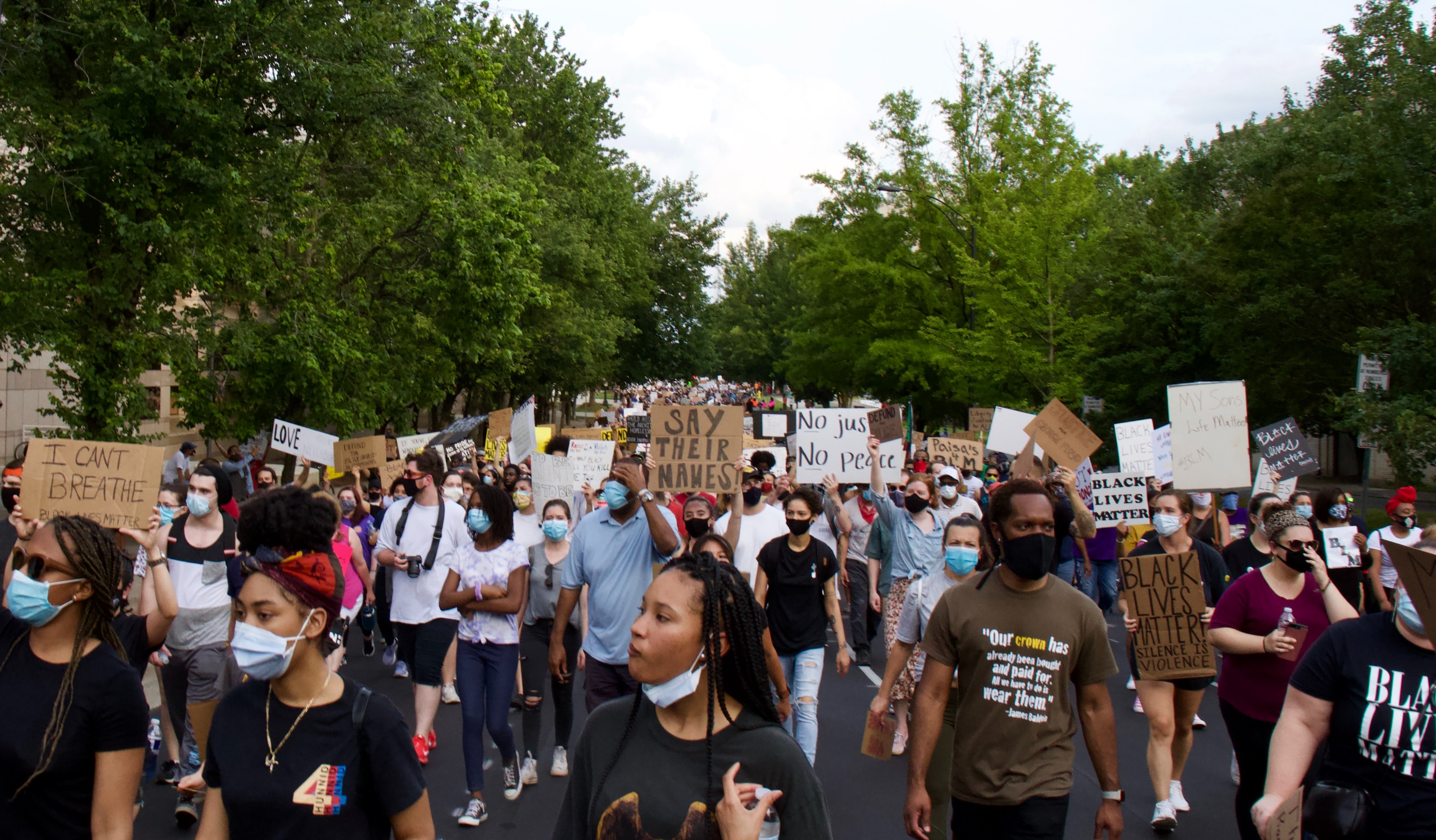
It’s everywhere you look.  Prison statistics.  Poverty statistics.  Gun violence statistics.  We gave lip service to ending slavery but never really made our black brothers and sisters free.  Red-lining.  Police shootings for traffic stops.  It should not be illegal to be of African descent.  Juneteenth is a celebration, but a muted one.  There is much, much work left to do.  When “black lives matter” signs are countered by “blue lives matter” we know there’s a deep-rooted problem.  It’s an especially unfortunate, and hypocritical problem for a melting pot like the United States.  We have room.  We have resources.  Until recently we had commitment to freedom.  Now, just as things should be improving we cave once again to unwarranted fears and paranoia.  What’s holding us back from celebrating Juneteenth?

The solution’s not simple, but it has a clear starting point.  Our elected officials must stop valuing power over people.  Racists—of either party—should know without a doubt that they can’t win nominations.  The good people of this country will not stand for it.  Running on a platform of vacuous celebrity only—how many celebrities are really deep, clear thinkers?—should be soundly shouted down.  The two-party system requires at least a third serious challenger.  America’s leadership must start looking like the people who actually do the work in this country, not those who suck up all the profits.  Catering to the wealthy inevitably causes problems on the other end of the social ladder—the end upon which that ladder must stand.  We no longer need slaves.  We never really needed slaves.  What we need is high principles.

Othering may be normal human behavior but that doesn’t make it right.  We are able to overcome our prejudices.  We are able to say “black lives matter” without following it up with “all lives matter.”  We are able to recognize the sins of our past and repent.  Christianity has produced great followers.  These followers require leaders who have the best for the people in mind, not the best for themselves.  Corporate climbers do not understand this.  Brains addled by money, they see America as a company to run and a way to skim profits off the top.  Politicians are constantly comparing the sizes of their “war chests” for the next election when they should be soul-searching instead.  Let’s celebrate Juneteenth.  Let’s say “we were wrong” and “our theology was wrong.”  Let’s promise ourselves that any racist should fear running for high office.  Let’s end systemic racism and celebrate the results.

Photo by Leslie Cross on Unsplash

Fight for Mom

The spring holidays come think and fast.  Depending on when you start spring we’ve got Valentine’s Day followed a month later by St. Pat’s.  On it’s roving schedule Easter hops along, with its precursor Mardi Gras.  There’s Earth Day, May Day, and Mother’s Day.  One thing they all have in common, apart from being holidays, is they’re not worthy enough to be days off work.  You have to wait for Memorial Day for that.  Today, in any case, is Mother’s Day.  We stop to think, as if we shouldn’t every day, about our mothers.  Women are pretty poorly represented in the holiday scheme, unless you’re Catholic (and even those aren’t days off).  Mother’s Day always comes on a Sunday so employers are eternally thankful.  A holiday with no consequences.  But should it be?

We’re only just beginning, after being “civilized” for five thousand years, to give women their due.  Only just beginning because capitalist systems are built on male fantasies of growing rich without the female humane element.  It’s not a system friendly to mothers unless we find a way to make people spend money.  Women remind us to look for cooperation and not just competition.  Working together we can make things better for everyone.  Men, left to their own devices, go to war.  Men take what they want and women act as our conscience.  Mothers sacrifice to keep us safe and alive.  Their self-denial resonates better with the Christianity suborned by men into a money-making venture.

It’s Mother’s Day.  It’s a day to put aside our acquisitive, war-like tendencies and think of someone else.  It’s a day to imagine what it might be like if we made a habit of good behaviors.  It’s like those grades they used to give in school for “deportment.”  It wasn’t all just about how well we learned our facts.  Mothers teach us what it means to set aside our own wants for the needs of another person.  Without that the human race simply wouldn’t survive.  Instead of politically stacked courts taking away women’s rights, today we recognize that without women none of us would be here.  The human experiment only succeeds when women are recognized for all that they contribute to life.  To civilization.  To society.  We may not have commodified it, so why not listen to our mothers’ wisdom?  Why not make it every day instead of just the second Sunday of May?  Don’t forget to thank your mother today.  Better yet, fight for her rights.


Wicker Lessons

Beltane creeps up unnoticed.  Not an official holiday in these parts, it is, hopefully, a sign of slightly warmer weather than we’ve been having in April.  It’s also the day that I can’t help but think of The Wicker Man.  One of the early intelligent horror offerings, it came out 49 years ago.  My book on the movie, as far as I know, is still scheduled to come out next year, on its fiftieth anniversary.  Watch this space for further announcements.  In any case, today I have a piece on The Wicker Tree—the “spiritual sequel” to the movie, appearing on Horror Homeroom.  Societies in old Europe tended to celebrate this as the beginning of summer, which explains why Midsummer comes half-way through June.  The seasons aren’t always the same in all times and places.

In Germanic countries, Walpurgisnacht, which began last night, was a time of concern about witches.  Our modern calendar tries to concentrate our fears in late October, but they are appropriate any time of year.  These days Beltane’s more of a day when we expect warmer weather to start rolling in and perhaps, especially this year, hopes for peace.  May tends to be a hopeful time—it’s a transition.  The persistence of our fears suggests that learning to deal with them might well be a good idea.  Instead of hiding monsters away, why not face them?  The Wicker Tree isn’t a great horror movie, but something holds true for it—the monsters are us.  In that film capitalism is the real horror.

What makes The Wicker Man the classic that it is is religion.  More specifically, the clash between religions, neither of which is willing to yield.  This is largely behind religious violence throughout history, up to the present.  Religions convinced that they’re the only possible way to the truth can’t recognize that believers of other religions feel exactly the same way.  Yet May is about transitions—one season giving way to another.  It’s part of the inexorable change that marks life on this planet.  We may not fear witches in the mountains any more, but we still fear what’s out there.  Beltane is a hopeful holiday—a day of blessing animals and building fires to encourage the strengthening sun.  Instead of making it a day of clashing beliefs, perhaps we should look for our common humanity in it.  Perhaps we can learn a deeper lesson from The Wicker Man.


Normal Paranormal

One of my favorite televisions shows of all time is The X-Files.  I didn’t watch it when it originally aired, but eventually got a hankering to see it on DVD.  There are many reasons to like it, including its originality and the dynamics between Mulder and Scully and the sense that governments really do hide things.  As I rewatch episodes I see how much religion plays into it as well.  This post is actually not about the X-Files proper, but about a place in Bethlehem I recently discovered.  I’m not a preachy vegan, but I do like to support the establishments who make such lifestyles as mine much easier.  It was thus that I discovered Paranormal Pizza in Bethlehem.  I wondered about the name, figuring that it was paranormal that you could have non-dairy, non-meat pizza at all.

To celebrate Earth Day we decided to check it out.  The menu has a set of fixed items, each named after an X-Files character.  I was glad to see that I’m not alone in my appreciation of the show.  The pizza’s very good, and I’m sure the college-age crowd that was there would agree with me.  I did wonder how many of them knew the X-Files.  Is it still a thing?  Maybe recent government disclosures have brought it back into the public eye.  Hey, I’m a Bible editor, about as far from the public eye as you can possibly get.  Vegan pizza on Earth Day, however, just felt right.

Foodiness seems to be trending.  A great many options are available in the land of plenty.  Still, I know that vegetarians and vegans in developing countries exist, and many of them for similar reasons to me.  They know animals think and feel.  We promote the myth that they don’t so that we don’t have to feel guilty about exploiting them.  It seems to me that many of our world-wide problems would start to vanish if we realized we can evolve out of being predators.  Cashews and almonds can become cheese.  Soy beans and wheat can become meat.  And peanuts are about the best food ever, in any form.  Then there’s the natural fruits and veg.  Industrial animal farming is perhaps the largest polluter of our planet.  Yesterday was Earth Day.  I was eating a pizza made from wheat, tomatoes, and cashews.  These ingredients might seem a bit unusual.  Paranormal, even.  But that’s precisely the point.  I won’t be waiting until the next Earth Day to go back for more.


Love Your Mother

It’s not exactly a birthday, for we don’t know when exactly she was born.  We choose April 22 to think of our mother—the mother of us all.  For many of us concerned about the environment, not only is today Earth Day, but April has become Earth Month.  To me one of the saddest aspects of our environmental crisis is that certain sects of Christianity are largely responsible for it.  Religion working against the betterment of humankind.  So it was in the beginning, is now, and hopefully we won’t have to finish the triad.  Granted, religions help us to keep our mind on spiritual matters.  The problem is when such things become dogma and the real needs of real people are ignored so that a fervently desired fantasy can be lived out by destroying our planet.

In response there are what have been called “deep green” religions.  It’s difficult to gain a critical mass, however, when many of those who think deeply about the environment have left religion out of the equation.  It seems to me that we’ve got to make peace with our evolved tendencies toward religion in order to have any meaningful discussion about this.  Meanwhile global warming continues.  It does so with the blessing of a kind of Christianity that sees this world as expendable and exploitable based on an idiosyncratic reading of Genesis.  Even though all the evidence points in the opposite direction, we have networks (here’s looking at you, Fox), owned by billionaires who know you can sway Christianity simply by kissing your hand to the moon.

It’s my hope that this Earth Day we might start to think about how to integrate some deep green theology into the kind that sees no room for green in the red, white, and blue.  The self-convinced have no desire for conversation about this and those already certain that religion is nothing but superstition tend to agree.  Since antiquity, however, the wise have realized that progress comes from the middle ground.  Politicians, in their own self-interest, have stoked the fires of division and hatred, knowing that they get reelected that way.  Mother Earth, I suspect, is rolling her eyes.  She will survive even if we succumb to our own mythologies.  We need to learn to talk to one another.  We need to accept that we evolved to be religious.  We need to look for middle ground while there’s still dry ground on which to stand.  It’s not exactly a birthday, but it is a holiday that should be taken seriously. It’s only right to love your mother.

From NASA’s photo library

Easter Weather

The weather doesn’t always cooperate for holidays.  Easter is, at heart, a celebration of spring—life after death.  Around here this holiday has been accompanied by fits and starts in warmer weather and instead of warmer it’s actually colder again.  Just a week ago there was snow in the air.  Life’s that way; you don’t always know what to expect.  I guess I’m still in hibernation mode.  No matter the season, there never seems to be enough time to sleep.  As a youth I always attended sunrise services on Easter.  These days I regularly rise before the sun, so as long as I’m capable it’s like every day is Easter.  But with work.  Even on what many recognize as Easter—which overlaps with Passover this year—the Orthodox feel we have it too early, what with the Julian calendar still being in effect.  It’s all a matter of how we look at time.

As much as I hate mowing, I admire the exuberance of grass.  It’s ready to welcome the longer days by stretching toward the sun.  Drinking in the plenteous rain.  The dandelions have already begun to spread, opening their yellow eyes to all and sundry passing insects.  Easter is a time to reflect on life returning after winter.  And I can’t help but think of those in the southern hemisphere for which Easter falls in the autumn.  The theology fails to match the seasons as life springs up just as winter is about to set in.  The Christian viewpoint is a northern one, keyed to our seasons.  The weather doesn’t always observe the prevailing theology.

Around here Good Friday was a fine, sunny day.  Like most of the fine, sunny days it was a work day.  Now it’s a chillier Easter, the Saturday between being a mix with some rain.  When I was young—eagerly awaking for sunrise services, which I often had a hand in designing—I marveled at how the weather often seemed to cooperate.  Now as I think back, I remember coming out of Good Friday services into the incongruous sunshine and finding many an Easter still bearing an unseasonal chill.  Weather is, of course, a local and global phenomenon.  One person’s chilly Easter is too hot for someone further away.  And for yet others the onset of autumn.  Globalism has taught us to look further, to think in terms of how others might be experiencing this world.  Easter seems an appropriate time to do just that.


Spring Holidays

March and April, despite having their holidays, tend to be months of pretty solid capitalistic work.  Congress may take its April recess and universities have their spring break, but the working stiffs just keep going.  I’ve worked for a couple of British companies and they have a dilemma in the Human Resources department.  Britain has a lot more days off per year than American business practice does.  The dilemma?  How to tell your colonials that the head offices will be closed around Easter when those of the New World will remain open.  You see, very few American companies recognize what some Christians call Holy Week as a time for anything other than work.  Back in the days when I was still trying to work myself into the Episcopal priesthood, I had to ask my manager for Good Friday off and permission was only reluctantly given.

The two major Christian holidays of Christmas and Easter are vastly different in their public expression.  Despite the outlook of Scrooge, most companies consider Christmas a holiday, even to the point of giving you a Friday or Monday off if it falls on a weekend.  A present, as it were.  Easter, on the other hand, reliably falls on a Sunday.  Viewed in isolation there’s no need to give people any days off.  Since I was a teen, however, I took Maundy Thursday and Good Friday seriously.  You were, even in the Methodist church, encouraged to spend the latter in church, especially around the middle of the day.  If at all possible, it should be raining.  It wasn’t a day off for rest and relaxation, but for contemplating sin and its costs (hardly conducive to capitalism).

Universities, however, have tended to shift spring break to St. Patrick’s Day so as to get the damage of drunken students off campus.  Indeed, Purim, the Jewish spring holiday, also advocates drinking until Haman and Mordecai become indistinguishable when spoken.  Sort of like Hamilton, it was the holiday that saved the book of Esther, just like the Broadway show preserved the ten-dollar bill.  When it comes to business, however, Americans are all business.  (Did someone  mention a ten-dollar bill?!)  Money, as MC reminds us, makes the vorld go round.  And holidays are viewed as constant interruptions.  The typical work calendar will have no holidays from President’s Day in February until Memorial Day at the end of May.  It’s typically the longest stretch without a paid holiday.  Just when the weather’s starting to get nicer.  But let’s not forget, money is fully in charge here, for where your treasure is, there your heart shall be also.


1 April

Image credit: Trocche100, public domain via Wikimedia Commons

The funny thing is nobody knows how it got started.  In living memory, and indeed back a century or two—even more—people have considered April 1 a day for jokes and fooling.  Perhaps it was a kind of relief after winter was finally beginning to show its tail, or perhaps it was some distortion of Hilaria, the Roman festival of the goddess Cybele.  Some have speculated that it had to do with switching from the Julian to the Gregorian calendar when many were confused as to what the actual date was.  No matter what its origins are, April Fools has stuck.  It has such resonance that even legislation passed on this date is sometimes questioned as to whether it is serious.  Some locations have grand pranks planned and budgeted.

Nobody, as noted, knows how this got started.  One of my personal favorites posits a biblical origin.  Things tend to go back to the Bible in western culture, don’t they?  This idea takes it all the way back to the tenth generation of the human race: Noah’s flood.  Back in the eighteenth century it was suggested that Noah sent out his first dove before the waters abated on April 1 (this, of course, is based on knowing the exact days of creation—something that was of considerable interest in the seventeenth and eighteenth centuries).  Since the dove was sent on a “fool’s errand”—there was no dry land visible—well, April fools!

With rare exceptions this isn’t a day off work.  It’s not a holiday with any religious implications, despite speculations about Noah and his dove.  It’s really a day highlighting uncertainty.  Practical jokes can, of course, be harmful.  There can be those, such as yours truly, who might be slow to catch on.  Indeed, almost always the victim of a “practical joke” doesn’t find him or herself in an appreciative mood.  I’ve always personally thought the reference was to the weather.  Snow isn’t unusual into mid-April in parts of the northern tier.  In fact received wisdom suggests not planting annuals until May arrives.  April’s weather, in other words, fools.  Around here we’ve whiplashed through March with days in the seventies and others the coldest of the winter (or so it seemed).  Now we’re into the first full month of spring.  The early flowers are out (some of which succumbed to the cold of this week’s weather) making fools of us all.  My hope is that none of us take this day’s unknown-origin holiday too seriously.


Spring Forward

Spring officially arrives in the northern hemisphere today.  Days will be longer than nights for six months after this and many pagans will be celebrating Ostara.  Named after Ēostre, the goddess who apparently gave Easter its name, Ostara is an amalgam of the various equinox feasts and observations of antiquity.  The ancient Celts, as far as we know, held four particular holidays that fall roughly halfway between the solstices and equinoxes, with February marking Imbolc and Beltane yet to come in May.  We don’t know that they celebrated the equinox, but we don’t know that they didn’t either.  Equinoxes are a bit difficult to measure precisely with the sun’s position overhead, but we know the clever folks responsible for Stonehenge and Maes Howe could do such things, even in antiquity.

Ostara, maybe

According to Bede the Anglo-Saxons had several feasts for the goddess Ēostre.  Luckily (from his perspective), Christians had Pascha (Easter) some time near the equinox.  It’s late this year, however, since we just had the full moon (the “Worm Moon”) on Friday.  Easter is the first Sunday after the first full moon after the vernal equinox.  So today we’ve got Ēostre.  We know little of her beyond Bede.  Ancient Germanic peoples, like the ancient Celts, didn’t keep extensive written records.  Their religions, based on what we know of most ancient religions, were likely lively affairs.  Spring is a celebratory season and already buds and blossoms are appearing around here.  Goddess or no, there’s a feminine wonderment about the season.  It’s difficult not to feel at least a little hopeful.

Ancient deities have long been a source of fascination.  Eclipsed by an aggressively political Christianity, many of them vanished without leaving us many traces at all.  The human mind seems inclined to create gods to explain this strange but wonderful world we inhabit.  It’s clear that it wasn’t made just for us.  The birds and insects, and even the elusive reptiles and amphibians, are beginning to reappear.  Many mammals and some birds rough it through the cold hoping to emerge again into the warmth of spring.  We’ve had some warm days already, but there are likely more cold ones to come.  As the pagan gods, as Ēostre remind(s) us, transitions come in fits and starts.  Setbacks are part of progress.  Many of us believe the moral arc of the universe tends toward what is good and right.  It may take a long time to arrive, but the equinox, in its very name, bears the clue.


Going Green

It’s easy to get eager at this point in the year.  A month and a half after Groundhog Day, we’re at St. Patrick’s, and just a few days from the equinox itself.  Around these parts we’ve had some warm weather after last weekend’s bomb cyclone and most of the snow is now gone.  We’re ready for progress.  We’re tired of winter and huddling indoors.  The crocuses are defiantly open although the warning saying in Wisconsin went “three snows on the crocuses.”  St. Patrick’s green is the fecund green of spring.  Although nobody gets them off from work, the seasonal holidays are signs of hope.  It doesn’t matter which season into which we’re transitioning, there’s beauty ahead.  It’s the kind of change many people enjoy.

Look closely at a flower.  (If the crocuses aren’t up yet in your area they will be soon.)  Open and inviting, it offers insects what they need in return for a bit of cross-pollination.  Yesterday I saw my first wasp looking for a place to build a nest on our house, reminding me to be careful opening doors now because no transition is completely smooth.  Spring is hope in season form.  As much as we may appreciate winter with its pristine chill, spring reminds us that food is soon to be available from the bosom of the earth itself.  The songbirds, now back in force, have been eagerly anticipating it.  They are the heralds of transition, the little winged messengers of assurance.

Photo credit: Andreas F. Borchert, Wikicommons

It’s time to step outside and breathe deeply.  The muddy smells of a thawing earth blend with the first fruity hints of buds beginning cautiously to open.  The transition’s not straightforward.  There will be setbacks and chills yet to come.  Nevertheless, the die is cast—St. Pat waves his clover as if to say “This is what lies ahead, as brown becomes green.” Our world tilts as it spins and brings us the delight of seasonal changes.  Saints and birds and flowers must agree on this, even should they differ on the details of what is needful.  It’s a day for celebration, even though it’s a Thursday, a work day with perhaps a respite—after hours of course—to have some fun.  Green is about to reappear.  We wear it today to encourage the timid plants, yes, we need hope.  We look around the world and know that hope is what we really all crave.  


In War’s Domain

Good for absolutely nothing, to borrow the wisdom of Edwin Starr, war has again marred Europe.  We could see it coming from afar because people keep electing autocrats and strong men always want to fight one another.  There should be international laws banning their election, but instead innocent people die because one man has to prove he’s bigger than another.  The evils of the Trump years will be with us for decades.  There’s nothing Christian about waging war.  Seems that some folks have forgotten their Sunday School.  Wasn’t the selfless, self-sacrificing carpenter from Nazareth known as the “prince of peace?”  Of course, Ukraine became Christian long before Russia did.  What deep-seated insecurity such “world leaders” have!

While not wanting to be drawn into open conflict yet again, the world has pretty much all sided with Ukraine.  It has the misfortune of being nestled next to a weary nation with a dictator who despises the west.  Who pulls down his pants and shows off his missiles when anyone starts to open their mouth.  Who isolates himself and his people in the name of self-aggrandizement.  We came close to that over here.  So close that it still makes me shiver.  We feel for the people of Ukraine.  They did nothing to provoke attack, and they probably knew other world leaders would keep their distance.  Putin, like Stalin, wants a USSR.  An empire to put the evil west in check.  Hadn’t we left that kind of thinking behind?  Hadn’t we grown up after World War Two?  Strong men learn nothing from history.  They look at it and see only a mirror reflecting only themselves.

Hitler annexed Poland.  Russia, which has more land than it knows what to do with, doesn’t need Ukraine to be part of it.  The good people of Russia are protesting, just like the women brave enough to march on Washington to protest the fascism America embraced for four years.  I’ve put off writing about this because it’s so difficult to do without dissolving into tears.  Beware of either bare-chested or chest-thumping politicians worldwide!  It’s time to end the era of the alpha male.  We need mothers to nurse us back to health.  They call it “Mother Russia” but what mother acts this way?  The women aren’t impressed, Vlad—they’re in the streets bravely protesting.  It’s International Women’s Day.  Let’s honor women. It’s time to let the women lead.  It’s time to put war behind us forever.

Photo by Jenna Norman on Unsplash

Love on a Monday

I hope you may find love on a Monday.  I have a feeling that if we took Valentine’s Day more seriously the world would be a better place.  Capitalism, however, abhors interruptions (unless you buy lots of stuff) so many of us are at work this Monday.  I was recently reading how the full, unbroken eight hours’ sleep is a product of the industrial revolution.  I’d never thought of that before.  Everyone is different, of course, but it is natural for our species to wake in the night and be up for an hour or two and then to fall back asleep.  That, of course, interferes with the nine-to-five (925) that capitalism holds so dear.  In response, humans have altered their natural sleep patterns to conform.  The results are predictable: a line at the coffee machine every day at the office.

When I raised this with a friend, I was reminded that much of our life-style has been determined by the industrial revolution.  Certainly the concept of the weekend was.  And the constant feeling of never having enough time to, well, exist.  I awake when my body tells me it’s slept enough.  Generally that’s around 3:00 a.m.  I begin work early because Protestants have this work ethic going, but then I always get sleepy around 8:00 a.m.  Napping on the job is essentially the same as being a communist, so like many others I struggle through the rest of the day, not quite as efficient as I was for the first couple of hours.  In many cultures a nap is built into the after lunch slump.  Intravenous coffee is preferred by capitalists everywhere.

What if love catches you on a Monday?  Is it a sick day?  A vacation day?  A personal day?  Or all of the above?  It’s an opportunity to be human, but less than a true capitalist.  Someone could be making money off your time!  And whoever heard of more than ten paid holidays in a year?  I’m not complaining.  I love weekends and the scattering of holidays I receive, I really do.  Still, I miss the spontaneity of life.  The flight from a predator.  The shutting of the eyes when tired.  The celebration of love when it’s found.  A Faustian bargain was made when Christianity wed capitalism.  We’re encouraged to buy valentines for our sweeties, but show up to work and be there bright and early again the next morning.  May you nevertheless find love on your Monday.


Can You Recall?

While recently in touch with a colleague I’ve never met, I agreed to send along a filmography of my two horror movie books, Holy Horror and Nightmares with the Bible.  I tend not to read my own books after sending them to the printer.  Defensively it might be that I can say, “I know what I wrote,” but in reality it’s probably more a lack of self-assurance.  Writers often experience self-doubt and although you’ve convinced an editor and an editorial board you may still have your harshest critic to please.  Even though you’ve read the book many times through—at least fifteen each for these two books—you fear you might’ve overlooked something.  So it was strange trying to recall which films I’d actually discussed.  Or how many.

The latter point became clear in a recent review on Reading Religion.  Knowing how I went about piecing together Holy Horror, I’d forgotten just how many movies I watched and rewatched for it.  While it was never intended to be a comprehensive treatment of the Bible in horror (I haven’t seen all horror films), it nevertheless ranges widely.  After having submitted it I continued to watch horror and I continue to find various Bibles in it.  The amazing thing is just how truly widespread the Good Book is as an iconic symbol.  Indeed, I’d been reading about the Bible as an iconic book and that idea took hold in the early days of putting words down for the book.  As an editor I help authors figure out these kinds of issues all the time.  Physician heal thyself.

Even though Nightmares with the Bible just came out over a year ago I couldn’t list all the films off the top of my head.  Sometimes you need reminders.  My books are never discussed at work.  The people I interact with on a daily basis have no interest in them.  In other words, unless I’m having an interview or reading a review, I don’t have much opportunity to think about them.  I’ve moved on to my next projects.  The draft of The Wicker Man has been submitted and I have three promised articles to work on.  Still, I’m trying to settle on the next book.  I seem to have found some acceptance among the horror crowd.  Biblical meteorologists and researchers on Ugaritic goddesses are much less seldom in touch.  Monsters are often mixed forms.  I should know that after watching all these movies.