Space Ads

So, I’ve got enough stuff to worry about down here—the chimney needs some attention, that backyard gate still doesn’t hang right, and Giant keeps on running out of the cereal I buy—to have to turn my attention to space.  I love outer space, although, unlike some people I’ve never been there.  One of the simple pleasures in life is to be outdoors at the lake and watching the night sky where there’s no light interference.  Then I learned about space advertising.  You see, as an editor you get to read about all kinds of topics, and this came up in a proposal one time.  I had no idea that companies had been proposing billboards in space to fly across our nighttime skies.  It’s hard enough to use the internet anymore without hacking your way through a jungle of ads, and now they want to clutter our view of the nighttime sky so there’s no escaping capitalism.

“Space, the final frontier.”  This is a mantra that many of us grew up with in the sixties.  Most of us can’t afford to, and really have no desire to, go into space.  Born down here, we’re content to stay down here.  That doesn’t mean we can’t look at the sky with wonder.  Already you can’t go to the beach or a stadium event without planes flying banners trying to draw your mind back to the commercial world.  Even in remote forests you can find litter stamped with some company’s logo, trying to sell you more.  It’s enough to make you want to get to space to get away from it all.  Now that companies can afford to fly people to space as tourists—this is pretty strictly limited to the top one percent, of course—they feel they have the right to clutter the nighttime skies so that you’ll have that midnight urge to go buy a Tesla.

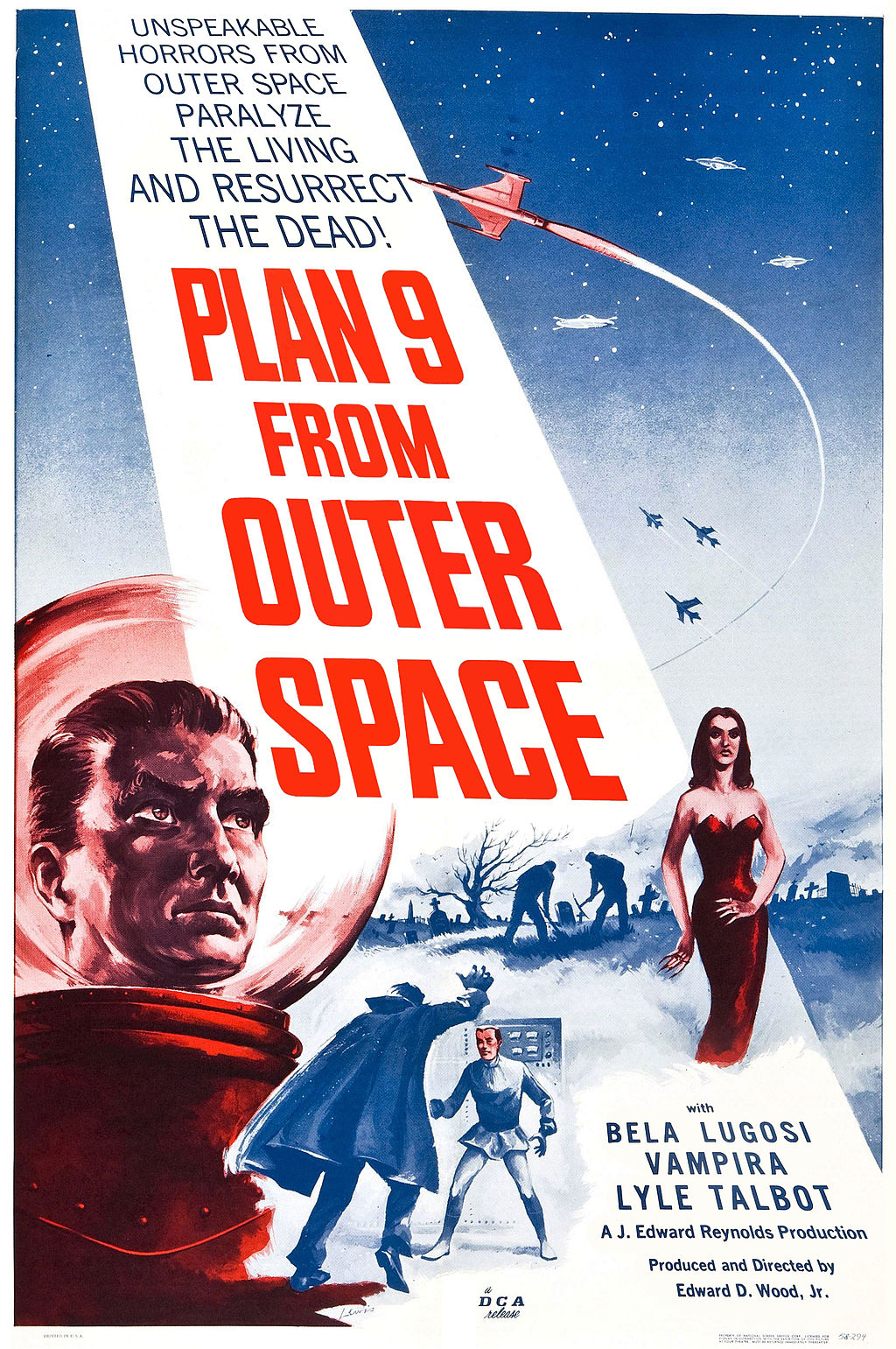
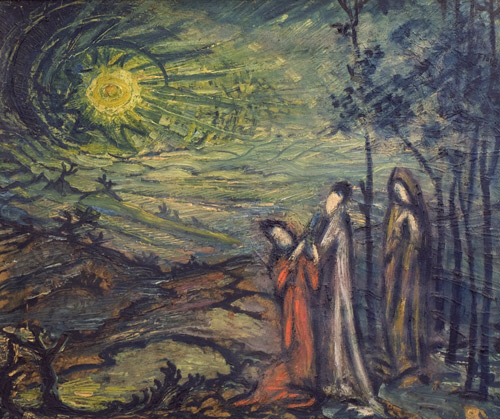
The original space advertising?

At this time of year we look to the nighttime sky in hopes of seeing a special star.  People with too much money cause so many unnecessary problems for the rest of us.  This has been apparent throughout history, but has been brought into sharper focus in the days of late capitalism.  Having too much only makes you want more, it seems.  And since other people have some you need to flash your company in their faces constantly.  From what I’ve read the only reason space advertising hasn’t really taken off is that it costs millions to get your ad up there.  Despite inflation it seems that these kinds of costs always come down.  And yet you can’t even get a contractor to come out and do something about that deck that’s falling apart.  And I do hope that they’ll have my cereal at the store this week.


Holiday Horrors

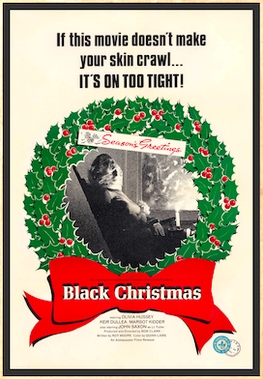
Holiday horror is a genre—really a sub-genre—that is still being explored.  It’s the subject of my my latest YouTube video.  Typical definitions suggest that it builds on a haunted or inauspicious history of the day.  I tend to think that really to fit the category that the holiday can’t be simply incidental.  It has to contribute to that fear that the movie brings.  The most popular holiday for horror films has long been Christmas.  Halloween may be starting to catch up, but Christmas has a long head start.  I ask myself if Black Christmas fits.  The title suggests as much, but how does it derive fear from the holiday?  It is, like When a Stranger Calls, one of the early cinematic renditions of the urban legend “the babysitter and the man upstairs.”  Yes, the calls are coming from inside the house, but there’s more going on here.  The sorority house is invaded during a Christmas party.

The fear, however, comes from both the juxtaposition of the cheerful holiday and the ambiguity of a slowly emptying residence.  Coeds are leaving for the holiday.  Or are they?  The bleakness of the weather adds to the dreariness of the plot.  The function of holiday horror is to make viewers address what’s really important about the occasion.  Tragedy can strike any day of the year—it’s no respecter of birthdays or other holy occasions.  John Carpenter got his idea for Halloween from this film, so in many ways Black Christmas does fit the sub-genre.  Its titling, however, complicates this.  Originally called Stop Me, the movie was to be set on Christmas break but the focus was not to be on the holiday.  Even as it was released the title continued to change, in America it was first called Silent Night, Evil Night.

Like the remake of Invasion of the Body Snatchers, critics initially didn’t like this movie but time has shifted that.  It is an effective horror film and probably part of the objection (I’m psychologizing here, without a license) had to do with implicating a holiday—a happy holiday—with horror.  Christmas is, for many, a stressful time of year.  Instead of quietness and relaxation, it’s a season of intense socializing and measuring one’s generosity against that of others.  We try so hard to make others happy with material things.  Holiday horror need not add to that stress.  In fact, it can make you stop and think about what’s really important.  There’s a reason that Christmas was long the holiday associated with scary stories before Halloween really took off.


Yule Tidings

Happy Yule!  One of the things my British colleagues find hard to believe is how Dickensian American employers are about days off around the holidays.  Corporations tend to give one day for Christmas, and you can hear them grumbling, “I suppose you must have the whole day?” even as they give it.  Christmas is, however, a season.  The twelve days begin on the 25th, but Yule starts today.  Yule marks the solstice—the fewest hours (minutes) of daylight occur today.  Tomorrow daylight will start to grow longer, although it will take many days before we begin to notice any difference.  I know this reflects a northern hemisphere bias, but having read about how less time is necessary for work, given technology, I wonder if there might not be a more equitable solution to this hemispheric focus.

What if we regularly gave generous time off around the holidays to recharge our batteries—renew our spirits—for both hemispheres?  What if we gave our southern neighbors the benefit of, say, a week off in June, after the summer solstice?  And what if we joined them as well?  Only the most uninformed believe that Jesus of Nazareth was born on December 25.  The best that those facile with calendars and history  can do is that he was likely born in the spring, so why not split the difference and offer rest and respite in both December and June?  Bean counters who equate every second in front of the screen as adding to the bottom line (a fable as sure as anything the brothers Grimm recorded) might need to be the ones leading the way.  Rest is important.  Time to think about something else.

Yule is an ancient celebration.  We don’t know how far back in history it goes because there are no records of its earliest celebration.  Before computers, before the industrial revolution, it was recognized that little truly productive outdoor work could be done during the winter months.  Obviously we can’t sit around and do nothing all the way til March, but these very short days bridging the end and beginning of what we now recognize as the new year, are custom-made for reflection and renewal.  Why not encourage it?  Perhaps the bean counters could use it to read A Christmas Carol.  Maybe they could set aside their abacuses and reflect on the wonder of the seasons that suggest to us that now is the time to rest and wait for the light to return.  Let’s truly celebrate Yule.


Seasonal Sights and Sounds

It’s listed as one of the top ten Christmas activities in Pennsylvania.  Koziar’s Christmas Village, located north of Reading and really out in the country, has been in business for 75 years.  Family owned and operated, it’s a walkthrough Christmas lights display.  I’ve been to many drive-through displays over the years, but on Saturday we went to this walk-through.  I wasn’t quite sure what to expect.  In the end, it was like many such attractions—lots of lights and painted plywood cutouts, flocked animals and dioramas with mechanically moving dolls.  What was truly impressive, however, was the number of people there.  Opening daily at 5 p.m., just as it’s getting dark, the sizable parking lot was already filling up at 4:30.  Walking through the display was essentially letting yourself by moved along by the crowds.  There were thousands of people there on Saturday night.

Getting into our car to head home, there were yet miles of cars backed up wanting to get in, and this was at 8:30.  Such sights of Christmas put us in holiday mode.  Seeing so many other people getting into the spirit of things was, in its own way, inspirational.  The next night—this being the weekend before the holiday itself—we attended the Christmas with the Celts concert at the Zollner Arts Center in Bethlehem.  Bethlehem prides itself on being “Christmas City,” founded, as it was, on Christmas Eve by the Moravians.  Christmas with the Celts is an annual show with different line-ups having in common live music, Celtic tunes, and Christmas.  The auditorium was pretty full, so I was glad for our masks.  They didn’t get in the way of the sounds of Christmas and a few stories from Ireland.

The sights and sounds of Christmas are part of what make this time of year so memorable, and something to which we look forward each year, despite the shortness of the days and the coldness of the air.  There’s a hopefulness about the holiday season, an underlying awareness that things need not always be as they are now.  Just two days away, the winter solstice—the holiday of Yule in its own right—marks the slow turning point to longer days.  It means winter is just getting started, but the cold brings with it more and more light in compensation.  Holiday sights and sounds help us through this transition.  And maybe, if things go right, they won’t be just the same as before afterwards, they may be even better.


Birthing Stars

Fusion.  The recent breakthrough with fusion announced so close to Christmas hardly seems a coincidence to me.  I have to admit to having been interested in fusion since high school.  One of my school term papers was on what was then called a “magnetic bottle”—a theoretical device capable of containing a fusion reaction.  The hydrogen bomb, of course, had already demonstrated that fusion was possible.  Controlling it was, at the time, the difficulty.  Now, I’m no scientist.  I’ve read quite a bit of lay science over the years and even worked on a project about the relationship of science to religion.  Still, you can’t follow everything.  I’d lost contact with fusion until the announcement this week that scientists have finally demonstrated that it’s possible to get more energy out of a controlled fusion reaction than it takes to get the reaction started.

In case you know even less about science than I do, fusion is what powers stars.  Unlike fission, it’s a “clean” nuclear reaction and one, as far as we can tell, that has made life possible on this planet.  Star power.  We’ve known for many decades that this could be the solution to humanity’s energy needs.  Of course, big petroleum has tried to slow such research down—there are personal fortunes to be lost and what is life without a fortune?  Now, with technology far beyond my comprehension, a fusion reaction was born that showed promise that we’re on the right track.

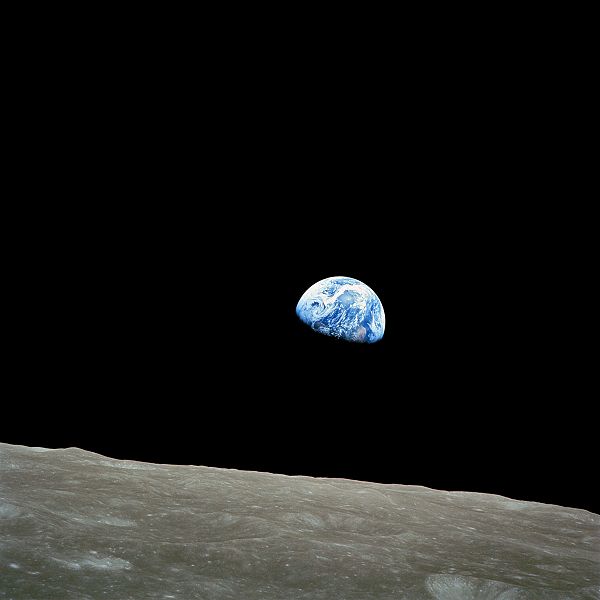
Photo credit: NASA, via Wikimedia Commons

Since it’s been rather gloomy around here this December, the thought of more sunshine cheers me.  Living in the Lehigh Valley, of course, my thoughts turn toward the Bethlehem star.  It’s such a crucial element to the Christmas story that we’d hardly know what to do without it.  Stars are our guides through the dark.  Winter nights are often clear and are opportunities to see the nighttime stars, even as we light up our artificial ones here below.  Light encourages light.  In a laboratory somewhere scientists are busy making stars.  I have to believe it’s satisfying work.  Perhaps the kind of job you’re eager to get back to the day after Christmas.  Although fusion would be used for power in general, one of the functions would surely be the giving of light.  As we move toward next week’s solstice and light our Yule logs, encouraging light to return, women and men in white smocks are designing and using complex equipment to help it on its way.


Holding Still

For some people today is the start of the “holiday season.”  Thanksgiving begins what often becomes a rush up until Christmas.  Moods tend to be more festive, if not carefree.  As for me, I always save up vacation days so that I can make my own mini “semester break” late in December.  From the onset of the holiday season I can see far enough to be able to make it through the rest of the year.  For me the season seems to begin at Halloween.  It’s not a federal holiday and I don’t know anyone who gets Halloween off of work, but I take holidays seriously, and Halloween, Thanksgiving, and Christmas are all anticipated days.  And in the spirit of the day, I’m thinking of the many things for which I’m thankful.

Family, friends, and health go without saying.  I really don’t need a holiday to remind me to be grateful for these things.  This year I’m thankful to have made it back from Denver unscathed.  Since it was over twelve hours of travel (less than three of those hours spent in flight) to get home, it was a long, weary, mask-wearing day of travel.  Denver Airport is nearly an hour from downtown.  The American Airlines agent was able to get me an earlier flight to Chicago.  My reading was disrupted by sleepiness and the fact that the woman next to me was watching Jordan Peele’s Nope on her laptop.  I’ve been meaning to watch it again, so I hope I wasn’t obvious when I didn’t strictly observe the custody of my eyes.  The most grueling part, however, was the four-hour layover in Chicago’s O’Hare.  

No matter what the owners do, there’s a limit to how comfortable airport waiting can be.  You have to keep a constant eye on your bags.  Very, very few people are wearing masks.  And two days before Thanksgiving is a busy travel day with people trying to avoid the busiest travel day of the year (yesterday).  I’m thankful to have gotten home and not to have been too much the worse for the wear.  And I’m thankful to spend a day not having to wear a mask.  It’s funny how having to wear one for five straight days all day long can become a point of dread.  I like being able to take a drink of water without having to pull down a mask.  Returning to life as usual will take some adjustment—it always does.  So much travel after spending years not doing it is a bit of a shock to the system.  I’m reminded of one of the most colourful place names we encountered in the highlands of Scotland, and it is my theme this Thanksgiving: Rest and Be Thankful.

Rest and Be Thankful, unknown photographer

Not Over

It’s not over, you know.  Halloween, I mean.  We may have made it through the actual night of trick-or-treating with all of its build-up, but like many holidays from olden times, Halloween was, and still should be, part of a complex of holy days.  People have long believed that something was transitioning at this time of year.  Halloween spun off of its more sacred sibling, All Saints Day.  Before Christianization, Samhain perhaps spanned more than one day.  As a result of relentless capitalism with its parsimonious counting of days off, like pre-conversion Scrooge, has made all holidays one-day events.  Sometimes you need some time to sort out what’s happening and this three-day complex is one of those times.  Día de los Muertos begins today—this holiday’s just getting started.

I’ve frequently suggested to the few who’ll listen that we need to take holidays seriously.  Culturally we tolerate them as days of less productivity.  Who actually gets Halloween off work?  And how many of us work in places where “Happy Halloween” is a regular greeting on the 31st?  I don’t know about you, but in all my Zoom meetings yesterday nobody was wearing a costume.  And yet, at Nashotah House I learned that today is a “day of obligation.”  Attending services isn’t optional (of course, it never was optional at Nashotah).  But this one was really serious.  The Catholic Church moved All Saints Day to November 1 to counter Samhain celebrations encountered in Celtic lands.  People are reluctant to give up their religion, however, and the day before All Hallows allowed for Samhain to retain its identity.  And even today’s not the end of the season.  Tomorrow has traditionally been All Souls Day.  But what company’s going to give you three days off at this time of year? We’re gearing up for Black Friday.

Holidays serve to give structure to the passing of time.  Winter with its privations is on its way.  This autumnal complex of holidays, whether celebrated as Samhain, Día de los Muertos, or Halloween-All Saints-All Souls, reminds us to take a pause and ponder what all of this really means.  And not only ponder, but also celebrate.  Halloween is fun with its costumes and candy and spooky decorations, but it’s more than just that.  It’s a season of existential questions and of preparing for the inevitable cold days ahead.  We ignore such things at our own peril.  There are reasons for holidays, but those who find meaning only in mammon see no reason to offer even one day off, amid a season we most deeply, intensely need.


This Halloween

This year I’ve been making a conscious effort to appreciate autumn.  It’s admittedly difficult when you’re forced to sit in an office, even a home office, for most of the daylight hours five days a week.  (At least I have a window here, which I never had on Madison Avenue.)  Seeing the blue skies and colorful leaves, each individual one of which is a singular work of art, or watching the moody, cloudy skies, I wish for freedom.  Every night before falling asleep, if I can remember to do so, the last word I whisper to myself has been “September,” then “October,” to remind myself of the wonder of this time of year in which I’ve been privileged to live.  Since America is driven by money alone, often in the guise of religion, Halloween is practically over before it begins.  Stores have sold their candy and spooky decorations, now it’s on to the more lucrative Christmas season.

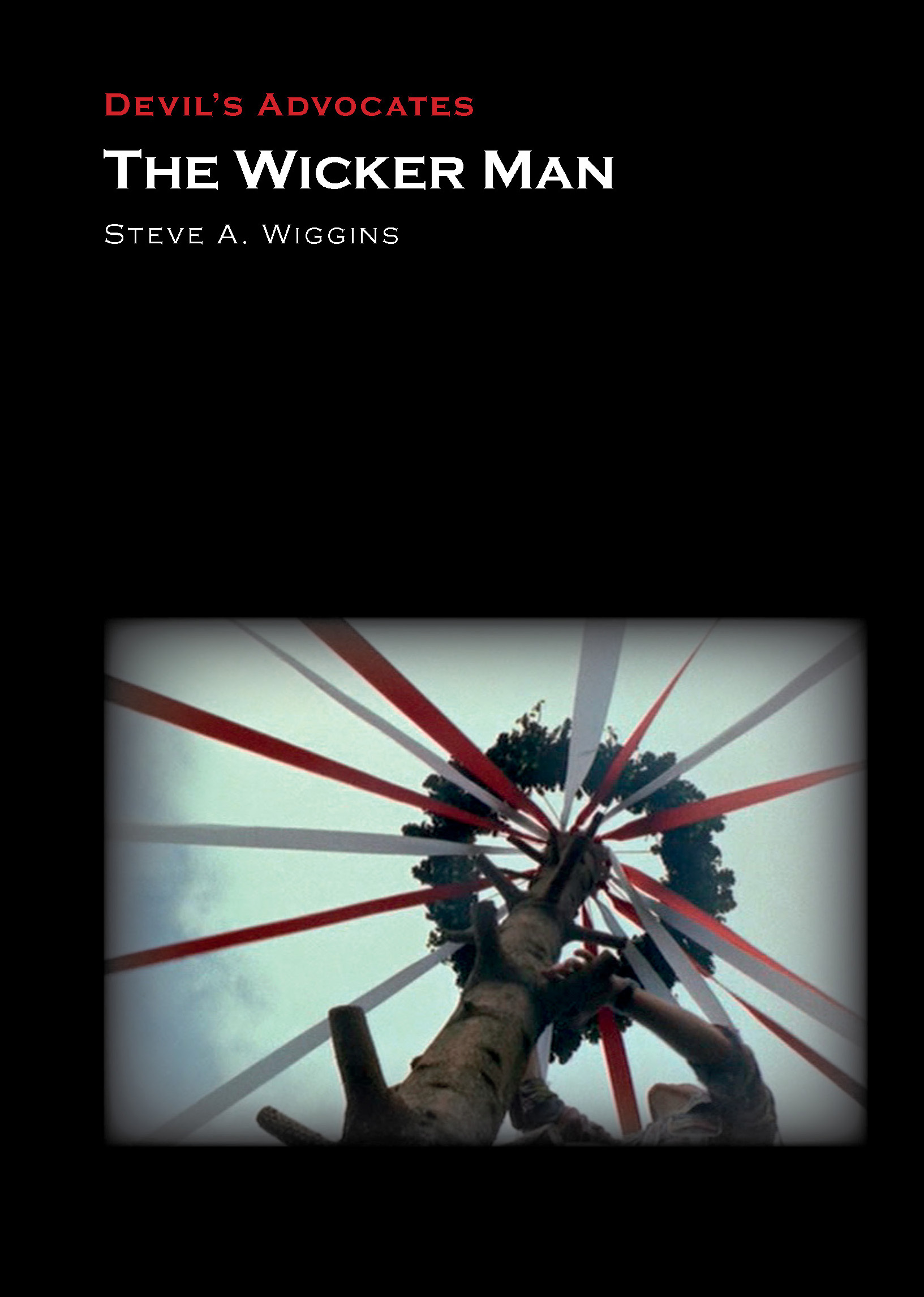
Do we really believe that holidays have any power anymore?  Is Halloween really, perhaps, a time when the veil between worlds is actually thin?  Or have we ceased believing in the other world, the one behind all the money and sham?   Holidays are liminal times.  In an ironic way, it’s my heartfelt appreciation of Halloween that led me to write about The Wicker Man, although it’s set half a year away.  Nashotah House was hardly an ideal place to work, but prior to an administration change, it was the best place I’ve ever lived to celebrate Halloween.  A campus with an in-house cemetery, and surrounded (at the time) by cornfields and woods, was adjunct to really believing.  It was a haunted place.

Out on late nights or early mornings, I often felt it.  Trying to photograph a comet down by the lake by myself, woods on either side, in the total dark.  Or dragging a lawn chair through the trees to the edge of a cornfield at 4 a.m. to try to catch a meteor shower.   Hiding in the graveyard on Halloween night, dressed as a grim reaper to follow the hay wagon of kids that the maintenance director would drive through on that night.  Those memories remain as highlights of my foreshortened teaching career.  Since Harry Potter was in the ascendant, students had taken to calling the seminary “Hogwarts,” and, I was told, I was the master of Ravenclaw.  The leaves, miniature Van Gogh’s each one, are fast falling from the trees.  There’s a decided chill in the air.  Something might, just might, really happen this Halloween.


Hallowed Tradition

The more I learn about the movie industry the more complex I realize it is.  Take Trick ‘r Treat, for example.  It was released to some film festivals—and backed by a major studio—in 2007.  I wondered why I’d never really heard of it, and the reason seems to be that it never had a theatrical release.  Until this month.  It is now playing in theaters.  The thing is, it’s already available on streaming services because it gained a cult following when it was initially released fifteen years ago.  I came to know about it by wandering into one of those Halloween pop-up stores recently.  There were plenty of Sam costumes so I did a little research and discovered a Halloween movie I’d never seen.

I have to say, the first time watching it was confusing.  I didn’t realize it was four or five separate, but interlaced stories.  I kept waiting for a central plot to emerge, but it didn’t.  At the same time, I wasn’t aware that it was a comedy horror either.  I have no problem with comedy horror, of course.  I just like to know that before I get into it.  Once I’d figured these things out, I could see the draw.  It is fun and seasonal.  Clearly it’s holiday horror.  In fact several websites list it as being essential October viewing.  It’s certainly different from many Halloween movies in refusing to be taken seriously.  It’s like adults having fun instead of kids enjoying the holiday.

Perhaps the most self-aware Halloween film, it constantly reinforces that you need to obey Samhain etiquette.  Those who are killed (and there are many) die for having violated the rules of the holiday.  I appreciate the fact that it insists that we do these things for a reason.  Wearing costumes, handing out candy, carving and lighting jack-o-lanterns, these all serve a purpose.  The movie suggests we need to do these things to stay safe from Sam.  Sam, of course, can’t be killed which means that a sequel may be in the works.  Trick ‘r Treat gets full marks for staying focused on the holiday.  Holiday horror has been a fascination of mine for some time and this movie has it in spades.  Even if it’s a little confusing at times, it’s a fun way to celebrate the season.  And this year you have your choice of seeing it in the theater or streaming it on your most convenient device.


Love for the Sky

People long for the sky.  We look at birds with envy and we have historically treated the weather, or the sky itself as divine.  To get oneself into the air is an expensive venture, no matter how it’s done.  One of the earliest forms of overcoming gravity was the hot air balloon.  The principle’s pretty simple: hot air rises.  Trap that hot air in a container large enough and it will lift a person, or people, to the sky.  Today ballooning remains popular, although not generally used for long-distance transit.  Still, to be in the sky is a consolation all its own.  Various hot air balloon festivals tour the country, but the Lehigh Valley Spooktacular Hot Air Balloon Festival was the first time I’d ever been close to an actual hot air balloon.  While not asking, I’m sure it is quite pricey to own and operate one.  Given the number of people there, it’s a safe bet that others are fascinated by the sky too.

Apart from one vampire balloon, two things made this “Spooktacular.”  One was the fact that it’s midway through October, the month for scares.  The other was the vendors selling Halloween merchandise.  Options for disguises have come a long way since my childhood.  Blinking LED lights dangling from tentacles and battery-operated masks of black that show patterns in glowing colors on the faces of the wearers were both popular among attendees.  And not just with children.  Although the festival runs all day for Saturday and Sunday there are those of us who came for the evening finale—a mass inflation of balloons followed by a laser show and fireworks.

Such shows as this obviously require a ton of tech and a lot of set-up, but I couldn’t help but think as I watched that the sky, so eerily lit up at times, that in ancient times this would certainly have been considered as a theophany, an appearance of the gods.  Projected onto the sky itself, or penetrating that very sky, the lights could be made at times to dip, creating the impression of something large descending from above.  It was a show worth seeing.  As we drove home—it was past my bedtime and I had the passive role of passenger—I spotted a large bird winging through the night, dark against a low cloud.  Too dark to identify (although probably an owl), I thought how birds have a view that’s still rare among land-dwellers.  Theirs is the realm of the gods.


Halloween Mothers

There’s an irony in seeing Samhain returning back to Ireland as Halloween.  One movie that ties its Celtic roots in particularly well with the denizens of the Otherworld is You Are Not My Mother.  Written and directed by Kate Dolan, it’s an intensely creepy film set in Dublin as Halloween approaches.  A dysfunctional family of grandmother Rita, mother Angela, and daughter Charlotte have a family history of changelings.  As the tension grows in the family the viewer, and Char, must decide whether to believe her mother or her grandmother.  Particularly disturbing are the actions of Char’s classmates as they bully and threaten her in truly horrific ways.  All of this happens as Halloween nears and adds to the uncertainty.

I really don’t want to give too much away as this is a movie well worth watching.  It satisfies an October itch.  It’s also a fine example of both “elevated” horror and folk horror.  Although filmed in Dublin, the landscape—particularly the river, plays an important role in the story.  The film even helps us out by having a museum tour explain what liminal spaces are and although much of the action takes place indoors, these outdoor places are essential.  There’s an awareness of landscape and what it implies regarding the Otherworld.  As with much intelligent horror, there’s little bloodshed but plenty of tension.  And the moody atmosphere of overcast Irish skies makes it possible almost to feel the chill in the air.

The families shown in the movie are working class, which adds to their emotional resonance.  Houses are lived in and not spic-n-span.  Work provides enough to get by but not much else.  In a strange way, having the Otherworld break through in such circumstances isn’t all that unusual.  Here is something to anticipate, to look forward to.  Something that might lift you out of the mundane workaday life.  Folklore began long ago and served a similar function, I suspect.  Surviving is difficult work.  Even the tradeoff in modern times of giving most of our waking time to our jobs is a reflection of this.  It’s not difficult to believe that there’s something a bit more stimulating, if dangerous, out there.  Something we want to avoid but that we can’t help but be fascinated by when we encounter it.  Horror offered by women directors is often thoughtful in that way.  You Are Not My Mother will help to set the mood for Halloween, as it’s done in the old country.  In its own way, it’s a changeling.


All Things Being

“Equal” and “night,” in their Latin forms, give us the word “equinox.”  Today we enter the darker half of the year.  Interestingly, of the so-called “quarter days”—the equinoxes and solstices—this is the only one for which we have no ancient indications of celebration.  Like a birthday that goes by unnoticed, this feels odd.  Why, among the set of only four days—longest, shortest, and two equal—did this one fail to be noticed?  Well, perhaps noticed, but not celebrated?  The failure of ancient records may be one explanation, and perhaps other, near dates of note subsumed it.  In Judaism, for instance, Rosh Hashanah and Yom Kippur come around this time.  The ancient Celts celebrated August 1 and November 1, or thereabouts.  September is a particularly busy time.

Harvesting, in many places, gets its real start in September.  In more modern times, school starts up again.  Work schedules once more take priority and those “relaxed” summer hours are a thing of the past.  It’s easy to overlook this seemingly insignificant day.  It is important nonetheless.  For those of us who watch horror, it’s now more easily explained—it’s darker and that brings on one of the most primal of fears.  Halloween is coming, and if you haven’t prepared already, discounted pricing on picked-over merchandise will begin in coming days.  More and more houses will prepare for the haunted season.  Around here leaves are just beginning to change, but in more northern latitudes they’re well on their way already.  Pumpkins are already on hand at grocery stores and farm stands.  The days of summer sweet corn are over.

Not all holidays receive equal attention, of course.  Less romantically inclined adults simply work through Valentines Day.  And who even notices May Day anymore?  If you don’t spend money on holidays they don’t seem to count.  Who goes out and buys things for the forgotten autumnal equinox?  Nevertheless, many people say that fall is their favorite time of year.  It has a trickster element to it.  You awake and have to throw on some extra layers, but by mid-afternoon short sleeves may be sufficient.  Hurricanes may come ashore.  Some days will feel like winter, and others summer.  Transitions are like that.  The autumnal equinox signals the inevitability of winter but also the yearning and melancholy of the shortening days when color springs to light once again.  Forgotten or not, today is the harbinger of things to come.


Scary Holidays

One of the real wonder of books is that they can spawn ideas outside their specific topics.  While revised dissertations can be somewhat difficult to read, Derek Johnston’s Haunted Seasons: Television Ghost Stories for Christmas and Horror for Halloween contains quite a few such moments of birthing ideas.  While being largely British-focused, it nevertheless explores holiday horror, a phenomenon that I’ve been researching for some time.  Not really a television watcher (not any more—as a child things were quite different), I don’t really keep up with many programs.  Still, I learned a lot from this book.  One of the main questions it addresses is something I’ve long wondered about—why is there a connection between Christmas and ghost stories in England?

Johnston points out that Celtic areas tended to have Halloween or its precursors to supply an occasion for otherworldly thinking.  The English, not wanting to think of themselves as these outer-lying cultures (I’m simplifying and abstracting a bit here), developed their own tradition of the Christmas ghost story.  It pre-dates Dickens and probably goes far enough back in history that there’s no way to trace it.  Telling ghost stories around the shortest day of the year makes its own sense.  Dickens’ A Christmas Carol was perhaps the most famous example, but M. R. James’ habit of telling ghost stories (later published) to students and fellow enthusiasts on Christmas Eve also plays into it.  In Britain this led to a series of BBC Ghost Story for Christmas shows.  Meanwhile, in America, where there was quite a lot of Celtic immigration, a taste for Halloween grew.

There are so many ideas that swirl around holidays.  I’ve been exploring the topic for nearly two decades now.  Publishers, always with their eyes on the bottom line, don’t produce much like this, figuring people will only buy it one season a year, and for books that means usually the first year only.  Some people (yours truly, for one) will buy books about holidays out of season.  So much of life is preparing for special times.  I suspect that ancient people also fell into humdrum daily existences also.  Humans require stimulation, we like variety and novelty.  Holidays are a great solution—they don’t occur every day.  If they did they wouldn’t be special.  They bring something different into our workaday world and, in modern times especially, we brand them so that each one is at least slightly different.  I don’t mind seeing the seasonal displays so early in the stores—it reminds me that haunted seasons are just around the corner.


Hollow

Now that we’re officially in September, it’s kosher to talk of Halloween horror (I’ve seen Christmas decorations in the stores already).  Well, around here we don’t really need an excuse, but since it’s handy I’ll use it.  Regular readers know I’ve been on a Sleepy Hollow kick lately, and I’d been wanting to see The Hollow.  Released as an ABC television movie, it had a fairly modest budget of only about $900,000 but managed to pull in stars with name recognition.  A pre-Penny Kaley Couco also appears as the new version of Katrina Van Tassel.  Let me back up a bit.  This is set in the present day.  Halloween eve.  Karen (not Katrina) is watching a Sleepy Hollow retelling being done by Ian Cranston, but her bored escort, Brody (Brom, anyone?), goes to the graveyard instead with some of his friends.  Two of them are killed.  Oh yes, there will be spoilers.

It turns out that Ian, who’s just moved to the area, is the last remaining descendant of Ichabod Crane.  You see, after Ichabod fled, and settled in New York City, he changed his name for fear that the Horseman would find him.  Now that a Crane is back in town, the Horseman rides again.  The teen-rivalry between Ian and Brody plays out at Karen takes a shine to the newcomer.  A descendant of Hans Van Ripper, who unaccountably talks like a pirate—lots of “ye”s thrown in—realizes that the Horseman’s after the young Cranston.  Since he’s the town drunk, though, nobody really believes anything he says.  On Halloween the town has a haunted hay ride in which each side of the love triangle is involved.  Brody plays the Horseman, but suddenly there are two of them—uh oh!

Cranston, who’s on the fencing team (to the everlasting shame of his football-coach father), is able to engage the fiend in swordplay and eventually destroys him.  He gets the girl and impresses his father all in one predictable way.  There are some laughs along the way, but for the most part this is played as teen drama.  Some racy scenes (and head-chopping) led to an R rating, but there’s little that’s surprising here.  For anyone who’s interested in the various ways Washington Irving’s “Legend of Sleepy Hollow” has been repackaged over the years, it’s a reasonable enough diversion.  When Halloween draws closer, however, it may well be time to try something a bit more appropriate for the harvest season.


October Early

Still feeling that August is the new October, although that particular day happened to reach over ninety degrees, I watched Halloween.  Not the John Carpenter original; I’ve seen that one a few times before.  No, I watched the 2018 version only to learn it’s a retcon.  If you’re like me you’ll wonder what a retcon is.  It’s a portmanteau of “retroactive continuity.”  That’s where a sequel goes back and makes adjustments, or simply ignores, story elements from the original to take the story forward.  I haven’t followed the Halloween franchise.  There are too many movies I want to see that are original, with fresh ideas, to be spending my time trying to find my way through an emerging mythology of a serial killer.  Michael Myers, as horror fans know, inexplicably killed his sister as a child.  As an adult he terrorized Haddonfield, Illinois  one Halloween and Laurie Strode was the final girl.

What drew me to this sequel was that Jamie Lee Curtis was back as Strode, all grown up.  Michael predictably escapes again and goes for an even higher body count in Haddonfield.  Laurie, meanwhile, has gone NRA and booby-trapped her entire house in anticipation of this day.  You can see the draw, I hope.  You kind of want to see how this ends.  The original had Michael’s apparently dead body disappear at the end.  In the retcon he was arrested after that and re-institutionalized.  The thing is, you can never really kill a monster.  Original scenes and scenarios are revisited, and those familiar with the Carpenter story are rewarded by situations that subvert expectations.  Where is he hiding this time?  You always watch the credits roll wondering how “the authorities” don’t realize that a guy shot, stabbed, and incinerated and keeps coming back might be something other than human to be put in an asylum.

I should know better than to watch these kinds of movies when I’m home alone, but I don’t.  So it’s a good thing that I try to piece all these things together.  We have three strong women—three generations of final girls here, and the obligatory basis for a sequel.  (At least two, in fact, bringing the franchise up to thirteen movies.)  Laurie’s granddaughter is among the virginal, non-drinking final-girl prototypes.  Her less Puritan friends are killed off, although her worthless boyfriend survives the night.  You’ve got to love the endless self-references of such situations.  That’s why we keep on coming back.  We’ve seen it before but we still want more.  Even if it’s only August.