Big Bites

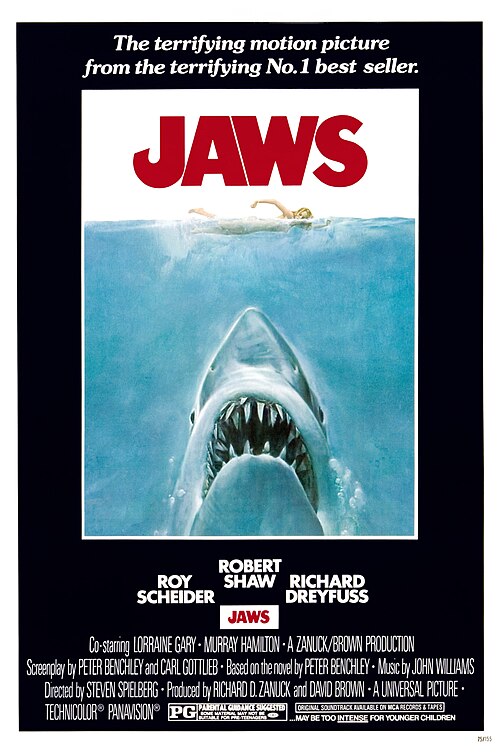
Although Jaws takes place on or near the fourth of July, it’s not holiday horror.  Holiday horror draws its source of fear from the day, and although Mayor Vaughn—like many politicians—insists holiday income is more important than a few lives lost, the fear derives from the shark.  I can’t remember when I first saw Jaws.  It couldn’t have been during its initial theatrical release (I was too young), I do know that I read the book first.  I wasn’t expecting Hooper (then my favorite character) to survive.  I was also surprised when I heard people starting to refer to Jaws as horror.  When I first saw it, whenever that was, I wouldn’t have called it horror—it’s just a movie about a shark.  Since thriller and horror bleed into each other I’m more open to the designation now.  Besides, animal attack horror is its own well-established category these days.  Jaws, half-a-century old this year, is experiencing a comeback but the shark never left.

JAWS, 1975

My wife surprised me by suggesting we watch it last weekend.  We’d seen it together on television many years ago.  A number of analyses have been appearing in the media, highlighting the importance of the movie, and I noticed a few things watching it again.  Probably the most obvious shift, for me, was finding Quint the most engaging character.  I don’t know how many times I’ve read Melville’s Moby-Dick, but it’s been at least two times since seeing Jaws the last time.  The connection was much clearer with this viewing.  Quint is after sharks because of their attacks on crewmen of USS Indianapolis in World War II.  Quint was a survivor but his life’s mission is revenge on sharks.  So much so that he smashes the radio to prevent Brody from radioing in an SOS.

So here was a confluence.  I watch horror movies.  My favorite novel is Moby-DickJaws falls somewhere between the two.  The mainstream success of the latter may have been an early contributing factor to the grudging admission that horror can be good cinema.  Just in the past two or three years standard media outlets have been valorizing some horror and in this summer’s movie season, eyes have turned back to Amity and its local Captain Ahab and great white.  The great white shark, mainly feared because of this movie, is considered a vulnerable species.  As with Moby Dick, I felt sorry for the animal, watching the movie.  Both seem to have revenge on their minds as well, whether it’s a holiday or not.


Quarter Day

Some years it sneaks up on you.  The solstice, that is.  The weather remains an area of fascination for me, and not one of infrequent complaint.  The late spring (pretty much all of May and June up until Juneteenth) around here has been rainy and chilly.  Oh, we’ve had hot days sprinkled in, but even this week I had to wear a thermal shirt and fingerless gloves in the morning since there was no sun and the furnace has been off since last month.  The last couple of days, starting, ironically, at Valley Forge, have been getting hot.  And today begins astronomical summer.  I write about the seasons quite a lot.  Having been born and raised in a rainy, temperate zone climate, I grew up accustomed to four distinct seasons.  And we’re now at the longest day of the year.

The quarter days always make me reflective.  Culturally, there’s no real celebration associated with solstices or equinoxes.  The winter solstice falls relatively near Christmas and other winter holidays.  The spring equinox is close to Easter.  The start of summer, which should be ebulliently hopeful with its abundant sunshine, tends to get overlooked.  Some like to say summer is when life is easy.  It does mean mowing the lawn quite a bit.  The grass loves all the rain we’ve had this year.  Waypoints, however, are important.  We divide the year so we might anticipate.  Our agricultural roots focus on planting and harvest.  Even our hunter-gatherer forebears had to follow the food that changed location depending on the prevailing weather.  The seasons are deep within us.

The summer solstice always makes me think of Ari Aster’s Midsommar.  The underlying fear of too much light.  Even here there is a profound message for those able to excavate it.  If things are going well we tend to sabotage them.  Still, I prefer to think of this as a season of hope.  Summer illuminates.  I write this noting the sun’s chasing of twilight outside my window, even before five a.m.  There are still some clouds in the sky because old patterns are difficult to break.  But it is a season of light.  The next quarter day, when we start to realize that the darkness will be increasing until the sister solstice comes to our rescue in winter, is likewise passed over in silence.  By then many will be ready for a respite from the heat that comes with too much light.  Others of us will be thinking of cycles and how they are full of hope and anticipation.


The Valley

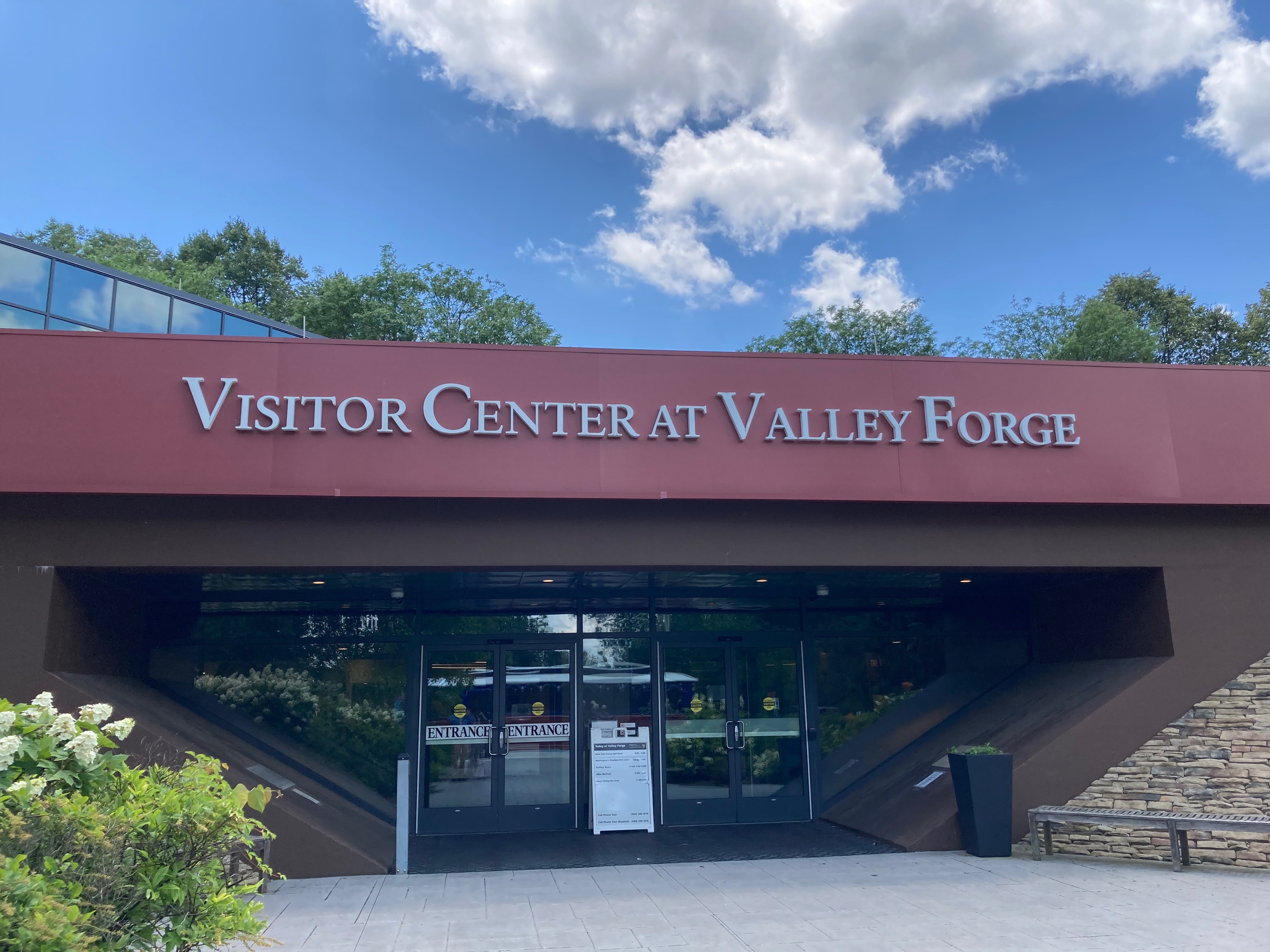
Juneteenth seemed a good day to get to Valley Forge.  With all the nonsense going on in the White House, we need to be reminded what this country was founded on and for.  I like to think that we weren’t the only ones there yesterday for that reason.  In fact, in the gift shop I found a book titled America’s Last King.  By the time we left it was sold out.  Like many Americans, I suppose, I only had a vague idea why Valley Forge was important for our young country.  We took a tour that helped explain it.  A tour that some in Washington ought be be required to take.  Valley Forge was a winter encampment—the third in the War of Independence.  George Washington had just suffered two defeats and the British had taken Philadelphia.  His poorly provisioned army set up winter headquarters in this strategically secure hill country.  Inadequately clothed, barely fed, many dying, they planned how to keep their efforts to survive alive.

What happened that winter of 1777–1778 at Valley Forge that kept the United States alive depended on two things, both brought by immigrants.  Let me say that again, in case ICE is having trouble hearing—immigrants saved America.  The young country was in very real danger of defeat.  What turned the tide was an alliance with France (the name Lafayette still looms large here in the east) and the help of Baron Friedrich von Steuben, a Prussian.  Without these foreigners, America would never have survived to become great.  Oh, and Mr. Kennedy, Washington ordered vaccinations at Valley Forge to prevent so many of his troops from dying from small pox, an inconvenient truth.  What emerged from Valley Forge that winter was a more organized, healthier United States Army that would go on to defeat the British so that we could be free two and a half centuries later.

I needed Valley Forge.  Although it was a hot day and the roads are paved, I needed to be reminded what it felt like to be proud to be an American.  Juneteenth is to commemorate the end of slavery.  History shows that many in Washington’s army were of African descent.  It seems that DC has forgotten what America is and what we were fighting for all those many years ago.  It wasn’t to exclude those who were different.  No, it was to pull together to survive.  Our would-be king spends his idle days planning military parades in his honor.  The US Army was born in Valley Forge.  And as an American with ancestors here from Washington’s day on, I really needed that visit to remind me of how America became great.


Scary Father’s Day

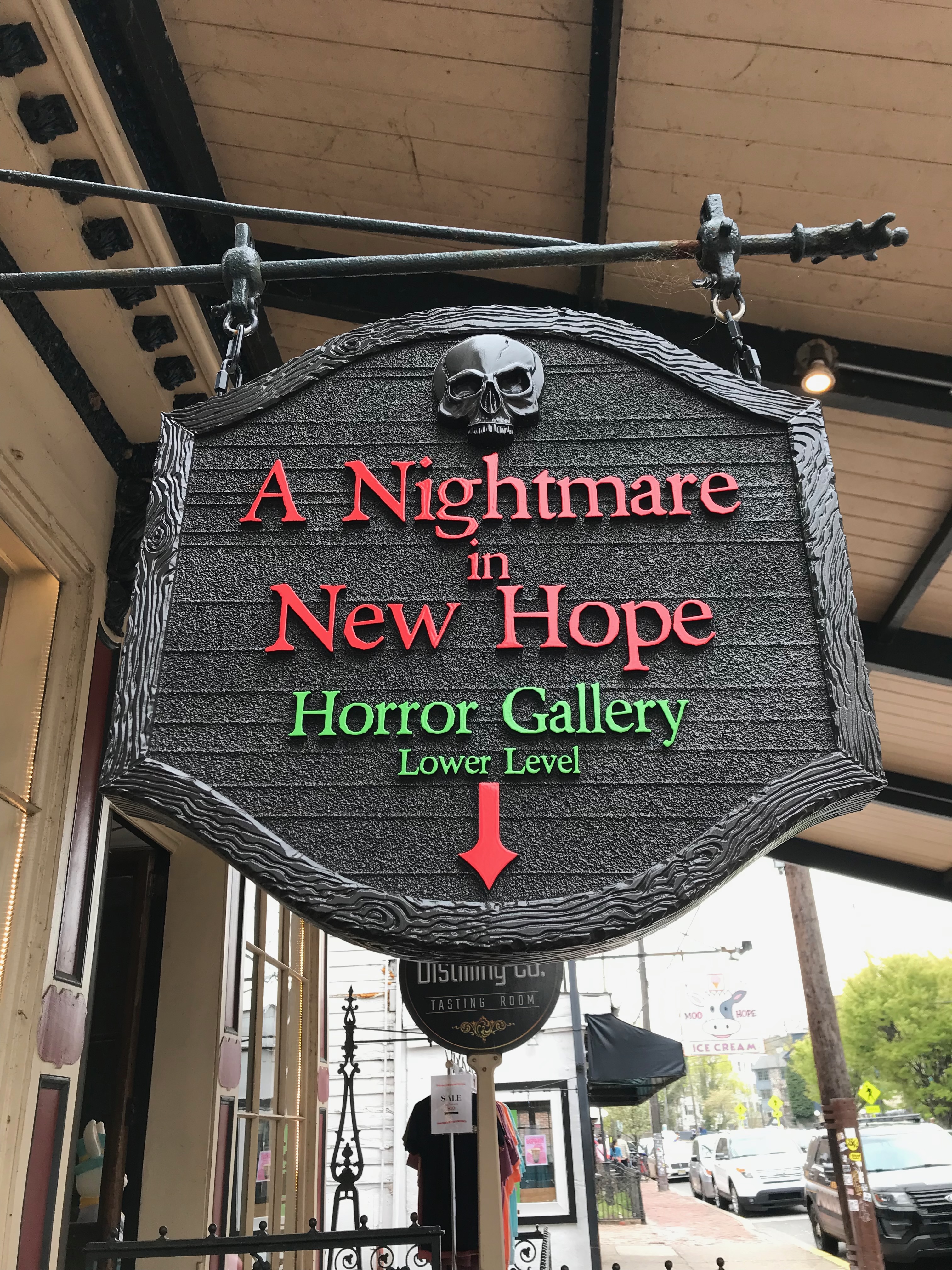
Given my circumstances, I never really celebrated Father’s Day growing up.  By the time I was old enough to get the concept, my father was long gone.  My step-father, some years later, was no real father.  Besides, we were poor and it was hard to think what such a celebration might entail.  All of which is to say that I never really expect much from the day myself.  My wife and daughter suggested we try Nightmare in New Hope again—this is the horror movie museum in New Hope, Pennsylvania, which had been closed last time we tried.  It was an appropriately rainy day, the kind we seem to specialize in around here.  I suspect that the museum will show up in a future blog post or two, but suffice it to say that it’s an impressive little collection.  It’s an odd feeling, this human desire to be in the presence of something you’ve seen in a movie.  I recommend it for any horror fans who happen to be along the mid-Delaware.

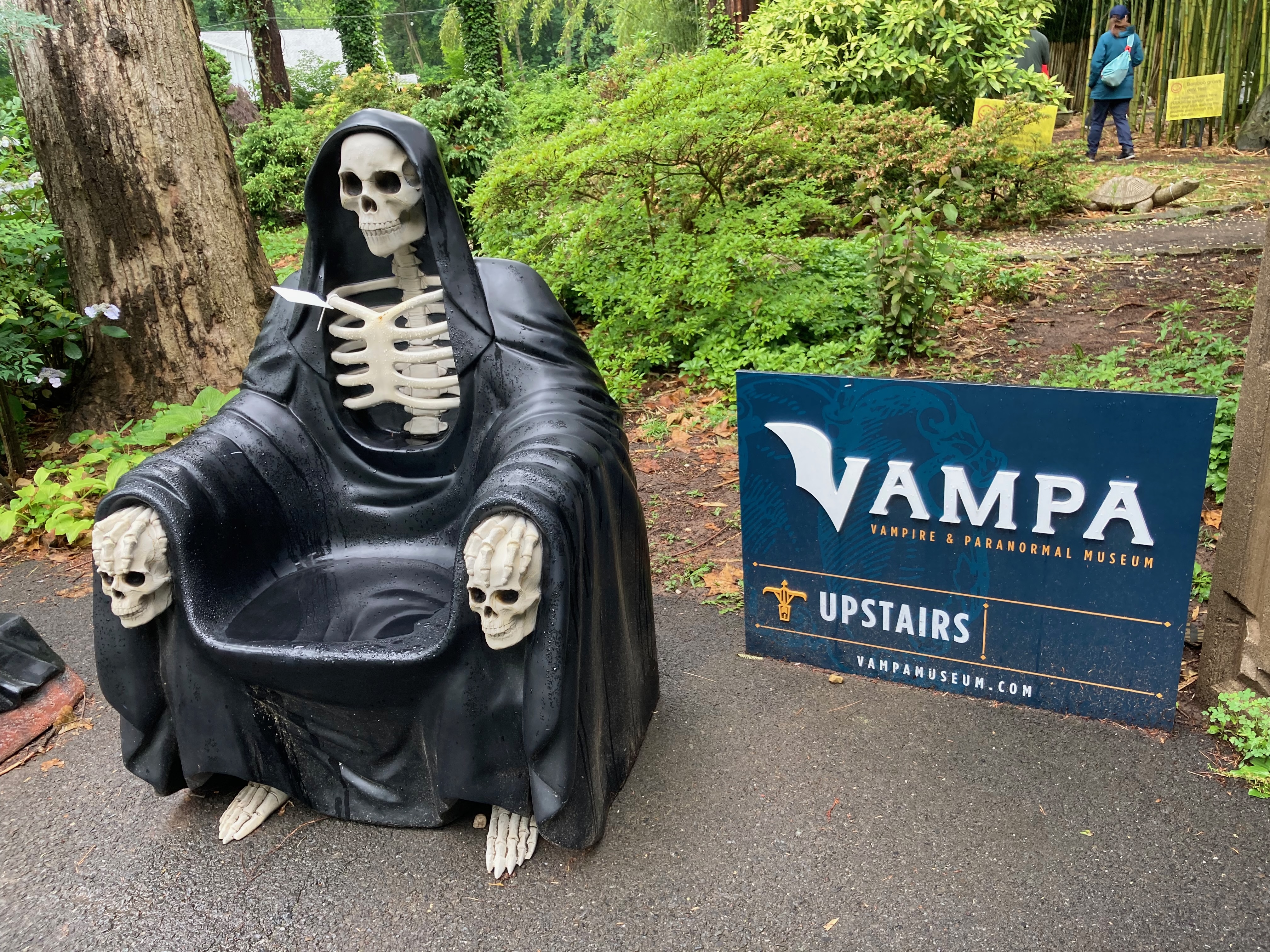
Not being large enough to take all day, we considered what we might do that afternoon.  In keeping with the theme, a visit to Vampa: Vampire and Paranormal Museum was suggested.  This museum is in Doylestown, which is only about a quarter hour from New Hope.  There’s more to it than just the museum, so it too will likely come up in future posts.  This museum contains a truly impressive array of artisanal vampire hunting equipment from Europe, dating between the seventeenth and nineteenth centuries.  I’ll try to put together a photo essay of it soon.  But that’s just the first room.  A second deals with demonic possession.  Then rooms have displays of occult and other esoteric artifacts, along with creepy suggestions to be careful of engaging too much with them.  The final room is dedicated to St. Michael the Archangel, and it warns that the struggle with evil is real.

Both places had a steady stream of visitors yesterday.  It would be fair to say that by the time we finished I was over-stimulated.  You have to understand that I personally don’t know many people interested in horror.  Going to these places was the sacrifice of a rainy Sunday afternoon for my family but will likely become one of those pleasant, lingering memories of the unusual that take on a rosy afterglow over the years.  This blog quite often ponders over why such things take on meaning for someone interested in religion and belief.  Being in the presence of artifacts, as noted above, puts you in touch with a kind of earnestness that mere electronic reading on the internet lacks.  If you happen to be along the mid-Delaware, the side trip to Doylestown is a worthy add-on, Father’s Day or not.


A Father’s Day

Some thoughts I hope I’m allowed to share on Father’s Day: I recently saw a review of The Wicker Man that pointed out (rightly) that my treatment of gender was outdated.  Similarly, the (few) readers of Nightmares with the Bible make a not dissimilar observation about my use of Poe’s formulation of women in danger.  I am very much aware that gender studies (which wasn’t even a potential major when I was in college) have done much needed work in clarifying just how complex a phenomenon it is.  I have posted several times on this blog about precisely that.  Still, we all write from a position.  My training is not in horror studies, and it’s not in gender studies.  My writing, despite the price, is intended for non-academic readers, but I too may be between categories here.  I’m trying to escape the academy that has already exiled me, but the framing of my questions is too academic.  I get that.

I also write from the perspective of a man. There’s no denying that I write as a straight, white male.  This is how I experience the world.  And how I experience horror.  Returning to Nightmares, I think my point might’ve been better expressed as noting that writers, directors, producers, and others in the film industry understand that viewers of their particular films may be more moved by a female possession than a male.  Or, in Wicker, that publicly expressed concerns about rape and sexual violence are more commonly expressed by women.  Statements can always be qualified, but that happens at the expense of readability.  There’s no such thing as a free lunch after all.

Academics can’t be blamed for doing what they do.  They critique, poke, and probe.  My books since Holy Horror have been intended as conversation starters.  But they’re conversation starters from the perspective of a man who watches horror and tries to understand why he reacts to it the way he does.  There is an incipient ageism, I fear, that sometimes discounts how people raised to use “man” when referring to mixed or indeterminate genders—taught so earnestly by women who were our teachers—sometimes take our earliest learning for granted.  Those early lessons are often the most difficult to displace.  I try.  Really I do.  I’ve had over six decades looking at the world through a straight man’s eyes.  I welcome comment/conversation from all.  Of course, my intended readership has never been reached, and they, perhaps would have fewer concerns about my view.  Romance (hardly a feminist-friendly genre), after all, is one of the best selling fiction categories, even today.  And many of the writers—generally women—express the gender-expected point of view. That’s a genre, however, outside my (very limited) male gaze.


Remembering Holidays

Memorial Day is an important stepping stone to get through the capitalistic year.  Not only does it mark the unofficial beginning of summer, it’s also the first holiday after the long, long drought of March, April, and nearly the whole month of May.  That’s a long stretch of unbroken work.  My ideal holiday may be one where I could hole up in my study with books and endless time to write, but that kind of situation isn’t really realistic.  There’s a lot to do.  Around these parts, however, getting outdoors to take care of those weeds has proven difficult.  Every day since last Tuesday (nearly a full week, as of today) it has rained at least a little.  Sometimes a lot.  And the temperatures dropped on Wednesday, back to early April levels, as if May were vying for the title of the cruelest month this year.

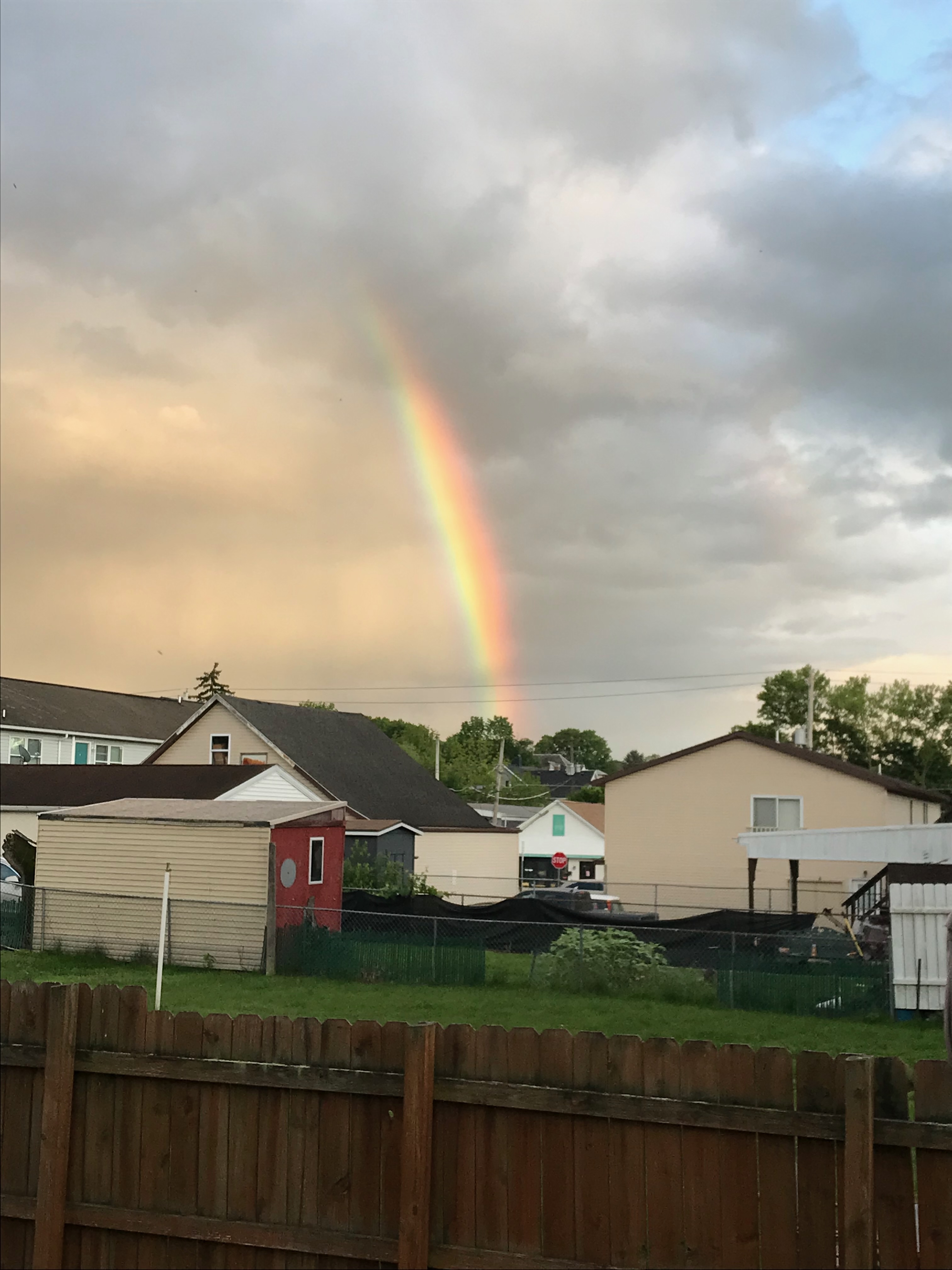
We’ve been making the best of it, getting out to see local attractions while dodging raindrops.  The weeds, I’ve noticed, love this kind of weather.  And I have a visceral reaction to putting on a heavy jacket to go out pulling weeds while watching each passing cloud for a potential downpour.  On the plus side, we have rainbows.  In fact, two nights in a row, about the exact same time, near sunset, we had a rainbow in the exact same spot in the sky.  That’s a sign of hope.  And indeed, the summer takes on a more relaxed atmosphere at work and a few holidays start creeping back in.  Until the stretch of September-October, the second annual drought.  But by then, however, off in the distance I can see the holiday season that starts in November and I know I can make it through to December.

It’s an odd way to live, isn’t it?  Experts talk about how work will be different in the future, but I have a mortgage due in the present, so I step from holiday to holiday, grateful for the time to recover.  With a government trying its best to eliminate benefits to seniors I may have chosen a bad time to reach my sixties.  At least I’m young enough to still pull weeds and push a mower.  (Once the grass dries, that is.)  The main point is not to waste this rare gift of a holiday.  There’s no rain in today’s forecast (but there is for Wednesday, every day through next weekend).  Seeing the sun buoys me up.  And if I can’t have that I can always hope that at least I can have rainbows.


Museum Life

Allentown is the third largest city in Pennsylvania after Philadelphia and Pittsburgh.  Here in the Lehigh Valley it abuts Bethlehem and is just a few miles from Easton.  Getting an early jump on Memorial Day this year my family visited the Allentown Art Museum.  My daughter had been there before and let us know that it’s not huge, but certainly worth seeing.  They do have a Rembrandt among their collection, and a few Medieval pieces, including a tapestry that I could swear I saw on a book cover once.  In any case, I would recommend it.  We’re still fighting with rain around here, so it was a great Friday diversion.  We’re museum people, and I’ve pursued creative outlets my entire life.  I like to look at those good enough to be on public display.  As I told my family, when I was young I was curious about art and checked out books from the library on the great masters so that I could learn to identify paintings I hoped some day to see.  And as a bonus, the Allentown Art Museum is free.

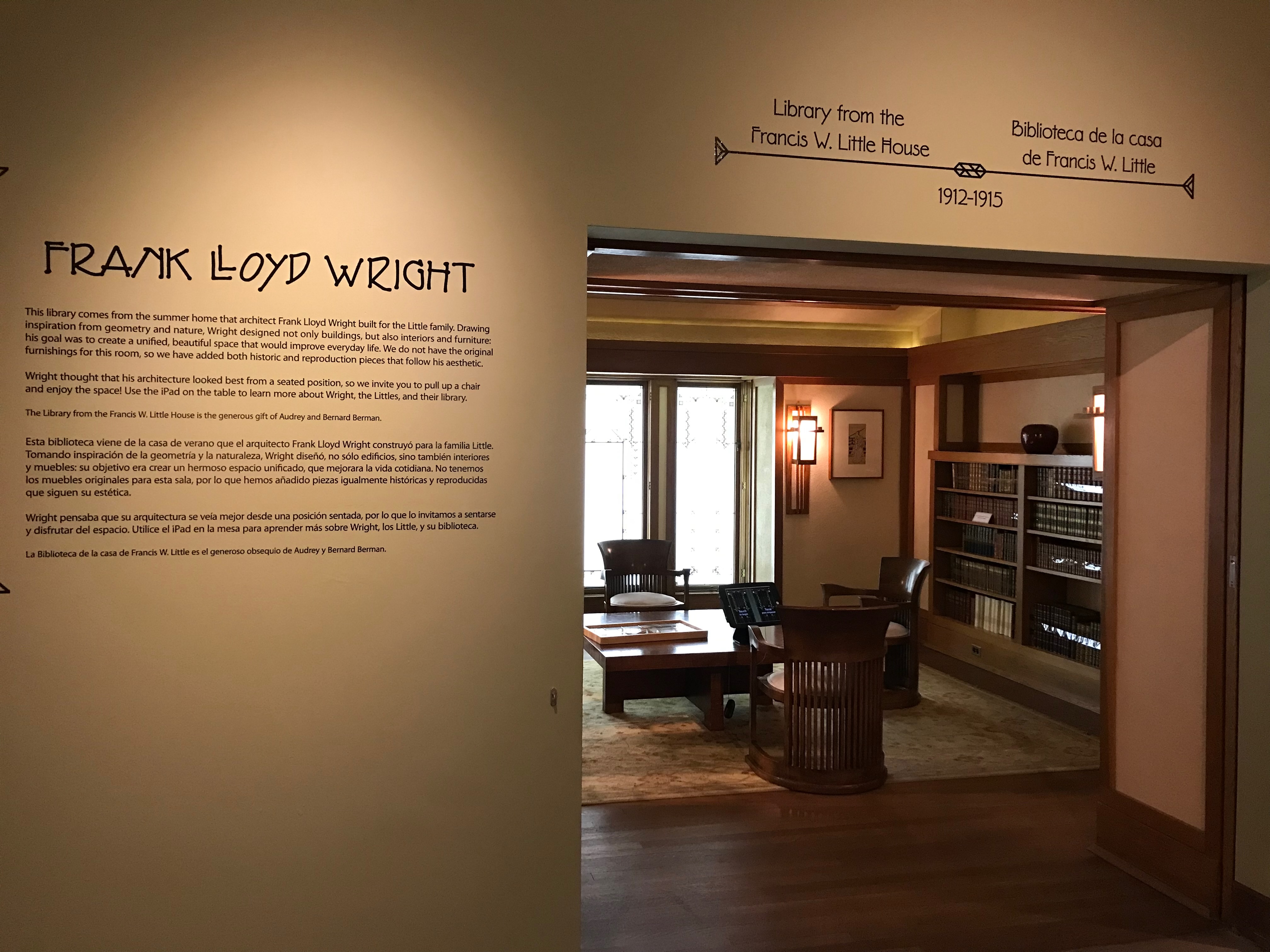
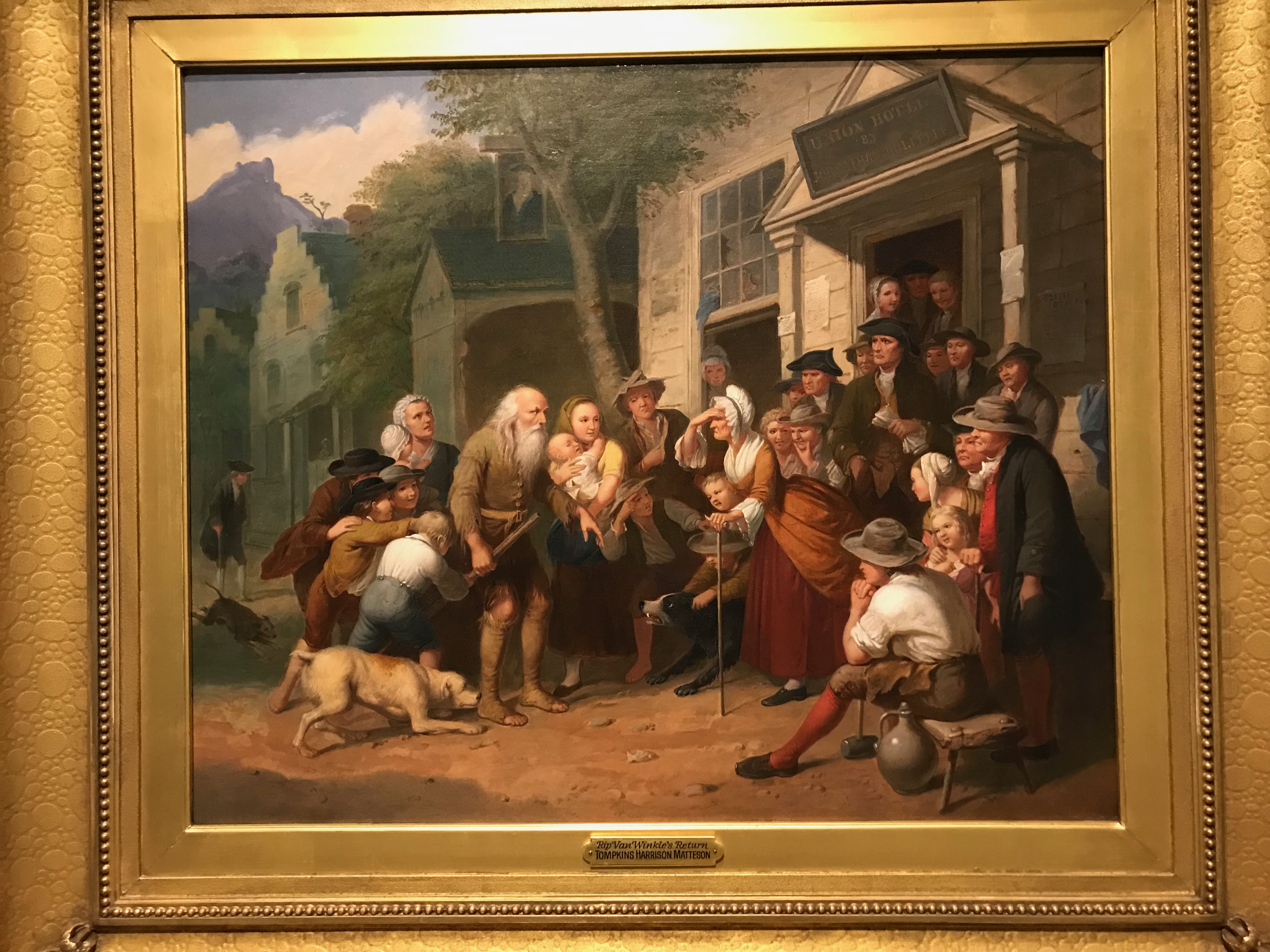
One of the features of the facility is a personal library designed by Frank Lloyd Wright.  The books on display aren’t his actual books (I don’t think), but being a book person I had to look over the titles.  Washington Irving was well represented.  Since Sleepy Hollow as American Myth will be out shortly, I was curious to see if they had The Sketchbook of Geoffrey Crayon, Gent.  This is the book in which “The Legend of Sleepy Hollow” first appeared.  It seems they have all of Irving’s books because I did indeed find the Sketchbook.  Such an unexpected connection was a bonus on what was already an enjoyable visit.  I wandered out into the paintings again and found Tompkins Harrison Matteson’s “The Return of Rip Van Winkle.”  As I discuss in the book, “Rip Van Winkle” is also in the Sketchbook.  Not for the first time, I’d made a personal connection with art.

Visiting art museums always leaves me in a liminal space.  For a while my soul was mingling with those of others driven by creativity.  I’ve made a few art works myself over the years but I’ve really had no training.  I did take a drawing and painting class in college, but I kept none of my output.  I enjoyed making it, however.  My daughter asked why I don’t do more and the issue always comes down to time.  Work takes the lion’s share and now weed control (they love the rain) takes most of the rest.  And writing, of course.  That’s why I need to go to museums.  To become fully human again.


Peace

Mother’s Day should be a time for peace.  In these days when misogyny is in style, it’s an especially important holiday.  The one holiday to explicitly honor women, it’s always been an occasion for reflection for me.  We have 364 days of warring and hatred, and one dedicated to the givers of unconditional love.  I can imagine a different world.  One in which women don’t have to become alt-right to gain positions of authority.  Where compassion and humane treatment would be world priorities.  I can imagine.  Although fathers are necessary too, we have no shortage of men pushing forward their personal agendas.  None of them would be where they are without mothers.  And women are the ones who give us care.  I can imagine a world where Mother’s Day wouldn’t have to feel so politicized, almost polemical.

With all eyes on Pope Leo, I can’t help but think how many treat Mother’s Day like an indulgence.  You know you want to get back to your vices, so why not pay for them in advance?  Celebrate mothers today so we can get back to business as usual tomorrow.  I don’t believe that we’ve lost the ability for transformation.  We can make the world a better place.  Think what it would be like if, before undertaking some cruel action, a person stopped to imagine their mother watching them do it.  Would not the world start to improve?  It is a world where we seem to prefer guns to roses, but it’s also a world with an unwritten future.  Pay attention to your mother.  Maybe things will start to get better.

I believe in the transformative potential of holidays.  We have to take their lessons seriously.  I’m sure I’m not the only working stiff who lives life anticipating the next holiday when things might change for the better.  We have to remember, however, what the holidays teach us.  Not treat them as simply facile days of obligation.  Think of Mom and then get back to the grind.  It doesn’t need to be a grind.  We can learn to cooperate and get along, just like Mom told us to.  Instead of isolating such thoughts to a single day, we could repeat them like a mantra.  I don’t know about you, but looking at the headlines, I could do with a bit of peace and love.  And I still believe that things can, and likely will get better.  And I give the credit to our mothers.


New Hope Nightmare

One of my favorite places along the Delaware River is the town of New Hope.  Across the river is the very nice town of Lambertville, New Jersey, but New Hope has a feel to it.  When I learned that a new horror museum had opened there—Nightmare in New Hope—we scrambled to change plans to get there right away.  We went the Saturday before Easter.  We’d planned to spend some time touring the rest of the town as well since it’d been years since we’d done so.  We managed to find parking and, since the museum opens at one, grabbed some lunch and went to Farley’s Bookshop.  Independent Bookstore Day was actually the following weekend, but bookstores need no special occasion.  Farley’s has changed a lot since our last visit.  It’s smaller (as has happened with many indies) and brighter.  I found plenty to like there, but I did miss the darker, dustier feel to the first incarnation of the store I’d known.

We made our way to Nightmare in New Hope.  And waited.  And waited.  Several people passed by, noting that they’d have gone in if it were open.  One of our party messaged the website since telephoning did nothing.  Eventually the owner indicated that he was closed for Easter.  Of all things.  A horror museum, open only on weekends, closed for the first nice weather we’d had on a weekend?  That was the main reason we’d driven an hour to get there.  We found a place with vegan ice cream and fed the ducks on the river.  I was sad that the main objective of the trip, the museum, hadn’t turned out.  And I knew it would be quite some time before we could try again.

My daughter, knowing my tendency to get depressed over such things, suggested we could go to Peddler’s Village instead.  My wife and daughter had visited it before, and so we decided to round out our Saturday trip there.  Peddler’s Village is a set of speciality shops that was born about the same time that I was.  These days there are about 60 shops with items that may or may not be strictly necessary.  Although we’d been to Farley’s, I couldn’t pass up the Lahaska Bookshop, part of the Village.  It was warm that day and we saw maybe only five or six shops.  At least one of them was an independent bookstore.  Not exactly the day we’d planned, but a day spent in and around New Hope is never wasted.  But really, closed for Easter without even putting a notice on the website?

(See updates here and here.)


Thinking of Home

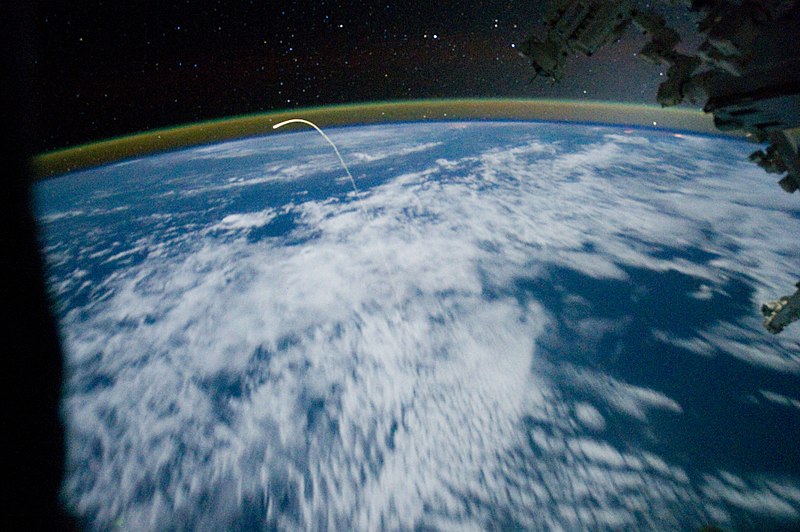
The earth, and even life on it, will, I’m confident, outlive our petty desires for money and being the king of the hill.  Scientists are getting tantalizingly close to demonstrating something that many of us already know—life exists elsewhere.  Chemical signatures of life appear as close as Venus and as far as K2-18b.  I suspect our universe is full of life.  And life is more than just rationality.  We’re creatures driven to survive and that level of will appears to be universal.  As Ian Malcolm says, “Life will find a way,” or something similar.  Earth Day should be a celebration but under too many Republican presidents it has become a plea to please stop intentionally harming our planet.  I grew up in that distorted religion known as Fundamentalism.  I learned that the destruction of the world was necessary to force God’s hand with the second coming.  The planet was here to exploit and waste since he’ll be back any day now.

Unlike many of my cohort, I decided to learn more about that perspective.  The more I learned the more shocked I became.  A warped and twisted message had been passed along as Gospel truth, and that the care the creator bestowed upon creation was merely a smokescreen to hide Jesus’ return.  I still believe we are not capable of completely destroying the planet.  Life will continue with or without us.  Life is persistent and hopeful.  That doesn’t mean we shouldn’t take care of it.  Earth Day has become a rallying point for those who see the world sensibly.  We have so much wonderful life on this planet.  In our arrogance and in our tendency to take mythology literally, we have assumed the worst.  Why not take care of what we were given?  Jesus may not come back, but perhaps the Lorax will.

There are ways to live sustainably on this planet.  It does mean that some of the richest will need to surrender some of their wealth and power.  We need to learn the habits of requiring less and appreciating more what we have.  Like most people born into the world in this era, I struggle against the desire for new things.  Novelty is natural to such curious creatures as ourselves.  But there are other such curious creatures too.  They have a place here, even as those which seem to have no curiosity do.  It’s a planet big enough for all of us.  We just need to be sensible about it.  And remember the earth today and be thankful for our home every day.

Image credit: NASA/ISS Expedition 28, public domain from Wikimedia Commons

Easter Gathering

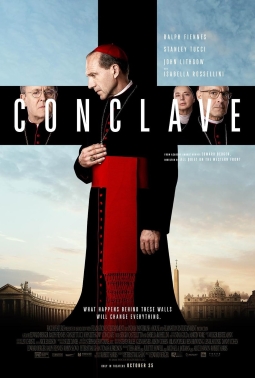
On Easter I’m thinking of Conclave.  My wife had been wanting to see it and we watched it on Good Friday—a work day, of course, in this “Christian” nation.  In any case, it’s fascinating for a couple of reasons.  One is that, as a drama surrounding the election of a new pope, it draws you in.  The politics and intrigue are, I assure you, quite real within in the church.  People are, in seems, incurably political.  Conclave is fiction, of course.  And in reality, very few people are ever admitted to the chambers where a world leader is elected by those priests who’ve risen to the highest levels of church hierarchy.  This fictional reconstruction may give a window into that.  The other reason that I found it so fascinating is that it was quite a box office success for being a movie about a religious subject that isn’t biblical.  Appropriate viewing for Easter weekend.

There were a few striking scenes.  Here’s the outline, though: a pope has died and Cardinal Lawrence is the deacon in charge of the conclave to elect a new one.  Four main candidates exist—one a staunch traditionalist, one a liberal, one an African who is conservative, and the last a moderate American who has a past.  The pope had appointed a new cardinal shortly before his death and some people think he’d make a good pope, despite his relative youth.  One of the striking scenes is Cardinal Lawrence’s homily to open the conclave.  He preaches against certainty.  Not only is this a powerful scene, for some of us watching he is absolutely correct.  Certainty is the death of faith.  That scene alone is worth watching the movie for.  Go ahead, it’s Easter.

The other striking scene is the twist ending, which I won’t reveal here.  Anyone who’s honest and who’s lived long enough to become a pope has secrets.  Not all of them reach to the level of scandal, but the movie also emphasizes that the pope is also a sinner but must be willing to seek forgiveness.  Indeed and amen.  The problem we face today is that, even and perhaps especially in Protestantism, many people look to condemn sinners without realizing their own faults.  The movie points out that even the holiest acknowledged person within Christendom can’t make any claims to perfection.  If we’d all admit that we’re doing the best we can not to offend deity or fellow human being, perhaps there really would be cause to celebrate this Easter.  Even without a conclave.


Book Stages

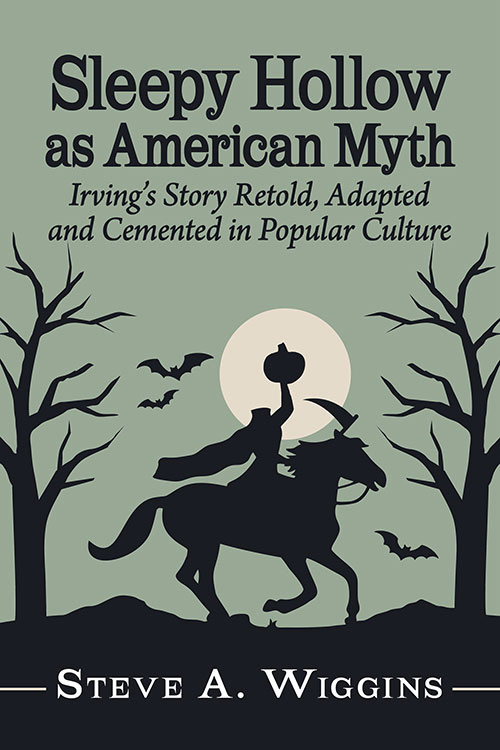
Books appear in stages.  All publishers are different.  These platitudes encapsulate my experience in finding a venue for my ideas.  Sleepy Hollow as American Myth has just appeared in McFarland’s spring and summer catalogue.  I haven’t seen the proofs yet, but I suspect I will before too long now.  What’s with the spring and summer catalogue?  Well, believe it or not, books are seasonal.  Publishers go by seasons.  For many academic publishers there are two seasons: Spring/Summer and Fall/Winter.  The timing of certain books may fall in a specific place within those seasons but many academic books are aimed at classroom adoptions so early spring and early autumn are the most popular times.  It’s no coincidence that academic conferences also cluster around the semester system, the big ones being either autumn or spring.  Academics have a migratory instinct.

Personally, I’m hoping Sleepy Hollow will be out in late summer.  I don’t have any control over that, but it’s about then that normal people’s thoughts start turning toward falling leaves, long nights, and monsters.  Every year there’s a day in August when I step outside and literally smell autumn in the air.  As a kid seasons seemed like something as rigid as a biblical law: spring was March through May, summer June through August, and so forth.  The older I get, the more I realize how negotiable seasons are.  The Celts celebrated the start of spring in February.  Yes, there are lots of cold days yet to come, but the early signs of spring have begun.  For early risers, we finally start to observe earlier sunrises.  (These technically start around January 10, but they’re slow getting out of bed.)

You might think the ideal season for a book on spooky stuff, like Sleepy Hollow, would be timed for release in the fall/winter cycle.  Not necessarily.  Both Holy Horror and Nightmares with the Bible hit the market after Halloween.  Normal people’s thoughts had shifted to Thanksgiving.  I’m pleased that Sleepy Hollow will be released a bit earlier.  Summer is ideal for Halloween-themed books.  And yes, I devote a chapter to Halloween and the Headless Horseman.  They are closely related.  So I was glad to receive McFarland’s spring/summer catalogue and find my book on page two.  I don’t have a publication date yet, but I’m looking forward to being part of the discussion about one of my favorite ghost stories of all time.  Speaking of which, it’s almost time to begin gathering firewood for next winter, or at least it will be in summer.  And it’s not that far away.


Hoping for 2025

Those who predict, as pollsters repeatedly remind us, can’t really prognosticate.  In ancient times some prophets were thought to be given (usually conditional) views of the future directly from God, but even these weren’t fail-proof.  Nobody knows what 2025 holds for us.  I love holidays, but New Year’s Day is one of the more chancy ones.  I don’t stay up until midnight because if I do I don’t sleep that night (I tend to awake just a couple hours after midnight most days), and I don’t make resolutions since I try to correct errors in my life as soon as I find them.  Maybe New Year’s could stand a makeover.  Something beyond staying up late and drinking.  In my experience, the next year comes anyway.  And it should be an opportunity for hope.

Interestingly, although attempts have been made to Christianize the day, it tends to remain secular.  The current date was established in the west because of the rebranding of solstice celebrations to the birth of Jesus, but the religious elements never really stuck to New Year’s Day.  It marks a clean slate for taxes and other financial resets.  Importantly, it’s a day off work.  Maybe we should rebrand it.  Honestly, I don’t have any suggestions myself—this sounds like a job for a committee.  Who wouldn’t want to be on a holiday committee?  And holidays do evolve over time.  When it was Columbus Day many employers didn’t make it a paid holiday.  Rebranded as Indigenous Peoples Day, some progressive companies did.  See what I mean?  Holidays are what we make them.

The more I think about this, the more I wonder if we shouldn’t reinstate the twelve days of Christmas.  Epiphany (aka Insurrection Day) comes on January 6, and, pre-Adam Smith the twelve days lasted until then.  New Year’s could be one among siblings.  I’m sure that if we tried hard enough we could come up with some branding for each day.  The Brits already have Boxing Day on the 26th.  The Scots make the 31st Hogmanay.  Our task, should we choose to accept it, would be to fill in the 27th through the 30th and January second through the fifth.  If we divide that up and send it to committee I’m sure we could come up with something.  It seems we already have the ten lords a-leaping lined up.  Said lords prefer having two more work days this week, I know.  Perhaps New Year’s, or even the Christmas season, could stand a bit of workshopping so we can really catch up with our sleep.  Here’s hoping, for 2025.

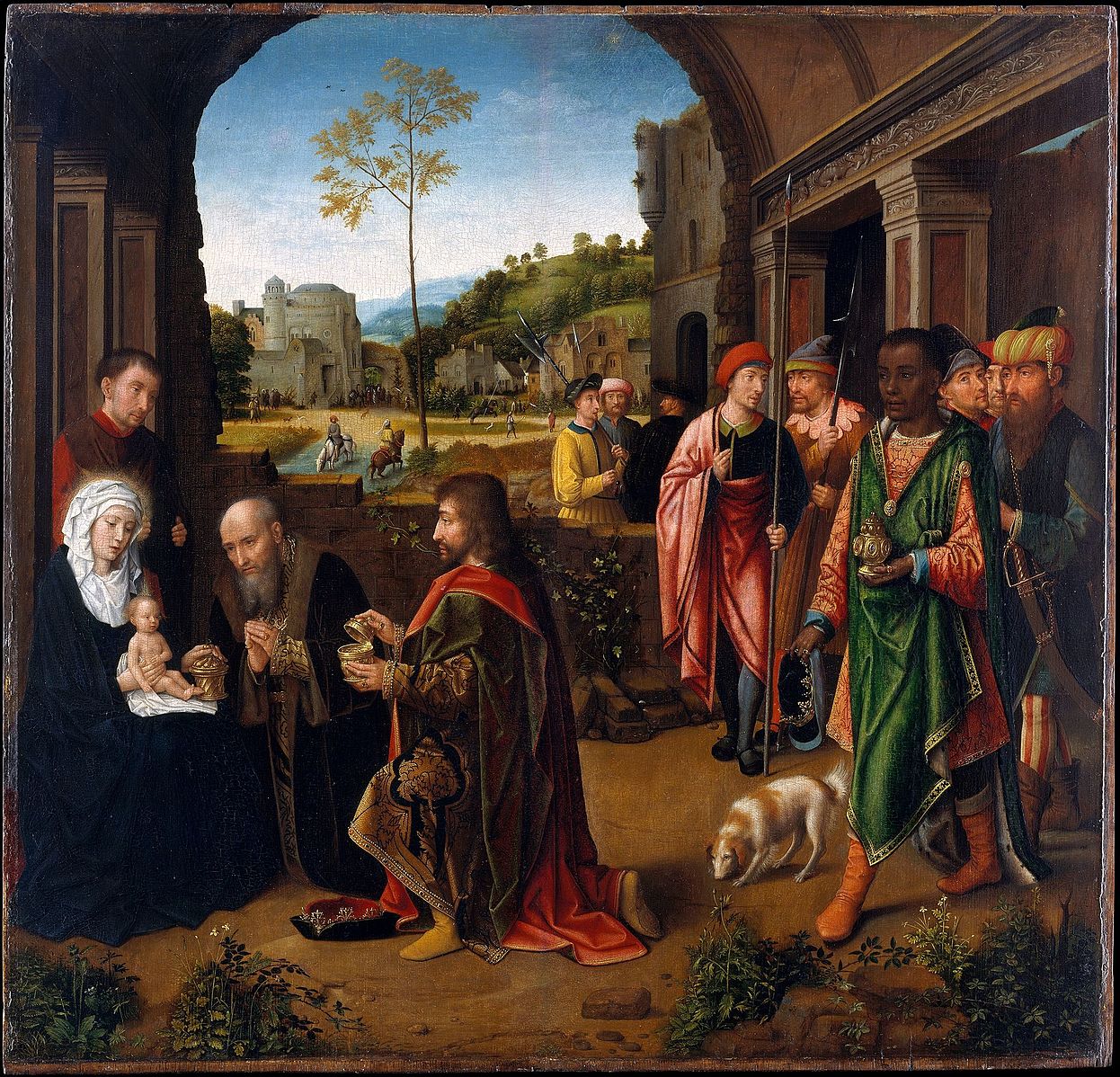
Let’s give them time to arrive! Image credit: The Adoration of the Magi – painting by Gerard David, Creative Commons CC0 1.0 Universal Public Domain Dedication by the Metropolitan Museum of Art

Eves and Holidays

If you stop in to this blog for reading about horror movies, don’t worry, there’ll be plenty of that to come.  One thing everyone who knows me knows is that I believe in holidays.  Capitalism has been killing us for centuries, but since I began having to do a 9-2-5 job, I feel the grim reaper’s approach more steadily.  Day after day after day being eaten up by work and leaving so little time to be who I really am.  I invest a lot in holidays because they break, if only temporarily, capitalism’s death-grip around our throats.  And today is Christmas Eve.  Not technically a holiday, I’ve worked for employers who, Scrooge-like, don’t consider this a paid day off.  You want to mentally prepare for Christmas (the only paid holiday in the season), you cash in a vacation day.

Image credit: Sol Eytinge, Jr., The Ghost of Christmas Past. Public domain via Wikimedia Commons

As influential as Charles Dickens’ A Christmas Carol is, late capitalism simply doesn’t get  the message.  Studies show, consistently, that work in this era is more efficient when workers have more time off.  Now, I’m not so naive as to realize that some professions require work on holidays.  After all, I trained for ministry for many years, and Christmas is always a work day in that profession (even if nobody comes to church).  Emergency workers of all sorts have to be at least on call for holidays.  Police can’t assume citizens will behave just because it’s a holiday.  But such professions, I profoundly hope, have other payoffs.  I entered a profession (professoring) partially because of the division of time.  (And it is one of the few things I’m very good at.)  People should have fallow periods.  Why is Christmas Eve still a work day?

Scrooge is clearly still in charge.  I, for one, will not shed a tear when capitalism dies.  I’ll predecease it, I’m pretty sure, but even so, I welcome a world where people’s needs come before the plutocrats’ profits.  A friend of mine always insists on saying that we don’t live in a democracy but a plutocracy.  Seeing the election results last month only confirms that he’s right.  As I recently wrote here on this blog, the howling is most fierce before the new dawn.  And lasting change must take place slowly.  Sudden shifts only lead to more sudden shifts.  Stable growth is slow.  I’m sure influential people don’t read this blog, the humble musings of an unfluencer, but if they do, there’s a simple plea here.  Consider the holidays.  Read Dickens, and have the courage of your convictions afterwards.  And yes, a blog post (unpaid) will appear on Christmas.


Solstice 2024

We have a small solstice celebration at home.  We’re not pagans, but it seems that the shortest day ought to be observed.  Noted.  Pondered.  You see, this holiday season had its earliest beginnings as solstice celebrations.  Fervently praying for more light, and a bit more warmth, ancient folk of the north knew to propitiate whatever powers that be in the dark.  “Please bring back our sun,” you can almost hear them sigh, in the bleak December.  I’m stunned and stilled by this each year.  The gradual change makes it less of a shock, but we’re living primarily in darkness now.  Until today.  The solstice is a turning point, an axis around which our lives turn.  Forgotten ancients celebrated it and eventually Christian and other holidays gathered around it, as if coming to a campfire on a cold night.  Why not stop a moment and reflect?

I’m a morning person.  More extreme than most other auroraphiliacs, I don’t remember the last time I wasn’t awake for sunrise.  Attempting to stay healthy, I try to get out for a morning jog before work, and that can be challenging for a guy who starts work early.  I sometimes start work even earlier than usual so that I can jog once the sun shyly glances over those eastern hills.  I notice the slow creep of the year.  At the other end of the day, it’s dark by the time work ends.  Mundane tasks such as hauling the garbage can out behind the garage can become tenebrous hikes.  Others who exercise, and work, most go to the gym.  I’ve tried jogging in the dark—it’s full of peril.  Like the ancient pagans, I look forward to a little more light.

Progress, like lasting change, must come slowly.  The earlier sun rises and later sunsets are first measured in matters of seconds, not minutes.  We remain in the dark even as we hope for light.  Hope pervades this time of year.  We anticipate Christmas, yes, but our light-starved eyes look beyond.  Beyond the chill of January into what some Celts marked as the start of spring—February.  Yes, the cold can be very intense then, but rages are always their most furious before they die out.  I suspect Dylan Thomas knew that when advising his dying father on how to approach the end.  I’m writing this post in the dark.  By dinner time the night will have already settled in.  And we’ll light a candle, encouraging more to join in looking for the elusive light.  Dawn always comes.  Eventually it comes.