National Reading Month

Welcome to National Reading Month. Today is the birthday of Dr. Seuss (Theordor Geisel). Since so many children begin reading with Dr. Seuss, March has been designated National Reading Month in his honor. Nothing could be more deserving of a holiday than reading. In an era when active, visual displays and lifelike animation readily draw eyes away from books, it is more important than ever to think about what reading has done for us. As a society, no significant advancements were made beyond agriculture and shepherding until writing was developed. We needed a way to convey knowledge not only over distance, but also over time. To participate in writing is to taste immortality. To read is to communicate with those long gone or far distant. How trivial we’ve made it all seem. Writing was a truly remarkable achievement. The entire purpose of schooling was originally to teach our young to read and do math. So we should all celebrate National Reading Month and put down the devices for a while and curl up with a book.

Okay, well, reading on devices does count. Still, some of us can’t help ourselves from acquiring books. I once visited a house of a friend’s relative on a trip. It turned out that we would be spending the night. As I glanced around my new surroundings I noticed something odd. There were no books in the house. None. It felt so hollowing that I knew I could not long remain there. Every room of our apartment (except the bathroom) has books. I travel with books. Even if it’s going to be a fairly brief car ride, I wonder what happens if I break down and don’t have anything to read while awaiting rescue? On the bus everyday I have at least one book with me, and sometimes two or three. I’m lost without them. Libraries and book stores are my favorite places to be. Surrounded by words, comforted by communication.
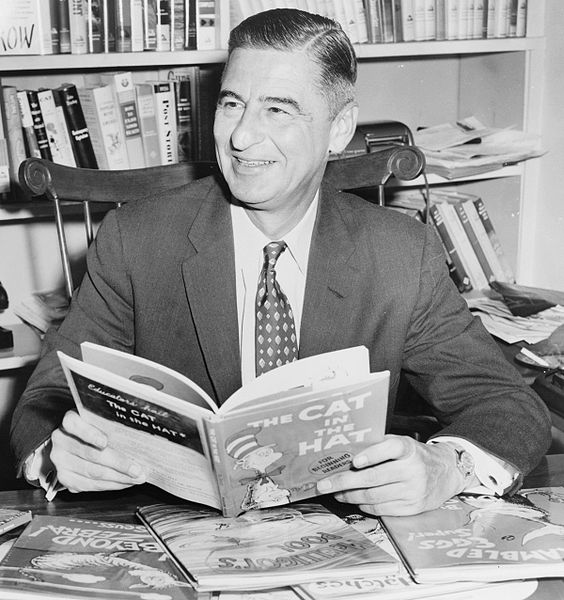
564px-Ted_Geisel_NYWTS_2_crop

Dr. Seuss was part of my childhood reading, but not so much as Bible stories and Easy Readers. We didn’t buy any Dr. Seuss, but I did check his books out from the library. When my daughter was born we corrected that misdemeanor. We purchased nearly every readily available book by Theodor Geisel, and this was in the days before Amazon. Some were difficult to locate, being in rural Wisconsin, but we persisted and instilled the love of reading into another generation. We have holidays to celebrate wars and victories in wars. Great deaths and momentous births. Love, fear, and the Irish. And yes, reading. The cracks in winter are beginning to show. Light is beginning, ever so slowly to increase. Why not celebrate the coming of the light with enlightenment for the mind? It’s time to read a book.

Biblical Weather

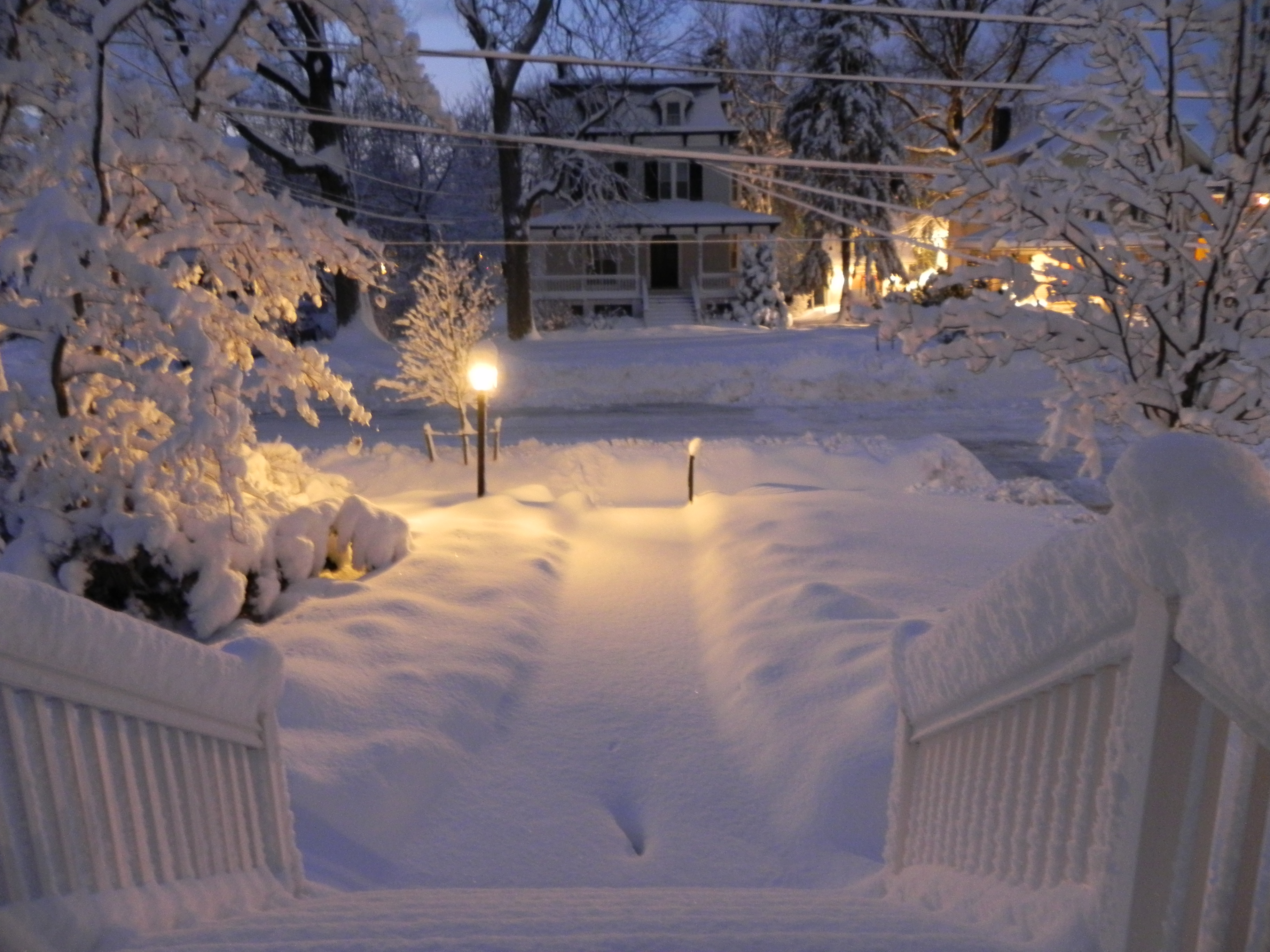
On President’s Day, my wife pointed out an article in the New Jersey Star-Ledger headlined, “‘Biblical’ snowstorms battering New England.” She asked, reasonably enough, “What makes a snowstorm biblical?” Since I have written a book on the weather in the book of Psalms, I might be able to speak to that. First off, yes, there is snow in the Bible. It’s not mentioned often and it is a rarity, but the Israelites knew what snow was. In fact, one of the most difficult Psalm weather references is to snow, in Psalm 68. The man interviewed in the newspaper, however, was not being literal. “Biblical” has come to mean disastrous. I can exegete that a bit more: disastrous because of quantity. Too much of a good thing. Or bad thing. In Boston this year the weather just won’t quit. The topic that really has people talking, however, is the temperature. It has been very chilly. My daughter complained when her university didn’t cancel classes with the air temperature at about 9 below. Her note prompted my thoughts of a day to remember.

When I taught at Nashotah House, the weather did not stop us. Ever. It was a residential facility with both faculty and students living on campus. Everything was within walking distance. My close exposure to the weather was one of the reasons I wrote the book. One Lent, and this must have been in February, we had a quiet day. Quiet days were taken very seriously. On this particular occasion the day was to be used for a meditation in the Milwaukee Cathedral, some 35 miles away. The problem was the air temperature was -42 Fahrenheit. That isn’t wind chill, that’s how cold the air actually was. (For those of you reading in Europe, Fahrenheit and Celsius are the same at -40, then they begin to diverge again.) It did not stop us. We piled into the van and prayed earnestly that we’d get there safely. On the way home we manically recited Evensong from memory. When the wind blew the chill dropped to -70 (my Minnesota friends will believe me here). If ever weather was biblical, that day was.

I do wonder if overusing “biblical,” however, will wear it out. Where do we go after biblical? What is conceptually bigger than God? Anselm would panic. What if next year it’s even worse—how will we describe it? We’ve already used up the apocalypse. We’ve entered into a crisis of superlatives. Nothing is big enough any more. As I look at the early fading light of this President’s Day, the snow is beginning to fall again. When I was a child we had, I seem to recall, a simple word to describe it. We didn’t invoke the Almighty. We didn’t hear the galloping of distant hooves. We didn’t act as if a day out of the office were the end of the world. Our simple word for it was this: winter.

DSCN0099


Love the Sinner

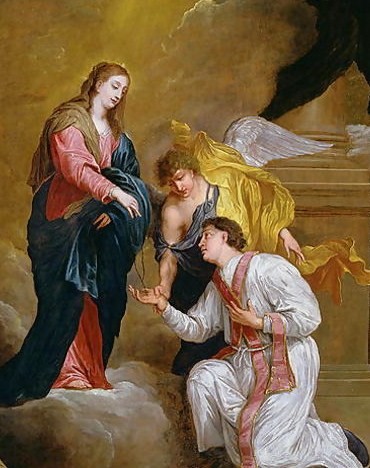
Nashotah House, in the many years I taught there, was very saintocentric. Our daily lives revolved around Saints’ Days, many of whom I’d never heard. Not having grown up Episcopalian, I wasn’t accustomed to all the obscure people recognized as worthy of having their own day. I was, however, surprised to learn that the church did not venerate the two most well-known secular saints: Patrick and Valentine. Perhaps having its origins as an all-male institution, St. Valentine’s Day was considered a dangerous concept to commemorate? But no, he wasn’t even on the calendar of saints in the Book of Common Prayer. While the rest of the world was celebrating love, we were generally getting ready for Lent.

The truest holidays mark the observations of subtle shifts in nature. With our indoor, virtual lives, we’ve lost track of the fascinating rhythms of the natural world. The birds begin to pair off and mate, so the etiology goes, around this time of year. So to baptize that pagan erotic longing, St. Valentine was brought into the picture. So the story claims. Religions have always found love somewhat of a stumbling block. On the one hand, it is the highest ethical good—the greatest moral regard you can have for another person is love. (We try not to tell them that, because it might betray too much, however.) On the other hand, love can lead to physical intimacy and there things get a little dicey. Religions of all descriptions attempt to regulate sexuality. It may be a fearful thing, so perhaps we should put a saint’s face on it. Could act like cold water on the natural fires of biological creatures in February.

St-Valentine-Kneeling-In-Supplication

So instead, Valentine’s Day has become a secular holiday. Kids send one another cheap cards indicating their enforced regard for one another. Guys carry flowers awkwardly through the streets of Manhattan. The clerk at the chocolate shop, even several days in advance, sends you out the door by saying “Happy Valentine’s Day.” It’s the secret we all know. Ironically, the church has backed away from Valentine. Perhaps, if our religious institutions took seriously what it means to be human, and promoted love as the highest good rather than political conformity, we would truly have cause to celebrate. But don’t mind me—more likely as not, I’m just gazing out the window, watching for birds and the hope of spring.


Poet Tree

Perspective often determines reality. Among those animals that can potentially live what seems to us a long time, humans measure centuries and millennia, looking for evidence of progress. An article reviewing Rachel Sussman’s The Oldest Living Things in the World, on a recent New York Times page, suggests reassessment might be helpful. When it comes to longevity, plants tend to have the advantage over animals. Although the Times article is only a sampling, here we find fungi and plants that have survived for thousands of years. Sometimes as collectives, sometimes as individuals, trees especially have proven themselves to be particularly vital. I was reminded of this as we recently went through the annual ritual of taking down the Christmas tree. We have, since returning to the United States after my doctoral program, visited tree farms where we select a still-living tree each December. Although they are grown to die, the Christmas tree becomes very poignant as it stands naked, ready to be dragged outside and dumped on the curb. The anticipation, the joy involved in welcoming it as a new member of the household, seems lost in the grayness of January. We have killed and now we abandon.

The Christmas tree is, of course, symbolic. Predating Christian solstice remembrances, the evergreen ironically reminds us that life has not ceased, despite the cold and snow. This particular tree has paid the ultimate price to bring another species joy for a few weeks. Can we so heartlessly throw it away? Of course, the community mulches the trees to give new growth to future generations, so there is a kind of sad resurrection here. Life dwells deeply with trees. Some of those highlighted by Sussman have survived since the Sumerians first learned to write on clay, to this very day. Some have survived even 8,000 years.

DSCN0869

Life is tenacious. Our tree by the curb still looks green and healthy to me. It has given life to a holiday season that always seems too brief, with its carefree days and sense of togetherness. We now have another year to survive until we might take a few days and ponder if there is indeed more to life than work. Without moving from its spot, simply being grounded in the earth that brought it forth, a tree can survive millennia as human civilization emerges with its frenetic madness and insistence that there is so much more to do and earn. I do wonder, however, if perhaps our long-lived forest dwelling companions might have some deeper wisdom for us. We can be born, grow old, and die in the shadow of a tree that was planted by generations past, or simply found its own way into the world. And after we’re gone there will be some who will look to trees and find an answer.


Just Justice

494px-Martin_Luther_King_Jr_NYWTS

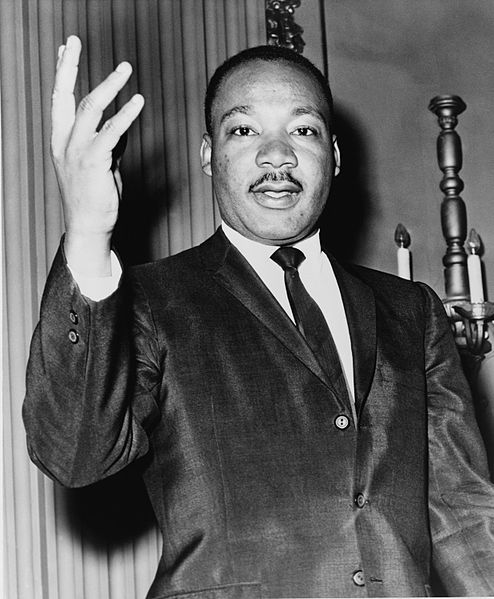
It was not intentionally because it was Martin Luther King Junior’s alma mater that I chose to attend Boston University School of Theology. King’s legacy there was certainly a perk, but I had found the seminary engaging because it had a rare combination, at least in my limited experience, of academic rigor and a strong sense of social justice. Too often, it seems, academic enterprises become dispassionate and social justice becomes one of those squishy human element sorts of things that really can’t be quantified. We pursue knowledge without really thinking if its impact will be positive or not. At least fair or not. Fairness is a concept rooted in belief, and, as studies of primates show us, it is very deeply embedded in us. What has it to do with academic achievement?

This Martin Luther King day, I’m concerned about how difficult social justice is to find, even in those places where we expect it to reside. Taking second place to doctrine in many churches, social justice is more of an uncomfortable requirement than a true passion. This winter I’ve noticed more and more homeless on the streets. Our “economy” seems to dictate that many have to be losers so that few can be big winners. Instead of helping them out, I see authority figures come along to shoo them out of the way before those who have jobs have to come that way. We don’t want to be reminded that we might lose everything as well. Affluent society requires victims, and we can be very academic about it.

I have to admit to relegating holidays to that mere Monday off work. The relentless wheels of capitalism ever turn, and only with reluctance do our companies grudgingly give us ten days spread throughout the year to recuperate. The next slated holiday comes in May. Will there be social justice by then? With the eventual warming of the air by that season, will we simply blend those without homes into the less well-dressed and pretend that we have achieved a fair society after all? What do we really celebrate today? Is it just another morning to sleep in, or is there something more to it? A dream that won’t be extinguished until fairness is established? Seems like a worthy idea, at least in theory. But until then you’ll find us at our desks, working to keep the system strong. And hopefully, we won’t forget to dream.


Truth Anonymous

SparkMany a student has been spared the reading of primary sources by study guides. This is not a new phenomenon. While still regularly teaching Hebrew Bible, I picked up a copy of Cliff Notes, The Bible, to show students how not to get the picture. To be fair, I was teaching future priests, and, despite my progressive outlook, I believe all Christian clergy ought to have read the Bible at least once. I know enough of Christian history to realize that the emphasis on sacred writ is not as ancient as many Protestants think—before the advent of modern literacy rates, scripture reading (and interpreting) was the business of the church. The laity were to receive it in the form of sermons, and so reading the Bible wasn’t really necessary. With the Reformation, however, the Bible became central and preaching became a matter of intelligent interpretation of the same. Today any Christian minister should have a pretty good grasp of holy writ, believe it or not.

With a touch of puckish optimism, my family gave me a copy of the Spark Notes Old and New Testaments at Christmas. Spark, according to the copyright page, is a division of Barnes and Noble, and, should the cover be believed, today’s most popular study guides. As an erstwhile author of biblical studies material, I was curious about who wrote the notes. Enough of the scholar remains for me to be critical, and one of the first questions always to arise is, who wrote this? The question ought to be even more poignant for Bible readers. One of the most looming of questions is that of authority to interpret. Different branches of Christianity still maintain the proprietary right to be the true guardians of the sole truth. Although perhaps softened somewhat from soaking in the broth of religious-political activism, the Fundamentalist would, in any natural world, distrust the interpretation of a Catholic. And vice-versa. Looking at my Spark Notes, I wonder who it is that is telling me the truth.

Abridgment is a kind of crime for literary connoisseurs. As a child I purchased my books from Goodwill or Salvation Army—the kinds of places to which poverty-level readers have access. Although occasionally drawn to Reader’s Digest editions on purely economical grounds, I studiously avoided abridged works. Who decides what single syllable of Melville should be left out of Moby Dick? All the degrees in the world don’t justify that! The interpreter is just as human as the reader, and this kind of power is too heady for mere mortals to handle. The abridger of the Bible must take heed of Deuteronomy 4.2 and Revelation 22.18-19. There’s a lurking suspicion, nevertheless, that something might be learned from the stripped-down scriptures. It is with some anticipation that I look forward to receiving some anonymous instruction as I seek a Spark of truth.


Harpy New Year

A grueling early morning commute is seldom enhanced by complaining. I suspect most of us would rather not be here, crowded next to strangers on a barely adequate bus, going to jobs we may or may not find fulfilling. We put up with it, I think, because the ways of making a living have been effaced for those of the late boomer generation, but we’re a practical lot. Besides, it is a new year—why not start things off optimistically? Hanging around the Port Authority Bus Terminal as much as I do, you hear things. Our regular dispatcher and some drivers can be heard, sotto voce, saying that nobody wants to take my regular route. It’s a long route in heavy traffic, and I have the greatest respect and sympathy for the drivers. These are women and men with more fortitude than Job. Most of the time. I wonder why no one cares for an express run with so few stops?

The first day back after the holidays, however, the first commute of the new year: One of the regulars missed the bus and had to drive to a stop further along the route and berated the driver for being early. Given that some of us had been standing in the cold and were thankful for relief a few minutes ahead of schedule, and also for the opportunity to get to work a little early, the complaint seemed self-serving. Besides, this customer has made us all late for work before by complaining until a driver, like an exasperated parent, pulls the bus over. And once she starts complaining, she can’t stop. When a second customer joined in, I thought to myself, “Happy New Year.” Things were starting out well.

Yesterday, for the second morning commute of the year, our usual complainer noticed an unclaimed bag at the beginning of the route and, seeing something, said something. The driver radioed it in. Halfway to the city, she pulled the bus over, announcing she’d been instructed to wait for someone to come get the bag. We didn’t know, until he arrived, that he was from the bomb squad. Still, this didn’t stop the complaining sisters from starting on the driver again. When the bomb squad arrived, they looked on with interest as someone’s gym bag was opened with nothing more threatening than smelly socks inside. Then they started griping again. At that point I realized that New Year is indeed a religious holiday. Each new day is an unopened present. And some people will complain, even when left with an unexpected gift.

IMG_0542


Commandments by Committee

Something about the holiday season seems to bring out atheistic activism, or at least media interest in atheism. Now that we’re safely in 2015, I suspect things will quiet down a bit until the next major religious holiday comes along. Ironically, since I was a child I’ve heard about how secular Christmas, in particular, has become. Reactions to this have led to “Christmas wars” that give the lie to sleeping in heavenly peace. In any case, back in December CNN ran a story on the atheist ten commandments. This was just before the holidays, but just after the release of Exodus: Gods and Kings, so it was a story sure to capture human interest. The atheist commandments were chosen by a committee, and, of course, have no binding value. Many of them are more precepts than commandments since, it seems, you need a deity to command all of humanity. Nevertheless, the number 7 commandment has a very biblical sound: “Treat others as you would want them to treat you, and can reasonably expect them to want to be treated.”

More interesting than the list, in my way of thinking, is the form of delivery. The ten commandment format is an obviously religious one. Atheists have long tried to make the case that non-belief is not the same as immorality, and there can be little doubt that this is correct. One need not believe in order to be a good person. Yet, the force of the symbolic ten commandments comes from a divine mandate. Committees, as efficient as they may be, don’t have the same kind of authority. You can hear it now—“Why should I listen to you? Who are you to tell me what to do?” With God there is always the threat of eternal damnation or the sending of plagues. Commandments by committee appeal to reason.

The ten commandments—here I mean the traditional ones—haven’t fared especially well among the faithful. Survey after survey shows many people don’t know all ten well enough to cite them. Some, such as the one against coveting, are hard to demonstrate or prove one way or the other. Honoring parents, in some extreme cases, seems sinful in itself. What doesn’t count as a graven image? So my question is, who has the authority in a post-Christian world to give commandments? The religious certainly won’t take advice from atheists, and religious leaders disagree among themselves about what the deity demands. No committee, it seems, can capture the true essence of divine demands. Perhaps it is a matter of boiling the ten down to one (similar to number 7 cited above) and getting our leaders to truly believe this before imposing it on all.

480px-Rembrandt_-_Moses_with_the_Ten_Commandments_-_Google_Art_Project


Land’s End

Although not due for release for another two years, the internet is already buzzing about Pirates of the Caribbean 5. Thing is, once a studio finds a successful formula, they’re reluctant to let it go. Nevertheless, with a couple days off for New Year’s, and all the family here, we decided on a marathon of the four movies available for home viewing. I used to use a clip from the second movie (Dead Man’s Chest) in my classes to demonstrate how the Bible is portrayed in popular culture. In the scene where Pintel and Ragetti are rowing toward the beached Black Pearl, Ragetti is leafing through a Bible, although he can’t read. He says, in his defense, “It’s the Bible. You get credit for trying.” Indeed, the Bible appears disguised as the huge codex of the pirate code (a kind of over-compensatory pentateuch), and, as I noted before, the book that saves the mermaid’s life in On Stranger Tides. In fact, for those willing to look behind the scenes, the Bible shows up repeatedly in the series.

Even as a landlocked child maritime themes and concepts were compelling to me. I yearned for the ocean without ever seeing it. Long I stared at the cover of Rachel Carson’s The Sea Around Us in wonder. When I finally had the opportunity to strike out on my own, it was to Boston I headed, with its rich New England tradition of the sea. I have tried, ever since, to return there. Theologians, although I don’t count myself among their number, have often found a religious resonance with the sea. The Pirates of the Caribbean movies, based as they have been on a Disney ride, nevertheless manage to tap into the romance of the ocean. Not compellingly written, apart from the fun antics of Captain Jack Sparrow, they don’t present an entirely coherent story line, but they do put the viewer, vicariously, at least, on the ocean. And they have been among the most successful film series ever released. Many, I suspect, are drawn by the lure of the open ocean.

Rewatching the films also reminded me of Cthulhu’s influence on the character of Davy Jones. The origins of the euphemism “Davy Jones’ locker” are uncertain, although some trace it back to Jonah. Nevertheless, it stands for the place of death on the sea floor—the very place where Cthulhu lies dead but dreaming according to his creator H. P. Lovecraft. No doubt, Lovecraft’s description of Cthulhu played into the depiction of the character of Davy Jones as presented by Disney. At the end of At World’s End, Jones falls dead, once again, into the maelstrom that will take him back, dreaming, to the ocean floor. In so doing he participates in the endless give and take of the sea. I suspect a couple years hence will find me in a theater to watch what seems a somewhat tired trope, but it will be more the sea than the sparrow that will draw me in.

Photo credit: Anthony92931, Wikipedia Commons

Photo credit: Anthony92931, Wikipedia Commons


2015

New Year’s Day seemed to me, as a child, an odd choice for a holiday. We’d just had Christmas a week before. Of course, at the time I did not realize that the date of New Year’s was a symbolic one for the Christian calendar, and the celebration seemed no more significant than getting to stay up until midnight. The systematic changing of the years felt just like the regular progression of numbers, and what was there to celebrate about that? Of course, time cures even itself, and I came to see New Year’s as a time of new beginnings. Resolutions never sat well with me, since improvements, I’ve always believed, should be implemented as soon as the problem is noticed. Waiting until the dead of winter hardly seemed like an inspiration to get things done. Unless the resolution was to get more sleep. Still, we can all use new beginnings.

Photo credit: chensiyuan, Wikipedia Commons

Photo credit: chensiyuan, Wikipedia Commons

New Year’s, however, has taken on a more somber tone of late. As an adult, I often brood over the past year, and it seems that just when hope may be on the horizon, we find new ways to make the situation worse. Much of it comes down to politicians and the economy, two things that no resolutions ever seem to fix. Although I didn’t see the point of it all as a child, I did look to the future with optimism. It has gotten so bad now that science fiction writers have to make a case for trying to have a positive outlook. Dystopias are popular, I believe, because they are believable. Given the performance of politicians and church leaders (with the obvious and large exception of Pope Francis) we’ve seen little to suggest that our institutions have the will or the means to improve our lot. Even the Pope has made enemies by being a nice guy.

Already we’ve begun to hear that some apocalyptic groups have targeted 2015 as the year the world will end. We’re just getting over 2012. I think what is most disturbing is the sameness of it all. Another year means the continuation of a job that keeps food on the table, at least it is to be hoped. Beyond that, we will have more antics to watch that, were they not so fraught with consequences, might be thought funny. I haven’t lost my capacity to dream. Those who think me a pessimist don’t know me very well. Dreams are, however, futures that we have to take into our own hands. We can’t spend 2015 waiting for politicians and corporations to suddenly change for the better. In what sense is “business as usual” ever new?


Bible Stories

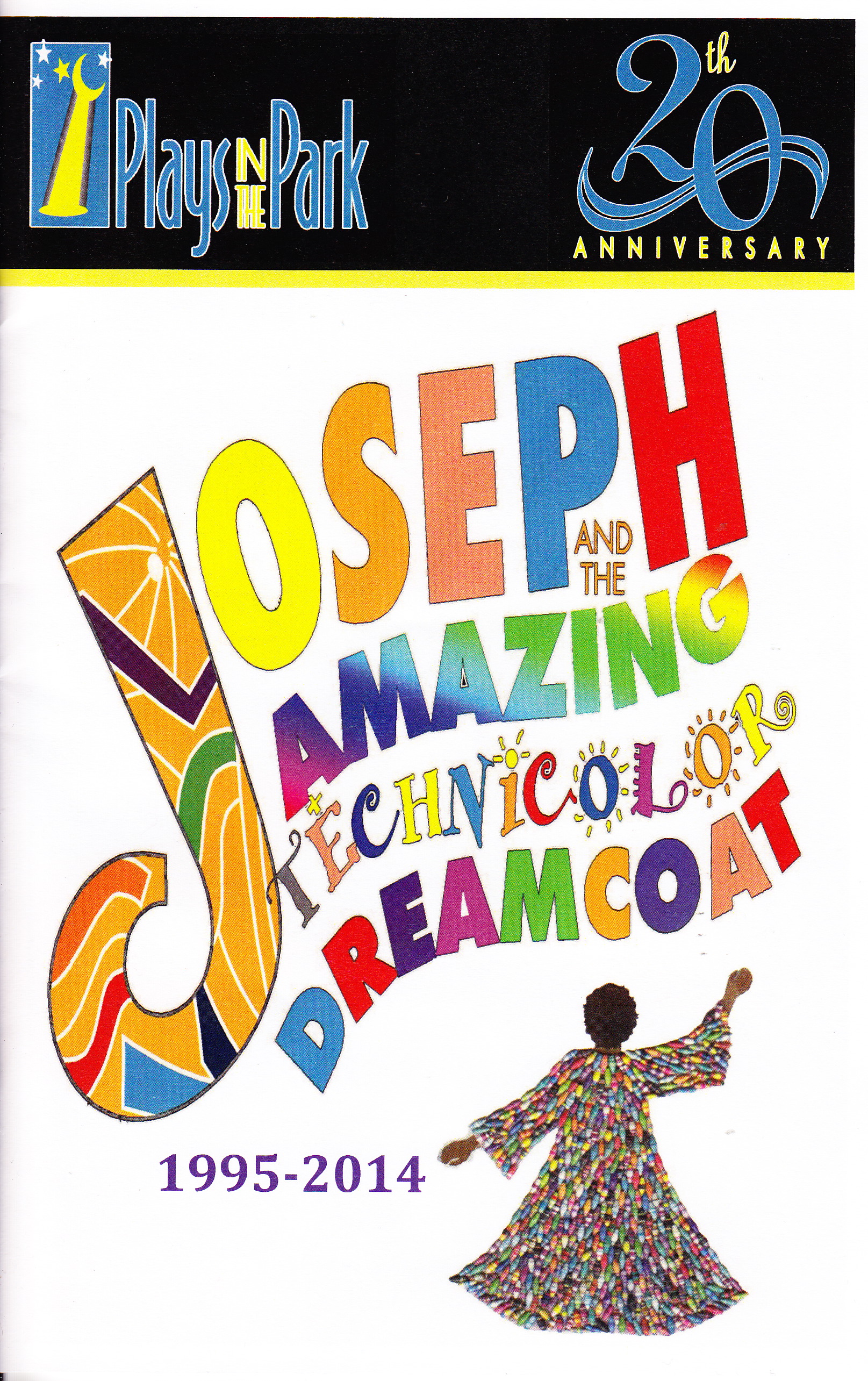
JosephSay what you will about it, but the Bible has some great stories. Based on classical measures of what makes a good tale, the Bible ranks up there with Greek mythology and other ancient fiction that is meant to teach us about being human. Stories do teach, and literature is among the greatest of pedagogues. For the past two decades, Plays in the Park here in the New Brunswick area of New Jersey, has been putting on a post-Christmas, pre-New Year production of Joseph and the Amazing Technicolor Dreamcoat (indoors, due to the time of year). With the kinds of production values you expect of many off-Broadway venues, the show is exceptionally well done, and due to the local color, never too serious. And they play before a packed house. The reasonable prices, I’m sure, have something to do with it, but the fact is the story of Joseph is classic. Full of radical reversals, dreams that come true, and reconciliation, the Joseph novella is one of the great stories of humankind. Unlike many tales of Genesis, God is rather in the background here, perhaps overseeing the event, but not interfering in the human drama.

Although the musical, like most adaptations, takes liberties with the story, it remains fairly true to the Bible. Andrew Lloyd Webber and Tim Rice also had success with Jesus Christ Superstar, showing that, despite its detractors, the Bible still has some appeal. Negative sentiment directed toward the Bible largely derives from the wooden insistence of literalists that everything must be taken at face value. The Bible isn’t allowed its symbolic resonance. Perhaps we can get beyond a worldview where the sun literally goes around the earth, and pay attention to the very human dimensions of the stories it tells. Truth may be of scientific nature, but it may also be—indeed, it must be—human. The very concept of verity is human. We are the ones making up the story.

Scholars point out that even the colored coat of Joseph is based on a translation decision in the Septuagint (the Greek Hebrew Bible). For many people, however, who’ve never read biblical scholars, the truths of Joseph and the Amazing Technicolor Dreamcoat as just as legitimate. The rivalry between siblings is something many of us have experienced firsthand. While not many of us get promoted from prison to vice-president, we still dream that our lives could get better. Our dreams could come true. The upbeat score, of course, helps to reinforce the message—one might say it makes the message believable. That doesn’t mean that the tale is not true. There was no historical Joseph. The colored coat may be a translation error. The story is nevertheless true. Doubters should watch the show. Next year in the State Theater in New Brunswick just after Christmas would be an excellent opportunity to do so.


Mother’s Night

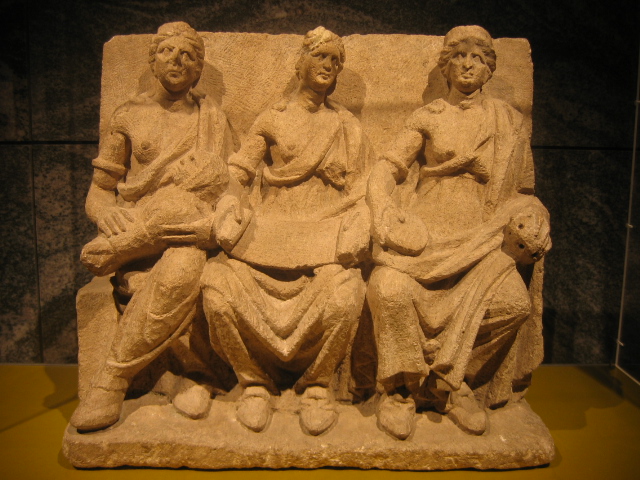
It wouldn’t be Christmas, in the Christian tradition, without Mary. Still, apart from her later enhanced role in Roman Catholicism, Mary’s part beyond Christmas is minor in the church. She seldom features in biblical accounts of Jesus’ life. It is easy to forget the female role that was so much a part of winter solstice celebrations that coalesced into our modern twelve days (really only one, for work purposes). That’s why I was glad that a friend sent me a link to a site about Mödraniht, or Mother’s Night. Honestly, I had never heard of this holiday before. Given the Germanic penchant for dramatic festivities, it comes as no surprise that Yule involved a night celebrating the feminine aspects of the season. Apart from the occasional references to Mary, we tend to think of this as the time a male son of a male God came to save mankind. What of the women without whom none of this would have been possible?

As Carolyn Emerick notes on her page, we know little about this sacred day because Christianity managed to wipe out most of the pagan traditions of northern Europe. Some, of course, survived and worked their way into Christmas. Modern holidays, being primarily days off work rather than deeply felt celebration (for we live in a world with no need for religion), have gravitated toward what had once been the male preserve of earning a living. Watching movies of Dickensian times, it is clear the women continued to work—likely even more than usual—to bring off a holiday celebration. It was the male prerogative to be the recipient of largess.

Photo credit: "Urban" WikiMedia Commons

Photo credit: “Urban” WikiMedia Commons

My concern is that gender equality may sometimes be confused with gender stereotyping, or even with patronization. How is it possibly to build equality into a system put into place by generations of men? Is civilization truly civilizing when half of the race and only a very small portion of the planet benefits? The Christmas season, even now rapidly slipping away, is a time for considering equality. Every year modern non-believers and humanists ask for equality—a dream always held at arm’s length, since the holiday earns record profits as it is, and the financial year revolves around it like a Pole Star. It is the time of year when we see if we’ve turned a healthy profit. The rules in the system were set long ago. Even with Mary in the manger, she blends into the background while shepherds, wise men, and other interested males plan to make a holiday of it.


Lords a’Leaping

As I’m writing a not insubstantial check for the rent, as I do every 25th, I am participating in a Christmas ritual. Having grown up with trees, presents, cookies, and a general warm glow about the holiday where you got things for free and didn’t have to do any work (home or otherwise), it is hard to believe that this kind of Christmas is a modern invention. Some years ago I wrote an unpublished book about the holidays. In researching it, I learned that Christmas was only gradually accepted as a day of celebration. For many it was too popish, and for others it was too frivolous. It was the day when tenants paid their rent to their landlords—and here is the tradition in which I’m participating—for landlords who don’t make money from their tenants are no lords at all. Indeed, this commercial transaction gives the lie to the common lament that Christmas has become commercial. It has been commercial for a very long time.

Some suggest that Charles Dickens—who wrote not just A Christmas Carol, but several stories about Christmas—is largely responsible for our sentimental image of the holiday. Individual traditions of the day go back to Medieval or earlier times, but the conglomeration of events that occur around December 25 come from many sources. Human beings, entrepreneurial by nature, recognize the economy of bringing various disruptions to the flow of money onto a single day. Indeed, the day after Christmas is often a day to rival the holiday itself, with people returning items and purchasing more. Soon enough Epiphany will ring in austerity. In watching for economic recovery, Christmas is a mere indicator of financial health. There need be nothing more to it.

A capital Christmas

A capital Christmas

As I was sitting in my windowless cubicle this week, receiving little email from academics (who are the main business partners for publishers) already out on a semester break, my thoughts turned toward the deeper meaning of the holiday. Business is business. Meetings with recurring set dates popped up for Christmas reminding me of events that, one senses, are only reluctantly cancelled. The true entrepreneur can’t wait to get back to the office. I’m busy looking deeper. The trappings may be modern, but the idea of celebrating in the darkest time of year is very ancient. We are hoping for something better. We are looking for a new start. Christian or not, anyone looking over the sprawl that we’ve made of everyday life can appreciate the symbol of a baby on the day the rent is due.


Angels We Have Seen on High

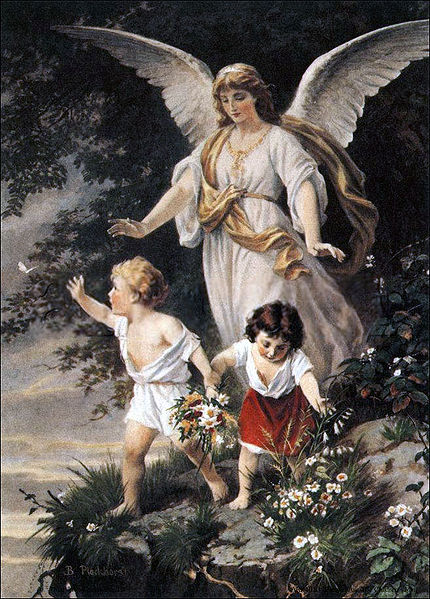
Humans have always ascribed significance to what they see in the sky. Evolution, I suspect, has a great deal to do with it, but so does religion. As I suggest in Weathering the Psalms, the sky is the barometer where we seek the temperament of the divine. The weather is an indication of what God might be feeling, in the pious mind. Of course, as a child I used to lay back and look at the clouds to see what messages I might find there. Pareidolia makes the process good fun, and lots of random “noise” can be interpreted as “signal.” It’s all done in a light spirit. Still, if the internet is to be believed, many people take images in the clouds much more seriously. Apropos of the holiday season, a story in The Telegraph tells of a woman from Lincolnshire who, on her way to a Christmas gathering, saw an angel in the clouds. Or more properly, an angel of clouds. Being the anniversary of her father’s death, she saw this as a sign from above that left her in tears. Others would call it matrixing.

The photo the woman’s daughter took as they were driving is impressive (click the link above to take a look; I’ll wait). I understand how it could be interpreted as an angel. Or even a bird. The feathering on the left wing, along with the wing structure itself, is stunning. And of course, given the time of year, angels are much on the minds of many. What would any manger scene be without them? Although pareidolia is not a religious phenomenon by nature, it nevertheless is frequently interpreted that way. We certainly don’t take much personal comfort in a mechanistic universe. When a loved one is gone, we would rather consider the more human (and perhaps supernatural) aspects.

430px-Bernhard_Plockhorst_-_Schutzengel

Interpretation of information is a constant activity of sentient beings. We don’t want to miss anything that will be of survival value. In the case of the angel in the clouds, the survival is beyond that of every day. We are constantly reminded that death is the final word, and yet we can’t quite bring ourselves to believe it. Whether it is shepherds on a Palestinian hill in the first century or a woman motoring along A17, the sight of an angel is something that stops the viewer and inspires an openness that we otherwise have been taught to deny. It may be that all she saw was a pattern of water vapor in a December sky. But even water vapor can mean much more than two hydrogen atoms binding to one of oxygen. It can be part of the breath of life itself.


Weather for the Birds

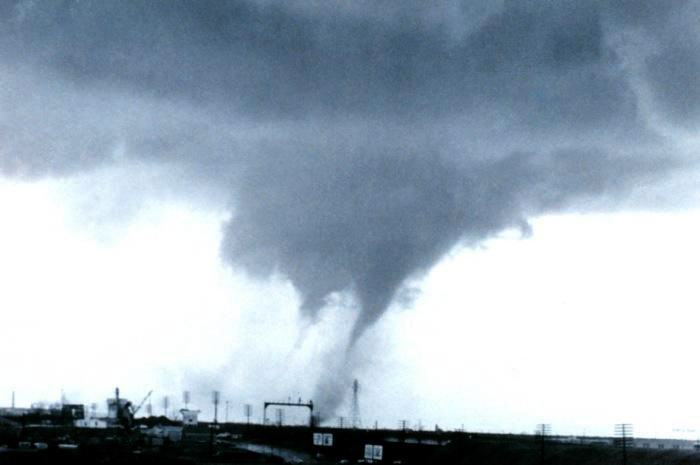
As Christmas nears so does a warm front, dashing hopes of a white Christmas in New Jersey. Well, at least there are no tornadoes coming. The weather, as my readers know, has long been perceived as a divine barometer. In a time when patience is wearing thin with religion, and weary headlines ask if it will ever finally disappear, our animal cousins seem, as usual, to pick up on clues more readily than we. An article on the BBC science page describes how a set of tagged golden-winged warblers vacated their nest a day before a tornado struck. Scientists suspect that the birds—and likely other species of birds as well—picked up the infrasound of the tornadoes that is well below human hearing range. Sensing the danger, they flew nearly a thousand miles, stopping just south of the storm’s track.

1957_Dallas_multi-vortex_1_edited

Of course, tornadoes don’t last an entire day. If the birds fled that long in advance, they couldn’t, I suspect, have heard a tornado that hadn’t formed yet. Since I’m no scientist, I’m not really qualified to offer an explanation, but I do wonder if such behavior isn’t related to consciousness. Several books that I’ve read recently have explored the concept of animal consciousness, and although we are reluctant to admit them to the realm of the self-aware, I wonder how long we can deny it. No doubt, if the birds fled (and returned after the danger had passed) there was an intentionality to their actions. Jealous of our intelligence, we must find a way to explain that animals can predict natural disasters of many kinds long before humans detect their more obvious traits. Our technology gives us seconds, or minutes, of warning. Dogs, cats, and birds know well in advance. But we are the superior beings here.

One of the problems with consciousness is that we can never get outside our own. Other people act in ways similar to us, and describe similar mental states, so we assign them the same kind of consciousness we have. Animals, not using human language, also act in similar ways to us. We call it “instinct” and continue on to the truly important stuff. I have no idea if birds can detect infrasound; I wouldn’t be at all surprised if they could. Without the ability to place it in the context of danger, however, I doubt they would take a thousand mile vacation just after their annual migration. We could learn a lot from our fellow creatures, if only we’d admit them to the conscious club and not the food club. And perhaps they might be able to explain to us why, despite all we know, religion never seems to go away.