Palm Versus Palm

“Mankind [sic] has managed to accomplish so many things: We can fly!” The words are not mine, but, depending on whether he was standing or sitting when declared, the Pope’s or God’s. In his Palm Sunday sermon yesterday the Pope addressed the issue of technology. Acknowledging flight a mere century after it began is breakneck speed for the Roman Catholic Church, but the concern behind the sentiment is real enough. Can religious systems survive the full onslaught of the technological revolution? As one small sample of the larger picture, ethics must react to increasing advanced technological scenarios. Raymond Kurzweil’s proposed Singularity where human and machine are fully integrated is perhaps an extreme example, but by no means the most extreme. Without fully understanding the context, our technical ability has soared way beyond our capacity to foresee implications. Believe it or not, many people alive today cannot use personal computers, have no palms, no cells. Sounds like they might be living free.

Palm Sunday is a day of tradition, heavily freighted as the start of Holy Week (in the Western tradition; of course, many Christians think it is a little too early some years, but that’s for a different post). Fronds from actual trees are waved as the Pope speaks. In the crowd palms are also being utilized to send the news home that one is waving a palm in the presence of the Pope. Traditional Christianity can survive with only the most rudimentary of tools. Religion, from the available evidence, began in the Paleolithic Era – earlier, I am pretty sure, than even the first integrated circuit. With its iron grip on the human psyche, religion is not about to disappear. Instead, technology is either ignored or embraced by it. As long as religions rely on human participation, however, technology will need to be reckoned with.

It's still a date (or palm)

The fact is technology has changed the perception of the world for many, especially in the western world. Even the revolution in Egypt earlier this year was conceived on the Internet. All the indications point to increased usage of technology rather than its imminent demise. Yet religious leaders still enjoin us to wave palm branches. Virtual Church websites abound where the faithful can wave electronic fronds and nary a tree will be harmed. Sermons, discussion groups, Bible readings, prayers – they can all be dispensed through wireless networks and modems. While many traditionalists turn from such ideas in disgust, it would behoove us all to pay attention. With the Vatican now onto the fact that we are flying, within mere decades we might receive a divine message on – oh, wait a minute – I’ve got mail!


The Ides of March

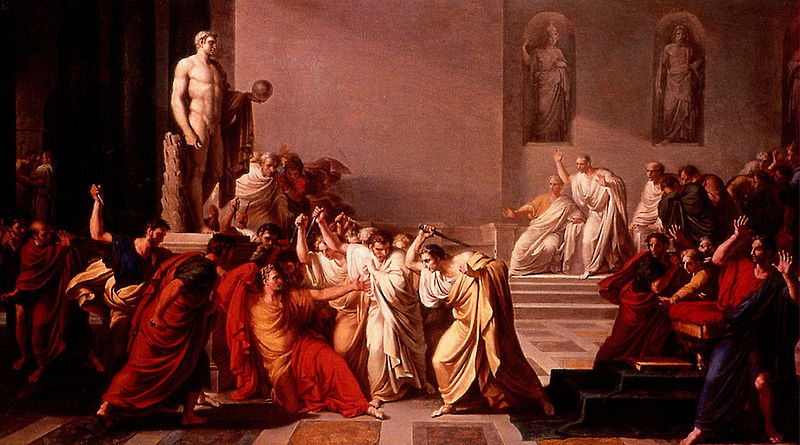
In the days of ancient Rome, politicians as well as plebeians feared the interference of the gods. Auspicious days were ignored, even by emperors, at their own peril. In my Mythology class the concept of hubris frequently emerges. Generally thought to be excessive pride, hubris can take many forms. Whenever a mere mortal strives for godhood, however innocently, it must be punished. Julius Caesar, declaring himself emperor, had to face the wrath of the gods. The ides of March kept in check the ambitions of the powerful. In a world where the political become too powerful, the very phases of the moon step in to restore balance.

The ides seem to have their origin in the date of the full moon. The month of March, named after the god Mars, featured a military parade on the ides. Then, as now, political power is simply the form of government backed by the military. The history of human unrest, especially notable since the American and French revolutions when the common people shouted, “Enough!”, is where might is shown not to equal right. Pontiffs and presidents, enamored of firepower and its blandishments, appear like Caesar before their populaces, confident in their wealth and military backing.

The concept of hubris might once again be meaningful to a culture under siege. As pundits and politicians make bids for places of abusive power, confident that there is no one above them, ethics are reformed in their own images. Have they not become their own gods? We the people bow to their vision of what should be. How many political leaders retire to uncertain futures because their own pensions have been slashed and healthcare diminished? Those who care for them in their dotage are the very children whose educational funds they’ve slashed. Hubris? It behooves all of us to beware the ides of March. Most, like Caesar, will ignore the warning and don the purple. Those who read, however, will not anger the gods.

Et tu, Brutus?


If You Ash Me

It was a familiar British voice on the BBC that first introduced me to the concept of Dismal Days. As a very frugal couple newly married and living abroad for the first time, my wife and I had little entertainment other than the radio. Doctoral candidates didn’t have time for television, and besides, in Britain you had to pay for a television license in addition to the electricity it would cost to watch it. We didn’t even use our pathetic wall heater in winter. When the BBC 4 announcer mentioned that it was a medieval dismal day, my wife and I exchanged bemused glances. The concept has become part of our mental warehouses. Today is not a medieval dismal day in that sense, but Ash Wednesday brings a dreariness all its own. As a young Fundamentalist I didn’t know about this particular day, but when I attached myself to the local Methodist congregation I learned a history lesson.

Methodists descended directly from Anglicans (Church of England). And as I learned in my ill-fated Nashotah House days, some Anglicans believe they never really separated from Rome. Ash Wednesday has now become a widely recognized day of mourning and repentance (as if all days weren’t such) and for many years I submitted to the ashes. It was always with wonder, however, since Jesus purportedly said not to show any outward signs when you are lamenting. I wondered where the tradition began. The earliest references to Ash Wednesday date from the papacy of Gregory the Great, in the eighth century of the Common Era. It is just like the Middle Ages to add drear to an already dark and cheerless season. Lent was originally intended for reflection, but in the macabre mind of the Dark Ages it became an excuse for utter misery.

Dismal Days are actually far older. In origin we again have the Romans to thank, although they blamed the Egyptians. In Roman society two days each month were deemed infortuitous to begin important ventures. In fact, the word “dismal” derives from the Latin for “evil days.” The idea that certain days are especially gloomy is a hangover from superstition that many rational people have now completely disregarded. Many of those rational people, however, will be spotted today with ashes on their otherwise hygienically cleansed foreheads.

Why not buy in bulk?


Get Lent

Time to get Lent

Each year as spring struggles to overcome winter’s terminal chill, colorful flowers begin to burst from the earth to announce the rebirth of hope. So it is that bright purple signs have begun to spring up all over town announcing the joy that is Lent. Wait a moment – Lent and joy in the same sentence? The radiant signs read, “Lent: a good time to come home.” That’s not the Lent I remember. Having spent the longest decade of my life at a seminary that was frequently touted as “all Lent, all the time,” I suffered my share of the season. While I think I comprehend the tactic behind this attendance boosting campaign, I wonder if it isn’t leading with the chin.

Back when flowers were the first colorful signs of spring, when I was young, churches did not advertise. Stolid bastions of the truth, each and every one, they awaited sinners to come to their senses and select the correct avenue to the truth. If you missed, well, Hell never turned anyone away. Nowadays, however, we need advertising to convince us. In a consumerist heaven, we are deluged with choices. When the faithful dither, it must be time to advertise.

The first to admit personal bias, my experience of Lent has usually been dreary and unrelenting. A naturally quiet and self-critical individual, I don’t need a whole denomination on my back to force me to think about the faults I already castigate. The thought of the season makes me shudder – people who spend all the rest of the year looking out for number one are to emulate Jesus’ reflective 40 days in the wilderness to be like their savior, only to snap back to their old self-serving ways on Easter. Could be a recipe for collective schizophrenia. Temporary Christianity. Do we really need more occasions to be glum? My favorite part of Lent was always Mardi Gras; at least then we were working on something new to contemplate during the next 40 long, chilly days.


Flaming Chariots

Religion is a demanding taskmaster, often completely at odds with the lifestyles of even its most staunch practitioners. Having spent my entire lifetime trying to understand it, I marvel at its imperiousness. In a story reminiscent of the unlikely hit film of 1981, Chariots of Fire, a recent Verizon human interest story highlights how religion sometimes impedes people, particularly children, from achieving what they may believe God put them here for. The story focuses on aspiring gymnast Amalya Knapp, yet to see 10, who has been prevented from full competition potential because of observing the Sabbath. As the article points out, this is not an issue limited to Orthodox Judaism, since “She isn’t the only young athlete faced with reconciling her passion for sports with religious obligation. Experts say the issue arises in all faiths, in nearly every sport, and at all levels of competition.” In one of the great ironies of human psychological development, we have engineered religions to prevent us from reaching our full potential.

In a way that few can appreciate today, the Sabbath rest was originally an unexpected gift. Ancient people had no concept of a weekend, a harrowing thought for most frantic people today who live their lives for the brief respite from insanity that the weekend offers. The recognition that a mandatory day off might actually improve the human condition was as prescient as it was radical. Time off to improve productivity? Today we know it to be true. But the more a religion gives its adherents, the more it seeks to take away. The God who gives you that free time wants to take it back. It is not really your time after all. “I believe God made me for a purpose, but he also made me fast. And when I run I feel His pleasure.” So says Eric Liddell in Chariots of Fire. He will also refuse to feel his pleasure on the Sabbath.

Religions disagree on the fine details of why the divine put us here. They are united in the belief that such a reason exists, but the terms of the contract differ widely. For reasons that the divine alone can comprehend, many human activities are subject to heavenly hegemony. The classical Greeks called it hubris when a mere mortal excelled to a point that embarrassed the gods. In response a human who wanted the most out of life knew not to show the gods what you are truly made of. For even the kindest of gods are jealous of divinity. And as all religions repeatedly demonstrate, despite divine demands for us mortals to share, gods are in no way obligated by their own rules.


Washington’s Birthday

Today’s post is an excerpt from an unpublished tween book I wrote on the origin of American holidays a few years back. Other excerpts are available on the Full Essays page of this blog.

Our founding father, a little worse for wear

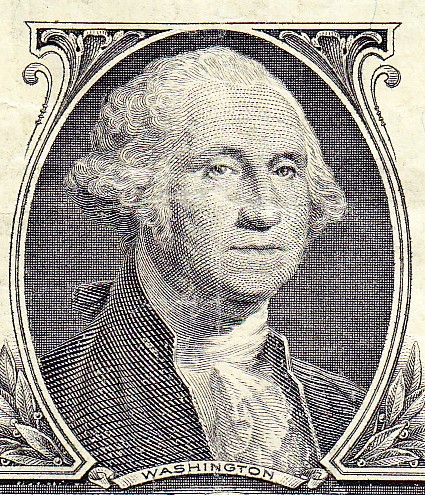
Today is the earliest of only three government holidays devoted to an individual, specifically George Washington. Also called President’s Day, this holiday comes on the third Monday in February. Washington was born February 11, 1731. In an interesting twist of fate, when the Gregorian calendar was finally accepted in the United States in 1752 Washington found his birthday shifted to February 22. Washington died in 1799, but the idea of national holidays for a single person had not yet been invented. It took almost a century for someone to do something about it. When Washington’s Birthday was first observed in 1880 only the government offices in the District of Columbia (named for Washington, of course) got the day off. Naturally, they celebrated it on February 22. Five years later, in 1885, all federal offices took the day off.

Now, the problem with government holidays is that Post Offices, which are run by the government, are also closed. That means no mail. For businesses that used to mean an interruption of work – believe it or not, before the Internet was invented nearly all business relied on snail mail! It is hard for a business to take a day off in the middle of a week, so in 1971 George Washington’s birthday was moved again so that it would always be on a Monday. Washington, being long dead, said nothing.

When I was a kid I always thought Abraham Lincoln’s birthday (February 12, 1809) was a holiday too. It came before Washington’s birthday, but still in February. Since junk mail hadn’t yet been invented, I didn’t notice whether the mail came or not. Lincoln’s birthday was printed on the calendar, but it has never been an official federal holiday. Now, here’s a funny thing: individual states have the right to set state holidays or even rename federal holidays. Lincoln’s Birthday, for example, is a state holiday in Illinois.

In the 1980s Washington’s Birthday underwent another transformation. Noticing that Lincoln’s Birthday was ten days before Washington’s (remember, on the Julian calendar Washington’s birthday was February 11) businesses could call it President’s Day and stores could offer sales. So, wait, what is this holiday called and when is it? Its official, federal name is Washington’s Birthday. Many people, and some states, call it President’s Day. It is always observed on the third Monday in February. And George Washington would have been just as confused as anybody, because he is the only president with three different birthdays!


Wayward Ninevites

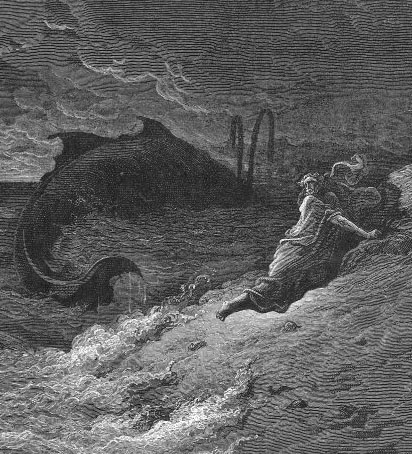
“Come listen to my tale, of Jonah and the whale, way down in the bottom of the ocean;” a children’s song with a catchy tune that has a way of becoming a lifetime companion. Among the earliest Bible stories many children learn is the remarkable story of Jonah and the whale. And since the Bible is God’s word, it must be historical, right? Many modern readers have a difficult time fathoming that Jonah is not a book of history. As if living three days underwater isn’t enough of a stretch, stalwart bibliolaters ignore the tons of archival material from Nineveh itself and claim that the entire city spent a day, or a week, worshiping Yahweh. It stretches the imagination.

Too close for comfort

While working at Gorgias Press I discovered, in an entirely unexpected way, just how seriously some otherwise rational adults take this tale. I had to postpone an important meeting with an influential client because it had fallen on “the Rogation of the Ninevites.” As a lifelong biblical scholar and student of ancient religions, this was a festival I’d never before encountered. A web search refused to yield too much information for as long as my curiosity lasted, but I did find out that the date is difficult to nail down (apparently sometime a week or two ago), and that it predominates among Orthodox Christians of Iraq and Syria. These believers claim the heritage of the fictionally converted Ninevites. Even if the book of Jonah were intended as history, the conversion would have been to Judaism, not Christianity.

As I tried to find a new date with our lucrative associate, I realized once again just how far faith is willing and able to stretch. The story of Jonah is a cautionary tale, almost a fable, reminding post-exilic Jews of the occasional righteousness of the other. While other interpretations have been ceaselessly floated by serious scholars, I have never discovered anyone outside the putative descendents of the fabricated Ninevites who take this non-historical event to be important enough to jeopardize an essential business deal. Anyone who attempts to introduce logic into such an equation may well find him-or-herself, Geppetto-like, slowly digesting in the enormous gastric cavity of a whale that has a taste for prophets.


Fruits of the Dearth

Religions developed out of universal concerns. While I can’t hope to compete with the masterful insight of Pascal Boyer, I do have a gut feeling that as soon as humans evolved the ability of foresight we began to worry. Where is that next meal coming from? Will we survive another day? Is there any way to hedge our bets? In ancient times mortality’s unblinking stare would have been much closer to our faces. Even as recently as the Middle Ages death was much more on the mind, much more frequently seen.

One way to ensure survival is to propitiate those gods who control the productivity of the soil. Long before Demeter lost Persephone ancient people mourned the death of gods who ensured fertile soil, hoping against hope that they might come back each spring. I recall the seriousness with which Rogation Days were taken in the Midwest. At Nashotah House the earth itself was blessed. I recall a priest from Central Illinois who gleefully recounted that the University of Illinois crop experiments were always a little skewed because each year he blessed them on Rogation Days, giving Ceres a boost. CPR for mother earth; give us our daily bread.

The picture of a South Korean boy spinning a can filled with glowing embers over a field on the first full moon of the Korean New Year reaffirms that concerns are the same everywhere. In our sterilized, indoor, urbanized lives where food is grown, harvested, processed and packaged by others for simple consumption of the vast majority, we have lost one of the most poignant aspects of religion. People pray for survival against the devious plans of terrorists, or the insidious diseases that threaten those who make a living simply moving electrons from place to place. Meanwhile somewhere in a country teetering on the brink of nuclear winter, a young boy swings a bucket full of hope.


In the Name of Hate

Saint Valentine’s Day: a minor holiday that no one gets off work or school, but which has both naughty and nice aspects to it. A day with long pre-Christian associations (sorry St. Valentine), the celebration has become an icon of love in the Hallmarkian holiday world. It is a welcome change to the weariness of winter that drags on around the northern hemisphere, reminding lovers and curmudgeons alike spring is on its way. A holiday of hope.

At the same time, an editorial in Saturday’s New Jersey Star-Ledger raises the ghosts of less pleasant times. The Mississippi Division of Sons of Confederate Veterans is attempting to sponsor state license plates honoring General Nathan Forrest, first Grand Wizard of the Ku Klux Klan. While pointing out that Forrest eventually distanced himself from the movement, state officials want to acknowledge his contribution to their state’s history. License plates advertise to the nation as a whole what states uphold as their most attractive traits. In a world where the Klan is still seething under the surface, with active groups in nearly all states, it is not hard to see that hate can not lead us forward. It has failed in the past and it has no hope of success in the future.

Among the most distressing, if not revealing, features of various hate groups is their outspoken adherence to “old time” Christianity. Religion is but one tool in their arsenal, but what makes it so deadly is that even “peaceful” religions such as Christianity have a violent heritage. The Bible can be used to justify genocide as well as rescuing the widow and orphan. Christianity has a long history of being used for political, often hateful, ends in America. It is a trend that is dressed up in its Sunday best for glib talk-show hosts and windbag politicians who claim that “old time” values (read “white privilege”) are what America needs. Do we really need more hate? It’s Valentine’s Day. Let’s give it a break on the rhetoric of hate for at least a day. Who knows? It may become a habit.


Epiphany Perception

Our local parks and recreation department has a Christmas tree recycling program. While trees are biodegradable, it always seems crass to me to take such a symbol of joy, hope, and anticipation and have it just thrown in the landfill. The local trees are recycled into mulch, and those who own their homes are free to help themselves to the giant pile of finely chipped pine that smells like the north woods just minutes from Manhattan. The strange part is transporting a dried, outdated tree through town to the drop-off point. Pedestrians and other drivers stare at a car with a tree strapped to the top a few weeks too late for anyone’s holiday. They may find it just a little disorienting: why would someone be taking a dead tree out for a drive? It is not how we’re accustomed to seeing it done.

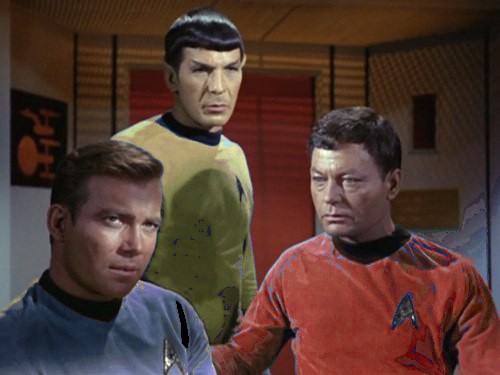
Perceptions, even if entirely artificial, see us through each day. Some continue to argue that perceptions are indeed reality. When we see something mildly disconcerting, we might ask what is happening. A familiar character in an unfamiliar costume is a trivial sort of dissonance, but it is enough to raise perception to a conscious level. We all know the accepted color scheme, so what (other than bad photoshopping) is going on when the Enterprise crew swaps shirts?

The issue is, however, a serious one. Many of the troubles we experience in society are based on fictitious certitudes. It is a strange human trait that me may not know why we believe something, but of that belief we are dead certain. From an absolute perspective, we have no way to determine which way space is oriented. If we see a globe facing “the wrong way” the dissonance drives us to correct that misperception. North, south, east, and west are relative terms. They are models that we overlay on our universe. Which way that universe actually tilts is anybody’s guess. Freshly hewn pine trees atop cars are common in December. When such things transpire in January, many people, to guess from the stares, believe their world has somehow gone askew.

Which way is really up?


The Selfish Meme

Although we may know deep down that one day is pretty much the same as another, people have always held profound reverence for the new year. Symbolic rather than empirical, hopes resonate around the concept that a good start presages better things ahead. That’s why tragedy early in the year sometimes possesses such solemnity; we had hoped that things might begin anew. The headlines today announce that a church bombing in Alexandria, Egypt, started a new year of violence in the southwest corner of the cradle of civilization. Muslim extremists are suspected as there has been some tension between the Coptic Christians of the city and their Islamic compatriots. Although details are not clear, one matter remains in focus: the violence is based on religion.

One of the more savage legacies of monotheism is the absolute truth claims that follow in its train. If truth be truth, there be only one. So the meme goes. Multiple mutually exclusive truths cannot coexist in a religious universe. Scientists might well claim that in this non-empirical universe, no testing may reveal the actual answer. Belief takes over where knowledge fails. And belief in a religion, like it or not, follows the dictates of survival of the fittest. Memes, like genes, can be quite selfish. If one is to stake eternal, unchanging consequences on a religion, the proposition is all-or-nothing. Even purgatory is not forever. The coin falls one way or the other. Religions fight for the memes of truth, and those with the highest survival rate win.

Lighthouse of Alexandria before the bushel

Alexandria has suffered its share of violence in the past. Its famed library, the center of learning in the ancient world, traditionally underwent four destructions, the final two religiously motivated. The books surviving antiquity fell under the Christian ban of paganism in 391. Arabic sources note the destruction of the institution after the Islamic conquest in 642. The end result is the same – the irreparable loss of centuries of knowledge. The lighthouse of Alexandria, one of the seven wonders of the ancient world, might well stand as a symbol for the influence of rationality. Tradition states the light could be seen 29 miles away, but earthquakes and the need for building material saw the extinguishing of the light so that by 1480 the darkness settled for good. A fort was built from its remains. Given a choice of light or fortification, it is clear which way the selfish meme will go.


Understudy Angels

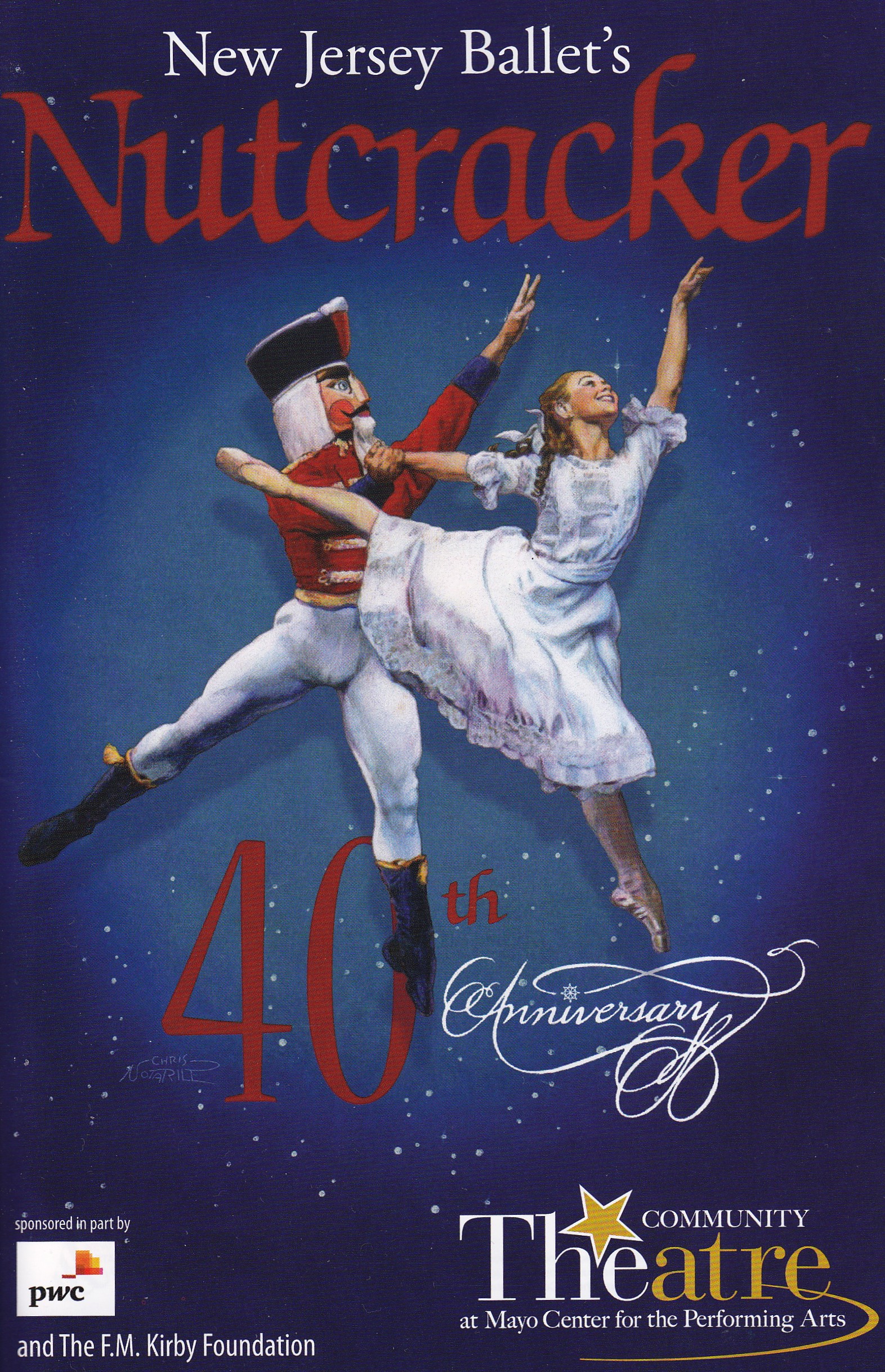
Since moving to New Jersey my family has attempted to sample as much of the vibrant arts scene as we can on our modest income. At times it feels like being a starving man locked in a fine restaurant. So we scrimp, save, and buy the cheap seats when we can. Thus it was on Christmas Eve we found ourselves in the audience for Tchaikovsky’s Nutcracker ballet. I’ve been on this planet for nearly five decades and I’ve never before seen a ballet. I knew the basic story of the Nutcracker: weird uncle gives niece an odd toy, jealous brothers soon break the toy, and the niece has a bizarre, if exceptionally graceful, dream where the toy becomes her escort. Beyond that I didn’t know what to expect. When I looked through the program, I was interested to see that there were angels, snowflakes, clowns, and mice. And there were understudy angels.

Students sometimes ask me what became of the ancient gods. In the cultures surrounding Israel, as well as in early Israel itself, polytheism reigned. Once the Exile had conceived monotheism what happened to the other gods? Did they all get absorbed, Borg-like, into Yahweh? It seems not. Many of these ancient gods continued to eek out their existence as supernatural, yet strictly sub-divinity, beings. We recognize such beings as angels today, and every holiday season they are ubiquitous in store windows and church lawns. It should come as no surprise that with so many angels a few understudies must be necessary.

In popular imagination – (dare I say it?) Christian mythology – angels derive from dead Christians. Many children are taught that if they are good, when they die they become angels wafting through the heavens. This popular doctrine does not match the official teachings of any major branch of Christianity. Angels are different in substance, essence, or whatever else a theologian might care to call it, from humans. You don’t evolve into an angel. Either you’re born one or you’re not. And so it seems we are earth-bound in our existence. No cause to mourn, however; even the gods had to learn how to be angels. We can only hope they had the benefit of many understudies to carry on the tradition.


Battling Billboards

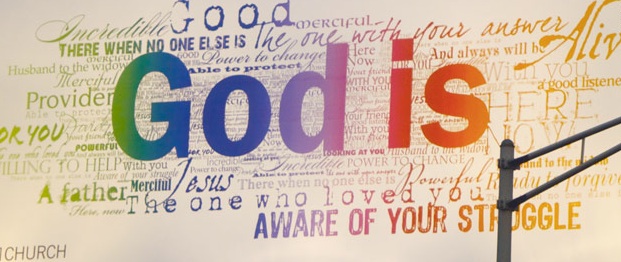
CNN’s Belief Blog carries the beleaguered story of the Lincoln Tunnel billboard battles. Last month a billboard proclaiming that the Christmas story is a myth had been sponsored by American Atheists to try to raise awareness that not all commuters are Christian. In response, the billboard has now been rented by the Times Square Church and newly proclaims “God is” with a number of devotional qualifiers. ‘Tis the season of wearing one’s passions on one’s red sleeves with white trim. Since this is America, it must be writ large.

The recriminations fly like childhood accusations: “but s/he started it!” Can’t mature adults agree to disagree? In a world constantly filled with inequality and strife, religion is used as a cudgel to enforce uniformity. The holiday season is much more than various religions marking their territories. The symbolism of the return of light after a long descent into darkness is archetypical, no matter whether it is the finding of oil to light lamps, the birth of Jesus, or the triumph of Sol Invictus or any of a plethora of other celebrations. It should be something that all people are able to share.

It is the “other” that is feared: the groups who do not share our religious outlooks. “He who is not for us is against us.” It is much safer to slap the other with a billboard barrage than to have to look into the eyes of another human being and say, “I respectfully differ.” Instead of welcoming in the light, we dig further into darkness. The Manichean sensibilities are undiminished after all these centuries. Some would argue that all must be brought into conformity for peace to prevail. To them I say, “I respectfully differ.”


Astronomical Chances

I am sure that I am not alone in the sense of relief that the solstice has finally arrived. Light will gradually begin to increase as the northern hemisphere slowly wobbles back toward the sun. And if I didn’t have another final exam to administer a little later this morning I would’ve stayed up to see the total lunar eclipse last night. Conditions were perfect, if cold, for viewing the event in New Jersey. NASA states that the last time a full lunar eclipse occurred on the winter solstice was in 1638. Those of us who survived to see last night’s events, whether with our eyes on the skies or on the Internet, have witnessed a rare astronomical coincidence. So rare, I’m sure, that some people have taken it as a sign.

This is the season for signs in the sky. The Gospel of Matthew narrates how Zoroastrian astrologers followed a star to Bethlehem. Over the years many astronomers have puzzled over what this anomaly might have been. (They might benefit from reading a little mythology now and again.) While still in Wisconsin my family went to see a University of Wisconsin planetarium show on the subject, and these family-fun science-and-religion public-relations events are anything but rare. It is in the spirit of the season.

Ancient civilizations bestowed upon us the gift of looking for signs in the sky. In antiquity’s three-tiered universe, the gods literally lived “up there,” so portentous occurrences above our heads were a bellwether of divine intention. Religious specialists had to be able to interpret the omens in the air. That fascination has remained with humanity ever since, no matter how rational we’ve become. While driving home in the relatively developed region of New Brunswick a few weeks ago, I saw a meteor. This was remarkable because the light pollution of multiple streetlights along with the volume of raging traffic headlights was intense. My eyes were glued to the taillights before me when it fell. It felt like an epiphany – it was the brightest meteor I’d ever seen, and over the years I suppose I’ve seen my fair share. It left me with the feeling that something momentous had occurred, an emotion that persisted for a few days. No wonder ancient astronomers found the night sky so impressive. The only negative aspect of the lengthening of the days is the corresponding shortening of the nights.


Peace on Earth

One of the most ironic of Christmas messages is “peace on earth.” The irony comes in the means of declaring that peace. Apparently first-century angels were declaring peace to the entire world, according to Luke. The peace that we see proffered, however, often extends only to those like us. What is the harm in extending Christmas joy to all? Must one be a Christian of a particular stripe before the joy of giving can be bestowed? Over the last several years various Christian groups have sought to reclaim ownership of the holiday they borrowed from the pagan Romans, Celts, and Anglo-Saxons. Make it exclusively ours. Peace to us, and let others find their own way home.

In a season of charitable giving, understanding seems to have fallen off the list of Saint Nicholas. In his guise as Santa Claus he makes the rounds of the entire world, according to the mythology that children are told. Do we ever really picture Santa delivering gifts to those who live in Iran, North Korea, or Afghanistan? Does peace on earth apply to them? The thing about peace is, unless everybody has it nobody has it.

Can we learn to share Christmas? Those who fret over Xmas forget that first-century Christians abbreviated Christ with an X (chi in Greek), just as they represented him by a highly stylized fish. Today an empty fish on your bumper declares what an X cannot, apparently. The message is that Christmas belongs to us, not secular pretenders who just want an excuse to make their kids happy. For most of the history of Christianity, Christmas had been a low-key event, barely noticed by most of the faithful. When the possibility of material gain was added in, however, the holiday became especially holy. Should we share the doctrine but not the gain, or should we make Christmas a gift to all the world – a season when all might reasonably hope for peace?