Keeping Time

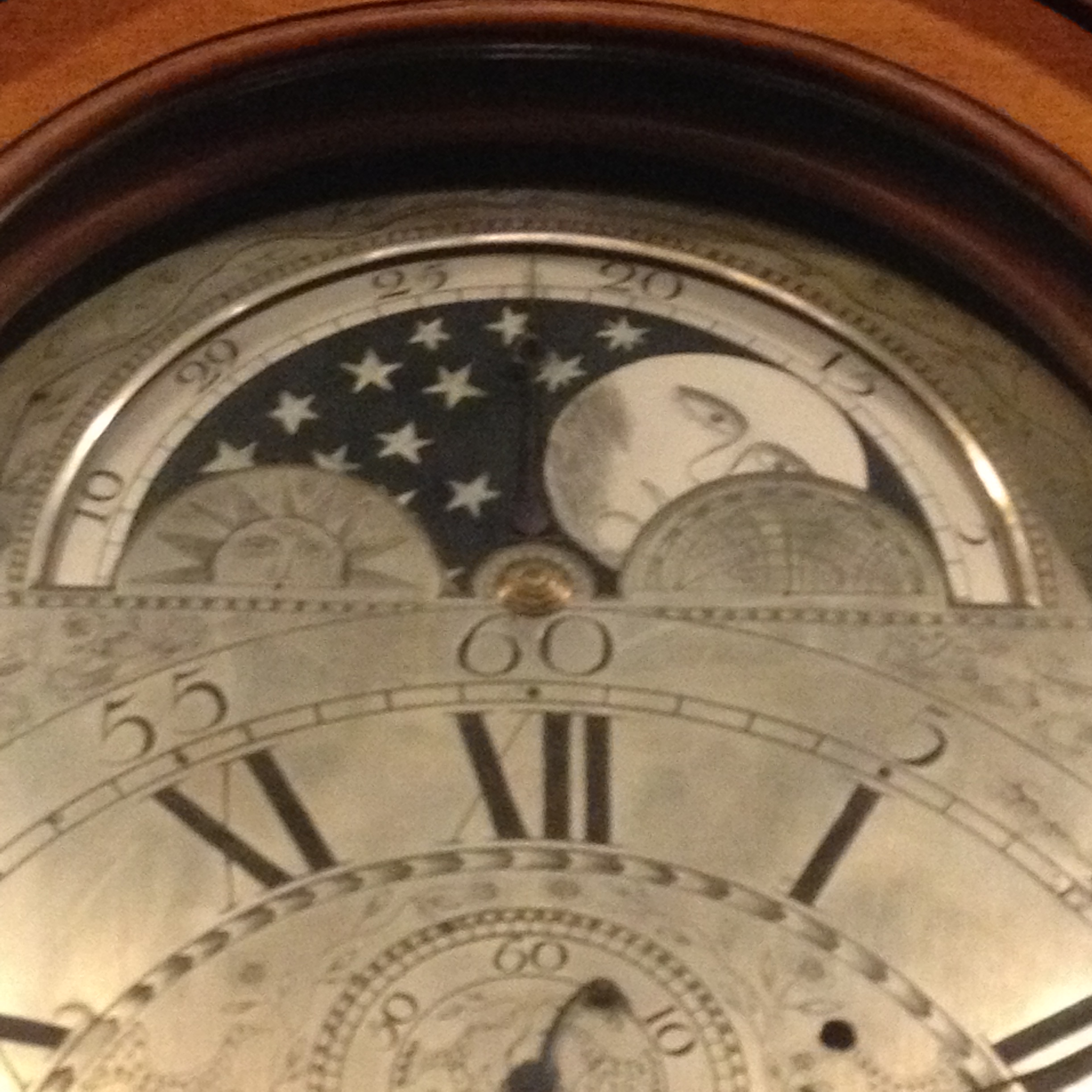
How we keep time (or better, mark time) is fascinating to me.  Unlike our concept of schedules, the earth’s revolution and rotation do not give us evenly long days or years.  Yet we still work 9-2-5 and even though many studies show a four-day work week is more productive, we just can’t give up old ways of marking time.  A weekend (a fairly new development) is two days only.  A leap year, however, contains an extra day for “the man.”  That’s because today is not a holiday.  It’s a necessary day to keep months in sync with years, otherwise March would slowly have September weather.  All of this is human convention, of course.  As is capitalism and its “more is always better” outlook.

Our lives have changed with both the internet and the pandemic.  We work more, not less.  And I, for one, think we need to give working stiffs another day off.  We could start with today.  (I know, big man, that you fear losing money—I realize this is important to you!  What I’m suggesting might make you wealthier, however.)  After all, today is a gimme.  What would we do with a whole other day if we had one?  I know, our standard answer is work, but what if life were more than just what you were paid to do?  It would be a holiday.  The thing about holidays is that we don’t know what ancient events prompted the origins of some of them.  Those for solstices and equinoxes are obvious enough, but other days became special for unknown reasons.  Why can’t February 29th be such a day?

Some employers make up the difference by making election day a holiday.  That one should be a national holiday, really.  And since presidential elections fall on leap years, I guess we get February 29 off on the first Tuesday in November.  Holidays have always fascinated me since they project an aura of something special happening on that particular day.  Something that makes it different from other days.  People born on this day joke about aging four times slower or faster, depending on your perspective.  Doesn’t that seem enough to qualify as a special day?  For most of us, however, today is just another Thursday, and for many it’s just another Thursday at the office.  And it propels other marked days in the year ahead so your birthday next time around skips a day.  There’s a kind of magic to today.  Maybe we should mark it in some way.


Love Life

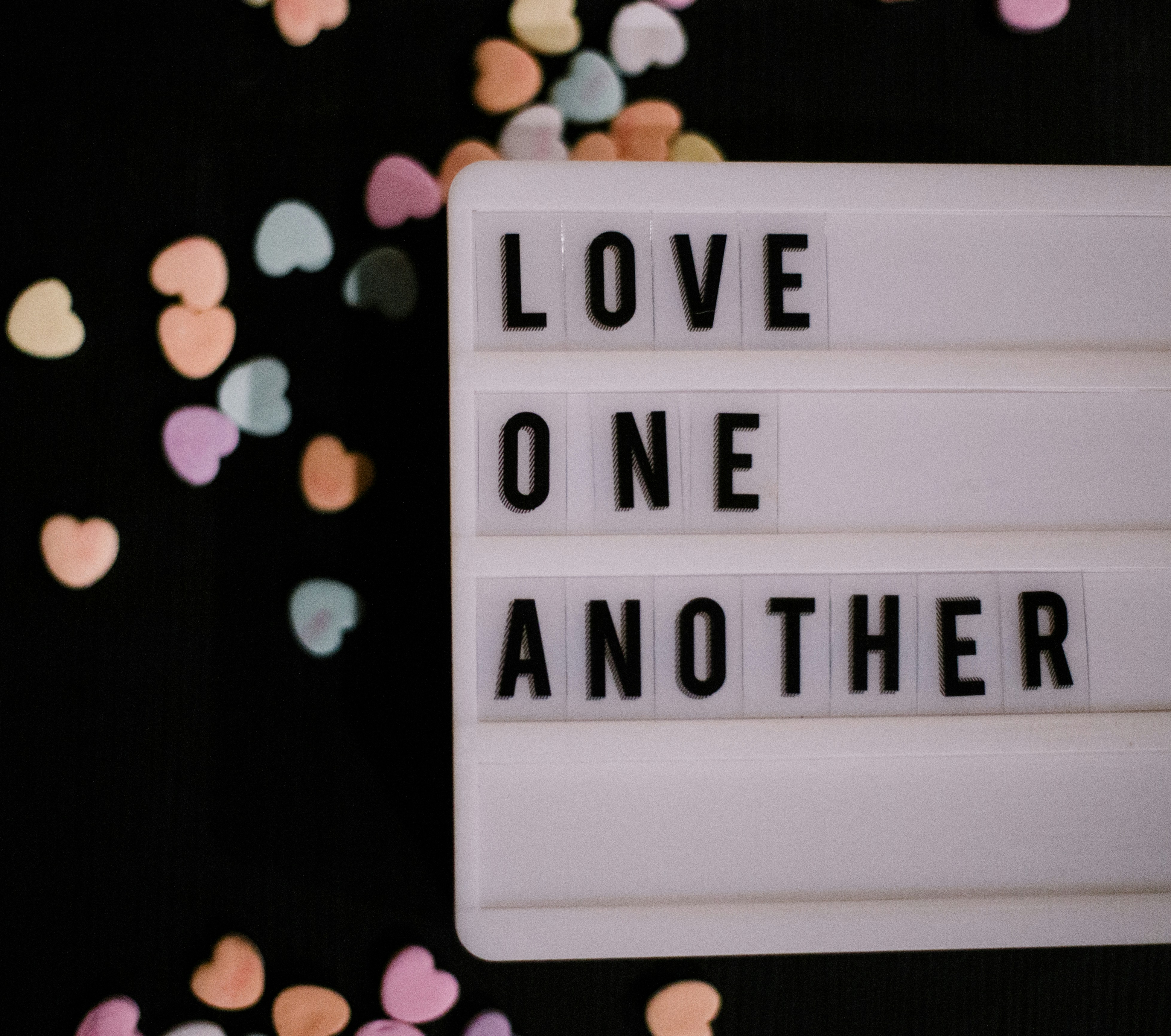
I suppose that it’s good to keep Valentine’s Day mostly private, but there was some wisdom to how it was practiced in school when I was growing up.  In primary school the rule was that everyone had to give everyone else a valentine card.  You couldn’t just give them to the people you liked.  Valentines Day was a day of equity, and, as children understand it, love.  Love for everyone, not just those of your nation or ethnicity.  Kids of any gender received cards from kids of any other gender.  The point was, love one another.  Looking at the way that hatred has become the new normal with right-wing politicians leading the way, Valentines Day has become a much-needed symbol.  We should be loving those who are different.  Instead we go to the polls and elect extremists who start wars and who brag, even before votes are cast, of the damage they intend to do in their next term.  Where’s the love?

I confess to being an idealist, but I do wonder why love is so difficult to achieve.  Are we so much the victims of tribalism that we can’t see there’s enough to go around?  We live in a world where, were it properly administered, we could see to it that most people, if not all, would have their basic needs met.  Where love could be our highest motivating factor.  Instead, we want the love of only those we love and everyone else can fend for themselves.  And whatever facsimile of love we can muster ends at an artificial line we call a national border.  Those on the other side are our enemies and we want to take what they have.  Is this a sane way to spend Valentines Day?

The irony of all this is that those who perpetuate this divide and conquer mentality were raised in religions founded by leaders who insisted on love.  Love your neighbors.  And, more radically, love your enemies.  What if Valentine’s Day were more than just a time for romantic dinners and little treats, and those things which are best kept private?  What if it were a day when we all tried to love that kid who’s always picking on you?  Or who looks different?  That kid that doesn’t seem to have any friends?  Childhood taught us that everyone’s shoebox got a card today.  We may have been too young to understand some aspects of love, but one thing we got right.  Everyone deserves ours.  Why not try love?


Out of Season

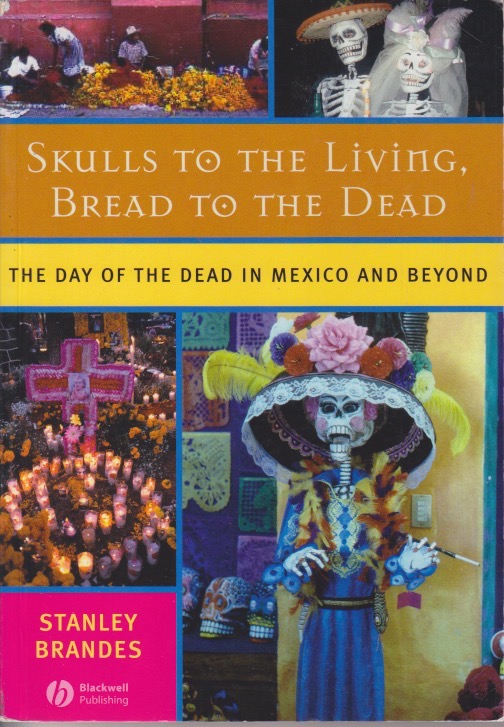
Culture fascinates me.  And one of my favorite aspects of culture is holidays.  I realize that’s a privileged thing to say but were we living among the hunter-gatherers I’d probably have ended up a shaman.  In any case, I had my eye on Stanley Brandes’ Skulls to the Living, Bread to the Dead: The Day of the Dead in Mexico and Beyond for some time now.  Like most observers of lugubrious culture, I’ve noticed the symbols of el Día de los Muertos creeping into Halloween displays in the United States for many years.  I knew that the Day (properly Days) of the Dead was connected in some way to All Saints and All Souls days.  I wanted to find out more, however.  Now, I know that one source doesn’t give you all the information, but time is limited and Brandes was recommended.

This book contains a lot of information.  I am, however, a worker in the publishing industry and that made me wonder a number of things.  The trim size (dimensions) and cover design suggest this is a textbook.  I suspect Blackwell (the publisher) wanted it so.  It is, however, written for ethnographers.  I’ve read enough anthropology over the years to have an idea of how this works, but inside the book it seemed that this was a toned-down academic monograph.  It doesn’t use a lot of technical terms, but the writing is geared toward other ethnographers, it seemed to me.  There is a bit of a dilemma here.  If you’re wanting an authoritative book you generally go to academic publishers, such as Blackwell.  On the other hand, sometimes you just want an overview that doesn’t get lost in the weeds.

The fault is entirely my own, I realize.  And I don’t mean to criticize since I learned an awful lot from this book.  Nothing is ever simple, not even holidays.  Especially holidays.  These are times we take from the ordinariness of daily living to find meaning, and often joy, in our lives.  A safe space where work can’t reach us and we can concentrate on celebrating the occasional, the unusual.  The Day of the Dead is, in the eyes of many, an unusual take on the late autumn holidays.  (Halloween is also unusual, but the two holidays are distinct.)  This book provides a lot of information on the culture of Mexico—information that derives from its most famous holiday.  You can tell a lot indeed from looking at what people celebrate.  There’s more going on than meets the eye.


For the Music

Believe me, I’ve tried.  I took a year of piano lessons but just couldn’t get it.  I married a musician.  I tried to learn guitar.  (I would still play with it, but I broke a string last time I tried to tune it and who has time to get to a music store where it can be restrung?)  I can’t sing—I’ve never been trained and I just don’t seem to have the voice for it.  (In fact, since I no longer teach those close to me say I speak so softly that it’s a strain to hear me.)  But the fact is I love music.  That’s why I don’t listen to it as background.  If there’s music playing, that I like, I find it difficult to concentrate on anything else.  It goes directly to my brain, it seems.

My memory is such that if a piece of music is too familiar I sometimes just don’t want to hear it.  I’m also out of touch with contemporary music.  I have strong tastes, and not too much appeals to me.  When something does, it’s transcendent.  It’s like I’ve fused with the performers.  It’s mystical and amazing.  Growing up, we couldn’t afford much in the way of records.  (I’m sure I need not say anything about cassette or 8-track tapes.)  I listened to the radio with my brothers from time to time, and enjoyed what we heard.  I secretly enjoyed what I heard coming from my older brother’s room.  Left to my own devices, however, I tend to pick up a book and I can’t listen to music and read at the same time.  I know that this is my own neurological issue, but I’m letting you in because anything transcendent is worth sharing.  

Photo by Jefferson Santos on Unsplash

Although the quality isn’t as good, services such as Spotify and Amazon Music Unlimited have slowly introduced me to music of the nineties and later.  Why the nineties?  That’s when I began teaching and my spare time was spent researching (reading) and I had little time for other diversions.  You see, music may just be what it’s all about.  It’s being absorbed and enjoying every second of it.  Humans are visually oriented, but when we focus on sounds something happens to us.  I can be in a crowded store and stop dead right in the middle of the aisle if one of my special songs comes on in the background.  I have to stand and listen, shopping forgotten.  Transcendent moments are few.  If we were in transport all the time I fear it would become ordinary.  And such things are worth pondering on Groundhog Day.


Demonic Night

There’s a type of film—I don’t have the vocabulary for it—where the action is loud, brash, and in-your-face.  Colors are often lurid and, in horror, gross sounds are emphasized.  I’m not sure what it’s called, but it’s the style used with Night of the Demons.  I didn’t realize until after I’d seen it that it was a remake of an earlier film by the same name.  The one I saw was the 2009 version.  I’d just finished a book about demons, and I was looking over Amazon Prime and what I could watch without spending any more money.  Well, I did learn something.  But first, a little plot reveal: a group of friends are going to a Halloween party in a haunted mansion.  Mainly they’re looking for controlled substances and uninhibited sex.  The party hostess has rented said haunted mansion for the night.

Once they get there the final girl, Maddie (and you can tell from the beginning that she’ll be the final girl) starts to realize that there seem to be supernatural forces at play.  The cops show up and break up the rave, but seven kids remain behind since they’ve been locked in.  They find a hidden room where the bodies of six previous victims have decomposed.  This leads to the possession of the woman hosting the group and these demons are transferred either by bite or sex—they are sexually transmitted demons.  So, naturally, all the friends except the final girl fall victim.  These demons dissolve in the sunlight unless they get seven victims, so when Maddie makes it through Halloween night, the demons are defeated.

What makes this moving interesting is the type of demons on show.  These seven demons are so bad that they’ve been kicked out of Hell—they don’t follow the rules.  This made me think.  Logically, no demons in Hell follow the rules.  The root of the word “pandemonium” means “all demons.”  If none of them obey rules, how can any be kicked out for breaking rules?  Laws and rules are what preserve any civilization.  Those who use their money and power to flaunt the law are, in their own way, demonic.  These demons are kept at bay by spells written on the walls of one room in the house.  Those rules they must obey.  Is this a parable about free will?  It doesn’t seem sophisticated enough for that.  Night of the Demons is one of those fast, loud, lurid movies that need a monster.  Demons, which have no basic form, seem to be purpose made to fill such gaps.


Christmas Monsters

Gremlins holds up pretty well with the years.  My renewed interest was sparked by holiday horror—I had last seen the movie in a theater in 1984, when it came out.  Having grown used to CGI, I was surprised to re-learn that the gremlins were puppets but that it was so obvious was also a surprise.  Although comedy horror, or horror comedy, had been around for years at that point, as critics pointed out, the contrast here was stark.  This could be a kid’s movie (and was one of the reasons behind the shortly new PG-13 rating) but the nasty gremlins could be unexpectedly brutal.  I’d forgotten that Billy’s mother was so effective—killing a gremlin in a blender and another in a microwave.  The story has been retold and/or parodied often enough that a summary isn’t necessary, but given my recent interest in both gremlins and holiday horror, it’s worth a few moments’ reflection.

Holiday horror is more than a scary movie that happens to occur on a holiday.  In my definition, the horror has to derive from the holiday itself.  In Gremlins the gift of Gizmo is based on the fact that it’s Christmas, otherwise Rand wouldn’t have been looking for a gift for his son, starting the whole chain of events.  More than that, the reason I didn’t go back to the movie again in my college and grad school years was the story Kate tells about her father on Christmas.  Like some parents, I felt like what was a fun little story was a bit too distressing given the holiday setting.  Would the story have worked set at a different time of year—remember, it was released in summer—with the commentary that it makes about consumer culture?  No, this had to be a Christmas movie and the fear comes from that fact.

The gremlins are given minimal backstory here, although Murray Futterman tells Billy and Kate  that gremlins come from foreign merchandise and they tinker with machines.  Gremlins had been used in horror before, and given that the canon of classic movie monsters was being set from the thirties through the fifties (gremlins appeared as monsters as early as the forties) they fit right in.  They’re inspired monsters.  People naturally feel vulnerable on planes and monsters in the atmosphere can be particularly frightening.  And the fact that technology frequently malfunctions, well, wouldn’t it be nice to have a monster to blame?  Reading up on the movie made me curious to see the sequel, which, it seems wasn’t too badly received.  I’m glad to have used a small portion of the holiday season to have refreshed my memory.


Ninth Day of

I read Les Standiford’s The Man Who Invented Christmas back in 2017 and learned a lot from it then.  Some of what I read on the bus, however, has faded a bit with time and I was curious to read it again in the light of the reading I’ve done about Washington Irving.  Irving was a bit older than Charles Dickens and had, it seems, given Dickens the idea of writing, first, a sketch book (Sketches by Boz), and second, writing about Christmas.  From what I’ve read about Irving, he had a cautious liking of Dickens but wasn’t terribly impressed.  Standiford does note that it was Irving who suggested an American tour to Dickens (it didn’t turn out well) but he (Standiford) indicates that Irving was a staunch fan of his English colleague.  Were I able to spare the time, I would follow footnotes and read letters to see if I could get to the heart of the matter.  Of course, I’ve become much more interested in the history of modern literature in recent years.

It would be difficult to overestimate the influence of Dickens in English literature.  As Standiford points out, he helped to invent novel publication as we know it.  Although he took up the gauntlet of international copyright (something Irving had earlier understood as important), he became internationally famous partially through pirated works.  We still use the phrase “What the Dickens” to express surprise. (It turns out that the expression predates Charles—now that’s influence!)  As Standiford notes, however, we’ve passed the era when a single author can have such great influence.  Dickens was a singular talent and read by vast numbers of his compatriots and also grew a respectable readership in the United States.  He also had a great deal of influence on how we celebrate Christmas.  I was this time looking for Irving lurking in the shadows.  And I found him.  Dickens was an enthusiastic fan of Irving.

Standiford brings Irving into the discussion often, but also perpetuates the association of “It was a dark and stormy night” with Edward Bulwer-Lytton (who did use it) without mentioning that the phrase originated with Washington Irving.  One gets the sense that Irving was completely eclipsed by the work of his young fan, Charles Dickens.  Standiford mentions Irving quite a lot in this little book, but it’s about Dickens and not his American colleague, of course.  And Standiford also notes that crediting Dickens with the “invention” of Christmas is overstatement.  The story is nevertheless fascinating.  To me this second reading underscored the importance of Irving for the Christmas holidays, and also how terribly difficult it is to make a living as a writer.  I’m glad I came back to it, even when life otherwise threatens to be too busy for re-readings.


A Year of Hope

The older I get the more I appreciate New Year’s Day as a holiday.  Part of the reason is that, although I saw no hint of religion in it as a child, I have come to realize that holidays are for reflecting.  As a self-critical individual, I don’t wait for any date to make resolutions, preferring to do that in real time as soon as I learn about my bad behavior.  Still, although it’s a somewhat artificial marker, January 1 is a time of hope.  It seems that since 2016 years have been something of a slump.  Trump certainly has something to do with it, but Covid has become a monster in its own right and it’s hard to know when we might be able to get back to feeling comfortable in large gatherings of people.  Even as an introvert I miss that from time to time.  Still, optimism comes out with the start of a new year.  Who doesn’t like new things?

Technology has made us hyper-aware of bad things happening elsewhere.  This evolution of a hive mind has caught us unaware, it seems.  We do have a desire to improve (with some exceptions, such as politicians only in it for themselves) and that focus makes our next steps optimistic.  What greater hope can there be that an entire year stretching out in front of us, yet to be written?  There’s the old saw about a blank sheet being a source of fear, but why not do our best to write our own futures on it?  Put our good intentions into the mix to try to balance out the negativity that some others seem intent on dragging the rest of us through.  New Year’s can become almost religious in that way.  We consciously reject the bad that has grown on us throughout the previous twelve months.  We can do better.  We can be smarter.  We only need to believe.

I know that I keep hoping every year that HR will see the wisdom of allocating holidays.  We work more efficiently now, and people smarter than the rest of us suggest that we should not be stressing ourselves so much over things like work.  My own outlook is that days given off work for reflection are increasingly important.  Capitalism with its worship of mammon is, hopefully, entering its late stages.  I can see a future that’s better than what we’ve managed so far.  Let’s hope the wisdom exists to make 2024 a year of avoiding disaster.  A year of hope.


Reading 2023

As has become my tradition, I’ll end the year reflecting on the books I’ve read.  For a variety of reasons this is the first time in nine years that I haven’t cleared seventy books.  (I ended up one shy.)  But looking back over what I read, I may see some logic behind this.  Many of the books were academic, and specifically, academic in fields outside my formal training.  That also means they generally didn’t make it to my list of favorites.  2023 was also unusual in that it wasn’t until about late spring that I started to read books I really enjoyed.  The first on my list of memorable titles is Andi Marquette’s The Secret of Sleepy Hollow.  This was followed by a couple other fiction titles, Grady Hendrix’s Final Girl Support Group and Gina Chung’s Sea Change.  Those ended up being my favorite three fiction titles of the year.

For nonfiction, I finally read John Hersey’s Hiroshima, memorable, if terrifying.  Also along the lines of history, I found Lesley Pratt Bannatyne’s two books Halloween and Halloween Nation, to be particularly good.  Mark Dawidziak’s Mystery of Mysteries may well have been my favorite historically-oriented book of the year.  Donna Kornhaber’s Silent Film: A Very Short Introduction was also quite well done.  I always enjoy books on horror films, and two on The Exorcist were noteworthy: Nat Segaloff’s The Exorcist Legacy and The Exorcist Effect by Joseph P. Laycock and Eric Harrelson.  Why It’s OK to Love Bad Movies by Matthew Strohl, which I read a bit earlier in the year was also quite good.  By far the most helpful book in a personally troubling year was The Boy, the Mole, the Fox and the Horse by Charlie Mackesy.

In years past I’ve generally had more commendable books on my list.  I did, however, finish the last three Dark Shadow’s novels by Marylin Ross, reaching the bucket-list item of having read the entire series.  I also found Jessica Verday’s three-volume series strangely memorable, although written for young adults (found here, here, and here).  While the number of books I really enjoyed wasn’t as high as in some other years, these highlights make me optimistic regarding 2024.  I used to follow the Modern Mrs. Darcy’s reading challenge guidelines, until they stopped being published, and now I find myself left to my own devices, for the most part.  Much of my reading is driven by research, and I suppose I should also mention that my own fifth book was published in 2023 as well.  I don’t expect it’ll be anybody’s favorite, but it is nevertheless an honor to be part of the conversation.


Not Tomorrow

Two of the sweetest words I know are, in the context of a vacation, “not tomorrow.”  They’re especially sweet after you’ve had a couple days off and you start feeling anxious that time is running out, only to realize that although work will start again soon it’s “not tomorrow.”  You have another day when you can stay in your pajamas, read, watch movies, or, if you’re a certain personality type, write.  Or play games, put a puzzle together, visit friends.  Whatever it is you do to find meaning in life outside work.  Outside academia I’ve never worked for a company that gave more than one day itself for the Christmas holiday.  (Two, if you count New Year’s Day, but that’s technically on next year’s meager holiday tally sheet.)

Each year I cash in vacation days so that I can feel “not tomorrow” more than a day or two in a row.  One of the more depressing recollections I remember is climbing onto an empty bus well before sunrise to commute to an otherwise empty office my first December working for Routledge since I hadn’t accrued enough vacation to take the week off.  I’ve worked for two British companies and it doesn’t help knowing our colleagues in the UK automatically have that week off.  Colonials, however, have far fewer holidays, and if that means trooping to the office for form’s sake, so be it.  Very few people answer their emails between Christmas and New Year’s.  Her majesty’s realm thrived for my presence, I’m sure.

The pandemic has taught us that many, if not most, workers are self-motivated when not confined to an office.  We also know that the United States has the lowest life span among developed nations, and my guess is that one contributing factor is that we don’t have enough “not tomorrows” until it becomes literally true.  Life is a gift, and spending it doing the things we value is something we tend to deny ourselves in the hopes that someday we might retire.  Many companies have begun to cap the number of vacation days you can accrue at numbers so low that the year looks like a desert from January through late November.  It’s that stretch of “tomorrow is a work day” punctuated by weekends so vapid that they vanish by the time errands you can’t do during the week are done.  Why have we done this to ourselves?  For me personally, I only have two more regular work days off.  I’m beginning to feel anxious about it.  Then I tell myself that, for today at least, although I have to start work again soon, it’s not tomorrow.


Boxing

Christmas is too large for just one day.  I know that, of course, not everyone can take a string of days off work.  I realize there are people who work Christmas day.  For the rank and file of us drones, however, who sit in front of computers 9-2-5 making money for “the company,” this season should be a respite.  The day after Christmas goes by many names—the second day of Christmas, the feast of St. Stephen, Boxing Day.  Christmas, like ancient Roman winter festivals, couldn’t be contained in a single day.  For me, being a professor meant living life in semesters.  And semesters had breaks that included a couple weeks in December to regain your bearings.  To me, that remains how it should be.  So we continue to celebrate Christmas another day.  We do so without an agenda.  We do so by relearning how to relax.

Mental work is harder than it looks.  The work day takes up so much time that when I finally have a few days off I wonder how I ever get things done for the rest of the year.  Out of necessity, obviously.  You have to work.  You have to mow the lawn.  You have to visit the tax guy in tax season.  And so on.  I’ve been reading about bees lately.  They’re a lot more intelligent than people tend to think.  The hive mind has its own logic.  Still, worker bees literally work themselves to death.  Lifespans are measured in weeks.  It’s the price they pay for the success of the life of the hive.  And when, after a few years a queen dies, changes take place that make a worker a new queen.  The hive can continue.

Humans aren’t bees, of course.  Our society has different values.  We investigate when any of our species dies under mysterious circumstances, believing that all have certain rights.  (War, of course, cancels those rights, but we think and dream of peace during the Christmas season.)  Since the Christmas season remains with us but a few days each year, it makes sense to me that we build in some time for the drones and workers to recharge.  Across much of the world Boxing Day is a bank holiday—a day off work.  A time when the hive isn’t so worried about the concerns that mark most of the other days of the year.  Holidays are important.  They make us human.  As much as I appreciate bees, even the hive hibernates during winter.  Let’s give Christmas its due.


Christmas Silence

Christmas seems to have come too fast and not fast enough this year.  Like Halloween, it’s one of those long anticipation holidays.  The older I get, the more I appreciate the silence about it.  Not in a Grinch-like way, I hope.  More along the lines of “Silent Night.”  We spend so much of the year—so much of our lives—hustling about, barely having time to think.  Speaking personally, it takes about a week off work just to begin to get to that phase.  I need time to let the daily onslaught of work and capitalism and angst tune down.  There’s a quietness about Christmas that’s profound.  I suppose that’s why I like to spend it with my small family and not feeling obligated to go anywhere.  It’s like those precious moments before sunrise that I experience daily, only all day long.  That’s truly a gift.

The newspapers and internet sites have been summarizing the year for the last couple of weeks.  That always seems premature to me.  I understand why they do it, but Christmas and the days following are some of the very best of the year, and it makes sense to include those along with the stress, darkness, and ugliness that are the daily headlines.  I can’t help but think of Simon and Garfunkel’s “7 O’Clock News/Silent Night.”  Especially this year.  Christmas is for everyone, and the insistence that we make it exclusive (putting Christ back into it) makes it divisive.  Why some people have to be right all the time I don’t know.  I prefer Hamilton Wright Mabie’s take: “Blessed is the season which engages the whole world in a conspiracy of love.”  Simon and Garfunkel are both Jewish and I think they understood “Silent Night” better than many Christians did back in 1966.

I’ve been writing quite a lot about horror movies this year.  The months and days leading up to Christmas have often been difficult ones.  Such movies are therapy.  They can even fit into the beautiful silence of this day.  That’s my hope, anyway.  May this day include enough silence for you.  The rest of the year has no difficulty filling itself with trouble.  We need holidays.  Christmas has always struck me as the most peaceful of them all.  Ministers, and even those of us who never made the cut, tend to be holiday experts.  Those who don’t get caught up in the dogmatism of it all are the most blessed.  Christmas is for everyone.  And may it be peaceful this year.


Running out of Time

How can you let a solstice slip past without noticing it?  Admittedly, it’s sometimes easy to do in summer, but for the winter solstice it’s more serious.  Ironically for me, the issue is that I’m still a jogger.  When you start your work day early, and you try to jog before work, the shortness of the day works against you.  Even if you prefer the after-work jog, December and January give you that perpetual feeling that you’re running out of time.  Each year around about now I look at charts.  Some organizations helpfully publish sunrise and sunset charts free on the internet.  I trace them to see when there will be enough light to jog in the morning.  Because of the offset between latest sunrise and earliest sunset, the evenings have been getting microscopically longer for a couple weeks now.  Sunrises, however, are still coming later.  They’ll continue to do so until about mid-January.

For those of us who parse out our days into minutes, trying to feed the beast that requires our utter devotion, finding time to jog can be difficult.  It’s dark after work, and besides, I’m exhausted and hungry by then and need to start on supper.  Morning’s an easier thing to control.  With pagan fervor I await the lengthening days.  Particularly the early mornings, which I crave to be earlier again.  So we light a Yule log and pray for the best.  Not that it ever changes sunrise times.  Around here there’ve been a couple of epic December rainstorms and cloudy days push available light back even further.  With the sun technically risen, it can still be dark.  There’s a metaphor here, dear reader.

Winters are for reflection.  Unless we’re busy cramming each day full of seasonal festivities, we spend a lot of time indoors with our thoughts.  That’s one of the reasons I jog.  It clears my head.  It’s the reboot that comes after the reboot of a night’s rest.  I’ve generally been awake for hours before sunrise.  These little thoughts I share with you daily are courtesy of those quiet moments in the dark.  A winter is wasted if we don’t use it for reflection.  Employers should be more generous with their December holidays.  It’s in sync with nature, which is more in keeping with being human than “business,” or “busyness” is.  Today is the winter solstice.  Around sunset we will light some candles of hope.  And we know that even if we can’t really tell, tomorrow will have a bit more light than today.


Saint Nick

My wife and I have both noticed it.  December has been much busier than usual, and neither one of us works in retail.  We’re at the age when most people are considering retirement, but are both just settling into our careers.  But this is about December, not about us.  Today is December 6, Saint Nicholas Day to some.  What many people don’t realize is that this used to be “Christmas” for particular sets of folks.  You see, St. Nick was one of the many components of what would become Christmas.  His saint’s day was/is today and it was traditional among some early American communities to pass out gifts today because of the tradition that Nicholas was one of the more generous saints.  While at Nashotah House the rather somber Advent atmosphere was broken this day when the Dean would hand out gold coins.  Well, chocolate coins covered in golden foil, but you get the picture.

Image credit: National Library of Wales, public domain via Creative Commons CC0 1.0 Universal Public Domain Dedication

In our capitalistic zeal to get Christmas down to just one day off, if that, we’ve targeted the twenty-fifth.  Saint Nicholas was rolled into Santa Claus and we could keep on working nineteen more days.  “Santa” was known by many names—Father Christmas, Christkindl, and Kriss Kringle, among others.  They were expected at different times in December, even as the Catholic Church had decided on this month to be Jesus’ birthday, to counter Roman celebrations of Saturnalia and Kalends (both of which were more than one day, I might add).  December, in other words, should be a festive month.  Instead, it’s become a busy season for squeezing everything in before taking some time off work.  Do we ever sit back and consider how ridiculous such hectic living is?

Don’t get me wrong—I love the Christmas season.  I save up vacation days every year to give myself a mini semester break.  When I’m feeling exhausted with September’s onslaught, if I can cast my eye as far as December I can feel some relief coming.  And I’m not sure why we don’t get offered a few more days in December.  Remote workers can’t always make it to the office holiday party, so maybe December 6 might be a remote worker’s mini Christmas day off?  The weary struggle to make it to the official Christmas could use a little refreshment just about now.  I don’t recall a December ever being this busy on the work front.  For the economy’s sake, hopefully those in retail aren’t finding themselves bored.  One thing that all of us might wish for, however, is a visit from Saint Nicholas.


Evolving Holidays

Holidays evolve.  I noticed this Thanksgiving that protests against the origins of the holiday have grown.  The same is true concerning the “Christmas Wars” every single year.  Some holidays (of which we have relatively few in this country) are disappearing altogether.  What seems to have been overlooked, or forgotten here, is that holidays change over time.  Public analysts and early holiday promoters encouraged government recognition of holidays as a means of bringing the nation together.  It’s easier to do this if we recognize that holidays evolve and the general trajectory is toward becoming more and more inclusive.  There will always be those who protest the “secularization” of holidays, but they share a large part of the Venn diagram with those that believe the Bible is a science book.  Things change.  Evolution is real.

I’m not just writing this because Thanksgiving and Christmas represent holidays from my tradition.  It’s true that they represent what was the majority religion (Christianity) at the time they were established here, but I would be glad for holidays from other traditions to be added as well.  Americans need more time to rest and recharge.  Anyone who’s studied the history of Christmas, say, realizes that its origins aren’t really Christian.  It’s a combination of a Christian alternative to Saturnalia, the recognition of St. Nicholas (December 6), Germanic Yule, and the festival of Roman Calends to start the new year.  Among other things.  Early Christians didn’t celebrate Jesus’ birthday.  Nobody had any idea when it was, but a tradition grew and as it grew from diverse roots it became more and more inclusive.  Why should we protest a day when we can acknowledge its troubled past and look for ways to make it better?  Something for everyone.

Holidays bring people together.  I’ve been researching them for years and I’m amazed to see how those that survive eventually catch on and bring people together for a common purpose.  Think of Halloween.  Masking disguises who we are.  It’s a day when everyone is welcome.  There are those who protest it, of course.  But holidays need not be seen as triumphal celebrations of some past misdeed.  (Here’s a hint from history: almost no historical event is seen as positive from everyone’s point of view.)  Instead, why not embrace those few red letter days that we have and use them to seek a common purpose?  Why not encourage those in positions to make decisions to consider the good of a few more holidays?  Trouble can always be found, but holidays, if done right, may help heal.  It’s the way of evolution.