August Thoughts

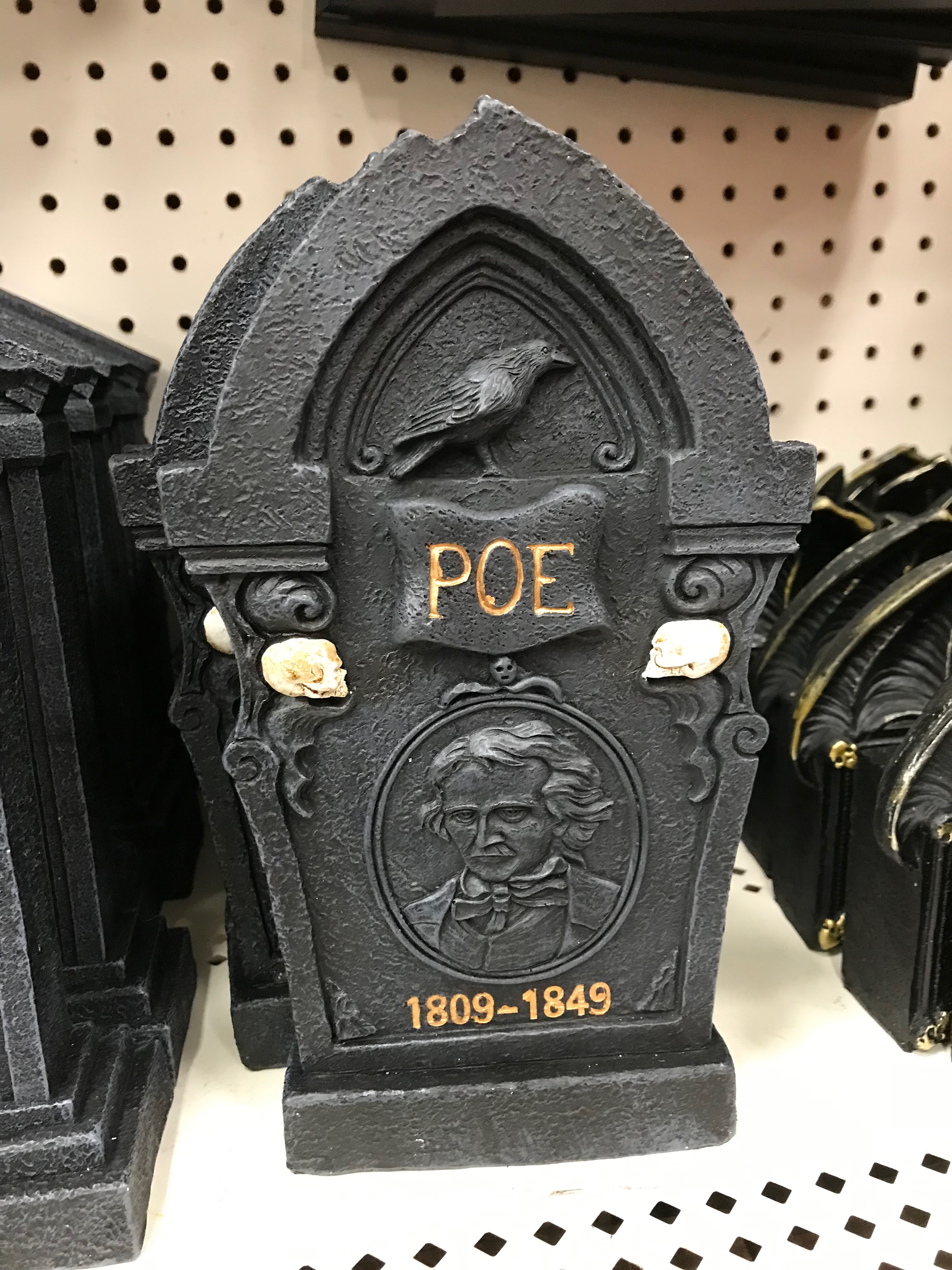
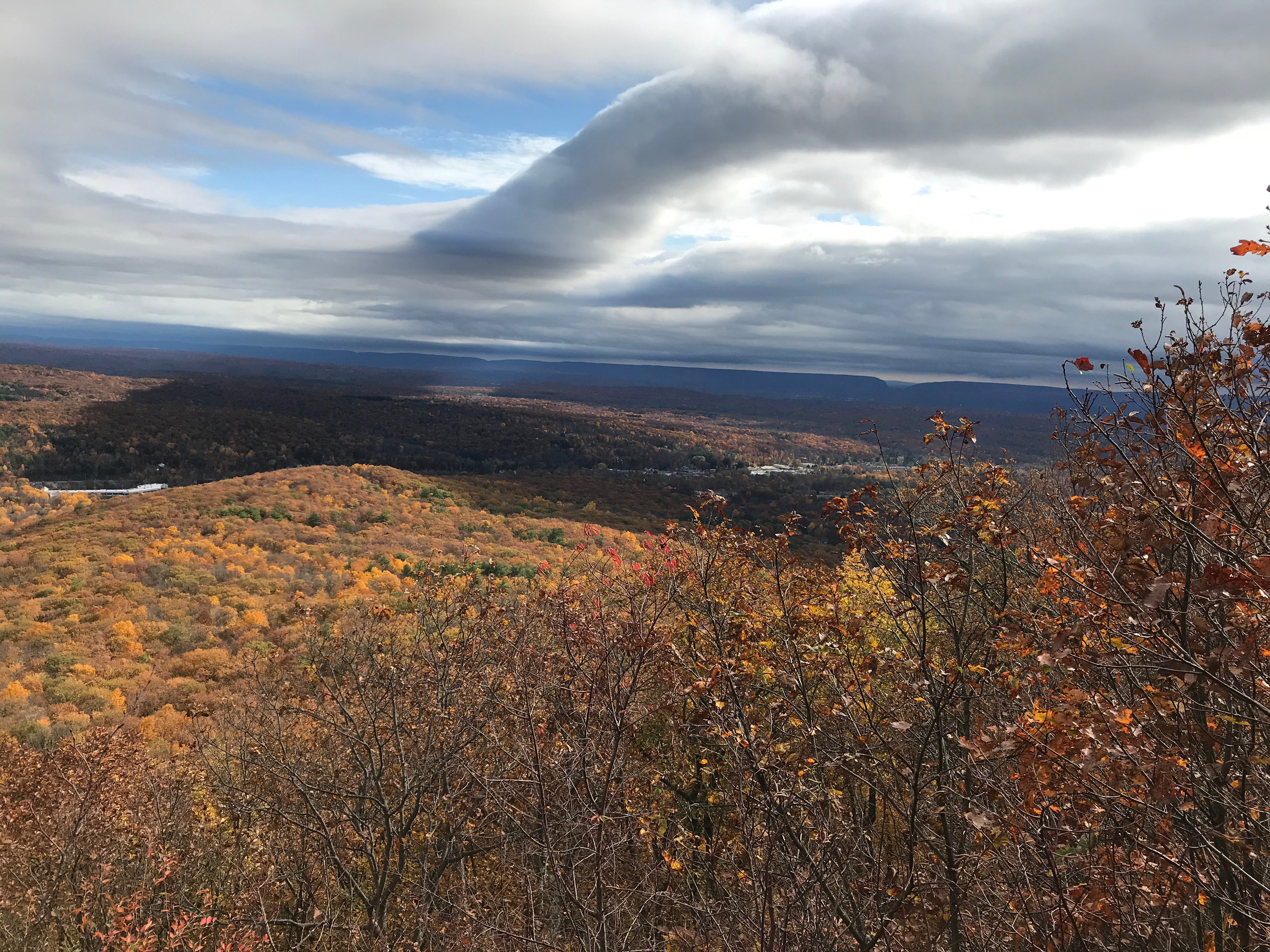
The other day I saw a headline on a BookRiot email blast: “August is Spooky Season Jr.”  I’ve often wondered why more horror fans haven’t emphasized this.  It’s not just that stores start putting out their Halloween merch, and it’s not that Summerween has taken hold.  No, it’s a feeling in the air.  When I was younger, August always seemed like the hottest month, the dog days of summer.  For many years now, however, I’ve begun to feel autumn’s approach in this month.  Some of the earliest trees begin to change (some start even in late July).  And if I take the time to smell the air when I step outside on an August morning, the first hints of harvest greet me.  The produce at the farmers’ markets should be a regular alert to that.  And my mind turns to the half of the year with which I most resonate.

It’s as if nature wears a mask, lulling us to suppose the weather will always be warm enough to sustain us, dropping rain in appropriate amounts at the correct time.  Yet we know that we have attacked our planet and it knows so too.  The true nature of all of this is change.  And change is scary.  A deep-seated fear accompanies autumn.  Did we store enough away for winter?  Is the house winterized?  What if the furnace breaks down?  What if the cold truly becomes too intense to stand?  I spend most of the year wearing multiple layers and fingerless gloves indoors.  Cloudy days make my office so chilly I can barely stand the lower thermostat setting until the end of the work day.  What if snow prevents me from getting to the store?  What if there truly is something scary in the dark?  All of this begins in August.

I watch horror movies year round.  I like to read creepy tales.  I even try my hand at writing a few.  Even so, I’m glad to learn that I’m not the only one whose thoughts turn toward Samhain even as Lughnasadh dawns.  A cool day in August is enough to start the chain-reaction going.  Some of us feel the respiration of fall even now.  Hear its slow heartbeat.  See its rictus grin.   Harvest tells us something about our own souls.  Our sins catch up with us as the nights grow longer.  The sun sets nearly an hour earlier than it did in late June, have you noticed?  And it rises nearly an hour later, I’ve noted.  Let spooky season jr. begin!


Summerween

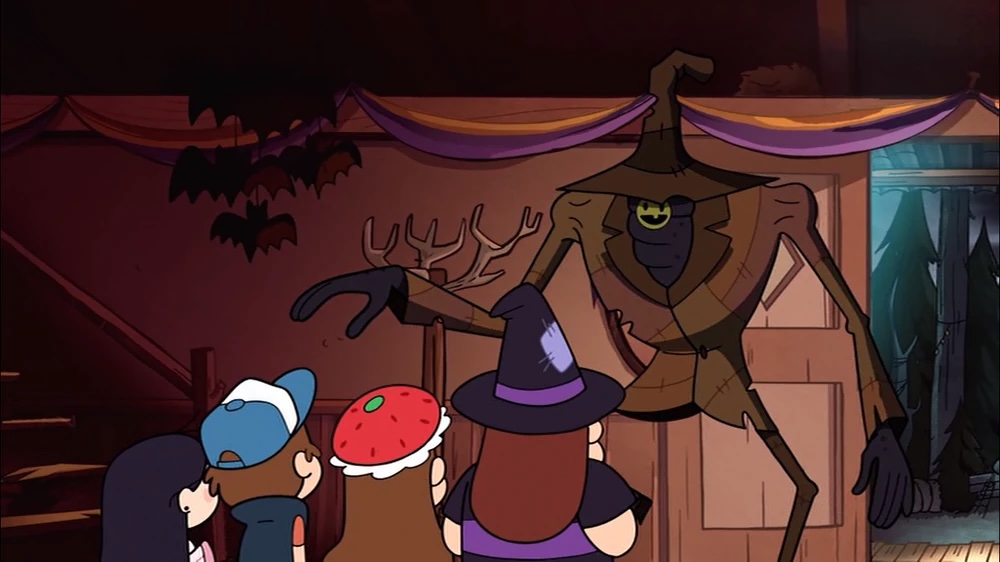
Okay, so why didn’t anybody tell me?  Well, I suppose it’s because few people know me.  But still, I had to find out about Summerween from the New York Times.  Folks, I don’t spend a lot of time online.  I work long days and I read books and mow the lawn.  I just don’t have time.  I wasn’t aware that Summerween was happening.  Interestingly, the idea got started from Gravity Falls, an animated television show based on Twin Peaks and The X-Files.  I actually watched this show because a couple of young friends, who spend a lot of time online, started showing it to me.  I didn’t remember, however, that in one episode the population of Gravity Falls decides to celebrate a second Halloween in the summer.  And now internet influencers (I’m more of an unfluencer) are popularizing the holiday.  

The need for spooky holidays is encouraging to me.  I’ve long been exploring the spirituality of the unexpected, and Summerween has the possibility of contributing to it.  According to the New York Times article there’s no set date for the celebration.  It’s more of a party aesthetic, but, the story notes, Michaels, the arts and crafts chain, has already caught on and is stocking scary summer decorations.  I have long opined (and fifteen years is a lot of daily posting—nearly five-and-a-half thousand of them) that people are afraid.  That’s why they run after unlikely political leaders and seek shelter beneath the wings of the Almighty.  Horror movies, and Halloween, simply bring this out into the open.  And what’s wrong with having a little fun with it along the way?

By the by, if you haven’t checked out Gravity Falls, you don’t know what you’re missing.  It’s a Disney production and it’s aimed at a younger crowd.  That’s one of the disconnects I experience here: Halloween is something younger people love.  At work I can’t count the number of people who’ve said (not to me directly, since few speak to me that way) that Halloween is their favorite holiday.  I guess you wouldn’t expect to find a kindred spirit among old guys who edit biblical studies, of all people.  I venture to guess that any of them would be surprised to learn that someone of my vintage even knows what Gravity Falls or Summerween is.  Well, they’d have been right about the latter, had it not been for an article yesterday in the Gray Lady.  And what a more adult way to find something out might there be?

Copyright: Disney. Summerween trickster, Gravity Falls

Shifting Gears

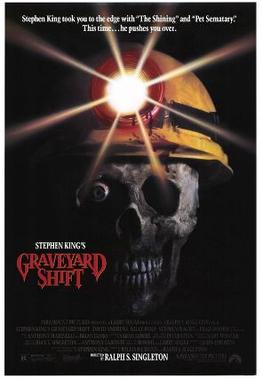
The question’s very basic: do you pay with cash, or by watching commercials.  When it’s the same three commercials the whole way through—for products you’d never buy—just paying the cash may seem the better option.  But it’s too late for that.  It’s the Graveyard Shift.  There’s no doubt  that Stephen King is responsible for the ideas for more horror movies than probably any other single individual.  I’d read his story, “Graveyard Shift,” many years ago.  I was warned, though, that this was one of the least favorite of his adaptations, and that’s a pretty low bar.  Still, it was just a matter of sitting through the same commercials over and over.  And one of them was more entertaining than the movie.  Of course, I don’t really watch for entertainment.  This is a learning opportunity.

Let’s start with the basics: You need at least one sympathetic character.  Okay, you kinda like Jane, because she shows basic humanitarian traits.  And Carmichael.  Then you want a plot that makes some sense—what is Warwick’s motivation?  The writing is particularly bad.  If there’d been a bit more intentional camp, this might’ve made a reasonable horror comedy.  I mean, you’ve already got the empty aluminum cans being fired by slingshot.  As it is, it’s played straight with an evil foreman, rats everywhere, and a giant bat in the basement.  By the end you’re kind of rooting for the bat.  And whose idea was it to use voiceovers of the sub-par dialogue over the closing credits?  Is this so bad that it’s good?  I’m having trouble deciding.

Although set around the fourth of July I wouldn’t call this holiday horror.  Nevertheless, there are some moments of religious imagery that pop out.  The graveyard sinking in the river has a listing statue of Jesus near the start of the film.  And the exterminator—the only real camp in the flick—narrates how in Vietnam they pinned victims down, like Jesus, to feed them to the rats.  The final couple of minutes—well earned, I assure you—have Hall fighting the wicked foreman with the jawbone of an animal (one has to assume an ass), inexplicably among human bones (some still in their coffins).  And his slingshot ultimately killing the giant (bat).  The references are to Samson and David, respectively.  Perhaps this movie’s an indictment of capitalism, since the basement cleanup is on Independence Day.  Or maybe it’s just tired horror tropes on a break.  (Having one of the characters reading Ben in the diner was a nice touch.)  It may become a holiday tradition after all.


Storming Fourth

Our founders picked a day of uncertain weather to declare independence.  One gets the sense that people were more stoic about the weather in those days.  Of course, we’ve increased global warming and made things more extreme.  Nevertheless, I can remember very few fourths of July when the possibility of storms was zero.  The weather around here has been odd this year with a suddenly hot June, with a dry spell that killed quite a few plants, followed by a cool start to July and some very intense storms.  And now, on the fourth, the possibility of rain in the forecast.  The grass hadn’t been growing in the dry spell, but I’m hoping the rain will hold off today long enough for me to get that job done.  In fact, on this secular holiday I’d been hoping to get quite a few outdoors chores checked off the list.

When I was younger and fireworks were the main draw to the day, I noticed that just about every year rain fell, or threatened to, on July fourth.  I’m sure it’s not that way everywhere, but here in Pennsylvania, where the declaration was signed, it’s a reality of life.  Of course, the modern Independence Day celebrations evolved over time to include the cookout and fireworks—outdoor activities both.  For me, apart from the outdoor chores on a day off work, a movie seems like an indoor celebratory alternative.  Perhaps Return of the Living Dead, set on the fourth.  Or I Know What You Did Last Summer.  Or Graveyard Shift.  Maybe something else.

Watching the political theater unfold—and my, what a dramatic election year it’s been—perhaps a comedy horror is just about right for today.  This is going to take some thought.  Something to occupy my mind while doing those outdoor chores.  Of course, I’ve got a book to get submitted as well.  If the weeds can hold off for another day or two—is it wise to paint the porch when rain’s in the forecast?—maybe I can finish up Sleepy Hollow.  It’s a good American ghost story.  That might be appropriate as well.  You see, holidays are so rare that too many things crowd in on them.  They’re breaks from the constant earning of more money, which is the American way.  Of course, our founders were largely restless gentry.  For me a day off work is always a busy day.  Especially when the rains have returned and the grass has grown.  It must be the fourth of July.


Sun Day

Two holidays in a row!  Although today nobody gets off work because, well, two holidays in a row is too much.  People might come to expect a little more time off.  If you’re like most people, the summer solstice creeps up on you.  Its more somber sibling, six months from now, is more anticipated.  In December we’re light deprived (here in the northern hemisphere) but we’ve been soaking in the sun for some time already now.  Besides, nobody gets the four turns of the year off work.  Christmas is a gimme, but it comes three or four days after the solstice.  We figure Labor Day is close enough the the autumnal equinox, and thank God Easter is a Sunday, at least in the years when it’s near the vernal equinox, so nobody complains.  I feel at my most pagan these days.  Why not celebrate the turning of the wheel?

The other day I was catching up on the Vlog Brothers—John and Hank Green.  Last week they were talking about “Beef Days,” or how to reduce the amount of red meat they eat.  They proposed doing it by setting aside a few holidays a year where they would have it.  Their reason?  The biggest environmental threat to our planet is our dependence on beef.  It’s the reason rainforests are being clear cut.  It is a huge source of greenhouse gasses.  The one thing they didn’t mention, however, is the suffering of the animals themselves.  Industrial farming leads to horrible lives being raised to be consumed.  The conditions in which animals are kept is so bad that it is illegal in some states to reveal the conditions to the public.  You hide things that you’re ashamed of.  I became a vegetarian a quarter century ago, and a vegan coming up on a decade now.   I can’t live being the cause of the suffering of others.

Why not use the ancient holidays as days of some kind of indulgence?  I don’t recommend eating red meat—in fact, I agree with my Edinburgh friend that if you want to eat meat you should be required to kill it yourself.  (He’s not a vegetarian, note, but a wise man.)  In any case, although you may be stuck behind a desk at work, take a moment to ponder that light will be slowly fading from this day on until we reach that other pole that turns another year.  And we can dream of shortened work weeks, although that’s about as likely as being given the summer solstice off as a matter of course.  Speaking of which, work calls.


The Teenth of June

It’s only really when they have no choice.  The Wednesday holiday, that is.  No convenient weekend a day away.  So Juneteenth is actually celebrated on Juneteenth.  I believe in holidays.  I think they’re more than just time off work, and Juneteenth celebrates freedom.  And it reminds us that our African-American siblings aren’t yet truly free.  We still have much to learn and having a holiday to underscore that is important.  Capitalism does a good job of disguising freedom, of course.  Your worth is weighed by how much value you add to the company.  Taking a day off from that is an opportunity to reflect on how daily living could be improved for all.  Juneteenth is a necessary holiday.  We need constant reminding.

I don’t see many African-Americans flying flags on their houses declaring themselves “not woke.”  We prefer to believe we’ve reached perfection already.  Capitalism is great at spreading myths like that.  The basic premise behind it is greed, and people are easily divided into groups because of skin tone.  It’s a dangerous combination.  Somewhere along the way, “justice” came to be a swear word.  Particularly among one political party that has decided power, at any cost, is the sine qua non of human existence.  If that means oppressing others systemically, or if it means invading a neighboring sovereign state because you have nukes with which to threaten the rest of the world, it’s all the same.  Power is far more addictive than any opiate, but we  don’t have any laws preventing those unsuited to holding it from doing so.  Juneteenth uncovers a host of problems still to address. 

Slavery was hard to let go because it cut into profits.  Human beings love wealth more than each other.  Ironically, without others to compare with, wealth means nothing.  If money makes someone happy I have no problem with that, but it has to come with responsibility.  One way to handle it responsibly is to insist that only so much can be had before the surplus goes to insure that all people have enough.  Of course, where Supreme Court justices openly accept bribes we can’t wonder that there are legal loopholes to help the wealthy circumvent their civic duty.  We need constant reminders.  We need holidays like Juneteenth.  We need to give our African-American siblings the same rights and privileges all people should have.  It’s appropriate to celebrate small steps in that direction.  Even if it means giving a Wednesday off of work.


Personal History

Being an historian by disposition has its own rewards.  I relate to the chronicling monks of the Middle Ages and their eagerness to record things.  On a much smaller scale, I try to keep track of what has passed in my own small life.  As we all know, most days consist of a stunning sameness, particularly if you work 9-2-5.  Although your soul is evolving, capitalism’s cookie-cutter ensures a kind of ennui that vacation time, and travel in particular, breaks.  Travel is expensive, however.  A luxury item.  It’s also an education.  My wife and I began our life together overseas, living three years in Scotland.  We traveled as much as grad students could afford.  Gainfully employed in the United States, we made regular summer trips to Idaho, and often shorter trips closer to home in Wisconsin.

We repurposed an old, spiral bound, three-subject notebook to record our adventures.  It spanned twenty-two years.  When we moved to our house in 2018, this notebook was lost.  (A similar thing happened with an Historic Scotland booklet where we’d inscribed all the dates of properties visited.  It vanished somewhere in central Illinois in 1992.)  Recently, looking for an empty three-ring binder for my wife to use, I unexpectedly came across our old three-subject notebook.  The relief—maybe even ecstasy—it released was something only an historian could appreciate.  Here were the dates, times, and places that I thought had been lost from my life.  In that morass of years after Nashotah House my mind had gone into a kind of twilight of half-remembered forays to bring light to this harsh 9-2-5 world.  I carried the notebook around with me for days, not wanting to lose sight of it.

Those of us who write need to record things.  I’ve never been able to afford to be a world traveler.  The company’s dime sent me to the United Kingdom a few times, but overseas after Scotland has been more a reverie than a reality.  But now, at least, I could remember our domestic trips.  The notebook included ventures I’d forgotten.  You see, when you get back from a trip you have to begin the 9-2-5 the very next day, particularly if your company isn’t fond of holidays.  (This explains why I write so much about them.)  Pleasant memories get lost in the mundane cookie-cutter problems of everyday life.  And yet I could now face them with that rare joy known to historians.  I had a notebook next to me, ready for transcribing.  It was going to be a good day.


Ordinary Heroes

Mothers sacrifice to give us life.  Sacrifice lies at the heart of much of religion, so it may be that women resonate with this theme naturally.  Without mothers none of us would be here to read this right now.  Mothers are mortals, however, like most heroes.  Naturally I’m thinking of my mother today and how much like a hero she was.  Like many heroes, she was prepared to die.  Her love, however, lives on.  It’s difficult, if not impossible, to count all the ways a mother influences our lives.  Not all are gifted at it.  It’s a difficult job, and one for which there’s no “economic” benefit—you don’t get paid for supplying the world with future contributors to this human experiment.  So we pause to think of how we might show our respect today.

I try not to involve family or friends on this blog—I don’t like giving the internet everything—but the other mother in my daily life, my wife, has said it’s okay.  This week we received the news that her cancer is in remission.  This joyous news came just in time for Mother’s Day and gives us yet another reason to celebrate.  Mother’s Day keeps on taking new shades of meaning as life unfolds.  Nature both takes and gives.  Sometimes in rapid succession.  We need to appreciate all that mothers, women, contribute to our lives and society.  I’ve never been able to figure out why this is such a difficult thing to figure out.  Some men seem to think it’s not as important as things like making money and making war.  We couldn’t do anything, however, without mothers to put us here.

My thoughts are just a touch scattered today, being pulled this way and that.  Since my mother’s death last year we’ve passed Christmas, Easter, her birthday, and now Mother’s Day.  There have been plenty of occasions to stop and remember.  I know that my choices in life have been profoundly influenced by her guidance.  Her wisdom.  She always said that she wasn’t smart, but intelligence doesn’t come only from finishing high school.  Life is a teacher for all who are capable of learning.  Having come through a dysfunctional home life herself, and two difficult marriages, she managed to show how to exist in the world with grace.  And she taught the value of sacrifice through her own example.  We honor our mothers by treating women more equitably everywhere.  And guys, there are lessons to be learned here.


Happy Beltane!

They creep up on you, these holidays with no official recognition.  I’ve been so busy that it didn’t even occur to me that today was Beltane—May Day—until my wife mentioned it to me before I headed up to bed last night.  Why is that important?  It’s not a day off work, so why bother?  Well, for one thing it’s the fuel behind my book published in the summer of last year.  Or, according to the Celtic calendar, the fall (just before Lughnasadh).  In other words, this is the first May Day for The Wicker Man.  I should’ve been trying to drum up a little interest, but things have been busy.  Besides, my profile hasn’t grown since its publication.  Nobody even cites it on the Wikipedia page for the movie, although it takes a distinct angle.  So I’ve been busy with other things.

I’ve been trying to find a publisher for my next book.  A couple friends know what it’s about but mostly nobody else because it’s time-sensitive.  Agents haven’t nibbled.  Well, one did.  He had me rewrite the book and then decided he couldn’t sell it after all.  Back to square one.  Even presses that publish mostly non-PhDs weren’t even interested enough to respond to queries.  Nothing like writing a book to make you realize how insignificant you are.  Like Sgt. Howie, I’m caught on Summerisle.  Ironically, I didn’t even think of writing a post for my book today when I was jogging yesterday and a haze over the moon (I know the movie ends with the sun—I’ve seen it a time or two) made me think, “That sky looks like the ending of The Wicker Man.”  Well, when I get back from my jog I have to start right in to work.  And Beltane’s not a holiday in these parts.

May Day used to be celebrated, even in the United States.  Now it’s just disappeared into the haze of work days.  And we don’t have time even to watch movies on work days.  That’s a weekend activity.  Of course, my weekends are full of trying to find publishers.  Two are currently considering my unagented book.  Four have already rejected it.  I’m thinking that I could use a trip to the Green Man with Howie.  At least on Summerisle they know how to celebrate May Day.  Of course, it’s the ending that makes it horror.  And Beltane snuck up on me this year.  Without it, The Wicker Man wouldn’t even exist.


Planetary Thinking

It’s Monday, and I’m feeling like a holiday.  Good thing it’s Earth Day.  Many businesses (who still don’t consider Earth Day important enough to make it a paid holiday) are emphasizing being green these days.  Really, with global warming proving itself no myth it’s just good business to try to adapt to sustainable practices.  Those of us who are vegan find more and more companies offering animal-free options—our dependence on beef is a major environmental hazard.  It’s still a challenge finding shoes that aren’t leather based, but things are improving.  And more and more hybrids and electric cars are on the roads.  We are making progress.  We still haven’t, however, gone so far as to declare a day dedicated to preserving our home an official holiday.

I’m not jaded or capitalistic enough to think our only hope is to find off-world parking.  To raise the future of humanity elsewhere.  It’s just that people fall in line after bullies and bullies only think of themselves.  And who, thinking that an afternoon on the links can be counted as work, would consider giving mere employees a day off?  A day when we might shut down commuting schedules to save power?  A day to rest from the brutality of constant commerce.  After all, a typical weekend consists of a day for chores and a day for church.  (Still, that is, for many people.)  And then back to the office not really feeling refreshed but knowing that you can’t long survive in a pandemic-ridden world without more cash coming into the coffers.  Inflation may be going down but grocery prices aren’t.

From NASA’s photo library (public domain)

A day to celebrate home seems like a no-brainer.  Especially when it comes on a Monday or Friday.  Ah well, we’ll do our best to celebrate it around work, shall we?  We’re moving late into April.  There’s been a bit of sun mixed in with April showers, as is typical around here on this planet.  Days are growing longer and the trees are leafing out.  Spring welcomes us back to the outdoors (after work, of course) where green now predominates over brown and gray.  While we may not have the day off, we can at least take a moment or two to consider how we might be better to our planet.  How we might drive less, use less electricity, generate less waste, spare a few cows.  Who knows, it might become a habit?  If that were to happen maybe every day would become Earth Day.


Eclipsing the Earth

We need a new word.  One for the high an eclipse brings you.  I’m finding myself having difficulty coming down from it.  It seems so mundane to have to do something as ordinary as work after experiencing totality.  We only caught very brief glimpses of the moon over the sun through small breaks in the clouds, but we did get to experience totality.  How do you come down from that?  The next day we had a several-hour drive to get home so that we could all be at work yesterday morning.  What could be more ordinary than that?  And the eclipse happened on a Monday, not an unusual day for a holiday.  Only it wasn’t a holiday, but a “vacation day.”  So was the driving day.  At my age you need a day to recover from all the driving too.

Several friends have posted their amazing photos and videos of the event, so I’ve decided to “release” my video to the wild.  A few explanatory notes: we were in upstate New York, on the shore of Lake Ontario.  It was chilly and we were bundled up (we came home to 80-degree temperatures, which was quite a shock).  The video may seem to have not much happening for the first couple of minutes and this is because electronic cameras tend to “even out” the light (film photography is much better).  When I started filming this it was getting dusky but the phone smilingly tried to make it look like normal daylight.  That wasn’t the case.  (Be patient—drama takes time to build!)

It occurred to me that many people (who had clearer skies) thought totality was all about the moon over the sun.  I take a more Buddhist approach.  The Buddha admonished not to mistake the hand pointing at the moon for the moon itself.  The real experience of an eclipse is what is going on down here on earth.  My video shows how the sun faded, and then went completely dark and back again in a matter of minutes.  My experience of this was quite a spiritual one.  If I’d been looking up I very well might have missed it all.  In other words, being in a cloudy situation, totality was an opportunity to take in what was happening on earth, in real time.  There is a lesson in this.  Life tends to deceive us into thinking the most important thing is the peripheral one.  Experiencing an eclipse is all about being, and living, on earth. 


Easter Fools

One of the most interesting aspects of Easter is its peripatetic nature.  It wanders around the calendar awaiting the first Sunday after the first full moon after the vernal equinox.  By definition it’s always in spring, but it can range widely as to when it actually falls.  This year it meets up with another unusual holiday—one with very uncertain origins.  April Fools’ Day is poorly documented and understudied.  This is one of the reasons I find holidays so fascinating.  Scholars seldom take them seriously and, well, April fools.  Who’s going to look into that?  When working on The Wicker Man (which is about holiday horror), I found there was little to find about April Fools’ Day.  There’s no agreement as to why it’s called that or how it started.  I have a pet theory, but no evidence to back it up.

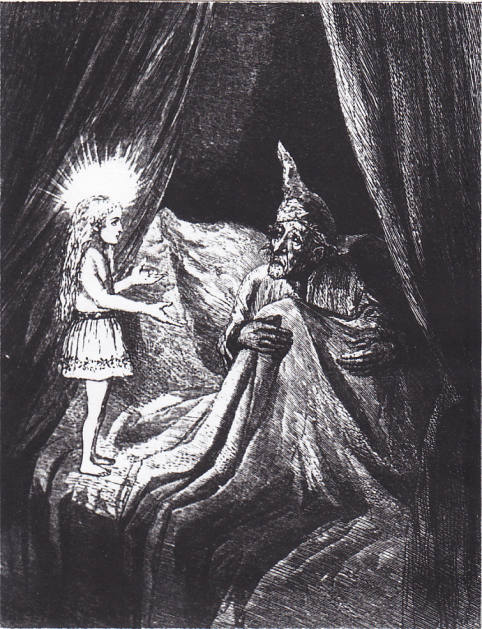
Image credit: Heinrich Vogtherr the Younger, public domain via Wikimedia Commons

We tend to think of April Fools’ as a day for practical jokes.  Indeed, the horror movie based on it is a big, long practical joke.  I wonder, however, if it goes back to my other old avocation, the weather.  The weather led me to write a book as well, of course.  For those in the northern hemisphere—particularly up in the more temperate parts of that hemisphere—April can indeed fool.  Around here it’s been decidedly cool for spring after a real warm spell a couple weeks back.  One year while living in Wisconsin we took a family trip for my wife’s mid-April birthday only to end up playing mini-golf in the snow.  April fools, you see.  We’re not out of the woods yet, regarding winter.  This understanding of seasons makes me think April Fools’ Day evolved from a statement about the weather.

Irish Celts believed spring began at Imbolc, at the start of February.  In that viewpoint, summer begins on May Day (Beltane), just a month away.  Now that Easter has fallen on the last day of March we’re left with an April bereft of official holidays, other than April Fools’ Day.  In fact, work-wise it’s a barren period from Presidents Day, in mid February, through Memorial Day at the end of May.  Just as the weather’s warming up to make the occasional long walk through the woods a magical journey of discovery, we’re confined to our offices—virtual or physical—gazing longingly out the window as nature invites us out to play.  Well, April fools, does it not?


What Would Ostara Say?

Easter is an uneven holiday.  In Britain it leads to days off work.  In the US, which prides itself on being religious, it’s business as usual.  Nobody closes for any days surrounding the holiest day of the Christian year.  That irony has always struck me about this season.  Of course, going to college there were breaks in the spring, and at a Christian school, special observances for sacred times.  In seminary it goes without saying.  In my case, working on a doctorate in the UK (an activity with few true breaks), we experienced the British sense of holidays surrounding Easter.  At Nashotah House you simply couldn’t miss it.  In fact, the Triduum was a contest of endurance with late night services and hours and hours in chapel.  Once I was forced into secular life, the shift was blinding.

Capitalism rolls right over Easter without even slowing down.  Who brakes for a Sunday holiday?  I am a believer in significant days.  I write about holiday horror, and holidays in general, because I’m certain of their importance.  The relentless pursuit of gain that is the American way is wearying.  Most everyone I know who isn’t retired is just plain tired.  Tired all the time.  We’re given few pauses and fed many worries.  So much so that resurrection from the dead can feel like something scary indeed.  Will work in the afterlife be as unrelenting as it is in this one?  All of this becomes especially evident to me on years like this one where Easter creeps up on me.  Not a fixed day in the calendar, sometimes you don’t even look up until you’re practically on top of it.

I remember in high school spending practically all day on Good Friday in church.  When working at Ritz Camera (after seminary, trying to stay ahead of student loan payments), managers looked at you funny if you asked for it off.  You see, I need spiritual time to recover from the onslaught of work.  Easter, however, is just another Sunday.  Watched on Zoom, with maybe special music.  If you’re able to be there in person there may be lilies with their distinctive Pascal scent.  Then the next day it’s back to work as usual.  Thinking about Easter always make me think about hearts being where the treasure is located.  When we take treasure too literally, it leads to too much work.  My mind, I fear, is that of a professor, with built in spring break.  And semester breaks.  Not exactly holidays, but unstructured time to catch up on work.  Holy days.


Tracing Writers

Ratiocination.  Detection.  There’s something compelling about that clear, crystalline logic that leads to solid conclusions.  I was floored by Don Foster’s Author Unknown: Tales of a Literary Detective.  I found the book by following up a reference to “A Visit from St. Nicholas,” aka “’Twas the Night before Christmas.”  Like most Americans I credited the poem to Clement Clarke Moore, but he did not, in fact, write it.  If you trust anyone with literary detection, it should be Don Foster.  Although this cleverly written book is not an apologia for the author’s personal accomplishments, it nevertheless builds trust in his methods and his sense.  It begins as he discovers an unacknowledged text was written by Shakespeare.  The evidence is carefully laid out, and is convincing.  Then others began to ask him to “prove” who wrote other pieces.  It’s quite a ride.

While Foster takes great care not to claim the ideas as his own, he’s nevertheless drawn into the case of the Unabomber, and Monica Lewinsky, and Thomas Pynchon.  His methods of ratiocination demonstrate repeatedly what he explains in his excellent introduction—our writing is every bit as indicative as our DNA.  With an adequate writing sample size, a piece with an unknown or disputed author can, with a great degree of probability, be attributed to the correct author.  You don’t even need to know of the cases to find the outcomes fascinating.  And those who disagree, being human, are simply not convinced by his conclusions.  They’ve already made up their minds.  In this regard the case of Wanda Tinasky (I’d never heard of her) is utterly compelling.

The Santa Claus chapter, the final one in the book, is a real pay-off.  Henry Livingston Jr., of Poughkeepsie, wrote the famous poem that defined Santa Claus as we know him.  Considering Christmas’ importance in our capitalistic society, this attribution is an important one.  Clement Clarke Moore was a very wealthy professor of Bible at the newly formed General Seminary.  Foster demonstrates probable cause in his claiming, and keeping alive, the mythology that he wrote the famous poem.  The way that this chapter is laid out and presented is especially witty.  Those interested in getting at the truth behind who wrote what will find this a page-turner.  Although he wasn’t seeking out the attention that came (most of us, as academics, are surprised when anyone show any interest at all in what we write) Foster has given the world a real gift in this book.  It reminded me once again why research is the most intriguing thing on earth.  And learning can be like reading a good mystery.


Balance

Spring came early this year.  I’m not talking about Punxsutawney Phil, but rather the fact that a leap year shifts the vernal equinox a day forward.  According to experts, spring begins today.  In The Wicker Man (it’s about oh so much more than the movie!) I discuss the seasonal holidays of the Celts.  The vernal equinox was surely known, but the beginning of spring was understood to be Imbolc, around February 2.  Since their summer began on May Day (thus the eponymous Wicker Man), the equinox was halfway through spring.  Modern paganism traces the equinox celebrations back to Ostara.  The day takes its name from the germanic goddess Ēostre, who also gave her name to Easter.  The holidays were intertwined, just as Christmas was entangled with Yule.

I find the equinoxes and solstices times for a spiritual pause.  Sure, there’s the simple astronomical fact of equality of light and dark, but there’s also something more.  Something that feels cosmic and that helps direct our destiny.  From now on there will be more light than dark.  But only for six months.  Even with Daylight Saving Time, our capture of light is of limited duration.  It makes sense to make use of the light while we have it.  Of course, those of us who rise early end up falling asleep before dark, but even so it’s starting to get lighter in the mornings again.  The equinox is a time for reflection.  And like most times for reflection, business doesn’t recognize it as a holiday.  Who ever heard of a holiday on a Tuesday?

The thing about spiritual messages is that they often come to you rather than the other way around.  At certain times, however, conditions are just right for something to break through.  It does require some listening, however.  So today, as nature holds everything in balance, try to take an unrushed moment to ponder.  For some of us it may come before the fury of work tears through our peaceful meditations, while for others it may come with the calm that five o’clock brings.  However we find it, this is a special time because this day is unusual.  It is a time of balance.  We all know how rare such things are in life in a topsy-turvy world.  The earliest flowers are already blooming around here, suggesting that as light increases so will hope greet us, if we watch for it.  The world is full of wonder, and an equinox is a time to look for it.