Not Out Loud

I’ve been thinking of funny things lately.  Literally.  You see, while many of us are waiting for vaccines or any sign of hope, it’s natural to try to cheer oneself up.  I try reading books with the reputation of being funny.  I try looking for movies that IMDb tells me will make me laugh.  One thing I’ve discovered is that what’s truly funny is a matter of taste.  Some comedians make me laugh.  Others, well, don’t.  Books that I’m told are LOL (“laugh out loud”) funny often turn out to give me a snicker or two as I wend my way through the pages.  The “out loud” part remains elusive.  But it’s the movies that get to me most.  I can’t remember the last time I saw a movie that made me laugh from beginning to end.  “Sophomoric” is the word my wife used to describe most of the movies on online comedy recommendation lists.

I suppose funny is a matter of buying into lowest common denominator culture.  Education, if we’re honest, can knock the sense of humor out of you.  Besides, most movies have a story to tell and few stories are funny every step along the way.  During a pandemic you might well need something like that.  Of course you couldn’t go to the theater to see it if it came out.  There’s some fun stuff on the internet.  People I know will sometimes send me things that make me chuckle, but I’m guessing I need to step away from horror movies for a while to reacquaint myself with what’s funny.  I got so desperate the other day that I sat down and tried to make a list of the funniest movies I ever saw.  Then I looked at the lists I found online and saw little overlap.  Where to go for a good laugh?

Our sense of humor must have roots in our youth.  I really got into religion then, and I became a very serious teen—we’re talking eternal consequences here.  So much so that I had a conscious epiphany one day that I no longer laughed.  I needed to rebuild my sense of humor.  I tried buying funny books (which wasn’t easy in a town with no bookstores).  I tried to catch up with the others in school who were always talking about this or that funny movie they’d seen.  Of course, anything crude scandalized me then, so it had to be clean fun.  Now it’s a matter of trying to see if anyone gets my sense of humor.  After a year in lockdown we could all use a good laugh.


Rabbit Years

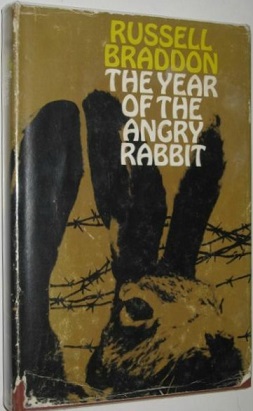
A childhood horror movie that I only recall in the most wispy of fringe memories is Night of the Lepus.  It’s one of those monster movies that involves mutated animals, in this case the unexpected rabbit.  I’m not sure why it’s been on my mind lately, but a little research indicated that it was based on the Russell Braddon novel, The Year of the Angry Rabbit.  This book is out of print and still under copyright, so finding a copy wasn’t easy.  Apart from vague images of giant rabbits, I had no idea what to expect.  The book turned out to be a comedy horror, in that order.  Remembering that the movie wasn’t funny (although it is consistently considered one of the worst cinematic efforts of the time), I wasn’t prepared for this.

You see, I don’t like to read about books before I read them.  I don’t read cover copy.  (I tend not to watch movie trailers either, unless it can’t be helped, like when you’re in a theater.)  I suppose knowing a genre of a book helps, but I just wanted the experience of reading the story behind a movie that won’t completely vacate my memory cells.  The Year of the Angry Rabbit is a satire on government, war, and capitalism.  If you’re not expecting a serious horror story it’s quite funny.  Russell Braddon never became a household name—he was from Australia and a person’s cultural impact tends to be greatest on their own continent—but if you knew this was a satire from the start you’d probably enjoy it as such.  Although written in the sixties, it’s climax takes place at the millennium, now two decades past.  It’s always interesting to see what people thought we might be up to by now.

Although there are elements of humor to our politics, Orwell seems to have been more on the money than Braddon.  Nevertheless it’s important to keep the old stories alive.  There are still people like me who will seek out rather obscure novels from many decades ago.  They might have to have sat on library shelves for years without having been checked out—this used to be the glory of the library, before “evidence-based usage” studies ruined them.  I search for things I want to read in my local small town library and find that my tastes are too obscure.  Besides, old stuff has to be cleared out to make room for the more recent books hoi polloi wish to consume.  I’m glad they’re still reading.  For me, however, I’ll need to stretch back to a time before I was old enough to read to satisfy an unrelenting memory. It was rabbit years ago.


Found and Lost

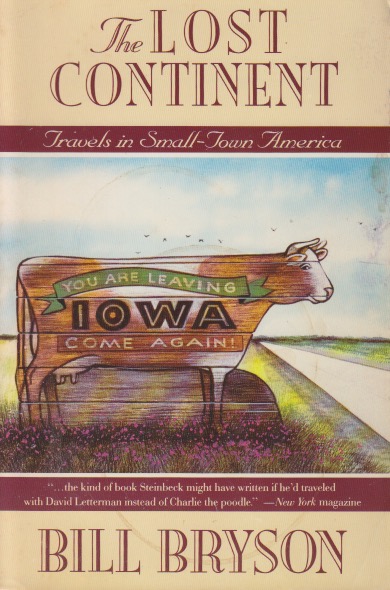
After the year that was 2020, I decided that I needed to read some books that might make me laugh.  That can sometimes be pretty difficult, just as finding books that scare me (unless they’re nonfiction) can be.  Turning to the internet (where else can we turn in these days of rare vaccinations?) Bill Bryson’s The Lost Continent came up more than once.  I think I may have read some of his other work, but this is one of his earliest books.  Perhaps it’s a sign of the times, but much of the humor seemed a bit cruel.  No doubt in America there are lots of things at which fun would be easy to poke, but we’ve become sensitive to others—perhaps overly so—perhaps to the point that even using the word “others” can leave you open to criticism. But still.

Bryson’s book is a classic travelog.  It’s the kind my family kept when we were able to travel.  We’ve still got a printed out copy of our journeys to significant places, stuck in an ersatz binder, awaiting notice perhaps.  We tried to keep it funny.  There’s something about travel that’s great for your sense of humor.  Bryson set out on two wings of a country-wide trip while back from England.  Starting at his home in Des Moines, Iowa, he drove south and east then up north and back to his starting point.  The second half of the trip, obviously, went west, to the south west before angling up through the high plains and back home.  

The book is hard to classify.  The cover on my copy says he was looking for the perfect small town, but mostly it just seemed to be driving around.  And hitting some big cities as well.  There were a few laugh-out-loud moments even for this dour reader, but mostly there were some smiles and a bit of sadness.  I had to keep reminding myself that this was the late 1980s.  In fact, I was living in the United Kingdom when the book came out, which is probably why I never really heard of it before.  I do, regardless of how well the humor works, enjoy a travelog.  You can learn a lot that way.  Many of the places Bryson visited I’d also been, but my impressions were somewhat kindlier.  As a kid I didn’t get to travel much (kinda like now) and seeing new places I was always awash in wonder.  Not everywhere is pristine, of course, but keeping notes always seems like a good idea.  And if you can get them published, you might even be able to make a living out of it. We all remember the freedom of the open road.


Werewolves Not Forgotten

Copyright is a strange thing.  Without it there would be no making a living as a writer or artist or even music composer (or so I’m told).  The idea is straightforward enough—someone comes up with a “marketable” idea (how marketable varies widely), and therefore owns the exclusive rights to the expressed form of that idea.  If, for instance, the idea becomes a published book the publisher (generally) owns the rights and pays the writer royalties for the use/ownership of those rights.  Copyright, however, like fresh food, expires.  Written work or music or art becomes part of the public domain and can be reproduced by any with the gumption to do so.  There are publishers, such as Gorgias Press, that got their earlier starts by doing just that—finding public domain material, scanning it, and republishing it for a price.  All above board.

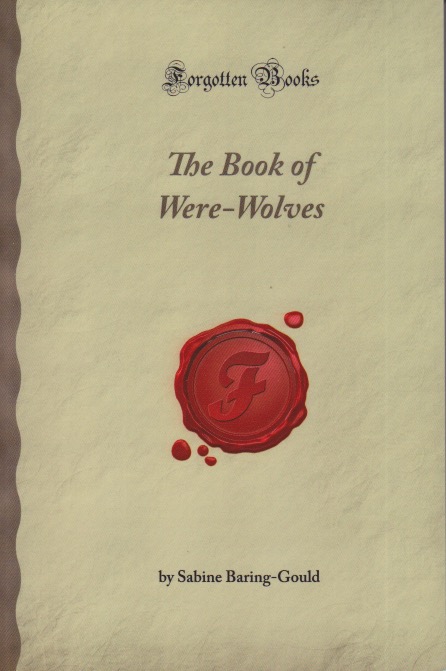
Back before I worked long in publishing I was going through a werewolf phase.  No, I am not a lycanthrope, but I was reading about werewolves.  I knew one of the main sources of folklore was Sabine Baring-Gould’s The Book of Were-Wolves.  Being strapped for cash (some things never change), I bought a copy published by Forgotten Books.  They’re rather prevalent on Amazon.  Although the content is free online, some of us prefer to have a book in our hands and leave the devices aside.  I soon discovered why my Forgotten Books version was so inexpensive.  It is simply a printout of the scanned book, apparently with optical letter recognition software utilized.  No serious formatting or proofreading required, a book is produced, covered, and sold.  It is a disorienting experience reading such a book.

Readers look for landmarks just as surely as a hiker or traveler of any sort.  Old books have layout and typesetting to help the reader navigate.  My copy has “Error! Bookmark Not Defined” instead of notes.  First editions of Baring-Gould, it turns out, sell for upwards of $6000.  So I continued reading.  A lack of italics and the occasional optically misread word make me wonder just how much of Baring-Gould I’m really ingesting.  Any book that begins with a disclaimer regarding possible errors should’ve been assigned a copyeditor.  SBG likes to use lots of foreign words.  They may be spelled correctly or not.  I have no notes to check.  Caveat emptor, n’est-ce pas?  The technology that allows scanned, unread by human eyes products to be sold as books makes me wonder.  No, I haven’t forgotten books.


Slacking Off

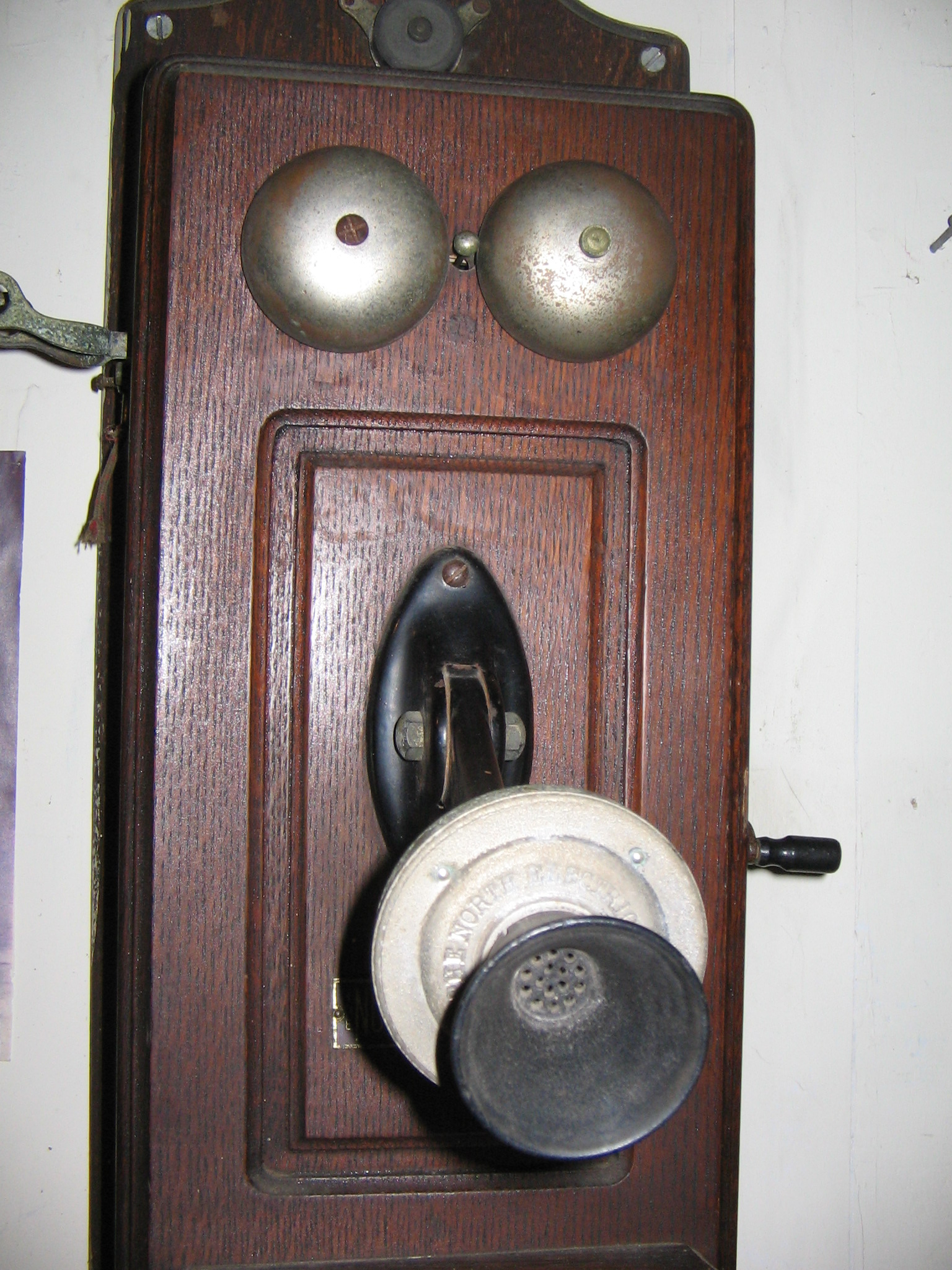
The other day someone on a committee on which I serve suggested we might eliminate the problem of buried emails by using Slack to communicate.  The problem, it seems to me, is that we have too many ways to communicate and yet lack the means to do so well.  For me email is indicative of the problem.  Email was devised—and I remember its beginnings well—as a means of swift communication.  The only real options before that were writing an actual letter (which I miss) or telephoning.  At that time you might have a cordless phone that you could carry from one room to another but you probably did not.  The phone was relegated to a place on a wall or table and, although I appreciate knowing things quickly, the fact is we got along in those days.  Junk mail was evident at a glance.  You sorted it and life went on.

Now email has taken over life.  I simply can’t keep up with it.  Some time ago Google offered a trifurcated email experience: primary, social, and promotional.  Their algorithms aren’t perfect (numbers seldom are) but I can often ignore large swaths of the promotional page.  That saves time.  Most of the social is dominated by people I don’t know wanting to connect on LinkedIn, or someone mentioning something I should pay attention to on Facebook.  Or perhaps something going on in the neighborhood on Nextdoor.  Primary deserves its name, but I can’t keep up with even that.  You see, I have a full-time job.  It largely consists of reading emails.  If I get a personal email in the morning, chances are it will be buried on the second page by the time the day’s out.  It may never been seen again.  I don’t need another new way to communicate.

The pandemic has introduced the new malady of Zoom exhaustion.  It isn’t unusual for my entire weekend to be taken up with Zoom.  If I don’t have a good part of a Saturday to sort my emails into files things I promised I’d do begin to slip.  I don’t see that email—the one that serves as a reminder to this addled brain of mine.  If I order something on Amazon I have to follow up on an email asking me to rate the service.  And then, if it’s not sold directly by Amazon, a vendor fishing for a compliment.  That after getting an email to confirm my order and another to tell me it’s been shipped.  No, please don’t subject me to Slack.  Or better yet, send me an email about it.  I’ll get to it eventually, as long as it stays on the first page.


That Time Again

Where’d it go?  I could swear I left an hour sitting right here on the table, and now it’s gone.  That’s the feeling of waking up the day of Daylight Saving Time.  Sure, it’ll stay light later now, but the mornings, when hope is most necessary, are once again dark.  It’s funny how we play with time.  I’ve known many people who love the end of Daylight Saving Time because of the illusion that they’ve gained another hour of sleep.  In fact, it’s just a deferred payment.  The great time-keeper in the sky won’t be cheated.  So—pardon my yawn—we’re adjusting again.  One of the great mysteries of this is that keeping Daylight Saving Time permanent has strong bi-partisan support in the US government.  It never becomes law, however, because riders are constantly attached to it, making one side or the other back out.  And so we all spend a couple weeks trying to get our circadian rhythms to adjust.  Again.

I’ve often wondered about the timing for this change.  Why Sunday morning?  In this nation that likes to pretend to be Christian, it’s a regular joke that folks in pre-pandemic times would miss church, having forgot to set their clocks ahead.  One incredibly busy Sunday in Edinburgh, my wife and I had missed church altogether.  I’m thinking it must’ve been in the final throes of getting my dissertation finished.  When supper-time rolled around we found we were out of some ingredients and we went to the local grocery to find, of all things, it was closed early.  It was only then that we had to stop and laugh at ourselves.  We’d just spent an entire day out of joint with time and didn’t even know it.  In pre-internet days it was possible for that to happen.

Most of our clocks now set themselves automatically.  I still wear an old-fashioned analogue watch.  I need to set it manually, which keeps me on my toes when Daylight Saving Time approaches.  O yes, and the clocks in the cars are off—they’re not wired in that way, being older models.  And the one on the microwave.  I can always use my phone for the accurately predetermined time on which we all agree to operate.  Even if the morning skies, which were starting to be light at six now stay dark until seven.  In another month we’ll catch up again.  And Daylight Saving Time, instead of being a strange intrusion, like most unwanted guests, will begin to feel like normal.


Uncial Nuncio?

I recently wanted to make a donation online.  As usual in these litigious times, there was a disclaimer that I had to read.  Since this was a respectable organization I decided I’d better do it if I was claiming I had.  Of course it was long and boring—lawyers talk to each other like academics do—but what struck me along about clause 6 is how these agreements suddenly go into ALL CAPS.  That seems to imply—but I’m no lawyer—that the rest of the agreement is less important.  Were it ever to come to court, would the judge say “Well, this part is clearly shouting, so you should’ve paid attention to it.”  Do lawyers need to resort to using all caps to make their point?  When do emojis start entering contracts?

When I was little I considered being a lawyer.  I’ve got a good head for rules and a fair reasoning ability.  My mother told me I was too honest to be a lawyer, and that dream died on the cutting-room floor.  Well, not exactly died.  I still think about it.  Never seriously enough to consider law school, but I am still legally minded.  Those sections of the Bible that have rules and regulations made sense to me.  You may not like them, but it’s best to have it in black-and-white.  These are the laws by which you live.  The rest is interpretation.  You might expect the ten commandments to be in all caps, but they’re not.  Perhaps they’ve been a bit crowded by the other stuff I’ve been cramming into my head over the years, but rules are rules, are they not?

Isn’t it somewhat disturbing that legal process resorts to shouting for the part they really want to apply?  We all know, at some level, that even contracts are negotiable.  Even after being signed.  It comes down to whether the party of the first part really believes a violation is worth suing the party of the second part.  In other words, it comes down to a cost-benefit analysis.  Contracts, after all, are promises on paper.  Not everyone keeps their promises.  And what does it say about us that we expect the party of the second part to do a, b, and c.  OH YES, AND X, Y, AND Z?  Something secret is being said here, and it’s something only a lawyer would understand.  Or maybe those who regularly issue contracts.

Photo credit: US Army, via Wikimedia Commons


Your Viewing Pleasure

I watch a lot of movies.  Well, I used to before the pandemic stole much of my free time.  We have a closet full of DVDs.  At least they’re not VHS tapes.  The problem with VHS tapes was that they wore out with continued playing.  I’ve read that magnetic tape is still the most stable storage medium, but the DVD, with no moving parts, seemed like an improvement.  Lately we’ve had several DVDs go bad.  I’m not sure that I wanted to know there were such things as disc rot and laser rot, but there are.  And some of these were discs that weren’t cheap.  The alternative these days is streaming.  The problem is streaming services go out of business and you’re left without money and without the movie.  There’s a reason vinyl’s coming back, I guess.

Remember when you had to wait to see a movie?  When you had to either see it in a theater or wait years until it was broadcast on television on a certain channel at a specific time?  You lived your life normally, and the movie was a rare treat for those who had specific fare in mind.  Now we get movies “on demand.”  It’s death by a thousand cuts, though, since if you’re really in the mood for a film that’s not on Netflix you’ll pay to see it on Amazon Prime.  Used to be you can buy a disc—a one time expense—or was it?  Chances are in the early days you were replacing a VHS tape you’d already bought.  You may’ve sighed in relief when UltraViolet came along.  But you’d have sighed too soon.

These things bring eastern and southern Asian religions to mind.  (Consider the source.)  While I’m not an expert on the religions of east and south Asia, I’m familiar enough to know that their basic concept is that the only thing permanent is change.  Western societies are built on the demonstrably false concept that a steady state is permanent and that change comes once in a while.  In fact, our entire worldview is based on things remaining the same.  Perhaps that’s why conservatism is such a strong force in western thinking.  It is, however, an illusion.  The pandemic has given the lie to our steady-state thinking.  And if you cope, as many do, by watching movies you’ve probably signed up for a subscription service or two.  It will serve you well, for the moment.  You certainly can’t run to Blockbuster to pick up your favorite flick any more.  If only I had more time, a movie might have the answer.


Not the Band

One of my favorite weekend treats involves black-eyed peas.  With a father from South Carolina, some of my earliest memories involve soul food.  As a present-day vegan, I eat a lot of beans.  That’s why I was disappointed to learn that Goya’s CEO, Robert Unanue, continues to be a big Trump supporter.  Shame on you, Goya!  Lest you get the wrong idea, we generally buy the store brand beans.  Of all the legumes, however, it seems the humble black-eyed pea is difficult to get right.  The generic brands always end up with the bottom part of the can being a kind of beige sludge where the beans have broken down and lost, as it were, their individuality.  The dish I make (one of my own invention, also featuring grits and hot sauce) requires that the beans maintain their integrity—take note, Goya!  Said brand seems to be the one that understands this aspect of canning beans.

For many years I avoided Bush beans for fear that they might be enriching the other *ahem* Bushes.  Right now, however, I’d rather have W run for a third term than the specter of Goya-supported Trump.  When did legumes become politicized?  Why can’t I sit down to a peaceful Saturday morning breakfast without a hideous four-year nightmare coming to mind?  The perils of being vegan!  In any case, I recently tried Bush black-eyed peas.  They weren’t as good as Goya, but I think I need to make the switch.  I’ve never had my somewhat simple culinary tastes disrupted by a president before.  Generic would be fine, but why, o why can’t they get the black-eyed pea right?

Image credit: Jud McCranie, via Wikimedia Commons

Perhaps somewhat oddly, I really like beans.  There are about 400 varieties and each has its own personality from sassy edamame to staid kidney beans.  I’ve even reconciled myself to the childhood nightmare of the lima bean (alien, without a hint of lime).  Now, I’m no foodie.  I eat to live rather than the other way around.  Whatever I do, however, I search my conscience.  Raised evangelical I know no way around it.  My conscience is the main reason for becoming vegan—I can’t support animal cruelty, especially for an industry that is the largest environmental polluter in the world.  So when I’m standing in front of the bean shelf, thinking ahead to Saturday’s breakfast, I’m struck with qualms.  I stare at the black-eyed peas and they stare back at me.  It’s a kind of test of the wills.  I see the Goya and decide to try something better for the world.  


Too Fast

In the Easy Reader book Hooray for Henry (available on Amazon for $768.57; that’s $12.60 per page), our eponymous protagonist Henry can’t win any of the events at the picnic games.  One of the refrains as he participates in the races is “faster, faster—too fast” (I may have got the punctuation wrong, but then I haven’t read the book for at least a couple of decades and I can’t afford a new one).  That story seems to have become a symbol for those of us mired in technology.  The rate of change is, as in Henry’s experience, too fast.  The other day I noticed an annoying warning on my laptop that claims I’m low on memory and that I have to close some applications.  What with all that tech requires of us these days I probably do have too many things open at once.  It pops up, however, when I have even just one application open.

A web search revealed this is probably a virus (something that used to be rare on Macs, but that was back in the day when things moved a little slower).  The steps for removing it were technical and appeared to be extremely time-consuming.  What I don’t have is time.  And it’s not just my rare time off work that’s too full.  On the job we’re constantly having to learn new software.  It doesn’t really matter what your line of work is, if it involves sitting behind a computer we’re constantly being told to learn new applications while trying to find time to do the jobs we’re paid to do.  There’s no question of which is the tail and which is the dog here.  With an economy driven largely by tech, because that’s where all the jobs are, you risk everything if you don’t upgrade (about every two weeks at present).

I’ve been writing a long time.  Decades.  Some of my earlier pieces are no longer openable because the software with which I wrote them has been upgraded to the point that it can’t read its own earlier writing.  To the prolific this presents a real problem.  I have, literally, thousands of pieces of writing.  I can’t upgrade every single one each time a new release comes out.  The older ones, it seems, are lost forever.  I used to print out every post on this blog.  Given that there are now even thousands of them, I eventually gave up.  I know that they will inevitably disappear into the fog some day.  For writers who’ve been discovered after their deaths this would be a Bradburian fate.  Or perhaps a Serlingesque twist.  The world realizes a writer had something important to say, but her or his writing can no longer be read because the tech is outdated.  Faster, faster—too fast.


Love or Saints?

One of the many oddities of life at Nashotah House was that we never celebrated St. Valentine.  I wouldn’t expect a mostly male and neurotically homophobic community to mark Valentine’s Day as for lovers (most of the faculty and many students were married, however), but the saint’s name wasn’t uttered in my years there.  Of course, commercialization of holidays does taint them somewhat.  It’s difficult to take a day seriously when you’re being told that how much you spend will be the sign of how special it will be.  With St. Valentine’s Day, however, I believe the topic was much too close to something the church had long feared—sexuality.  I’ve often pondered how this strange obsession evolved.  Judaism, from which Christianity sprung, isn’t the origin of this antipathy to being fully human.

The trouble likely starts in the Bible.  The New Testament, in particular.  No mention is made of Jesus having been married.  Paul, in his usual way, made it an issue but fell short of outright condemning it.  His words would help convince the Roman Catholic Church that mandated celibacy was a good idea.  Clearly, however, Augustine of Hippo, who lived after Valentine (depending on which one you elect to follow) saw the whole enterprise as flawed.  Making up the concept of original sin and tying it in with sexuality was a certain means of creating a problem.  Not that Christianity is the only religion that promotes celibacy, of course.  But when it came to Nashotah House there was really no concern about what other religions taught.  Even on February 14 no collects were recited mentioning the saint who must not be named.

The history of saints’ days is a fascinating one.  A few of them made it into pop culture—after Presidents’ Day there’s no national holiday until Memorial Day in May, so who can blame people for looking for reasons to celebrate while still waiting for spring?  Saint Patrick wasn’t similarly given the cold shoulder at Nashotah in my years there.  And although it moved around quite a bit, you could usually count on April for delivering Easter.  We didn’t celebrate Presidents’ Day.  Nor Martin Luther King Day—not being Catholic his canonization process was a non-starter.  The long, cold stretch between Epiphany (now Insurrection Day) and Lent was one devoid of popular holidays.  I suspect that despite the number of saints (and there are lots of them) the singling out of Valentine was considered to be asking for trouble.  That was many years ago.  Oddities, however, have a way of remaining in long-term memory.


Many Moons

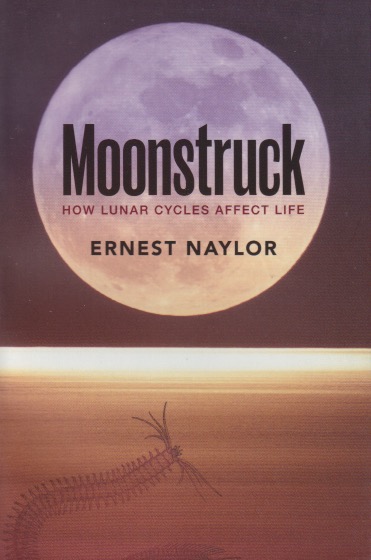
Scientists, often with their base matrix bound up with the local religion, are frequently interested in  myth.  And sometimes religion too.  This is no surprise.  Many of us go into religious studies because of its influence on our lives and scientists, who measure and analyze material realities, must be curious when their results challenge some religious or mythic assumptions.  So it is that Ernest Naylor addresses mythic beliefs about the moon’s influence on animals and what scientific findings on the same show.  Although this book wasn’t exactly what I thought it would be, Moonstruck: How Lunar Cycles Affect Life does address the subtitle assertion quite directly.  Naylor, a marine zoologist, knows about tides—caused by the moon—and their effects on marine organisms.  That connection is the main focus of the book, with occasional forays onto dry land.

What caught my attention right away was that when discussing myth and religious ideas, Naylor describes two stories as biblical: the woodcutter banished for gathering on the Sabbath and Judas’ banishment.  Both of these, he seems to believe, have the Bible banishing the criminals to the moon.  That was news to me.  There may well be folklore with such associations, but a simple opening of the covers of the Good Book would dispel this particular “myth.”  Neither the sabbath wood-gatherer nor Judas were banished to the moon after their deaths.  The former presumably went to Sheol and the latter presumably to Hell.  For me this illustrates yet again how many ideas professional people outside the guild suppose to be “biblical.”  The Bible says very little about the moon.  One New Testament demoniac is described as “moonstruck,” but beyond that the occasional references are mainly just to the moon qua moon.

The Bible’s a big book.  Everyone in western society knows it’s an important book but few read it.  Even fewer deeply engage with it to understand its original context and message.  We hear stuff and we’re told it’s in there, and we believe it.  I first noticed this in high school.  Classmates would tell me “the Bible says…” (you can fill in the blank with just about anything, this isn’t a quiz).  Almost always they were wrong.  By that point I’d read the Good Book many times cover-to-cover.  I owned concordances and knew when foreign matter was introduced.  The thing about the Bible is that it’s fairly simple to look it up.  Moonstruck focuses on marine animals and tells interesting connections to the moon.  It has a chapter on humans and the moon, finding little direct biological influence.  It’s an informative book, just don’t use it to verify what’s in the Bible.


Contains Cookies

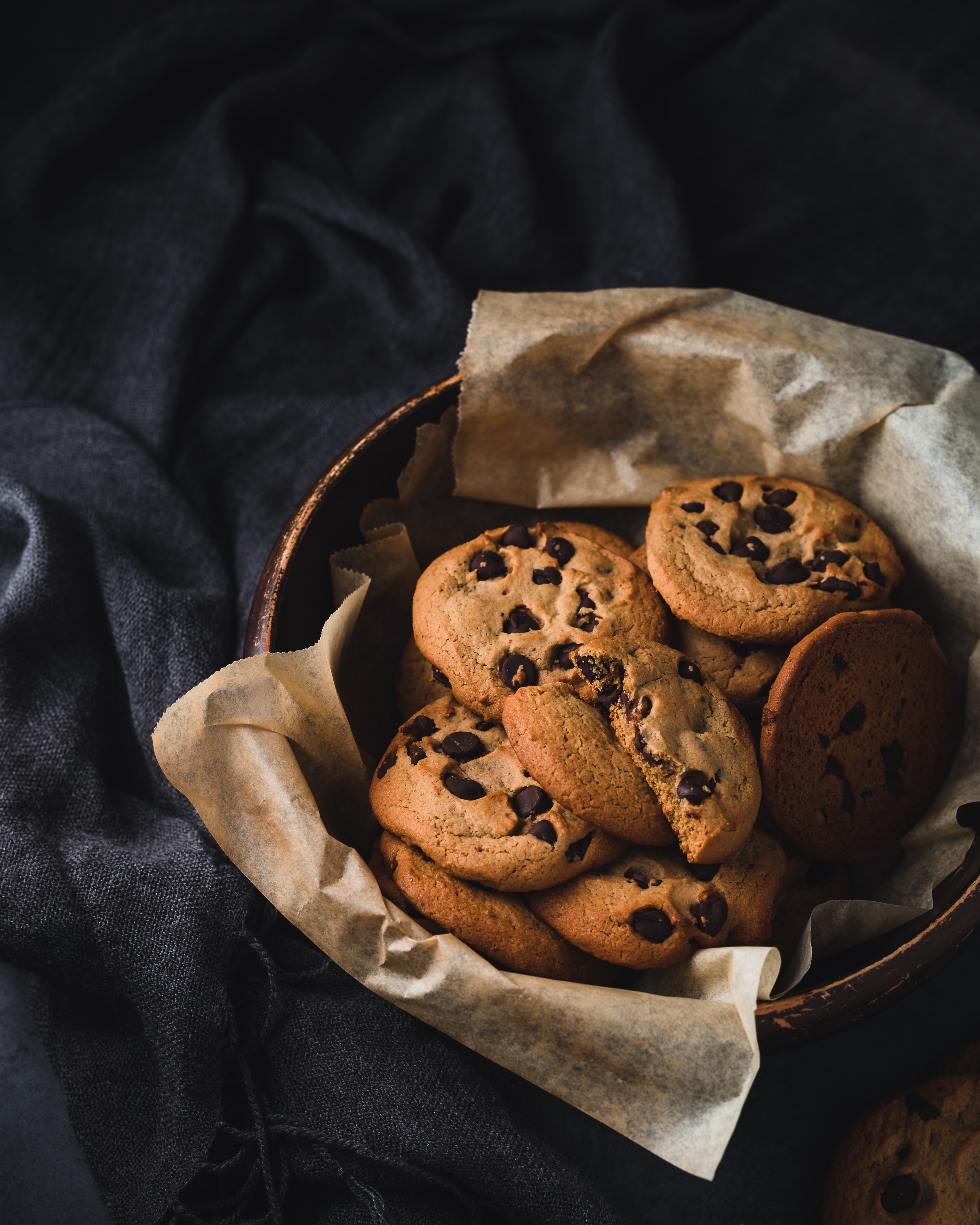
In the early days of this blog I used to get regular reactions from other bloggers.  This was back before I started the long commute to New York City and when I actually had a little spare time on my hands.  I always enjoyed the interactions, but followers eventually dropped away and I now often get no responses to my posts at all.  That’s why I was thrilled when two recent posts came together with a response one of my faithful readers sent.  I’d written about keeping books neat, along with a piece related to ancient food, when a friend pointed me to the story of a cookie found in a 1529 Cambridge copy of Augustine.  According to the piece on Delish, the cookie was left in the book about half a century ago and had only now just been discovered.

Photo by Mae Mu on Unsplash

Now, like most readers of religious studies, I have opinions about Augustine that aren’t pristine.  Still, I respect books.  I suspect all the bakery jokes necessary have been made about this particular bookmark, but what strikes me as odd is that nobody discovered a cookie placed in a book when I was less than ten years old, until now.  Let that say what you will—Augustine still sells wildly in translation, of course.  Not too many individuals go back to the source, however, at least not reading as far as the cookie.  I don’t know about Cambridge, but Edinburgh used to have books from the seventeenth century on the open stacks in the New College library.  I’m sure the older volumes weren’t frequently consulted.  And I’m not the one to point a finger; I have no catalogue of my own books so I have to remember what I already have.

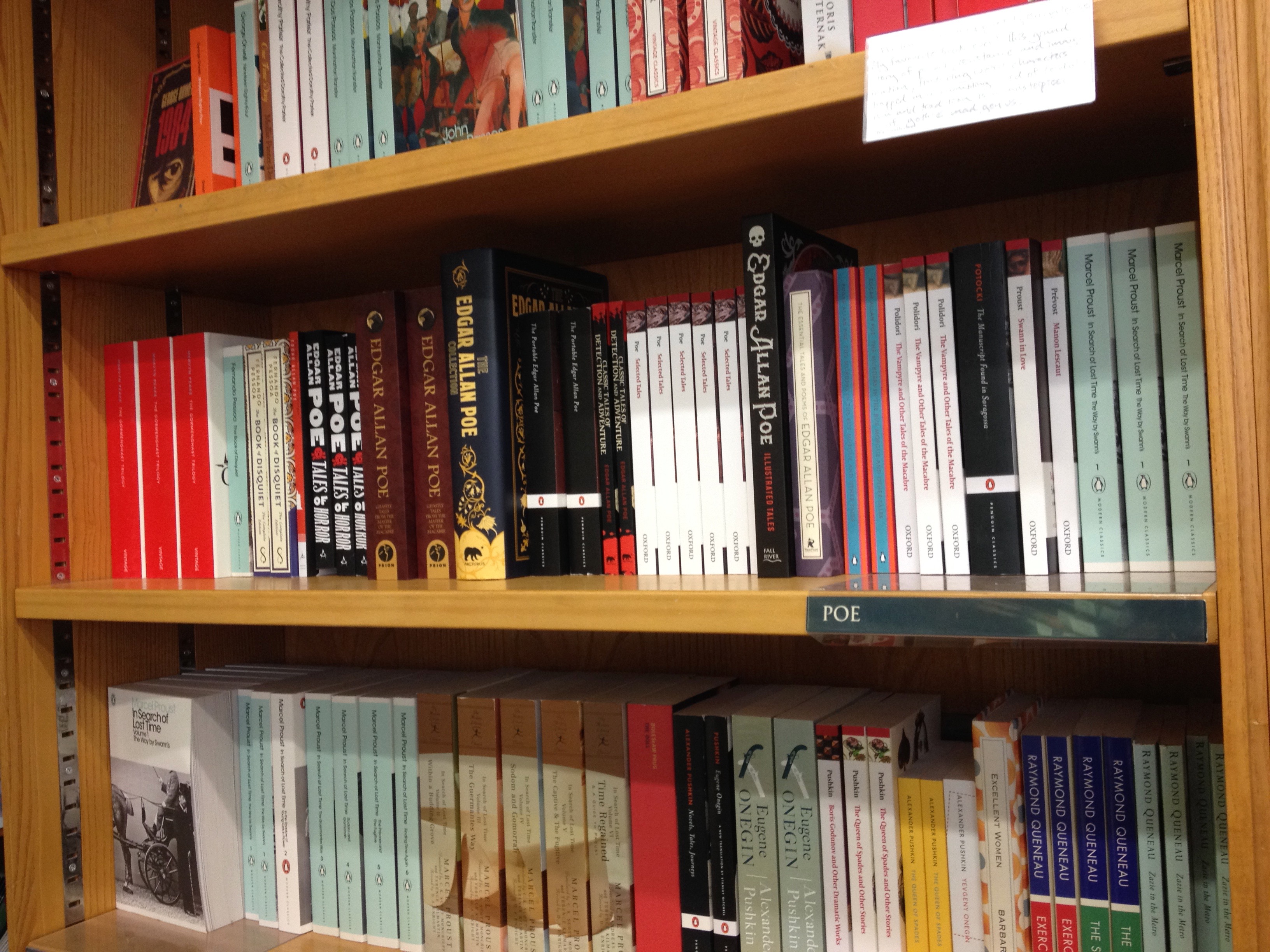
Books aren’t a great investment, financially.  I remember back when Antiques Roadshow was all the rage.  Every episode I saw where someone brought a really old book led to certain disappointment.  No matter how rare, the value was measured in hundreds of dollars rather than thousands.  Those of us who invest in books do so for different reasons.  Our money is being exchanged for knowledge, learning, and thinking.  Back when Amazon used to give out bookmarks with each purchase one had a quote from Erasmus, “When I have a little money, I buy books; and if I have any left, I buy food and clothes.”  We are kindred spirits it seems.  Buy books and you’ll grow in wisdom, but you may go hungry.  That’s the way the cookie crumbles.


Mittens and Circuses

Bernie Sanders, since we’re now making up our own facts, clearly won this election.  Or at least the inauguration.  An inescapable meme of Sanders, bundled up with his notable mittens, has made major media as well as pedantic punters on the web.  Thanks in part to an app created to allow users to place Bernie anywhere, I’ve seen him at all kinds of places from Oxford University Press to Dirty Dancing to the exhibit halls at the AAR/SBL annual meeting.  As someone who suffers from the cold I was initially concerned that he must feel laughed at by it all, but Bernie seems to be taking it in good humor.  The only reason I bring it up here is a meme (I think) that my wife pointed out to me of Bernie among the Fond du Lac Circus.  I can’t find any credit for the creator, but it appeared on the Episcopalians on Facebook group.  (I don’t know how Facebook works, checking above the fold once a day only.)

I’ve actually posted on the Fond du Lac Circus before.  The photo was extremely popular at Nashotah House when I taught there.  The diocese of Fond du Lac (in which I once preached) is just north a bit in Wisconsin.  The photo was a celebration of the installation of a bishop with ecclesiastical haberdashery at its finest on display.  In my mind, Nashotah House stands for all that’s conservative.  I’m certain a great deal of the population supported Trump.  A former dean had a shrine to George W. Bush in the deanery.  I kid you not.  So seeing the most progressive senator amid that crowd of backward-looking clergy, apart from being unspeakably funny, made me reflective.

Many years of my life were spent among the Episcopalians.  Too many of those years consisted of feeling oppressed by the interpretation of “orthodoxy” held at Nashotah House.  The hubris of “the only right teaching” has haunted me ever since.  Faith can be a good thing, but it can also be extremely dangerous.  The greatest danger is when it ceases to be reflective.  Faith must involve constant thought and assessment to be honest.  Unthinking compliance was something Jesus, for one, simply didn’t accept.  Challenging the way it’s always been done is a venerable part of the agenda for those who start new religions, Jesus included.  When that religion becomes ossified (or too obsessed with appearances) isn’t it time to start looking toward the future?  Bernie Sanders is popular with the young.  They have little patience for the selfishness that’s been on display in American culture for far too many decades.  Would that he really attended the Fond du Lac Circus!  Perhaps a grassroots movement to improve conditions for all might’ve actually emerged long ago.


Dirty Books

Dirty books annoy me.  Not that kind of dirty book, but books that arrive dirty.  If a book is expensive, particularly an academic book, I look for a used copy.  Since we’re in a pandemic, and also since the books I read tend to be outré, shall we say, getting them in the local second-hand place generally doesn’t work.  Sellers of used books online have to rate them.  Acceptable, poor, fair, good, very good—the scale is somewhat arbitrary.  I don’t like books with writing in them; I don’t want somebody else telling me what’s important.  I think I can find a topic sentence, thank you very much.  Lately I’ve gone down to the level of good with my online buying.  (Have you looked at the prices?!)  When you add that “very” to “good” sticker shock sets in.  Okay, so the books arrive well loved, I expect that.  But dirty?

I used to sell used books on Amazon.  I never sold many, but I always tried to be sure they were dusted off before putting them in the envelope.  I never put a cup of coffee on them.  Nor used them as a plate.  Some people apparently do, though.  I had one book arrive so filthy that I took the 409 to it.  Thing is, it cleaned up nicely.  Is it too much to expect that someone selling used books might go ahead and get some of the gunk off before sending it?  It’s not exactly Antiques Roadshow patina, after all.  It’s someone else’s slovenliness.  Who knows—might not a quick wipe-down improve the profitability by enhancing the condition of the book?

Library builders like yours truly want to afford the best editions that we can.  Books are more than mere objects gathering dust on the shelves—they’re individuals that we get to know.  Those that we meet but don’t really care for we pass along, hopefully to loving homes.  The way someone treats books reveals quite a bit about a person.  Accidents happen, of course.  A hazard of reading a lot may lead to the occasional spilled coffee or dropped bit of food, but treating books with respect not only increases their resale potential, it’s also an acknowledgement of the accomplishment.  Writing a book involves a considerable amount of work.  And although your property is yours to treat as you please, books are particularly vulnerable to damage by water, mice, or neglect.  Add fire, food, or extended exposure to sunlight and you get a sense of their fragility.  Acknowledging the effort a book takes to produce can go a long way towards making sure no book is dirty.  That, and a quick wipe-off before shoving it in the envelope.

Neat as a pin.