Disney Dark

I write a fair bit about dark academia, but one of the strangest higher education events in my life was when the American Academy of Religion and Society of Biblical Literature held their annual meeting in Orlando.  At Disney World.  Seeing the world’s top academics in the field against a backdrop of Snow White, or whatever, was surreal, expensive, and just a bit off.  I guess others felt that way too, because the conference never returned.  I have never had a desire to visit any Disney theme parks.  It is something that simply has no appeal to me.  As much as I appreciate fantasy in my reading and movie watching, in real life I prefer to visit places with home-grown authenticity.  At the same time, I realize many people adore Disney attractions.  (I just can’t get over why you’d want to visit a manufactured Main Street when there’s a real one not terribly far away.)

The Dark Side of Disney by Leonard Kinsey is one of those books that grew out of a blog.  Believe me, I’ve been tempted more than a time or two to pirate my own work here to try to make something that people would pay to buy.  In any case, Kinsey is a Disney fan.  Growing up poor, I was never accustomed to summer vacations.  One year we made a memorable trip to Washington, DC.  I didn’t realize it then, but that was where my grandmother, who lived with us, had been born.  I remember aspects of that trip and realize that it was my model of what a vacation was meant to be.  Kinsey grew up not far from Disney World and with a mother with a bit more free cash than mine.  This book is his exposé of the less-expected aspects of Disney.  Not only an exposé, but a “how to.”

I do understand the desire to be a “bad boy”—I suspect most of us do (chose your gender-appropriate nouns, of course).  The thing is, I’m not a rule-breaker.  Realizing that the guardrails in life are generally set up to help people, as much as I’m curious about what goes on behind the scenes, I prefer legal means of finding information.  I’m no fan of large corporations, but if they set the rules (you have to pay to get in, and once you’re here agree to uphold the illusion) then that’s the right thing to do.  In my opinion.  Then again, when you’re with a bunch of academics of religious studies there’s a limited amount of trouble to be had.  Unless you read about dark academia.


Job Months

I’m sure you’ve had them too.  Job-like months when everything seems to happen all at once.  Your bank account grows anemic, making Quicken feel more like quicksand.  Our most recent started when the roof leaked yet again during heavy storms—I sure am glad climate change isn’t real!  Can you imagine how it’d be if we had extreme weather?  This house dates from the late nineteenth century and presumably, if such super-soakers had always been common, well, the roof would’ve been replaced down to the joists.  In any case, in our fourth call to the roofers over seven years, we faced yet another scary bill.  Then the sink began to leak.  Some minor repairs I can do myself, but this house was an either a DIY’s paradise or purgatory.  For us, mainly the latter.  

A couple years back there was a leak from the upstairs toilet tank.  Now, I’ve replaced the guts of a toilet more than once.  I bought the parts and went to work.  It was then that I discovered a previous owner had purchased a fancy-brand toilet for which toilet guts couldn’t be purchased (well, maybe from Japan or China, by slow boat).  You’ll probably agree that without an outhouse, a working toilet is more or less a necessity.  I watched YouTube and my wife and I went to Lowe’s and bought a new toilet.  I’m sure angels were laughing watching the two of use wrestle this metric-ton porcelain throne up the stairs (and demons laughed as we got the old one down).  Installing it looked straightforward.  When it started to leak, the plumber—we’re on a first-name basis now—came over.  He pointed out the faulty mounting pipe and asked if I’d installed it.  It was from the previous owner with high-class taste in toilets.  He turned to his companion and said, “This is why we’ll never go out of business.”

So a twenty-dollar toilet gut replacement turned into a $600 full toilet replacement.  This was in my mind when I had my head under the sink.  We seem to have stopped the water getting in from above, at least for the moment, but now it was clear that the base cabinet under the sink was going to need to be replaced as well.  I called Doug and he said he’d slot me in as quickly as he could.  I’m pretty sure Job didn’t have indoor plumbing.  He probably had to repair his own roof a time or two, though.  Only in his case, it happened just before God made a bet with Satan.  So the story goes.


Who’s Counting?

While joking around recently with my daughter, I started counting to ten in Spanish.  I’ve never studied the language, but I can stumble through academic articles in it with a dictionary.  In a senior moment I forgot that “ten” was “diez.”  We had a laugh about it and got back to life.  The next day while doing my sit-ups, I was counting in German, as is my habit.  (The push-ups get counted in English, thank you.)  It struck me that “dreizehn” is where the “teens” start, and I wondered if this was because of some base-six counting.  I decided to check Spanish to see if the pattern holds.  Those of you who know Spanish know that it doesn’t.   In English, which follows German, our teens begin at “thirt” (third).  

Numbers have always fascinated me.  Math not so much.  While I find the base-ten system natural, there is something to be said for base-six.  I’m not sure if that’s where German “zwölfe” comes from, but it does give us our “twelve.”  But those teens are always difficult, aren’t they?  In human life we hit sexual maturity with all of its complications.  Do we project those onto our numbers?  Do other animals do the same?  We now know that some animals have at least the concept of absolute numbers down.  Some birds know exactly how many eggs are in their nests, and bees know what “zero” means.  Their lives tend to be shorter than ours.  Do their ideas of numbers reflect that?

As human beings we know that that good old base-ten number 100 is kind of a life goal.  We know that 100 is “old age,” but we know that it isn’t exactly unusual for a person to live that long.  Of course “ninety” is compatible with either base-six or base-ten, and is a more reasonable goal.  Numbers are used for marking.  They’re so basic to our everyday life that, unless you’re a mathematician, accountant, or scientist, we hardly think about them at all.  Civilization began, however, with gods and numbers.  Kings wanted to know how many people they controlled (some things never change).  In the Bible God punishes David for trying to find out.  There’s even a book called Numbers.  The Mesopotamians used a base-six system that gave us the 360-degree circle.  We still use it even though a 1000-degree circle would give us much greater precision.  I could muse about numbers and counting systems all day, but it’s time to go do some sit-ups, in German.


Unverified

Dear Google Scholar and ResearchGate,

Thank you for listing me as a scholar on your website.  I am pleased that my academic publications interest you.  I am writing to you today, however, about your verification process.  Neither of your sites will verify me since I do not have an email with a .edu domain.  Now, I fully realize that even adjunct instructors are often given a university or college email address.  This is so students and administrators can reach them.  Speaking as a former adjunct instructor at both Rutgers University and Montclair State University, I can verify that such an email address does not verify your scholarship.  It is a means of communication only.  It does not verify anyone (although it may come in handy if you need to contact someone internally).

For large companies with a great deal of resources, I am surprised at your narrow view of both “scholar” and “verification.”  I earned a doctorate at Edinburgh University before email was widely used.  I taught, full-time, for over a decade at a seminary that did not request any .edu emails until well into my years there.  I taught for a full academic year at the University of Wisconsin Oshkosh.  Had you requested “verification” earlier (pardon me, you may not have existed then), I would have been able to contact you from nashotah.edu, uwosh.edu, rutgers.edu, or montclair.edu.  Your choice.  However, since you only decided to begin your online resources after I had moved into publishing, where the emails end in a .com domain, you were simply too late.  The thing about technology is that it has to keep up.

I hardly blame you.  My doctoral university was opened in 1583, long before today’s giants were twinkles in the eyes of the likes of Bill Gates or Steve Jobs.  Scholars used to write these artifacts, called “books” on paper.  They sent them through a service called “the mail” to publishers.  I know all of that has changed.  The fact is, however, that I have published six scholarly books, and several articles.  I am still writing books.  I am simply wondering if you can answer the question of when I became unverifiable because of my email address?  I have a website that details my educational and professional history.  Academia.edu has not asked me to verify myself and my profile there gets a reasonable number of hits.  My question is when are you going to catch up with the times?  Many, many scholars do not work at .edu-domain institutions.  Of course, nobody knows who we are.  Thank you for your kind attention.

Unverified  


Mired

For someone who grew up with an Oscar Mayer jingle forever lodged his his brain, it took decades before I became curious about the surname.  I had always supposed it was a Germanic word for “mayor” but then, if so, mayors had to be very busy in the boudoir to make so many.  The reason I grew curious was that there are so many ways to spell it.  I’ve had people complain to me about having to spell their name every time, but I’ve run across “Meyer” spelled “Maier,” “Meyers,” “Mayer,” “Myers,” and many more.  Yes, I’m afraid you have to spell it.  (My wife’s surname is Stephenson and she has to spell it every single time.  For that matter, so do I.)  Why so many Mayers?  A little (very little) research turned up that it comes from old German for “manager”—thus possibly related to “mayor” and maybe even “major”—but that over time it came to mean “tenant,” basically a freeman farmer.  That’s why so many.

Photo by Erik 🖐 on Unsplash

Growing up in a small town, the very common surnames I encountered were “Smith,” “Jones,” and “Miller.”  My mother even married one of the Miller clan eventually.  “Smith” and its variants, derive from craftsmen of various sorts, such as “blacksmith.”  “Miller” is someone who works a mill.  The odd one out here is “Jones,” which derives from a prolific “John” somewhere way back when.  I’ve written before about how common (and widely variable) the name John is.  All these names share a “non-noble” background, it seems.  People of occupations that keep us going.  It made sense that “Meyer” was a name for farmers.

I grew up with a different, but not that uncommon (as the internet has taught me), surname.  Interestingly, all of my grandparental surnames were unusual, although one is compounded with “Schmidt,” or “Smith.”  I find names fascinating.  With so many of our species running around, unique forenames weren’t in large enough supply for us to stop there.  Which John are you?  John Johnson?  Okay, now I can place you.  I tend to struggle with transposed letters from time to time, making the variants of “Meyer” particularly difficult for me.  And that “y” acts like a vowel and sometimes becomes an “i.”  Or a “j” in German.  Cheeky.  We identify closely with our names.  They say something about us.  Thankfully we have other ways of distinguishing ourselves, otherwise we’d all just be lost in the crowd.  


New Hope Nightmare

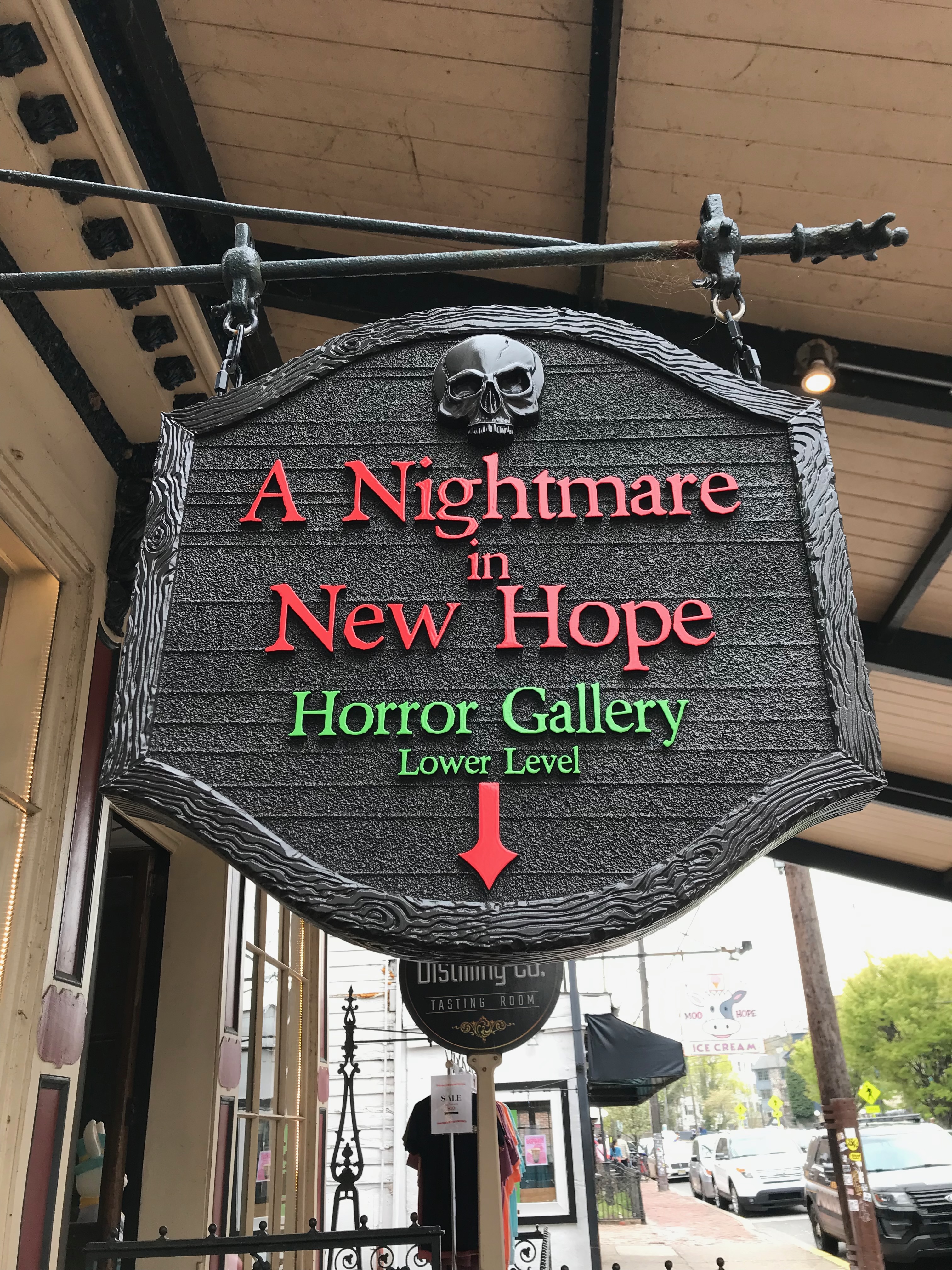
One of my favorite places along the Delaware River is the town of New Hope.  Across the river is the very nice town of Lambertville, New Jersey, but New Hope has a feel to it.  When I learned that a new horror museum had opened there—Nightmare in New Hope—we scrambled to change plans to get there right away.  We went the Saturday before Easter.  We’d planned to spend some time touring the rest of the town as well since it’d been years since we’d done so.  We managed to find parking and, since the museum opens at one, grabbed some lunch and went to Farley’s Bookshop.  Independent Bookstore Day was actually the following weekend, but bookstores need no special occasion.  Farley’s has changed a lot since our last visit.  It’s smaller (as has happened with many indies) and brighter.  I found plenty to like there, but I did miss the darker, dustier feel to the first incarnation of the store I’d known.

We made our way to Nightmare in New Hope.  And waited.  And waited.  Several people passed by, noting that they’d have gone in if it were open.  One of our party messaged the website since telephoning did nothing.  Eventually the owner indicated that he was closed for Easter.  Of all things.  A horror museum, open only on weekends, closed for the first nice weather we’d had on a weekend?  That was the main reason we’d driven an hour to get there.  We found a place with vegan ice cream and fed the ducks on the river.  I was sad that the main objective of the trip, the museum, hadn’t turned out.  And I knew it would be quite some time before we could try again.

My daughter, knowing my tendency to get depressed over such things, suggested we could go to Peddler’s Village instead.  My wife and daughter had visited it before, and so we decided to round out our Saturday trip there.  Peddler’s Village is a set of speciality shops that was born about the same time that I was.  These days there are about 60 shops with items that may or may not be strictly necessary.  Although we’d been to Farley’s, I couldn’t pass up the Lahaska Bookshop, part of the Village.  It was warm that day and we saw maybe only five or six shops.  At least one of them was an independent bookstore.  Not exactly the day we’d planned, but a day spent in and around New Hope is never wasted.  But really, closed for Easter without even putting a notice on the website?

(See updates here and here.)


Protected?

I like Macs.  Really, I do.  Ever since I realized that “Windows” was a cut-rate way to imitate Macintosh’s integral operating system, I’ve never been able to look back.  (I don’t have a tech background so I may be wrong in the details.)  Every time I use a work laptop—inevitably PCs—I realize just how unintuitive they are.  Something about Apple engineers is that they understand the way ordinary people think.  I sometimes use software, not designed for a Mac, where I swear the engineers have no basic comprehension of English words at all.  And nobody ever bothers to correct them.  In any case, I find Macs intuitive and I’ve been using them for going on 40 years now.  But the intuitive element isn’t as strong as it used to be.  As we’re all expected to become more tech savvy, some of the ease of use has eroded.

For example, when I have to create a password for a website—not quite daily, but a frequent activity—Mac helpfully offers to create a strong password that I will never have to remember.  Now before you point out to me that software exists that will keep all your passwords together, please be advised that I know about such things.  The initial data entry to get set up requires more time off than I typically get in a year, so that’ll need to wait for retirement.  But I was talking about intuitive programming.  Often, when I think I won’t be visiting a website often, I’ll opt for the strong password.  Maybe I’ve got something pressing that I’m trying to accomplish and I can’t think of my three-thousandth unique password.  I let Mac drive.  That’s fine and good until there’s an OS update.  This too happens not quite daily, but it does sometimes occur more than once a week.

After restarting I go back to a website and the autofill blinks at me innocently as if it doesn’t recognize my username.  It doesn’t remember the strong password, and I certainly don’t.  So I need to come up with yet another new one.  At work I’m told you should change all your passwords every few months.  To me that seems like a full-time job.  For grey matter as time-honored as mine, it’s not an easy task.  I’m not about to ditch Macs because of this, but why offer me a strong password that only lasts until the next system update?  Truth be told, I’m a little afraid to post this because if by some miraculous chance a software engineer reads it and decides to act, a new systems update will be required again tonight.


The Talk

Sex.  It’s the great forbidden topic.  This extends to the truly staggering number of words that have been coopted, either as slang or circumlocutions, to discuss anything related to sex.  The other day I wanted to use the phrase, “finger in the dike.”  I was thinking of that illustration of a little Dutch boy preventing a flood from some of my childhood reading, but I quickly realized that it could be construed as insensitive.  When I was a child I wasn’t like other kids.  Some referred to my interests as “queer,” although I am not a homosexual and am not afraid to admit that I have many friends who are.  That word, though, can’t be used without being thought to refer to sex.  While this is true of many words that were once slurs, such as “gay” and the whole arsenal of derogatory words associated with denigrating our sisters and brothers, other—more neutral—words also fall into this category.

The sheer number of words we use to refer to our genital organs would stun alien (off-world) linguists, perhaps confirming, in their own minds, the advantages of telepathy.  Who isn’t slightly embarrassed when someone introduces himself as “Dick”?  I remember a good friend, who happened to be a bishop (now, sadly, departed), who introduced himself to me as “Dick.”  (I was a seminary professor at the time.)  I had trouble calling him that, although we met on many informal occasions and he even wrote me letters of reference.  Sometimes I ponder how sex has become the most talked about stigma there is.  I’ve been on a private campaign against stigmas lately.  I know this is a fight I cannot win, but still, isn’t it worth talking about?

Probably the most frequently used adjective, among many subcultures, is the f-bomb.  No matter how many times we hear it used (and books have been written on it), it always manages to shock.  Even the word itself has spun a whole effing set of circumlocutions to refer to the word itself.  This is truly a remarkable state of affairs.  I’ve studied linguistics enough to know that some topics are like this, but I’m hard pressed to think of any others that reach the level of sex.  Many are the times when I want to use a phrase I was taught as a kid that I now have to resist.  I had a colleague once respond with open-mouthed shock as I used a word in public that remains perfectly innocent (which is how I was using it) but which could be construed the wrong way. Such is our world.  Ironically, you can see sex in the media quite easily.  Movies, television, the internet.  Just don’t talk about it.

Photo by Gama. Films on Unsplash

Naming Names

I recently saw a story suggesting that Elon Musk was named after the leader of a Martian colony in an unpublished novel written by none other than Wernher von Braun.  Now, I don’t know if this is true or not, but it did get me to thinking about names.  The awesome responsibility that parents have in naming their kids.  I suppose many people don’t think much of it, but I remember asking, at a young age, why I was named “Steve.”  (There’s no “n” at the end, despite what people throughout my life have tried to “correct.”)  An old belief suggests that children might emulate those they’re named after.  Of course, some of us just can’t let things go.  Nobody else in my family was named “Steve,” and being very Protestant, I wasn’t named after no saint.  (Besides, he was Stephen.)

My mom told me a couple of things.  First of all, she wanted to name me after her father, Homer.  As an adult I think it might’ve been worth the childhood beatings I’d have to have taken, but my father vetoed it.  “Steve” was taken from a character in a Dick Tracy cartoon.  Mom liked the sound of it and my father didn’t object.  I’ve never read Dick Tracy—I’m not much of one for newspapers in general—but I did see that Warren Beatty movie back when it came out.  Once I tried to find a character named Steve in the cartoon line-up and I did find that there was a criminal by that name at one point.  Mom never told me this and I only found it as an adult, after I’d already decided against a life of crime.  But still, names sometimes inspire behaviors.  Influence choices.  Don’t they?

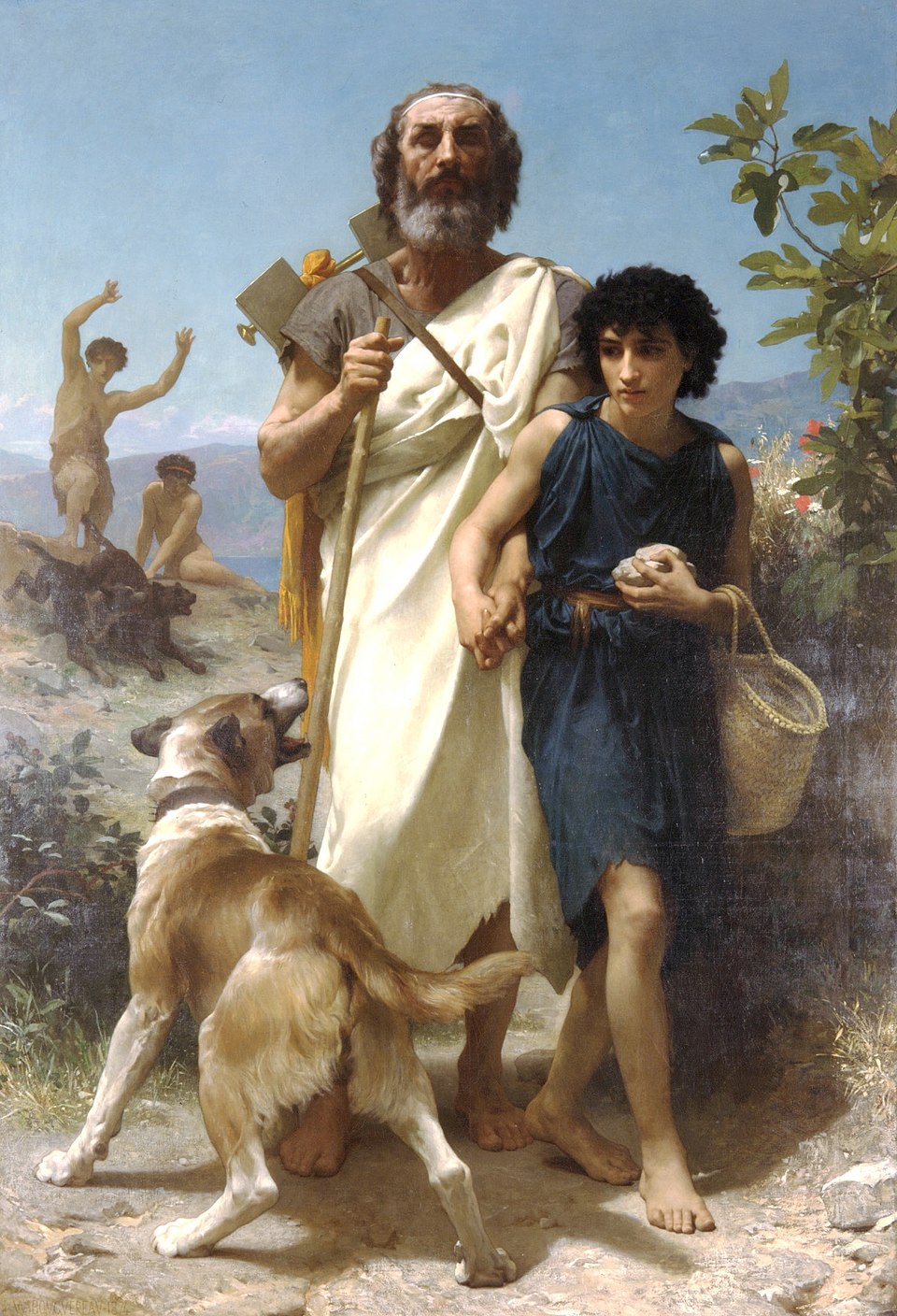
Homer and His Guide: Image credit: William-Adolphe Bouguereau, public domain, via Wikimedia Commons

Children named after their parents sometimes follow in their footsteps.  Or those named after a great person in history use that in their internal monologue as they try to attain similar things.  Now, I haven’t researched this—I’m just guessing here.  But for many years it was unusual to find a German boy named Adolf.  There are also names that are retired for someone being, say, the son of God.  Mom swore it was wrong to name a boy “Jesus,” even in admiration.  She didn’t know that the Anglicized Hebrew name was actually “Joshua,” common then as it is today.  Homer was a pagan, and I wondered how my great-grandparents came up with that name.  The best I can figure is that they were from upstate New York and there’s a town called Homer in Cortland County.  And I wonder if he ever asked his parents why he was named that way.


Remaining in Shadow

Some people want to be found.  Others don’t.  Those of us who are curious shade into those who are frustrated when we can’t find someone.  People have been around for a relatively long time now, and we’ve been giving each other names because “hey you” only goes so far.  Even so, unique names are rare since, it seems, the majority of European-derived folk had something to do with smithies.  Nevertheless, the internet offers to help us find people.  I was searching for someone the other day but that person, despite publishing nearly daily on the interwebs, has a very common name.  And he styles himself without even a middle initial.  (He may not have one, I know.)  The point is, perhaps he doesn’t want to be found.  I run into authors like this—they assume their high-level monograph is sufficient fame.  You can’t find them online.

I recently joined Bluesky.  I’d like to leave Twitter, but I still have a large number of followers there (for me), although they seldom interact.  Publishers look at things like the number of X followers you have, so until Bluesky surpasses Twit, I’ll need to keep both going.  On Bluesky more people introduce themselves to you.  At least when you’re new.  Not a few are looking for relationships, sometimes of the sexual kind.  (I find that occasionally on what is called X, but mostly in the account under my fiction-writing pseudonym.)  These are people who want to be found.  The internet, strangely enough, has driven us further apart.

America has always been a polarized place, but the web has sharpened the border.  Indeed, it has militarized it.  I remember the days when meeting people actually meant going outside and stopping somewhere else.  Society had rules then.  Two topics of forbidden discussion were religion and politics.  It was easier to make friends with those rules in place.  Since I’ve chosen to put myself out there on the web, my choice of field of study does tend to come out.  And it’s one of those two forbidden topics.  Since my career goal has occasionally been ministry (still is from time to time), putting religion into the equation is inevitable, for those who really want to get to know me.  Social media is a strange country, however.  I tell new conversationalists on Bluesky that I have a blog, but it doesn’t seem to lead many people to my dusty corner of the interweb.  And it still gets me no closer to finding that guy with the tragically common sobriquet.  He may not want to be found. 

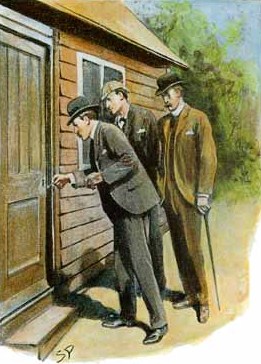
Sherlock Holmes seeks someone without the internet. Image credit: Sidney Paget (1860 – 1908), Strand Magazine, public domain, via Wikimedia Commons

Somehow Inevitable

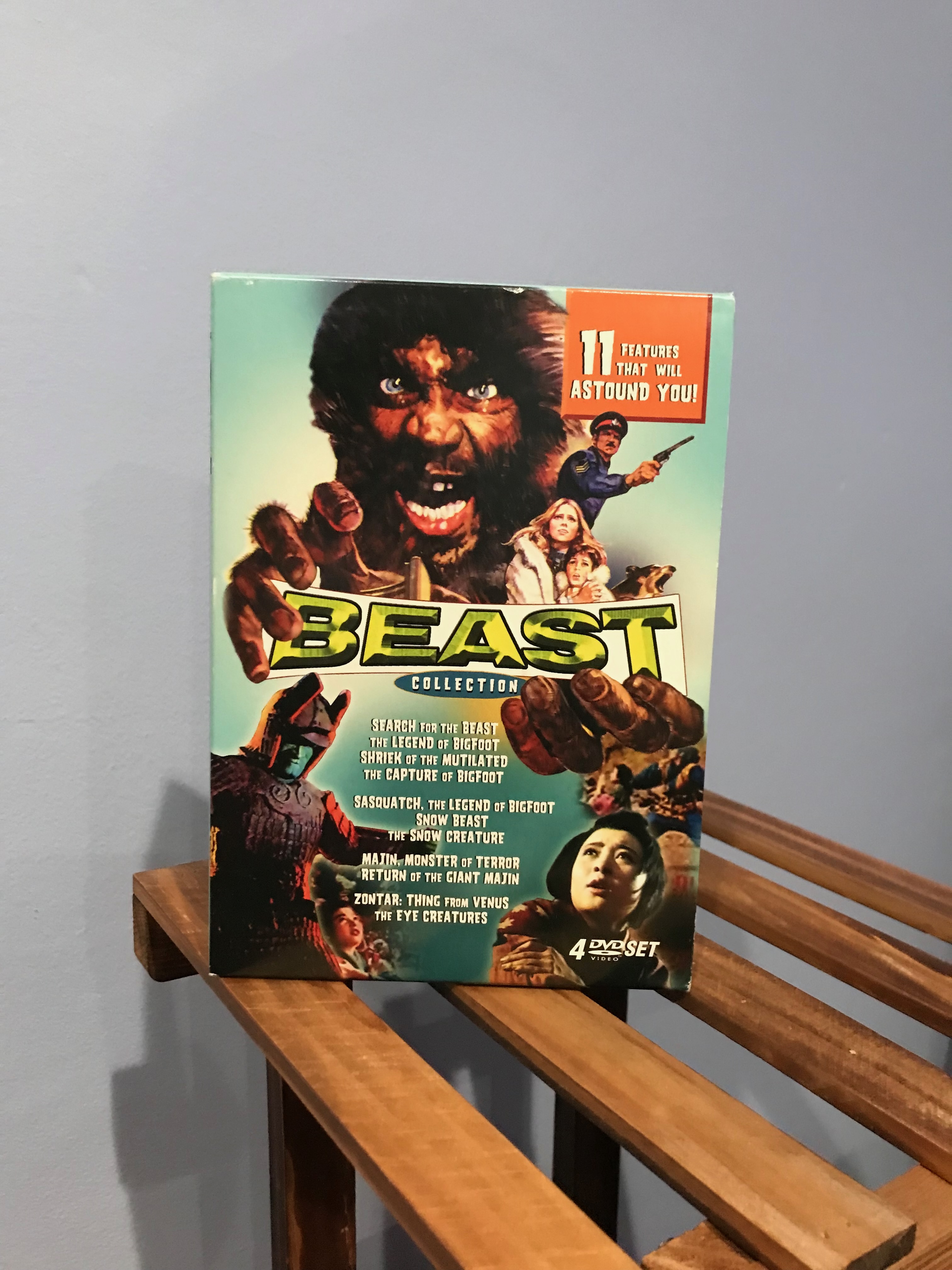
You had to expect me to write about Zontar: Thing from Venus.  I bought the “Beast Collection” set to see it many years ago.  In those days I tried to watch the movies through, in order but I didn’t make it through the first disc, even.  Well, now my perspective has changed—I figured I bought this to see Zontar, and Zontar I must see.  You do know that he controls people, right?  Zontar is a notoriously bad movie.  I saw it on television as a kid, and it may have even been close to the first run since it was made for television.  It’s actually a remake of a cheap Roger Corman movie, so it is a cheap remake of a cheap original.  Nostalgia, however, does funny things to a guy.  Although I saw it half a century ago, I remembered some lines precisely.  Television does funny things to young minds after all, I guess.

In case none of the injectapods has found you yet, it goes like this: Zontar, from, well, Venus, is a bat-like monster with three eyes.  He befriends an earthling outsider scientist, through laser communication, and commandeering a satellite, which becomes a passable flying saucer, lands in  a cave from which he takes over the small town of Jackson, which has a military base and plans to take over by having a general assassinate the president.  Meanwhile, his scientist friend directs Zontar to the four people that he needs to take over the world: said general, the sheriff, the mayor, and his best friend scientist, Curt Taylor.  Things don’t quite go Zontar’s way, despite most of the movie’s running time showing him totally in control.  It feels like it’s a lot longer than its 80-minute running time.

Still, I have to agree with the TV Guide review that says it isn’t as bad as everyone says.  Yes, it is a bad movie but it does have a few redeeming features.  Some of the scenery is nice, and you even begin to care for some of the characters.  The rogue scientist’s wife—despite her constant nagging—is the first person who tries to kill Zontar, and she does this for love.  When Zontar gets her you feel a little sad.  At least I did.  You see, the injectapods haven’t reached me yet and I still have human emotions.  Ironically, it is just such things that drive me to rewatch movies like Zontar all these years later.  And the movie ends with a voice-over moral of the story.  Those 80 minutes weren’t completely wasted.


The Search Continues

This movie’s so bad there’s a backstory.  Years ago I was really wanting to see Zontar: Thing from Venus.  This was before streaming, and I found it as part of the “Beast Collection,” a set of 11 movies for less than the price of one regular first-run DVD.  I watched a few other movies in the collection, but before long it got shoved to the back of a shelf and forgotten.  I remembered it recently because another collection I have was missing a movie, Snow Beast.  I wondered if it might be part of this otherwise forgotten set.  It was (this really encouraged me because maybe my memory is still much better than I sometimes suppose).  In any case, one of the other movies—one I’d never seen—was Search for the Beast.  I figured, why not?  This is a film that fails on every level.  And I mean every single one.  It really should merit a Wikipedia page, just for being so bad.

So, a professor in Alabama goes in search of the beast in the Okaloosa mountains.  The budget for the movie must’ve been a matter of pocket change.  Anyway, the beast has been “killing” anyone who ventures into the mountains and the professor wants to prove it exists.  He’s backed by a guy with money, who isn’t explained at all, and his university office is less well equipped than an average undergrad’s dorm room.  He takes a female grad student with him but his financier, unbeknownst to the benighted professor, hires a bunch of beefy guys with assault rifles to go along, although they’re only going to take pictures.  Of course the professor sleeps with the grad student but then the head of the tough guys kidnaps her as the beast kills off the tough guys’ heavily armed posse.  Turns out the local hillbillies are, apparently, trying to mate the beast with the women who come into the woods.  It’s worse than I’m describing it.

There is some chatter on the internet about this groaner, so I’m sure that I’m not the only one who’s seen it.  Someone recently asked me how such movies even get made.  Well, anyone with a camera can shoot a movie.  Of course, getting paid screen time (or video distribution) is another story.  I doubt the makers of this film made much money off of it, but since other suckers like myself have discussed it online, the producer, director, writer, and actor Richard Arledge, has the last laugh.  His work is being talked about, no matter if nobody has a good thing to say about it.  Of course, I wouldn’t have ever seen it at all, if I hadn’t had a hankering for Zontar: Thing from Venus all those years ago. 


CSI: Backyard Edition


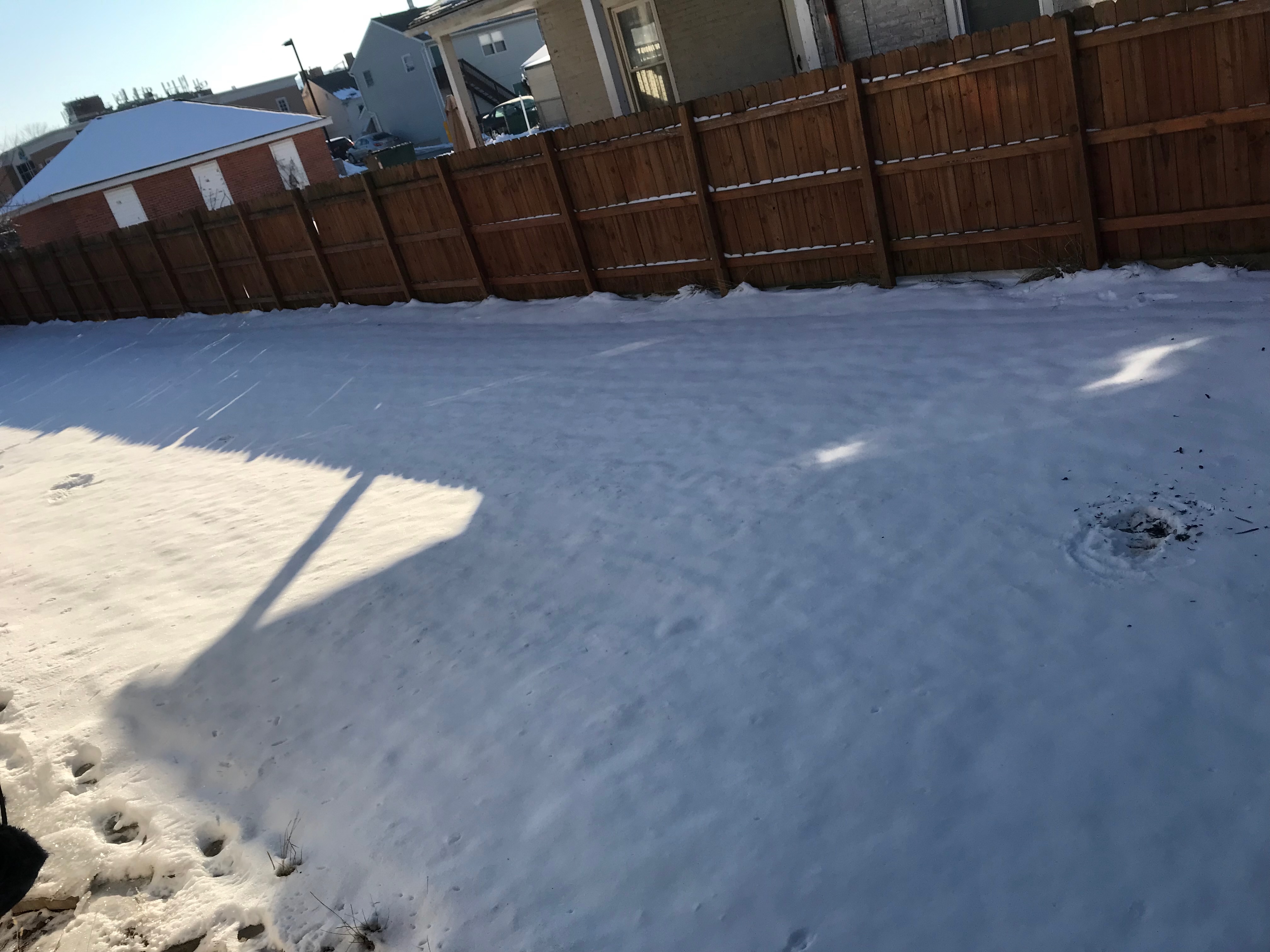
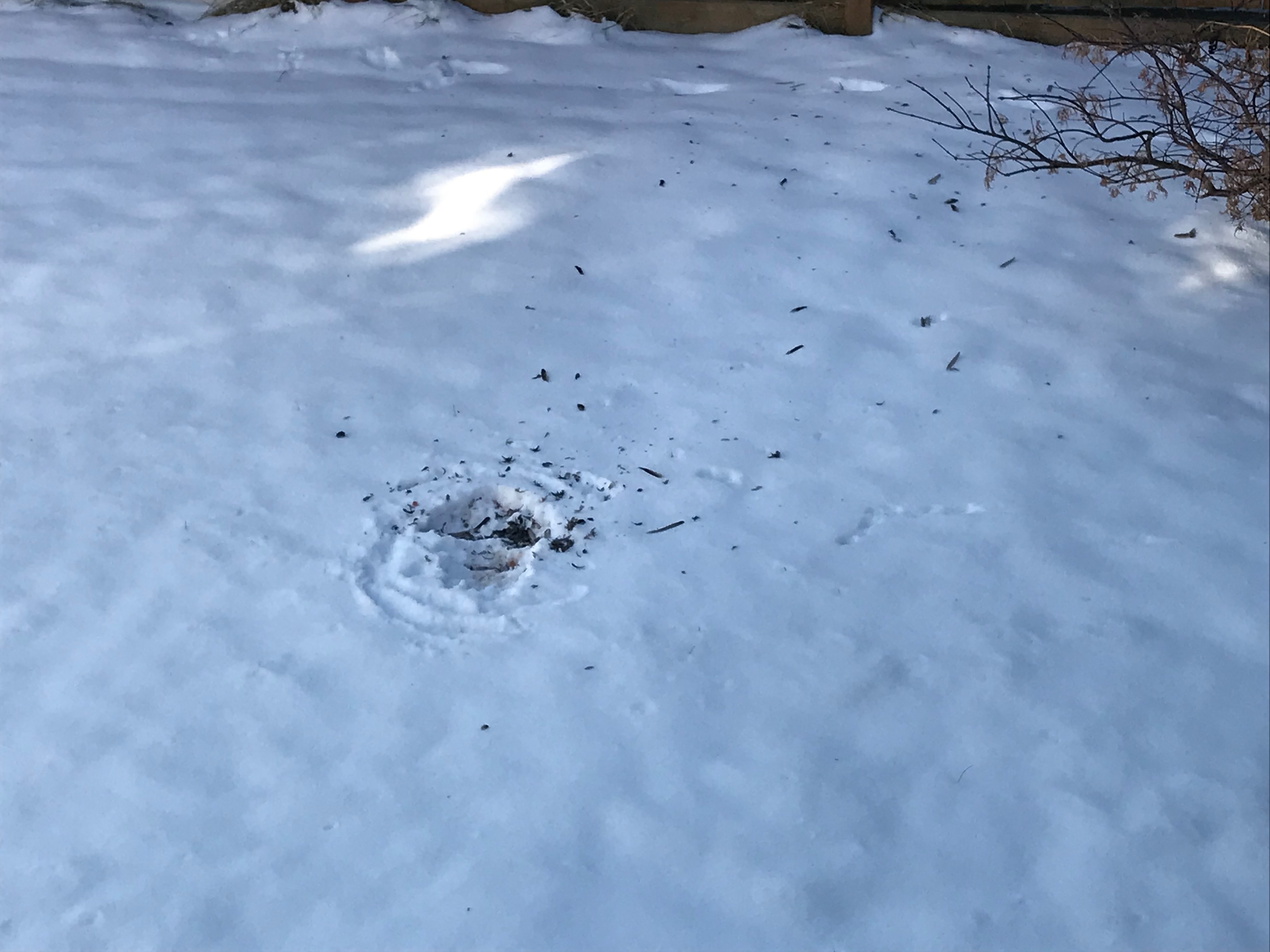
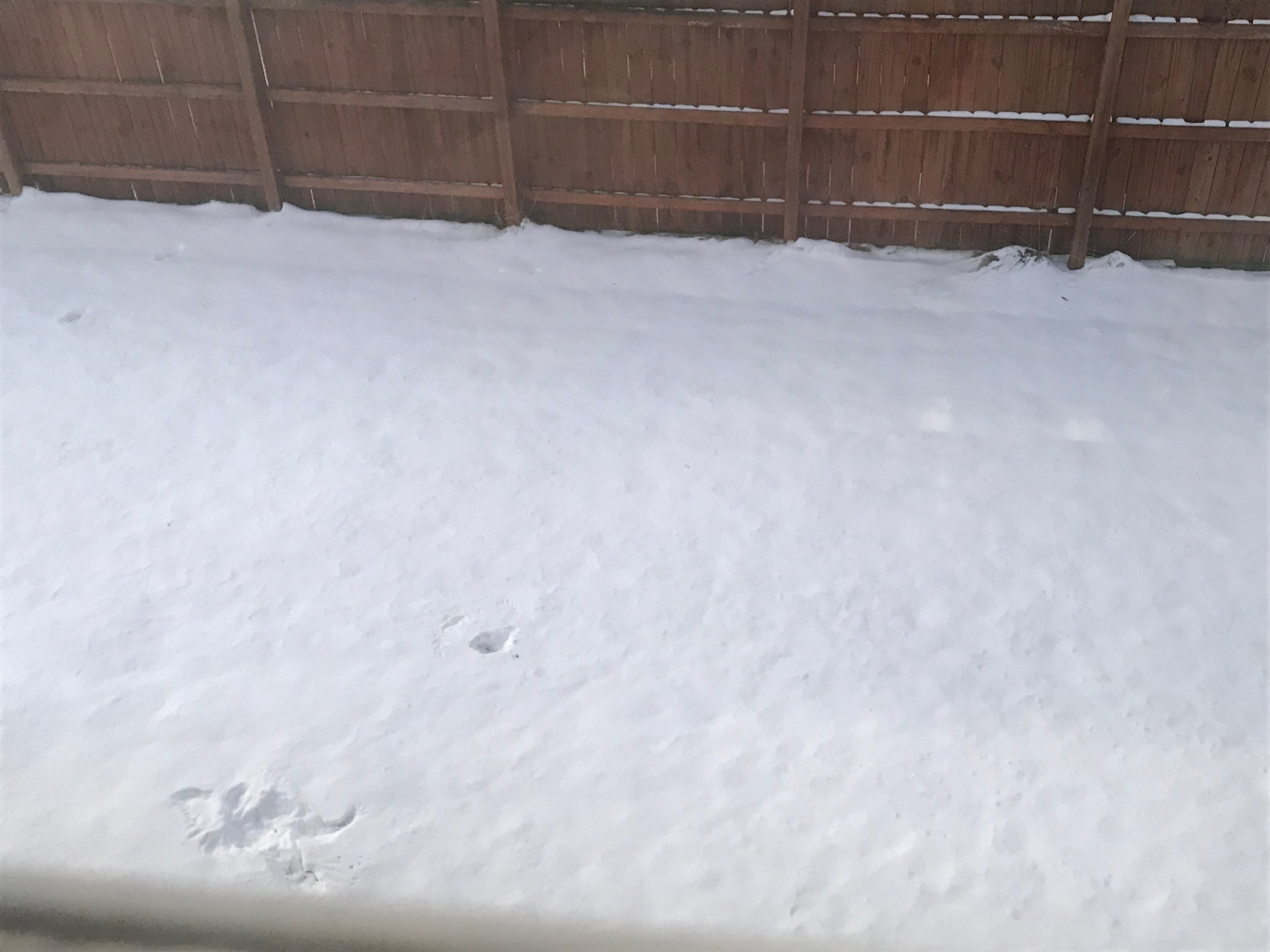
Dateline: January 24.  Location: Backyard.  It was clearly a crime scene.  There were prints in the snow.  Blood.  Signs of a struggle.  The marks hadn’t been there the evening before, so I knew I was looking at a recent offense.  Two indentations in the snow, about 10 yards apart.  Too far for a small animal to have leapt.  A third impression, closer to the second.  Clear feather imprints in the snow.  Earlier on the day in question, I had observed a hawk in the white pine across the street.  Two angry blue jays strafed the interloper, but he appeared unintimidated.  He fluffed his feathers and surveyed the area, including, I presume, my back yard.  In his own time he left, in an unmarked flight.

In the morning, rabbit tracks.  The first impact had been violent.  Debris had been raised from under the snow blanket and scattered toward the southwest.  No footprints leading away from the site.  This led me to conclude the victim had been lifted into the air.  But why the second impact site?  There had been a struggle.  The victim, presumably of the Lepus genus, had tried to make a stand.  The second impact site had bits of blood toward the west.  Neither of these first two scenes of investigation bore any indicative hints to the identity of either the victim or the perpetrator.  I did not have the means to test the blood.  No tracks led from either impression.  The third site clearly involved a struggle.

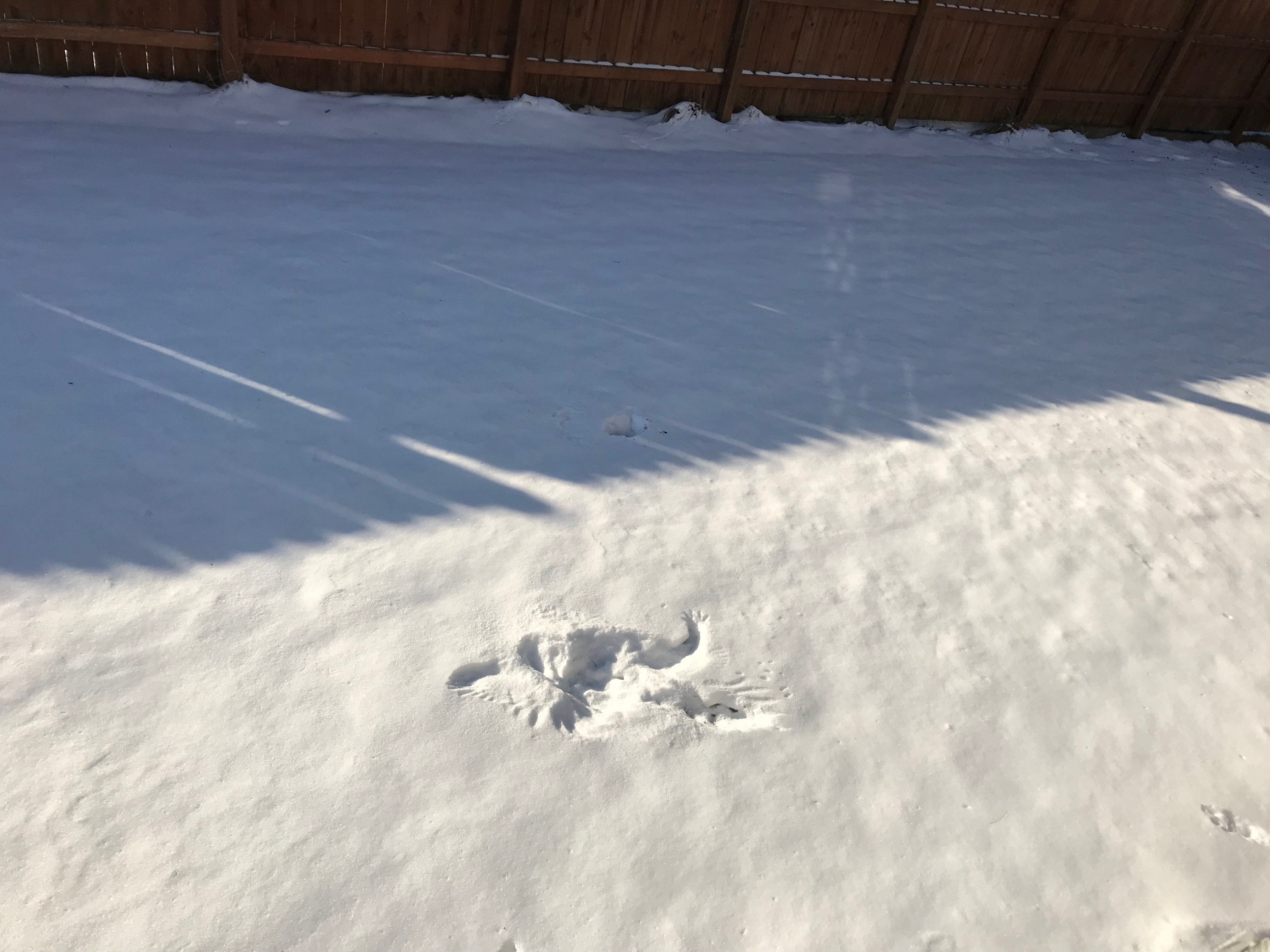
Impressions of feathers, spread at least two-thirds of a meter across, remained clearly visible in the snow.  Between these wing prints evidence of a scuffle.  Perhaps an argument ensued.  No feathers or fur remained on site.  I had to piece this together before the snow began to melt.  What I am labeling site 1, the initial strike, was near a bush under which rabbits are frequently observed to rest.  A hawk, confident of its ability, swooped down in the night and apprehended the rabbit.  The victim fought back, enforcing an unscheduled landing.  Site 2.  Blood was drawn.  Site 3 was an easy rabbit’s leap from site 2.  Perhaps the rabbit escaped.  The wing and claw marks on the snow suggest that the victim did not survive this third attack.  No solid physical evidence could be recovered.  It was just too cold outside to go and look personally.  I am not paid enough to do that kind of work.  Or I could have it backwards.  Site 3 could be the initial strike, but my reconstruction seemed more likely  Either way, the backyard would, however, never feel safe again.


Meanwhile, on Earth

Low budget doesn’t always translate to cinematic disaster, but in The Crater Lake Monster, it unfortunately does.  I have a soft spot for those who attempt to make movies but don’t succeed the way that they’d hoped.  The Crater Lake Monster is poignant in that respect as the production company, Crown International, apparently messed up the financials and insisted on cutting scenes that helped to make a bit more sense of the story.  The actors are certainly not those at the top of their game, but the stop-motion plesiosaur isn’t half bad.  The story itself doesn’t seem to support its tonnage, however.  A meteor crashes into Crater Lake (not the famous one).  Some months later a monster begins attacking people after it eats up all the fish.  There are a handful of characters who are concerned, and some just casually passing through.

The sheriff, at first skeptical, becomes a believer after seeing with his own eyes.  The doctor, who examines a victim’s body, thinks there’s something in the lake.  A couple passing through on their way to Vegas see the monster up close and survive, but their trauma is so great that they can’t talk about it.  A pair of guys who rent out boats to fishers are having trouble because there’s no fish left.  And a pair of archaeologists from “University Extension” insist that the creature should be kept alive since, well, you don’t often come across dinosaurs.  They also figure out that the hot meteorite incubated a fertile plesiosaur egg that had been at the bottom of the lake for millions of years.  There’s even a story of a liquor-store robber thrown in.  The robber’s only tied to the plot by getting eaten by the monster.  The monster is finally killed by the sheriff with a bulldozer.

Some of the people that worked on this film, especially the stop-motion crew, had some recognizable chops in the biz.  One of them had worked on that childhood Christian kids’ show Davey and Goliath, and another was concurrently working on Star Wars and went on to work on Jurassic Park.  Meanwhile, Crater Lake is so bad that it’s a bit surprising that it hasn’t really become a cult classic.  Creature features are a guilty pleasure.  With a bit of coaxing, and financing, this one might’ve been made passable.  Who doesn’t like to see the underdog achieve some success?  Of course, it did come out the same year as Star Wars, with its budget, and clearly couldn’t compete down here on Earth.


Bottoming Out?

It was an honest mistake, I swear!  I had remembered reading in Stephen King’s Danse Macabre that The Creeping Unknown was worth seeing.  I’d known about this movie under the title The Quatermass Xperiment since I was a tween.  The problem when you grow up with no money in a small town is that you don’t have access to such things.  Then a friend gave me a DVD of The Creeping Terror.  I thought it was The Creeping Unknown.  The disc hadn’t spun too many revolutions before I realized I was watching what may be the worst movie ever made.  Many reserve that for Plan 9 from Outer Space, but believe me, this is much worse.  The story of a couple of aliens sent to eat people to transmit to their superiors what our weaknesses are, it seemed to me that the main weakness is nobody thought to run from this slow-moving monster, except one guy who just abandoned his girlfriend to it. (Apparently girls don’t run.)

Like that other baddie, The Beast of Yucca Flats, the audio was not preserved so nearly all of the film is a voice-over by an authoritative-sounding announcer.  There are a few dubs, but they aren’t well done.  And then extended scenes of young people at a dance (have you ever heard of just filling up time?) are intercut with perhaps the slowest monster attack in history.  There’s so much not to like here.  The poor acting.  The plot nearly as dimwitted as Trump.  The stock footage of a rocket launch run backwards to make it look as if it’s landing.  The sheriff making out with his wife in the patrol car while “on a break” from looking for the monster.  The instrument panels from beyond our galaxy with Arabic numerals and Latin letters.  You find yourself hoping for the Apocalypse so you won’t have to watch the rest, and it’s only 74 minutes long.

Somehow it comes as little surprise that the director (also producer, editor, and star), under the name Vic Savage, disappeared never to be heard of again.  The film’s main financier, had to try to put the movie together for release.  (He also had a role in the movie.)  There is, as I’ve mentioned often before, an aesthetic to watching bad movies.  I’ve ended up seeing many of “the worst of all time” in my spate of movie viewing over the past three or four years.  This is the first time it has happened by mistake.  I do have to say that it’s easier to appreciate a bad movie when you can see that it’s coming and prepare yourself accordingly.  The Creeping Unknown remains elusive.