Lost Decade

The nineties, it seems, got away from me.  Personally, they started with living in Edinburgh with my newlywed spouse. We had no television and no money, and limited time to finish my degree.  Then we landed at Nashotah House for the remainder of the decade.  Our daughter was born, and we settled into the role of new parents as the world went on around us.  The internet hadn’t made its way to that part of Wisconsin and television reception was quite poor.  Now bear with me as I’m trying to reconstruct things.  Twin Peaks ran from 1990 to ’91.  We were in Scotland at the time and had no television.  Northern Exposure (’90 to ’95) started a few months later, and was still running when we returned to the States.  We began watching it because family recommended it, mostly on VHS.  Some family members had watched Twin Peaks, but it was darker, and we opted for lighter fare when we could see TV.  (I hadn’t undergone my horror reawakening yet.)  Then came Picket Fences (1992 to ’96), which I still haven’t seen.  The X-Files, original run, broadcast from 1993 to 2002.  What a decade to lose!

Northern Exposure and Twin Peaks had some things in common, I noticed as we watched the latter, but then they ran at about the same time.  It also seems Twin Peaks and The X-Files shared some secrets.  I can’t say about Picket Fences, but it seems that speculative elements infiltrated these nineties shows.  What’s more, they all received critical acclaim.  I would feel like I lost much of the nineties, except that I was having a great time being a parent.  Although Nashotah House rubbed me the wrong way, I was employed doing what I had pictured myself doing.  Wisconsin was a beautiful state and offered lots of outdoor opportunities, particularly when it wasn’t forty below outside.  What I really lost was pop culture of the nineties, living in a monastic setting.

I recently discovered that I’d also missed much of the music of the nineties.  I’m not a radio listener.  Too many distractions—I can’t listen to music when I write, let alone with some announcer talking.  I don’t listen to music when I jog because I find the natural world so interesting.  It occurred to me just a few months ago that I had very little knowledge of 1990s rock. (Not the preferred genre at Nashotah.)  Some of it is pretty good, I’m discovering just now.  Like a typical academic, I began to shut out the outside world when working on my Ph.D.  Now I spend my time trying to catch up.  Not that I have much time to watch television, or listen to music, but I hate to miss something that everyone else seems to know about.  Then, of course, after the X-Files, Lost ran from 2004 to 2010 and we didn’t catch that either.  Maybe I missed the first part of the new millennium as well…

Photo by Everyday basics on Unsplash

Yucca

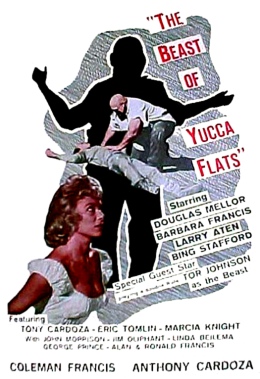
Yucca Flats isn’t the kind of place you’d like to vacation.  Not only is it highly irradiated by nuclear testing, it’s also a place where police shoot at innocent people.  The only salvation seems to be that they’re terrible shots.  Oh yes, and there’s a Russian scientist transformed into a beast by an atomic bomb blast.  As you can tell, I’ve just been to Yucca Flats.  In movie-land, of course.  The Beast of Yucca Flats, yet another candidate for the worst movie of all time, really worked hard to obtain that title.  The movie did make me curious about Coleman Francis, however.  Like Ed Wood, he tried to make his way in the rather unforgiving movie world with tiny budgets and even less native talent.  The number of scenes where guys had their butts to the camera alone raises all kinds of questions.

The numerous contradictions in such a short movie—less than an hour—and the long scenes that add nothing to the plot are signposts that we’ve entered the twilight zone of B movies.  Famously filmed without sound, the incongruous dialogue later added as voiceovers, adds to the surreal atmosphere.  The movie shares Tor Johnson with Ed Wood.  And also, apparently, a sincerity betrayed by lack of ability.  The cult status of movies like this signal hope for those who try to make their own way in a world enamored of big budgets and large crews.  It would help, though, if Francis had a clear story to tell.  He does seem to have Luddite tendencies, and he condemns violence even as he has a sheriff’s deputy literally “shoot first and ask questions later.” 

The movie has a couple of moments of cinematographic finesse.  The moment when Lois Radcliffe approaches the car, shot from the interior, when Hank lays his arm across the door, made me think something better might be coming.  Tor Johnson wasn’t the most gifted actor, but he always seems to have fun with his roles, being cast as a hulking monster.  It’s too bad he doesn’t have a bit more screen time in this, his last movie part.  He kinda makes me want to hunt down some of his other appearances beyond the Ed Wood films I’ve already seen.  There’s a story here, I expect, that really hasn’t been told.  There’s an entire world—a twilight zone—outside Hollywood where producers with no budgets but a passion for making movies plied their trade.  Their efforts, as paltry as the results may be, suggests there’s more to the movie world than it might seem.


Small Things Grow

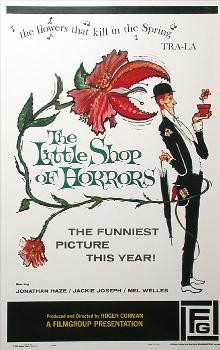
I’ve always been fascinated with origins.  I guess I’m a kid who never grew up.  Now that I’ve turned my attention to movies, I sometimes wonder about the origin of the story.  For example, The Little Shop of Horrors.  I first saw the musical movie version of 1986.  It was cute, and employed horror themes like the Rocky Horror Picture Show from the previous decade.  Then, when Roger Corman died, I read that he’d filmed the story back in 1960.  Curiosity compelled me to watch the original.  Like its remakes, it’s comedy horror, or horror comedy.  But beyond that it’s a literal farce.  Roger Corman was a showman, and that means he tried different things to entertain.  One of them was Little Shop.  The idea of the plot you probably know, but I couldn’t remember the ending as I sat down to view it.  After all, it’s not meant to be taken seriously.

I have to say that the music makes it better in the remake.  The endless malapropisms and burlesque humor are funny, but really in the original they are presented as low comedy.  The Jewish humor was early on I feared might be anti-semitic, although not intended that way.  I empathize with Corman.  It took him nine months to find a company to release the film.  Ironically, it attained cult status after being double-billed as the B movie with Black Sunday, which was a quite serious attempt at horror.  Camp has a way of living on in cult status.  Of course, the early bit part for Jack Nicholson didn’t hurt.  It isn’t bad for a bad movie.

The idea of people-eating plants is a reasonable approach for a horror story.  (I’ve used it myself.)  Plants move very slowly, however, which is one reason that the idea’s hard to accept.  Even The Land Unknown had used the idea three years earlier.  But the seed was planted.  The idea of the film lead to an Off-Broadway show, which led to the more famous movie.  Then it reopened off-Broadway and a reboot was planned (but currently seems to be on ice).  Not bad for a movie based on a desire to reuse a set that was scheduled to be torn down, and then shot in two days.  Classic Corman.  The result was a bad film that is still fun to watch all these years later.  I did miss the musical numbers, however.  When you plant seeds, you never know what might grow.


Or Plastic

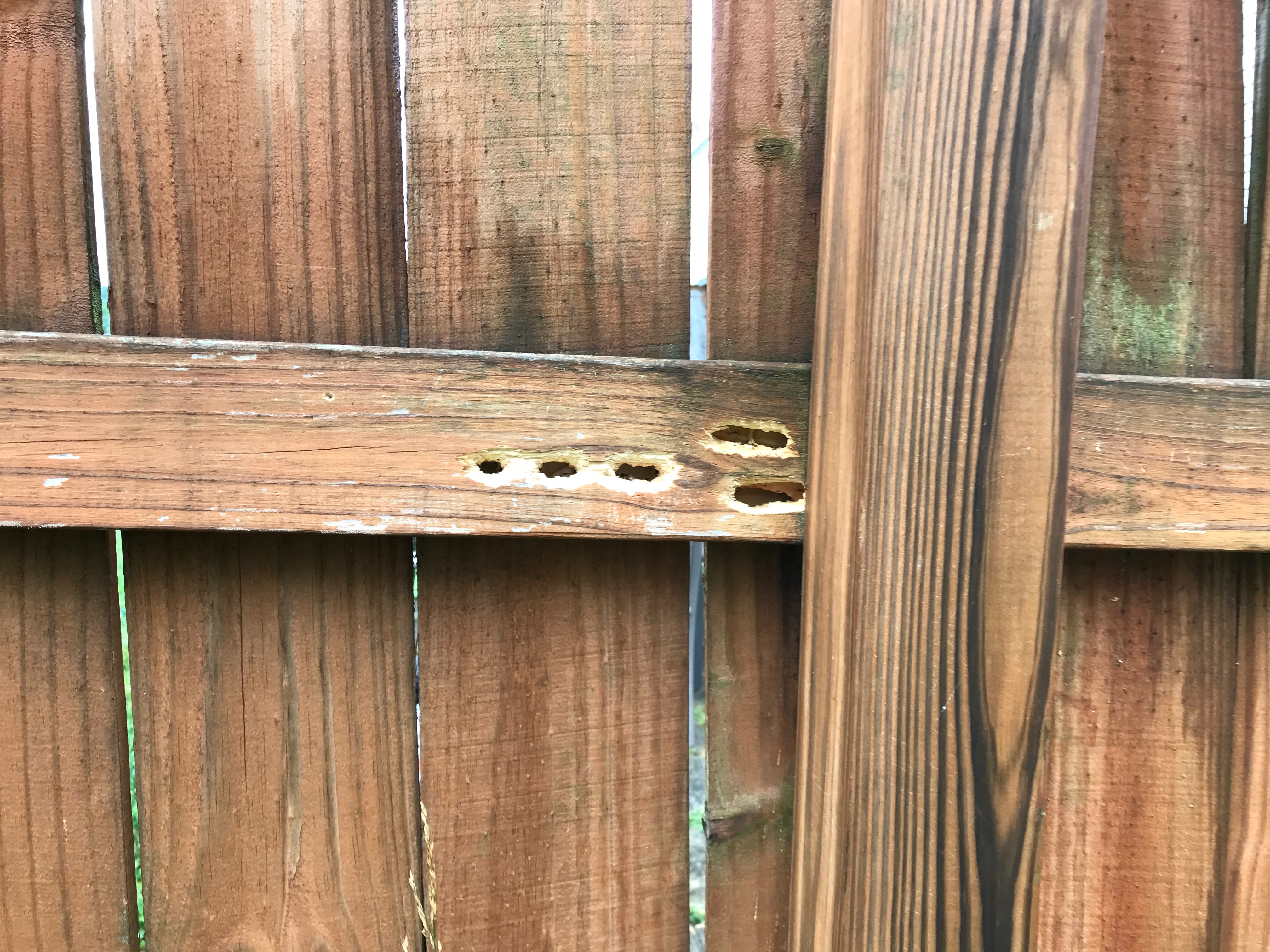
I’m no fan of plastic.  When looking for a house a non-negotiable with me was vinyl siding—nope.  In our neighborhood several houses have plastic fences pretending to be wood. I dislike materials pretending to be something else.  I was dead-set against such a thing, but our house came with a lot of neglected outdoor woodwork.  The fence was wood and had been stained, probably just before we moved in.  Then the carpenter bees arrived.  Local pest control will spray for them, but they come back each summer and unless we have the pest store on speed-dial the bees will find new things to damage.  See, the problem isn’t just the bees.  Woodpeckers, which as a kid always seemed exotic to me, love carpenter bee larvae.  I’ve watched a downy woodpecker hoping along the fence, knocking until it finds one, and then hopping a few feet further to repeat the process for another.  (If you’ve ever watched a woodpecker at work you’d not doubt animal intelligence.)

My wife and I talked it over.  The fence was in poor repair to begin with (another thing our house inspector missed).  I finally came around to seeing why plastic might be the best solution in our case.  Not for me, but for resale value.  The former owners had a thing for untreated outdoor wood.  They’d built a new back porch, but didn’t paint or stain it.  When the carpenter bees noticed, I painted it.  I couldn’t reach the ceiling, though, being short of stature.  Well, this year the carpenter bees have gone for the ceiling.  And the downy woodpeckers have followed them.  Now, when I hear knocking, I have to run downstairs to the back door to frighten off downy.  I will buy a paint sprayer to paint the ceiling, but the bees have had a head start this summer.

So I was in my office and I heard a tapping, as of a woodpecker gently rapping.  I ran downstairs and threw wide the door.  To my surprise, nobody was on the porch.  I went back to work.  Soon again I heard a tapping somewhat louder than before.  I followed my ears to the front door.  Yes, the tapping was from out front but daylight there, nothing more.  I stepped to the edge of the porch.  More tapping.  I leaned over the railing and looked down.  A rare, and large, pileated woodpecker was going at the fence post.  I was about as startled as she was.  My wife was out on an errand and when she returned home she found selfsame woodpecker working elsewhere on the fence.  I’ve learned my lesson.  While wood looks nice, and is natural, it will soon be paper thin if we don’t do something.  It’s a big fence.  And the only option to paper is, unfortunately, plastic.


Passing Words

I’ve never counted, but it must be dozens.  Maybe a hundred.  And they have very high memory requirements.  Especially for a guy who can’t recall why he walked into a room half the time.  I’m talking passwords.  The commandments go like this:

You can’t use the same password for more than one system/platform/device/account

You can’t tell anyone your password (duh!)

You can’t write it down

You can’t send your password to someone electronically (duh!)

You must logoff your device when it’s unattended

You will be held responsible for anything done under your login

The word of the Lord.

Now, how much more ageist can you get?  I’ve never counted the number of passwords I’ve had to generate for work alone but I can’t remember much without writing things down.  Even the chores after work.  I hear that there are “keychains” you can get that remember your passwords for you.  I suspect you need a password to access your passwords.  Replicate the commandments above.

I know internet security is serious business.  My objection is that you’re not supposed to write any of this down.  I carry a notebook around with me (it has no passwords, so please don’t try to steal it) to keep track of everything from doctors’ orders to how to call the plumber if there’s a leak.  I can’t remember all that stuff.  Some of it is personal information, but with everything you’re expected to keep in memory these days—at the same time we’re unleashing AI on the world—is madness.

A friend pointed out that AI books are written without authors.  If I remember correctly, my response was “AI has great potential, but let’s leave the humanities to humans.”  I hope I’m remembering that correctly, because I thought it clever at the time. I wish I’d written it down.  Those who make the rules about passwords aren’t as close to their expiration date as I am.  My grandmother was born before heavier-than-air flight took place and died after we’d landed on the moon.  Guys my age regale their kids (and some, their grandkids) by telling them telephones used to be attached to walls and you could walk away from technology at will.  Now it follows you.  Listens to you even when you’re not talking to it—our car frequently interjects itself into our conversations.  At least she isn’t asking for a password while I’m driving.  I couldn’t write it down.  Our love affair with technology is also driving.  More often than we suppose.  It’s driving me too… driving me crazy.


Camp Tingler

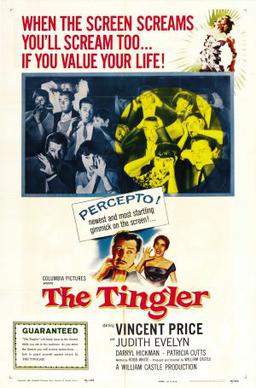
I don’t remember in which magazine where I saw the still, but I was immediately intrigued.  I didn’t know the movie it was from and in the days before the internet, when you live in a small town, avenues for finding the answer were few.  I just knew it was a photo of a woman in a bathrobe next to a bathtub filled with some opaque fluid (presumably blood), from which a hand was reaching out to her.  Or at her.  I don’t even recall when or how I learned that the scene was from the gimmick-driven William Castle film, The Tingler.  I’d heard of the movie before, but I hadn’t connected the scene with it.  No matter how you slice it, the story of the movie makes no sense.  That doesn’t stop it from being fun.  I’ve seen it before but had to refresh my memory.

I hadn’t recalled, for example, that Dr. Chapin (Vincent Price) uses LSD to try to get scared.  While the dialogue isn’t great, there are many observations on fear and how adults outgrow it.  Chapin wants to find the physical root of fear and drops some acid (apparently the first cinematic depiction of LSD use) to enhance the experience.  Although it’s crucial to the plot, I also didn’t remember that Martha Higgins can’t hear or speak.  Interestingly, she co-owns a silent movie theater and she’s a silent character in a sound movie.  She’s also the only character involved in the two color shots in a black-and-white film.  She remains in grayscale herself in these scenes.  In other words, there is some sophistication here.  And of course, Vincent Price was always classy.

Camp is an aesthetic that I appreciate but, like a tone-deaf person, don’t always recognize.  The Tingler has become a camp classic.  Many people know that Castle had vibrators installed in select theater seats so that some audience members would “tingle” at appropriate places.  This was the “Percepto” advertised with the movie.  Having himself introduce the film as too terrifying—echoing back to Frankenstein in 1931—Castle guaranteed the movie wouldn’t be taken seriously.  There’s nothing scary about this horror film.  Speaking for myself, I spent too much time trying to figure out what happened to poor Mrs. Higgins—yes, her husband’s trying to scare her to death but then she has hallucinations as if Dr. Chapin gave her the LSD instead of taking it himself.  It doesn’t make sense, but it’s fun.  I guess that’s the definition of camp.


Fear of Big Books

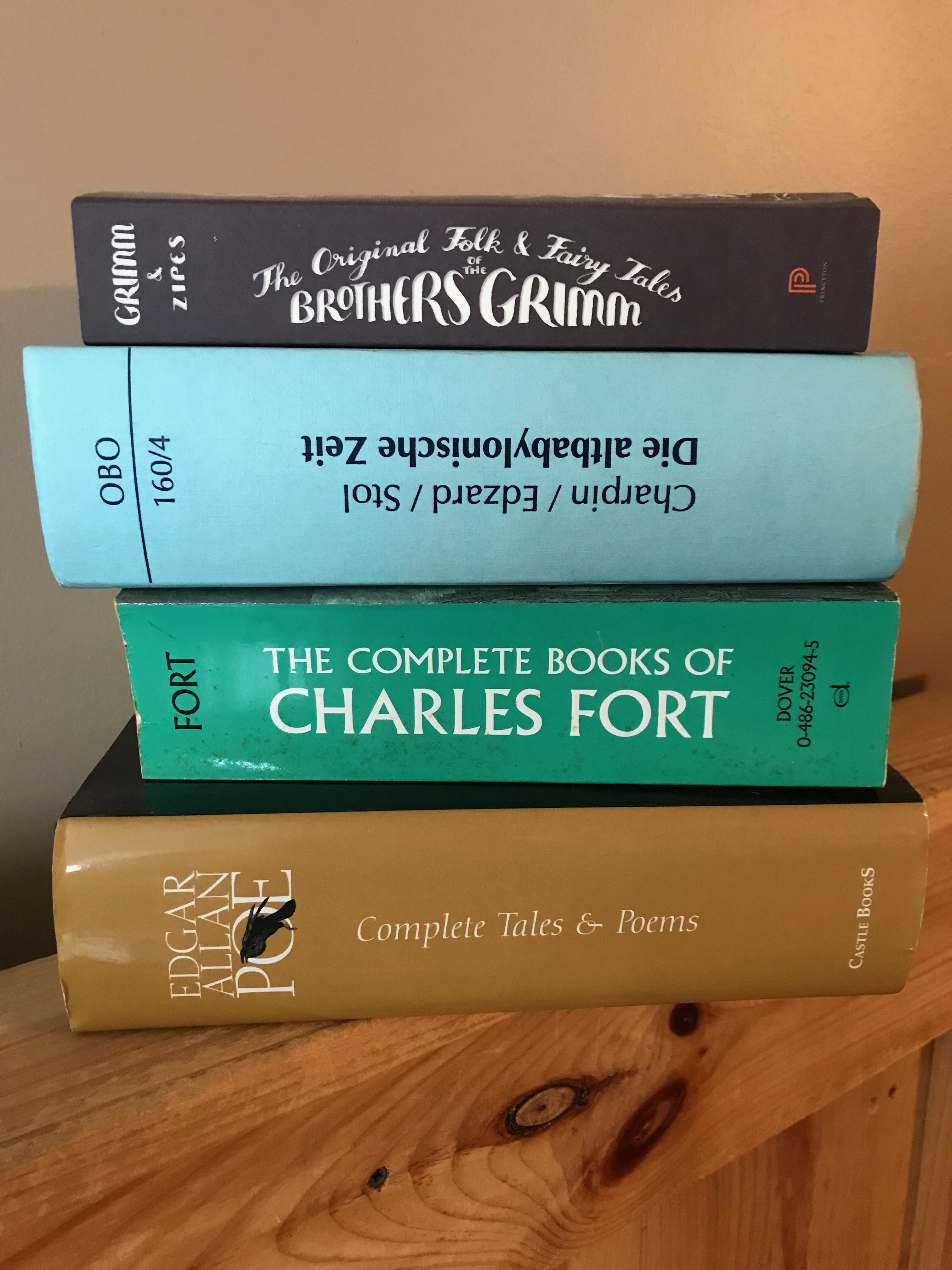
I have to get over my fear of big books (I can’t find an official name for this and so I’ll coin machrysbibliophobia—and why did my autocorrect replace this with machrysbibliophobmia when there’s no such word?  It’s a scary world where my fears go unnamed—go, aporripsophobia!)  I’ve read many large novels with payoff (several by Stephen King and Neal Stephenson) and plenty of nonfiction from which I’ve learned a ton (perhaps literally).  But still, when a book I really want to read is big, I tremble.  I try to decide how to justify the time.  Now, I know I don’t have to justify time reading—that’s a constant activity.  I think it’s more a question of caesura, places to stop and perhaps claim credit for work done.  I’m not a fan of multiple volumes since that drives prices up.  Maybe just say it a bit more succinctly?

In my case—and I can only speak for myself—it’s all about a sense of accomplishment.  The distinct, discrete book that I’ve jammed into my gray matter along with its companions.  Some of us are driven by the shot of joy that accompanies completion.  I have a few compendia of authors/genres I really like.  I dip into them but never quite seem to have the time to finish them.  You see, recently watching the X-Files got me thinking about Charles Forte.  I have a compendium of his four books and I read Book of the Damned right through.  But I’ve got three more to go.  How are you supposed to count that on Goodreads, without its own ISBN?  Or the collected fiction and poetry of Poe.  It’s nice to have it all in one place, but will I ever read it cover-to-cover?  I tried once, really I did.

Scary books

As I write this I just started a big book.  It’s on a topic I really find fascinating but I’d been putting it off for some time because of my machrysbibliophobia.  I’ve been entrenched from before page 1.  I know it’s going to take me quite a long time to finish it—I have a job that takes its pound of flesh daily, and even when I do get a day off, well, mowing season is here.  And the porch needs painting again.  Maybe if non-Catholic monasteries were a thing I’d have time to devote to the reading I really must get done before my time’s up.  I like big books, but I’m also afraid of their ramifications.  Enough so even to name my fear.


Tech Warning

My moon roof is open.  That’s what the late-night alert says.  Thing is, I don’t have a moon roof.  Maybe I should go out to the garage and check, just to be sure.  You see, these new cars, which are as much computer as they are a means of conveyance, are subject to glitches just like the computers at work always seem to be.  And if this is true of a massive and lucrative company like Toyota, how can the rest of us really trust what our devices tell us?  After all, mainly they exist to sell us more stuff.  So whenever we take the Prius out, after it’s put away I get some kind of warning on my phone.  Nearly every single time.  If somebody’s been sitting in the back seat—or even if a bag was resting there—I’m cheerfully reminded to check the back seat once I get into the house.  I appreciate its concern and when I grow even more forgetful I may need it.  But that moon roof…

I use and appreciate technology.  I believe in the science behind it.  It makes life simpler, in some ways.  Much more complex in others.  I confess that I miss paper maps.  Do you remember the thrill of driving into an unknown city and having to figure out how to get to an address with no GPS?  Now that seems like an adventure movie.  Our cars practically—sometimes literally—drive themselves.  I’m no motor-head, not by a long shot.  I do remember my first car that didn’t have power steering or power brakes.  It had a stick-shift and you had to wrassle it at times.  Show it who was in charge.  With technology we’ve all become the serfs.  It breaks down and you have to take it to an expert.  Not quite the same as changing a tire.

I worry about the larger implications of this.  As a writer I worry that my largest output is only electronic.  Publishers don’t seem to realize that those of us who write do it as a way of surviving death.  We have something to say and we want it etched in stone.  Or at least printed on paper.  Tucked away in some Library of Congress stacks in the hopes that it will remain there for good.  I often think of dystopias.  The stories unfold and ancient documents—our documents—are found.  But unless they get the grid up and running, and have Silicon Valley to help them, our electronic words are gone.  It’s as if you left the moon roof open, even though you don’t have one.


Too Much TMI

Okay, okay.  I admit I get overwhelmed.  There’s just too much stuff to read.  I currently have 25 tabs open on my browser, afraid that I’ll forget about something that seemed so urgent when I opened the URL in the first place.  (Two decades ago that sentence would’ve been nonsense.)  I limit my time on social media.  This can be a death-kiss for a writer, but for sanity’s sake (and work’s), I look at Facebook for literally about five minutes a day.  (If you want to reach me leave a comment on my blog.)  In those five minutes (or less) I often come away with two or three articles that I want to read but don’t have time just now.  I open a tab and hope I’ll get to it before I lose interest.  There’s a lot of information.  Too much.  Too much TMI.

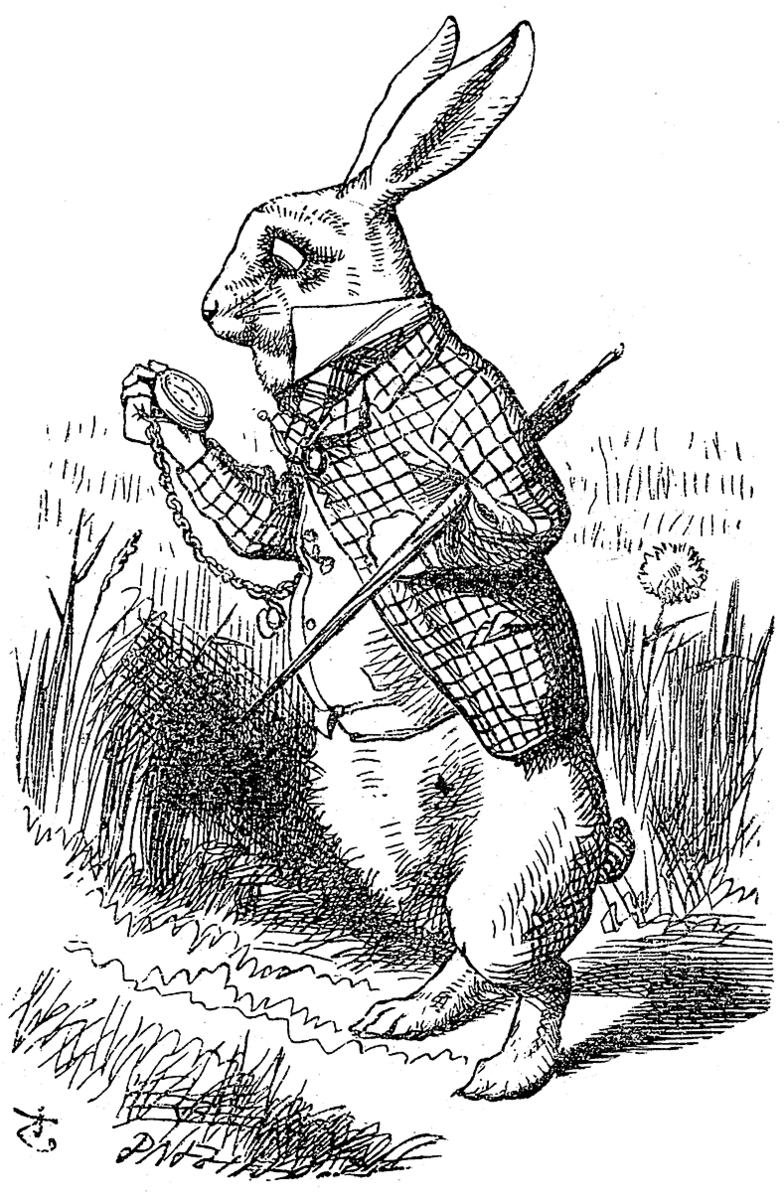
I’m a slow reader.  I sometimes wonder if I have borderline dyslexia—it once happened on a test and led me to phone a professor at night to explain—but dear reader, it slows me down.  And a writer, no matter how obscure, needs time.  I told a friend the other day that I don’t do things I enjoy, such as painting and drawing, because writing takes up so much time.  (And work does too—it gets the lion’s share.)  But those articles!  They look so important!  Some have health implications and, if you lose your health you have even less time.  The internet gives us TMI constantly.  And this field is riddled with rabbit holes.  Just ask the white rabbit about time.

Image credit: John Tenniel, public domain, via Wikimedia Commons

What are the curious to do?  I actually get an insane amount of satisfaction from closing a browser tab.  It’s a sense of accomplishment—I’ve done something that brings closure!  If I do it enough times I’ll get down to the URLs I always keep open lest I forget my place.  Some of these tabs have been open since the Obama administration.  If you’re critical of such as I you might suggest “why don’t you just read an article instead of writing about not having the time to read?”  The interlocutor here is clearly not a writer.  Or at least has different writing habits than me.  There are some non-negotiables in this world of TMI.  I suppose I’m adding to the problem.  At least if anything thinks what I present here is information.  For that I defer to Klima, who, happily, still has some time.


Mr. Bean

Edamame.  I remember distinctly the first time I had it.  I was at the house of Alvy Ray Smith, co-founder of Pixar (shameless name drop), by the courtesy of Neal Stephenson (another).  It was a book club discussion and although I don’t remember who else was there, I was certainly the least distinguished person in the room.  Someone had brought edamame to share.  I’d neither seen nor heard of it before.   I popped a pod in my mouth and began to chew.  After ruminating a few moments, I figured this cud wasn’t going to break down and when others put their—relatively intact—pods in the discard bowl, a lightbulb clicked on.  Sheepishly, I pulled my mangled pod from my mouth and slipped it, I hoped unobtrusively, into the bowl.  If anyone noticed they were too sophisticated to say anything.  Blue collar through and through.

I repressed that memory, which is strange.  I tend to remember, and replay, the embarrassing things I’ve done.  This memory slipped, however, until our daughter reintroduced me.  She was in college, or recently out, and she showed us how to do it.  When that pod hit my tongue, the memory sprang back.  Edamame has become a standard of our house since then.  In case you’re unfamiliar, you put the pod in your mouth, keeping hold of one end.  You extract the beans, generally by using your teeth as an immovable obstacle—like artichoke leaves.  Discard pod, chew and swallow.  We sometimes dress ours up with a sauce.

The last time we had edamame, however, one of the beans shot to the back of my throat while the other two laughed.  I couldn’t tell which way, but it was clear the renegade bean was going down on its own.  I spent the rest of the evening worrying that I’d aspirated a bean.  Aspiration becomes more common as you age—something about nature trying to send us a hint, I guess—but I didn’t cough at all.  No wheezing started.  No pain.  Probably I swallowed at the last possible second.  If I did it was reflex because I couldn’t think what to do.  The next day, with no ill effects, it seemed funny.  Amusing enough to remember a time when really accomplished people were interested in what I had to say.  That time has largely departed, like an empty edamame shell.  But the memory remains.  There are hidden  hazards to eating edamame, it seems.


Which Mountain?

Disney movies—and I still think of Disney primarily as a movie studio—were part of my childhood.  A small part, but there nevertheless.  We didn’t go to theaters often but we caught some movies on television (do you remember eagerly reading TV Guide to find out what was going to be on that week?).  We did watch The Wonderful World of Disney and some of their series—I recall the one ones on Daniel Boone and Davy Crocket.  Still, I missed a lot.  I didn’t see Mary Poppins, for example, until I was in college.  So the other day I got curious about Escape to Witch Mountain.  I’d not seen it as a child and never saw any reason to watch it as an adult.  I’ve been taking a break from bad movies, and, as it turns out, Disney.  So there may be spoilers below, in case you’re waiting to see it.

I didn’t know the backstory or the plot, so seeing this the first time I wasn’t sure what to expect.  The movie shows its age (I was a mere lad of twelve when it was released), but the story is interesting.  Tony and Tia are adopted but have to be sent to an orphanage.  We quickly learn that they have “powers,” and that adults like to exploit such things.  A wealthy villain has his fixer pose as their long lost uncle to get them to his house, under his control.  The children realize that they must escape to, well, Witch Mountain.  Actually, that takes some time and a sympathetic adult who can drive.  In the end it turns out that they’re aliens, not witches.

Not cheery like many Disney films, Escape to Witch Mountain, although you know it will end well, has a fair bit of tension.  Especially scary is the mob mentality that takes over the locals when they start their literal witch hunt.  Armed and dangerous, those who want to preserve the uniformity of small-town mentality are serious about their convictions.  As usual, they focus on the enemy without getting to know who, or what, they really are.  Obviously, there are larger issues to consider, as there are when anyone has an advantage.  But the kids, aliens, are sweet and mean nobody any harm.  All they want is to get back to their people.  Can humans, however, ever be satisfied knowing that there are others out there more advanced than we are?  Perhaps there’s a reason for cover-ups, after all.  Disney often says more than it’s given credit for saying.  Even if I missed it until now.


Adulting

Young professionals that I know often say adulting sucks.  Quite a bit of the time I tend to agree with them.  The 9-2-5 makes just getting along difficult, at times.  I’m sure there’s software to ease some of the woes, but you have to learn how to use it.  And that takes time.  Time I’d rather spend writing or reading.  For example, to get a small break on state taxes, if you work from home, you need to calculate your office space and then how much it costs to exist in your house for the year.  When I remember to do so, I can look utilities and mortgage up in Quicken.  Sometimes, however, when a book in my mind is distracting me I just tot all this up on the back of an envelope.  Then I need to type it in so my accountant can see it (taxes are far too complicated for mere mortals) and, I can’t underscore this too many times: numbers are adulting.

Photo by Tyler Easton on Unsplash

I’m an idea person.  The 9-2-5 (numbers!) that keeps you in front of a computer all week long means that things pile up.  Weekends seem too short to spend on numbers.  But you’ve got to balance that checkbook.  And even tot up the number of hours you give to “the man” each day.  What could be more adult than accounting?  Don’t get me wrong—at times numbers can be interesting.  Numbers, at their best, are philosophical.  One squared is one.  When you square any number greater than one, it increases.  One doesn’t.  And you can’t divide by zero and get zero for an answer, as handy as that’d be from time to time.  These abstract concepts come in useful but adulting involves serious numbers.  Numbers that imply liquidity.  Cash flow.  

Time is made up of numbers too.  If a social event comes up on a weekend, there goes your grocery and cleaning time.  And writing a book takes a tremendous amount of time.  It’s a second job on top of the other one you work 9-2-5.  All of this makes me think of those TIAA-CREF ads that showed prominent professors and captions that said “Because some people don’t have time to think of money.”  Or something similar.  That’s what I’m talking about.  Adulting is all about money.  And money must be taxed.  And you have to keep track of where it all goes.  I’m sure Quicken could help me with this, if I had time to learn it.  (We pay for it after all.)  But I’m kind of busy writing this book…


Easter Fools

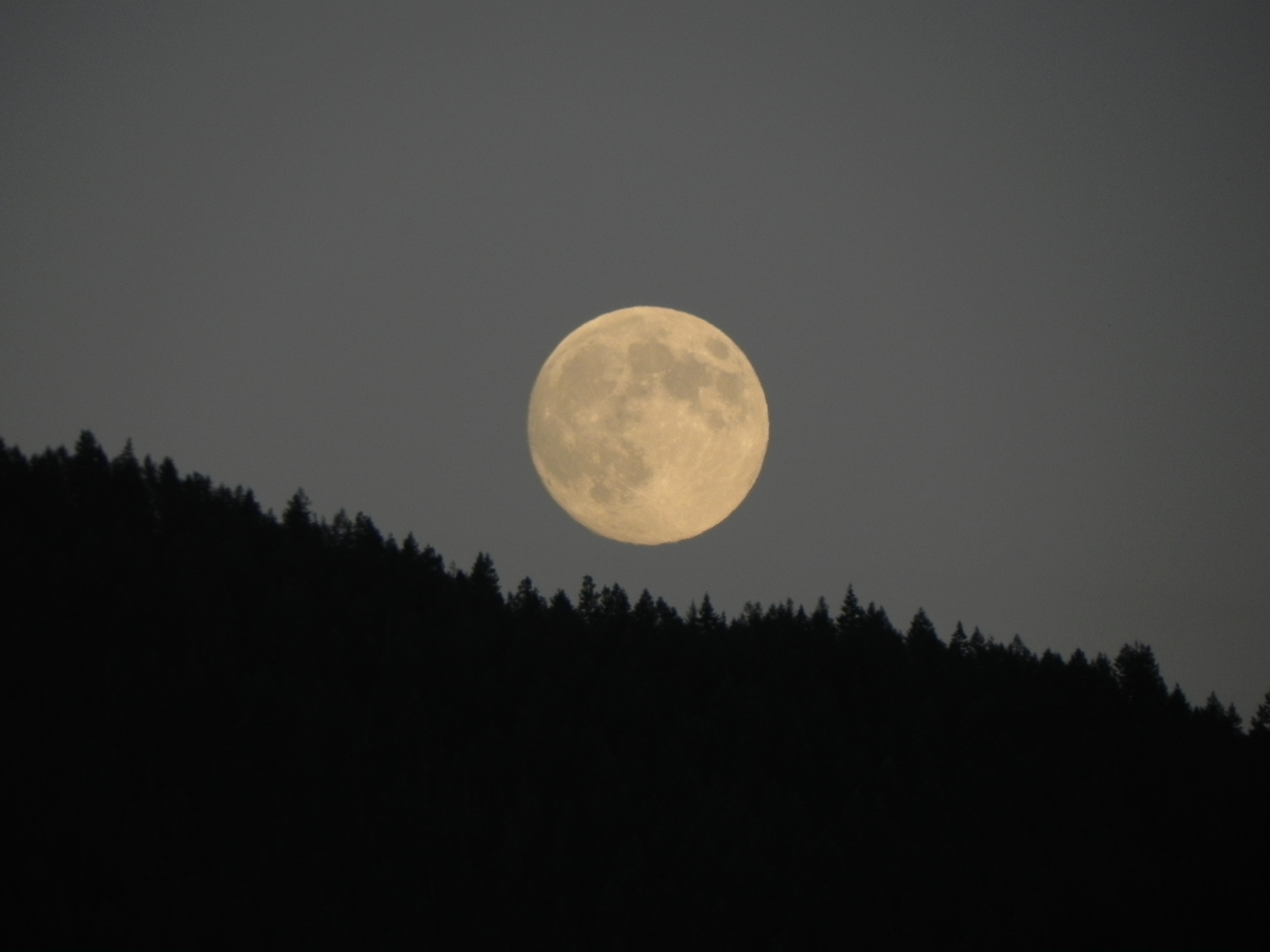
One of the most interesting aspects of Easter is its peripatetic nature.  It wanders around the calendar awaiting the first Sunday after the first full moon after the vernal equinox.  By definition it’s always in spring, but it can range widely as to when it actually falls.  This year it meets up with another unusual holiday—one with very uncertain origins.  April Fools’ Day is poorly documented and understudied.  This is one of the reasons I find holidays so fascinating.  Scholars seldom take them seriously and, well, April fools.  Who’s going to look into that?  When working on The Wicker Man (which is about holiday horror), I found there was little to find about April Fools’ Day.  There’s no agreement as to why it’s called that or how it started.  I have a pet theory, but no evidence to back it up.

Image credit: Heinrich Vogtherr the Younger, public domain via Wikimedia Commons

We tend to think of April Fools’ as a day for practical jokes.  Indeed, the horror movie based on it is a big, long practical joke.  I wonder, however, if it goes back to my other old avocation, the weather.  The weather led me to write a book as well, of course.  For those in the northern hemisphere—particularly up in the more temperate parts of that hemisphere—April can indeed fool.  Around here it’s been decidedly cool for spring after a real warm spell a couple weeks back.  One year while living in Wisconsin we took a family trip for my wife’s mid-April birthday only to end up playing mini-golf in the snow.  April fools, you see.  We’re not out of the woods yet, regarding winter.  This understanding of seasons makes me think April Fools’ Day evolved from a statement about the weather.

Irish Celts believed spring began at Imbolc, at the start of February.  In that viewpoint, summer begins on May Day (Beltane), just a month away.  Now that Easter has fallen on the last day of March we’re left with an April bereft of official holidays, other than April Fools’ Day.  In fact, work-wise it’s a barren period from Presidents Day, in mid February, through Memorial Day at the end of May.  Just as the weather’s warming up to make the occasional long walk through the woods a magical journey of discovery, we’re confined to our offices—virtual or physical—gazing longingly out the window as nature invites us out to play.  Well, April fools, does it not?


They Come in Batches

There’s horror and there’s comedy horror.  And then there’s just plain silly.  Gremlins 2: The New Batch falls into that last category but with the strange factor that it’s silly without being funny.  There are a few smirk moments, and sometimes the self-parody approaches clever, nevertheless it’s bad.  It’s a big budget bad movie.  The idea that the gremlins try to take over New York City is funny, at first, but other than Phoebe Cates and Christopher Lee, they don’t seem to know this is a satire of Gremlins.  I guess not knowing about the plot—I tend not to read reviews about movies before I see them—I was expecting something more like the first one, which I thought was pretty good.  The only reason I knew the movie existed at all was that the Blu-Ray version of Gremlins comes with The New Batch.  The late eighties and early nineties I was spending holed up in Edinburgh working on a Ph.D.  We didn’t have much money and didn’t see many movies.  We had no television (there is, or was, a television tax in the UK), so I never heard of the sequel.  

I presume we all know the three rules of mogwai, and needless to say, they immediately get broken.  The eponymous new batch takes over the Manhattan tower of Daniel Clamp.  His high-tech building needs no gremlins because the technology already doesn’t work well.  The high rise houses, among other things, a genetics lab where Christopher Lee camps it up, but which means the gremlins have access to formulas that allow them to grow wings, tolerate sunlight, and become spiders.  Sound silly?  You betcha.  One of the gremlins is even able to talk.  I watched with increasing stupefaction. 

Bad movies and cult followings are the peanut butter and jelly of cinematography.  Some bad movies never attain cultdom, but I can see why this one has.  The big budget ensured glitz and special effects.  Even the self-awareness to have Hulk Hogan being able to control the gremlins in the theater with a threat almost gives the movie an art film feel.  The horror, mostly based on the fact that there are monsters, is tightly constrained.  Although I felt increasingly like I was wasting my time as the movie went on, upon reflection I can see why some people have glommed onto it.  It may just have edged over into the so bad it’s good category.  I’ll need to think about it.  And avoid eating after midnight.


As We Know It

The end of the world, as we know it, is really more recent than we think.  Yes, Christians of a certain stripe have been looking for the second coming since the first leaving, but that detailed map of how we’re living in the end times, courtesy Hal Lindsey, is a new thing.  Here are the fast facts.

First and second centuries, Common Era: early Christians tended to think Jesus would “be right back.”  When that didn’t happen they began to look in the Bible for reasons why and started to develop theologies to cover the bases.

Late Antiquity to the Middle Ages: settled in for the long haul, theologians developed eschatology.  Although that sounds like a disease, it’s actually a system for thinking about how the end of the world will come down.  There were conflicting theories.  The two main flavors were premillennialism and amillennialism.

Early Modernism: Protestants came along and searched the Bible for minute clues to make into a system.  In response, postmillennialism became a thing.  Now there were three options.  Various phases were discussed: tribulation, resurrection of the dead, and the already-met millennium.

1820s: William Miller, a Baptist minister, began number-crunching and figured the end of the world would take place by 1843.  His followers, “the Millerites,” continued on after what was called “the Great Disappointment.” 

1830s: John Nelson Darby, a Plymouth Brethren leader, came up with Dispensationalism, a scheme that divides history into eras, or “dispensations.”  He thought we were living near the end of that scheme about 200 years ago.  The idea of “the rapture” was added to the other phases.

1917: Cyrus I. Scofield, published the Scofield Reference Bible.  A man with little formal education (and a “colorful” background), he applied Darby’s dispensations in his Bible, giving the United States a road map to the end times.

1970: Hal Lindsey, a seminary educated evangelical, published The Late, Great Planet Earth.  It became the best selling book (classified as nonfiction) for the entire decade.  New ideas, such as “the Rapture” and “the Antichrist” began to be read back into the Bible.  The book was made into a movie.

1976: David Seltzer, a Jewish screenwriter, penned The Omen.  The movie made use of Lindsey’s adaptation of Scofield’s adaptation of Darby’s ideas.  The wider public, seeing it on the big screen, believed it was about to happen.

2000: the world still didn’t end, either with a second coming or Y2K, as many predicted.  Round numbers will do that to people.  It didn’t stop predictions of the end of the world.

2012: the Mayan calendar gave out.  A movie was made.  People believed. Apocalypse averted.

2024: you fill in the blanks.

Image credit: Albrecht Dürer