NC-17

HolySh*tHoly Shit (in the philosophical mention sense, not the use sense), by Melissa Mohr, is a book I had intended to write. I’m glad Dr. Mohr beat me to it, however, since her treatment would be difficult to top. Few ideas are so arresting as the forbidden topics, and Mohr shows us that swearing occupies a compartment of the brain separate from regular speech, and it may even have therapeutic qualities. A Brief History of Swearing, to use the less offensive subtitle, is not an easy book to read in public. Since most of my reading time is spent in densely packed transit vehicles or waiting areas, I always wonder who might be reading over my shoulder. As a short guy that’s always an issue. Nevertheless, Mohr’s book is fun and informative, and I suspect I will read it again for all the information packed into it.

You see, Mohr uses both words of the title in a literal sense. Beginning with the Romans, but then stepping back to the Bible, clearly swearing has religious origins. While the Bible doesn’t prohibit coarse language in any direct sense, it does believe in oaths. Swearing oaths was serious business, and that seriousness led directly to the concept of swearing. Combine that with the idea of cursing (which the ancients also believed effective—ask Saint Peter) and you get the spectrum covered by the concept of “bad words.” (At least up until modern times.) Although I’ve studied religion my whole life, I was surprised how much I had to learn about the more earthy aspects of spoken sacred language.

As Mohr amply demonstrates, what counts as swearing changes with time. Giving the case of the Lindisfarne Gospels, she illustrates how a glossing priest causally dropped the equivalent of a medieval f-bomb right there on the pages of the holy Gospel. It wasn’t considered swearing at that historical moment in time (and besides, a fair amount of it goes on in the Bible). How far we’ve come. I recall one of my Nashotah House students telling me how he had to take a rather freely expressive classmate aside and tell him he was pretty sure that the f-word was an inappropriate adjective to use when referring to the Trinity. But now I see the wisdom of the ages at play. People use their most powerful words for what moves them most deeply. I doubt Mohr had quite that in mind, but if you read her delightful study you can find out what I may be full of after all.


Sidekick

I have moved from the territory of Sharon to that of Laura. New York City is a conglomeration of smaller neighborhoods, and even Midtown Manhattan hosts hundreds of smaller sub-divisions. Although I’ve never intentionally consulted a psychic, I do tend to notice them. Once while on a visit to Galena, Illinois during the summer, we stumbled on a psychic booth where the proprietor was giving free readings. With some trepidation, we let her give our daughter a reading, just for fun. I don’t recall what she said, or even what her name might have been. There’s just enough fear of the unknown left in me to compel me ever want to visit a psychic, even if it is for entertainment purposes only. Clearly, however, there is a market. Where the market makes a hole someone will fill it. So I pondered Laura the psychic.

IMG_1178

The other day I passed her sign. Like most psychic ads I see, Laura’s sign makes use of religious symbols; the cross, bird, crescent and star, all thrown together amid an interfaith openness from which most religions might learn a lesson. Are psychics religious? I suppose that’s a personal question. The phenomenon of psi, if it does exist, and if it does involve spooky influence at a distance, tends to be classed with the supernatural. A few brave universities have from time to time explored the phenomenon, whether or not commercial psychics have it, scientifically. They set up controlled experiments and have even obtained statistically significant results. I’m more inclined to doubt statistics than the outcomes. Statistics are the tools of markets, and markets, well, make me shiver.

IMG_1183

Then I passed another sign. This one, just a block or two from Laura, seemed to suggest that witchcraft might unleash my potential and power. That sounds like a good thing. But then I noticed the FOX logo at the bottom. Another quality program, it seems, has fallen to the spell of witchcraft. It did confirm, however, that it is all about money. One size does not fit all. Religion adapts to fit a free market economy. Totalitarian states either attempt to disband religion completely and/or build up a national mythology that supplements traditional teachings. It doesn’t take a psychic to see that coming. As long as there’s money to be made, who’s complaining?


Exegeting for Peanuts

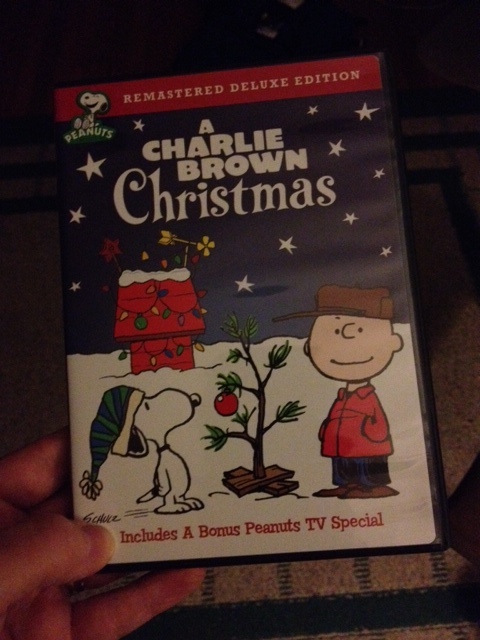
Peanuts, the cartoon, is about as pure as the Bible itself. Like the Bible it is included in ritual, as in the annual viewing of A Charlie Brown Christmas in our home. I grew up in the generation that eagerly awaited the special to be aired on television (if you don’t know what I’m talking about, ask your parents). When we were finally feeling affluent we purchased the DVD to continue the tradition with our daughter. Last night as we watched, however, it struck me that, like the Bible, many variant traditions are present in A Charlie Brown Christmas. I began to suspect a kind of documentary hypothesis. The program begins with Charlie Brown, in his house, wearing his famous yellow zigzag shirt and black shorts, getting ready to go outside. This must be the oldest tradition since wearing shorts in the winter is the lectio difficilior, or the more difficult reading—any good Bible scholar knows the more difficult text is most likely to be the original because later scribes try to make the story make sense. I’ll call this Urtext C. The crisis is evident because as Charlie Brown pulls on his coat to go outdoors, he is wearing shorts. He steps outside in the next scene wearing long pants. This represents a harmonization by a scribe uncomfortable with a child on a snowy day outdoors in shorts—a simple scribal correction. This source, designated H for long pants (lange Hosen in German), subsequently appropriates the script since Charlie Brown is not shown wearing shorts again.

When Charlie Brown consults with his psychiatrist, Lucy van Pelt, however, the real evidence emerges. Lucy’s sign on the front of her stand originally reads “The doctor is out,” each of the first three words occupying its own line. When Lucy spies Charlie Brown she runs over and switches the “out” sign to one that reads “real in,” representing the story line of H. When the tight shot to emphasize “real in” closes on the desk, however, “The doctor is” has now come to occupy two lines instead of three, “The doctor” sharing the top register, and ‘Is” on the line with the new status of the analyst. This is the work of S, the Schilderhersteller, or Sign Maker. A further variant tradition appears in the shot of the two characters talking since “The doctor is real in” once again occupies three lines. Either H is reasserting itself or D, the Deutero-Schilderhersteller has tampered with the text. When the desk is then shown with epigraph “The doctor is in” on three lines, we are clearly dealing with a redactor with literalist tendencies, L, or perhaps this is C, our Urtext, having been further elaborated as “real in” by S, for obviously theological reasons.

The composite nature of the script is even more evident with the Christmas tree. When purchased by Charlie Brown and Linus, the tree has three branches, obviously a reference to the Trinity, so a later addition. It is easier to explain branches taken off a tree than a dead plant growing new ones. In the auditorium, however, the tree has five branches. In the next scene, six. When Linus gives his hortatory address, the tree is shown with four branches. Then in the following scene, seven. When Charlie Brown attaches an ornament, the tree again has five branches (an obvious nod to the Pentateuch), but when the children decorate it, it has transformed into a full tree on which it is impossible to count the number of branches. This will take a more adept scholar than me to unravel. I’ve lost track of the Urtext. Could a university-employed academic help me out here?

If any of this sounds far-fetched to you, remember that Charles M. Schulz bore a German name. Like Moses, he gave us the original text, and like Graf and Wellhausen, he forever changed the way we viewed the faith tradition. It is my hope that you enjoy the holiday season. I’m going to be too busy trying to piece together the corrupt tradition of that miraculous tree.

Final, canonical form.

Final, canonical form.


Fears of a Clown

A few weeks back, over on EsoterX, I was reading about circus oddities. Perceptive as always, EsoterX notes that the carnival or circus used to be disturbing. Before being commercialized and sanitized, otherwise civilized folk crept out of town to gaze at the bizarre and troubling aspects so effectively hidden from 9 to 5. Among the most disconcerting of the carnies was the clown. Horror writers and film makers have long focused on the ambiguity of the clown—faces are our clues to the intentions of another person. A face painted is opaque and we feel as vulnerable as in the presence of the false evangelical smile that hides a spiritual deadness in hardened eyes. You are about to be victimized. It is no wonder that small children—and not a few adults—are freaked out by clowns. At times they make us laugh, but mostly they make us tremble.

ClownThose who know or read me may have a difficult time believing that I once was a clown. Not a professional one, of course—it is even more difficult to believe I’ve ever been a profession anything—but part of a campus clown ministry. Beyond simple titillation, I state this fact because, like most things in my life, I researched clowning before I became a part of it. Those books are, of course, packed away with other forgotten bits of personal marginalia but I remember bits and pieces. The origins of the clown are religious. In fact, in the most ancient of societies clowns were most often played by priests. Their early bungling, which may go back to the third millennium BCE, was perhaps a way to indicate that even the somber role of the cleric could be taken too seriously. Like modern concepts such as Mardi Gras or Carnival, that which is sacred builds such pressure that normal people become a little unhinged. We erupt into frivolity while the divine turns a blind eye. Or secretly smiles.

Clowns for Christ was a Grove City College organization that I revived in my Junior year, serving as president and acquiring a campus charter. Based on 1 Corinthians 4.10, we declared ourselves “fools for Christ,” reprising, unknowingly, an ancient pagan custom. We visited nursing homes and mental hospitals and other campus events, bringing the good news in the form of silent skits. The clown traditionally does not talk. Even today when I hear a clown in makeup speak I give him or her a glare—clowning is physical, not audible. As I left college I left behind my childish ways (at least some of them). And the years since have taught me to be afraid of clowns, as any reasonable person should be.


Eating Your Prophets

Ezekiel was an odd character, even for a prophet. He’s become a kind of patron saint to ancient astronaut theorists, and his name in fiction often denotes someone slightly off balance. In his defense, he believed that God was demanding his many strange actions. A priest in a period of exile from the “one true temple,” Ezekiel lived an existence as a captive in a foreign land and came to some radical conclusions about the nature of Israel’s god. His visions and actions were considered the original weird, even by his contemporaries. Since Ezekiel believed Babylon would conquer Jerusalem, the people there would have to go on starvation rations. In chapter 4 of his book, Yahweh tells the prophet to try to make a bread out of wheat, barley, beans, lentils, millet, and spelt. This odd mixture is to be eaten in very meager portions to symbolize the coming privation for 390 days (during which time he is to lie on his left side). His bread is to be cooked on dung.

IMG_1156

I eat breakfast around 4 a.m. My bus to the City comes before 6:00 and there are no restrooms on NJ Transit buses. Many New Yorkers eat breakfast in the office, but I’m just too Episcopalian in sensitivity for that to really be an option. I don’t like really sweet cereals, but granolas are often quite sugary unless you want to pay top dollar (and most of my dollars are bottom dollars) for some organic, European blend. Then I spied Ezekiel 4:9. Knowing full well the context of the reference should’ve given me pause, but it was two dollars less a box than some of its competition—downright exilic prices—and my curiosity was roused. What would Ezekiel eat?, I asked myself.

Most people don’t realize that so many of us eat breakfast cereals due to the efforts of our Seventh-Day Adventist friends. Adventists, in addition to being literalistically inclined, advocate healthy living. Will Keith Kellogg, a faithful Adventist, believed that eating cereal for breakfast was healthy and widely promoted the idea through the company he founded to produce cereals. Kelloggs does not produce Ezekiel 4:9. Food for Life, an organic bakery, are the purveyors of this organic breakfast. Their religious convictions, if any, aren’t evident from their website. Just about the time I’m climbing aboard the bus, I know that even as Ezekiel saw the wheel, I’m in for a moving experience. Isaiah-os or Jeremiah Flakes may be difficult to imagine, but with Ezekiel nothing really surprises. Today’s Bible lesson may be as close as the larder shelf. I just skip the cooking on dung part.


Help from Above

Frisbee, like Kleenex and Band-Aid, is a brand name that has become generic. Since at least the time of ancient Greece people have been fascinated with flying discs, and like many kids of my generation I grew up with a Frisbee or two around the house. We didn’t have much money, and in my younger days I remember playing “frisbee” with the lids to large margarine tubs—it’s more difficult to get these to do tricks, but they fly passably well with the right flick of the wrist. When I got to college I started to hear about a new game called “Frisbee golf.” It usually involved a group of friends and their flying discs picking out a target and seeing who could get their Frisbee there in the fewest tosses. Well, college was a couple decades ago (ahem), and who has time for Frisbee in the serious adult world of trying to stay employed? When some friends asked me to join in a game of disc golf over a recent weekend I knew a couple of things had happened. First, Frisbee had been either usurped or commodified to the point that it was either illegal or gouache to use their discs to try to hit “that tree over there,” like the redneck with his shotgun on a Friday night. Second, to play the game you needed to have the right equipment. Out on the course we came across a couple of guys with “golf bags” full of discs that they had to flip through like so many CDs before each toss. I felt woefully amateur. Like golfing in jeans.

IMG_1140Fortunately my friends had discs. Scientifically engineered discs, no less. Different “Frisbees” (not a technical “Frisbee” among them, not even a Wham-o) with different weights and characteristics made for specific tasks. I thought of the famous sculpture of the discus thrower and wondered what Plato would’ve made of all this. Since we were a large group with limited discs, we each chose one to be “our” disc so that we could follow it. It was either a rare show of masculine aggression or perhaps religious curiosity that drew me to the distance disc called Archangel. Bright orange, the Archangel was emblazoned with an actual heavenly being with his (a masculine angel, this) sword. He wore a vaguely Egyptianizing headdress that brought to mind the plagues of Egypt. The disc was heavy compared to a Frisbee, and had an edge like a, well, a sword. A dull sword of course, maybe wooden as opposed to steel. That disc could fly (although it didn’t improve my score much).

Angels have had a long fascination for us mere mortals. Originally a class of messenger gods in antiquity, monotheism forced them into a subservient role where swiftness was essential. For some, such as the Angel of Death (more likely the source of the imagery behind my Archangel), weaponry was essential. Unlike the Angel of Death my aim wasn’t very accurate. Or maybe that is just like the Angel of Death. No firstborn were slain by an hour’s diversion of tossing some Frisbees around, but my thoughts had been driven back to the biblical origins of my implement. I wondered why there was no archangel of peace. A few days later it was announced that Nelson Mandela had died. My thoughts went to Gandhi. To Siddhartha Gautama. Even to Jesus. Yes, there have been those who’ve insisted on the way of peace. And many differences might be settled by a friendly game of Frisbee golf, minus, of course, the copyright infringement.


Appreciate Your Job

At a gathering of friends recently, a game of trivia broke out. Well, it was actually planned because we were not using the cards and pie wedges that we grew up with, but were making up our own questions. The submitter of the question was the final arbiter on whether an answer was correct or not. As usual, I probably overthought the process, trying not to make my questions too hard or too easy. Maybe my ideal contestant was a student in one of my intro classes since much of what I submitted was what I covered in my courses. Other questions were drawn from choice bits of this blog (something to which I never subjected my students). In any case, one of my submissions asked for the name of Job’s fourth friend. I was honestly surprised when nobody in the grew knew, or could even name one of poor Job’s friends. My slip of paper went into the unanswered pile in the middle, a stack alarmingly dominated by my own questions. Afterward, the friend who knew me the longest, and who grew up in a church-going family, asked “Did you really think anyone had read the book of Job?” Coming so shortly, as it did, after another friend in a different context had indicated that my interests are arcane, I began to feel my age.

Biblical literacy is a topic for which some scholars actively lobby the reading public. I’m not sure if the entire Bible need be known fully, although my job increasingly relies upon its popularity. Students used to ask if I still found the Bible meaningful, even though I spent my career parsing it apart. The answer is always the same: yes, the Bible is worthy of the attention lavished upon it. It has sections of unsurpassed beauty and even some lessons the world could still stand to learn. It is uneven, however. There are bits that probably should’ve never been canonized. There are moral lows as well as highs. And the book of Job is among the greatest pieces included in it.

On that point I would receive some argumentation, I’m sure. Many people detest the book of Job. The eponymous hero of the book seems almost blasphemous to some, and a complaining ingrate to others. In the course of his suffering four friends stop by. The last one, surely a later addition to the text, toes the party line of orthodoxy that the book severely shreds. Job also contains some of the finest poetry from the ancient world and has given modern English several catchphrases still currently in use. I’ve always felt a kinship with Job. While my lot has not been as pathetic as his, I have had enough set-backs to lend the book a kind of nostalgic patina. Even in their wrongheadedness Job’s friends can spill out poetry. And there is wisdom to be had in that dusty book. In the end I was probably the one who was wrong. There is nothing trivial about the book of Job.

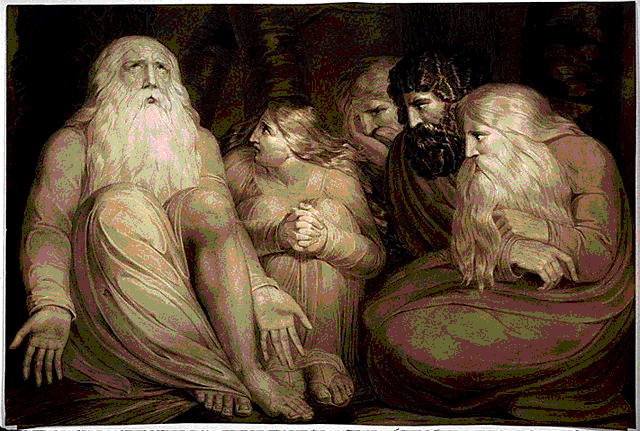
Blake'sJob


Sunday Best

When my rural, northwestern Pennsylvania shows up in the news, I pay attention. An Associated Press story recently appeared concerning Rev. Chris Terbush of Bradford, Pennsylvania. Inspired by the success of Duck Dynasty (which seems poised to overtake even Apple as the most popular purveyor of popular culture), Rev. Terbush has encouraged his congregation to show up on Sunday mornings in camouflage, ready to go forth and claim dominion over nature once the service is over. I’ve been ambushed by enough clergy that the idea makes me a little nervous, I’ll have to admit. But then again, I know where he’s coming from. I grew up in a town that celebrated the first day of deer season as a public holiday, with schools closed and the hills alive with the sound of muskets. Not being a hunter, I just enjoyed the day off school. This upbringing, however, gave me a profound appreciation for the Jeff Daniels’ movie, Escanaba in da Moonlight. But I digress.

Religious services evolve, just like any other social phenomenon. When I was young, just as the sixties were wresting the color of life from the black-and-white fifties, going to church was a formal event that demanded your “Sunday best.” Only the worst of heathens would show up before the Almighty in anything less than a white shirt and tie, a jacket and uncomfortable shoes. You had to show the divine that you were willing to go that extra mile and implicate that you didn’t intend to have any fun when it was over because the sabbath is a solemn occasion. I remember the weird feeling of walking into church during the weekday wearing jeans for the first time. It felt as if I were dissing the rules of the club. It was an exclusive affair.

The “theology of dress” has become an area of scholarly investigation with the growth of embodiment issues. What we wear says something about our beliefs, and the fact that we wear clothes at all is sometimes even traced back to Genesis 3. The origin of “good clothes,” clearly, was a status issue. Those who could afford to keep some surplus clothes unsullied by labor wished to strut their stuff on occasion. And who better to impress than God? All of this has eroded over the years with many churches as casual as any man cave. Now you can camouflage yourself in church. There may be more going on here than meets the eye, both literally and metaphorically.

What happens in the woods stays in the woods

What happens in the woods stays in the woods


Schrödinger’s Luggage

I recently had the misfortune of flying on Delta Airlines. In all honesty I suppose my antipathy to Delta began with a flight on which I was not actually a passenger. A few years ago a news story of a Delta flight navigating to the wrong city created smirks for those who can afford to fly airlines that have better track-finding skills. With all of my flying over the past years, I’ve ended up on Delta a couple of times and my sense of their muddled thinking has only been confirmed. On a recent flight before which we were informed that our boarding would be “expediated” since the captain was late landing his jet at the next gate and would be flying right back to Atlanta whence he’d just arrived, I hoped the navigation would be better than the grammar. Landing in Atlanta for a flight to the thriving metropolis of Allentown, Pennsylvania, the gate agent repeatedly told us that the flight to “Aberdeen” was about ready to board. Several customers had to call out “Allentown” a few times before the agent realized her mistake. My misgivings grew. When I landed in Allentown, my checked bag had decided to take a tour of Detroit. It was late at night and I might have been a bit brusk with the poor, graveyard-shift Delta agent, but he assured me that my bag would be in by noon the next day.

Not a particularly trusting soul any more, I called Delta baggage information the next morning after looking at their website. The website showed the bag sitting just 15 gates from my departing Atlanta flight but then taking off to Detroit. When I called the representative told me that no information was available on my baggage (the artistry of understatement!). I informed her that I had the website up and that it showed my luggage in Detroit, I wanted to know when it would be in Allentown. Her tune changed to indicate, “oh yes, it is in Detroit.” But then, she could neither confirm nor deny that it would be on its scheduled flight. I had already determined to drive back to the airport to collect it. If Delta cannot be trusted to navigate to the right location in the air, then what would be their chances be on the ground in New Jersey? As I kindly suggested to the representative that they hire employees who could read, I couldn’t help but think of Schrödinger’s cat.

Erwin Schrödinger was the physicist who came up with the thought experiment of a cat placed in a box with a deadly substance. Whether the cat is alive or dead is only a matter of speculation without looking in the box, so, in reality, the cat is both alive and dead simultaneously. I’m no physicist, but I thought of Schrödinger’s luggage being both in the cargo hold and not being in the cargo hold at the same time. This was the very mystery of the universe, courtesy of Delta’s ineptitude, being foisted upon my frantic brain. Where was my bag? It was not in my possession, and I had last entrusted it to an airline that thought the best route from the Midwest to Allentown was through Atlanta and then Detroit, but they weren’t really sure if that was the case either. There is a consolation, however. You can get a refund of your twenty-five dollar baggage misplacement fee, in the form of a voucher for your next lost luggage episode on Delta airlines. I’m about ready to crawl into that box with Schrödinger’s kitten and await my fate.

Both here and not here.

Both here and not here.


Imagine Images

“Thou shalt not make unto thee any graven image, or any likeness of any thing that is in heaven above, or that is in the earth beneath, or that is in the water under the earth.” Thus spake the Lord one day long ago. So the Bible says. The problem is that humans are visually oriented. We teach our young to read by enticing them with books with pretty pictures—images that captivate. We make things that are pleasant to see, some of them are even graven. I used to ask my students what the difference was between a god and an idol. The answer is, of course, perception. “Idol” is a word that implies falsehood. The item represented is somehow divine, but is not actually divine. There are ways around the rules, of course.

IMG_1138

I spent many years in the United Methodist Church. Many people I knew claimed that the local Catholics were idol worshippers, and when I entered a Catholic church for the first time I was struck by the graven images that seemed to stand in blatant contradiction to the second commandment. How could this not be a direct violation of divine orders? After all, this wasn’t some minor infraction—it was one of the very commandments! Back in my Methodist context, I began to wonder, however. We had crosses, some of them in the round, right up there on the altar. True, there was no corpus on our crucifix, but that seemed to be a handy bit of casuistry. Human beings naturally convert images to idols. We all knew, Protestants though we were, that you should never take a sacred object out to the streets and treat it profanely. An image in a sacred venue could be an idol.

Over the years it seems that the strictures of the ten commandments might have been relaxed just a little. Collectively as a culture, the real has become more and more virtual. We buy our movies, music and books in electronic format. We play our games on computers. In such a context a physical image may seem somehow less real. Our idols have been digitized. It doesn’t seem like the Bible was looking that far ahead when attempting to create an exhaustive list of what might anger the divine. After all, electricity wouldn’t be discovered for millennia. Reality was dry, dusty, and deadly. The prohibition was against physical images. It is no longer an issue for many in the Judeo-Christian tradition that a statue or an icon might be a sign of piety rather than profanity. Things seem to have come full circle when I find a statue of John Wesley, nearly of bobble-head proportions, looking at me with eyes seeking prevenient grace. I guess the powers that be might just be willing to overlook even Methodists gone native.

IMG_1136


Some Baltimore Lessons

As someone who hovers around the edges, perhaps I’m preoccupied with perceptions. I have been attending the American Academy of Religion and Society of Biblical Literature annual meeting regularly since 1991, with a few years off for bad behavior. Usually it is held in a colorful US city that can afford to have a myriad of religion scholars show up all at the same time. I have noticed, over the years, what a conspicuous lot we are. As I drove into Baltimore, for example, I could tell who the locals were right away. They fit their environment. When I reached the medical area near one of the large hospitals, the people were wearing scrubs and white coats. I could navigate to the convention center by following the bearded, tweeded, and professionally dressed feminine to where the specialists in arcane subjects gather. We rather stand out. The funny thing is, once you get us together, we don’t always have a lot in common.

I used to teach, and as a teacher you run into this strange contradiction of roles where you are expected to keep your expertise up-to-date, to entertain students in the classroom, and to write books and articles in your spare time. I excelled at this and found my niche for a while. The beard I already had, but the look had to be acquired. Tweeds were not difficult to locate in Scotland, and so I returned to the States with the image already down. At Nashotah House, I recall many students complaining about the rules that forbade wearing a “seminarian collar.” Yes, even priests have a guild. A seminarian collar looks like a Roman collar, only it has a dark vertical stripe in the middle to warn the penitant that this is not a full-fledged priest and confessing your darkest deeds might not be a good idea. Don’t buy any wafer’s s/he’s selling. Their complaint was that to learn the role you have to dress the part. The administration at the time had rules against it. Confusing someone for a priest can have serious consequences. (Never mind that on a campus with at most 50 students everyone knew everyone else by name and habit.)

So I sit in my car at the stoplight and watch the academic parade. In this crowd there are people with god-like status in the academy, but whose names would mean nothing in even a highly educated household. The metaphorical Red Sea of scholars in the bookstalls parts at their approach. On the street corner they look lost. To the locals it is obvious that a horde had descended upon the town. Many forget to remove their name tags, announcing to the secular world that there be giants here. But they are shivering giants, as if they might’ve forgotten to pack a coat and the wind sure is chilly for this time of year. I suppose I must look like one of them myself. After all, I’m trying to turn the wrong way on a one-way street again.

Am I that obvious?

Am I that obvious?


Meaningless Words

IMG_1086

I’m glad to be back in New York City. It’s a funny place. A walk down the street can be an education. When I saw this shirt the other day, I had a thought—what happens when words lose their meaning? I’ve been fascinated by the concept of “bad words” since I was a kid. Although I never uttered them, I wondered why they were considered bad. That thought gets stretched out a big longer in this instance, to wondering whether overuse destroys the power of the swear. Although most religions claim taboo words are made that way by god(s), some psychologists have suggested that the function of swearing lies precisely in its ability to shock. If so, what happens when the shock wears off? We may need to come up with new words for copulation to take the place of the f-bomb. And it’s not just naughty words that are at risk.

I saw a report a while back that made reference to “Libertarian fundamentalist Jimmy Wales.” Wales is at least the co-, if not sole, founder of Wikipedia. The libertarian label didn’t surprise me, but the fundamentalist part did. Wales is no conservative religious believer. Of all people fundamentalists are the least likely to support a wiki concept where the final version is never nailed down. It would be like reading a Bible where the words keep floating around the pages, shifting combinations, changing meanings. Of course, the concept of words even having meanings is a matter of debate. A colleague of mine used to remind me, “words don’t have meanings, they have usages.” He was technically correct. Even the f-bomb, when uttered in other languages, as sophomorically portrayed in many a movie, has an entirely different usage.

Dictionaries are filled with archaic words. I don’t recall the last time I saw eftsoons in print, or iwis, or maugre. Have they lost their meanings, or just their usages? In any case they live on in written language history. Overuse of a word leads to calls for restraint among literary types, as when the word “awesome” got out of control a few years back. The case for the f-word is somewhat different. When I walk through the streets of the city it is obvious that it is one word that is in no danger of dying out. The gerund, or more properly, adjectival form ending in -ing, is freely interspersed in blasé sentences with complete abandon. For some people it appears to fill the mental pause generally reserved for “uh” or “um.” When it ceases to shock us, it will become just another Howard Stern of the lexical world. And some tee-shirts, I expect, will be available quite cheaply then.


Rites and Wrongs

One thing about Amazon Prime is that you can watch a movie multiple times with no real fiscal consequences. Alone on a Saturday, I started my ritual of looking for a movie to match my mood. I’ve posted before on Cabin in the Woods, a kind of Lovecraftian parody of the five-people-in-an-isolated-cabin motif, but the movie is so deeply based on religious motifs that I noticed many things I’d missed the first time around. When the college kids descend to the basement to choose, unwittingly, their fate, they happen upon a diary written by Patience Buckner—one of the zombie family that will eventually emerge to murder three of the five. So far so good. The backstory to the Buckner family is sketchy (Drew Goddard and Joss Whedon are said to have written the script in three days, not much time to develop backstory), but they are religious zealots who believe in pain as a spiritual purgative. In other words, they hurt each other in an attempt to be religious. This idea is not without historical foundation, and although it plays only a small role in the movie, it is part of the larger plot as well.

The entire control center that is intended to keep the old gods satisfied, is a highly technical ritual center where the horror movie tropes take place to appease the ancient ones. As Sitterson and Hadley explain, the suffering of the kids as they face the ritual sacrifice is an essential element in pleasing the gods. It is, nevertheless, a ritual. As each victim is killed, a lever is pulled channelling blood down across icons of the roles played by the scapegoats. Marty, the stoner who ultimately figures out what is going on, makes the point that for a ritual all you need are robes and sticks. Of course, ritual is one of the main constituents of religion, and ritual has to meet the specs provided by the gods.

Cthulhu takes Manhattan

Cthulhu takes Manhattan

Modern day fascination with H. P. Lovecraft has led to a resurgence of interest in “the old gods.” Lovecraft, while personally an atheist, knew the powerful draw of the idea. Gods are controlled by ritual. Many religions trace the architecture of rituals to the deity placated by them, but this tacit domestication is a kind of archaic rule of law. Humans do this, gods will do that. The hastily written story of Cabin in the Woods abides by this pattern. As long as somewhere in the world a human sacrifice is made according to specifications, things will continue as they are. In other words, our random world is a throw of the dice by the gods. Unlike his contemporary, Albert Einstein, Lovecraft’s gods did apparently play dice. Cabin in the Woods is a modern farce of that ritual and is, in an unexpected way, a deeply religious movie.


Heilige Geist

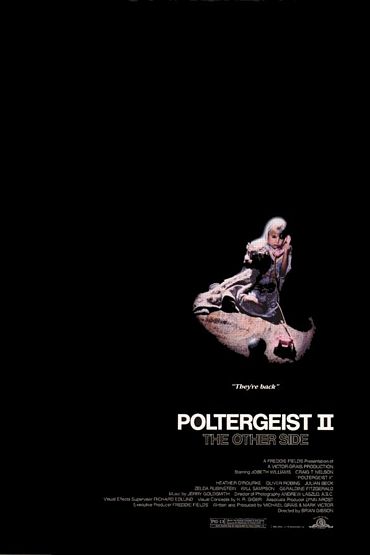
Poltergeist is one of those movies that evokes mixed emotions. Sure, it was one of the really scary ones when it just came out, and the rumors of a curse after the tragic early death of Heather O’Rourke probably added to the mystique. I actually didn’t see the movie until over a decade had passed since its release. It came out when I was in college, and I didn’t often splurge to see a movie in those days. VCRs were still expensive and your only real option was to rent a movie. In any case, a few years back I bought a cheap DVD and, after having seen many horror movies, it felt a little tame. And the ending was over-the-top. I have a theory that being unemployed makes you vulnerable to suggestion. Over the weekend I was looking for a movie I could watch for free on Amazon Prime, when Poltergeist II showed up. I hadn’t even realized that there had been a sequel, and after watching it, I think I understand why the movie was buried.

Poltergeist-2-the-other-side

Poltergeist II: The Other Side picks up where the original left off. An added character, Taylor, a Native American shaman, brings good spirits to the Freeling family as the original poltergeists start to haunt Diane’s mother’s house, where they are staying. Interestingly, the ghosts are revealed to be those of a traveling, apocalyptic preacher and his followers. The preacher, Henry Kane, led his group to the desert where they awaited the end of the world and then died after it did not come. They were apparently the ghosts haunting the original Freeling house, and not those of the “Indian burial ground” that the first movie touted. Taylor brings the healing, Native American spirits into the conflict and they win out over the Christian sect ghosts. All of this was becoming more unbelievably campy until Carol Anne was rescued by her now deceased grandmother, in the form of an angel. This mythological cocktail left me feeling a bit dizzy.

Some interesting subtexts floated through this film. Native Americans were now good, rather than the haunting spirits of the first movie. Kane’s sect, which had to be a veiled reference to the Latter Day Saints, showed Christian millennialists as the truly dangerous otherworldly residents. Kane is a preacher (and Mezcal worm) that doesn’t really want to pass over into the light. Why he travels all the way to Phoenix to try to pick up a nine-year-old girl isn’t really clearly explained. Horror movies, of course, frequently make use of religion as a vehicle for what truly frightens. Often it is religion misunderstood. Kane was not a believable character, in this case, without the abject cynicism of an unholy ghost who traveled to the desert southwest to set up a new religion. Once Mormonism breaks into the mainstream, perhaps I’ll have the stomach to watch Poltergeist III and see where the evil shifts the next time.


Just Ducky

An innocent trip to Kohl’s. I was really just along for the ride since buying clothes is not really my thing, but I’d been spending quite a bit of time at home alone, pondering my fate. We’d just changed the clocks, so we had an extra hour and my wife needed a few things. Once there popular religion gave me the old Joab-and-Abner treatment, if you know what I mean. I’m not completely naive about movie tie-ins—they are big money for all kinds of products, especially food (both fast and slow). As if eating that burger will somehow make you more like Captain America than will a few brisk minutes on the treadmill might. In any case, I’ve known Kohl’s to support charitable causes in the past: buying a children’s book or plush animal for a donation to a wildlife conservancy or some such socially conscious promotion. I was a bit perplexed to find a tremendous amount of Duck Dynasty gear in the store on my recent trip. Being outside New York City, we are hardly rural. I mean, Kohl’s sells clothes, right? But there were Duck Dynasty bauble-heads, Duck Dynasty fanny packs, and even a whole stand of Duck Dynasty books. From conserving animals to shooting them.

IMG_1105

I realize Duck Dynasty items are big money. At a local store just before Halloween I spied a Duck Dynasty costume—fairly simple; a ZZ Top beard and you’re good to go. While getting a haircut the other day the girl, young enough to be my daughter (literally), said “You gonna keep the beard?” I told her I hadn’t shaved since 1988. Her response? “Well, at least you don’t look like those Duck Dynasty guys.” Like Rip Van Winkle (whom I understand also sported an impressive beard), I feel like I’ve been asleep for quite a long time. When did facial hair come to equate home-grown evangelism and love of shotguns?

IMG_1083

To calm my nerves, I signed onto Amazon.com. Prior to becoming dramatically unemployed, I used to treat myself every once in a while to some reasonably priced reading material from our Seattle savior. Naturally, they want you to buy more, so they suggest other books, based on viewing patterns, and, more importantly, purchasing records. That’s where I saw the Duck Commander Devotional, complete with a duck-themed camouflage cover. Now I think I finally understand. Reading the Bible for yourself (like Phil Robertson does) is too much trouble. It is easier to have the hirsute heroes of Louisiana tell you what the good book says. Maybe it’s just me, but it seems like religion might be going to the birds.