Jesus for President

From my economical hotel to Duke University was maybe a twenty-minute drive. As a stranger in town I prefered to stay off the heavily traveled corridors during busy morning commute times, never being sure when exactly my exit was coming up. So I took the backroads. Along the way I started to see churches with denominational names I’ve never even heard before. I quickly lost count of just how many houses of worship I passed. With all this rich fare, perhaps it is time to tighten the old Bible belt a bit. The short drive reminded me of my one and only fact-gathering trip sponsored by Nashotah House. I was sent to Asbury Seminary in Wilmore, Kentucky for a technology conference. Accompanied by an Episcopal priest and a Lutheran pastor, I was not the only one of us to feel a bit besieged by the in-your-face evangelicalism of Kentucky. My Lutheran colleague wistfully commented, “but the ELCA is ‘Evangelical.’” A different species of evangelical entirely.

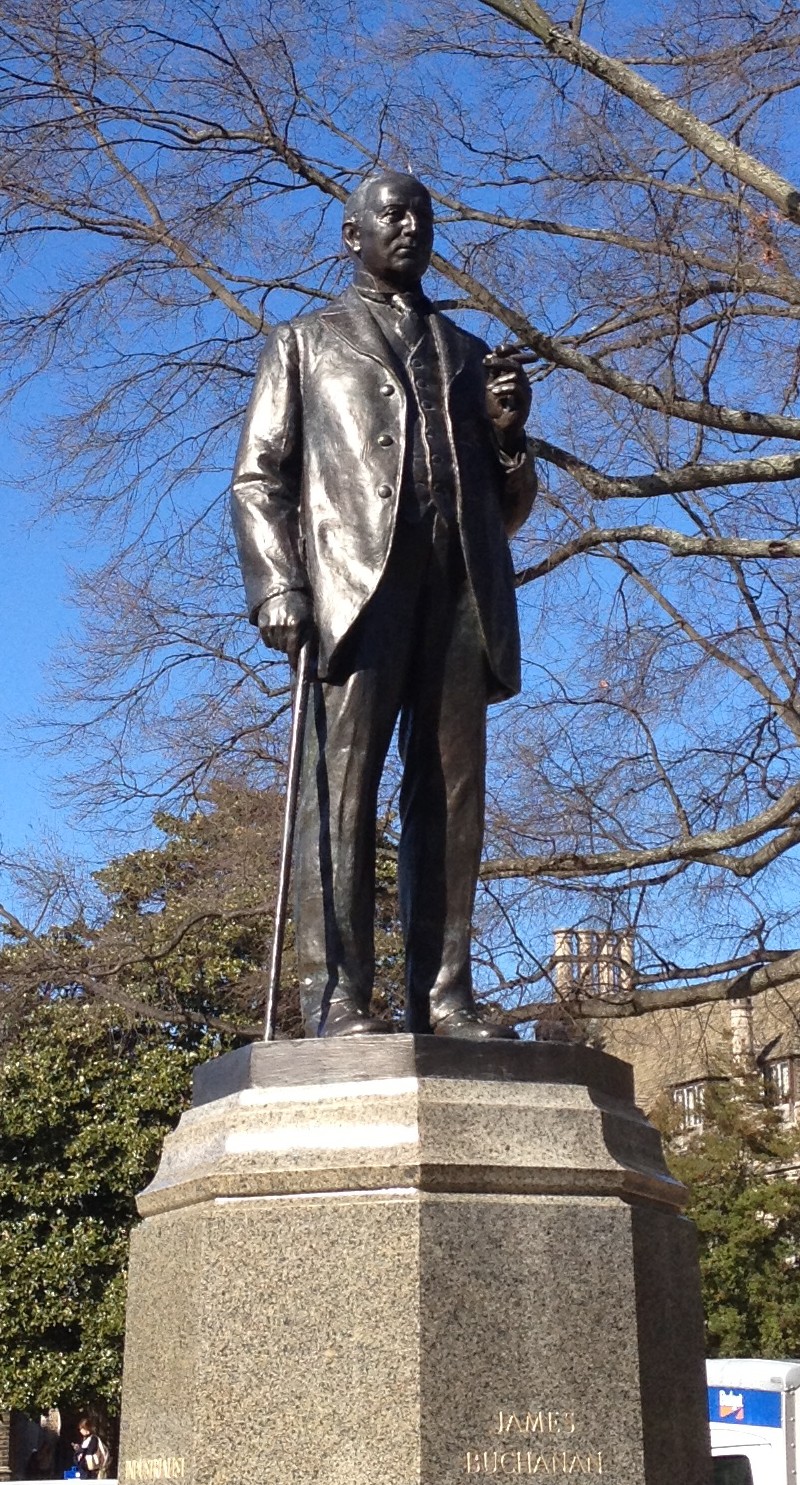
The chapel at Duke University easily dominates the west campus. The divinity school is one of the flagship seminaries of the United Methodist Church. Founded by the tobacco money of James Buchanan Duke (who also owned the estate in New Jersey where our ill-fated garden was planted this summer) and the fledgling Trinity College, Duke is an interesting mix of the sacred and profane; Eliade in quadrangles and limestone. The campus sports identity is the Blue Devils, and this diabolical emblem can be seen leering from tote bags and campus buses connecting east and west. Money and religion, devils and saints. Life offers many choices, and Duke, as an exclusive institution, serves the blended family of academics in Bible land.

One of my daughter’s favorite movies as a child was Disney’s Lilo and Stitch. In case you missed it, Stitch is an alien (you’ve got to love it already!), and Lilo is a little girl who loves Elvis, a true southern prodigy. The movie features Elvis singing Giant, Baum and Kaye’s “Devil in Disguise.” Although a song about love in crisis, “Devil in Disguise” seems a decidedly useful trope. Human institutions often disguise themselves as divine. After all, no suite trumps the God card. Religion is so prevalent in the Bible Belt that Christianity is less a religion and more a culture. That culture is at barbed odds with itself, for its deepest, darkest desires are out of line with the utter selflessness that Jesus seems to imply is at the heart of Christianity. Travel is one of the greatest teaching tools we have. Sometimes your own country can feel like foreign soil.

Old Smoky

I don’t mean to hit below the Bible Belt, but I find myself in North Carolina for a round of campus visiting this week. Since I’ve only ever passed through North Carolina on my way elsewhere before, I wasn’t quite sure if I’d experience culture shock. Since I’m visiting multiple schools, I needed to rent a car. As I climbed in, it was clear that I was in tobacco country. The problem with the rich, satisfying taste of tobacco is that it doesn’t translate well. I grew up forced to inhale many cubic meters of second-hand smoke, and I can’t stand the wretched odor. It stands to reason from my previous sentence that I grew up knowing many smokers, and it was entirely obvious to me that they did not realize just what a legacy their habits left behind. I went to school smelling like burnt industrial waste, and when I climbed into my Hertz Nissan Versa in North Carolina all of that came back to me in an instant.

When tobacco was king, or at least Duke.

In my evangelical childhood I was taught that smoking was wrong, although, perhaps understandably, Jesus had little to say on the subject. This highlights one of the thornier aspects of drawing ethics from the Bible. Apart from the obvious damages to health, the Bible gives no guidance either way on the smoking issue. The same may be said for contraception, abortion, drug use and stem cells. For all its laws, the Bible is remarkably non-issue driven. What you choose to do with your body is less important than the impact your actions will have on somebody else’s body. God is the parent who is driving the car shouting at the kids in the backseat, “Keep your hands to yourself!” So, here in the land of tobacco, the teeth of my biblical argument are extracted. I can hear some readers objecting that Paul says your body is a temple of the Lord. Problem is, they used lots of incense in the temple—and that smoke can be even more choking than cigarettes (I write from experience here).

Morals, as ethicists are increasingly realizing, come from custom rather than scripture. Rules are based on what society holds to be of benefit to the greatest number. The Bible has a voice in this debate, but no vote. Rules handed down from on high lack the human touch. We share the planet with our fellow humans, so they must be our focus when it comes to ethics. Some habits, unfortunately, share a little too much. I’m not the kind of person to tell other people what to do, but when I climb out of my rental car smelling like burnt industrial waste I somehow feel slightly wronged here. Maybe one of those rules should be, if you don’t own it, don’t smoke in it. Is that smoke I see rising from atop Mount Sinai?


Facebook Apocalypse

Facebook can be a fickle friend. Oh yes, there are rules that we know everyone doesn’t quite obey. You are not allowed to falsify evidence about yourself on the great FB, although characters like Jesus have their own pages. The Chronicle of Higher Education this week followed the efforts of a University of Nevada at Reno librarian who tried to use Facebook for educational purposes. Donnelyn Curtis had set up Facebook accounts for two students early in the twentieth century to give current students an idea of how times had changed. The pages were summarily removed by Facebook staff, leading to the unfortunate second deaths of Joe McDonald and Leola Lewis. Second deaths always get me thinking about the book of Revelation. After all, we are now into the fatal year of 2012.

My Mayan Calendar

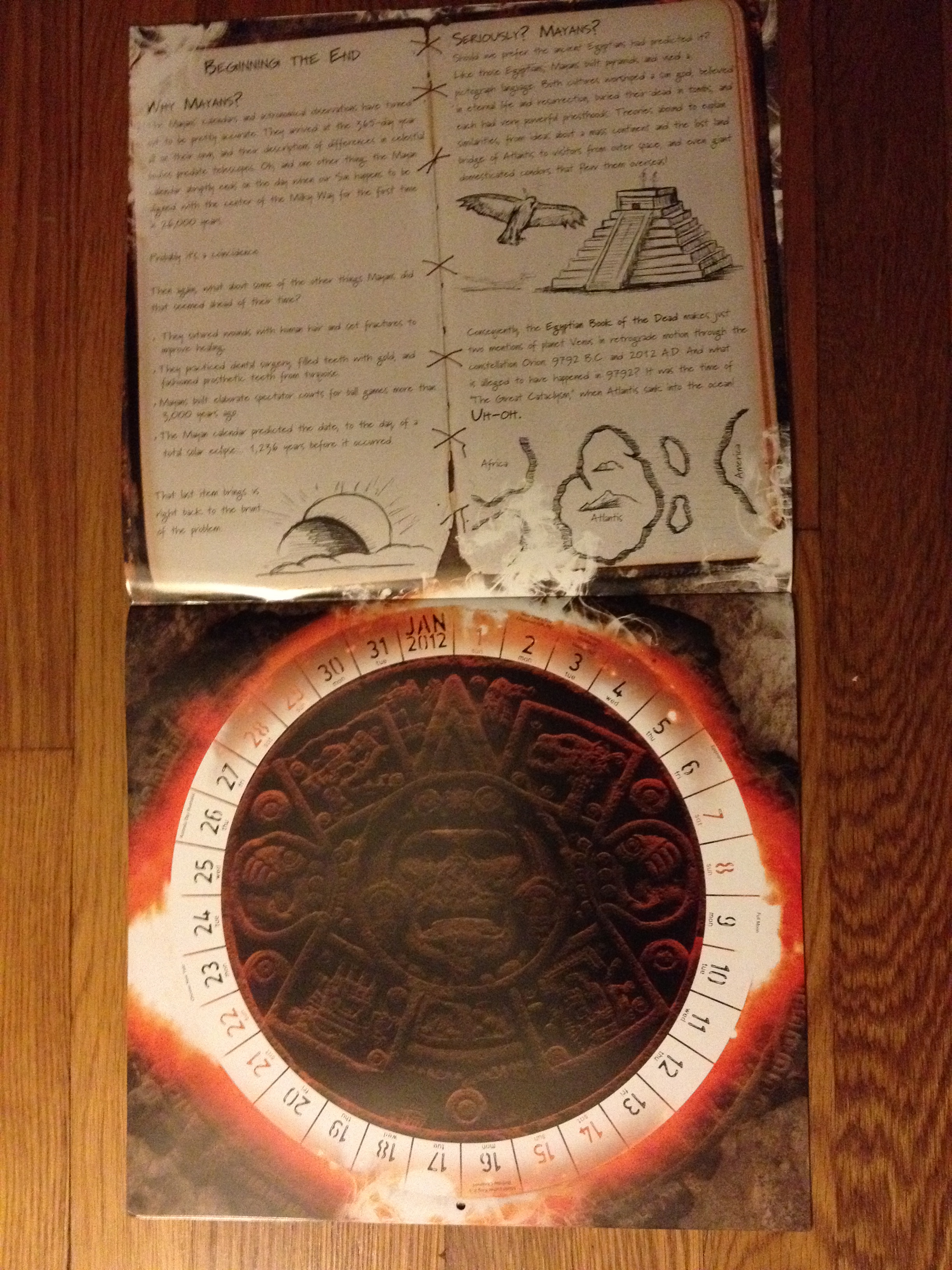
Few events elicit religious fervor like the end of the world. In the most highly touted end-of-the-world scenario since 2000, 2012 has emerged as the great contender for wrapping up the show we call life on earth. When I spotted a calendar to prepare the user for the end of the world, well, how could I resist? Each month on this terminal calendar features facts pointing to the culmination of this strange experiment that evolution hath wrought. If we can’t pull off a good, old-fashioned Evangelical rapture (sorry Rev. Camping), maybe the Maya can get the job done. They certainly managed to pull off an impressive vanishing act a few centuries back. Or did they? Despite the overrunning of enthusiastically avaricious Christian invaders, the Maya accommodated themselves to less-than-ideal circumstances and survived. They are still among us. Their culture, however, didn’t fare so well at the hand of the church. Nobody’s asking them about any of this.

Apocalyses occur all the time. When religions meet, one inevitably tries to vanquish the other. No one walks out of that arena without a limp. And the winners look over their shoulders for ever after. To prepare for this apocalypse, the January on my new calendar narrates how the Mayans and Egyptians shared some cultural secrets—such as how to build pyramids. How did they know about one another? My calendar says they could have walked across Atlantis, or they might have been carried by giant, domesticated condors. Either alternative seems as likely as the other. Either alternative seems about as likely as the world ending this year. But then again, already in 2012 a couple of promising young people have already been kicked off of Facebook for being dead. I think I feel the apocalypse beginning already.


Loaded Symbolism

Perhaps it’s all the politics in the news, or perhaps it’s the very long nights of January, but death comes to mind during the winter. One of the enduring preoccupations of religion is the issue of death. Christianities teach of wonderful rewards or horrendous punishments after the sloughing off of this mortal coil. Many eastern religions suggest the even scarier idea of reincarnation—we are doomed to repeat this sideshow over and over until we get it right. Since the universe has billions of years to go, that’s plenty of time for errors. When we finally depart, however, we leave our loved ones with the dilemma of how to handle our remains. Burial goes back to the Paleolithic Era—simple, effective, little fuss. Nature reclaims what we have borrowed for a century or less. This is the preferred Christian end, for, believing in the resurrection of the body, a body must remain. In some form. Other religions, noting the cleansing power of fire, prefer cremation. Those original Zoroastrians still prefer exposure of the dead to carnivores. It is, however, generally our religion that dictates our final disposal.

Enter the entrepreneur. The corpse becomes a commodity. You’ve got a problem and you’ll pay well for a satisfying solution. Some years back I saw ads for a company with the scientific, yet romantic concept that, as carbon, our corpses could be pressurized into diamonds. It is a costly procedure, but you could wear your beloved around your neck or on your finger as a chunk of the hardest substance on earth. A few weeks ago I found a more affordable solution on the website of Holy Smoke. Once you have made the decision to go with cremation, what do you want to do with that urn of ashes? Holy Smoke offers a solution: you can have your loved one’s remains loaded into ammunition shells. Taking care to handle the ash with profound respect, Holy Smoke will place the remains into either rifle or shotgun shells (one pound of human ash fills about 250 shotgun shells). You can then be shot toward eternity by loving relatives at their convenience. Gunpowder-propelled toward Heaven itself. Holy Smoke is located in Alabama.

Welcome to eternity

The problem of human remains is perhaps the most religious one of all. Our faiths give us the hermeneutic we need to face that great portal. As we consider the number of useless deaths brought on by Bush’s personal war in the Middle East, a kind of macabre closure can be seen through the smoke. After all, the NRA endorses the Republican Party. So does the Religious Right (unless, of course, they nominate a Mormon). Perhaps if we loaded our guns with our dead instead of live ammunition, the symbolism might finally hit its target. Holy Smoke could be offering a valuable service here to be shared between religious enemies. Instead of the kiss of peace, well, use your imagination. Perhaps it’s the very long nights of January, or perhaps it’s all the politics in the news.


Which God?

In Sunday’s newspaper (that’s the kind of week it’s been) an op-ed piece ran with the title “Is God real? Putting the idea on trial.” Written by a priest, Geno Sylva, the article tells how a Wisconsin church set up a mock trial where the litigants argued the case. The trial did not reach a consensus on the matter, even when a great deal of “money” was at stake. Rev. Sylva is okay with that, noting that the main thing is to keep the conversation around God going.

The article brought to mind the Scopes Monkey Trial, another case where God ended up, indirectly, in the dock. It also occurred to me that the real issue is not the existence of God. Juries, and even—gasp!—lawyers don’t demonstrate the truth. The lawyer’s job is to convince people to approve of his (or her) argument—many famous cases are known where the lawyer knew his (less often her) client committed the crime. The argument gets shifted to guilt (one of the favorite tactics of the God of the Bible)—is the defendant guilty or not? Not did the defendant do it. Now let’s put God in the equation. God is not on trial here—remember, it is God’s reality that is being debated.

It appears that God, as an abstract, does not and cannot matter. The mere existence of God proves nothing. Rev. Sylva mentions Einstein as a believer. Well, in a very qualified way. Einstein’s “God” was non-interventionist; the laws of relativity ran the universe. Enter the atomic bomb. QED. The existence of God is not meaningful to believers if God does nothing. The purpose of worship is, after all, to please and interact with God. If God exists like an ancient, unmoving statue, nobody’s happy. The kind of God that worshippers want must be at least able to hear prayers, and must be able to do something about them. Their God is interventionist. This is not Einstein’s god.

Arguing whether God exists proves nothing. It would be like arguing that the universe exists. If it does, so what? What Rev. Sylva’s faithful need to know is does God do stuff. Is there promise of heaven or threat of hell? Or, less crassly, does the ethic of God compel me to do good? Is God, as the old hymn says, “mighty to save”? A god who merely exists is an academic or intellectual curiosity. No more. Will Rev. Sylva’s congregation be happy with that? It seems likely that if the verdict denied God’s existence the party on the side of the Lord would simply appeal to a higher court.

What's really at stake?


Church of Siliconism

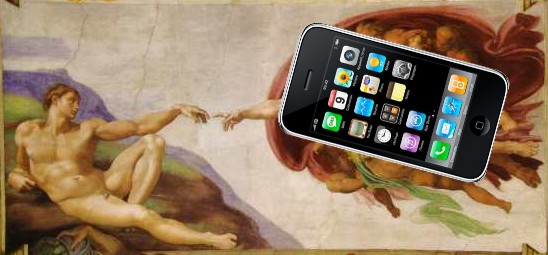
Some of us have been dragged into the electronic age kicking and screaming. Our apartment at home is full of books, and they are made of paper, not plastic. In college, some of my friends and I vowed we would never use computers—harbingers of a cold, new age. It was a vow I kept until working on my doctorate (pretty much). Despite keeping this blog, I really have very little native intelligence about the world of circuit-board, integrated circuit, and chip. I would probably be the last person to have thought to ask for an iPhone—I frequently forget to take my cell phone with me, and when I do, I sometimes neglect to turn it on. So I was stunned to find an iPhone with my name on it yesterday. I looked at it like an alien baby, wondering what it might eat. As the day wore on, however, I started to see some of what it might offer.

Siri, the software personal assistant for iOS, responds in a friendly voice to questions asked. “She” (and you can’t help personifying her) is like a personal portal to the mind of the Internet. You want a pizza? Siri knows the location of all the places in your neighborhood that deliver. You wonder what the most recent nation in the world is? Siri will look that up for you. (South Sudan, as of yesterday, according to her sources.) My brother-in-law, intrepid with electronics, and knowing my background, asked Siri about God. She replied, “Humans believe in spiritualism. I believe in siliconism.” Someone at Apple clearly has a sense of humor, but the more I began to parse this statement, the more I realized Siri could use a personal assistant in the religion field.

Spiritualism is not the same as spirituality; the former is the belief in ghosts and the religions that accompany that belief, such as Theosophy. Clearly in an American market, any product that denied belief in God, even by implication, would become the product of a witchhunt. The sad image of heaps of iPhones being melted as leering evangelicals look on is disturbing but unfortunately easy to conjure. Best to program Siri to deflect any potential ire with humor. The second component of her pithy reply is siliconism. As a religion, it is clearly underway all ready. Who reading this blog can imagine life without electronic media? Be honest! What does a computer believe? Do androids dream of electric sheep? Does Siri say her prayers as she’s being shut down for the night? What does it mean to believe? So now I have an iPhone. The day before yesterday I couldn’t find my app with both hands. Now I have a personal religion consultant. I suspect I’ll be starting a new religion by the end of the day—the First Church of Christ, Programmer. Its headquarters will be wherever a true believer is located at the moment, as long as s/he has an iPhone. Blackberry users will, of course, be considered heretics.


England’s Christian Gift

As much a part of the holiday season as Santa Claus and baby Jesus, the Salvation Army bell-ringers are out in full force. As I drop a quarter in the bucket, I ponder the strange lineage of this denomination. When the cheerful holiday shopper convivially donates spare change, few, I suspect, know that they are supporting a church. The Salvation Army is one of the bewildering number of denominations to spring from English Christianity. The Church of England, small in the United States, but imperial in much of the world, grew amid a religious unrest that spun off countless dissenters. We all know the story of Henry VIII and his not-so-merry wives. His political move to focus the official religion of England on the crown led to the Puritan resistance. Puritans left England for the Netherlands, and then on to America where they flocked to New England to develop into Calvinistic Congregationalists.

Meanwhile back in Amsterdam, some of the English Separatists evolved into Baptists. Baptists were also congregational in polity and also found the religious freedom of America to be appealing. (Now they select our elected officials.) The Puritans had helped develop the Presbyterian movement as well, with dissenters in Switzerland. Still at home in Britain, the Church of England waffled between Catholicism and Protestantism for some time. The evangelical fervor that emerged with the Wesley family led to the Methodist Church, which remained attached to the Church of England until its founder’s death. In America the Methodist Church grew rapidly. During the era of religious revivals the Adventist movement grew out of Methodism, as did the Church of the Nazarene, the Holiness movement, and Pentecostalism. All of them today are major denominations. Even the Anabaptists tip their wide-brimmed hats in the direction of the English dissenters. The Plymouth Brethren, inventors of the Rapture, were another English-derived denomination, as were the Wesleyan Churches.

What does all of this have to do with the Salvation Army? The Salvation Army was founded in London by a Methodist minister, William Booth, and his wife Catherine. The movement adopted quasi-military mythology and ranks, and soon grew into a church of its own that supported what would later become the Social Gospel cause. Known primarily for their charitable works, they are yet one more splinter from the tree of English Christianity. Perhaps the Christmas tree is an appropriate analogy for the Christianities to spring from Henry VIII’s loins. Like the pine’s many branches, each with its ornaments, Christianity in England sent its twigs in all directions. Counted together, the descendants of English Christianity far outnumber any other Protestant grouping. Just a thought to share while waiting for the quarter to drop.


Tebow or Not Tebow?

It is time to bow to the inevitable. I am not now, nor have I ever been, a sports fan. Every web page I open, however, seems to feature Tim Tebow, as if the media had never seen an evangelical before. Where have people been? What is even more amazing is that this athletic kid has invented an entirely new human gesture, “the Tebow.” Incredible what young folks can accomplish these days. And as Saturday Night Live has showed us, Jesus really isn’t that much of a football fan after all.

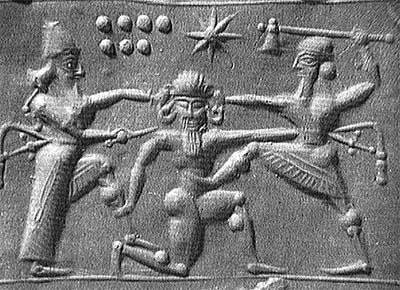
Ashamed at my naiveté, I decided to research the history of tebowing. What I found shocked and amazed me. Like so many modern day marvels, Tebowing seems to have been invented by those prescient Sumerians. Even before humans perfected the Tebow, semi-divine characters showed them how. This cylinder-seal depicts the monster Humbaba illustrating the correct posture to Gilgamesh and Enkidu. They do not, apparently, take kindly to his correction.

In the example below we see a rare double-kneed Tebow performed by an Asian football god while a hopelessly underchurched Joe Paterno looks on, hopelessly standing.

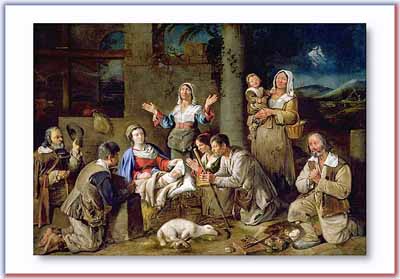
Fast forward a few centuries to a seasonal scene and we find shepherds tebowing to some baby. It is a fair guess that they suppose the baby to be a football incarnate.

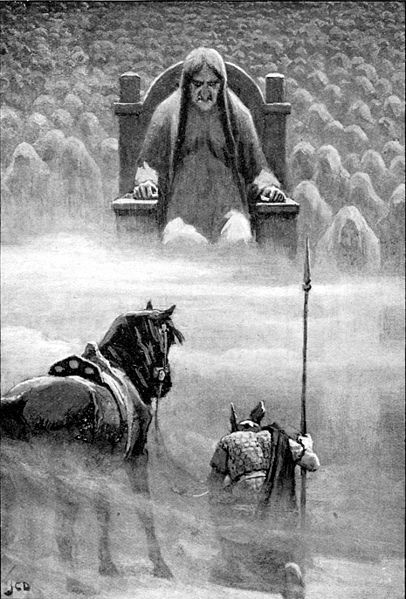
Lest we think the Tebow has been coopted by the Christian crowd, we must remember that no religion has a copyright on humility. In this scene from Norse mythology, a clearly pagan Hermod tebows before the goddess Hela. She does not look amused.

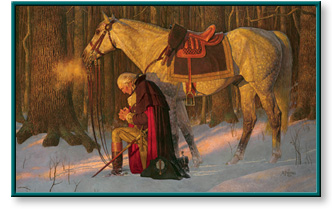
Americans, who after all claim to have invented the Tebow, can trace the gesture back to our founding father himself. In this famous painting of George Washington at Valley Forge, just after the crucial touchdown, the great man can be seen tebowing in the snow.

The snow is a great segue to the Cold War. Here, in a government photo, we see Soviet naval infantry tebowing as they contemplate the big game. They are not now, nor have they ever been, Broncos.

Now, none of this resembles the education I received during my three degrees in religious studies. No matter. ‘Tis the child becomes the man, as they say. And since a little child shall lead them, we can all learn to tebow as if there were no tomorrow. If the actual Tebow is as bright as the sports-scholarship students I taught at Oshkosh, Rutgers, and Montclair, the education of the future will include a lot lower academic expectations and, I suspect, lots and lots of Levis with holes in the knees.


Christian Window Cleaners

In the city, with all the traffic, windows sure can get dirty. I often arrive in Manhattan around 7 in the morning, before the crowds grow too intense. It is a favored time with street-level window washers. There’s a lot of glass in the city, and when doing tall windows they need to use long poles, and that can be tricky with hundreds of people trying to get around you. So when I saw a window washer yesterday, I thought nothing of it. Then I noticed the red cross embroidered on his jacket. The back read “Christian Window Cleaners.” I tried to get a picture, but I didn’t want to be obvious. Even New York has its limits. The poor guy’s jacket already made him a target for stares, but I was intrigued. Long I had suspected my windows to have been cleaned by pagans, on account of the smears.

Businesses have been using the Christian cache to drum up the drachmas for decades, but for some reason, this particular business struck me as transparent. Are non-Christians going to peep in the windows while they’re cleaning? Try to steal your stuff when you step out to Starbucks? What does it say about those of us who never clean our windows at all? The implications suddenly seemed to grow enormous. I see window washers every day. Most of them seem like descent, upstanding citizens. If you’re going to go for a business where people are concerned with fairness, why not Christian cabbies? That’d be a big hit in New York. The prices, however, would remain extortionate. Such is the way of religion.

The eyes, they say, are the window to the soul. If so, window washers are given a unique privilege of looking inside. We all tend to be cautious about what we leave in front of windows, that which we want the world to see about our lives. At dusk we pull the shades. Perhaps it really does matter who stands close to our glass. But as C. S. Lewis once noted, a Christian and a pagan boil an egg the same way. Of course, C. S. Lewis is big business now among the evangelical crowd. His more sensible words are generally overlooked as he is stuffed into a coffin-shaped wardrobe of conservative dimensions. I suspect that his smoke-smeared windows were cleaned by people after whose faith he never inquired. But then, I am only looking through a glass darkly.


Master Cat

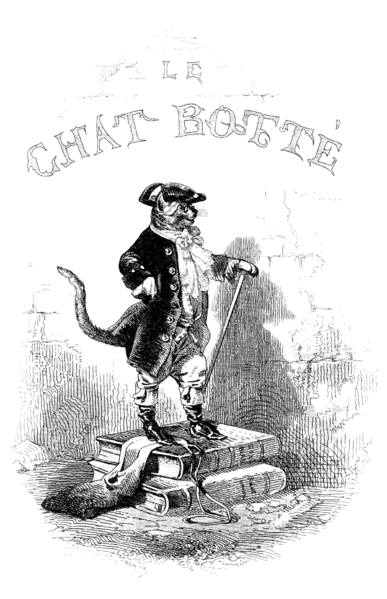
Okay, so I’ll confess having gone to see Puss in Boots yesterday. The movie had been getting good reviews and I’ll admit to really liking the first Shrek movie. The second Shrek movie, with Puss’s debut, was not bad. After that something changed. Anyway, it looks to be an intense week ahead, and I needed a little mindless release. Often on this blog, I mention horror movies and how fear ties into the concept of religion. Since working at Routledge—a publisher noted for its many books on religion and film—I’ve taken a renewed interest in finding the religious imagery in many different genres of movies. This is something I regularly undertook as a religion major in college and beyond, but it is an area of renewed interest in my mature years. So it was off to the theater.

One aspect of Puss in Boots, however, proved a distraction to me. The character of Humpty Dumpty scrambled in my mind with the same off-color image of the egg man in Jasper Fforde’s The Big Over Easy, a book I read this summer and blogged about earlier. In both stories, the egg was not what he seemed to be. A foodstuff with a decidedly darker side. In both stories, however, Humpty Dumpty was somehow vindicated, more a victim than a perpetrator of crime. It is not always easy to be a good egg. In Puss in Boots, however, this is where the religious imagery came in. The fractured fairytale storyline has Puss and Humpty (and Kitty Softpaws) growing a giant beanstalk and stealing the golden goose’s gosling. This is part of a twisted effort at revenge by Humpty; a kind of egg’s Benedict Arnold moment. Well, this is a children’s movie, so nobody is really bad. Humpty repents and sacrifices his own life to save the town. When he falls to his death, a golden egg is revealed inside. Mother Goose flies the golden Humpty up to the castle in the sky, disappearing in a blaze of heavenly sunlight. Life after death, the eternal reward. Heaven, Hollywood style.

Movies often serve as a source for and reflection of social values. Thus watchdog groups keep a close eye on what the silver screen reveals. Puss in Boots passes the test on highlighting the redemption theme. Although he is still a wanted criminal by the end, Puss (as well as Humpty) achieves redemption by making good on all the wrongs he committed against society. Almost sermonizing at points, the movie is another example of how mainstream media ends up on the side of traditional values. A deeper truth, however, may lurk beneath the celluloid. The true hero here is the Spanish Puss rather than the Angelo Humpty (and decidedly red-necked Jack and Jill). The religion it underwrites is, naturally, the civil religion expected by American audiences. Just maybe there is an awareness of social justice here as well.

The original


Step in Time

Magical blingdom

Mary Poppins is one of my wife’s favorite childhood movies. I first saw it in college and, being a parent, have seen it many times since then. Now when I walk through Times Square I see it is playing at the New Amsterdam Theater, and if I time it right I can hear bits of the musical on my way to the Port Authority after work. As is normal in the universe according to Disney, nothing is really ever seriously wrong in the London of 1910. Troublesome children are doing nothing more than chasing a kite and attempting to connect with an emotionally distant father. Even when he loses his job, Banks merely suffers an inverted umbrella and a punched hat. Joblessness lasts for only a day. Everybody sings. When we watched the movie again recently I considered how such an escape is healthy for those of us accustomed to a somewhat harsher adult existence. Joblessness is often long-term and desperation reeks as we find ourselves distanced from that which defines our existence.

Mary Poppins represents a divine figure in the Disney universe. She comes down from the heavens during a troubled period of history, judiciously utilizes a bit of magic, and heals the broken-hearted. When things go bad, Mary Poppins is there to make them right again, even on her day off. She shows the cold-hearted world of business that there is a better way. Who would you rather be—George Banks or the Bird Lady? Who is happier?

“All around the cathedral, the saints and apostles,” saintly Mary sings, “look down as she sells her wares. And although you can’t see it, you know they are smiling each time someone shows that he cares.” Where are the saints and apostles of Wall Street? Instead the optimistic view of humanity plays itself out on Broadway where the intensity of humankind spans from homeless beggar to movie star. Fantasy is underrated. Our minds have evolved the capacity to allow us to escape the realities of suffering, disappointment, and angst. When a week of trouble and turmoil has held us in its grip, we may still escape to the magical kingdom of our choice to find bread and circuses. Mary Poppins does not condemn the greed of Mr. Dawes and the rich die laughing. It is difficult not to like Mary Poppins, the angelic symbol of care that doesn’t disrupt the system. And Disney will see no end to its place among the wealthiest families on earth. It is a small world, after all.


Pay No Attention

I’m not sure whether to feel insulted or flattered: apparently WordPress has deemed this blog worthy of enough hits to place an advertisement on it. The ad feels like a wart. Probably because religion is deemed an “embarrassing” topic, WordPress has not given much promotion to my persistent efforts; I’ve only reached the coveted features page only once. Yet I may be targeted for an ad. Those who actually read my posts will know that I find commercialization banal and trivializing. Doesn’t mean it doesn’t happen. Sometimes it can even be good. I guess in this context, I’d like to find out why my little blog was singled out for such attention.

Maybe I’m over-thinking this. (Do I hear a gasp of astonishment from my readers?) I believe a blog should be a place of ideas and discussion. Of course, I believe the same thing about religions: they should be open to discussion about what they’re trying to do. They should also give truthful responses to those who inquire. Otherwise it is just false advertising. Perhaps I’m only annoyed since yesterday’s post (where the ad first appeared) was heart-felt and serious, while the ads I saw were light-hearted and funny. It is the price you pay for not owning your own server, I guess. I’ve trespassed into the realm of giving my words to a commercial vendor (not for any profit, I should add), and can I begrudge them their attempt to make a buck by my efforts? Only a writer knows how much of her or himself they put into their words.

I’ve just come into the great throne-room and I wish to say to my readers, “Pay no attention to the ads behind the posts.” I do not put them there. I gain nothing from it but a space where I might express my thoughts without having to pay fees for my own domain name. “Get a publisher,” the cynical might say. What publisher would pay for the observations of a highly trained specialist who commands no attention in the academic world? I guess I should be grateful that WordPress even allows me to scribble on their pages. What do I hope to get out of it? Open minds and free thought, and perhaps a small dose of sanity when approaching religion. I’m not selling anything, so please ignore the ads. Now, after this break for “station identification” I guess I can get back to my idealized world where no money is required for ideas changing heads.


Who’s to Say?

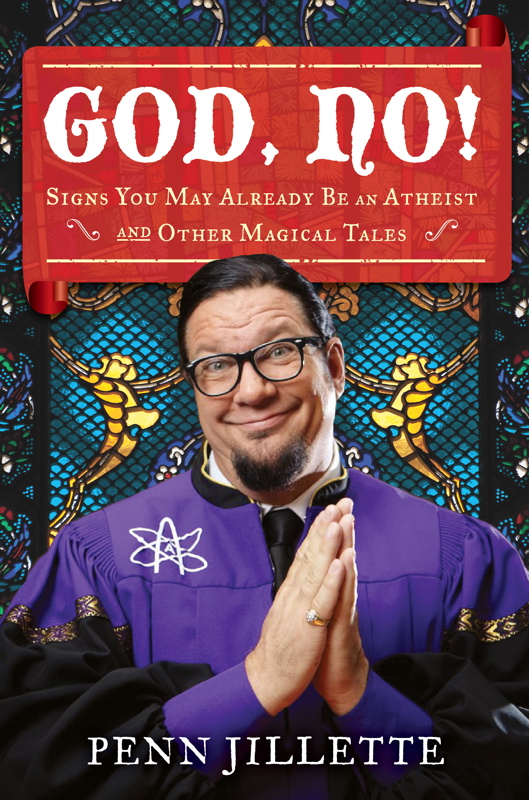
Stereotypes are so easy to fall into. Having been “typecast” myself, early in my career as a “seminary professor” and a “conservative”—neither of which matched my mental outlook at all—I eventually had to abandon higher education as a career option. Why did I take a job that didn’t fit? If you’re asking that question, obviously you missed the 1990s. It was a brutal time to be looking for a job; there was this recession… wait a minute. What decade was I writing about again? In any case, many people will always remember me in the various roles I’ve played as I sought to actualize my ideal career. It is always interesting to see how others break out of their expected roles into new venues. Penn Jillette of Penn & Teller has established a reputation for speaking his mind. To those with limited experience, such as myself, he is stereotyped as a “magician,” more specifically, a “bad boy magician” who gives away the secrets of the guild. To find out that he is a writer was a kind of epiphany.

I read his new memoir/confession, God, No! this past week. I’ve always been cognizant of the strangeness of a world where someone may speak authoritatively on the basis of star status, but Americans love their performers. I’ve enjoyed the Penn & Teller acts I’ve seen on television, and after reading Penn’s book, I think I would like him in person. I can’t agree with him much of the time, but his honesty and good moral sense are very winning. I seriously cannot remember the last time I read a book that made me snort out loud with laughter or try to sink even lower on public transit so the polite person sitting next to me would not be able to see all the profanity on the pages before me. The book itself very loosely follows the Ten Commandments, which, surprisingly, the author largely agrees with in principle. The essays are all over the place, but the libertarian spirit is difficult not to admire. His appreciation of rational explanations for the world is admirable.

Probably the most difficult point of agreement for me, however, is his definition of an atheist as anyone who do not know if God exists. He does have a chapter lambasting agnostics, but as a stickler (as much as anyone in religious studies can be a stickler about anything) for definitions, it is useful to distinguish atheism and agnosticism. Saying one does not know is not the same as declaring one is certain. Since the existence of God can be neither proven nor disproven, those who say God does not exist believe that assertion. Those who say God exists also believe their assertion. Objective knowledge, in our current state, is not possible. I had to agree, in the final chapter, that faith causes most of the problems we find associated with religion, but I’m afraid faith is a huge part of the human condition. God, No! is not for everyone. Those who read it will, nevertheless, find an author as convinced as any evangelist that he’s right. And if they are honest, they will have to admit to having laughed along the way.


Moosechief

The moose, depending upon which standard you use, is either the largest or second largest known land animal in North America. This aspect of the moose, as well as its general docility, has often spurred me to the northwoods in search of the elusive beast. Those of us with few tracking skills, however, often must be approached by the greater party rather than finding it. My trips to Maine have seldom yielded moose, but in my periodic forays to Idaho the creature sometimes makes an appearance. This past summer I spotted two of them in the west. In their ungainly way they are beautiful animals. Large they may be, but intelligence is not a necessary corollary to size.

Moosing around.

From about the 1840s, up to its formal passing into law in 1919, prohibition ranked high in the list of evangelical Christian concerns. A distinctly Protestant issue—Catholics still recognized that any tipple good enough for Jesus was good enough for them—the outlawing of alcohol was understood to be in keeping with the Gospels. Some groups even suggested that Jesus had been quaffing Welch’s, or the first century equivalent thereof, rather than Mogen David (the shield of David, after all). Latest research seems to indicate that fermentation was known before the Sumerians ever appeared, and we all know what happens when cavemen have too much to drink. Strangely, this became a religious issue along about the time Fundamentalism began to appear. But Fundamentalists considered neither the practices of Jesus nor the moose.

A story in today’s New Jersey Star-Ledger concerns a moose in Sweden. Known for their liberal social values, the inhabitants of Sweden are often presented as champions of free lifestyles. A moose near Gothenburg apparently had trouble steering herself after eating several fermented apples that had fallen from a tree. The inebriated moose lodged herself in a tree fork. The rescue involved bringing a crane to the scene to release the trapped, and slightly disorderly, animal. Such a story makes me wonder if prohibition should not be among the laws of the jungle. After all, the observation of nature often calls the certitude of many religious doctrines into question. If God prohibits alcohol, we might rightly wonder, why are there moose in Sweden sleeping off a hangover?


The Truth of Ghosts

Strange noises in the night. Objects moving of their own accord. Disembodied voices laughing fiendishly. It must be nearing autumn. After having a brief discussion on novel writing with Brent Monahan earlier this summer, I decided to read his book, The Bell Witch: An American Haunting. Setting the story in the “found manuscript” genre, Monahan tells this famous account through the eyes of Richard Powell, one-time elected official in the Tennessee House of Representatives. The can be no doubt that the story has some basis in actual events, but the serious study of “ghosts” is a taboo that serious scholars break at their own peril. On my long bus rides this week I read Monahan’s version of the story as the rain continued to fall. As I read I was continually reminded how dependent we’ve become on genre labels. The book purports to be an eyewitness account and there is no genre declaration on the back cover. The Library of Congress Cataloging in Publication (CIP) data declares it fiction. Where is truth to be found?

Human beings are capable of great and terrible acts. Working in a city the size of New York after having been raised in small towns, the amount of distrust is very blatant. Security is evident in many places with cleverly locked doors and guards surveying those who enter buildings. We simply can’t trust everyone. Or anyone. When it comes to literature, stories often blend fact and fiction. Guidelines on books or classifications in bookstores help us to decide if our reading material is conveying actual events or not. The Bell Witch is one of those reminders that sometimes the truth will never be known. Historical records can be searched, but even these are often subject to human error. If someone tells us a ghost story, we base the veracity on the teller’s reputation. At the end of the day, sometimes we just can’t know.

Perhaps the most poignant aspect of Monahan’s version of these events is his reconstruction of the history. Although the supernatural remains intact at the end, Powell is able to uncover the “fact” that Betsy Bell was abused as a child and that the poltergeist-style events that pervade the story are an extension of her trauma. Actually, the treatment is very closely tied to the religiosity of the Bell family, good church-going folk who ran afoul of a fine point of church teaching. In the end, it is this rejection by the church that pressures John Bell to the point of incest. Is the story true? Yes. Did it every really happen? Probably not. The two are very different questions. In a society that increasing seeks easy answers, stories like this remind us that we are all a blend of fiction and fact. Easy answers are inevitably wrong. The movie An American Haunting once again revived “the Bell witch” but also raised the specter of the ambiguity of truth. Is it out there? If it is, how will we know when we’ve found it?

What really happened here?