Funny about Irving

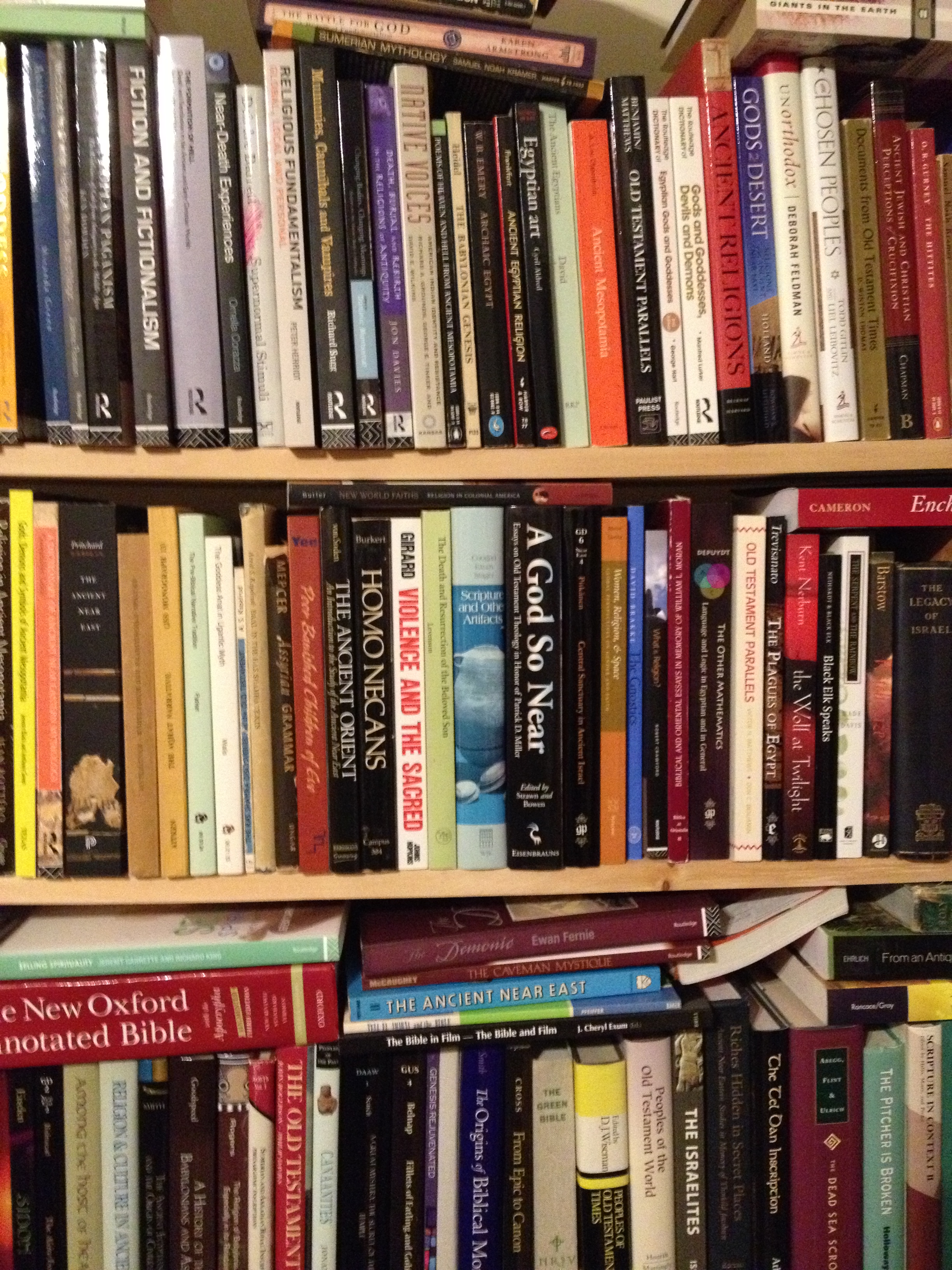
The successful writer, John Green, has been on a tuberculosis kick lately.  You see, writers swing that way.  As the writer of books few people read, I’ve had my own little Washington Irving obsession lately.  So it is that I read Martin Roth’s Comedy and America: The Lost World of Washington Irving.  Roth knew a lot about comedy and he framed Irving’s early work as burlesque, rather than the more usual categorization as satire.  In doing this, he groups Irving together with other writers in the genre such as Laurence Sterne (who sounds like a fascinating character) and François Rabelais, among others.  (Jonathan Swift and Oliver Goldsmith also make appearances.)  Irving is analyzed in comparison to these other writers and his comic style is considered as polite satire, political satire, and domestic humor, as well as burlesque.

Insightful while occasionally assuming quite a bit on the part of the reader’s background, Roth provides quite a bit of good chewing here.  Roth was, by reputation, an unorthodox thinker.  He sounds like the kind of professor you would’ve wanted to have had in the classroom.  A book trying to parse comedy is a good sign, I suppose.  I learned a lot from reading it, and was pleased to see that I had independently come to some of the same conclusions he had.  That signals to me, anyway, that I’m not too far off track.  The benefit for those interested Irving is that, while critical, Roth isn’t judgmental.  It has always seemed odd to me that the premier biography of Irving had been written by a scholar who really seemed to hate him.  Roth, on the other hand, likes a good laugh.

As a used book my copy had lots of pencil marks in it.  So many that I had to erase them so that I could spot my own.  When I worked in the theology library at Boston University one summer I was introduced to the electric pencil eraser.  This was a device for heavy-duty removing of the marks of thoughtless patrons.  Before working for the library I stared in wonder when I would see students (perhaps not the brightest) sitting in the library, underlining in books they’d pulled off the shelf.  I think I was always too well aware that library books were not my own.  Because such folks, I’m sure, the electric pencil eraser was invented.  None of this took away from my enjoyment of Roth’s book.  I learned quite a bit about Irving’s context and, as an added bonus, got to remember using an electric eraser.

I would like to have had an image of the book cover, but mine lacks the dust jacket and finding it without violating copyright was difficult. I tried to trace this image to its origin, but I found it on Pinterest and the link didn’t take me back to the original poster. If you see and own this and want me to erase it, just let me know.

Eternal Return

Amazon gets a lot of bad press.  For me, anyone that sends me books gets a warm fuzzy association.  Besides, returns are a snap.  Amazon has sent me the wrong item a time or two.  You simply let them know and they’ll refund you.  No fuss, no muss.  Twice recently, in my effort to support both the planet and used book vendors, I have received the wrong item.  Here’s where I praise Amazon.  The most recent vendor (reputable and an old player in the used book market) required a multi-step effort to even make the claim of a wrong item, and then wouldn’t pay for the return.  Let me get this right: it is your mistake and I have to pay for it?  Just because someone who apparently can’t read the title put the wrong book in the bag and it took two weeks for me to receive it?  Is there any wonder people buy from Amazon?

To err is human.  I get that, believe me I do.  But if you make a mistake you fess up, you don’t charge the customer for your error.  Have they not realized that looking at the price tag after a trip to the grocery store is more effective than watching a horror movie?  I can’t afford to pay for their mistakes.  Then my existentialist friends come to the rescue.  Yes, they remind me, this is all absurd.  A world based on inheritance and privilege, where an active and alert mind sees that when an error is made, the one who did not make it takes responsibility.  I’m no fan of capitalism, but Amazon doesn’t make me pay for what I didn’t order.  I guess size matters after all.

Perhaps there should be caveats plastered across the internet: buy at your own risk.  If we make a mistake with your order, you will be responsible for it.  It just kills me to complain about book vendors.  Probably I care for books a little too much.  I try to buy responsibly, otherwise there’d be no house to, well, house the books.  I just don’t like feeling cheated when purchasing a used book.  It’s out of character for book vendors.  They’re the modern saints, those who are looking out for the good of the world.  Eventually the seller relented, but not happily.  My associations of Amazon will always go back to when I first discovered that there was a website on which you could find just about any book and have it delivered, and often cheaply.  I miss those days and their optimism.  I need that warm, fuzzy feeling again.  I need to buy a book.


Disputing Tradition

I respect tradition.  Normally.  Once in a while tradition should be disputed.  The other day I was reminded of the seventeenth-century aphorism, “The early bird gets the worm.”  As a lifelong struggler against literalism, I had to get over the bird and worm part, and was thinking early meant, well, early.  This, combined with even earlier saying “Early to bed and early to rise makes a man [sic] healthy, wealthy, and wise,” convinced me that early did reference waking.  And these saying require some revision.  I’m an early riser.  I don’t get many worms and although I seem to be mostly healthy, I’m certainly not wealthy, and many would question my wisdom.  So why do we encourage people to wake up early?  The fact is most people stay awake late.

I’ve noticed a few things about early rising.  One is that I can get a lot of creative work done with no interruptions.  My last three books were mostly written between three and five in the morning.  (The royalties, however, never even approach the cost of the materials required to write them, so strike the “wealthy” part of the equation.)  I’m ready for early meetings at work.  I can think of six impossible things before breakfast.  But.  (There’s always a but.)  Afternoons are my evening hours.  I lose my focus and dread late (i.e., after 3 p.m.) meetings.  As my family is beginning their fun part of the day, I’m heading to bed.  I can’t do evening meetings, clubs, or hobbies.

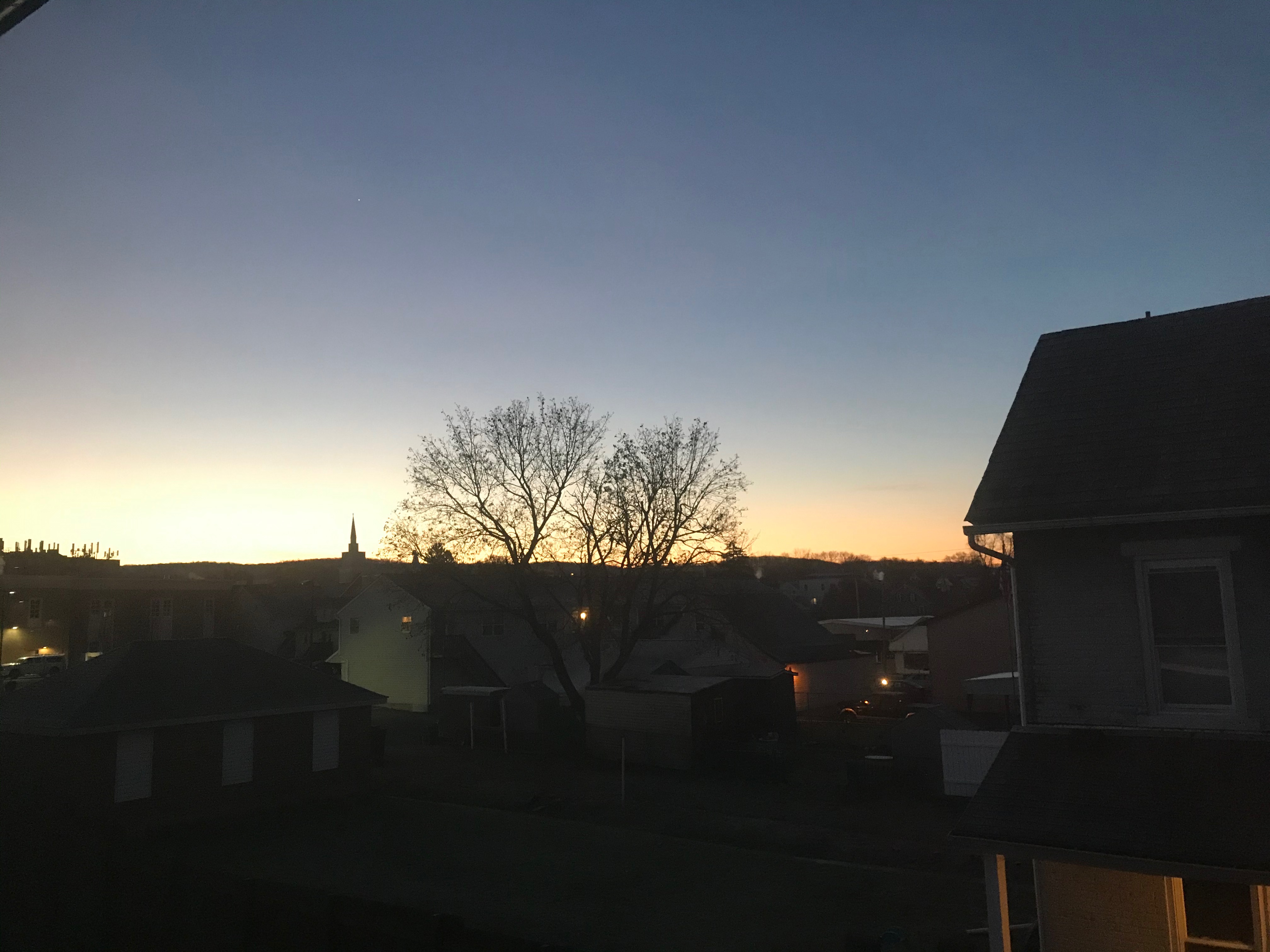
So why do I do it?  For one thing, I can’t not do it.  I awake early as a matter of biology.  Over the years it’s slipped back from about 5 a.m. to 3:00.  I remember being a child at sleepovers at a friend’s house and waking early, watching the sun stream through the blinds, wondering when somebody else might wake up to play.  In college it was an advantage to get to the showers first.  As I professor I did my research before the duties of the day took over, preventing any real progress.  None of this, however, has made me wealthy.  I do have to admit that I could probably get worms, if that were something I desired.  I see animals out and about when I’m jogging during morning twilight.  There are likely worms about too.  I’m usually awake before the birds.  And this has made me question traditional wisdom.  Of course, I don’t claim to be wise, either.


Dinosaur Planet

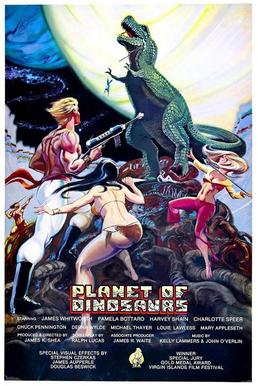
Time, as the crew of the Odyssey finds out, can cast things in a different light.  Admittedly I watched Planet of the Dinosaurs because it was free on Amazon Prime and I was having trouble keeping awake on a weekend afternoon.  It’s the kind of bad movie I’d’ve loved as a kid, and if I’m honest, I still do.  Although it was released in 1977 (it’s hard to believe Star Wars was the same year) the award-winning (!) stop-motion dinosaurs are so unbelievable that it hardly seems possible that the film’s budget was almost all spent on them.  It certainly didn’t go to pay a writer because the dialogue is about the cheesiest I recall ever hearing.  Jurassic Park was still a decade and a half away, after which no stop-motion dinosaur would ever be credible again.

Still, bad movies aren’t all bad.  In fact, there’s an aesthetic to them.  For me the real draw, as with an Ed Wood movie, is that these directors were struggling against an inadequate budget.  This isn’t in the Spielberg league.  And you can only afford so much.  The idea is akin to that of Planet of the Apes—which benefitted not only by a better budget but by a script by Rod Serling.  A planet similar to earth but caught in a different time.  And it’s a chance to explore what it would’ve meant for people and dinosaurs to coexist, which, despite some ark hawkers, never happened.  If it had we probably wouldn’t be here to make bad movies about it.

Our set of nine castaways manage to survive with only four eaten by dinosaurs.  And when these stop-motion reptiles aren’t on screen, the people are filmed walking, inanely talking, or thinking that a stockade of sticks and twine will keep out nine metric tons of Tyrannosaurus Rex.  There’s an attempt at social commentary when the vice-president of the company funding the mission realizes that he’s not the boss among castaways.  Where there’s no money, the balance of power shifts.  Of course, he gets impaled by a Centrosaurus.  At the end, the five survivors have settled down, built a house, and started having children.  They look pretty good for having survived on dinosaur meat and berries.  It helps that the corporate VP isn’t around.  I watch movies like this because, like James Shea, I’m on a tight budget.  And Amazon Prime often dictates what I watch when I’m having trouble keeping my eyes open. 


Friends and Dreams

The mind is a labyrinth.  Ever since the time change (especially), I’ve been waking with the weirdest dreams.  One involved someone I haven’t really thought about for years.  Someone I knew in college and who was a close friend, but who’s fallen out of touch.  (And who would likely not approve of my evolving outlook on things.)  Why she came out in a dream is a mystery to me.  It does give me hope, however, that all those things I think I’ve “forgotten” are really still in there somewhere.  A friend once told me that it’s not a matter of “remembering” but of “recollecting.”  He claimed that the memories are still there.  Ironically, I can’t recollect who he was, although I think it was someone I knew in college.

My generation’s ambivalent about the internet.  Most of my college friends I simply can’t find online.  I recall one of my best friends saying he would never use a computer.  I suspect he’s had to backslide on that, for work if for nothing else, but he’s not available online at all.  The same goes for people my age at seminary.  Some I occasionally find through church websites, but honestly, most of them have better pension plans than I do and have retired to become invisible.  We children of the sixties are likely the last generation that might be able to make it through life claiming never to have given in to computers.  It took quite a bit of effort to get me over the reluctance.  One of my nieces set up this blog for me nearly 13 years ago, otherwise I’d still be hard to find.

But minds.  Minds can, and do change.  My mind was dead-set against computers in college.  For one class I was required to do one assignment via computer, and I did that task and that task only.  Seminary was accomplished with a typewriter and snail mail.  Even my doctorate, done on a very old-fashioned Mac SE, was purely a feat of word processing.  Nashotah House was wired during my time there, but that was mainly email.  My mind was slowly changing at each step of the way.  I wasn’t becoming a computer lover, but I was realizing that I was learning something new.  Now I can’t get through the day without writing and posting something on this blog and sharing it on Twitter and Facebook.  And checking email—always email—to see if anything important has come in.  And, perchance, someone I had a dream about might actually email me out of the blue.


The Importance of Sharing

Growing up with siblings, I remember it well—my mother instilling the message of sharing.  If something good came my way, I could count on hearing “Share that with your brothers!”  These days sharing is easy and it only costs you a click.  And it’s very important.  Especially to those of us with soft voices.  You see, there is another new Wicker Man book coming out this year.  This is the 50th anniversary of the movie and there’s a lot of interest.  The other book is getting quite a bit of free press because the publisher knows the importance of sharing the information.  Click that share button!  Meanwhile I’m watching what we in the biz call the NBA (New Book Announcement) creep very slowly out of its box.

A couple days ago I wrote about how Amazon isn’t aware of the book, and Google can’t seem to find it.  In the intervening days it has now shown up on Lehmann’s bookselling shop in Germany.  You here, reading this, are the only people in the United States (if you are) who know about this book.  My voice isn’t very loud.  I don’t get retweeted and I don’t even have a cover image to share yet.  I’m still waiting for it to appear on the publisher’s website.  (This is one of the reasons I’m (hopefully) moving on from publishing with academic presses—they tend to be a touch slow.)  What can you do to help?  Share this post.  It’ll only take you a second.  Look down below this post and you’ll see this:

Of course, I can accept that you don’t like what I’m saying.  But if you’re on Reddit, Facebook, Twitter, or Pinterest, you can share the misery.  All it costs is a click.  The thing about the internet is that little things can add up to a lot.  That’s the whole idea behind websites that take a small cut to get the item you want out to you.  Life by a thousand cuts.  If enough people share, even those with a “Yop” to utter can save all Whos, right Ted?  I used to think all those YouTubers were a bit gauche with reminders in each and every video to click the “like” and “subscribe” buttons.  Now I’m coming to understand that that’s the way life on the internet is lived.  And May Day is just around the corner. Notice for my book will continue to creep out slowly.  Meanwhile I’ll look at Lehmann’s website and hope for the best.


Rock the Absurd

Okay, so it was bound to happen eventually.  You see, the internet makes us all interchangeable in a way.  I occasionally lament being confused by various algorithms with other “Steve Wigginses” out there (and there are many).  So while innocently checking my personal email after work the other day I spied a message clearly not sent by one of the many organizations that spam me constantly.  It was an invitation to participate in a conference.  Now, with a 925 job that’s just not possible, but I always appreciate being asked.  Then I read what the conference was about.  Agriculture.  Why were they asking me to attend a conference on agriculture?  Then I recalled, one of the other Steve Wigginses is a professor of anthropology, specializing in agriculture.  Was this an electronic mail mishap?

It also made me wonder if this poor soul (I don’t know him and have never met him) has been receiving email about horror films and wondering why.  His research trajectory has him trying to help people (which is why I wanted to be an academic in the first place) in a real down-to-earth way.  This made me realize the dilemma of other biblical scholars I know who are interested in monsters and horror, but who also realize that we need to help the world.  I can say from experience that it’s a lot easier to do as a professor than it is as an editor.  At least a professor has a platform to stand on.  And all of this brought to mind the theater of the absurd, tying me back to my younger days.

As I started high school I learned about the existentialists.  Looking at my own life, I saw it was absurd.  The times when I start to get down are when I’ve started to take all this seriously.  This Steve Wiggins, in any case, spends his life trying to figure things out.  But he lives in a world where two and two don’t always come to four.  Anyone who’s been inside an organization with open eyes knows the absurdities—large or small—that go on within it.  As old Ecclesiastes says, the race isn’t always to the swift.  That’s biblical and bankable.  So it’s a bit absurd that three (that I know of) Steve Wigginses are or have been professors.  It’s absurd that we don’t all use our full names because most two-name combinations on the web are going to lead to duplicates.  Mix-ups are bound to happen and we should just enjoy the absurdity we see.

Photo by Steven Weeks on Unsplash

Content Creation

Those who know me know my stand on books.  I’m pretty much defined by them.  I hope my blog makes that clear.  I’m always amazed, however, when someone happens across my little fissure in the internet and offers to send me a book, if I’ll mention it here.  That’s happened probably on an average of once a year over the past dozen or so that I’ve been doing whatever it is I do here.  It’s one of the perks of being a “content creator.”  I know it may sound odd, but being a content creator is a viable career these days.  Not for me—I don’t have nearly enough followers—but for the younger, prettier, or smarter, it is a way of virtually being in the world.  Or being in the virtual world.  I don’t think that means that books are passé.

In fact, I turn down offers to read free ebooks.  I spend all day at work on a computer and when I can finally turn it off, I generally pick up a book.  (Unless the lawn requires attention, or it’s garbage day, etc.)  The  thing about reading is that you have to make time for it.  For a “content creator” I’m not in love with spending all my time online.  I don’t use my phone much at all and I find a paper book in hand to be comforting.  I’m glad to write about those I’ve read in my little fissure here.  And since I sit on the editorial side of the desk, I think that increases my appreciation of books even more.  But honestly, I wouldn’t mind making a little income on what I spend so much time doing.  Maybe reading to keep out of trouble could be a job?

Content creation is like a sponge filter feeding.  You suck in the culture around you, drawing what’s useful into your brain.  Then you make it unique to your perspective and if enough people think it’s worth seeing/watching/listening to, advertisers will begin to swarm.  Or, in my case, they might send books with the hopes that someone will actually read this blog.  And the senders obviously have—at least a little bit—so does this make me an “influencer”?  Whether or not it does (or doesn’t) I do end up, when the day is through, one book up in the equation.  And that’s a good thing, given my stand on books.


Silicon or Paper?

Most of us follow blindly through this tech jungle.  We do it, I suppose, because there are rewards for having the world of information and entertainment at your fingertips.  The problem is that the constant upgrades are expensive and as you approach retirement age—even if you can’t afford to retire—you have to keep spending in order to meet your tech needs.  A few years ago I purchased an app because apparently my laptop was running too slowly.  I do tend to have more than one app open at a time, I confess.  Maybe too many.  But apps take up so much operating memory these days that you can either constantly quit and reopen (if you have a mind like mine) or you can upgrade.  And even then you’re not sure of what you’re doing.

I’m old enough, you see, to remember having to load the program you wanted to use via floppy disc when you booted up.  We all assumed the swapping of discs was the price you paid for being able to, say, type a dissertation without using white-out all the time.  Then we started hearing these rumors of an “internet” with “email.”  I found my first (and it turns out, only) full-time professorship via letter.  Delivered by the post office.  A friend wrote to me about the opening and I sent a fateful letter of inquiry to Nashotah House.  The rest, as they say, is history.  I’ve kept much of the paper of those early days.  The movers always complain that I’ve done so, but I’m between worlds.  I was born in a paper world and I don’t trust this electronic one.  That’s why I still buy physical books.  I’ve had too many devices die on me.  And now I keep only one or two apps open at a time, and forget to look at the stuff on the others—I keep them open to remind me.

It is a jungle, this virtual world.  We like to think it’s civilized but what do we really know?  So I deleted the app that pops up telling me that one app open at a time is too taxing for my computer’s memory.  Then I remembered that I pay an annual fee for such annoying reminders.  I had to reinstall and await the notices again.  Yes, some of my files are big.  I write books, and that’s just the way it works.  So I put up with those yappy reminders because, well, it’s better than swapping discs a dozen times just to type a sentence or two when I have time.


I P.M. therefore I A.M.

While I seldom have occasion to count beyond ten, I sometimes think the 24-hour clock would be a better option.  Since we have to face another major time malfunction (AKA switch to Daylight Saving Time) this coming weekend, I’m thinking about time.  That, and I recently had someone ask me to set up a noon Zoom meeting.  A nooner Zoomer is fine with me, but each time I have to ask is it “a.m.” or “p.m.”?  Parsimonious websites rather snarkily (but correctly) say that it’s neither.  It’s that liminal changeover between ante-meridian and post-meridian.  It, along with midnight, stands outside the a.m. and p.m. system.  Thankfully I don’t have many meetings at midnight, but still, a 24-hour clock, such as military folk like to use, makes sense.  A meeting at 12:00 would always be noon, and 24:00 would always be midnight.

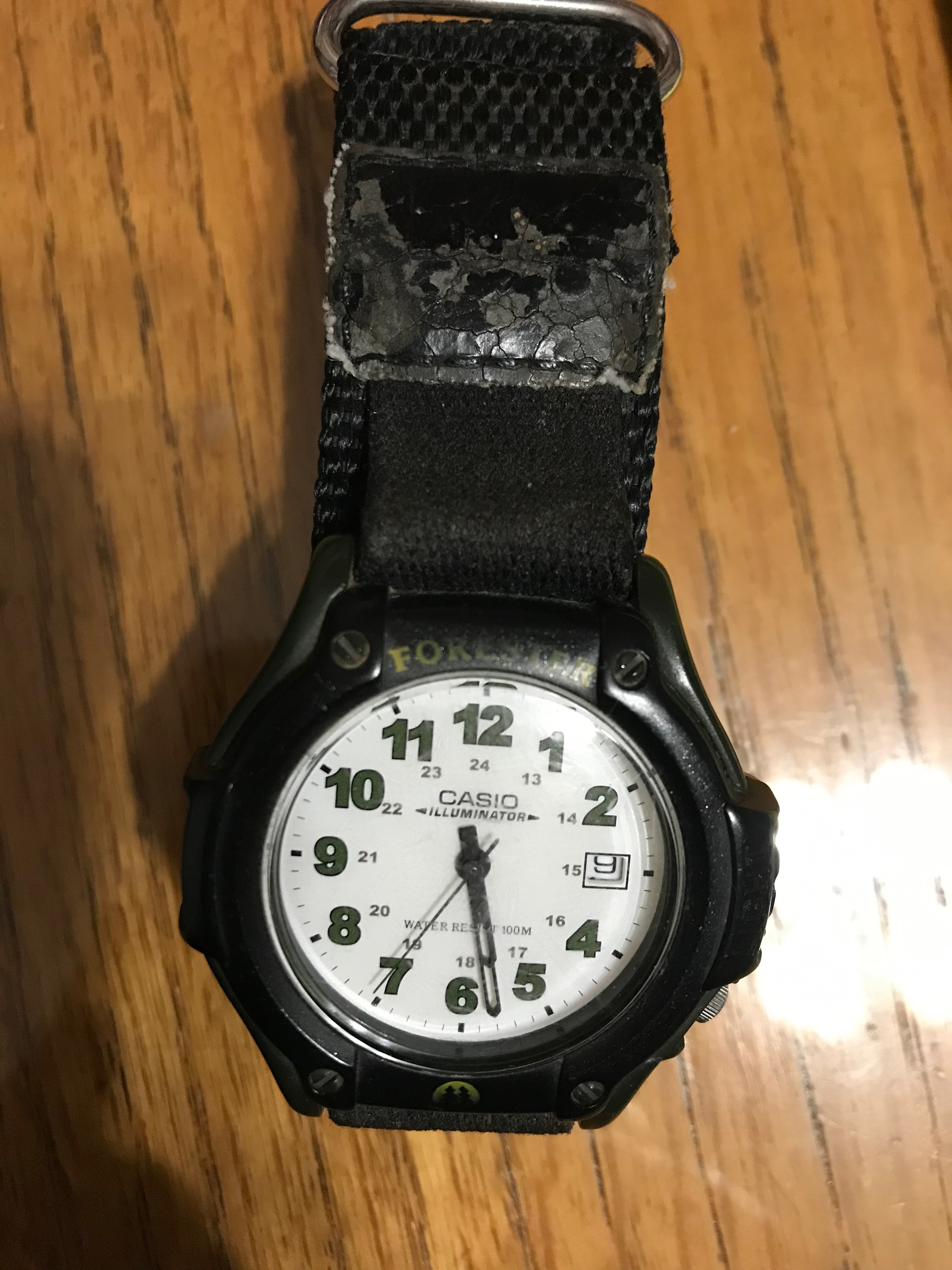
I tend to wake up around 3:00 a.m.  I admit that it’s convenient to mark 3:00 p.m. as the 12-hour awake point in my day.  I could easily adjust to do the same at 15:00.  In fact, my watch—yes, I still use one—has the 24-hour timescale in smaller print just inside the more legible 12-hour one.  I’m sure that we can all count to 24.  Wouldn’t it make sense, in the service of ending confusion about a.m./p.m.?  (Not to mention having to type in all those periods!)  The way we divide time is arbitrary.  The reason that we settled on twelve actually hearkens back to the official title of this blog, namely the ancient world.  The ancient Mesopotamians had a base-6 counting system, unlike our base-10.  When time came to be divided into hours, it was done on a base-6 system, giving us 12 hours of light and 12 hours of night.

Such ancient ideas as these are very difficult to change.  We can’t even seem to agree that if Daylight Saving Time is such a good idea, why don’t we keep it all year round?  I suspect most of us adjust to gradual change more easily than that sudden loss of an hour of sleep.  Even the added hour in the fall doesn’t make up for it.  If we can’t change something that’s obviously that flawed, how can we hope to agree that having 13 to 24 added to our clocks would be better?  Or maybe just round things down to 20, for our base-10 system?  Yes, hours would be longer but maybe we could negotiate fewer of them for work.  But I’m just dreaming here.  And it’s not even p.m. yet.


Foresight

God wasn’t thinking of search engine optimization (SEO) when he was writing the Bible.  First of all, he doesn’t seem to have considered that all the nice, short names he used would soon become the most common in the western world.  And he didn’t give all the characters last names.  Job is particularly egregious because you could be searching for employment and not a complaining old man (you can always find one of the latter here!).  Perhaps he wasn’t aware at the time just how popular his book would become so that just about everything in it appears on some twenty-million webpages and you need some distinctive keywords for SEO.  And this unfortunate high profile has also led to knock-on search problems.

I quite often have to search for bits of the Good Book together.  “Pentateuch” isn’t so bad because it’s a bigger word that most people don’t use every day.  But what about “historical books”?  It’s two words and search engines begin scouring the web for pages that have both words.  And there are plenty of historical books outside the Bible.  Writings?  Poetry?  Even Gospels is used all over the place.  I had to find something about the Catholic Epistles the other day.  My search engine found plenty of places with both words, but not linked together.  (I know the quotation mark trick, but bear with me here as I’m trying to make a point that will perhaps lead to divine intervention.)  I tried again with Pastoral Epistles but the same problem arose.  This is the burden of being so important that everyone copies you.

It’s the price of success.  God surely must’ve foreseen that.  The problem is that Holy Writ predates the internet by so many centuries.  Those who’ve determined how searching works have redefined our lives—have given us new commandments.  Thou shalt not put commas in titles, for example.  Thou shalt use distinctive keywords.  Pity the fool who must find information on a biblical character with only one name.  Perhaps that name is John.  Or David.  Or Mary.  Sure, you can add qualifiers but they’re all common words as well.  The Good Book is a victim of its own success.  And for containing all the prophecy that it does it is truly amazing that not even the creator of the universe didn’t see this coming.  We live in a world driven by tech and although the Bible had a direct role leading to that world, you wouldn’t know it by your standard Google search.


Weathering the Winter

Although it’s been cold out, in many ways this feels like the year without a winter.  Around here we’ve had no real measurable snowfall and temperatures have generally hovered around 40 F, mostly cloudy.  I get cold easily, however, so I need to know how to dress for jogging.  During a warm spell I looked at WeatherBug.  It’s my go-to app for such things.  It told me the current temperature was 49.  Since it’d been in the sixties the day before, that was believable.  Then I glanced at our outdoor thermometer.  It read 39.  A ten-degree difference is significant for jogging, so I called in a third party.  Weather.com said it was 40, much closer to my actual feeling of things—it was chilly inside that morning.  WeatherBug also said it was cloudy, but Weather.com disagreed.  A glance outside showed thin, hazy cloud cover.

Now, I know apps can’t cater to individual needs, but it does seem that WeatherBug was using projections rather than real-time information.  Either that, or somebody was standing too close to the thermometer at the local reporting station, and perhaps breathing on it.  I’m not one of those people who rely on my phone for everything.  I do use it for navigation and snapping quick pictures, but until today I also used it for checking the weather.  I’ve been surprised how often WeatherBug tells me it’s sunny out when I can see nothing but clouds.  Sometimes looking out the window is the best way to learn what your individual weather is like.  Weather is terribly local.

The capriciousness of weather is one of the main factors that led me to write Weathering the Psalms.  Another, of course, was the hope that an academic post might actually consider a guy like me.  The weather has always been a source of personal fascination.  The threat of severe weather, particularly in the Midwest, was a source of naked awe.  I remember standing outside in Illinois with the wide, expansive horizon all around, and staring straight up to a brewing storm cloud thousands of feet overhead.  I didn’t need an app to tell me to take shelter.  Or that time in Wisconsin when a weather system led to repeated, identical cycles of storms that lasted days, leading to localized flooding with rain following a clockwork regularity.  Even then I was a jogger, and for a jogger knowing the weather in advance is important.  These days all that majestic sky drama comes via a device that fits inside my pocket.  It seems we’ve lost something, even though we’re safer this way.  At least within ten degrees.


Something I Said?

I’m very aware of my own insignificance.  I know that I’ll die and be forgotten, just like everybody else.  Even if I manage to survive by some “Kilroy was here” action, the sun will eventually red giant all of this out of existence.  Still, sometimes I wonder if it’s something I said.  You see, I really didn’t know where to start when I published Holy Horror.  I was an editor myself and thought maybe the secret handshake would earn some kind of attention, but no.  And when I wrote both Nightmares with the Bible and The Wicker Man, both were with established series.  And in latter cases, the editor I was working with (long-term employees, both) left.  Left before the book was published and I was left wondering.  Was it something I said?

Not to brag or anything, but I’ve got about the lowest self-image a person can have.  When life beats you up repeatedly, starting at a young age, you quickly learn your place.  But still, all this leaving.  I’m a member of a faith community (if you want to know which one you’ll need to get to know me personally).  This particular tradition requires a meeting with the minister before joining—something that makes good sense.  The first church where we tried this, the minister was in the process of leaving and couldn’t schedule us in.  Then we moved and in our new area, the minister left about a month after we started attending, before we could meet.  Was it something I said?

I ask this question half in jest.  Still, having a father leave when you’re only two or three, you start to question just about everything.  I’m sure retirements, new opportunities, or just fedupness with the job (which I certainly understand) caused these changes.  But then I was ousted from three jobs in fairly quick succession.  During my interview at Rutgers University the chair of the religion department said “You must feel like you have a target painted on you.”  Leaving is a natural part of life, I know.  As an editor I know that leaving such a post is somewhat unusual because where do you go from here?  Ministers, well, they’re leading the charge during the great resignation.  Maybe they’ll become editors?  As for the rest of us, we’ll just continue to spin dizzily on this globe until old Sol stretches his arms and lets out a big, red yawn.  I won’t be here by then, but wherever I am at that point, I’ll be wondering if it was something I said.


Bad Movies

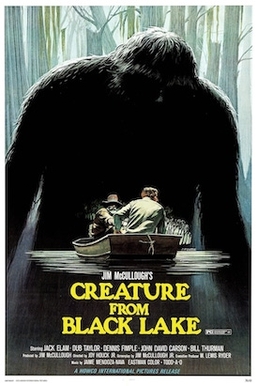
I watch bad movies so you don’t have to.  Maybe that’s my ticket to retirement (it certainly isn’t working the usual way).  In any case, my habit of trying to find something “free” on a network I already pay for often leads to films that keep me awake on a drowsy weekend afternoon, but really don’t offer much else.  Sometimes you learn something nevertheless.  I recently watched From a Whisper to a Scream.  It was free and got more than five stars out of ten, but I didn’t really work for me, even with Vincent Price.  A vignette movie, it presents four episodes from Oldfield, Tennessee, making the claim that it’s a place infected with evil.  The first involved necrophilia, with consequences.  The second—more in a moment—was about eternal life.  Lovecraft’s circus comes to town in the third, and the fourth is about the founding of the town during the Civil War.  Of course, the framing is a “bonus” mini-story as well.

The second episode, “On the Run,” has a wounded ne’er-do-well, shot by some southern rivals, falling into a swamp boat.  He’s rescued by an older African American who lives alone in said swamp.  Noticing him practicing hoo-doo (cue The Skeleton Key), the miscreant soon figures his rescuer has found the secret of staying alive forever (which he has).  Naturally greedy, the petty criminal “kills” the African American and ransacks his shack for the secret potion that keeps him alive.  Being horror, the dead come back and the owner of the shack returns to punish the white man who is trying to steal what he already has.  The Black man had given him the potion to bring him back to life.

There’s a bit of a parable quality to this particular story.  Each vignette predictably has the evil-doer punished, with the exception of “Lovecraft’s Traveling Amusements,” where the Black woman owns those who work her carnival.  And she gets away with it.  None of the characters, apart from the Black man in the swamp and the children in “Four Soldiers,” are really sympathetic.  Religion does also come in the Civil War segment since, drawing cues from Children of the Corn, the kids have created their own god.  So, a diverting film, if not a great (or even a good) one.  This was Vincent Price’s last true horror film, making it worth seeing for that reason alone.  His role is limited to the framing story which, as we might expect, becomes part of the collection of horrors from Oldfield.


Local Haunts

Local color.  It’s what makes travel so much fun, even if not to someplace exotic.  I’ve lived in five different states and two different countries and one thing each place had in common was local lore.  Since I’ve been a stranger in most places I’ve moved, I’ve picked the lore up primarily from books.  Fortunately there are as many people willing to write them for the also many people like me who are willing to read them.  S. E. Schlosser is a storyteller.  We have Rutgers University in common, but her book, Spooky New York, focuses on the state next door.  The book contains retold stories, or as the subtitle states Tales of Hauntings, Strange Happenings, and Other Local Lore.  New York isn’t unique in having such stories, and some of them are clearly regional variants—I heard some of them set in Wisconsin, for instance—but there’s a guilty pleasure in reading such accounts.

Although most of us are raised being told “there’s no such thing as ghosts,” that “truth” doesn’t stick for all of us.  I don’t know if any of the ghosts in this collection are real; folklore deals with that—shall we say—twilight zone that lies between quotidian existence and the weird.  Strange things do happen, but not on any kind of scientific schedule so they can be anticipated and quantified.  And some of them have been seen and reported by many different people.  These stories include such tales.  While they range the length of the state they concentrate in the east.  I’m sure, however, that if you spent enough time talking to the locals you could scare up ghosts from across the Empire State.

Many of the tales are set in New York City.  Having commuted into New York for about seven years, one thing became clear to me.  Even with the tall, modern towers and sophisticated, wealthy trappings, it can be an eerie place.  Around this time of year I would arrive in Manhattan well before sunrise.  Walking the predawn streets to the office showed Gotham in a different light.  Even the few times I went for lunchtime strolls to clear my head, I sensed there were millions of untold stories here.  Some gothic, some haunted.  Schlosser tells several such New York tales.  She includes some from literature but most of those probably go back to stories told by the locals before having been fixed onto paper.  This book will help set the mood, even if you live in the next state over, or anywhere that ghosts roam.