New Horseman

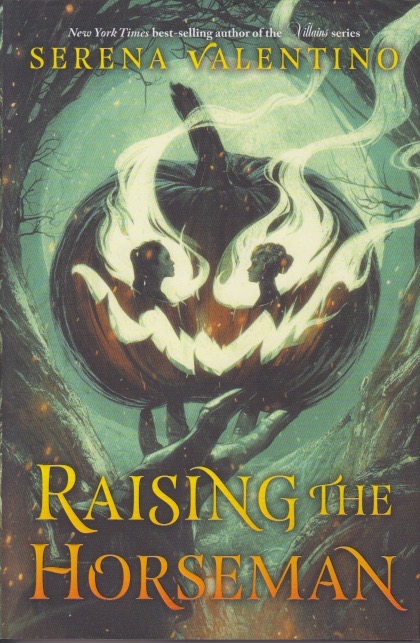
You’d think it’d be obvious, but it took me some time to realize that when a story’s being retold in a literary context, the point isn’t to restate the original in new words.  No, sometimes the vision is quite different and the result is like building a different person from the same skeleton.  I’m still on my Sleepy Hollow kick and I’m interested in what contemporary writers see in the story.  Serena Valentino’s Raising the Horseman is a feminist retelling with sensitivity to LGBTQ+ concerns.  Like some other recent Sleepy Hollow novels—Alyssa Palombo’s Spellbook of Katrina Van Tassel and Christina Henry’s Horseman—she takes the point of view of either Katrina or one of her descendants.  In this case, both, as a present-day Katrina reads the diary of the original Katrina in Sleepy Hollow.

The story is pitched at the young adult level—a literary scene that’s thriving these days—and sets up the story this way:  Katrina Van Tassel married Brom Bones and left her vast estate to her daughter and their daughters, as long as they took her name.  This creates an unbroken succession of Katrina Van Tassels.  As might be expected, the current Kat, as a teenager, wants to follow her own path rather than staying in Sleepy Hollow for the rest of her life.  She meets a new girl in town, Isadora, who encourages her to see how her boyfriend Blake has been keeping her in an abusive relationship.  “The Legend of Sleepy Hollow” is a love triangle, and that develops here as well, moving in new directions.

Valentino has been writing a series called Villains for some time.  That series takes on the viewpoint of the antagonist rather that the hero.  Such tales are quite popular these days as we reexamine dusty assumptions that have been sitting undisturbed for far too long.  Fans of Sleepy Hollow will recognize the base story in this novel, but will be taken along a different path and will be left without a simple resolution.  Younger readers adopt a more open attitude towards life, watching, as they do, the antics of many of their elders (particularly angry white men in positions of power), and they recognize bad behavior when they see it.  The novel is a plea for tolerance, a trait that’s much needed in the world.  The Headless Horseman is still there, of course, but the real villains of the story might not be who you assume they are.

Making Meaning

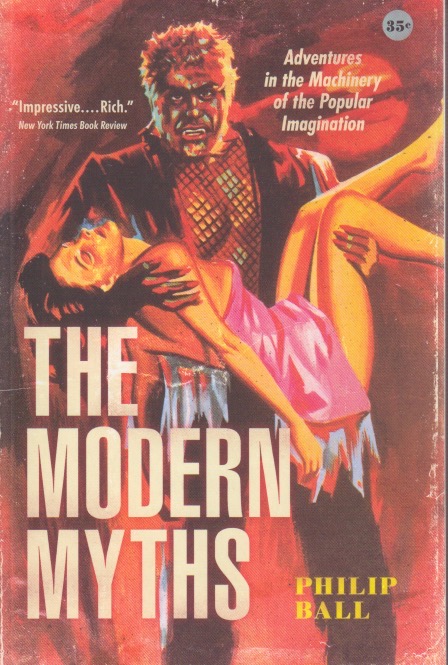
The last book I slipped in under the wire of 2022 was Philip Ball’s excellent The Modern Myths: Adventures in the Machinery of the Popular Imagination.  It would be easy enough, if judging by the cover, to suppose this to be a book about horror, but it’s not.  At least not wholly.  Ball is actually addressing the idea, in his wonderful writing style, that certain myths in modernity can be traced to various speculative tales, mostly from the nineteenth century.  Not intended to be comprehensive, this study makes brilliant cases for several stories that offer meaning, which is what myths really are.  The first such myth analyzed is Daniel Defoe’s Robinson Crusoe.  This novel led to the modern tope of being stranded on an isolated island and we see it everywhere from Gilligan’s Island to Lost.  Ball isn’t offering an encomium to the literature—in fact, he points out the problems with the stories and their writing and indicates that this is part of the mythic process.  Along the way we learn about the authors and their lives, as well as the afterlives of their stories.

Similar treatments are offered for several culturally significant speculative stories that many people have never read but nevertheless know.  Mary Shelley’s Frankenstein, Robert Louis Stevenson’s Dr Jekyll and Mr Hyde, Bram Stoker’s Dracula, H. G. Wells’ War of the Worlds, Sir Arthur Conan Doyle’s Sherlock Holmes tales, and the twentieth-century phenomenon of Batman are all given similar treatment, leading to insight after insight.  The book also gives the reader the distinct sense that ours isn’t the final word on anything.  We’re part of a tradition and those who produce speculative material—future myths may not be anchored in literature—and those who analyze us will also, in their turn be analyzed.

One such mythology currently under development, Ball suggests, is the zombie myth.  Grounded more in movies than any literature, the canonical traits of how it goes are widely recognized and have been taken in several directions, including parody.  Of course, projecting which stories will be future myths, outgrowing their original settings to provide cultural meaning, is something we can’t do with accuracy.  We all know, however, what it means to be a Jekyll and Hyde, or what to expect during a zombie apocalypse.  Such stories tend to come from speculative genres because those are what people tend to like.  We read and gravitate toward science fiction, horror, super heroes, etc.  And we do so, Ball makes a great case for, because they contain the stories that explain our world.  And given this world, some explanation is definitely necessary.


Night Mom

Kurt Vonnegut is one of those tragicomic writers that can leave you reeling.  Mother Night was never on my must-read list, although I’ve read about it many times.  Reading about a novel isn’t the same as reading it, of course.  I picked it up in a used bookstore earlier this year when I didn’t want to walk out empty handed.  I go into such stores with a list and try to limit myself to it.  If they have nothing on the list, I try to find an author I know.  Since I’ve read several Vonnegut novels, I have an idea of what I might find.  This one was pretty bleak, though, but then the subject suggests as much.  Those critics that say it’s funny are made of sterner stuff than yours truly, I guess.  

The story is the account of a Nazi propagandist who’s actually an American spy sending encoded messages through his radio broadcasts.  Throughout the novel he’s conflicted because he wants to be left out of the business of war, and yet he’s aware of the potential for evil on both sides.  It’s a chilling book to read in the light of Trump because American nazis feature pretty prominently in the plot.  Howard W. Campbell, Jr. is on everybody’s hit list—American Nazi haters/hunters, Russian Nazi haters/hunters, and Israeli Nazi haters/hunters, and even on his own hit list.  His role in the war made him look like a Nazi.  Vonnegut has some profound things to say, such as:  “Say what you will about the sweet miracle of unquestioning faith, I consider a capacity for it terrifying and absolutely vile.”

And this: “Where’s evil? It’s that large part of every man that wants to hate without limit, that wants to hate with God on its side.”  The book was published before I was born, and that took place about six decades ago.  The set-backs we’ve seen since then make this one of Vonnegut’s most disturbing books.  I have no doubt that he was a haunted man.  Like many who’ve been through war, he has neither luxury nor appetite for politicians and the immoral games they play to retain power.  Mother Night deals with evil and its ambiguity.  And the sad fact that as much as two people love each other and want to separate themselves from the troubles of the larger world, it’s simply not possible to do so.  The reasons for this are far too obvious but since we have difficulty seeing the obvious, novels like this are necessary.


Word of the Year

I still have to look up “goblin mode” each time I read it.  I’ve been reading it quite a bit because it was Oxford University Press’ word of the year for 2022.  Throwing voting open to the public for the first time, goblin mode was overwhelmingly chosen, edging out my personal favorite, “metaverse.”  (It’s not every day that a word your brother-in-law invented gets that kind of accolade!)  But goblin mode is in the Zeitgeist.  It means to live an unkempt existence, perhaps hedonistically, without caring what others think.  It is, of course one of the offspring of the Covid-19 pandemic and its lock-downs.  Like social distancing, it’s something some of us had done before we knew what it was called.  But only partially.  I have a mental self-image that I don’t allow myself to show because I don’t like being judged.  I’d be safer in the metaverse, perhaps.

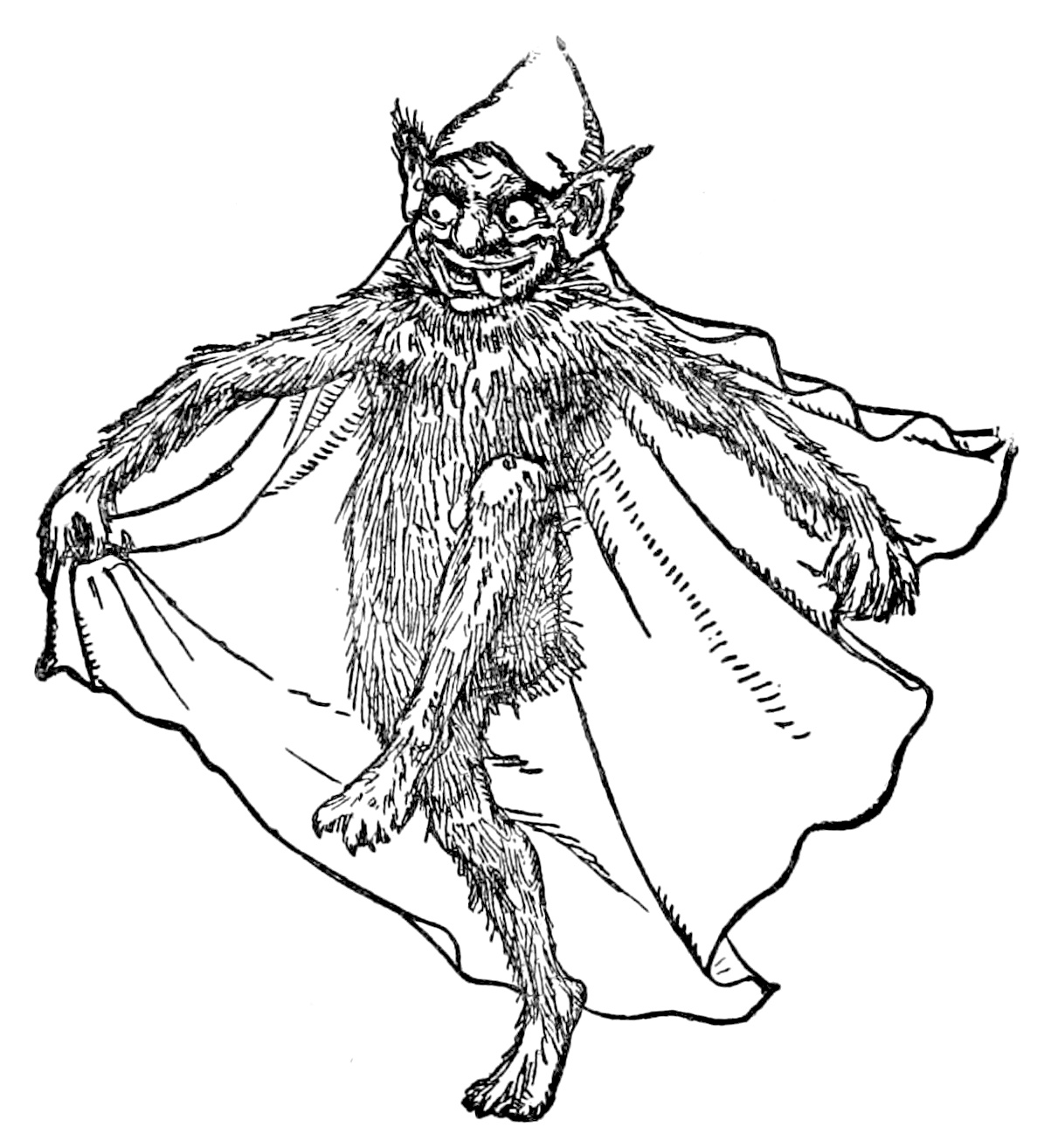
Image credit: Goblin illustration by John D. Batten from “English Fairy Tales” via Wikimedia Commons

Somewhat a natural hermit, I do crave human company and, like most people, I worry about what others think of me.  The thing is, people are natural actors.  We keep our goblins well hidden, usually.  Social life is quite different from the moments we spend alone.  Goblins are, of course, a type of monster.  Somewhat undefined and malleable, they can be compared to demons or fairies.  They do tend to be associated with households, which may make their use with this phrase appropriate.  Goblins tend to be thought of as ugly, thus goblin mode is letting your “ugliness” take over, no matter who may see.  You could be in permanent goblin mode in the metaverse, though.

I have to admit that such things make me feel my age.  The lessons of conformity, even though I was born in the sixties, were pretty deeply impressed.  “Do you want other people to see you like that?”  I wonder if we’re not all insecure at some level—it’s our primate inheritance.  Going into goblin mode, then, is striking back at the natural human acting ability.  It comes at a time when the message of not judging is also prevalent.  In the metaverse, as it was first used in Snow Crash, you chose an avatar that could look like anything you wanted.  I suppose that’s a form of goblin mode too.  We are natural actors.  Watch people in a crowd sometime.  Or at the office.  Or even at home, if they’re not alone.  If other eyes are watching the question always remains “do you want others to see you like that?”  And what we see is probably not authentic.


Okay to Look

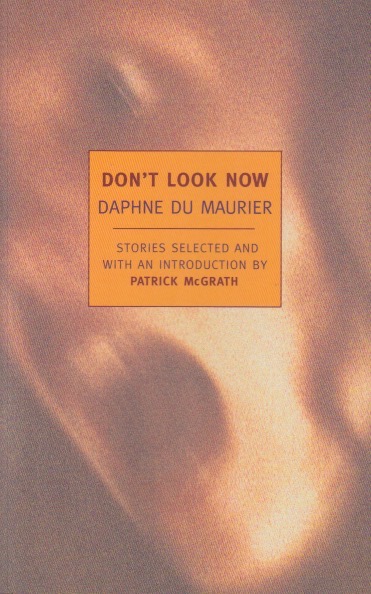
I admit to having learned about Daphne du Maurier from Alfred Hitchcock, and then only after my wife pointed her out to me.  I read our copy of Rebecca with appreciation—a good gothic novel will never steer you wrong.  I saw the movie first, however.  Learning that she’d also written “The Birds” (not the screenplay), I tried to find a book of her stories in various bookshops only to discover that American bookstores tend not to stock her work (beyond, perhaps, Rebecca).  Eventually I started searching online for collections that contained “The Birds.”  I settled on Don’t Look Now, which includes that story as well.  When researching The Wicker Man I learned that Don’t Look Now (the movie) had A billing to the former film’s B place.  I decided I’d read the story first, which I’ve now done.

There are several intriguing tales included in this particular collection.  The one that I found most haunting was the final story, “Monte Verità.”  The narrative of a woman who finds peace in an ancient commune on the titular mountain, it was difficult to read without wanting to find that kind of satisfaction.  Particularly for someone who has had lifelong cenobitic tendencies.  Those of us who struggle against the 925 life, beholden as it is to the great god capitalism, and who require time to think, contemplate, and just to be, this mythic mountain does indeed sound like finding what it is that you’re seeking.  Du Maurier tells the story with such longing that you think she must’ve been there herself.  As a writer I’m sure she had been, in a sense.

Du Maurier was, it should be no surprise, quite a versatile writer.  Some of these stories are gothic and others more naturalistic.  They do tend towards the darkness, but not the kind that leads to despair.  They also reflect a time in publishing when longer short stories were acceptable.  (Most accessible online fiction publishing venues cut their limits far too short these days.)  Some stories really take time to get into.  “Monte Verità” is one such, as is “Don’t Look Now.”  They take time to build up.  “The Birds” isn’t exactly brief either.  The trend these days is for the quick payoff.  We have lost something as a culture with such short attention spans.  This collection of nine pieces provide a good sample of different shades of darkness.  And they encourage further reading.


Best Beasts

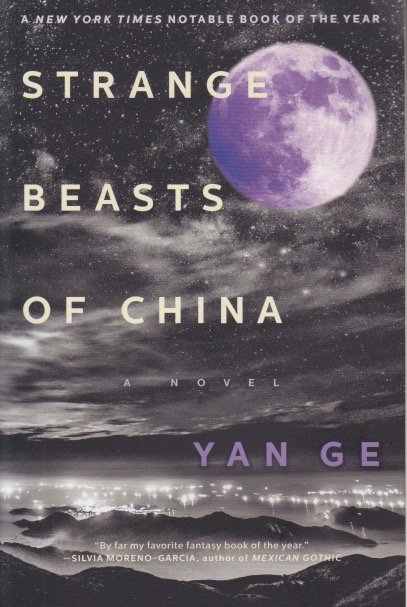
Strange Beasts of China left me strangely affected.  Yan Ge’s novel received quite a bit of acclaim for a book of speculative fiction.  Of course whether or not it is speculative fiction is open to debate.  The narrator, an unnamed former graduate student, makes her living by writing about the “strange beasts” of the fictional city of Yong’an.  Uncertain of where she fits, she’s been researching any number of creatures that resemble humans in various aspects, and who lived often hidden lives among the population of the city.  Her relationships revolve around people who, and this may be a spoiler, often turn out to be beasts.  It could almost be a parable.  I wasn’t quite sure what to expect.  The word “cryptozoologist” occurs in the copy and it was blurbed by a couple of horror writers.

It’s not really a horror novel, though.  There’s some action and even a bit of violence—not too explicit—and some well-executed twists.  I wasn’t sure where the story was going, but I found myself eagerly awaiting the opportunity to pick the book back up again.  One of the truths of our species is that we find ways of othering those who are different than we are.  Othering so that we can fear and mistreat them.  And feel superior.  That’s why this story feels so much like a parable to me.  The beasts aren’t really monsters, but then, monsters are really us.  What matters is how we treat them.  Yan Ge handles them with sensitivity—her narrator, after all, is very interested in these beasts—and our suspicions grow as the novel goes on.  We shouldn’t be judging here.

That this book should come out even as American attitudes toward China veered decidedly toward “othering” (the book was published in Chinese back in 2006, but appeared in English in 2020), is significant.  There are reasons to fear the autocratic government of China, but a significant portion of Americans seem to favor the autocratic style over democracy.  So it is that parables continue to be made.  We live on a planet with billions of other human beings, each with cultures, hopes, and dreams.  They may look a little different and thy may speak in ways that we don’t immediately understand, at least not without some effort, but they are just as human as those who speak English and who live in their own fictional cities isolated by a couple of oceans.  Strange Beasts of China really made me think.


Booking Dreams

There’s a certain kind of person—many of with whom I work—who trade in the currency of books.  These are individuals who would rather be paid in books than in cash, and who worry of book orders shipped that seem to take too long to arrive, as if the rent check will be late because of it.  Who check the tracking number multiple times a day and can’t rest secure until the book is within their doors.  These people tend to be educated, whether formally or on their own, and they often wonder why the world can’t be a more amenable place because reading makes you realize the potential we miss.  My own reading convinces me that capitalism is mostly to blame.  It rewards the greedy and makes them try to fix elections and posture against other greedy leaders.  Books often show a better way.

I realize not everyone likes to read.  In fact, if you do so for pleasure you’re part of a minority group.  Those who read, and conduct surveys of those who do, estimate that only about five percent of the population reads and trades in books.  That makes us a very small nation indeed.  But some countries, such as Iceland, have higher proportions of readers, and other nations have lower.  Books, as a whole, saw a resurgence of interest during the pandemic because they are a way of getting together with other people and going to faraway places all within the safety of your own home.  I like to think a book-lined room is also well insulated.  Especially if all those little gaps are caulked with smaller tomes.  Occasionally photos of individual libraries circulate and go viral.  We’re impressed, we bookish folk, by those who read so much.

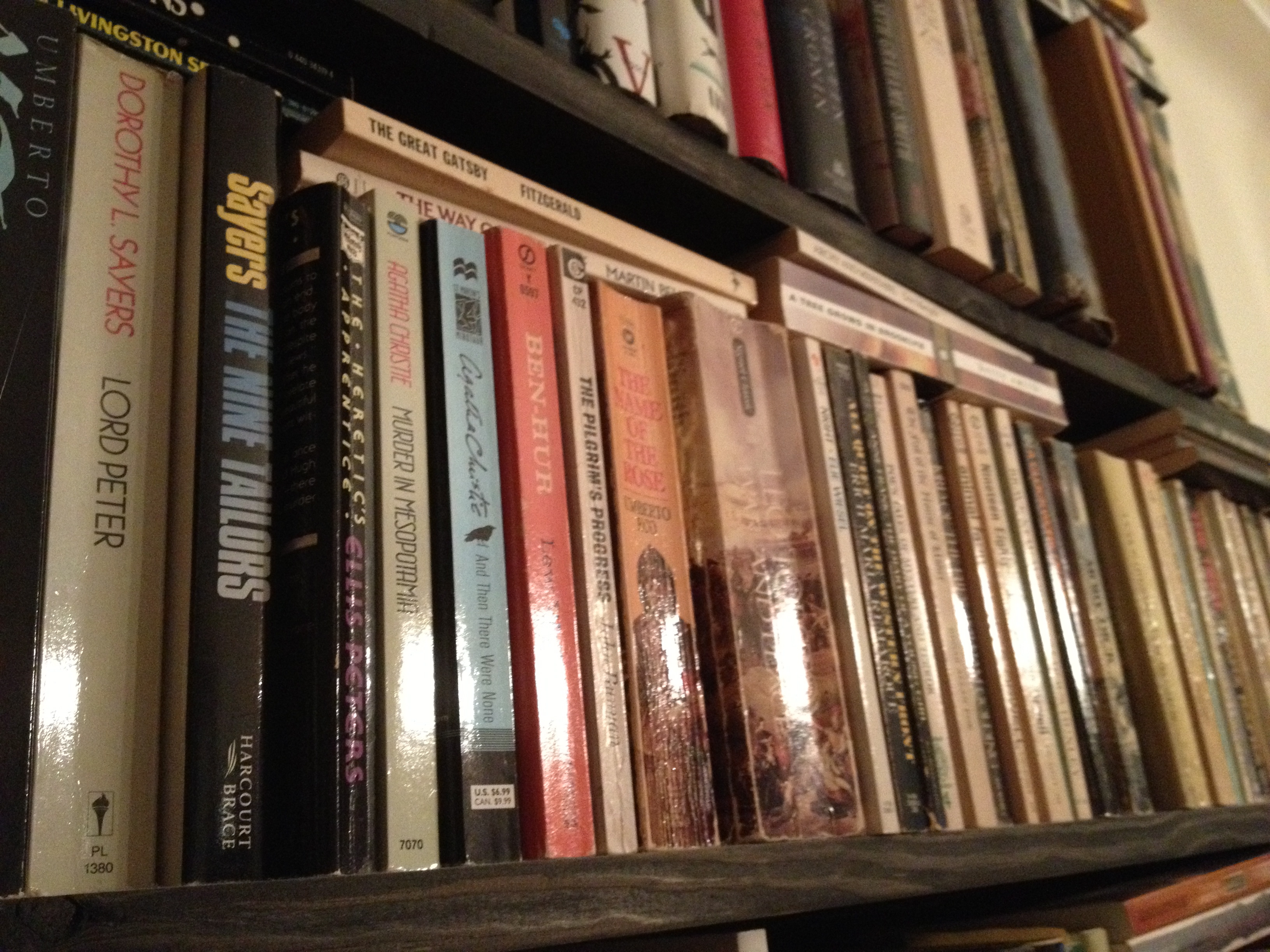
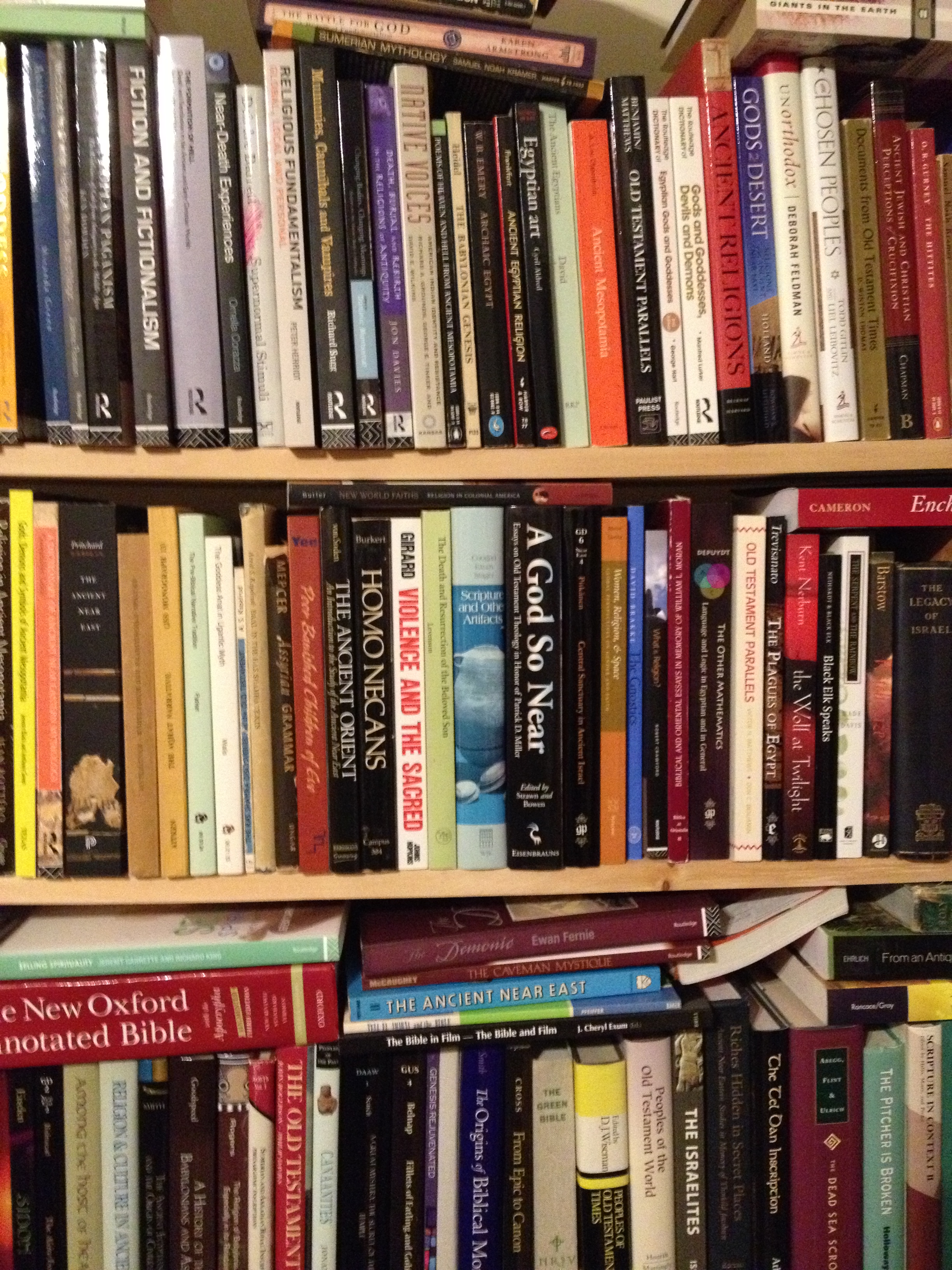
The book industry’s having a bad economic year.  In my own humble efforts I tend to read more than a book a week, on average.  I do this by reading more than one book at a time.  The amazing thing about that is you can pick up one of the multiple titles you’re reading and resume where you left off.  Very seldom is there any confusion or even forgetting what a book is about.  A physical book has so many tactile cues to remind the reader of things.  That’s why those of us who like to read tend to keep books.  We like to be able to go back and since we can’t predict our future wants and needs with any precision, we err on the side of collecting.  I do give books away but often I come to regret it because I need some unexpected volume again.  Books have their own economy.  If only we could all trade in books, it would be a very different, and I believe better, world.


Dark Academia

Over the weekend I “dropped” a new YouTube video on my channel (you can see it here, or by visiting my “YouTube” page in this website’s menu).  It ended up getting a little flurry of interest (1,800 views in the first three days), prompting a friend to tell me that if you pay attention to what’s hot on the internet, you can actually get attention.  That makes sense.  What’s so hot?  Dark academia.  Of course, my video really moves to dark academia adjacent, to what happens to real people when they try to teach religion and run afoul of “doctrine.”  There’s a real disconnect here because if you earn a good Ph.D. you’ll be taught to question everything.  If you’re a doctrinal believer, you’ll question nothing.

I stopped posting on YouTube a few years back because my cheap camera no longer worked.  It lost about three episodes I shot and, discouraged and too busy with writing projects, I gave it up.  I started again because I realized my phone was capable of recording and I had a holder that would stop it from slipping.  So why not?  Topics aren’t really a problem, but shooting and editing a video take a lot more than the eight minutes that result from it all.  Finding the time to edit, and learning how to edit in iMovie, are tasks in themselves.  And I’m an old dog.  Still, I miss that classroom audience.  I’ve been told that blogging is passé, and podcasts take even longer to record.

Some people make a living vlogging.  In fact, “YouTuber” can be a profession.  Those who succeed are often young.  And let’s be honest, a middle-aged white guy in a book-lined study is a tired trope.  Well, it is, in reality who I am.  A teacher at heart, I now try to imagine a virtual audience.  When I first started doing YouTube videos I had a very difficult time imagining an audience.  I fumbled a lot—I don’t script my videos.  If you’re interested in scripted I’ve got this blog right here.  The bump in interest in my dark academia post doesn’t translate to my other videos about my books or related topics.  Still, those are the things I know best and so it’s easiest to talk about them.  And possibly reinventing yourself.  I guess that’s what I’ve tried to do here.  Sloppily, stumblingly, but nevertheless, I’ve been changing my identity.  My YouTube channel’s not that active, but if there’s interest I can explore further reflections on dark academia.


Gift Books

The New York Times recently ran a story suggesting that books are not only the ideal gift, but that this has been the case for a very long time.  The article points out that treasured Roman Saturnalia gifts included scrolls, or the books of the time.  Books are the gift of knowledge—who wouldn’t want that?  Also, I’ve been reading about the fact that money can be any medium of exchange as long as it’s agreed upon.  Why not books?  Being an American, it’s often amazed me how intellectuals are held in such low esteem in this country.  We pay our teachers poorly, we mock those who read “too much” (as if such a thing were possible), and we dismiss what experts of many subjects tell us because we don’t like to admit others might be smarter than we are.

Reading, like arithmetic, doesn’t come naturally to people.  We evolved to survive and reproduce and our brains have that prime directive.  Along the way, however, we learned to communicate effectively and cooperate on large ventures.  These ambitions required wrapping our brains around things like advanced math and learning to interpret squiggles written by somebody else.  Kids, full of energy and needing to play, don’t want to sit down to learn these things.  At least most don’t.  In some parts of the world those who do take naturally to such things are celebrated.  Teachers are venerated.  Learning is revered.  Ironically, in this country where some of the best higher education is available, we want to belittle those who attain it.  We prefer to play with our guns.

Now that the holiday season is upon us, however, I think of reading.  I keep a list of books I would like to have.  It’s well over a hundred titles long.  In a good year I can read sixty or more tomes.  It’s an engine that requires a lot of fuel.  Although in all likelihood I’ll never be able to retire, I keep my books against that time when I fear I might become bored.  Or that my mind might start to slip.  Reading is mental exercise.  In my current writing project, I’ve been discovering new connections almost daily.  Often in unexpected places in books I learned about only in recent months.  I write these words surrounded by books.  There are more in the attic, and more in the next room.  I may not ever have enough money to retire, but if we ever decide that books should be currency—and even if we don’t—I’m wealthy indeed.


ABC 2 QWERTY

I thought this was over after school.  Sitting in a class with a long list of names, always coming in last—or very nearly so—because my name began with W.  Even now, however, it still happens at work.  If there are a limited number of places at an event, just try to register with a W (or X, Y, or Z) name.  Even if you get your name in first, you automatically drop to the bottom of the stack for many electronic lists (AI knows the alphabet, right Hal?).  This got me to thinking about the alphabet.  Alphabetical order is, of course, neither fair nor random.  It follows strict rules and it must in order to work properly.  The assignment of alphabetical order, however, is arbitrary.  More than that, it is a teaching tool cum organizing principle.

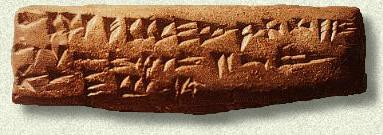
Consider your basic keyboard.  It’s used far more often than the alphabet and if we went in QWERTY order, Ws would always be near the front of the list.  Problem is, although our fingers know the keyboard well, who can recite it?  Maybe we need a mnemonic device like “Quite well, early riser, thank you…”   Someone at some stage laid out alphabetic order.  The earliest known abecedaries seem to come from Ugarit.  That doesn’t mean they were invented there, but it also doesn’t mean they couldn’t have been.  We don’t know what the criteria were, but interestingly enough, what we transliterate as w came about sixth place.  The order is largely recognizable to modern schoolchildren, although they had fewer letters and some of them we don’t have.  W was in the middle but closer to the head of the class.

An Ugaritic abecedary

There have likely been psychological studies done on the mental state inflicted by always being last, or near the end.  Granted, a good part of it is because of the gospels, but I wonder if my tendency to think others should go in front of me is a life-long socialization of being a W.  Growing up in a town with few “exotic” names, I don’t recall ever not being last.  There were teachers who would divide by height, but that’s even worse because I’m not tall.  Could it be that something as random as scratch marks made on clay by some priest or scribe in illo tempore, thousands of years ago, led to such a blog post as this in the early twenty-first century?  All I know is that my projects at work still get bumped because kindergarten politics still hold.


This Way

The more I get to know myself—pleased to meet you, sir—the more I realize that my childhood was cobbled together from small but repeated exposures to my favorite things.  I knew Dark Shadows from watching a limited number of episodes and reading a limited number of cheap novels.  I knew Alice Cooper from just two of his albums.  And I knew Ray Bradbury from a couple collections of his short stories.  No doubt this is in part because we weren’t exactly affluent and I found my books, by chance, at Goodwill.  I had no way of collecting Bradbury’s oeuvre, and besides, I was trying to get to know Edgar Allan Poe as well.  I knew Bradbury as a short story writer, and that’s still how I primarily think of him.

I felt compelled to read Something Wicked This Way Comes recently.  Since I’m used to Bradbury the short story author, it felt overdrawn to me.  I know this is heresy.  Great horror writers point to this novel as highly influential and inspirational.  Maybe if it were read closer to when I was born, when it was published.  Too many long paragraphs, especially early on, contain almost abstract descriptions without clear actions, leaving me confused.  Once the story got underway it was quite good.  As someone who writes, I know the dilemma of trying to freeze poetry into prose, and to make a coherent story from thousands of separate impulses.  Believe me, I know.  These days such things are edited out and stories become as thin as Bradbury’s Skeleton Man.  I guess I’m just out of practice.

The plot is great, but it feels so 1950s.  So boy/male oriented.  So American.  I suppose I attended my fair share of carnivals as a kid.  We didn’t go often, and I never knew one to settle on the edge of our small town.  And although we were free to ride our bikes or run as far as we cared to, home was never that far away and, I knew, there were scary things in the ubiquitous woods.  Ray Bradbury’s short stories were likely the main source behind my own early attempts at fiction.  Even today I’ll be scribbling along and think, “this is kind of like Bradbury.”  But I always have his short work in mind.  There are some great parts in Something Wicked, and it does build the tension toward the end.  Still, when it’s said and done I’ll be thinking of Bradbury’s short stories and how they formed my own nostalgia, even if only in little fragments.


Katrina’s Side

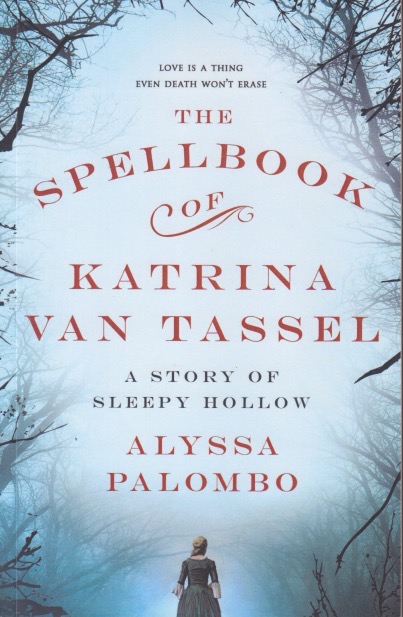
Once a story is released, and its copyright expired, it’s free to be re-interpreted.  Although there are those that deny it, any reading is a form of interpretation.  I’ve been gathering information on Washington Irving’s “Legend of Sleepy Hollow” for some time now, and I’ve just finished reading Alyssa Palumbo’s The Spellbook of Katrina Van Tassel: A Story of Sleepy Hollow.  This novel is a feminist retelling from the point of view of the titular Katrina.  In the original she’s an under-developed character.  These days we’d say that Irving didn’t write women well.  In fact, she functions largely as an object in the story, the source of tension between Brom Bones and Ichabod Crane.  Palombo spins a tale from Katrina’s perspective on all this, and thus takes the story in some new directions.

The novel itself reads like a romance, overall.  Katrina really does fall in love with Ichabod, but Brom is unable to let go, and the rivalry becomes deadly.  As the title also implies, Katrina learns witchcraft as the yarn spins out.  From a cultural point of view, this telling is clearly influenced by both the Tim Burton film Sleepy Hollow and the Fox Television series by the same name.  Both of them give us the witchery and the idea that Crane would be a romantic catch.  In Irving’s vision, it’s difficult to see Crane as any kind of love interest, but the essence of creative retelling is to make the story fit a different mold.  Katrina’s story is seconded by that of her friend Charlotte Jansen, who, like Katrina, practices white magic.  The witchcraft here isn’t malevolent.  Indeed, it is one of the few ways of expressing female power in this time frame.

A good deal of the tale revolves around solving the mystery of what happened to Ichabod on that fateful Halloween when he asked for Katrina’s hand in marriage.  Sadly, writers have, historically, tended primarily to be only male.  There have been exceptions, even from the very beginning.  The first named writer in history was a woman—Enheduanna—but the circumstances of women’s lives, particularly after the agricultural revolution, came to be relegated to roles where the leisure time for writing, and even the opportunity for education to learn it, were rare.  Early on the modern novel was dominated by female writers.  More recently re-envisioned Sleepy Hollow tales have brought women’s role to the fore, and have taken the narrative in unexpected directions.  This feminist retelling of the classic story demonstrates what could have been, had Katrina received a bit more attention, not just as an object.  This is a lesson still to be learned.


Life in the Woods

Early influences are often the strongest.  “If you can’t say something nice, don’t say nothing at all.”  Thumper was the dispenser of this particular wisdom, as prompted by his mother, upon noticing how shaky newborn Bambi is on his long legs.  Now I recall having seen Bambi only once, at an age so early that it’s buried in my personal ancient history, but I’ve tried to live by those words ever since.  I don’t like to hurt anyone’s feelings if I can help it.  When I do, I feel awful myself, often for a prolonged period.  Add that to the fact that I read a lot and review the books, in some fashion, here, and I sometimes face a dilemma.  Particularly when it comes to self-published books.  Most of them just aren’t that good.

My wife once asked me whether I was concerned about my own critical reputation by not pointing out the problems in self-published books.  I had to ponder that a bit.  Just when the keystrokes start to point out the issues, Thumper hops into my mind and I think how I wish my own reviewers would be nicer at times.  You see, we’re all the victims of circumstance.  I’ve read self-published books where the author was clearly trying to make a living and honestly believed that s/he could write.  Ham-fisted keyboarding clearly stood behind some of these books and I realized that an editor serves a vital role in the literary ecosystem.  It’s also why I’ve resisted self publishing.  Before Holy Horror, I’d been compiling a book on monsters that I was ready to take to CreateSpace.  I’m glad I didn’t.  Books need editors just as surely as sparks fly upward.

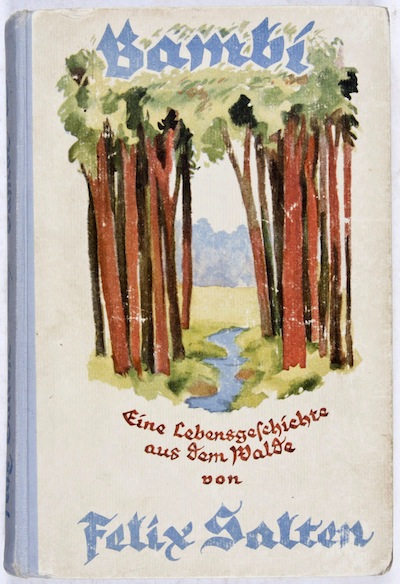
The problem is the review.  I don’t mind saying critical things about books published in the standard way.  I’m still petting Thumper, though, and keeping it nice.  When it comes to self-published material I realize just about every time why the authors really should pursue a different line of work.  Many of us who write books do so while holding down full-time jobs.  Writing productivity suffers, yes.  I could write a lot more books if I didn’t spend nine hours at work most days.  As much as the criticism of editors (or peer reviewers) always stings, the resulting book is better for it.  You have to convince an editor, first off, that a book is worth doing.  If you can’t, perhaps there’s a hint to be taken.  I’ve never read the story behind Bambi to know if Thumper’s line came from Felix Salten or not, but I know the book was published by the prestigious German publisher Ullstein Verlag.  And self-publishing is, in many ways, a life in the woods.

Bambi: Eine Lebensgeschichte aus dem Walde by Salten, Felix

Locally Speaking

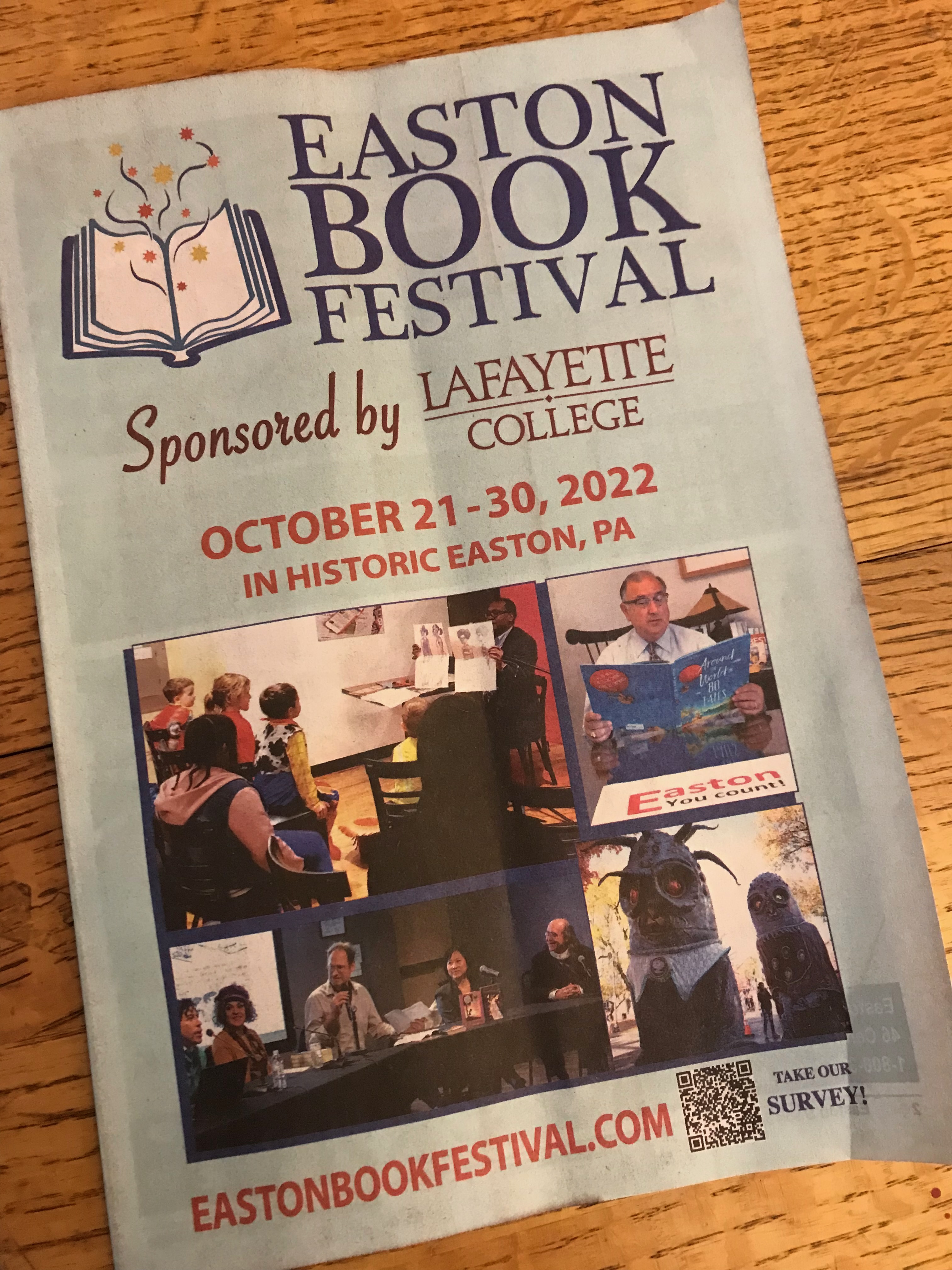
One of the weird things about moving is that you don’t know many people in your new location.  Ah, but who am I kidding?  As an introvert I knew few people in my last two decade-long locations.  So when I blog my readers tend not to be local.  Those I know locally tend not to read what I write.  This is the way of things.  Nevertheless, I make bold to mention the session I shared with Robert Repino and Andrew Uzendoski at the fourth annual Easton Book Festival yesterday.  The session was recorded and may be found here.  The topic is speculative writing.  While speculative writing may encompass nonfiction, it is generally considered to be fiction about things most people consider not to be real, such as science fiction, horror, and fantasy.

The slippery word there is “real.”  There’s a great deal of philosophy to that word.  How we determine reality is hardly a settled matter.  It involves more than the physical, as much as we might want to deny it.  In the case of future-oriented fiction “it hasn’t happened yet.”  Even if it comes true, such as George Orwell’s 1984.  In the case of the past, such as Game of Thrones, it never really happened.  For horror, itself not easily defined, it may range from gothic ghost tales to bloody accounts of carnage, generally set in the present.  Speculative often involves the supernatural.  The supernatural, however, may be real.  Who’s the final judge of that?

If I had a local readership I would add a plug for the Easton Book Festival.  It started strong in 2019 but was nearly choked by the pandemic.  I’ve had the honor of being involved in some way for all four years although I’m a minor author with perhaps the poorest sales figures of any who participate.  The Lehigh Valley is a major population center of Pennsylvania, but there’s wonderful greenery and woods between Easton, Bethlehem, and Allentown.  I live here but work in New York City and there’s no question who gets the lion’s share of time.  Publishing is a mystery to many.  How does it work, and how do you find a publisher?  And once you get published how do you get your books noticed?  And perhaps more relevant to more people, how do you get to know your neighbors?  Apart from the chance encounter across the lawn, we’re hermetically sealed in our houses, living lives on the web.  Unless you happen to venture to your local book festival where you’ll find like-minded individuals.  It goes on through the weekend, so if you’re nearby check it out.


No Words

I read something scary recently.  And no, it was not a horror story.  I work in publishing and we have to keep abreast of developments, so I’ve had a glimpse of the future.  Publishers are now starting to look toward the time when information will no longer be conveyed by the written word.  A picture’s worth a thousand of them, after all.  This new future will convey information by video, or whatever the replacement of video will be.  Perhaps some are looking forward to the Matrix direct downloading model.  Perhaps the computer will be able to simulate the pleasures of reading a book, of browsing in a bookstore, of writing with pen on paper.  Something about the process and discipline of reading has made us what we are.

Star Wars, as others have noted, is set in a world with no paper.  You won’t find a scrap blowing in the wind, even on Tatooine.  Nobody is shown reading.  Plenty of action, but no wizard behind his big book of spells, no princess writing down her inmost thoughts.  Make a recording and plug it into your R2-unit.  Perhaps this is heresy, but compare this to Star Trek.  The episode “Court Martial” has Cogley (Elisha Cook, before he applied to become Rosemary’s landlord) saying to Kirk, “Books, young man, books. Thousands of them. If time wasn’t so important, I’d show you something. My library. Thousands of books.”  We always thought even the future would have plenty of reading material.  Now we’re being told the technology is passé. 

The constant emphasis on “data-driven analysis”—mostly in an effort to get more money—seems to mistake the downloading of knowledge for the pleasure of reading.  They’re not the same.  I love movies, as any regular reader will know.  Perhaps ironically, I write books about them.  The thing is, I watch them largely to write about them.  Knowledge downloading is getting the cart before the horse.  I’ve read even nonfiction books wrapped in awe.  An author’s way with words, the phrasing, the craft, the artistry.  These are pleasures.  Sure, images can show an interpretation but there are those of us who will always want to read the book before we see the movie.  Can you get the actors’ faces out of your head if you do it the other way around?  There are those who celebrate this sterile future.  And there are those of us who won’t even go there if we don’t have a book in hand to read, just in case.

Image credit:Bender, Albert M., artist; Federal Art Project, sponsor. Public domain.