When Autumn Starts

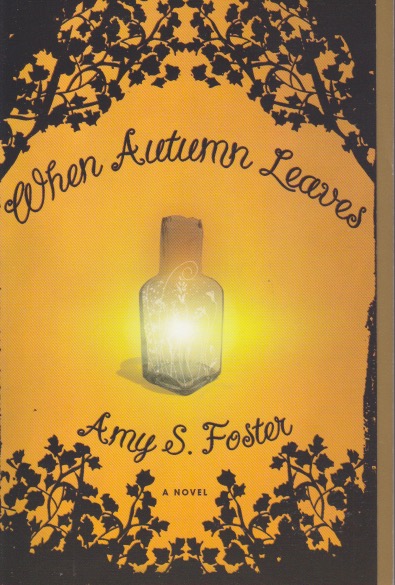
Some books catch my attention and I’m not sure why.  Knowing myself, the title When Autumn Leaves, invoking my favorite time of year with its intriguing syntax, probably did it.  I’m always on the lookout for books that capture the spirit of autumn.  Although she’s quite well known as a lyricist, Amy S. Foster’s name wasn’t familiar to me.  The cover looked autumnal and I knew it was about witches.  It came out quite a few years ago, so my recollection of why I’d marked it then had faded by the time I finally got to it.  The title is a play on both autumn and leaves.  The main character of the ensemble cast is Autumn and knowing that changes leaves from those on a tree to a verb of action.  I’ll try not to put any spoilers here since there’s plenty to say without giving away the ending.

Autumn is a good witch.  Well, the book doesn’t out and say so directly.  Being magical realism there’s some room for interpretation.  She’s the matriarch of Avening, an island city off the west coast.  Those drawn to Avening tend to have some kind of magical powers, whether or not they know of them.  The story unveils the various women coming to be aware of their special talents, but generally they’re unsure what to do with or about them.  Autumn is the one to help them.  She’s been in Avening as long as anyone can remember, but, as the novel opens, she learns it’s her time to leave (thus the title).

Before she can go, however, Autumn has to select a replacement.  This is what introduces us to the various characters in the story.  We hear of the magical powers of some of the thirteen in quite a bit of detail, and others more incidentally.  Many of them don’t know they have these powers.  They know there’s something special about Avening and that they were drawn there, but they don’t know why.  So it’s a tale of female discovery.  Some of the vignettes are difficult to read, dealing with serious subjects, but they reflect realities in women’s lives.  It’s not really an autumnal story, spinning as it does through the wheel of the year, beginning with the winter solstice and ending up at Samhain.  It doesn’t dwell on Halloween, however.  It’s much more a character-driven story.  It creates a wondering image of Avening and what might happen if women were in charge.  And in that respect it’s very compelling indeed.


Reading Algorithm

I appreciate help.  I really do.  It’s easy to feel overwhelmed in this world and others offering to help out are welcome.  But you do have to wonder about algorithms.  They seem to lack human sympathy.  And perhaps the ability to count.  Every year I enter the Goodreads Reading Challenge.  I would read without it, of course, but having that extra pressure doesn’t hurt.  Because of my convoluted mental makeup, I try to get things I have to do done early.  That means I want to finish my reading challenge before I have to.  In my commuting days I read about 100 books per year.  When I stopped commuting I had to bring that number down by about half—frankly, I don’t know where the time went, but I do spend more awake time with my family, which is good.

So I’ve settled on setting my Goodreads goals at about 50-60 books per year.  I often exceed it, depending on how many big books, or ponderous academic tomes I read.  Lately I’ve set the goal at 55, which is just over a book a week.  That seems doable to me.  This year I achieved that goal in September, but that doesn’t stop me from reading, nosiree!  I’m currently somewhere near the 60 book mark and I’ll keep going.  Now the help I was referring to is this: Goodreads typically sends an encouraging email in October suggesting how to meet your goal.  My message showed, via tracker, that I’d already met my goal, but telling me I could still meet it with these suggested books.

The books suggested are fine, I’m sure.  And that this message was sent via some formula that I have no hope of being able to comprehend, I’m also sure.  An algorithm, however, doesn’t feel for you.  I’m relieved to have the goal behind me and to continue pressing on regardless.  I could use some help in getting the lawn mowed, should an algorithm like to apply.  I particularly resent having to do so while wearing a jacket and stocking cap.  It’s time for the grass to be settling down for its year-end nap, isn’t it?  Or maybe an algorithm could do my job for me.  I guess that’s not funny, because that fate has befallen many humans, I suppose.  Maybe the solution is simply to read more.  That’s not a bad thing, but I don’t need an algorithm to get me to do it.


Sleepy Hollow West

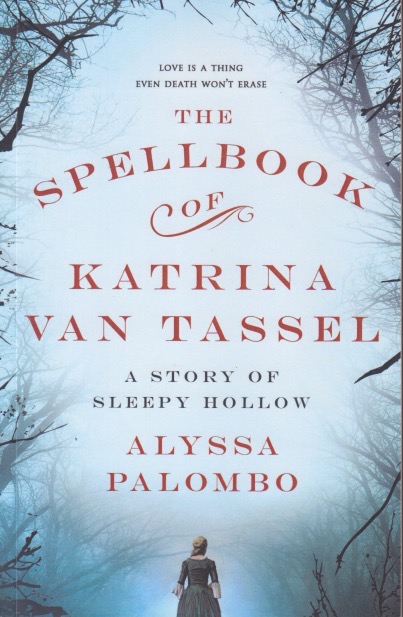
You’ve got to admire those who are determined to be writers on their own terms.  As someone who’s tried and tried again to break into even indie presses, I know few established publishers will even consider fiction from someone who’s not already established.  As my regular readers know, I’ve been reading a lot about the Legend of Sleepy Hollow lately.  So I came across Austin Dragon’s Hollow Blood.  Part of a two-volume novel set, the story takes a creative approach while retaining several of the original characters, even having clever nods now and again to the wording in the original.  Although clearly self-published, Dragon is able to let his imagination go on this one.  Julian Crane, Ichabod’s nephew, is out to avenge his uncle’s death.

In Sleepy Hollow he confronts Brom Bones with the crime, but wrongly.  It turns out that the Marshal—there are elements of the old west in this too, with cowboys and showdowns—knows where Crane has settled and offers to take the nephew to him.  So unfolds a story that feels a bit more like a western than a horror story at points.  I don’t want to give away too much since Dragon, like most of those who make their living by writing, needs to move copies to stay solvent.  The thing is, Sleepy Hollow seems to be an evergreen subject.  America keeps coming back to it.  Many writers try to take it on as the basis for more modern reboots.  Of course, I have to read the second volume to find out how it really ends.

I can’t help but think that the internet has made it difficult for writers by allowing anyone to establish him or herself as one.  If you can build a fan base, you can make a living at it.  The publishing industry faces problems of its own, of course.  Paper shortages are a problem.  Not only the pandemic, but the assumption that ebooks were going to spell the death of print led paper mills to cut production.  Funny thing—print has been seeing a resurgence of interest.  Large media seems surprised, scratching its metaphoric head and saying “People like actual books—who knew?”  But I digress.  The simple tale of a love triangle in the 1790s with a ghost on the loose has spawned a great number of offspring.  Some published the traditional way, and others on a writer’s own terms.  It’s a story worth the retelling.


Fictional Truth

In honor of Banned Book Week I read Sherman Alexie’s The Absolutely True Diary of a Part-Time Indian.  Funny and poignant, it tells the story of Arnold Spirit Junior, a Spokane tribe boy on the reservation.  Born with a disability, he nevertheless overcomes adversity to become both a good student and excellent basketball player.  I suppose you’d classify this as young adult literature since the protagonist is a teen and many of the issues are those of kids in that age group.  Although it’s funny, and the illustrations underscore this, there’s a realism that account for various people wishing to ban it.  First of all, it reminds readers that white men put Indians on reservations and, despite our national guilt about this, we still refuse to do anything to try to lift them out of poverty.  And, like most boys his age, Junior likes to talk about sex once in a while.

Fiction can be the most nonfictional form of writing.  Junior describes the realities of reservation life.  Alcoholism, poverty, and violence are part of his everyday experience.  He attends far more funerals than his white counterparts.  This particular point gave me pause.  A New York Times article that appeared pointed out, statistically, that American Indians had much higher death rates from Covid than many other demographics.  It was like the genocidal introduction of European diseases during the “age of discovery.”  I suppose people would’ve grown curious and explored their world, regardless of the distorted Christian belief that they were to take it over.  At least we could’ve treated those we met with respect, as equals.

I think about the missionary mandate quite a lot.  Based on an undying literalism, it became an excuse for behaviors explicitly condemned by Scripture itself.  There’s a real danger when conviction comes with guns.  At least modern-day missionaries try to help those they’re attempting to convert with hospitals and medical care.  Still, that doesn’t help the American Indians.  They still struggle and our policies still ignore their problems.  Their plight stands in the way of capitalistic exploitation.  And when an Indian writes a fun book, honest about the experience of his people white critics begin to raise their voices to ban it.  How do we think the situation of the Indians will ever improve if we refuse to listen?  And what better time to get people to listen but when they’re young enough not to have been corrupted by our system of entrenched unfair treatment?


Express Yourself

Do you ever get excited by an idea only to be let down when it comes to the execution?  I suspect that’s a standard human experience.  For me it often happens with books.  Especially academic books.  I get excited about the ideas that are sure to be lurking between the covers only to discover that the author has unimaginatively fallen into bad academic habits, such as “scholar A says, but scholar B says.”  Just tell me what you say!  Reflecting on this I realize that building a case has become conflated with taking a test.  A doctoral dissertation is a years’ long test.  Your ideas are being compared to those who’ve gone before you—the fact that they’ve published has proven that—and you are expected to show your work.  Did you read Smith?  Have you struggled with Jones?  Is Anderson in more than just your bibliography?

This kind of extended citation leads to turgid writing that slays any interest in the subject by the end of page one.  I’m not alone in this critique.  Some famous academics, such as Steven Pinker, have noted this.  In a not nearly frequently enough cited article, “Why Academics Stink at Writing,” Pinker lays out the bad habits that get perpetuated throughout the modern academy.  It comes down to, in my humble opinion, the fear of the exam.  Test anxiety.  Recently my draft of The Wicker Man came back from peer review.  While the comments of the reviewers were helpful, and quite complimentary, they felt there should be more academic dialogue going on.  I push back at this: if you don’t believe I’ve done the research, why approve the book for publication?  Most academic writing stinks and there’s no reason it should.

I’m a slow reader.  My average rate is about 20 pages per hour.  I know this because my morning routine sets aside about an hour for reading each day, and I note how many pages I consume.  Lately some of the academic books I’ve read have hobbled me down to 10 pages per hour.  I keep waiting for the narrative flow to kick in, something that I can follow and absorb.  Instead I’m learning what everybody else, often except the author, thinks about each minute point of his or her thesis.  Please, just tell me what you think!  I trust that you’ve done the research.  You wouldn’t have been granted a doctorate if you hadn’t.  The last thing I would want from my, admittedly few, readers is for them to close my book and say, “I’d rather be reading something else.”


Novelization

It must be both difficult and easy writing the novelization of a movie.  I suppose it depends on the movie as well.  Sleepy Hollow is a film based on a story already, but Washington Irving’s tale isn’t a novel and the movie was a collaboration between Irving’s original, re-envisioned by Kevin Yagher, Andrew Kevin Walker, and Tim Burton.  The novelization was done by Peter Lerangis and it, naturally enough, follows the movie.  As a novelizer, however, you need to try to make sense of some scenes where a film only implies what’s going on.  Now, in this case I’ve seen the movie many times and any deviations come across as “that’s not the way it goes” moments.  Still, it’s competently done.  It  even helped me make sense out of some things that had me puzzled since the start of the millennium.

In the “book or movie” debate I tend to think a book should be read first.  Sometimes it should go the other way around.  Novelizations are, of course, intended to increase the profits for a film.  You’ve got the box office take, and if there are advertising tie-ins or other merch, you can add to the haul.  A novelization can also help.  In this case, the movie has a somewhat complex plot with revenge and double-crossing, and so a novel helps to make all that clear.  However, when the novelist asks you to accept what a character is thinking you may have already come up with your own ideas on that point and any postmodernist would tell you that your opinion is just as valid as that of the writer.

Movie scripts tend to be a bit short for novels—if the movie isn’t based on a novel, of course—and sometimes extra material is needed.  This novelization includes the public domain story by Irving as well, even though the movie completely recasts all the characters into unfamiliar roles.  Brom, for example, is a minor part, whereas Katrina is a witch and Ichabod a constable from New York City.  All of that having been said, there really aren’t many surprises here.  I read this because I’m interested in the life of “The Legend of Sleepy Hollow.”  Its many retelling and re-envisionings.  The original story was published less than fifty years after American independence and has memories closer to the time.  It tells us something of what it was like in those early days.  And this novel both retells and redacts a movie already a couple decades old itself.


Banning Together

Banned Book Week starts today.  As the political situation in this country continues to deteriorate into a Republican fascination with fascism, we find books challenged and banned for suggesting real fascists were anything other than nice, white boys misunderstood.  It will take decades, if not another World War to undo the damage Trump unleashed.  Instead of sitting in my corner worrying about the future, I read.  Banned books make up quite a bit of my reading, but I do try to read one every September intentionally in honor of the occasion of Banned Book Week.  It’s misguided to suggest children shouldn’t grow up.  A deep-seated fear of education reveals the hypocrisy at the very heart of book banning.  Adults should know better.  They should read.

I love America, but nationalism is poison.  Just like those who believe that only their religion can be right, many believe only their nation can.  Divide that up among the almost 200 nations of the world, with individuals in each thinking this way, and conflict logically arises.  Those who look at other cultures—read about them—and try to understand them, realize we each have our own way.  One of the major problems is that capitalism insists all must trade and barter the way that we do.  We think of people in terms of their “net worth”—which is, in reality, infinite—and want to know who owns more and is therefore more powerful.  Lackeys will always follow the wealthy, kissing posteriors and professing loyalty until they have enough of their own to challenge the more wealthy.  It’s enough to send any Bible-reader back to Ecclesiastes.

Books have stirred up ideas ever since they were invented.  The Bible wasn’t the first book, but it too appears on Banned Book lists.  Many of those who thump it read it with the acumen of a kindergartener.  That’s not why it’s sometimes banned, however.  It is full of sex and violence.  The bits about love and hope are far outweighed by it.  Books contain ideas and ideas will get out.  There’s a reason I surround myself with books.  They are a strange sort of castle that invites others in even as it protects.  It’s not comfortable to challenge the way that you think, but nothing fascinates like a new idea taking root and growing.  One of the best ways to meet people far distant and explore the way they think is to read.  Banning reflects our small-mindedness, and even worse, our desire to keep that small-mindedness intact.


Footnote Lament

I listened to a presentation on a famous novelist the other day.  It was noted that this writer was a master researcher, having read a lot for each book he wrote.  I don’t doubt it.  This novelist didn’t hold a doctorate, however, which makes even his historical novels suspect in the eyes of the academy.  I often think of the humble footnote.  You can’t read everything on a topic, not if it’s broad enough on which to write a book.  As soon as you send the proofs back to the publisher you’ll inevitably discover a source you’d overlooked.  And critics will delight in pointing this out to you.  I sincerely hope that my next book project will be devoid of footnotes.  There are personal as well as professional reasons for this.  One is that I like to believe what I have to say is important.

You see, the footnote is a way of backing up an assertion.  I remember many years ago reading a piece by a journalist who was scandalized that professors are so pressed for time that they rely on reviews rather than reading the actual book.  That journalist may not have been aware of just how much is published.  As an author you have to learn to say “Enough!”  The work is done and I’m not going back to it.  Footnotes will give you respectability.  Show that others agree with you—indeed, said it even before you did.  One of my great struggles with academia, besides the obvious, is that I’m more inclined toward creativity than your garden variety professor.  I like assert things because I know them to be true.  And those people I’m footnoting, they’re doing some of that themselves.

Finding yourself in a footnote

Academic respectability really comes into its own after death.  Even so, looking back at some of the “giants” in the field you can see that their ideas haven’t aged well.  They were important at the time, but now we look and see their western bias, how they didn’t take diversity, equity, and inclusion into consideration.  They simply accepted the dead white man’s version of the way things were.  They live on in footnotes.  You have to earn the privilege to be original.  Otherwise you’re just some patent clerk or editor and why should we take your word for it?  One of my zibaldones has written inside the cover Nullius in Verba—take nobody’s word for it.  I believe that, and yet I find myself having to put my source in a footnote.


Hollow

Now that we’re officially in September, it’s kosher to talk of Halloween horror (I’ve seen Christmas decorations in the stores already).  Well, around here we don’t really need an excuse, but since it’s handy I’ll use it.  Regular readers know I’ve been on a Sleepy Hollow kick lately, and I’d been wanting to see The Hollow.  Released as an ABC television movie, it had a fairly modest budget of only about $900,000 but managed to pull in stars with name recognition.  A pre-Penny Kaley Couco also appears as the new version of Katrina Van Tassel.  Let me back up a bit.  This is set in the present day.  Halloween eve.  Karen (not Katrina) is watching a Sleepy Hollow retelling being done by Ian Cranston, but her bored escort, Brody (Brom, anyone?), goes to the graveyard instead with some of his friends.  Two of them are killed.  Oh yes, there will be spoilers.

It turns out that Ian, who’s just moved to the area, is the last remaining descendant of Ichabod Crane.  You see, after Ichabod fled, and settled in New York City, he changed his name for fear that the Horseman would find him.  Now that a Crane is back in town, the Horseman rides again.  The teen-rivalry between Ian and Brody plays out at Karen takes a shine to the newcomer.  A descendant of Hans Van Ripper, who unaccountably talks like a pirate—lots of “ye”s thrown in—realizes that the Horseman’s after the young Cranston.  Since he’s the town drunk, though, nobody really believes anything he says.  On Halloween the town has a haunted hay ride in which each side of the love triangle is involved.  Brody plays the Horseman, but suddenly there are two of them—uh oh!

Cranston, who’s on the fencing team (to the everlasting shame of his football-coach father), is able to engage the fiend in swordplay and eventually destroys him.  He gets the girl and impresses his father all in one predictable way.  There are some laughs along the way, but for the most part this is played as teen drama.  Some racy scenes (and head-chopping) led to an R rating, but there’s little that’s surprising here.  For anyone who’s interested in the various ways Washington Irving’s “Legend of Sleepy Hollow” has been repackaged over the years, it’s a reasonable enough diversion.  When Halloween draws closer, however, it may well be time to try something a bit more appropriate for the harvest season.


The Time Is Nigh

Although I have many authors I like to read, I haven’t fully explored the oeuvre of many.  I’m an eclectic reader and I’m also often limited by bookstores as to what I pick up.  I’ve read Shirley Jackson’s two biggest successes, The Haunting of Hill House and We Have Always Lived in the Castle, as well as her famous short story, “The Lottery.”  I knew she had written much else, but I couldn’t really tell you what.  When I go into a small, independent bookstore I hate to leave with nothing, and seeing Jackson’s The Sundial on the shelf, I decided to give it a try.  In some ways it was quite a departure from her usual style in that it is openly humorous.  Nevertheless, it’s clear that this is the same thinker who gave us the Castle.

Plotwise, the story is about anticipating the end of the world.  The Halloran family lives in a large mansion on the money made by the original patriarch,  but is beset by interpersonal issues.  A wealthy family, there are at least three contenders for control of the fortune.  When one of the family members has a premonition about the end of the world, they come to believe it and prepare for the event with personality quirks becoming more and more pronounced as they realize the only people that are going to be left to judge them will be themselves.  Various guests stop by and the matriarch decides on who might stay, and survive, and who must go.  A group of twelve, including two domestics, is finally settled upon.

As with all Jackson novels, there are layers here.  Things to think about.  One of the funny scenarios involves the goodhearted maid—perhaps the most innocent of all the survivors—revealing to a local villager what’s about to happen.  Not believing her, he refers her to a group of religious believers that have come to a similar conclusion.  This leads to a meeting between the matriarch of the Halloran family and the leaders of the religious group.  Not surprisingly, it turns out that their versions of the end of all things are different, and Mrs. Halloran turns them away since she can’t relinquish her secular beliefs about the matter.  As the time grows closer, the reader is drawn in by the conviction of those in the house.  Their isolation and reflections on life with no other people beyond themselves grows in intensity.  After putting the book down a sense of doom lingers.  And that, it seems, is what Shirley Jackson is very capable of doing, even if in a comedic gothic setting.


Headlines

I see many headlines in a day.  One from Book Riot caught my attention with its linked story on BoingBoing.  This particular story is poignant and points to the ridiculous polarization politicians are stoking to play for our votes.  (I swear, politicians should be made into their own country so they can ruin their own lives without affecting the rest of us.)  This headline deals with the remarkable person George Dawson.  The son of a farmer, and descendant of slaves, Dawson made a living as a laborer in Texas.  His life was probably no more noteworthy than those of many other working-class individuals, but Dawson had a story to tell.  Illiterate, he learned to read at the age of 98—let that sink in.  At two years shy of a century he decided to improve his life.  He subsequently wrote a memoir, Life Is So Good.  So far, so good.

For reading, not banning!

His story was so inspirational that the Carroll Independent School District named a middle school for him.  He became a adult “poster child” for literacy.  Now, here’s where the headline comes in.  The very school that is named after him is trying to ban his book.  As part of the reactionary Republican response to race relations, politicians—local and national—are trying to rewrite American history so the white guy is always right.  Always good.  Always Christian.  Always moral.  It doesn’t matter how many times he cheats on his wife and his taxes, he is the paragon of virtue and respectability.  To suggest that he promoted slavery and treated Black people as property and beat and lynched and left them in poverty, well, that’s just too powerful of a pill to swallow.

Banned Book Week begins this month, on the 18th.  Every year I try to read a banned or challenged book in honor of the occasion.  Censorship has been on the playlist of fascists from the beginning.  Propaganda works.  All you need to do is use emotional appeal to short-circuit the rational faculties and then laugh all the way to the bank.  Slavery?  What’s slavery?  Do you mean to suggest that white men used slaves?  Poppycock.  We have always been as upright with the same moral rectitude as the Donald.  And the Ronald.  And all white men who stand under the big R.  Pay no attention to the Black man who learned to read at an age when most of us are dead.  Is that such a big deal?  What need do you have to read when Fox News can provide all the (mis)information you need?


Pitfalls

While watching Roger Corman’s The Pit and the Pendulum, it occurred to me that these movies have improved with age.  The series of American International Pictures’ Corman Poe productions do manage to capture a mood.  One of the reasons, I suppose, is that Vincent Price was an able, often underrated, stage performer.  No, these aren’t like modern movies.  They’re clearly fictional and the backdrops are pretty obviously fake and it always seems to be thunder-storming outside. They are going for a mood, and for those who watch films for the feelings they generate, this can work.  Although based—very loosely—on Edgar Allan Poe, The Pit and the Pendulum was screen-written by Richard Matheson, an able novelist in his own regard.

The Poe story hinges on the terror of the slowly descending pendulum and it has been used and reused in various guises over the years in everything from horror films to James Bond movies.  Corman’s Poe movies often set trends.  For example, in the backstory to Pit and the Pendulum, Nicholas’ (Price) father was a member of the Inquisition.  He kept a personal torture chamber in his basement—well, he lived in a castle, after all.  One of the victims of his father was Nicholas’ mother, an event the young Nicholas witnessed.  A very similar scenario, with even some similar shots, occurs in Tim Burton’s Sleepy Hollow.  I’m sure it must occur elsewhere as well, but in making a narrative of the story, this is my own unprofessional observation.

Yes, Corman is often over the top.  His films know they’re for entertainment purposes.  He’s not above camp and gimmicks.  The strange juxtaposition, in my own case, is that movies are meaningful.  Ninety-minutes to a couple of hours relieved from the constantly pressing demands of work and trying to maintain some sort of social life.  (And yard work.)  In ancient times, I suspect, myths served a similar purpose.  They still do.  Our myths have become more Technicolor over the years and have evolved from celluloid to pixels.  Their function has also evolved from escapism to a location of meaning.  On a recent weekend on my own I ended up watching five movies, feeling guilty between times for not painting the porch or doing that plastering that’s requiring attention in the attic.  The movies, however, give meaning to these other more mundane tasks such as work or housekeeping.  They’re not literally true, I know, but we need not disparage Roger Corman for stating the obvious.  Myths entertain as well as inform.


Dedication

Formulas are convenient, even if they don’t always work.  I’m thinking specifically of areas I know, such as writing.  And I compare this against the advice of those who do it for a living.  How do you know you’ve made it (and it has nothing to do with not being paid for it, although I suspect that’s in the back of everyone’s mind)?  One formula I’ve heard is the hundred-thousand-word rule.  Write a hundred-thousand words then throw them away.  After that you’re a writer.  I passed that particular benchmark decades ago, but it hasn’t really led to any income (so it comes to money again).  Then there’s Malcolm Gladwell’s more stringent hundred-thousand-hour rule.  To be an expert, you need to do the activity (say writing) for a hundred-thousand hours.  

Let’s try to break that down because big numbers can be scary.  Presuming it’s not your job—remember this point—those hours, if you can spend an hour a day on what you really love—translate to twenty-seven years.  You’ve got to add a decade or so for childhood, I suspect, when, in my case, you were simply doing stupid things and being amazed you’d survived them.  There’s a certain amount of maturity required.  So, let’s say you started writing when you were ten.  If you did it an hour a day without fail by the time you’re thirty-seven you should be an expert.  But are you?  What if circumstances dictate that you can’t dedicate a full hour a day?  One of the most influential teachers in my life said that it was a matter of constancy, not duration.  “Write every day,” was his advice, “even if it’s just for fifteen minutes.”  According to the Gladwell formula, that’d take over a century to become an expert.  But it’s more doable.

Life is busy.  Remember work?  It will end up eating up far more than forty hours every week.  And if you’ve decided you’d like to read once in a while—other writers suggest that the key to success in writing is reading—that too will cut into your time.  If you belong to any community organizations, because people like to see other people once in a while, or if you have a family, and if you like to eat and sleep, time soon gets fractured.  What all these formulas have in common is the idea of dedication.  If you want to be an expert, do what you love and do it as much as you can.  Yes, there will be obstacles.  And you might not be able to tell when you’ve arrived.  But at least you’ve enjoyed the time you spent getting there.


Aging Writers

The fact that V. C. Andrews didn’t have any success as a novelist until her late fifties (a benchmark that has already slipped for me), gives me hope.  Another thing I didn’t realize about Cleo Virginia Andrews is that she was confined to a wheelchair.  She didn’t want that fact advertised and she didn’t want peoples’ pity.  She wanted to write.  Many of the books published under her name were ideas she had but that were only brought to fruition by others after her death.  She became a legacy.  Writers are fascinating people.  I only recently learned that Anne Rice was transgender.  I had assumed from her public persona something that I had taken for granted.  Gender is a complex thing, no matter how loudly religions shout.  The sheer number of people born intersex should make that obvious.

Writers express the human experience.  Some perspectives aren’t really considered worth pursuing, as I know from personal experience.  But learning about writers’ lives always gives me hope.  There are those whose lives will always contain mystery—was Washington Irving homosexual or just inept with women?  What really happened to Edgar Allan Poe in Baltimore?  Who was Homer, really?  No matter how much those of us inclined to write do so, there are still huge swaths of life that are left off the page.  (Much of it boring, spent at work, or mowing the lawn.  I try to imagine Herman Melville on a riding mower, but I just can’t do it.)  Writing successfully involves a publisher or agent willing to take a chance on you.  But if you’re old enough to be a one-hit wonder (sorry John Kennedy Toole), they don’t see dollar signs down the road, so move on down to the next door, please.

I had a novel under contract a decade and a half ago.  It never materialized, so don’t look for it.  My nepenthe consists of learning about writers, whether one-hit wonders or not.  I can still look to the Frank McCourts, Laura Ingalls Wilders, and Harriet Doerrs of the literary world.  For most writers it’s the story of what happened before success that is the most compelling part.  Especially those who were older and just kept on trying.  Some had to die, ironically, before the world realized they had something important to say.  You can’t blame the world.  The world’s busy.  But the fact is nobody would remember what it was like if somebody hadn’t bothered to write it down.  So we continue to chronicle the human experience.


Scary Cosmology

In many ways a harrowing book, A Cosmology of Monsters, by Shaun Hamill, is a real achievement.  A monster story, it’s less a story about monsters than it is about people—which, upon thinking it over, is generally the case.  This story is about the suffering people undergo, sometimes simply for being who they are.  Hamill gets his hooks in early and drags you through this wonderful, terrible story.  Even now that I’ve finished it I’m not quite sure what to make of it.  What’s it about?  Maybe I can try to give you a few signposts and pointers.  To find out more you’ll need to read it and check my work.

The Turner family, through no fault of its own, has been living under a strange kind of curse.  It involves monsters, from what is probably another dimension, kidnapping and enslaving them.  The Turners aren’t alone in this.  Others who’ve been suffering from various causes are also targeted and treated.  Perhaps this is partially a parable on suffering and depression.  The Turner family faces death, missing children, forbidden love, and regret.  They run a local haunted house around Halloween, which the father’s regular job finances.  They do it for fun and it’s free.  It keeps them going when a terrible diagnosis is given.  Stressed financially and emotionally, they barely manage to stay together.  Noah, the narrator and only son, checks out the competition, including a Christian Hell House.  There he meets the girl he’ll eventually marry.  But the monsters don’t stop coming.  He befriends one.

An intricately interwoven story, you might call this horror but you would probably be closer to the truth with literary fiction.  There are uncomfortable facts about families.  Things we tend to overlook or ignore in order to keep society running smoothly.  These kinds of issues are brought out into the open here and mixed in with monsters.  On both the human and monster sides, the emotionally wrenching ideas have to do with relationships.  Noah, who was born just as his father was dying, establishes relationships both with his family and a monster.  As the story progresses over the years, his wife is added to this complex of relationships and they all end up, in a way, competing.  Decisions have to be made and someone you love must lose.  This novel makes monsters and humans the objects of the reader’s sympathy.  What’s more, it works.  I hope I haven’t given too many spoilers here, because this is quite an accomplishment, and well worth a reader’s time.