Beastly Story

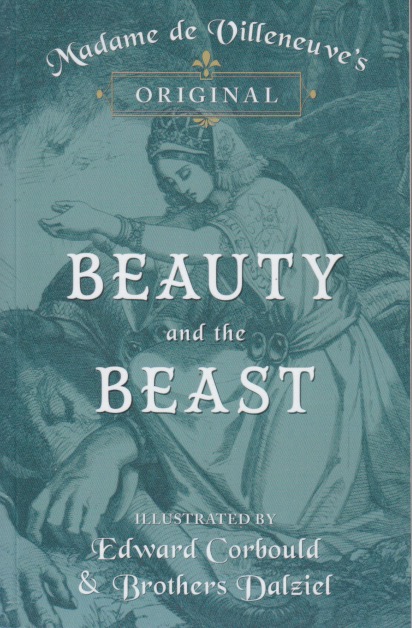
You think you know a story.  You know, you’ve heard it before, or seen it in a movie, so you think you know how it goes.  I’m not the biggest Disney fan in the world, but I have seen many of their movies.  Occasionally those movies are my first introduction to a story.  That was the case with Beauty and the Beast.  I saw this when my daughter was young, and in general found it a good story.  I’ve seen it a couple of times since, and I thought I knew how it went.  I got curious, however, regarding the origins of the tale.  Was it Grimm?  Other ancient folklore?  The reimagining of a classical tale like Pygmalion?  Well, it turns out it was a story from the eighteenth century written by Gabrielle-Suzanne Barbot de Villeneuve.

I decided to read it.  The story is quite different than the Disney version, as is to be expected.  To begin with, Beauty has eleven siblings.  Her father is a merchant rather than an inventor.  The beast is described as having an elephant’s trunk and scales, not fur.  Once Beauty agrees to move into his palace in place of her father Beast is nothing but polite, if somewhat dull.  In broad outline the same action takes place—beauty falls in love with the beast and magically he transforms to a handsome prince.  Any story, as it’s retold, is re-envisioned.  There’s no such thing as the literal retelling of any tale.  As the Italians say, “translators are traitors.”  (Of course, I didn’t read the story in its original French, having had the aid of a traitor.)

As was perhaps the style back then, once the happy ending came the story had to be fully explained.  Indeed, this constitutes half its length, telling, not showing, the backstory.  To Disney’s credit, they do all this in a minute or two of animation time.  The modern reader, unless obsessed with the rules under which fairies operate, and the power struggles among them regarding those rules, will likely find this add-on a bit tedious.  But that’s often the way with original texts.  Think The Iliad.  Think the Bible.  Modern writers seldom explain things fully.  Ambiguity is valued among the literati.  Still, stories have origins.  They start someplace.  Those of us who are curious about those origins are inclined to dig, it seems.  Disney has become our storyteller for children.  It’s a good idea to look behind the curtain now and then, just to see what the original creator wrote.  To see how the story really goes.


The King

Stephen King.  I haven’t read all of his books, but I’ve done quite a few.  I’ve watched movies based on some.  I read my first story by him in Junior High School.  I’ve even read books about him.  From what I can tell, he’s actually a man with his head on straight.  While some may find that a strange thing to write about a horror writer, it’s been my experience that those who enjoy horror, either as producers or consumers, are generally good people.  Recently King was testifying against the proposed buyout of Simon & Schuster by Penguin Random House.  Penguin Random House is already the largest trade publisher in the world.  The buyout would probably benefit King personally, but he testified it would make things worse for other writers and for independent bookstores.

How many people these days argue against things that benefit them personally?  Certainly not elected officials, particularly of what used to be a grand old party.  It’s all about me!  That seems to be the mantra of late capitalism.  King has publicly called for his own taxes to be raised.  This is nothing short of heroic.  While the Good Book advocates over and over for this kind of behavior, “Bible believers” have somehow overlooked it.  Leave it to a horror writer to get to the heart of the message.  I have no idea if King is part of any religious group or not—he certainly uses a lot of religious imagery and many religious concepts in his writing.  Of course, you don’t have to be in such a group to embody their proclaimed principles.

Thinking of the needs of others was drilled into me as child raised in a Fundamentalist faith.  Looking around me these days, I don’t see many Fundamentalists that hold to that any more.  Enamored of power—especially the power to control other people’s lives—they flock after rich pretenders who care nothing for the Gospel.  Sacrifice (for that’s what we’re talking about here) is something horror writers know well.  It’s never easy giving up something that’s valuable to you.  Or even thinking about it.  Writing, while very enjoyable, is hard work.  Training your mind is like physical exercise—it doesn’t just happen.  I’ve got a few Stephen King novels on my “to read” pile.  They’re big books, often intimidatingly so.  Once I start reading, however, I know I’ll find the work engaging.  And if I pay attention, there will be a message there too.

Not that kind of book.

Paperback Reader

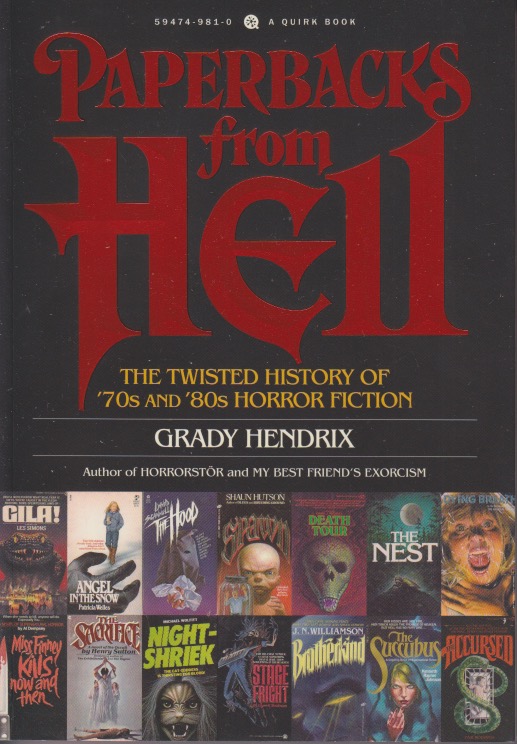
Sometimes I wonder why I do it.  Horror is a strange category for books and films, but one thing that may be a draw is that they take me back.  Life, it seems, is cyclical.  I liked monsters as a kid, and grew out of it when college and graduate school taught me to be serious.  As a working academic this genre can spell death to your career, so when my career died anyway, I was left grasping at my childhood to try to make any sense of this.  Grady Hendrix’s Paperbacks from Hell took me back.  Not that I’ve read all the books listed here—I came away with a list I want to read—but the lurid covers are a reminder of the kinds of things that caught my young imagination.

Subtitled The Twisted History of ‘70s and ‘80s Horror Fiction, this is actually a very fun book to read.  Hendrix has a light touch and had me nearly laughing out loud (quite an accomplishment) a time or two.  And I learned a lot.  Although I write books about horror, the genre is a large and sprawling one and this book takes a clear focus at the paperback market.  Just a reminder: paperback originals were designed to be sold and consumed quickly.  No waiting around for 18 months while profits from the hardcover roll in.  Hendrix really knows what he’s talking about when it comes to the history.  It also seems like he may have read more horror than is necessarily good for you.  He clearly knows how the publishing business works.

Several of these books were big enough that I knew about them.  He starts off with Rosemary’s Baby and The Exorcist.  (And The Other, which I’m now obligated to find and read.)  In fact, the first chapter focuses on religion-themed horror.  This is something that only began in earnest in the late ‘60s.  While the horror paperback market may have tanked in the ‘90s, the film side of the genre has been doing quite well and continues to do so.  The late sixties also got that kick-started.  It seems that when people stopped running from the fact that religion is scary, horror itself grew up.  I was shielded from that part as a child, but now, looking back, I can see that things weren’t quite what they seemed.  This full-color, grotesquely illustrated book has great curb appeal.  And if you’re not careful, you can learn a thing or two as well.


Who’s It For?

I suspect editors see this all the time.  I also suspect that I’ve unknowingly participated in it as well.  If you’re a book writer, you have to be clear of your readership.  As an academic editor I receive many proposals for books that either cry for popular treatment, but are too academic, or books that are written for laity on topics of interest only to academics.  A writing life is a struggle to find that correct balance.  Particularly for your typical academic.  You see, doctoral programs don’t generally include instruction on how publishing works.  Or in writing.  It’s assumed that any string of 100,000 words from a credentialed expert is worth publishing.  Worse, as Steven Pinker has pointed out, academics are rewarded for writing poorly.  No wonder people are confused!

Lately I’ve been on a kick about people not paying attention.  It is important to observe.  When writing a book it’s important to gauge who might want to read your potential book.  Indeed, this is something seldom asked early enough in the process.  Who is this book for?  Will they want to read it?  You see, we have this lone ranger attitude to book writing.  In actual fact, most books you see in bookstores are the clear result of teamwork.  Yes, authors do most of the writing.  In many books editors do quite a bit of the fixing of the writing.  Agents, marketers, publicists, sales reps—there are a host of people behind successful books.  It’s easy to think, while writing, that your book will be a bestseller, no matter how academic.  That you will see it in Barnes and Noble and point it out, ever so casually, to your friends.  That it will sell for less than $20.

It’s important to pay attention to what other people think.  We’re all busy, I know.  We have our own lives to live and plans to enact.  Who has time to bother thinking about who might read their book?  Obviously, other specialists such as themselves.  But how many people is that, really?  With the sheer number of books published each year, are there topics that will draw in thousands, instead of hundreds (or less) of buyers?  Writing a book naturally makes you think the topic is important—vital, even.  It’s easy to transfer your personal interest onto the masses.  My advice, for those few who ask or care, is to think carefully about who you wish to reach.  Be honest with yourself.  And try to think from the point of view of somebody else.


Say It in Poetry

I was listening to some Nick Cave the other day, and, as usual, I was quite taken by his lyrics.  I dusted off my poetry notebook and began to try to forge words into an impossible chain, but without much success.  Yes, I do occasionally write poetry.  I used to write quite a bit more.  There are too many “used tos” in my life, I think.  I grew up with two brothers, and a decade later, three.  (I also have a half-sister, but that’s a long story.)  My brothers have very different lives than mine.  One of them is now posting some of his poetry on a WordPress blog at Poetry Random Ramblings and Rants.  You ought to check it out.  (You might also run into a ramble or rant…)

Photo by Amador Loureiro on Unsplash

One thing I’ve learned from my many editorial board meetings is that successful books are often about the author.  My brother has an interesting life story to tell.  As I’ve noted here before, we grew up in a poverty-level working-class family.  We all found our own ways of coping with the stresses that involves.  Religion was my coping technique that become a strange vocation.  I knew, even as a tween, that whatever job I ended up having it would involve writing.  I learned early on that poetry is difficult to publish, but that never stopped me from writing it.  My brother has always been a much better poet than me, perhaps because of his life.  He’s less inhibited.  An authentic human being.  I don’t want to say too much, since that’s not my place.  Knowing the author, however, I know that he should have readers.

We make our way in the world, and when our parents haven’t really prepared, by example, what a life might be, we’ll you’re left second-guessing everything.  I suspect it drives my wife crazy sometimes.  For me every day is like being in a foreign country, unsure of the language.  Sure, I earned a doctorate but that doesn’t mean I know what I’m doing.  I’ve known medical doctors that were, truth be told, not that smart.  No, life is more of a story we tell about ourselves.  Some of us tell it in poetry, some in song, some in prose.  Some of us tell it nonfiction, and others, well, fictitiously.  A big problem with our world is that we don’t take time to listen to other peoples’ stories.  Their lives.  Those we do listen to (such as television and movie starts, sports players) are often dull.  For my money, there’s more to be learned from poetry, and the life it represents. 


Jekyll and Jekyll

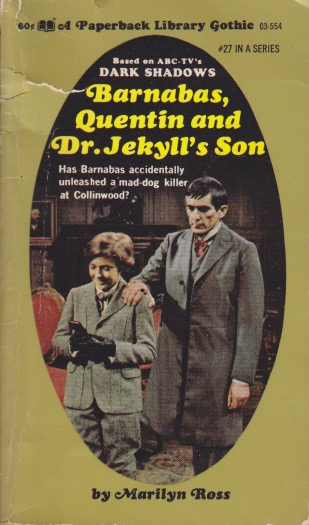
W. E. D. (“Marilyn”) Ross was a journeyman writer.  Prolific, he produced more than 300 pot-boilers, and he only started writing at mid-life, which kind of lends hope to me.  (He, however, didn’t always pay attention to literary niceties.)  I’ve made a determined effort, over the past decade or so, to collect and read all of his Dark Shadows novels.  These aren’t great literature, and I generally have to space them out to recover from them.  I just finished number 27 (of 32), Barnabas, Quentine and Dr. Jekyll’s Son.  Although I watched Dark Shadows as a child, it’s pretty clear that my cosmology of Collinwood was primarily shaped by Ross.  Living in an area without a regular bookstore, and without the cash to regularly buy books, I found what volumes I could at Goodwill and read them avidly.

Barnabas, Quentine and Dr. Jekyll’s Son is now a rather rare item on the used market.  It’s pretty clear that as Ross went on and on in the gothic fiction genre, he tried new things and these generally improved his work.  This story, set in the past, involves Dr. Jekyll’s grown son accompanying Barnabas Collins to Maine in order to escape his father’s reputation and, as a sidebar, to try to cure Barnabas of his vampire curse.  This means that one of the Collins girls, Emily in this instance, falls in love with Jekyll rather than Barnabas.  It also marks the point at which Ross tries to make it clear that both Barnabas and Quentin are good guys, but being under their own curses, they have to follow their vampire and werewolf natures, respectively.

I think I may have read this one as a child.  Although each book was stamped with its number in the series, I was dependent on when my mother decided to go to Goodwill and what they happened to have on hand in their book bin.  Some scenes from this book came back to me in the reading—although it was perhaps forty or more years ago—and one of the most important of these was one where Barnabas and Quentin collaborated on capturing the criminal.  Among the true fans of the series, they are known as the immortals (and Quentin isn’t always a werewolf), and they revisit Collinwood over the centuries.  Quentin can be both good and evil, but Barnabas is generally a sympathetic character.  Dr. Jekyll’s son isn’t such a strange guest at Collinwood, and the stories do seem to have improved over time.  It’s still Ross writing, but this one was more than a surface refinishing of a classic tale.


Stay Safe

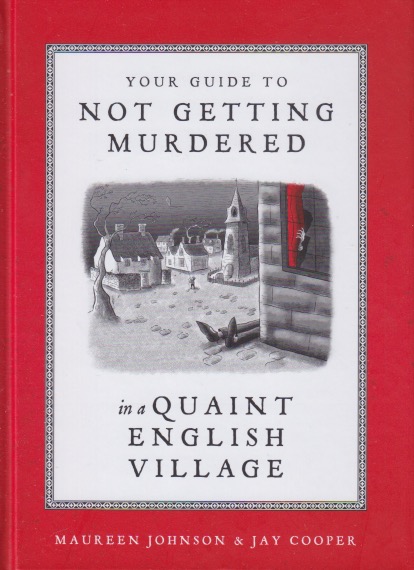
I’m not an impulse buyer.  Having grown up poor, I tend to walk into stores with a list firmly in hand and I don’t deviate from it.  Advertising has virtually no impact.  I don’t pay attention to ads unless they’re for things I know I need, and even then I shut them out most of the time.  I do let my guard down in independent bookstores, however.  So it was that I found in Aaron’s Books in Lititz, Your Guide To Not Getting Murdered in a Quaint English Village.  It was totally an impulse buy, easily read in a sunny afternoon in a caboose motel.  Or a rainy afternoon in an English manor house.  Maureen Johnson and Jay Cooper have produced a wonderfully witty illustrated guide here.  It helps to have lived in the United Kingdom for a few years.

Shelved face out in the thriller section, it’s a great opportunity for murder-mystery, gothic literature, horror movie fan types to laugh at themselves.  Some parts are snort out loud funny.  Okay, so I was on staycation and being a bit free with cash for a change, but I’m sure I will keep this one near my desk and turn back to it from time to time.  Maureen Johnson is known for her young adult novels and Jay Cooper is a children’s book illustrator.  Their talents, however, work together incredibly well for this slightly naughty guilty pleasure read.  The Wicker Man even gets a nod or two.  Something that those who disdain horror don’t often realize is that it quite frequently has its own sense of humor.  It’s an intelligent genre that doesn’t take itself too seriously.  At times it does, of course, but those of us who are fans can tell fantasy from real life.  Maybe.

Independent bookstores are starting to make a comeback.  A significant part of our population isn’t on board with retailers trying to convert everyday life to the metaverse.  We want to hear our music with the occasional pop and microphone hiss.  We want to drive our own cars.  We want to browse in actual bookstores.  Given my buying record online, I have to laugh every time I look at the recommendations.  The electronic world brain doesn’t know me very well at all.  It assumes it knows why I bought that ladder or that round blank four-inch stamped electrical cover.  Some of us play in nontraditional ways with such things.  And we get ideas from wandering into independent bookstores.  As long as they’re not in quaint English villages.


Time Well Spent

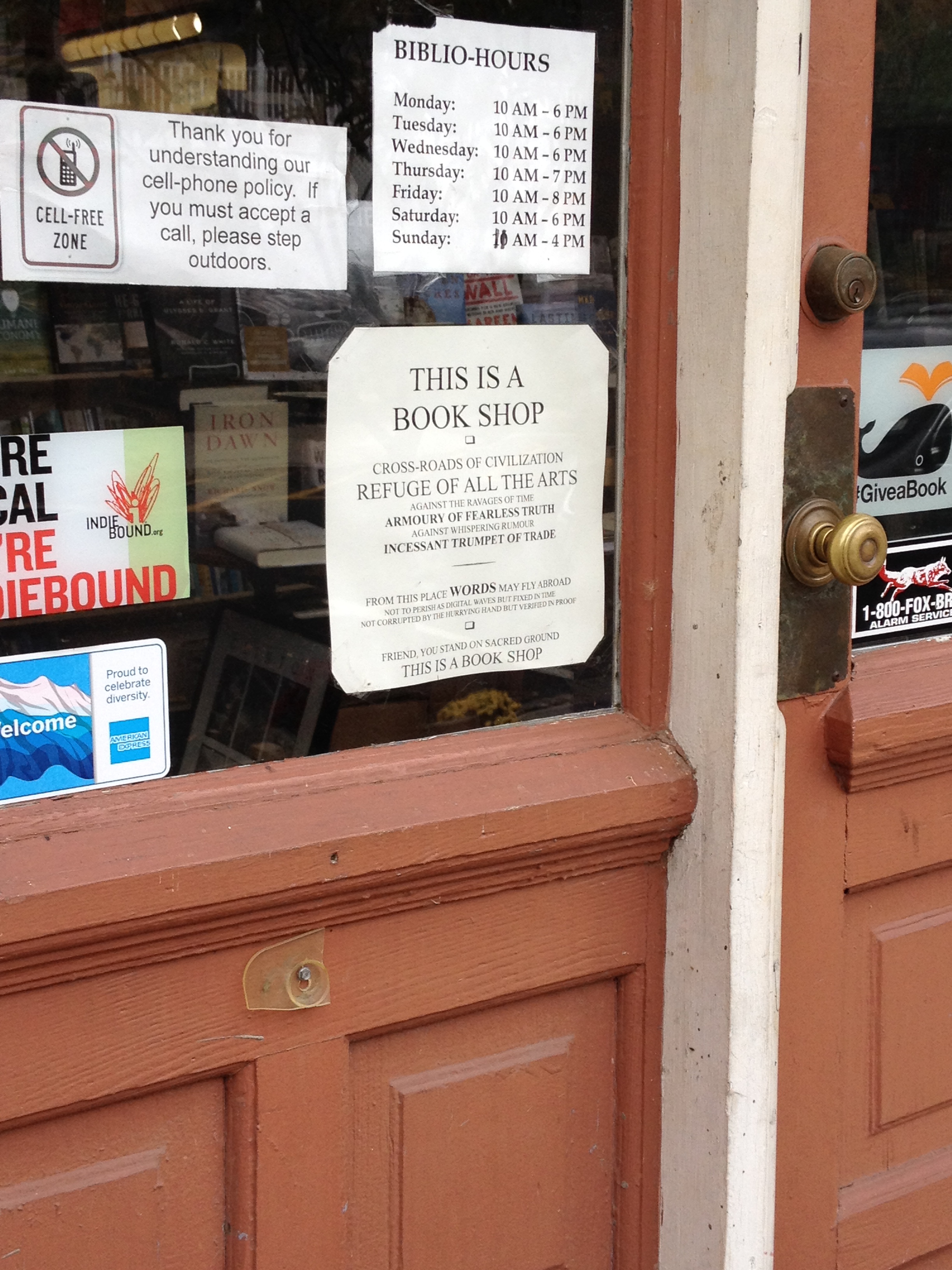
If you want a bookstore mostly to yourself, go on a fine, sunny summer weekend.  There will always be those with reading on their minds, of course, but since we’re still dealing with a pandemic, going when it’s quiet feels right.  Having to drop someone off for an event in rural New Jersey, I found myself with a couple of hours and the prospect of sitting in a hot car and trying to read or to find another way to use time productively.  It was a fine, sunny summer weekend day.  I realized the event wasn’t far from Frenchtown.  Now, I’d been through Frenchtown several times, often with my wife on her way to a weekend stint at work.  I’d noticed Frenchtown Bookshop, but since we were always on our way somewhere, we could never stop.

Public parking in Frenchtown is difficult on a fine, sunny summer weekend.  There is a bike and hike trail that passes near the Delaware there, and there’s also the river itself.  Kayaking and rafting on the border between New Jersey and Pennsylvania are popular pastimes.  The mercury was creeping up to 90, so people were out, either sweating on the trail or cooling their heels in the water.  Both public lots in town were full, as was all the on street parking I could find.  A bank tow-away lot—the bank was closed—seemed like the only option.  Independent bookstores are national treasures.  I always carry a list with me since it’s too easy to lose my head when surrounded by print.  If my specialized tastes aren’t represented, I can always find something.

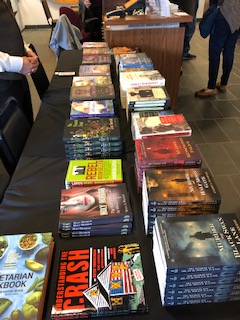
Books are one of the great achievements of humankind.  Although circumstances may have prevented many women from making careers in writing early on—Enheduanna proved even among the Sumerians that women had wisdom to convey.  Once novels came to be written, the form was well populated with female sages.  Reading and writing were kept from slaves for fear of what might happen could they see what the knowledge of humanity really said.  The internet has, of course, become the great democratizer of writing, but has made it more difficult to get a publisher’s attention.  Apart from all that, books laid out on a table, or stacked neatly on shelves, are one of the simple, usually inexpensive, joys of life.  For about the price of a movie you can stretch that entertainment dollar out over several days.  Even when they’re fine, sunny summer weekend days.


Sacred Hudson

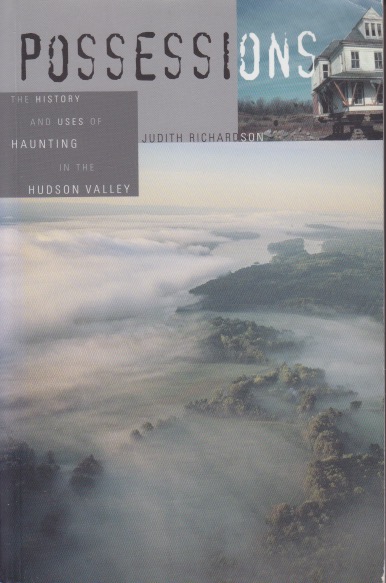
As scientific as we may wish to be, there’s no denying that there is a sense of place.  We know that some animals, at least, also feel it.  Whether theirs is a more pragmatic desire to return to where conditions were favorable to be born, or whether something deeper draws them there, we have no way of knowing.  People feel it too, this sense of place.  We know where we’re from, and if we don’t we often want to find out.  The space is somehow part of us.  There’s a compelling exploration of this in Judith Richardson’s Possessions: The History and Uses of Haunting in the Hudson Valley.  While not America’s first haunted location, the Hudson Valley was singled out for this treatment by Washington Irving.  He, however, didn’t invent it.

I’m not from the Hudson Valley.  I could never afford to live there.  That doesn’t mean the area can’t speak to me.  Richardson’s approach is academic yet readable and she considers how hauntings fill needs and how they play a role in that ever-contentious enterprise of land claims.  Ranging through literary treatments, whether the fiction of Irving or tour books of the next generation, or indeed, more recent literary efforts, Richardson deftly guides the reader through American Indian and Dutch and other inhabitants’ stories of themselves.  Race inevitably plays a part, and her tracing of the origins of some traditional tales is really remarkable.  Who owns the land?  Who truly owns anything?   

Similar treatments (I can’t help but feel somehow lesser) must exist of other haunted locations.  Richardson doesn’t engage in arguments over whether ghosts are factual since ghosts serve so many other functions.  Our lives are the stories we tell about ourselves.  Many of those tales involve the place we are or places we’ve been.  In our highly mobile society, few of us, it seems, can make a living where we’re from.  Those of us born in small towns range far and wide to find employment.  In many cases we may not want to go live where the drama of our childhoods unfolded.  Yes, there are pleasant memories there, but there are also ghosts.  Richardson explores how this plays out in one small stretch of the country.  Indeed, it’s a small stretch of New York state.  Stories of hauntings continue in that particular valley.  Uncanny, perhaps, but there are places in this world like that, and this book is a sure road post on this particular overgrown trail.


The Horseman

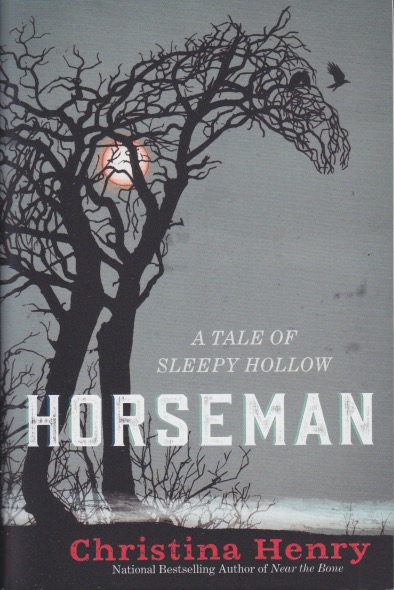
Washington Irving’s tale, “The Legend of Sleepy Hollow,” perhaps due to its being the earliest literary American ghost story, has been retold time and again.  When I saw that Christina Henry had a take on it that came out last autumn, I knew I’d be reading it.  I’d read her The Girl in Red late last year, but I couldn’t wait until fall to read this one.  Henry has a way of taking traditional stories and making them relevant.  Horseman is set two generations after Ichabod Crane and Brom Bones and Katrina Van Tassel, but they all appear in it.  According to Irving’s story—and this is often changed in cinematographic treatments—Brom and Katrina wed.  The narrator of this tale is Ben, who in today’s terms would be considered transgender.  He (his preferred pronoun) is the grandchild of Brom and Katrina.

Henry is a master of magic realism.  There really is something in the woods of Sleepy Hollow and it’s taking children’s heads.  Some influence from Tim Burton’s film version is found here, but the story has its own trajectory and inner logic.  Ben actually sees the monster, but nobody will believe him.  Not until it’s too late.  The one person who does believe is Katrina, Ben’s grandmother.  She, however, wants Ben to act like a girl because he was born female.  She wants him to stay home and learn sewing and cooking.  Ben’s hero, however, is Brom.  He’s a good man, if rowdy.  He married Katrina for love, not wealth.  Ichabod Crane does appear, later in the story, but since how he appears is a spoiler I’ll need to let you read for yourself.

Americans are often raised with the wrong-headed notion of canon as the one way a story goes.  Retelling is as ancient as writing itself.  Homer, Apollodorus, and Ovid were retelling stories.  So were many Bible writers.  People tell one another tall tales.  Washington Irving didn’t invent the Headless Horseman out of whole cloth.  Neither did the people of Tarrytown.  How the story goes is a matter for discussion.  Bet yet, it’s also a matter for retelling.  Henry’s version could be made to fit with Irving’s, but with a bit of prior assumption, some posthumous collaboration.  Hers, however, is a tale for our times.  Just like in Red, the protagonist isn’t conventional, according to conservative sexual standards.  Both are, however, authentic.  And although both may be flawed in various ways, there’s no denying that they’re heroes.


Dangerous Fiction

At the suggestion of a friend, I recently watched the documentary Daphne du Maurier in Rebecca’s Footsteps.  I confess I haven’t read much of du Maurier’s work, yet.  From a family fairly well off, du Maurier, perhaps unusually for a writer, found early success and was able to make a living from writing.  Like many authors she valued her time alone, but also had basic human needs.  In keeping with her gothic sensibilities, she fell in love multiple times, both with men and women.  And she lived in that kind of fantasy world that fiction writers often inhabit.  For some reason I had it in my head that she had died young, many years ago.  It was somewhat surprising to learn that she lived until I was 26.  I can make the legitimate excuse that I didn’t grow up in a literate family, though.  I learned about du Maurier from my wife.

Copyright released photo, author unknown; via Wikimedia Commons

That doesn’t mean, however, that I didn’t know her works.  I first saw Alfred Hitchcock’s The Birds when I was in college.  In those days I hadn’t yet learned to pay attention to who the writer of a film was.  That intimate interplay between written literature and film easily ties me into celluloid knots.  My wife is a Hitchcock fan and together we watched some of his earlier du Maurier adaptations, such as Jamaica Inn.  Then she introduced me to Rebecca, du Maurier’s early and best-known novel.  We watched the Hitchcock rendition.  The documentary makes the point that du Maurier’s life, in some ways, played out that novel.  Writing can be a dangerous business, especially fiction.

My own most recent book, on The Wicker Man, which I hope will see the light of day, brought me back into du Maurier’s orbit.  The Wicker Man was, of course, nearly disowned by the studio that had sponsored it (British Lion).  Half-hearted about the effort, they made it a B movie, showing it after Don’t Look Now, a film I admit that I’ve never seen.  I learned from watching this documentary that this was yet another du Maurier story.  I’ve read one or two of her short pieces—they aren’t commonly found in American bookstores, although I see them whenever I visit England—and clearly I need to read more.  That brings up, however, the age-old dilemma: should I try to read the story before I see the movie?  I think I know what du Maurier’s answer would have been, and I think it wise to follow her advice.


Carter’s Creations

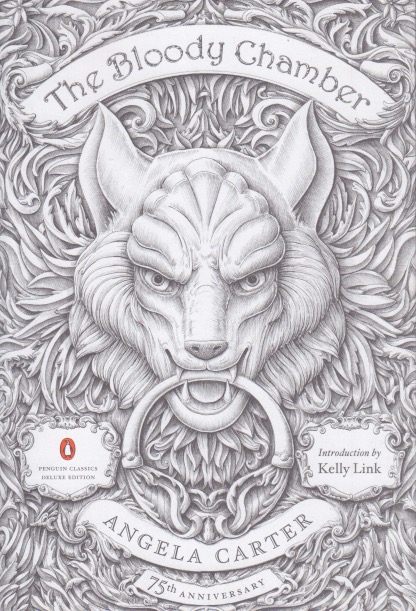
Angela Carter was a novelist whose best known work is her short story collection, The Bloody Chamber.  Often acclaimed as both gothic and feminist, these repurposed folktales and fairytales leave the reader in a thoughtful state.  I have to admit to having not known of Carter or her work until quite recently.  I’d seen a biography about her, but there are so many writers and my time seems always so limited.  Then I saw The Bloody Chamber mentioned on a list of best gothic fiction.  I had to find out what this was all about.  The stories are indeed unlike much of the feminist literature of the seventies.  The stories are focused on women, often young, and how they deal with being treated as the property of men.

The first, and lengthiest story, “The Bloody Chamber,” is a retelling of Bluebeard from the point of view of his last wife.  It’s an extended reflection on feeling owned and boxed in—literally trapped—by men’s economic rules of property.  Carter keeps readers on edge, even if they know the base story.  This isn’t a simple retelling.  Nor is it a lament about the natural, biological unfairness of sexuality.  There’s an ambivalence here, an enjoyment tinged with melancholy that gives the story a gothic sensibility.  The women in the different stories here prefigure more recent Disney heroines that take charge of their circumstances.  And there’s also ambivalence about the setting of the stories.  There are contemporary appurtenances but still castles and baronial mansions.  You’re lost in time.

The collection has some stories, such as beauty and the beast, retold twice and ends with three versions of werewolf stories that play, to an extent, on little red riding hood.  Some were tales with which I had no familiarity.  The effect of the whole is thoughtful contemplation of the human condition.  Much of the world, it seems, has been unduly influenced by a kind of literalism—a story, whether biblical or traditional, is supposed to go like this—that has not only robbed great texts of their depth, but has entrapped human beings in a stone-chiseled certainty.  A self-righteousness, if you will.  Even writing a text in stone doesn’t prevent others from interpreting it, however.  Since none of us have all the answers, we are each interpreters.  There was no historical Bluebeard.  There have, unfortunately, been many men who embody his attitude towards women.  Carter’s genius is to remind us that every story has at least two sides.  And the woman’s side may well be the truer of the two.


Virtual Unreality

You walk into a bookstore and browse.  Maybe you’re looking for a specific topic, or something to fit your mood, but you don’t know exactly what.  Then a title leaps out at you.  Maybe it’s a book you’ve never heard of before, or perhaps some long forgotten suggestion, nearly extinct, comes back to you at the sight.  Whatever the reason, you know you have to read this book.  You buy it and go home happy.  This is a uniquely human experience.  Yes, it applies to the leisured class who have money for books, but it is something that makes many of us feel good.  Those enamored of the virtual world are trying hard, according to the New York Times, to develop an app to replicate the experience.  Without luck.

Perhaps while browsing you meet someone else.  If you’re not too much of an introvert you might ask if they find the book they’re holding good.  Maybe you go get a coffee to discuss books.  This is just one of the many things that could happen.  Here’s another: someone is sitting at a table with piles of books s/he has written.  If they’re well enough known they may have had a public reading from one of them earlier.  You might strike up a conversation.  You might learn something.  A bookstore, you see, isn’t only about books.  What app developers can’t replicate is the phenomenon of literate culture.  Apps want you to buy things.  So do bookstores, but they also want to cultivate community.  Sure, you could buy your virtual book and then go to Facebook to talk about it, but that’s not the same thing.

Those advocating for a virtual world seem more escapist than even your average bookworm.  It’s been observed that when George Lucas was devising Star Wars he took care that no books or paper be shown.  This was a post-print world.  Some believe this is the direction in which we should go, and certainly during a pandemic at times it seemed right.  Even so, when the miasma began to clear a bit some of us first ventured back to bookstores.  Indeed, books fared well during those long months of enforced isolation.  We seem to think that any human experience can be replicated with the aid of technology.  The thing about serendipity, however, is that it’s unexpected because it seems to speak directly to you and how you feel at that exact moment.  No amount of data mining will reveal such things.


Life Writing

It’s sometimes thought that a writer’s life is easy.  What’s so difficult about scribbling things that people will pay for?  I’m absolutely certain that, like most systems, this one may be gamed.  Amazon has made it quite easy to slap together words and covers and sell them alongside literary giants.  Only time will tell those that endure.  Most writers, apart from those who achieve early success (capitalism loves nothing so much as a repeat source of money), hold down other jobs.  Many of those jobs don’t involve writing, so those with literary ambitions must carve out time from their busy lives to write.  Not only that, but to write well you have to spend a lot of time reading.  Think about your daily life—how often do you have time to curl up with a good book?  Sure, you can read on the internet, but that’s not the same thing.

I love reading about writers.  Often they had struggles to overcome and many remained obscure as writers until after they’d died.  (At least that takes some of the pressure off.)  Someone saw there was money to be made in what they left behind.  Knowing quite a few writers, I suspect most of them really wouldn’t mind that.  Recognition during your lifetime must be nice, but writers tend to have a longer view.  That’s why things are written down, and, against hope, published.  Literary ambition can be a mean dog indeed.  Especially when the lawn requires mowing again and those invasive trees need constant trimming and gee, why didn’t we buy that house with no yard?  Many writers had even greater struggles to overcome.

Image credit: George G. Rockwood, via Wikimedia Commons

When reading, I’m constantly discovering new old writers that I missed.  I didn’t grow up in a literary family.  I find them by reading other writers and, perhaps more importantly, reading about other writers.  Who influenced whom.  Many remained obscure.  Although it’s only an estimate, 2.2 million new titles are published each year.  Readers are, and always have been, a minority.  Most people don’t read for pleasure.  That makes sense, given that we haven’t evolved for that.  Survival involves working for sustenance and mowing the lawn or shoveling the walk when you’re done with work.  A clueless professional once asked me “Why don’t you hire a service?”  With what?  My royalties?  Sacrifice is an inherent part of writing.  Whether it’s the neighbors thinking you’re a trashy yard-keeper, or you boss wanting you to spend more hours on the clock, or cheating sleep night after night, a writer’s life isn’t for the fainthearted.  That’s why they inspire me.


Keeping Your Head

Horror is a gift that keeps on giving.  Not many horror fans are among my regular readers, but I like to keep a finger in the pie nevertheless.  Just earlier this month it was announced that Paramount has hired Lindsey Beers to direct a new big screen Sleepy Hollow.  It’s early days, of course, and the movie hasn’t been titled, let alone filmed.  Beers is just wrapping up a prequel for Pet Sematary (not yet titled) that I’ll be eager to see.  Women horror directors tend to bring refreshing angles to the genre—and why shouldn’t they?  Women writers were crucial in developing the Gothic genre that evolved into horror as we know it.  No matter what the Supreme Court says, they are just as important—probably more—than males.

I’ve been reading quite a lot about Sleepy Hollow over the past several months, which is how I came across the intelligence about this new movie.  It’s nice to know that the Hudson Valley is evergreen.  My visits there have offered brushes with the uncanny, but nothing explicit.  A weekend near the ice caves of Sam’s Point, geocaching in the woods outside Poughkeepsie, a visit to Sleepy Hollow itself to visit Irving’s grave and tip my hat to the Old Dutch Church.  With deep family roots in upstate New York, I’ve always thought it would be a great place to live.  Alas, not on an editor’s salary.  It’s been too long since I’ve given the area a visit.

John Quidor, The Headless Horseman Pursuing Ichabod Crane, via Wikimedia Commons

There have been many takes on Washington Irving’s “The Legend of Sleepy Hollow.”  Even in the silent era movies were made of it.  In retrospect, it seems odd that it took so long for Tim Burton to bring it back to the big screen.  There were some television movies, usually with plodding plots to draw the story out to commercial length.  Disney had early on devoted half a feature to it, as if the story couldn’t support its own weight.  For better or worse, that film was probably the first introduction to the tale that many people had—the story itself was written for adults.  Of course, many written kids’ versions have come out since then.  The satirical original was meant for a somewhat sophisticated readership with a sense of humor.  The story lends itself to horror treatments, however, if they’re done well.  It may have been an early viewing of the Disney tale that set me moving in this direction.  I like to think I’ve kept my head over it, however.