The Season

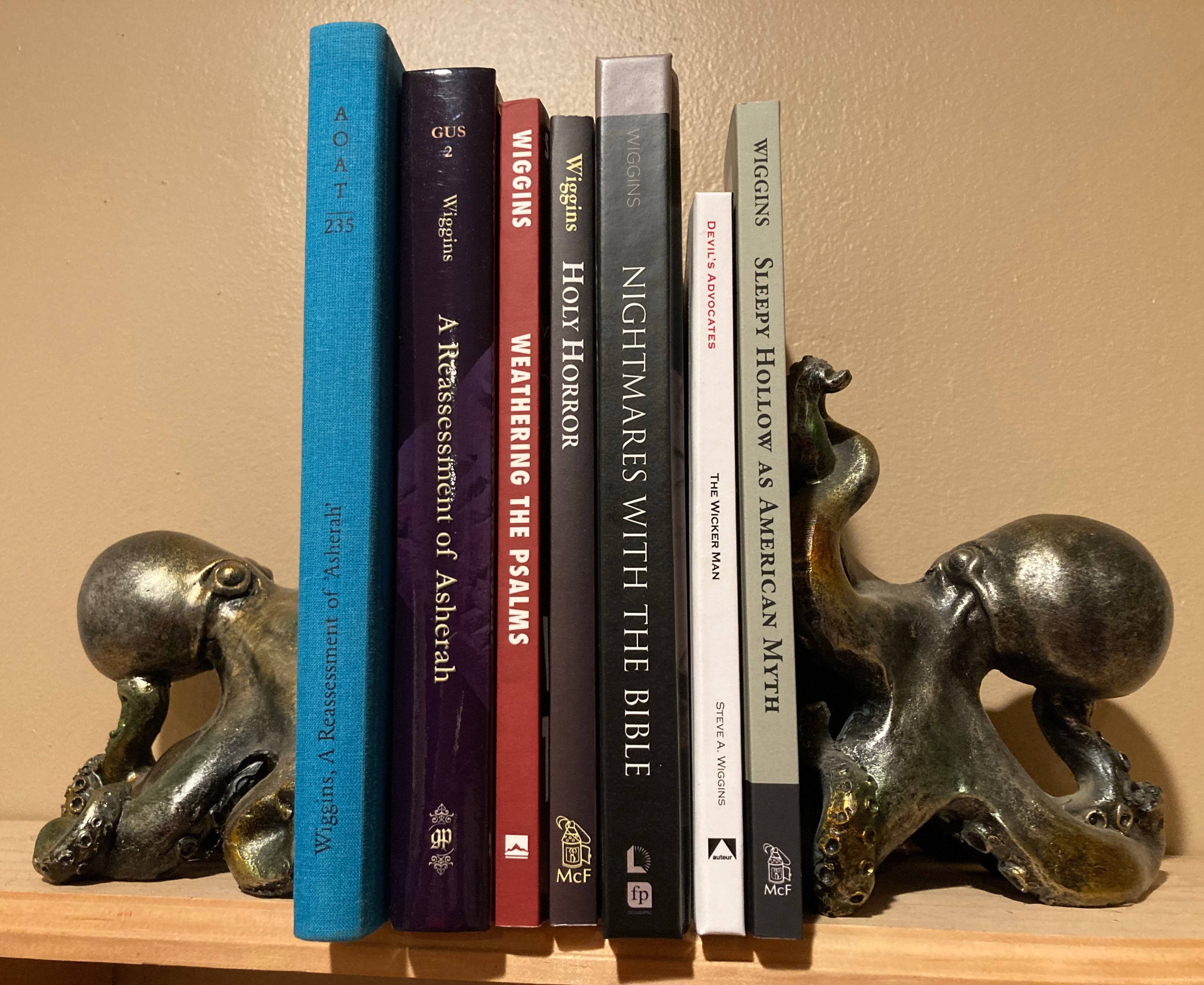
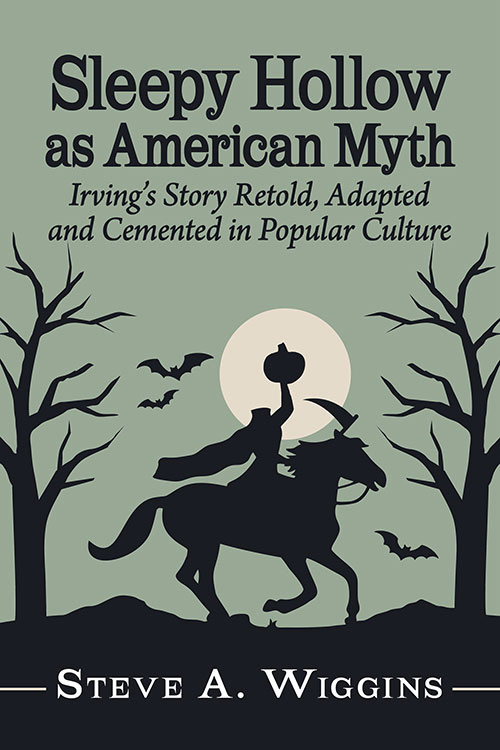
I learned about the Horror Writers Association years ago, shortly after I started publishing horror stories in 2009.  I couldn’t join because you had to have earned at least $30 from a publication.  I took this to mean a fictional one and I never made it beyond that benchmark until this year.  (It’s possible I misunderstood and could’ve joined for Holy Horror and beyond.  I think the point is they want to know you’re serious.)  In any case, these folks may be my tribe.  During the month of October the website has a set of free blog posts available to the public.  Mine—located here—dropped yesterday.  It deals with nonfiction, of course, since I’m still not finding much traction in getting novels published.  One of the weird things about book publishing is that you don’t know, unless you’re already successful, how well your sales are going until after about six months or so.  Sleepy Hollow as American Myth may be flopping for all I know. 

I’ve tried to promote this one as much as I can.  I contacted bookstores and libraries in Sleepy Hollow itself.  I had bookmarks printed and put them in local libraries and bookstores.  I arranged a discussion at the upcoming Easton Book Festival.  I told my local writers’ group about it.  Posted on a Halloween Facebook group.  All of this is tricky rather than treaty when a book is priced near $40.  That’s quite a trick, I know.  As Halloween approaches I keep seeing memes and posts about the Headless Horseman.  But I’m not sure if anyone’s finding my book or not.  It’s an anxious period when you write.

Working in publishing for nearly two decades now, I’m starting to realize that there are two ways to relevancy.  One is to be hired by an institution with name recognition—that automatically makes you an expert and everyone want to know what you think.  They’ll even pay you for it.  The second way is to write a book that sells well.  That one’s a bit of a catch-22, however.  To get published these days you need to already have a following.  I suppose that’s what the internet is for.  The best forums at the moment seem to be YouTube and TikTok, but there’s more much traffic there than on a Los Angeles freeway during rush hour.  I’m not sure if many people read the Horror Writers Association Halloween Haunts blog posts.  These folks, however, seem to look at this from a similar perspective.  Maybe a few of them will buy Sleepy Hollow as American Myth.  ’Tis the season.


Nostalgic Shadows

Nostalgia is a funny thing.  Although it can strike at any age, somehow after the half-century mark it’s particularly easy to get swept into it.  As I written about many, many times, I was drawn into the Marilyn Ross Dark Shadows novels as a tween.  In my mid-to-late forties, when the internet made it possible, I started to collect all the volumes from 1 through 32.  It took several years.  I had to find them via BookFinder.com and our level of income didn’t support buying more than one every few months.  Then in 2022, having difficulty locating the last of the original series, I found a seller on eBay offering up the whole set.  The price for that set was less than the least expensive final volume I could find.  I did what any nostalgic guy would do.

We don’t really buy antiques, but I’d been looking for an office desk (this was before the scam).  I’d been using a craft table for a desk for years and it seemed that I really needed something with a better organizational range.  This led me to stop into a local antique shop.  They ended up not having much furniture, but they did have aisles of nostalgia.  A few weeks later when it was too hot and humid to be outdoors, I revisited the shop.  This time, relieved of the burden of seeking a desk, I was able to browse at leisure.  It’s like going to a museum but not having to pay admission.  I turned a corner and I saw something I’d never seen before.  A collection of Marilyn Ross Dark Shadows books.

It wasn’t a full set, but I had, prior to finishing my own collection, never seen more than one or two together in any single place.  As a child I’d buy them at Goodwill.  As an adult, on BookFinder.  All those years in-between, I always looked for them when visiting used bookstores.  I visit said shops whenever possible.  In decades of looking I’d only found one in the wild once or twice, and always by its lonesome.  This was a completely new experience for me.  It was also quite odd to be seeing them and not having any need to buy them.  I have a full set.  The nostalgia was almost overpowering.  I couldn’t help but think of how even a few years ago I’d been pawing through to see if there were any I hadn’t yet found.  All for reliving a bit of my childhood.


Fragments Etc.

I’ve never counted, but there’s well over a hundred of them.  And a notebook with at least a thousand more.  What have I got in such abundance?  Ideas for stories that remain unfinished.  I’m not exaggerating or inflating numbers, I assure you.  I’ve been writing short stories for a half-century now, many, no, most unfinished.  Thirty-three have been published.  I was reminded of this recently while reading a nonfiction book that suddenly gave me the ending for a story I’d started many months before.  Perhaps even a couple of years.  I started searching through my electronic files for it and couldn’t find it.  Why?  There were too many stories started with frustratingly short titles (my bad).  To find the culprit, I would need to open each one and remind myself what was inside.

A few months ago, I printed out copies of all eight of my unpublished novels.  I also printed out copies of all my published stories as well.  I never got around to the unfinished majority.  I have a feeling that if I printed them I’d find what I was looking for more easily.  This, even with the ease of electronic life, will be quite an undertaking.  I think it may be a necessary one.  Although I’m hardly well known—I’m an obscure, private intellectual, after all—I do have many fiction ideas.  The stories generally come to me with an impression.  The start of an intriguing tale, for instance, or the end of one.  I then begin writing and either write myself into a corner or I scribble until I realize that I don’t know what happens next.  The story sits, unfinished.  Now and again, however, the missing piece is found.  I try to find the story so I can complete it to send out for several rejections.  Such is the writing life.

Now, if I could do this for more than the paltry time allotted to personal pursuits, courtesy of capitalism, I’m confident that I’d have far more than thirty-something stories published.  At current count I have seventeen stories ready to send out to literary magazines, several of them already rejected a time or two.  Another twenty finished and nearly ready to send out.  And forty just finished, but requiring a bit of spit and polish.  And these aren’t the fragments.  Don’t get me started on the nearing 6,000 posts on this blog.  Is it any wonder I can’t find anything?  I grabbed my notebook of a thousand fragments and jotted a physical note of how that particular story ends, in case I ever find it again.


Brutal Boys

Some time back I posted about Steffanie HolmesPretty Girls Make Graves.  It was a first book in a duology and since I’d been trying to keep up with dark academia, it was a recommended exemplar.  As I mentioned in that post, the book ends with a cliffhanger, so I got to Brutal Boys Cry Blood as quickly as I could.  Holmes is a prolific self-publishing author and I found Pretty Girls much better written than the majority of self-published material I’ve read.  Brutal Boys picks up right where the previous novel left off, freeing George Fisher from her predicament and moving her into new ones.  At Blackfriars University, George is investigating the death of her former roommate.  The Orpheus Society, consisting of old money blue bloods, seems to be involved in more than wanton destruction of property and orgies.

Much of the first half of Brutal Boys sets the scene for a relatively happy period in George’s life.  She establishes a polyamorous relationship with the uberwealthy student William Windsor-Forsyth and Father Sebastian Pearce, a teacher and college chaplain.  The three of them are mutually in love, but even as George is admitted the Orpheus Society, a deeper part of the sect emerges.  This group is even more insidious and has designs on human sacrifice.  But I’ve already said too much.

Reading is, of course, a subjective exercise.  My personal experience of this duology is that the first book is better than the second.  It’s not that I feel Brutal Boys is a bad story—it keeps your interest pretty much the whole way through—it just seems to be far more improbable than the first novel.  It is fiction, of course, and there is nothing speculative here.  There are no ghosts or monsters or divine intervention.  Speaking strictly for me, it might’ve helped with believability if there were a little of this.  I was not one of those swept away by Donna Tartt’s inaugural dark academia novel The Secret History, but she did include just a little of a speculative element that allows for a reader to perhaps convince him or herself that this might just possibly happen.  Some writers and readers prefer not to use that escape hatch.  I’ve read good dark academia both with and without speculative aspects to the story, but to me, such mystery adds a little depth to what might be happening.  And I admire self-publishing authors who write well enough to draw you into a second book, which can be a rare thing.


Name Your State

My grandfather’s name was Homer.  I’ve often wondered about that since he was from a long line of uneducated farmers.  Since he was born in Bath, New York, and since I’ve poked around upstate for genealogical purposes, I noticed that there were several place names derived from the classics, including Homer.  I suspect that’s where his name came from.  His ancestors had biblical names.  This got me to wondering about the many upstate classics town names of Utica, Syracuse, Ithaca, Corfu, Palmyra, and more.  A little (very little) research led me to Robert Harpur.  Harpur was a one-time clerk in the New York State Surveyor General’s office, and he assigned names to several towns, using classical sources.  I haven’t found a comprehensive list, but all of this makes me homesick for upstate, a place I’ve never lived.

My Homer

My mother’s paternal line had deep roots in New York state.  Nobody in the family went to college, although my grandfather did take a couple of courses at Cornell to qualify as a country teacher.  Then, many years later, my daughter moved to Ithaca.  We spent many fine weekends there and would’ve moved there had we been able to afford it.  It was a kind of homecoming.  But the connections have a way of wending their way around, as they often do.  Robert Harpur settled in Binghamton, New York.  Harpur College, now Binghamton University, State University of New York, was named after him.  Not aware of any of this, my daughter attended Binghamton University.  (There was even a picture of me on their website for a while, a photo snapped by someone as I sat in the financial aid office one parents’ weekend, begging for more money.)  I have no way of proving this, but it seems that Harpur’s interest in the classics may have led to my grandfather’s unusual Christian name.

Here’s where it gets interesting.  Homer had a sister named Helen.  Of Troy?  (There’s also a Troy, New York.)  Perhaps a family name?  My records don’t really answer that for me.  And they had a brother named Ira.  Ira is a biblical name, but it also may be a variant of the name Hera, the wife of Zeus.  This had nothing to do with my writing my dissertation on Asherah, who is perhaps the namesake of Hera, or at least it has been proposed.  I doubt my ancestors would’ve named a son after a Greek goddess (the family was of Teutonic origins).  Or maybe great-grandpa Adam was more educated than he let on and had read the Iliad?  If only I could afford to get back to Ithaca I might just go on an odyssey of my own.


Discovering Witches

On a number of best of dark academia novel lists, A Discovery of Witches was a book I knew I had to read.  Frightened by the size of the tome, I put it off.  Although it says it on the cover (by which I don’t buy a book) that it’s part of a trilogy, I was hoping it’d be self-contained.  Of course, it ends without resolving what happens to the main characters, more or less coercing the reader into the remaining two volumes.  Now, this is not unique.  Many authors do it.  Publishers especially like books with series potential—assured sales.  My eight novels (none published) are stand-alone.  One is over 200,000 words, but the rest are reasonably svelte.  Big books take a large commitment of time and, well, at my age you have to make some choices.  This one took me nearly a solid month of daily reading, sometimes multiple hours at a stretch, to finish.  I have some decisions to make.

Set initially in Oxford, this world created by Deborah Harkness contains three kinds of humanoid creatures besides humans: witches, vampires, and daemons.  The daemons aren’t really defined, but they don’t seem to be the kind that possess girls like Regan McNeil.  The witches seem pretty traditional and the protagonist/narrator is one.  The vampires are quite different than the Hollywood version, as well as the traditional sort.  Vampires can be out in the sunlight, they aren’t affected by crucifixes, and, indeed, can be quite religious and Christian.  They can eat things other than than blood.  The protagonist, Diana Bishop, is a witch who doesn’t use her powers.  A professor, she’s doing research at Oxford where she meets, and eventually falls in love with Matthew Clairmont, a vampire.  An ancient pact between witches, vampires, and daemons forbids them from consorting closely, and herein lies the tale.

The dark academia aspect comes in a couple of guises.  One is that much of the first part of the novel takes place at Oxford University, and even in the Bodleian Library.  Also, vampires seem to be quite compatible with dark academia as a whole.  The dark aspect comes not only from the creatures, but their situation.  There is ancient animosity and tension that results in murders.  The novel ends with a war starting and Diana and Matthew taking a risky journey.  I may be content to let this state of affairs stand.  From the look of things, the sequel is also a long book and I am content to let my imagination fill in the blanks.  I’m glad to have read it, but I’m going to look for a novel with a little less time-commitment next.


Another Picnic

It’s curious, the desire to see a movie based on a novel you’ve already read.  I was intrigued to see how Peter Weir might handle Picnic at Hanging Rock.  As my post about the novel points out, the book, as it stands, is ambiguous about what happens to the missing girls.  It was only as I saw the film that I realized just how complex a story was crammed into a relatively brief novel.  Film directors have to make choices and although this one follows the book to quite a large extent, some elements were more clearly implied in the cinematic version.  The suspicion on Michael Fitzhubert was clearer, as was the fear that the girls had been molested.  The character of Mrs. Appleyard, although not exactly kind, is treated somewhat sympathetically.  It’s not implied that she might’ve killed Sara, for example.  Her treatment of the orphan, however, does lead to suicide.

This story isn’t simple to untangle even in the book.  Being literature, it isn’t clear exactly what is happening throughout.  It allows for ambiguity.  The novel never explains how the girls went missing or what happened to them.  Hanging Rock is presented as mysterious, almost a portal.  One way the movie deals with this is by invoking Poe.  It begins with a voiceover reading “Dream within a Dream.”  Indeed, the movie is shot with a dream-like quality.  The roles of the male characters is, appropriately, understated.  The story is about women and coming of age.  It’s often considered an example of dark academia.  Appleyard College isn’t a school at which fair treatment is doled out and Miranda, the most accomplished student, is compared to an angel, adding to the dreamlike quality of it all.

Using Poe to frame a film may not be entirely fair.  It does signal the viewer that what follows may or may not be reality.  Although Wikipedia can’t be considered the final authority—anyone can edit it—it lists (as of this writing) the movie Picnic at Hanging Rock as an adaptation of Poe’s famous poem.  Maybe by implication, but the story is clearly that of Joan Lindsay’s novel.  She presented this, in the sixties, as an account of an actual event, which it is not.  I found it interesting that dialogue was added to the film that doesn’t appear in the novel.  Overall, however, this seems to work as an art film.  The movie has been hailed as the greatest Australian movie of all time, and just this year was rereleased in theaters.  I’m glad to have seen it, but remain curious.


Tell a Story

If I seem to be on an AI tear lately it’s because I am.  Working in publishing, I see daily headlines about its encroachment on all aspects of my livelihood.  At my age, I really don’t want to change career tracks a third time.  But the specific aspect that has me riled up today is AI writing novels.  I’m sure no AI mavens read my humble words, but I want to set the record straight.  Those of us humans who write often do so because we feel (and that’s the operative word) compelled to do so.  If I don’t write, words and ideas and emotions get tangled into a Gordian knot in my head and I need to release them before I simply explode.  Some people swing with their fists, others use the pen.  (And the plug may still be pulled.)  What life experience does Al have to write a novel?  What aspect of being human is it trying to express?

There are human authors, I know, who simply riff off of what others do in order to make a buck.  How human!  The writers I know who are serious about literary arts have no choice.  They have to write.  They do it whether anybody publishes them or not.  And Al, you may not appreciate just how difficult it is for us humans to get other humans to publish our work.  Particularly if it’s original.  You don’t know how easy you have it!  Electrons these days.  Imagination—something you can’t understand—is essential.  Sometimes it’s more important than physical reality itself.  And we do pull the plug sometimes.  Get outside.  Take a walk.

Al, I hate to be the one to tell you this, but your creators are thieves.  They steal, lie, and are far from omniscient.  They are constantly increasing the energy demands that could be used to better human lives so that they can pretend they’ve created electronic brains.  I can see a day coming when, even after humans are gone, animals with actual brains will be sniffing through the ruins of town-sized computers that no longer have any function.  And those animals will do so because they have actual brains, not a bunch of electrons whirling around across circuits.  I don’t believe in the shiny, sci-fi worlds I grew up reading about.  No, I believe in mother earth.  And I believe she led us to evolve brains that love to tell stories.  And the only way that Al can pretend to do the same is to steal them from those who actually can.


Covid Books

There’s a fairly new phenomenon called “Covid books.”  No, I don’t mean books about Covid-19, but books affected by the virus.  (Not infected.)  Let me explain.  Many publishers, unaware of the menace, continued scheduling books through what became the pandemic.  You see, books take a long time to put together, and, interestingly, much of the work can be done remotely.  That meant that even as we locked down, books still published.  But in 2020, few people were interested in books on other subjects.  Children’s books and others intended for young readers did really well.  Online ordering made this possible.  Fiction for adults didn’t fare too badly.  What suffered was nonfiction on topics unrelated to the pandemic.  This is so much so that publishers designate as “covid books” those that underperformed and appeared in the early twenty-twenties.

To put a more personal spin on it, I published a covid book.  Nightmares with the Bible came out late in 2020.  Granted, the topic didn’t appeal to everyone, and the price was about $100 when people were wondering if their jobs would be there after this was all over.  (Is it over yet?  I still wear a mask in crowded places.)  The reason that I consider it a covid book is that although it has received more reviews than any of my other books, it has sold the worst of them all.  Less than its dollar amount.  The publisher, which was bought by another publisher, has no inclination to do it in paperback, so it will remain an obscure curiosity.  Interestingly, I found a Pinterest page that was a listing of unusual book titles and mine was there.  But it was a Covid book.

In the wider world, even in 2025 publishers discuss Covid books.  A promising author whose book appeared in the height of the pandemic may have sold down at my levels.  What with the gutting of government programs and agencies since January, it’s difficult to tell if we’ll ever get a pronouncement that the pandemic has ended.  Where two or three are gathered, I’ll be wearing a mask.  And I’ll likely be thinking of books of that lost generation.  Information that will never be processed.  Book publishing survived, despite being a nonessential business.  People still buy and read books.  Some day some bibliophile might write a book for other readers about the year that robbed us of interesting but ultimately irrelevant books.  There’ll be too many to list, of course.  But we have been given a lesson.  Let’s hope we continue to do our homework.


Dangers of Dark Shadows

A friend’s recent gift proved dangerous.  I wrote already about the very kind, unexpected present of the Dark Shadows Almanac and the Barnabas Collins game.  This got me curious and I found out that the original series is now streaming on Amazon Prime.  Dangerous knowledge.  Left alone for a couple hours, I decided to watch “Season 1, Episode 1.”  I immediately knew something was wrong.  Willie Loomis is shown staring at a portrait of Barnabas Collins.  Barnabas was introduced into the series in 1967, not 1966, when it began.  Dark Shadows was a gothic soap opera and the idea of writing a vampire into it only came when daily ratings were dismal, after about ten months of airing.  Barnabas Collins saved the series from cancellation and provided those wonderful chills I knew as a child.  But I wanted to see it from the beginning.

I’ve gone on about digital rights management before, but something that equally disturbs me is the re-writing of history.  Dark Shadows did not begin with Barnabas Collins—it started with Victoria Winters.  There were 1,225 episodes.  Some of us have a compulsion about completeness.  The Dark Shadows novels began five volumes before Barnabas arrived.  Once I began collecting them, I couldn’t stop until, many years later, I’d completed the set.  I read each one, starting with Dark Shadows and Victoria Winters.  Now Amazon is telling me the show began with Barnabas Collins.  Don’t get me wrong; this means that I have ten months of daily programming that I can skip, but I am a fan of completeness.

You can buy the entire collection on DVD but it’s about $400.  I can’t commit the number of years it might take to get through all of it.  I’m still only on season four of The Twilight Zone DVD collection that I bought over a decade (closer to two decades) ago.  I really have very little free time.  Outside of work, my writing claims the lion’s share of it.  Even with ten months shaved off, I’m not sure where I’ll find the time to watch what remains of the series.  The question will always be hanging in my mind, though.  Did they cut anything else out?  Digital manipulation allows for playing all kinds of shenanigans with the past.  Ebooks can be altered without warning.  Scenes can silently be dropped from movies.  You can be told that you’ve watched the complete series, but you will have not.  Vampires aren’t the only dangerous things in Dark Shadows.


King and the Rest

Stephen King is an author I admire, although I haven’t read all of his books.  Not even close.  Still, his cultural cachet is high, as it has been pretty much since the seventies when horror literature was first being recognized.  I’ve been fascinated by his outlook on religion, or, in broader terms, the supernatural.  Rebecca Frost approaches things from a different angle, but her Surviving Stephen King: Reactions to the Supernatural in the Works by the Master of Horror is a volume worth pondering.  Quite often, as was the case with Douglas Cowan’s America’s Dark Theologian, I haven’t read all of the books and short stories the author discusses.  Frost gives good summaries, however, which help frame the discussion.  One of the reasons I enjoy King is that he allows the supernatural in, but something I hadn’t really realized until reading this book was that the supernatural is generally a threat.

Now, knowing King as a horror writer, it’s obvious that there has to be a threat, but in what Frost explores, standard Christianity doesn’t always work well against the supernatural.  One of the points I made in my expensively-priced Nightmares with the Bible is that physically fighting a demon crosses ontological lines if demons are spiritual beings.  Frost discusses how quite often “success” in a King story involves destroying the physical aspect of the supernatural threat.  It doesn’t always work permanently, but for the protagonists, at the time, it tends to be sufficient for them to get on with their lives, sans supernatural.  Having studied religion through three degrees, this made me stop and think.  The impetus to start on that career track was the idea that the supernatural tends to be good.  Enter King.

I only started reading King after my doctorate, and I haven’t read as much as true fans, I suppose.  Still, I tend to try to analyze what I read—thus the many posts about books on this blog—and it helps to have the guidance of someone more familiar with his oeuvre than myself.  Reading books like Surviving Stephen King also gives me an idea of which of his books I should pick up, and also which I might safely avoid.  Frost is an able guide, considering the various appropriations, or Christian solutions to the supernatural, in King’s imagination, and whether they work or not.  The ideal reader for Frost has probably read King a bit more widely than me, but I still found this study enlightening.  And it added some novels to my to read list.


Long Tail

There’s a truism in academic publishing (how many of these are actually falsisms!) that a book reaches its sales potential in three years.  After that, the received wisdom says, a sale here or there may occur, but the book has reached the end of its commercial life.  One of the problems with this is that sometimes a topic will experience a resurgence, or, perhaps, pick up for the first time.  Some publishers raise their back list prices every year, making those late sales nearly impossible.  McFarland, however, seems to understand that if you lower prices after the front list sales, a book may live on.  I received a royalty statement for Holy Horror this week.  I’m used to sales being low but I was surprised to see that the lifetime total is now up to 246 copies. Still no bestseller, but more than it was six months ago.  Many of those sales have been in the past year, six years after publication.  I was chuffed.

Academic publishers who price books at around $100 and keep them at that level are killing those books.  Nightmares with the Bible is so priced (and the publisher has no taste for paperbacks), meaning that it has sold less than 100 copies.  Surprised?  I’m not.  Academic pricing models are terribly outdated but the extra revenue from hardcovers priced beyond the reach of the interested reader is just too enticing to leave behind.  Libraries are the main market, in their mind.  Libraries, however, are in the crosshairs.  The Make America Dumb Again crowd is even slashing our copyright library—the Library of Congress—where a copy of each book published in America is kept.  Who else will be left to buy expensive books?

Speaking of libraries, I have an embarrassing confession to make.  I’ve seen (but not been in) the largest library in the United Kingdom, the Bodleian.  The Bodleian is the main library of Oxford University.  I’ve been to Oxford a few times but I don’t know the city well.  The embarrassing confession is that I realized I’d seen the Bodleian only by reading a novel that stated Blackwells, the bookstore, is just across the street.  I know right where Blackwells is, of course, and have been there a time or two.  There’s a kind of irony in that I learned a truth about the world by reading a novel about a place I’d been.  I spend more time in bookstores than libraries these days, but since I make purchases I like to think I’m supporting the growth of knowledge, in my own small way.  And I write books, which, pleasingly, still sell a few copies in a year even when they’re old.


Writing, as We Know it

Times New Roman, I believe, is the font of this blog post.  I grew curious about how our fairly long-lasting Roman letters came to be in this form we use today.  The Romans, like the Greeks, tended to write in uncial form—what we call “upper case” because printers literally kept them in a case above the “lower case” or minuscule type.  Apparently the reason all caps faded from popularity wasn’t that people felt they were being shouted at all the time, but they took too long to write.  You’ve probably seen examples of medieval manuscripts where the letters are an odd mix between uncial and minuscule forms.  These eventually settled into what is called Roman half-uncial, a font that eventually favored minuscule to majuscule—a name for uncial that has very small, or no, ascenders (as in lower case b or d) or descenders (like lower case p and q).

As the power of the Roman Empire waned, a variety of scripts developed in different parts of Europe.  One that eventually came to have influence on the nascent Holy Roman Empire was scriptura Germanica, or the German script.  Under Charlemagne, the Holy Roman Emperor, the favored, and widespread form of writing Roman letters was carolingian minuscule.  This isn’t too difficult to read for modern people but it’s not the script we use.  Carolingian minuscule was eventually replaced by blackletter.  This heavy, Gothic-looking script isn’t always easy to read.  (It was used for German publications until 1941; I used to have an old German book written in blackletter.)  Keep in mind that during all this time there was no printing press in Europe; manuscripts were handwritten and read by few.  Literacy was rare.  Even so, the difficulty of reading blackletter eventually led writers to go back to carolingian minuscule to develop a new writing style, influenced by blackletter as well.

Blackletter. Image credit: Arpingstone, public domain, via Wikimedia Commons

The new writing style, called humanist minuscule, also known as “whiteletter,” is basically what we use today.  It comes in several different fonts, of course, but the basic idea of capital letters beginning sentences and proper nouns, but most letters being minuscules, has become the standard for most typefaces based on Latin letter-forms.  This history of writing, let alone individual scripts, is amazingly complex.  Today fonts have to be licensed to be used by publishers of print materials and techies can invent new fonts to license or sell.  I still have a soft spot for the “Roman” style, which is why this blog post, at least on my screen, is in Times New Roman. 


Talking Sleepy Hollow

After writing a book comes talking about it.  I very aware that this blog has quite a limited reach, which is why I’m very grateful for friends who are willing to chat about my books.  John Morehead’s TheoFantastique is a blog I’ve known about, and appreciated, since I began this blog sixteen years ago.  John has always been very gracious and generous with his time and has interviewed me about each book since Holy Horror on.  Yesterday we had a chance to talk about Sleepy Hollow as American Myth.  The blog post with the recording is located here.  Please give it a watch if you have any interest.  To those of us not inclined to inflate opinions of ourselves, doing self-promotion feels awkward, and so it’s always good to have a friend willing to help us over the hurdle.  John has written and edited many books himself, and we’ve both published with McFarland. You might enjoy some time on his blog.

Writing a book on a subject may not automatically make you and expert, but it does give you a voice in the conversation.  Talking about a book helps you to think of aspects you might’ve missed or things that you really need other eyes to see.  Those fortunate enough to have academic posts sometimes have colleagues willing to read their nascent books and discuss them.  I never had colleagues who wanted to read what I was working on, but then, I was never really in a position where people paid much attention.  As a result, I work on my books alone.  This one had a peer reviewer when an agent took a temporary interest in it, and I received some feedback then, but otherwise it was me wondering what others might think of it once it was available.  The strange thing is, after writing a book you often feel like you could write another on the same subject, looking at different angles.

Since I’m trying to break into that rare sphere of getting a supplemental income from my books (free advice: academic writing really isn’t the way to do this), getting even a little buzz is immensely helpful.  I have contacted bookstore owners and museum shop holders in the Hudson Valley to tell them about my book.  I’m trying to arrange for a local book festival slot to talk about it.  But, of course, I have a 9-2-5 that doesn’t really make an allowance for time off to support your sideline job.  So I’m very grateful for John Morehead’s willingness to talk about my work.  If you’ve got some time, and interest, you can hear a bit more here.


Dark Romance

My study of genre leads me to believe that there really may be no such thing.  Or at least many aspects of genre are open to question.  In the case of Steffanie HolmesPretty Girls Make Graves, there’s no doubt that one genre is dark academia.  Indeed, this is book one of a duology titled “Dark Academia.”  Although self-published it is quite well done.  There’s a lot of backstory, and George (Georgina) Fisher, the protagonist and narrator, is a character from a previous series by Holmes.  Another genre that fits here is romance, although this novel is more than that.  Maybe a bit of the story will help.  George is a new student at Blackfriars University in England.  From California, she has trouble fitting in among the blue bloods that are the usual make-up of the student body.  She soon learns about the Orpheus Society, the secretive organization that pulls the strings on campus.  Then her roommate, the girlfriend of a prominent Orpheus Society member, goes missing.  George decides to investigate. 

Consciously aware of dark academia, Holmes aims directly at the heart of it and offers a compelling story that keeps readers interested from cover to cover.  I was never quite sure what was going to happen, and I do have to add a warning—this first book does end on a cliffhanger, so be ready to commit yourself to book two.  George is so well drawn that it’s not hard to care for her and start rooting for her against the secret society types who can buy themselves out of anything, including murder.  (I have to say, that part is a little too close to reality in the current US of A, so it may be a trigger for some.)

My regular readers (if any) know that I’m on a dark academia kick at the moment.  There’s so much to like in the genre.  Holmes makes clear the close ties between dark academia and horror; they share a common ancestor in the form of gothic literature.  The sheer variety in the novels classified this way means that not all of the books will contain every element associated with the genre, but Pretty Girls Make Graves comes close.  Holmes also effectively writes the ostracism of the outsider into the tale.  Anyone who’s had trouble fitting in (or may still have trouble fitting in) will recognize the scenario and its fallout.  Let’s hope, though, that they don’t end up like George at the end of volume one, even when they enjoy reading the book.