Ghost History

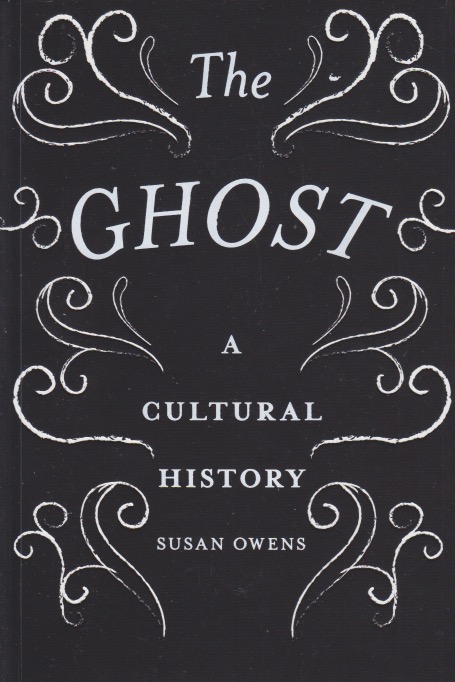
Books on art are often eye-opening to me.  When I was young and trying to escape the working-class hell in which I grew up, I discovered high culture.  This was mostly through local libraries.  I would check out classical music LPs and look at books of classical art.  I did the latter until I could identify several artists by their styles.  (It was probably originally because they’d painted pictures of Jesus and I went to see what else they’d done.)  In any case, I never studied art history.  I recently read an art-historian on the Devil, and now I’ve read one (Susan Owens) on ghosts.  The Ghost: A Cultural History does not address the question of whether ghosts exist, but rather traces the history of how they’ve been portrayed in literature and art throughout time.

Owens quite ably takes us through ancient to modern, pointing out that ghosts change to fit the Zeitgeist—the spirit of the times (not her pun).  In the early modern period ghosts were portrayed as physical revenants.  They were dead bodies that came back to physically harm the living.  We know this fear was widespread because some burials were clearly intended to keep the dead in their graves.  The idea of the physical ghost still comes up in modern horror as the monster you can’t kill because it’s already dead.  It was only gradually that ghosts became spirits and this was largely through emphasis on purgatory, which made it possible for the dead not to be in Heaven or Hell.  Once the idea caught on the literature and art began to focus on the spiritual nature of revenants.  As cultural interests turned towards ruins ghosts inhabited haunted houses.

This is a fascinating study of the way ghosts have evolved over time.  One of the things that struck me was that early commentators often didn’t distinguish clearly between ghosts, demons, and devils.  Demons, as we think of them, really depend quite a bit on The Exorcist.  The use of “devils” in the plural complicates the spiritual geography where we have God v Devil as the main poles of spiritual rivalry.  These ideas, and also those of ghosts, likely blended throughout most of history until a renewed emphasis on literalism came in.  Medieval scholars composed angelologies and demonologies, trying to keep everything straight.  They puzzled over ghosts, however, which don’t fit the scheme very neatly.  They would have benefitted, perhaps, if they had had Susan Owens’ book to help guide them.  It’s an exciting nighttime journey.


Quiet Company

Even as a lifelong fan of speculative fiction, some of the most effective horror is that where a reader is kept guessing.  One of the acknowledged masters of this is Henry James, whose The Turn of the Screw is considered a classic.  There are perhaps too many writers active today to predict who will be considered authors of classics a century or two down the road—writing has to take a long view.  Nevertheless Laura Purcell’s The Silent Companions is, in this reader’s opinion, quite effective.  And ambiguous.  I’m on the constant lookout for gothic novels that work and this is one that surely does.  I’ll try not to give spoilers here, but I do recommend it for those who want a gothic atmosphere.  It is also genuinely scary.  A great deal of this is because the reader is never quite sure what has happened.

The eponymous companions are decorative curios purchased to impress royal visitors in the seventeenth century.  Life-like cutouts of people, they are silent.  Throw in an old, sprawling house in need of repair and a widow who had abusive parents and who’s inherited resentful servants and you’ve got a recipe for an eerie atmosphere.  The novel splits its time between the nineteenth and seventeenth centuries, focusing on the former.  Elsie Bainbridge is a protagonist with many secrets, and not a few skeletons in her closet.  The house she inherited also has a past that included accusations of witchcraft and cruel masters interested in self-promotion.  Told from the point-of-view of the women in a patriarchal society, there is an authenticity to the victimhood even of strong women.

It would be difficult to tell too much of the plot without giving away some of the creepier moments.  There’s a lot going on here and although it’s not a short book it doesn’t drag the reader down with filling too many gaps.  It’s also a novel that allows imagination to outstrip rationality.  Good speculative fiction will do that.  Even some of Poe’s work makes the reader wonder just what is happening—is this in the mind of the observer or is it objectively real?  Think “The Tell-Tale Heart.” Literature takes us into such places and gothic literature does so with more shadows and ambiguity.  Throw in some betrayals, and keep a few well-placed secrets and the recipe is in place for a creepy novel that will keep you reading.


Looking North

As organized religion continues its slow decline, mythology remains.  Indeed, it seems to be growing in interest.  The problem with many mythologies, for monolinguals, is that they come in languages other than English.  Translation always loses something, which is why, I suspect, Neil Gaiman was tapped to retell the Norse myths.  A very talented story-teller, Gaiman has written about gods before.  He knows their literary potential.  Norse mythology is rather odd in the canon of western thought.  The stories feature gods with as many foibles as humans and with conflicting motivations.  In some ways they are more believable than the monotheistic tradition.  They are both fun to read and poignant.

At the same time Norse Mythology is a somewhat perplexing book.  It’s difficult to tell, without being an expert, what is Gaiman and what is ancient.  In fact, the book sits next to another one with the exact same title on my shelf.  That one is labeled nonfiction, and it’s a bit more academic.  Perhaps it’s an occupational hazard that I tend to want to approach mythology in original languages, if possible.  I’ve never studied Nordic tongues and it would be a little difficult to justify starting now, with all the other things I’ve got to do.  It’s not that I don’t trust Gaiman, it’s just that every retelling is an interpretation.  Still, I’m sure the book gives the flavor of the records that survive.  One of the fascinating features of Norse mythology is that gods die.  Since it ends with Ragnarok, that seems inevitable.

Many mythologies have the world ending with the establishment of the happy reign of a singular deity.  Ragnarok, which Gaiman (and perhaps the originals) sets in the past, sees the gods dying on the battlefield against Loki and the giants.  As the earlier myths make clear, however, death in battle is the most glorious way for the Norse to end their lives.  (And seeing how it has led to a pretty peaceful adult nation, one wonders if the mythology had a calming effect.)  I’ve not read extensively in other versions of Norse mythology so I don’t know if Gaiman’s ending with Balder returning and the world starting anew is his innovation or part of the original.  Having gods who die, however, seems like a potential leveler for humans who suffer from greater powers.  There’s a sobriety to it that lends gravitas to the whole.  And like all good books, Norse Mythology has left me hungry for learning more.


Collecting the Past

Some readers, probably, react with embarrassment when I go on about Dark Shadows.  The fact is, however, that our childhoods somehow define us and mine included frequent doses of Dark Shadows after school.  This was complemented by the series of potboiler novels by William Edward Daniel Ross, writing as Marilyn Ross.  We didn’t have much money when I was a child (some things never change) and the only means I had of procuring the books in our small town was Goodwill.  The novel series ran from 1966 to 1972, roughly concurrent with the television show.  Since I was buying them second-hand I could never tell which, if any, I would find in the book bins.  If I did find any, I’d buy them.  I got rid of them when I “grew up.”

Dark Shadows, however, has come back to me at various points in my life and about a decade-and-a-half ago I began, somewhat shamefacedly, trying to rebuild that earlier collection.  The individual volumes are considerably more than the nickels and dimes I’d originally paid for them.  In fact, the rate of change has been somewhat astronomical.  Some of the volumes are rare.  Given the prices, I suspect I’m not the only nostalgia-poisoned child of the sixties and seventies who’s buying them.  There’s a sense of satisfaction that comes with having finally completed a task years in the making.  When the box containing the last volume arrived, it was a moment of private ecstasy.

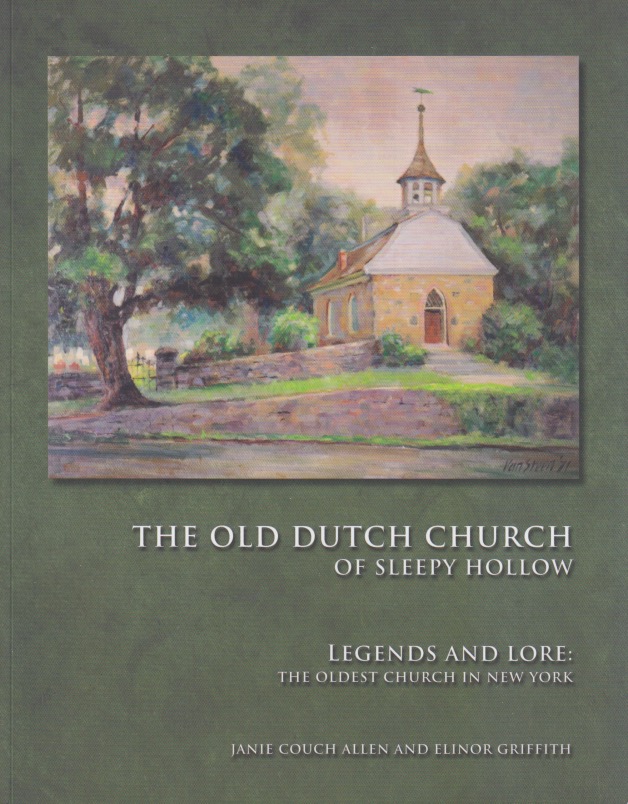
All of this has me thinking about other influences Dark Shadows has had on me personally.  It is probably responsible for my lifelong love of Maine.  The television show was filmed mostly in Terrytown, New York, better known by the name given in Washington Irving’s tale, Sleepy Hollow.  I wasn’t aware of this on my visit to Terrytown—which was before the more recent television series based on, but not filmed in that location, aired.  My first publication regarding religion and horror was based on Sleepy Hollow.  There’s a sense of connectedness here.  To get the final volume, which is rare, I had to buy a collection of several of the books.  Like a man who found a pearl of great price went and sold all that he had so that he could buy the field in which the pearl was.  We’re never told what he did with the rest of the field.  If I had to venture a guess I’d say he used it to house his Dark Shadows collection.


Future Ministry

I’ve been on the Green Committee at work almost since I started the job.  Occasionally for Earth Day we’ll have a book discussion.  Usually it revolves around nonfiction books that my press publishes.  This year they selected Kim Stanley Robinson’s The Ministry for the Future.  It’s an environmentalism tale of what global warming may well be like and the political machinations it might take (and the millions of deaths along the way) before we stop burning carbon.  It’s a long and detailed and political story.  Robinson is known as an intellectual science fiction writer and there are sci-fi elements to the book, but its style is realist and its outlook, while ultimately hopeful, is staid.  Even when humans start to move in the right direction.  It’s also a very long book.

Reading it got me to thinking again of a somewhat bewildering truth: environmentalism books tend not to sell overly well and sustained reading, even by supporters, is difficult.  Many of us know that we’re beyond the tipping point for environmental disaster.  The Trump years assured us that it is coming.  One of the elements Robinson makes clear is just how politically entrenched it is.  Perhaps that’s one of the reasons for the despair.  The vast majority of people in the world want a more environmentally conscious government, but plutocracy tends to bring narcissists to the top and the needs of all others are less important.  In Robinson’s version of the story, targeted violence is the only thing that works.  Near the end of the story an interesting idea is raised: the Ministry of the Future (which is a government ministry, not the church kind) concludes a new religion is needed.

The masses of people, you see, are followers.  Religious leaders reinforce the idea that God told their founders—and by extension their followers—the only truth.  Their jobs (and ministries are jobs) include reinforcing those ideas to people who’ve been raised or converted to that particular brand of religion.  A number of New Religious Movements, and even a couple of prescient ancient religions, have been purposely constructed.  The trick is to get followers to accept that the religion is legitimate.  Most western religions around today have been based on the idea that humans can do whatever they want with the planet—even destroy it to force God to return.  I kind of like Robinson’s idea better.  Perhaps that’s why religions form around movies like Avatar.  Not a bad thought, when your job has you reading a sci-fi novel.  A religion saving the earth feels like a novel idea.


Horror Shortly

Some short books have an outsized punch.  Especially when dealing with a large topic such as “horror.”  This isn’t just horror movies, which could easily fill such a book, but also literature and other media as well.  Darryl Jones has proven himself on this topic before and this Very Short Introduction is a showcase of what is a fascinating genre.  I’ve read a number of books in this series and this stands out as one that works admirably within extreme limits—they are very short—in making good decisions about representative aspects in what is really a sprawling field of inquiry.  The introduction lays the task out well and I came away from each chapter feeling inspired.  Of course, not all of horror can be covered in less than 150 pages.  Some may find their favorite fear unaddressed, but they’ll learn something nevertheless.

In his first content chapter, Monsters, Jones focuses on vampires and zombies.  These are both forms of cannibals as they’re currently conceived, zombies being relative newcomers to most favored monster status.  His next chapter, on the occult and supernatural, takes on the Devil himself before addressing satanists, demons, and ghosts.  These are, of course, religious monsters.  Although Jones doesn’t dwell on that aspect, the close relationship is nevertheless evident.  For those of us who explore religion and horror this framing proves helpful.  It’s worth pausing here to consider how all of these entities overlap a bit.  As anyone familiar with ghost hunters knows, ghosts and demons may both be found haunted places, and the Devil is the head demon.  Of course, horror is a fiction genre but many people believe in these entities.  That brings religion and horror within the same room.

Body horror occupies the next chapter, and here werewolves come into the picture.  Other aspects of body horror are also discussed, but the painful transformation of the shapeshifter is prime territory.  Horror and the mind brings us to psychological thrillers and the gothic fear of madness.  The topic segues nicely into science, which the next chapter covers.  Not only science itself but the mad scientist.  Finally, the lengthy afterword looks at where horror has gone, and may be going, in the new millennium.  Something that struck me, and which brings this back into religion, is how frequently Darwin and evolution are mentioned.  This concept challenged the human place in the divine hierarchy and led to much of what we think of as horror.  This book is a great resource in a small package.


Whose Baby?

Some books are better known as movies.  I suspect that I, like many, saw the movie Rosemary’s Baby without ever reading the book.  It turns out that they’re very similar.  The book takes the action a few minutes beyond the end of the movie, but otherwise they’re quite close.  Reading a horror novel where you know everything that’s going to happen isn’t exactly the recipe for thrills and chills, but I’m nevertheless glad to have done it.  For a book published as long ago as it was (1967) it still isn’t easily found used.  New copies tend to be just as expensive as new books.  I just wanted to have a read to see if Roman Polanski stayed close to Ira Levin or not.

Levin had a string of successful novels, but Rosemary’s Baby is probably still his best known.  He is quoted as saying he didn’t believe in the Devil and felt guilty that his book (and movie) may have led to many people taking on that belief.  In many ways Polanski’s movie kicked off the age of modern horror, being released the same year as George Romero’s Night of the Living DeadRosemary, however, opened the door to horror with overt religious themes.  It paved the way for The Exorcist and The Omen.  The latter, written by David Seltzer, was another example of a movie based on the Devil by an author who didn’t believe in him.  Personal belief aside, that trinity of movies remade the horror scene and led to one of the strangest cooperations in cinematic history.

In the book versus movie scenario often there’s a clear winner.  On other occasions the movie is so powerfully made that it overshadows its novel.  Rosemary’s Baby, along with The Exorcist, tended to do so.  (The Omen was novelized from the screenplay by the screenwriter.)  I wonder if that might not be because religion pays right into cinematic representation.  The novels, after all, can take several days of reading on a normal workaday schedule.  The film, if well done, transports the viewer there for a couple of hours and leaves you feeling as if you’ve been through, in the case of Rosemary, a traumatic pregnancy.  It so happened that the unholy trinity of religious horror tapped into that rapt storytelling of which celluloid proves so capable a medium.  Still, reading the novel fills in many of the gaps and brings to mind the benefits of the written word.  And this is, like a birth, something to be celebrated.


Secret Formula

When writing fiction, I’ve never tried a series.  Some, such as Harry Potter, can set a writer for life.  I’ve always had the sense that the Dark Shadows novels were more potboilers.  There was a built-in fan base, and somehow in the sixties and seventies we didn’t expect Rowling-level writing.   It was the entire package: the Gothic, the recurring characters, the moody setting of Collinwood.  And of course, Barnabas Collins.  These novels may be journeyman writing, but here at number 25 in the series, Barnabas, Quentin, and the Magic Potion, there are some signs of literary improvement.  They are slight, rather like the first tinging of leaves with yellow as August begins to settle in, but they are there.  The series is nearing its end for me (provided I can actually find the last few books), but maybe it’s getting better.

What’s my reason for such a burst of enthusiasm?  Well, in this episode we see some features of Quentin that are more in line with how I remember him.  First of all, Ross tries some misdirection.  Quentin is presented as a master of disguise in the series and here there’s some clever hinting that, if you’re trying to think it through, leads you to mis-guess early on.  Not only that, but there’s a more positive view of Quentin here.  He’s not the evil satanist that he is earlier in the series.  Perhaps Ross had figured out by now that if people liked the idea of a Barnabas who is a conflicted victim, the same might apply to Quentin.  He’s not evil, but when you’re a werewolf, well, what can you do?

The “magic potion” is just as contrived and sketchy as most of the plot devices in this series—Harry Potter this is not.  It’s just a get rich quick scheme for a reprehensible old man and serves to move the plot along without really adding anything to it.  Carolyn here discovers that Barnabas is a vampire and, it seems to me, some of the plot devices for the Tim Burton movie might’ve been picked up from this particular novelization.  Although still not belle lettres by any stretch, the story here seems to have made some progress over the previous 24.  As a child, of course, I didn’t read these in order.  I relied on what I found at the bin in Goodwill, when I could find them.  I never had the whole series.  While trying at times, reading them may be a worthy exercise as an adult.  Perhaps series too grow up.


Banning Ideas

It’s been in the news lately that some communities, in keeping with the current fascist trends, are starting to ban books.  One of the plays in the Nazi book was to burn them, followed soon after by destroying the people who read them.  Ideas are, by their very nature, dangerous things.  Trying to destroy them by banning books, however, doesn’t work.  The kinds of books being banned are predictable: those that portray races as equal, those that offer understanding and acceptance of those differently gendered or oriented, and books that show the white man caught with his pants down (metaphorically, although in actual life this happens quite often literally as well).  Books premised on lies are just fine, but as soon as we get to ideas that make us think, well, we ban and burn.

Book banning is normally presented as protecting the children.  Something any attentive parent knows is that children understand a lot more than we think they do.  I suspect they realize that books are prohibited because they contain the truth.  Nobody bans a book of “harmless” fantasy—books where white men have all the answers and solve all the problems.  And when they lose their tempers they start wars, which, of course, the white guys always win.  Such stories, based as they are on basic untruths, are fantasy indeed.  Our slow move into the new millennium from the growing awareness of the sixties, has shown us the necessity of looking deeper.  Expanding beyond the stories white men tell to comfort themselves.  Those invested in this narrative are very reluctant, of course, to let it go.

The more we move into the new millennium the more determined we seem to repeat the last one.  That one had a pandemic near the beginning and wars and white men only on the front pages.  The younger generation, thankfully, by and large doesn’t share these poison biases.  They were read to as children.  Teachers and other heroes didn’t ban books, but encouraged reading them.  Local communities are making a concerted effort to break down learning and then we wonder why the United States has the highest infection rates in the world.  If only there were some way to figure out why that might be!  Reading books with uncomfortable truths might be a good start.  Ideas that can’t stand up to logical challenges may not be the best ones for building a society.   Read a book rather than banning it, and see if we all might learn something.


Nine Secrets

By their very nature they make us wonder what they’re up to.  Secret societies, I mean.  That’s part of their appeal.  Those on the outside speculate and usually the ideas swirl around mysterious rights and probably sex and money.  Leigh Bardugo takes it in a different direction in Ninth House.  Since I try not to read reviews before getting into a book, I wasn’t aware of the premise that the secret societies of Yale University were the nine houses referred to in the title.  Bardugo’s imagination takes the route of suggesting that they all specialize in different kinds of magic.  That makes this kind of a fantasy horror novel because the protagonist, Galaxy Stern (“stern” is, of course, German for “star”), can see ghosts.  And some of the professors aren’t who you think they are.

Somewhat gritty, Alex (Galaxy) isn’t exactly college material, let alone Yale.  She’s a recovering drug runner who has a past that would keep her out of most universities, particularly those of the Ivy League.  Still, she’s invited to Yale and she has some personal motivations, not necessarily academic, to accept.  She’s brought there by the ninth house, Lethe, because of her ability to see ghosts.  As portrayed in the novel Lethe is the secret society that makes sure the others don’t go beyond their bounds, the police, if you will.  Each society specializes in a specific kind of magic and it uses it to help its members benefit in school and career.  That’s why the university is so well funded.  It paints a compelling image of New Haven and it manages to capture the mystery many of us felt about attending college in the first place.

Yale is one of the two Ivy League campuses I’ve never been on (the other is Dartmouth).  Even so, Bardugo writes in a way that makes you feel as if you’ve been there.  The story is a page-turner that goes quickly for its size.  Alex, who is a novice in Lethe, spends the novel trying to find her mentor, Darlington, who’s been missing since some bad magic got him.  There are many unexpected twists along the way.  Although I don’t know much about Bardugo’s past, it seems likely that she knows some people in the drug culture.  Maybe she’s even seen some ghosts.  All of this combines to make a magical read that should appeal to Neil Gaiman fans as well as those of Stephen King.  And, of course, those who like to speculate about secret societies.


Getting Used

Unknowing is a blessing in disguise sometimes.  There is so much to learn and, regrettably, little time outside work to do it.  Books are my life.  I work in publishing, so I know a passable amount about the book business.  I have much still to learn.  To support my research, which doesn’t include a university library, I often have to purchase academic books.  I know quite a bit about academic book pricing (hint: what the market will bear), and I know that it’s assumed academics have university professor-level salaries.  The “independent scholar” is as much a ghost as the next revenant.  So I buy books used.  The best clearinghouse I know of is Bookfinder.com.  They list other sellers who have the book and facilitate your buying of it.  I strongly suspect they take a small cut.

While looking for an obscure book (it pains me to say, for I met the author), I wondered if Amazon’s used copy had the lowest price.  So I went to Bookfinder.  The Amazon copy was there, along with seven comparably, slightly lower, priced other copies.  Reading the descriptions, I realized these were different vendors hawking the exact same copy of the book.  Some of the description wording was oddly specific and that led to this epiphany.  Down at the bottom was a lone seller some $4 to $5 dollars cheaper, selling the book directly.  Navigating to this page I discovered it was the self-same book—the same physical book being marked up by the other vendors.  Each reseller along the way, with wider reach, stopping at Amazon with the widest reach, was charging a finder’s fee for this same object.  It was available directly from the seller.

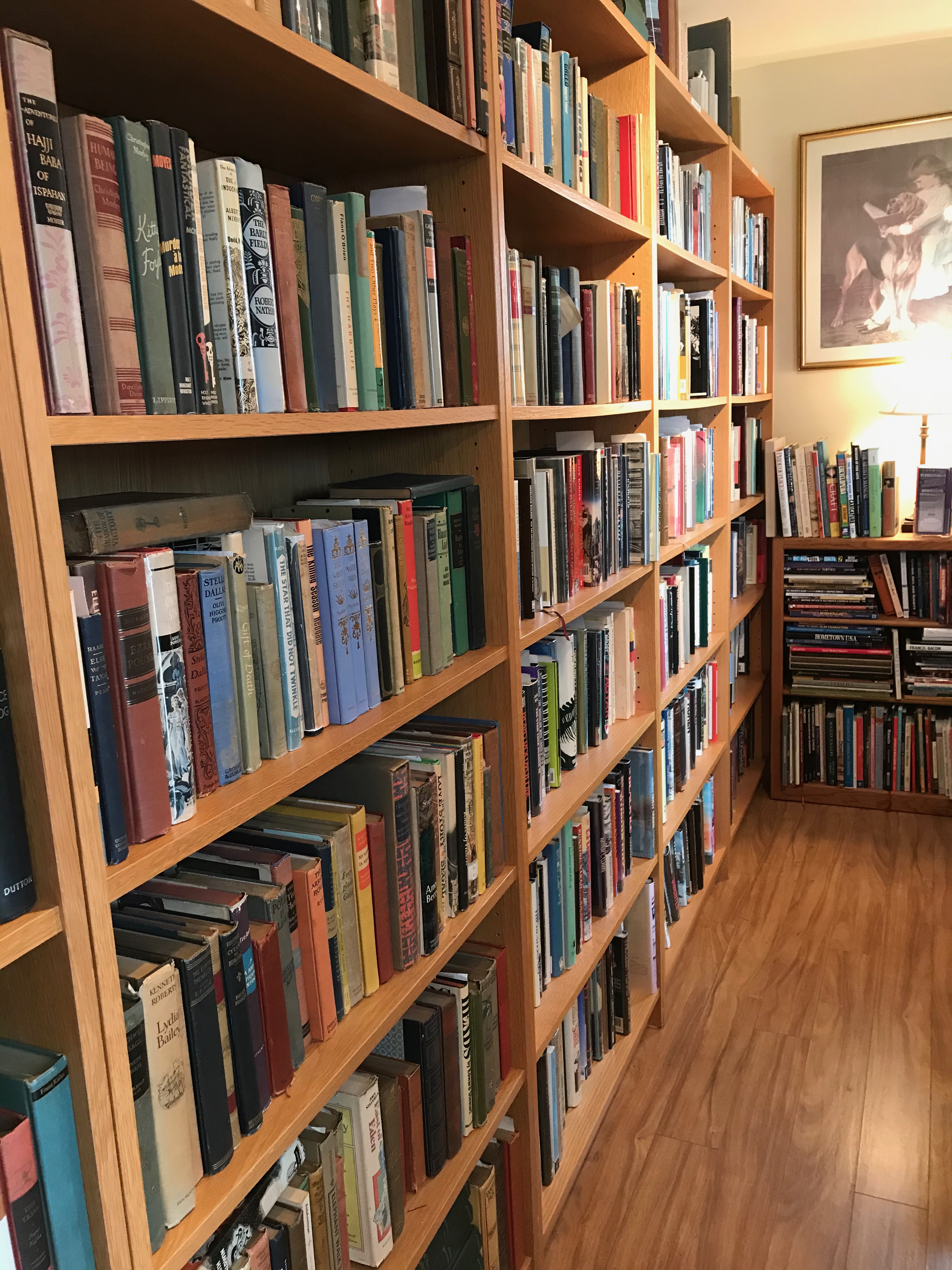
Used books are a thriving business.  Many publishers these days are focusing on “the electronic future,” scratching their heads that people are still reading paper.  What will happen to walking into that impressive library?  Have you ever walked into someone’s impressive iPad or Kindle?  It looks the same no matter how many electrons you add.  The internet has been taken with the photo of the late Johns Hopkins humanities professor Richard Macksey’s library.  Would it be possible to have walked in there and not been impressed with the obvious love of books?  As a Hopkins professor I doubt he had to resort to used books much, but I kind of think he probably did anyway.  Bibliophiles are like that.  A first edition is a thing of beauty forever.  And so I find myself on Bookfinder and I’m willing to give them a cut just for the privilege of holding a coveted book.

Richard Macksey’s home library. Credit: Will Kirk/Johns Hopkins University

Nightmares with Poe

A review of Nightmares with the Bible recently appeared in which the reviewer said he didn’t get the Poe references.  Indeed, the anonymous reviewer said the same thing.  What neither of them understood is that Edgar Allan Poe has been formative for my life and that book was a tribute to him.  Did Poe write about demons?  Not really.  Did he once claim that the death of a beautiful woman was the most poetic theme?  Yes.  I saw the opportunity, in discussing possession movies, to draw Poe’s observation into the conversation.  Could the book have been written without it?  Yes and no.  Yes, I could’ve written a book on demons without mentioning Poe.  No, I would likely not be writing books at all were it not for Poe.

Today is Poe’s birthday.  What is this strange attraction I have for him?  It began, as most things do for me, with growing up poor.  We couldn’t afford bookstore prices, and that’s even assuming there was a bookstore nearby (there wasn’t).  I found the majority of my reading material at Goodwill in Seneca, Pennsylvania.  The shop had a book bin or two with prices I could afford (books were a quarter, if I recall).  I found a copy of Poe’s Tales of Mystery and Terror there.  I probably heard about Poe from my big brother—he’s a good source for scary information.  Reading Poe, I wanted to read more.  We couldn’t afford Scholastic school fare rates, but I did find a four-or-five volume collection of Poe’s writings at Goodwill.  Foolishly, I bought only two—those with his stories.

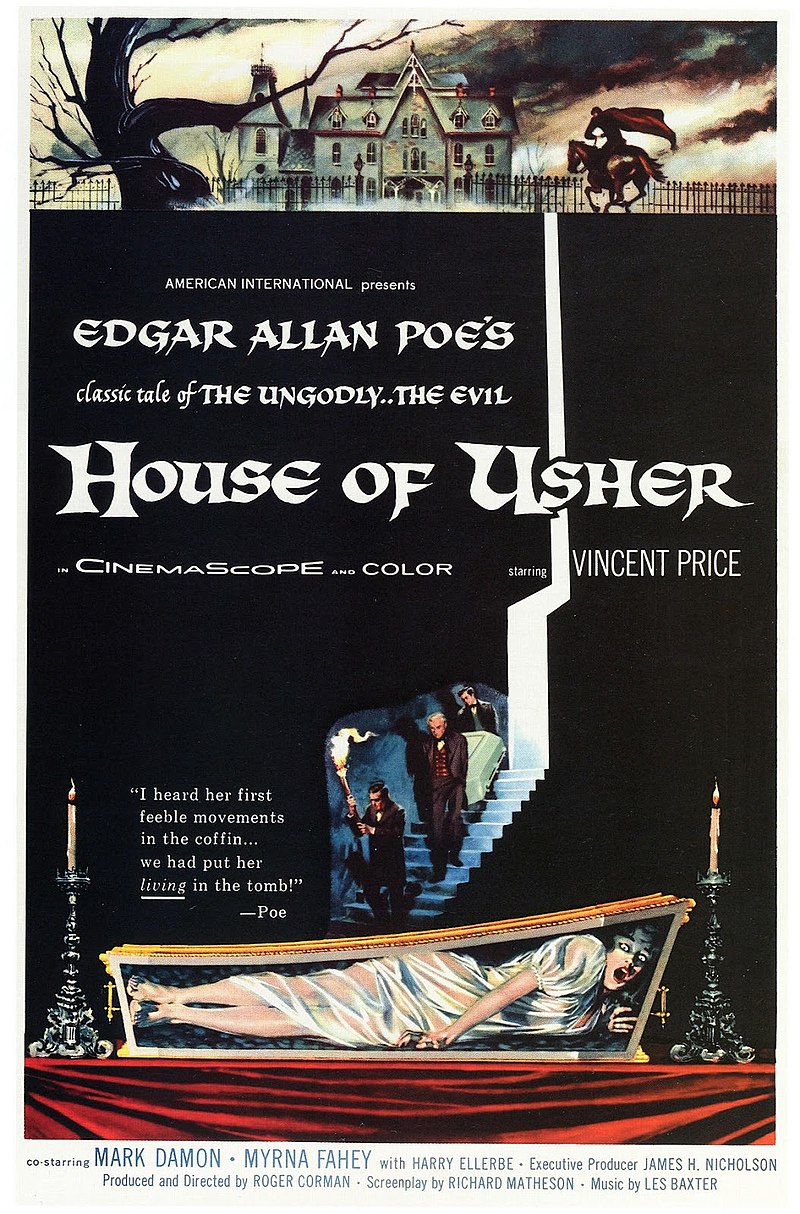
By high school I was checking out biographies of Poe from the library.  Perhaps as the child of an alcoholic I identified with a man who seemed so tormented.  I count his stories still among my favorites.  My favorite short story is, I believe, “The Fall of the House of Usher.”  It has come back to me at several points in my life and I find myself thinking about that gloomy house.  Particularly the narrator’s arrival there.  So full of possibilities.  So much potential fear.  Those of us who consume horror have a gateway to it—some event, or influence, or person who introduced the aesthetic of fear to us.  For me it was Edgar A. Poe.  Nightmares with the Bible is of a piece with Holy Horror.  To leave Poe out of it would’ve been the worst kind of sacrilege.


Wicker Redux

The Wicker Man (1973) is a cult classic.  If it had had proper distribution and promotion it might’ve become a more mainstream hit when it was released.  Instead it was a slow burn.  Once it reached cult status controversy grew.  The movie doesn’t acknowledge, but was clearly influenced by, the novel Ritual by David Pinner.  I reviewed the novel earlier, and it isn’t particularly great.  The movie changes so much that it maybe was “inspired by” rather than “based on” the novel.  Several years later the director, Robin Hardy, decided to novelize the film.  His The Wicker Man also credits Anthony Shaffer because a good deal of the dialogue is lifted straight from the screenplay Shaffer wrote.  But the novelization also changes things.  That means there really is no novel that gives the full story of the film.

The creative process is never-ending.  Anyone who’s had a story published knows the tinkering that goes on, even after it appears in print.  The last word’s never truly that.  It takes restraint to leave something alone.  So Hardy wrote one of the more important characters out of his novel and wrote in another who seems to have very little connection to the story itself.  I’m still not sure what the point of adding him might have been.  Incidents that seem to be bracing for a sequel are present, and indeed Hardy wrote a spiritual successor that became a less impressive movie some years later.  Sometimes you do get it right the first time around.

Not that the movie is perfect—none are—but it has held up considerably well, growing in stature over the years.  A novelist, however, tends to have a deft touch that seems to be lacking here.  There’s a great deal of telling instead of showing.  Hardy’s Howie almost becomes a Mary Sue.  Tying his love of birds into the plot of the novel would’ve been one such deft touch.  Instead we have here a serviceable novel with much that’s familiar and even some that is strange and provocative.  It does restore some of the famously edited footage from the first cut of the film.  It tries to make Howie’s religious conviction clearer.  Changing parts of a story comes with the territory of those who spin yarns.  Hardy never really rose again to the heights he achieved in directing The Wicker Man.  It’s no wonder, then, that he felt compelled to return to it in literary form.


A Haunting Story

The last book I finished in 2021 didn’t quite make it under the wire for my year-end blog post.  It was the second Stephen Graham Jones novel I read in the year.  I guess I’ve been reading a lot of American Indian books lately.  The Only Good Indians is a horror story and more.  There’s reconciliation.  There’s tradition.  There’s hope.  As part of the privileged “white” class, I’m always a little afraid that writers from oppressed cultures will take it out on me.  It may’ve happened here, but if so it was done in a way that I didn’t feel the sting.  This is a story of friendship, mistakes made, and a monster who has a righteous cause.  There’s a lot going on here.

One of the persistent cultural fears of the unwoke, I suspect, is that there’ll be payback if all things were to become equal.  Perhaps on the scale of karma that’s true, but in reality the people that’ve been oppressed simply want the oppression to stop.  To be recognized and acknowledged as being human.  As if that decision is up to white folk to make.  This novel simply deals with American Indian life as it’s lived.  The characters all pretty much live in poverty but they lack the greed so many white protagonists have.  They’re happy if they have a few hundred dollars, or even a few twenties.  Life is more than playing the capitalist game.  It really all comes down to relationships.  And family.

Stephen Graham Jones writes with a deft hand.  He offers some humor amid scenes of violence and loss.  He speaks plainly and without pretense.  And there are parts of this novel that are genuinely scary.  Since I had no idea how it might end, I wasn’t even sure even while I was on the last page.  

The best monsters are those that teach us to be better human beings.  Quite often they teach us that the truly monstrous ones are those who look and act like people usually look and act.  We take the natural world, assuming it’s ours.  We think our small problems are those of the entire world.  Monsters help to fix our perceptions.  Without them we carry on as if it’s business as usual.  This is a good novel to read in the midst of a pandemic.  There’s hope here that we’ll come out of the crisis better than we went in.  Perhaps scarred and changed for good.  In every sense of the word.


2021 in Books

It’s become my habit, on the last post of the year, to think back over the year in reading.  This gives me a chance to give a separate boost to the books I found particularly valuable, for a variety of reasons.  My Goodreads total for 2021 will end up being 70 (two haven’t yet shown up on my page).  It’s easiest to do this by category, so I’ll begin with fiction.  My favorite novels of this past year were Haruki Murakami’s Kafka on the Shore, Stephen Graham Jones’ Night of the Mannequins, Lisa Tuttle’s Familiar Spirit, Hank Green’s A Beautifully Foolish Endeavor, and Christina Henry’s The Girl in Red.  I really enjoyed Joseph Bruchac’s Bearwalk as well, but it’s for younger readers.

For what might be called spiritual memoirs I found Ernestine Hayes’ Blonde Indian remarkable and Heather and Gary Botting’s The Orwellian World of Jehovah’s Witnesses revealing.  Vine Deloria’s God Is Red was stunning.  (It should be clear by now that I read quite a lot from indigenous writers.)  If you count love of books as spiritual I would include Andy Laties’ Rebel Bookseller as well.  As long as we’re on spiritual, books by religion professors might count, so I would add Intimate Alien by David Halperin.  If you count just memoirs, I would also add Follow the Rabbit-Proof Fence by Doris Pilkington.  And if reflective essays count, John Green’s The Anthropocene Reviewed.  And Thich Nhat Hanh’s Love Letter to the Earth.  I learn so much from reading about how others deal with their lives.

Books in the nonfiction category tended toward horror movie analyses (ahem), but some stood out even among the weirdness.  Daniel Ogden’s The Werewolf in the Ancient World inspired me.  Kendall R. Phillips’ A Place of Darkness was a well-written account of early horror movies.  Tanya Krzywinska’s A Skin for Dancing in was insightful and helpful to my research, if difficult to locate.  Likewise Hammer and Beyond by the late Peter Hutchings.  Mathias Clasen’s A Very Nervous Person’s Guide to Horror Movies was fun and informative.  For importance I’d rate Dag Øistein Endsjø’s Sex and Religion at the top.  So much of the world’s conflict is based on these two factors.  It’s difficult to believe that we don’t talk about them and end up fighting and killing over them.  If we can’t talk about it, at least we can read about it.  There are many other books I enjoyed over the year.  Enough that even a brief mention of each would put me over my usual word limit.  (They’re easily found, in any case, by using the “Books” category to the right.) 2021 may have been a challenging year, but books helped me make it through it.