The Eerie

Those who have trundled alongside of this blog for any length of time no doubt know of my interest in weird fiction. Somewhere in the mists of my youth this led me to one of the few venues in which a person can get a hook on the eerie, namely, horror films. I am, however, no fan of violence, and quite sensitive to the human condition. What I have always sought is hauntingly summarized in Robert Macfarlane’s Guardian article sent to me by a friend, entitled “The eeriness of the English countryside.” Horror has become, in keeping with the dullness imbued by a society of constant diversion, aggressive and shocking. New levels of nauseating cruelty are required for generations raised with graphic computer games and an internet that is like the subconscious completely unleashed into the waking world. You need more items jammed under the fingernails to elicit any reaction. That’s not what I’m here for. Whatever happened to the uncanny?

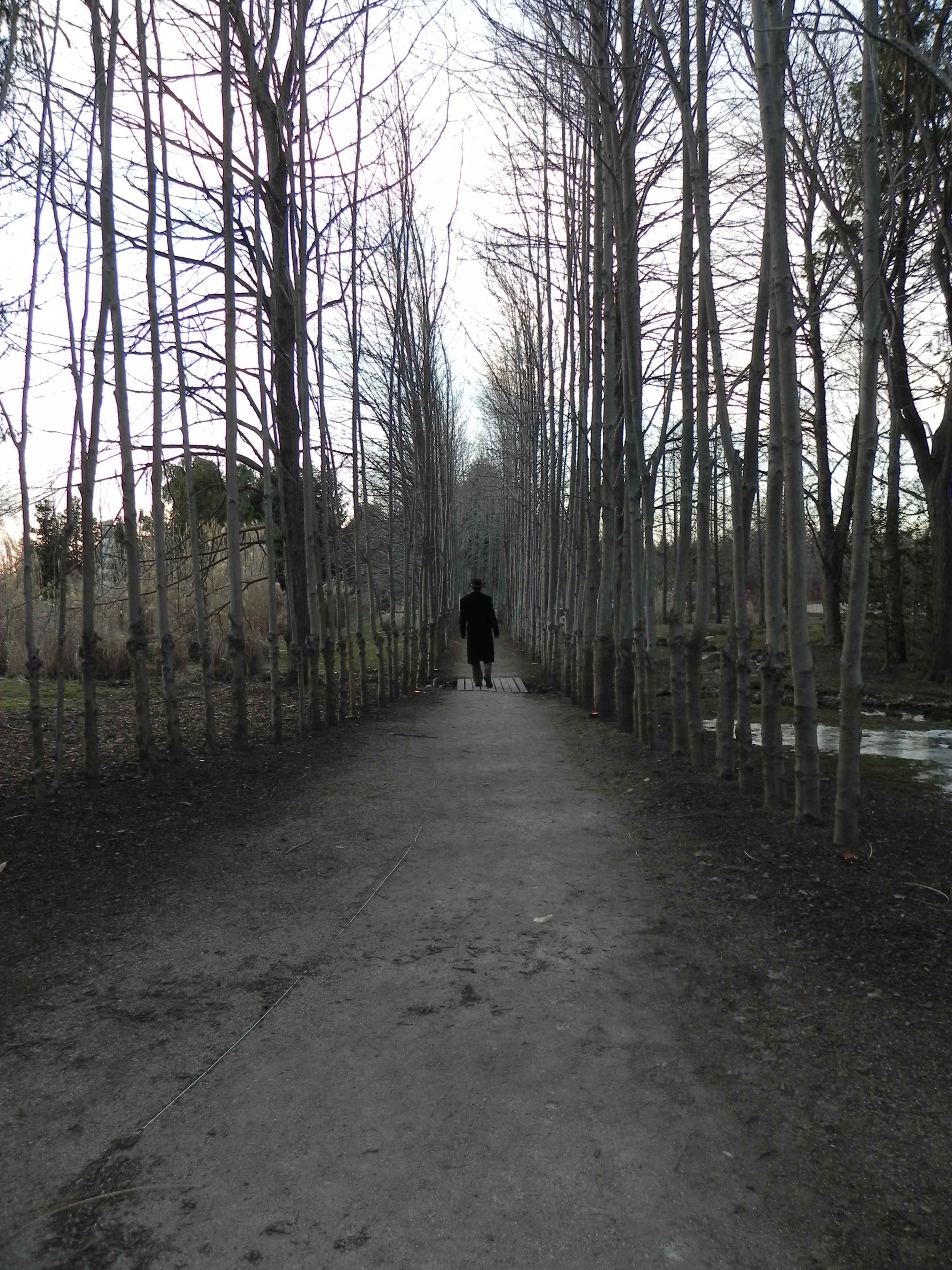
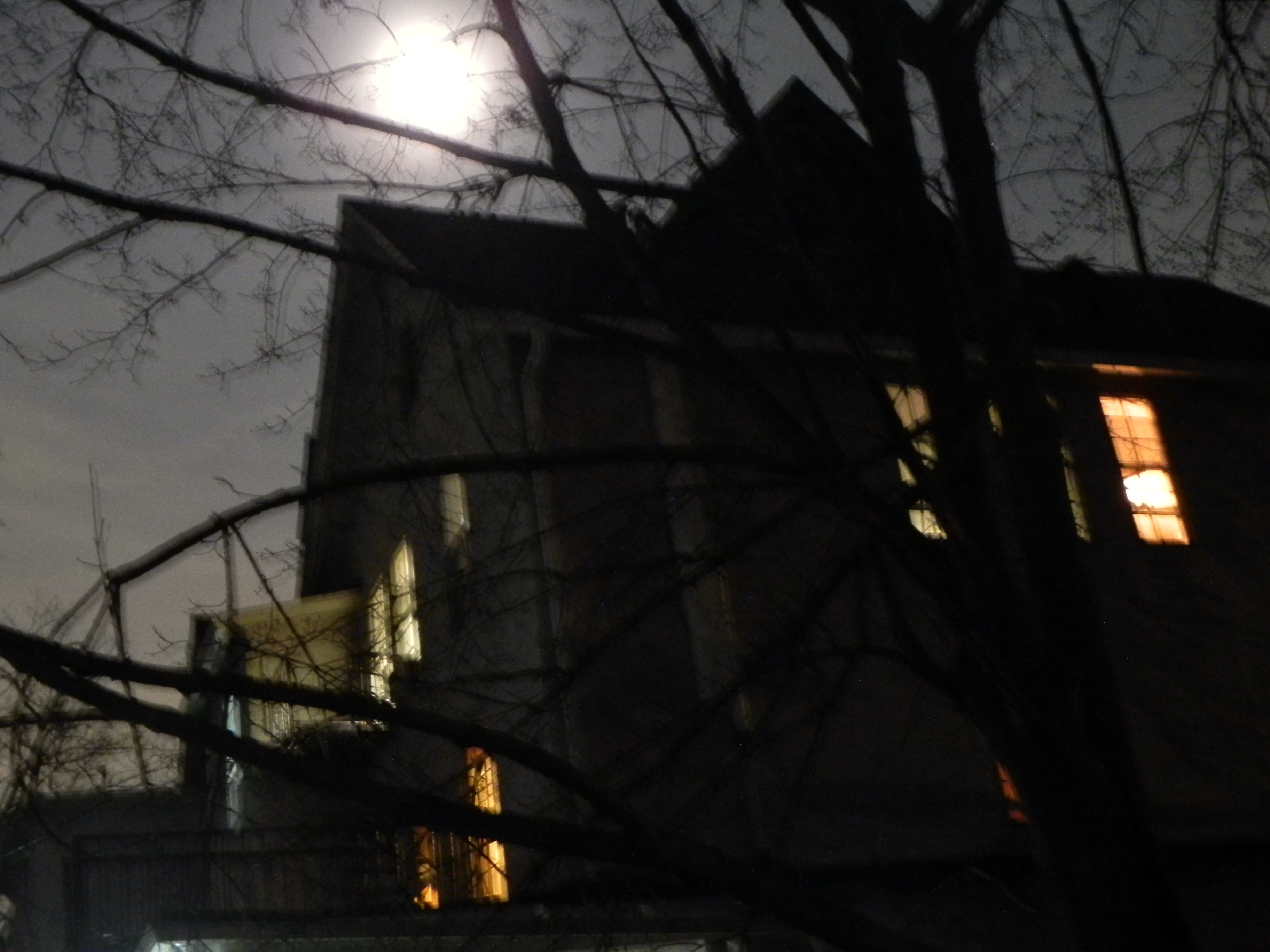
As Macfarlane notes, there is a natural eeriness to the landscape left by human activity. Not just in England, but wherever we set foot. The innocent-looking countryside is seething with undisclosed atrocities. It is no coincidence that in America the “Indian burial ground” motif took off for explaining the haunting of the landscape. The eerie is often our retrospective on what we know we really shouldn’t have done. Macfarlane is writing for those who’ve experienced the English countryside and its secrets, but no matter where we look we can find the uncanny cast into the scenery by our selfish actions. There is horror here, but it is subtle. You have to sit quietly and listen to hear it, but it can, like a good eerie novel, induce shivers without a drop of blood being shed. (Well, maybe a drop, but seldom more.)

Many doubt the soul exists. Others of us take a broader view of the question. Our view of the world is colored by what has brought us to where we are. As someone who has been repeatedly passed over for jobs because of the excesses of the white male society in which my ancestors happened to have tacitly participated, I rest on the horns of this dilemma. All of my conscious life I’ve supported equal rights for all races and genders. The landscape I inhabit, however, is haunted. There have been dark deeds undertaken on this soil, and the soul is that which remembers. Macfarlane is no doubt correct that even the eerie can be politicized. Those of us who daily experience it, however, know that England hosts only one of many, many tainted shores.

DSCN0216


Book Culture

The book is not dead. Yesterday, on a warm, sunny spring day that veritably screamed “outdoors,” I found myself standing in line. I was at the Hunterdon County Libraries’ book sale. Having awoken in a panic a few weeks back gasping, “I missed the Bryn Mawr book sale!,” I made it a point to catch this one. You see, I read a lot of books on the bus. My job doesn’t pay very well, so I get inexpensive tomes where I can. And I wasn’t the only one in New Jersey sacrificing a rare, sunny weekend to look at books. I arrived twenty minutes before starting time and was well back in line. Although I seldom find items from my wish list, it always does me good to see so many people out for the purpose of literacy.

thumb_IMG_2160_1024

A book sale, like life, is like a box of chocolates. By far the majority of books here are publications vastly overprinted by excessively optimistic publishers. Of course, some people may buy books without the intent of keeping them, as difficult as that is for me to fathom. Since these are donations, it’s difficult to say much about how they reflect the taste of New Jersey readers. I couldn’t help but notice, however, as I wended my way to the religion table, that those who got there before me were racing through this particular table with a focus I can no longer muster, snapping up the gems, manically filling their bags. About the only other table where I saw that kind of passion was the science fiction section. I get overwhelmed in such environments. Too many titles, too close together, in only the loosest of orders (and sometimes very mis-categorized) can make for frustrated hunting. Nevertheless, I’m glad I marked my calendar.

The religion tables were mostly filled with predictable material that fails to challenge the intellect. Still, if it gets people reading, I have no cause for complaint. After about half an hour it was impossible to get through a single aisle without having to excuse myself a few times. Every subject, every category, had its readers. I was especially glad to see so many young people there. This may be the most hope for the future that I will see all year. Home with an aching shoulder and a supply to keep me going for forthcoming weeks, I notice the clouds drifting over what began as a glorious blue sky. No matter. If it rains, I will have plenty to do indoors. Resurrecting the mind from its slumbers is the most religious of all activities.


Brain Dead

I’ve been thinking about brains (is there any more existential thing to do?). Reading a book this week about the mind (see Thursday’s post) probably has something to do with it. And also having finished a book on zombies maybe contributes as well. You see, I find it strange when scientists assume that we can figure out all the answers with our limited brains. Although we are endlessly fascinated by them, neuroscientists have long noted that they do have weaknesses—they (brains) are easily fooled, and, for those who find no room for the mysterious in the universe, we’ve made up gods to keep us company. We know that relative brain size—relative to body mass, that is—is a large factor in intelligence, but we seem not to imagine the possibility of larger brains than those we carry around. I suppose it’s not without reason that alien brains are disproportionately larger than our own, according to the standard image of the “grays.” We don’t like to think there’s something smarter than us hanging around. It’s a frightening thought.

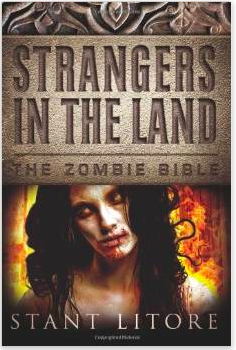
Screen Shot 2015-05-02 at 5.35.48 AMOn the more earthy side, brains have been the usual fare for zombies in one sub-division of the zombie movie neighborhood. George Romero gave us flesh eating as a paradigm, but eventually zombies settled on brains. This was on my mind as I finished the epic Strangers in the Land that Stant Litore kindly sent me in Kindle form. I’d read What Our Eyes Have Witnessed on my own, and the author wanted me to read more. Litore’s zombies are more in the canonical Romero sector—they eat flesh and their bite conveys zombiehood. Strangers in the Land takes its base story from the book of Judges. Only Deborah becomes a zombie slayer. Brains aren’t eaten here, but they must be destroyed for a zombie to—what? Redie? Full of colorfully drawn characters, the story rambles through the countryside of ancient Israel, plagued with zombies. It is the brain that keeps a zombie going.

While I have to stand by my recurring assessment that the zombie is a hard sell in novelistic form (here goes my mind again! Reading a book gives your brain too much time to focus on the utter impossibility of bodies missing organs or vital tissue to move, or “live,” even with a brain) Litore is onto an interesting idea here. Looking at it metaphorically (as surely he intends it) helps. Perhaps I just miss the lumbering revenants of Return of the Living Dead calling out “Brains! Brains!” The Bible, however, is endlessly open to reinterpretation. What Our Eyes Have Witnessed was post-biblical. This current installment moves us into the realm of reception history. I’ve been researching reception history and the undead for a few months now. I have some conclusions to share in an academic paper a few months down the road, but for the time being, I’m still trying to figure out brains. Or maybe I’m just out of my mind.


The Lure of Lore

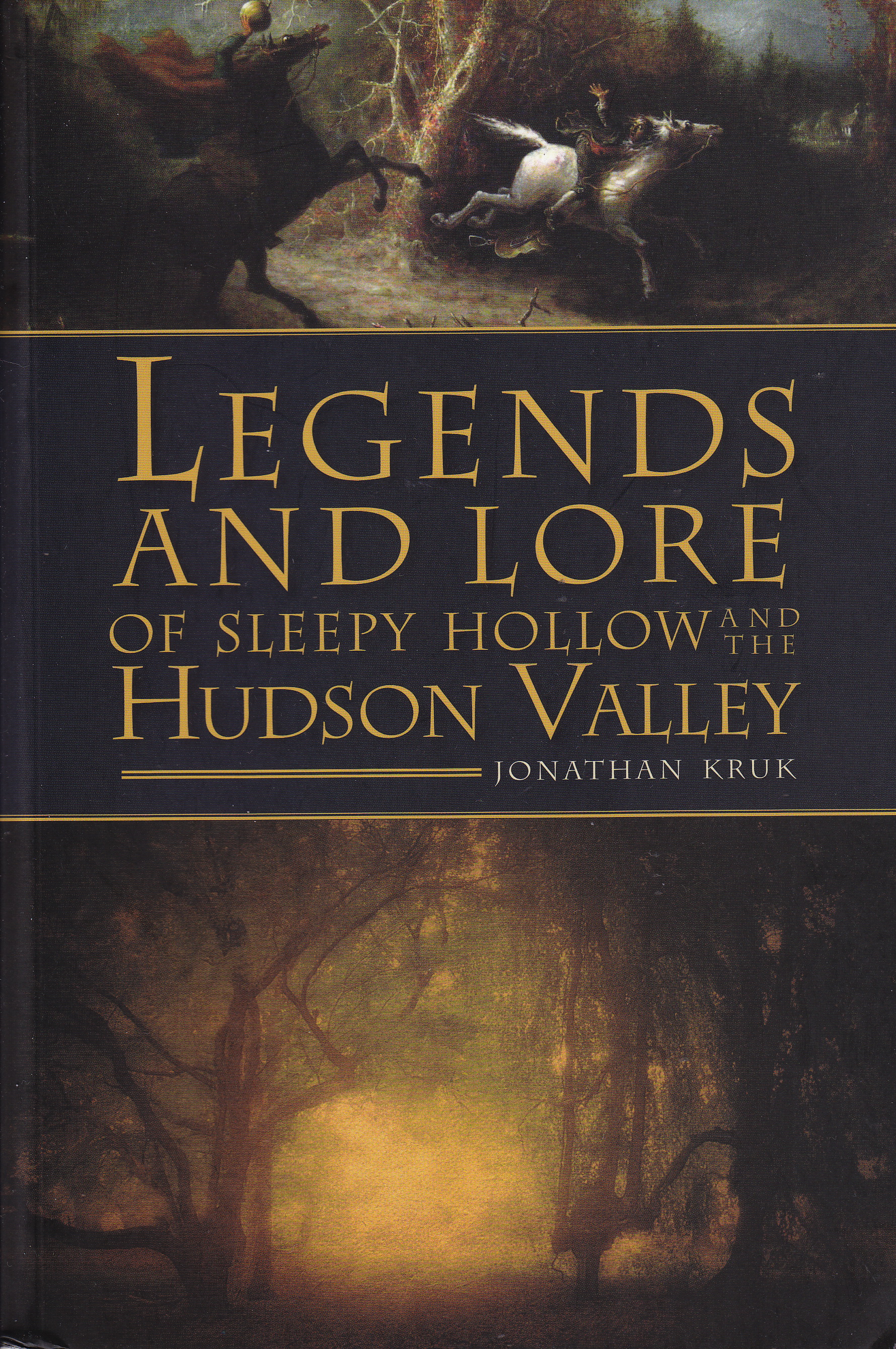
SleepyHollowOne of my doctoral advisers, Nick Wyatt, has become a friend over the years. I’m sure he would agree that he is often called a maverick, but in the best possible way. He is one of the brightest people I’ve ever known. When it was time for his Festschrift to appear, I had been unceremoniously tipped out of academia and left to my own devices. Being his first doctoral student, I had to contribute a piece, and so I settled on one I had written about an Edinburgh ghost story that seems to have roots in ancient Sumer.  Nick is the kind of scholar who can appreciate such ventures. This paper came to mind while reading Legends and Lore of Sleepy Hollow and the Hudson Valley by Jonathan Kruk.  Kruk labels himself a storyteller, and that was a venerable role in ancient times.  In fact it was a priestly one.  Kruk draws out the many tales of headless horsemen and other spirits mentioned in Washington Irving’s “Legend of Sleepy Hollow.” Nothing is proven here, but that’s not the point.

Headless ghosts were a staple of nineteenth-century lore not only in the Hudson Valley, but also in Scotland and Germany, as well as in many other locations.  How a spirit became decapitated is generally part of the draw to such ghoulish stories, and Kruk convincingly points to the tradition of the Wild Hunt as an element in Ichabod Crane’s famous ride.  The point is that stories often contain a truth that facts can’t match.  Case in point: the legend of Sleepy Hollow is alive and well. There have been periods, and will likely be more periods, when interest wanes, but we keep coming back to the story because it teaches us something about ourselves.  Empiricism is all fine and good until you find yourself facing a headless phantom on a nighttime highway.  Experience all of a sudden takes the wheel.

What does this have to do with Professor Wyatt?  My Festschrift article was reviewed, at a much earlier stage, by the journal Folklore.  I received a very sniffy rejection letter, citing, among other scholarly infractions, that I had referred to a popular publication (say it isn’t so!) as a source of the Edinburgh ghost story text. Where else was I to find it?  What scholar would bother to replicate an obviously—let’s just say it—uneducated tale?  Isn’t it beneath scholarly dignity? The stories we tell, I’ve always believed, make us who we are. It may be that materialists will have the last laugh.  When they are carted to the graveyard, however, I can guarantee that there will those among the common mourners who will be able to make a believable tale that their lives meant something after all.


Washington Irving

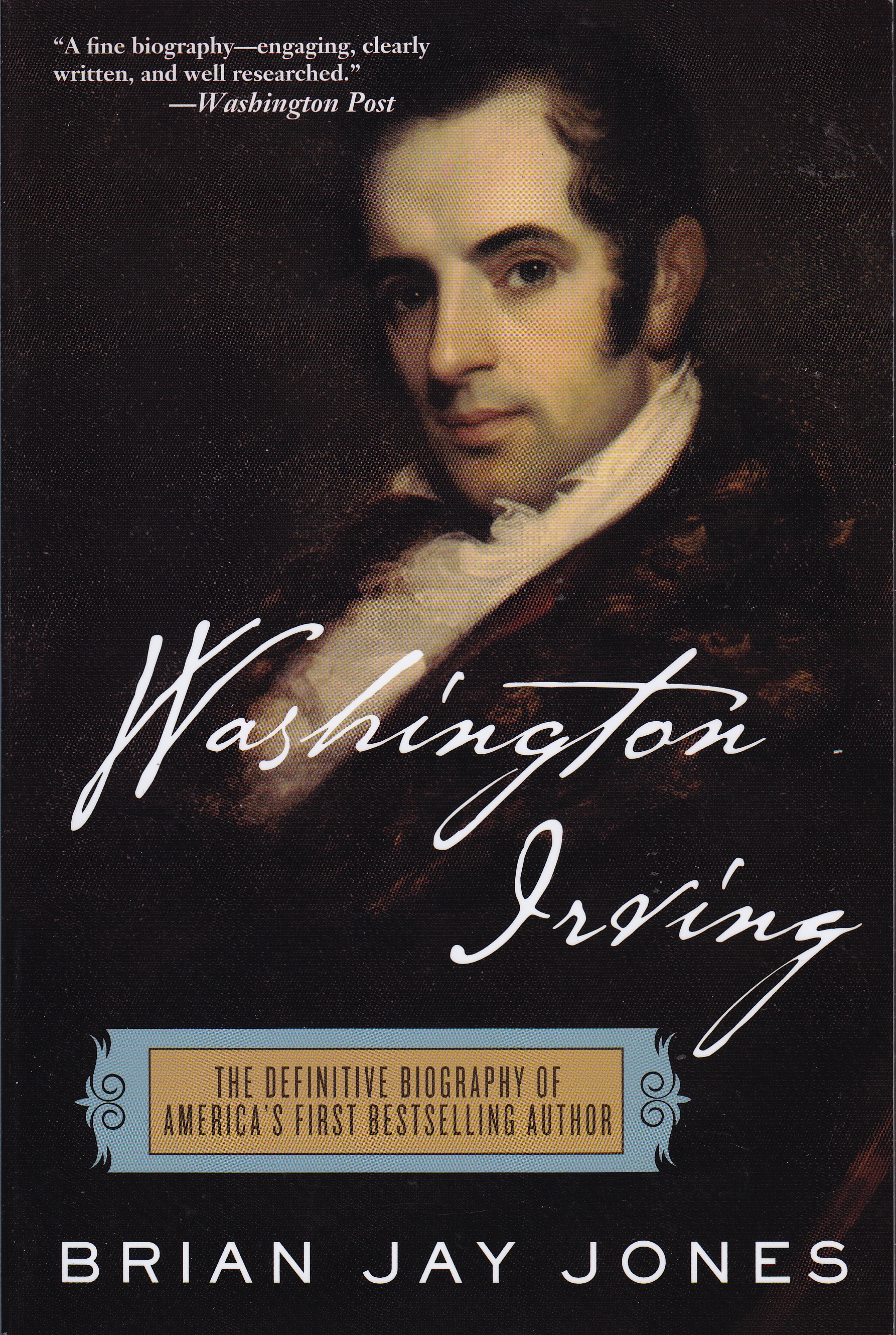
WashingtonIrvingLess known now than he was in his own lifetime, Washington Irving is an odd literary character. Many writers, at least of tomes we now have our children read in school, were not necessarily stars in their time. Some were obscure, their genius only becoming clear when they were safely dead. Washington Irving, however, rocketed to fame fairly early in his life and became what Brian Jay Jones refers to as an icon. He was one of the most famous men in America in his lifetime. Although he was never properly a novelist, he pretty much earned his career by writing. Today he is best remembered for “The Legend of Sleepy Hollow” and “Rip Van Winkle,” two tales from his Sketchbook. Those of us who work in Gotham may not realize that Irving gave New York City its famous nickname. He also coined the sobriquet “knickerbocker” that still describes New Yorkers and their basketball franchise.

Washington Irving: The Definitive Biography of America’s First Bestselling Author, by Jones, is a revealing look at the author. Irving was raised in a strict, religious family with a father known to many simply as “the Deacon.” As Jones makes clear, Irving did not accept the harsh religion of his father, moving on to become skeptical of religion itself. Like his attempt to make writing a profession, in his religious outlook Irving was ahead of his time. Having been raised with a deity who had no respect for humanity, it is no wonder that a mere mortal might turn his back on the divine.

This was during the flowering of the age of reason. Like his younger contemporary Edgar Allan Poe, Irving knew early losses yet did not call out for a supernatural deliverance. Although evangelical sentiment has never been far from the surface in America, it would not bubble through to anything like modern proportions until Irving had been dead for about sixty years. Indeed, he died the same year that Darwin’s Origin of Species was published. Jones does not go into detail concerning Irving’s religious affiliations during life, but he had his funeral among the Episcopalians, and found his final resting place in the cemetery at Sleepy Hollow. Today his legacy in that regard lives on. With a difference, however—in the most recent movie and television versions, religion has been injected in an obvious way into what Irving wrote as a merely secular tale.


The Friar’s Tale

Being a fan of Gothic fiction, I recently read an anonymous story from 1792 entitled, “The Friar’s Tale.” Those who linger among Gothic conventions know that the monastery is a common trope in the genre, often with debased clerics who use their authority to make their charges miserable. (Hmm. I wonder why I keep coming back to this kind of fiction?) Literary scholars tend to point to the late eighteenth century as the origin point of Gothic sensibilities which coincide with the Romantic movement. This then, is an early example of what people feared as industrialism and modernity encroached on a world once natural and full of mystery. The tale contains nothing to frighten a modern reader, but it does offer compelling commentary on the one organization that would seem most to benefit from retaining a pre-scientific worldview—the church.

IMG_2009_1024

The story involves lovers separated by a cad who is after the lass’s money and who connives with the mother superior of a convent to lock the girl away from both her money and her lover. She comes to the realization that religion has ruined her prospects. The friar narrating the tale refers to religion as “that constant comfort of the good, and powerful weapon of the wicked.” Of course we had already experienced Reformation vitriol by this point in history, and rage against the use of religion as a means for personal gain had been thrown out for any who would care to utilize it. Clearly the author of “The Friar’s Tale” found it essential to the plot.

The truly interesting aspect of all this is how, in the intervening centuries, religion has continued to present this opportunity to the greedy and corrupt. Not all religion succumbs, of course, but when it becomes a hierarchy of any description there will follow those who find it a means of personal gain. The Prosperity Gospel movement comes immediately to mind. Those who putatively follow a man who is recorded as having said to give away all that you have in order to be his disciple have somehow missed the message and keep their treasure where moth and rust pose constant dangers. We think ourselves advanced since then, but the words of a fictional friar from centuries ago may still hold some wisdom for Gothic readers in the present.


Oxford Haunts

IMG_2007

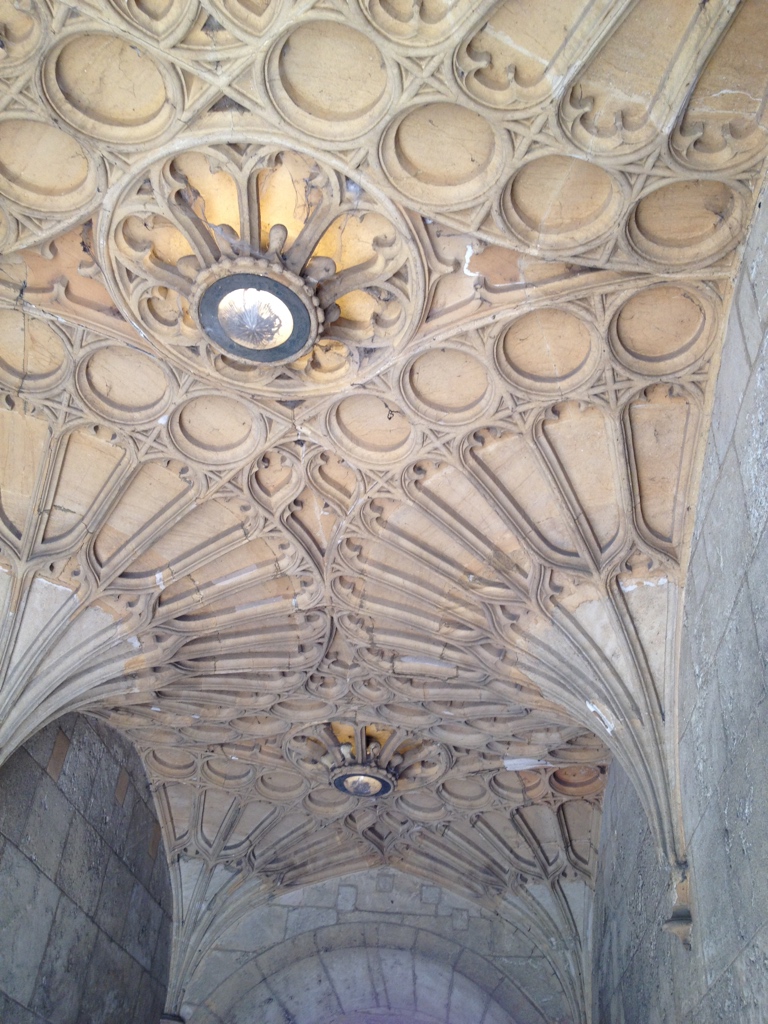
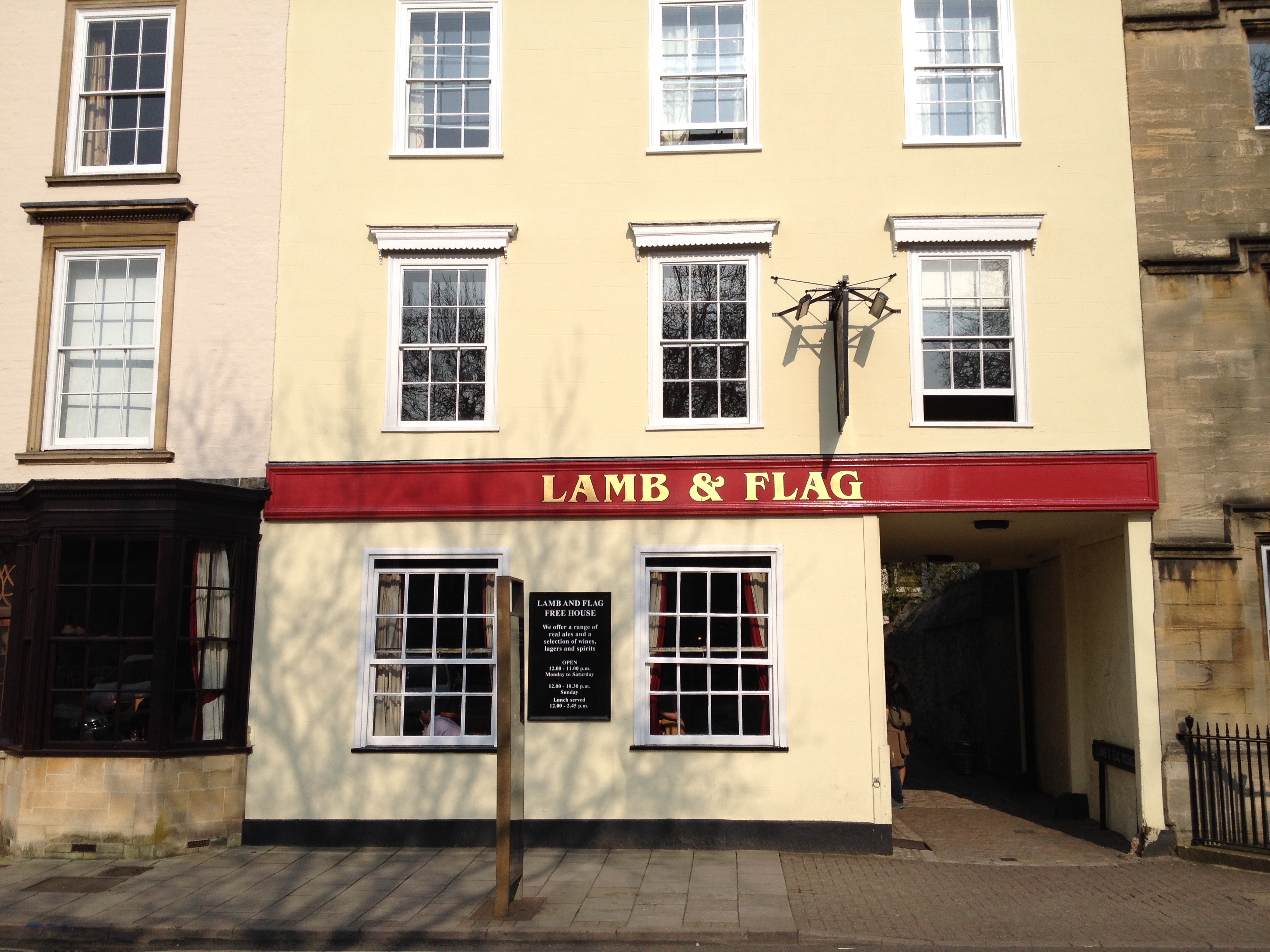
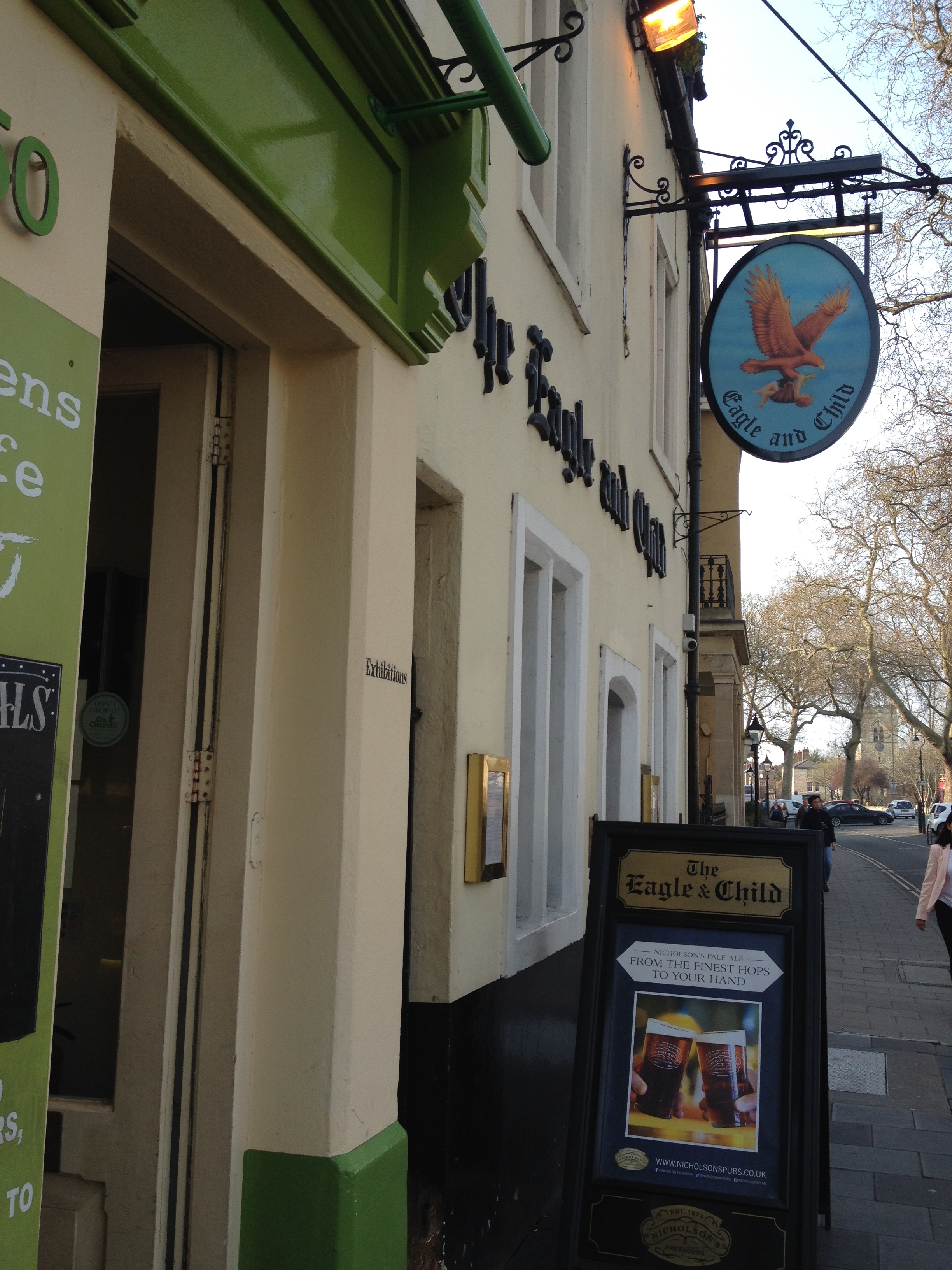
When I travel, when I have time to plan, I like to visit the haunts of literary figures. It would be difficult to think of two more influential (or abbreviation-ridden) English writers than J. R. R. Tolkien and C. S. Lewis. Both Oxford men, they liked to drink, I believe, at the Lamb and Flag. I stopped by to see, but just in case it was actually the Eagle and Child, I back-tracked to see it as well. Post-war Oxford was a place for an academic to write, and C. S. Lewis has influenced an entire generation of evangelical fans who overlook his penchant for drinking, and J. R. R. Tolkien seems to have invented the perfect fodder for CGI animators. Perhaps there was something in the air. Although no less of a literary talent, it may be less common to hear Thomas Hardy’s name. He is rumored to have written Jude the Obscure, appropriately, mostly in this pub. Good to know there’s someone else so obscure, by definition. It’s hard not to feel scholarly in Oxford.

IMG_2038

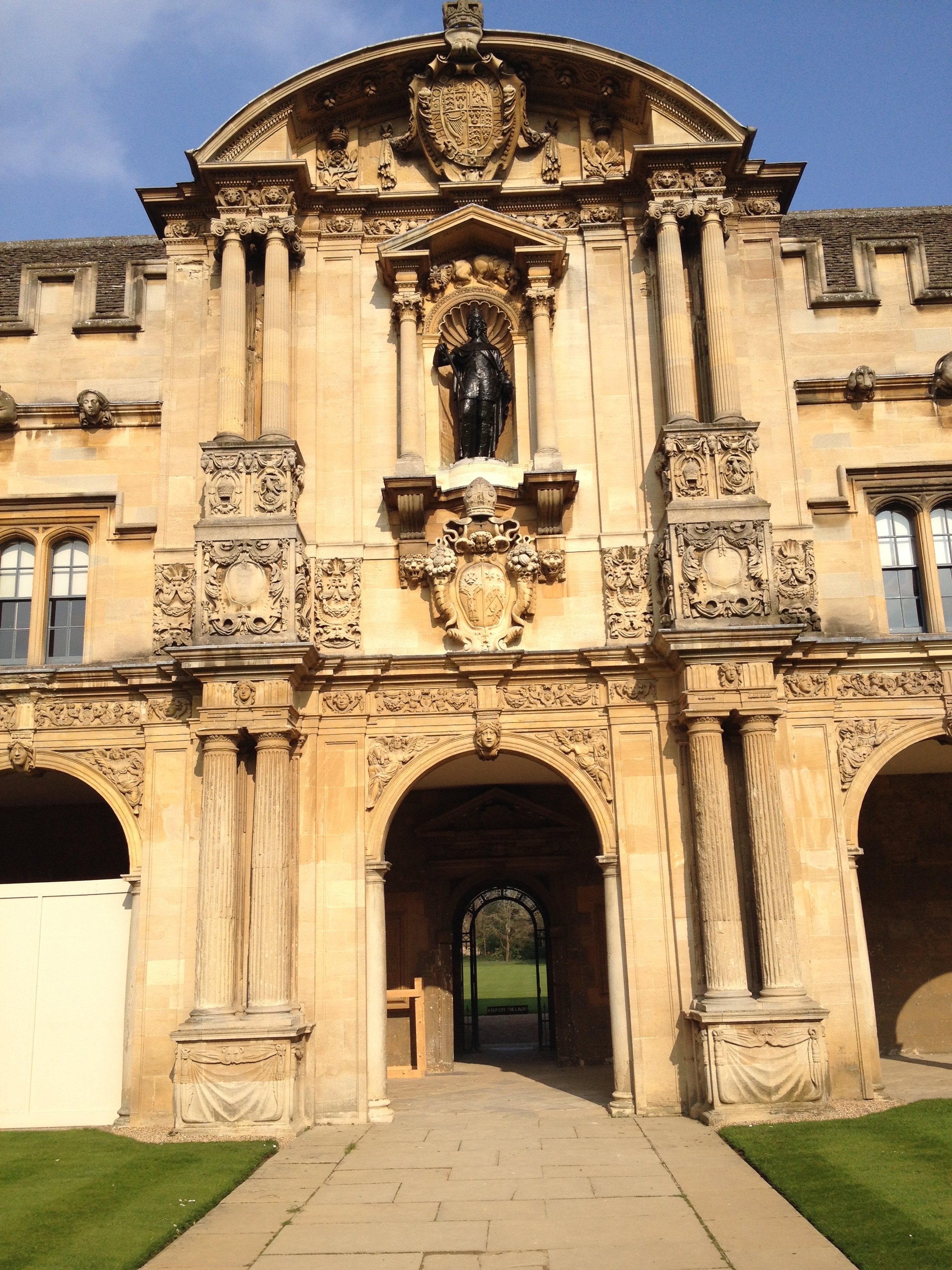
I have to confess, I dressed the part. I wore my Harris Tweed jacket and my Edinburgh school tie. It was a beautiful spring day, the like of which were extremely rare in Scotland some two decades ago. Not knowing that my business trip would offer the opportunities to explore the city a little, I hadn’t done much homework. A colleague suggested I stop into St. John’s College to look at the gardens. They’re only open from 1 to 5, and I timed it right to get there shortly before closing. Students wandering out in jeans, staring at their smartphones, could have been students at any number of universities I’ve known. The setting was, however, quite beautiful. There seems to be evidence that they don’t walk on the lawn. Tradition is treated with considerable respect here. Although, upon closer look, graffiti does make an appearance now and again.

IMG_2010

As I was stepping out the door of St. John’s, a family from eastern Asia was coming in. It was near closing time. The father asked me if this was Oxford University. I explained that it was part of Oxford University, but that the university was quite large and was all around the town. As he pressed me for more information, I wondered why he was asking an American who’d only been to Oxford once before about the place; I hadn’t done my homework, after all. Then it occurred to me. I was dressed rather like a prototypical professor. The tweed, the beard, the glasses, the consistently confused look on my face—I’d been mistaken for an university professor. I stepped outside and looked around. In a different time, perhaps it would have been true. And maybe Tolkien and Lewis would have lifted a warm pint in a cold pub and we all might have learned something.


Paper Oxford

PaperTownsIt looks like a brilliant blue morning here in Oxford, yet my body is telling me that it’s the middle of the night. And that’s saying something, since I normally get up around 3:30 anyway. Routine is kind of a religious thing. In fact, it seems to be the root of ritualistic behavior. The passing of time is a matter that affects us all in some way. Jet lag is one of those ways. I’ve got an important meeting to attend in an hour—that’s why I’ve come all this way—and yet my mind will be telling me I should be elsewhere. Perhaps back over the north Atlantic, looking down at icebergs from the air, wondering if climate change is really that far advanced. Are there any polar caps left at all? Didn’t the Titanic hit an iceberg at this time of year, and wasn’t it a great surprise? At least on a ship you don’t get jet lag. There’s nothing like travel to shake you out of the ordinary.

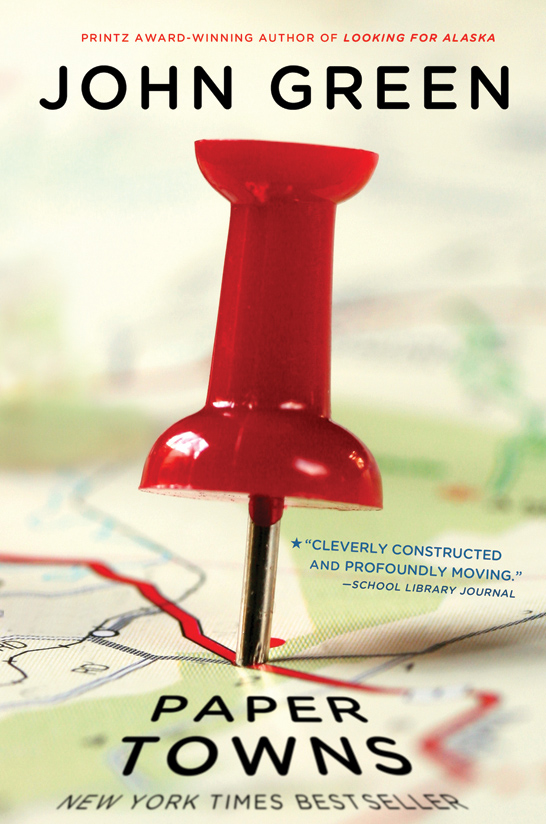
I suppose that’s part of the draw to John Green’s Paper Towns, which I read on the flight over. Although it’s young adult literature, Green has a way of capturing what it was like to be a teen on the cusp of adulthood, and the need to become who we are meant to be. It is a story of leaving home, and of living on the edge. Once a friend said to me that he couldn’t understand someone wanting to leave the place they grew up. I, on the other hand, was only too eager to leave a verbally abusive situation in an industrial town that was slowly dying with no prospects for the young. Needless to say, Paper Towns resonated with me. I can’t remember the last time I read a novel in a single sitting. Although I’ve been an adult for decades, I can still remember the feeling of being young, of falling in love, and wondering what this was all about. High above the north Atlantic, I was sure I still hadn’t figured it out.

There’s nothing religious about Paper Towns. The characters in it assume God to exist, as most Americans do. We make a lot of assumptions. My body is assuming it’s only two in the morning. My clock is telling me that it’s seven. Time is relative, but only one of those placeholders will determine if I am late to work in this place I find myself waking up. I remember being young, and although Oxford has its usual charm, I also know what it feels like to have to leave. The clock tells me that I have to go. The novel in my head tells me the same thing. I’m not sure what time it is. For the moment my paper town is Oxford, and it seems very real indeed.


The Art of Religion

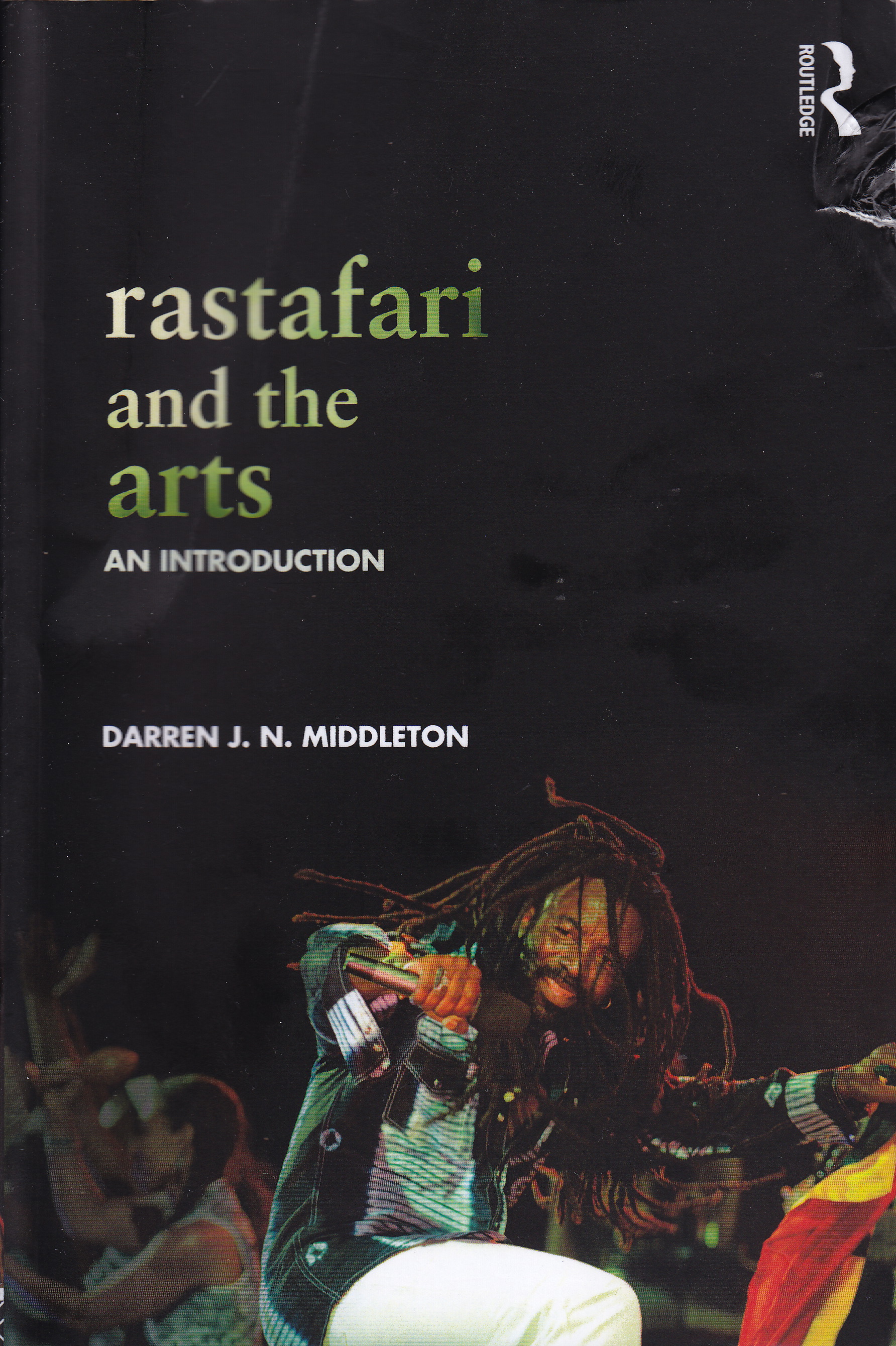
RastaIf you take a train along the Raritan Valley Line en route to New York City, you will see many of the less highly regarded sights of New Jersey. The properties along the rails are often industrial and neglected. Graffiti abounds. On one particular concrete underpass is a truly monumental graffito reading “Paint the Revolution.” Since I can’t afford to take the train on a regular basis, seeing that prophetic line is a rare occasion for me, and it always casts me in a reflective mood. No doubt injustice has become deeply entrenched in our society where politicians are synonymous with distrust and wealth is carefully corralled by a passing insignificant number of individuals. These thoughts recurred as I was reading about Rasta, the religion that developed in 1930s Jamaica, and is now found throughout the world.

Perhaps the most rewarding aspect of being an editor is exposure to new ideas. Of course, anyone can achieve this by reading, but as a person whose job is to find new books, an editor often has to go beyond passive, to active reading. So it was that, while at Routledge, I came to Darren N. J. Middleton’s Rastafari and the Arts. I immediately fell for it. I’d read about Rasta before, but Middleton’s use of art as a means of exploring the religion was captivating. Now that his book is out, I reacquainted myself with what drew me to the project in the first place. Admittedly, a large part of the draw is the fascination with Rasta itself. While some, perhaps many, would claim that it’s not a religion, Middleton demonstrates pretty clearly that it is, or that it at least has all the hallmarks of one. Moreover, it is a religion profoundly based on the concept of social justice, something that many religions possess in diminishing quantities.

The African diaspora led to the development of several new religions as African thought was forced into a mode of accepting Christianity. Among those many new religions, Rasta stands out for its association with a particular musical style, reggae. Of course reggae can be secular, but one of the many insightful observations of Rastafari and the Arts is that the global spread of Rasta often begins as music travels. While reggae is generally identified by its musical style, it is also noted for having a heavy dose of social consciousness. People who’ve been oppressed, no matter what their race, often express their victimhood in their arts. Not particularly numerous, and certainly not politically powerful, Rasta has been painting its own revolution. That revolution is associated with peace and love, and, in a way almost unique among belief systems, its music.


Animal Form

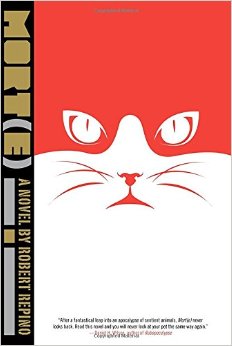
Mort(e)The fear of insects is fairly common among people. It is difficult, however, not to appreciate the “hive mind” and how insects in colonies work for the betterment of all, often at the expense of the individual. Now imagine that the hive mind resents what humans have done to insects over the millennia. And suppose that their massive mind allows them to develop a hormone that transforms animals into partial humans with consciousness and, for the most part, workable hands. Then you’ve got the premise of Mort(e) by Robert Repino. A debut novel about a cat (Mort(e)) and his desire to find a friend in the fog of war that follows the transformation of animals into people, the story is as compelling as it is creative. Add in a strong dose of religious concepts (Mort(e) is considered a messiah among the battered human population, and he has a prophet) and you’ve got a captivating story perfect for comment on this blog.

While not all novels I read have a religious element, a surprising number do. And this isn’t because I pick stories with religious themes. It is because religion pervades the human outlook on life. Repino’s novel, however, does go beyond a casual mention of religion. It turns out to be central to the plot in a way that, were I to describe it here, would constitute a spoiler, and since I want to encourage reading of Mort(e), I don’t want to reveal too much. Suffice it to say, without religion a large part of the story would be missing. No matter whether you believe religion is good or bad, you’ll find plenty to think about here.

These days I read novels liberally mixed in with non-fiction reading. Sometimes I’m disappointed after I spent a few hours on a book and find it to lack substance. (Sure, I do read as a guilty pleasure from time to time, but here I mean the kinds of books you invest in.) Mort(e) is a substantial story. The world in which the protagonist operates can be described as apocalyptic, and end-of-the-world scenarios have a way of raising questions about what we believe. The time spent reading Mort(e) is a good return on investment. And once it has been out there long enough, I’ll want to return to that plot spoiler to investigate it further. It’s that kind of book.


Overboard

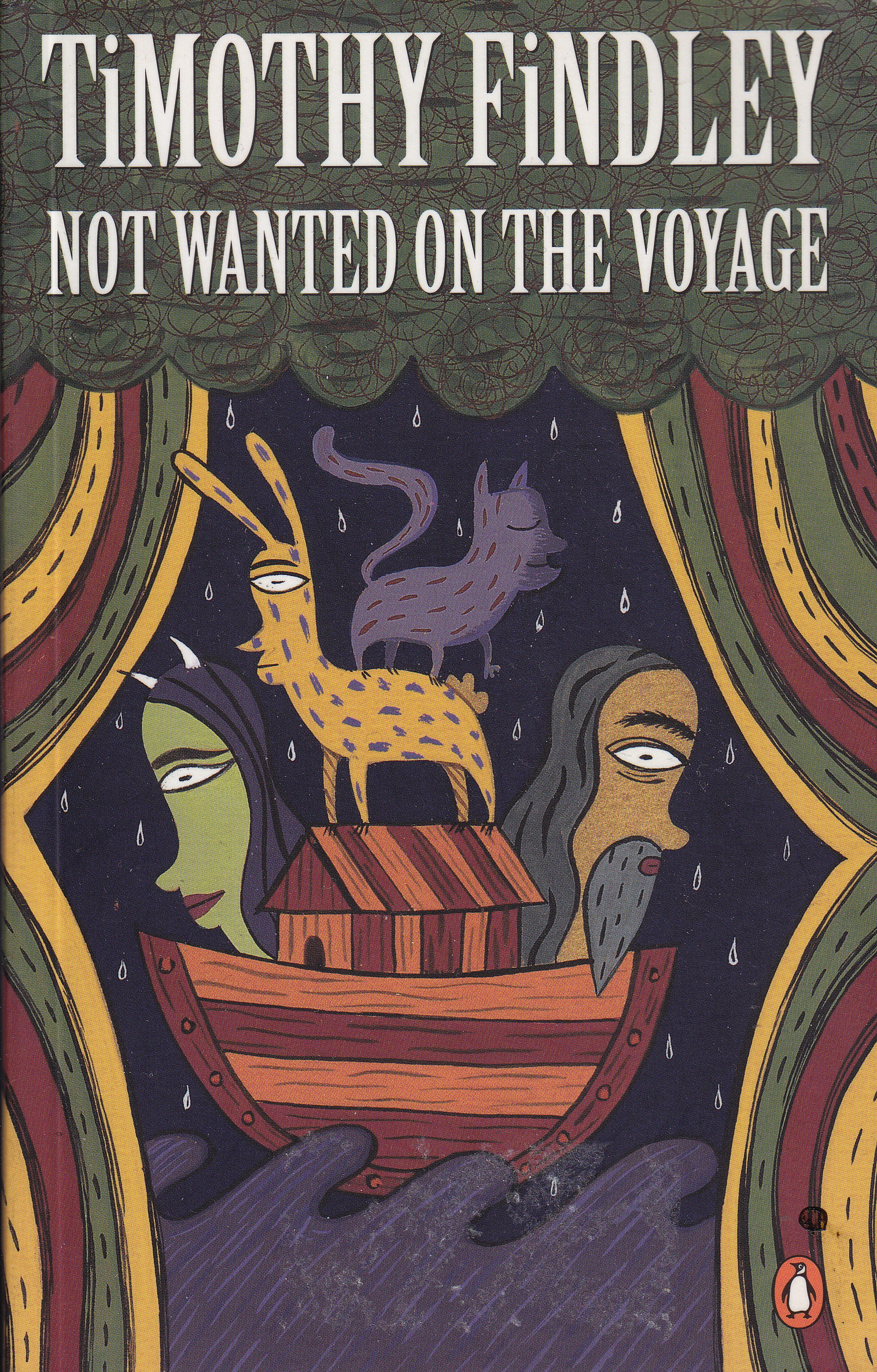
NotWantedOnTheVoyageThe story of Noah has long fascinated me. The world of early Genesis is so mysterious and compelling—a mythical time when all the action seemed to be taking place in just one bit of the world, and events were always momentous. Noah, the new Adam ten generations on, stood out as the prototypical good guy. The sort of fellow you’d like living next door. An everyday hero. The movie Noah, however, introduced a dark and brooding ark captain whose unyielding devotion to his own concept of righteousness led to a tormented journey over the flood. I wonder if Darren Aronofsky read Timothy Findley’s Not Wanted on the Voyage. Recommended to me by one of my students, this novel was difficult for me to categorize. At first I thought it might be a funny story—despite the tragic overtones, there is much in the flood story that suggests humor—but no, it was more serious than that. Noah was cast in a primeval, post-Christian world where elements of the twentieth century were freely available, while others were not. And more troubling, Noah was not at all a nice guy. Indeed, he is one of the best written antagonists I’ve encountered. You shudder when he enters the room.

Apart from Noah, however, the novel explores the premise that Yaweh [sic] sent the flood as a final, dying act. Old, feeble, yet the creator of everything, the deity is ready to give it all up as the absentee landlord who has no idea what’s happening on earth. The reader feels little sympathy for the divine. Like humanity, he set something in motion he has no hope of controlling, yet which he can destroy. As he is about to die, unbeknownst to all humans, he sends the flood. Noah, six-hundred years old and senile, oversees his ark with an iron hand. His religion has made him cruel, and I was frequently left wondering whether those who survived were more fortunate than those who did not. As a fantasy the story works, with well drawn characters and a devious plot. The problem comes in trying to reconcile it with a Bible story all too well known. In the end we’re left wondering if the flood does really ever end, and, if so, does anything turn out okay.

Known for his dark, conflicted characters, Findley adds a macabre dash of the improbable to an already unbelievable story. Mrs. Noyes, aka Mrs. Noah, is perhaps the most sympathetic character in the novel. Her son Ham, cursed in the biblical version, is clearly the best son, but one his father dislikes by reason of his love for science. Part morality play, part farce, Not Wanted on the Voyage can be a disturbing novel, rather like the movie Noah. That’s not to suggest there’s no message here. I see it as a cautionary tale of a misplaced faith taken too far. Instead of pleading to save humanity, Noah seems only to glad to let all but his own be wiped out. His sons disappoint him, and the one daughter-in-law he appreciates disappoints him in the end. Perhaps this is what destructions are all about. Does any flood really have a happy ending?


Holi Daze

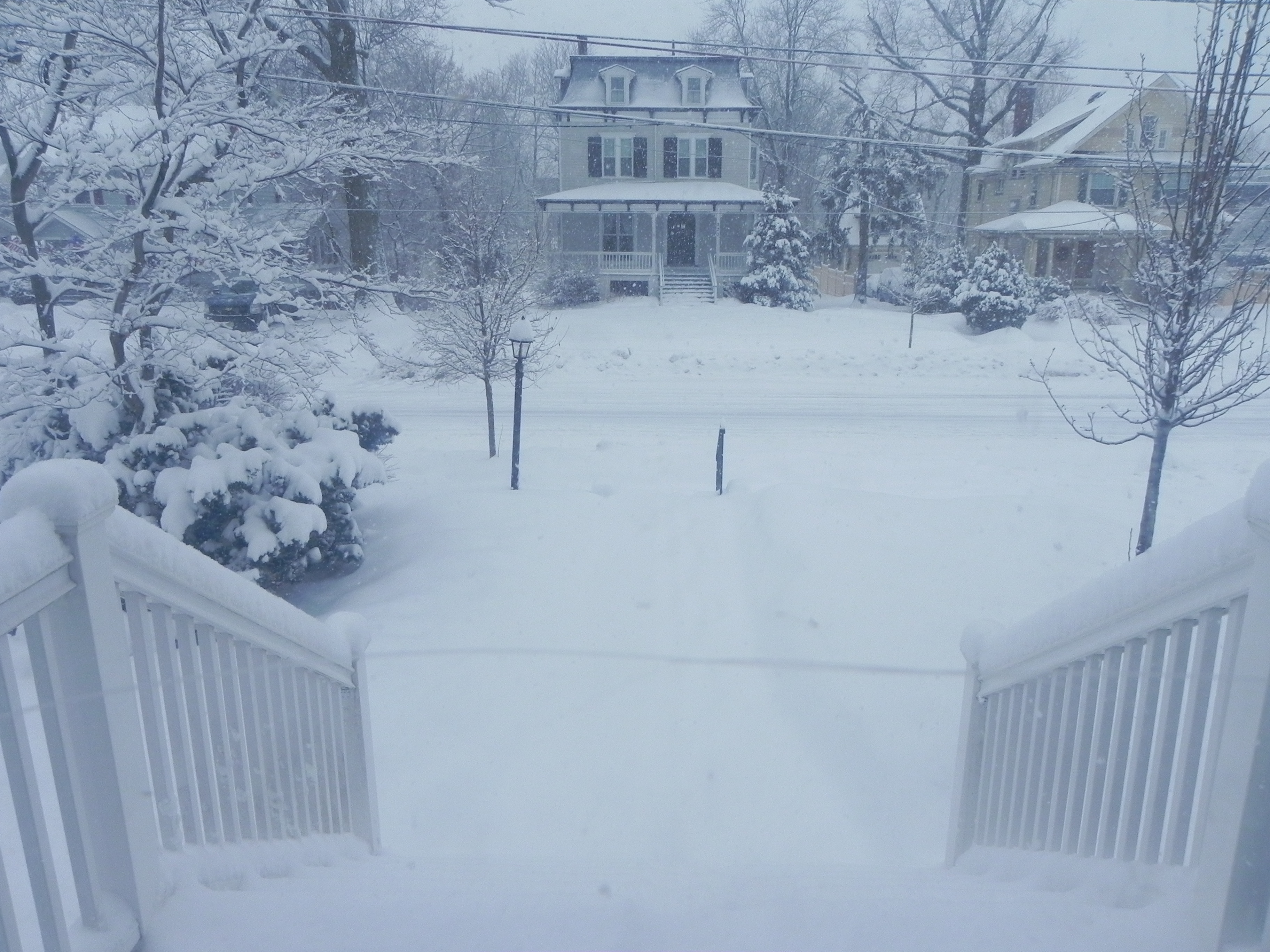
It’s pretty white out there. For many parts of the eastern United States it has been a season of snow on snow on snow (why does that sound familiar?). The wisdom back in old white Wisconsin was there’d be three snows on the crocuses. This year the crocuses have remained buried, even in New Jersey. Judging from the number of people not driving, it looks like most people had a snow day yesterday. The color white has often been treated as a symbol of purity in various religions, but today is also the celebration of Holi, a Hindu festival of color. I’m no expert on Hinduism, but I do find the concept of a day of color to be immensely appealing. Anthropologists trace its roots to some fertility festival, but the fact is, we could all use some color right about now.

DSCN5027

Winter technically lasts, in this hemisphere, until the vernal equinox. Religions around the world have festivals to celebrate this slow turning of the seasons, and the lengthening of days. A long while back I wrote a little book on the holidays. In it I tried to find the basis for various holiday colors. We all know red and green clash, but when we see them together we think of Christmas. Black and orange make a standard Halloween combination, and red by it self suggests St. Valentine, while green alone gives St. Patrick his identity. A more recent addition is black and silver for New Year. Easter, coming in the spring, however, is a celebration of color. We don’t dye the eggs just one hue—it has been a long winter and we celebrate its close with a burst of color. Even the staid old Episcopal Church reverences the liturgical seasons with distinct colors. In other words, colors mean something.

Years ago a friend recommended Jasper Fforde’s Shades of Grey (this was before Fifty Shades of Grey took over the world). It quickly became one of my favorite novels. It’s all about color. Apart from a few years under the influence of a friend with a strong personality, I’ve always been a subdued haberdasher. I tend to wear understated colors because I don’t like people commenting on the way I look, or, even for that matter, looking at me. I enjoy public speaking, but having someone single me out on the street or the bus has always felt distinctly uncomfortable. Still, I think we may have lost something that Holi has retained. Color exists to be celebrated. And shared. It is so important that commerce and trade apparently stopped last week to figure out the color of a certain dress. I may not be a Hindu, but I think I might wear my brightest shirt today to welcome color back to the world.


Once Bitten

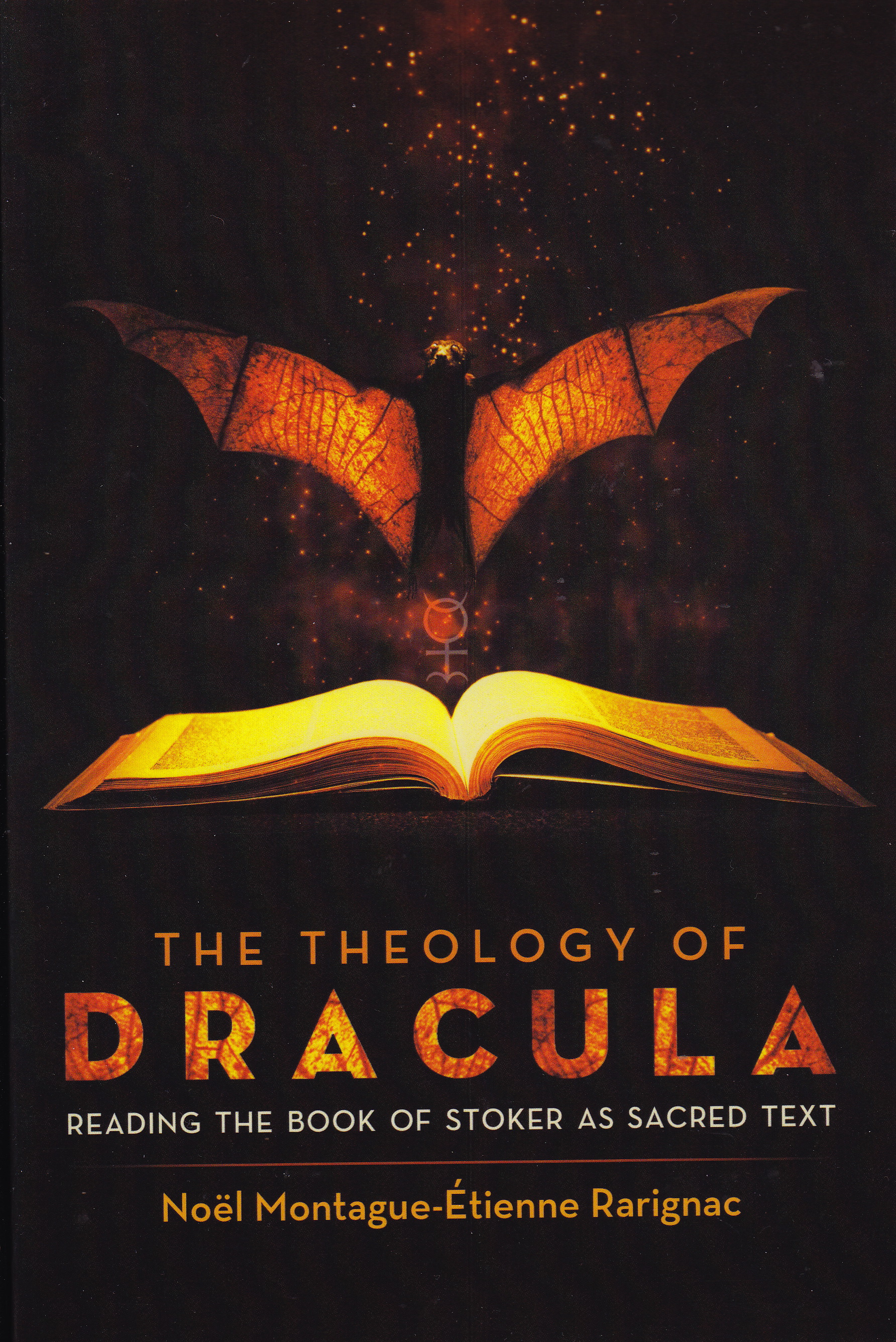
TheologyOfDraculaOnce vampires sink their fangs into you, it’s hard to shake them. I’m referring to an intellectual connection here, instead of a physical one. M. Jess Peacock’s book on theological vampires spurred me to read Noël Montague-Étienne Rarignac’s The Theology of Dracula: Reading the Book of Stoker as Sacred Text. It has been on my “to read” list for some time, and since I finished re-reading Dracula recently, I felt the canonical text was still fresh enough in my mind to take on an analysis. I have to confess that even though I grew up as a religious kid, and I loved monsters, I had no idea that the two were connected. Strangely, religion tended to elicit a fearful response while monsters gave me a kind of comfort. Of course, I always supposed that was normal. Then I learned that mature adults didn’t talk about, or even think about, monsters. I had to try to find solace in religion instead. Rarignac clearly figured out, however, that Dracula was a sacred text long before I came along.

What exactly does it mean to treat a book as a sacred text? Before anyone gets any funny notions, I need to say that Rarignac is not suggesting vampirism is, or should be a religion. That hasn’t prevented other people from seeing it that way, but that’s not what this book is about. It is about Bram Stoker’s Dracula. Devoting the kind of attention to detail that is often reserved for biblical texts, The Theology of Dracula examines the many religious traditions (not all of them Christian) that lie behind the novel. Stoker drew on many “pagan” traditions, including those of ancient Egypt and of Nordic mythology. Clearly Dracula responds to Christian symbols pretty violently, but he isn’t a classic Catholic. In fact, he seems to shy from Catholicism while admitting that its symbols work.

Rarignac, however, suggests more than this. He suggests that Dracula was written intended to be a sacred text. Not a Bible—we already have one of those, thank you—but a text that has its own mythology and symbols. Dracula‘s characters are not always what they seem. Careful scrutiny reveals that they often have celestial connections that tie them to ancient mythologies long forgotten by most modern people. We read the book expecting it to be about a vampire. Well, clearly it is. But not only a vampire. There is a much larger story at work in Dracula, and Rarignac has done an admirable job tracing its Vorlage (if I may step into jargon for a moment) and its wider context in the world of literary creations that specialize in our nightmares. There is much at which to marvel in this little book. I’m not convinced that Stoker intended his book to be read this way, but it is nonetheless a richer experience for it. Rarignac gives a simple monster tale real teeth.


National Reading Month

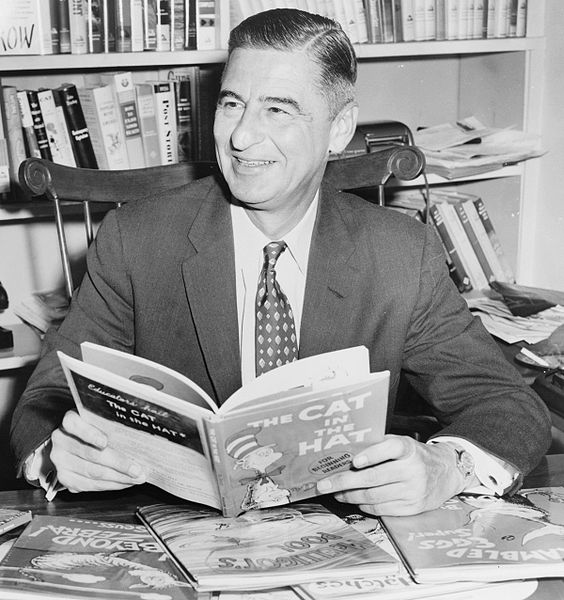
Welcome to National Reading Month. Today is the birthday of Dr. Seuss (Theordor Geisel). Since so many children begin reading with Dr. Seuss, March has been designated National Reading Month in his honor. Nothing could be more deserving of a holiday than reading. In an era when active, visual displays and lifelike animation readily draw eyes away from books, it is more important than ever to think about what reading has done for us. As a society, no significant advancements were made beyond agriculture and shepherding until writing was developed. We needed a way to convey knowledge not only over distance, but also over time. To participate in writing is to taste immortality. To read is to communicate with those long gone or far distant. How trivial we’ve made it all seem. Writing was a truly remarkable achievement. The entire purpose of schooling was originally to teach our young to read and do math. So we should all celebrate National Reading Month and put down the devices for a while and curl up with a book.

Okay, well, reading on devices does count. Still, some of us can’t help ourselves from acquiring books. I once visited a house of a friend’s relative on a trip. It turned out that we would be spending the night. As I glanced around my new surroundings I noticed something odd. There were no books in the house. None. It felt so hollowing that I knew I could not long remain there. Every room of our apartment (except the bathroom) has books. I travel with books. Even if it’s going to be a fairly brief car ride, I wonder what happens if I break down and don’t have anything to read while awaiting rescue? On the bus everyday I have at least one book with me, and sometimes two or three. I’m lost without them. Libraries and book stores are my favorite places to be. Surrounded by words, comforted by communication.

564px-Ted_Geisel_NYWTS_2_crop

Dr. Seuss was part of my childhood reading, but not so much as Bible stories and Easy Readers. We didn’t buy any Dr. Seuss, but I did check his books out from the library. When my daughter was born we corrected that misdemeanor. We purchased nearly every readily available book by Theodor Geisel, and this was in the days before Amazon. Some were difficult to locate, being in rural Wisconsin, but we persisted and instilled the love of reading into another generation. We have holidays to celebrate wars and victories in wars. Great deaths and momentous births. Love, fear, and the Irish. And yes, reading. The cracks in winter are beginning to show. Light is beginning, ever so slowly to increase. Why not celebrate the coming of the light with enlightenment for the mind? It’s time to read a book.


Ultimate Superlative

“Push men too far and they fall off the cliff.  Push great men too far and they soar.”  The words are those of my novelist friend K. Marvin Bruce.  Unless you read this blog you’ve probably never heard of him; his novel publishing record is about as successful as my academic career.  Still, I think quite a bit about Marvin’s plight.  He seems to be a gifted writer—he sends me copies of his stuff—but publishers take no notice.  He’s had a few short stories appear in online journals; two of them even won prizes, but the internet is a very crowded place.  It’s not easy to get noticed. Those who try to make a living smithing words often face a dilemma; it feels like all the momentous words have already been taken.

Marvin on a superlative walk

Marvin on a superlative walk

I mentioned in a recent post that we are suffering from a crisis of superlatives.  The other day I was in a mall (this is a foreign activity for me—the people all look far trendier than I do, and they seem to think this is the place to be, not just where you have to go to have your laptop serviced).  I saw a mother walking by holding the hand of her maybe three-year-old son.  His little tee-shirt read “Über Awesome.”  I recall when awesome really meant full of awe.  And that was rare, reserved for things like towering, severe Midwestern thunderstorms alive with constant lightning, or gray north Atlantic waves crashing mercilessly into the cliffs of Maine. I stood, small and insignificant on the prairie or the coast, utterly at a loss for words. Yes, it was that impressive. My superlatives, however, have all been absconded. We live in a world where “greatest” sounds somewhat ordinary. Even the apocalypse has grown thin from overuse, and that used to be the ultimate end of everything. How weak it all sounds.

Over the past few weeks I’ve been watching the second Star Wars trilogy. While the special effects are impressive, it suffers compared to the original trilogy. One of the reasons, in my idiosyncratic hermeneutic, is that the Jedi knights were reconceived, or reconceptualized. They are action figures, hands on hips, ready to dart into a fight. “May the force be with you,” has become a mere “God bless you.” Was not the real strength of Obi Wan his silence and lack of haste? Was Luke ever more impressive than when he slowly walked into the cave of Jabba the Hut, light saber tucked away, only to be used when such an awesome weapon was called for? It takes a certain placidity of soul to stare long into the abyss. Perhaps this is a metaphor for our superlatives. Calm lives of measured, considered action. This seems to be what the world lacks. To find it would truly be experience simple greatness.