Forbidden Love

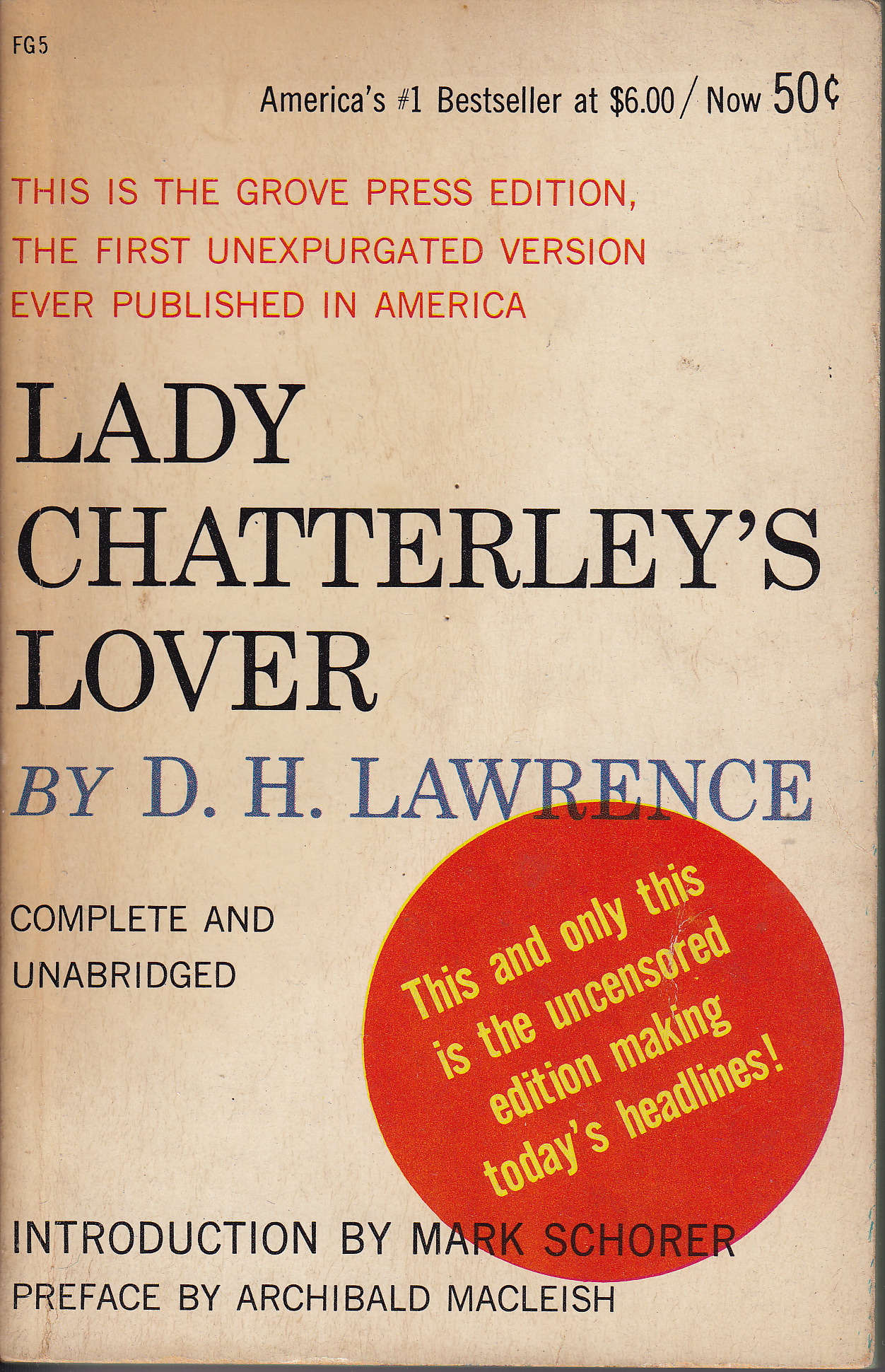
LadyChatterleyBanned Book Week is upon us. In that time of year when we begin to think of spooky, scary things, the prohibition of literature naturally comes to mind. Every year I try to read a banned or challenged book for the occasion. This year I went to perhaps the jugular vein of banned books, Lady Chatterley’s Lover, by D. H. Lawrence. Now, I’m not a romance reader, but I was curious about this sexually explicit novel that had been banned to the point of being outlawed and was now considered a classic. Lawrence’s last novel, it tells the tale of a woman escaping a loveless marriage with the help of lover below her social class. The steamy bits are tame by today’s standards, but Lawrence does use several words that are still rarely heard in the media due to their offensiveness. From my perspective the story was a bit too drawn out, and the fawning wasfs a bit over the top. What struck me even more, however, was the fact that this novel was largely about social justice. Not that Lawrence was an activist, but his concern for the poor and discarded of the industrial revolution is quite clear throughout the novel. The privileged having affairs within their class is acceptable. The scandal is that a titled lady falls for a common gamekeeper.

I haven’t read Fifty Shades of Grey, a franchise that has made even romance writers jealous. From the criticisms I hear, however, the concern is less the sex than it is the lack of literary value. I’m sure Fifty Shades of Grey is a banned book in some location. Still, the deeper concern for humanity that runs through Lady Chatterley’s Lover is part of its appeal. Several times I put the book down thinking, “this isn’t just surface stuff.” It is, baldly put, the search for redemption. Sir Clifford is an invalid who wants to control others. In an era when men laid claim to control of women’s sexuality this was no small demand. He also sees his coal miners as pieces in a larger game that is, it turns out, only to his own benefit.

Although the book ends with the lovers parted, and hoping for reunion, Lawrence’s final words turn toward economic oppression. Mellors (the gamekeeper) writes, “If you could only tell them that living and spending isn’t the same thing!… If only they were educated to live instead of earn and spend…” He defines Mammon as “wanting money and hating life.” No doubt, the book was a vehicle for Lawrence’s desire to see writing about sex to be part of literature and not pornography. Still, there is something deeper here. The story is more than carnality, although carnality is what brought it to fame. It is a banned book that proclaims liberty that, despite the license of contemporary society, is not really as free as it might seem. As banned book week unfolds, it is a moral obligation, I believe, to read those books that have threatened settled mindsets and raised the ire of censors. In so doing, we learn what it is to be human.


The Boy on the Bus

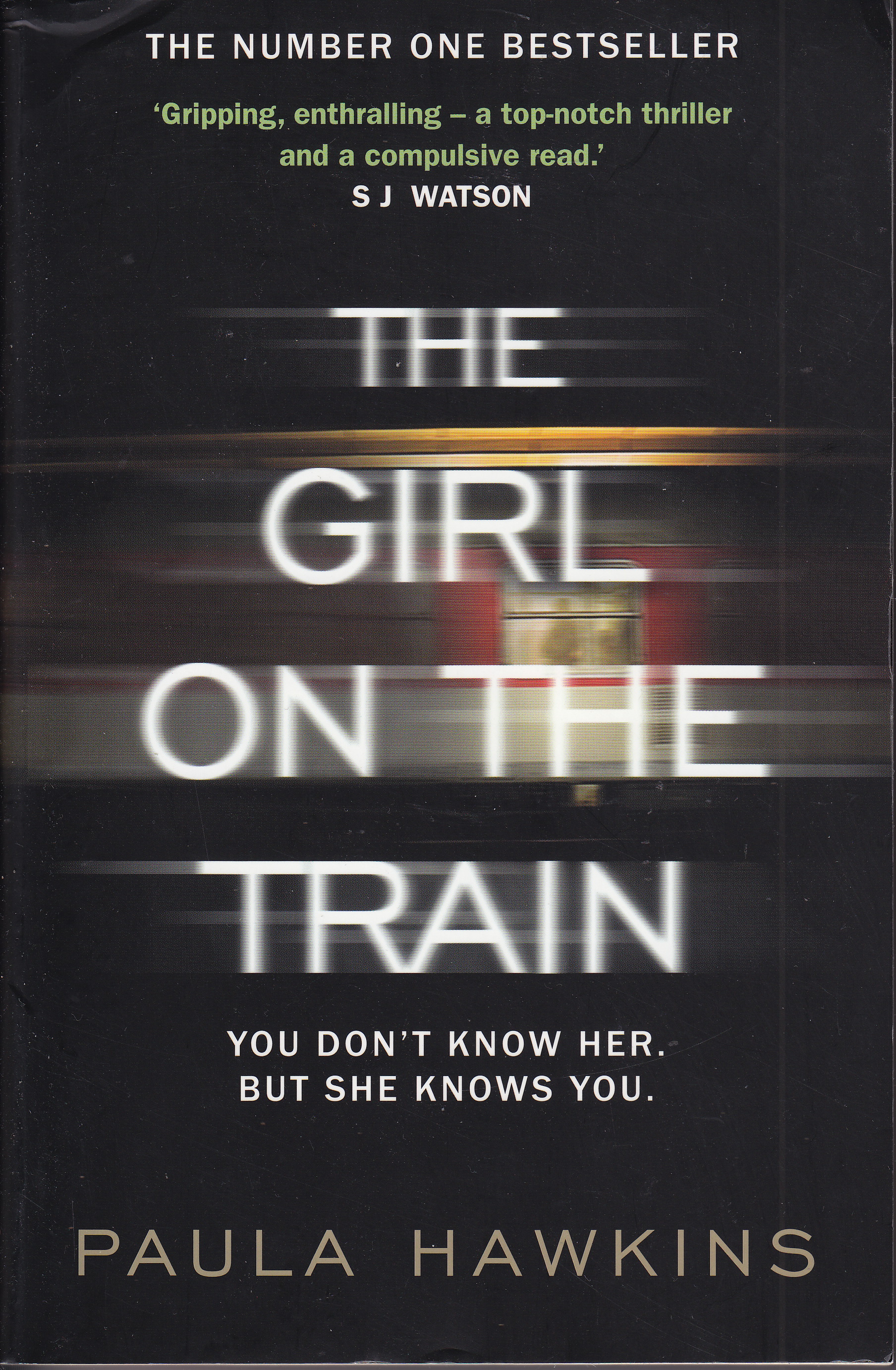
GirlOnTrainCommuting by bus isn’t the most efficient way to do research. While mostly I read non-fiction related to my research interests, monographs are difficult because of the concentration required and the constant interruptions of the road. Journal articles are, still, jealously protected by university libraries so that you can’t access them without an account. So once in a great while I read a novel on the bus to forget it all. I’d heard people talking—literally—about Paula Hawkins’ The Girl on the Train. It is a story about a commuter, and my wife was kind enough to give me a copy for my birthday, so I recently climbed on board to read it. The problem with reading fiction on the commute is that it is difficult to clear your head to negotiate the streets of the city when you’re done. You’re in an imaginary world for a while after you put the book in your bag. The nice thing is you can’t wait to get back on the bus to read some more. It makes commuting bearable. Almost pleasant. Especially when the protagonist’s commute is worse than yours.

I won’t throw any spoilers into this post, but I think it’s fair to say that the story involves trying to find a murderer. It is also a story about adultery. In fact, without adultery there would be no story. I seldom turn to novelists for a course in morality, but The Girl on the Train does have an underlying message that rings true: honesty is crucial for a civil society. The small cast of characters in Hawkins’ book have difficulty being honest with others and with themselves. This makes for a gripping ride, of course, but I couldn’t help thinking throughout that if people were honest the situation would never have occurred. Of course, then there would be no story. And I would’ve had to read something else on my commute.

My reading over the past few years has intimated that something about civilization has put a tremendous strain on people. Whether it is the constant pressure to increase productivity while time off is being stolen by ease of access (cell phones work in the middle of the woods. You can get your email while on a plane), we are never really offline. Our relationships, once the defining factor of who we are, have now become diversions from the time off work. Morality has reverted to what you can get away with. I can recommend The Girl on the Train for those struggling with a long commute. Once in a while I’d look up, surprised to find how fast the trip had gone. It might also give the reader pause to consider the larger implications. Honesty is an undersold virtue. Without it, this civilization we’ve built, and continue to build, cannot long last.


Spirit of Nature

WindInWillowsThe Wind in the Willows, Kenneth Grahame’s children’s classic, was a book I first read during my doctoral studies. In the UK professors are likely to be able to cite A. A. Milne and the fictional bits of C. S. Lewis as well as the current academic stars. Of course I’m over-generalizing. In my experience, however, I met many wonderfully rounded professors and I tried, during my too-brief stint in academia, to emulate them. My wife recently read The Wind in the Willows to our college-aged daughter and me. As I’ve mentioned before, we’ve had an accord for all our married life that I will wash dishes if she will read to me, and we have read well over a hundred books this way, from children’s titles to scholarly tomes. From my perspective, listening to a book read adds a layer of meaning to the text. The cadences, the intonations, and the editorial remarks all lend texture to the experience. I had quite forgotten, as it has been years since I’ve read the book myself, about the mysterious theophany in chapter 7, “The Piper at the Gates of Dawn.”

In a passage that is almost overwritten for today’s youth, Rat and Mole, in search of Otter’s lost son, encounter Him out on the river. The language is reverent, and languid. The two animals come upon a horned deity who is not named, and fall in worship. The fact that he has pan-pipes makes Pan an obvious candidate, but the description also reminds me on this autumnal equinox of Cernunnos, the horned god. The spirit of nature. I feel myself trapped in a world of cubicles and drywall and money. Who wouldn’t fall at the feet of even a pagan deity offering release from such shackles? We have allowed ourselves to be trapped here. We have bought into the system that enslaves us. “There is nothing—absolutely nothing—half so much worth doing than simply messing about in boats.” Rat is my preacher; I am his acolyte.

Nature reminds us that we are evolved creatures and that civilization comes at a great cost. I never feel so alive as when I’m walking in the woods. I don’t pretend that I could survive alone, but having a position that requires growing heavier at a desk day-by-day feels out of sync with what I grew these feet to do and these eyes to see. Manhattan is a wonder, to be sure, but it too comes at great cost. Nashotah House was not a problem-free place, by any stretch, but it was in the woods. The trails on and near campus could restore a soul in the way chapel could never nearly approximate. So it seems appropriate to slip The Wind in the Willows onto my bookshelf next to my Bible, and to slip outdoors for one last untrammeled moment of summer before autumn begins.


The End of the Gods

RagnarokHovering somewhere between fiction and fact, A. S. Byatt’s Ragnarök: The End of the Gods is a compelling reimagining of Norse mythology. Starting in childhood, the stark and bleak icons of a world where even the gods die captured my fantasy in a way that the more real myths of my own faith did not. Like “Greek mythology” the tales of the Norse don’t come in an authoritative canon. Like the tales collected by the brothers Grimm they are bits and pieces that Byatt brings to life with honest description and the willingness to trust the outlook of a child. Mythology is too often castigated as puerile and of no inherent worth. We would not, however, be human without it.

I suspect we all secretly envy the gods, begrudging them their strength, but especially their immortality. Most myths admit that gods might die, but often they come back or become greater for their demise. Ragnarök is the final death of the gods. In fact, it isn’t so far from the “heat death of the universe” that some scientists warn us is surely coming. All good things come to an end. Even gods. The Christian God, who becomes omnipotent, omnipresent, and omniscient over time, loses something of his likableness for it. Vulnerability lends us a sense of sympathy. Who cannot help but weep for Balder? Odin, the God hung on a tree, dead and brought back to life is swallowed by a wolf. Even mighty Thor succumbs to the poison of the serpent. The world feels impoverished for their loss. Victorious gods have a way of making warriors of their worshippers. Maybe we have something to learn from the gods of the folk.

Mythology is out of fashion among academe. The only money it brings in is from the movies it inspires. Truth may be had for bargain basement prices, so why pay to learn what makes us believe in the impossible? Reading of the end of the gods instills a kind of inspiration that orthodoxy only smothers. No, these deities never really lived. These events never really happened. Still, humans have always found mythology to be uniquely satisfying. Ragnarök explains a chaotic world where our ideas of justice and fairness are often left disappointed. As Byatt points out, Loki is a compelling figure perhaps because he represents what we all know to be true—visions of control are only delusions. In a world with one, monolithic, monotheistic God, we find things hard to explain. Postulating a world where the gods know that they too face an end, even if only in fiction, may help us better understand a world where facts just don’t add up.


The Fall

“Herr, es ist Zeit. Der Sommer war sehr gross,” go the opening words of Rainer Maria Rilke’s 1902 poem, “Herbsttag.” Autumn day. “Lord,” one might feebly translate, “it is time. The summer was very great.” The English words fail to capture the lyricism of the Teutonic original, but these words have been running through my head since about the middle of August when, standing outside before dawn waiting for the bus, some days, I think a jacket might be nice. Just a light jacket. Something to cover the parts of my arms not protected by a tee-shirt. And I realize, although autumn has always been my favorite time of year, it cannot come without a sense of loss. I’m no summer beach fan. Most of the time when I wander to the ocean it has already taken on its gray fall coat. But still, the passing of summer is sad, always sad.

At the National Watch and Clock Museum, we learn that Galileo, often presented as the antagonist of the church. got his idea for the pendulum from watching church lanterns sway from their chains. Time was passing, but it was “God’s time.” The growing season ends, and the harvest is at hand. Our children head reluctantly back to school after too few months of unstructured time. Time when sleep is abundant and the sunshine lasts long into the night. Adulthood robs us, perhaps, of such finery, but I can still appreciate it from a distance. Were I more mature, I might even say it is of greater significance for being further away. I’m a little too young, however, to have forgotten how summer can make me feel. I adore the autumn, but I miss the sun nevertheless.

IMG_2451

Here in that transition between hot, endless days and the chill release of Halloween, I find myself contemplating the religious nature of time. “If I could save time in a bottle,” Jim Croce wrote, and then his plane crashed on take-off. Time is like that. It promises eternity but gives mere seconds. Apart from the beach bums pining for endless summer, those of us enamored of autumn stand still and reflect on the cusp of seasonal change. Perhaps, like the year itself, this is all a cycle. The face looking back at me from the mirror has more gray hair than I remember growing. And yet the clock on the wall continues to tick. Work will always be waiting there on Monday morning, and the sun can reach quite as high in the sky as it did only last month. “Herr,” I sigh, “es ist Zeit.”


Teaching Vampires

VampireLecturesWhat do you get when you cross German literature, psychology, and the undead? The Vampire Lectures, of course. Laurence A. Rickels, one gets the feeling, must be one interesting guy in the classroom. When I was a student the thought that anyone would take vampires seriously enough to offer college credit to study them was, well, a foreign concept. We all know that there’s no such thing as vampires, or werewolves, or Frankenstein’s monsters, or mummies—wait, mummies are real, but just not animated. In the reigning cultural paradigm, if something’s not real, it’s a waste of time. The human psyche, however, disagrees. The fact is there’s an awful lot of mental baggage that the vampire addresses. So much so that the University of California at Santa Barbara can offer a twenty-six lecture course on the topic. The results are what we have in this unusual book.

Rickels has read widely in the literature of the undead. The vampire’s share of the material goes to Bram Stoker’s Dracula, the novel that defined, in many ways, the modern concept of vampires. The lectures do cover earlier and later literary representations, but when movies began to be made, they started with Stoker. One of the most interesting aspects of the lectures is the utter breadth of movies Rickels addresses. Movies that I’d never heard anyone else mention, let alone analyze, are here, alongside the more famous examples. It becomes clear that vampires have been a favorite of film-makers as well as readers. Culturally they are omnipresent. One gets the impression that Rickels might have an inkling of why we have this fascination, although his analysis is often Freudian, he does come back to the concept of mourning. Vampires (who would’ve guessed?) mask our unresolved sense of loss.

The style of The Vampire Lectures reflects the kind of literary criticism that isn’t always easy to follow. The book has more puns per hour than any other academic title I’ve ever read. Perhaps such serious topics as loss, parental relationships, and sexuality require a good dose of humor to make them less overwhelming. Still, the puns show the shifting nature of the ground beneath your feet when you try to take a topic like this seriously. Not surprisingly, Rickels does spent some time reflecting on the religious nature of vampires. There’s no question that monsters trespass on—or maybe even arise from—sacred precincts. They also occupy similar mental spaces. Perhaps it’s no surprise that as the number of nones grows so do the fans of monsterdom. We need an outlet for our surfeit of fear and loss. Come to think of it, perhaps I need to take a class in this as well.


Clerk and Dagger

Photo credit: Luis García (Zaqarbal),, Wikimedia Commons

Photo credit: Luis García (Zaqarbal),, Wikimedia Commons

Recently I had the sad duty to list a contributor to a volume as deceased. The standard means of doing so in typography is with a symbol called a dagger (†). When I was young, I thought this was intended to be a cross, but it became clear, as I looked more closely, it wasn’t that at all. The origins of typographic marks go back to the classical Greeks. Used to mark dubious places in manuscripts, the asterisk was to show places where something had to be added to the text while the dagger was used to show deletion. Well, it wasn’t a dagger then. The earliest form was called an obelus and it could be a plain line, but was often shown with the symbol we now painfully associate with long division: ÷. This odd sign was said to represent a dart, a spit, or the sharp end of a javelin. Since things were to be cut out of the manuscript, a sharp instrument would be ideal. Early textual criticism, then, gave us symbols that have now been commandeered by math.

These signed evolved with time. By the Middle Ages the asterisk and the dagger could be used to indicate a pause when reciting Psalms. (Those of us at Nashotah House in the 1990s know all about pauses when reciting Psalms.) Medieval scribes marked up manuscripts religiously. Eventually the asterisk came to be associated with footnotes—a function that it still has, mostly in non-academic texts. The dagger was used for a footnote if an asterisk had already been used on that page. Beyond that, the double-dagger came into play. The function and the form of the obelus had now evolved solidly into the dagger form. The obelus continued on in math, at one time to mean subtraction, but finally settling down to represent division. Appropriate, given its graphic origins.

The dagger and asterisk were the earliest signs of textual criticism. Literalists today still don’t understand the concept, since all ancient documents of the Bible are copies of copies of copies. Nevertheless, how did a sign indicating a spit upon which an animal was roasted come to represent the dearly departed? Since asterisk and dagger often work as a pair, the most obvious way that this worked out was in representing the birth and death years of a person. An asterisk before the name meant “born in,” while a dagger in the same position meant “died in.” As a kind of typographical shorthand, then, a dagger after a name meant the person had died. Although it sounds dramatic and not a little violent, it is really only death by textual criticism. That, I suspect, is something most biblical scholars especially will be able to comprehend.


A Writer’s Life

WeHaveAlwaysLivedSometimes, an experienced editor once told me, the author’s life is just as important as the book she’s written. I can’t pretend to know much about Shirley Jackson, beyond that she wrote compelling fiction and that her name is barely recognized today. Best known for her short story “The Lottery” and her novel The Haunting of Hill House, she didn’t match the output of more prolific writers and therefore, in a world driven by capitalism, didn’t receive much notice. Her work is difficult to classify. Not exactly horror, it is nevertheless unsettling by implication. There’s something wrong beneath the surface. Jackson apparently suffered neuroses for much of her adult life, and her ability to translate angst into literature has gathered her a following among fans of ghost stories. I just finished reading her last novel, We Have Always Lived in the Castle, a funny, quirky, and serious story about two young women who live alone and who, one suspects, are thought to be witches by the local population.

This little novel is difficult to lay aside for long. The characters of Constance and Merricat are too compelling to leave alone for any length of time. The fact that they are pariahs makes the reader want to ensure that they are safe as they remain carefully inside the home they’ve always known. Even though you know one of them murdered her family, you want them to be happy and secure, perhaps because the whole town is against them. I wouldn’t presume to say what Jackson meant by this story, but to me it seems a clear description of xenophobia by a woman who felt she was never accepted. Women being persecuted in New England always brings witch trials to mind. Although we don’t know why one of the girls killed her family, it is easy for the mind to fill in the blanks.

Although Jackson died prematurely, her work has influenced novelists such as Stephen King and Neil Gaiman. Uncompromising in her outlook, she allows her characters access to those strange places of the human mind where many of us wander from time to time. Merricat, for example, practices that sympathetic magic that we all, if we’re honest, admit that we attempt every now and again. Hoping in magic doesn’t make one a witch any more than prayer makes one a priest. We Have Always Lived in the Castle, although as old as I am, reflects a world in which reality can’t be pinned down. Assumptions are made and challenged. Protectors turn out to be exploiters, and the only ghosts are very human characters hated by the community in which they live. Still this is an uncanny tale, haunted by a reality that women still face in even the most progressive countries. Listening to their voices, even if from beyond the grave, may demonstrate just how much a writer’s life might mean.


Martian Ethics

MartianIf you need a boot of optimism, look to Mars. Or, more specifically, read Andy Weir’s The Martian. Not that it’s the greatest literature ever produced, but it is a story brimming with humanity. Mark Watney is accidentally stranded on Mars. His crew-mates, in the midst of their multi-month-long return journey, adjust their course to go back for him. Naturally, nothing goes as planned. Although much of the story is far beyond the believability scale, Weir has the technical background to make it all sound plausible. As an engineer, Watney fixes most problems with an optimism that would leave many humanities specialists weeping in the dust. Time after time a potentially fatal situation develops that is solved by technological ingenuity. Relying on his will to survive, and good humor, the protagonist makes a remarkable journey across the surface of the Red Planet to a potential means of escape. I shouldn’t throw too many spoilers into this post since the book is fairly new. I will say it left me feeling good about being human.

Part of being human is thinking about larger issues. Often, throughout the book, Watney wonders about belief in God. Not enough to make it a main theme, but enough to merit mention on this blog. In a somewhat humorous moment, one of the mission controllers says that he’s Hindu, so he believes in lots of gods. In contrast, Watney, alone on Mars, has a vastly different perspective. Without divine intervention, or even any aliens, he finds a way to persevere when the Fates (or the author) have stacked the odds against him. Mark Watney believes in himself, and he believes in human goodness.

The decision of his crew-mates to return for him is one of potential self-sacrifice. There are no guarantees that they’ll survive. Nevertheless, there’s no second thoughts. When they learn Watney is alive, they decide to go back, no matter what might happen to them. The story awoke a strange optimism in me. Although people are capable of horrendous acts against each other and the planet, I do believe that we are basically good. The bad ones make it into the news. We could all be better, I’m guessing. Still, we will help others when we can, even if all we get from it is the good feeling that we’ve done the right thing. Unfortunately, the only people, it seems, that don’t have the best interests of others at heart are our politicians. Watching the posturing before the primaries I do have to wonder if one wouldn’t stand a better chance abandoned on Mars than in the land of the free. This may be one of the times, it seems, that trusting in human goodness might well be equated to a prayer.


Tales of Wonder

OnceUponATimeI knew of fairy tales as a child, but I recall them mostly being mediated through the Wonderful World of Disney on Sunday nights, just before bath time.  I don’t recall experiencing them in written form, and although I may have experienced them as narrated versions from time to time, my memory is mostly of the animated variety.  I’ve been reading about fairy tales lately since folklore clearly relates to many sacred narratives.  My most recent book on the subject is Marina Warner’s Once Upon a Time: A Short History of the Fairy Tale.  Like most of Warner’s books, this is a unique telling, one which takes into account modern and some post-modern concerns.  Addressing what fairy tales tell us about the supernatural, gender, psychology, and growing up, this is a little book with big thoughts.
 
Unlike the polished literature of the elites, fairy tales come from the folk, the common person.  In this sense they are often truer than the establishment version of things.  Life can be violent and magical, and nobody raises an eyebrow when something supernatural occurs.  These tales often contain uncomfortable truths.  Fairy tales may help children to cope with eventualities, but they also unsettle along the way.  Rare is the tale where someone doesn’t die before it’s all over.  Like many disenchanted adults who’ve discovered the promises society makes to be false and hollow, I find returning to fairy tales as an adult somewhat therapeutic.  Long ago in a land far away often sounds much better than here and now.  Nor is it pure escapism.
 
As Warner points out in the very final thoughts of the book, fairy tales have come to be treated as scriptures.  Like scriptures, they turn into myths.  Myths may be retold, deconstructed, reassembled, and applied to many situations to inform us of the human thing to do.  We sell ourselves short by not recognizing the other scriptures that wisdom has provided down the ages.  While most of the folk wisdom we have preserved in the canon of fairy tales don’t go back to the Bible, they do retread some of the same territory.  By calling some of it scripture and other secular, we might miss that very many of the truths are similar indeed.  The assumption that growing up means leaving truths of childhood behind may, on occasion, bear reexamination.  If we look closely at our fairy tales we may discover that we should keep them close at hand, no matter what our age.


A Hollow Man

HollowEarthQuirky ideas stimulate the intellect. I’ve always had a fondness for the outré, those ideas slightly beyond the pale of normalcy. Sometimes taken dead seriously by intelligent people, these ideas have cultural staying power. David Standish’s Hollow Earth is a cheeky tribute to those who’ve taken the idea of the underworld to literal and literary depths. Ideas that the world might be hollow have been around for some time. Not everyone, it seems, was convinced by Copernicus and Galileo. Standish traces the more modern exemplars of those who have, with stone-faced sincerity, declared that the earth is hollow. Of course, some, such as Edgar Allan Poe, were hoaxers, but they were building on those who appear to have seriously believed it. The character after whom the mythical polar entrances to the world inside is named is John Cleves Symmes. An otherwise rational fellow, it seems, Symmes decided that the earth was like a globe and that a world much like the outside awaited those intrepid enough to get to the inside. There would be light, plants, oceans—a veritable paradise found within the earth. This strange idea survived Symmes and even the exploration of the poles could not dissuade those who believed large caverns, fed by warm, arctic oceans, awaited those who would patiently explore.

Standish notes the womb-like ideals of many of these thinkers, twisting fictional accounts together with the more deluded factual kind. In popular, and not so popular, fiction the hollow earth had a particular resonance. Jules Verne and Edgar Rice Burroughs were among its most ardent fans, using the literal underworld as a setting of strange realms. Others used the hollow planet as the location of a kind of utopia, unspoiled by humanity. Unspoiled, that is, until people arrive on the scene and do what they inevitably do to paradises. It’s in the news every day. Even Alice in Wonderland gets a nod here, as she does fall an awfully long way down that rabbit hole. Fiction writers have made a boon of this bogus idea.

The most interesting, to me, character in this story is Cyrus Reed Teed. A denizen of the Burnt Over District in New York, Teed restyled himself Koresh (yes, there were others) and made the hollow earth one of the doctrines of his new religion. Distantly related to Joseph Smith, his new faith was not as successful as that of his cousin, but nevertheless, Koresh did manage to gain a following of a few hundred and establish a compound to himself where he influenced local politics to his wishes. The story has a sad ending, however, as local ruffians (including the sheriff, like in a bad western) roughed him up so badly that as an older gentleman he died perhaps as a result of his injuries. His movement fell apart and the world grew solid once again. The world really has no place for dreamers, and yes, at such times it seems to be made of very unyielding stuff indeed.


Contacting Faith

Contact_0001Sometime after the movie Contact came out, I saw it while on a flight to somewhere here or there. As with most movies on airplanes, it didn’t receive my full attention and I seem to recall not hearing a lot of the sound. Having always been intrigued by the possibility of aliens, however, I told myself I’d watch it again. Several months ago I did just that, but as Carl Sagan hoped, much of the story had become somewhat dated. I finally finished reading the novel, and this was a case of the book being better than the movie (as is frequently the case). A number of things surprised me about the story, the primary one being just how prominent religion is in the plot. In the movie some crazy preacher sabotages the first machine just as it’s nearing completion, and even though Ellie Arroway is long connected to Palmer Joss, their relationship doesn’t seem to dominate the script the way it does the book.

Almost immediately upon reading about adult Ellie, it became clear that religion was a major interest that Carl Sagan had. While the chiliasts receive many scathing comments throughout the novel, thoughtful Christian thinkers, such as Palmer, find a way of being taken seriously by Ellie, despite her own personal unbelief. Unable to understand how someone could not accept the evidence before their eyes, she wants to belittle religion but can’t when serious thinkers like Palmer remind her that they have a sophisticated worldview as well. The story represents a long struggle between alternative outlooks. While as a novel it doesn’t always flow, it pulls the reader along, partly based on the intriguing character of Sagan himself.

Carl Sagan believed in life on other planets. He was less sanguine about the possibility of either ancient astronauts or current-day visitors from space, but he kept an open mind. While he was the respected author of numerous scientific papers, other astronomers didn’t always know what to make of such a popularizer. Of course I never knew him, but I have to wonder if his true beliefs didn’t appear in his fiction rather than in his factual writing. At times I found the novel slow and plodding, and as the machine gives ambiguous results, I wondered where the rest of the story could go. Sagan profoundly brings the end back to belief. Without evidence, Ellie finds herself in the place of the religious who believe on the basis of experience and faith alone. And she finds her best friend is a clergyman. Contact, with its God-like aliens, is really a story of finding oneself a place in an infinite universe. To do that well, Sagan seems to have believed, requires both science and religion.


Power of Gods

PowerOfGodsOnce a biblical scholar, always a biblical scholar. This stuff just can’t be unlearned. Suspension of belief, however, is a necessary component of enjoying fiction. I finally found time to slot in Nancy Madore’s Power of Gods, the second in her Legacy of the Watchers trilogy. In the novel she continues the tale of the djinn who infiltrate the world—well, actually, they have been here from the beginning—causing trouble for human plans. The interesting theme that shows up in this second volume is that people are ill-equipped to see the larger picture. With our limited imaginations and vocabularies, we can’t get beyond this world to see what’s really going on outside. Madore uses the literary conceit of djinn where many would probably use demons, but the result in similar. People are pawns in a cosmic game. Even less than pawns, really, but that’s as far as the analogy will go.

While empirical method is unrivaled in revealing the mechanisms of the physical world, life constantly reminds us that something more is going on. Biology doesn’t always play well with physics. And behind biology is the absolute drive to continue living. Life is addictive. Saying it’s biologically programmed doesn’t answer anything. Call them djinn or call them gods and angels, these beings represent the non-corporeal. At their best, religions also deal with that element of life that goes beyond, but also includes the body. Power of Gods adds, of course, speculative elements to all of this. HAARP is brought into it, and our own government is implicated in spiritual manipulation. Freedom of religion indeed.

To be human is to be subjected to forces we don’t understand. We label them, advertise them, and sell them, but we don’t comprehend them. Elements of life that should seem quite simple are among the most complex. When they get to a point that we are completely at a loss to name them, they become divine forces behind the mundane world that makes up far too much of existence. It’s clear that Madore has written her trilogy with people like biblical scholars in mind. We, after all, share the vocabulary and the concepts. And we understand the idea of an unseen world influencing us in unexpected ways.


Christian Horrorshow

Books & Culture is the review organ of Christianity Today. Christianity Today is the evangelical answer to the more liberal Christian Century. Working in publishing, particularly in the field of religion, it is important to keep an eye on what the popular magazines are saying about our books. Well, neither is as popular as it used to be, but still. I’ll grown used to Books & Culture taking a rather wholesome reaction to books that challenge worldviews. In fact, it’s not unusual to find a fairly mild tome castigated as somewhat insidious. Negative reviews tend to sell books as well as positive reviews. Sometimes better.

I was a bit surprised to see a two-page spread in a recent edition of Books & Culture focusing on horror stories. Horror and evangelical generally don’t play well together. Well, maybe I should temper that a little bit. The first article was actually on Shirley Jackson, best known for her excellently moody The Haunting of Hill House. That particular book has spawned or inspired at least five scary movies, two of them versions of the book itself. I have to confess that this is the only Shirley Jackson novel I’ve read. The article, somewhat strangely for an evangelical magazine, had made me want to explore some of her other offerings. Horror doesn’t have to be splatter to be effective.

DSCN0216

The second review in this issue was for an Oxford anthology called Horror Stories. The reviewer, Victor LeValle, also comes out with a positive review of the collection. All of this makes me wonder if I missed something growing up as a conservative Christian who felt distinctively unsavory because his love of monsters and the macabre. I can’t remember ever not liking mild horror stories. They manage to evoke parts of my psyche that most other literature bypasses. I discovered Poe at an early age. That’s not to say that I like being afraid. Fear is not what I’m seeking here. It is a kind of strange redemption. In college many of my evangelical friends couldn’t understand my fascination. “Why don’t you watch something more uplifting?” I’d be asked. I was as surprised as anyone when one of my very few Grove City dates agreed to see Nightmare on Elm Street with me. Not even Shirley Jackson could’ve seen that one coming. I wonder how she’d respond to being written up as an evangelical inspiration?


Watchers and the Holy One

WatchersI’m not really a fan of Dean R. Koontz’s thrillers, but I do find myself turning to them from time to time. Like Stephen King’s, Koontz’s books are easily found at book sales, but you don’t always have your choice of which titles. I picked up Watchers because it had a vaguely biblical sound to it. The title seems to fit the story only loosely, but there are a number of points where God is invoked in the tale. Watchers is a book about genetic engineering, both the good and the bad aspects of it. Scientists have produced a dog as intelligent as a human being, and a monster that kills indiscriminately; a Cain and Abel. As this is being explained to one of the characters, he says “If we can do this, we have the power and, potentially, the wisdom of God.” Here, in a nutshell, is the debate about intentional genetic modification. We don’t have the ability to see ahead very far, and although we like to think ourselves god-like, we could very well be creating catastrophes. At least, in this story, God is deemed wise.

Some time later another character in the story opines that when humanity can create an intelligent species, it is our responsibility to act, in a sense, as its deity. “If we’ve come so far that we can create as God creates, then we have to learn to act with the justice and mercy of God.” Interestingly, there is no question of theodicy here. The justice and mercy of God are assumed, despite the many wakeful nights and unsettled days of the theologians. Casting God as the “good guy” is not as easy as it used to be, and our own “engineering” isn’t always assumed to be for the good of our own planet.

Finally, as some of the characters are discussing who has the right to own this super-intelligent dog, God is invoked once again. The qualities of the dog (a golden retriever, since, one presumes, a Rotweiler, for instance, might have different qualities), its courage, ability to distinguish right from wrong, ability to love, and selflessness, make it more in the image of God than human beings. Again, God here is unquestioningly assumed to be the great good, the advocate of humankind. I realize novelists are under no obligation to be theologians, yet it is difficult to tell a tale of genetic tampering without invoking the Almighty. What I find so interesting here in Koontz is that despite the evil of some of the characters, the goodness of God is never called into question. It is assumed that the evil we create is our own while the good in the world belongs to God. It’s a view of the world that could be called almost biblical. Those who professionally reflect on these things, however, often come to a different conclusion.