Writers and Readers

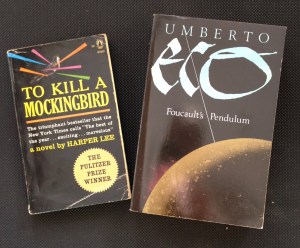
Writers are immortals. Well, at least as long as our species lasts. As a mere internet writer, I suppose that I’m not alone in wanted published books to my name. Solid books that don’t disappear in a power outage. There’s an immortality, no matter how mildewed or mouse chewed, to being in a book. Just two days ago Harper Lee died. And Umberto Eco. On the same day. Like many American kids, I was assigned To Kill a Mockingbird in school. Although I would go for decades without re-reading it, the novel stayed with me powerfully, the way that classics do. When it was assigned to my daughter’s high school class, I read it again, reinforcing the story that held me captive when I was a teen. In many ways it was an introduction into that confusing and convoluted world of adults. It was true, like most fiction is.

Umberto Eco I discovered in seminary. The Name of the Rose was one of the choices for assigned reading in Medieval Church History. Although less of a classic, it was no less real for all that. The work that hit closer to home, however, came when living in the Medieval city of Edinburgh. Foucault’s Pendulum was frightening in its conspiratorial intensity. Esoteric fanatics gather in an unholy profusion. Then, in the midst of reading it, a package, hand-addressed, arrived in my student mailbox. From Germany. Curious, I opened it only to discover a mound of tracts on Satanism, all the scarier for being written in German. They seemed to point to a conspiracy, just as I was reading about in Eco’s novel. Only after much searching (there was no internet to speak of in those days) did I trace them to the Schiller Institute. How they got my name, I never did learn.
IMG_2678

I haven’t read all the works of Lee or Eco. In fact, there are few writers whose entire oeuvre I’ve managed to read. That doesn’t mean that I love them any the less. All it takes is a powerful novel and you can be hooked for life. I leaned this in a profound way reading Moby-Dick in seminary. If there is another book that should be added to the Bible, that is the one. Writers are one of our least appreciated resources. They are, however, among the true immortals of our breed. Harper Lee and Umberto Eco left this world on the same day, only never really to leave it at all.
Universal Universities

DearCommitteeHaving been in academia for nearly two decades, and having watched from the sidelines ever since being benched, I found Dear Committee Members a little too true to life. This novel by Julie Schumacher is presented as a series of letters of recommendation by an embattled English professor at Payne University. Set over the course of an academic year, the reader watches as the fictional university eviscerates the humanities to make the life of more “practical” departments like Economics much more comfortable. Sarcastic, bitter, and full of pathos, the novel is frequently funny, but it runs so true to life that it would be difficult to say whether it is indeed fiction or not. The book was a national bestseller, but universities continue down this very road, with all seriousness.

I have said before: it is time for those of us who really believe in education to take on, challenge, and overthrow this paradigm. Education is not about making money. There is more to life than that. My reading, which coalesces somewhat coincidentally around these themes (Dear Committee Members was recommended to me by a bookseller that I don’t know personally), paints a larger picture that is disturbing. The capitalist economy is growing out of control, its own dictates now excluding human decision (see my post on At the Altar of Wall Street earlier this week), and one of its strongest investors is higher education. It is a business, you see. The utter and complete devotion to the economy cannot take place without new generations of students indoctrinated into money as the meaning of life. Some of us—many of us—disagree, but we are not organized and we have no funding. We are the human resistance.

Setting out to make money was never my goal in entering the professorate. Motivated by finding authentic meaning in life, I have found that those departments where such a search resides—religion, philosophy, English, music, the arts—are under siege and constantly have to justify their existence to the administration. Dear Committee Members is funny in its overstatement, and in having a protagonist actually say what many of us think. And thinking is what it is all about. Education is about learning to think. Not earning a mint. We are in need of an altar call. The only ones with power to take back education from corporations are people. Who’s willing to join the cause with me? At this point I’d even be willing to consider sympathetic robots.


Free Words

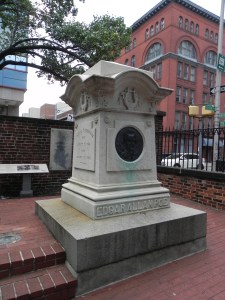
Just over a couple of centuries ago on this date, Edgar Allan Poe was born. That auspicious moment is an inspiration for those of us who write, and not just those of us who like scary stories. Poe was one of the first Americans to try to support himself by his writing—an occupation that has remained difficult to replicate and attain, even centuries later. There had, of course, been earlier writers. Mostly they wrote as an avocation to their jobs or they had family wealth, but Poe knew his own talents well enough to believe that writing was his occupation. He still stands out as an icon to those who are hopefully of making some kind of mark in the literary world. The surface is, however, much harder than we anticipate. It is like diamond, which may be marked only by another diamond. It is worth stopping to think of literature today.

DSCN2335

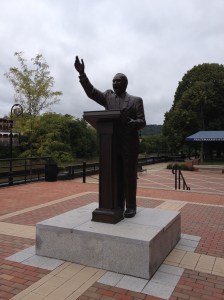
Over the long weekend, celebrating the human spirit in the person of Martin Luther King, Jr., I decided to read William Shakespeare’s King Lear. Probably not the source of as many famous quotes as some of the Bard’s other plays, it was nevertheless fitting as a tribute to writing. King Lear is sometimes cast as Shakespeare’s most thoroughly tragic works. The mood of misfortune hangs over the entire play. And although Lear is likely a fiction from the mind of Geoffrey of Monmouth or his sources, his name recounts the Celtic god of the sea, Llyr. Historians and grammarians tell us that Lear is not directly derived from the god’s name, nevertheless, there is a divine madness about the drama that unfolds as love and power vie for control in ages long past. In the present day the tragedy is that love seems no longer to be part of the equation and raw power is left to mark those who would be kings.

IMG_0969

The holiday weekend afforded the opportunity to visit a local bookstore and to ask the owners what to read. It would give Poe, I’m sure, some hope to know that despite the difficulties there are those who still strive to live by their words. Indeed, it is difficult to conceive of a better way of celebrating freedom than to indulge oneself with the written word. Words lead to liberty. Although Poe’s life was short, and often tragic, Martin Luther King, Jr. lived to about the same age, and through his often tragic life, changed the world with his words. In this day of money hunger and electronic stimulation, it is good to set aside some time to reflect on the words that have made us who we are. Words are our ultimate freedom.


Creating English

From Wikimedia Commons

From Wikimedia Commons

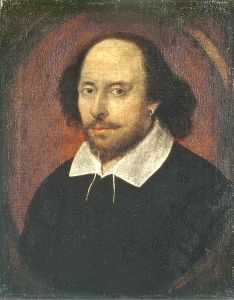
The seventeenth century was a portentous time for the English language. Well, I suppose every day is portentous in some way, but in the year 1611 the King James translation of the Bible was published, and it still has considerable staying power in the English-speaking world. Quotes from it show up regularly among the modern media with many readers (and likely a few writers) having no idea of the origins of the phrases they use. Just five years after the King James Version made its debut, William Shakespeare died. Many languages can point to formative individuals or literatures that codified their forms of expression. In English the honor is shared by the forty-seven translators of the KJV and William Shakespeare. This four-hundredth anniversary of Shakespeare’s death is set to be a year of celebration among Anglophiles worldwide. We will gladly acknowledge that the words we write and speak owe much to the Bard and his lasting influence that still has high school students griping all the way through English class their senior year. I have read a Shakespeare play or two that I was never assigned in school, as many come to do. This year, among my reading goals, is at least one more of the works I’ve never read.

As with the text of the Bible, there is doubt about some of Shakespeare’s plays. Scholars scrutinize. (That’s what we’re supposed to do.) And scrutiny raises doubts. The seventeenth century was a time of generally acknowledged authorship. Some great English epics, such as Beowulf, have no author we can cite by name. Over time, however, quality came to be associated with the person who produced the literature. Even today a name often sells a book far more readily than the contents do. Some of Shakespeare’s plays may not go back to William himself, but the English language wouldn’t be the same without them, in any case. We are heirs to this legacy. Spelling began to be standardized. Grammatical expressions were codified. Classic stories predating Shakespeare became endlessly replicated and copied by those who know there’s no replacing an original.

A story on NPR notes that the First Folio—the first bound copy of all of Shakespeare’s plays—is being sent around the country this year by the Folger Shakespeare Library. Each state will host the first edition during the course of the year. The article by Susan Stamberg notes that this folio is the literary equivalent of the Holy Grail. Shakespeare is nearly as canonical as the biblical canon itself. Even if the Bard’s authorship is in doubt, it is still holy writ. Those of us who’ve spent considerable time with religious texts recognize the hagiography readily. No, these aren’t signed editions. Some of the work may have been done by someone else. Nevertheless, four centuries ago, through a combination of Bible and what we would today call “fiction,” the English language as we know it, was itself becoming canonical.


Dead of Winter

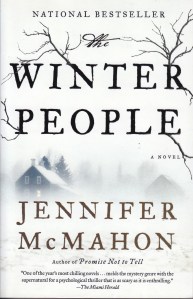
WinterPeopleOne of the commonalities of all religions, I used to tell my students, is the concern with death. Not that all religions react to it in nearly the same way, but the fact is no religion ignores it. For people, obviously, our awareness of our own mortality marks us as indelibly as our birth does. Once we become aware of death, we will never be able to forget it. This inevitability fuels many horror stories, whether literary or cinematic. When I saw Jennifer McMahon’s The Winter People, I knew that I would read it. Like most book consumers, I had to wait for the paperback edition, and once it was on offer I got a copy and waited for winter. Well, this year I’m still waiting for winter, but I began reading the story once the nights were long enough to qualify. It is an appropriate story for the season and it introduces what might be considered a kind of monster as well. Like most monsters, however, sleepers are not evil. The undead, however, have to find a way, ironically, to live.

The Winter People is a sad story, and tangled in the way that makes for successful novels. The main issue at play, however, is that with which all religions are concerned. Death is perhaps the most noble of literary subjects. Since we all have to face it, it is universal and yet somehow frightening. Fear of the unknown. The dead, unlike in the stories, don’t really come back to tell us what it’s like. Even those who do, in fiction, give us a distorted view. Theirs is a world inverted from our experience of it. It lacks finality. It is a place between. There is a macabre logic to it.

The living have never been comfortable with the dead. Memory reminds of who they were. McMahon is clear, in her vision, that memory is not who they are. We put them underground, but theologically we can’t let them go. Heaven, Nirvana, Purgatory, reincarnation, or even Hell—we feel that we need to give our dead a sense of place in a life after life. McMahon builds a sober mystery into her non-final afterlife. There are some, I’m sure, who will be kept up at night by her imagination. For me, I now have something to ponder. Many are the stories, like Stephen King’s Pet Sematary, that warn of resurrection. We can’t keep the departed with us, and winter, when it comes, is a season of harsh reality.


Who’s Driving?

Technology has been kind to civilization. At least in some aspects. I often think how easy communication has become. When I was just starting out in the professional world, email was new and not trusted by some academics, and now if you can’t be reached by email you’re not a real professor. Professors are the ones, at least in some sectors, who write books. They share ideas—sometimes quite intricate and entangled—using the delimiters of language that has developed to serve communication. Technology, however, has reached a point where it limits what can be said. I have heard experts say that authors must learn to write in XML, a mark-up language that doesn’t recognize things like pages, or even such simple prepositions as “above” or “below.” We must get away, they say, from outmoded ways of thinking. Or think about this blog. When I list tags, they are “comma separated values” (CSV, but not the pharmaceutical kind). If a book title has commas, it is broken up into separate units, some of them nonsensical as tags. They are, however, what the brave new language demands.

Language is how we express what we mean. Since meaning is often of our own making, it seems that language should allow us to formulate our thoughts, commas and all. We take this incredible tool of language and degrade it in our constant drive to find bigger and better superlatives. Lately I’ve noticed the trend toward calling recognized experts in a field “gods.” I wonder what we will do when that gets old and threadbare. What trumps a god? A Titan, perhaps? Do those who call other human beings “gods” ever stop to think through the implications? The comma represents a pause. I recommend a comma or two before using up the highest superlative the language can support.

Idle worship

Idle worship

As someone who spends a great deal of time writing, as well as reading what others write, I think it is time to push back at those who would limit language. H. P. Lovecraft often utilized intentionally unpronounceable names for his “gods.” Cthulhu has become the best recognized among them in popular culture, but here is a case of a writer having the last laugh from beyond the grave. While those who declare “there is no such thing as a page number” insist that writers hyperlink themselves, those who make their very cosmos what it is do so by breaking the rules. And they did so without having had to become gods.


And a Literate New Year

One of the most common criticisms of religion, among its detractors, is that it is “uninformed.” I suspect that this is intended to critique the education of those who adhere to religion. It is not too often, however, that you see those who disdain religion giving credit where credit is due. Reading, for example. Although reading has changed in its accidents and character over the millennium, it remains the case that texts—what would eventually evolve into books—were originally a religious creation. Once writing moved beyond keeping track of things like how many cattle a person owned, and grew into literature, that literature was based on religion. We recognize many of these stories as myths today, but that does not devalue them. They are our earliest stories. For many literate people throughout history, their initial reading material was the texts of their religion. One of the purposes behind public education was to teach children to read the Bible. Religion and reading naturally go together.

Now that a new year is upon us, many websites are offering reading challenges for the new year. Long ago I gave up on resolutions. I figured if I noticed something wrong in my life, I wouldn’t wait until January to fix it. Nevertheless, the start of something new is inspiring and full of hope. So it was when my wife showed me Modern Mrs. Darcy’s 2016 Reading Challenge, I gladly accepted. Like many reading challenges, the goals are based on about a book a month—twelve titles for the year. My personal goal is to get over one hundred books read this year, but I like the challenge to read particular kinds of books. On this particular challenge, for example, are books that intimidate you, or that you’ve previously abandoned. Books, such as many of us have, that we own but have never read. Although we may not know what it is yet, a book published this year.

Apart from being a kind of religious activity, promoting literacy is surely one of the best ways to address social ills. Those who read learn to consider the viewpoints of others. I disagree with a great deal of what I read, but I would not wish not to have read it. “Iron sharpens iron,” as one old book says. To put it in modern terms, the only stone hard enough to cut diamond is diamond. Reading material that engages critical faculties is like that. Even so, reading books that are simple or fun also offers bonuses. A guilty pleasure read is one of my favorite rewards. For our own sakes, for the sake of the world itself, I hope that everyone takes up a reading challenge, no matter how modest, as a way of celebrating a new year and, I truly believe, a better tomorrow.

DSCN5025


Books of 2015

Screen Shot 2015-12-28 at 3.38.16 PM

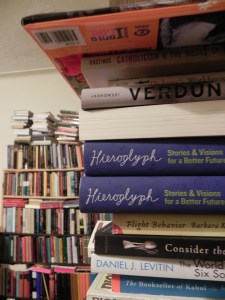
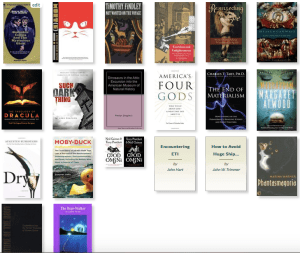
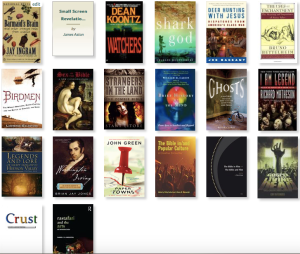
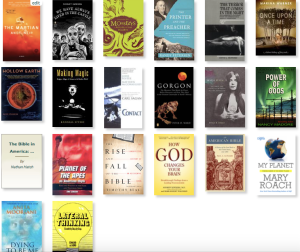
It’s the end of 2015 and looking at my records on Goodreads it looks like I read 100 books this year. That tends to be my goal mark, but after twelve months of reading I like to think back over which were the books that have made the biggest impact on me over the year. Joe Bageant’s Deer Hunting with Jesus remains on the most important list. It is joined by Andrew Newberg’s How God Changes Your Brain, Spencer Wells’ Pandora’s Seed, Alice Dreger’s Galileo’s Middle Finger, and Paul Levy’s Dispelling Wetiko. Bageant, Dreger, and Levy especially address some of the root causes of social ills and even make suggestions about how to address them. Newberg offers advice on how to improve brain functioning and Wells taps into the ever-important issue of care for our planet. I read some good academic titles as well: Diana Walsh Pasulka’s Heaven Can Wait, Darren J. N. Middleton’s Rastifari and the Arts, and Ronald Hutton’s The Triumph of the Moon.

Screen Shot 2015-12-28 at 3.37.33 PM

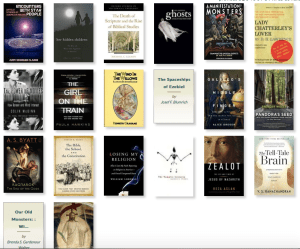
Being a religionist, books with supernatural themes are always of interest. Among these I found intriguing Michael Murphy’s The Future of the Body, David J. Hufford’s The Terror that Comes in the Night, Ardy Sixkiller Clarke’s Encounters with Star People, and Jeannie Banks Thomas’s Putting the Supernatural in Its Place. It seems important to have reasonable people address unconventional issues. These are related to books on monsters, noteworthy among which were: M. Jess Peacock’s Such a Dark Thing, Kim Paffenroth’s Gospel of the Living Dead, Brenda S. Gardenour Walter’s Our Old Monsters, and Lisa Morton’s Ghosts. Long ago I realized that I no longer needed to justify including monsters or the supernatural categorically with religion. They share too many roots to be separated out artificially.

Screen Shot 2015-12-28 at 3.36.54 PM

Finally, it was also a year of novels. Pride of place here goes to Robert Repino’s debut, Mort(e). I am compelled to mention Margaret Atwood’s MaddAddam, John Green’s Paper Towns, Shirley Jackson’s We Have Always Lived in the Castle, and Valerie Martin’s The Ghost of the Mary Celeste. Although I’m not much of a fantasy reader, Tod Davies’ The Lizard Princess has stayed with me since reading it. For any of these books you’ll find an individual blog post from this year. That’s not to say that other books I read weren’t good. Nearly every book I post on Goodreads has a write-up here. I tend to like most books I read, although I’m occasionally disappointed when a book does’t reach its full potential. 2015 was a rich year of reading and I’m looking forward to a very literate 2016.

Screen Shot 2015-12-28 at 3.35.38 PM


Looking Ahead

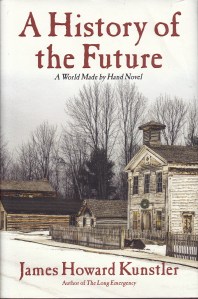
HistoryFutureA History of the Future is a great title for a book. Classified, I suppose, as a dystopia, James Howard Kunstler’s novel is set in upstate New York, not too far from now. A war in Israel has led to the destruction of major US cities and our electronic, consumptive way of life suddenly comes to an end. Small pockets of people, such as those in Union Grove, try to reconstruct a way of life where executives now have to become farmers and those who were used to having plenty still can’t manage without thinking of others as servants. It is a quiet and disquieting world. Perhaps the most striking thing about Kunstler’s vision is how prevalent religion is within it. An entire swath of the middle of the country has followed a former televangelist back to pre-Civil War ideals and seeks to make white supremacy national policy. Other pockets of governments resist the growing strength of this backlash, but most people are just trying to get by, uninvolved in large-scale politics.

The most sympathetic group in the novel, at least in my reading of it, is the New Faith Covenant Brotherhood Church of Jesus, run by Brother Jobe, himself a former southerner. This church moves, lock, stock, and barrel, into Union Grove and begins to build a commune that, unlike those of the local Presbyterians and secular rulers, manages to thrive. Brother Jobe has mystical abilities and his heart is in the right place. As things continue their decline amidst the everyone for him/herself attempts to restore order, this fellowship manages to pull itself together through common belief and perhaps a bit of divine intervention. In the future these aren’t so easily teased apart.

Not a typical action-packed dystopia with raging violence, Kunstler sketches a more gentle apocalypse. It’s not a final disaster and big government has not yet reemerged to stamp its will on a malleable people. Women and men relearn what it means to work by hand and to live with less. In some ways the vision is comforting. Still, those who will have been patrician in the past manage to become feudal lords, of a sort, in this new world. Not everyone can fit into that pattern. The overall picture in what seems to be a parable is that pre-industrial society did, in fact, work. It wasn’t perfect, of course. Monasteries and lords embodied different values where no one could truly claim to know what this was all about. The future, it turns out, is mostly the past.


R’lyeh Reality

It’s always a sign that I’ve been too busy when I lose track of Cthulhu. Few created deities receive the attention of the web like the terror dreamed up by H. P. Lovecraft. The internet has created an environment, like the bottom of the sea, where the old gods may lie dead but dreaming, ready to reawaken. It was with great pleasure that I was pointed to Cthulhu for America. At last, a presidential candidate who is willing to admit that he is merely a myth. His agenda of destruction and domination is not at all hidden. If only real politicians would be so honest!

In a world with millions of diversions, it amazes me that Lovecraft’s nihilistic creation has taken on such popular interest. Perhaps it’s because those of us who grew up with monsters have now reached a dubious sort of adulthood where we are bossed around like children and given only those limited freedoms that capitalism will allow. We can’t go into public places without seeing heavily armed guards in fatigues. We can’t get into work without electronic chips in cards to keep us safe from those of our own nation. We can’t fly without being scanned like a week-old loaf of bread. We can’t even store our own files on our own personal computers any more since some software company would rather charge us for the privilege. At least Cthulhu says what he wants. Orwell may have had his Big Brother, but Cthulhu is an obvious overlord who wants nothing but his own satisfaction.

IMG_1551

Watching the circus of candidates vying for position, I can’t help but think of Rome before the fall. Historians are still debating the causes—lead poisoning may be too easy a way out. Perhaps it is, as Lord Acton declared, the result of power itself. Those who taste it can’t stop eating it until every microscopic crumb is devoured. It’s shameful to watch. I’m embarrassed when Dumb and Dumber sounds intelligent next to the utterances from political talking heads. Cthulhu would have none of it. Although the website is a parody, it, like all myths, is truer than what we often call reality.


Reptile Fantasy

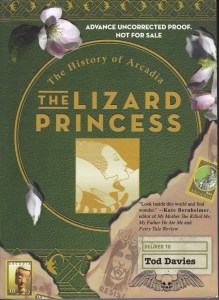
LizardPrincessThe generous folks at Exterminating Angel Press graciously sent me a copy of Tod Davies’ The Lizard Princess to review. A fantasy novel that includes a conflict between a world that admits of the supernatural and skeptics who deny anything beyond the material, it is a tale for our time. Indeed, the antagonism is real enough. We live in a world where fantasy can bring in untold wealth while we are taught that not an atom of it is true. Clearly material explanations fit the physical world we inhabit. It’s the world inside our heads that often rejects such materialism being taken to its “logical” conclusion. Davies clearly feels the angst of this discord. The Lizard Princess is a fantasy in the face of harsh reality. And we still need fantasy—perhaps we need it more than ever.

Throughout The Lizard Princess, whether intentional or not, biblical imagery pervades. The Bible offers classical stories that, no matter how we might receive them, continue to influence our ideas and ideals. Here, in a world created especially for the reader, the battle between good and evil is an everyday reality. The turns taken along this path are unconventional, and at times even uncomfortable. The awareness that there is a larger story in the background, however, offers some consolation. Angels, the Devil, and even a subtly veiled God are all players in this fantasy world of Arcadia. Mythical creatures abound, and transformations lead to new perspectives along the way.

In my conversations with other scholars I’m reminded that academics don’t often turn to novels for escape. Some do, of course, but the academy recommends a steady diet of technical non-fiction for those who wish to make an impact upon the world of knowledge. I have always been grateful for literature, however. During my years in graduate school and early in my teaching career I neglected the kinds of books that were my constant companions growing up. In a rural setting far removed from any institutions of higher learning, novels were often the only reading readily available. I never considered the time between their covers wasted. I found in The Lizard Princess a vivid world strangely like our own, but different enough to be more a parable than a simple piece of fiction.


Birth of a Legend

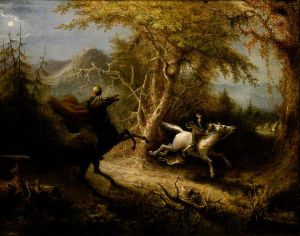
I was sitting in the restaurant attached to W, a boutique hotel cum chain, with my brother-in-law Neal Stephenson. He was on a book tour and kindly treated me to breakfast. Above his head I noticed a slightly salacious painting portraying a nude lady in bed saying “Of course I think you’re adequate. I love you!” In the doorway stood a headless man in a red coat, clearly intended to be the headless horseman. I pointed it out and Neal, being an author, made some inquiries about it. Nobody in the hotel seemed to know anything about the image’s relevance, so I did some internet sleuthing. I knew Washington Irving was born in New York City. I don’t know where precisely, and I’m not really sure how to find out. New York, in those days, didn’t reach so far up Manhattan Island, and we were near downtown, at Union Square. Probably this was the outskirts back in Irving’s day. I had already started my research for my paper on Sleepy Hollow, so I was attuned to the clues. W is now a chain, but I think the first W was the very one where we met. The restaurant where we had breakfast was the Irvington. The website said nothing about the origin of the name. Had we been eating where Irving had spent his youth?

This was a slight synchronicity. I had been researching Irving and had ended up meeting someone at a hotel which, it may turn out, had been named after him. Which Washington was the Squire really named after anyway? Washington Irving had been named after George Washington, so perhaps the point was moot. Months passed, and I wrote and honed my paper for public delivery. I’d almost forgotten the existential pleasures of following a lead and drawing some conclusions, whether or not history might bear them out. My brain was fully active.

759px-John_Quidor_-_The_Headless_Horseman_Pursuing_Ichabod_Crane_-_Google_Art_Project

My flight to Atlanta yesterday for the Society of Biblical Literature annual meeting took off from Newark Airport on time. I thought I had a row to myself, but a couple of guys came in, talking, just before the cabin door was closed. They obviously knew one another, but not terribly well. One asked if the other was from Valatie, “where Ichabod Crane is buried.” These were not professorial types, which you often see at the airport this time of year. Just regular guys. “Yeah, there’s an Ichabod Crane High School,” the other replied. Their conversation moved on to other topics, but I sat there thinking about the synchronicities my paper seemed to be generating in my life. Of course, many people do watch Sleepy Hollow, not many, I suspect, are academics looking for connections to American religious thought. It seems that research never really ends.


Shipmates

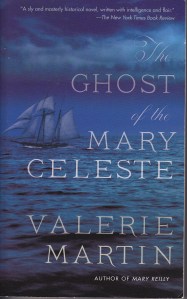
MaryCelesteGhosts have a way of persisting. I’ve had Valerie Martin’s The Ghost of the Mary Celeste on my reading list since I first saw it in hardcover on a bookstore shelf. The Mary Celeste was an actual ship, found with not a soul aboard, lifeboat intact, and no sign of violence, back in the 1870s. To this day no one knows what happened to the crew. Valerie Martin takes this frame and fills it in with a family drawn into Spiritualism, a religion that was just beginning at the time. Spiritualism, which developed in the aftermath of the Fox sisters and the eerie rapping at their upstate New York home, is one of the few religions to be completely at home with ghosts. The faith still exists today, and although Margaret Fox “confessed” to having hoaxed the effects she also retracted her confession, leaving ghost hunters perplexed to this day. These two mysteries, brought together in the moody month of November, make for a compelling novel that urges the reader forward.

Martin also adds the presence of Sir Arthur Conan Doyle to the story. Doyle, an avowed believer in the spiritual realm, also created Sherlock Holmes. As the various characters try to piece together what happened to the Mary Celeste, the ghosts of those lost at sea ambiguously communicate with the living. The world between realms, in this story, is permeable but indistinct. Those lost at sea are, in the narrative, restless. The mood of the novel is unrelentingly moving and thoughtful. Ghosts haunt, but don’t appear. Readers are left to draw their own conclusions.

As today is the fortieth anniversary of the sinking of the Edmund Fitzgerald, it seems appropriate to think about the Mary Celeste. Since Percy Shelley drowned in his own personal boating accident, loss at sea has become one of the hallmarks of Romanticism. Conceived as an answer to the cold, callus industrialism that trailed the scientific revolution, Romanticism suggested that there was an enchantment to nature and that things were not always as they seemed. Prosaically, there’s nothing poetic about dying in a violent shipwreck. That’s what makes the Mary Celeste so compelling. There is no violence here. The sea calls and claims captain and crew as her own. The lack of resolution has led to a very open-ended mystery—the perfect foil to a harsh materialism. Today the Mary Celeste and Edmund Fitzgerald will be sailing my internal seas as the season of spirits and shipwrecks come together in the lengthening nights of November.


Playing God

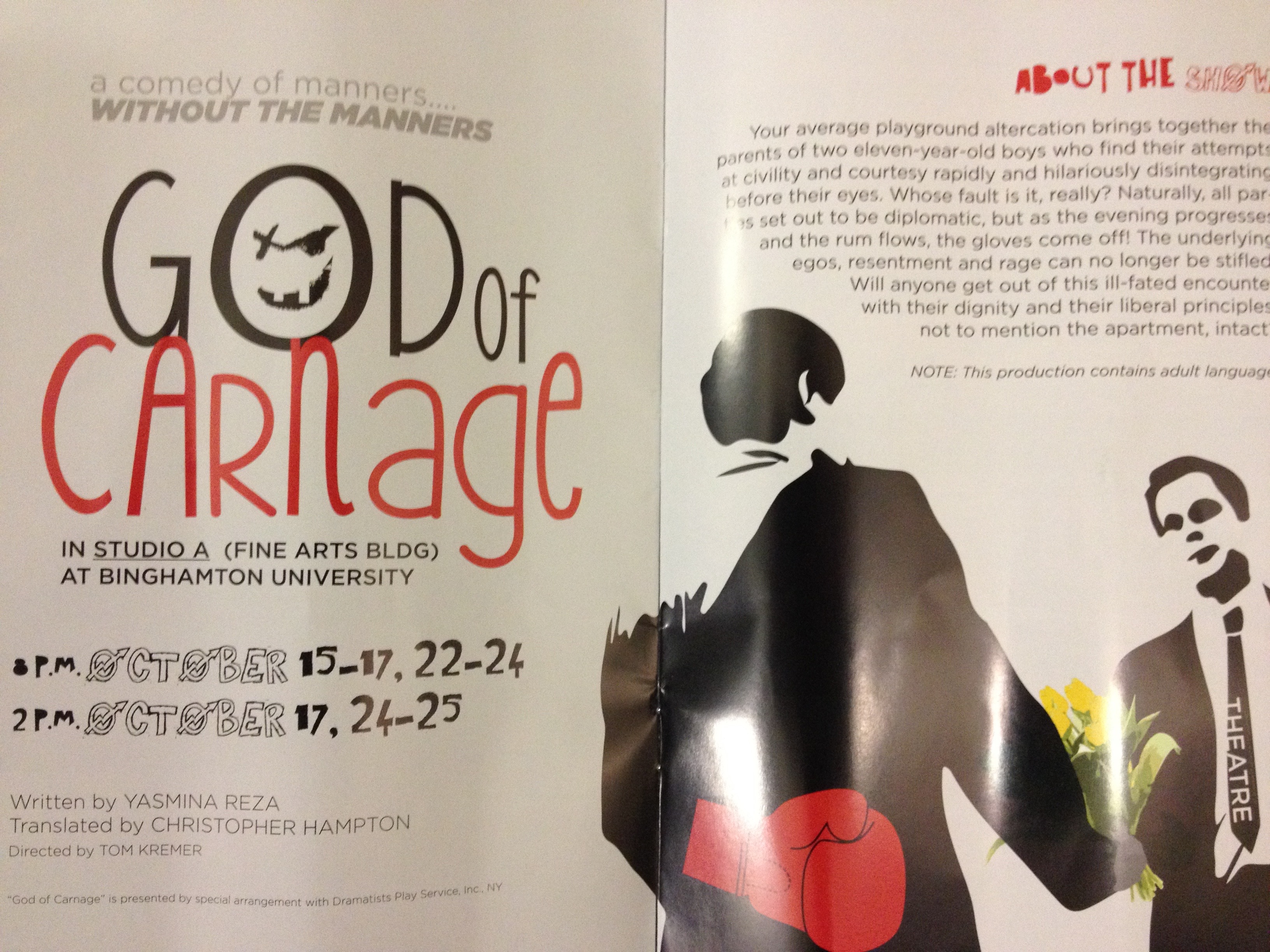
College is a rare time in life. Unlike any time after you find yourself with a diversity of intelligent and talented people open to possibilities that life tends to close shortly thereafter. At Parents Weekend at Binghamton University we took advantage of this wondrous juxtaposition to enjoy student talent. One of those offerings was the play “God of Carnage” by Yasmina Reza. It isn’t literally about God, but rather about two couples whose children had a playground fight. Parents try to solve the crisis, only to end up showing that they are really the ones who need to grow up. One of the vexed parents claims he believes in a God of carnage—that all people will seek their own good first and will eliminate those who get in the way. Perhaps might is right.

IMG_2587

The play is quite funny as the negativity grows and hidden assumptions come to the surface. There are no heroes here. In fact, any factor that might divide people does: gender, socio-economic status, race, sense of importance in the work one does. Each is turned into a weapon to make oneself appear more acceptable than others. Ironically, acceptance is just what’s missing here. Each of the four characters is alone and only finds company in teaming up with another to point out someone else’s foibles. As in most plays, the circumstances are exaggerated, and as in real life, peace is harder to attain than it should be. The god of carnage here is the individual desire to exceed at the expense of others.

The play reminded me, in a rather literal way of the verse stating that a child shall lead us. Not that children are entirely innocent, for they are people too. They can’t be held accountable in the same way adults are. We do our best, but our intentions seldom rise to our ideals. Our own needs and desires get in the way. In my experience of over half a century, most of us never really grow up. Selfish behaviors are magnified in a setting like New York City where so many agenda are crowded in together. If we believe in a god of carnage—that our own desires are more important than those of others—our differences will only emphasize that. Apart from high school and college performances, I have been to few plays in my life. Each time I attend one, however, I learn a bit more about how art reflects reality. And if we could only learn to consider others to be just as important as ourselves, the god of carnage would be the one who ends up unemployed.


Heaven Unawares

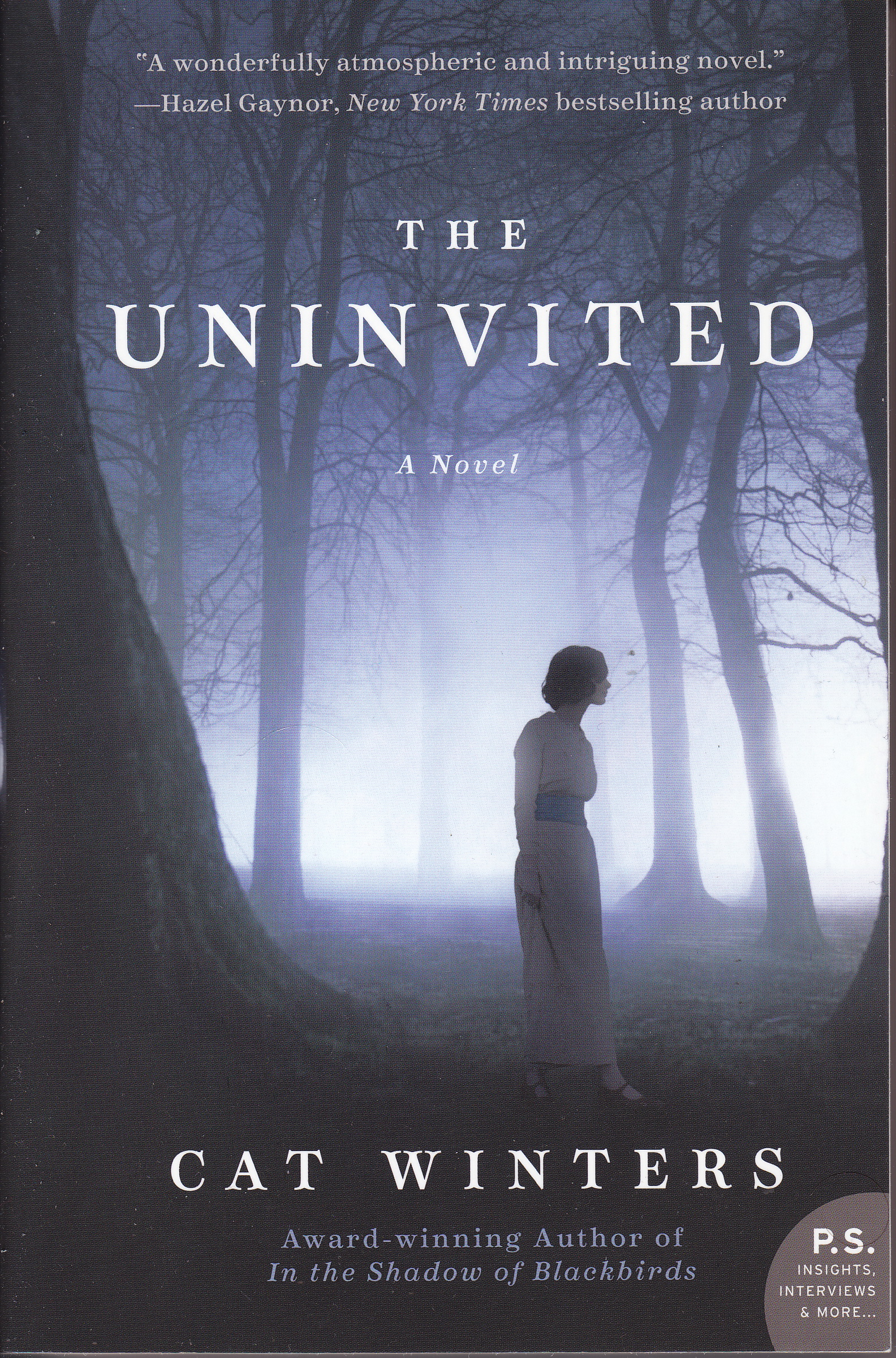
UninvitedIn order to have this book fit my blog, I’ll begin with a spoiler alert. If you plan to read Cat Winters’ The Uninvited, I will be giving away information below. Please believe me when I say it’s not intended to be persnickety by this preface, but I know what it’s like to enter a book knowing too much.

When autumn comes around I like to find a ghost story or two to read, to settle into what seems to be a primal urge connecting harvest with death. Sometimes the books I find are advertised in places like the Library Journal, or Publishers Weekly (which I see more like biannually). More often than not, however, they are books that I spy at a store. The Uninvited stared at me from a table. I picked it up, read the blurbs, and put it back. A week later I stopped in again and picked it up. It is a moody tale set during the First World War and the influenza epidemic. That was a time, I suspect, of great fear. And many ghosts. It’s easy to see why Winters chose such a time to set a tale. Still, the narrative is gentle and despite the places where the language sounds too modern, it is artfully told. Like most ghost stories it is a love story. Seriously folks, here come some spoilers!

The protagonist, Ivy, falls in love with Daniel, a German immigrant living in Buchanan, Illinois during the war. Germans have been under suspicion and lynchings have occurred. We come to learn, as in many ghost stories, that the protagonist and her lover were both victims—he of a lynching, she of the flu. He’s aware they’re dead, she’s not. The novel is one of Ivy’s growing self-realization that she’s deceased. While avoiding those who spy on Germans, she discovers the joys of an interracial, prohibition-free (being prior to prohibition, of course, but the idea was in the air) club where jazz is played all night long. She wants to bring her lover to the club, which is just across the street from his apartment, but he is German and feels he would not be welcome. The reader at this point doesn’t realize the two are dead. Once Ivy discovers the truth, she realizes that the club is actually Heaven. The reluctant ghosts, lost, stay away. She tries to convince them to come.

Heaven has been portrayed in many ways in literature. Although I find jazz very difficult to bear (it is like being inside a beehive without a bee suit, to me) the idea that Heaven is complete and utter acceptance of who we are is a compelling one. Religions are often all about change—how we must alter who we are to merit Heaven or Nirvana or whatever might await us at the end. Winters suggests that it is a place where people can be who they are and nobody will try to make you be any different than you were created. It is a comforting idea. It is my personal hope, however, that there might be a few different clubs in town and that some of them might be playing music other than jazz.