Evolving Technology

Speaking of prediction, after yesterday’s post my wife sent me a BBC story entitled “The Machine Stops: Did EM Forster predict the internet age?”. Although the story by Chris Long is classified as Entertainment and Arts, the issues raised are very serious. Vital even. Now I have to admit that I’ve never read E. M. Forster’s work. As much as I love short stories, I tend to use my reading time on novels and non-fiction and Forester’s focus on class distinctions isn’t what I always find the most engaging. Still, as the BBC story makes clear, what makes “The Machine Stops” so important isn’t its “prediction” of the internet, but rather what that envisioned technology does to people. It changes them. One of the unrealized facets of evolution is that our fellow beasts without opposable thumbs have fallen somewhat behind in the race to invent technologies that impact the entire planet in an intrusive way. No atomic bombs have been built by whales. Of course, I’ve always suspected they’re smarter than we are.

With the internet—a kind of accidental technology—we have changed the world for most people. There are still many millions who aren’t constantly wired, but for those of us who’ve allowed ourselves to become assimilated, we can imagine life no other way. I, for one, couldn’t do my job without the web. Well, I suppose I could, but expectations would have to be much, much lower. And my check couldn’t be deposited electronically into an account that I have to take it on faith really exists. Long, in this BBC piece, notes that the poignancy of the story is that being connected by an “internet” changes the nature of human interactions. Anyone who’s shared an elevator with three other people all texting their friends simultaneously knows what I mean. I’ve gone entire days without an actual human being uttering a word to me. And this is while working in a city of 8 million people. Keep the business virtual. Are we not men? (Pardon the gender-based noun; it’s only virtual.)

2015-11-07 18.47.57

I’ve loved and lost many readers on this blog. Those who are perceptive will realize this is merely an electronic voice meant to replace a human one. A voice, if I may be so bold, crying in the webberness. Technology changes us. I bought my first computer to be a glorified typewriter. Now my life revolves around its more evolved descendants. Technology has raised to an even higher level that question that has haunted since technology was no more than a good fire to sit around at night: what is it to be human? Today that answer involves the internet. And I’m not sure if I should be worried or not, but last night I dreamed of electric sheep.
The Found World

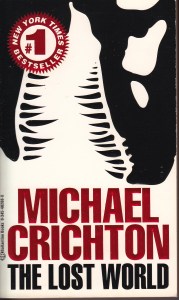
LostWorldChallenges will make you do funny things. One enjoyable dare has been Modern Mrs. Darcy’s Reading Challenge. With a modest twelve books in twelve months goal, the specific target is to read the types of books laid out. Into one of those categories, for me, fell Michael Crichton’s The Lost World. It’s sad that I feel I need so many disclaimers—I never really outgrew my love of dinosaurs—such escapist literature is indeed a guilty pleasure. Crichton could write a quick read, not bothering to pause for literary hindrances, and this novel fits the bill. It always surprises me when at the end of a traumatic story where friends die (this time ripped apart by reptilian carnivores) that the protagonists escape and never mention the dead. They joke, explain holes in the story, and generally look forward to a better, raptor-free future. There is, however, some food for thought here, among the lucre-grubbing sequel to Jurassic Park.

The first religious element that caught my attention was resurrection. Ian Malcolm rather convincingly died in Jurassic Park (and even an unconvincing death works for most people). In The Lost World he’s suddenly back again, with a barely disguised deus ex machina, and is as diffident as ever. The other former protagonists know better than to return to an island full of dinosaurs. Resurrection is a time-honored literary trope. So much so that it’s sometimes difficult to believe that death is in any way permanent. Well, come to think about it, the dinosaurs too are resurrected. Do reptiles have souls? Crichton’s dinosaurs seem to.

Then, just over halfway through the story, I was stunned. The chapter, or section, called “Gambler’s Ruin” explains how science and religion (or the humanities in general) are really the same. I couldn’t believe that a bestselling novel actually took the point of view that scientific objectivity is just as fraught as post-modern literary theory. There is no way to observe without influencing. When a conscious presence enters the equation, the facts have to counterbalance in return. Many, of course, would disagree in principle. Still, this unexpected bit of profundity stopped me in mid-chomp. Materialism, beguiling as it may be, doesn’t explain Heisenberg or Schrödinger. It takes a resurrected mathematician to do it. No wonder chaos abounds in this world where dinosaurs still rule the earth.


High Castle Blade Runner

DivineMadnessGrowing up evangelical, one of the popular topics of conversation was crypto-christians. (My spellcheck insists that this is a lowercase expression.) Crypto-christians are people, generally famous people, who might be secretly “Christian.” You see, despite stereotypes most evangelicals really do want people to go to heaven. In fact, they tend to be obsessed with it. And besides, it can’t hurt to have a celeb backing your claims. One name that never came up in my circles was Philip K. Dick. I grew up reading science fiction. My reading patterns (which haven’t changed much) involved reading what I could find among used books at Goodwill. We were poor, and besides, there were no bookstores in our town. Like many people, I’m sure, I learned of Dick by watching Blade Runner. I occasionally heard others discussing the movie, but I hadn’t seen it myself and thus continued blithely unaware until I began teaching. I then read how Blade Runner is a possible Christian analogy, and curious, I read Do Androids Dream of Electric Sheep?

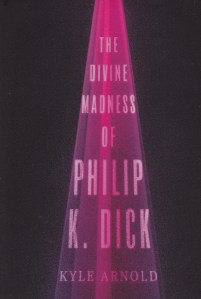
Since then Dick, who never made it big in his lifetime, has become a staple of the sci-fi diet. In The Divine Madness of Philip K. Dick Kyle Arnold explores the now famous 2-3-74 episode. Dick, in addition to being over-medicated, had mystical experiences. The “big one” took place beginning on the date implied in its title. This vision, while not orthodox by any standard, is clearly religious. Critics tend to think that Dick may have either faked it or that he underwent some kind of schizophrenic episode. Arnold, a clinical psychologist, has the chops to demonstrate that these latter explanations are off base. Dick had a legitimate visionary experience—something even neuroscientists can’t access because the experience is subjective and personal. It had a large impact on his life, but it did not make him mentally ill.

Arnold is not, as far as I can tell, a crypto-christian hunter. He is a psychologist attempting to understand a most complex and tormented writer of superior science fiction. What becomes clear, however, is that Dick was well-informed about Christianity. He imagined himself a secretive first-century Christian in an oppressive Roman Empire. This aspect of his life tends not to emerge in pop culture discussions—how Christian can you be and still be cool? Certainly Dick was not a conventional believer, but religious imagery and even actions became some of the most important moments of his life, according to his own recollections. Philip K. Dick was clearly a haunted man. And one of the specters haunting him was an often undiagnosed religion.


Comic Culture

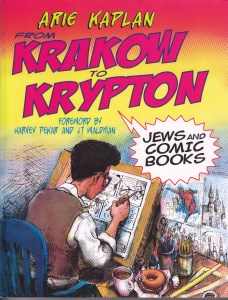
KrakowKryptonPerhaps the most obvious deviancy in my otherwise conservative childhood was MAD Magazine. I honestly suspect my parents didn’t know that it wasn’t just another comic book. I read it—like I read everything—religiously, and I was fluent enough in the lingo to discuss it intelligently with my sixth-grade teacher, a fellow fan. Having made that admission, my reading of comic books was muted since we lived in a town with no literary aspirations or conveniences. There was no book store, or even magazine shop, let alone a public library. We were one of the towns Carnegie left behind. Still, I was draw to MAD contributor Arie Kaplan’s From Krakow to Krypton: Jews and Comic Books. Over the past few years I’ve been reading academic treatments of comics as, with my beloved monsters, the high-brow academy has come to view low-brow as “culture.” (I learned the term “high-brow” from MAD, by the way.) As I grew into an Episcopalian, I tended to leave these markers of my shameful past behind, but now I’ve come once again to embrace them.

One of the odd things I’ve noticed about Jewish (and other “outsider”) analyses is just how deeply felt the anti-semitism of our culture is. This always strikes me as odd as, although it is hard to believe, I was raised to be non-prejudicial toward anyone else. (Poor folk are often that way; we know our place, beneath others.) I never felt superior to Jews, African Americans, or women. I was in awe of them. Maybe MAD helped. As Kaplan points out in his treatment, much of the comic industry was Jewish in origin because so many Jews were kept out of other businesses in New York. (Well, there is Diamond District, but let’s stick to publishing.) With few options, poor immigrant kids turned to cartoons. As a child in a humble household I often took out my frustrations by making my own comic books. I can understand the catharsis.

With the current glut of superhero movies, it may be hard to imagine a time when comic books and their denizens were considered utter foolishness. Now they’re big money. It’s not so much that the mighty have fallen than it is the humble have been exalted. I haven’t really read comic books since I was maybe fourteen. Up to that point, however, they got me through many a difficult time with the belief that there was someone out there watching over me. No superheroes ever delivered me from my troubles, but belief was sometimes all I needed. I can understand why those who are discriminated against would turn to this medium for release. Faith and fantasy share more than an opening syllable, for those with eyes to see.


Game of Thrones

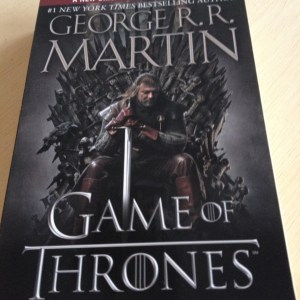
IMG_2763I risk my already flagging street cred by admitting this, but I don’t watch Game of Thrones. In fact, I started to read the first book a couple years back and I just couldn’t get into it. Well, only 80 pages into it. The fault is, I’m entirely sure, my own. I lack some gene or enzyme that makes life without Game of Thrones impossible. Still, I have to admit curiosity. A story on the Washington Post, by Ishaan Tharoor, suggests “The ancient Persian god that may be at the heart of ‘Game of Thrones’” is Angra Mainyu, aka Ahriman. This managed to catch my attention. Zoroastrianism is a religion that seems to lie behind quite a bit of modern religious thought. Although dating Zarathustra, or Zoroaster, is notoriously difficult, concepts from his religious system show up in Hinduism—one of the earliest forms of religious expression about which we know a fair deal—as well as in Judaism and therefore Christianity and Islam. In fact, many of the ideas you may associate with the central tenets of Judeo-Christo-Islamic tradition may go back to Zarathustra.

One of the certainties about Zoroastrianism is that it was a dualistic religion. Good and evil are engaged in a constant struggle for control. The good god, Ahura Mazda (which sounds like a blend between Star Trek and a Japanese auto maker) struggles constantly against Angra Mainyu. Mazda’s website states that the car line is named after the deity (according to Wikipedia, I note, losing the last vestige of cred), pushing his reach even further east. With this incredible pedigree, it is no wonder that George R. R. Martin may have tapped into it. This kind of dualism is ripe for the picking.

My friend K. Marvin Bruce wrote a satire about the Persian gods, in fictional form, that was published a couple years back in Calliope, a small circulation literary journal. He told me he even won third place in a contest for it. The idea was that a disgruntled professor wanted to start the apocalypse (a Zoroastrian idea) by summoning Ahura Mazda and Angra Mainyu to earth to try to start a fight between the two. It was a fun story, but the point, if I may speak for my friend, is serious. Warring religions stand the best chance of beginning the end of times. We don’t even need the gods to do it, really. Although I don’t watch Game of Thrones, I can’t help wonder if Martin had the same idea in mind. If you want the answer to that, don’t ask me. I’m not even a hundred pages into it, and I don’t have triple play.


Same Old Story

Once upon a time fairy tales were considered appropriate only for children. Unlike myths, fairy tales are frequently oral (yes, there are oral myths but this is not the place to discuss technicalities) and have origins that are obscure. A friend recently sent me a story entitled “Phylogenetic analyses suggests fairy tales are much older than thought” by Bob Yirka on phys.org. Using phylogenetic analysis, researchers have traced some fairy tales back thousands of years, into the Bronze Age of the ancient Near East. This will no doubt surprise some analysts who supposed fairy tales were a more recent, European invention. The tales change with time and distance, no doubt, but the basic story is very deeply rooted in who people are. Fairy tales are adult fare, after all.

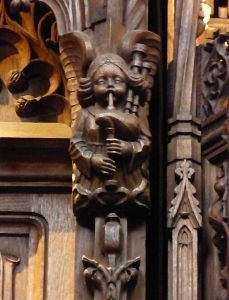
I tried to make this point in an academic article that was rudely rejected by the journal Folklore some years back. I mean “rudely” literally. I’ve had academic articles rejected before—many of us have—but the letter that came with this one was insulting. My “error”? Suggesting that the story of the musician who travels to the underworld came from ancient Sumer. The article had its origins in my wife’s reading of the Mabinogion. The story of Bran’s head being washed down the river still singing reminded me of an Edinburgh ghost story the tour guides used to tell right outside our window. You’ve probably heard similar: a tunnel is discovered, a musician (a bagpiper, since this was Scotland) is sent down while playing so that those above can follow the sound, but the musician never emerges. I traced the story through the Celtic tradition of Uamh ‘n Òir, the cave of gold, through Bran, Orpheus, and finally back to Ishtar’s descent into the underworld. It was a fun piece, but serious. It ended up published in a Festschrift to a scholar with a noted sense of humor.

Photo credit: Kim Traynor, Wikimedia Commons

Photo credit: Kim Traynor, Wikimedia Commons

The fact is, traditional stories often go back very far in history. We haven’t the tools to trace many, nor can the results be taken for Gospel, but the implications can. People are storytellers by nature. We find meaning in what would today be called “fiction.” Too often I’ve had to hang my head in embarrassment when admitting to a fellow academic that I read (and sometimes write) fiction. It is something, however, that ancient mythographers and folklore singers would have understood. We can be academic some of the time, but we are human full-time. And telling stories is something that predates even the Bronze Age. Of that we can be completely certain. And they lived happily ever after.


Gods and Giants

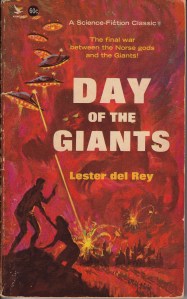
Day of the GiantsComing back to a book you first read as a tween, in the days before tweens even existed, can be a revelation. Lester del Rey’s Day of the Giants introduced me to Norse mythology as a kid, and, along with Thor comic books, was my Nordic Bible. The last time I read it was probably in the Ford administration. As part of a reading challenge I’m undertaking this year, I had to select a book I’d read before and, amazingly enough, I still had my copy. Reading the book as an adult, however, proved a very different experience from reading it as a child. For one thing, I noticed quite a bit more of the implicit theology of the story. Del Rey was no theologian, of course. This little book, however, makes a statement that is difficult to miss regarding the gods: they are victims of tradition.

It is probably not worth worrying about spoilers over half a century after a book was published, but I’ll try to be sensitive nevertheless. Leif Svensen, our protagonist, finds himself in Asgard on the eve of Ragnarok. All the familiar Norse gods are there: Thor, Loki, Odin, and kith and kin. As they prepare for the battle with the frost giants, who, in the mythology win the contest, the deities are decidedly subdued. They believe their fate is sealed by a prophecy of defeat. Leif, being a true American, gives them a rousing speech about overcoming the old ways. Gods, by nature, are conservative. They don’t have to bow to tradition—they are gods, after all. The deities are not swayed by the logic of a mere mortal, even after his apotheosis. Fate, it seems, trumps even gods.

I’m pretty sure that Lester del Rey wasn’t attempting to make any profound theological observation here. One can be an accidental theologian. Ideas of gods and what they must do can be a detriment to their own future. Even with the evidence of the failure of their own prophecy, the gods can see no way forward other than that they’ve recognized as fate. They are, without saying too much, out-maneuvered by human resourcefulness. A man tames his god, and it can become a man’s best friend. I wasn’t expecting such theological insight from a sci-fi book from my youth. Then again, you never know what may happen when you come back to a book after leaving it on the shelf for four decades.


Long Distance Commute

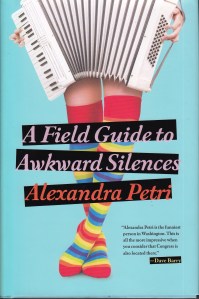
AwkwardSilencesWhat should my next book be? This is the perpetual question of the long-distance commuter for whom electronic devices are mere distractions. If that commuter is socially awkward and believes that only books truly understand them, that is. I’m as eclectic a reader as I am a voracious one. Each book suggests, in some measure, the next one. I always have to keep an eye ahead. Then I read (present tense) a book without peer. I feel lost because what will replace that experience I’ve had for the past few days of looking up and finding myself at my destination? Of actually looking forward to getting on the bus so I can read? I’ve been doing this commute for over 400 books now, and I’m at a loss for what to read next. I blame it on Amazon.

In the publishing world we use Amazon to purchase competitor’s books. Then Jeff Bezos decides to buy the Washington Post, you know, the way people do. Since my email address is on their list I get sent a daily invitation to read the most read stories on said Post. I read a story by Alexandra Petri and I was hooked. Where could I get more? A Field Guide to Awkward Silences is the rare kind of book that makes you laugh out loud on the bus, which, at six in the morning, generates its own kind of awkward silence.  Petri makes you feel like it was actually okay to be that dorky kid who read all the time.  Like there’s a world out there that responds to your longings, somehow.  A world of possibilities.

Now here I am about to climb on the bus without Petri. I’m like a kid staring disconsolately at an empty candy wrapper. “That was so good!” you think. “I wish there was more.” Petri writes as if she’s achieved Bob Dylan’s blessing and has stayed forever young. The time of life when the future seems so full of possibilities. Hers is writing that reminds you of a time when you didn’t spend hours a day nursing hemorrhoids, sitting on a hard bus seat. That reminds you it was possible, unlike your own experience of it, to be cool as an Episcopalian in Wisconsin. That reminds you of the time when you had A Field Guide to Awkward Silences to look forward to reading. No, this book didn’t make that choice of next book any easier at all.


Resurrecting Color

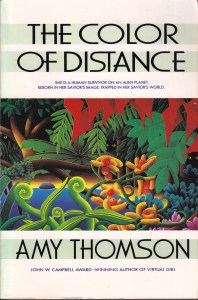
ColorOfDistanceIf you’re one of those people who’s attached to books, you know the frustration of someone who borrows a book and never gives it back. Many years ago I stopped lending out books for that very reason. I do, however, sometimes give them away. A friend recently reciprocated the gift of a book, giving me Amy Thomson’s novel, The Color of Distance. It is a profound story involving, as is common on this blog, themes of resurrection and transformation. A science fiction tale, it is set on another planet where something has gone wrong with an Earth survey team. The humans are dying on this alien world when one of them, Juna, is transformed by the alien into something like one of them. She comes back to life transformed. It wasn’t until I finished the book that I read the cover blurb that reads “Reborn in her savior’s image, trapped in her savior’s world.” Not a bad summary, capturing as it does the deep religious elements in the story.

The religious aspect, however, comes through most clearly in the environmental elements of the novel. Humans, somewhat optimistically, had set in place protocols not to interfere with alien life. So much we know from Star Trek’s prime directive. What makes this so interesting in the case of The Color of Distance is that Thomson knows that any contact is contamination. Two worlds cannot meet. They must collide. There is a gentleness, however, in her narrative. Juna, marooned (long before The Martian) on a foreign planet, has to learn to see things through alien eyes. And every little thing that humans have done has left a footprint on the planet. Protecting our own planet is a profoundly religious undertaking.

It is clear that Thomson has influenced later writers and stories. Not only does The Martian pick up on the stranded aspect, but Avatar clearly presents a world similar in many respects to the planet of the Tendu. The Color of Distance is a book not easily forgotten. The world into which the reader is drawn is indeed one of transformation and resurrection. I suppose spoilers aren’t an issue with a book two decades old, but I will satisfy myself merely with noting that another resurrection takes place as the story winds to its close. Deeply hopeful, and almost prophetic, this novel should be more widely read, for the sake of the world on which it arose.


Golem

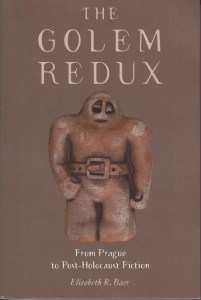
GolemReduxI read a lot of books. About a hundred a year. At the end of the year I go over them all again and many of them, I see, failed to make a deep impression. Some, I know, before I close the back cover, will stay with me. Maybe even haunt me. I count Elizabeth R. Baer’s The Golum Redux: From Prague to Post-Holocaust Fiction among those that will linger long. My regular readers will know of my predilection for monsters, so a golem book will hardly be a surprise. I realized, however, upon completing my academic paper on Sleepy Hollow, that my reading on the golem was rather slim. I’m no longer sure that it’s even a monster. As a goy who’s spent a good deal of his life among the Hebrew Scriptures, there’s a natural resonance, it seems, with those oppressed for being who they are. Golems are created in times of crisis but have unexpected, or at least unwanted, repercussions. Baer offers a thoughtful, intertextual study of the golem, largely through the lens of Jewish fiction.

Having dealt with the Bible as portrayed in Sleepy Hollow, I treated the episode where its significance truly unfolds (“The Golem”) as the entryway into the culmination of the first season. Now it appears likely that season three will be the erasure of the aleph, it seems appropriate to give golems their due. The story begins with the oppression of the Jews in early modern Prague. Rabbi Loew makes a golem from mud to protect the beleaguered community. This soulless, selfless protector becomes an archetype for various superheroes and literary characters ably summarized by Baer. The book put me in mind of my only visit to Prague, too brief and too ill-informed to truly appreciate what I was seeing. To see you have to learn to read.

While some writers have fun with the golem, others understand it in more serious tones. Those who can’t forget the Holocaust see things in a way that others cannot. Not that only Jews can summon a golem, but its origins and reuse have a special place in a community that longs for a protector. I’m reminded of the book of Job, and there’s a good reason for that. While reading The Golem Redux on my commute, I came home to find a copy of Pete Hamill’s Snow in August on my wife’s stack of books to read. As it is one of the titles studied by Baer, I felt an odd synchronicity at play. The book had been recommended by one of the booksellers at our local indie shop just a few weekends back. Tied in with all the other golem-based thoughts in my head recently, I’m inclined to think that this was no mere coincidence.


Cthulhu’s Tea Party

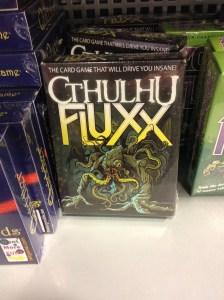
It was in the eldritch-sounding Oshkosh that I first came across H. P. Lovecraft. The web was still somewhat of a novelty then, and I’d run across a Dagon symbol that I couldn’t identify. My researches led me to the old gods of Lovecraft’s atheistic imagination. Even non-believers are haunted, it seems, by deities. Dagon, about whom I’d published an academic paper, always seemed to be a divinity to whom very few paid attention. Little did I know that in popular culture this god, along with others made up by Lovecraft, were slowly gathering an immense following. Now, about a decade later, Cthulhu is everywhere. I was reminded of this when I came across a website advertising Cthulhu tea cups. As you drink your tea, Cthulhu emerges. These novelty items, along with many, many others, are easily found. Cthulhu is running for president. The creature that Lovecraft described with such terror is now available in a cute, stuffed plush. Board and card games come in Cthulhu varieties.

IMG_1551

What I find so interesting about this is that the following of Cthulhu has taken on religious dimensions. Not that writers haven’t invented religions before—L. Ron Hubbard came up with Scientology after a career of science fiction writing, and Jediism is considered a religion by some—but Cthulhu represents the darker aspects of religious thought. As Lovecraft described him, he is a horror. Not the kind of thing you’d want to discover peering out of your teacup. I wonder if this is precisely why the fictional god has become so incredibly popular. In a time when some real presidential candidates are really scary, suggesting that an evil deity take on the job may only be natural. Cthulhu is, after all, really more an alien than a god, but to puny humans the point is moot.

Mainstream religion is not about to disappear any time soon. There is, believe it or not, a strong resistance to the materialistic reductionism that presses in on us from all sides. People are not becoming less religious—they’re becoming differently religious. The old sacred texts are being replaced by the fictional Necronomicon. Ethereal beings that have always been there are bowing before ancient aliens who aren’t really eternal or omnipotent, but who feel more real in our culture of might makes right. Whether a religion is factual or fictional has come to matter less than the feeling that there is something, anything, larger than humanity that demonstrates the vanity of our striving after material gain. That actually sounds quite biblical. Anything believed with adequate passion stands a chance, it seems, of becoming a religion.


Not Camelot

In the English imagination the Arthurian legend is deeply connected with the Christian myth of Britain’s founding. This may not be on the surface, of course, but the places associated with King Arthur (as well as the tales themselves, such as the Holy Grail) overlap with sacred locations. I was reminded of this by a recent Guardian article about Tintagel Castle. Back in the day when my wife and I visited Tintagel with friends, I was still shooting film. Slides, no less. Some wonderful images came out, the way that only Ektachrome delivers, but I haven’t been able to convert them to digital. I guess you’ll have to take my word for it. Tintagel is in the news because English Heritage, the owner of the property, is developing it to make it a larger tourist draw. According to Geoffrey of Monmouth King Arthur was conceived at Tintagel. Not in the castle—now in ruins—that was built centuries later, but on the island that is accessed by footbridge over a dramatic cove on the Atlantic Ocean. It’s enough to make you drop your pastie.

Our own little Merlin

Our own little Merlin

Locals, according to The Guardian, protest the dressing up of the historic site. A bas relief of Merlin has been carved into the living rock, and this is hoped to draw the Glastonbury crowd to the southeast. Glastonbury, upon our visit, was already the home of New Age vendors. It too has connections with Arthur. The staff of Joseph of Arimathea can be seen, still growing after all these centuries. The Holy Grail—likely from Celtic mythology of the cauldron—is also associated with Glastonbury. Oh yes, and also King Arthur’s grave. Even apart from Monty Python, the legendary king has captured the imagination of thousands across the centuries. There’s something about Arthur.

The historicity of the king, however, is vigorously debated. The same is true of many religious founders. Those around whom legends grow become more and more inaccessible with the passing of the years. England was Christianized in the seventh century as part of a political expansion. If Arthur ever lived, it was after that period, perhaps in the days before Beowulf. We just don’t know. It is clear, however, that his legend is intertwined with that of those early Christian days. There never was a Holy Grail—of that we can be fairly certain. In the service of myth-making, it is nevertheless indispensable. Staring out over the Ektachrome sea at the ruins of the island castle of Tintagel, it is only too easy to believe. If only I had the pictures to prove it.


Durable Goods

CharingCrossThose who love books share a soul. A weekend never feels complete to me without at least an hour spent in a bookstore. On one such weekend a clerk in our local indie recommended Helene Hanff’s 84, Charing Cross Road. The recommendation was actually for my wife, but knowing me, she said I’d like it. What’s not to like about a set of revealing letters between a struggling, New York-based writer and a London used bookstore clerk? Books tell the story of a person’s life. If I’m invited to someone’s house, I look at their books. I would expect the same if they ever came to see me. Kind of like dogs sniffing each other out. Books reveal the inner person. They also give me ideas of more things to read.

I can’t help but think we’ve lost something intangible in the world of ordering books online. Don’t get me wrong, I appreciate Amazon maybe more than is proper, but how many treasures have I found simply by browsing? The days are well past when a single person could claim to have read every book (and really, who would want to?) so there’s always something undiscovered lurking at the bookstore. And these days used bookstores have the most character. In Milwaukee I used to frequent a used bookstore that could have passed the building inspectors’ visit only by bribery. I spent happy hours there. You see, books are durable goods that can outlast their owners. Can anyone really ever own a book?

84, Charing Cross Road was an unexpected delight. A quick web search reveals that Marks & Co. Is no longer with us. It is now a McDonald’s. Helene Hanff is gone too. And she thought she was born a century too late! Yet here we are in the twenty-first century and books are still with us, despite our losses. They have something of eternity to teach us. The ebook has not yet managed to kill off print. Our local used bookstore closed some years back. I confess to visiting a Barnes and Noble in a state of desperation. There a guy, older than me, was talking to a clerk. I couldn’t help but overhear when they mentioned the used bookstore, now long gone. Even the clerk sighed that they were the only show left in town. Although they were strangers I knew that we somehow share a soul. So it is with those who love books.


Lovecraft Legacy

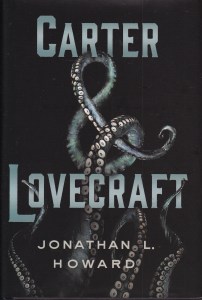
CarterLovecraftHistory can be a funny thing. Take the way it treats some people. H. P. Lovecraft wasn’t famous in his lifetime. In fact, his isn’t exactly a household name even now. His creation Cthulhu lurks grandly in the internet, and even Lovecraft himself is finding mention in some literature courses, despite his lack of literary finesse. Yet, fiction is being written about him. I just finished Jonathan L. Howard’s new novel, Carter and Lovecraft. While H. P. doesn’t appear as an acting character in the novel, he is related to one of the protagonists in a way that is essential to the story’s plot. I won’t give away any spoilers here, but the novel takes over where Lovecraft, the non-fictional character, left off.

Lovecraft, famously, was an atheist. Nevertheless he spun a mythic world of Old Gods that has become canonical in its own right. His stories veritably teem with religious themes as well as monsters. In fact, in Howard’s treatment of the mythos, the religious elements still show up. As I’ve noted before, one need not be a theist to be a capable theologian. Fiction like that of Lovecraft, or that of Howard, inherently holds a kind of numinous quality. In fact, fiction frequently does. In reading, we allow ourselves to be drawn into another world. What could be more religious than that? The beliefs of the writer, it seems, may not ultimately matter.

At one point, at least, in Carter and Lovecraft the sentiment becomes explicit. One of the characters contemplates starting his own religion, only to realize that he’d have to write a holy book. That, he decides, would be a lot of work. As one who dabbles in various forms of literary art, I can take his point. There is something wondrously exhausting about giving birth to words. And those words make worlds. When you stop to think about it, that’s kind of a religious thing to do. I’d recommend Carter and Lovecraft to H. P. L. fans. It’s not a Cthulhu-fest, but it is an enjoyable, compelling tale that raises questions which, if not handled carefully, will quickly turn theological.


Soul Library

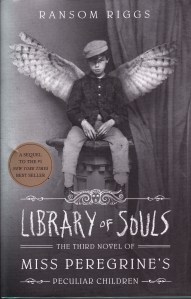
LibrarySoulsThere’s a kind of trinitarian logic to the trilogy format. Long before Hegel’s model of thesis, antithesis, and synthesis, people have grouped things into threes. And there is a hook that film-makers have used to ensure that viewers will come back for the third installment: the cliffhanger. The second episode leaves everything unresolved and you’ll be sure to see the third. Think of the original Star Wars trilogy, or Back to the Future, or even Pirates of the Caribbean. In each case the first film could stand alone, but the second insisted on a third. This is a little trickier with books since, as we all know, publishing is a slow business and writing takes time. I saw Miss Peregrine’s Home for Peculiar Children, by Ransom Riggs, in 2011. I knew I would read it since the cover alone was so intriguing. Young adult literature, it turns out, has come a long way since I was able to classify myself that way. Then Hollow City came out. It ended as a cliff hanger (remember the formula), back in 2014. Just over a year and a half later, The Library of Souls was released.

Having just finished the trilogy, reading each as it came out, I would say that, like most trilogies, the first installment was the best. Freshest, a new idea, where characters exist with whom the reader participates by in filling in the blanks, a series grows more complex as it expands. Some elements that weren’t there at the beginning have to be read back into the previous installments. In my case, I’ve read so many books in the interim that some of the details have grown hazy due to the simple passage of time. Still, Riggs is to be highly commended for bringing souls back into discourse among the young. Too long we’ve been sold the story that we have no souls.

I’m not going to go into any great detail here since those who want to learn how Riggs handles the tale will read his books, but I will say that a stubborn materialism has settled over intellectual culture. Some neuroscientists have naively said, “we’ve looked for it and can’t find it, therefore it must not exist.” And since most of us don’t have access to their kinds of equipment or training, we’re told to acquiesce. Give up your souls—buy into materialism. Buy stuff. That’s what we’re all about. It is a relief, in the midst of all of this, to have a popular writer suggesting, through fiction, that it is souls that make us who we are. The books aren’t preachy. Indeed, it would be difficult to say they are religious in any conventional sense. They are, however, soulful. And for that I am very glad to have read them, even as a middle-aged adult.