Speedy Delivery (SD)

Ritual, no matter what scientists say, is deeply woven into the fabric of human psyches.  It may be either the warp or the weft, but it’s downright basic.  I was reminded of this on my hurried and slow trip to San Diego yesterday.  I always wear the same shirt when I fly to this conference.  This isn’t superstition, but rather it’s a case of sticking with something that works.  I don’t often wear turtlenecks, and one reason is that they seldom fit well.  More years ago than I care to admit (I’m wearing the shirt in the photo below, which was taken at Nashotah House nearly two decades in the past) I found a navy blue turtleneck from Land’s End (this is not a sponsored post, although it probably should be) that works perfectly.  Even today it fits snugly around the neck after hours of wear.  Maybe ten years back I bought a black turtleneck from the same company and after pulling it over my head, it gaps something awful.  I tend only to wear it around the house.  The original still does the job.

I was ready to drive myself to the airport yesterday and I grabbed a quick lunch at home.  Part of said lunch involved opening a ketchup bottle probably nearly as old as the shirt I was wearing.  (I’m sure you can see where this is going.)  I ended up looking like a murderer, which is not something you want to try to explain to a TSA agent.  I quick threw said ritual shirt into the washer and the drier buzzed at the same time as my phone did for when I had to leave for my two-hour-ahead check-in.  This remarkable shirt was dry and ready to serve.  Maybe you can see now why I’m so ritualistic about clothes.  I also opt-out of those Star Trek scanners at the airport.  This means I get lots of governmental pat-downs.  It feels more authentic when you have actual hands running down your body—at least it’s honest.

The TSA agent commented that you don’t see many turtlenecks these days.  I explained that it’s good for flying because I’m always cold on planes.  As this stranger’s hands were rubbing down my chest, I was wondering how many times this shirt has been felt up by the US government.  It has no pockets to pick, and besides, at airport screenings everything is stowed in my carry-on, including wallet.  At midnight San Diego time, I checked into my hotel.  East coast time said I’d been awake 24 hours because who can really sleep on a plane?  Once my patted-down body reaches 3 a.m., Eastern Time, it wakes up.  In these circumstances it’s good to know I can rely on that shirt in my drawer.  That’s what rituals are all about.


Daylight Saving Time Zone

One or two of you out there—you know who you are—put yourselves through reading my musings on a daily basis.  I haven’t missed a post in nearly a decade, but travel always complicates things.  Yes, it’s that time of year again—I’m on my way to AAR/SBL.  The American Academy of Religion and Society of Biblical Literature Annual Meeting is the trade show of the guild.  This year we’re meeting in San Diego, California.  The hope of many of us is that it’ll be sunny and warm.  Last year, of course, I missed the conference for the first time, exchanging the Denver Hilton for a night on the floor of Newark’s Liberty Airport.  This year I’m flying out of a different venue—one where egress is possible in the case of snow.

I always like to post a reminder to the faithful few that normal service on this blog may be interrupted.  One never knows what might happen when away from the regular routine.  And three time zones will surely wreak havoc with circadian rhythms that haven’t yet caught up with the end of Daylight Saving Time.  Or is it the beginning of Daylight Saving Time?  It makes no difference, because it lead to lack of normal sleep, no matter what we call it.  In any case, San Diego may make usual posting unusual.  At the very least it’ll be a few hours off.  I’ve become a creature of habit, posting my thoughts between six and seven on weekdays.  On weekends I’m up just as early, but I give the web a chance to sleep in.

These annual meetings are exhausting when you go on behalf of a publisher.  Unlike the leisurely experience of a paying customer, you don’t get to go back to your room for a nap, or even to sleep in.  Every year colleagues ask me to receptions but I decline because every day is a school day.  And I have appointments from 8:30 until 6:30 daily.  Sometimes even later.  You, my gentle reader, have been given advance notice.  I’ll try to continue my daily chronicle of life inside this particular head as thousands of scholars of religion mill about, wondering about the answers to the big questions.  Right now the big question is whether I’ve packed everything I’ll need.  I’ll gain three hours on the way out, but I have to leave them at the desk when I get back.  Along the way I’ll scatter posts like breadcrumbs to help me find my way home.


What I Meant to Say

So I try to illustrate each of my posts. I do this because in the days when the internet was young I often found blogs during image searches. I’ve grown more cautious over the years, regarding copyright. I try to stick to the “fair use doctrine”—and that’s what it’s called, a doctrine—or images I “own.” In the latter case it often means searching WordPress for a picture I’ve posted before. Since nobody has time to name all their photos, I use the assigned DSCN or IMG nomenclatures. There aren’t so many that a search won’t turn up an image in my library. Thing is, WordPress likes to anticipate what I’m looking for. What’s more, it “autocorrects” after I’ve begun scrolling through everything. DSCN becomes “disc” in its addled electronic brain, and IMG becomes “OMG.” Naturally, the image you’re seeking can’t be found until you manually correct autocorrect.

OMG has become very common shorthand these days. Growing up evangelical, there was a debate whether “o my God” was swearing or not. Those who like to hedge their eternal bets argued that this was taking the Lord’s name in vain, thereby breaking one of the big ten. This was to be avoided at all costs. Those with a little less fear (or perhaps a bit more courage) argued that “God” wasn’t “the Lord’s name.” God is a generic word and can refer to any deity, except, of course, for the fact that there is only one God. This led straight back to the conundrum. Exegetes tell us that technically this commandment isn’t about saying the deity’s name, but rather it’s a prohibition against using said name when you don’t intend to do what you say you’ll do. In other words, lying.

It’s truly one of the signs that evangelicalism has evolved that the world’s best known liar is unstintingly supported by this camp. When I was a kid, saying, well, OMG, could get your mouth washed out with soap. Lying could lead to other forms of corporal punishment, such as being, in the biblical parlance, smitten. Now it gets you elected to the highest office in the land and supported by all those very people who won’t spell out OMG, even when they’re busy cutting you off in traffic with their Jesus fishes flashing in the sun. When I was a kid presidents would step down rather than go through the humiliation of being shown a liar in the face of the world. Times have changed. And I have no idea how to illustrate such a post as this. What comes up when I search OMG?


Author Revise Thyself

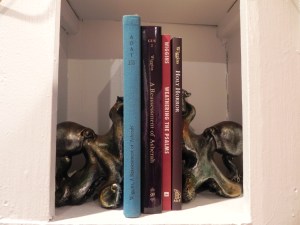
Monster fans may have noticed that, despite the season I haven’t been writing much on the topic.  One of the reasons for this is that I’m in that dread stage known as “revision.”  As an editor I often see book proposals—or even entire books—that have never been revised.  You can tell.  I learned this while writing Holy Horror.  If you’re one of the people who took out a second mortgage to buy a copy, the book you purchased was based on a manuscript rewritten thoroughly at least five times.  The idea is that like rocks in a river, all that pouring over a text smooths the words like stones over the millennia.  Few rocks emerge from volcanic or sedimentary situations as smooth and round.  That takes revision.

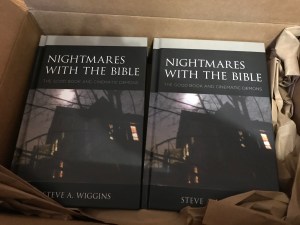
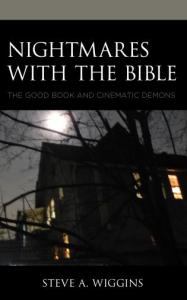
My peer review report for Nightmares with the Bible came in a few weeks ago.  Nightmares had been revised a couple of times, at least, before I submitted it.  I understand the review process very well, as I deal with it daily.  Sometimes single blind (the writer doesn’t know the reviewer’s identity), other times double blind (neither reader nor writer know the other’s identity), the process is meant to provide feedback on a manuscript.  Having written many more manuscripts than have seen publication, I know just how useful peer review can be.  Like anything, however, it can also be treated legalistically, as if the reviewer knows more about a subject an author has just spent years researching.  No matter your impressions about this, once the reports come in, revision is in the cards.

Self editing is difficult.  And occasionally embarrassing.  You read again what seemed to make sense to you at the time, but even after you hit the “send” button you’ve continued reading.  New information comes to light.  Monographs are a very expensive form of dialogue.  Well, not so expensive as all that.  Many people are happy to pay out the cost of a monograph for a dinner out, which lasts an evening.  A book, mutatis mutandis, lasts much longer.  Like that meal, it’s taken internally and digested.  You can read the same book twice, however, without having to pay the second time around.  It’s a good idea, then, to revise before sending it to a patron’s table.  Ironically, revising a book on monsters takes time away from writing about monsters.  I also have essays awaiting revision, circling overhead like planes at Newark’s Liberty Airport.  And then there’s work, which has nothing to do with my own writing at all.  There’s a reason Nightmares occurs in the title.


Seventies

It’s pretty rare for me to be out on a week night.  Like a kid on a “school day” I’ve got to get up early the next morning.   And yawning a lot at work is bad form, even if nobody can see you.  I risked it recently, however, to meet with some colleagues from the Moravian orbit in Bethlehem.  As we talked, current projects came up, as they’ll do when doctorate-holders get together.  Demons are a conversation stopper, but I nevertheless asserted that our modern understanding of them derives directly from The Exorcist.  The insight isn’t mine—many people more knowledgable than yours truly have noted this.  One of my colleagues pointed out the parallel with The Godfather.  Before that movie the mafia was conceived by the public as a bunch of low-life thugs.  Afterward public perception shifted to classy, well-dressed connoisseurs who happen to be engaged in the business of violence and extortion.

The insight, should I ever claim as much, was that these films were both from the early seventies.  They both had a transformative cultural impact.  Movies since the seventies have, of course, influenced lots of things but the breadth of that influence has diminished.  I noticed the same thing about scholarship.  Anyone in ancient West Asian (or “Near Eastern”) studies knows the work of William Foxwell Albright.  Yes, he had prominent students but after Albright things began to fracture and it is no longer possible for one scholar to dominate the field in the same way he did.  Albright died in the early seventies.  Just as I was getting over the bewilderment of being born into a strange world, patterns were changing.  The era of individual influence was ending.  Has there been a true Star Wars moment since the seventies?  A new Apocalypse Now?

You see, I felt like I had to make the case that The Exorcist held influence unrivaled by other demon movies.  We’re still too close to the seventies (Watergate, anyone?) to analyze them properly.  Barbara Tuchman suggested at least a quarter-century has to go by for the fog to start clearing.  Today there are famous people who have immense internet fame.  Once you talk to people—some of them my age—who don’t surf the web you’ll see that internet fame stretches only so far.  It was true even in the eighties; the ability to be the influential voice was passing away into a miasma of partial attention.  The smaller the world gets, the more circumscribed our circles of influence.  And thus it was that an evening among some Moravians brought a bit of clarity to my muddled daily thinking.


TMI

Recently I was left alone for the entirety of a Saturday.  On rare days when I feel affluent, I’ll go and purchase supplies to take on the many tasks that need doing around the house—most of the books on my office are still stacked on the floor for lack of shelves.  I can build them, but that takes money.  Often when I have an unclaimed day I plan it out weeks in advance.  Things have been busy enough of late that I didn’t even have the time to do that.  All the sudden I woke up on a November Saturday with tabula rasa in front of me.  Then I realized one of the constant pressures I face: TMI.  One of my nieces—the one who started this blog, actually—first introduced me to Too Much Information (TMI).  I don’t get out much, you see.

Like most people who flirt with tech, I snap photos with my phone.  When we go somewhere that I suspect we’ll never be able to afford to go again, I take an actual camera and let fly like I work for National Geographic or something.  Since my laptop’s on a data diet, all of these end up on a terabyte drive, hurriedly downloaded as IMG or DSCN files, waiting to be sorted later.  Do this since the inception of digital photographs and you’ll get a sense of the magnitude of the problem.  My laptop says it’s full and I have to delete images with that dire warning they’ll go away forever.  I back them up.  When was the last time I did this?  I wrote it down, but I forgot where.  What did I even name the file?  Did I back it up or is it on my hard disc?  Why are there eight copies of the same photograph?  I spent the day sorting, virtually.

Before I knew it, the sun was beginning to set.  I’d awoken at 4:00 (being a weekend I slept in), and after a day of organizing electronic photos into electronic folders, I’d barely made a dent.  Deduping alone takes so much time.  Some of the pictures, while nice, I couldn’t remember at all.  I shudder, though, thinking about grandparents that burned old photos because nobody remembered who they were any more.  Then I realized that our lives are the most documented of any in history (so far) but nobody really cares.  You could learn an awful lot about some stranger just by going through their photos—where they’ve been, what they thought important, and just how obsessive they could be.  As I wound up the day, I realized why I don’t get out much any more.


The New Light

Sometimes you meet kindred spirits in books.  Barbara Brown Taylor’s Learning to Walk in the Dark has been waiting patiently.  It’s one of those books that I suspected would meet me where I live, and regarding this I was correct.  Brown Taylor, a former Episcopal priest and professor of religion (both of which I attempted but failed to achieve), has the courage and insight to suggest that darkness might just be a friend.  The darker half of the year settled hard on me this year.  As its black wings gathered about me I reached for this book.  I’ve been struggling with a question I’m sometimes asked: why do I let my thoughts linger in what must be considered darker corners?  I watch horror and write books and stories about monsters.  What’s wrong with me anyway?

One accusation may be fairly leveled at much of American religion is that it is shallow.  Light is uncritically accepted as good and dark becomes somehow evil.  There are biblical prooftexts that can be used to “prove” this, but they change color when you wrestle with them.  Learning to Walk in the Dark contains many ways of reflecting on realities which are inevitable.  Brown Taylor visits museums that give the sighted the experience of being blind in a safe environment.  She spends time in caves.  She stretches out beneath the stars and contemplates the dark night of the soul as well as the cloud of unknowing.  These latter two are, of course, spiritual classics.  There’s quite a bit that can be learned from experiencing darkness and listening intently.

My own predilections toward subjects called “dark” are forms of therapy.  My religion simply can’t be shallow.  I need enough water to swim.  And yes, I’m afraid of deep water.  Darkness perhaps comes more naturally to those of us who are awake for every sunrise.  If I move far enough north that may cease to be the case, but for the last decade or so my internal alarm goes off a couple hours before the first sliver of light creeps over the eastern hills.  And I seem to have assimilated to it.  As I read Learning I could imagine the accusations flying from my former Nashotah House context.  Looking at that patriarchal theology of sin and misery, however, I think there’s no question whence true darkness comes.  Without the dark we could never tell that it was light.  Since we need both, it seems wise to follow the sage advice here offered and get to know the dusky side a bit more intimately.


Old Grains

Back when I was somebody—a professor is somebody, even if only a seminary professor—I was invited to meet with a group of Seattle writers and intellectuals.  I was in Seattle already because driving all the way out here was possible when you live in the Midwest and your summers are basically open and free.  (Professor’s privilege.)  One of the group members, the one who invited me, asked me about grain.  When the club met they ate.  With a bent toward history, one of them brought period-appropriate bread.  What kind would be fashionable for a night of ancient Near East talk?  (I was still researching and writing on Ugarit at the time, before Ugaritology passed away.)  Without stopping to think I replied “Einkorn.”  I didn’t know if einkorn was still around or not.  All I knew is that it was the earliest (at least as understood at that time) domesticated grain.  The loaf that arrived that night was a more accessible grain variety.

All of this came back to me as I stood in the local health-food store.  We don’t shop here for regular groceries—it’s expensive to eat healthily—but we’d been invited to someone’s house and said we’d bring appetizers.  The health-food store had vegan cheeses, so we needed crackers to go with.  Then I spied the word “einkorn.”  The Seattle discussion had to be well onto two decades old by now.  I was finally able to answer my question, einkorn was still alive.  The craze for ancient grains did not exist in my professorate days.  Some companies, according to occasional news stories, were trying to brew the beer of ancient Egypt or Sumer, but the health conscious hadn’t gone so far as to trying to replicate the diet of the earliest agriculturalists.

Ancient grains cost more because the yields are smaller.  Although the grain heads look disturbingly like those house centipedes that scamper in the basement when you flip on the light, they aren’t nearly the size of a current wheat head.  It stands to reason that it takes more of them to make up the same amount of flour, and appetites have grown over the millennia.  Like most vegans, I read boxes.  Another ancient grain cracker, apart from brown rice, included amaranth, flaxseed, millet, quinoa, sesame, and sorghum.  Never mixed this way in antiquity (for amaranth and quinoa were part of the “new world” and the others “old”), modern mixologists have devised new ways of using ancient grains.  Einkorn nearly went extinct with the development of wheat, rye, and barley.  But it hung on, and now, as a dozen millennia ago, it has a way of sustaining both dreams and fantasies.


Greatest Weakness

What a privilege it must be to work in a world of ideas!  (And to get paid handsomely to do so.)    My particular (and peculiar) career—if that’s what you call it—is intimately bound up with academics.  Those who know me personally treat me nicely, but the vast majority who haven’t a clue that I’m anything other than a guy who’s helping them get published sometimes forget their privilege is showing.  I’m not busting on my homies; I know what it’s like.  But I’ve noticed some interesting trends (“turns” in academese) that are fascinating from the point of view of an ordinary mortal with a mortgage and a great deal of anxiety about it.  For example, I find catch phrases time and again.  (See what I did there?)  Academic writers learn that if they buck the conventions they’ll be relegated to presses that don’t enhance your career.  All roads lead to Harvard, after all.

All of this is preamble to a curious trend that I’ve been seeing claiming that an idea’s greatest strength is also its greatest weakness.  I read this time and time again, so I began to wonder about the origin of this idea.  Now, not even Google understands “what is the origin of the phrase greatest strength is greatest weakness?” but it does bring up about a thousand-and-one websites about job interviews.  I’ve had many of these throughout this thing I’m calling a career, and just like everyone else I’ve read that when asked what your greatest weakness is reply that your greatest strength (whatever it may be) is it.  The classics such as “I’m a workaholic,” or “I just can’t stop acquiring more x” (and we all need more x), are tired cultural tropes.  How did academics pick up on this?

Does it stretch back to Achilles and his heel, or Goliath and his gigantism?  Or is it that to admit weakness is to disqualify yourself from a job?  A well-meaning friend told me I should go through this entire blog (as if anyone, including me, has time to do that) and expunge all mentions of having lost my job.  They should be replaced with insinuations that I’d chosen to leave.  “Nobody,” he implied, “likes a loser.”  Well, I guess my greatest weakness is that I’m an honest graphomaniac.  I write incessantly.  Novels and nonfiction books, short stories and essays, and even a learned article or two.  I used to be an academic you see.  And I was always honest.  It was my greatest weakness, if you see what I mean.


Quiet Now

The funny thing about my movie watching is that it’s a reflection of my scattered lifestyle.  While I was teaching my career progression was linear with a goal of moving beyond Nashotah House to a college or university that shared my values better.  Publishing was a fallback, and I’ve learned a lot but I haven’t unlearned my academic leanings.  So, like the rest of my life, my movie watching is piecemeal.  I found a copy of A Quiet Place in a Halloween sale.  My wife bought it for me and on a weekend on my own I watched it.  I had no idea what it was about, but I’d read that it was an intelligent horror film, and that was good enough for me!  There may be spoilers here if you live in a cave, like I do (metaphorically), so be warned.

The backstory isn’t fully spelled out, but the monsters in this movie are blind and attracted to their victims by sound.  The focus is on a family in upstate New York that’s trying to survive without making any noise.  Since there are kids involved, you’ll see how tricky this could be.  John Krasinski’s film builds the suspense wonderfully.  Borrowing from M. Night Shyamalan at his best, and Alien and even Stranger Things, the movie has a odd effect.  When it’s over you don’t want to make any noise.  I watched it while my wife had to work over the weekend, and I put the DVD away as quietly as I could, and then went to bed.  Awaking alone the next morning, I continued the vigil.  Critics praised the movie for its silence, perhaps what we’re most afraid of in this noisy world.

I spend a lot of time saying nothing.  Editing is a quiet job.  Telecommuting is a quiet lifestyle.  At Nashotah House we had mandatory quiet days, which, if they weren’t mandatory I would’ve loved.  I’d seriously considered a monastic lifestyle when I was younger—there’s great value in being quiet.  A horror film that teaches that lesson, despite many obviously unanswered questions, is worth paying attention to.  Horror films have continued to grow more intelligent over the years.  This one is rated PG-13 and will have you on the edge of your seat (or under the bed) anyway.  And it’s got an important message.  For those of us who don’t say much (maybe that’s why I write all the time) a movie like this acts, if you will, as a loudspeaker.  Does anybody hear me?


Read a Book

A huge shout-out to Andrew Laties for conceiving and organizing the Easton Book Festival!  Easton may not be the largest city in the state, but the Lehigh Valley is Pennsylvania’s fastest growing area.  As we discovered when we moved here almost a year-and-a-half ago, it is a region that supports bookstores.  Even before the Festival we’d explored some six or seven and after moving from central New Jersey—where keeping a small shop or two open was a struggle.  We’ve become spoiled for choice.  Writers may not be the easiest people to herd—many of us are quiet and tend to live in our own heads quite a bit—but the festival has brought some 200 of us together, and we write on all kinds of things.

Although the panel on which I participated had religion as one of its themes, my wife and I noticed that at each session we attended religion was mentioned.  Either it was in an author’s background, or it figured into their writing, or most embarrassingly, it objected to and tried to silence them through censorship.  Although my book’s subtitled The Bible and Fear in Movies, it was evident that I wasn’t the only person who found the Bible’s effect on people scary.  And the theme continued into the evening as I attended the author’s banquet solo.  Many of the people I met had religion in their background or in their present motivations for writing, and not one of them was judgmental toward a guy like myself who’s trying to find his way.

The Easton Book Festival is in its first year.  Although by late afternoon the weather had deteriorated into the rain we can’t seem to shake around here, it was wonderful to see people walking around with festival booklets (there are enough events to warrant one) and not bothering to conceal and carry.  Books, that is.  For a moment, they were cool.  My second session is this afternoon.  As I learned both last weekend at my book signing and at sessions yesterday, a sell-out crowd is unlikely.  This is a free event and even authors who had more fingers than attendees were gracious and glad for the opportunity to explain what they were trying to do with their writing.  And they unstintingly shared what they’d learned with one another.  This was community, centered around books.  It was a small slice of what Heaven could be like, if we’d all just take an interest in each other.  Even if we’re shy and secretly would rather be home writing.


Seasonal Music

Music is deeply, deeply personal.  That’s why I don’t write much about it.  There are pieces, I swear, if someone walked in to shoot me when I was listening to them I wouldn’t even notice.  This effect is amplified in autumn.  I don’t listen to music all the time.  In fact, I rarely do.  The reason is, counterintuitively, I fear that music may cease being meaningful to me.  Good things have a way of running out.  The music I like is only very slowly supplemented.  So as the clouds encroached this month, I put on some tunes and I began thinking of appropriate songs of the season.  I’ve heard attempts of more recent artists to sound spooky, but their lyrics don’t match the mood I’m seeking—remember, it’s deeply personal.  So what is autumnal music?

Despite being a fundamentalist, I was raised on rock-n-roll.  My favorite artist growing up was Alice Cooper; in fact, to this day Alice is the only secular rock artist I’ve seen in concert.  Two tracks on Welcome to My Nightmare are among those eerie autumn songs: “Years Ago,” and “Steven.”  This album was profoundly sunk in my psyche before I discovered others.  While not scary in the same way, “Brilliant Disguise” from Bruce Springsteen’s Tunnel of Love hits a similar chord.  The melancholy of autumn must be appeased and this song begs to bring it on.  Many of Leonard Cohen’s songs are like the angst of this season bottled up for a restorative tincture, but I was quite a bit older when I discovered Nick Cave.

The Boatman’s Call with its willowy sound and occasionally explicit lyrics, walks that line between a deep-seated spirituality and fear.  There are others, of course, some even fairly recent.  Imagine Dragons’ “Demons” from Night Vision certainly qualifies, as do the first two tracks on Muse’s The Resistance.  But this is my list, and I fear to reveal too much.  Someone who knows your music knows very much about you.  I hear some people discuss music as if it’s a throw-away commodity.  For others of us it has become part of our souls and we’re reluctant to reveal too much.  New members of this autumn music club are added only very slowly, and I reacquaint myself with the long-term members not frequently enough to rob me of their impact.  So it was as the clouds thickened and the cold wind began to blow as the leaves were beginning to turn that I put on my personal songs of the season.  And there was transcendence, but it was, as transcendence tends to be, deeply personal.


Trolls and Tolls

Fall creeps up on me every year.  I like to have an array of seasonal books to read so that when it arrives I’ll be ready.  With house repair costs this year I’ve had to curtail book buying.  That, and most of the titles on my to-read list are used books that seem to have become extortionately expensive since the 1970s.  In any case Cherie Priest’s The Toll stood face out on the shelves of Buffalo Street Books in Ithaca and it caught my attention.  Set in the Okefenokee Swamp in Georgia, this unsettling novel brings the reader into the liminal space of the dying small town.  There’s a bit of magic in Staywater, although everyone who lives there knows it hasn’t got long before it goes altogether.  And every thirteen years a monster comes.

Priest knows not to describe the nameless creature too clearly.  The monster seen in broad daylight can quickly lose its patina of fear.  This is some kind of supernatural swamp beast and everyone local seems to know it’s picking them off.  The outside authorities, however, pay no attention to small towns that have “nothing to offer” to the greater economy.  That aspect resonated with me as the erstwhile denizen of a community of less than a thousand.  I watched the dissolving of my adoptive hometown as the tax-base shrank to the point that they could no longer afford to pave the streets and decided to go back to gravel.  Once the oil refinery—what gave the town “value”—closed, outside interest disappeared.  Ah, but I digress from fiction.

The Tool is a moody novel that doesn’t take itself too seriously.  There’s backstory here that remains untold.  Two of the protagonists are elderly female cousins who are comfortable with the spiritual world.  They are the past saviors of this little town in the swamp.  The other characters have all come to an uneasy peace with their periodic tormentor and they have nowhere else to go.  When the monster strikes against unwary outsiders the locals don’t welcome outside attention.  Those acquainted with small communities know that’s what life is like.  Attention brings cash, but often unwelcome change as well.  One of the more haunting aspects of this novel is the number of threads left dangling in the wind.  Not everything is resolved, and life goes on much as it always has, without or without the monster.  A moody read, this ghost story has, it is clear, a deeper message.


Dayglow

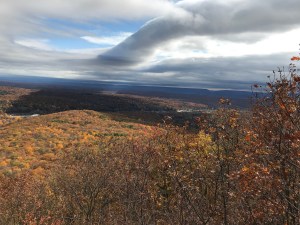
Yellow and orange leaves on a damp pavement.  A sky claustrophobically occluded with gray clouds.  A decided chill in the air.  All you have to do is add a few pumpkins and the feeling of October is complete.  I don’t know why this particular image of the change of seasons grips me the way it does.  As a homeowner I don’t want to turn the heat on too soon because the gas bills will jet up and will stay that way for seven or eight months.  I get depressed when skys are cloudy for days at a time.  Around here the leaves have only just begun to change.  In other words, there’s a decided difference between the way I imagine October and the way that it feels on the ground.  In my imagination there are Ray Bradbury titles, The October Country, The Autumn People, but here in the physical world I shiver and add another layer.

Over the past several weeks I’ve been struggling to figure out why horror appeals to me.  It seems to be the Poe-esque mood rather than any startles or gore.  The sense of mystery that hangs in the air when you simply don’t know what to expect.  Will it be a warm, summer-like day or will it be rainy and raw, a day when you wouldn’t venture outside without the necessity to do so?  October is like that.  It is changeable.  Beginning in late September it is dark longer than it is light and for much of the rest of the year I will go to bed when it’s dark outside.  It’s always still dark when I awake.  Is it any wonder that October has its hooks in me?

Short stories, of which I’ve had about twenty published, seem to be the best way to capture this mood.  You see, it isn’t a sustained feeling.  It’s piecemeal like that extra quilt you throw on your bed at night.  The urge to hibernate creeps in, but capitalism doesn’t allow for that.  October is an artist, and I’m just the guy wandering the galley, pausing before each painting.  This feeling only comes after summer, and it is fleeting.  In November the leaves will be down and the cold will settle in quite earnestly.  The candles we lit for Halloween will be our guide-lights to those we hold out to Christmas when the dayglow will begin to return at an hour that reminds us change is the only thing that’s permanent.  And in this there’s a profound hope.


This Is a Test

For the next sixty seconds…  (If you were born after Civil Defense aired these commercials, it’s your loss.)  I’ve been reading about animal intelligence—there will be more on this anon.  Today’s lesson is on artificial intelligence.  For now let this be an illustration of how difficult it is to come down from an inspired weekend to the daily technology-enhanced drudgery we call day-to-day life.  One of the real joys of seeing art in person is that no tech intervenes in the experience.  It is naked exposure to another human being’s expression of her or himself.  Over the weekend we wandered through five venues of intense creativity and then, back home, it was once more into the web.  The ever-entangling internet of things.

I write, for better or for worse, on my laptop.  My writing’s actually better on paper, but you need everything in electronic form for publication, so who has the time to write and retype, especially when work is ten hours of your day?  Then a system update alert flashes in the upper right corner of my screen.  “Okay,” I say setting the laptop aside, “go ahead and update.”  But then the message that states I have to clear enough gigs for an update.  I have been a little too creative and I’ve used my disc space for stuff I’ve made rather than Apple.  This is a test.  Okay, so I plug in my trusty terabyte drive to back things up before deleting them.  But the laptop doesn’t recognize the drive.  Oh, so it needs a reboot!  (Don’t we all?)  I give the command to restart.  It can’t because some app refuses to quit beach-balling, as if it is the computer that’s doing the actual thinking.  Force quit.  “Are you sure?” the Mac cheekily asks.  “You might lose unsaved changes.”  I need a technological evangelist, I guess.

All of this takes time away from my precious few minutes of daily creativity.  Restart, login, start copying files.  Time for work!  Just a mere sixty hours ago or less I was wandering through showcases of genuine human creation.  Art pieces that make you stop and ponder, and not have to upgrade the software.  Artists can talk to you and shake your hand.  Explain what they’ve tried to express in human terms.  Meanwhile my phone had died and was pouting while I charged it.  I know Apple wants me to upgrade my hardware—their technological extortion is well known.  Anyone who uses a computer experiences it.  Buy a new one or I’ll waste your time.  The choice is yours.  This is a test.  For the next sixty years…